 Nishant Gupta1*
 Ashok Kumar Agarwal1Rajeev Kumar Singhal1Sanjay Kumar Jindal1
 Daoud Ali2Shivraj Gangadhar Wanale3Goklesh Kumar4
 Virendra Kumar Yadav5*
 Ashish Patel5*
- 1Engineering Department, River Engineering Pvt. Ltd., Noida, India
- 2Department of Zoology, College of Science, King Saud University, Riyadh, Saudi Arabia
- 3School of Chemical Sciences, Swami Ramanand Teerth Marathwada University, Nanded, Maharashtra, India
- 4Clinical Division of Fish Medicine, University of Veterinary Medicine, Vienna, Austria
- 5Department of Life Sciences, Hemchandracharya North Gujarat University, Patan, Gujarat, India
Introduction: Indoor air pollution-associated health risk is substantially higher than outdoor. Incense smoke represents a group of multiple hazardous air pollutants including particulate matter. Bipolar air ionizers have been one of the most escalated indoor air cleaning options in recent years. Albeit, removal efficiency against incense smoke and potential byproduct ozone have been little understood due to limited studies.
Method: The present study assessed a portable needlepoint technology-based bipolar air ionizer’s removal efficacy against incense smoke in unventilated glass boxes (size 0.16 m3). A series of experiments were performed in order to estimate the average efficiency. The total removal efficacy of bipolar air ionizer (BAI eff.) was estimated by using empirical equations of the particulate matter PM2.5 (BAI eff. pm2.5) and PM10 removal (BAI eff.pm10). Particulate matter was used as the marker of incense smoke in this study. The concentration of particulate matter, potential byproduct ozone, relative humidity, and the temperature was monitored by a customized sensor-based air quality monitor.
Results: The tested bipolar air ionizer showed a significant decline in incense smoke. The average reduction in PM2.5 and PM10 concentration was observed by 74%–75%. The overall efficacy (BAI eff) against incense smoke particulate proportion was 90% ± 10% compared to the control. Byproduct ozone was not exceeded abnormally. However, the marginal elevation in temperature and humidity (up to 5°C or 21%) and humidity (1.8%) were observed when the bipolar air ionizer was conducted.
Discussion: Incense smoke consists of multiple hazardous air pollutants including volatile organic compounds and carcinogens. Incense smoke may be the major source of household pollution. A portable bipolar air ionizer could be an auxiliary air cleaning option where incense burning practices are common.
1 Introduction
Clean air is essential for overall health (Rai and Tripathi, 2022). Howbeit, rampant air pollution, and associated repercussion have increased for the past few years, almost 99% of the world’s population, particularly in countries with low or middle incomes, is routinely exposed to polluted air (IQ Air, 2022). Studies indicated indoor air pollution could be more harmful due to the high exposure as people spend more than 65% of their time in indoor activities (Yadav et al., 2022b). It is important to understand and manage indoor air quality to prevent airborne health risks (Cooper et al., 2021; Nair et al., 2022). There is a great chance of indoor air is prone to be polluted with several combustible sources, responsible for substantial respiratory morbidity and ailments burden (Rice et al., 2020). Indoor smoke is one of the main indoor air pollution concerns. The indoor smoke source can be secondhand smoke, incense burning, and biomass smoke (Pathak et al., 2020; Yeh et al., 2022). Recent experiments showed incense sticks tend to generate persistent aerosol containing a greater amount of particulate matter. Incense sticks can be a hazardous combustive source of indoor pollution, mainly particulate matter (PM2.5, PM10), HCHO, CO2, and volatile organic compounds (VOCs) (Yadav et al., 2020a; Yadav et al., 2020b; Yadav et al., 2021; Yadav et al., 2022a). A single incense stick burning may generate 45 mg/g of average particulate matter, more than a cigarette, which is 10 mg/g (Rauniyar et al., 2020; Thuy et al., 2022).
Such indoor smoke particles including secondhand smoke can accumulate in an indoor environment, mix with indoor dust, and be embedded in building materials, furniture, carpet, and upholstery, these deposited harmful residues are also known as thirdhand smoke (Matt et al., 2019; Matt et al., 2020). Therefore, incense smoke is a great source of indoor particulate matter, especially fine PM2.5 is one of the most hazardous air pollutants and is associated with major cases of mortality and aggravating COVID-19 cases globally (Yadav et al., 2022b). In recent years, indoor air quality awareness has led to a surge of air cleaning products such as portable high-efficiency particulate air (HEPA) air filters, which are able to reduce residential PM2.5 concentrations by 52%–67% (Wheeler et al., 2021). But despite effectiveness, HEPA-based multilayer filtration may be prohibitively expensive for some families due to the high maintenance cost (Allen and Barn, 2020). Low and middle-income countries, where novel technologies are limited, more effective and alternative high-performance household air cleaning options, may provide low-cost health hazard protection (Jumlongkul, 2022).
Bipolar air ionizers seem low-maintenance air cleaning options that draw considerable attention and interest during the COVID-19 pandemic. Bipolar ionizer devices can produce both positive and negative ions in a special ratio, negative ions composition usually high. Bipolar air ionization air cleaning potential is reported against a variety of air pollutants such as particulate matter, and airborne pathogens including viruses compare to unipolar (Jiang et al., 2018; Curtis, 2021). The evidence of bipolar air ionizers against particulate matter, i.e., PM2.5 and PM10 is also growing, a recent comparative analysis of several bipolar air ionizers showed, bipolar air ionizers can reduce particulate matter effectively in controlled laboratory conditions. Bipolar air ionizers are simple electrical devices that produce electrically charged positive (H+) and negative (O2−) ions into the air, water molecules present in air breakdown into positive and negative ions due to the exposure to high voltage discharge generated by bipolar air ionizers. Those highly reactive ions react with air pollutants and cause agglomeration which lead settlement of several air pollutants, in case of microbial airborne contaminates OH− ions attract H+ from microbial cell to form a water molecule, which causes the inactivation of airborne pathogens (Gupta et al., 2023).
Techniques such as atmospheric-pressure non-thermal plasma (NTP), which can be two types: multipin corona discharge and a dielectric barrier discharge generator, used to create an electrical field by air ionization devices and produce ions and free radicals may react with atmospheric water molecules and form reactive oxygen species (ROS), hydroxyl radical (OH−), superoxides (O2−) and singlet oxygen [(O2 (1Dg)] and ozone (O3). The byproduct of ozone emission is mostly observed with negative ions production in unipolar ionizers (Hernández-Díaz et al., 2021). Incense smoke represents a group of indoor air pollutants including particulate matter, but portable bipolar air ionizers’ effect on incense smoke is not fully evaluated and limited so far. In addition, byproduct ozone remained a serious concern associated with ionization air cleaning techniques. The main objective of this research work is to investigate a portable bipolar air ionizer’s Incense smoke removal efficiency along with the potential byproduct (Ozone) in unventilated conditions.
2 Methodology
A concatenation of experiments conducted repeatedly up to 7 days, to examine the incense smoke (including particulate matter PM2.5 and PM10) reduction capacity of a locally manufactured bipolar air ionizer. The experiment setup comprised two glass boxes (54.8 cm × 54.8 cm × 54.8 cm or 0.16 m3 size each), incense sticks (16 cm long and 1.5 mm thick), 2 customized air quality monitors (Airveda, Model PM2510CVTH) 2 bipolar air ionizers (needlepoint, made by PetriMed CA, model AI 100), specification given in Table 1; air quality monitor and bipolar air ionizer were purchased from the manufacturer, specifications given in Table 1; concentration of negative and positive ions of bipolar air ionizer was measured before each test, by an air ion counter, model NKMH-103 [measurement range 10–19,990,000 (pcs/cc)], Figures 1.

TABLE 1. Bipolar air ionizer specification.
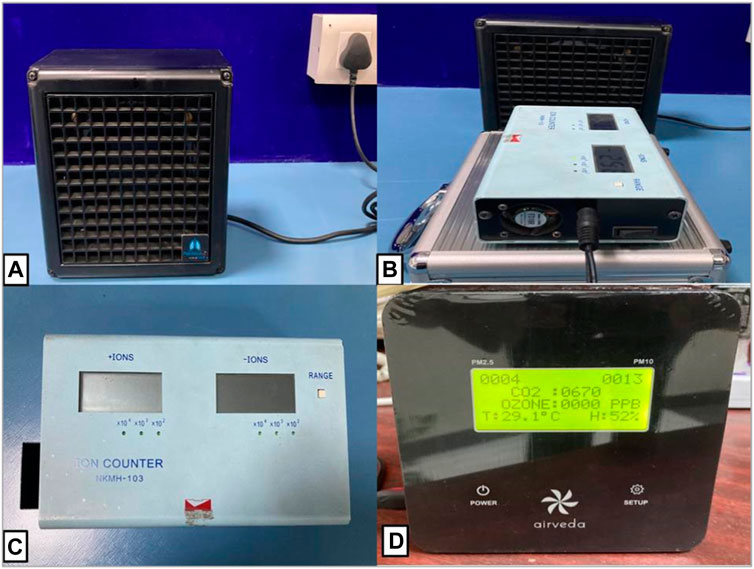
FIGURE 1. Used equipment: bipolar air ionizer (BAI) (A), BAI with ion counter (B), an ion counter (C), air quality monitor (C).
Air quality monitor selection criteria certification and validation report of inbuilt sensors; particulate matter sensors working principle is LASER scattering which is validated/calibrated by widely accepted Beta Attenuation Monitor (BAM) method, specification and details of other sensors given in Table 2. The calibration report was provided by the manufacturer and can be accessed online (https://www.airveda.com/).
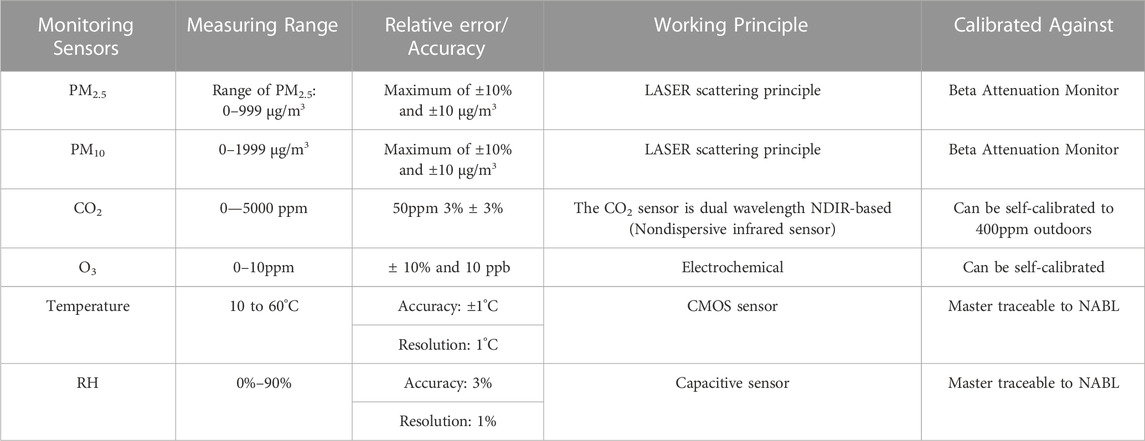
TABLE 2. Air quality (variables) monitor specification.
The air quality monitor is rechargeable and can transfer real-time data by Wireless Fidelity (WiFi) to the laboratory computer. The air quality monitor is customized with the required sensors (PM2.5, PM10, CO2, O3, Temp., RH) which have been employed in our previous study (Gupta et al., 2023). The experiment was conducted at River Engineering Private Limited’s research and development laboratory in Greater Noida, India, near the national capital Delhi (28.4744° N, 77.5040° E).
During experiments, ambient Particulate matter (PM) concentration in the study area was derived from the nearby regional air quality monitoring station (Knowledge Park—V, Greater Noida-UPPCB) operated by the central pollution control board of India (https://app.cpcbccr.com/AQI_India/).
Experiment boxes A (with BAI ON) and B (BAI Off) assembled with bipolar air ionizers, air quality monitor, and incense sticks as represented in Figure 2. Burning incense sticks were placed in each box and then the boxes were sealed. The authors have observed that a single incense stick (16 cm long and 1.5 mm thick) decayed in about 15 min and was able to increase particulate matter and CO2 concentration up to the highest limit given in the air quality monitor, increased concentration persisted for several hours in unventilated text boxes (PM2.5 999 μg/m3, PM10 1999 μg/m3, CO2 1967 ppm). The airtightness of the boxes has been tested using a tracer gas technique, and the test indicated that air leakage is negligible. A run of tests with the above setup was conducted each day (up to 190 min, as the variables graph flattened in <120 min) with box A and box B. The same test was repeated for up to 7 days to get the average values of cumulative results. Laboratory temperature and relative humidity (RH) were maintained during the experiment. Temperature and RH were measured by an additional air quality monitor kept in the laboratory. CMOS sensor with an accuracy of 1°C and RH capacitive sensor with an accuracy of 3% were used. The sensors were calibrated as per master traceable to National Accreditation Board for Testing and Calibration Laboratories, India (NABL).
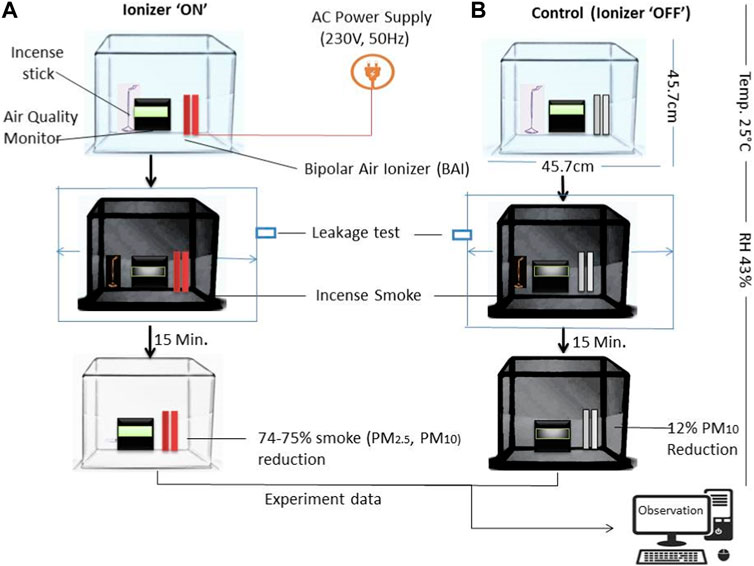
FIGURE 2. Schematic presentation of the experimental set-up. (A) When bipolar air ionizer kept ‘ON’, (B) when bipolar air ionizer kept ‘OFF’.
2.1 Variables analysis and data processing
Each experiment run’s data (both A and B) was transferred to the laboratory computer. Cumulative variables were further calculated by using the arithmetic mean.
Consecutive daily arithmetic means of the received variables of PMs, CO2, O3, temperatures, and humidity were calculated by the following formula:
Where A is the arithmetic mean (average) of variables for runs/day when the bipolar ionizer is ON. n is the number of variables values. ai is the different variable values for runs/day when the bipolar ionizer is ON. Similarly, when the bipolar air ionizer is kept Off, the natural decay of variables is calculated with:
Where B arithmetic mean (average) of variables for runs/day when bipolar ionizer OFF. n is the number of variables values. bi is the different variable values for runs/day when the bipolar ionizer is OFF. The obtained average values of the concerned variables were further processed and interpreted.
Whilst, incense smoke removal efficacy of tested bipolar air ionizer (BAIeff.) in test boxes was calculated by the total particulate matter removal efficacy of BAI, i.e., total PM10 removal efficacy of BAI (BAI eff.pm10) followed by total PM2.5 removal efficacy of BAI (BAI eff. PM2.5).
Procured average values of PM10 and PM2.5 reduction from Eqs 1, 2 were added in Eqs 3, 4, and finally, Eq. 5 was used to get the total incense smoke removal efficacy.
Where BAI eff pm10. represents the total PM10 removal efficacy of BAI, BAI eff. pm2.5 represents the total PM2.5 removal efficacy of BAI, and BAI eff. represents the overall particulate matter removal efficiency of BAI. “B” average values of particulate matter when the bipolar ionizer OFF, and “A” average particulate matter values when the bipolar ionizer is ON, ±RE represents relative error, associated with the particulate matter specific sensor.
3 Results and discussion
3.1 Concentration of ambient particulate matter and other laboratory variables
Air Quality Index reports from the local air quality monitoring station showed fluctuating trends of ambient particulate matter in the study area, concentration ranges PM2.5 78–165; PM10 85–201 μg/m3 observed during the experiment. Other variables concentration including particulate matter inside the laboratory was observed as PM2.5 69 ± 10 μg/m3, PM10 80 ± 10 μg/m3, CO2 650 ± 3 ppm, O3 49 ± 10 ppb, air change rate was ∼1.2–1.6 per hour (1/h), temperature 25°C ± 1°C, and relative humidity 43% ± 1%
3.2 Average effect on particulate matter, background temp. RH and O3 when bipolar ionizer “ON” box A
Daily and cumulative average variables data showed a noticeable reduction in incense smoke including PM2.5 and PM10 concentration. Incense smoke was reduced after 15–20 min of BAI operation, and box “A” was turned transparent from opaque haze Figure 3.
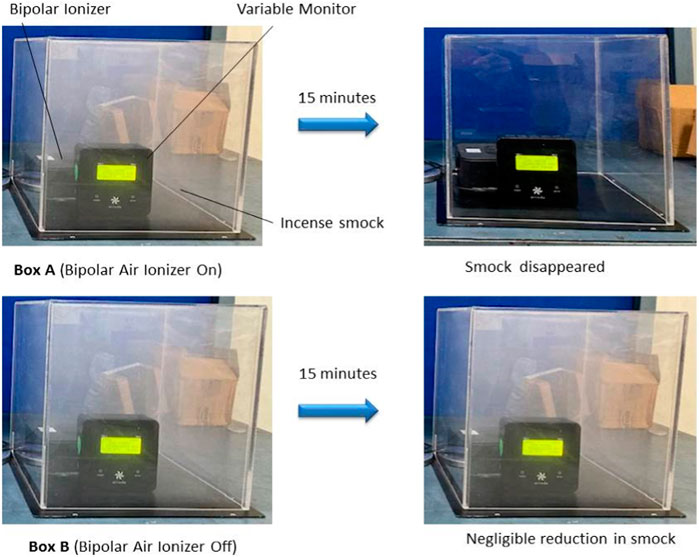
FIGURE 3. Bipolar ionization effect on incense: Box “A” when the bipolar air ionizer kept on, and box “B” smoke when the bipolar air ionizer kept off.
Air quality monitor showed PM2.5 and PM10 proportion of incense smoke took an average of 120 min to reduce maximum particulate matter concentration (up to 8–10 μg/m3) from the initial exceeded level: PM2.5 999 μg/m3, PM10 1999 μg/m3. A minor elevation of up to 1% was observed in ozone concentration on the first day of the experiment, though did not notice in rest consecutive series of experiments. The CO2 level inside the box remained almost unaffected, Figures 4, 5.
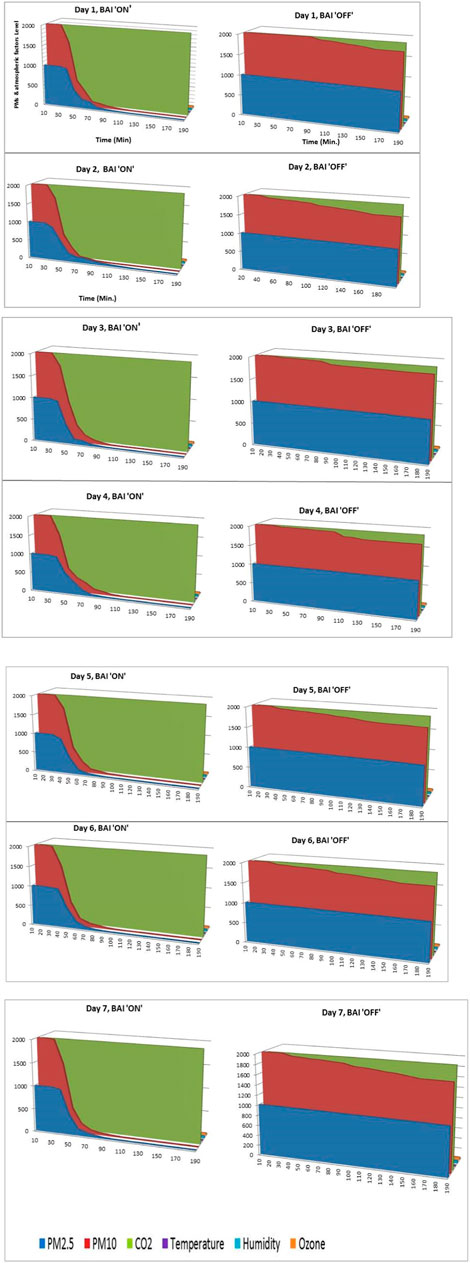
FIGURE 4. Daily comparative performance of bipolar air ionizer, from box A (bipolar air ionizer “ON”) and box B (bipolar air ionizer “OFF”) against incense smoke, and its corollary PM2.5, PM10, CO2 and another variable, i.e., temp, RH, and byproduct O3.
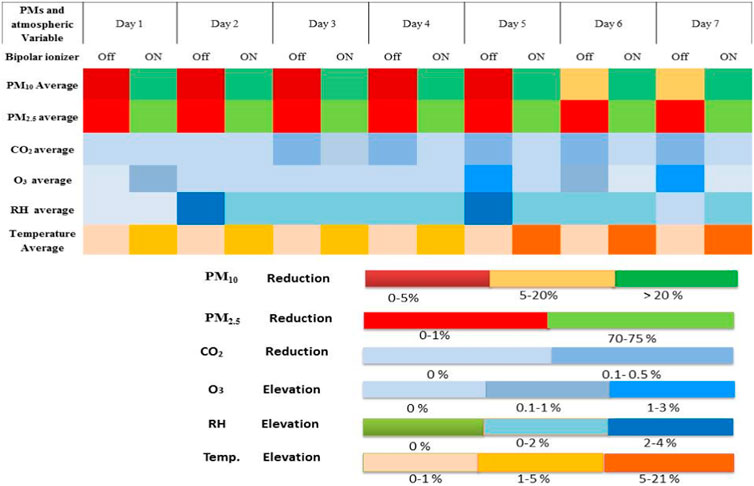
FIGURE 5. BAI associated daily average changes in particulate matter, RH, Temp, O3 and CO2 level.
Daily average values of variables are delineated in Figure 4. Different colors indicate a range of changes in concentration when a bipolar air ionizer is operated. Eq. 1, estimated 7 days average reduction (A) of PM10 levels was 75% and PM2.5 by 74%. The average elevation in background RH and the temperature was observed as 1.8% and 21% respectively compared to negligible CO2 (0.15%) and O3 (0.10%).
3.3 Average effect on particulate matter, background temp., RH and O3 when bipolar ionizer “off” box B
Procured average data showed, the particulate matter concentration reduction rate was significantly less and slow when BAI off Figures 4, 5. Incense smoke remained entrapped for more than 2 h, (Figure 3, box B). The average reduction in particulate matter concentration was observed as PM10 12% and PM2.5 2%, Eq. 2. The average value of CO2 0.15% was similar to “A”. Minor elevation average values of relative humidity (4.9%), temperature (4%), and O3 (1.02%) were observed, Table 3.
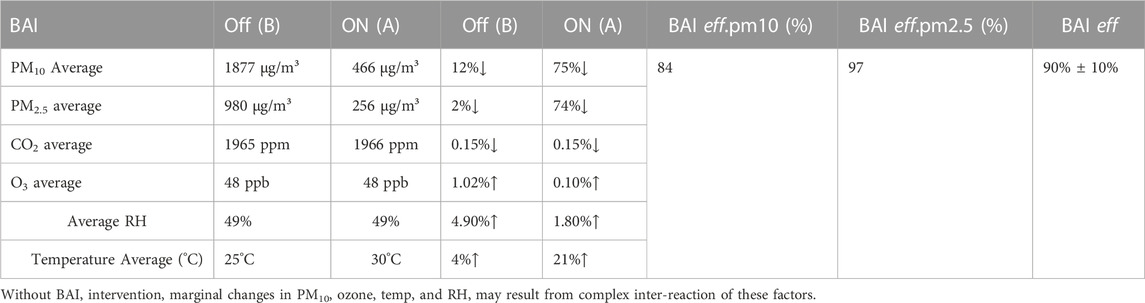
TABLE 3. Average data of variables, average PM2.5, PM10 reduction, and overall particulate removal efficiency of tested BAI.
An experiment has indicated a positive correlation between atmospheric temperature with particulate matter and O3 concentration (Adhikari et al., 2006). In the present study, even a slight elevation of ozone was observed during some runs when BAI was off. Besides byproduct O3 emission, there is limited experimental data to show the other potential factors responsible for O3 elevation, especially during bipolar ionization air cleaning. Though it has been well-documented that ozone production is highly sensitive to temperature and water vapor (Kavassalis and Murphy, 2017).
3.4 Overall particulate matter removal efficacy of tested BAI
The overall efficacy (BAI eff, Eq. 5), of the tested bipolar air ionizer against incense smoke was evaluated on the basis of corollary PM2.5 and PM10 removal efficacy of BAI, Eqs 3, 4, which is obtained from the Eqs 1, 2 daily average reduction. The average PM10 removal efficacy (BAI eff.pm10) was observed 84% ± 10% and PM2.5 removal efficacy (BAI eff.pm 2.5) was 97% ± 10%.
The overall efficacy of tested BAI (BAI eff) against incense smoke was 90% ± 10% in 0.16 m3 box, Figure 6.
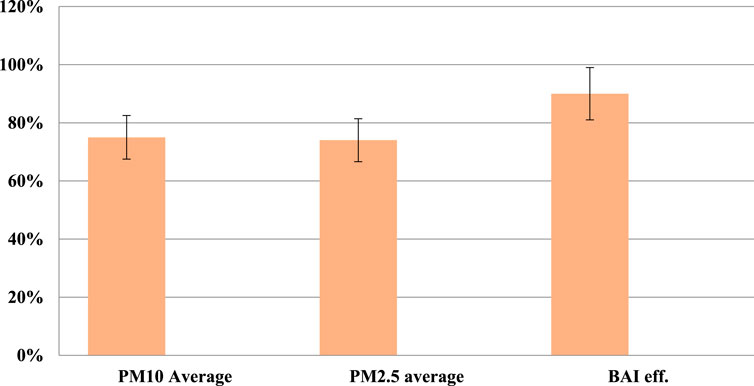
FIGURE 6. The average reduction rate of PM10, PM2.5, and overall particulate matter removal efficacy of tested BAI.
Present data provides significant outcomes against incense smoke and particulate matter removal efficacy of BAI. Since, incense smoke is known to have substantial harmful compounds (formaldehyde, particulate pollutants, and 12 types of volatile organic compounds) and carcinogens, despite the risk of health hazards, and major sources of household pollution, it is a common and prominent practice associated with Asian and Middle Eastern culture (Dalibalta et al., 2015; Zhang et al., 2015; Al-Khlaiwi et al., 2022; Jana et al., 2022).
Various important experiments have been conducted to decrease the incense smoke’s constituents such as electrostatic precipitators for NOx and SO2 removal and nanofiber filter media and high relative humidity for PM2.5 removal (Kawada et al., 2002; Ryu et al., 2019; Xia and Chen, 2020). Though the bipolar air ionizer effect against incense smoke is in its infancy since hundreds of air pollutants make incense smoke a complex mixture of pollutants. The present study demonstrated a promising removal effect of BAI against only particulate matter, which is one of the major constituents of incense smoke. Harmful byproducts emission with BAI operation such as ozone, has been the most serious concern associated with ionization air cleaning. Albeit, there is no abnormal ozone emission observed in this study. Similarly, in our previous study, comparative results from several bipolar ionizers showed up to 80% particulate matter removal efficiency of tested bipolar air ionizers and negligible ozone (Gupta et al., 2023). Current and previous study data indicates ozone emission is not always linked with bipolar air ionizers air cleaning. But more experimental data and BAI models, especially those that used different methods to generate ions over the needlepoint bipolar ionization, are needed to understand.
Studies indicated the byproduct O3 may be associated with specific ion-generating technology, such as the corona discharge method (Zou et al., 2016), while with needlepoint method may be less associated with O3 emission (Zeng et al., 2021). Observed slight elevation of ozone, even when BAI off, was negligible, but indicates other possible events role. For instance, burning incense sticks can produce a variety of pollutants such as CO, CO2, NO2, SO2, and polycyclic aromatic hydrocarbons (Lin et al., 2008). According to the EPA, the presence of heat and light can generate ozone from oxides of nitrogen (NOx) and volatile organic compounds (VOC) (EPA, 2022).
Marginal temperature and RH fluctuated level association with BAI smoke removal, Figure 7.
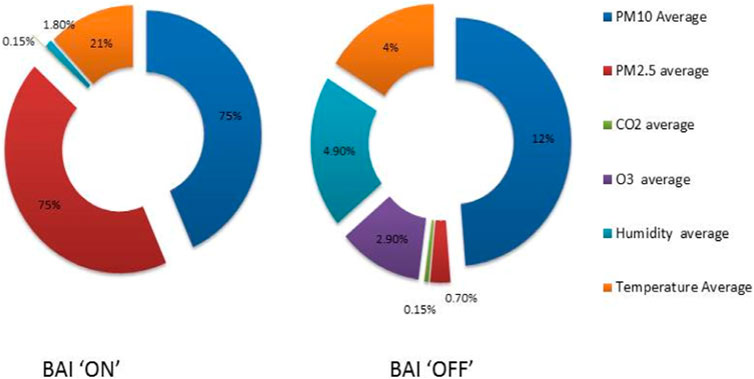
FIGURE 7. RH and temperature fluctuation proportion in Box A and Box B.
Indicates the potential role of background RH and temperature during smoke cleaning. Hitherto, there is no evidence that bipolar air ionizers can influence temperature and RH. But studies suggest that temperature and RH impact could be associated with air pollution in different ways (Fischer et al., 2008; Ding et al., 2021). A recent comprehensive study in one of the most polluted cities, Ulaanbaatar, Mongolia showed HEPA-based air cleaner could be effective to reduce indoor PM2.5 and secondhand smock by 29% in highly polluted regions. Though, a large portion of outdoor PM2.5 in highly polluted areas can occur indoors, where HEPA-based air cleaners’ effectiveness can reduce by > 50% within 5 months of use (Barn et al., 2018). In such a polluted scenario, where incense burning is also common practice and indoor-outdoor particulate matter concentration is high, a bipolar air ionizer could be an additional low-maintenance indoor smoke-reducing option (Zeng et al., 2021).
4 Limitations and prospects
There are certain limitations of our study such as controlled temperature and humidity settings in the laboratory, authors did not access different temperatures, and RH settings, which could be useful to elaborate correlation with bipolar air ionization. The authors have assessed only the main particulate matter proportion of incense smoke, over the other many air pollutants. The study is confined to a small unventilated experimental box, which could be limited to predicting bipolar ionizer smoke removal efficacy in a full-size room; the test bipolar ionizer claimed Clean Air Delivery Rate (CADR) range was 154 m3/h which may show the results according to small boxes size 0.16 m3. Despite, no significant byproduct of ozone emission in our study, the current data is insufficient to predict biopolar air ionizers associated safety concerns. More trials and studies in larger cabins or buildings and other indoor places with occupants may be helpful to understand bipolar reliability and efficacy against other indoor air pollutants such as bioaerosol, allergens, and TVOC.
5 Conclusion
The present study contributes to understanding the bipolar air ionizer removal efficacy against the particulate proportion of incense smoke. Bipolar air ionizer-associated average reduction of PM2.5 and PM10 concentration was observed by 74%–75%. While compared to control, individual PM10 removal efficacy (BAI eff.pm10) was observed 84% and PM2.5 removal efficacy (BAI eff. pm 2.5) was 97%. The overall efficacy of tested BAI (BAI eff.) against incense smoke was 90% ± 10% in 0.16 m3 boxes. Byproduct ozone abnormal elevation was devoid. Tested bipolar air ionizers showed substantial incense smoke removal efficacy under limited experimental settings, which could be helpful to understand bipolar ionizers’ role against indoor smoke and particulate matter. However, other potential byproducts and background temperatures relative humidity correlation, and occupants’ presence relation with bipolar air ionizers requires larger cabin based investigations and trials.
Data availability statement
The original contributions presented in the study are included in the article/supplementary material, further inquiries can be directed to the corresponding authors.
Author contributions
All authors listed have made a substantial, direct, and intellectual contribution to the work and approved it for publication.
Acknowledgments
The authors extend their appreciation to Researchers Supporting Project number (RSP2023R165), King Saud University, Riyadh, Saudi Arabia. The authors are thankful to Dr AA to provide all the necessary facilities for this experiment.
Conflict of interest
Authors NG, AA, RS and SJ was employed by the company River Engineering Pvt. Ltd.
The remaining authors declare that the research was conducted in the absence of any commercial or financial relationships that could be construed as a potential conflict of interest.
Publisher’s note
All claims expressed in this article are solely those of the authors and do not necessarily represent those of their affiliated organizations, or those of the publisher, the editors and the reviewers. Any product that may be evaluated in this article, or claim that may be made by its manufacturer, is not guaranteed or endorsed by the publisher.
References
Adhikari, A., Reponen, T., Grinshpun, S. A., Martuzevicius, D., and LeMasters, G. (2006). Correlation of ambient inhalable bioaerosols with particulate matter and ozone: A two-year study. Environ. Pollut. 140, 16–28. doi:10.1016/j.envpol.2005.07.004
Al-Khlaiwi, T. M., Meo, S. A., Habib, S. S., Meo, I. M. U., and Alqhtani, M. S. (2022). Incense burning indoor pollution: Impact on the prevalence of prediabetes and type-2 diabetes mellitus. Pak J. Med. Sci. 38, 1852–1856. doi:10.12669/PJMS.38.7.6189
Allen, R. W., and Barn, P. (2020). Individual- and household-level interventions to reduce air pollution exposures and health risks: A review of the recent literature. Curr. Environ. Health Rep. 7, 424–440. doi:10.1007/s40572-020-00296-z
Barn, P., Gombojav, E., Ochir, C., Laagan, B., Beejin, B., Naidan, G., et al. (2018). The effect of portable HEPA filter air cleaners on indoor PM2.5 concentrations and second hand tobacco smoke exposure among pregnant women in Ulaanbaatar, Mongolia: The UGAAR randomized controlled trial. Sci. Total Environ. 615, 1379–1389. doi:10.1016/j.scitotenv.2017.09.291
Cooper, E., Wang, Y., Stamp, S., Burman, E., and Mumovic, D. (2021). Use of portable air purifiers in homes: Operating behaviour, effect on indoor PM2.5 and perceived indoor air quality. Build. Environ. 191, 107621. doi:10.1016/j.buildenv.2021.107621
Curtis, L. (2021). HEPA filters and airborne viruses, bacteria, and fungi. Otolaryngology–Head Neck Surg. 166, 1005. doi:10.1177/01945998211035104
Dalibalta, S., Elsayed, Y., Alqtaishat, F., Gomes, I., and Fernandes, N. (2015). A health risk assessment of Arabian incense (Bakhour) smoke in the United Arab Emirates. Sci. Total Environ. 511, 684–691. doi:10.1016/j.scitotenv.2014.12.024
Ding, J., Dai, Q., Zhang, Y., Xu, J., Huangfu, Y., and Feng, Y. (2021). Air humidity affects secondary aerosol formation in different pathways. Sci. Total Environ. 759, 143540. doi:10.1016/j.scitotenv.2020.143540
Fischer, P., Ameling, C., and Marra, M. (2008). Effect of interaction between temperature and air pollution on daily mortality during heat-waves. Epidemiology 19, 379. doi:10.1097/01.ede.0000340495.00450.fb
Gupta, N., Agarwal, A. K., Singhal, R., and Jindal, S. K. (2023). A comparative assessment of the some commercially available portable bipolar air ionizers particulate pollutants (PM2.5, PM10) removal efficacies and potential byproduct ozone emission. Aerosol Sci. Eng. 7, 315–324. doi:10.1007/s41810-023-00182-9
Hernández-Díaz, D., Martos-Ferreira, D., Hernández-Abad, V., Villar-Ribera, R., Tarrés, Q., and Rojas-Sola, J. I. (2021). Indoor PM2.5 removal efficiency of two different non-thermal plasma systems. J. Environ. Manage 278, 111515. doi:10.1016/j.jenvman.2020.111515
Jana, A., Varghese, J. S., and Naik, G. (2022). Household air pollution and cognitive health among Indian older adults: Evidence from LASI. Environ. Res. 214, 113880. doi:10.1016/j.envres.2022.113880
Jiang, S. Y., Ma, A., and Ramachandran, S. (2018). Negative air ions and their effects on human health and air quality improvement. Int. J. Mol. Sci. 19, 2966. doi:10.3390/ijms19102966
Jumlongkul, A. (2022). Low-cost air purifier prototype using a ventilating fan and pump against haze pollution. Aerosol Sci. Eng. 6, 391–399. doi:10.1007/s41810-022-00152-7
Kavassalis, S. C., and Murphy, J. G. (2017). Understanding ozone-meteorology correlations: A role for dry deposition. Geophys Res. Lett. 44, 2922–2931. doi:10.1002/2016GL071791
Kawada, Y., Kaneko, T., Ito, T., and Chang, J. S. (2002). Simultaneous removal of aerosol particles, NOx and SO2, from incense smokes by a DC electrostatic precipitator with dielectric barrier discharge prechargers. J. Phys. D. Appl. Phys. 35, 1961–1966. doi:10.1088/0022-3727/35/16/310
Lin, T. C., Krishnaswamy, G., and Chi, D. S. (2008). Incense smoke: Clinical, structural and molecular effects on airway disease. Clin. Mol. Allergy 6, 3. doi:10.1186/1476-7961-6-3
Matt, G. E., Hoh, E., Quintana, P. J. E., Zakarian, J. M., and Arceo, J. (2019). Cotton pillows: A novel field method for assessment of thirdhand smoke pollution. Environ. Res. 168, 206–210. doi:10.1016/j.envres.2018.09.025
Matt, G. E., Quintana, P. J. E., Hoh, E., Zakarian, J. M., Dodder, N. G., Record, R. A., et al. (2020). Persistent tobacco smoke residue in multiunit housing: Legacy of permissive indoor smoking policies and challenges in the implementation of smoking bans. Prev. Med. Rep. 18, 101088. doi:10.1016/j.pmedr.2020.101088
Nair, A. N., Anand, P., George, A., and Mondal, N. (2022). A review of strategies and their effectiveness in reducing indoor airborne transmission and improving indoor air quality. Environ. Res. 213, 113579. doi:10.1016/j.envres.2022.113579
Pathak, U., Gupta, N. C., and Suri, J. C. (2020). Risk of COPD due to indoor air pollution from biomass cooking fuel: A systematic review and meta-analysis. Int. J. Environ. Health Res. 30, 75–88. doi:10.1080/09603123.2019.1575951
Rai, D., and Tripathi, S. (2022). Antifibrotic in interstitial lung diseases: When, where, and how long? Lung India 39, 491. doi:10.4103/lungindia.lungindia_283_22
Rauniyar, N. K., Pujari, S., and Shrestha, P. (2020). Study of oxygen saturation by pulse oximetry and arterial blood gas in ICU patients: A descriptive cross-sectional study. J. Nepal Med. Assoc. 58, 789–793. doi:10.31729/jnma.5536
Rice, J. L., McGrath-Morrow, S. A., and Collaco, J. M. (2020). Indoor air pollution sources and respiratory symptoms in bronchopulmonary dysplasia. J. Pediatr. 222, 85–90.e2. doi:10.1016/j.jpeds.2020.03.010
Ryu, J., Kim, J. J., Byeon, H., Go, T., and Lee, S. J. (2019). Removal of fine particulate matter (PM2.5) via atmospheric humidity caused by evapotranspiration. Environ. Pollut. 245, 253–259. doi:10.1016/j.envpol.2018.11.004
Thuy, N. T., May, D. T., Thao, D. N. P., Thuy, V. T. T., Thanh, D. Van, Thanh, N. T., et al. (2022). Field study of visitors’ behavior in incense burning and its induced air pollution assessment and treatment. Environ. Sci. Pollut. Res. 29, 45933–45946. doi:10.1007/s11356-022-19124-y
Wheeler, A. J., Allen, R. W., Lawrence, K., Roulston, C. T., Powell, J., Williamson, G. J., et al. (2021). Can public spaces effectively be used as cleaner indoor air shelters during extreme smoke events? Int. J. Environ. Res. Public Health 18, 4085. doi:10.3390/ijerph18084085
Xia, T., and Chen, C. (2020). Toward understanding the evolution of incense particles on nanofiber filter media: Its influence on PM2.5 removal efficiency and pressure drop. Build. Environ. 172, 106725. doi:10.1016/j.buildenv.2020.106725
Yadav, V. K., Choudhary, N., Heena Khan, S., Khayal, A., Ravi, R. K., Kumar, P., et al. (2020a). Incense and incense sticks: Types, components, origin and their religious beliefs and importance among different religions. J. Bio Innov. 9, 1420–1439. doi:10.46344/jbino.2020.v09i06.28
Yadav, V. K., Gnanamoorthy, G., Yadav, K. K., Ali, I. H., Bagabas, A. A., Choudhary, N., et al. (2022a). Utilization of incense stick ash in hydrometallurgy methods for extracting oxides of Fe, Al, Si, and Ca. Materials 15, 1879. doi:10.3390/ma15051879
Yadav, V. K., Malik, P., Tirth, V., Khan, S. H., Yadav, K. K., Islam, S., et al. (2022b). Health and environmental risks of incense smoke: Mechanistic insights and cumulative evidence. J. Inflamm. Res. 15, 2665–2693. doi:10.2147/jir.s347489
Yadav, V. K., Yadav, K. K., Alam, J., Cabral-Pinto, M., Gnanamoorthy, G., Alhoshan, M., et al. (2021). Transformation of hazardous sacred incense sticks ash waste into less toxic product by sequential approach prior to their disposal into the water bodies. Environ. Sci. Pollut. Res. 30, 71766–71778. doi:10.1007/s11356-021-15009-8
Yadav, V. K., Yadav, K. K., Gnanamoorthy, G., Choudhary, N., Khan, S. H., Gupta, N., et al. (2020b). A novel synthesis and characterization of polyhedral shaped amorphous iron oxide nanoparticles from incense sticks ash waste. Environ. Technol. Innov. 20, 101089. doi:10.1016/j.eti.2020.101089
Yeh, K., Li, L., Wania, F., and Abbatt, J. P. D. (2022). Thirdhand smoke from tobacco, e-cigarettes, cannabis, methamphetamine and cocaine: Partitioning, reactive fate, and human exposure in indoor environments. Environ. Int. 160, 107063. doi:10.1016/j.envint.2021.107063
Zeng, Y., Manwatkar, P., Laguerre, A., Beke, M., Kang, I., Ali, A. S., et al. (2021). Evaluating a commercially available in-duct bipolar ionization device for pollutant removal and potential byproduct formation. Build. Environ. 195, 107750. doi:10.1016/j.buildenv.2021.107750
Zhang, J., Li, Y., Wang, L., Zhang, C., and He, H. (2015). Catalytic oxidation of formaldehyde over manganese oxides with different crystal structures. Catal. Sci. Technol. 5, 2305–2313. doi:10.1039/C4CY01461H
Keywords: bipolar ionizer, indoor air cleaning, incense smoke, particulate matter, ozone emission
Citation: Gupta N, Agarwal AK, Singhal RK, Jindal SK, Ali D, Wanale SG, Kumar G, Yadav VK and Patel A (2023) Removal of incense smoke and corollary particulate matter using a portable bipolar air ionizer in an unventilated setup. Front. Environ. Sci. 11:1218283. doi: 10.3389/fenvs.2023.1218283
Received: 06 May 2023; Accepted: 14 August 2023;
Published: 28 August 2023.
Edited by:
Atar Singh pipal, Ming Chi University of Technology, TaiwanReviewed by:
Amit Awasthi, University of Petroleum and Energy Studies, IndiaHimanshi Rohra, Savitribai Phule Pune University, India
Copyright © 2023 Gupta, Agarwal, Singhal, Jindal, Ali, Wanale, Kumar, Yadav and Patel. This is an open-access article distributed under the terms of the Creative Commons Attribution License (CC BY). The use, distribution or reproduction in other forums is permitted, provided the original author(s) and the copyright owner(s) are credited and that the original publication in this journal is cited, in accordance with accepted academic practice. No use, distribution or reproduction is permitted which does not comply with these terms.
*Correspondence: Nishant Gupta, bWljcm9uaXNoYW50QHlhaG9vLmlu; Virendra Kumar Yadav, eWFkYXZhOTRAZ21haWwuY29t; Ashish Patel, dW5pLmFzaGlzaEBnbWFpbC5jb20=