 Ihwan Ghazali1*
 Nur Wardah Sufina Padzil1
 Effendi Bin Mohamad1
 Layla Ahmed Al-Mashjari2
 Irianto Irianto2
 Safarudin Gazali Herawan3
- 1Faculty of Industrial and Manufacturing Technology and Engineering, Universiti Teknikal Malaysia Melaka, Melaka, Malaysia
- 2Faculty of Resilience, Rabdan Academy, Abu Dhabi, United Arab Emirates
- 3Industrial Engineering Department, Faculty of Engineering, Bina Nusantara University, Jakarta, Indonesia
Water is a vital resource that should be utilized effectively. However, it is overused and squandered on a daily need, including the unrestrained use of water for ablution purposes. This condition can be due to a lack of awareness and the influences of peer cultural values. Therefore, the aim of this study is to develop a water-tap design that takes into consideration the influences of cultural value. Accordingly, confirmatory factor analysis and structural equation modelling (SEM) approach the significant correlation between cultural influences and user preferences on water-tap design by referring at the critical threshold output of each attribute. The result showed that collectivism and uncertainty avoidance dimensions were identified as the influencing cultural dimensions and the automatic water level-control float valve, mechanical water-taps with auto-stop function, and transparent water tanks are the most important considerations for water tap technical specification. Through the assessment of its applicability, the use of the prototype can reduce water usage by 54.6% compared to regular water-taps. Correspondingly, the approach of cultural value in the designing process is expected to give more insights to practices such as product designers when determining design specification while for knowledge, it extends the applicability of Hofstede cultural theory for product design and development.
1 Introduction
Water shortage is a critical issue that has been created by water scarcity and the rapid increase in the world’s population. Unfortunately, this issue is likely to be intensified in the future. Water shortage is already a reality in some areas, and one contributing aspect is excessive and uncontrolled usage including in Malaysia (Ismanto et al., 2023). Undoubtedly, sustainable urban water management is crucial to sustaining cities’ global resilience and prosperity (Kumar et al., 2022). Therefore, it is critical to recognise the necessity of responsible water consumption and conservation, which requires all parts of society, including ablution activities. Ablution, or wudu, is a revered and necessary cleansing ritual for Muslims before prayer (Osim and Gabriel Eteng, 2021). It entails cleaning specific body parts in a precise order, such as the hands, face, mouth, nose, arms, head, and feet. While ablution is an essential part of Islamic prayer, it has been noticed that water usage during this practice is excessive and uncontrolled in certain situations (Johari et al., 2013a). Some water-tap users may need to be made aware of how their ablution practices affect the water flow they use during ablution. According to Johari et al. (2013b), ablution comprises the face, hands, forehead to the crown of the head, and the feet. Based on the suggestion from Prophet Muhammad PBUH, the ablution per person should not be more than 1 L of water (Zaied, 2017). However, it stated that while the ordinary Muslim may use 5 L of water for ablution, up to 25 L of filtered raw water are necessary (Wijsen, 2023).
A study on developing water-taps to reduce water consumption during personal hygiene and ablution activities has previously been conducted (Husain, 2020). The study describes the automatic water tap with sensors. However, due to the automatic shut-off feature, which can interrupt the continuous flow of water that is required for ablution, a water tap with sensors may restrict Muslim ablution activities. Sometimes, this type of water tap may be complex, especially for individuals who are unfamiliar with the technology (Achilleos et al., 2023). The sensors may also require routine maintenance and calibration, and any malfunction or failure may require costly repairs or replacements (Gungor et al., 2009). The initial cost of installing water-tap sensors may be higher than a conventional manual water-tap, which may concern some mosques and Islamic centres with limited funds (Down and Read, 2020). These maintenance and cost concerns could further complicate implementing automatic water-tap sensors for Muslim ablution activities.
Hence, mechanical water-taps can be an alternative and provide several advantages for Muslim ablution activities (Zaied, 2017). This type of water tap provides a constant flow of water that is required for appropriate ablution under Islamic law. It enables the users to perform ablution comfortably and efficiently without fretting about the water supply being interrupted. Mechanical water-taps may also provide a higher flow rate control than water-tap sensors, allowing users to adjust the water pressure to their preferences, making ablution more comfortable and efficient. In addition to requiring less maintenance than water-tap sensors, mechanical water-taps reduce the likelihood of malfunctions or disruptions. However, cultural influences may affect the applicability of water-tap design as they will reflect the user’s behaviour when using it. Due to cultural influences, the water-tap user still uses a substantial quantity of water during ablution to ensure spiritual purity and the efficacy of the purifying process (Johari et al., 2013a). This research noticed a limitation from previous studies to consider the cultural influences during the design process of water-taps. This gap is critical because, in this setting, design choices profoundly affect people’s day-to-day lives, especially in areas where ablution is an essential element of culture and religion. This research contributes to the creation of more inclusive and sustainable water-tap designs that respect cultural practises, encourage water conservation, and improve overall user experiences by identifying and resolving these cultural impacts. Therefore, to fill this gap, the objective of this study is to focus on developing a water tap for ablution activities taking into consideration the cultural influences. The existing issues of water-tap design and research gap are illustrated in Figure 1.
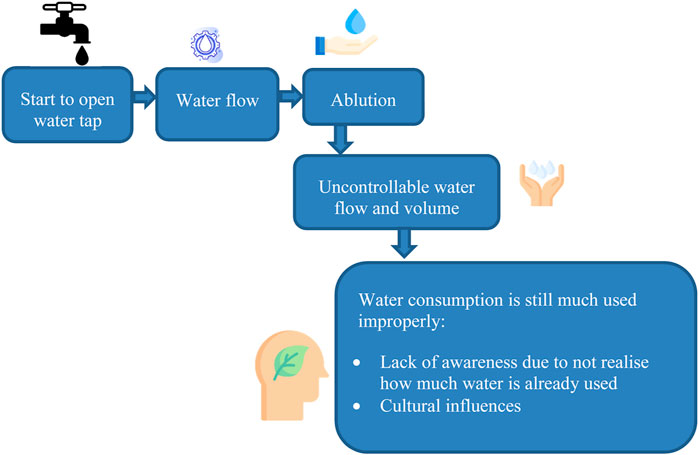
FIGURE 1. Existing water-tap issue.
The objective of this study is to develop a water-tap design that considering the user cultural influences. To achieve this objective, this paper is divided into three sections. The first section concerns the existing study review on ablution and water-tap design. In this phase, the importance of each aspect is identified. The second section discusses the potential correlation between cultural value influences and water-tap attribute preferences. In this section, the elaboration of cultural value preferences on water-tap design is elaborated and the water-tap design specifications are generated. The last phase concerns on the water-tap sketching, 3D design model, to the testing of the prototype. The conclusion section also explains the potential contribution of knowledge and practices.
2 Ablution and water tap design
Efforts to reduce water consumption during ablution activities have recently gained significant attention. One way to achieve this is through innovative water-tap designs that regulate the flow rate of water (Muslim et al., 2019). A study conducted by Barbier et al. (2019) has developed an automated water tap system that reduces water consumption during ablution by controlling the duration of the water flow. The system utilises a motion sensor that detects the presence of the user’s hand and automatically starts and stops the water flow, thus preventing wastage. The study has found that the developed system reduces water consumption by up to 60% compared to traditional water-taps. Muslim et al. (2019) developed an intelligent water-saving system incorporating flow restrictors and timers in water-tap systems to reduce water consumption during ablution.
The system was found to be effective in reducing water consumption without compromising the efficacy of ablution. These studies highlight the potential of innovative water-tap designs in reducing water consumption during Muslim ablution, thus, promoting sustainable water use practices. However, despite the availability of these specific taps design, one critical issue remains, i.e., the need for more user awareness regarding water consumption during ablution (Fidar et al., 2016). Users often do not have a clear understanding or realisation of how much water they use when performing ablution. The absence of water usage indicators or meters on the taps makes it difficult for the users to measure the quantity of water being utilised. Without such a feedback, individuals are unable to comprehend the impact of their ablution practices on water conservation. However, in terms of the general perception of users in designing water-taps for ablution, four essential factors should be considered, i.e., design appearance, functionality, price, quality, and durability (Bakar et al., 2015).
The appearance of the water tap is the most significant factor. Whether it is in a mosque, a private residence, or a public building, people frequently seek water-taps that match the aesthetic of the ablution area. The design should be aesthetically pleasing, producing a serene and inviting atmosphere that enhances the overall ablution experience (Suratkon et al., 2014). Functionality is an essential aspect of the design of the Muslim ablution water-taps. People prefer user-friendly water-taps that facilitate a seamless and effective cleansing process. The water tap should provide precise flow control, allowing users to modify the pressure. As Islamic teachings highly value water conservation, the design should incorporate water-saving features (Suratkon et al., 2014). Price is also an essential factor for the general population. People typically search for water-taps that provide excellent value without sacrificing quality. They seek inexpensive and durable products that ensure a long-lasting and dependable solution for their ablution requirements. In summary, the design preferences of the general population for Muslim ablution water-taps are influenced by appearance, functionality, acceptable price, quality, and durability (Bakar et al., 2015). By addressing these factors, manufacturers can design water-taps that accommodate the requirements and preferences of the individuals performing ablution, enhancing their overall experience and adherence to Islamic rituals (Ghani et al., 2021).
3 Cultural value
Culture is a collection of learned and transmitted methods of thinking, feeling, and acting that represent the unique accomplishments of human groups, including their expression in artifacts (Ranger et al., 2018). According to Mironenko and Pavel (2018), it is an organisation of information, beliefs, procedures, attitudes, and artifacts that is shared among members of a community and is founded on traditional concepts and principles. Culture can be understood as the set of beliefs and behaviours that are required for an individual to be designated as a member of a particular society. (Hofstede, 1980) acquired data from the International Business Machines Corporation (IBM), a major global corporation, and analysed data from forty different countries about cultural studies. Individualism-collectivism, uncertainty avoidance, power distance, masculinity-femininity, long-term orientation, and indulgence are the six dimensions of Hofstede’s theory (Agodzo, 2015).
Individualists are those who are concerned about not belonging to be members in a group and have a strong sense of self-reliance. (Steindl and Jonas, 2012). Individualism is a personality trait that is exhibited by individuals who prioritise their own interests over those of the community (Xiao, 2021). Individualists hold their own beliefs, whereas collectivist cultures prioritise group cohesion, cooperation, and collective objectives over individual pursuits, according to (Hofstede 1980). As men and women are referred to as masculine and feminine (Cheryan and Hazel, 2020), gender roles disparity is a crucial issue for all cultures and has numerous solutions. According to (Bojkowski, 2022), The values exhibit substantial variation across different countries, encompassing a spectrum that spans from assertiveness and competitiveness, goal-oriented behaviour, and the association of success with masculinity, to an emphasis on well-being, style, colour, social obligations, modesty, and attractiveness as attributes associated with femininity. Basabe and Ros (2005) defined power distance as the proportion of national cultures recognising and tolerating unequal societal power distribution. In general, power organisation in society is linked to the dimension of power distance, which includes distinct benefits for individuals at various levels of authority (Zheng, 2019). Moreover, in societies with a significant power differential, everyone can have a predetermined position in the social hierarchy (Mikhailov and Kornilina, 2013). In contrast, low-power distance beliefs adhere to the standard of upholding and respecting inherent equality in social interaction (Oyserman, 2017).
Correspondingly, the uncertainty avoidance reflect to societies who concerned on the ambiguity, uncertainty, unpredictability of various condition and try to find a way to minimise that uncertainties situation (Hillen et al., 2017). In uncertain environments, individuals tend to be more emotional and driven by their apprehensive energy. This reaction indicates how completely a culture has trained its members to feel uneasy or at ease in chaotic situations. Notably, Hofstede (1997) unstructured situations are distinctive, odd, shocking, and unusual characters. On the other hand, civilisations that embrace uncertainty are more tolerant of divergent viewpoints because they strive to construct as few laws as possible and are relativists who permit different philosophical and religious currents to coexist (Guala, 2022). When planning for the future, an individual is willing to forego immediate gratification in favour of long-term success, resilience, persistence, and advancement over the long term (Bissessar, 2018). On the other hand, a culture focusing on the short term is more concerned with leisure time, independence, short-term success, and individualistic or individualist principles (Bissessar, 2018). Short-term personalities emphasise the immediate result, the certainty of their beliefs, and the achievement of their current goals.
The knowledge and utilisation of water-taps during ablution activities might be significantly influenced by cultural value (Johari et al., 2013b). Cultural norms, traditions, and beliefs can shape individuals’ behaviours and attitudes towards water conservation (Koop et al., 2019). In some cultures, there may be a strong emphasis on the purity and cleanliness that are associated with ablution (Fazli et al., 2022). Using more water to get cleaner results can lead individuals to prioritise thoroughness in the ablution process, which may affect the use of a substantial amount of water (Das et al., 2020). Moreover, cultural practices and societal expectations may influence individuals’ perceptions of water usage (Lede et al., 2019). In certain communities, there might be a notion that using excessive water during ablution is a sign of piety or devotion. This cultural association between water usage and religious commitment can further discourage individuals from considering the conservation aspect of ablution practices. To identify the correlation between cultural value and user preferences on water-tap design the hypothesis testing is described in Figure 2.
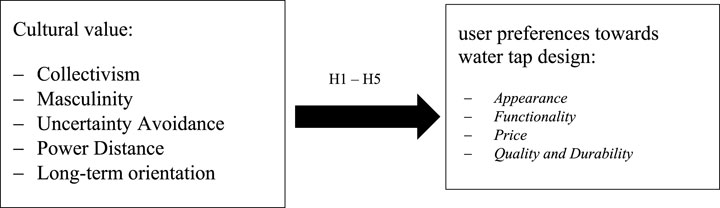
FIGURE 2. Hypotheses testing. H1 Collectivism provides significant influences on water tap preferences. H2 Masculinity provides significant influences on water tap preferences. H3 Uncertainty Avoidance provides significant influences on water tap preferences. H4 Power Distance provides significant influences on water tap preferences. H5 Long-term orientation provides significant influences on water tap preferences.
4 Methodology
This study was divided into three phases: hypothesis testing, concept development, and prototyping. The hypothesis was verified to assess the relationship between five cultural value dimensions and the user’s preferences for water-tap design. After confirming the hypotheses, the next stage was to generate design ideas and determine the water tap’s design specifications. The design specifications were determined based on the structural equation modelling output of the outer weight. This outer weight was deemed more reliable than the questionnaire mean value, thus it was employed. This is because the outer weight results have been statistically validated and the measurement error assessed. Hair et al. (2016) used the outer weight to signify the absolute contributions of the indicators to the assigned constructs. After determining the design specifications, the final phase consisted of designing the design, transforming it into a 3D model for visualisation, and developing the prototype. After concluding the prototype, this study evaluated the applicability of a water tap to reduce the amount of water that was used for ablution activities through testing. The flow of methodology used in this study can be seen in Figure 3.
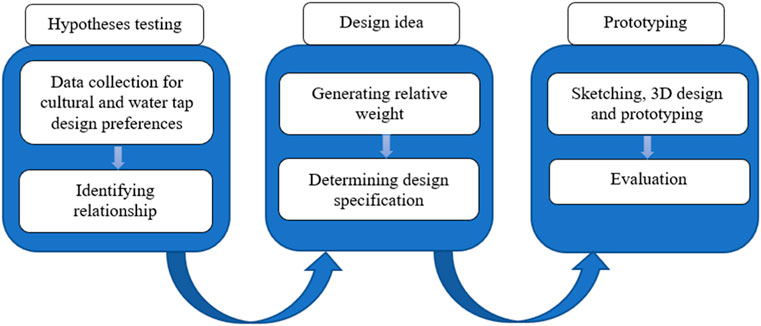
FIGURE 3. Flow of water-taps development.
5 Data collection
The information required for this investigation was gathered from Malaysians’ Muslim prayer. Utilising a questionnaire, the information was collected. The pre-test was administered to guarantee that the respondents would be able to answer the questions easily. To determine whether the respondents needed help in completing the questionnaire, the questionnaire was sent directly to the respondents with 30 number of pre-testing samples. Using the rule of thumb proposed by Cohen (1992), the minimum sample size necessary was determined. The minimum sample size (with 80% statistical power) was predicated based on the maximum number of arrowheads pointing to the structure of the developed model. In this investigation, five cultural dimensions pointed to the preferences of the water-tap users. The minimum sample size for these nine arrowheads was 120, with a minimum R2 of 0.10. There was a total of 142 questionnaires. Twelve questionnaires were discarded due to insufficient responses. The quantity had exceeded the minimum requirement, hence the sample size was sufficient for the measurement. The details of data respondents can be seen in Table 1.
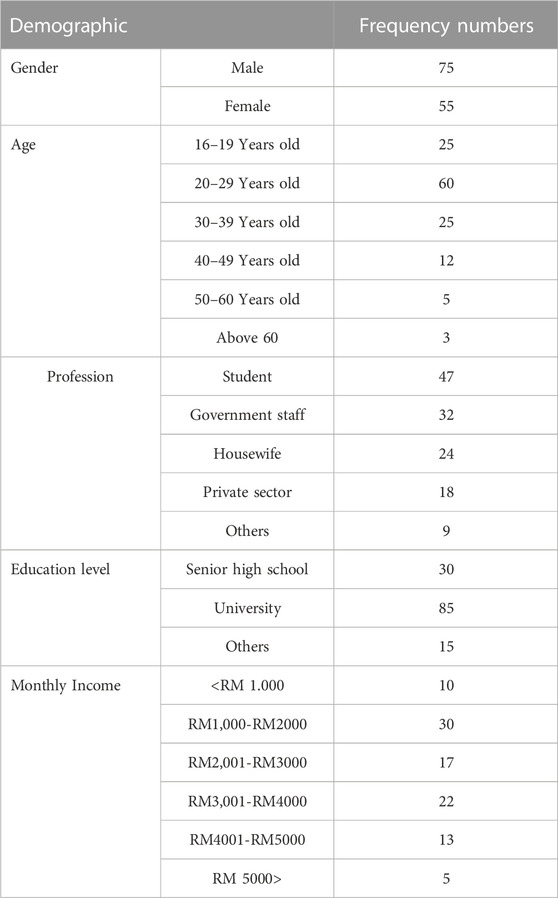
TABLE 1. Respondent demographic.
Using the Partial Least Squares Structural Equation Modelling (PLS-SEM), Hierarchical Component Models (HCMs) were employed to evaluate the hypotheses and identify the water outlet preferences. HCMs, which are two-layered, higher-order structures, were intended to reduce the structural model’s complexity and facilitate a more concise comprehension of the partial least squares (PLS) path (Hair et al., 2014). There are two components within the HCM design: the lower-order component (LOC), which captures sub-dimensions of the abstract entity, and the higher-order component (HOC), which represents the more abstract entity. This approach uses latent variable scores of constructs in the LOC, then applies it as the manifest indicators in the HOC. The two-stage analysis is illustrated in Figure 4.
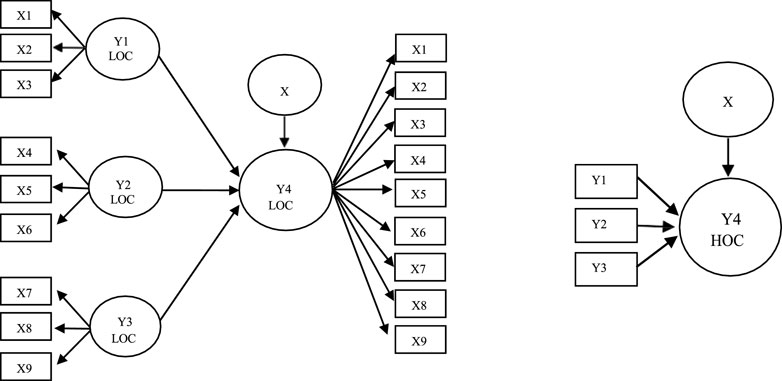
FIGURE 4. The two-stages approach for the HCM analysis (Hair et al., 2014).
This study defines the HOC as “user preferences towards water-tap design,” whereas the LOC includes product appearance, functionality, price, quality, and durability concepts. Four kinds of HCMs exist: reflective-reflective, reflective-formative, formative-reflective, and formative-formative. Reflective measurement reflect to the indicators are highly correlated, dropping the indicator will not alter the meaning of construct. For formative measurement, the indicators are perceived as fundamental attributes that define the concept, the removal of an indicator has the potential to modify the conceptual framework of the construct (Hair et al., 2016). The study employed a reflective-formative measuring technique to investigate the conceptions of cultural value and user preferences for water-tap design. The indicators pertaining to the five cultural dimensions were categorised as a reflective measurement model due to their strong correlation in predicting cultural dimensions. The removing to the indicators had no substantial impact on the conceptualization of the cultural components. The constructs of product appearance, functionality, price, quality, and durability were categorised as the lower-order control (LOC), whereas user preferences for the water-tap design construct were categorised as the high-order construct (HOC). Figure 5 depicts the categorization of construct measurement.
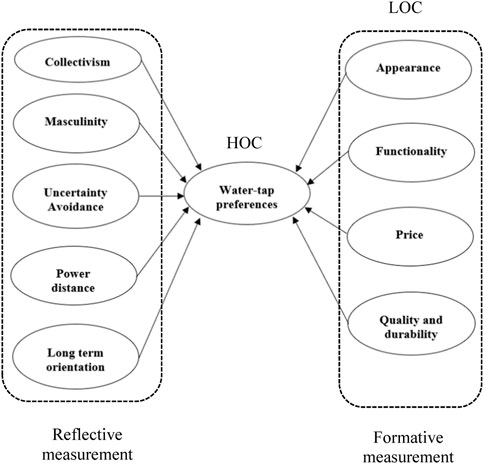
FIGURE 5. The categorization of construct measurement.
As illustrated in Figure 5, the constructs product appearance, functionality, price, and quality and durability are considered as formative in the LOC, with arrows pointing towards the water-tap preferences construct, which is also defined as formative in the HOC, to identify the preferences. Therefore, the paradigm is classified as formative-formative measurement. On the left side of the proposed model, the indicators for the five cultural dimensions are categorised as reflective because they assess the same fundamental concept. Consequently, the elimination of an indicator has little effect on the interpretation of the designated construct. Before the HCM analysis, a confirmatory factor analysis (CFA) for reflective assessment and variance inflation factor (VIF) for formative measurement, sampling adequacy and reliability were assessed to evaluate the data quality for subsequent analyses.
Ensuring that the appropriate dimension allows for additional analysis during data collection is crucial. The sample size and reliability of the data can be evaluated using Cronbach’s alpha, Kaiser-Meter-Olkin (KMO), and Barlett’s sphericity test.
According to the findings presented in Table 2, the Cronbach’s Alpha coefficient exceeds the threshold of 0.7, showing a high level of internal consistency and reliability for the scale. Additionally, the Barlett’s test of sphericity yields a p-value of less than 0.001, suggesting that the data is suitable for factor analysis. Furthermore, the Kaiser-Meyer-Olkin (KMO) measure surpasses the minimum value of 0.5, further supporting the scale’s internal consistency and reliability. The findings suggest that the reliability is outstanding and falls within acceptable thresholds.
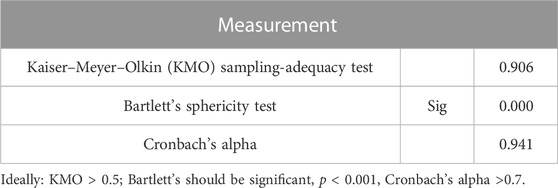
TABLE 2. KMO testing for sample size and reliability test.
6 Results
The CFA was conducted using the Partial Least Squares (PLS) method. The statistical analysis of the data was conducted using the SmartPLS software. The gauging strategy encompasses the utilization of both reflective and formative measurements. The application of Hierarchical Component Model (HCM) was utilized in order to establish the relationships between the design, functionality, cost, durability, and quality attributes of structures (referred to as the lower order construct or LOC) and the preferences of users for water-tap traits (referred to as the higher-order construct or HOC). Conducting convergent validity testing is necessary in order to ascertain the quality of the model. The assessment of convergence validity involves the examination of factor loading, correlation coefficient, and area under the curve (AVE). In order to meet the criteria for factor loadings, they should exceed 0.4 but remain below 0.7. Additionally, the average variance extracted (AVE) should surpass 0.5, while the composite reliability (CR) should exceed 0.7. Despite the fact that the coefficient of correlation (CR) falls within the range of 0.6–0.7, it remains within an acceptable range for further examination in subsequent stages of study.
Table 3 shows that the factor loading, AVE, and CR values were higher than the threshold levels. Therefore, having proved convergent validity, the calculation can move on to determining discriminant validity. It is important to confirm the critical threshold of reflective measurement. The degree to which a construct is actually different from the others according to empirical standards is known as discriminant validity. The discriminant validity was determined using the heterotrait-monotrait (HTMT) critical threshold <0.85. The result of HTMT can be seen in Table 4. The formative measurement, variance inflation factor (VIF) needs to be confirmed to avoid collinearity issues among indicators (Hair et al., 2014). The VIF score should be <5. The result of VIF is served in Table 5.
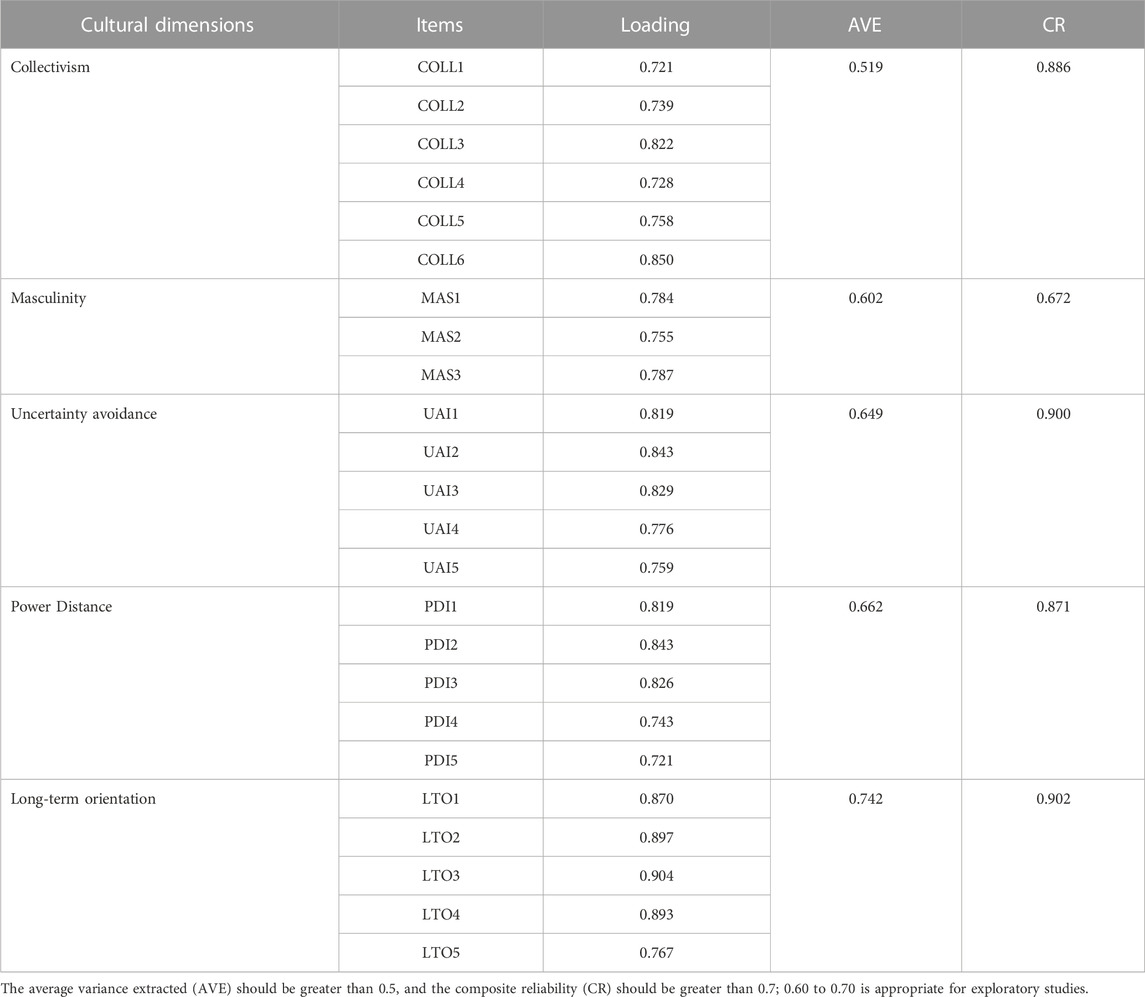
TABLE 3. Compilation of factor loading, AVE and CR.
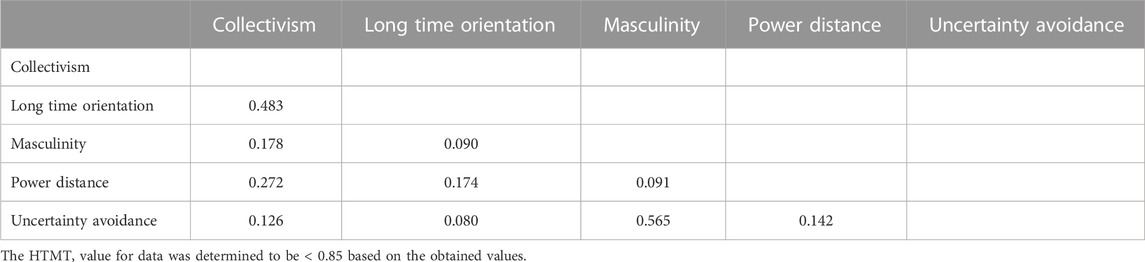
TABLE 4. Heterotrait-Monotrait Ratio (HTMT) for discriminant validity.
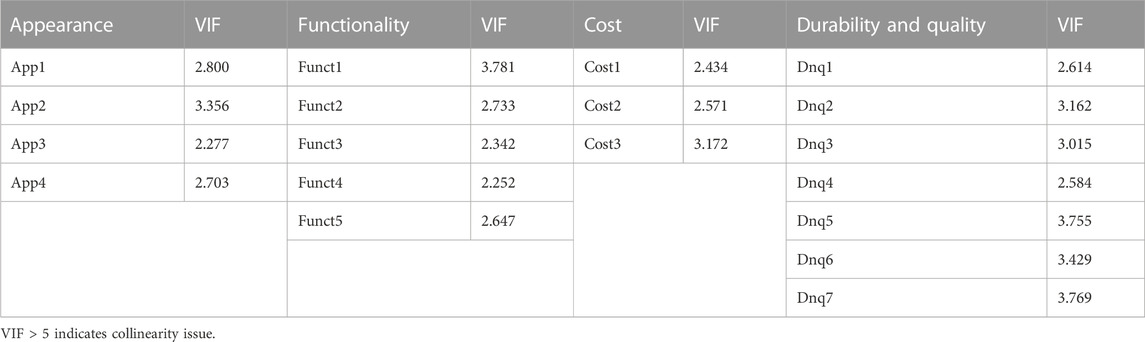
TABLE 5. VIF value of user preferences construct.
After the factor loading, AVE and CR, HTMT and VIF test the next step was to ensure that the five cultural value factors and the users’ preferences for water-taps were put together in a way that worked well. In the study, the correlations are between the five cultural value dimensions and the outside loadings of the constructions of appearance, functionality, cost, as well as quality and durability. These may be due to the repeated hints of formative-formative measures for the builds of appearance, functionality, cost, and quality and durability of the water-taps attributes. Based on the t-value, the importance of the relationships can be figured out. The t-value is the standard way to figure out how important a number is. The link between the cultural value factor and water-taps preferences was identified. For the 1%, 5%, and 10% significance levels, the important t-values were 2.223, 1.417, 4.017, 1.585, and 0.057. The result of structural modelling is presented in Table 6.

TABLE 6. Results of the structural equation model.
The t-value can be utilised to evaluate the significance of the correlations. The recognised criterion for determining the significance of a coefficient is the t-value. The recognised criterion for determining the significance of a coefficient is the t-value; the calculation of the relationship between the dimension of cultural value and the concept of water-taps preferences. The critical t-value was 2.223, which is a significant level. Collectivism (path coefficient = 0.131, p > 0.05) and Uncertainty avoidance (path coefficient 0.321, p < 0.1) substantially affect the water-tap preferences construct, as shown in Table 4. The path coefficient values for collectivism, masculinity, power distance, and long-term orientation are less than the significant critical threshold, thus they do not significantly affect the construct of water-tap preferences.
7 Discussion
This study considered the cultural value influences on the development of water-tap design for ablution activities. Hofstede’s cultural dimensions, such as collectivism, masculinity, uncertainty avoidance, power distance, and long-term orientation, were used to the test to see whether or not there is a link between those qualities and preferences for the design of water-taps. Structural equation modelling approach was used to evaluate the correlation between cultural value dimensions and user preferences on water-tap preferences. According to the study’s findings, collectivism and uncertainty avoidance provided evidence in favour of the hypothesis on water-taps design preferences. Collectivist societies place a high value on interpersonal connections, interdependence, and community harmony. They strongly emphasise shared accountability, communal decision-making, and adherence to social standards (Agodzo, 2015). This correlation was shown to be statistically significant. This finding is in line with Hofstede’s cultural dimension index where Malaysia has a collectivist cultural dimension (Taghipoorreyneh and de Run, 2020). This shows that people who live in collectivist societies prefer designs that encourage appropriate water consumption, considering the overall health and longevity of the group and prioritising group harmony and cooperation, which reveals a positive link with a preference for water-tap designs that encourage water saving.
In addition, the design of water-taps takes on significance when it is considered in the context of uncertainty avoidance, which is related to how cultures handle ambiguity (Hofstede, 2001). In order to lessen the confusion surrounding water use, the idea of water-taps with transparent, modest water tanks is crucial. With real-time visibility into water use, this design reduces uncertainty about water availability and allows the users to exercise better control over their usage. In order to accomplish these goals, the quality of such water-taps is crucial, with leak-proof designs reducing waste and durable materials that ensure lifetime quality.
The other cultural dimensions were investigated, such as masculinity, power distance, and long-term orientation, did not reveal significant connections with the people’s preferences for the design of water-taps that were used in ablution activities. However, it is essential to consider these dimensions in connection to the counterparts that they correspond to. For example, the opposite of masculinity is femininity; feminine user preferences may focus on appearance such softer aesthetics, style, colour and a more compassionate approach (Witek and Kuźniar, 2021). A low power distance suggests a preference for designs that are inclusive and accessible, and that aim to meet the requirements of all persons, irrespective of their position in any social hierarchy (Ghazali et al., 2017). A short-term perspective emphasises the immediate impact of water conservation initiatives, which may influence the design of systems that offer rapid visual feedback on water use.
It was believed that preferences for product design development could be considered as an abstract impression and altered by various reasons, such as the product’s design, utility, and price (Bloch, 1995). Because the concepts that were used in product design development for all the phases were focused on the customer’s or product users’ preferences, the designers must determine the customer or user preferences at the beginning stages of the designing process (Ulrich and Eppinger, 2012). In this study the outer weight results from the Structural Equation Modelling (SEM) analysis were employed to identify the technical specifications of the water-tap design. SEM is a statistical technique that examines relationships between variables by utilising the outer weight results, which indicate the strength of the associations between the cultural dimensions and the users’ preferences of the water-tap design. By reflecting on the outer weight rank, the designers can determine the most relevant technical specification and identify the design priorities of the water-taps.
As described in Figure 6, the outer weight that has been obtained from SEM will be used as the reference from the designer to identify the technical specification and give the weightage one to five value based on judgment and consideration of ability to produce the product, such as technical capability, capital, and human resources. This approach is adapted by several studies such as (Park et al., 2021), Karasan et al. (2022) who have performed the study on product design and used the weight that is given by design to determine design specification using the Quality Function Deployment (QFD) approach. Once all technical specifications are clearly identified, the next step is to multiply the weight from user preferences and weight from the designer. The result of this multiplication can be used as a relative weightage and to identify the priorities for the design of the water-taps. The users’ preferences for water tap that are based on the SEM result and technical specification for water-tap design is described in Table:
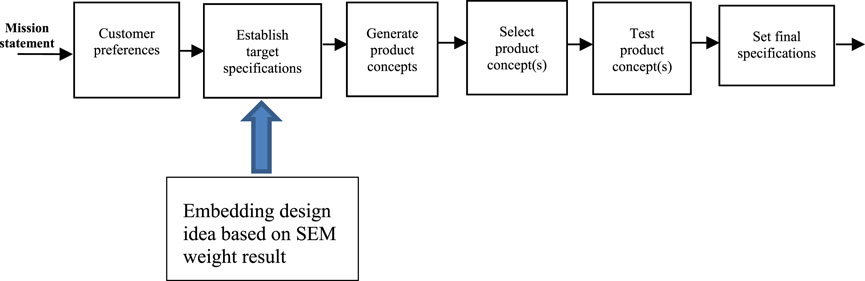
FIGURE 6. Use of the outer weight of SEM to establish technical specification of water-taps.
Based on Table 7, most of the water-tap design prioritises an automatic refill water storage-to reduce water consumption and give a psychological impression of saving water, while the technical specification that relates to the user preferences is to use an automatic water level-control float vale, hence, implementing a mechanical water tap with auto stop function, and the use of a transparent water tank to indicate the amount of water being used during ablution.
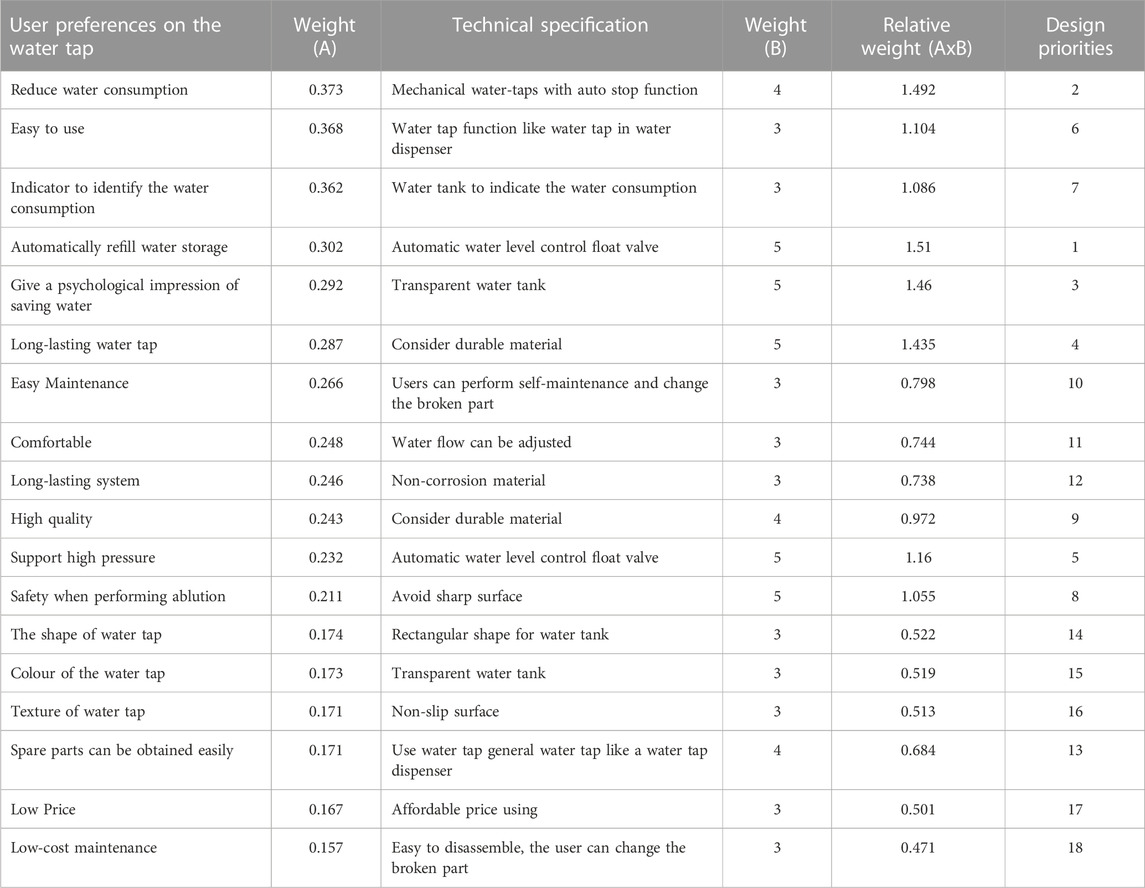
TABLE 7. Water-taps design priorities.
7.1 Generating product concept
This research aims to create an ablution water tap that prompts users to pay closer attention to their actions. One novel way to raise users’ awareness and encourage water conservation among Muslims is to incorporate a small, transparent water tank into the design of ablution water-taps. The two-layer layout features a 1-L reserve layer and a 1-L consumption layer. The top layer of spare water, which is not used, symbolises the water that may be conserved and remains untouched throughout the process. This see-through layer reminds the users to use only as much water as necessary throughout the ablution process. As the users can see the water level in the second layer dropping while they do ablution, it serves as a visual feedback mechanism to help them be more mindful of their water consumption. This design encourages the responsibility and awareness of water usage and helps people see how much water they need. According to Al-alawi et al. (2021), to raise the awareness of worshipers during ablution activities is an important strategy to minimise water usage during ablution activities. By incorporating small transparent tank in the water tap, the users can see how much water is available for ablution. In addition, the water level dropping after each use can be seen when they are using the water tap. Users are constantly reminded to be aware of their use and minimise avoidable wastage by the evident decline in the water level. The concept designed of proposed water-tap design can be seen in Figure 7.
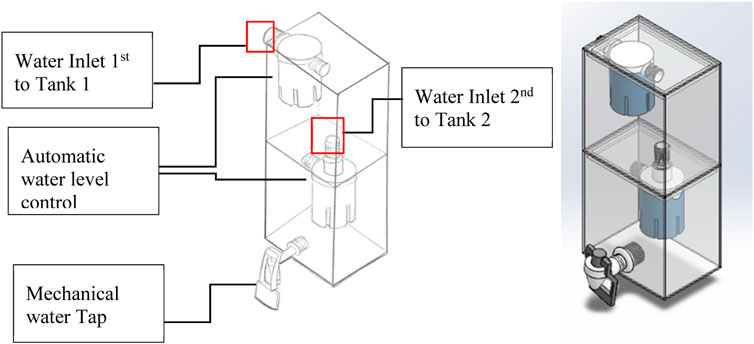
FIGURE 7. Design concept water tap.
Inspired by water dispensers, the mechanical water-tap design can help Muslims save much water during ablution. To conserve water, mechanical water-taps might be modelled after water dispensers to dispense water in a measured fashion. A push-button or lever mechanism may precisely control the water flow, allowing the user to discharge the appropriate amount for each ablution step. Water stops flowing when the button or lever is removed, preventing any spillage even if the user does not want to waste any. This mechanical design encourages conservation by allowing the users complete control over the water flow and limiting the amount of water that is used in the ablution process. In addition to their already high efficiency, these water-tap may be outfitted with water-saving features such as adjustable flow restrictors or timers that further improve their efficacy and aid in developing more sustainable water practices. Mosques and other ablution facilities may actively encourage water conservation and provide a user-friendly and intuitive experience for Muslim worshippers by adopting a mechanical water-tap design that is influenced by water dispensers.
After identifying the users’ preferences and technical specifications, the next stages involved sketching and creating 3D drawings. Sketching permits rapid investigation of various design concepts, whereas 3D drawings provide a more detailed visual representation of the tap’s design. This phase allows designers to refine the design, make any necessary modifications, and ensure that the water-tap’s functional and aesthetic aspects are considered.
7.2 Prototyping and testing
After the design has been finalised, the next step is to generate prototyping and testing the applicability of the designed water tap. Designers can evaluate the tap’s functionality, ergonomics, and performance through prototyping. This iterative process identifies any design defects or improvement opportunities. During the trial phase, the prototype’s water consumption efficacy is evaluated and compared to standard water-taps. The prototype of the designed water tap can be seen in Figure 8.
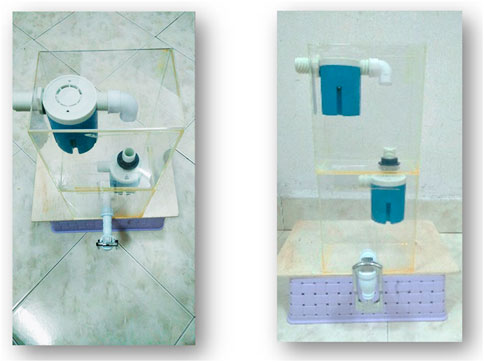
FIGURE 8. Water-tap prototype.
A water flow metre was incorporated into the testing procedure so that water consumption could be accurately measured. This device enabled accurate monitoring and recording of water flow during ablution. These water flow metres were installed in each of the thirty samples, including the designed and standard water-taps to measure the water that was used during ablution.
To evaluate the applicability of the designed water tap, this study performed a comparison of water consumption between the designed water tap and normal water tap. The result of the designed water tap and normal water tap can be seen in Figure 9.
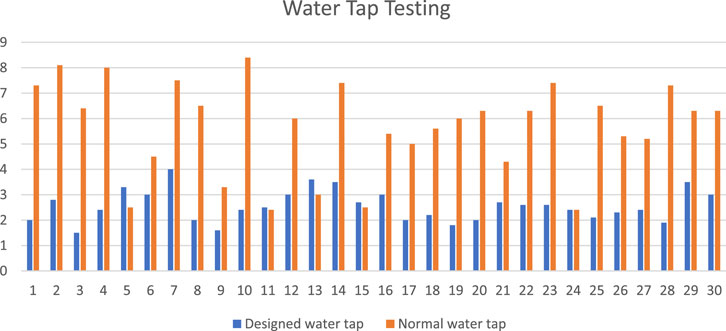
FIGURE 9. Testing result of prototype.
As depicted in Figure 9 the designed water-taps consume an average of 1–3 L per ablution, whereas the standard water tap consumed approximately 3–9 L per ablution or a reduced 1–8 L. From the 30 samples that were used, it was found that 76.8 L of water were used for the designed water tap and 169.4 L for the normal water tap. By percentage, the designed water tap can reduce water usage by 54.6%. This result was similar to the water tap that was designed by Besari et al. (2009).
Cultural value influences are an important factor in determining the design specification. According to Bloch (1995); Salmi and Sharafutdinova (2008), culture should be considered during the design phase because it may affect the customer’s or user’s preferences when choosing the product. In this study, the technical specification of the water tap that corresponds with the user’s preferences encourages water conservation, and adapts to the unique cultural context of ablution activities that have been performed after the significant hypotheses and the outer weight are identified from the structural modelling result. Based on this generated information, the technical specification can be focused (Ghazali et al., 2023). However, another specification also needs to be considered after the primary priority preferences.
8 Conclusion
This study emphasised the importance of incorporating the nature of users’ behaviour through their cultural values into the design of water-taps. Five cultural value dimensions have been tested to identify the significant influences on the users’ water-tap preferences. The approach of using outer weight from the structural modelling result has been performed and considered as a new approach to determine the design specification of water tap. By considering the cultural value, the design process of water-taps not only meets functional needs but also aligns with the cultural norms, beliefs, and traditions of various users’ communities, thus, acknowledging their varied effect characters. User acceptance, adoption rates, and overall satisfaction have been positively impacted through the integration of cultural preferences. In addition, the incorporation of cultural consideration promotes inclusiveness, accessibility, and responsible water utilisation by water-tap users, thereby matching wider sustainability goals. The design process facilitates the promotion of pleasant relationships and trust between the designers and users, which helps to evaluate potential conflicts and misunderstandings in determining design specification. The cultural-centric approach plays a crucial role in enhancing the market success of water-taps by showcasing a genuine recognition of the cultural diversity that binds our global community.
This study contributes to both knowledge and practice. For knowledge, this study extends the application of Hofstede’s cultural theory specifically in product design development. As for practice, to support the sustainability concern, the approach used in this study also can be adopted to identify green attributes in a product design. For instance, the designers have a list of green attributes in their product design to fit the user preferences such as light material usage, using non-toxic material, easy-to-disassemble design etc; the designer may adapt the approach of this study to get more insight and set a priority of green attributes based on customer cultural preferences. This study is limited to five of Hofstede’s cultural dimensions, thus, a further study can elaborate on the dimension of indulgence-restraint to obtain a deeper analysis of cultural study for product design.
Data availability statement
The raw data supporting the conclusion of this article will be made available by the authors, without undue reservation.
Ethics statement
Ethical review and approval was not required for the study on human participants in accordance with the local legislation and institutional requirements. Written informed consent from the participants was not required to participate in this study in accordance with the national legislation and the institutional requirements.
Author contributions
IG: Conceptualization, Data curation, Formal Analysis, Investigation, Methodology, Project administration, Resources, Software, Supervision, Validation, Visualization, Writing–original draft, Writing–review and editing. NP: Project administration, Visualization, Writing–review and editing. EM: Supervision, Writing–review and editing. LA-M: Funding acquisition, Writing–review and editing. II: Funding acquisition, Project administration, Writing–review and editing. SH: Funding acquisition, Project administration, Writing–review and editing.
Funding
The author(s) declare financial support was received for the research, authorship, and/or publication of this article. This research was supported by the Short-Term Research Grant (Grant Number: PJP/2022/FTKMP/S01893), Universiti Teknikal Malaysia Melaka.
Acknowledgments
The authors would like to thank for Universiti Teknikal Malaysia Melaka, Rabdan Academy, Bina Nusantara University for this collaborative research paper.
Conflict of interest
The authors declare that the research was conducted in the absence of any commercial or financial relationships that could be construed as a potential conflict of interest.
Publisher’s note
All claims expressed in this article are solely those of the authors and do not necessarily represent those of their affiliated organizations, or those of the publisher, the editors and the reviewers. Any product that may be evaluated in this article, or claim that may be made by its manufacturer, is not guaranteed or endorsed by the publisher.
Supplementary material
The Supplementary Material for this article can be found online at: https://www.frontiersin.org/articles/10.3389/fenvs.2023.1281318/full#supplementary-material
References
Achilleos, A., Mettouris, C., Yeratziotis, A., Starosta, J., Sotiria, S., Hadjicosta, A., et al. (2023). Lessons learned from older adults fusing of an augmented reality, assisted living and social interaction platform. SN Comput. Sci. 4 (4), 378–422. doi:10.1007/s42979-023-01791-4
Agodzo, D. (2015). Six approaches to understanding national cultures: Hofstede ’ s cultural dimensions. Research. doi:10.13140/RG.2.1.5041.8009
Al-Alawi, A., Sohail, M., Kayaga, S., and Al-Alawi, A. (2021). Water management in mosques of Oman. Sustain. Water Resour. Manag. 7 (6), 95. doi:10.1007/s40899-021-00581-1
Author Anonymous. 2016. “SmartWUDHU ’: Recycling Ablution Water for Sustainable Living in Malaysia SmartWUDHU ” doi:10.5539/jsd.v7n6p150
Bakar, A., Hamid, A., Hanif, M., Abdul, W., Alias, A., and Rahmat, N. (2015). “Ablution design: the concepts and design criteria ablution design: the concepts and design criteria,” in International Colloquium of Art and Design Education Research 2015[i-CADER2015].
Barbier, D., Cugliandolo, L. F., Singh, P., and Kumar Shahi, P. (2019). A prototype of solar-powered automatic ablution tap A prototype of solar-powered automatic ablution tap. Conf. Ser. Mater. Sci. Eng. 486, 012078. doi:10.1088/1757-899X/486/1/012078
Basabe, N., and Ros, M. (2005). Cultural dimensions and social behavior correlates: individualism- collectivism and power distance cultural dimensions and social behavior correlates: individualism-collectivism and power distance. Int. Rev. Soc. Psychol. 18 (1), 189–225.
Besari, A. R. A., Zamri, R., Ahmad, Y., Palil, M., and Satria Prabuwono, A. (2009). Automatic ablution machine using vision sensor. IEEE Symposium Industrial Electron. Appl. 1, 506–509. doi:10.1109/ISIEA.2009.5356425
Bissessar, C. (2018). An application of Hofstede ’ s cultural dimension among female educational leaders. Educ. Sci. 8, 77. doi:10.3390/educsci8020077
Bloch, P. H. (1995). Seeking the ideal form: product design and consumer response. J. Mark. 59 (3), 16–29. doi:10.1177/002224299505900302
Bojkowski, Ł. (2022). Psychological femininity and masculinity and motivation in team sports. Int. J. Environ. Res. Public Health 19 (23), 15767. doi:10.3390/ijerph192315767
Das, C., Sen, S., Singh, T., Ghosh, T., Paul, S. S., Kim, T. W., et al. (2020). Green synthesis, characterization and application of natural product coated magnetite nanoparticles for wastewater treatment. Nanomaterials 10 (1), 1615. doi:10.3390/nano10081615
Down, S., and Read, T. O. (2020). Considerations for the elderly in the mosque the ergonomics of the islamic ablution: exploring considerations for the elderly in the mosque. Cult. Syndr. 62 (58), 58–77. doi:10.30998/cs.v2i1.323
Fazli, B., Khoshkholgh, R., Saeidi, K., and Bahreini, A. (2022). Islam ’ s emphasis on health and the COVID-19 pandemic; A review based on islamic teachings. Med. Educ. Bull. 3 (7), 387–392. doi:10.22034/MEB.2021.319665.1041
Fidar, A. M., Memon, F. A., and Butler, D. (2016). Performance evaluation of conventional and water saving taps. Sci. Total Environ. 541, 815–824. doi:10.1016/j.scitotenv.2015.08.024
Ghani, A. A. A., Sukadarin, E. H., and Mohd Nawi, N. S. (2021). Investigation on the ergonomics design of wudhu ’ (ablution) station at a mosque in a higher learning institution. Curr. Sci. Technol. 1 (1), 15–25. doi:10.15282/cst.v1i1.6442
Ghazali, I., Hanim Abdul-Rashid, S., Md Dawal, S. Z., Irianto, I., Ho, F.-H., Abdullah, R., et al. (2023). Embedding green product attributes preferences and cultural consideration for product design development: a conceptual framework. Sustainability 15 (5), 4542. doi:10.3390/su15054542
Ghazali, I., Salwa, H., Md Dawal, S. Z., Aoyama, H., Edy Tontowi, A., and Sakundarini, N. (2017). Cultural influences on choosing green products: an empirical study in Malaysia. Sustain. Dev. 25 (6), 655–670. doi:10.1002/sd.1685
Guala, F. (2022). Rescuing ontological individualism. Philosophy 89, 471–485. doi:10.1017/psa.2021.35
Gungor, V. C., Hancke, G. P., and Member, S. (2009). “Industrial wireless sensor networks: challenges, design principles, and technical approaches,” in IEEETransactionsonIndustrialElectronics, 27 February 2009 (IEEE).
Hair, J. F., Black, W. C., Babin, B. J., Anderson, R. E., and Tatham, R. L. (2006). Multivariate data analysis. Upper Saddle River: Pearson Prentice Hall.
Hair, J. F., Hult, G. T. M., Ringle, C., and Sarstedt, M. (2016). A primer on partial least squares structural equation modeling (PLS-SEM). Sage Publications.
Hair, T., Ringle, C. M., and Marko, S. (2014). A Premier on partial least seuares structural equation modeling (PLS-SEM). Sage Publications, Inc.
Hillen, M. A., Gutheil, C. M., Strout, T. D., Smets, E. M. A., and Han, P. K. J. (2017). Tolerance of uncertainty: conceptual analysis, integrative model, and implications for healthcare. Soc. Sci. Med. 180, 62–75. doi:10.1016/j.socscimed.2017.03.024
Hofstede, G. (2001). Culture’s consequences: comparing values, behaviors, institutions and organizations across nations. SAGE Publications.
Husain, F. H. (2020). A STUDY OF MOSQUE WATER CONSUMPTION USING SELF CLOSING TAP. J. Islam Dan. Masy. Kontemporari 21 (1), 238–250. doi:10.37231/jimk.2020.21.2.497
Ismanto, A., Hadibarata, T., Widada, S., Indrayanti, E., Safinatunnajah, N., Alkahtani, J., et al. (2023). Groundwater contamination status in Malaysia: level of heavy metal, source, health impact, and remediation technologies. Bioprocess Biosyst. Eng. 46 (3), 467–482. doi:10.1007/s00449-022-02826-5
Johari, N. H., Anwar, R., Hasdinor Hassan, O., and Fairus Kamaruzaman, M. 2013a. “Human behavio ours influence framewor rk of the ab blution tub design,” 2013 IEEE Business Engineering and Industrial Applications Colloquium.
Johari, N. H., Oskar, H. H., Anwar, R., and Fairus Kamaruzaman, M. (2013b). A behaviour study on ablution ritual among Muslim in Malaysia. Procedia - Soc. Behav. Sci. 106, 6–9. doi:10.1016/j.sbspro.2013.12.002
Karasan, A., Ilbahar, E., Cebi, S., and Kahraman, C. (2022). Customer-oriented product design using an integrated neutrosophic AHP & DEMATEL & QFD methodology. Appl. Soft Comput. 118, 108445. doi:10.1016/j.asoc.2022.108445
Koop, S. H. A., Van Dorssen, A. J., and Brouwer, S. (2019). Enhancing domestic water conservation behaviour: a review of empirical studies on influencing tactics. J. Environ. Manag. 247 (July), 867–876. doi:10.1016/j.jenvman.2019.06.126
Kumar, L., Matthew, J. D., Aziz Tunio, I., Kumar, A., Ahmed Memon, S., Williams, L., et al. (2022). Assessment of physicochemical parameters in groundwater quality of desert area (tharparkar) of Pakistan. Case Stud. Chem. Environ. Eng. 6, 100232. doi:10.1016/j.cscee.2022.100232
Lede, E., Meleady, R., and Seger, C. R. (2019). Optimizing the influence of social norms interventions: applying social identity insights to motivate residential water conservation. J. Environental Psychol. 62, 105–114. doi:10.1016/j.jenvp.2019.02.011
Mikhailov, A. P., and Kornilina, E. D. (2013). A system-social approach to the modeling of corruption. Mediterr. J. Soc. Sci. 4 (9), 332–342. doi:10.5901/mjss.2013.v4n9p332
Mironenko, I. A., and Pavel, S. S. (2018). Seeking for the definition of "culture": current concerns and their implications. A comment on gustav jahoda's article "critical reflections on some recent definitions of "culture'"'. Integr. Psychol. Behav. Sci. 52 (2), 331–340. doi:10.1007/s12124-018-9425-y
Muslim, D., Haerani, E., Yu Eidemiller, K., Samylovskaya, E. A., Kudryavtseva, E. A., Eidemiller, K. Yu, et al. (2019). Muslim ablution eco water tap: from first design alpha prototype to second design Muslim ablution eco water tap: from first design alpha prototype to second design. Mater. Sci. Eng. 598, 012119. doi:10.1088/1757-899X/598/1/012119
Osim, S. E., and Gabriel Eteng, N. (2021). Women and ritual purity in islam. Osim 2 (1), 117–127. doi:10.26858/ijses.v2i1.22956
Oyserman, D. (2017). High power, low power, and equality: culture beyond individualism and collectivism. Res. Dialogue 16, 352–356. doi:10.1207/s15327663jcp1604_6
Park, S., Lehto, X., and Lehto, M. (2021). Self-service technology kiosk design for restaurants: an QFD application. Int. J. Hosp. Manag. 92, 102757. doi:10.1016/j.ijhm.2020.102757
Rep, J. H., April, T., Hossini, H., and Kahrizi, M. (2023). The environment from the perspective of the qur ’ an and divine teachings. J. Health Rep. Technol. 9 (2). doi:10.5812/jhrt-133381
Salmi, A., and Sharafutdinova, E. (2008). Culture and design in emerging markets: the case of mobile phones in Russia. J. Bus. Industrial Mark. 23 (6), 384–394. doi:10.1108/08858620810894436
Steindl, C., and Jonas, E. (2012). What reasons might the other one have? perspective taking to reduce psychological reactance in individualists and collectivists. Psychol. (Irvine) 3 (12), 1153–1160. doi:10.4236/psych.2012.312A170
Suratkon, A., Chan, C. M., Syamimi, T., and Tuan, A. B. (2014). SmartWUDHU’: recycling ablution water for sustainable living in Malaysia. J. Sustain. 7 (6), 150–157. doi:10.5539/jsd.v7n6p150
Taghipoorreyneh, M., and de Run, E. C. (2020). Using mixed methods research as a tool for developing an indigenous cultural values instrument in Malaysia. J. Mix. Methods Res. 14 (3), 403–424. doi:10.1177/1558689819857530
Ulrich, K. T., and Eppinger, S. D. (2012). Product design and development. 5th ed. New York: McGraw-Hill/Irwin.
Witek, L., and Kuźniar, W. (2021). Green purchase behavior: the effectiveness of sociodemographic variables for explaining green purchases in emerging market. Sustainability 13 (1), 209. doi:10.3390/su13010209
Xiao, W. S. (2021). The role of collectivism – individualism in attitudes toward compliance and psychological responses during the COVID-19 pandemic. Front. Psychol. 12, 600826. doi:10.3389/fpsyg.2021.600826
Zaied, R. A. (2017). Water use and time analysis in ablution from taps. Appl. Water Sci. 7 (5), 2329–2336. doi:10.1007/s13201-016-0407-2
Keywords: sustainable development, product design and development, cultural value, water-tap design, design for sustainability, green product design, environmental protection
Citation: Ghazali I, Padzil NWS, Mohamad EB, Al-Mashjari LA, Irianto I and Herawan SG (2023) The water tap design for ablution activities considering cultural influences: a design for sustainability. Front. Environ. Sci. 11:1281318. doi: 10.3389/fenvs.2023.1281318
Received: 22 August 2023; Accepted: 31 October 2023;
Published: 13 November 2023.
Edited by:
Raymond Li, University of Canberra, AustraliaReviewed by:
Love Kumar, University of Florida, United StatesChun Kai Leung, City University of Hong Kong, Hong Kong SAR, China
Copyright © 2023 Ghazali, Padzil, Mohamad, Al-Mashjari, Irianto and Herawan. This is an open-access article distributed under the terms of the Creative Commons Attribution License (CC BY). The use, distribution or reproduction in other forums is permitted, provided the original author(s) and the copyright owner(s) are credited and that the original publication in this journal is cited, in accordance with accepted academic practice. No use, distribution or reproduction is permitted which does not comply with these terms.
*Correspondence: Ihwan Ghazali, aWh3YW5AdXRlbS5lZHUubXk=