 Yue Jin
 Xinya Wang
 Qian Wang
- Business School, Nanjing University of Information Science and Technology, Nanjing, China
Agricultural insurance is an important tool for promoting low-carbon agriculture and achieving the “Carbon Peaking and Neutrality” goal. Using panel data from 31 provinces in China from 2001 to 2020, this study analyzes the carbon-reducing effects of agricultural insurance in both crop and livestock sectors. The results show that: (1) Agricultural insurance can decrease agricultural carbon emissions. (2) For crops, agricultural insurance reduces carbon emissions through green technical efficiency, and for livestock products by green technological advances. (3) Agricultural insurance could lower carbon emissions from the livestock and crop sectors in the eastern region. The carbon-reducing benefits of agricultural insurance for the crop sector are seen in the agricultural, agro-pastoral, and pastoral domains; for the livestock sector, these impacts are only seen in the agricultural domains.
1 Introduction
Agricultural production activities are the largest source of greenhouse gas (GHG) besides industrial production and energy consumption (Tang et al., 2021). As a large agricultural country, China’s agricultural carbon emissions account for 17% of the country’s total carbon emissions and are becoming increasingly serious (Jiang et al., 2023). The crop and livestock sectors are the major sources of GHG emissions from agriculture. Carbon emissions from rice cultivation, agricultural inputs, and livestock production accounted for 25.95%, 26.38%, and 33.46% of agricultural carbon emissions in 2019 (Tian and Yin, 2022). The crop sector in China has long formed a “high input, high output, high pollution” rough development mode, which poses a great threat to the ecological environment (Su et al., 2020). The livestock sector also suffers from inadequate infrastructure, sloppy production methods, and low attention to manure resource utilization technology (Zhuang and Li, 2017). In September 2020, China made clear its ambition to peak carbon and become carbon neutral (i.e., the “dual-carbon” goal). Without the deep involvement of agriculture, this goal cannot be achieved. Therefore, it is of practical significance to explore the way of reducing agricultural carbon emissions for sustainable development under the premise of ensuring the stability of agricultural production.
Agricultural insurance is an effective tool to diversify farmers’ production and management risks. It can help change the behavior of agricultural producers, such as using production factors, applying new technologies, and low-carbon agricultural production (King and Singh, 2020; Wong et al., 2020). In 2007, No. One Document of the Central Committee of the Communist Party of China (CPC) first clarified the central government’s subsidy responsibility for agricultural insurance. Between 2007 and 2015, financial subsidies increased at an average rate of 27% per year. The coverage rate of agricultural insurance for the crop and livestock sectors increased from 3.83% to 3.40% in 2008 to 11.98% and 12.88% in 2018 (Zhang Q. et al., 2019). Form 2018, the coverage of the livestock sector has exceeded that of the crop sector for the first time, breaking the decades-long pattern of “strong crop sector and weak livestock sector”. Meanwhile, the impact of agricultural insurance on the sustainable development of the crop and livestock sectors has become a matter of public concern. There are two perspectives on the environmental implications of agricultural insurance. The first one is positive, arguing that agricultural insurance can promote sustainable agricultural development. Some scholars analyze from the view of farmers’ production factor inputs. Tang and Luo (2021) found that agricultural insurance can decrease the proportion of chemical fertilizers and increase the proportion of biopesticides. Li et al. (2022) found that farmers can reduce fertilizer and pesticide inputs by neglecting farmland management after purchasing agricultural insurance. Cai et al. (2024) classified this as an environmentally friendly moral hazard. Some scholars concluded that agricultural insurance motivates farmers to use green production techniques (Mao et al., 2023). Jiang et al. (2023) treat agricultural carbon emissions as a source of agricultural pollution, characterizing agriculture in the narrow sense of plantation, and find agricultural insurance is effective in curbing agricultural carbon emissions. The second perspective is negative, claiming that agricultural insurance does not improve the environment. Liu et al. (2019) found that agricultural insurance is not conducive to curbing carbon emissions from plantations, but interaction with the Internet can decrease carbon emissions. Sibiko and Qaim (2020) argued that agricultural insurance could encourage farmers to use more fertilizer inputs due to the existence of a market failure problem.
In summary, research findings on the environmental impacts of agricultural insurance are remain controversial. In addition, most of the studies are still based on a single-factor input perspective, such as pesticides and fertilizer. A few scholars have used carbon emissions to test environmental performance, but they tend to use crop carbon emissions to represent agricultural carbon emissions. Both crop and livestock sectors are the major sources of agricultural carbon emissions, and the agricultural insurance protection level for the livestock sector has increased and surpassed that of the crop sector (Zhang Q. et al., 2019). Relevant studies often use carbon emissions from the crop sector as a proxy for carbon emissions from agriculture, which may lead to some bias and is not conducive to comprehensively understanding the effect of agricultural insurance’s environmental impact.
The possible contributions of this paper include three main aspects: 1) To improve the accuracy of evaluating the impact of agricultural insurance on carbon emissions, the study conducts a thorough examination of both the crop sector and livestock sector to illustrate the influence of agricultural insurance on carbon emissions across different sectors. 2) To illustrate the mechanism between the different sectors, we utilize technological advancements and technological efficiency as mediators to investigate how agricultural insurance impacts carbon emissions in the crop and livestock sectors. 3) To test the regional and sector differences in agricultural insurance, we construct the model by different areas according to natural resource endowment conditions and the level of economic development. Filling all these gaps, the paper extends the boundaries of the environmental consequences of agricultural insurance and enhance comprehension of the mechanisms and pathways of influence in various sectors of the region. The findings may shed light on agricultural insurance policy adjustments and decision-making for different agricultural sectors.
2 Analysis framework and research hypothesis
2.1 Agricultural insurance and agricultural carbon emissions
The green production behavior of farmers is influenced by their risk choices (Nastis et al., 2019). Since the vulnerability of agricultural production is significant (Cheng et al., 2023; Khan et al., 2023), farmers usually choose to avoid risks to stabilize their income (Qu et al., 2023). Risk-averse farmers tend to choose cautious production methods to mitigate potential risks. For instance, to increase their output, farmers often employ extensive agricultural production techniques and depend on a multitude of production factors to reduce agricultural risks, such as fertilizers and pesticides, resulting in significant pollution to the ecological environment (Zheng et al., 2020).
Agricultural insurance, as a financial tool to protect farmers’ income and disperse agricultural production, can improve farmers’ ability to cope with agricultural production risks, change farmers’ income expectations, encourage farmers to adjust production decisions, and better bear losses caused by green production risks (Ai et al., 2023). Farmers may be more motivated to adopt advanced technologies, scale up agriculture operations, and improve management efficiency which will impact agricultural carbon emissions (Yu et al., 2018). On the other hand, agricultural insurance has a post-disaster compensation effect, and insurance companies will compensate farmers for economic losses after disasters and stabilize farmers’ income (Xie et al., 2024). It is possible to improve farmers’ ability to handle risks, which may then encourage them to embrace eco-friendly agricultural technologies and significantly increase their production efficiency (Yu et al., 2021).
2.2 Agricultural insurance, green technological changes, and agricultural carbon emissions
Research indicates that green technological innovation is an efficient method for addressing environmental issues and reducing carbon emissions (Chang et al., 2023). In agriculture, improving soil management, optimizing nutrient management, adopting efficient irrigation, improving animal nutrition, and managing maturity could lead to significant carbon emission reductions, which are related to green technological progress and green technology efficiency (Khatri-Chhetri et al., 2023). Green technological progress refers to advancements in sustainable development, environmental protection, and technological innovation, which emphasize the creation and use of innovative technologies to address environmental issues, cut down on the use of natural resources, and lessen pollution in the environment (Hu et al., 2023). For instance, the implementation of methane capture devices in animal management and the adoption biopesticides in grain farming. On the other hand, green technology efficiency is centered around utilizing green technology to enhance resource usage efficiency and minimize environmental effects, such as the widespread utilization of modern agricultural devices and equipment that can enhance both production efficiency and labor efficiency (Li and Rao, 2023).
However, green technology may bring farmers with it a higher risk of initial investment and uncertainty. Such as new technologies may have challenges with operation, technical failures, or problems that limit their ability to meet the demands of agricultural output (Hong et al., 2024). In these situations, agricultural insurance may help mitigate the impact of new technological uncertainties on agricultural output, as well as support the potential reduction in revenue due to the use of environmentally friendly technology (Wang et al., 2023). Agricultural insurance can contribute to the reduction of carbon emissions in agriculture through two mechanisms:
In terms of green technological progress, green technology in the planting industry will result in innovations in fertilizers, pesticides, agricultural film, irrigation methods, machinery and equipment, crop varieties, and the replacement of traditional high-emission energy sources. For example, biopesticides and biodegradable film are easily destroyed by soil microorganisms, resulting in a natural material circulation mode that is pollution-free for the environment. However, biological pesticides exhibit a lower control effect in comparison to chemical pesticides, and the application requires intricate technology, which may result in reduced crop output. Agricultural insurance may support the potential revenue decline brought on by biopesticides, then promote green technology and reduce carbon emissions. Compared to the crop sector, the livestock sector is more capital and technology-intensive, and it is easier to realize breakthroughs in low-carbon and green technologies (Pan et al., 2021). China’s agricultural insurance is linked to the harmless treatment of livestock and poultry, which is explicitly required as a precondition for receiving insurance compensation. Large-scale livestock farmers have a greater demand for agricultural insurance and are more willing to choose the harmless treatment, and the adoption of green technology to solve the risk (Peng and Xu, 2023).
In terms of green technical efficiency, farmers with strong operation and management skills can fully allocate existing agricultural production factors by applying professional knowledge based on original production technology, improving the utilization rate of production factors, and reducing carbon emissions while maintaining economic benefits. In the planting industry, grain planting is easier to achieve scale management and efficiency improvement through mechanization (Zhao et al., 2023). In China, the insurance coverage rate of three major staple grains reached 60% or even more than 70% (Zhang Q. et al., 2019). With the promotion of agricultural insurance, growers will be more likely to plant cereal crops. Some studies have indicated that grain crops exhibit more efficiency in terms of agricultural machinery and irrigation utilization compared to cash crops (Feng et al., 2024). Within the sector of farm animals, agricultural insurance firms can gather and assess data from livestock production. They may also supervise and assess the technical proficiency and risk level of farmers. Agricultural insurance agencies can utilize big data and modern monitoring technology to offer tailored technical advice and management guidance to livestock farmers. This assistance aims to enhance production processes and boost technical efficiency. Therefore, agricultural insurance may help farmers make adjustments to their production structure, through specialization and data monitoring management to improve technical efficiency.
Accordingly, the following hypotheses are proposed.
Hypothesis 1. Agricultural insurance could decrease agricultural carbon emissions.
Hypothesis 2. The mediating effects of agricultural insurance on carbon emissions are driven by green technology progress and technical efficiency. However, the effects of different industries and regions may vary and should be examined through empirical testing.
3 Model, variables and data
3.1 Model design
We use a panel data two-way fixed effects model to test agricultural insurance’s impact on carbon emissions. The regression model is shown below (Eq. 1):
Where
3.2 Description of variables and data
3.2.1 Dependent variables
Agricultural carbon emissions consist of the crop and livestock sectors, due to the low greenhouse gas emissions from forestry and fisheries.
Plantation carbon emissions include two parts: First, carbon dioxide (CO2) from agricultural inputs. The carbon emission coefficients refer to Du et al. (2023). The second is the methane (CH4) emission from rice during the growth process (Zhang L. et al., 2019). Considering the obvious differences in water and heat conditions across China, the carbon emission coefficients with regional differences were chosen for rice measurement (He et al., 2022).
Livestock carbon emissions mainly examine the CH4 emissions from gastrointestinal fermentation during livestock and poultry rearing as well as nitrous oxide (N2O) and CH4 and emissions from manure management (Shi et al., 2022). Supplementary Table S1 and S2 list the carbon emission coefficients.
The formula for calculating agricultural carbon emissions is established as follows (Eq. 2):
Where
3.2.2 Main independent variable
Per capita premium income of primary industry employees is used as the level of development of agricultural insurance, reflecting farmers’ awareness of agricultural insurance.
3.2.3 Mechanism variables
There are four mechanism variables: First, plantation green technological progress and technical efficiency, are obtained by measuring and decomposing the green total factor productivity in plantations using the SBM-GML method. According to Wang et al. (2022), land input, fertilizer input, plantation machinery input, and plantation labor input are selected as input indicators, and plantation gross output value and plantation carbon emissions are selected as output indicators. Second, livestock technological progress and technical efficiency are obtained by measuring and decomposing the total green factor productivity of livestock. According to Acosta and Luis (2019) and Yan et al. (2023), capital inputs, intermediate consumption, livestock labor inputs, and livestock machinery inputs are selected as input indicators, and livestock gross output value and livestock carbon emissions are selected as output indicators.
3.2.4 Control variables
Based on relevant literature, select agricultural-related indicators and regional economic and social development indicators as the control variables, including farmers’ wealth level, urbanization rate, level of fiscal expenditure, fiscal support for agriculture, level of economic development, and agricultural industry structure. The definitions of the variables relevant to this study are given in Table 1.
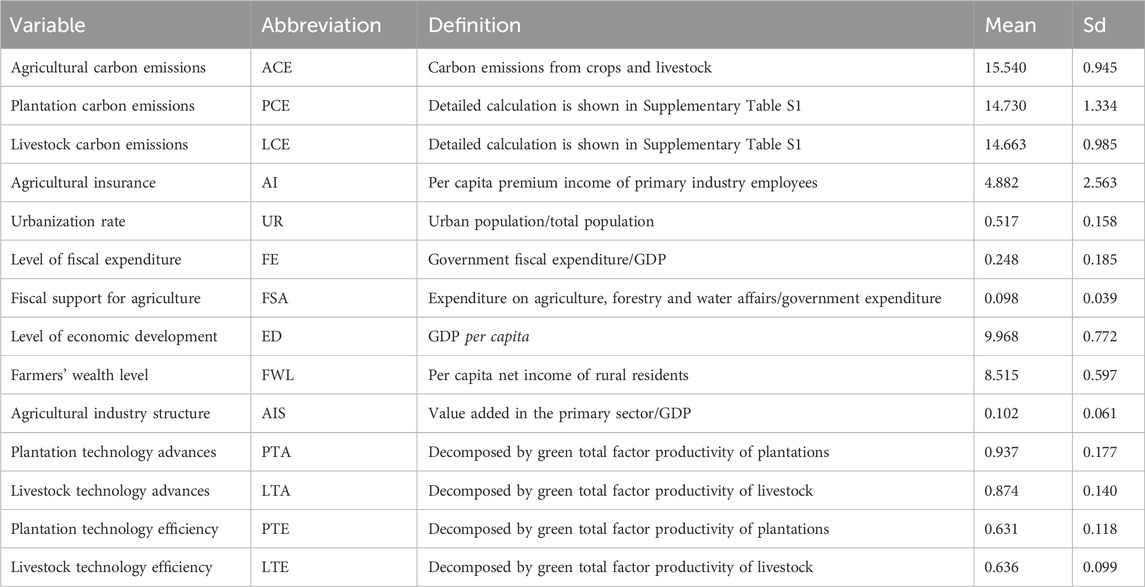
Table 1. Descriptive statistics.
3.3 Data sources
In this study, panel data from 31 provinces in China (excluding Hong Kong, Macao, and Taiwan) are selected from 2001 to 2020. All data are taken from the Yearbook of China’s Insurance, China Statistical Yearbook, China Rural Statistical Yearbook, and China Animal Industry Yearbook. Some missing data are supplemented by interpolation. The descriptive analysis of specific indicators is shown in Table 1.
4 Empirical analysis
4.1 Spatial characteristics of agricultural carbon emissions
Figure 1 shows the carbon emissions from the crop and livestock sectors in each province in 2020. Carbon emissions from the crop sector are mainly concentrated in the central and eastern regions, including Hunan, Hubei, Jiangsu, Anhui, Jiangxi, and Heilongjiang. We can see that the major grain-producing areas are the main source of carbon emissions from the crop sector in China. Carbon emissions from the livestock sector are mainly concentrated in the western region, mainly including Xinjiang, Sichuan, Yunnan, Inner Mongolia, Qinghai and Tibet. We can see that the carbon emissions from the livestock sector generated by grassland pastures in the western part of China are dominant in the country. As for the developed regions such as Beijing, Tianjin, and Shanghai in China, the agricultural carbon emissions are very low given the small share of agriculture. This shows that reducing carbon emissions from the crop sector in the central and eastern regions and the livestock sector in the western regions is of great importance in realizing the national agricultural carbon emission reduction.
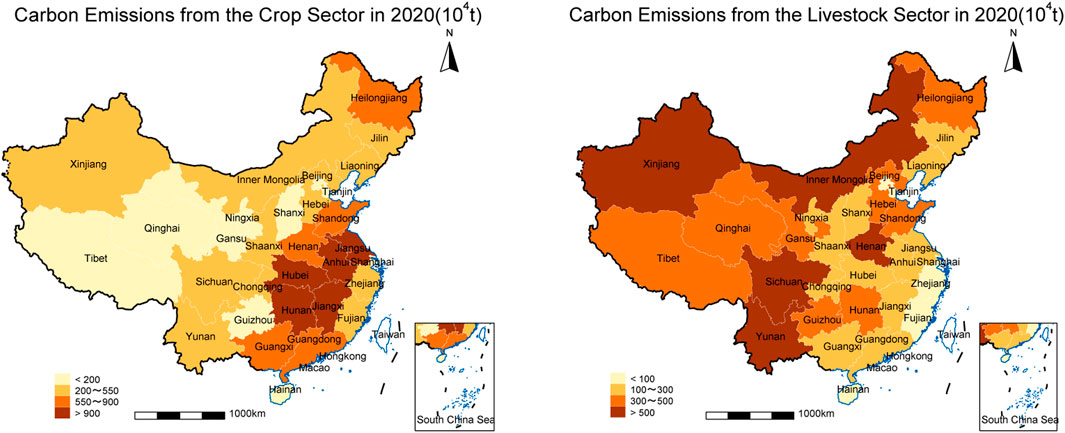
Figure 1. Carbon emissions from the crop and livestock sectors in 2020.
4.2 Baseline estimation results
This study assesses the carbon-reducing effects of agricultural insurance in agriculture, plantations, and livestock. The results are presented in Table 2. Columns (1) to (2) report the regression results for agricultural carbon emissions, columns (3) to (4) report the regression results for plantation carbon emissions, and columns (5) to (6) report the regression results for livestock carbon emissions.

Table 2. Baseline regression results.
Once the control variables are added, the coefficients of the regression results are all negative. Column (2) suggests that agricultural insurance is effective in reducing agricultural carbon emissions at a significant level of 1%. On average, for every 1% increase in the level of agricultural insurance development, the carbon reduction effect in agriculture is 0.025%. Columns (4) and (6) are significant at the 1% and 10% levels, suggesting that agricultural insurance is effective in reducing carbon emissions from the crop and livestock sectors. When the level of agricultural insurance development increases by 1%, the carbon reduction effect of the crop and livestock sectors can increase by 0.041% and 0.021%.
4.3 Robustness test
The results above indicate that agricultural insurance has a carbon-reducing effect on the crop and livestock sectors. This study further tests the robustness of the above results by substituting main independent variable and applying winsorized regression.
1. Replacement of the main independent variable. The depth of agricultural insurance reflects its position in the regional economy (Jiang et al., 2023). The depth of agricultural insurance (DAI), the depth of plantation insurance (DPI), and the depth of livestock insurance (DLI) are expressed by the ratio of premium income to its output value respectively. The results of the impact of insurance depth on carbon emissions from agriculture, plantations, and livestock are presented in columns (1) to (3) of Supplementary Table S3. The estimated coefficients are all significantly negative, suggesting that the results above are robust.
2. Winsorized regression. To eliminate the influence of extreme values on the regression results, the explanatory variables in this study were treated with a 1% winsorization rule. In Supplementary Table S3, columns (4) to (6) are the results of the winsorized regression. It shows that the signs of the estimated coefficients remain unchanged, indicating that the benchmark regression results are still robust and reliable.
4.4 Endogeneity test
To mitigate the problem of reverse causality, the previous period of agricultural insurance is analyzed as an instrumental variable through two-stage regression (IV-SLS). Supplementary Table S4 shows the estimation results of the second stage. The estimated coefficient is significantly negative. Meanwhile, the Cragg-Donald Wald F statistic is 554.978, which is much larger than the critical value of 16.38 for rejecting the hypothesis of weak instrumental variables. It shows that this method has no weak instrumental variables problem and that agricultural insurance still reduces the carbon emissions from agriculture, plantations, and livestock. After dealing with endogeneity problems.
4.5 Mechanism testing
The regression findings of the mechanism of the planting industry are provided in Table 3. Columns (1) and (2), suggest that agricultural insurance can contribute to carbon emission reduction by improving technical efficiency in the crop sector. However, it does not facilitate the green technology advance significantly. The results of the mechanism of animal husbandry are provided in (3) and (4), indicating that in the livestock sector agricultural insurance facilitates the reduction of carbon emissions by promoting technological progress.
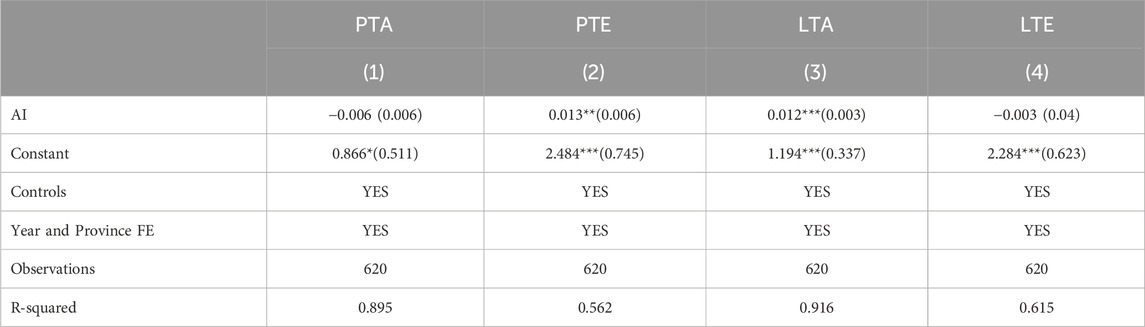
Table 3. Carbon reduction mechanisms.
In the crop sector, agricultural insurance can promote the “grain-oriented” development of the planting industry (Lin and Li, 2023). Compared with cash crops, grain crops are easier to achieve centralized and continuous planting, which is conducive to mechanized production. The use of agricultural machinery further deepens the degree of intensification and specialization of agricultural production and improves the use efficiency of fertilizers, pesticides, labor, and other factors (Zou and Mishra, 2024). Therefore, agricultural insurance is conducive to promoting the improvement of planting technology efficiency. However, green production technology in the crop sector is distinguished by its high expenses, substantial risks, and exceptional effectiveness, requiring funding for its implementation (Qing et al., 2023). Although the crop insurance coverage in China is extensive, the degree of protection is inadequate. Consequently, agricultural insurance is unable to facilitate the advancement of green technologies in the crop sector.
Compared with growing crops, feeding livestock requires more capital and technology, which makes it easier to make advancements in low-carbon and green technologies (Lovarelli et al., 2020). China’s livestock and poultry insurance is based upon the implementation of non-harmful practices. It clearly states that the adoption of non-harmful practices is a prerequisite for receiving insurance compensation (Zhu et al., 2023). As a result, insured farmers are more inclined to embrace environmentally friendly production techniques and prioritize the use of non-harmful methods for handling livestock and poultry. Therefore, agricultural insurance plays a crucial role in advancing the development of eco-friendly techniques in livestock production.
5 Heterogeneity analysis
5.1 Different stages of agricultural insurance development
In 2007, China began to provide central financial subsidies for agricultural insurance and decided to gradually launch pilot projects in some provinces. By 2012, the pilot of policy-based agricultural insurance was expanded nationwide. This study categorizes the period of agricultural insurance development into the budding period (before 2008), the start-up period (from 2008 to 2012), and the development period (after 2012). It then analyzes the carbon-reducing effects of agricultural insurance in various phases.
The results are shown in Table 4. The regression results for the crop and livestock sectors are not significant in the budding and start-up period and are significant in the development stage. The national government’s increasing subsidies for agriculture insurance are enhancing the farmer’s risk dispersion capacity. Consequently, farmers are increasingly inclined to embrace ecologically sustainable practices to reduce carbon emissions.
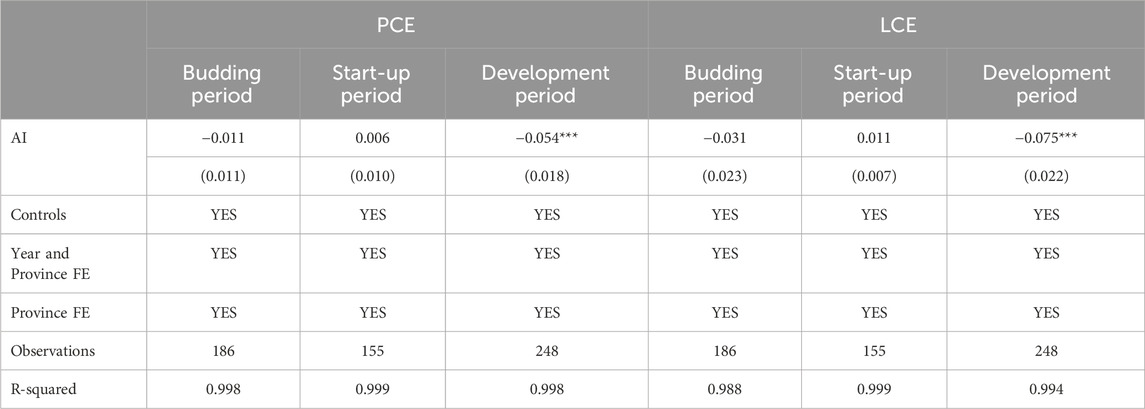
Table 4. Heterogeneity analysis of agricultural insurance at different stages of development.
5.2 Differences in regional economic development levels
China’s regions differ in economic development level and agricultural production structure, which affects the level of agricultural technology, and thus affects carbon emissions from the crop and livestock sectors (Guo and Zhang, 2023). Premium subsidies for agricultural insurance vary between eastern, central, and western regions. Therefore, the study assesses the carbon-reducing effects of agricultural insurance in different regions.
The results are shown in Table 5. Columns (1) to (3) suggest that the carbon-reducing effects of agricultural insurance in the eastern regions are negatively significant. Columns (4–6) suggest that the effects in the central and western regions are not significant. Possible reasons include: compared to the central and western regions, the eastern region has developed agricultural insurance earlier, the insurance system is relatively perfect, and farmers are relatively rich and have funds to purchase agricultural insurance. Meanwhile, farmers in the eastern region have a higher education level (Chen et al., 2023). They tend to have a better understanding and acceptance of agricultural insurance, as well as a stronger risk management concept. Therefore, the production behavior of farmers in the eastern region is more easily influenced by agricultural insurance, which in turn affects agricultural carbon emissions.
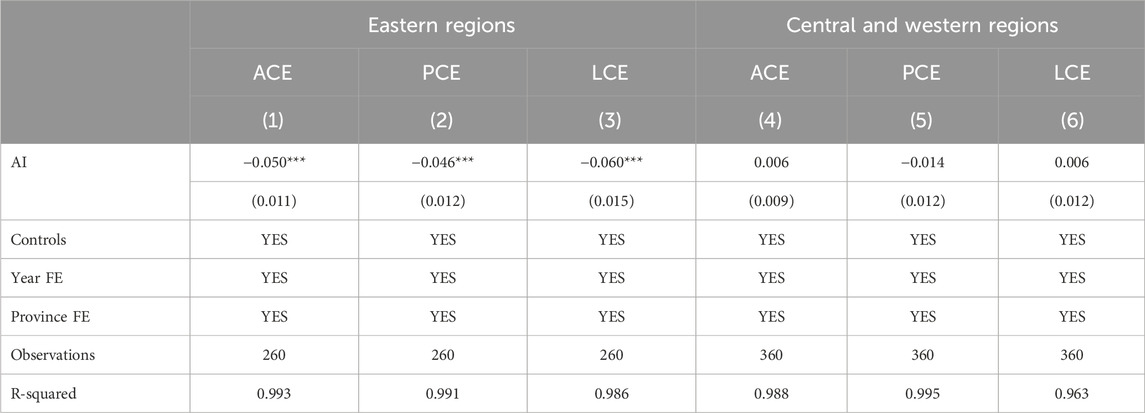
Table 5. Heterogeneity analysis in the East, Central and Western Regions.
5.3 Differences in agricultural production characteristics vary across regions
Following the classification criteria published by the China Animal Husbandry Association, 31 provinces in China were divided into agricultural areas, agro-pastoral areas, and pastoral areas. The results are shown in Table 6. Columns (1), (3), and (5) suggest that the carbon-reducing effects from plantations are reflected in agricultural, agro-pastoral, and pastoral areas. Columns (2), (4), and (6) suggest that the carbon-reducing effect is reflected in agricultural areas, but not in agro-pastoral and pastoral areas. Possible reasons for this result include: agricultural areas are mainly dominated by pigs and poultry, and pig farming is dominated by smallholder backyard farmers in China. Promoting agricultural insurance will encourage large-scale farming in agricultural areas and reduce carbon emissions. The farming scale of cattle, sheep, and other ruminants in agro-pastoral areas and pastoral areas is large (He et al., 2022). This implies that there is limited scope for agricultural insurance to influence livestock carbon emissions through increased scale.
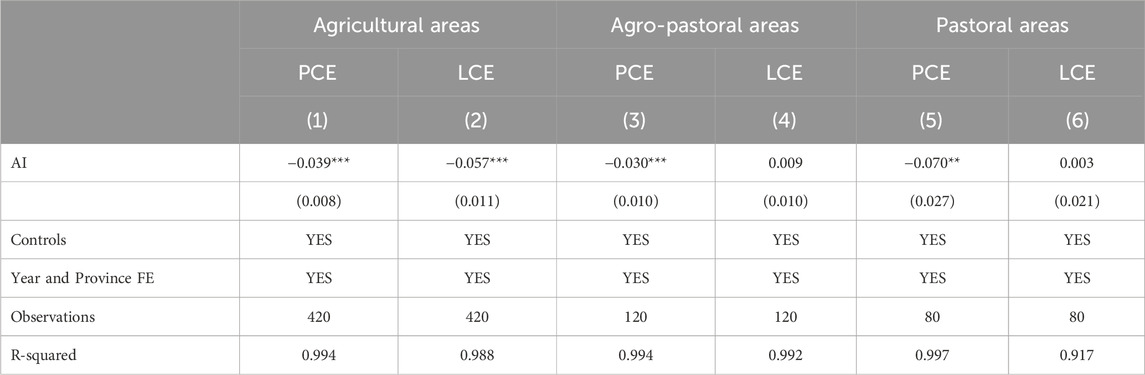
Table 6. Heterogeneity analysis in agricultural, agro-pastoral and pastoral areas.
6 Conclusions and policy implications
6.1 Conclusion
This paper analyzes the carbon-reducing effects of agricultural insurance in both crop and livestock sectors, using panel data from 31 provinces in China from 2001 to 2020. The following findings were obtained: (1) Agricultural insurance has a carbon-reducing effect, and with the development of agricultural insurance, the carbon-reducing effects are gradually improving. (2) The mediating effects of agricultural insurance on carbon emissions are driven by green technology progress and technical efficiency. Agricultural insurance reduces carbon emissions by increasing green technical efficiency in the crop sector and improving green technological advances in the livestock sector. (3) The carbon-reducing effects of agricultural insurance exhibit regional variations. Specifically, economically developed eastern regions demonstrate more pronounced effects, while central and western regions show less apparent impacts. Additionally, agricultural areas, agro-pastoral areas, and pastoral areas benefit from carbon reduction in the crop sector, while the livestock sector’s effects are limited to agricultural areas.
6.2 Policy implications
First, agricultural insurance can raise expected income, strengthen farmers’ ability to manage risk, and eventually affect the adoption of green technology which lowers carbon emissions. Therefore, agricultural insurance providers should be encouraged to develop innovative agricultural insurance options to satisfy a variety of farmers’ business risks. At the same time, it is imperative to foster farmers’ awareness of insurance and enhance the assistance provided for agricultural insurance in economically disadvantaged regions.
Second, strengthen the impact of technology advancements and technological efficiency in reducing carbon emissions by implementing agricultural insurance. Governments may contemplate providing attractive insurance premiums to livestock and crop producers that embrace carbon-reducing technologies, and develop a carbon emission index system for animal husbandry and crop farming as one of the evaluation criteria for agricultural insurance. In crop farming, it is essential to boost the motivation of small-scale farmers and emerging agricultural businesses to embrace innovative technology, new crop varieties, and modern agricultural production practices.
Third, the government could prioritize regional peculiarities when establishing policies designed to promote green agriculture. To meet the needs of agriculture in the central and western regions, the government could develop and promote agricultural insurance products tailored for local specific risks, and reduce insurance premiums to enhance the carbon-reducing effect in these areas. In the livestock sector, agricultural insurance reduces carbon emissions mainly in agricultural areas, provides premium subsidies to farmers who adopt combined planting and breeding methods, optimizes feed structures, and promotes the efficient utilization of manure may enhance the effect.
6.3 Limitations and future directions
This study also has the following limitations: It focuses on analyzing the carbon-reducing effect of agricultural insurance from a macro perspective, without conducting a full assessment of the micro mechanism that influences farmers’ production behavior. Due to the lack of data availability, the empirical proof of the process by which agricultural insurance influences changes in farmers’ cost-benefit has not been established. Our future plans involve directly gathering survey data from farmers to dig deeper into the correlation between agricultural insurance and the economic viability of farmers in both crop and livestock sectors.
Data availability statement
Publicly available datasets were analyzed in this study. This data can be found here: http://www.stats.gov.cn/tjsj./ndsj/ (China statistical yearbook) https://www.epsnet.com.cn (China Insurance Statistical Yearbook).
Author contributions
YJ: Conceptualization, Data curation, Formal Analysis, Funding acquisition, Investigation, Methodology, Project administration, Resources, Software, Supervision, Validation, Visualization, Writing–original draft, Writing–review and editing. XW: Conceptualization, Data curation, Formal Analysis, Funding acquisition, Investigation, Methodology, Project administration, Resources, Software, Supervision, Validation, Visualization, Writing–original draft, Writing–review and editing. QW: Conceptualization, Data curation, Formal Analysis, Funding acquisition, Investigation, Methodology, Project administration, Resources, Software, Supervision, Validation, Visualization, Writing–review and editing.
Funding
The author(s) declare financial support was received for the research, authorship, and/or publication of this article. This work is supported by the National Natural Science Foundation of China [72003099], the Humanity and Social Science Foundation of Ministry of Education of China [20YJC790056], Postgraduate Research and Practice Innovation Program of Jiangsu Province [KYCX24_1385]. The authors also thank the editor and anonymous reviewers for their helpful comments.
Conflict of interest
The authors declare that the research was conducted in the absence of any commercial or financial relationships that could be construed as a potential conflict of interest.
Publisher’s note
All claims expressed in this article are solely those of the authors and do not necessarily represent those of their affiliated organizations, or those of the publisher, the editors and the reviewers. Any product that may be evaluated in this article, or claim that may be made by its manufacturer, is not guaranteed or endorsed by the publisher.
Supplementary material
The Supplementary Material for this article can be found online at: https://www.frontiersin.org/articles/10.3389/fenvs.2024.1373184/full#supplementary-material
References
Acosta, A., and Luis, A. (2019). What is driving livestock total factor productivity change? A persistent and transient efficiency analysis. Glob. Food Secur. 21, 1–12. doi:10.1016/j.gfs.2019.06.001
Ai, T. Y., Zhang, J. S., and Shao, J. W. (2023). Study on the coordinated poverty reduction effect of agricultural insurance and agricultural credit and its regional differences in China. Econ. Analysis Policy 78, 835–844. doi:10.1016/j.eap.2023.04.027
Cai, R., Ma, J., Wang, S. J., and Cai, S. K. (2024). Can crop insurance help optimize farmers’ decisions on pesticides use? Evidence from family farms in East China. J. Asian Econ. 92, 101735. doi:10.1016/j.asieco.2024.101735
Chang, K., Liu, L., Luo, D., and Xing, K. (2023). The impact of green technology innovation on carbon dioxide emissions: the role of local environmental regulations. J. Environ. Manag. 340, 117990. doi:10.1016/j.jenvman.2023.117990
Chen, X. S., Yu, H., Ding, M. L., and Shu, H. S. (2023). The impact of regional socio-economic development on spatial and temporal differences in the distribution pattern of top-tier education in China. Sustainability 15, 15277. doi:10.3390/su152115277
Cheng, Z. Q., Zhu, Z., Zhang, H. J., and Liu, H. L. (2023). Does early disaster exposure affect household agricultural income? Evidence from China. Int. J. Disaster Risk Reduct. 91, 103702. doi:10.1016/j.ijdrr.2023.103702
Du, Y. Y., Liu, H. B., Huang, H., and Li, X. H. (2023). The carbon emission reduction effect of agricultural policy——evidence from China. J. Clean. Prod. 406, 137005. doi:10.1016/j.jclepro.2023.137005
Feng, M., Chen, Y., Li, Z., Duan, W., Zhu, Z., Liu, Y., et al. (2024). Optimisation model for sustainable agricultural development based on water-energy-food nexus and CO2 emissions: a case study in tarim river basin. Energy Convers. Manag. 303, 118174. doi:10.1016/j.enconman.2024.118174
Guo, Z. D., and Zhang, X. N. (2023). Carbon reduction effect of agricultural green production technology: a new evidence from China. Sci. Total Environ. 874, 162483. doi:10.1016/j.scitotenv.2023.162483
He, Y. Q., Cheng, X. Y., and Wang, F. (2022). Study on the regional spillover effect of agricultural carbon emission based on the perspective of agricultural technology diffusion. J. Agrotechnical Econ., 132–144. doi:10.13246/j.cnki.jae.20211208.003
Hong, X., Chen, Y., Gong, Y., and Wang, H. (2024). Farmers' GreenTechnology adoption: implications from government subsidies and information sharing. Nav. Res. Logist. 71 (2), 286–317. doi:10.1002/nav.22150
Hu, J., Hu, M., and Zhang, H. (2023). Has the construction of ecological civilization promoted green technology innovation? Environ. Technol. 29, 102960. doi:10.1016/j.eti.2022.102960
Jiang, S. J., Wang, L. L., and Xiang, F. Y. (2023). The effect of agriculture insurance on agricultural carbon emissions in China: the mediation role of low-carbon technology innovation. Sustainability 15, 4431. doi:10.3390/su15054431
Khan, M. T. I., Anwar, S., Sarkodie, S. A., Yaseen, M. R., and Nadeem, A. M. (2023). Do natural disasters affect economic growth? The role of human capital, foreign direct investment, and infrastructure dynamics. Heliyon 9 (1), e12911. doi:10.1016/j.heliyon.2023.e12911
Khatri-Chhetri, A., Sapkota, T. B., Maharjan, S., Konath, N. C., and Shirsath, P. (2023). Agricultural emissions reduction potential by improving technical efficiency in crop production. Agric. Syst. 207, 103620. doi:10.1016/j.agsy.2023.103620
King, M., and Singh, A. P. (2020). Understanding farmers’ valuation of agricultural insurance: evidence from vietnam. Food Policy 94, 101861. doi:10.1016/j.foodpol.2020.101861
Li, H. J., Yuan, K. H., Cao, A. D., Zhao, X. M., and Guo, L. L. (2022). The role of crop insurance in reducing pesticide use: evidence from rice farmers in China. J. Environ. Manag. 306, 114456. doi:10.1016/j.jenvman.2022.114456
Li, L., and Rao, M. (2023). The impact of government intervention on innovation efficiency of green technology—a threshold effect analysis based on environmental taxation and government subsidies. Front. Energy Res. 11, 1197158. doi:10.3389/fenrg.2023.1197158
Lin, Y., and Li, C. (2023). Towards sustainable development: research on the green growth effect of digital agriculture in China. Environ. Sci. Pollut. Res., 1–14. doi:10.1007/s11356-023-28367-2
Liu, M., Dries, L., Huang, J. K., Min, S., and Tang, J. J. (2019). The impacts of the eco-environmental policy on grassland degradation and livestock production in Inner Mongolia, China: an empirical analysis based on the simultaneous equation model. Land Use Policy 88, 104167. doi:10.1016/j.landusepol.2019.104167
Lovarelli, D., Bacenetti, J., and Guarino, M. (2020). A review on dairy cattle farming: is precision livestock farming the compromise for an environmental, economic and social sustainable production? J. Clean. Prod. 262, 121409. doi:10.1016/j.jclepro.2020.121409
Mao, H., Chen, S. J., Ying, R. Y., and Fu, Y. (2023). How crop insurance influences agrochemical input use: evidence from cotton farmers in China. Aust. J. Agric. Resour. Econ. 67 (2), 224–244. doi:10.1111/1467-8489.12507
Nastis, S. A., Mattas, K., and Baourakis, G. (2019). Understanding farmers’ behavior towards sustainable practices and their perceptions of risk. Sustainability 11 (5), 1303. doi:10.3390/su11051303
Pan, D., Tang, J., Zhang, L. G., He, M. M., and Kung, C. C. (2021). The impact of farm scale and technology characteristics on the adoption of sustainable manure management technologies: evidence from hog production in China. J. Clean. Prod. 280, 124340. doi:10.1016/j.jclepro.2020.124340
Peng, P., and Xu, Z. G. (2023). Subjective preferences, liquidity constraints and price risk management under large-scale farm management. China Agric. Econ. Rev. 16, 76–96. doi:10.1108/caer-12-2022-0287
Qing, C., Zhou, W., Song, J., Deng, X., and Xu, D. (2023). Impact of outsourced machinery services on farmers' green production behavior: evidence from Chinese rice farmers. J. Environ. Manag. 327, 116843. doi:10.1016/j.jenvman.2022.116843
Qu, S. Y., Wang, J. T., Li, Y. H., and Wang, K. X. (2023). How does risk-taking affect the green technology innovation of high-tech enterprises in China: the moderating role of financial mismatch. Environ. Sci. Pollut. Res. 30, 23747–23763. doi:10.1007/s11356-022-23820-0
Shi, R. B., Irfan, M., Liu, G. L., Yang, X. D., and Su, X. F. (2022). Analysis of the impact of livestock structure on carbon emissions of animal husbandry: a sustainable way to improving public health and green environment. Front. Public Health 10. doi:10.3389/fpubh.2022.835210
Sibiko, K. W., and Qaim, M. (2020). Weather index insurance, agricultural input use, and crop productivity in Kenya. Food Secur. 12, 151–167. doi:10.1007/s12571-019-00987-y
Su, Y., He, S., Wang, K., Shahtahmassebi, A. R., Zhang, L. P., Zhang, J., et al. (2020). Quantifying the sustainability of three types of agricultural production in China: an emergy analysis with the integration of environmental pollution. J. Clean. Prod. 252, 119650. doi:10.1016/j.jclepro.2019.119650
Tang, L., and Luo, X. F. (2021). Can agricultural insurance encourage farmers to apply biological pesticides? Evidence from rural China. Food Policy 105, 102174. doi:10.1016/j.foodpol.2021.102174
Tang, Y. H., Luan, X. B., Sun, J. X., Zhao, J. F., Yin, Y. L., Wang, Y. B., et al. (2021). Impact assessment of climate change and human activities on GHG emissions and agricultural water use. Agric. For. Meteorology 296, 108218. doi:10.1016/j.agrformet.2020.108218
Tian, Y., and Yin, M. H. (2022). Re-Evaluation of China’s agricultural carbon emissions: basic status, dynamic evolution and spatial spillover effects. Chin. Rural. Econ. (03), 104–127.
Wang, F. W., Du, L., and Tian, M. H. (2022). Does agricultural credit input promote agricultural green total factor productivity? Evidence from spatial panel data of 30 provinces in China. Int. J. Environ. Res. Public Health 20, 529. doi:10.3390/ijerph20010529
Wang, L., Hu, Y., and Kong, R. (2023). The impact of bancassurance interaction on the adoption behavior of green production technology in family farms: evidence from China. Land 12 (5), 941. doi:10.3390/land12050941
Wong, H. L., Wei, X. D., Kahsay, H. B., Gebreegziabher, Z., Gardebroek, C., Osgood, D. E., et al. (2020). Effects of input vouchers and rainfall insurance on agricultural production and household welfare: experimental evidence from northern Ethiopia. World Dev. 135, 105074. doi:10.1016/j.worlddev.2020.105074
Xie, S. H., Zhang, J. Z., Li, X. J., Xia, X. L., and Chen, Z. (2024). The effect of agricultural insurance participation on rural households' economic resilience to natural disasters: evidence from China. J. Clean. Prod. 434, 140123. doi:10.1016/j.jclepro.2023.140123
Yan, Z. H., Wang, M. L., Sun, Y. M., and Nan, Z. H. (2023). The impact of research and development investment on total factor productivity of animal husbandry enterprises: evidence from listed companies in China. Agriculture 13, 1846. doi:10.3390/agriculture13091846
Yu, J. S., Smith, A., and Sumner, D. A. (2018). Effects of crop insurance premium subsidies on crop acreage. Am. J. Agric. Econ. 100, 91–114. doi:10.1093/ajae/aax058
Yu, L., Chen, C., Niu, Z., Gao, Y., Yang, H., and Xue, Z. (2021). Risk aversion, cooperative membership and the adoption of green control techniques: evidence from China. J. Clean. Prod. 279, 123288. doi:10.1016/j.jclepro.2020.123288
Zhang, L., Pang, J. X., Chen, X. P., and Lu, Z. M. N. (2019a). Carbon emissions, energy consumption and economic growth: evidence from the agricultural sector of China's main grain-producing areas. Sci. Total Environ. 665, 1017–1025. doi:10.1016/j.scitotenv.2019.02.162
Zhang, Q., Wang, K., Li, Y., and Wang, Y. Q. (2019b). On the current situation and problems of risk protection of agricultural insurance in China and relevant suggestions. Insur. Stud., 3–18. doi:10.13497/j.cnki.is.2019.10.001
Zhao, L., Liu, Y., and Shi, J. (2023). The environmental performance of agricultural production trusteeship from the perspective of planting carbon emissions. China Agric. Econ. Rev. 15 (4), 853–870. doi:10.1108/caer-01-2023-0016
Zheng, W. L., Luo, B. L., and Hu, X. Y. (2020). The determinants of farmers’ fertilizers and pesticides use behavior in China: an explanation based on label effect. J. Clean. Prod. 272, 123054. doi:10.1016/j.jclepro.2020.123054
Zhu, S., Yin, M., Yuan, X., and Tian, Y. (2023). Does agricultural insurance promote agricultural carbon productivity? Chin. J. Agric. Resour. Regional Plan., 1–12.
Zhuang, M. H., Zeren, G., and Li, W. J. (2017). Greenhouse gas emission of pastoralism is lower than combined extensive/intensive livestock husbandry: a case study on the qinghai-tibet plateau of China. J. Clean. Prod. 147, 514–522. doi:10.1016/j.jclepro.2017.01.126
Keywords: carbon emission, agricultural insurance, the crop sector, the livestock sector, mediating effect
Citation: Jin Y, Wang X and Wang Q (2024) The influence of agricultural insurance on agricultural carbon emissions: evidence from China’s crop and livestock sectors. Front. Environ. Sci. 12:1373184. doi: 10.3389/fenvs.2024.1373184
Received: 19 January 2024; Accepted: 13 May 2024;
Published: 04 June 2024.
Edited by:
Zhen Liu, Nanjing Normal University, ChinaReviewed by:
Chaoping Xie, Nanjing Agricultural University, ChinaFan Zhang, Institute of Geographic Sciences and Natural Resources Research (CAS), China
Copyright © 2024 Jin, Wang and Wang. This is an open-access article distributed under the terms of the Creative Commons Attribution License (CC BY). The use, distribution or reproduction in other forums is permitted, provided the original author(s) and the copyright owner(s) are credited and that the original publication in this journal is cited, in accordance with accepted academic practice. No use, distribution or reproduction is permitted which does not comply with these terms.
*Correspondence: Xinya Wang, eW5peGF3QHFxLmNvbQ==; Qian Wang, Mjk4MTEwNzI5NEBxcS5jb20=