 Muhammad Naveed1*Maryum Fatima1Zainab Naseem1
 Zulfiqar Ahmad1
 Abdel-Rhman Z Gaafar2Mubashra Shabbir3
 Qurrat ul Ain Farooq4,5Mohamed S. Hodhod6
 Muhammad Imran Khan1
 Dua Shahid7
 Adnan Mustafa7*
- 1Institute of Soil and Environmental Sciences, University of Agriculture, Faisalabad, Pakistan
- 2Department of Botany and Microbiology, College of Science, King Saud University, Riyadh, Saudi Arabia
- 3Livestock and Dairy Development Department, Government of Punjab, Lahore, Pakistan
- 4Phytophthora Science and Management, Harry Buttler Institute, Murdoch University, Murdoch, WA, Australia
- 5Department of Horticulture, Faculty of Agricultural Sciences, University of the Punjab, Lahore, Punjab, Pakistan
- 6Faculty of Biotechnology, October University for Modern Sciences & Arts, Giza, Egypt
- 7Guangdong Provincial Key Laboratory of Applied Botany, South China Botanical Garden, Chinese Academy of Sciences, Guangzhou, China
Sewage water is extensively used for irrigation, serving as a valuable resource for plant growth to enhance agricultural productivity. However, this practice also results in a significant accumulation of heavy metals in the soil, posing potential environmental and health risks. A study was designed to evaluate the combined effect of amendments on heavy metal immobilization in soil and improved growth and yield in pea plants. For this, the soil for each treatment was mixed with biochar (BC) (1% w/w), polyacrylamide (PAM) (0.5% w/w), and also applied in combination. Pea plants were irrigated with tap water (TW), sewage water (SW), and tap + sewage water (TW + SW). A factorial design was applied to analyze data statistically. The combined application of the biochar and polymer showed a positive response by significantly enhancing the plant growth parameters (39%–84%), physiological attributes (67%–69%), and reducing Cd (56%) and Cr (65%) concentration in soil applied with SW and TW + SW. Moreover, treatment with a combined application of BC and PAM significantly reduced Cd concentrations by 43% in roots, 50% in shoots, and 91% in grains. Similarly, Cr concentrations were reduced by 51% in roots, 51% in shoots, and 94% in grains compared to the control. Overall, the study results indicate reduced bioaccumulation and health risks associated with potentially toxic elements (PTEs), supporting the application of the polymer and biochar for irrigating pea plants with TW + SW. Leveraging the combined benefits of polymer and biochar amendments appears to be an effective strategy to remediate PTE-contaminated soil, thereby increasing plant growth and yield.
Introduction
Extensive urbanization and industrialization have caused a six-fold increase in the demand for unpolluted water (Nzediegwu et al., 2019), resulting in a global scarcity of potable water. Anthropogenic activities have degraded freshwater quality worldwide by introducing industrial and agricultural contaminants (Mohan et al., 2014). This issue is particularly severe in countries like Pakistan, an agricultural state in a semi-arid region with limited freshwater resources. As a large volume of potable water is consumed for irrigation of agricultural lands (FAO. AQUASTAT, 2016; UNESCO, 2016), farmers are dependent on the consumption of sewage water as an alternative to freshwater.
The use of wastewater for irrigation has been proposed and encouraged by many researchers to tackle the problem of freshwater scarcity (Rusan et al., 2007; Dhiman et al., 2020). However, in developing countries, the release of untreated wastewater into freshwater resources is a common practice, causing the contamination of arable land when irrigated with untreated wastewater (Qadir et al., 2010). Wastewater comprises nutrients; surfactants; potentially toxic elements (PTEs) like cadmium (Cd), chromium (Cr), nickel (Ni), and lead (Pb) (Khan et al., 2008); and organic pollutants (Khalid et al., 2018). Therefore, the increased wastewater generation caused by extensive urbanization and industrialization demands the safe disposal of wastewater.
PTEs are considered environmentally toxic pollutants and substances that pose health risks, and their accumulation in animals and humans has been aggravated by anthropogenic activities (Sabir et al., 2022a). In developing countries like Pakistan, due to lack of awareness and resources, poor management of industrial waste contributes to the spread of PTEs in the environment. This accumulation of PTEs in the soil system is a matter of concern for growing industries in developing countries. The wastewater contains trace metals from domestic, commercial, surface runoff, and industrial origins (Fuerhacker et al., 2010), and their presence in the soil induces toxicity by ionic imbalance, leading to declined growth in plants.
Chromium toxicity in plants resulted in reduced germination, growth, and disturbed photosynthesis, nutrient and water uptake, and enzymatic activity. This triggers the production of reactive oxygen species (ROS) to oxidize biomolecules causing plant death (Ekere et al., 2020). High toxicity, persistent nature, increased bioavailability in open environments, and resulting bioaccumulation and biomagnification are the important factors causing health risks in plants, animals, and humans (Naveed et al., 2021). Various approaches (Jiang et al., 2022) such as chemical methods (Allegre et al., 2004), bioremediation (Naseem et al., 2023), physical treatment (Abbas et al., 2015), and phytoremediation (Naveed et al., 2021) have been reported for remediation of PTE-contaminated soils (Jan et al., 2021). However, adsorption by biochar (BC) and polymers is the most economical, practical, efficient, effective, and eco-friendly approach among all the available techniques for immobilization of PTEs.
Super adsorbent polymers, sometimes called hydrogels, are highly hydrophilic networks of loosely crosslinked polymer chains that can absorb and retain up to hundreds of times their weight of water or aqueous solutions (Dhiman et al., 2020) and slow water release, which could improve the growth of the plant in water stress conditions (Beckett and Augarde, 2013), supply the cation, and decrease the availability of some toxic elements. Superabsorbent polymers (SAPs), also identified as soil polymers or macromolecular polymers, are proficient in repeatedly absorbing, retaining, and releasing extremely large amounts of water, relative to their own weight. SAPs can absorb more than a thousand times their original weight in water, and they can retain liquids even under pressure (Liu et al., 2009). These polymers are applied in agriculture to improve the soil’s physical properties like water- and nutrient-holding potential and promote crop growth in arid and semi-arid areas. Recently, the most commoditized polymers are mainly polypropylic acid (PAA) or polyacrylamide (PAM) (Islam et al., 2011; Li et al., 2022).
Acrylamide is a white, colorless, chemical compound that is soluble in water, ethanol, ether, and chloroform and is produced synthetically. The large surface area and presence of various functional groups make usage of polymers ideal in various fields like agriculture, horticulture, biomedicine, bioengineering, food storage, and treatment of wastewater (Li et al., 2022). Modified-polyacrylamide hydrogels are used commercially for the purification of wastewater and metal extraction (Dhiman et al., 2015). Due to their hydrophilic nature and carboxylic functional groups, polymers can tightly bind to PTE, thereby minimizing the uptake of heavy metals by plants (Huttermann et al., 2009). Synthesized polymers have been used extensively with adsorbents for heavy metal removal since the surface properties of the adsorbents can be modified by enhancing available functional groups to improve their adsorption ability for pollutants (Wang et al., 2015). One way to decrease PTE availability to plants is by increasing binding sites for PTEs in soil through amendment application.
Biochar is the end product of pyrolysis, carbonization, and gasification of plant and animal-based materials (ASABE, 2011) and contains a high surface area, numerous pores, various oxygen-containing functional groups, and high cation exchange capacity with alkaline pH (Lehmann, 2007; Al-Wabel et al., 2017). BC application may improve crop yield by cultivating polluted land. A more recent study (Nie et al., 2018) showed that sugarcane bagasse-derived BC significantly reduced Cd, Cu, and Pb uptake by Pak Choi (Brassica chinensis L.) plants grown in wastewater-polluted soil, significantly increasing the yield. A pot experiment study with tobacco stem-derived BC showed that the application of BC led to immobilization of Cr, Cu, and Pb in soil (Zhang et al., 2019). Additionally, BC can serve as a low-cost adsorbent for heavy metal removal in wastewater treatment plants (Inyang et al., 2016).
Generally, soils are good accumulators of PTEs, and application of BC in the topsoil leads to further immobilization of PTE. Due to its diverse surface characteristics, BC is known to be effective in the adsorption of PTE (Lehmann, 2007). Modification of BC with foreign materials such as silica, zeolites, polymers, and nutrient enrichment improves its physiochemical properties and ameliorates its efficiency and environmental influence (Ok et al., 2015; Rafique et al., 2022). The use of BC amendments along with synthetic (acrylamide, polyurethane, polyvinyl, and resins) and natural polymer derivatives of algal polysaccharides has shown a promising influence on the immobilization of chromium in soil (de-Bashan and Bashan, 2010).
Considering the interaction of wastewater irrigation, soil PTE, and polymers and BC, it is suggested that employing cost-effective techniques, such as incorporating polymers and BC into the soil, could be safe for using sewage water in arable soils In previous studies, the use of BC with other organic amendments like compost has been reported (Coelho et al., 2018; Naveed et al., 2021). Polymers along with BC induce a large number of binding sites to hold cationic contaminants and sequester carbon from the environment (Ekebafe et al., 2012). Polymers also help reduce BC pH and improve its performance in alkaline soils as well.
The simultaneous use of polymers and BC emerges as an effective approach to enhance the growth and yield of plants facing heavy metal stress. Application of polymers in soil will increase immobilization of PTE and improve soil properties like water- and nutrient-holding capacity, which would be beneficial for plant growth. The use of BC will help in increased immobilization of PTE in soil, providing essential nutrients. Moreover, the combined application of BC and polymer has not been reported previously. Therefore, we hypothesized that the co-application of BC and polymer could be a better strategy to mitigate risks of PTEs, while enhancing soil properties like water-holding capacity, nutrient availability and organic matter, and improving the growth, physiology, and yield of plants. The objectives of this experiment were to evaluate the impact of polymer–BC and their combined application on growth, physiology, water relations, yield of pea plants grown under different levels of sewage water along with the phytoremediation potential, and associated health risks of pea plants grown with sewage water containing Cd and Cr PTE.
Materials and methods
Pot experiment
The research area is located in Faisalabad, Punjab, Pakistan, at latitude (31.41°) and longitude (73.07°). Soil samples were collected from the research area of the Institute of Soil and Environmental Sciences, University of Agriculture, Faisalabad. The soil was sand clay loam with 7.85 pH, 1.29 dS m−1 EC, 13.2 cmolc kg−1 CEC, 0.55% organic matter, 0.54% total nitrogen, 4.09 mg kg−1 available phosphorus, and 126 mg kg−1 extractable potassium. The cadmium and chromium concentrations were not detected in the field soils. The soil samples were air-dried and sieved (2.0 mm) to make it homogenized, and a total of 36 pots were filled with soil. Sewage water from the sewage canal Saeed Abad near the University of Agriculture Faisalabad, Pakistan, was collected. The experiment was conducted following completely randomized design (CRD) with factorial settings and three replications.
The sewage water was analyzed for determination of PTE Cd and Cr, and their concentrations were found above the safe limit (World Health Organization, 2011). BC derived from sugarcane bagasse was prepared in a laboratory muffle furnace (at the pyrolysis temperature of 300 °C with a retention time of 60 min), previously reported to enhance metal tolerance and pea plant health (Naveed et al., 2020). The polyacrylamide (anionic) was acquired from Yixing Bluwat Chemicals Co., Ltd, Jiangsu, China. BC (1% w/w), polyacrylamide (0.5% w/w), and their combined application were used in pots filled with 8 kg of soil. Pots were irrigated with tap water (TW), sewage water (SW), and tap + sewage water (TW + SW). Sewage water was used without any dilution, whereas TW + SW contained 50% tap water and 50% sewage water. Seeds of pea cultivar “Meteor Faisalabad” were collected from the vegetable lab of the Institute of Horticultural Sciences, University of Agriculture, Faisalabad. Five seeds per pot were sown, and after germination, three plants were maintained during the crop growth. After 100 days, at maturity, the plants were harvested and analyzed for various growth parameters. Data regarding different growth and yield parameters during growth and after harvesting were collected.
Measurement of growth parameters
Plant growth parameters were measured at different time intervals. At maturity, the plant height was measured with a measuring tape. After harvesting, the plant’s fresh aboveground and root biomass were weighted, and the average values were calculated. Roots and shoots were sun-dried for 3 days and then put in an oven at 60 °C for 24 h to calculate root and shoot dry weight (Naveed et al., 2020).
Measurement of physiological parameters
The Soil Plant Analysis Development (SPAD) index was estimated using a portable chlorophyll meter (SPAD-502-m Minolta, Osaka, Japan). For osmotic potential, a leaf was kept in the refrigerator for 48 h, then ground, and sap measurement was calculated by the potential meter. To estimate relative water contents, leaves were dipped in distilled water for 24 h and blotted carefully with tissue paper, the turgid weight was calculated, leaves were put in the oven for 24 h, and their dry weight was calculated. Relative water content was calculated by using this formula by Barrs and Watherley (1968):
For electrolyte leakage, fresh leaves were dipped in 50 mL distilled water. The EC meter was dipped in that flask, and EC1 was calculated; after that, these flasks were put into a shaker for approximately 3 h, and EC2 was calculated; after that, these flasks were put into the autoclave for 4 h, and EC3 was calculated. Electrolyte leakage was calculated by using the below formula by Yang et al. (1996):
Yield analyses
Yield-related parameters were calculated after harvesting. Pods’ fresh weight was calculated on a digital electronic balance. After taking pods’ fresh weight, pods were kept in shade and sun-dried for 3 days and then oven-dried at 60 °C for 24 h. Then, their weight was calculated on a digital electronic balance. The number of pods was calculated for each treatment, and the number of peas per pod of each treatment was also recorded.
Chemical analyses
The plant samples were digested as described by Wolf (1982). The dried samples of root/shoot and grain were ground into powder by using a rotary mill. Approximately 0.5 g sample was taken in a 100-mL Pyrex digestion flask, 5 mL of nitric and perchloric acid at a ratio of 2:1 was added into the samples, and these samples were put in a fume hood overnight.
Flasks were put on the hot plate and heated up to 350 centigrade until the sample appeared pale white. Samples were removed from the hot plate and cooled. Then, 50 mL distilled water was added in the samples and filtered and stored in plastic bottles that were further used for the determination of PTE. Toxic metal concentrations, i.e., chromium (Cr) and cadmium (Cd), in the prepared samples were determined by using an atomic absorption spectrophotometer (Hitachi Polarized Zeeman AAS, Z-8200, Japan).
Phytoremediation potential of plants
The enrichment factor (EF) is calculated (Lorestani et al., 2011) as follows:
The bioaccumulation coefficient (BAC) of pea plants was calculated (Rizova, 2020) as follows:
Health risk assessment parameter
The daily intake of metal (DIM) for Cd and Cr was calculated by using the following equation:
where M is the concentration of Cd and Cr in plants (mg kg−1), I is the daily intake of vegetables, and W is the average body weight (B.Wt). The average adult B.Wt was considered 60 kg, while the average daily vegetable intake for adults was considered 0.345 kg−1 person−1 (Latif et al., 2018).
The hazard quotient (HQ) (
The oral reference dose (RFD) for Cd is 0.5 (Yahaya et al., 2020) and for Cr is 1.5 (Adebayo et al., 2020).
Lifetime cancer risk (LTCR) through Cd- and Cr-contaminated grain ingestion was calculated using the following formula:
where CSF represents the oral cancer slope factor for metal. For this study, Cd and Cr have a CSF of 0.38 and 0.5, respectively (U.S. Department of Energy’s Oak Ridge Operations Office ORO, 2011).
Statistical analysis
The statistical design applied for data analysis was 2-factor factorial (Package doebioresearch), and the software used for analysis was RStudio (4.3.1). Data obtained were analyzed through analysis of variance to estimate the differences among the mean (n = 3) values by comparing the means of each treatment by LSD at a 5% probability level using computer-based software, Rstudio (RStudio Team, 2021). The Pearson correlation analysis of different parameters of the pea plant was performed with Origin Pro software, while principal components analysis (PCA) was performed in RStudio, and for the construction of the PCA plot, the packages used were ggplot2, factoextra, and factoMiner (RStudio Team, 2021). The ANOVA (analysis of variance) for parameters studied is provided as (Supplementary Tables S1–S6).
Results
Growth analyses of pea plants
The highest increase of 76% in shoot length (Figure 1A), 91% in root length (Figure 1B), 95% in shoot fresh weight (Figure 1C), 83% in root fresh weight (Figure 1D), 94% in shoot dry weight (Figure 1E), and 86% in root dry weight (Figure 1F) was observed in plants applied with TW when polymer and BC was used in combination. Application of TW + SW showed an increase of 73% in shoot length and an 86% increase in root length when both polymer and BC were applied, while the least impact of SW was observed in the combined application of polymer and biochar by showing an increase of 65% and 38% in shoot length and root length as compared to the control, respectively.
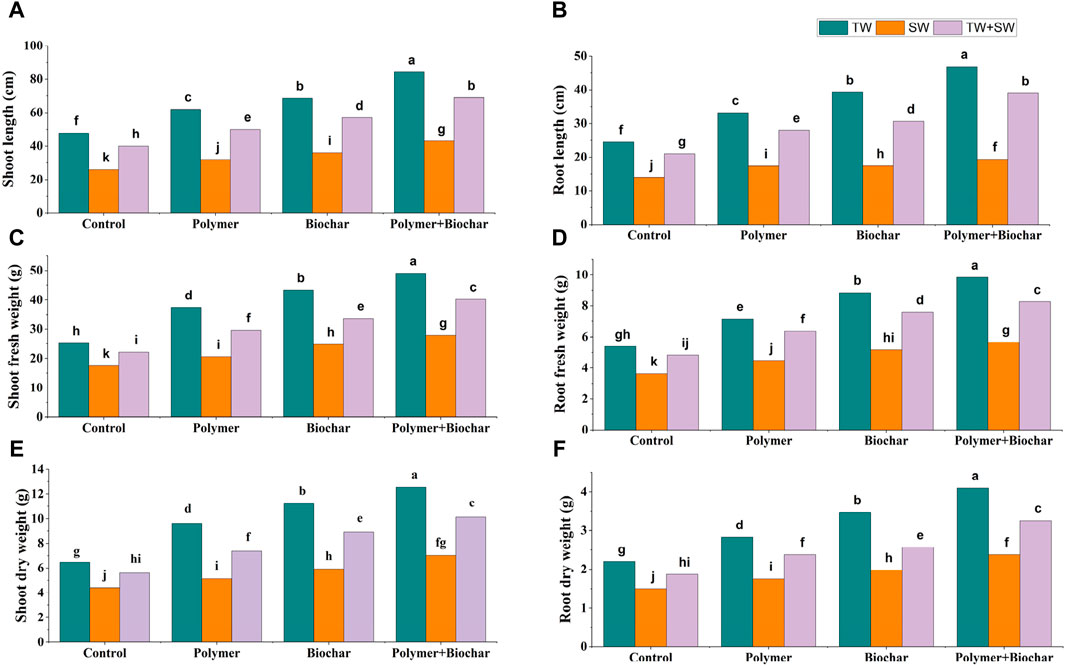
Figure 1. Synergistic use of biochar and polymer on shoot length (A), root length (B), shoot fresh weight (C), root fresh weight (D), shoot dry weight (E), and root dry weight (F) of Pisum sativum upon application of sewage water. Here, TW, SW, TW + SW represents tap water, sewage water and tap water + sewage water, respectively. The values are presented as mean (n = 3). The values sharing the same letter(s) in bars are statistically non-significant with each other at p< 0.05.
Physiological analyses
The combined effect of polymer and BC showed a maximum increase in chlorophyll contents by 75%, 62%, and 69% in treatments receiving TW, SW, and TW + SW, respectively (Figure 2A) and a maximum RWC of 75%, 58%, and 69% in treatments receiving TW, SW, and TW + SW, respectively (Figure 2B), in contrast to control. A maximum decline of 38% in EL (Figure 2C) and 53% in osmotic potential (Figure 2D) was found in plants when applied with polymer and BC in combination under irrigation of TW as compared to the control. However, irrigation with TW + SW also showed much reduced EL (30%) and osmotic potential (44%) in pea plants when polymer and BC were used in combination.
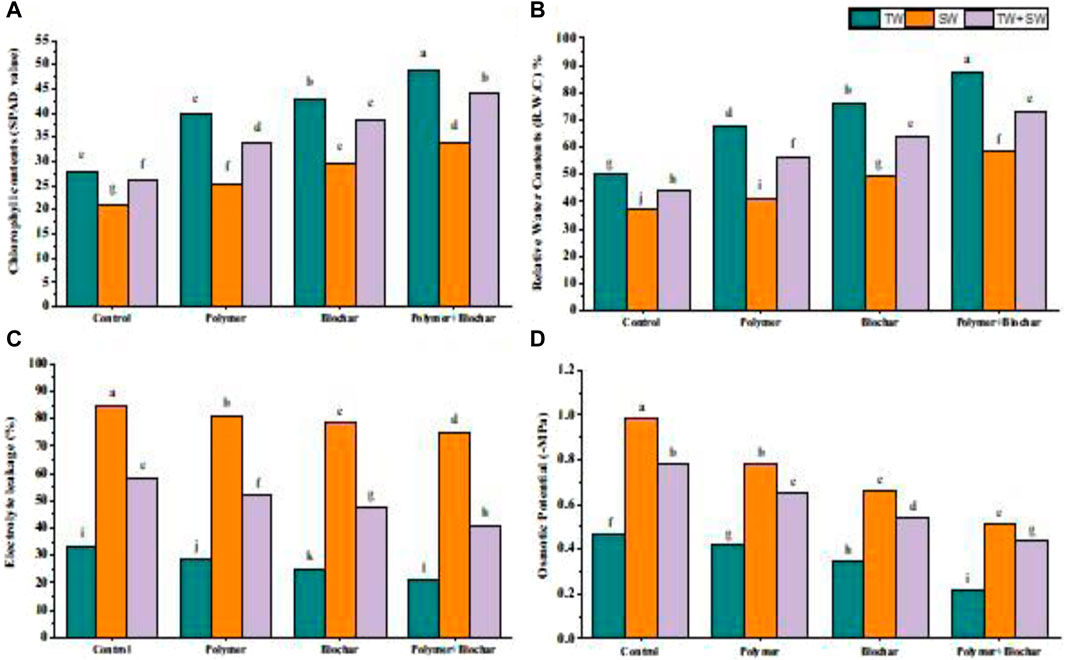
Figure 2. Synergistic use of biochar and polymer on chlorophyll contents (A), relative water contents (B), electrolyte leakage (C), and osmotic potential (D) of Pisum sativum upon application of sewage water. Here, TW, SW, and TW + SW represent tap water, sewage water, and tap water + sewage water, respectively. The values are presented as mean (n = 3). The values sharing the same letter(s) in bars are statistically non-significant with each other at p< 0.05.
Yield analyses
A maximum yield was exhibited by the application of TW when a combination of polymer and BC was used for irrigation of pea plants. Data showed an increase of 84% in pea pods per plant (Figure 3A), 74% in pea per plant (Figure 3B), 90% in pods’ fresh weight (Figure 3C), and 93% in pods’ dry weight (Figure 3D) as compared to control, when TW was used with combined application of polymer and BC.
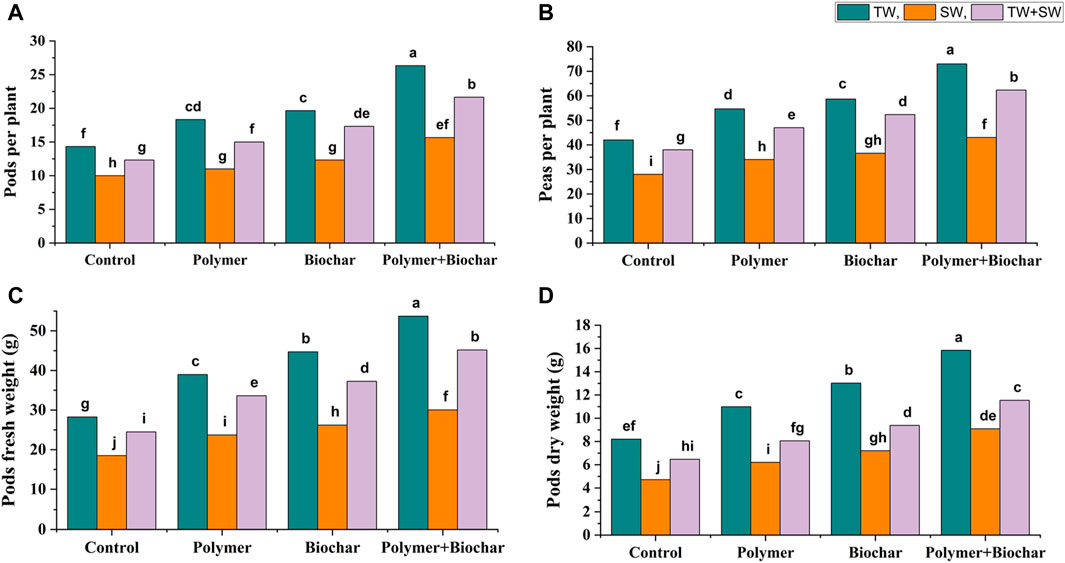
Figure 3. Synergistic use of biochar and polymer on pea pods per plant (A), peas per plant (B), pod fresh weight (C), and pod dry weight (D) of Pisum sativum upon application of sewage water. Here, TW, SW, and TW + SW represent tap water, sewage water, and tap water + sewage water, respectively. The values are presented as mean (n = 3). The values sharing the same letter(s) in bars are statistically non-significant with each other at p < 0.05.
Chemical analyses
The data revealed that application of polymer and BC caused increased immobilization of Cd metal in soil by 56% in TW + SW-treated plants (Figure 4A), in contrast to the control. The plants irrigated with TW + SW showed a maximum decline of 43% in roots (Figure 4B), 49% in shoots (Figure 4C), and 91% in grain (Figure 4D), as compared to control when supplemented with both polymer and BC. Similarly, the application of TW + SW resulted in declined enrichment factor (0.013) and bioaccumulation coefficient (0.19), as illustrated in Figures 4E, F, respectively.
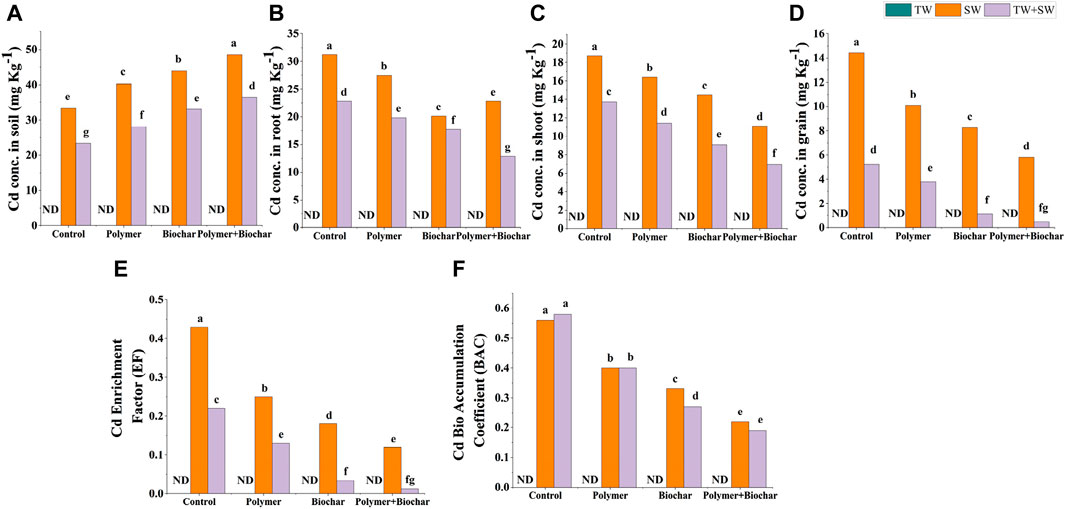
Figure 4. Synergistic use of biochar and polymer on Cd concentration (mg kg−1) in soil (A), root (B), shoot (C), grain (D), EF (E), and BAC (F) of Pisum sativum upon application of sewage water. Here, TW, SW, and TW + SW represent tap water, sewage water, and tap water + sewage water, respectively. The values are presented as mean (n = 3). The values sharing the same letter(s) in bars are statistically non-significant with each other at p < 0.05.
Supplementation of polymer and BC showed increased immobilization of Cr (Figure 5A) by 65% in soil, whereas reduced metal uptake of 51% in roots (Figure 5B), 51% in shoots (Figure 5C), and 94% in grains (Figure 5D), as compared to the control, was found in pea plants irrigated with TW + SW. Irrigation with TW + SW in pea plants receiving a combined dose of polymer and BC showed a decline in the Cr enrichment factor of 0.006 (Figure 5E) and Cr bioaccumulation coefficient of 0.14 (Figure 5F).
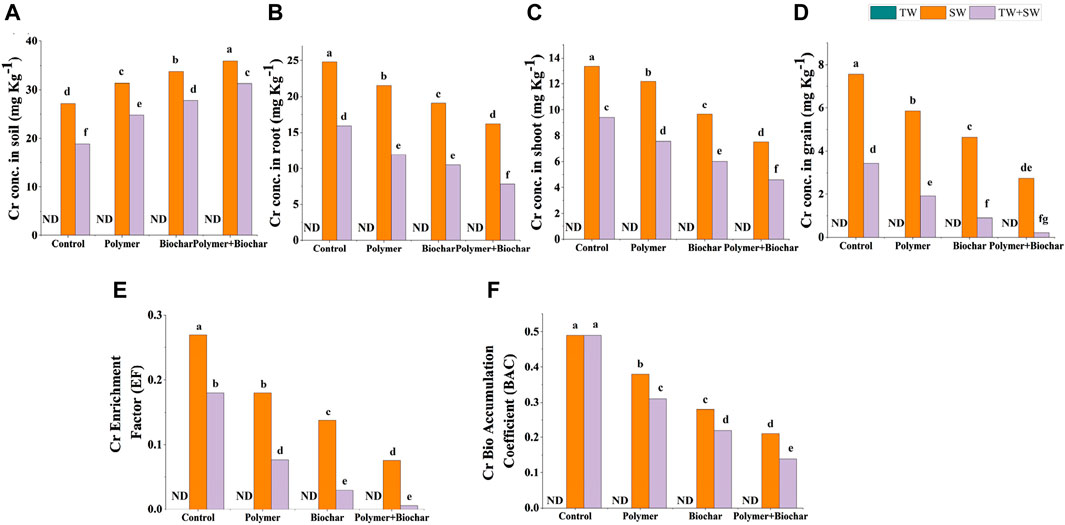
Figure 5. Synergistic use of biochar and polymer on Cr concentration (mg kg−1) in soil (A), root (B), shoot (C), grain (D), EF (E), and BAC (F) of Pisum sativum upon application of sewage water. Here, TW, SW, and TW + SW represent tap water, sewage water, and tap water + sewage water, respectively. The values are presented as mean (n = 3). The values sharing the same letter(s) in bars are statistically non-significant with each other at p < 0.05.
The data obtained from the phytoremediation-related parameters like enrichment factor and bioaccumulation coefficient for Cd (Figures 4E, F) and for Cr (Figures 5E, F) presented that all the plants treated with the combined use of polymer and BC showed significantly reduced accumulation of metals in plants irrigated with sewage water alone as well as mixing of sewage water with tap water. The health risk assessment parameters in pea plants irrigated with sewage water showed minimum values 0.000241 for DIM, 0.000482 for HQ, and 0.000635 for LCR for Cd metal (Table 1) and for Cr (Table 2) showed least value 0.000104 for DIM, 6.95E-05 for HQ, and 0.000209 for LCR, when polymer and BC were used in combination.
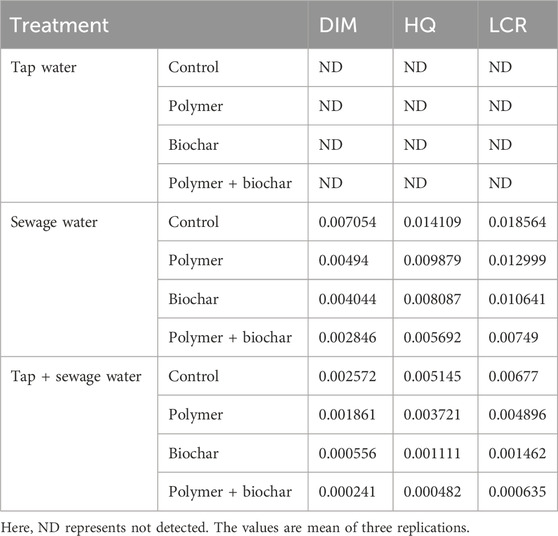
Table 1. Values of average daily intake of metal (DIM; mg kg−1 day−1), hazard quotient (HQ), and lifetime cancer risk (LCR) for cadmium (Cd) concentration in the grain of pea plants (coarse and fine) grown in sewage wastewater.
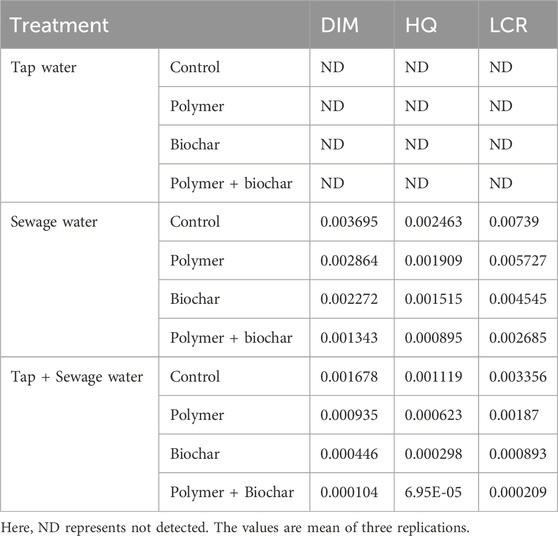
Table 2. Values of average daily intake of metal (DIM; mg kg−1 day−1), hazard quotient (HQ), and lifetime cancer risk (LCR) for chromium (Cr) concentration in grain of pea plants (coarse and fine) grown in sewage wastewater.
Correlation and principal component analysis (PCA) of pea plants under various treatments
The Pearson correlation analysis of pea plants under the application of different treatments showed a positive correlation among different parameters of growth, yield, and physiological activities, as shown in Figure 6. There is a strong correlation (1) among parameters like SL (shoot length), RL (root length), SFWT (shoot fresh weight), RFWT (root fresh weight), SDWT (shoot dry weight), RDWT (root dry weight), P-pp (pods per plant), NP-pp (number of peas per plants), P-FWT (pea fresh weight), P-DWT (pea dry weight), T. Chl. (total chlorophyll), and RWC (relative water contents) under application of different treatments, whereas EL (electrolyte leakage) and O.P (osmotic potential), S-Cd (Cd in soil), S-Cr (Cr in soil), R-Cd (Cd in root), Sh-Cd (Cd in shoot), G-Cd (Cd in grain), R-Cr (Cr in root), Sh-Cr (Cr in shoot), and G-Cr (Cr in grains) showed a negative correlation with growth, yield, and physiological parameters.

Figure 6. Pearson correlation analysis of pea plant growth, yield, physiology, and heavy metal concentration under application of different treatments. Here, SL (shoot length), RL (root length), SFWT (shoot fresh weight), RFWT (root fresh weight), SDWT (shoot dry weight), RDWT (root dry weight), P-pp (pods per plant), NP-pp (number of peas per plants), P-FWT (pea fresh weight), P-DWT (pea dry weight), T. Chl. (total chlorophyll), RWC (relative water contents), EL (electrolyte leakage), O.P (osmotic potential), S-Cd (Cd in soil), R-Cd (Cd in root), Sh-Cd (Cd in shoot), G-Cd (Cd in grain), S-Cr (Cr in soil), R-Cr (Cr in root), Sh-Cr (Cr in shoot), and G-Cr (Cr in grains) are the parameters analyzed.
The PCA of treatments and parameters has been displayed in Figure 7. The growth, yield, and physiological parameters like SL (shoot length), RL (root length), SFWT (shoot fresh weight), RFWT (root fresh weight), SDWT (shoot dry weight), RDWT (root dry weight), P-pp (pods per plant), NP-pp (number of peas per plants), P-FWT (pea fresh weight), P-DWT (pea dry weight), T. Chl. (total chlorophyll), and RWC (relative water contents) are strongly correlated with each other. However, EL (electrolyte leakage) and O.P (osmotic potential) are negatively correlated with growth, yield, and physiological parameters of pea plants. The heavy metal analysis showed that parameters of S-Cd (Cd in soil) and S-Cr (Cr in soil) are very strongly correlated with each other and negatively correlated with growth, yield, and physiological parameters of pea plants under different treatments. The parameters like R-Cd (Cd in root), Sh-Cd (Cd in the shoot), G-Cd (Cd in grain), R-Cr (Cr in root), Sh-Cr (Cr in the shoot), and G-Cr (Cr in grains) are also negatively correlated with growth, yield, and physiological parameters.
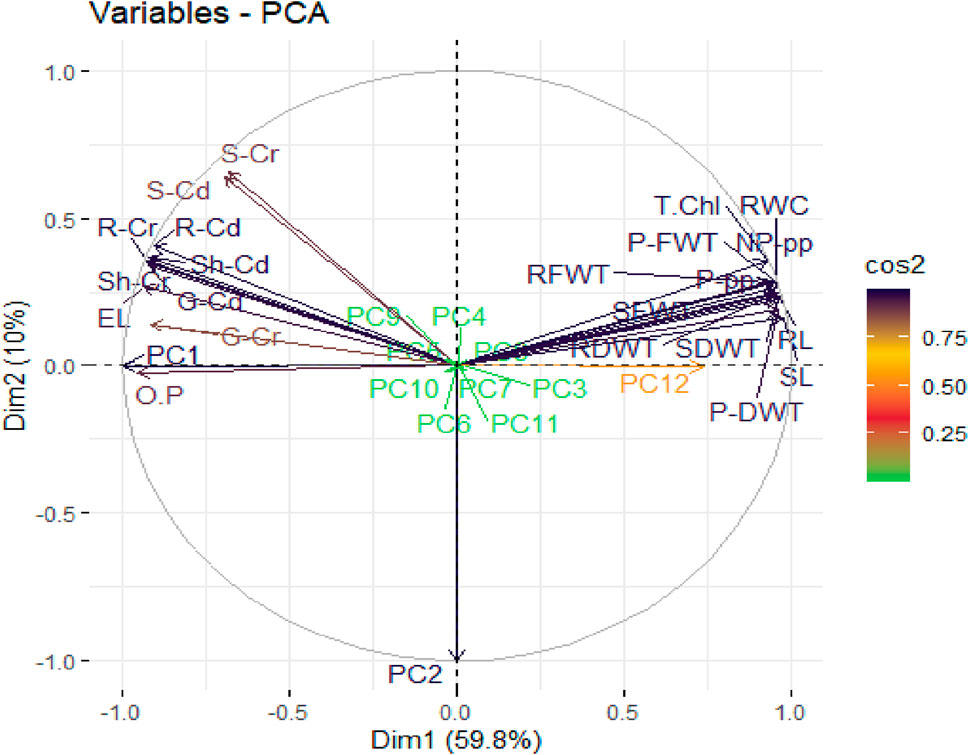
Figure 7. Principal component analysis (PCA) of plant growth, yield, and physiological properties as well as concentration of heavy metals in soil and plants. Biplot showing scores in the first two principal components (PC1 and PC2) for the maximum presentation of data components correlated with treatments and parameters like SL (shoot length), RL (root length), SFWT (shoot fresh weight), RFWT (root fresh weight), SDWT (shoot dry weight), RDWT (root dry weight), T. Chl. (total chlorophyll), RWC (relative water contents), P-pp (pods per plant), NP-pp (number of peas per plants), P-FWT (pea fresh weight), EL (electrolyte leakage), O.P (osmotic potential), S-Cd (Cd in soil), R-Cd (Cd in root), Sh-Cd (Cd in shoot), G-Cd (Cd in grain), S-Cr (Cr in soil), R-Cr (Cr in root), Sh-Cr (Cr in shoot), and G-Cr (Cr in grains).
Discussion
Contamination of soil with potentially toxic elements has been responsible for an indisputable impact on the plants inhabiting polluted soil. However, the impact of toxicity caused by these pollutants on plants amended with BC and polymer in metal-contaminated soils remains unclear and is, therefore, the subject of the present research.
The soil without amendments and irrigated with different levels of sewage water showed reduced shoot and root length, shoot fresh and dry weight, and root fresh and dry weight in pea plants (Figure 1) due to the presence of heavy metals like cadmium (Cd) and chromium (Cr). Various researchers reported reduced growth parameters under PTE stress (Gill and Tuteja, 2010; Maqbool et al., 2018; Naveed et al., 2021; Sabir et al., 2022a). Cr toxicity inhibits cell division and elongation in plant root cells (Adrees et al., 2015), thus reducing the root surface area for enhanced water and nutrient uptake from the soil (Medda and Mondal, 2017; Ahmad et al., 2020) and ultimately growth and biomass production. Our findings are supporting by those of studies by Jun et al. (2009) and Naveed et al. (2021) that Cr-contaminated soil reduced shoot length, root growth, and biomass production in cereals, vegetables, and forages.
The structural and functional properties of BC and polymers are well known to stimulate the growth of plants under metal stress. The high cation exchange capacity, water-holding capacity, and gradual release of nutrients by the polymer and BC facilitated increased growth in pea plants. Results showed that the application of polymer and BC significantly (p< 0.05) improved the growth attributes of pea plants (Figure 1) in both sewage water- and tap + sewage water-contaminated soils. The polymer has a large surface area with various functional properties like high nutrient and water-holding capacity with slow release. These characteristics help in the provision of nutrients and water upon need (Zhang et al., 2013). BC is a porous material produced from the pyrolysis of biomass and hence restores the macro and micronutrients in BC. Rafique et al. (2020) reported that polymer-treated BC increased the growth of plants under Cr toxicity. Our finding of increased biomass and length of pea plants with the application of polymer and BC under sewage water irrigation aligns with those of the previous studies (Wang and Xu, 2013; Rafique et al., 2021). Therefore, the combined application of polymer and BC showed significant growth of peas under irrigation with tap and sewage-contaminated water.
The application of metal-contaminated sewage water reduced physiological attributes such as chlorophyll contents and relative water contents, while increasing electrolyte leakage and osmotic potential (Figure 2). The reduced physiological attributes could be due to continuous irrigation using low water quality, which may lead to an accumulation of PTE in soil and plants (El-Hassanin et al., 2020), which disrupts plant physiology due to production of ROS that oxidizes biomolecules under heavy metal stress (Sabir et al., 2022b) and threatens soil biology, like plant growth promoting bacteria, soil enzymes, organic matter contents, and nutrients and water contents in soil (Ahmad et al., 2013; Cheng et al., 2020). These factors have a great impact on various plant physiological activities. Previous studies also confirm this finding (Ali et al., 2018; Saffan et al., 2022).
The presence of nutrients and organic matter in sewage water improved physical and chemical properties along with the increased nutrient status of soil, therefore triggering improved physiological activities of pea plants when polymer and BC were used. The immobilized PTE by polymer and BC showed enhanced chlorophyll contents and relative water contents, with reduced electrolyte leakage and osmotic potential in pea plants under sewage water irrigation. This finding is aligned with previous findings (Arshad et al., 2017; Waheed et al., 2019) that wastewater irrigation significantly augmented organic matter contents, which comprises numerous types of organic compounds and inducing fertility of soil with immobilized PTE, thus inducing a positive response on overall plant physiology (Figure 7). Thus, with notable nutrients and organic matter content, the usage of sewage water is encouraged by researchers (Akbar et al., 2021; Naseem et al., 2022).
The use of sewage water for irrigation of pea plants reduces the yield of pea plants (Figure 3). The presence of PTE and salts among various pollutants significantly affects the development of pea pods and pea grains when sewage water was applied. The pollutants in sewage water reduced the nutrient uptake, which caused an imbalanced uptake of nutrients. This could lead to poor development of plant tissues, and hence yield was compromised. However, with the application of BC and polymer, pea plants showed increased yield when sewage water was applied with tap water (Figure 3). A significant increase in yield was observed with the combined use of polymer and BC when tap water was mixed with sewage water for irrigation. Functional groups like hydroxyl and carboxylic functional groups facilitate metal binding (Mehmood et al., 2021; Murtaza et al., 2021).
Moreover, the high surface area of both BC and polymers provides more adsorption sites for heavy metal binding, whereas increased adsorption of PTE by polymer due to electrostatic interactions (Inyang et al., 2010; Nigussie et al., 2012) resulted in reduced metal content in soil. BC and polymer ensured the uptake of nutrients in plants essential for the proper functioning of plants, which resulted in improved development of pea plants and hence enhanced the yield of pea plants (Jun et al., 2009). Application of BC affected soil properties like pH, cation exchange capacity (CEC), soil organic matter, and nutrient availability and ultimately increased soil fertility and plant growth (Agegnehu et al., 2015).
Reduced Cr and Cd uptake in root, shoot, and grains of pea plants was found with application of amendment polymer and BC when sewage water was applied for irrigation. These amendments helped in the mitigation of the toxicity of sewage water and hence immobilized the metals Cr (Figure 4) and Cd (Figure 5). The presence of oxygenated and hydrogenated functional groups on the BC surface might have formed complexation with CrVI and reduced its availability (Beesley et al., 2014; Niamat et al., 2019). Moreover, it is reported that Cr VI is converted to Cr III by BC, hence reducing the toxicity (Shahid et al., 2017; Wang et al., 2019).
It was found that BC immobilized soil Cr, thus reducing its bioavailability, which is consistent with the findings of Islam et al. (2021). Moreover, lower plant availability of CrVI, as affected by applied BC, could be due to the presence of more active and binding sites on the BC’s surface, which strengthens its ability in fixing PTE (Ekebafe et al., 2012; Wang et al., 2015). Moreover, BC can reduce PTE bioavailability by influencing soil pH, water contents, adsorption, and changing HM redox state (Ditta et al., 2016; Rizwan et al., 2016; Cheng et al., 2020).
Polymers have remedial potential due to the presence of ionic functional groups, which help in their bonding with PTE (Dhiman et al., 2015). Polymers have significant potential to adsorb water in comparison to other conventional adsorbents. Acrylamide base polymer showed effective remediation (>75%) of PTE cadmium, cobalt, copper, and nickel from water (Moreno-Sader et al., 2019). The presence of highly dense metal chelating groups in some polymers made them perfect for the immobilization of PTE in soil, and hence reducing their bioavailability. The reduced uptake of Cd and Cr in pea plants in our study is supported by these findings. Moreover, all treatments receiving SW alone as well as TW + SW showed values of EF and BAC less than 1, for both Cd (Figures 4E, F) and Cr (Figures 5E, F) in pea plants. The health risk assessment parameters of DIM, HQ, and LCR for Cd (Table 1) and for Cr (Table 2) showed that consumption of pea plants irrigated with TW + SW in the presence of polymers and BC is safe.
Conclusion
We found that the application of sewage water negatively influenced growth, physiological parameters, and yield of the pea plant. Combined application of BC and polymer significantly alleviated PTE (i.e., Cd and Cr) stress and enhanced the growth and yield of pea plants. The combined impact of BC and polymer enhanced the immobilization of PTEs like Cd and Cr in soil, which ultimately resulted in reduced bioaccumulation of PTE in pea plants irrigated with sewage water. Moreover, the usage of same amendments significantly reduced the health risks associated with the consumption of pea plants under Cd and Cr stress, as indicated by the lowest values of DIM, HQ, and LCR, when sewage water was used for irrigation. In conclusion, the application of PAM-BC association could serve as an effective approach in mitigating the toxicity of PTE in pea plants irrigated with TW + SW by immobilization of PTE and their associated health risks. Application of BC and PAM could be used as a potential approach to remediate sewage water toxicity and improve growth and yield of plants. The impact of BC and PAM, both as individual and combined application, on soil quality should be studied at the molecular level. More studies should be conducted to find the optimized dose rate to promote soil microbial activity, plant growth, and immobilization of PTE with use of tap water + sewage water for irrigation.
Data availability statement
The original contributions presented in the study are included in the article/Supplementary Material; further inquiries can be directed to the corresponding author.
Author contributions
MN: conceptualization, data curation, formal analysis, software, and writing–original draft. MF: data curation, investigation, and writing–original draft. ZN: data curation, methodology, software, and writing–review and editing. ZA: conceptualization, formal analysis, supervision, and writing–review and editing. A-RZG: software and writing–review and editing. MS: data curation, investigation, and writing–review and editing. QF: formal analysis, software, and writing–review and editing. MH: software and writing–review and editing. MK: investigation, methodology, software, and writing–review and editing. DS: methodology, software, and writing–review and editing. AM: conceptualization, supervision, and writing–review and editing.
Funding
The author(s) declare that financial support was received for the research, authorship, and/or publication of this article. This study was supported by the Researchers Supporting Project number (RSPD2024R686), King Saud University, Riyadh, Saudi Arabia.
Acknowledgments
The authors would like to extend their sincere appreciation to the Researchers Supporting Project number (RSPD2024R686), King Saud University, Riyadh, Saudi Arabia. The authors also extend their appreciation to Higher Education Islamabad (NRPU6443), Pakistan.
Conflict of interest
The authors declare that the research was conducted in the absence of any commercial or financial relationships that could be construed as a potential conflict of interest.
Publisher’s note
All claims expressed in this article are solely those of the authors and do not necessarily represent those of their affiliated organizations, or those of the publisher, the editors, and the reviewers. Any product that may be evaluated in this article, or claim that may be made by its manufacturer, is not guaranteed or endorsed by the publisher.
Supplementary material
The Supplementary Material for this article can be found online at: https://www.frontiersin.org/articles/10.3389/fenvs.2024.1380867/full#supplementary-material
References
Abbas, W., Bokhari, T. H., Bhatti, I. A., Iqbal, M., Usman, M., Bukhari, H. I., et al. (2015). Impact of UV/TiO2/H2O2 on degradation of disperse red F3BS. Asian J. Chem. 27, 282–286. doi:10.14233/ajchem.2015.17553
Adebayo, R. K., Hassan, U. F., Adamu, H. M., Hassan, H. F., Baba, H., and Ajiya, D. A. (2020). Levels of heavy metals and their health risk assessment from wastewater irrigated spinach in railway quarters, Bauchi, Bauchi state, Nigeria. Int. J. Adv. Chem. Res. 2, 12–17. doi:10.33545/26646781.2020.v2.i2a.22
Adrees, M., Ali, S., Iqbal, M., Bharwana, S. A., Siddiqi, Z., Farid, M., et al. (2015). Mannitol alleviates chromium toxicity in wheat plants in relation to growth, yield, stimulation of anti-oxidative enzymes, oxidative stress and Cr uptake in sand and soil media. Ecotoxicol. Environ. Saf. 122, 1–8. doi:10.1016/j.ecoenv.2015.07.003
Agegnehu, G., Bass, A. M., Nelson, P. N., Muirhead, B., Wright, G., and Bird, M. I. (2015). Biochar and biochar-compost as soil amendments: effects on peanut yield, soil properties and greenhouse gas emissions in tropical North Queensland, Australia. Austr. Agric. Ecosyst. Environ. 213, 72–85. doi:10.1016/j.agee.2015.07.027
Ahmad, I., Tahir, M., Daraz, U., Ditta, A., Hussain, M. B., and Khan, Z. U. H. (2020). Responses and tolerance of cereal crops to metals and metalloids toxicity in Agronomic Crops. Editor H. Mirza (Singapore: Springer), 235–264.
Ahmad, M., Rajapaksha, A. U., Lim, J. E., Zhang, M., Bolan, N., Mohan, D., et al. (2013). Biochar as a sorbent for contaminant management in soil and water: a review. Chemosphere 99, 19–33. doi:10.1016/j.chemosphere.2013.10.071
Akbar, S., Ali, Z., Hussain, S., Mohammad, A., Riaz, Y., Shakeel, A., et al. (2021). Metal accumulation potential, human health risks, and yield attributes of hundred bread wheat genotypes on irrigation with municipal and remediated wastewater. Environ. Sci. Pollut. Res. 28, 35023–35037. doi:10.1007/s11356-021-13085-4
Ali, S., Rizwan, M., Bano, R., Bharwana, S. A., Ur Rehman, M. Z., Hussain, M. B., et al. (2018). Effects of biochar on growth, photosynthesis, and chromium (Cr) uptake in Brassica rapa L. under Cr stress. Arab. J. Geosci. 11, 1–9. doi:10.1007/s12517-018-3861-3
Allegre, C., Maisseu, M., Charbit, F., and Moulin, P. (2004). Coagulation–flocculation–decantation of dye house effluents: concentrated effluents. J. Hazard. Mater. 16, 57–64. doi:10.1016/j.jhazmat.2004.07.005
Al-Wabel, M. I., Usman, A. R. A., Al-Farraj, A. S., Ok, Y. S., Abduljabbar, A., Al-Faraj, A. I., et al. (2017). Date palm waste biochars alter a soil respiration, microbial biomass carbon, and heavy metal mobility in contaminated mined soil. Environ. Geochem. Health 41, 1705–1722. doi:10.1007/s10653-017-9955-0
Arshad, M., Khan, A. H. A., Hussain, I., Anees, M., Iqbal, M., Soja, M. G., et al. (2017). The reduction of chromium (VI) phytotoxicity and phytoavailability to wheat (Triticum aestivum L.) using biochar and bacteria. Appl. Soil Ecol. 114, 90–98. doi:10.1016/j.apsoil.2017.02.021
ASABE (2011). S593.1: terminology and definitions for biomass production, harvesting and collection, storage, processing, conversion, and utilization. St. Joseph, MI: ASABE.
Barrs, H. D., and Watherley, P. E. (1968). A re-examination of the relative turgidity technique for estimating water deficit in leaves. Aust. J. Biol. Sci. 15, 413–428.
Beckett, C. T. S., and Augarde, C. E. (2013). Prediction of soil water retention properties using pore-size distribution and porosity. Can. Geotech. J. 50, 435–450. doi:10.1139/cgj-2012-0320
Beesley, L., Inneh, O. S., Norton, G. J., Moreno-Jimenez, E., Pardo, T., Clemente, R., et al. (2014). Assessing the influence of compost and biochar amendments on the mobility and toxicity of metals and arsenic in a naturally contaminated mine soil. Environ. Pollut. 186, 195–202. doi:10.1016/j.envpol.2013.11.026
Cheng, S., Chen, T., Xu, W., Huang, J., Jiang, S., and Yan, B. (2020). Application research of biochar for the remediation of soil heavy metals contamination: a review. Molecules 25, 3167. doi:10.3390/molecules25143167
Coelho, M. A., Fusconi, R., Pinheiro, L., Ramos, I. C., and Ferreira, A. S. (2018). The combination of compost or biochar with urea and NBPT can improve nitrogen-use efficiency in maize. An. Braz. Acad. Sci. 90, 1695–1703. doi:10.1590/0001-3765201820170416
de-Bashan, L. E., and Bashan, Y. (2010). Immobilized microalgae for removing pollutants: review of practical aspects. Bioresour. Technol. 101, 1611–1627. doi:10.1016/j.biortech.2009.09.043
Dhiman, J., Prasher, S., Mannan, A., ElSayed, E., and Nzediegwu, C. (2015) “Use of super absorbent polymers (hydrogels) to promote safe use of wastewater in agriculture,” in Proc. 22nd Canadian hydrotechnical conf. On water for sustainable development: coping with climate and environmental changes. Montreal, QC, Canada: Canadian Society of Civil Engineers.
Dhiman, J., Prasher, S. O., ElSayed, E., Patel, R., Nzediegwu, C., and Mawof, A. (2020). Use of polyacrylamide superabsorbent polymers and plantain peel biochar to reduce heavy metal mobility and uptake by wastewater-irrigated potato plants. Amer. Soc. Agri. Biol. Engin. 63 (1), 11–28. doi:10.13031/trans.13195
Ditta, A., and Khalid, A. (2016). “Bio-organo-phos: a sustainable approach for managing phosphorus deficiency in agricultural soils,” in Organic Fertilizers - from Basic Concepts to Applied Outcomes. Editors M. Larramendy, and S. Soloneski (Croatia: In Tech), 109–136. doi:10.5772/62473
Ekebafe, L. O., Ogbeifun, D. E., and Okieimen, F. E. (2012). Effect of cassava starch hydrogel on the water requirement of maize (Zea may) seedlings and selected properties of sandy loam soil. Int. J. Basic. Appl. Sci. 1, 132–139.
Ekere, N. R., Ugbor, M. C. J., Ihedioha, J. N., Ukwueze, N. N., and Abugu, H. O. (2020). Ecological and potential health risk assessment of heavy metals in soils and food crops grown in abandoned urban open waste dump site. J. Environ. Health Sci. Eng. 18, 711–721. doi:10.1007/s40201-020-00497-6
El-Hassanin, A. S., Samak, M. R., Abdel-Rahman, G. N., Abu-Sree, Y. H., and Saleh, E. M. (2020). Risk assessment of human exposure to lead and cadmium in maize grains cultivated in soils irrigated either with low-quality water or freshwater. Toxicol. Rep. 7, 10–15. doi:10.1016/j.toxrep.2019.11.018
FAO. AQUASTAT (2016). FAO’s information system on water and agriculture. Rome, Italy: United Nations FAO. Available at: https://www.fao.org/nr/water/aquastat/water_use/index.stm#maps.
Fuerhacker, M., and Haile, T. M. (2010). “Treatment and reuse of sludge,” in Waste water treatment and reuse in the mediterranean region. Editors D. Barceló, and M. Petrovic (Berlin Heidelberg: Springer-Verlag), 63–92.
Gill, S. S., and Tuteja, N. (2010). Reactive oxygen species and antioxidant machinery in abiotic stress tolerance in crop plants. Plant Physiol. Biochem. 48, 909–930. doi:10.1016/j.plaphy.2010.08.016
Huttermann, A., Orikiriza, L. J., and Agaba, H. (2009). Application of superabsorbent polymers for improving the ecological chemistry of degraded or polluted lands. Clean. - Soil Air Water 37 (7), 517–526. doi:10.1002/clen.200900048
Inyang, M., Gao, B., Pullammanappallil, P., Ding, W., and Zimmerman, A. R. (2010). Biochar from anaerobically digested sugarcane bagasse. Bioresour. Technol. 101, 8868–8872. doi:10.1016/j.biortech.2010.06.088
Inyang, M. I., Gao, B., Yao, Y., Xue, Y., Zimmerman, A., Mosa, A., et al. (2016). A review of biochar as a low-cost adsorbent for aqueous heavy metal removal. Crit. Rev. Environ. Sci. Tech. 46 (4), 406–433. doi:10.1080/10643389.2015.1096880
Islam, M. R., Hu, Y. G., Mao, S. S., Mao, J. Z., Eneji, A. E., and Xue, X. Z. (2011). Effectiveness of a water-saving super-absorbent polymer in soil water conservation for corn (Zea Mays L.) based on eco-physiological parameters. J. Sci. Food Agri. 91 (11), 1998–2005. doi:10.1002/jsfa.4408
Islam, S. N., Rahman, M. L., Tareq, M. Z., Mostofa, B., Karim, M. M., Sultana, A., et al. (2021). Nutrient combination with biochar: improving yield and quality of jute seed. Malays. J. Sustain. Agric. 5, 43–50. doi:10.26480/mjsa.01.2021.43.50
Jan, A. U., Hadi, F., Shah, A., Ditta, A., Nawaz, M. A., and Tariq, A. (2021). Plant growth regulators, and EDTA improve phytoremediation potential and antioxidant response of Dysphania ambrosioides (L.) Mosyakin & Clemants in a Cd-spiked soil. Environ. Sci. Pollut. Res. 28, 43417–43430. doi:10.1007/s11356-021-13772-2
Jiang, Y., Wen, H., Zhang, Q., Yuan, L., and Liu, L. (2022). Source apportionment and health risk assessment of potentially toxic elements in soil from mining areas in northwestern China. Environ. Geochem. Health 44, 1551–1566. doi:10.1007/s10653-021-00907-0
Jun, R., Ling, T., and Guanghua, Z. (2009). Effects of chromium on seed germination, root elongation and coleoptile growth in six pulses. Int. J. Environ. Sci. Technol. 6, 571–578. doi:10.1007/bf03326097
Khalid, S., Shahid, M., Natasha., , Bibi, I., Sarwar, T., Shah, A. H., et al. (2018). A review of environmental contamination and health risk assessment of wastewater use for crop irrigation with a focus on low and high-income countries. Int. J. Environ. Res. Public Health. 15 (5), 895. doi:10.3390/ijerph15050895
Khan, S., Cao, Q., Zheng, Y. M., Huang, Y. Z., and Zhu, Y. G. (2008). Health risks of heavy metals in contaminated soils and food crops irrigated with wastewater in Beijing, China. Environ. Pollut. 152 (3), 686–692. doi:10.1016/j.envpol.2007.06.056
Latif, A., Bilal, M., Asghar, W., Azeem, M., Ahmad, M. I., Abbas, A., et al. (2018). Heavy metal accumulation in vegetables and assessment of their potential health risk. J. Environ. Ana. Chem. 5, 234. doi:10.4172/2380-2391.1000234
Lehmann, J. (2007). Bio-energy in the black. Front. Ecol. Environ. 5, 381–387. doi:10.1890/1540-9295(2007)5[381:bitb]2.0.co;2
Li, R., Hou, X., Li, P., and Wang, X. (2022). Multifunctional superabsorbent polymer under residue incorporation increased maize productivity through improving sandy soil properties. Advan. Polym. Technol. 2022, 1–12. doi:10.1155/2022/6554918
Liu, Z. X., Miao, Y. G., Wang, Z. Y., and Yin, G. H. (2009). Synthesis and characterization of a novel super-absorbent based on chemical modified pulverized wheat straw and acryl.
Lorestani, B., Cheraghi, M., and Yousefi, N. (2011). Accumulation of Pb, Fe, Mn, Cu and Zn in plants and choice of hyperaccumulator plant in the industrial town of Vian, Iran. Arch. Biol. Sci. 63, 739–745. doi:10.2298/abs1103739l
Maqbool, A., Ali, S., Rizwan, M., Ishaque, W., Rasool, N., Ur Rehman, M. Z., et al. (2018). Management of tannery wastewater for improving growth attributes and reducing chromium uptake in spinach through citric acid application. Environ. Sci. Pollut. Res. 25, 10848–10856. doi:10.1007/s11356-018-1352-4
Medda, S., and Mondal, N. K. (2017). Chromium toxicity and ultrastructural deformation of Cicer arietinum with special reference of root elongation and coleoptile growth. Ann. Agrar. Sci. 15, 396–401. doi:10.1016/j.aasci.2017.05.022
Mehmood, S., Wang, X., Ahmed, W., Imtiaz, M., Ditta, A., Rizwan, M., et al. (2021). Removal mechanisms of slag against potentially toxic elements in soil and plants for sustainable agriculture development: a critical review. Sustainability 13, 5255. doi:10.3390/su13095255
Mohan, D., Sarswat, A., Ok, Y. S., and Pittman, C. U. (2014). Organic and inorganic contaminants removal from water with biochar, a renewable, low cost, and sustainable adsorbent: a critical review. Bioresour. Tech. 160, 191–202. doi:10.1016/j.biortech.2014.01.120
Moreno-Sader, K., García-Padilla, A., Realpe, A., Acevedo-Morantes, M., and Soares, J. B. P. (2019). Removal of heavy metal water pollutants (Co2+ and Ni2+) using polyacrylamide/sodium montmorillonite (PAM/Na-MMT) nanocomposites. ACS Omega 4, 10834–10844. doi:10.1021/acsomega.9b00981
Murtaza, G., Ditta, A., Ullah, N., Usman, M., and Ahmed, Z. (2021). Biochar for the management of nutrient impoverished and metal contaminated soils: preparation, applications, and prospects. J. Soil Sci. Plant Nutr. 21, 2191–2213. doi:10.1007/s42729-021-00514-z
Naseem, Z., Naveed, M., Asghar, H. N., and Hameed, M. (2022). Metal resistant Enterobacter cloacae ZA14 enhanced seedling vigor and metal tolerance through improved growth, physiology and antioxidants in tomato (Solanum lycopersicum) irrigated with textile effluents. Sustainability 14, 13619. doi:10.3390/su142013619
Naseem, Z., Naveed, M., Imran, M., Saqlain, M., Asif, M., Bashir, M., et al. (2023). Elucidating the potential of dye-degrading Enterobacter cloacae ZA14 for cultivation of solanum lycopersicum plants with textile effluents. Water 15, 3163. doi:10.3390/w15173163
Naveed, M., Mustafa, A., Majeed, S., Naseem, Z., Saeed, Q., Khan, A., et al. (2020). Enhancing cadmium tolerance and pea plant health through Enterobacter sp. MN17 inoculation together with biochar and gravel sand. Plants 9, 530. doi:10.3390/plants9040530
Naveed, M., Tanvir, B., Xiukang, W., Brtnicky, M., Ditta, A., Kucerik, J., et al. (2021). Co-composted biochar enhances growth, physiological, and phytostabilization efficiency of Brassica napus and reduces associated health risks under chromium stress. Front. Plant Sci. 12, 775785. doi:10.3389/fpls.2021.775785
Niamat, B., Naveed, M., Ahmad, Z., Yaseen, M., Ditta, A., Mustafa, A., et al. (2019). Calcium-enriched animal manure alleviates the adverse effects of salt stress on growth, physiology and nutrients homeostasis of Zea mays L. Plants 8, 480. doi:10.3390/plants8110480
Nie, C., Yang, X., Niazi, N. K., Xu, X., Wen, Y., Rinklebe, J., et al. (2018). Impact of sugarcane bagasse-derived biochar on heavy metal availability and microbial activity: a field study. Chemosphere 200, 274–282. doi:10.1016/j.chemosphere.2018.02.134
Nigussie, A., Kissi, E., Misganaw, M., and Ambaw, G. (2012). Effect of biochar application on soil properties and nutrient uptake of lettuces (Lactuca sativa) grown in chromium polluted soils. Am-Eurasian. J. Sustain. Agric. 12, 369–376.
Nzediegwu, C., Prasher, S., Elsayed, E., Dhiman, J., Mawof, A., and Patel, R. (2019). Effect of biochar on heavy metal accumulation in potatoes from wastewater irrigation. J. Environ. Manag. 232, 153–164. doi:10.1016/j.jenvman.2018.11.013
Ok, Y. S., Chang, S. X., Gao, B., and Chung, H. J. (2015). SMART biochar technology—a shifting paradigm towards advanced materials and healthcare research. Environ. Technol. Innov. 4, 206–209. doi:10.1016/j.eti.2015.08.003
Qadir, M., Wichelns, D., Raschid-Sally, L., McCornick, P. G., Drechsel, P., Bahri, A., et al. (2010). The challenges of wastewater irrigation in developing countries. Agric. Water. Mgmt. 97 (4), 561–568. doi:10.1016/j.agwat.2008.11.004
Rafique, M. I., Ahmad, M., Al-Wabel, M. I., Ahmad, J., and Al-Farraj, A. S. (2022). Mitigating the toxic effects of chromium on wheat (Triticum aestivum L.) seed germination and seedling growth by using biochar and polymer-modified biochar in contaminated soil. Sustainability. 14, 16093. doi:10.3390/su142316093
Rafique, M. I., Usman, A. R., Ahmad, M., and Al-Wabel, M. I. (2021). Immobilization and mitigation of chromium toxicity in aqueous solutions and tannery waste-contaminated soil using biochar and polymer-modified biochar. Chemosphere. 266, 129198. doi:10.1016/j.chemosphere.2020.129198
Rafique, M. I., Usman, A. R., Ahmad, M., Sallam, A., and Al-Wabel, M. I. (2020). In situ immobilization of Cr and its availability to maize plants in tannery waste contaminated soil: effects of biochar feedstock and pyrolysis temperature. J. Soils. Sediments. 20, 330–339. doi:10.1007/s11368-019-02399-z
Rizova, V. A. (2020). Assessment of phytoremediation potential of indigenous plants growing around the solid waste open dumpsite. Environ. Eng. Res. 24, 234.
Rizwan, M., Ali, S., Qayyum, M. F., Ibrahim, M., Zia-ur-Rehman, M., Abbas, T., et al. (2016). Mechanisms of biochar-mediated alleviation of toxicity of trace elements in plants: a critical review. Environ. Sci. Pollut. Res. 23, 2230–2248. doi:10.1007/s11356-015-5697-7
RStudio Team (2021). RStudio: integrated development environment for R; RStudio. Boston, MA, USA: PBC. Available at: https://www.rstudio.com/(accessed on May 20, 2023).
Rusan, M. J. M., Hinnawi, S., and Rousan, L. (2007). Long-term effect of wastewater irrigation of forage crops on soil and plant quality parameters. Desalination 215 (1), 143–152. doi:10.1016/j.desal.2006.10.032
Sabir, M., Baltrenait-Gedien, E., Ditta, A., Ullah, H., Kanwal, A., Ullah, S., et al. (2022a). Bioaccumulation of heavy metals in a soil–plant system from an open dumpsite and the associated health risks through multiple routes. Sustainability 14, 13223. doi:10.3390/su142013223
Sabir, M., Naseem, Z., Ahmad, W., Usman, M., Nadeem, F., Saifullah, , et al. (2022b). Alleviation of adverse effects of nickel on growth and concentration of copper and manganese in wheat through foliar application of ascorbic acid. Int. J. Phytoremed. 24, 695–703. doi:10.1080/15226514.2021.1962801
Saffan, M. M., Koriem, M. A., El-Henawy, A., El-Mahdy, S., El-Ramady, H., Elbehiry, F., et al. (2022). Sustainable production of tomato plants (Solanum lycopersicum L.) under low-quality irrigation water as affected by bio-nanofertilizers of selenium and copper. Sustainability 14, 3236. doi:10.3390/su14063236
Shahid, M., Shamshad, S., Rafiq, M., Khalid, S., Bibi, I., Niazi, N. K., et al. (2017). Chromium speciation, bioavailability, uptake, toxicity and detoxification in soil-plant system: a review. Chemosphere 178, 513–533. doi:10.1016/j.chemosphere.2017.03.074
UNESCO (2016). Water security. Paris, France: United Nations Educational, Scientific, and Cultural Organization. Available at: https://www.unesco.org/new/en/naturalsciences/environment/water.
U.S. Department of Energy’s Oak Ridge Operations Office (2011). The risk assessment information system (RAI). Washington, D.C.: USDOE.
Waheed, H., Ilyas, N., Iqbal Raja, N., Mahmood, T., and Ali, Z. (2019). Heavy metal phyto-accumulation in leafy vegetables irrigated with municipal wastewater and human health risk repercussions. Int. J. Phytoremediation 21, 170–179. doi:10.1080/15226514.2018.1540547
Wang, G., and Xu, Z. (2013). The effects of biochar on germination and growth of wheat in different saline-alkali soil. Asian Agric. Res. 5, 116.
Wang, K., Qiu, G., Cao, H., and Jin, R. (2015). Removal of chromium (VI) from aqueous solutions using Fe3O4 magnetic polymer microspheres functionalized with amino groups. Materials 8, 8378–8391. doi:10.3390/ma8125461
Wang, X., Fan, J., Xing, Y., Xu, G., Wang, H., Deng, J., et al. (2019). The effects of mulch and nitrogen fertilizer on the soil environment of crop plants. Adv. Agron. 153, 121–173. doi:10.1016/bs.agron.2018.08.003
World Health Organization (2011). Guidelines for drinking water quality. 4th edition. Geneva, Switzerland.
Wolf, B. (1982). A comprehensive system of leaf analyses and its use for diagnosing crop nutrient status. Comm. Soil Sci. Plant Anal. 13, 1035–1059. doi:10.1080/00103628209367332
Yahaya, T. O., Oladele, E. O., Fatodu, I. A., Abdulazeez, A., and Yeldu, Y. I. (2020). The concentration and health risk assessment of heavy metals and microorganisms in the groundwater of Lagos, Southwest Nigeria. J. Adv. Environ. Health Res. 8, 234–242.
Yang, G., Rhodes, D., and Joly, R. J. (1996). Effect of high temperature on membrane stability and chlorophyll fluorescence in glycinebetaine-containing maize lines. Aust. J. Plant Physiol. 23, 431–443.
Zhang, J., Zhang, J., Wang, M., Wu, S., Wang, H., Niazi, N. K., et al. (2019). Effect of tobacco stem-derived biochar on soil metal immobilization and the cultivation of tobacco plant. J. Soils Sediments 19 (5), 2313–2321. doi:10.1007/s11368-018-02226-x
Keywords: polymer, biochar, pea plant, phytoremediation, potentially toxic elements
Citation: Naveed M, Fatima M, Naseem Z, Ahmad Z, Gaafar A-RZ, Shabbir M, Farooq QuA, Hodhod MS, Khan MI, Shahid D and Mustafa A (2024) Improving the growth of pea plant by biochar–polyacrylamide association to cope with heavy metal stress under sewage water application in a greenhouse. Front. Environ. Sci. 12:1380867. doi: 10.3389/fenvs.2024.1380867
Received: 02 February 2024; Accepted: 03 July 2024;
Published: 06 September 2024.
Edited by:
Mariusz Gusiatin, University of Warmia and Mazury in Olsztyn, PolandReviewed by:
Marko Černe, Institute of Agriculture and Tourism, CroatiaDafeng Hui, Tennessee State University, United States
Copyright © 2024 Naveed, Fatima, Naseem, Ahmad, Gaafar, Shabbir, Farooq, Hodhod, Khan, Shahid and Mustafa. This is an open-access article distributed under the terms of the Creative Commons Attribution License (CC BY). The use, distribution or reproduction in other forums is permitted, provided the original author(s) and the copyright owner(s) are credited and that the original publication in this journal is cited, in accordance with accepted academic practice. No use, distribution or reproduction is permitted which does not comply with these terms.
*Correspondence: Adnan Mustafa, YWRuYW5tdXN0YWZhNzgwQGdtYWlsLmNvbQ==; Muhammad Naveed, TXVoYW1tYWQubmF2ZWVkQHVhZi5lZHUucGs=