 Zhan Wang1,2*
 Guoqiang Zhao
- 1Ankang Branch of Shaanxi Provincial Land Engineering Construction Group Co., Ltd., Xi’an, China
- 2Shaanxi Provincial Land Engineering Construction Group Co., Ltd., Xi’an, China
Objective: This study aims to evaluate the effectiveness of Integrated Soil-Crop System Management (ISSM) and provide technical support for sustainable high yield and efficiency in regional agriculture.
Methods: The study compared the effects of no fertilization (Control), conventional farmer practices (FP), high-yield management (HY), and ISSM on maize yield and plant nutrient uptake. Measurements included grain yield, plant biomass, plant nutrient absorption, and soil nutrient content across different management strategies.
Results: Over the 12-year experimental period, a significant decline in grain yield was observed under the Control treatment, with a slight decrease in the FP treatment. In contrast, consistent yield increases were noted for the HY and ISSM treatments. The ISSM approach significantly enhanced the average yield and plant uptake of P and K by 26%, 24%, and 32%, respectively, approaching 98%, 91%, and 85% of the levels achieved in the HY treatment. Furthermore, the average use efficiency of P and K fertilizers in the ISSM treatment exceeded those in the FP treatment by 18.7% and 1.2%, respectively, and those in the HY treatment by 17.4% and 24.8%, respectively. The adoption of ISSM led to a significant increase in total and available P and K content within the 0–20 cm and 20–40 cm soil layers and enhanced the available P and K content across all aggregate size fractions within the 0–20 cm soil layer.
Conclusion: ISSM is capable of achieving long-term high and stable yields for spring maize, enhancing the uptake and utilization of P and K in plants, and bolstering the soil’s capacity to supply these nutrients, thereby fostering the sustainable development of the entire soil-crop system.
1 Introduction
Phosphorus (P) and potassium (K) are fundamental nutrients for plant growth and development, playing a pivotal role in enhancing crop yields and quality (Wang Y. et al., 2021). In China, despite abundant phosphate ore resources, the costs associated with mining and producing phosphate fertilizers are relatively high. Moreover, China remains heavily reliant on imports for potash fertilizer, with a self-sufficiency rate hovering around 50%. These factors, coupled with limited attention paid by farmers to the proper application of P and K fertilizers, have led to not only suboptimal crop yields and quality but also significant resource wastage and environmental pollution (Norse and Ju, 2015; Smith and Siciliano, 2015).
Against this backdrop, advancing sustainable agriculture through efficient management of P and K nutrients has become a pressing challenge for Chinese agriculture. The objective of this study is to assess the efficacy of Integrated Soil-Crop System Management (ISSM) in optimizing P and K utilization in maize production, thereby contributing to sustainable high yields and efficient resource use. This approach not only addresses the urgent need for improved nutrient management but also aligns with the broader goal of fostering environmentally friendly agricultural practices.
The ISSM method, introduced in 2011, represents a holistic strategy that reconfigures crop cultivation frameworks based on crop ecophysiological models and multiannual analyses of regional soil and climatic conditions (Chen et al., 2011). By integrating various agronomic interventions, including the selection of crop varieties, determination of planting density and periods, application of fertilizers, and tillage techniques, ISSM aims to optimize the utilization of natural resources such as sunlight, thermal energy, and water, ultimately enhancing soil fertility and crop productivity (Morugán-Coronado et al., 2020).
Despite the widespread adoption and reported success of ISSM in improving crop yields and resource efficiency, there remains a dearth of research focused on its long-term effects on P and K nutrients, particularly in maize production systems. The majority of existing ISSM studies have centered on crop yields, nitrogen absorption and utilization, and environmental impacts, with less emphasis on P and K management (Cong et al., 2023). This study, therefore, aims to fill this knowledge gap by evaluating the long-term effects of ISSM on maize productivity, P and K uptake by plants, and soil nutrient content.
Our research is situated within the context of maize production in Shaanxi Province, China, a region characterized by a temperate semi-humid continental monsoon climate and alluvial soils. Given the importance of maize as a staple crop in the region, optimizing its production through sustainable nutrient management practices is crucial for ensuring food security and maintaining soil health. By investigating the performance of ISSM vis-à-vis traditional farming practices, this study seeks to provide a robust empirical basis for the widespread adoption of ISSM in maize production systems, thereby promoting sustainable agricultural development and mitigating environmental degradation.
In summary, this study’s novelty lies in its comprehensive analysis of the long-term effects of ISSM on P and K utilization in maize production. By highlighting the potential of ISSM to enhance crop yields, optimize nutrient use efficiency, and bolster soil fertility, this research contributes significantly to the development of sustainable agricultural practices in Shaanxi Province and beyond.
2 Materials and methods
2.1 Overview of the study area
The field experiment was commenced in 2009 in Xunyang County, located in Shaanxi Province (geographical coordinates: 32°42′N, 109°01′E), which is distinguished by a temperate semi-humid continental monsoon climate. The region experiences an average annual temperature of 15.8°C and an average annual rainfall of 570 mm. The soil at the experimental site is classified as alluvial, with the following basic physicochemical properties observed in the 0–20 cm soil layer: pH of 5.15, organic carbon content of 7.08 g/kg, total nitrogen content of 1.04 g/kg, ammonium nitrogen content of 92.0 mg/kg, available phosphorus content of 29.1 mg/kg, available potassium content of 52.0 mg/kg, coarse sand content of 16.0 g/kg, fine sand content of 460.8 g/kg, silt content of 295.8 g/kg, and clay content of 227.4 g/kg.
2.2 Experimental design and field management
The field experiment encompassed four distinct treatments to evaluate various agronomic management strategies: Control (CK), wherein no fertilizers were applied to the plots. Farmers’ Practices (FP), established through extensive questionnaire surveys among local farmers to determine the predominant maize field management practices in the area. High Yield (HY), a management strategy that prioritizes maximizing maize yield without consideration for resource and cost inputs, employing the highest planting density along with the most substantial nutrient inputs and frequent fertilization. Integrated Soil-Crop System Management (ISSM), which restructures the crop production system and management techniques according to the regional climate and soil conditions. This approach aims to bolster soil fertility, augment crop yield, and elevate resource utilization efficiency through a balanced planting density, moderated nutrient provisioning, and a more streamlined fertilization strategy. Divergent methodologies across the treatments are observed in multiple facets, including planting density, tillage methods, quantities and sources of nutrient inputs, and fertilization tactics. The precise management protocols are delineated in Table 1.
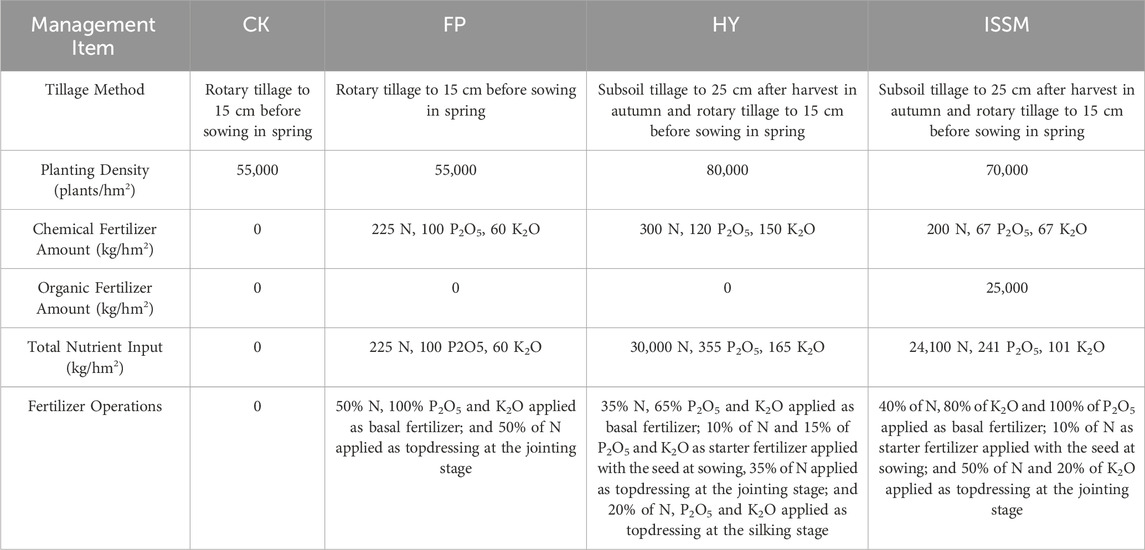
Table 1. Field management method in different experimental treatments in maize production.
Each experimental plot measured 120 square meters (20 m by 6 m) and was organized using a randomized block design with four replicates. The maize variety utilized for the trial was “Liangyu 99.” The experimental period spanned from sowing in late April to early May, with the harvest occurring from late September to early October.
The fertilizers utilized in the experimental trials were urea (46% nitrogen), diammonium phosphate (46% phosphorus pentoxide), and potassium sulfate (50% potassium oxide). The type of organic fertilizer employed was pig manure, which, on average, contains 5.2 g of nitrogen, 4.3 g of phosphorus pentoxide, and 4.7 g of potassium oxide per kilogram. Throughout the growth cycle of the maize, all experimental treatments were maintained following the optimal local agronomic practices for weed control and the management of pests and diseases, with no irrigation being applied to the fields.
2.3 Collection and measurement of plant samples
Yield assessments were conducted annually during the maize harvest period by selecting a central area of 65 square meters within each plot. Ten plants with even growth from each plot were sampled, and the aerial parts were collected. Subsequently, these samples were dried at a temperature of 70°C, weighed, and then ground into a fine powder. The nutrient analysis involved a digestion process using a combination of sulfuric acid (H2SO4) and hydrogen peroxide (H2O2). Following digestion, the content of phosphorus and potassium nutrients in the samples was quantified using the vanadium molybdophosphoric yellow colorimetric method and flame photometry, respectively.
2.4 Collection and analysis of soil samples
Post-harvest in 2020, ten sampling points per plot were selected to collect soil samples from the 0–20 cm and 20–40 cm layers. These samples were homogenized, air-dried, and ground before being sieved through meshes of 0.85 mm and 0.15 mm to measure the contents of available phosphorus (P), available potassium (K), total phosphorus, and total potassium in the soil. The available phosphorus was extracted using a 0.5 mol/L NaHCO3 solution followed by the molybdenum antimony colorimetric method. Available potassium was determined by extraction with NH4OAc and quantified using flame photometry. Total phosphorus was assessed using the HClO4-H2SO4 digestion method, and total potassium was analyzed via the NaOH fusion method coupled with flame photometry.
Furthermore, ten undisturbed soil samples from each of the 0–20 cm and 20–40 cm layers were also collected from each plot, mixed, and stored in plastic containers for transport to the laboratory. The larger soil aggregates were broken down along their natural fracture planes and sieved through an 8 mm mesh, followed by complete air-drying. The soil aggregate composition was then assessed using both dry and wet sieving techniques (Felde et al., 2021). The aggregate samples obtained from the wet sieving process were dried at 70°C, weighed, and subsequently ground to pass through a 0.85 mm mesh. The contents of available phosphorus and available potassium were then measured from these samples.
2.5 Indicator calculation
Plant phosphorus absorption = Σ (dry weight of different plant parts × phosphorus content in different parts of the plant).
Plant potassium absorption is calculated in the same way as phosphorus.
Phosphorus fertilizer recovery rate = (cumulative phosphorus amount in fertilized treatment - cumulative phosphorus amount in unfertilized treatment) × 100/(phosphorus fertilizer application amount × phosphorus content in the fertilizer) (Wang et al., 2020).
Potassium fertilizer recovery rate is calculated in the same way as phosphorus.
SI = (mean - SD)/max. SI is used to evaluate the sustainability of maize grain yield and other indicators over the years (Zhuang et al., 2022); mean is the average value, SD is the standard deviation, and max is the maximum value among all experimental years.
CV = SD/mean × 100%. CV is the coefficient of variation, reflecting the degree of variation of the indicators over 13 years, SD is the standard deviation, and mean is the average value.
2.6 Statistic analysis
Data was sorted and calculated using Microsoft Excel, graphs were created using Origin 2018 software, and single-factor variance analysis was conducted using SPSS 18.0 software. The LSD method was used to determine the significance of differences between treatments at an α = 0.05 level.
3 Result and analysis
The 12-year field experiment yielded significant insights into the effects of various management practices on spring maize. The analysis of aboveground biomass and grain yield across treatments revealed a clear trend: the Integrated Soil-Crop System Management (ISSM) and High Yield (HY) treatments consistently outperformed the Conventional Farmer Practices (FP) and the Control (CK), which received no fertilization.
3.1 Aboveground biomass and grain yield
The CK treatment showed a significant decline in both aboveground biomass and grain yield over the 12-year period, highlighting the importance of fertilization in sustaining crop productivity (Figure 1). The FP treatment exhibited a slight decrease, suggesting that conventional practices may not be sufficient to maintain yield stability. In stark contrast, the HY and ISSM treatments displayed a progressive increase in yield, with the ISSM treatment achieving yields that were on average 96% of the HY treatment levels, signifying its effectiveness in yield enhancement.
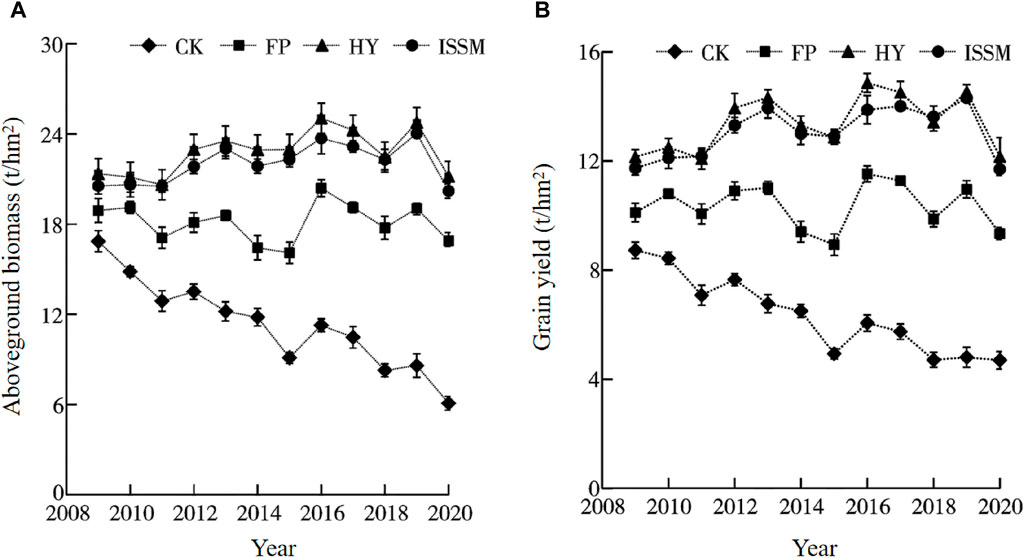
Figure 1. Change trends of aboveground biomass (A) and grain yield (B) of spring maize in different treatments from 2009 to 2020. Note: CK, No fertilization; FP, Farmers’practices; HY, High yield management; ISSM, Integrated soil-crop system management. The same as below.
3.2 Nutrient absorption and utilization efficiency
The interannual variation in phosphorus (P) and potassium (K) absorption by spring maize plants mirrored the trends observed in grain yield and aboveground biomass (Figure 2). The ISSM treatment notably enhanced the uptake of P and K by 26% and 32%, respectively, compared to the FP treatment, approaching 98% and 85% of the HY treatment levels. This indicates that ISSM strategies are instrumental in improving nutrient use efficiency (Table 2).
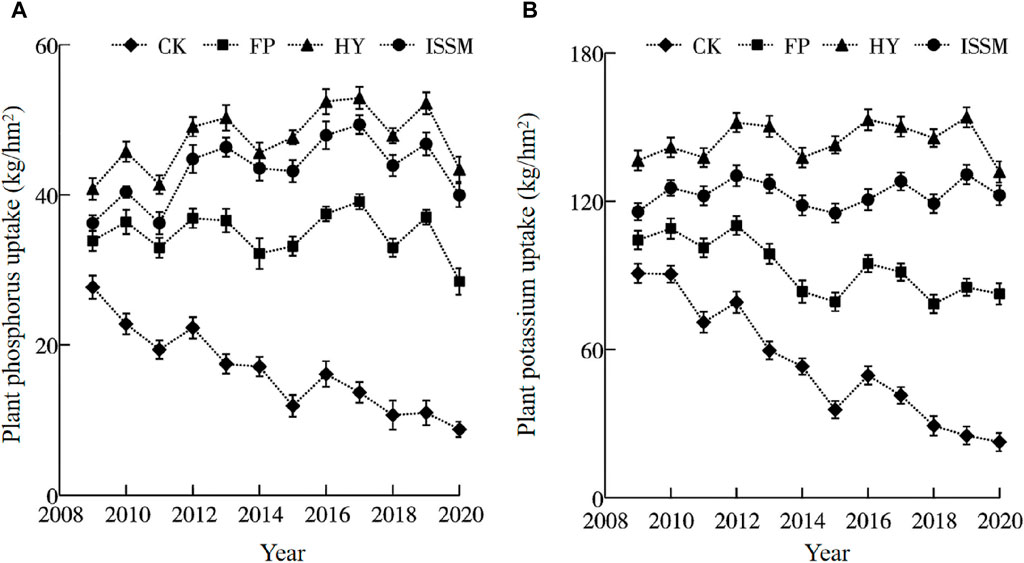
Figure 2. Change trends of plant phosphorus (A) and potassium (B) uptake of spring maize in different treatments from 2009 to 2020.
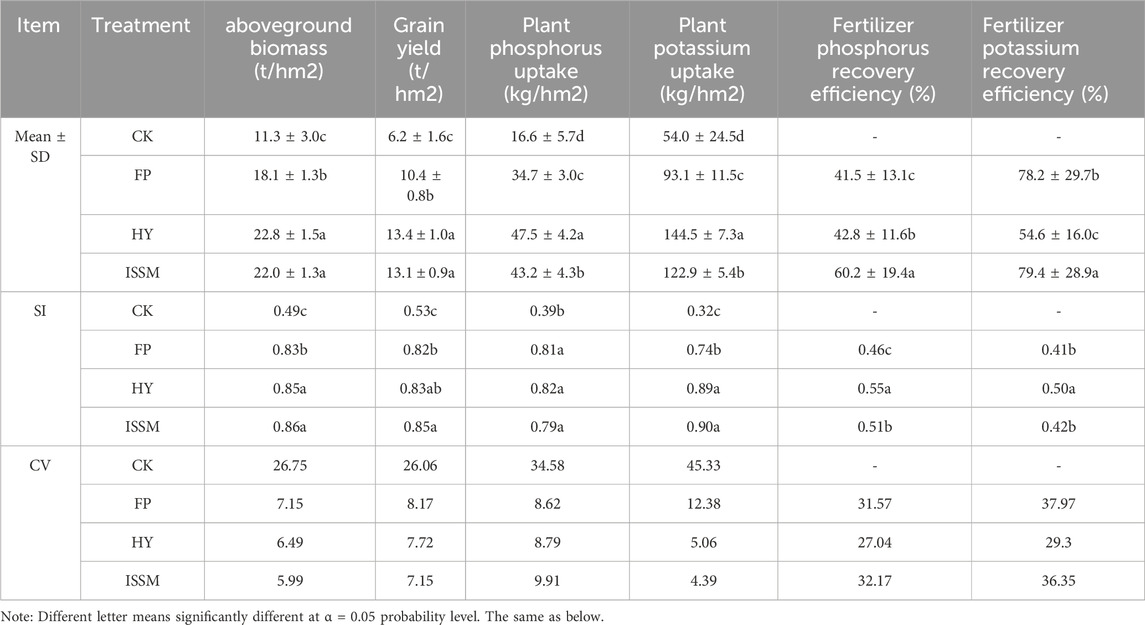
Table 2. The mean grain yield, aboveground biomass, plant phosphorus and potassium uptake, phosphorus and potassium recovery efficiency of spring maize in different treatments from 2009 to 2020.
3.3 Soil nutrient content
The soil nutrient content analysis underscored the impact of treatments on soil fertility (Figure 3). The ISSM treatment significantly increased the total and available P and K content in the 0–20 cm and 20–40 cm soil layers, surpassing the FP treatment (Figures 4, 5) (Table 3). This enhancement in soil nutrient content is attributed to the organic-inorganic fertilization method and improved tillage practices under the ISSM, which collectively improve soil structure and nutrient retention.
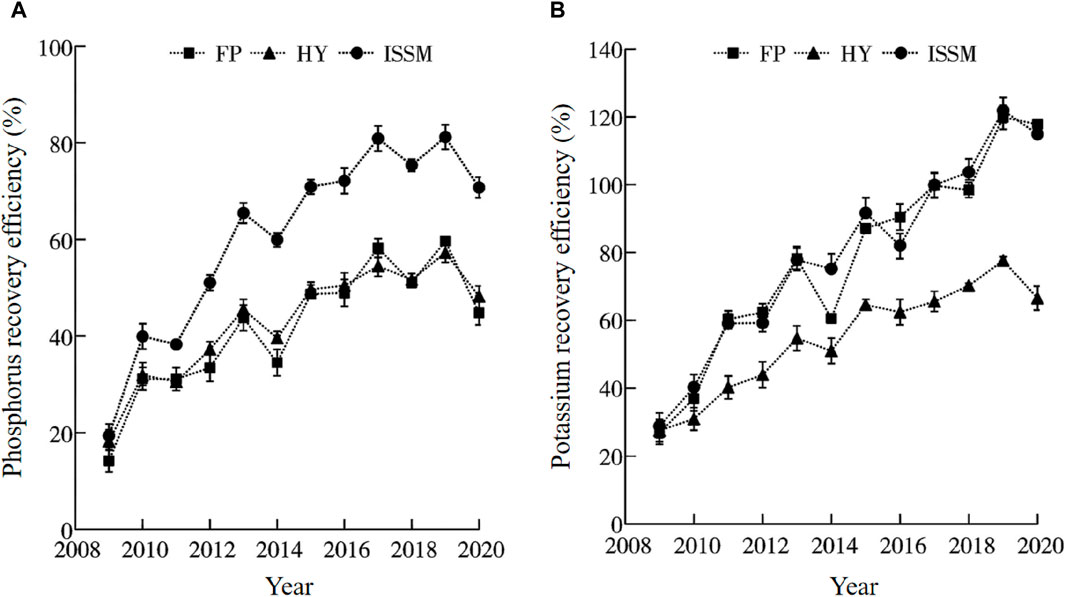
Figure 3. Change trends of phosphorus (A) and potassium (B) recovery efficiency of spring maize in different treatments from 2009 to 2020.
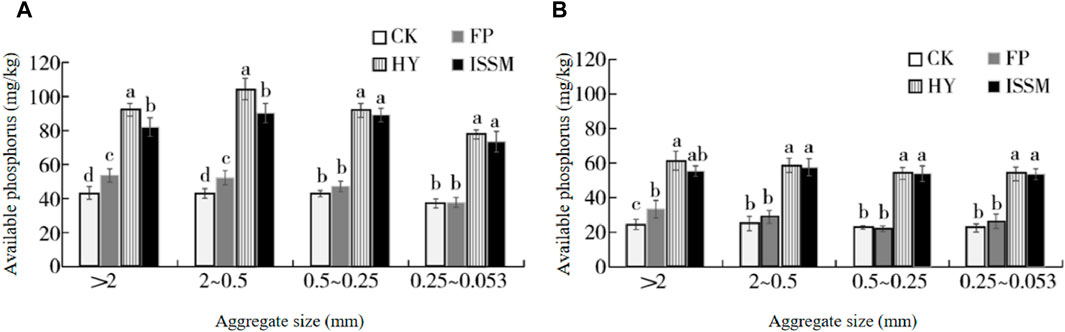
Figure 4. Available phosphorus content of all aggregate size fractions in 0–20 cm (A) and 20–40 cm (B) soil layers.
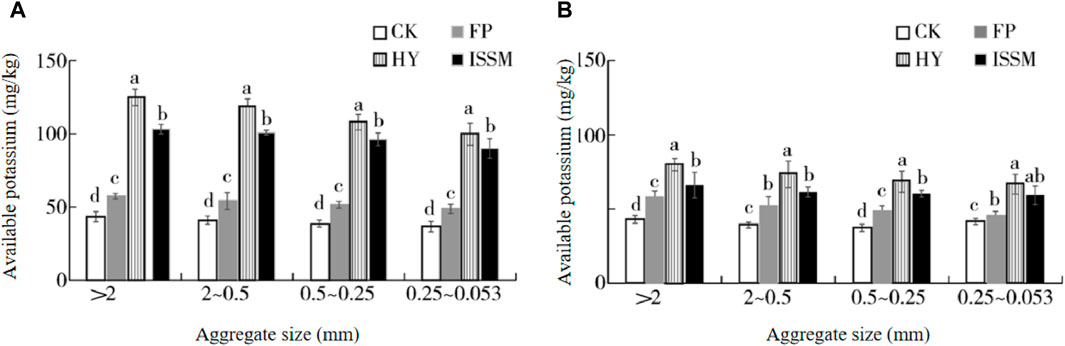
Figure 5. Available potassium content of all aggregate size fractions in 0–20 cm (A) and 20–40 cm (B) soil layers.

Table 3. Soil total and available contents of phosphorus and potassium in 0–20 cm and 20–40 cm soil layers in different treatments.
3.4 Correlation analysis
Correlation analysis among measured parameters revealed robust positive relationships, particularly between grain yield and plant nutrient uptake, and between soil nutrient content and aggregate fractions larger than 0.25 mm. These correlations underscore the interdependence of soil health and crop productivity under the ISSM approach (Figure 6).
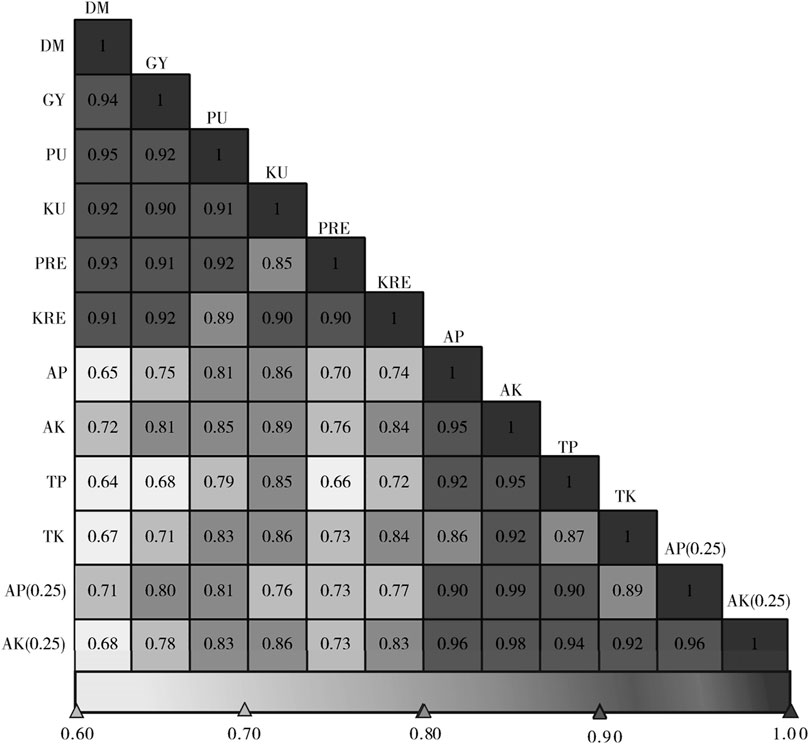
Figure 6. Correlation analysis diagram of various indicators. Note: DM, Dry matter; GY, Grain yield; PU, KU, Plant phosphorus, potassium uptake; PRE, KRE, Phosphorus, potassium recovery efficiency; AP, AK, Available phosphorus, available potassium; TP, TK, Total phosphorus, total potassium; AP (0.25), AK (0.25): Available phosphorus (available potassium in >0.25 mm aggregate size fractions.
In conclusion, the ISSM treatment emerged as a superior strategy for achieving sustainable high yields and optimizing nutrient management in spring maize production. The findings emphasize the need for integrated management practices that consider both crop requirements and soil health for sustainable agricultural outcomes.
4 Discussion
The study demonstrates that the HY and ISSM treatments significantly outperformed the FP treatment in terms of maize yield, nutrient uptake, and soil fertility. This improvement can be attributed to several key factors (Wang et al., 2023). Firstly, the increased planting density in HY and ISSM led to a larger population size and higher aboveground biomass per unit area, thereby enhancing yield potential (Weidhuner et al., 2021; Liu et al., 2022). Secondly, post-harvest deep tillage improved soil aeration, water infiltration, and root growth, fostering better nutrient and water uptake by plants (Phalempin et al., 2022; Schlüter et al., 2023). Thirdly, the combined application of organic and inorganic fertilizers strengthened soil structure and nutrient availability, ensuring an adequate nutrient supply during critical growth stages (Cao et al., 2021).
Notably, the ISSM treatment, through its optimized nutrient management strategy, achieved a balanced nutrient provision that closely matched the plants' demands (Oyetunji et al., 2022). This resulted in a more sustainable and stable yield pattern over the 12-year study period. Additionally, the ISSM treatment significantly increased soil phosphorus and potassium content, particularly in large soil aggregates, indicating its capacity to retain and supply nutrients efficiently.
The findings highlight the importance of appropriate tillage measures and fertilization strategies in achieving high and stable yields while maintaining soil fertility. Deep tillage, in particular, appears crucial for improving soil structure and root growth conditions (Han et al., 2023). Furthermore, the application of organic fertilizers, in combination with inorganic ones, not only supplements nutrients but also enriches the soil with organic matter, fostering long-term soil health (Zhang et al., 2021; Tian et al., 2022).
This study underscores the need to shift from traditional farming practices that prioritize short-term yields to sustainable strategies that consider long-term soil health and resource conservation. By adopting the ISSM approach, farmers can optimize nutrient use efficiency, reduce waste, and mitigate environmental impacts, thereby fostering environmentally friendly and resilient agricultural systems (Khatoon et al., 2020; Rana et al., 2020).
In conclusion, the ISSM treatment offers a promising solution for optimizing maize production in regions like Shaanxi Province, China. Its effectiveness in promoting high and stable yields, enhancing nutrient use efficiency, and bolstering soil fertility underscores its potential as an essential tool for sustainable agricultural development.
5 Conclusion
In summary, based on the 12-year long-term location experiment, this study revealed that the integrated soil-crop system management (ISSM) treatment effectively promoted continuous high and stable yield as well as efficient absorption and utilization of phosphorus and potassium nutrients in spring maize. The average annual grain yield and plant phosphorus and potassium nutrient uptake could reach 98%, 91%, and 85% of the traditional high-yield (HY) treatment, respectively, representing a significant increase of 26%, 24%, and 32% compared to the conventional farmer practice (FP) treatment. Furthermore, ISSM enhanced the recovery and utilization efficiency of phosphorus and potassium fertilizers. Notably, ISSM significantly increased soil phosphorus and potassium nutrient content compared to FP treatment, particularly within aggregates where some indicators approached or reached levels comparable to HY treatment. Therefore, this integrated approach for soil-crop system management has successfully achieved comprehensive objectives including high crop yield, improved soil fertility, and efficient resource utilization. It can be considered an effective method for optimizing cultivation practices in spring maize production in Northeast China while promoting environmentally friendly sustainable agricultural development.
6 Research limitations and future research
While the study offers significant findings on optimizing spring maize production through ISSM practices in Xunyang County, Shaanxi Province, it also presents certain limitations that suggest areas for future research. Firstly, the regional specificity of the research outcomes implies a need for further studies to evaluate the adaptability of these practices in different climatic conditions, such as those found in Northeast China. This geographical expansion is crucial to understand the broader applicability of ISSM strategies. Secondly, the impact of climate change on agricultural practices should be a focal point for future work. This includes examining how shifting weather patterns and temperatures may influence the efficacy and sustainability of ISSM methods, ensuring their resilience in the face of global environmental changes. Thirdly, an economic analysis of ISSM practices is recommended to determine their financial feasibility for farmers. This analysis should consider the costs, benefits, and potential returns on investment, which are critical for the adoption of sustainable farming practices on a wider scale. Additionally, future research should explore the integration of maize with other crops within diverse cropping systems, such as crop rotation and intercropping, to enhance the sustainability and productivity of the agricultural landscape. Lastly, the role of technological innovations in enhancing ISSM practices should not be overlooked. Investigating how precision agriculture and advanced soil monitoring technologies can improve the efficiency and effectiveness of these practices could offer valuable insights for contemporary farming. By focusing on these areas, future research can build upon the current study’s findings, expanding the understanding of ISSM practices and their role in sustainable maize production, and ultimately contribute to the development of resilient agricultural systems tailored to diverse regional contexts.
Data availability statement
The original contributions presented in the study are included in the article/supplementary material, further inquiries can be directed to the corresponding author.
Author contributions
ZW: Conceptualization, Data curation, Formal Analysis, Writing–original draft, Writing–review and editing. XZ: Investigation, Methodology, Project administration, Writing–original draft, Writing–review and editing. YS: Software, Supervision, Validation, Writing–original draft, Writing–review and editing. WL: Conceptualization, Data curation, Resources, Supervision, Validation, Visualization, Writing–original draft, Writing–review and editing. GZ: Conceptualization, Data curation, Formal Analysis, Funding acquisition, Resources, Writing–original draft, Writing–review and editing. ZD: Investigation, Methodology, Project administration, Resources, Writing–original draft, Writing–review and editing.
Funding
The author(s) declare that financial support was received for the research, authorship, and/or publication of this article. This research was funded by the project was supported by Internal projects of Shaanxi Land Engineering Construction Group (DJNY2024-58).
Conflict of interest
Authors ZW, XZ, YS, WL, GZ, and CD were employed by Ankang Branch of Shaanxi Provincial Land Engineering Construction Group Co., Ltd. and Shaanxi Provincial Land Engineering Construction Group Co., Ltd.
Publisher’s note
All claims expressed in this article are solely those of the authors and do not necessarily represent those of their affiliated organizations, or those of the publisher, the editors and the reviewers. Any product that may be evaluated in this article, or claim that may be made by its manufacturer, is not guaranteed or endorsed by the publisher.
References
Cao, Y., Wang, L., Gu, W., Wang, Y., and Zhang, J. (2021). Increasing photosynthetic performance and post-silking N uptake by moderate decreasing leaf source of maize under high planting density. J. Integr. Agric. 20, 494–510. doi:10.1016/S2095-3119(20)63378-0
Chen, X.-P., Cui, Z.-L., Vitousek, P. M., Cassman, K. G., Matson, P. A., Bai, J.-S., et al. (2011). Integrated soil–crop system management for food security. Proc. Natl. Acad. Sci. 108, 6399–6404. doi:10.1073/pnas.1101419108
Cong, M., Hu, Y., Sun, X., Yan, H., Yu, G., Tang, G., et al. (2023). Long-term effects of biochar application on the growth and physiological characteristics of maize. Front. Plant Sci. 14, 1172425. doi:10.3389/fpls.2023.1172425
Felde, V. J. M. N. L., Schweizer, S. A., Biesgen, D., Ulbrich, A., Uteau, D., Knief, C., et al. (2021). Wet sieving versus dry crushing: soil microaggregates reveal different physical structure, bacterial diversity and organic matter composition in a clay gradient. Eur. J. Soil Sci. 72, 810–828. doi:10.1111/ejss.13014
Han, F., An, S., Liu, L., Ma, L., Wang, Y., and Yang, L. (2023). Simultaneous enhancement of soil properties along with water-holding and restriction of Pb–Cd mobility in a soil-plant system by the addition of a phosphorus-modified biochar to the soil. J. Environ. Manag. 345, 118827. doi:10.1016/j.jenvman.2023.118827
Khatoon, Z., Huang, S., Rafique, M., Fakhar, A., Kamran, M. A., and Santoyo, G. (2020). Unlocking the potential of plant growth-promoting rhizobacteria on soil health and the sustainability of agricultural systems. J. Environ. Manag. 273, 111118. doi:10.1016/j.jenvman.2020.111118
Liu, X., Peng, C., Zhang, W., Li, S., An, T., Xu, Y., et al. (2022). Subsoiling tillage with straw incorporation improves soil microbial community characteristics in the whole cultivated layers: a one-year study. Soil Tillage Res. 215, 105188. doi:10.1016/j.still.2021.105188
Morugán-Coronado, A., Linares, C., Gómez-López, M. D., Faz, Á., and Zornoza, R. (2020). The impact of intercropping, tillage and fertilizer type on soil and crop yield in fruit orchards under Mediterranean conditions: a meta-analysis of field studies. Agric. Syst. 178, 102736. doi:10.1016/j.agsy.2019.102736
Norse, D., and Ju, X. (2015). Environmental costs of China’s food security. Agric. Ecosyst. & Environ. 209, 5–14. doi:10.1016/j.agee.2015.02.014
Oyetunji, O., Bolan, N., and Hancock, G. (2022). A comprehensive review on enhancing nutrient use efficiency and productivity of broadacre (arable) crops with the combined utilization of compost and fertilizers. J. Environ. Manag. 317, 115395. doi:10.1016/j.jenvman.2022.115395
Phalempin, M., Landl, M., Wu, G.-M., Schnepf, A., Vetterlein, D., and Schlüter, S. (2022). Maize root-induced biopores do not influence root growth of subsequently grown maize plants in well aerated, fertilized and repacked soil columns. Soil Tillage Res. 221, 105398. doi:10.1016/j.still.2022.105398
Rana, M. S., Hu, C. X., Shaaban, M., Imran, M., Afzal, J., Moussa, M. G., et al. (2020). Soil phosphorus transformation characteristics in response to molybdenum supply in leguminous crops. J. Environ. Manag. 268, 110610. doi:10.1016/j.jenvman.2020.110610
Schlüter, S., Lucas, M., Phalempin, M., Knecht, L., Langehenke, F., Deubel, A., et al. (2023). Organic farming systems affect carbon stocks but not soil structure and associated physical properties in a long-term farming trial on Chernozem. Geoderma 438, 116619. doi:10.1016/j.geoderma.2023.116619
Smith, L. E. D., and Siciliano, G. (2015). A comprehensive review of constraints to improved management of fertilizers in China and mitigation of diffuse water pollution from agriculture. Agric. Ecosyst. & Environ. 209, 15–25. doi:10.1016/j.agee.2015.02.016
Tian, S., Zhu, B., Yin, R., Wang, M., Jiang, Y., Zhang, C., et al. (2022). Organic fertilization promotes crop productivity through changes in soil aggregation. Soil Biol. Biochem. 165, 108533. doi:10.1016/j.soilbio.2021.108533
Wang, H., Ren, H., Han, K., Zhang, L., Zhao, Y., Liu, Y., et al. (2023). Experimental assessment of the yield gap associated with maize production in the North China Plain. Field Crops Res. 295, 108897. doi:10.1016/j.fcr.2023.108897
Wang, H., Xiao, K., Yang, J., Yu, Z., Yu, W., Xu, Q., et al. (2020). Phosphorus recovery from the liquid phase of anaerobic digestate using biochar derived from iron−rich sludge: a potential phosphorus fertilizer. Water Res. 174, 115629. doi:10.1016/j.watres.2020.115629
Wang, Y., Chen, Y.-F., and Wu, W.-H. (2021b). Potassium and phosphorus transport and signaling in plants. J. Integr. Plant Biol. 63, 34–52. doi:10.1111/jipb.13053
Weidhuner, A., Hanauer, A., Krausz, R., Crittenden, S. J., Gage, K., and Sadeghpour, A. (2021). Tillage impacts on soil aggregation and aggregate-associated carbon and nitrogen after 49 years. Soil Tillage Res. 208, 104878. doi:10.1016/j.still.2020.104878
Zhang, Y., Tan, C., Wang, R., Li, J., and Wang, X. (2021). Conservation tillage rotation enhanced soil structure and soil nutrients in long-term dryland agriculture. Eur. J. Agron. 131, 126379. doi:10.1016/j.eja.2021.126379
Keywords: integrated management, maize production, nutrient uptake, soil fertility, sustainable agriculture
Citation: Wang Z, Zhao X, Sun Y, Liu W, Zhao G and Dang Z (2024) Advancing sustainable agriculture: the role of integrated soil-crop management in maize production. Front. Environ. Sci. 12:1426956. doi: 10.3389/fenvs.2024.1426956
Received: 02 May 2024; Accepted: 31 July 2024;
Published: 12 August 2024.
Edited by:
Sérgio António Neves Lousada, University of Madeira, PortugalReviewed by:
Junhng Xie, Gansu Agricultural University, ChinaMarija Mendzhul, Uzhhorod National University, Ukraine
Copyright © 2024 Wang, Zhao, Sun, Liu, Zhao and Dang. This is an open-access article distributed under the terms of the Creative Commons Attribution License (CC BY). The use, distribution or reproduction in other forums is permitted, provided the original author(s) and the copyright owner(s) are credited and that the original publication in this journal is cited, in accordance with accepted academic practice. No use, distribution or reproduction is permitted which does not comply with these terms.
*Correspondence: Zhan Wang, NDU0MzI4MDU5QHFxLmNvbQ==