 Changwei Wei
 Jiali Chen*
- School of Public Policy and Management, China University of Mining and Technology, Xuzhou, China
Introduction: In the face of global challenges, higher education is regarded as an important force to promote the achievement of the 2030 Sustainable Development Goals (SDGs). Existing research has focused on articulating and analyzing the impact of value shaping for sustainable growth in higher education, although articulation and systematic analysis of higher education policy remain lacking.
Methods: Based on the policy tool perspective, this paper constructed a three-dimensional analysis framework by using content analysis and the PMC index model to undertake a thorough analysis of higher education policies published at the central level in China from 2009 to 2024.
Results: This study found that current higher education policies had multiple impacts on the formation of sustainable development values: (1) In the four dimensions of sustainable development proposed by the United Nations, China's higher education policy had shown clear guiding ideology and action direction; (2) In shaping sustainable values, China's higher education policies showed clear progress in three key dimensions; (3) The value and innovation of this study in shaping the values of sustainable development in higher education policies were primarily expressed in the following aspects.
Discussion: This paper suggested a way for optimizing the design of China's higher education policies, providing empirical data and theoretical support for China's higher education policies to better promote the ideals of sustainable development.
1 Introduction
Sustainable development was the organizing principle of global development and concerns the well-being of people and the planet (UNESCO, 2016). The concept of sustainable development was born out of a series of uncertain risks that threatened the future of humanity’s perpetual development in the course of human industrial civilization (Li H., 2024). At the World Conference on Education for Sustainable Development (ESD) in 2021, the United Nations Educational, Scientific, and Cultural Organization (UNESCO) called for a reshaping of education’s mission to address the dilemma of education for sustainable development caused by the Neo-collapsing pneumonia epidemic. The Sustainable Development Goals Report 2022 pointed out that the achievement of the global Sustainable Development Goals (SDGs) was in jeopardy, and the 2030 Agenda for Sustainable Development was under grave danger (UN, 2022). In this context, the inclusion of higher education in the 2030 SDGs and its inclusion in the global development agenda as a more important development actor was a positive feature (Roberts and Ajai-Ajagbe, 2013). Higher education was a “key tool” for achieving the SDGs and can bring the necessary transformational momentum to today’s world by increasing knowledge, skills, values, attitudes, critical thinking, competencies, systems thinking, responsibility and empowerment of future generations (Leicht, 2024). China’s higher education key construction policy was an innovative approach to improve and accelerated higher education development by focusing on the establishment of a set of high-level universities and disciplines (Zhao and Li, 2024). Therefore, higher education policy has an important impact on shaping the values of sustainable development.
This topic has piqued the curiosity and attention of an increasing number of scholars. Cardiff et al. (2024) recommended the application of ESD in language education. According to Chankseliani and McCowan (2021), one of the goals of sustainable development in higher education was equal access to higher education, also known as equity. Fekih Zguir et al. (2021) proposed including Education for Sustainable Development (ESD) and Sustainable Development Goal (SDG) ideals into the curriculum. Nordén (2024) used a qualitative methodology to uncover trans-boundary learning and a shift in how we think about sustainable development by activating intrinsic elements. Thus, it has been discovered that the policy impact analysis and book review on the sustainability of higher education in a certain country are relatively prominent, and the main deficiencies are the single quantitative method of the evaluation system indicators, the heavy subjective evaluation, and the lack of targeted policy recommendations for the sustainability of higher education development (Chankseliani and McCowan, 2021). At the same time, Chinese scholars’ attention to this topic is also becoming increasingly visible, Du (2022) clarified the definition of sustainable development of higher education, which contains three meanings: higher education as sustainable development, higher education on sustainable development, and higher education for sustainable development. Ma (2023) expounded on China’s practice of higher education for sustainable development in terms of economy, society, ecology, and the international experience achieved. Yuan and Li (2021) anticipated the modernization of China’s higher education in 2035, and proposed some proposals for the development of sustainable education in higher education in 2035 under the guidance of relevant policies. Certainly, the development and refinement of higher education to cultivate sustainable development values is maturing over the globe. However, in China’s educational practice, these policies remain in the exploratory phase. The existing literature primarily elaborated and analyzed the influence of higher education on sustainable development values. And, there is a distinct absence of detailed examination of higher education policies. Furthermore, no studies have quantitatively examined higher education policy texts on sustainable development using policy tools as a lens. This represents a significant research gap, with ample scope for growth in this subject.
As a result, based on the perspective of policy tools, this study will use data from relevant government departments to examine sustainable development policies for higher education. It employs content analysis and the Policy Modeling Consistency (hereinafter referred to as PMC) index model to build a framework analyzing policy objectives, tools, and effectiveness. The study applies Nvivo12 and ROSTCM6 to thoroughly investigate the aims, tool structures, and enforcement effects of higher education policy documents. Based on these findings, the study suggests an optimization path for higher education policy to foster sustainable development values, offering theoretical insights for future central government policy making.
2 Research framework
2.1 General ideas
Policy objectives, policy tools, and policy effectiveness are all important components of public policy analysis, regardless of whether they follow a vertical or horizontal basic framework (Yao et al., 2024). As the basic way to implement policies, the appropriate choice of policy instruments affects the sustainability and effectiveness of policy objectives. The analysis of policy instruments helps to improve the understanding of policy formulation (Peng and Peng, 2022). Policy objectives reflect the values and preferences of policymakers, which will also play a role in the selection criteria of policy instruments (Nordén, 2024). Policy effectiveness, in contrast, demonstrates the coherence of policy substance and is an objective reflection of the scientificity of policy instruments and the rationality of policy objectives (Fekih Zguir et al., 2021). At the same time, some studies have found that high-quality policies tend to exhibit stronger characteristics of goal rationality, problem responsiveness and implementation robustness, such as policies with clear goals, scientific tools and efficient effectiveness are more likely to produce positive policy effects in the process of implementation (Cutcher et al., 2020). Many research had examined public policy based on goal-tool-efficacy. For example, from the perspective of tools, Lu et al. (2024) analyzed China’s policies related to children’s medication to provide reference for the formulation and optimization of policies in the field of children’s medication in China. Zhan et al. (2024) investigated the significance of China’s ESG policies through the lens of policy tools and provided recommendations for the government’s future formulation and optimization of ESG policies.
All of the examples above demonstrated the goal-tool-efficacy dimension, which was an effective tool for interpreting public policies. Thus, in order to investigate the impact of higher education policies on long-term value shaping, this study follows the fundamental principles of the policy science school of public policy analysis. We seek to examine the policy text and undertake specific assessments by contrasting three aspects: policy goals, policy instruments, and policy effectiveness.
2.2 Policy objective dimension
Policy objectives are the requirements and effects expected to be achieved by policy implementation, as well as the unified consensus of managers’ will to act (Lu et al., 2024). Objectives have a specific role in policy creation, unifying the course of action of various sectors and stakeholders, guiding resource allocation, providing criteria for policy evaluation, and increasing policy openness and public participation. Policymakers may guarantee that resources are used effectively, and that policies achieve the desired results by establishing clear policy objectives, improving the knowledge and support of all key parties for the policies, and encouraging policy consensus. Based on the UNESCO series of reports, this study starts from four aspects: ideology, education, science and technology, and culture, and divides the dimensions of ESD policy objectives related four aspects (UNESCO, 2015) identified in the UNESCO reports: fostering the concept of sustainable development, promoting green and low-carbon education, promoting scientific innovation, and strengthening the construction of ecological civilization (Xiong et al., 2023) (see Table 1).
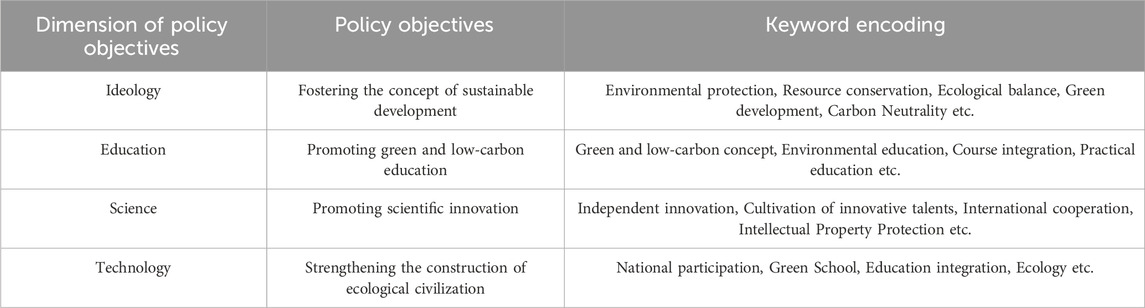
Table 1. Policy target coding.
2.3 Policy instrument dimension
Policy instruments are important means adopted by governments to achieve governance goals and improve governance effectiveness (UNESCO, 2015). They are “blueprints or templates for shaping policies,” which can be used to test the implementation of public policies based on a set of specific government behaviors, and appropriate policy instruments can have a multiplier effect on the realization of policy objectives (Rothwell and Zegveld, 1985; Linder and Peters, 1990). Rothwell and Zegveld’s policy tool theory classifies policy tools into three types: environmental, supply and demand policy tools. Only a balanced use of these three sorts of policy tools can ensure that policy is reasonable and scientific (Blair, 2002). Based on this, this study adopts the classical way of separating the types of policy instruments proposed by Rothwell and Zegveld (1981), i.e., the three dimensions of supply-side, demand-side, and environment-side. Therefore, this study divides the policy tools for shaping the values of sustainable development into three categories of supply-type, demand-type, and environment-type totalling 12 policy tools (see Table 2).
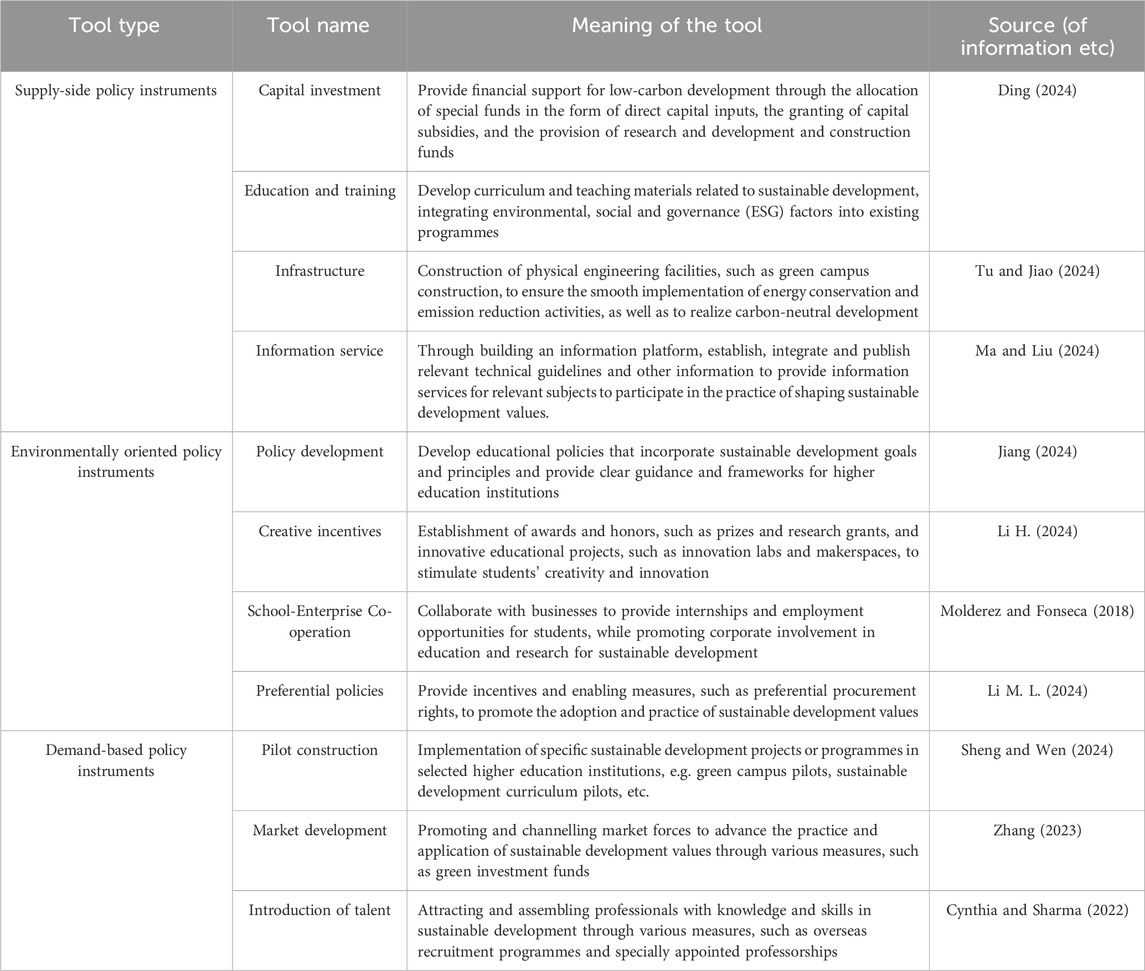
Table 2. Types and content of policy instruments.
2.4 Policy effectiveness dimension
Policy effectiveness refers to the impact and effect that a policy demonstrates in the course of its actual implementation. The real influence and change that the policy causes in the target group or the social environment. Policy efficacy is one of the most crucial criteria for determining a policy’s success. A highly successful policy can better serve the public interest, solve social problems and promote social progress. This study combines the characteristics of higher education sustainable development policies with nine first-level indicators to measure whether these policies support the realization of the Sustainable Development Goals (SDGs). It offers a PMC evaluation method for higher education policies aimed at forming values relevant to sustainable development, and intuitively displays the strengths and shortcomings of these policies by calculating the PMC index value and creating the PMC surface diagram (Li M. L., 2024).
3 Research methodology and data
3.1 Description of the research methodology
Based on the instrument-goal-effectiveness framework, this study employs Nvivo12 software to conduct a content analysis method of keyword analysis data of higher education policy texts. Furthermore, a quantitative literature analysis approach of policy text, paired with the PMC index model, is used to interpret the values of higher education policy that shape sustainable development. The use of mixed research methodology in this study can completely exploit the capabilities of diverse research methods in order to get more accurate conclusions (Carter et al., 2014).
The content analysis is an objective, systematic and quantitative description of the content of communication, in essence, it is an examination of the amount of information contained in the content of the literature and the trends or changes reflected in it (Yang and Hu, 2021). As a popular auxiliary tool for textual econometric analysis, Nvivo qualitative analysis software can assist researchers in capturing data characteristics and patterns, as well as managing data flexibly, allowing them to free themselves from tedious data processing tasks such as classification, sorting, and organization in the past, giving them more time to explore research objects and problems (Gil-Garcia et al., 2018). According to the four components provided in UNESCO papers, this study utilizes software to conduct a content analysis of higher education policy texts for sustainable development. Each text serves as an analytical unit to assess the influence of these policies on sustainable value formation.
3.2 Policy text options
In order to ensure the accuracy and effectiveness of the research, policy texts related to the research topic as well as texts issued by central government departments were selected. This study conducted an advanced search in the http://PKULAW.com. And the website of the Ministry of Education of the People’s Republic of China, using the keywords “dual-carbon,” “sustainable development,” “green education,” “environmental education,” and so on. The search scope for central policies and regulations was defined from 2009 to 2024. Simultaneously, to ensure that the text is extremely consistent with the subject, manual screening was conducted according to the following criteria: first, the policy text is related to the theme of sustainable development, for example, the document can be related to the scope of lifelong education, environmental education, dual-carbon talent development; second, the policy text must be publicly released by authoritative issuing agencies at the central level, including the Central Committee of the Communist Party of China (CPC), the State Council, the Ministry of Education, the Ministry of Environmental Protection, and the State Forestry Administration, etc.; third, policy documents include notices, opinions, announcements, outlines (excluding approvals), policy interpretations, and so on. Based on the above principles, 20 ESD policy texts were eventually sorted out and a sample data base was established, as shown in Table 3.
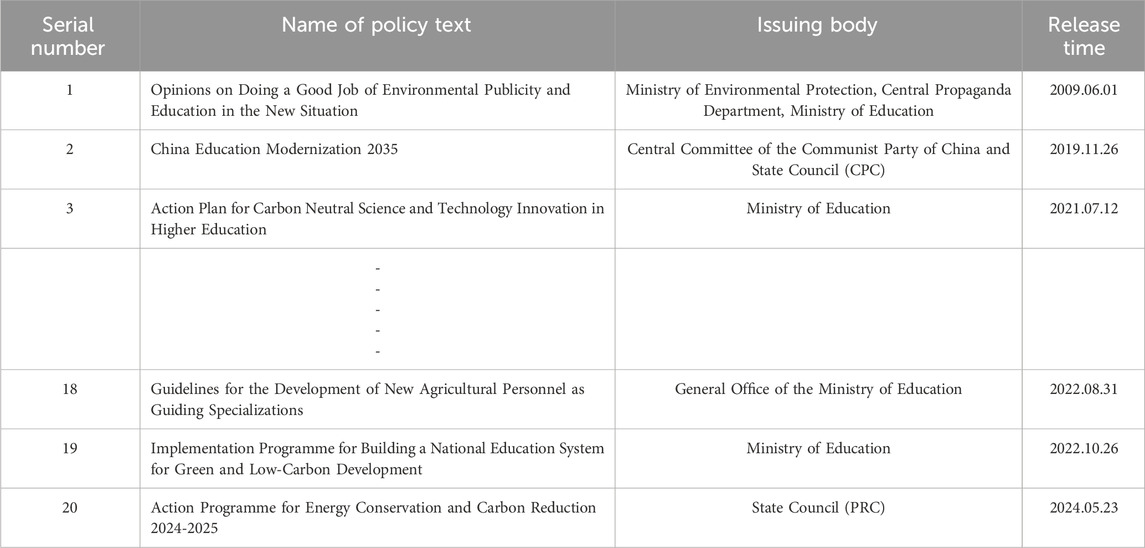
Table 3. Sample data base of ESD policy texts (partial).
3.3 Coding of policy texts and statistics
In this study, the 20 ESD policy texts listed above were imported into the Nvivo12 software. The contents of the policy texts were manually coded and analyzed word by word and sentence by phrase using the policy tool categorization framework established in the preceding section, yielding 11 nodes and 216 reference points. This resulted in a coded node list of policy tool dimensions (see Table 4), which this study used to investigate the precise content of the ESD policy text.
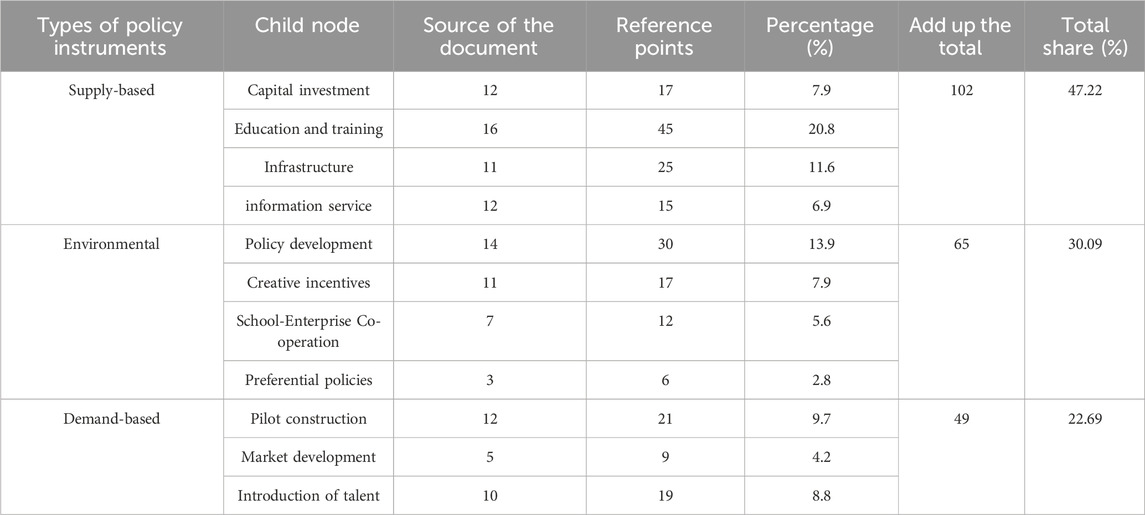
Table 4. Nodal list of coding dimensions of policy instruments.
3.4 PMC index modelling
The policy effectiveness dimension adopts the PMC index model to explore the effectiveness of the policy content issued by the Ministry of Education and other levels of the central government from 2009 to 2024, so as to propose appropriate countermeasures for the current state of development. The PMC index model is a new type of policy evaluation method proposed by Ruiz Estrada, 2011, which evaluates the consistency and effectiveness of policies by integrating multiple dimensions and variables. It has several advantages. For starters, it may do quantitative text analysis while taking into account the diversity of affecting factors and the consistency of policy weights. Second, the objective data and PMC surface allow for single-indicator analysis and multidimensional evaluation of the effectiveness of policies. Third, the PMC index model is applicable to a wide range of fields and can easily combine many factors with policy characteristics and societal demands to create a unique and scientific quantitative model for making objective judgments on diverse policies (Yang and Hu, 2021). Its primary operational activities are as follows: identifying variable classifications and parameters, building multi-input-output tables, calculating PMC indexes, drawing PMC surface diagrams, and evaluating and optimizing policies. Taking into account the method’s requirements, the evidence of previous research results, and the characteristics of the selected policy texts, we developed the PMC evaluation system (see Table 5), which contains 9 primary variables and 27 secondary variables.
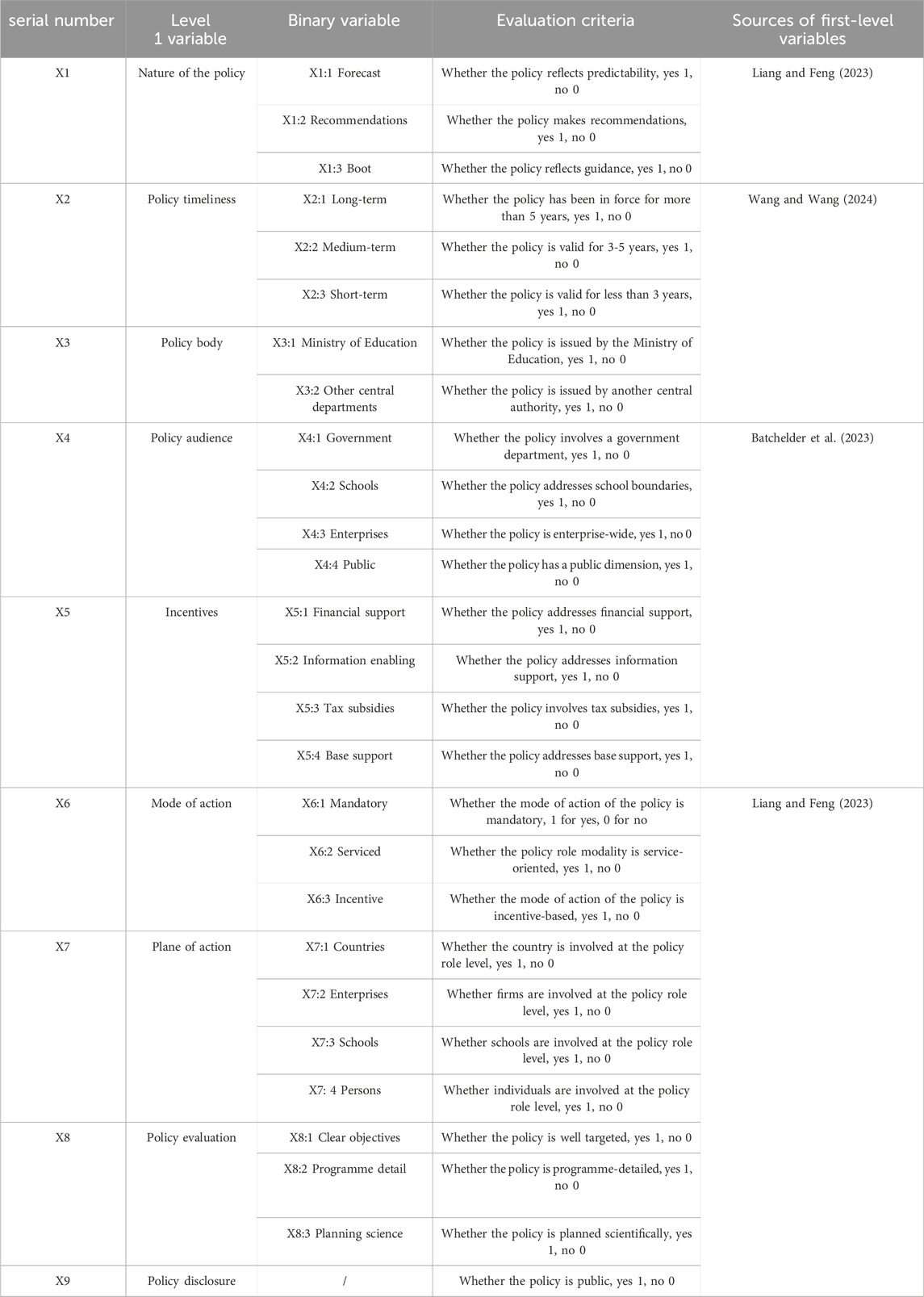
Table 5. Policy effectiveness evaluation system.
After the establishment of the policy effectiveness evaluation system, the PMC index model needs to be calculated. In Equations 1, 2: X is the first-level variable, and the association of the two equations means that all variables obey the [0, 1] distribution and are assigned the value of 0 or 1; XR means rounding. In Equations 3, 4: i is the value of the first-level variable; j is the value of the second-level variable; T (·) is the value of the second-level variable under each first-level variable. According to Equation 4 the PMC index value can be obtained. The parameters m and n are finite and take on positive integer values. Specifically, m denotes the quantity of primary variables, and n signifies the quantity of secondary variables within the framework of the model.
i = 1, 2, 3, 4, 5, … , m j = 1, 2, 3, 4, 5, … , n
i = 1, 2, 3, 4, 5, … , m j = 1, 2, 3, 4, 5, … , n.
According to the results calculated by the PMC index model, these results can be classified into four grades: “Fail,” “Fair,” “Good” and “Excellent” (see Table 6).

Table 6. PMC index scale.
Finally, the PMC matrix was constructed based on the calculation of the scores of each variable, and the PMC surface plotting was carried out with Equation 5.
4 Findings
4.1 Analysis of the policy objective dimension
Overall, the central level policy objectives include ideology, education, research and technology, and culture. The frequency and proportion of the four policy objectives of cultivating the concept of sustainable development, promoting green and low-carbon education, strengthening the construction of ecological civilization, and promoting science and innovation are 92 (55.76%), 29 (17.58%), 28 (16.97%), and 16 (9.70%) in turn (see Table 7). It is clear that the primary goal is to instill pupils’ understanding and recognition of sustainable development as a personal value. This is to ensure that students understand its significance and the roles that people and society play in achieving it through higher education legislation. The objectives of promoting green and low-carbon education and enhancing the building of an ecological civilization accounted for an equal share, reflecting that the central level still attaches importance to educating students to carry out more relevant practical actions. The objective of promoting science and innovation, which accounts for the smallest share, reflects that the central level encourages students to participate in scientific research and technological innovation to address the challenges of sustainable development, but there are still relatively few incentives to do so.

Table 7. Nodal list of coding dimensions for policy objectives.
4.2 Analysis of the dimensions of policy instruments
Table 5 shows that the policy options for sustainable higher education are divided into three types: supply, environment, and demand, with frequency shares of 47.22%, 30.09%, and 22.69%, respectively. This indicates that at the initial stage of shaping sustainable development values in higher education, the policy design focuses on providing some necessary material and information support to create conditions for shaping sustainable development values in higher education (see Figure 1). Among the supply-based policy tools, the coverage of “education and training” is high, accounting for 20.8%, and the coverage of “financial input” is relatively low, accounting for only 7.9%, which shows that the central level focuses on improving teachers’ competence in ESD, but there is a lack of support for the development of ESD curricula. Efforts to design ESD courses are limited. Environmental policy tools are aimed at creating an atmosphere suitable to the establishment of sustainable development values, as well as directing higher education sectors in developing and implementing educational policies and incentives related to sustainable development. However, the proportion of “preferential policies” is particularly low, accounting for only 2.8%, implying that efforts to foster the merger of industry, academia, and research remain insufficient. Demand-driven policy instruments play an important role in creating an educational environment that supports sustainable development and stimulating related demand by stimulating and guiding demand for sustainable development values through “pilot construction” and “market cultivation.”
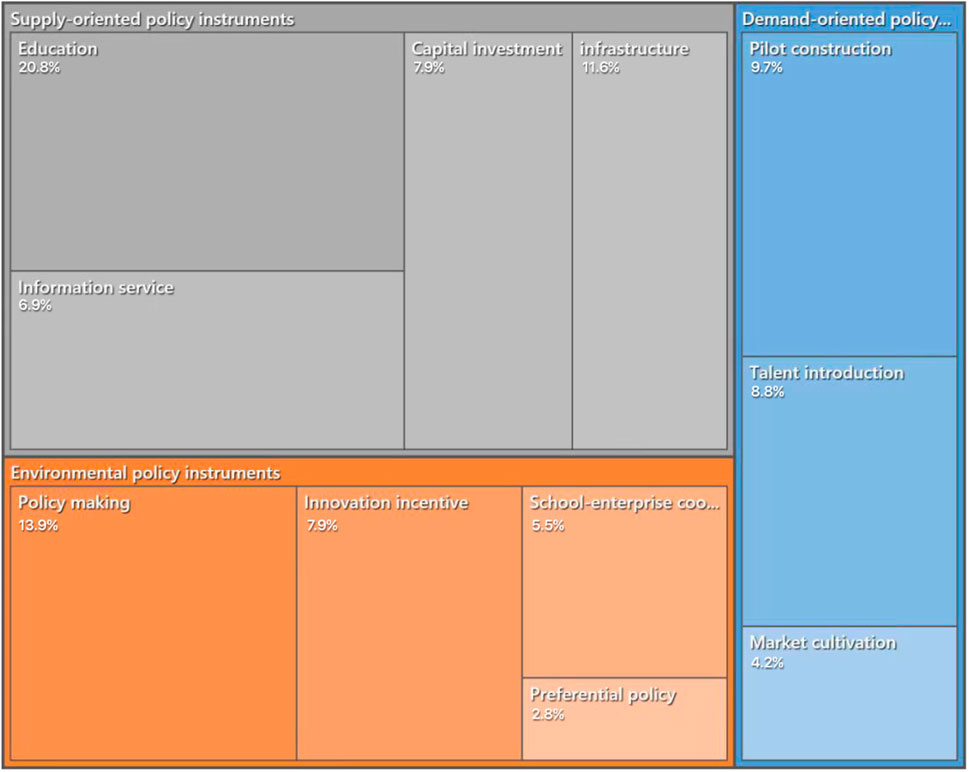
Figure 1. Frequency diagram of policy instruments.
4.3 Analysis of policy effectiveness dimensions
In this study, 20 policy texts from the sample database were examined, with six representative higher education policy texts on sustainable development chosen for effectiveness analysis. The six policy texts were selected using two criteria: (1) in order to ensure the authority of the policy texts, three policy texts issued by the Ministry of Education (MOE) were chosen, namely, P1, P2 and P3; (2) in order to reflect the synergy of the policy texts, three policy texts jointly signed and issued by several ministries and departments, respectively, were chosen, namely, P4, P5, and P6; the results of the screening of the policy texts are shown in Table 8.
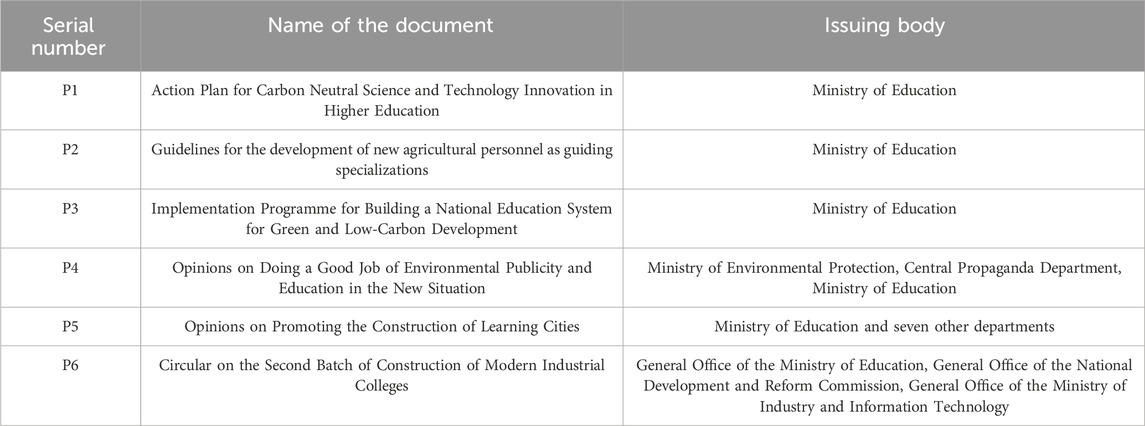
Table 8. Summary of 6 policy texts.
The PMC index model can be constructed to obtain the actual perception of the effectiveness of the policy, and the larger the PMC index value, the greater the usefulness of the policy, and vice versa, the policy has a lot of space for development. Table 9 displays the results of this study, which assigns values to the secondary variables in the input-output tables of the six policies based on the substance of the policy language. The PMC index of each of these six policies is determined separately using the PMC index formula. The grades for these six policies are then determined by combining the policy grade criteria, and the results are presented in Table 10.
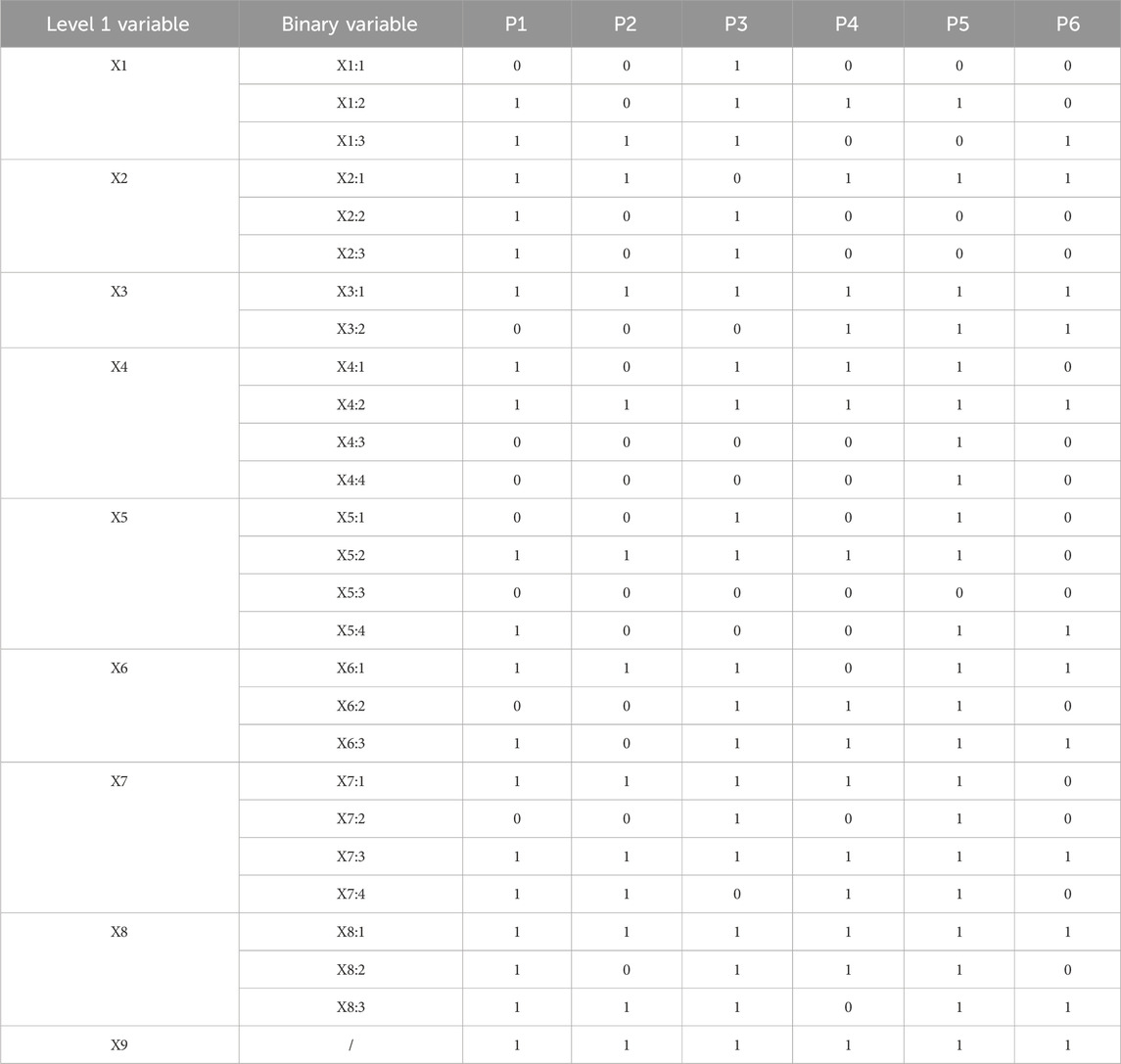
Table 9. Inputs and outputs of six higher education policies for sustainable development.
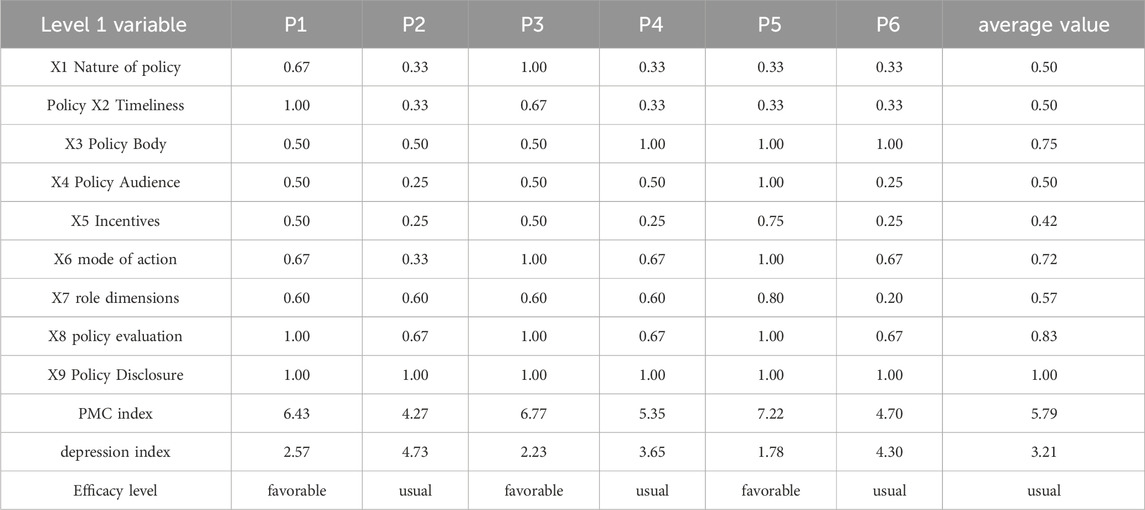
Table 10. PMC indices, depression indices and grades for the six policies.
This study plotted the surface diagrams of six sustainable higher education strategies to make it easier to analyze and compare their degree of concavity, as well as their strengths and drawbacks. Different colour blocks represent different index scores corresponding to the variables. In the surface, the higher the level of three-dimensional coordinates and the smaller the concavity of the surface, the more comprehensive the indexes involved in the policies are; and vice versa. The surface diagram allows for additional analysis of the strengths and weaknesses of each policy substance, as shown in Figures 2–7 (The numbers in the figure represent the range of values of the variable). According to the findings, Policies P1, P3, and P5 have clear objectives, an adequate foundation, thorough programmes, more scientific overall planning, cover a broader range of fields, and require less improvement, merely requiring to be altered based on the actual situation during subsequent implementation. In comparison, Policies P2, P4, and P6 require adjustments: P2 has 7 below-average first-level variables, a smaller audience, and requires increased incentives with a limited mandated measure scope, indicating greater improvement potential; P4’s incentives are singly focused, narrow in scope. Policy P6 is a simplified policy programme with a smaller target audience, and the mode and level of action are only focused on the school, with no tie to the enterprise or the government.
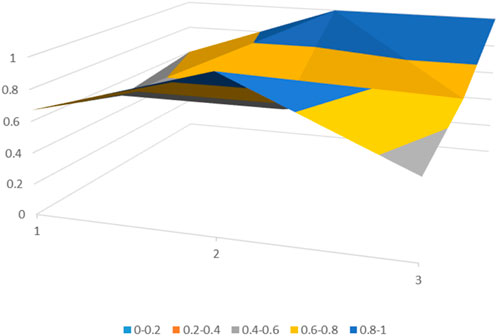
Figure 2. Surface map of Policy P1.
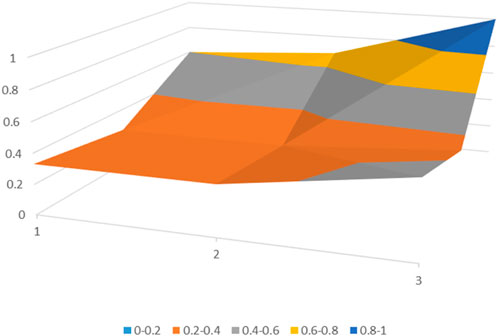
Figure 3. Surface map of Policy P2.
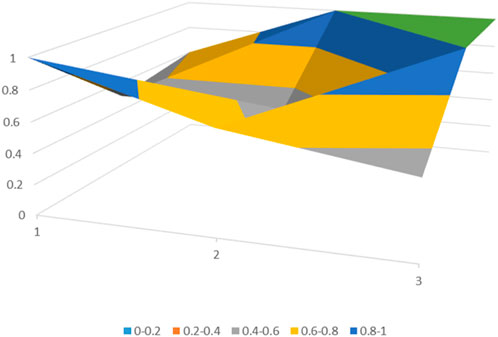
Figure 4. Surface map of Policy P3.
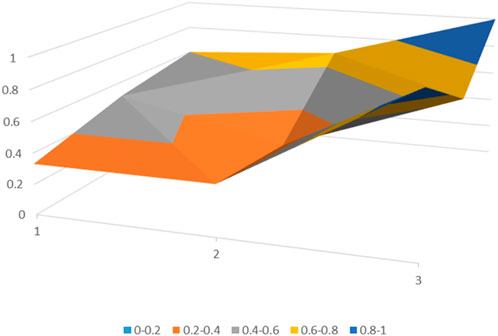
Figure 5. Surface map of Policy P4.
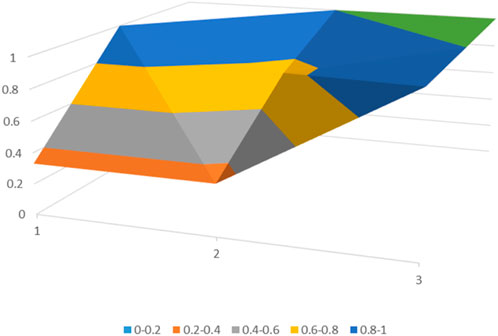
Figure 6. Surface diagram of Policy P5.
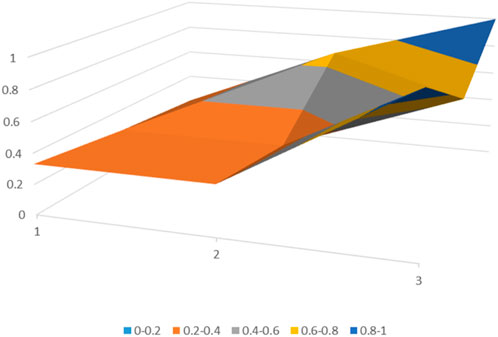
Figure 7. Surface diagram of Policy P6.
5 Discussion
This study uses a qualitative analysis approach within the framework of “goal-tool-effect” to analyze the influence of current higher education policies on cultivating sustainable development ideals, using policy papers released by key central agencies between 2009 and 2024.
The policy objectives show remarkable effectiveness in developing students’ understanding of the concept of sustainable development. This technique allows pupils to fully grasp the significance of sustainability and embrace it as a basic value. However, there are obvious deficiencies in promoting innovation awareness. When presented with complicated environmental challenges, students may struggle to think creatively and solve problems. This deficiency may hinder their ability to propose and implement innovative solutions, with implications for the ability of society as a whole to innovate and adapt. Therefore, when formulating relevant policies, government departments should strengthen the cultivation of innovation consciousness. First, innovation education should be incorporated into the curriculum system. This can be accomplished through practical measures such as encouraging students to participate in innovative projects and contests and developing their innovative skills. Second, strengthen cooperation with enterprises and research institutions. This can provide students with internships and research opportunities that allow them to learn how to solve problems in real environments. Finally, teachers should use more stimulating teaching methods to encourage students to think independently and critically, thereby cultivating their innovative thinking.
The structure of policy instruments reveals inefficiencies and inequalities that can lead to unequal allocation of resources, which will adversely affect the quality of education and the efficiency of research. Inadequate support from supply-side policy instruments can limit curriculum diversity, undermining educational standards and research innovation. In addition, insufficient incentives in environment-based policy instruments may reduce incentives for academic-industry collaboration, thereby limiting knowledge transfer and technological progress. Moreover, inadequate market engagement in demand-based policy tools might result in the implementation of educational achievements in real-world situations, weakening social ideals and economic advantages. Therefore, when formulating relevant policies, government departments should optimize the structure of policy tools. First, increase funding for supply-oriented policy instruments to support education and research programs, and promote curriculum diversity and research innovation. Second, preferential policies to increase environmental policy tools can be utilized to encourage academic, industrial, and research community integration, as well as information transfer and technological innovation. Finally, boost market participation in demand-oriented policy tools, promote the implementation of educational and scientific research findings through market processes, and enhance social value and economic rewards.
Many policies lack predictive power, leaving them unable to adjust to future problems or changes, reducing their efficacy. Limitations in the scope and implementation mechanisms of these policies may prohibit them from covering all relevant areas or population groups, thus limiting overall effectiveness. Furthermore, over-reliance on executive power may ignore the potential contribution of non-governmental organizations, reducing prospects for public involvement and diversified collaborations while severely impacting stakeholder acceptance rates and implementation effectiveness. To combat the unpredictability of policy effects, government departments should base policy formation on in-depth data analysis and trend forecast to ensure that policies are adaptable to future challenges and changes. Second, policy measures should have a broader and more flexible scope to guarantee that their impacts reach all important sectors and groups. Finally, more nongovernmental stakeholders should be involved in policy creation. This will improve social engagement and pluralistic cooperation, resulting in greater policy acceptance and efficacy.
6 Conclusion
(1) In the four components of sustainable development recommended by the United Nations, China’s higher education policy has demonstrated clear driving ideology and action direction. First, in terms of philosophy, the policy focuses on increasing students’ awareness and identification with the concept of sustainable development. Second, at the educational level, policymakers prioritize education and training. Policymakers encourage the creation of sustainability-related curricula and teaching materials in order to promote the integration of educational content with sustainable development principles. Third, in the realm of science and technology, the policy purpose is to actively encourage scientific innovation. Policymakers encourage students to participate in scientific research and technology innovation to meet the issues of sustainable development. Fourth, in terms of culture, policy instruments focus on improving the foundation of ecological civilization, while policies encourage green and low-carbon education by preparing students to take necessary practical actions. This not only helps students develop a proper understanding of ecological environmental protection, but it also fosters the development of ecological civilization. To summarize, China’s higher education policies have reflected and concentrated on four key aspects: ideology, education, science and technology, and culture. The policy formulation intends to thoroughly improve students’ awareness of sustainable development and encourage its in-depth implementation through educational practice.
(2) China’s higher education programs have made significant success in three important areas when it comes to building sustainable values. First and foremost, policies encompass a wide range of critical sectors, including ideology, education, science and technology, and culture. There is a strong emphasis on encouraging sustainability, as indicated by the high percentage, demonstrating that policymakers understand that instilling sustainability ideals in pupils is critical for future social advancement. Second, in terms of policy tools, policies exhibit clear diversification features. The use of supply-oriented policy tools is especially common, accounting for 47.22%, reflecting the policy’s emphasis on providing the necessary material and information support for higher education in the implementation process to foster the cultivation of sustainable development values. However, an in-depth review of the PMC index model demonstrates that policy substance is still lacking in some dimensions. Specifically, most policy parts lack foresight and predictability, which may hinder policy’s ability to respond to future difficulties. At the same time, the scope and form of the policy effect reveal some restrictions, which may have an impact on the total benefit and execution of the policy. In short, China’s higher education policy has made some progress toward shaping long-term values, particularly in terms of setting policy goals and diversifying policy tools. However, in terms of increasing the policy’s effectiveness, broadening its scope, and improving its predictability and foresight, there is still a need for further improvement and optimization.
(3) The following features highlight the study’s value and novelty in shaping the values of sustainable development in higher education policies. First, in terms of models and methods, the study employs an innovative content analysis method and the PMC index model to construct a multidimensional analysis framework with three dimensions: policy objectives, policy tools, and policy effectiveness, as well as a comprehensive and in-depth analysis of policy texts. Second, in terms of in-depth analysis, the study employs Nvivo12 and ROSTCM6 software to conduct quantitative analyses of policy goal setting, policy tool structure, and policy implementation effectiveness in higher education policy texts, thereby improving the research’s accuracy and objectivity. In terms of policy recommendations, this study not only examines the current situation, but also makes constructive suggestions to strengthen the diversification of policy objectives, particularly the promotion of scientific innovation objectives, and to balance the structure of policy tools in order to establish regular evaluation and feedback mechanisms to optimize higher education policies.
However, the study had certain drawbacks. Because the Chinese central government has only released rules on this area since 2021, there have been few comparable research in the past. The study’s policy content is incomplete, as it lacks an international comparative viewpoint and addresses the issue of implementation regulations. These insights provide useful guidance and opportunities for improvement in future policy making and research.
Data availability statement
The original contributions presented in the study are included in the article/supplementary material, further inquiries can be directed to the corresponding author.
Author contributions
CW: Writing–review and editing, Funding acquisition, Methodology, Project administration, Supervision, Validation, Visualization. JC: Writing–original draft, Writing–review and editing, Conceptualization, Data curation, Formal Analysis, Methodology, Resources, Software.
Funding
The author(s) declare that financial support was received for the research, authorship, and/or publication of this article. This research was funded by the Fundamental Research Funds for the Central Universities of China, the grant number is 2020ZDPYSK08 and 2023ZDPYSK10. It was also supported by the National Social Science Fund Youth Project of China, the grant number is 19CGL059.
Conflict of interest
The authors declare that the research was conducted in the absence of any commercial or financial relationships that could be construed as a potential conflict of interest.
Publisher’s note
All claims expressed in this article are solely those of the authors and do not necessarily represent those of their affiliated organizations, or those of the publisher, the editors and the reviewers. Any product that may be evaluated in this article, or claim that may be made by its manufacturer, is not guaranteed or endorsed by the publisher.
References
Batchelder, M., Swinney, M., O’Hara, T., Goddard, A., Lewis, E., Cox, J., et al. (2023). Experiences from a school–university partnership climate and sustainability education project in England: the value of citizen science and practical STEM approaches. Sustainability 15, 9401. doi:10.3390/su15129401
Blair, R. (2002). Policy tools theory and implementation networks: understanding state enterprise zone partnerships. J. Public Adm. Res. Theory 12, 161–190. doi:10.1093/oxfordjournals.jpart.a003528
Cardiff, P., Polczynska, M., and Brown, T. (2024). Higher education curriculum design for sustainable development: towards a transformative approach. Int. J. Sustain. High. Educ. 25, 1009–1023. doi:10.1108/ijshe-06-2023-0255
Carter, N., Bryant-Lukosius, D., DiCenso, A., Blythe, J., and Neville, A. J. (2014). The use of triangulation in qualitative research. Oncol. Nurs. Forum 41, 545–547. doi:10.1188/14.ONF.545-547
Chankseliani, M., and McCowan, T. (2021). Higher education and the sustainable development goals. High. Educ. 81, 1–8. doi:10.1007/s10734-020-00652-w
Cutcher, L., Ormiston, J., and Gardner, C. (2020). ‘Double-taxing’indigenous business: exploring the effects of political discourse on the transfer of public procurement policy. Public Manag. Rev. 22, 1398–1422. doi:10.1080/14719037.2019.1679235
Cynthia, G., and Sharma, N. (2022). Namrata sharma, value-creating global citizenship Education for sustainable development Strategies and approaches. Policy Futur. Educ. 20, 254–256. doi:10.1177/14782103211016625
Ding, L. (2024). The promotion of regional economic development by innovative talent cultivation in higher education--A review of higher education, talent resource mobility and regional sustainable development. High. Educ. Explor., 129. doi:10.3969/j.issn.1673-9760.2024.03.018
Du, Y. B. (2022). Promoting sustainable development of higher education and building a community of human destiny. China High. Educ. Res. 34. doi:10.16298/j.cnki.1004-3667.2022.12.05
Fekih Zguir, M., Dubis, S., and Koç, M. (2021). Embedding Education for sustainable development (ESD) and SDGs values in curriculum: a comparative review on Qatar, Singapore and New Zealand. J. Clean. Prod. 319, 128534. doi:10.1016/j.jclepro.2021.128534
Gil-Garcia, J. R., Dawes, S. S., and Pardo, T. A. (2018). Digital government and public management research: finding the crossroads. Public Manag. Rev. 20, 633–646. doi:10.1080/14719037.2017.1327181
Jiang, G. Y. (2024). China's role and strategic choices in the regional shift of global higher education governance. J. Natl. Coll. Educ. Adm., 49. doi:10.3969/j.issn.1672-4038.2024.02.007
Leicht, A. (2024). Issues and trends in education for sustainable development. doi:10.54675/YELO2332
Li H., H. (2024). Content orientation and international experience of sustainable development of global universities. Educ. Dev. Res. 44, 43. doi:10.14121/j.cnki.1008-3855.2024.11.006
Li, M. L. (2024). Philosophy and practice of Chinese universities for sustainable development: the “relational health development model” and its contribution. China High. Educ. Res. 50. doi:10.16298/j.cnki.1004-3667.2024.01.07
Liang, Z. X., and Feng, X. J. (2023). Conceptualisation and implications of the future vision of global higher education for 2050 - based on the analysis of UNESCO’s Policy Texts. Chongqing High. Educ. Res. 11, 105. doi:10.15998/j.cnki.issn1673-8012.2023.04.009
Linder, S. H., and Peters, B. G. (1990). Research perspectives on the design of public policy: implementation, formulation and design. Implement. policy process Open. Up Black Box 51. doi:10.1332/policypress/9781447365938.003.0003
Lu, X., Yang, Y., and Huang, J. (2024). Textual analysis of relevant policies in the field of children's medication in China based on the perspective of policy tools. Med. Her. 1. Available at: https://link.cnki.net/urlid/42.1293.R.20240623.1213.002.
Ma, J. N. (2023). Promoting sustainable development through higher education: international experience and Chinese practice. Educ. Res. 44, 119. Available at: https://d.wanfangdata.com.cn/periodical/jyyj202305010.
Ma, Y. H., and Liu, J. (2024). Sustainable development capability of “double first-class” universities: the origin of the problem, theoretical foundation and hierarchical structure - based on conceptual structure analysis. Educ. Dev. Res. 44, 1. doi:10.14121/j.cnki.1008-3855.2024.05.006
Molderez, I., and Fonseca, E. (2018). The efficacy of real-world experiences and service learning for fostering competences for sustainable development in higher education. J. Clean. Prod. 172, 4397–4410. doi:10.1016/j.jclepro.2017.04.062
Nordén, B. (2024). Advancing sustainability through higher education: student teachers integrate inner development goals (IDG) and future-oriented methodologies. Challenges 15, 28. doi:10.3390/challe15020028
Peng, X. B., and Peng, Y. (2022). A study on the difference of local governments' attention allocation and governance logic in rural revitalisation - a rooted analysis based on 410 policy texts. China Adm. 80. doi:10.19735/j.issn.1006-0863.2022.09.09
Roberts, L., and Ajai-Ajagbe, P. (2013). Higher education and the millennium development goals: where are we coming from, and where are we going? Assoc. Commonw. Univ. Available at: https://www.acup.cat/sites/default/files/beyond-2015-background-report-final_0.pdf.
Rothwell, R., and Zegveld, W. (1981). Industrial innovation and public policy: preparing for the 1980s and the 1990s. (Westport: Greenwood Press).
Ruiz Estrada, M. A. (2011). Policy modeling: definition, classification and evaluation. J. Policy Model. 33, 523–536. doi:10.1016/j.jpolmod.2011.02.003
Sheng, X. M., and Wen, W. (2024). Higher Education for sustainable development: global perspective and Chinese practice: an overview of the second tsinghua higher education forum, 45. (Tsinghua University Education Research), 155. doi:10.14138/j.1001-4519.2024.01.015506
Tu, D. W., and Jiao, Y. H. (2024). Educational goals in the 2030 agenda for sustainable development: global progress and challenges and countermeasures for China. Tsinghua Univ. Educ. Res. 45, 58. doi:10.14138/j.1001-4519.2024.01.005813
UN (2022). The sustainable development goals report 2022. 2022. Available at: https://desapublications.un.org/publications/sustainable-development-goals-report-2022 (Accessed on July 8, 2022).
UNESCO (2015). Education 2030: incheon declaration and framework for action towards inclusive and equitable quality education and lifelong learning for all. Available at: https://iite.unesco.org/publications/education-2030-incheon-declaration-framework-action-towards-inclusive-equitable-quality-education-lifelong-learning/.
UNESCO (2016). Education for people and planet: creating sustainable futures for all-global education monitoring report. Paris: UNESCO.
Wang, Z. F., and Wang, W. Y. (2024). International evolution of equity policies in higher education at the stage of universalisation - a sustainable development perspective. Univ. Educ. Sci. 97. doi:10.3969/j.issn.1672-0717.2024.01.11
Xiong, Y. C., Zhang, C. L., and Qi, H. (2023). A quantitative study on the transformation policy of Chinese resource cities based on tool-goal-effectiveness. Arid Zone Resour. Environ. 37, 9. doi:10.13448/j.cnki.jalre.2023.156
Yang, X. L., and Hu, K. Y. (2021). Analysis of China’s smart elderly policy based on content analysis method. J. Shanghai Univ. Soc. Sci. Ed. 38, 118. doi:10.3969/j.issn1007-6522.2021.04.010
Yao, Y. F., Zhang, X., and Ye, Z. H. (2024). Goal-tool-efficacy: a three-dimensional picture of China’s digital government building policy. Manag. Rev. 36, 248. doi:10.14120/j.cnki.cn11-5057/f.2024.05.012
Yuan, L. P., and Li, J. X. (2021). The modernisation and development of China's higher education towards 2035 and its realization. Univ. Educ. Sci. 13. doi:10.3969/j.issn.1672-0717.2021.03.02
Zhan, H., Xu, Z. G., and Wang, C. Z. (2024). An essential study of China’s ESG policy text - nvivo analysis based on the perspective of policy tools. Finance Account. Mon. 45, 116. doi:10.19641/j.cnki.42-1290/f.2024.15.018
Zhang, Q. (2023). Sustainable development in university: international hot topics and frontier trend. High. Archit. Educ. 32, 23. doi:10.11835/j.issn.1005-2909.2023.05.003
Keywords: higher education policy, sustainable development values, policy analysis, content analysis method, PMC index model
Citation: Wei C and Chen J (2024) How do higher education policies influence the shaping of sustainable development values in China: a three-dimensional framework. Front. Environ. Sci. 12:1481652. doi: 10.3389/fenvs.2024.1481652
Received: 16 August 2024; Accepted: 22 October 2024;
Published: 31 October 2024.
Edited by:
Vasiliki Kioupi, University of Leeds, United KingdomReviewed by:
Fernando Martins, Federal Institute of São Paulo, BrazilRebecca Brunk, University of Leeds, United Kingdom
Copyright © 2024 Wei and Chen. This is an open-access article distributed under the terms of the Creative Commons Attribution License (CC BY). The use, distribution or reproduction in other forums is permitted, provided the original author(s) and the copyright owner(s) are credited and that the original publication in this journal is cited, in accordance with accepted academic practice. No use, distribution or reproduction is permitted which does not comply with these terms.
*Correspondence: Jiali Chen, MTM2NzU3MzA1NzhAMTYzLmNvbQ==