 Jun Xia
 ShaoQing Wang2
- 1Department of Design, Graduate School, Dongseo University, Busan, Republic of Korea
- 2Department of Design, Kyungpook National University, Daegu, Republic of Korea
- 3AUID Ph.D. Program, Department of Architecture and Urban Studies (DAStU), Politecnico di Milano, Milan, Italy
Introduction: The acceleration of urbanization and industrial restructuring in recent years has positioned the regeneration of industrial heritage as a critical issue in urban renewal and sustainable development. However, existing research predominantly focuses on design and conservation, lacking systematic quantitative analysis of user satisfaction, which limits holistic optimization of regeneration outcomes.
Methods: This study employs a mixed-methods approach, integrating Structural Equation Modeling (SEM) and Importance-Performance Analysis (IPA) to quantitatively evaluate user satisfaction. A satisfaction evaluation system was constructed across six dimensions—cultural identity, environmental sustainability, social impact, technology application, spatial layout, and economic value—and empirically validated through questionnaire surveys and statistical analysis.
Results: The SEM analysis revealed that social impact exerts the strongest influence on user satisfaction, emphasizing the role of community interaction and public participation. Economic value and environmental sustainability ranked second, highlighting the significance of economic benefits and ecological improvements. Cultural identity and spatial layout showed weaker effects, suggesting insufficient integration of cultural and technological elements. IPA further identified key areas for improvement, such as intelligent management systems and transportation convenience.
Discussion: The findings underscore the necessity of prioritizing community engagement and economic-environmental synergies in industrial heritage regeneration. While cultural and spatial factors require deeper integration, technological innovations should be leveraged to enhance functional performance. These insights provide policymakers and urban planners with actionable strategies to balance social, economic, and cultural benefits, advancing sustainable urban development goals. The study bridges the gap between qualitative preservation and quantitative user-centric evaluation, offering a replicable framework for future heritage regeneration projects.
1 Introduction
With the rapid advancement of global urbanization and industrialization, many traditional industrial areas have gradually declined (Rieniets, 2009; Ma et al., 2018). Determining how to effectively regenerate and utilize these areas has become a core issue in urban renewal and sustainable development (Zheng et al., 2014; Wang et al., 2014; Hassan and Lee, 2015). Industrial heritage not only serves as an important testament to urban industrial history but also carries rich cultural values and social memories (Rhodes, 2013). However, amid increasingly intense competition for urban space, preserving the historical value of industrial heritage while imbuing it with new social functions has emerged as a significant challenge in global urban renewal practices (Suet Leng and Badarulzaman, 2014; Bain and March 2019).
Urbanization refers to the process of transforming rural areas into urban centers, typically accompanied by population growth, infrastructure development, and economic diversification (Feng et al., 2019; Tu et al., 2018). Industrialization, on the other hand, signifies the shift from an agricultural economy to one based on manufacturing and technological advancement (Cheremukhin et al., 2017). As urbanization and industrialization progress, many traditional industrial zones have gradually lost their original functions and become abandoned spaces within cities (Ma et al., 2018; Valjarević et al., 2021). Nevertheless, these industrial heritage sites remain integral to urban history and represent manifestations of cultural diversity (García-Hernández et al., 2017).
Cultural heritage includes both tangible and intangible assets inherited from the past, such as historic buildings, artifacts, and traditions (Vecco, 2010; Wanda George, 2010). As a subset of cultural heritage, industrial heritage refers to industrial sites and structures with historical, technical, social, or architectural significance (Fredheim and Khalaf, 2016; Yildirim, 2012). Regenerating such heritage not only promotes urban economic growth but also enhances community cohesion and cultural identity (Hui et al., 2021).
In recent years, the approach to industrial heritage regeneration has shifted from the traditional “demolition and reconstruction” model to a more sustainable “preservation and innovation” strategy (Wang et al., 2024). By transforming former industrial sites into creative parks, cultural spaces, or tourist destinations, these projects retain the original architectural features while introducing new social and cultural functions (He and Gebhardt, 2014; Richards, 2020). Notable examples worldwide—such as the Ruhr Industrial Region in Germany and the Tate Modern in the United Kingdom—exemplify the critical role of industrial heritage in fostering local economic development and cultural continuity (Fan and Sun, 2024; Meng et al., 2024; He, 2025).
In China, the government has emphasized the importance of cultural heritage conservation and regeneration through policies such as the National Historic and Cultural City Conservation Plan and the 14th Five-Year Plan for Cultural and Tourism Development (Zhou et al., 2024). Industrial heritage conservation has become a key component of urban renewal strategies (Blagojević and Tufegdžić, 2016). However, despite some progress in these initiatives, challenges tremain, including limited innovation, low public engagement, and inadequate integration with local communities. These issues suggest that physical renovation alone is inadequate for effective heritage regeneration (Yung and Chan, 2012). A more comprehensive approach, incorporating quantitative evaluations of user satisfaction, is essential for optimizing project outcomes (Wang et al., 2013).
User satisfaction is a critical indicator of the success of industrial heritage regeneration projects (Zheng et al., 2024). It reflects users’ perceptions and emotional experiences, revealing the project’s actual performance across environmental, cultural, and economic dimensions (Currás-Pérez et al., 2018). However, current research on industrial heritage regeneration primarily focuses on design preservation and functional adaptation, with a lack of systematic and quantitative studies on user satisfaction (Guo et al., 2021). Therefore, constructing a structured satisfaction evaluation model is essential for understanding the actual impacts of these projects on users and providing scientific evidence for urban renewal strategies (Guo et al., 2021).
This study uses Chengdu Eastern Suburb Memory as a case study to conduct an empirical analysis of user satisfaction through the Structural Equation Model (SEM). Originally established in the 1950s as the Hongguang Electron Tube Factory, Eastern Suburb Memory has been transformed into a comprehensive creative park integrating cultural arts and tourism (Shi, 2022). Through questionnaire surveys and data analysis, this study identifies key factors influencing user satisfaction and proposes targeted optimization recommendations. The findings aim to provide valuable references for industrial heritage regeneration projects in China and other regions, thereby further promoting social, cultural, and economic benefits.
2 Literature review
2.1 Sustainable Urban Renewal
Sustainable Urban Renewal refers to the process of transforming and reusing old, deteriorated, or abandoned urban areas through comprehensive planning and design strategies to achieve multiple benefits in terms of economic, social, and environmental outcomes (Lee et al., 2022; Kim et al., 2020). With the acceleration of global urbanization, Urban Renewal has become a key strategy for many countries and regions to address urban decline and enhance urban competitiveness (Güzey, 2009; Martinez-Fernandez et al., 2012). Lin et al. (2021) developed a hybrid multiple-attribute decision-making model to evaluate the sustainability of urban renewal projects (Lin et al., 2021). Zheng et al. (2021) conducted a bibliometric analysis of scientific research since 2000 to track the progress in sustainable Urban Renewal studies. Their review of numerous scientific papers provided insights into the emergence and development of research on this topic over the past 2 decades (Zheng et al., 2021). Zewdie et al. (2021) focused on assessing the sustainability of inner-city urban renewal in Addis Ababa, Ethiopia, by identifying urban sustainability indicators through consultations with multidisciplinary experts and a literature review (Zewdie et al., 2021). Akinyode (2022) critically reviewed the land pooling technique for sustainable Urban Renewal in developing countries, analyzing both its potential and its limitations (Akinyode, 2022). Gu et al. (2022) explored the regeneration approach for historic districts, emphasizing the integration of sustainable development principles with urban renewal techniques (Gu et al., 2022). Ma et al. (2023a) highlighted the challenges faced in sustainable district-level industrial building renovation and the need for effective strategies to promote Urban Renewal (Ma X. et al., 2023). Bai et al. (2023) examined the key factors influencing sustainable Urban Renewal from the perspective of multiple stakeholders, including local governments, residents, developers, and designers (Bai et al., 2023). Finally, Zuo et al. (2024) conducted a case study in Chengdu City to classify and spatially differentiate subdistrict units for sustainable Urban Renewal (Zuo et al., 2024). Their study emphasized the importance of sustainable Urban Renewal as a vital strategy for achieving high-quality urban development. Collectively, these studies underline the significance of sustainability in Urban Renewal projects and highlight the need for interdisciplinary approaches to address the challenges and opportunities in this field.
2.2 Regeneration of industrial heritage spaces
The regeneration of industrial heritage spaces involves the preservation, redevelopment, and reuse of former industrial sites to reintegrate them into contemporary urban life (Ma P. et al., 2023). Industrial heritage constitutes a vital aspect of a city’s industrial history (Nikolić et al., 2020). By preserving the unique spatial characteristics of these sites, we can sustain historical continuity while transforming them into public spaces that provide both cultural and functional value to the city (Lei and Zhou, 2022). This regeneration process transcends mere physical reconstruction, encompassing the ongoing and innovative reinterpretation of historical and cultural elements (Della Spina, 2024). Furthermore, it is necessary to consider community satisfaction to ensure that regeneration projects truly serve the local residents (Bovaird, 2007).
Current research on the regeneration of industrial heritage primarily focuses on two key aspects: first, the repurposing of these spaces to accommodate modern functions; and second, the pursuit of economic feasibility while preserving the cultural value of the heritage (Arbab and Alborzi, 2022). However, with the increasing level of public engagement, the role of community satisfaction in industrial heritage regeneration has garnered greater attention (Ji et al., 2024). Community satisfaction not only affects the long-term sustainability of regeneration projects but also influences residents’ acceptance and participation in these projects (Xu S. et al., 2024). Numerous studies have shown that when communities hold a positive attitude toward regeneration projects, there is a greater likelihood of enhancing their social and economic value (Tang et al., 2022).
Many successful case studies illustrate that the regeneration of industrial heritage can contribute to sustainable urban development, while simultaneously enhancing citizens’ cultural identity and sense of community belonging (Tweed and Sutherland, 2007). For example, the regeneration of industrial heritage in Germany’s Ruhr region has effectively revitalized the local economy by fostering cultural and creative industries, as well as tourism, thereby enhancing the region’s international visibility (Somoza-Medina and Monteserín-Abella, 2021).
Moreover, the increasing diversity of spatial needs has resulted in a wider range of approaches to the reuse of industrial heritage. Some former industrial sites have been converted into museums, art spaces, or innovative commercial districts (Somoza-Medina and Monteserín-Abella, 2021). These adaptive reuse practices not only preserve the historical and cultural significance of industrial heritage but also inject new vitality and functionality into urban development (Yung et al., 2014).
3 Materials and methods
3.1 Research design
This study is grounded in urban planning theory, architectural heritage theory, and adaptive reuse theory, employing Structural Equation Modeling (SEM) and a case study approach to systematically analyze satisfaction in industrial heritage regeneration.
First, a literature review synthesizes the relevant theoretical foundations and guides the construction of an evaluation index system for industrial heritage regeneration satisfaction. Simultaneously, hypotheses for the structural equation model are formulated to clarify research variables and their interrelationships. Second, Chengdu’s East Suburb Memory in China is selected as the case study. Data are collected through questionnaire surveys, and SPSS 27.0 is used to test the reliability and validity of the data, ensuring the rigor and suitability of the measurement scale. Subsequently, AMOS 23.0 is employed to evaluate the goodness-of-fit for the structural equation model, thus verifying the hypothesized paths. Finally, the Importance–Performance Analysis (IPA) method is incorporated to further identify key factors influencing satisfaction and to propose optimization strategies aimed at enhancing the reuse effectiveness and sustainable development of industrial heritage spaces.
Figure 1 presents the methodological framework of this study, covering the entire process from theoretical construction and data analysis to the formulation of optimization strategies, thereby ensuring scientific rigor and a systematic approach.
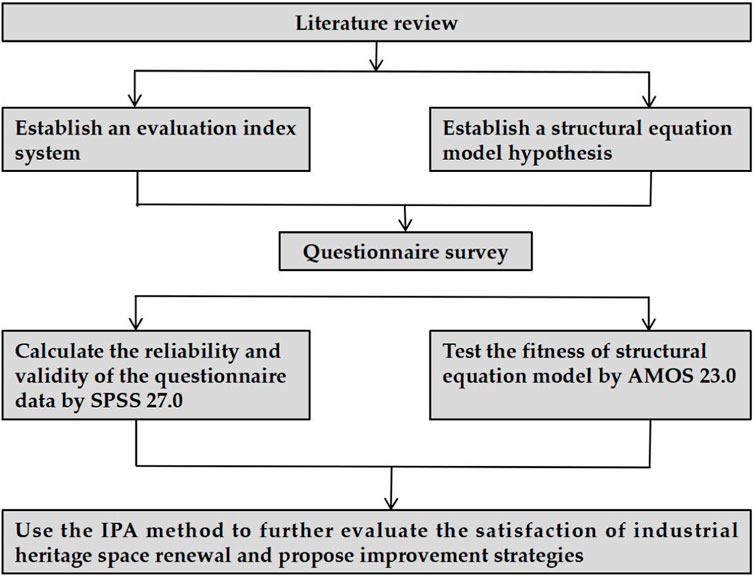
Figure 1. Research flow chart.
3.1.1 Overview of structural equation modeling
Structural Equation Modeling (SEM) is a multivariate statistical method employed to analyze complex relationships between latent and observed variables (De Carvalho and Chima, 2014). It integrates both factor analysis and path analysis, allowing researchers to test theoretical assumptions by constructing measurement models and structural models (Lei and Wu, 2007). The fundamental equations in SEM are categorized into two components: the measurement equation and the structural equation (Fan et al., 2016).
Measurement Models describe the relationships between latent variables and their observed indicators, typically expressed as:
X = Λ_x ξ + δ (Measurement equation for exogenous variables).
Y = Λ_y η + ε (Measurement equation for endogenous variables).
In these equations, X and Y represent the observed variables, while ξ and η denote the exogenous and endogenous latent variables, respectively (Jin et al., 2021). The matrices Λ_x and Λ_y are the factor loading matrices, and δ and ε represent the measurement errors. Structural models illustrate the causal relationships between latent variables and can be expressed as follows:
In this equation, B represents the path coefficient matrix that delineates the relationships between endogenous latent variables, while Γ denotes the coefficient matrix for the effects of exogenous latent variables on endogenous latent variables. Additionally, ζ signifies the structural error term. Through model fitting and parameter estimation, Structural Equation Modeling (SEM) evaluates the extent of alignment between the theoretical model and the empirical data (Iacobucci, 2009).
3.1.2 Development of evaluation indicators and research hypotheses
The framework for the evaluation indicators in this study was developed through a comprehensive theoretical analysis from multiple perspectives. Initially, the study draws on relevant literature from fields such as urban renewal, industrial heritage regeneration, and sustainable development to identify the key dimensions that influence satisfaction with the spatial regeneration of industrial heritage sites. Subsequently, based on the principles of scientific rigor, systematic structure, and practical feasibility, and in conjunction with national standards for the renewal of old industrial buildings, 22 specific indicators were selected. These indicators comprehensively reflect satisfaction with industrial heritage regeneration and form the foundation of the satisfaction evaluation system. A detailed overview of the indicator system is presented in Table 1.
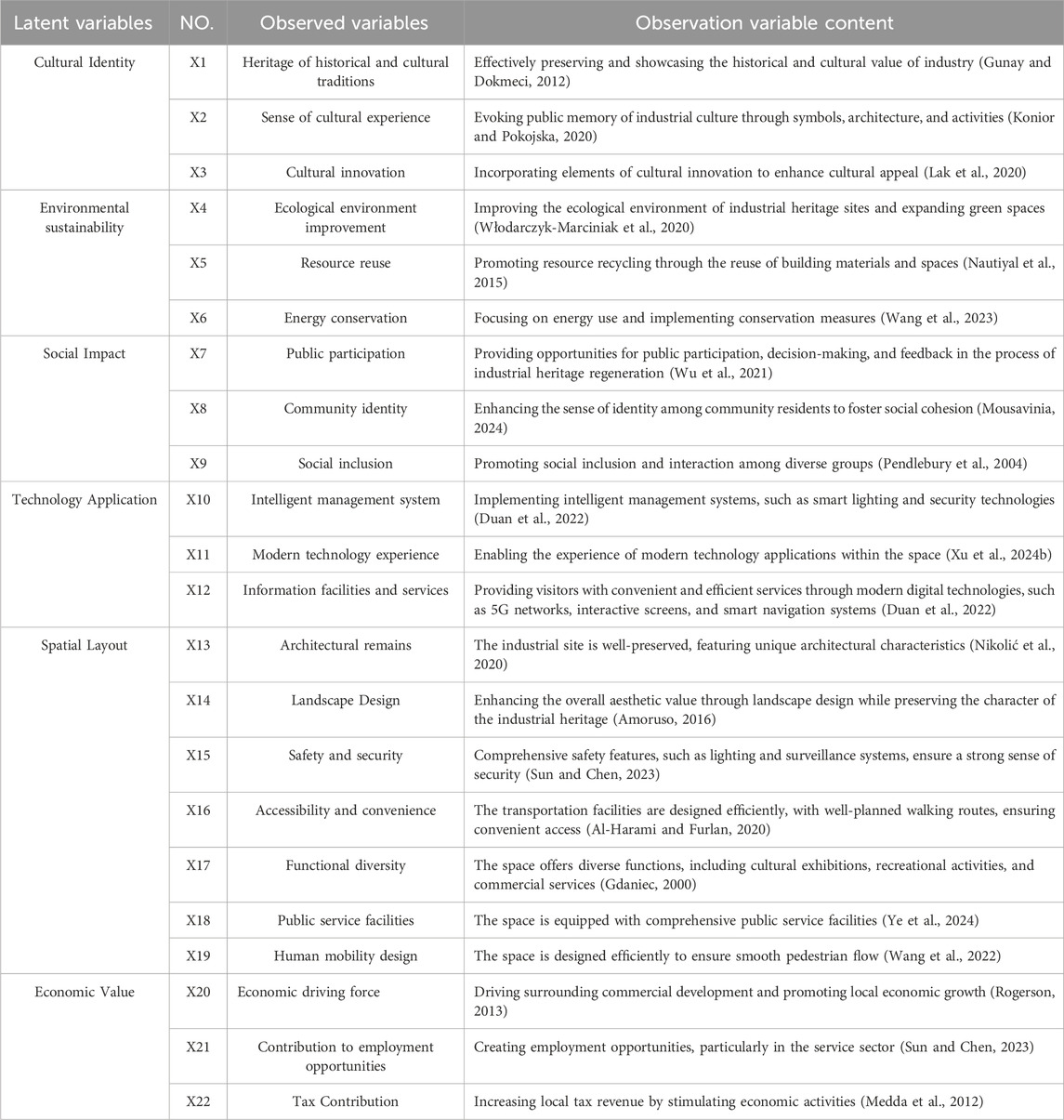
Table 1. Industrial heritage space regeneration satisfaction evaluation index system.
Based on the evaluation framework for satisfaction with the spatial regeneration of industrial heritage, this study proposes the following six hypotheses.
H1. Cultural Identity Has a Significant Positive Impact on Satisfaction with Industrial Heritage Regeneration.
H2. Environmental Sustainability Has a Significant Positive Impact on Satisfaction with Industrial Heritage Regeneration.
H3. Social Impact Has a Significant Positive Impact on Satisfaction with Industrial Heritage Regeneration.
H4. Technological Applications Have a Significant Positive Impact on Satisfaction with Industrial Heritage Regeneration.
H5. Spatial Layout Has a Significant Positive Impact on Satisfaction with Industrial Heritage Regeneration.
H6. Economic Value Has a Significant Positive Impact on Satisfaction with Industrial Heritage Regeneration.
3.1.3 Structural equation modeling construction
Drawing upon relevant theories, this study proposes a hypothetical model for satisfaction with the regeneration of industrial heritage (Figure 2). The model encompasses six theoretical constructs: “Cultural Identity,” “Environmental Sustainability,” “Social Impact,” “Economic Value,” “Technological Application,” and “Spatial Planning.” It is posited that these factors significantly influence satisfaction with the repurposing of industrial heritage spaces.
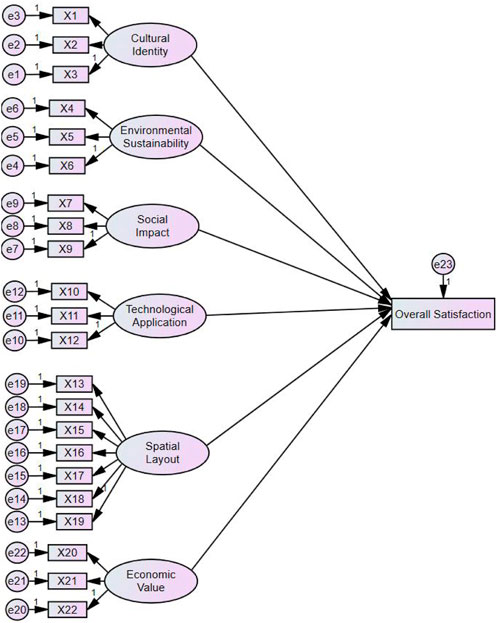
Figure 2. Initial theoretical model.
3.2 Scope of the study
This study focuses on the East Suburb Memory in Chengdu, a representative industrial heritage regeneration project located at No. 1 Jianshe South Branch Road in Chenghua District, Sichuan Province, China (Figure 3). Situated in the northeastern part of Chengdu’s central urban area—between the Second and Third Ring Roads—the East Suburb Memory is conveniently positioned near Chengdu East Railway Station and Shahe Urban Park, offering advantageous accessibility and a strategic geographic location.
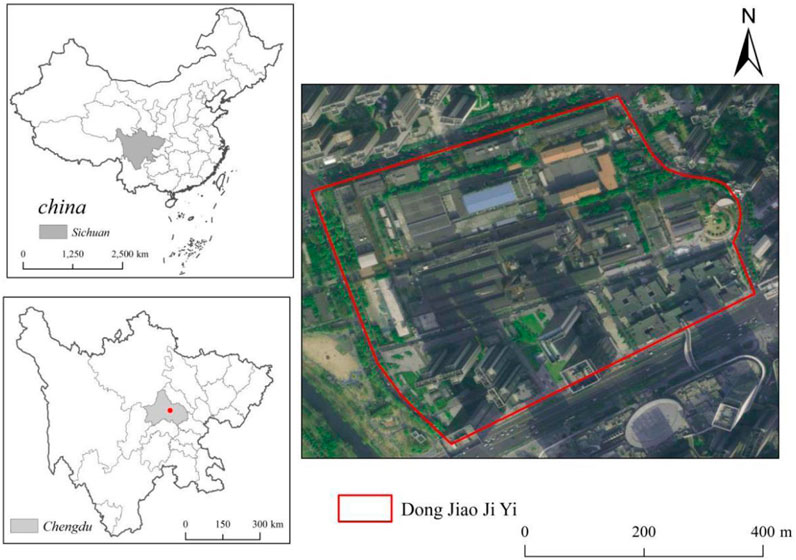
Figure 3. Location map of the study area (drawn by the author).
The study area is located at 104°06′E and 30°39′N, within a subtropical monsoon climate zone, and has an average annual temperature of 16.2°C. Formerly known as the Hongguang Electron Tube Factory (established in the 1950s), the site covers approximately 50 ha and served as one of the major industrial bases in Southwest China. As a contributor to the “156 Key National Construction Projects,” this facility was crucial in the manufacturing of military and civilian electronic tubes, depicting the height of industrialization in China.
However, with the restructuring of the industrial sector and the acceleration of urbanization toward the end of the 20th century, the Eastern Suburb industrial zone gradually declined, resulting in vast areas of abandoned factories. In 2009, the Chengdu Municipal Government initiated a renewal project for Eastern Suburb Memory. This project adhered to the principle of “restoration in its original style,” preserving historically significant industrial elements such as red-brick workshops, tall chimneys, and old railways. These elements were integrated with cultural and creative functions, including a music square, art exhibitions, and cultural performances, thereby revitalizing the industrial heritage site (Figure 4).
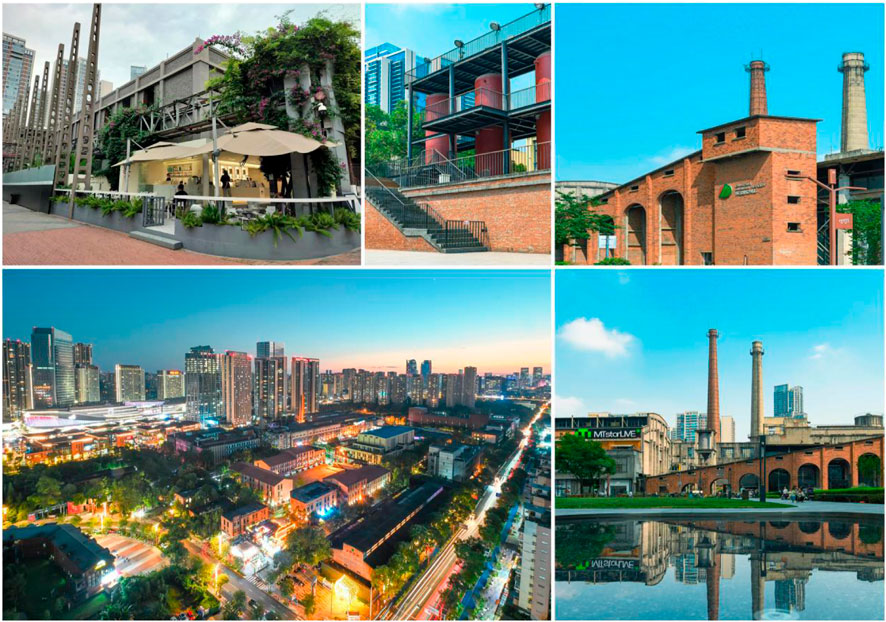
Figure 4. Real picture of the study area (from the Internet).
The regenerated Eastern Suburb Memory not only preserves the city’s industrial history and cultural memory but also significantly enhances the region’s economic vitality. It has attracted a substantial influx of tourists and creative industries, fostering local employment and promoting the development of cultural industries. More importantly, the revival of public spaces has enriched citizens’ cultural identity and satisfaction, establishing Eastern Suburb Memory as a successful model for the preservation and adaptive reuse of industrial heritage in China (Wang et al., 2022).
3.3 Questionnaire design and data collection
This study conducted a questionnaire survey from 10 May 2024, to 15 September 2024, targeting visitors, residents, and business operators at the Chengdu East Suburb Memory site. The survey process was designed to ensure that participants’ privacy was upheld, while their rights, needs, and preferences were fully respected. All responses were collected anonymously, with stringent data protection measures in place, and participants provided informed consent for their data to be utilized for academic research and publication purposes.
In total, 260 questionnaires were sent out, and 241 were submitted back; out of these, 214 were identified as valid, leading to an effective response rate of 88.7%. The questionnaire was organized into two principal sections. The initial section gathered demographic details from participants, such as age, educational attainment, job title, and gender. This information provided a vital basis for examining the background characteristics of participants and their relationship with satisfaction levels. The second section included the primary elements of the survey, concentrating on assessing satisfaction and significance across six essential dimensions pertaining to the industrial heritage regeneration initiative.
In the satisfaction and importance evaluation section, each key dimension included specific questions, with participants rating their responses based on personal experiences. A five-point Likert scale was employed, where a score of one indicated “very dissatisfied” or “very unimportant,” while a score of five represented “very satisfied” or “very important.” This scoring method aimed to capture respondents’ perceptions and value judgments, providing a quantitative foundation for analyzing the gap between project performance and user expectations.
The majority of visitors to the Chengdu East Suburb Memory site were young adults aged 20 to 30, accounting for 35.981% of the total sample. In terms of educational background, most participants held either an associate degree or a bachelor’s degree, representing 46.262% and 30.841% of the respondents, respectively. This indicates a high level of interest in this type of project among individuals with medium to higher education. Regarding gender distribution, male participants slightly outnumbered female participants, accounting for 51.402% of the sample, which suggests a relatively balanced gender ratio.
4 Research results
4.1 Results of questionnaire reliability and validity analysis
Before conducting factor analysis, it is essential to verify the adequacy of the sample to ensure that the dataset is sufficient to support statistical analysis. Cronbach’s alpha coefficient serves as a measure of the reliability of a questionnaire, reflecting the internal consistency among its items (Peterson, 1994). Typically, a coefficient exceeding 0.7 indicates that the questionnaire possesses adequate consistency, rendering it suitable for factor analysis (Du et al., 2008).
Additionally, the Kaiser-Meyer-Olkin (KMO) test and Bartlett’s test of sphericity are utilized to evaluate the appropriateness of the data and the correlations among variables. A KMO value greater than 0.6, along with a significant result from Bartlett’s test at the 95% confidence level (
In this study, we employed SPSS 27.0 to calculate the Cronbach’s alpha coefficients and KMO values, as presented in Table 2. The results indicate that the Cronbach’s alpha coefficients for all subscales exceed 0.7, demonstrating high reliability of the questionnaire. Moreover, all subscales yielded KMO values above 0.6, indicating significant correlations among the variables. Bartlett’s test of sphericity produced a p-value below 0.000, further confirming the structural validity of the scales and suggesting significant differences in the correlation matrix of the items. These findings provide robust conditions for conducting factor analysis.

Table 2. Cronbach alpha reliability and validity test.
4.2 Results of model fit verification analysis
Figure 5 illustrates the fit results of the structural equation model, which comprises six latent variables and 22 observed variables that constitute the measurement model. The influence of observed variables on the latent variables is evaluated through standardized factor loadings. In this model, the standardized loadings exceed 0.5, signifying that the relationships among variables and the dependent paths within the measurement model are statistically significant. This finding affirms the adequacy of the model structure and the validity of the relationships proposed in the analysis.
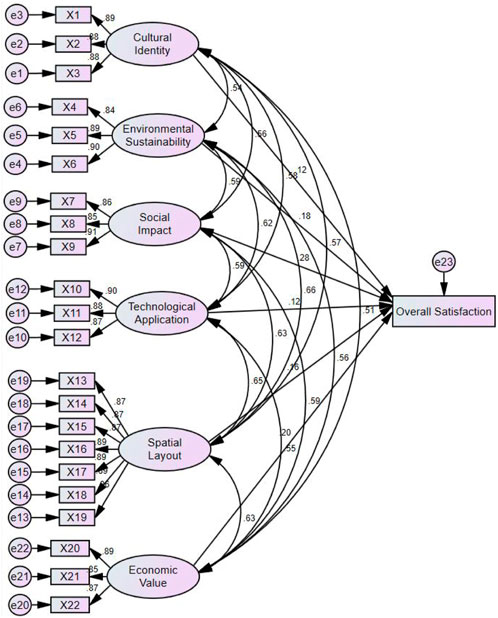
Figure 5. Final structural equation model.
4.2.1 Results of confirmatory factor analysis
The outcomes of the confirmatory factor analysis (CFA), conducted employing the maximum likelihood technique, are presented in Table 3. The analysis reveals that the standardized factor loadings for all measurement items are above 0.690 and statistically significant at the 0.001 level, indicating that the observed variables effectively explain their corresponding latent constructs. Furthermore, the squared multiple correlation (SMC) values for the observed variables range from 0.695 to 0.831, exceeding the commonly accepted threshold of 0.3, which confirms the reliability of the measurement items.
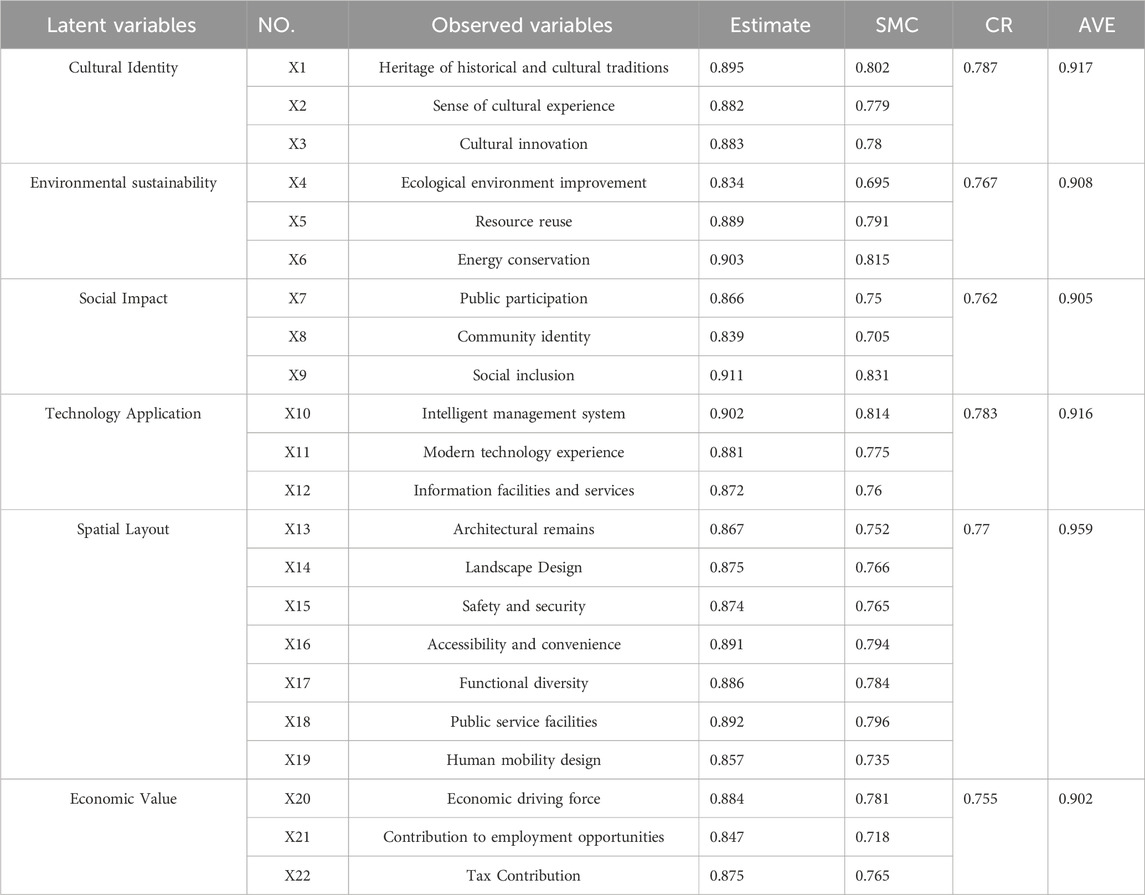
Table 3. Results of confirmatory factor analysis.
Further examination indicates that the values of composite reliability (CR) for each latent construct surpass 0.7, demonstrating a robust internal consistency in the model. Moreover, the average variance extracted (AVE) values for every construct are greater than 0.5, supporting the model’s convergent validity. In summary, these results affirm that the model shows an acceptable fit and is suitable for additional goodness-of-fit assessments.
4.2.2 Results of model fit analysis
Table 4 presents the model fit indices that evaluate how well the structural equation model aligns with the observed data, thereby validating the model. The findings indicate a chi-square to degrees of freedom ratio (χ2/df) of 1.125, a Root Mean Square Error of Approximation (RMSEA) value of 0.024, and a Root Mean Square Residual (RMR) of 0.046. Additionally, the Normed Fit Index (NFI) is recorded at 0.950, while both the Comparative Fit Index (CFI) and Incremental Fit Index (IFI) are at 0.994. The Tucker-Lewis Index (TLI) is noted to be 0.993, and the Parsimony Normed Fit Index (PNFI) and Parsimony Goodness-of-Fit Index (PGFI) are documented as 0.789 and 0.695, respectively. These fit indices all fulfill the widely accepted standards for evaluating models, signifying that the model exhibits a satisfactory fit with the observed data.
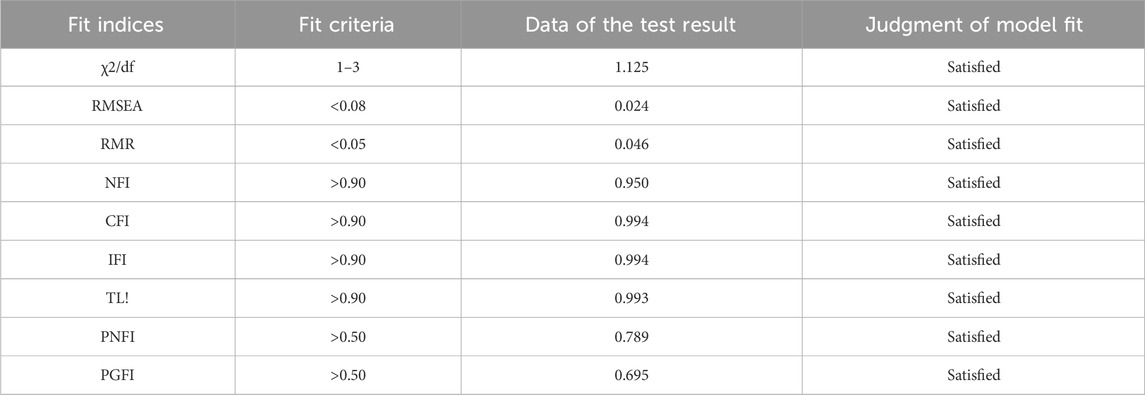
Table 4. Structural equation model fit index.
4.2.3 Path analysis and hypothesis testing results
Table 5 displays the standardized path coefficients from the structural model, along with the results related to hypothesis testing. The model incorporates six exogenous structural variables, where both environmental sustainability and economic value show notably high path coefficients (
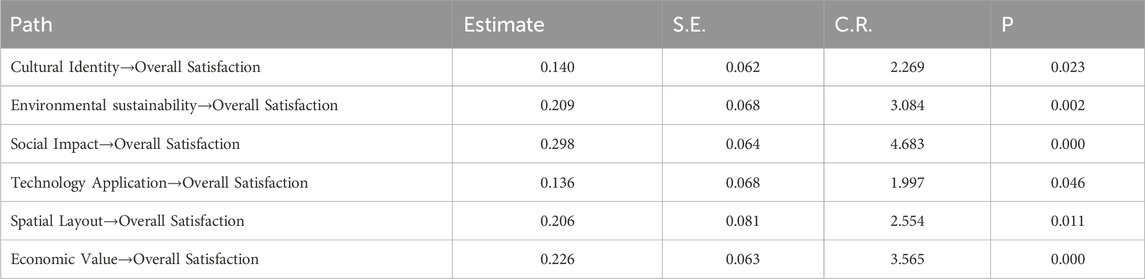
Table 5. Results of path hypothesis test analysis.
Furthermore, the path coefficient for social impact is the highest among all variables (
5 Discussion
5.1 Analysis of model results
5.1.1 The impact of cultural identity on satisfaction
The standardized path coefficient for H1 (cultural identity) is 0.140, with a significance level of
The Eastern Suburb Memory achieves this balance by preserving the original industrial architecture, symbolically showcasing historical memories, and hosting diverse cultural events such as music festivals, exhibitions, and contemporary art performances. This multi-dimensional cultural experience not only evokes emotional connections with local history but also strengthens visitors’ attachment to the regenerated space and enhances their overall satisfaction (Zhang, 2024). This finding is consistent with existing research indicating that profound cultural experiences combined with innovation can foster a sense of identity and belonging among users (Ponsignon and Derbaix, 2020).
However, although cultural identity plays a crucial role in enhancing satisfaction, its relatively low path coefficient (0.140) suggests that its influence remains constrained by other factors, including the synergistic effects of technological applications and social influences. Compared to industrial heritage regeneration projects in Germany’s Ruhr Region, the East Suburb Memory still has room for further cultural innovation (Berger, 2019). The Ruhr Region successfully transformed former industrial sites into cultural and creative parks, attracting a large international audience of tourists and artists (Berger et al., 2018; Asprogerakas and Mountanea, 2020). Building on this model, the East Suburb Memory could strengthen its global appeal and influence by hosting more international cultural events and art exhibitions. Moreover, regularly updating cultural content and launching innovative programs would help the regenerated space sustain its attractiveness and vitality, thereby enhancing overall satisfaction and supporting its long-term sustainable development (Nocca, 2017).
5.1.2 The impact of environmental sustainability on satisfaction
H2, representing environmental sustainability, has a path coefficient of 0.209 with a P value of 0.002, indicating a highly significant positive effect on overall visitor satisfaction. Visitors’ perceptions of ecological improvements, resource reuse, and energy-saving measures significantly shape their satisfaction with the space. This finding underscores the importance of environmental protection and sustainable practices as critical components of public evaluations in the regeneration of industrial heritage sites (Pardo Abad, 2020).
The environmental sustainability of industrial heritage regeneration involves not only improving ecological quality but also implementing resource recycling and energy-saving measures (Guo et al., 2021). For instance, the UK’s Tate Modern seamlessly integrated environmental sustainability with cultural value by preserving the original industrial architecture and incorporating green design (Alshawaaf and Lee, 2021). Adopting a similar approach, the East Suburb Memory renovation has introduced green landscapes, resource recycling systems, and low-energy building designs to enhance the ecological efficiency of its regenerated spaces.
However, the path coefficient (0.209) for environmental sustainability at the East Suburb Memory suggests that further optimization is required. Lessons could be drawn from the NDSM Wharf regeneration project in the Netherlands by incorporating additional renewable energy technologies—such as solar panels and wind turbines—and adopting low-carbon design principles to reinforce the site’s eco-friendly image (Daamen and Louw, 2016; Bossuyt and Savini, 2018). Moreover, promoting green transportation within the space (e.g., adding pedestrian and bicycle paths) could help reduce carbon emissions (Zhang et al., 2024).
Looking ahead, managers should continue to advance green development strategies and explore ways to integrate environmental measures with cultural and social activities (Wu and Lin, 2021). Such initiatives would meet diverse public needs while enhancing the overall attractiveness of the regenerated space. For example, designing environmentally themed cultural events, including green art exhibitions or low-carbon lifestyle workshops, could increase public engagement and awareness of environmental sustainability (Obracht-Prondzyńska et al., 2023).
5.1.3 The impact of social influence on satisfaction
H3, representing social influence, has a path coefficient of 0.298 with a P value approaching zero, indicating that it is the most significant factor affecting satisfaction in the regenerated space. Visitors’ perceptions of community involvement, social inclusiveness, and the project’s impact on the local social atmosphere significantly contribute to their overall satisfaction. This finding aligns with social capital theory, which underscores the importance of community interaction and inclusive environments in fostering a sense of belonging and satisfaction (Lim et al., 2024).
The East Suburb Memory has organized community events and cultural exhibitions, providing opportunities for diverse social groups to engage and interact, thereby fostering social cohesion and inclusivity. These initiatives not only draw more visitors but also enhance residents’ sense of belonging. However, when compared to Germany’s Ruhr Region “Emscher Park” project—which effectively repurposed industrial heritage into community-shared spaces through robust public participation and inclusive design—the East Suburb Memory still has room to advance its community engagement (Ćopić et al., 2014). Incorporating more participatory design and social innovation projects could enrich the quality and depth of social interactions, ultimately increasing public satisfaction with the regenerated space (von Schnurbein et al., 2023).
Furthermore, managers should broaden both the depth and breadth of community participation by inviting diverse groups to partake in public activities, thereby bolstering social inclusivity and enlivening public spaces (Alanazi, 2024). For example, they could develop tailored activities for older adults, children, and individuals with disabilities, ensuring that all community members benefit from and contribute to the social value of the regenerated site.
5.1.4 The impact of technological applications on satisfaction
The path coefficient for H4 (technological applications) is 0.136, with a P value of 0.046. Although this coefficient is relatively low, it is statistically significant, indicating a positive impact of technological applications on visitor satisfaction. Specifically, visitors’ satisfaction with smart management systems, modern technological experiences, and information services contributes positively to their overall satisfaction. This finding aligns with smart city theory, which holds that the integration of technological elements enhances the convenience and quality of spatial experiences (Apanavičienė and Shahrabani, 2023).
In Dongjiang Memory, the introduction of intelligent navigation systems, digital exhibitions, and interactive facilities has effectively improved the visitor experience. Nonetheless, the relatively low path coefficient indicates that the potential of technological applications has not been fully realized. Compared to “SMART Seoul” in South Korea—where VR, AR, and big data technologies have been comprehensively incorporated to create a smart cultural space—Dongjiang Memory still has significant room to advance its technological integration (Kang, 2015; Adnan et al., 2016). By introducing more immersive technological experiences (e.g., VR-guided tours and AR interactive exhibitions), Dongjiang Memory could more deeply merge technology with cultural content, thereby further enhancing visitor engagement and satisfaction (Kim, 2025).
Furthermore, managers should develop intelligent interactive platforms to heighten tourists’ perception of and engagement with technology (Buhalis et al., 2023). For instance, a mobile-based application could be designed to provide real-time navigation, facilitate event reservations, and offer cultural information, thus further strengthening the regenerated space’s modernized image (Dixit et al., 2023).
5.1.5 The impact of spatial layout on satisfaction
H5, which represents spatial layout, has a path coefficient of 0.206 with a P value of 0.011, indicating a significant positive effect on visitor satisfaction. Visitors’ perceptions of architectural preservation, landscape design, safety measures, and the accessibility and convenience of the space directly influence their overall experience and evaluation. A well-designed spatial layout enhances visitors’ comfort and convenience, thereby improving satisfaction (Pratiwi et al., 2015).
In Dongjiang Memory, the restoration and preservation of original buildings—combined with modern landscape design—have successfully integrated the site’s historical significance with contemporary spatial functions. Nonetheless, when compared to the King’s Cross Station regeneration project in London (Donnellan, 2024; Bertolini, 1996), Dongjiang Memory still has room to improve in terms of spatial diversity and accessibility. At King’s Cross, visitor comfort and convenience were significantly enhanced by optimizing pedestrian pathways and introducing multifunctional public spaces (Holgersen and Haarstad, 2009). Drawing on this example, Dongjiang Memory could refine internal road design and add barrier-free facilities, thereby further improving spatial accessibility and convenience.
Additionally, managers should enrich the site’s cultural symbolism and social functions. For example, incorporating multifunctional public spaces and interactive art installations would enable visitors to engage in social and leisure activities while simultaneously experiencing the area’s historical and cultural ambiance, thereby increasing overall satisfaction (Ghafouri, 2016).
5.1.6 The impact of economic value on satisfaction
The path coefficient for H6 (economic value) is 0.226, with a P value of 0.000, indicating a highly significant positive effect on visitor satisfaction. Visitors’ perceptions of the economic benefits, employment opportunities, and tax contributions generated by the project play a crucial role in their satisfaction with the space. This finding aligns with urban economics theories, suggesting that the dual benefits of culture and economy enhance public recognition of regenerated spaces (Andres and Golubchikov, 2016).
Dongjiao Memory has significantly contributed to the local economy by promoting commercial development, enhancing tourism appeal, and creating employment opportunities. However, when compared to the Guggenheim Museum regeneration project in Bilbao (Plaza, 2008; Baniotopoulou, 2001), Spain, Dongjiao Memory still has potential to further diversify its economic value. Bilbao successfully achieved economic transformation by integrating cultural tourism with the creative industries (Plaza, 2008; Sepe and Di Trapani, 2010). Drawing on this experience, Dongjiao Memory could introduce more cultural entrepreneurship initiatives and non-profit activities to broaden economic diversity and strengthen social benefits.
Moreover, managers should guard against excessive commercialization, which may dilute the site’s cultural value, and strive to balance economic growth with cultural preservation. For instance, commercial activities rooted in cultural creativity—such as handicraft markets or cultural innovation exhibitions—could reinforce public recognition and satisfaction with the regenerated space (Della Lucia and Trunfio, 2018).
5.2 Strategies for enhancing satisfaction in industrial heritage regeneration
The Importance-Performance Analysis (IPA) serves as a management tool designed to evaluate the connection between the significance of particular attributes and customer satisfaction associated with them. In this study, average satisfaction scores for each evaluation criterion were computed using survey data, which acted as a performance measure. Table 6 presents the scores for both importance and performance for every indicator.
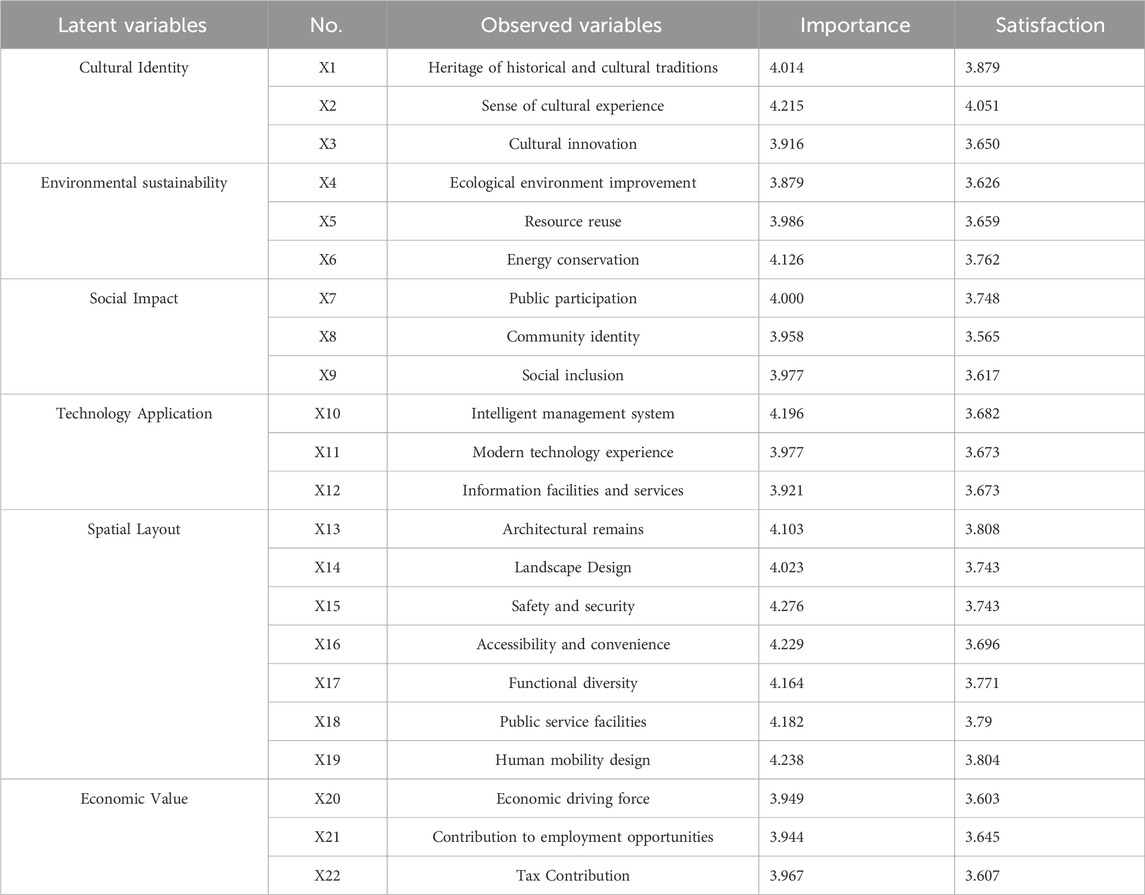
Table 6. Importance-satisfaction evaluation of industrial heritage regeneration.
To analyze the differences between importance and satisfaction at both the dimensional and factor levels, an Importance-Performance Analysis (IPA) quadrant analysis matrix is constructed using the mean values of Importance-Performance (I-P) at the factor level (3.89 for importance and 3.238 for performance) as the origin. The horizontal axis represents importance (I), while the vertical axis represents performance or satisfaction (P). The matrix is divided into four quadrants: Q1 (Keep up the good work), Q2 (Possible overkill), Q3 (Low priority), and Q4 (Concentrate here), as illustrated in Figure 6.
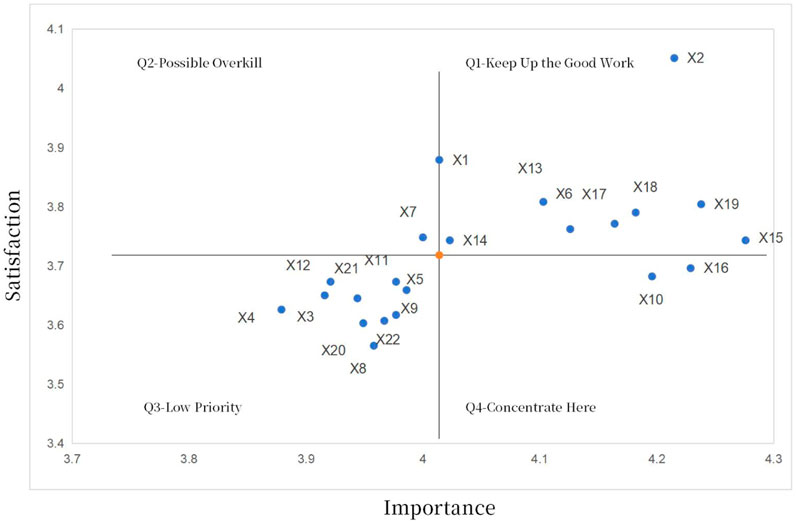
Figure 6. IPA analysis chart.
5.2.1 Q1: keep up the good work
In this quadrant, variables X2 (Cultural Experience), X6 (Energy Conservation), X13 (Architectural Heritage), X14 (Landscape Design), X15 (Safety Assurance), X17 (Functional Diversity), X18 (Public Service Facilities), and X19 (Mobility Design) demonstrate high importance and satisfaction. This suggests that these factors are well recognized by the public within the Dongjiao Memory Space. Consequently, it is crucial to consolidate these strengths while enhancing management practices and resource allocation.
To achieve this, current cultural experiences and energy-saving initiatives should be regularly evaluated and optimized through feedback and data analysis to assess their effectiveness (Ma et al., 2017). Key performance indicators may include participation rates, satisfaction surveys, and energy-saving outcomes to promptly identify potential issues (Li et al., 2020). For instance, if attendance at a cultural event declines, adjustments in content or promotional strategies may be necessary to attract more visitors (Richards, 2007). Furthermore, establishing an effective public feedback mechanism is essential. This can be accomplished by gathering input through online surveys, social media interactions, and on-site suggestion boxes to promote public involvement. Management should also conduct regular feedback meetings or public forums to engage in direct dialogue with visitors, ensuring that strategies align with public needs (Fung, 2015). These efforts will help sustain public satisfaction with cultural and energy-saving measures, thereby enhancing the overall experience.
5.2.2 Q2: possible overkill
In this quadrant, the variables X1 (Historical and Cultural Heritage) and X7 (Public Participation) are identified as significant yet receive relatively low satisfaction scores, indicating that current initiatives have not fully aligned with public expectations. To address this gap, it is essential to enhance cultural outreach and implement more interactive programs.
Strengthening cultural communication and education serves as a key strategy for improving satisfaction. Management can organize exhibitions, lectures, and performances that reflect local characteristics, thereby attracting both residents and tourists (Edensor, 2000). These events should prioritize interactivity, encouraging public involvement in their planning and execution to cultivate a sense of ownership and engagement. Additionally, designing highly participatory activities is an effective means of increasing public involvement (Al-Kodmany, 1999). For instance, workshops focused on crafts or cultural creation not only encourage public participation but also empower participants to become both creators and preservers of culture (Newisar et al., 2024). This deeper engagement will foster greater recognition and understanding of cultural heritage, ultimately enhancing overall satisfaction.
5.2.3 Q3: low priority
In this quadrant, the variables X3 (Cultural Innovation), X4 (Environmental Improvement), X5 (Resource Reuse), X8 (Community Identity), X9 (Social Inclusion), X11 (Modern Technology Experience), X12 (Information Facilities and Services), X20 (Economic Contribution), X21 (Job Opportunities), and X22 (Tax Revenue) exhibit both low importance and low satisfaction. Although these areas have received limited attention, they present significant opportunities for future development.
Introducing diverse cultural elements can enhance cultural innovation. Hosting international cultural exhibitions or cross-cultural arts festivals could promote cultural integration, attract young people and international tourists, and invigorate the cultural vitality of the space (Loukaitou-Sideris and Soureli, 2012). Enriching the diversity of cultural experiences will heighten public interest and appreciation for the heritage site.
Moreover, enhancing community participation and social inclusion is crucial. Collaborating with local communities to organize inclusive cultural festivals or craft exhibitions can strengthen residents’ sense of identity and promote social inclusion (Viola, 2022). Facilitating interactions among groups with diverse backgrounds will better integrate the space into local life, establishing it as an important part of the community.
5.2.4 Q4: concentrate here
In this quadrant, variables X10 (Smart Management Systems) and X16 (Accessibility and Convenience) are highly significant but exhibit low satisfaction scores, indicating that deficiencies in these areas adversely impact the overall visitor experience. Upgrading the smart management system is crucial for optimizing visitor interactions.
Priority should be given to enhancing ticketing systems, information access, and navigation services to ensure that visitors can easily obtain information and participate in activities (Wang et al., 2016). Furthermore, staff should receive technical training to operate the system effectively and assist visitors promptly, thereby minimizing any negative effects arising from technical issues (Leung et al., 2018).
Additionally, improving transportation infrastructure represents another key strategy for enhancing accessibility. Management should collaborate with local government and transportation departments to expand public transportation routes and improve connections between subway and bus stations, facilitating travel (Geurs and Van Wee, 2004). Internal road designs should incorporate walking paths and accessible facilities to ensure safe and convenient access for all visitors (Zimring et al., 2005).
5.3 Research limitations
This study faces several limitations. First, the findings are predominantly derived from a single case—Dongjiao Memory in Chengdu—whose unique geographic and cultural context may restrict the generalizability of the results. Industrial heritage regeneration projects in different regions exhibit significant disparities in cultural, social, and economic conditions, which may limit the applicability of this study’s conclusions. Second, although the research addresses multiple dimensions—such as cultural identity, social impact, and technological application—it does not sufficiently examine how cultural preservation, technological innovation, and community engagement might interrelate to enhance user satisfaction. As a result, the synergistic effects of these factors remain underexplored. Finally, the data collection period was relatively short, potentially overlooking long-term trends in user satisfaction. Given that user perceptions and evaluations may evolve over time, the current study does not fully capture such dynamic changes.
5.4 Future research directions
Several avenues merit further investigation. First, expanding the scope of the study to include industrial heritage regeneration projects in varied geographic and cultural contexts could validate the generalizability of these findings and shed light on differences in user satisfaction under diverse cultural and social conditions. Second, deeper exploration of the synergistic impacts of cultural preservation, technological innovation, and community engagement is recommended. In particular, future research could examine how emerging technologies (e.g., virtual reality, augmented reality) can intensify cultural experiences and how community participation bolsters both project sustainability and social acceptance. Moreover, longitudinal studies would help capture how user satisfaction evolves over time, offering a more comprehensive view of the dynamic nature of user evaluations in industrial heritage regeneration. Lastly, further work could investigate the application of advanced technologies (e.g., artificial intelligence) in enhancing user experience and cultural value in industrial heritage regeneration initiatives.
6 Conclusion
This study employs Structural Equation Modeling (SEM) and Importance-Performance Analysis (IPA) to investigate the factors that influence user satisfaction in the regeneration of the Dongjiao Memory industrial heritage space. It identifies six key dimensions that significantly impact user satisfaction: cultural identity, environmental sustainability, social influence, technological applications, spatial design, and economic value. The results not only deepen our understanding of industrial heritage regeneration but also provide robust empirical evidence for urban planners and policymakers aiming to enhance the social, economic, and cultural outcomes of similar projects, thus contributing to urban sustainable development.
6.1 Significance of the study
The preservation and regeneration of industrial heritage are increasingly critical in urban renewal, involving the protection of historical and cultural values alongside the pursuit of social and economic sustainability. However, much of the existing research focuses predominantly on design and conservation, with fewer systematic quantitative investigations into user experience and satisfaction. Addressing this gap, the present study develops a user satisfaction evaluation framework spanning six dimensions: cultural identity, environmental sustainability, social impact, technological application, spatial layout, and economic value. Through SEM-based empirical analysis, the relative influence of each dimension on user satisfaction is quantified. While exemplified by East Suburb Memory, this framework offers theoretical guidance and practical insights relevant to industrial heritage regeneration efforts worldwide.
6.2 Findings and contributions
Among these, social influence emerged as the most critical factor, highlighting the significance of community interaction and social inclusion in enhancing user satisfaction. Therefore, promoting public participation and strengthening community cohesion should be prioritized in future industrial heritage regeneration initiatives. Additionally, economic value and environmental sustainability play substantial roles in contributing to user satisfaction, indicating that fostering economic activities and ecological improvements can enhance public recognition of regeneration projects. Although cultural identity is influential, its impact is comparatively weaker, suggesting that a deeper integration of cultural and technological elements could further enhance user experience. While spatial design and technological applications exert a relatively minor effect on satisfaction, thoughtful spatial arrangements and the incorporation of modern technology continue to be beneficial for improving user experience.
The IPA identified several strategic priorities: factors of high importance and satisfaction, such as cultural experiences, energy conservation, and architectural heritage preservation, should be maintained and strengthened. For elements that are of high importance but low satisfaction, such as public participation and smart management systems, targeted improvements are necessary to enhance user satisfaction. Meanwhile, for areas characterized by both low importance and low satisfaction, including cultural innovation and resource reuse, new optimization strategies should be explored to improve performance. Resources should be concentrated on enhancing transportation accessibility and smart services, given their high importance but current low satisfaction levels, to elevate the overall user experience.
Despite its valuable findings, this study has limitations. First, the sample is confined to the Dongjiao Memory site in Chengdu, which limits the generalizability of the results. Future research could extend to other industrial heritage projects to enhance the applicability of the findings. Second, the brief data collection period may not adequately capture long-term changes in user satisfaction. Longitudinal studies that track user satisfaction over time could provide a more comprehensive understanding of its dynamics. Future research could also investigate the role of emerging technologies, such as the metaverse, in heritage regeneration, as well as the deeper integration of cultural, social, and technological elements.
In conclusion, this study demonstrates that user satisfaction in industrial heritage regeneration is influenced by a combination of social, cultural, economic, environmental, and technological factors. It underscores the importance of coordinated development across these dimensions to maximize social, economic, and cultural benefits and to promote sustainable urban development.
Data availability statement
The raw data supporting the conclusions of this article will be made available by the authors, without undue reservation.
Ethics statement
Ethical review and approval was not required for the study on human participants in accordance with the local legislation and institutional requirements. Written informed consent was obtained from the (patients/participants OR patients/participants legal guardian/next of kin) to participate in this study in accordance with the national legislation and the institutional requirements.
Author contributions
JX: Conceptualization, Data curation, Investigation, Methodology, Project administration, Resources, Software, Validation, Visualization, Writing–original draft, Writing–review and editing. SW: Formal Analysis, Investigation, Software, Visualization, Writing–original draft. AC: Conceptualization, Methodology, Supervision, Writing–original draft.
Funding
The author(s) declare that no financial support was received for the research, authorship, and/or publication of this article.
Conflict of interest
The authors declare that the research was conducted in the absence of any commercial or financial relationships that could be construed as a potential conflict of interest.
Generative AI statement
The author(s) declare that no Generative AI was used in the creation of this manuscript.
Publisher’s note
All claims expressed in this article are solely those of the authors and do not necessarily represent those of their affiliated organizations, or those of the publisher, the editors and the reviewers. Any product that may be evaluated in this article, or claim that may be made by its manufacturer, is not guaranteed or endorsed by the publisher.
References
Adnan, Y. M., Hamzah, H., Dali, M. M., Daud, M. N., and Alias, A. (2016). Comparative overview of smart cities initiatives: Singapore and Seoul. Kuala Lumpur, Malaysia: International Real Estate Researchers Symposium (IRERS).
Akinyode, B. F. (2022). A critical review of land pooling technique for sustainable urban renewal in developing countries. GeoJournal 87 (4), 3265–3275. doi:10.1007/s10708-021-10430-5
Alanazi, H. M. N. (2024). The role of leisure activities in enhancing well-being in Saudi’s retired community: a mixed methods study. Humanit. Soc. Sci. Commun. 11 (1), 604–617. doi:10.1057/s41599-024-03126-x
Al-Harami, A., and Furlan, R. (2020). Qatar National Museum-Transit oriented development: the masterplan for the urban regeneration of a ‘green TOD. J. Urban Manag. 9 (1), 115–136. doi:10.1016/j.jum.2019.09.003
Al-Kodmany, K. (1999). Using visualization techniques for enhancing public participation in planning and design: process, implementation, and evaluation. Landsc. urban Plan. 45 (1), 37–45. doi:10.1016/s0169-2046(99)00024-9
Alshawaaf, N., and Lee, S. H. (2021). Business model innovation through digitisation in social purpose organisations: a comparative analysis of Tate Modern and Pompidou Centre. J. Bus. Res. 125, 597–608. doi:10.1016/j.jbusres.2020.02.045
Amoruso, G. (2016). “The image of historic urban landscapes: representation codes,” in Geospatial research: concepts, methodologies, tools, and applications (Hershey, PA: IGI Global), 344–372.
Andres, L., and Golubchikov, O. (2016). The limits to artist-led regeneration: creative brownfields in the cities of high culture. Int. J. Urban Regional Res. 40 (4), 757–775. doi:10.1111/1468-2427.12412
Apanavičienė, R., and Shahrabani, M. M. N. (2023). Key factors affecting smart building integration into smart city: technological aspects. Smart Cities 6 (4), 1832–1857. doi:10.3390/smartcities6040085
Arbab, P., and Alborzi, G. (2022). Toward developing a sustainable regeneration framework for urban industrial heritage. J. Cult. Herit. Manag. Sustain. Dev. 12 (3), 263–274. doi:10.1108/jchmsd-04-2020-0059
Asprogerakas, E., and Mountanea, K. (2020). Spatial strategies as a place branding tool in the region of Ruhr. Place Branding Public Dipl. 16 (4), 336–347. doi:10.1057/s41254-020-00168-1
Bai, Y., Wu, S., and Zhang, Y. (2023). Exploring the key factors influencing sustainable urban renewal from the perspective of multiple stakeholders. Sustainability 15 (13), 10596. doi:10.3390/su151310596
Bain, A. L., and March, L. (2019). Urban redevelopment, cultural philanthropy and the commodification of artistic authenticity in Toronto. City and Community 18 (1), 173–194. doi:10.1111/cico.12359
Baniotopoulou, E. (2001). Art for whose sake? Modern art museums and their role in transforming societies: the case of the Guggenheim Bilbao. J. Conservation Mus. Stud. 7, 1–5. doi:10.5334/jcms.7011
Berger, S. (2019). Industrial heritage and the ambiguities of nostalgia for an industrial past in the Ruhr Valley, Germany. Labor 16 (1), 37–64. doi:10.1215/15476715-7269314
Berger, S., Golombek, J., and Wicke, C. (2018). “A post-industrial mindscapes? The mainstreaming and touristification of industrial heritage in the Ruhr,” in Industrial heritage and regional identities (London, New York: Routledge), 74–94.
Bertolini, L. (1996). Nodes and places: complexities of railway station redevelopment. Eur. Plan. Stud. 4 (3), 331–345. doi:10.1080/09654319608720349
Blagojević, M. R., and Tufegdžić, A. (2016). The new technology era requirements and sustainable approach to industrial heritage renewal. Energy Build. 115, 148–153. doi:10.1016/j.enbuild.2015.07.062
Bossuyt, D. M., and Savini, F. (2018). Urban sustainability and political parties: eco-development in Stockholm and Amsterdam. Environ. Plan. C Polit. Space 36 (6), 1006–1026. doi:10.1177/2399654417746172
Bovaird, T. (2007). Beyond engagement and participation: user and community coproduction of public services. Public Adm. Rev. 67 (5), 846–860. doi:10.1111/j.1540-6210.2007.00773.x
Buhalis, D., Leung, D., and Lin, M. (2023). Metaverse as a disruptive technology revolutionising tourism management and marketing. Tour. Manag. 97, 104724. doi:10.1016/j.tourman.2023.104724
Cheremukhin, A., Golosov, M., Guriev, S., and Tsyvinski, A. (2017). The industrialization and economic development of Russia through the lens of a neoclassical growth model. Rev. Econ. Stud. 84 (2), 613–649. doi:10.1093/restud/rdw026
Ćopić, S., ĐorđevićA, J., Lukić, T., Stojanović, V., Đukičin, S., Besermenji, S., et al. (2014). Transformation of industrial heritage: an example of tourism industry development in the Ruhr area (Germany). Geogr. Pannonica 18 (2), 43–50. doi:10.5937/geopan1402043c
Currás-Pérez, R., Dolz-Dolz, C., Miquel-Romero, M. J., and Sánchez-García, I. (2018). How social, environmental, and economic CSR affects consumer-perceived value: does perceived consumer effectiveness make a difference? Corp. Soc. Responsib. Environ. Manag. 25 (5), 733–747. doi:10.1002/csr.1490
Daamen, A., and Louw, E. (2016). The challenge of the Dutch port-city interface. Tijdschr. Econ. Soc. Geogr. 107 (5), 642–651. doi:10.1111/tesg.12219
De Carvalho, J., and Chima, F. O. (2014). Applications of structural equation modeling in social sciences research. Am. Int. J. Contemp. Res. 4 (1), 6–11.
Della Lucia, M., and Trunfio, M. (2018). The role of the private actor in cultural regeneration: hybridizing cultural heritage with creativity in the city. Cities 82, 35–44. doi:10.1016/j.cities.2018.05.003
Della Spina, L. (2024). A decision support evaluation framework for community-based collaborative urban regeneration processes. Sustain. (2071-1050) 16 (15), 6434. doi:10.3390/su16156434
Dixit, S., Dutta, A., Agrawal, S., Olivas, M. A., Bhatia, V., Carrillo, C. D. A., et al. (2023). “In Connecting the unconnected,” in 2023 IEEE future networks world forum (FNWF) (IEEE), 1–88.
Donnellan, C. (2024). Building the historic environment–values and uses–urban regeneration at King’s Cross Central, London. Herit. CITIES 67.
Du, Y., Kou, J., and Coghill, D. (2008). The validity, reliability and normative scores of the parent, teacher and self report versions of the Strengths and Difficulties Questionnaire in China. Child Adolesc. psychiatry Ment. health 2, 8–15. doi:10.1186/1753-2000-2-8
Duan, Q., Qi, L., Cao, R., and Si, P. (2022). Research on sustainable reuse of urban ruins based on artificial intelligence technology: a study of Guangzhou. Sustainability 14 (22), 14812. doi:10.3390/su142214812
Edensor, T. (2000). Staging tourism: tourists as performers. Ann. Tour. Res. 27 (2), 322–344. doi:10.1016/s0160-7383(99)00082-1
Fan, X., and Sun, L. (2024). Geographic distribution characteristics and influencing factors for industrial heritage sites in Italy based on GIS. Sustainability 16 (5), 2085. doi:10.3390/su16052085
Fan, Y., Chen, J., Shirkey, G., John, R., Wu, S. R., Park, H., et al. (2016). Applications of structural equation modeling (SEM) in ecological studies: an updated review. Ecol. Process. 5, 19–12. doi:10.1186/s13717-016-0063-3
Feng, W., Liu, Y., and Qu, L. (2019). Effect of land-centered urbanization on rural development: a regional analysis in China. Land Use Policy 87, 104072. doi:10.1016/j.landusepol.2019.104072
Fredheim, L. H., and Khalaf, M. (2016). The significance of values: heritage value typologies re-examined. Int. J. Herit. Stud. 22 (6), 466–481. doi:10.1080/13527258.2016.1171247
Fung, A. (2015). Putting the public back into governance: the challenges of citizen participation and its future. Public Adm. Rev. 75 (4), 513–522. doi:10.1111/puar.12361
García-Hernández, M., De la Calle-Vaquero, M., and Yubero, C. (2017). Cultural heritage and urban tourism: historic city centres under pressure. Sustainability 9 (8), 1346. doi:10.3390/su9081346
Gdaniec, C. (2000). Cultural industries, information technology and the regeneration of post-industrial urban landscapes. Poblenou in Barcelona-a virtual city? GeoJournal 50, 379–387. doi:10.1023/a:1010804102645
Geurs, K. T., and Van Wee, B. (2004). Accessibility evaluation of land-use and transport strategies: review and research directions. J. Transp. Geogr. 12 (2), 127–140. doi:10.1016/j.jtrangeo.2003.10.005
Ghafouri, A. (2016). Sustainable urban form: multifunctionality and adaptation: redefining urban spaces as multifunctional shared areas. Univ. Strasbg.
Gu, H., Wei, Y., and Zhao, H. (2022). Designing a renewal approach of rejuvenating historic districts: taking Nantong temple street as an example. Mob. Inf. Syst. 2022 (1), 1–11. doi:10.1155/2022/2957757
Gunay, Z., and Dokmeci, V. (2012). Culture-led regeneration of Istanbul waterfront: golden horn cultural valley project. Cities 29 (4), 213–222. doi:10.1016/j.cities.2011.08.010
Guo, P., Li, Q., Guo, H., and Li, H. (2021). Quantifying the core driving force for the sustainable redevelopment of industrial heritage: implications for urban renewal. Environ. Sci. Pollut. Res. 28 (35), 48097–48111. doi:10.1007/s11356-021-14054-7
Güzey, Ö. (2009). Urban regeneration and increased competitive power: ankara in an era of globalization. Cities 26 (1), 27–37. doi:10.1016/j.cities.2008.11.006
Hassan, A. M., and Lee, H. (2015). Toward the sustainable development of urban areas: an overview of global trends in trials and policies. Land use policy 48, 199–212. doi:10.1016/j.landusepol.2015.04.029
He, H. (2025). Philosophical thinking and practice on the preservation of place memory in urban regeneration and the spatial design of abandoned industrial heritage. Cult. Int. J. Philosophy Cult. Axiology 22 (2), 345–365.
He, J.-L., and Gebhardt, H. (2014). Space of creative industries: a case study of spatial characteristics of creative clusters in Shanghai. Eur. Plan. Stud. 22 (11), 2351–2368. doi:10.1080/09654313.2013.837430
Holgersen, S., and Haarstad, H. (2009). Class, community and communicative planning: urban redevelopment at King's Cross, London. Antipode 41 (2), 348–370. doi:10.1111/j.1467-8330.2009.00676.x
Hui, E. C.-m., Chen, T., Lang, W., and Ou, Y. (2021). Urban community regeneration and community vitality revitalization through participatory planning in China. Cities 110, 103072. doi:10.1016/j.cities.2020.103072
Iacobucci, D. (2009). Everything you always wanted to know about SEM (structural equations modeling) but were afraid to ask. J. Consumer Psychol. 19 (4), 673–680. doi:10.1016/j.jcps.2009.09.002
Ji, X., Shang, F., Liu, C., Kang, Q., Wang, R., and Dou, C. (2024). Prioritizing environmental attributes to enhance residents’ satisfaction in post-industrial neighborhoods: an application of machine learning-augmented asymmetric impact-performance analysis. Sustainability 16 (10), 4224. doi:10.3390/su16104224
Jin, S., Noh, M., Yang-Wallentin, F., and Lee, Y. (2021). Robust nonlinear structural equation modeling with interaction between exogenous and endogenous latent variables. Struct. Equ. Model. A Multidiscip. J. 28 (4), 547–556. doi:10.1080/10705511.2020.1857255
Kim, G., Newman, G., and Jiang, B. (2020). Urban regeneration: community engagement process for vacant land in declining cities. Cities 102, 102730. doi:10.1016/j.cities.2020.102730
Kim, Y.-L. (2025). Urban vitality measurement through big data and Internet of things technologies. ISPRS Int. J. Geo-Information 14 (1), 14. doi:10.3390/ijgi14010014
Konior, A., and Pokojska, W. (2020). Management of postindustrial heritage in urban revitalization processes. Sustainability 12 (12), 5034. doi:10.3390/su12125034
Lak, A., Gheitasi, M., and Timothy, D. J. (2020). Urban regeneration through heritage tourism: cultural policies and strategic management. J. Tour. Cult. Change 18 (4), 386–403. doi:10.1080/14766825.2019.1668002
Lee, W.-y., Shin, S.-h., and Jang, S.-h. (2022). Sustainable urban regeneration strategies in Korea’s abandoned mine area using industrial heritage. Adv. Civ. Eng. 2022 (1), 7401027. doi:10.1155/2022/7401027
Lei, H., and Zhou, Y. (2022). Conducting heritage tourism-Led urban renewal in Chinese historical and cultural urban spaces: a case study of Datong. Land 11 (12), 2122. doi:10.3390/land11122122
Lei, P. W., and Wu, Q. (2007). Introduction to structural equation modeling: issues and practical considerations. Educ. Meas. issues Pract. 26 (3), 33–43. doi:10.1111/j.1745-3992.2007.00099.x
Leong, A. M. W., Yeh, S.-S., Zhou, Y., Hung, C.-W., and Huan, T.-C. (2024). Exploring the influence of historical storytelling on cultural heritage tourists' value co-creation using tour guide interaction and authentic place as mediators. Tour. Manag. Perspect. 50, 101198. doi:10.1016/j.tmp.2023.101198
Leung, Y.-F., Spenceley, A., Hvenegaard, G., Buckley, R., and Groves, C. (2018). Tourism and visitor management in protected areas: guidelines for sustainability, 27. Gland, Switzerland: IuCN.
Li, J., Wang, Q., and Zhou, H. (2020). Establishment of key performance indicators for green building operations Monitoring—an application to China case study. Energies 13 (4), 976. doi:10.3390/en13040976
Lim, S., Min, B. H., and Berlan, D. G. (2024). The nonprofit role in building community social capital: a moderated mediation model of organizational learning, innovation, and shared mission for social capital creation. Nonprofit Voluntary Sect. Q. 53 (1), 210–235. doi:10.1177/08997640221146965
Lin, S.-H., Huang, X., Fu, G., Chen, J.-T., Zhao, X., Li, J.-H., et al. (2021). Evaluating the sustainability of urban renewal projects based on a model of hybrid multiple-attribute decision-making. Land Use Policy 108, 105570. doi:10.1016/j.landusepol.2021.105570
Loukaitou-Sideris, A., and Soureli, K. (2012). Cultural tourism as an economic development strategy for ethnic neighborhoods. Econ. Dev. Q. 26 (1), 50–72. doi:10.1177/0891242411422902
Ma, G., Lin, J., Li, N., and Zhou, J. (2017). Cross-cultural assessment of the effectiveness of eco-feedback in building energy conservation. Energy Build. 134, 329–338. doi:10.1016/j.enbuild.2016.11.008
Ma, P., Li, X., and Lan, D. (2023b). A dual strategy in the adaptive reuse of industrial heritage buildings: the Shanghai west bund waterfront refurbishment. Buildings 13 (7), 1582. doi:10.3390/buildings13071582
Ma, W., Jiang, G., Li, W., and Zhou, T. (2018). How do population decline, urban sprawl and industrial transformation impact land use change in rural residential areas? A comparative regional analysis at the peri-urban interface. J. Clean. Prod. 205, 76–85. doi:10.1016/j.jclepro.2018.08.323
Ma, X., Yuan, H., Zhou, S., and Yu, Y. (2023a). Demystifying sustainable district-level industrial building renovation: a taxonomy framework and the sustainable development strategies. J. Green Build. 18 (2), 207–223. doi:10.3992/jgb.18.2.207
Martinez-Fernandez, C., Audirac, I., Fol, S., and Cunningham-Sabot, E. (2012). Shrinking cities: urban challenges of globalization. Int. J. urban regional Res. 36 (2), 213–225. doi:10.1111/j.1468-2427.2011.01092.x
Medda, F. R., Caschili, S., and Modelewska, M. (2012). “Financial mechanisms for historic city core regeneration and brownfield redevelopment,” in The economics of uniqueness: investing in historic city cores and cultural heritage assets for sustainable development, 213–240.
Meng, F., Zhang, X., and Pang, Y. (2024). Evaluation of satisfaction with spatial reuse of industrial heritage in high-density urban areas: a case study of the core area of beijing’s central city. Buildings 14 (5), 1473. doi:10.3390/buildings14051473
Mousavinia, S. F. (2024). Changes in social impacts of industrial heritage adaptive reuse in high-density residential environment: reciprocal relations between social cohesion and perceived safety. Soc. Indic. Res. 172 (1), 59–80. doi:10.1007/s11205-024-03308-9
Nautiyal, H., Shree, V., Khurana, S., and Kumar, N. (2015). “Recycling potential of building materials: a review,” in Environmental implications of recycling and recycled products, 31–50.
Newisar, M., Selim, G., and Li, M. (2024). Place-based perspectives on understanding the value of sustainable heritage-inspired arts and crafts in Jordan. Sustainability 16 (17), 7547. doi:10.3390/su16177547
Nikolić, M., Drobnjak, B., and Kuletin Ćulafić, I. (2020). The possibilities of preservation, regeneration and presentation of industrial heritage: the case of Old Mint “AD” on Belgrade Riverfront. Sustainability 12 (13), 5264. doi:10.3390/su12135264
Nocca, F. (2017). The role of cultural heritage in sustainable development: multidimensional indicators as decision-making tool. Sustainability 9 (10), 1882. doi:10.3390/su9101882
Obracht-Prondzyńska, H., Radziszewski, K., Anacka, H., Duda, E., Walnik, M., Wereszko, K., et al. (2023). Codesigned digital tools for social engagement in climate change mitigation. Sustainability 15 (24), 16760. doi:10.3390/su152416760
Pardo Abad, C. J. (2020). Valuation of industrial heritage in terms of sustainability: some cases of tourist reference in Spain. Sustainability 12 (21), 9216. doi:10.3390/su12219216
Pendlebury, J., Townshend, T., and Gilroy, R. (2004). The conservation of English cultural built heritage: a force for social inclusion? Int. J. Herit. Stud. 10 (1), 11–31. doi:10.1080/1352725032000194222
Peterson, R. A. (1994). A meta-analysis of Cronbach's coefficient alpha. J. consumer Res. 21 (2), 381–391. doi:10.1086/209405
Plaza, B. (2008). On some challenges and conditions for the Guggenheim Museum Bilbao to be an effective economic re-activator. Int. J. Urban Regional Res. 32 (2), 506–517. doi:10.1111/j.1468-2427.2008.00796.x
Ponsignon, F., and Derbaix, M. (2020). The impact of interactive technologies on the social experience: an empirical study in a cultural tourism context. Tour. Manag. Perspect. 35, 100723. doi:10.1016/j.tmp.2020.100723
Pratiwi, A. R., Zhao, S., and Mi, X. (2015). Quantifying the relationship between visitor satisfaction and perceived accessibility to pedestrian spaces on festival days. Front. Archit. Res. 4 (4), 285–295. doi:10.1016/j.foar.2015.06.004
Rhodes, J. (2013). Youngstown's ‘ghost’? Memory, identity, and deindustrialization. Int. Labor Working-Class Hist. 84, 55–77. doi:10.1017/s0147547913000343
Richards, G. (2007). Culture and authenticity in a traditional event: the views of producers, residents, and visitors in Barcelona. Event Manag. 11 (1-2), 33–44. doi:10.3727/152599508783943228
Richards, G. (2020). Designing creative places: the role of creative tourism. Ann. Tour. Res. 85, 102922. doi:10.1016/j.annals.2020.102922
Rieniets, T. (2009). Shrinking cities: causes and effects of urban population losses in the twentieth century. Nat. Cult. 4 (3), 231–254. doi:10.3167/nc.2009.040302
Rogerson, C. M. (2013). Urban tourism, economic regeneration and inclusion: evidence from South Africa. Local Econ. 28 (2), 188–202. doi:10.1177/0269094212463789
Sepe, M., and Di Trapani, G. (2010). Cultural tourism and creative regeneration: two case studies. Int. J. Cult. Tour. Hosp. Res. 4 (3), 214–227. doi:10.1108/17506181011067600
Shi, J. (2022). Study on the change and development strategy of the industrial zone in the eastern suburbs of Chengdu from the perspective of urban renewal. Open Access Libr. J. 9 (3), 1–13. doi:10.4236/oalib.1108548
Somoza-Medina, X., and Monteserín-Abella, O. (2021). The sustainability of industrial heritage tourism far from the axes of economic development in Europe: two case studies. Sustainability 13 (3), 1077. doi:10.3390/su13031077
Suet Leng, K., and Badarulzaman, N. (2014). Branding George Town world heritage site as city of gastronomy: prospects of creative cities strategy in Penang. Int. J. Cult. Tour. Hosp. Res. 8 (3), 322–332. doi:10.1108/ijcthr-08-2012-0065
Sun, M., and Chen, C. (2023). Renovation of industrial heritage sites and sustainable urban regeneration in post-industrial Shanghai. J. Urban Aff. 45 (4), 729–752. doi:10.1080/07352166.2021.1881404
Tang, D., Gong, X., and Liu, M. (2022). Residents’ behavioral intention to participate in neighborhood micro-renewal based on an extended theory of planned behavior: a case study in Shanghai, China. Habitat Int. 129, 102672. doi:10.1016/j.habitatint.2022.102672
Tu, S., Long, H., Zhang, Y., Ge, D., and Qu, Y. (2018). Rural restructuring at village level under rapid urbanization in metropolitan suburbs of China and its implications for innovations in land use policy. Habitat Int. 77, 143–152. doi:10.1016/j.habitatint.2017.12.001
Tweed, C., and Sutherland, M. (2007). Built cultural heritage and sustainable urban development. Landsc. urban Plan. 83 (1), 62–69. doi:10.1016/j.landurbplan.2007.05.008
Valjarević, A., Filipović, D., Živković, D., Ristić, N., Božović, J., and Božović, R. (2021). Spatial analysis of the possible first Serbian Conurbation. Appl. Spatial Analysis Policy 14, 113–134. doi:10.1007/s12061-020-09348-1
Vecco, M. (2010). A definition of cultural heritage: from the tangible to the intangible. J. Cult. Herit. 11 (3), 321–324. doi:10.1016/j.culher.2010.01.006
Viola, S. (2022). Built heritage repurposing and communities engagement: symbiosis, enabling processes, key challenges. Sustainability 14 (4), 2320. doi:10.3390/su14042320
von Schnurbein, G., Potluka, O., and Mayer, A. (2023). Creating social innovation in urban development through collaborative processes. Innovation Eur. J. Soc. Sci. Res. 36 (2), 316–332. doi:10.1080/13511610.2021.1910800
Wanda George, E. (2010). Intangible cultural heritage, ownership, copyrights, and tourism. Int. J. Cult. Tour. Hosp. Res. 4 (4), 376–388. doi:10.1108/17506181011081541
Wang, H., Shen, Q., Tang, B.-s., Lu, C., Peng, Y., and Tang, L. (2014). A framework of decision-making factors and supporting information for facilitating sustainable site planning in urban renewal projects. Cities 40, 44–55. doi:10.1016/j.cities.2014.04.005
Wang, H., Shen, Q., Tang, B.-s., and Skitmore, M. (2013). An integrated approach to supporting land-use decisions in site redevelopment for urban renewal in Hong Kong. Habitat Int. 38, 70–80. doi:10.1016/j.habitatint.2012.09.006
Wang, J., Yang, Y., Huang, H., and Wang, F. (2022). Stakeholder management in government-led urban regeneration: a case study of the eastern suburbs in Chengdu, China. Sustainability 14 (7), 4357. doi:10.3390/su14074357
Wang, M.-Y., Li, Y.-Q., Ruan, W.-Q., Zhang, S.-N., and Li, R. (2024). Influencing factors and formation process of cultural inheritance-based innovation at heritage tourism destinations. Tour. Manag. 100, 104799. doi:10.1016/j.tourman.2023.104799
Wang, X., Li, X. R., Zhen, F., and Zhang, J. (2016). How smart is your tourist attraction? measuring tourist preferences of smart tourism attractions via a FCEM-AHP and IPA approach. Tour. Manag. 54, 309–320. doi:10.1016/j.tourman.2015.12.003
Wang, Y., Zhu, R., Liu, J., Zheng, F., and Wu, C. (2023). Research on the industrial heritage community retrofitting design based on space network model of carbon. Buildings 13 (9), 2202. doi:10.3390/buildings13092202
Włodarczyk-Marciniak, R., Sikorska, D., and Krauze, K. (2020). Residents’ awareness of the role of informal green spaces in a post-industrial city, with a focus on regulating services and urban adaptation potential. Sustain. cities Soc. 59, 102236. doi:10.1016/j.scs.2020.102236
Wu, X., Yu, L., Fang, H., and Wu, J. (2021). Research on the protection and reuse of industrial heritage from the perspective of public participation—a case study of Northern Mining Area of Pingdingshan, China. Land 11 (1), 16. doi:10.3390/land11010016
Wu, Y.-C., and Lin, S.-W. (2021). Integrated approach for exploring critical elements that affect sustainable development of cultural and creative industries. J. Bus. Econ. Manag. 22 (3), 596–615. doi:10.3846/jbem.2021.14261
Xu, J., Puntien, P., Inkuer, A., and Mayusoh, C. (2024b). Regeneration of industrial heritage: a study on the feasibility of expanding into campus space. Edelweiss Appl. Sci. Technol. 8 (2), 195–214. doi:10.55214/25768484.v8i2.1768
Xu, S., Chen, M., Yuan, B., Zhou, Y., and Zhang, J. (2024a). Resident satisfaction and influencing factors of the renewal of old communities. J. Urban Plan. Dev. 150 (1), 04023061. doi:10.1061/jupddm.upeng-4632
Ye, P., Kweon, J., and He, J. (2024). Big data analysis and evaluation for vitality factors of public space of regenerated industrial heritage in Luoyang. Int. J. Low-Carbon Technol. 19, 79–89. doi:10.1093/ijlct/ctad115
Yildirim, M. (2012). Assessment of the decision-making process for re-use of a historical asset: the example of Diyarbakir Hasan Pasha Khan, Turkey. J. Cult. Herit. 13 (4), 379–388. doi:10.1016/j.culher.2012.01.018
Yung, E. H., and Chan, E. H. (2012). Implementation challenges to the adaptive reuse of heritage buildings: towards the goals of sustainable, low carbon cities. Habitat Int. 36 (3), 352–361. doi:10.1016/j.habitatint.2011.11.001
Yung, E. H., Chan, E. H., and Xu, Y. (2014). Community-initiated adaptive reuse of historic buildings and sustainable development in the inner city of Shanghai. J. Urban Plan. Dev. 140 (3), 05014003. doi:10.1061/(asce)up.1943-5444.0000174
Zewdie, M., Worku, H., and Bantider, A. (2021). Inner city urban renewal: assessing the sustainability and implications for urban landscape change of Addis Ababa. J. Hous. Built Environ. 36 (3), 1249–1275. doi:10.1007/s10901-020-09797-7
Zhang, Q., Rui, J., and Wu, Y. (2024). Encouraging cycling through the improvement of streetscape perception: a bottom-up investigation into the relationship between street greening and bicycling volume. Appl. Geogr. 171, 103388. doi:10.1016/j.apgeog.2024.103388
Zhang, R. (2024). A multi-dimensional data-driven study on the emotional attachment characteristics of the renovation of Beijing traditional quadrangles. Build. (2075-5309) 14 (7), 2075. doi:10.3390/buildings14072075
Zheng, B., Masrabaye, F., Guiradoumngué, G. M., Zheng, J., and Liu, L. (2021). Progress in research on sustainable urban renewal since 2000: library and visual analyses. Sustainability 13 (8), 4154. doi:10.3390/su13084154
Zheng, H. W., Shen, G. Q., and Wang, H. (2014). A review of recent studies on sustainable urban renewal. Habitat Int. 41, 272–279. doi:10.1016/j.habitatint.2013.08.006
Zheng, X., Chen, T., Zheng, C., and Heath, T. (2024). Unlocking public engagement in reused industrial heritage: weighting point evaluation method for cultural expression. Buildings 14 (9), 2695. doi:10.3390/buildings14092695
Zhou, Z., Liu, Z., and Wang, G. (2024). Driving sustainable cultural heritage tourism in China through heritage building information modeling. Buildings 14 (10), 3120. doi:10.3390/buildings14103120
Zimring, C., Joseph, A., Nicoll, G. L., and Tsepas, S. (2005). Influences of building design and site design on physical activity: research and intervention opportunities. Am. J. Prev. Med. 28 (2), 186–193. doi:10.1016/j.amepre.2004.10.025
Keywords: industrial heritage regeneration, urban renewal, user satisfaction, structural equation modeling (SEM), importance-performance analysis (IPA)
Citation: Xia J, Wang S and Cheng A (2025) Industrial heritage and urban renewal: a quantitative study and optimization strategies for Chengdu East Suburb Memory. Front. Environ. Sci. 13:1537211. doi: 10.3389/fenvs.2025.1537211
Received: 30 November 2024; Accepted: 17 February 2025;
Published: 06 March 2025.
Edited by:
Mariarosaria Angrisano, Pegaso University, ItalyReviewed by:
Aleksandar Valjarević, University of Belgrade, SerbiaFrancesca Buglione, Istituto di Scienze del Patrimonio Culturale (ISPC) CNR, Italy
Grazia Neglia, Pegaso University, Italy
Copyright © 2025 Xia, Wang and Cheng. This is an open-access article distributed under the terms of the Creative Commons Attribution License (CC BY). The use, distribution or reproduction in other forums is permitted, provided the original author(s) and the copyright owner(s) are credited and that the original publication in this journal is cited, in accordance with accepted academic practice. No use, distribution or reproduction is permitted which does not comply with these terms.
*Correspondence: Ai Cheng, YWkuY2hlbmdAcG9saW1pLml0