
Humanities
21 Sep 2017
“Humans aren’t really running the show anymore”
Interview with Professors Scott Schaffer and Nandita Biswas Mellamphy on a new Research Topic in Frontiers in Sociology
Humanities
21 Sep 2017
Interview with Professors Scott Schaffer and Nandita Biswas Mellamphy on a new Research Topic in Frontiers in Sociology

Humanities
19 Sep 2017
A paper in Frontiers in Education defines 50 terms that are commonly assumed to be similar, but in fact refer to very different concepts.

Humanities
26 Jul 2017
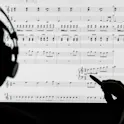
Professor Johanna Devaney is new Specialty Chief Editor for Digital Musicology. In this interview, she discusses her goals and motivations for the section
Humanities
17 Jul 2017
Professor Johanna Devaney new Specialty Chief Editor of Digital Musicology, specialty section within Frontiers in Digital Humanities.

Humanities
05 Jul 2017
Frontiers in Digital Humanities research analyzes the rise of immersive journalism and its challenges

Humanities
04 Jul 2017
Frontiers in Education study suggests finger training intervention combined with exposure to number representations supports quantitative skills development

Humanities
29 Jun 2017
Research published in Frontiers in Sociology draws the ethnomusicological perspective on music development, from H. neanderthalensis to modern history

Humanities
02 May 2017
A study in Frontiers in Digital Humanities shows how the rise of automated art opens new creative avenues, coupled with new problems for copyright protection.

Humanities
03 Apr 2017
This is the question that researchers want to address in their inter-disciplinary Research Topic ‘Birth’.

Humanities
15 Mar 2017
Medical Sociology is the most recent section to be launched in Frontiers in Sociology and spans the fields of medicine, public health and the social sciences.

Humanities
06 Mar 2017
Could ‘big data’ of the past allow us to build an historical social network? The Venice Time Machine Project is finding out — by Kevin Baumer Meet Battista Nani, the Venetian ambassador to France from 1643-1668. By using new technologies to digitize, transcribe and index over 1000 years of historical documents — enough data to fill 80km of shelf space — we can now reconstruct parts of his life in much more detail. Documents such as tax returns, letters and genealogical records are now digitized and searchable, allowing Ambassador Nani to be connected to his family members, friends and colleagues in a larger network. Nani’s life trajectory emerges out of this mass of Venetian documents, through a constantly growing network of relations with particular places (the houses he owned, the places he lived or visited) and people (family and professional relations). Expand this network to cover all residents mentioned in the Venetian archives, and you have a snapshot of a social network of the time — a ‘Facebook of the Past’. Frederic Kaplan, Field Chief Editor of Frontiers in Digital Humanities, presented an early version of the Venice Time Machine Project’s vision in a 2013 TED Talk, which has since […]

Humanities
30 Jan 2017
Assessment, Testing and Applied Measurement is the new specialty section in Frontiers in Education, led by Professor Gavin Brown

Humanities
04 Nov 2016
By Elliott Williams, Frontiers For forensic science, technology that assists in the analysis of complex and crucial evidence, such as DNA evidence, has seen rapid advancements, with ever more sensitive tests being introduced. Statistical interpretation of such complicated results has not been as swift. There exists now a lack of communication which spans all levels of those handling and presenting crucial evidence. Statisticians develop software with little input from the forensic scientist user, who does not have the possibility to discuss the intricacies of the results with the court. And in some cases, doesn’t know how the software “black box” generated its data. This is the long needed discussion Sue Pope (Principal Forensic Services) and Alex Biedermann (University of Lausanne) hope their topic, will spark between the statisticians developing analytical methods, the scientists who apply them, and the lawyers presenting the life changing results to the court. We spoke to them to find out more about this important and inter-disciplinary topic “The Dialogue Between Forensic Scientists, Statisticians and Lawyers about Complex Scientific Issues for Court.” Could you briefly give us some background on your Research Topic’s theme? As a working forensic scientist, I have become increasingly aware of the variety […]

Humanities
01 Nov 2016
We are very pleased to announce the launch of the first specialty sections of Frontiers in Education, a new peer-reviewed, open-access journal: Digital Education (led by Chief Editor Prof. Clifford A. Shaffer); Educational Psychology (led by Chief Editor Prof. Douglas Kauffman); Leadership in Education (led by Chief Editor Prof. Margaret Grogan); Public Health Education and Promotion (led by Chief Editors Prof. Connie J. Evashwick, Prof. Marcia G. Ory, and Prof. Matthew Lee Smith); and Special Educational Needs (led by Chief Editor Prof. Geoff Lindsay). One of the first social-sciences journals of the “Frontiers in” series, Frontiers in Education will foster cross-disciplinary work as well as fairness, transparency, and objectivity in the review process (see here for more details on the Frontiers publishing model and peer-review process). Further specialty sections will be added as the journal continues to develop, some of which are already under discussion and include: Assessment, Testing and Applied Measurement; Continuing Education; Education Policy; Language and Literacy Education; and Teacher Education. The launch of a new journal is always an exciting venture, and we would be happy to hear your thoughts or answer any questions you may have. Editorial Contact Journal Manager: Yaelle Bochatay Email: education@frontiersin.org Contribute to the journal There are […]

Humanities
20 Oct 2016
We are proud to announce the launch of the latest specialty section of Frontiers in Sociology, Medical Sociology. Led by Chief Editor Prof. Hannah Bradby, the section will consider the social production of health and illness, offering critical perspectives on medicine as culture, business, profession, and practice. Equity in health outcomes and in access to quality healthcare, the changing limits of ethical and moral behavior in the light of new biotechnological practices, comparison across various healing systems, and the production of alternative medical knowledge are just some of the topics of interest to the section. To learn more about Prof. Bradby’s vision for the section, see her Specialty Grand Challenge article available here. The section’s Associate Editor Board is already composed of the following researchers and scholars: Beth Maina Ahlberg, Uppsala University Polina Aronson, Deutsches Institut für Menschenrechte Ivy Lynn Bourgeault, University of Ottawa Sangeeta Chattoo, University of York Tiago Correia, ISCTE – University Institute of Lisbon Nicola Kay Gale, University of Birmingham Gill Green, University of Essex Nina Hallowell, University of Oxford Chimaraoke O Izugbara, African Population and Health Research Center Sakari Karvonen, National Institute for Health and Welfare Ewen Speed, University of Essex Maria Clasina Stuttaford, University of Cardiff Part of the “Frontiers […]
Get the latest research updates, subscribe to our newsletter