Life sciences
05 Jul 2017
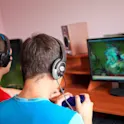
Video games can change your brain
Frontiers in Human Neuroscience review article outlines structural brain changes caused by video games
Life sciences
05 Jul 2017
Frontiers in Human Neuroscience review article outlines structural brain changes caused by video games

Frontiers news
28 Jun 2017
The Frontiers in Neuroscience journal series is the 1st-most cited in Neurosciences

Frontiers news
14 Jun 2017
Superintelligence: fact or fiction. First Frontiers Spotlight Award Winner for outstanding research into human brain augmentation
Neuroscience
12 Jun 2017
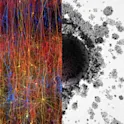
Using mathematics in a novel way in neuroscience, the Blue Brain Project shows that the brain operates on many dimensions, not just the three dimensions that we are accustomed to

Neuroscience
19 May 2017
New study opens up new area of preventative research for diseases like Alzheimer’s: Targeting age-dependent protein aggregates as possible therapeutic targets.

Health
19 May 2017
This Research Topic, published in Frontiers in Human Neuroscience, investigates cognitive training techniques in health and disease, and in youth and old age.

Health
10 May 2017
Recent research, published in Frontiers in Nutrition, investigates the molecular mechanisms underlying the neuroprotective actions of wine.
Neuroscience
12 Apr 2017
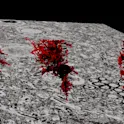
New Research Topic in Frontiers in Neuroanatomy explores an ultastructural insight of astrocytes at a microscale level.
Frontiers news
15 Feb 2017
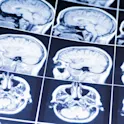
Delighted to announce that Prof. Jan Kassubek will be leading our newest section in Frontiers in Neurology: Applied Neuroimaging.
Neuroscience
10 Feb 2017
Interview discusses aspirations for Frontiers in Synaptic Neuroscience and a vision for the field.
Neuroscience
10 Feb 2017
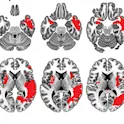
This case report documents the extraordinary resilience of a woman in Argentina who endured multiple strokes.
Neuroscience
13 Dec 2016
Engaging in voluntary physical exercise helps protect the brain from the damaging effects of a stroke, shown in mice. — By Tania Fitzgeorge-Balfour, Science Writer, Frontiersin.org The after-effects of a stroke can be life changing. Paralysis, speech problems and memory loss occur in varying degrees of severity, depending on the location and amount of brain tissue damage. How far a stroke patient can recover is largely determined by the ability of the brain to reorganize itself. Understanding what can improve this ability is therefore essential in developing the best therapies for rehabilitation. Voluntary physical exercise is known to have a positive effect on a person’s overall well-being. It delays memory loss in old age and improves cognitive ability. A new study, published in the open-access journal Frontiers in Aging Neuroscience, has linked the positive effects of exercise on the brains of mice to their better recovery after a stroke. “Our study suggests that physical exercise can be used as a preventive, as well as a therapeutic approach to aid recovery after a cortical stroke,” says Dr. Evgenia Kalogeraki, who conducted this research at the in the laboratory of Prof. Dr. Siegrid Löwel, at Georg-August-University, Germany. Previous research of the Löwel […]

Neuroscience
12 Dec 2016
Researchers show a molecular mechanism that regulates memory specificity over time, and point to how understanding memory in honeybees could help us combat degenerative brain diseases

Neuroscience
29 Nov 2016
Sleep deprivation affects children’s brains differently than adults’, according to a new study By K.E.D. Coan, Science Writer Any parent can tell you about the consequences of their child not getting enough sleep. But there is far less known about the details of how sleep deprivation affects children’s brains and what this means for early brain development. “The process of sleep may be involved in brain ‘wiring’ in childhood and thus affect brain maturation,” explains Salome Kurth, first author of the study published in Frontiers in Human Neuroscience, and a researcher at the University Hospital of Zurich. “This research shows an increase in sleep need in posterior brain regions in children.” This contrasts with what researchers know about the effects of sleep deprivation in adults, where the effect is typically concentrated in the frontal regions of the brain. After staying up too late, both children and adults need a period of deep sleep to recover. This recovery phase is characterized by an increase in an electrical pattern called slow-wave activity, which can be measured with a non-invasive technique called an electroencephalogram. With a large number of electrode channels distributed across the scalp, this method also detects which brain regions show […]

Neuroscience
16 Nov 2016
Study shows vocal communication in mice is affected by the same gene needed for speech in humans
Get the latest research updates, subscribe to our newsletter