KK
kyungjin kim
University of Connecticut
Storrs, United States
438
Total downloads
4,649
Total views and downloads
Submit your idea
Select the journal/section where you want your idea to be submitted:
Manuscript Submission Deadline 19 January 2026
This Research Topic is currently accepting articles.
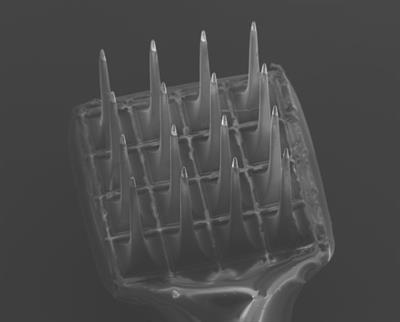
The field of bioelectronic implants has seen significant advancements, particularly in the development of neural implants that can restore motor and sensory functions and address various brain diseases and disorders. These implants, which utilize microelectrode arrays and depth electrodes, have shown great promise in recording and stimulating the nervous system. However, a major challenge remains in ensuring their long-term functionality in vivo. Over time, these electrodes, whether rigid metallic probes or flexible microelectrodes, often fail due to immune responses, biofouling, fluid absorption from ineffective encapsulation, and mechanical damage. Addressing these longevity barriers is crucial for the successful translation of these technologies from the laboratory to clinical settings. Recent studies have highlighted the need for more effective encapsulation materials and methods to enhance the durability and performance of these implants. Despite ongoing research, there is still a significant gap in understanding the optimal solutions for long-term implant functionality.
This research topic aims to showcase the latest advancements in bioelectronics encapsulations, breakthrough technologies, and novel approaches toward achieving chronic functionality in neural implants. The primary objective is to explore cutting-edge techniques and scientific and engineering efforts that push the current boundaries of the limited lifetime of these devices in vivo. Specific questions to be addressed include identifying the most effective encapsulation materials, understanding the critical failure modes of implants, and developing guidelines for suitable hermetic encapsulations that prevent performance degradation over time.
To gather further insights into the range and limitations of bioelectronic implant encapsulation, we welcome articles addressing, but not limited to, the following themes:
- State-of-the-art encapsulation materials and innovations in electrode materials and fabrication technologies, including processing and encapsulation methods, high-performing circuits, robust contact surfaces, connectors, and mechanically durable interfaces.
- Smart encapsulations, such as breathable, selective, and bioresorbable encapsulations that control the lifetime and diffusion pathways.
- Investigation of critical failure modes, including implant degradation behaviors under complex electro-chemo-mechanical loading and root cause analysis of device failures from biotic and abiotic factors.
- Translational research involving in vivo tests and clinical trials of implantable electrodes to provide guidelines for suitable hermetic encapsulations.
- Lifetime analysis on the functional longevity of implantable electrodes, including novel testing techniques, characterization methods, data analytics, machine learning, artificial intelligence, and theory-based computational or empirical models for lifetime prediction.
Experts in this field from around the globe are encouraged to contribute their latest research outcomes, combining expertise, resources, and technical infrastructures for manufacturing, encapsulation, testing, and analyzing the electro-chemo-mechanical durability of bioelectronic implants. Submissions can include original research papers, reviews, and perspective articles.
This Research Topic accepts the following article types, unless otherwise specified in the Research Topic description:
Articles that are accepted for publication by our external editors following rigorous peer review incur a publishing fee charged to Authors, institutions, or funders.
Keywords: Encapsulation, implants longevity, next generation implants
Important note: All contributions to this Research Topic must be within the scope of the section and journal to which they are submitted, as defined in their mission statements. Frontiers reserves the right to guide an out-of-scope manuscript to a more suitable section or journal at any stage of peer review.
University of Connecticut
Storrs, United States
The University of Utah
Salt Lake City, United States
Imperial College London
London, United Kingdom
Delft University of Technology
Delft, Netherlands
University of Florida
Gainesville, United States
West Virginia University
Morgantown, United States

Manuscripts can be submitted to this Research Topic via the main journal or any other participating journal.
Submit your idea
Select the journal/section where you want your idea to be submitted: