RS
ruth stevens
University of Hasselt
Hasselt, Belgium
2,028
Total views and downloads
Jean Jacques Rousseau identified the importance of physical spaces as the ‘third teacher’ as early as the eighteenth century. Yet today, it is significant how easily the role of the spatial environment in teachers’ pedagogical practices and pupils’ wellbeing is overlooked, how blinded teachers and pupils are once habituated in the use of a building, and how difficult to imagine other uses, both indoors and outdoors. As educational practices continue to grow into greater flexibility, collaboration, and pupil-centered approaches, and challenges relating to intellectual, social and emotion pupil wellbeing are pressing, there is a corresponding need for innovative learning environments that can actively support and enable evolving pedagogies. At this subtle intersection of pedagogy and architecture, this issue aims to examine how and what a shared language between architects and educators could entail, allowing them to create symbiotic educational spaces that genuinely reflect and support modern educational practices.
While architects and educators both aim to enhance educational experiences through thoughtfully designed spaces, structured collaboration between these fields remains limited. Educational spaces are frequently designed based on assumptions about how teaching will occur, yet architects and educators may interpret these assumptions differently, leading to disconnects where spaces fall short in supporting teachers and pupils. For instance, architectural elements intended to foster collaboration may be underutilized or counterproductive when they do not align with the practical needs of teachers. Conversely, educators may lack awareness of how spatial design can act as a catalyst for pedagogical innovation, efficiency and psycho-emotional wellbeing, for instance making active use of staircases for embodied learning, or the calming and attention-enhancing effect of outdoor environments. What can be done is stimulating architects and educators to collaborate, for which an effective communication is essential. Therefore through this special issue, we aim to study an appropriate shared language for architects and educators to use to bridge differing expertise, priorities, and vocabulary. An example is the terminology by Rosan Bosch, that includes spatial and pedagogical links.
We invite scholars, architectural researchers and educational designers to contribute original research articles, case studies, theoretical analyses, and practice-based insights, particularly on, but not limited to:
1. Architectural perspectives on pedagogy: How do architects interpret pedagogical needs, integrate pedagogical concepts in educational space designs? How does pedagogical theory inform design choices?
2. Pedagogical Perspectives on Educational Spaces: How do pedagogists, educators read educational space, what is their role in articulating spatial requirements reflecting teaching practices?
3. Environmental nudges for teachers: How do designed and natural spaces/ spatial elements influence teaching methods and encourage adaptability and responsiveness among educators?
4. Teacher and architect collaboration: How do these partnerships impact design and functionality of space? What “language” proved successful in the collaborative process? Via what media do they communicate?
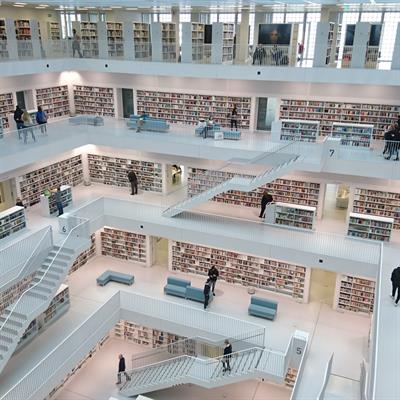
Keywords: physical learning environment, architectural design, teaching practice, flexible spaces, innovation, nature connection, biophilic design, children and young people, physical and psychological wellbeing
Important note: All contributions to this Research Topic must be within the scope of the section and journal to which they are submitted, as defined in their mission statements. Frontiers reserves the right to guide an out-of-scope manuscript to a more suitable section or journal at any stage of peer review.
University of Hasselt
Hasselt, Belgium
The University of Melbourne
Parkville, Australia
University of Portsmouth
Portsmouth, United Kingdom
University of Hasselt
Hasselt, Belgium
Royal Danish Academy - Architecture, Design, Conservation
Copenhagen, Denmark
