Published in

Frontiers in Sustainable Food Systems
Land, Livelihoods and Food Security
6,501
Total downloads
40k
Total views and downloads
Globally, approximately 783 million people face hunger today, and projections indicate that by 2030, over 600 million people will continue to struggle to feed their families. This persistent challenge is driven by multiple, compounding shocks – from the impacts of climate change, conflicts, and natural disasters to crop diseases and systemic disruptions in food systems. These shocks not only lead to higher food prices and increased hunger but also exacerbate poverty and inequality. Additionally, the way we produce food is increasingly unsustainable, generating alarming levels of pollution and waste, and accelerating environmental degradation.
Yet, in the face of these challenges, there is cause for optimism. Digital technologies offer transformative opportunities to revolutionize global food systems, addressing inefficiencies while fostering resilience and sustainability. Innovations such as precision agriculture, data-driven decision-making, blockchain-enabled supply chains, and mobile financial services are already proving their potential to empower farmers, enhance productivity, and ensure equitable access to nutritious food. By leveraging digital tools, we can simultaneously improve agricultural yields, reduce environmental impacts, and transform rural livelihoods.
However, the adoption of digital agricultural technologies (DATs) is not without barriers. In many developing economies, a digital divide hinders widespread use due to limited access to digital infrastructure, low levels of digital literacy, and inadequate financing mechanisms. To unlock the full potential of DATs, significant public investments, enabling policy environments, and financing frameworks are needed. Investing in digital infrastructure and providing farmers with access to fair, reliable financing can enable them to adopt these technologies and build more sustainable, resilient food systems.
This research topic explores the promise of digital agricultural technologies for addressing these complex challenges. By examining their role across the agricultural value chain—from production and processing to distribution and consumption—we aim to highlight pathways for ensuring food security and building resilient food systems that work for everyone.
To gather further insights on these dynamics, we encourage the submission of articles that address, but are not limited to, the following themes:
• Digital Innovation for Agricultural Productivity and Sustainability
o Digital Technologies for Precision Agriculture: Enhancing yields and optimizing resource use while minimizing environmental impacts.
o Role of IoT in Farm Monitoring: Real-time data for resource management, crop health, and efficient irrigation.
o Machine Learning for Yield Forecasting and Crop Disease Detection: Addressing risks and improving decision-making.
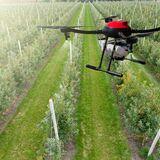
o Remote Sensing and Drones for Sustainable Land and Water Management: Transforming monitoring in resource-scarce regions.
o Smart Irrigation Technologies: Innovations for water efficiency in a changing climate.
o AI-Powered Livestock Management: Innovations for feed optimization, disease prevention, and productivity.
o Climate-Smart Agriculture through Digital Tools: Addressing environmental sustainability and food security.
o Digital Solutions to Reduce Post-Harvest Losses: From smart storage to logistics innovations.
o Blockchain for Transparent and Resilient Supply Chains: Strengthening trust and reducing food losses in the value chain.
• Digital Inclusion and Access for Farmers
o Mobile Advisory Services for Farmers: Providing tailored solutions for climate adaptation and market access.
o Digital Finance for Food Security: Empowering smallholders with fair, reliable credit and insurance.
o Empowering Women Farmers through Digital Inclusion: Closing the gender gap in agricultural technology access.
o E-commerce and Market Platforms for Farmers: Bridging rural-urban divides and enhancing access to buyers.
o Social Media for Agricultural Knowledge Dissemination: Building community-based learning and support systems.
o Risk Management Tools in Agriculture: Digital innovations for climate resilience and disaster recovery.
o Overcoming the Digital Divide in Rural Agriculture: Policy, infrastructure, and financing solutions.
• Enabling Policies and Partnerships for Scaling Digital Agriculture
o Public-Private Partnerships for Scaling Digital Agriculture: Collaborative models for financing and implementation.
o Data Privacy and Ethical Considerations in Digital Agriculture: Safeguarding farmer data and rights.
o Measuring the Impact of Digital Agriculture on Food Security and Sustainability: Indicators, methodologies, and results.
o Indigenous Knowledge and Digital Innovation: Integrating traditional practices with modern technologies.
o Training and Capacity Building via Gamification and Virtual Reality: Equipping farmers with digital literacy and skills.
o Blockchain for Transparent and Resilient Supply Chains: Strengthening trust and reducing food losses in the value chain.
o Scaling Successful Digital Agriculture Innovations: Case studies from developing and developed economies.
• Resilience, Risk, and Climate Adaptation through Digital Technologies
o Digital Agriculture in Conflict and Disaster-Prone Regions: Strategies to rebuild and strengthen food systems.
o Digital Solutions to Reduce Post-Harvest Losses: Innovations to ensure food security and reduce waste.
o Machine Learning for Yield Forecasting and Crop Disease Detection: Enhancing resilience to climate-related risks.
o Blockchain for Transparent and Resilient Supply Chains: Enhancing transparency and reliability in disrupted systems.
o Digital Finance for Food Security: Risk reduction and improved access to finance in times of crisis.
This Research Topic invites a broad range of article types, including empirical studies, theoretical papers, extensive reviews, and insightful policy analyses, aimed at providing actionable solutions and comprehensive strategies to utilize DATs effectively and sustainably within global food systems.
Keywords: Smart Irrigation Technologies, Climate-Smart, Digital Tools, Mobile Advisory Services, Digital Finance for Food Security, E-commerce and Market Platforms, Digital Finance, Food Security
Important note: All contributions to this Research Topic must be within the scope of the section and journal to which they are submitted, as defined in their mission statements. Frontiers reserves the right to guide an out-of-scope manuscript to a more suitable section or journal at any stage of peer review.