DA
dhananjay anant sant
School of Natural and Engineering Sciences National Institute of Advanced Studies, Bangalore, India
Bangalore, India
668
Total views and downloads
Submit your idea
You will be redirected to our submission process.
Manuscript Summary Submission Deadline 31 May 2026 | Manuscript Submission Deadline 30 June 2026
This Research Topic is currently accepting articles.
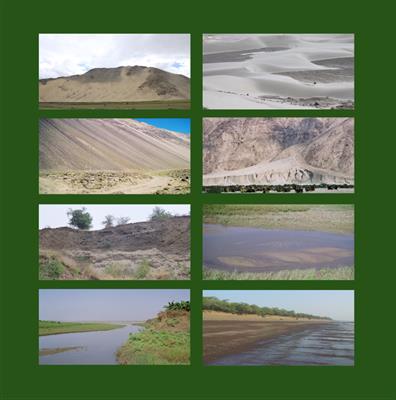
The study of landforms and their evolution provides key insights into the geomorphic responses of continental surfaces to active processes governed by climatic transitions. Notable climate shifts, such as those occurring from the Last Interglacial to the Last Glacial period and from the Last Glacial Maximum to the Holocene, brought about significant reorganizations of continental landscapes. These shifts, alongside the broader dynamics of the last Ice Age, resulted in processes like glacial advances and retreats, widespread aeolian sedimentation, and disruptions in fluvial systems that substantially altered surface morphology. The intensity and timing of these processes determined the rate of landform development and the extent of erosional changes. Understanding the complex interplay between landforms, surface processes, and climate variability during these transitions is crucial for reconstructing past environmental changes and revealing the mechanisms driving landscape evolution.
This Research Topic aims to document, assess, and synthesize evidence on how variations in process intensity and climatic forcing affect landform dynamics. It focuses on both quantitative and qualitative changes in landscapes, with an emphasis on geomorphic responses during different phases of climatic transitions. The research will delve into sedimentary archives, which store sequential records of aggradation and erosion, offering essential insights into the temporal and spatial variability of surface processes. By incorporating proxies from remote sensing, field observations, and laboratory analyses, this topic encourages the development of evolutionary models. Such interdisciplinary approaches enhance our understanding of how geomorphic systems respond to climatic thresholds and the effects on long-term landscape evolution.
To gather further insights into the geomorphic responses to climate transitions across diverse environments, we welcome articles addressing, but not limited to, the following themes:
• Fluvial, aeolian, glacial, and coastal system responses to climate transitions of different rate and amplitude.
• Integrated interactions of geomorphic processes at different scales.
• Documentation and interpretation of qualitative and quantitative morphodynamic changes.
• Multidisciplinary perspectives combining geomorphology, sedimentology, paleoclimatology, and Earth system science.
• Evolutionary models and methodologies for assessing landscape sensitivity to climatic shifts of different intensity and rapidity.
We invite articles of various types for this Research Topic.
This Research Topic accepts the following article types, unless otherwise specified in the Research Topic description:
Articles that are accepted for publication by our external editors following rigorous peer review incur a publishing fee charged to Authors, institutions, or funders.
Keywords: Landforms, Climate transition, Geomorphic Processes, Landscape evolution, Sedimentary archives.
Important note: All contributions to this Research Topic must be within the scope of the section and journal to which they are submitted, as defined in their mission statements. Frontiers reserves the right to guide an out-of-scope manuscript to a more suitable section or journal at any stage of peer review.
Manuscripts can be submitted to this Research Topic via the main journal or any other participating journal.
Submit your idea
You will be redirected to our submission process.
