RN
ravi naidu
Cooperative Research Centre for Contamination Assessment and Remediation of the Environment, The University of Newcastle
Callaghan, Australia
1,364
Total downloads
18k
Total views and downloads
Submit your idea
You will be redirected to our submission process.
Manuscript Summary Submission Deadline 31 March 2026 | Manuscript Submission Deadline 31 July 2026
This Research Topic is currently accepting articles.
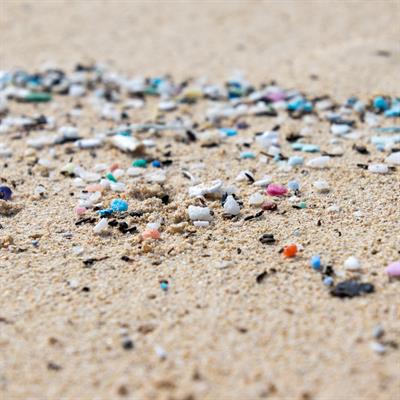
Global plastic production exceeds hundreds of millions of tons annually, with a significant fraction fragmenting into microplastics (<5 mm) and nanoplastics (<1 µm) that disperse across marine, freshwater, terrestrial, and atmospheric systems. These particles are now recognized as a pervasive class of emerging contaminants with the capacity to persist, accumulate, and interact with diverse biotic and abiotic components of the environment. Mounting evidence demonstrates their ingestion and assimilation by organisms across trophic levels, with potential consequences for biodiversity, ecosystem functioning, and food security. Human exposure through dietary intake, inhalation, and potable water further underscores the public health dimension of this issue. Despite growing awareness, substantial uncertainties remain regarding their environmental transport, transformation, and toxicological effects. Addressing these knowledge gaps requires interdisciplinary research that integrates detection, risk assessment, management strategies, and policy innovation to inform effective, science-based interventions.
The proliferation of microplastics and nanoplastics across environmental compartments represents a critical scientific and societal challenge. These particles originate from diverse sources, undergo complex transformation and transport processes, and ultimately interact with biota in ways that remain insufficiently understood. Their persistence, capacity to sorb co-contaminants, and potential for trophic transfer raise pressing questions regarding ecological integrity, food security, and human health. Despite rapid advances, major uncertainties persist in quantifying exposure pathways, assessing long-term fate, and evaluating cumulative risks at ecosystem and population scales. Equally, limitations in detection methodologies, lack of standardized protocols, and insufficient integration across disciplines impede progress toward comprehensive understanding.
This Research Topic aims to address these gaps by consolidating novel research that advances detection, elucidates environmental distribution and transformation, characterizes ecological and toxicological effects, and develops innovative mitigation and policy frameworks. By fostering collaboration across environmental science, agriculture, toxicology, engineering, and governance, this collection seeks to accelerate knowledge generation and inform sustainable, evidence-based strategies to mitigate microplastic pollution globally.
The scope of this Research Topic encompasses six key themes:
1. sources, distribution, and impacts of microplastics in soil, water, and air;
2. advances and challenges in detection, sampling, and standardization;
3. pathways of exposure, bioavailability, and long-term environmental fate;
4. innovations in management, remediation, and sustainable alternatives;
5. contamination in agriculture and food chains, with implications for food safety and human health; and
6. policy frameworks, governance, and future directions toward a circular, plastic-resilient economy.
We welcome original research articles, reviews, mini-reviews, methods papers, and policy perspectives. Interdisciplinary studies that integrate environmental science, engineering, agriculture, toxicology, and social sciences are strongly encouraged. Contributions highlighting methodological innovations, regional case studies, cross-sectoral partnerships, and translational approaches are particularly valued.
This Research Topic welcomes submissions from all researchers working in this field, and attendees of the ‘Microplastics in Focus: Innovate, Mitigate, Sustain’ conference, 27-28 November 2025, jointly organized by crcCARE and GCER, UoN. Frontiers is one of the sponsors of the conference.
Distinguished Prof Ravi Naidu is CEO and managing director of crcCARE which is an independent Centre of Excellence, funded by the Australian Government. The other Topic Editors declare no competing interests with regard to the Research Topic subject
This Research Topic accepts the following article types, unless otherwise specified in the Research Topic description:
Articles that are accepted for publication by our external editors following rigorous peer review incur a publishing fee charged to Authors, institutions, or funders.
Keywords: microplastics, environment, risk, exposure, remediation, bioavailability, detection, sampling, sources
Important note: All contributions to this Research Topic must be within the scope of the section and journal to which they are submitted, as defined in their mission statements. Frontiers reserves the right to guide an out-of-scope manuscript to a more suitable section or journal at any stage of peer review.
Manuscripts can be submitted to this Research Topic via the main journal or any other participating journal.
Submit your idea
You will be redirected to our submission process.