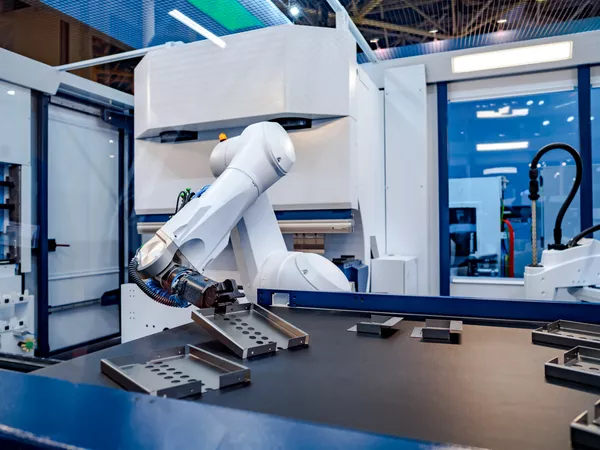
Future space activities will increasingly depend on autonomous systems that can construct, maintain, and expand infrastructure long before, and long after, human crews arrive. This Research Topic explores how robotics can enable sustainable and self-sufficient operations across orbital, surface, and interplanetary environments, linking autonomy, manufacturing, resource utilization, and long-duration system design.
The transition from “arrive-and-end” missions to continuously operated settlements requires robotics to evolve from a supporting role to a foundational layer of space infrastructure.
Key themes include (but are not limited to): ● Resilient robotic autonomy under extreme communication delays and limited bandwidth; ● Modular, robot-friendly interface standards for assembly, maintenance, and logistics; ● In-situ resource utilization (ISRU) and on-site fabrication supported by robotic systems; ● Sustainability metrics for energy, materials, and life-support continuity; ● Coordination frameworks for multi-agent and human–robot systems in distributed bases.
Contributions that span from laboratory demonstrations and analog-site experiments to flight heritage and cross-domain applications (e.g., construction, agriculture, power systems, ISRU) are welcome. We particularly encourage interdisciplinary and international perspectives that connect space robotics, systems engineering, and industrial automation, bridging the gap between research prototypes and sustainable field deployment.
By consolidating these efforts, this collection aims to outline the emerging field of Sustainable Space Robotics as both a scientific and industrial discipline, defining the technologies, standards, and operational principles required for long-term off-earth presence.
This Research Topic originates from the iSpaRo2025 Workshop on Sustainable Space Robotics (https://sites.google.com/view/spacerobotics-sustainable), a collaborative forum organized by JAXA, NASA, and DLR to explore sustainable, long-duration robotic operations for future offworld infrastructure and logistics. The Research Topic will serve as a follow-up platform to consolidate outcomes and extend discussions initiated at the workshop, encouraging contributions from the broader space robotics and automation community.
Article types and fees
This Research Topic accepts the following article types, unless otherwise specified in the Research Topic description:
Brief Research Report
Data Report
Editorial
FAIR² Data
FAIR² DATA Direct Submission
General Commentary
Hypothesis and Theory
Methods
Mini Review
Articles that are accepted for publication by our external editors following rigorous peer review incur a publishing fee charged to Authors, institutions, or funders.
Article types
This Research Topic accepts the following article types, unless otherwise specified in the Research Topic description:
Brief Research Report
Data Report
Editorial
FAIR² Data
FAIR² DATA Direct Submission
General Commentary
Hypothesis and Theory
Methods
Mini Review
Opinion
Original Research
Perspective
Policy and Practice Reviews
Review
Systematic Review
Technology and Code
Keywords: Sustainable space robotics, ISRU, interface standards, coordination frameworks
Important note: All contributions to this Research Topic must be within the scope of the section and journal to which they are submitted, as defined in their mission statements. Frontiers reserves the right to guide an out-of-scope manuscript to a more suitable section or journal at any stage of peer review.