LG
luca gallitelli
Roma Tre University
Rome, Italy
64
Total views and downloads
Submit your idea
Select the journal/section where you want your idea to be submitted:
Manuscript Summary Submission Deadline 31 May 2026 | Manuscript Submission Deadline 31 August 2026
This Research Topic is currently accepting articles.
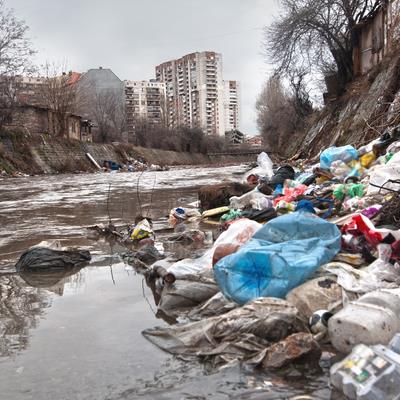
Until now, scientific literature has been saturated with studies on microplastics (MP, items smaller than 5 mm), but aspects on macrolitter retention and the subsequent ecological impacts on biodiversity and ecosystems are pivotal, as well as understanding the continuum linking microplastics to their most important source, i.e., macroplastics (MA, items bigger than 5 mm). Studies investigating the relationships between microplastics and macroplastics are neglected, as well as the fate of macroplastics in freshwater systems.
The aim of this Research Topic is to advance our knowledge of macroplastic retention in rivers, with research papers, reviews, and perspectives on the transport, retention, and impacts of macroplastics in riverine habitats, including their related consequences for biodiversity and ecological functions. We aim to investigate:
(1) Macroplastic source, transport and retention in rivers across scales, gradients, and types,
(2) The effects of macroplastics on freshwater biodiversity (i.e. colonization, fragmentation, vectoring native or non-native organisms by plastics).
Field observation studies and indoor experiments, as well as modelling and remote sensing approaches, are welcome. Research on management and standardization of macroplastic pollution is encouraged, as well as research on agricultural crops near riverine riparian areas, considering that those plastics may be introduced to the river system. Moreover, contributions from developing countries (e.g. Africa, South America, South-East Asia, and India) are encouraged, with the aim of obtaining data from those regions and providing more reliable patterns on macroplastic retention and impacts in global rivers. To better understand the source of macroplastics in rivers, research on plastic pollution in lakes and estuary or coastal zones, given their connection to river systems, is also welcomed.
Concerning the type of research paper; Original Research, Brief Research Reports, Reviews, Perspectives and Opinion papers are encouraged. All papers will be part of contributions and observations on macroplastic pollution in global rivers to provide insight into where plastic accumulates, where we can focus potential clean-up activities, and how we may mitigate the plastic pollution problem. These contributions can be used as predictive and management instruments (for example, if it is found that a braided river retains more than a straight river, managers could foster more clean-ups on braided rivers to maximize plastics removal).
This Research Topic accepts the following article types, unless otherwise specified in the Research Topic description:
Articles that are accepted for publication by our external editors following rigorous peer review incur a publishing fee charged to Authors, institutions, or funders.
Keywords: riverine macroplastics, ecological threats, freshwater ecosystems, macrolitter, plastic pollution, rivers, plastic entrapment, retention
Important note: All contributions to this Research Topic must be within the scope of the section and journal to which they are submitted, as defined in their mission statements. Frontiers reserves the right to guide an out-of-scope manuscript to a more suitable section or journal at any stage of peer review.

Manuscripts can be submitted to this Research Topic via the main journal or any other participating journal.
Submit your idea
Select the journal/section where you want your idea to be submitted: