inflammation and reducing disease severity (Yin et al., 2021). Lang et al.present an example of traditional medicine's therapeutic potential in immune modulation, focusing on Wuwei Shexiang Pill (WSP). Their research demonstrates that WSP not only ameliorates ankle swelling and inflammatory cell infiltration, but also modulates multiple immune pathways involved in inflammation. By employing an LC-MS-based metabolomics approach, the study identifies key metabolic pathways that WSP influences, offering a comprehensive view of how systemic immune modulation can alleviate inflammatory diseases. This also supports the idea that traditional medicines, when rigorously tested and characterized, can be valuable sources for drug discovery in immune-related conditions.The modulation of immune responses is also crucial in addressing inflammatory diseases such as stroke (Macrez et In conclusion, the articles in this Research Topic offer a diverse and innovative exploration of how modulating immune function can lead to novel therapeutic strategies across a range of diseases. From the integration of traditional medicines with modern pharmacology to the use of artificial intelligence in drug screening, the contributions emphasize the importance of a multidisciplinary approach to drug discovery. These studies provide a roadmap for future research into immune modulation, focusing on the potential of multiomics techniques, AI-driven methodologies, and the refinement of immunotherapy to tackle some of the most challenging diseases of our time. As the field of immune function modulation continues to expand, it is evident that both innovative and traditional approaches will play crucial roles in shaping the future of pharmacological interventions. The articles in this Research Topic exemplify the ongoing efforts to bridge the gap between basic immunology and translational medicine, driving forward the development of more precise, effective therapies for immune-related diseases.
Editorial16 October 2024
Editorial: Modulation of immune function: drug discovery and translational application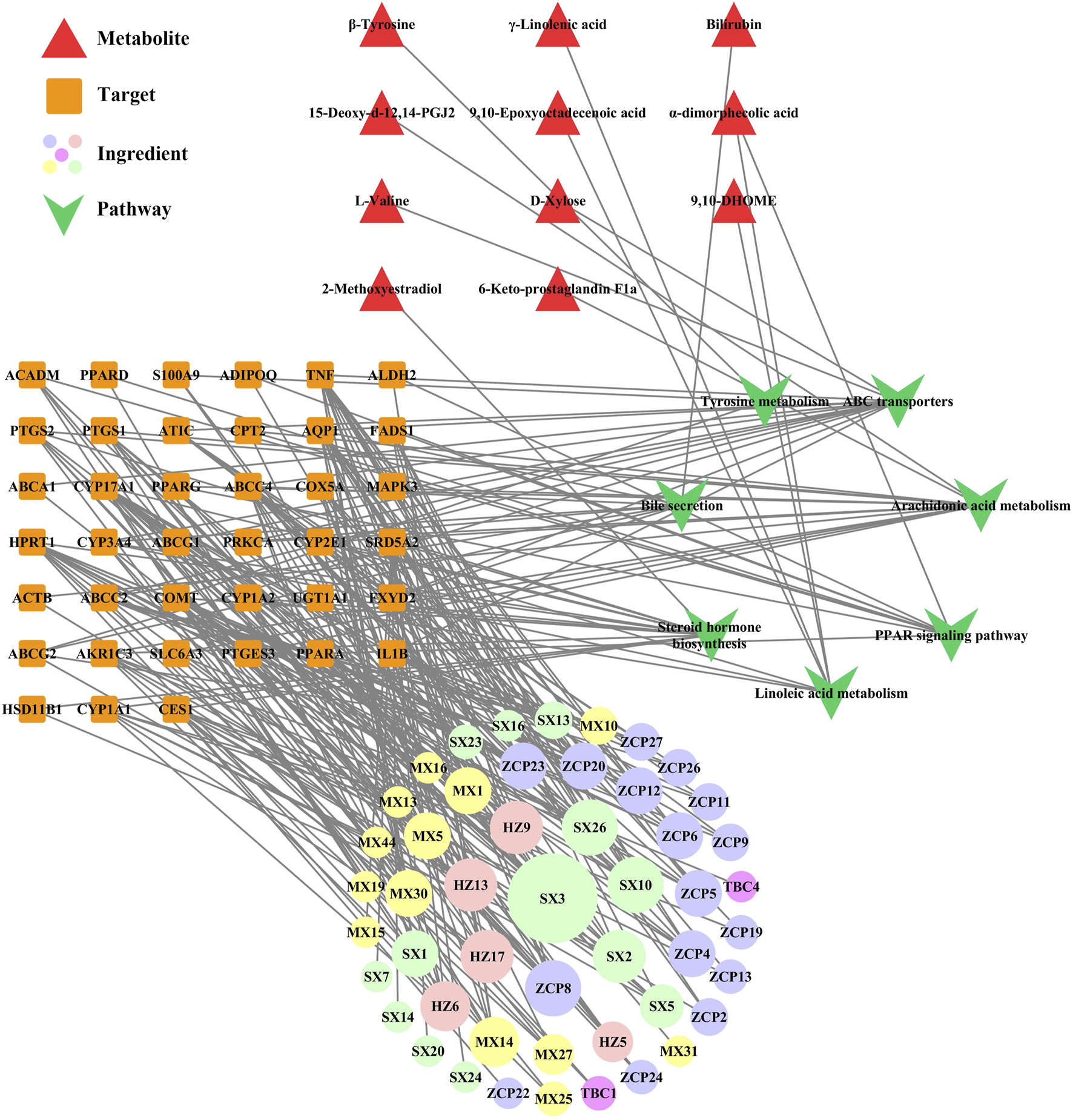
Wuwei Shexiang Pill (WSP) is a Tibetan traditional medicine, which has been demonstrated to exhibit potent anti-inflammatory and anti-gout effect. However, the specific pharmacological mechanism is not elucidated clearly. In the present study, liquid chromatography-mass spectrometry (LC-MS)-based metabolomics was applied to investigate the alteration of serum metabolites induced by WSP treatment in MSU-induced gouty rats. Subsequently, bioinformatics was utilized to analyze the potential metabolic pathway of anti-gout effect of WSP. The pharmacodynamic data discovered that WSP could ameliorate ankle swelling, inflammatory cell infiltration, and downregulate the protein expression of IL-1β, p-NF-κB p65, and NLRP3 in the synovial membrane and surrounding tissues of gouty ankles. LC-MS-based metabolomics revealed that there were 30 differential metabolites in the serum between sham-operated rats and gouty ones, which were mainly involved in the metabolism of fructose and mannose, primary bile acid biosynthesis, cholesterol metabolism. However, compared to model group, WSP treatment up-regulated 11 metabolic biomarkers and down-regulated 31 ones in the serum. KEGG enrichment analysis found that 27 metabolic pathways contribute to the therapeutic action of WSP, including linoleic acid metabolism, phenylalanine metabolism, pantothenate and CoA biosynthesis, etc. The comprehensive analysis combined network pharmacology and metabolomics further revealed that the regulatory network of WSP against gout might be attributed to 11 metabolites, 7 metabolic pathways, 39 targets, and 49 active ingredients of WSP. In conclusion, WSP could ameliorate the inflammation of the ankle in MSU-induced gouty This is a provisional file, not the final typeset article rats, and its anti-gout mechanism might be relevant to the modulation of multiple metabolic pathways, such as linoleic acid metabolism, phenylalanine metabolism, and pantothenate and CoA biosynthesis. This study provided data support for the secondary development of Chinese traditional patent medicine.