Abstract
Flammulina Velutipes (F. velutipes) is widely planted all over the world and is rich in nutrients, which is of great benefit to the human body. However, the research on the aroma of F. velutipes is relatively rare, which limits the application of F. velutipes in deep processing, resulting in a single product and edible method of F. velutipes. The purpose of this study was to find out the aroma compounds contributing to the sensory properties of F. velutipes to promote the application of different varieties of F. velutipes in deep processing. Aromas of 7 species of F. velutipes were described and evaluated by sensory evaluation experiment. The volatile compounds in seven kinds of F. velutipes were detected by headspace solid-phase microextraction combined with gas chromatography-mass spectrometry (GC-MS). A total of 74 volatile compounds were found, including 23 alcohols, 5 aldehydes, 2 phenols, 1 acid, 16 esters, 7 ketones, 1 ether, 13 hydrocarbons, 1 sulfide, 1 acyl compound, and 4 heterocyclic compounds. It was also found that the sensory evaluation results of sample F, C, and E had a high correlation with the content of compound, and the correlation between sample B and sample A was also high. A lexicon for describing aroma attributes of F. velutipes was developed and they could be grouped into categories, such as fruity (apple-like, banana-like, cucumber-like, citrus-like and berry-like), alcoholic (whisky-like, fermented fruit-like), milky (creamy-like), floral (hyacinth-like, phoenix-like, iris-like and mint-like), sulfurous (onion-like), and musty (mud-like). This research will provide a theoretical basis for the future study of F. velutipes aroma and the development and application of F. velutipes products.
Introduction
Flammulina Velutipes (F. velutipes) is a kind of fungus with rich-nutritional value, which is planted all over the world and has a long cultivation history in China (1). In recent years, F. velutipes is favored by consumers because of its delicious taste and excellent taste (2). F. velutipes contains protein, various amino acids, unsaturated fatty acids, crude fiber, vitamins, calcium, magnesium, zinc, potassium, and other nutrients (3), which has been selected as the best vegetable in the World Health Organization's best food group (4). F. velutipes can effectively enhance the living activity of the body, promote the metabolism, facilitate the absorption and utilization of various nutrients in food, and benefit growth and development. Simultaneously, it can inhibit the increase of blood lipids, lower cholesterol, and prevent hyperlipidemia, thus reducing the occurrence of cardiovascular diseases (5).
Most studies on F. velutipes currently focus on nutritional value and shelf life, with few studies focusing on aroma characteristics of F. velutipes (6). F. velutipes is a single product, which can be eaten directly in most cases. Studying the aroma characteristics of different varieties of F. velutipes and finding out the differences of aroma of different varieties of F. velutipes can provide a theoretical basis for deep processing of F. velutipes to different products. In this experiment, Solid-phase microextraction (SPME) was used to extract volatile compounds from different varieties and analyzed by gas chromatography-mass spectrometry (GC-MS). The sensory evaluation established the aroma evaluation system of F. velutipes, and Partial Least Squares Regression (PLSR) was used to determine the aroma compounds of F. velutipes.
Aroma lexicons were widely used to record and describe the sensory properties of foods (7). Aroma lexicon had been developed to compare the aroma characteristics of beef processed in different ways (8). The aroma characteristics of pomegranate juice were summarized through aroma lexicon, so as to promote the development of new products and enable researchers to have a deeper understanding of their aroma characteristics (9). Therefore, it is of great significance to summarize the aroma characteristics of F. velutipes in processing.
The objectives of this research were (1) to develop a lexicon of different types of F. velutipes, and (2) to study the relationship between sensory analysis and aroma-active compounds to identify the volatile compounds that contribute mainly to the characteristic aroma of different F. velutipes varieties. This research can promote the application of different varieties of F. velutipes in the deep processing of food.
Materials and Methods
Samples
The strains, origins and appearances of the seven samples of Flammulina velutipes has been shown in Table 1 (numbered A, B, C, D, E, F, G, respectively).
Table 1
| NO. | Strain | Origin | Fruit body morphology |
|---|---|---|---|
| A | No.61523 | Institute of Edible Fungi, Shanghai Academy of Agricultural Sciences | 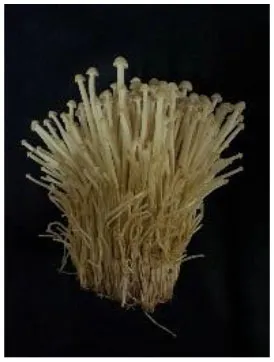 |
| B | No.61525 | Institute of Edible Fungi, Shanghai Academy of Agricultural Sciences | 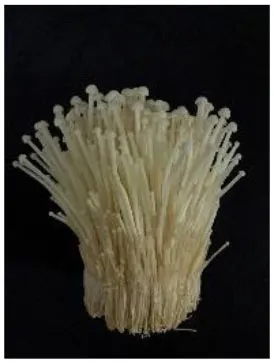 |
| C | No.61486 | Institute of Edible Fungi, Shanghai Academy of Agricultural Sciences | 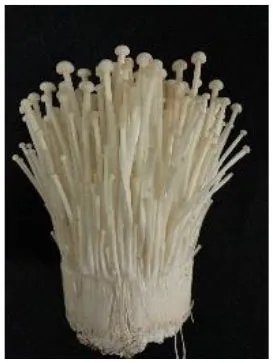 |
| D | No.61529 | Institute of Edible Fungi, Shanghai Academy of Agricultural Sciences | 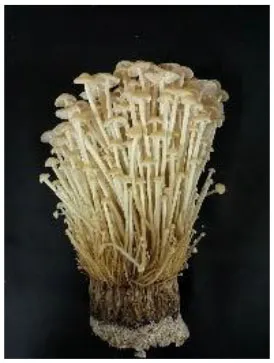 |
| E | No.61530 | Institute of Edible Fungi, Shanghai Academy of Agricultural Sciences | 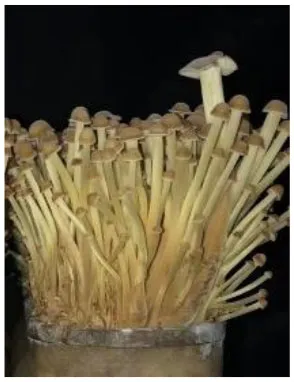 |
| F | No.61490 | Institute of Edible Fungi, Shanghai Academy of Agricultural Sciences | 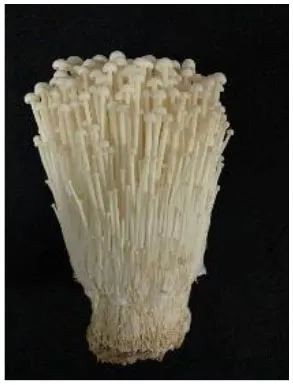 |
| G | CK | Institute of Edible Fungi, Shanghai Academy of Agricultural Sciences | 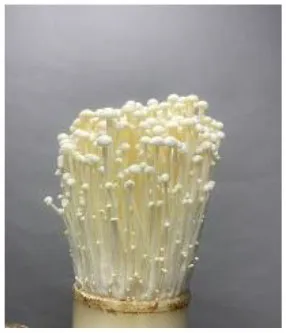 |
Flammulina Velutipes strains, origin, and fruit body morphology.
Sensory Assessment of Seven Kinds of F. velutipes
Selection of Sensory Panel
We called to the 100 consumers who enjoy F. velutipes by means of online recruitment. Using questionnaire and test method for screening of olfactory relatively sensitive 50. The test sheets were listed in Table 2.
Table 2
| Code | Dirty | Bacterial-aroma | Liquor | Creamy | Apple | Mold | Banana | Green, grass | Fresh | Mushroom | Iris | Brake | Vegetable | Milk | Wine |
|---|---|---|---|---|---|---|---|---|---|---|---|---|---|---|---|
| 612 | |||||||||||||||
| 346 | |||||||||||||||
| 128 | |||||||||||||||
| 573 | |||||||||||||||
| 209 | |||||||||||||||
| 430 | |||||||||||||||
| 794 |
Sample table in the test sheet for the odor sensitive test.
Collection of Descriptive Words
Free choice profiling (FCP) was used to evaluate sensory characteristics of the raw F. velutipes samples of seven cultivars. As many sensory descriptive words as possible were recorded in person by the panel for subsequent discussion. A total of fifty consumers were selected to describe the F. velutipes existing in the market, 15 aroma descriptions were collected: dirty, bacterial aroma, liquor, creamy, apple, mold, banana, green grass, fresh, mushroom, iris, brake, vegetable, milk, and wine.
Determination of Descriptive Words
Total 10 professional sensory evaluators, including 5 men and 5 women from Shanghai Institute of Technology, Shanghai, China, were selected from 30 persons (aged from 22 to 32 years) in terms of (ISO 8586-1, 2012) for selection, training, and monitoring. Out of the 15 descriptors selected in the previous part, ten professional evaluators screened, evaluated, and summarized. The following six descriptors were selected as descriptive indicators of sensory evaluation, such as fruity, alcoholic, milky, floral, sulfurous, and musty.
Panelists Training
The sensory evaluation experiment was carried out in accordance with ISO 8586. All work with human subjects performed here was reviewed and approved by the Shanghai Institute of Technology Institutional Review Board(RIB). The panelists requested 8 h of training, composed of four 2-h sessions conducted over 2 weeks.
Training Session I
The purpose of this phase is to find representative compounds of the characteristic aromas. Representative aroma compounds were determined by references: fruity: ethyl 2-methylbutyrate (>99%); alcoholic: isoamyl alcohol (>99%); milky: acetoin(>99%); floral: phenylacetaldehyde(>99%); sulfurous: dimethyl disulfide(>99%); musty: geosmin (>99%). These compounds were made into solutions with dilution ratios of 1:10, 1:20; 1:40, 1:80, and 1:160, respectively.
Training Session II
Total six representative aroma compounds were diluted at a certain concentration (10 μg/kg~100 mg/kg), each sample was sniffed by 10 sensory evaluators and scored from 0 to 5 (0: no smell, 1: very weak, 2: weak, 3: medium, 4: strong, and 5: very strong).
Sensory Assessment
Each sample (10.0 g) was placed in a 30 mL sensory plastic cup with a lid in individual sensory booths under dim light to mask the color difference between samples, noted with a random number. Then the panelists were asked to give aroma intensity scores of each sensory attribute at room temperature (21°C). Each panelist was asked to have a rest for sensory recovery between each set of seven different samples. The process was repeated in triplicate.
Isolation Method
The extraction fiber was aged at 250°C for 0.5 h. Total seven kinds of F. velutipes were frozen into powder by liquid nitrogen, then pulverize powder with a crusher into powder [200 mesh, CS-700 crusher (600Y, Yongkang baoou Hardware Products Co., Ltd, Zhejiang, China)]. Then 5 g powdered sample was added to the 20 ml headspace bottle, adsorbed in a water bath at 60°C for 40 min, and then analyzed by GC-MS.
GC-MS Conditions
Gas chromatography conditions: The sample entered the DB-WAX quartz capillary column (15 m × 0.53 mm, 0.5 m) as a gas. The carrier gas was He (purity ≥ 99.999%), and the programmed temperature was as follows: the inlet temperature was 230°C, the initial column temperature was 35°C, maintained for 5 min, then rose to 150°C at 3°C/min, then rose to 230° at 8°C/min, and stayed for 2 min. Carrier gas (He) flow 1 mL/min.
MS conditions: Ionization mode EI, electron energy 70 eV, transmission line temperature 250°C, ion source temperature 230°C, mass scanning range 30 ~ 550 m/z, scanning interval 1 s.
The volatiles were identified in terms of mass spectra, and odor activity value (OAV). The reference is from Technology (NIST) 11 and database: https://webbook.nist. The content of each compound is calculated by the peak area of the inner standard 2-octanol.
Statistical Analysis
Analysis of variance (ANOVA) tests were performed on sensory and chemical data through Statistics 8.1(SAS Institute Inc., Cary, USA). To understand the main differences more clearly between F. velutipes varieties, different samples were compared with partial least squares by the Unscrambler X 10.4(CAMO SOFTWARE AS, Oslo, NORWAY).
Results and Discussion
Sensory Analysis
Statistics on the sensory evaluation results, as shown in the sensory radar chart of Figure 1. Overall, fruity is the highest in all samples. The alcoholic is the highest in the No. 61,530 sample. The five F. velutipes samples are different in the score of the milky. The floral and musty are highlighted in the sample G, and the sulfurous aroma is important in the No. 61,525 sample.
Figure 1
Compounds Detected by GC-MS
As shown in Table 4, a total of 74 volatile compounds were found, including 23 alcohols, 5 aldehydes, 2 phenols, 1 acid, 16 esters, 7 ketones, 1 ether, 13 hydrocarbons, 1 sulfide, 1 acyl compound, and 4 heterocyclic compounds.
Alcoholic
Alcoholic compounds have a larger threshold and contribute less to aroma. There are three kinds of alcohol compounds with OAV >1 in all samples in this experiment, which are 2-methyl-1-butanol, 3-methyl-1-butanol, and 1-hexanol. The aroma characteristics of 2-methyl-1-butanol, are described as whisky aroma (10). The odor of 3-methyl-1-butanol is unpleasant (11). Many fruits and tea leaves contain 1-hexanol, which is often added to essential oils in the industry (12).
Aldehydes
Aldehydes are a kind of volatile compounds with a low threshold, which contribute greatly to the aroma of food. The five kinds of aldehydes were detected in this experiment, namely, benzaldehyde, benzene acetaldehyde, (E,E)-2,4-Decadienal, Phenol, and 2-nonenal. Benzaldehyde is an aromatic substance with a pleasant aroma (13). In this experiment, benzaldehyde was only detected in A and E samples, and the OAV was <1. Benzene acetaldehyde is a kind of fatty aldehyde with unstable properties, which has the fragrance of flowers like hyacinth. The OAV of benzene acetaldehyde in the A sample is 1.7591, OAV = 2.8950 in the C, and 1.0307 in the G sample. (E,E)-2,4-Decadienal has a strong greasy smell and cucumber aroma, which is usually formed during the automatic oxidation of methyl linoleate oxide (14). Its threshold is extremely low, and it has a high contribution to aroma, the OAV is as high as 146.8601 in C sample. 2-nonenal was described as having fat aroma, wax aroma, cucumber aroma, and melon aroma, which was only detected in A, and OAV was as high as 39.1353, which made an important contribution to the aroma of F. velutipes.
Phenols
Phenolic compounds generally have a smoky or woody aroma. Butylated hydroxytoluene was detected in A, D, E, and B samples, but their OAVs were low, which made little contribution to the aroma of F. velutipes. Phenol has a woody or smoky odor, but its threshold is large (14, 15). It is only detected in G samples in this experiment and its OAV is <1. The OAV in this experimental sample is low, and it does not contribute much to the overall aroma.
Acids
In this experiment, only one acid substance was detected, namely acetic acid. Acetic acid has a pungent smell, which was detected in all samples in this experiment, but OAV was <1. This may be caused by microorganisms fermenting different organic substances during the growth and breeding of F. velutipes.
Esters
Esters are a kind of important aroma compounds, which are mainly formed by the esterification of organic acids and alcohols and have a pleasant fruit aroma (16). A total of 16 ester compounds were detected in 7 different F. velutipes varieties in this experiment. Ethyl 2-methylbutyrate has a fruit aroma similar to apple, which is often used to prepare fruit aroma (17). Because of its high content and low threshold, it contributes greatly to the aroma of F. velutipes. Ethyl benzoate has a fruit fragrance, exists widely in pineapple, peach, and other fruits, and is often used as food additives (18). The compound was detected in D, E, B, C, F, and G, among which OAV in E, B, and C was >1. Ethyl 2-ethylhexanoate has the aroma of fruits and herbs, and the OAV of it in sample B is 1.9470. Ethyl 2-methylvalerate has a fresh apple-like aroma, and its threshold is only 0.000003, which is only detected in C in this experiment. Ethyl butyrate has a strong apple-and-pineapple-like aroma, but its volatility is strong and its aroma is not lasting (19). It was only detected in F, and its OAV was 8.4394. Ethyl isovalerate (20) has an apple-like fruit aroma, it has an OAV of 872.3671 in the sample F. Isoamyl acetate has a banana-like fruit aroma (13), which is only detected in sample F, and OAV is 12.9788. OAV of other detected esters in 7 F. velutipes samples did not exceed 1.
Ketones
Total seven ketones, namely, (Z)-geranylacetone, 3-octanone, 2-nonanone, geranylacetone(689-67-8), geranylacetone(3796-70-1), 2-octanone, and 2-heptanone, were detected in all the samples. Ketones are mainly produced by oxidation and degradation of unsaturated fatty acids and degradation of amino acids. The aroma characteristics of 3-octanone were described as fruit aroma (21). It was detected in A, E, C, F, and G, but the OAV was <1, respectively. Fruity, sweet, coconut, and cream smell has been found in 2-Nonanone. Besides the smell of mildew and ketone, 2-Octanone has the smell of milk, cheese, and mushrooms. It was usually added to samples as internal standard for quantitative analysis. Geranyl acetone has a fresh floral aroma with fruit aroma. 2-heptanone has the aroma of spring, fruit, and cinnamon. Yang et al. found 2-heptanone in fermented soybean whey tofu and identified it as the characteristic aroma substance of the product.
Ethers
Only one ether substance was detected in this experiment. Anisole has a pleasant smell of fennel, in this study, it was only found in sample F, and the OAV is 0.0057.
Hydrocarbons
A total of 19 hydrocarbons were detected in seven F. velutipes varieties. D-Limonene is a natural functional monoterpene, which is widely used as an additive of aromas and fragrances in food and has a lemon-like aroma. D-Limonene was detected in all samples, but OAV was > 1 only in D, B, C, and F. D-limonene is a monocyclic monoterpene, which usually exists in the form of a d-isomer and has a fresh orange-like aroma (22). Styrene is a kind of aromatic monomer with slight sweetness, but the smell at high concentration or mixed with other chemicals is unpleasant (23). In this experiment, styrene was detected in all samples except C and G, and its OAV was 1.1959 in sample D and 6.1150 in B. 2,4- decadienal is the product of linoleic acid degradation, which has a pungent aroma, oil aroma, citrus aroma, and chicken aroma. Its aroma threshold is low, which is 0.00004–0.0023 mg/m3 in air. It was detected in G and OAV was 3.3830. OAVs of other detected hydrocarbon compounds are <1, which are not described in detail.
Others
In this experiment, one sulfide, one acyl compound, and five heterocyclic compounds were detected in the seven F. velutipes. Dimethyl trisulfide has a strong cold mint-like smell and a strong spicy fragrance. Natural products exist in fresh onions and canola. Acetoin is an important food spice with pleasant creamy aroma. Pyridine has malodorous smell, which was detected in samples D, E, F, and G, but OAV was small and contributed less to the aroma of F. velutipes. The 2-methylpyrazine has the aroma of nut, mildew, and roast, and naturally exists in coffee, white bread, potato chips, almonds, peanuts, fried hazelnuts, fried barley, fried beef, dairy products, and other foods. The 2-pentylfuran has the aroma of bean, fruit, soil, and vegetables-like. The OAV in C is 1.7955 and that in G is 1.3298.
Partial Least Squares Regression of Seven F. velutipes Samples
To explore the relationship between aroma characteristics of different samples, PLSR was performed on seven F. velutipes species according to sensory evaluation scores and aroma compounds as Figure 2.
Figure 2
The results of PLSR showed that samples E, C, and F had a high correlation. This result is consistent with the score of sensory evaluation. The three kinds of F. velutipes showed strong fruit aroma, and the fruity score of sample F was as high as 4.6, C was 4.1, and 3.1 for E, respectively. This may be due to the high content of ethyl 2-methylbutyrate in all three kinds of F. velutipes. As mentioned above, ethyl 2-methyl butyrate has apple-like fruit aroma. There are other compounds that contribute greatly to the fruit aroma, such as ethyl 3-methyl butyrate in F and ethyl 2-methyl valerate in sample C. There is a high correlation between sample A and B. The sensory radar map based on the score of sensory evaluation shows that the aromas of the two kinds of F. velutipes are similar. In addition to the fruity aroma, the alcohol of the two kinds of F. velutipes also has relatively high-odor intensity; there are milk and floral aroma either. As the detection result of various compounds in the F. velutipes, 1-butanol, 3-methyl- has high OAVs in both samples, which may be the reason why they showed relatively high alcoholic aroma. Therefore, phenylacetaldehyde and styrene make an important contribution to the floral aroma of these two kinds of F. velutipes. Sample D is different from other samples mainly because of its higher strength of sulfide aroma. This is most likely because of the higher OAV of dimethyl trisulfide in D. And the sample G is mainly different from others because of its strong musty smell. This may be caused by the existence of 2-pentyl furan.
Venn Analysis
According to Figure 3A, among the three F. velutipes samples compared, there were 69 compounds in common among F, E, C, 2 compounds in common between F and E, and only 1 compound in 61,530 alone. This is consistent with the above results of the PLSR analysis. And according to Figure 3B, there were 56 compounds in common among A and D, 14 compounds in D alone. In combination with the above analysis, the Venn diagram analysis results showed that the sensory evaluation scores of seven different F. velutipes were significantly consistent with the volatile compounds composition.
Figure 3
Lexicon for Practical Application
Determined by GC-MS analysis, sensory evaluation, and PLSR analysis, the final lexicon is shown in Table 3.
Table 3
| Aroma Description | Volatile Compounds (CAS, Threshold value) | Number of Product | |
|---|---|---|---|
| Aroma | Specific | ||
| classification | description | ||
| Fruity | Apple-like | Butanoic acid, 2-methyl-, ethyl ester (007452-79-1, 0.000013) | |
| Butanoic acid, 3-methyl-, ethyl ester (000108-64-5, 0.00001) | |||
| Pentanoic acid, 2-methyl-, ethyl ester (039255-32-8, 0.000003) | No.61523, No.61530, No.61525, No.61486, NO.61490 | ||
| Banana-like | 1-Butanol, 3-methyl- (000123-51-3, 0.004) | ||
| 1-Butanol, 3-methyl-, acetate (000123-92-2, 0.00015) | No.61523, No.61529, No.61530, No.61525, No.61486 | ||
| NO.61490, CK | |||
| Cucumber-like | 2,4-Decadienal, (E,E)- (025152-84-5, 0.000027) | ||
| 2-Nonenal (002463-53-8, 0.00001) | No.61486, No.61523 | ||
| Citrus-like | D-Limonene (005989-27-5, 0.034) | ||
| 2,4-Decadienal (002363-88-4, 0.0003) | No.61529, No.61525, No.61486, NO.61490, CK | ||
| Berry-like | Ethyl tiglate (005837-78-5, 0.064) | No.61486 | |
| Alcoholic | Whisky-like | 1-Butanol, 2-methyl- (000137-32-6, 0.0159) | |
| 1-Butanol, 3-methyl- (000123-51-3, 0.004) | No.61523, No.61525, No.61529, No.61530 | ||
| No.61486, NO.61490, CK | |||
| Fermented fruit-like | 1-Hexanol (000111-27-3, 0.0056) | No.61486 | |
| Milky | Creamy-like | Acetoin (000513-86-0, 0.014) | No.61523, No.61525, NO.61490 |
| Floral | Hyacinth-like | Phenylacetaldehyde (000122-78-1, 0.0063) | No.61523, No.61486, CK |
| Phoenix-like | Styrene (000100-42-5, 0.065) | No.61529, No.61525 | |
| Iris-like | Hexanoic acid, 2-ethyl-, ethyl ester (002983-37-1, 0.05) | No.61525 | |
| Mint-like | Benzoic acid, ethyl ester (000093-89-0, 0.053) | No.61530, No.61525, No.61486 | |
| Sulfurous | Onion-like | Dimethyl trisulfide (003658-80-8, 0.0001) | No.61529 |
| Musty | Mud-like | Furan, 2-pentyl- (003777-69-3, 0.0058) | No.61486, CK |
Lexicon for aroma description of F. velutipes studied in this research.
Table 4
| NO | CAS | Compounds name | Threshold values (mg/kg) | Concentration (mg/kg)/OAV | ||||||
|---|---|---|---|---|---|---|---|---|---|---|
| A | D | E | B | C | F | G | ||||
| Alcohol | ||||||||||
| 1 | 000064-17-5 | Ethanol | 950 | 1.045 ± 0.012a/0.0011 | 1.900 ± 0.024a/0.0020 | 1.045 ± 0.013a/0.0011 | 2.660 ± 0.021a/0.0028 | 1.615 ± 0.018a/0.0017 | 1.710 ± 0.014a/0.0018 | 0.760 ± 0.009a/0.0008 |
| 2 | 000078-83-1 | 1-Propanol, 2-methyl- | 6.5052 | 0.022 ± 0.002/0.0034 | — | — | — | — | — | — |
| 3 | 000137-32-6 | 1-Butanol, 2-methyl- | 0.0159 | 0.019 ± 0.004ab/1.2256 | 0.012 ± 0.005ab/0.7244 | 0.008 ± 0.002ab/0.5309 | 0.036 ± 0.008a/2.2865 | — | — | 0.003 ± 0.001b/0.2171 |
| 4 | 000123-51-3 | 1-Butanol, 3-methyl- | 0.004 | 0.047 ± 0.009ab/11.8214 | 0.038 ± 0.006ab/9.4962 | 0.017 ± 0.004ab/4.2196 | 0.099 ± 0.009ab/24.7880 | 0.086 ± 0.005ab/21.3854 | 0.120 ± 0.001a/30.0351 | 0.011 ± 0.002b/2.8236 |
| 5 | 000097-95-0 | 1-Butanol, 2-ethyl- | 0.0752 | 0.002 ± 0.001/0.0275 | — | — | — | — | — | — |
| 6 | 000111-27-3 | 1-Hexanol | 0.0056 | 0.003 ± 0.001a/0.4559 | 0.004 ± 0.001a/0.6946 | 0.002 ± 0.001a/0.4311 | — | 0.010 ± 0.004a/1.8433 | — | 0.005 ± 0.002a/0.8749 |
| 7 | 000589-98-0 | 3-Octanol | 0.078 | 0.001 ± 0.001a/0.0164 | — | 0.001 ± 0.001a/0.0100 | — | — | 0.001 ± 0.001a/0.0125 | 0.0003 ± 0.0002a/0.0040 |
| 8 | 000104-76-7 | 1-Hexanol, 2-ethyl- | 0.3 | 0.0004 ± 0.0001a/0.0012 | — | 0.0002 ± 0.0001a/0.0007 | 0.004 ± 0.002b/0.0118 | — | 0.0005 ± 0.0002a/0.0016 | — |
| 9 | 000628-99-9 | 2-Nonanol | 0.058 | 0.001 ± 0.001/0.0192 | — | — | — | — | — | — |
| 10 | 000513-85-9 | 2,3-Butanediol | 100 | 0.0000 | — | — | — | — | 0.0000 | 0.0000 |
| 11 | 000060-12-8 | Phenylethyl Alcohol | 0.56423 | 0.003 ± 0.002a/0.0058 | — | — | 0.011 ± 0.001a/0.0196 | 0.003 ± 0.001a/0.0061 | 0.021 ± 0.007a/0.0368 | 0.003 ± 0.002a/0.0045 |
| 12 | 000123-96-6 | 2-Octanol | 0.0078 | — | 0.0002 ± 0.0001a/0.0272 | 0.0002 ± 0.0002a/0.0272 | 0.0002 ± 0.0003a/0.0272 | 0.0002 ± 0.0001a/0.0272 | 0.0002 ± 0.0002a/0.0272 | — |
| 13 | 000111-87-5 | 1-Octanol | 0.1258 | — | 0.002 ± 0.001/0.0129 | — | — | — | — | — |
| 14 | 000143-08-8 | 1-Nonanol | 0.0455 | — | — | — | 0.013 ± 0.005/0.2818 | — | — | — |
| 15 | 000100-51-6 | Benzyl alcohol | 2.54621 | — | — | — | 0.003 ± 0.001/0.0010 | — | — | — |
| 16 | 000071-23-8 | 1-Propanol | 8.5056 | — | — | — | — | 0.016 ± 0.005/0.0019 | — | — |
| 17 | 006032-29-7 | 2-Pentanol | 8.1 | — | — | — | — | — | 0.0008 ± 0.0003/0.0001 | — |
| 18 | 000626-89-1 | 1-Pentanol, 4-methyl- | 0.82 | — | — | — | — | — | 0.0003 ± 0.0001/0.0004 | — |
| 19 | 000108-93-0 | Cyclohexanol | 0.09 | — | — | — | — | — | 0.0002 ± 0.0001a/0.0022 | 0.0001 ± 0.0001a/0.0008 |
| 20 | 007786-67-6 | Cyclohexanol, 5-methyl-2-(1-methylethenyl)- | — | — | — | — | — | — | — | — |
| 21 | 000505-10-2 | 1-Propanol, 3-(methylthio)- | 0.12323 | — | — | — | — | — | 0.002 ± 0.001/0.0175 | — |
| 22 | 005978-70-1 | 2-Octanol, (R)- | — | — | — | — | — | — | — | —/0.0052 |
| 23 | 001653-30-1 | 2-Undecanol | 0.0086 | — | — | — | — | — | — | 0.0002 ± 0.0001/0.0175 |
| Aldehydes | ||||||||||
| 24 | 000100-52-7 | Benzaldehyde | 0.75089 | 0.003 ± 0.002a/0.0034 | — | 0.002 ± 0.001a/0.0029 | — | — | — | — |
| 25 | 000122-78-1 | Benzeneacetaldehyde | 0.0063 | 0.011 ± 0.004a/1.7591 | — | — | — | 0.018 ± 0.003a/2.8950 | — | 0.007 ± 0.001a/1.0307 |
| 26 | 025152-84-5 | (E,E)-2,4-Decadienal | 0.000077 | — | — | — | — | 0.011 ± 0.003/146.8601 | — | — |
| 27 | 002463-53-8 | 2-Nonenal | 0.0001 | 0.004 ± 0.001/39.1353 | — | — | — | — | — | — |
| Phenols | ||||||||||
| 28 | 000128-37-0 | Butylated Hydroxytoluene | 1 | 0.0005 ± 0.0001a/0.0005 | 0.006 ± 0.001b/0.0064 | 0.0006 ± 0.0003a/0.0006 | 0.004 ± 0.002ab/0.0040 | — | — | — |
| 29 | 000108-95-2 | Phenol | 58.58525 | 0.012 ± 0.004a/0.0002 | — | — | — | — | 0.023 ± 0.003a/0.0004 | 0.0000 |
| Acid | ||||||||||
| 30 | 000064-19-7 | Acetic acid | 99 | 0.030 ± 0.007a/0.0003 | 0.040 ± 0.002a/0.0004 | 0.010 ± 0.005a/0.0001 | 0.059 ± 0.009a/0.0006 | 0.010 ± 0.003a/0.0001 | 0.040 ± 0.009a/0.0004 | 0.010 ± 0.003a/0.0001 |
| Esters | ||||||||||
| 31 | 007452-79-1 | Ethyl 2-methylbutyrate | 0.000063 | 0.008 ± 0.002a/126.6283 | — | 0.005 ± 0.001a/84.3746 | 0.103 ± 0.011b/1637.6997 | 0.179 ± 0.015b/2835.7906 | 0.011 ± 0.004a/178.1151 | — |
| 32 | 000124-06-1 | Tetradecanoic acid, ethyl ester | 4 | 0.008 ± 0.004a/0.0021 | — | — | — | 0.004 ± 0.001a/0.0009 | 0.010 ± 0.005a/0.0025 | 0.002 ± 0.001a/0.0005 |
| 33 | 000071-36-3 | 1-Butanol | 0.4592 | 0.012 ± 0.009/0.0253 | — | — | — | — | — | — |
| 34 | 000112-39-0 | Hexadecanoic acid, methyl ester | 2 | 0.012 ± 0.005a/0.0058 | 0.013 ± 0.008a/0.0066 | 0.008 ± 0.002a/0.0039 | 0.020 ± 0.007a/0.0097 | — | — | — |
| 35 | 000628-97-7 | Hexadecanoic acid, ethyl ester | 2 | 0.049 ± 0.011a/0.0244 | 0.055 ± 0.013a/0.0276 | 0.030 ± 0.004a/0.0151 | 0.041 ± 0.007a/0.0207 | 0.041 ± 0.004a/0.0207 | 0.038 ± 0.005a/0.0191 | 0.015 ± 0.001a/0.0073 |
| 36 | 000093-89-0 | Benzoic acid, ethyl ester | 0.056 | — | 0.040 ± 0.005a/0.7060 | 0.064 ± 0.014ab/1.1489 | 0.464 ± 0.018b/8.2759 | 0.056 ± 0.011ab/1.0061 | 0.018 ± 0.001a/0.3186 | 0.011 ± 0.003a/0.2018 |
| 37 | 000103-36-6 | 2-Propenoic acid, 3-phenyl-, ethyl ester | 0.017 | — | 0.002 ± 0.001/0.1108 | — | — | — | — | — |
| 38 | 002983-37-1 | Ethyl-2-ethylhexanoate | 0.05 | — | 0.002 ± 0.001a/0.0447 | 0.097 ± 0.011b/1.9470 | 0.014 ± 0.004ab/0.2815 | — | — | — |
| 39 | 000111-61-5 | Octadecanoic acid, ethyl ester | — | — | — | — | — | — | — | — |
| 40 | 004192-77-2 | 2-Propenoic acid, 3-phenyl-, ethyl ester, (E)- | 0.165 | — | — | 0.003 ± 0.001a/0.0170 | 0.006 ± 0.003a/0.0338 | — | 0.002 ± 0.001a/0.0125 | — |
| 41 | 039255-32-8 | Ethyl 2-methylvalerate | 0.000003 | — | — | — | — | 0.002 ± 0.001/700.8519 | — | — |
| 42 | 000105-54-4 | Ethyl butyrate | 0.0009 | — | — | — | — | — | 0.008 ± 0.004/8.4394 | — |
| 43 | 000108-64-5 | Ethyl isovalerate | 0.00001 | — | — | — | — | — | 0.009 ± 0.003/872.3671 | — |
| 44 | 000123-92-2 | Isoamyl acetate | 0.00015 | — | — | — | — | — | 0.002 ± 0.001/12.9786 | — |
| 45 | 000123-66-0 | Hexanoic acid, ethyl ester | 0.005 | — | — | — | — | — | 0.003 ± 0.001a/0.5044 | 0.001 ± 0.001a/0.1163 |
| 46 | 000106-32-1 | Octanoic acid, ethyl ester | 0.0193 | — | — | — | — | — | 0.005 ± 0.002a/0.2273 | 0.002 ± 0.001a/0.0771 |
| Ketone | ||||||||||
| 47 | 003879-26-3 | (Z)-Geranylacetone | — | — | — | — | — | — | — | — |
| 48 | 000106-68-3 | 3-Octanone | 0.0214 | 0.005 ± 0.001a/0.2340 | — | 0.002 ± 0.001a/0.0812 | — | 0.004 ± 0.002a/0.1665 | 0.002 ± 0.001a/0.0996 | 0.006 ± 0.003a/0.2676 |
| 49 | 000821-55-6 | 2-Nonanone | 0.041 | — | — | 0.001 ± 0.001a/0.0198 | 0.005 ± 0.002a/0.1317 | — | 0.001 ± 0.001a/0.0148 | — |
| 50 | 000689-67-8 | Geranylacetone | — | — | — | — | 0.0000 | — | — | — |
| 51 | 000111-13-7 | 2-Octanone | 0.0502 | — | — | — | — | 0.008 ± 0.003a/0.1622 | 0.002 ± 0.001a/0.0322 | 0.008 ± 0.004a/0.1569 |
| 52 | 003796-70-1 | Geranylacetone | 0.681 | — | — | — | — | 0.074 ± 0.013a/0.1090 | 0.092 ± 0.015a/0.1352 | — |
| 53 | 000110-43-0 | 2-Heptanone | 0.14 | — | — | — | — | — | 0.003 ± 0.001/0.0209 | — |
| Ethers | ||||||||||
| 54 | 000100-66-3 | Anisole | 0.21 | — | — | — | — | — | 0.001 ± 0.001/0.0057 | — |
| Hydrocarbon | ||||||||||
| 55 | 005989-27-5 | D-Limonene | 0.034 | 0.005 ± 0.002a/0.1551 | 0.042 ± 0.013ab/1.2319 | 0.015 ± 0.003ab/0.4497 | 0.072 ± 0.009b/2.1054 | 0.147 ± 0.015b/4.3074 | 0.043 ± 0.005ab/1.2662 | 0.028 ± 0.002ab/0.8244 |
| 56 | 000100-42-5 | Styrene | 0.065 | 0.025 ± 0.009ac/0.3818 | 0.0780.014bc/1.1959 | 0.021 ± 0.007ac/0.3270 | 0.398 ± 0.018b/6.1150 | — | 0.005 ± 0.002a/0.0753 | — |
| 57 | 000099-86-5 | 1,3-Cyclohexadiene, 1-methyl-4-(1-methylethyl)- | 0.08 | — | 0.003 ± 0.001a/0.0348 | — | — | 0.006 ± 0.003a/0.0798 | — | — |
| 58 | 000095-47-6 | o-Xylene | 0.45023 | — | 0.001 ± 0.001/0.0026 | — | — | — | — | — |
| 59 | 000087-44-5 | Caryophyllene | 0.064 | — | 0.017 ± 0.006a/0.2633 | — | — | — | — | — |
| 60 | 000091-20-3 | Naphthalene | 0.006 | — | 0.003 ± 0.001a/0.5346 | — | — | — | 0.003 ± 0.002a/0.5617 | — |
| 61 | 000099-87-6 | p-Cymene | 0.00501 | — | — | 0.001 ± 0.001/0.1483 | — | — | — | — |
| 62 | 000108-38-3 | Benzene, 1,3-dimethyl- | 1 | — | — | — | — | 0.002 ± 0.001b/0.0020 | 0.001 ± 0.001ab/0.0013 | 0.0002 ± 0.0001a/0.0002 |
| 63 | 000555-10-2 | .beta.-Phellandrene | 0.036 | — | — | — | — | 0.0003 ± 0.0001/0.0076 | — | — |
| 64 | 000099-85-4 | .gamma.-Terpinene | 1 | — | — | — | — | 0.003 ± 0.001/0.0025 | — | — |
| 65 | 007785-70-8 | (1R)-2,6,6-Trimethylbicyclo[3.1.1]hept-2-ene | 0.0022 | — | — | — | — | — | 0.001 ± 0.001/0.4458 | — |
| 66 | 013466-78-9 | 3-Carene | 0.14 | — | — | — | — | — | — | 0.0002 ± 0.0001/0.0014 |
| 67 | 002363-88-4 | 2,4-Decadienal | 0.0003 | — | — | — | — | — | — | 0.001 ± 0.001/3.3830 |
| Sulfide | ||||||||||
| 68 | 003658-80-8 | Dimethyl trisulfide | 0.0001 | — | 0.001 ± 0.001/10.1895 | — | — | — | — | — |
| Acyl | ||||||||||
| 69 | 000513-86-0 | Acetoin | 0.014 | 0.017 ± 0.004b/1.2419 | — | 0.001 ± 0.001a/0.0919 | 0.028 ± 0.009b/1.9762 | — | 0.017 ± 0.005b/1.2246 | 0.003 ± 0.002ab/0.2027 |
| Heterocyclic | ||||||||||
| 70 | 000110-86-1 | Pyridine | 2 | — | 0.003 ± 0.001a/0.0016 | 0.002 ± 0.002a/0.0011 | — | — | 0.003 ± 0.002a/0.0014 | 0.001 ± 0.001a/0.0005 |
| 71 | 000109-08-0 | Pyrazine, methyl- | 30 | — | — | — | 0.0000 | 0.003 ± 0.001a/0.0001 | 0.006 ± 0.001a/0.0002 | — |
| 72 | 003777-69-3 | Furan, 2-pentyl- | 0.0058 | — | — | — | — | 0.010 ± 0.003a/1.7955 | 0.004 ± 0.002a/0.6026 | 0.008 ± 0.003a/1.3298 |
| 73 | 070786-44-6 | 3,6-Dimethyl-2,3,3a,4,5,7a-hexahydrobenzofuran | 0.02 | — | — | — | — | 0.001 ± 0.001a/0.0663 | — | 0.002 ± 0.001a/0.0877 |
OAVs of key aroma-active compounds in seven kinds of F. velutipes.
Values bearing different lowercase letters (a, b, c, and d) were significantly different (p ≤ 0.05).
Fruit aroma is an important aroma attribute in this experiment, and all samples have fruity aroma in varying degrees. According to the aroma description of different compounds and the intuitive perception of the sensory evaluation panelist, the fruit aroma is divided into apple-like, banana-like, cucumber-like, citrus-like, and berry-like aroma. According to the related compounds and F. velutipes listed in the lexicon, F. velutipes with a fruity aroma can be used as raw materials in the processing and production of fruit juice beverages and fruity dairy products (24). The alcoholic aroma is mainly contributed by alcohols and divided into whisky aroma and fermented fruit aroma in the lexicon. F. velutipes with a mellow aroma may be applied to the production of fruit wine, liquor, and beer through further fermentation. According to aroma characteristics, such as milk, cheese, cream, and F. velutipes with milky aroma, can be used in the production of new aroma dairy products.
Conclusion
To describe the positive and negative aroma attributes of F. velutipes, six descriptive terms and their specific characteristics were developed into aroma lexicon. This lexicon is used to describe the aroma characteristics obtained from different varieties of F. velutipes. By associating the lexicon with consumer sensory evaluation, these attributes can be associated with specific products. For example, F. velutipes with “fruity” aroma can be used in the development of juice products, while alcohol-aromatic varieties can be used in the production of wine products, and creamy varieties can be used in the application of dairy products. In the future, the lexicon could be used in conjunction with consumer acceptance tests of related products to better differentiate consumer definitions of positive and negative aromas in F. velutipes. aroma.
Funding
Funded by Shanghai Agriculture Applied Technology Development Program, China (Grant No.G20200103 - “Enhancement of elite germplasm and promotion of new varieties in industrial edible fungi”). The authors also acknowledge the financial support and fellowship granted by the School of Perfume and Aroma Technology, Shanghai Institute of Technology.
Publisher's Note
All claims expressed in this article are solely those of the authors and do not necessarily represent those of their affiliated organizations, or those of the publisher, the editors and the reviewers. Any product that may be evaluated in this article, or claim that may be made by its manufacturer, is not guaranteed or endorsed by the publisher.
Statements
Data availability statement
The original contributions presented in the study are included in the article/supplementary material, further inquiries can be directed to the corresponding author/s.
Author contributions
RW wrote the original draft. YZ wrote the original draft and made the formal analysis. HL validated the data. JL investigated the study. CS performed data curation. ZX and HY contributed to resources. XS contributed to supervision. TF wrote, reviewed, and edited the manuscript. All authors contributed to the article and approved the submitted version.
Conflict of interest
The authors declare that the research was conducted in the absence of any commercial or financial relationships that could be construed as a potential conflict of interest.
References
1.
WangXXuMChengJZhangWLiuXZhouP. Effect of Flammulina velutipes on the physicochemical and sensory characteristics of Cantonese sausages. Meat Sci. (2019) 154:22–8. 10.1016/j.meatsci.2019.04.003
2.
LiuYZhangBIbrahimSAGaoSSYangHHuangW. Purification, characterization and antioxidant activity of polysaccharides from Flammulina velutipes residue. Carbohydr Polym. (2016) 145:71–7. 10.1016/j.carbpol.2016.03.020
3.
XuWHuangZJiXLumbJ.-P. Catalytic aerobic cross-dehydrogenative coupling of phenols and catechols. ACS Catal. (2019) 9:3800–10. 10.1021/acscatal.8b04443
4.
HeKZhangXLiYLiBLiuS. Water-insoluble dietary-fibers from Flammulina velutiper used as edible stabilizers for oil-in-water Pickering emulsions. Food Hydrocol. (2020) 101:105519. 10.1016/j.foodhyd.2019.105519
5.
YehMYKoWCLinLY. Hypolipidemic and antioxidant activity of enoki mushrooms (Flammulina velutipes). Biomed Res Int. (2014) 2014:352385. 10.1155/2014/352385
6.
DongZXiaoYWuH. Selenium accumulation, speciation, and its effect on nutritive value of Flammulina velutipes (Golden needle mushroom). Food Chem. (2021) 350:128667. 10.1016/j.foodchem.2020.128667
7.
DrakeMACivilleGV. Flavor lexicons. Inst Food Technol. (2002) 2:33–40. 10.1111/j.1541-4337.2003.tb00013.x
8.
MaughanCTansawatRCornforthDWardRMartiniS. Development of a beef flavor lexicon and its application to compare the flavor profile and consumer acceptance of rib steaks from grass- or grain-fed cattle. Meat Sci. (2012) 90:116–21. 10.1016/j.meatsci.2011.06.006
9.
KoppelKChambers EIv. Development and application of a lexicon to describe the flavor of pomegranate juice. J Sensory Stud. (2010) 25:819–37. 10.1111/j.1745-459X.2010.00307.x
10.
YanDShiJRenXTaoYMaFLiRet al. Insights into the aroma profiles and characteristic aroma of 'Honeycrisp' apple (Malus x domestica). Food Chem. (2020) 327:127074. 10.1016/j.foodchem.2020.127074
11.
WangJYuanCGaoXKangYHuangMWuJet al. Characterization of key aroma compounds in Huangjiu from northern China by sensory-directed flavor analysis. Food Res Int. (2020) 134:109238. 10.1016/j.foodres.2020.109238
12.
ZhangCHuaYLiXKongXChenY. Key volatile off-flavor compounds in peas (Pisum sativum L.) and their relations with the endogenous precursors and enzymes using soybean (Glycine max) as a reference. Food Chem. (2020) 333:127469. 10.1016/j.foodchem.2020.127469
13.
ChenSWangCQianMLiZXuY. Characterization of the key aroma compounds in aged chinese rice wine by comparative aroma extract dilution analysis, quantitative measurements, aroma recombination, omission studies. J Agric Food Chem. (2019) 67:4876–84. 10.1021/acs.jafc.9b01420
14.
SchoenauerSSchieberleP. Characterization of the key aroma compounds in the crust of soft pretzels by application of the sensomics concept. J Agric Food Chem. (2019) 67:7110–9. 10.1021/acs.jafc.9b02601
15.
ZhaiXGranvoglM. Elucidation of the impact of different drying methods on the key odorants of toona sinensis (A. Juss.) roem. using the sensomics approach. J Agric Food Chem. (2020) 68:7697–709. 10.1021/acs.jafc.0c02144
16.
CameleyreMLytraGSchutteLVicardJCBarbeJC. Oak wood volatiles impact on red wine fruity aroma perception in various matrices. J Agric Food Chem. (2020) 68:13319–30. 10.1021/acs.jafc.0c00583
17.
FanSTangKXuYChenS. Characterization of the potent odorants in Tibetan Qingke Jiu by sensory analysis, aroma extract dilution analysis, quantitative analysis and odor activity values. Food Res Int. (2020) 137:109349. 10.1016/j.foodres.2020.109349
18.
ZhangJKilmartinPAPengYChenXQuekSY. Identification of key aroma compounds in cranberry juices as influenced by vinification. J Agric Food Chem. (2020) 68:279–91. 10.1021/acs.jafc.9b07165
19.
Mohd AliMHashimNAzizSALasekanO. Exploring the chemical composition, emerging applications, potential uses, and health benefits of durian: a review. Food Control. (2020) 113:107189. 10.1016/j.foodcont.2020.107189
20.
NiuYZhuQXiaoZ. Characterization of perceptual interactions among ester aroma compounds found in Chinese Moutai Baijiu by gas chromatography-olfactometry, odor Intensity, olfactory threshold and odor activity value. Food Res Int. (2020) 131:108986. 10.1016/j.foodres.2020.108986
21.
SchmidbergerPCSchieberleP. Changes in the key aroma compounds of raw shiitake mushrooms (Lentinula edodes) induced by pan-frying as well as by rehydration of dry mushrooms. J Agric Food Chem. (2020) 68:4493–506. 10.1021/acs.jafc.0c01101
22.
SunJSunBRenFChenHZhangNZhangY. Characterization of key odorants in hanyuan and hancheng fried pepper (Zanthoxylum bungeanum) oil. J Agric Food Chem. (2020) 68:6403–11. 10.1021/acs.jafc.0c02026
23.
RohlederARScherfKASchieberlePKoehlerP. Quantitative analyses of key odorants and their precursors reveal differences in the aroma of gluten-free rice bread and wheat bread. J Agric Food Chem. (2019) 67:11179–86. 10.1021/acs.jafc.9b04800
24.
RiglingMYadavMYagishitaMNedeleA.-K.SunJet al. Biosynthesis of pleasant aroma by enokitake (Flammulina velutipes) with a potential use in a novel tea drink. Lwt. (2021) 140:110649. 10.1016/j.lwt.2020.110646
Summary
Keywords
Flammulina velutipes (F. velutipes), gas chromatography-mass spectrometry (GC-MS), sensory, lexicon, aroma
Citation
Wang R, Zhang Y, Lu H, Liu J, Song C, Xu Z, Yang H, Shang X and Feng T (2022) Comparative Aroma Profile Analysis and Development of a Sensory Aroma Lexicon of Seven Different Varieties of Flammulina velutipes. Front. Nutr. 9:827825. doi: 10.3389/fnut.2022.827825
Received
02 December 2021
Accepted
04 March 2022
Published
28 April 2022
Volume
9 - 2022
Edited by
Edy Sousa de Brito, Embrapa Agroindústria Tropical, Brazil
Reviewed by
Yufei Hua, Jiangnan University, China; Yan Ping Chen, Shanghai Jiao Tong University, China
Updates
Copyright
© 2022 Wang, Zhang, Lu, Liu, Song, Xu, Yang, Shang and Feng.
This is an open-access article distributed under the terms of the Creative Commons Attribution License (CC BY). The use, distribution or reproduction in other forums is permitted, provided the original author(s) and the copyright owner(s) are credited and that the original publication in this journal is cited, in accordance with accepted academic practice. No use, distribution or reproduction is permitted which does not comply with these terms.
*Correspondence: Xiaodong Shang shangxiaodong@saas.sh.cn
†These authors have contributed equally to this work
This article was submitted to Food Chemistry, a section of the journal Frontiers in Nutrition
Disclaimer
All claims expressed in this article are solely those of the authors and do not necessarily represent those of their affiliated organizations, or those of the publisher, the editors and the reviewers. Any product that may be evaluated in this article or claim that may be made by its manufacturer is not guaranteed or endorsed by the publisher.