 Barbara Burlingame
 Ana Moltedo
 Carlo Cafiero
- 1Riddet Institute, Massey University, Palmerston North, New Zealand
- 2Food and Agriculture Organization of the United Nations, Rome, Italy
Organizations and initiatives concerned with food security and nutrition have long positioned protein, together with dietary energy, as the keystone for life itself. Indeed, the word protein, derived from the Greek proteios, means ‘of primary importance’. There is a long history of attention to, and controversies over, proteins in UN processes, beginning in the 1930s and continuing to this day. The importance of protein for agriculture, health, food security and nutrition is reflected in the data collected and presented in the statistical databases of the Food and Agriculture Organization (FAOSTAT), available per commodity, per country and over an extensive time series. Protein features directly and indirectly in all 17 Sustainable Development Goals (SDG), which constitute the United Nations 2030 Agenda. Most directly involved is SDG 2. The short title for SDG 2 is ‘zero hunger’. The long title offers more detail: end hunger, achieve food security and improved nutrition and promote sustainable agriculture.
Introduction
Historical overview of protein and the UN
International cooperation and collaboration in nutrition began in earnest in 1936 when the League of Nations set up a technical committee to establish recommended levels of protein intake (1). In 1945, with the creation of the United Nations (UN) and soon thereafter its specialized technical agencies, attention to protein continued. Several of the UN’s specialized agencies concerned themselves with dietary protein, but the two with the longest history of dealing specifically with proteins are the Food and Agriculture Organization of the United Nations (FAO) (2), and the World Health Organization (WHO) (3). Of major concern was the ‘protein gap’ related to both production and consumption (4). In one way or another, the theoretical protein gap and its remedies feature directly and peripherally in goals, targets, policies, research, interventions, and more, to this very day.
In 1948–1950, FAO established and convened meetings of the Standing Advisory Committee (5) to address the most pressing nutrition problems, with protein and dietary energy at the top of the list. From the late 1940s, there was a series of meetings and several technical reports on protein (2, 3), as it was commonly agreed that a major nutrition problem was a lack of sufficient protein in the diets of young children, known as kwashiorkor from the Ga language of Ghana (6). The First Joint FAO/WHO Expert Committee on Nutrition noted that “one of the most widespread nutritional disorders in tropical and sub-tropical areas is the syndrome at present ill-defined and known by various names such as kwashiorkor” (7).
In 1971, the UN itself in the body of the General Assembly (UNGA) devoted a full segment of its meeting to protein resources (8, 9). The membership put forward a set of 16 resolutions as “Essential elements of the Strategy Statement on Action to Avert the Protein Crisis in the Developing Countries.”
Viewed from a 21st century vantage point, some of these protein-related resolutions succeeded, while others remain intransigent 50+ years later and feature in the goals and targets of the 2030 Agenda. Table 1 shows a subset of the resolutions mapped to comparable SDGs, along with comments on the success, failures, and consequences over the timeframe. Among the resolutions identified as successful are some that ironically also contribute to our sustainability crises, with specific examples. On several occasions since then, the UNGA has returned its focus to protein, mainly in the context of livestock, climate change and consumption of animal source proteins (10).
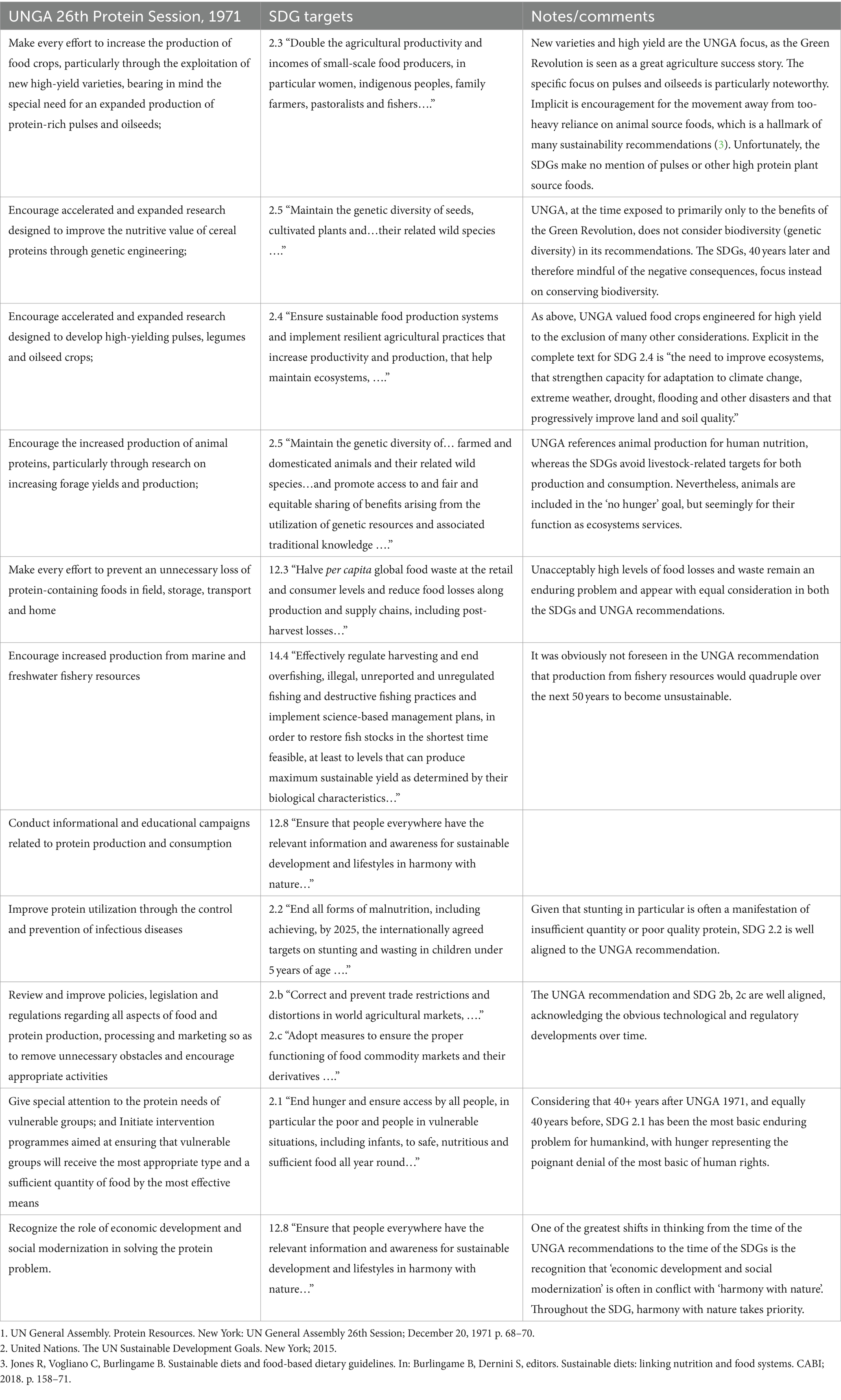
Table 1. Comparing the 1971 United Nations General Assembly (UNGA) 26th session recommendations on protein resources (1) with relevant/comparable Sustainable Development Goal (SDG) targets (2).
In the 1972 meeting of the UN Protein Advisory Group (9), Hugues Gounelle de Pontanel states the conclusion that, “Every doctor, nutritionist or political leader concerned with the problem of world hunger has now concluded that the major problem is one of protein malnutrition.”
But not everyone agreed, and one of the most spectacular controversies in nutrition – the Great Protein Fiasco—became public soon thereafter (11) (see below). Nevertheless, from the 1970s to the present, FAO and WHO, and occasionally with the International Atomic Energy Agency and United Nations University, conducted many more meetings and expert consultations leading to protein-related reports, policies and recommendations, and necessary reviews and revisions as nutrition science and data availability increased and improved over time. Topics included protein requirements, production issues, measurement/methods, composition/quality, and consumption. Table 2 provides a list.
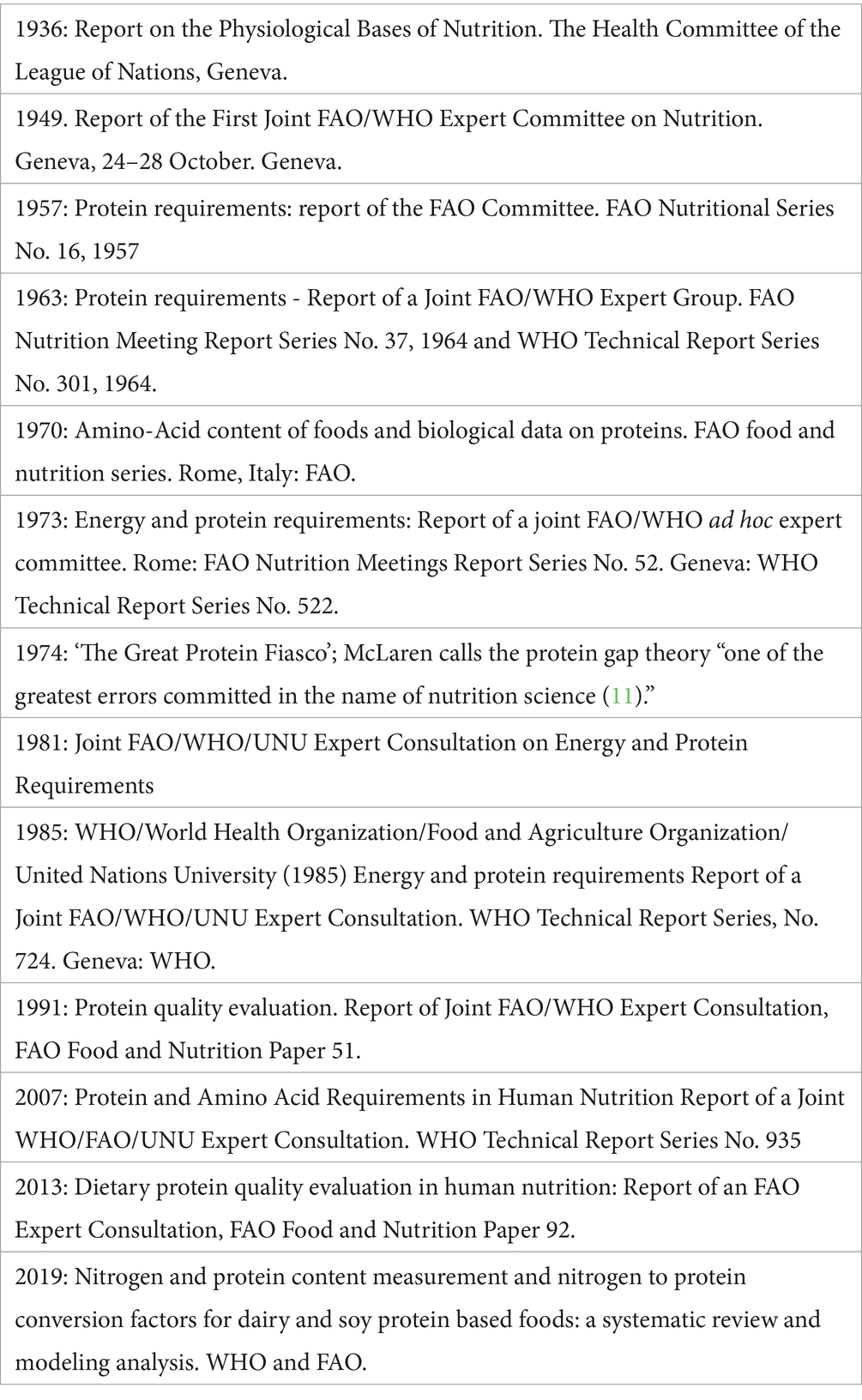
Table 2. Examples of protein reports from United Nations (UN) agencies, 1936 to the present.
Assessment and implications
The great protein fiasco
The UN reports and their recommendations were not without controversy (11). World protein supply has long been estimated using production data from FAO and national statistical agencies, consumption data made mainly with proxy measures from FAO food balances (i.e., protein available for human consumption) and disappearance data, which is then analyzed against requirements (without considering inequalities in accessing protein in the population). As such, there seemed to be a shortfall which was called the “protein gap.” Consideration was also given to protein quality measurements and calculations, further defining the gap, as vegetable and other non-animal-source proteins were of poorer quality than animal source proteins. It was concluded by scientists and policy-makers alike that the protein gap would only widen unless alternative or unconventional sources of high-quality protein could be found. Leaf protein concentrate, insects and single cell organisms (12) were then included in nutrition research and development programmes around the world. The Protein Advisory Group, a UN agency, had been established in 1955 to advise on the “safety and suitability” of these new protein-rich foods.
However, in 1974, Donald McLaren, professor at the American University in Beirut, published a paper in The Lancet titled: “The great protein fiasco” (11), proposing that dietary energy should be the focus of attention, and that would bring about adequacy across the nutrient spectrum, protein included. A year after McLaren’s paper appeared in The Lancet, John Waterlow and Philip Payne from the London School of Hygiene and Tropical Medicine published an analysis of diets of children in developing countries (13). Their analysis revealed that protein deficiency was rare, and when it occurred it was caused by a simple lack of food, rather than the low-protein content of food. In a 2011 interview, reflecting on his life and career, McLaren described the belief in the protein gap as “one of the greatest errors committed in the name of nutrition science in the past half-century” (14). Was it, though? Debates continue, with the overriding view that there is a nutrition crisis in the world, with protein as a feature, and it is related to both production and consumption.
UN’s 2030 agenda
SDG 2, the hunger goal, has five targets, 2.1–2.5, with an additional three added (2.A, 2.B, 2.C); each target has one or more indicator(s). The following section presents data from the FAO Statistical Databases (FAOSTAT), some of which correspond to SDG indicators, showing trend analyses and projections into the future. The data on protein available for human consumption used in this study are derived from the latest series of Food Balance Sheets (FBS) based on a new methodology (15) and from the new dataset of nutrient conversion factors (16), both developed by FAO. Data expressed in units ‘per capita per day’ reflect availability within a country/region or special group and are used as a convenient but crude proxy for consumption.
Figure 1 shows that dietary protein available for human consumption at the global level has increased by 7 % since 2010, from around 85 to more than 90 g/capita/day, despite slight decreases in Africa and Oceania. Europe has the highest dietary protein supply (112 g/capita/day) in 2021, followed by the Americas (104 g/capita/day), Oceania (102 g/capita/day), Asia (92 g/capita/day) and Africa (66 g/capita/day). Protein quality is not considered in this metric.
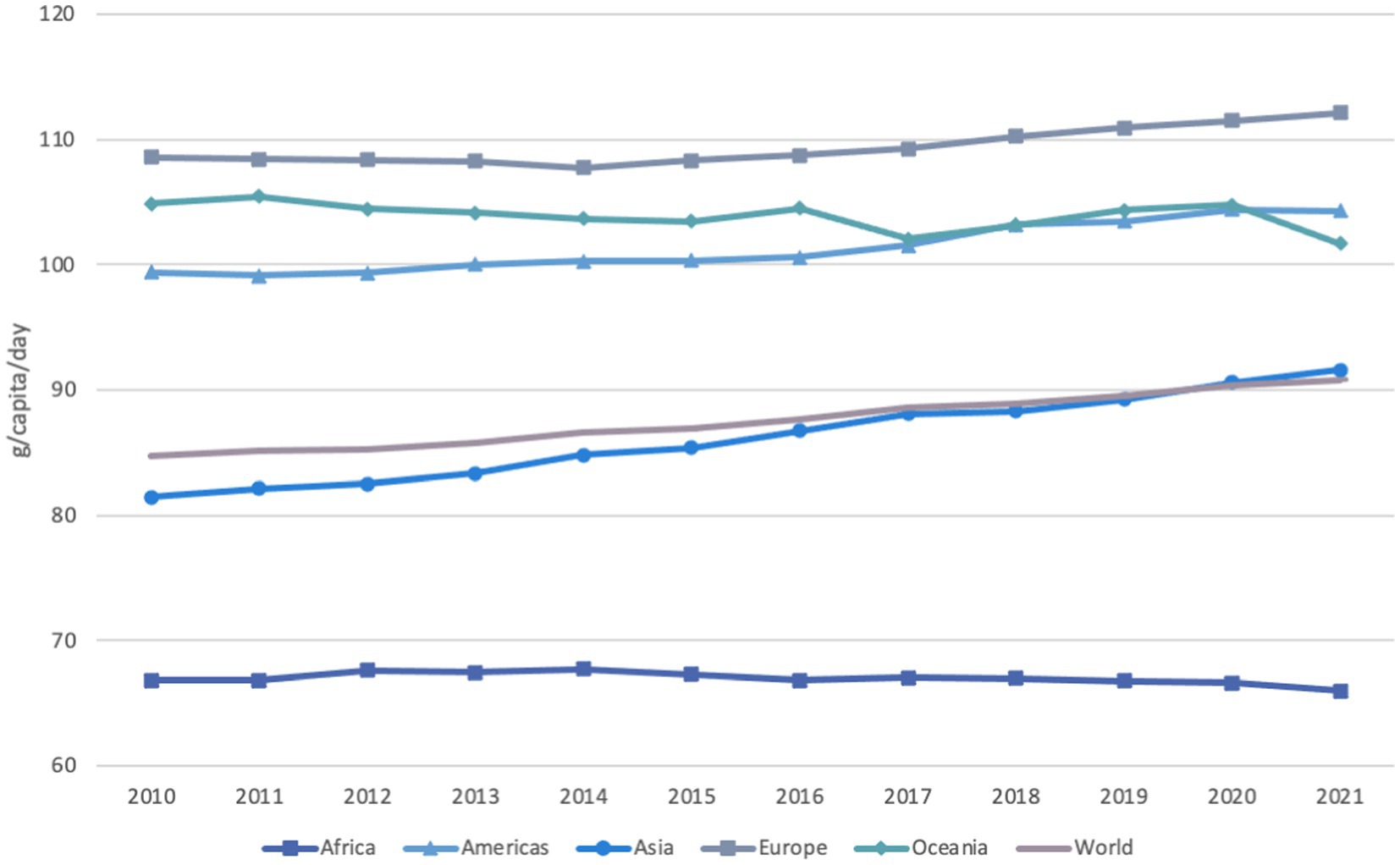
Figure 1. Total dietary protein supply by region and in the world between 2010 and 2021, in g/capita/day. Reproduced from FAO. 2023. FAOSTAT. Food Balances. Food Balances (2010-), licensed under CC BY 4.0.
Both animal and vegetal foods supply dietary protein, with animal source foods providing higher quality protein than vegetal foods (based on quantity and balance in the amino acid composition). As shown in Figure 2, the proportion supplied by each source of protein varies with the income level of the country (17). In 2021, in high-income countries, 63 percent of the protein (amounting at 71.2 g/capita/day) is supplied from animal sources. In low-income countries it was only 18 percent (amounting at 10.9 g/capita/day). Controversies abound regarding the conflicting issues surrounding livestock production and consumption – nutritional equity, or lack thereof which is illustrated with these data, plus human health and environmental sustainability risks and benefits, to name but a few.
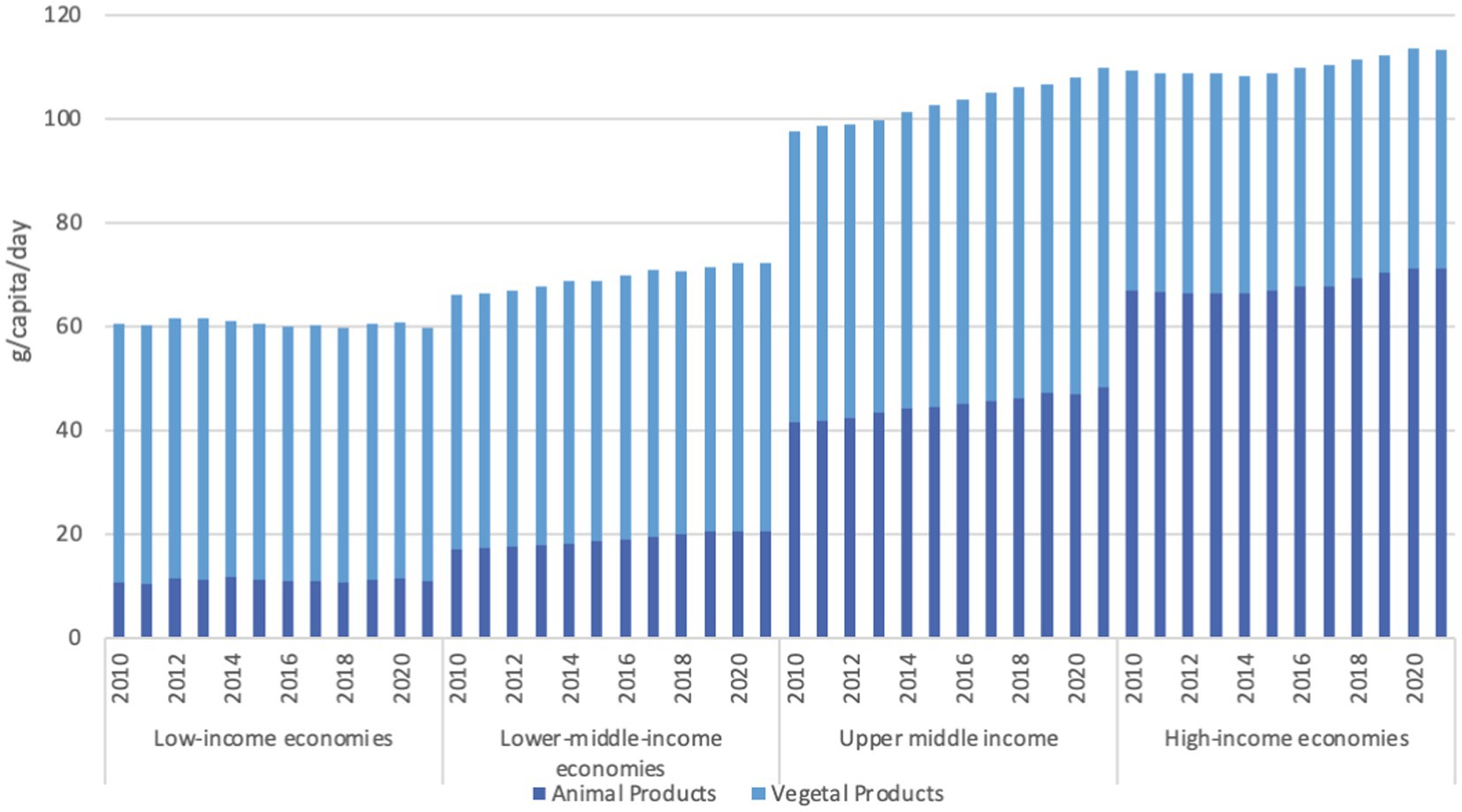
Figure 2. Dietary protein supply from animal and vegetal sources by income economy, in g/capita/day. Reproduced from FAO. 2023. FAOSTAT. Food Balances. Food Balances (2010-), licensed under CC BY 4.0.
Focusing on special groups, in 2021 the percentage of protein from animal sources in small islands developing states was 43 percent, equivalent to 32.4 g/capita/day. On the contrary, that year, the net food importing developing countries obtained 27 percent of protein from animal sources equivalent to 18.4 g/capita/day (Figure 3).
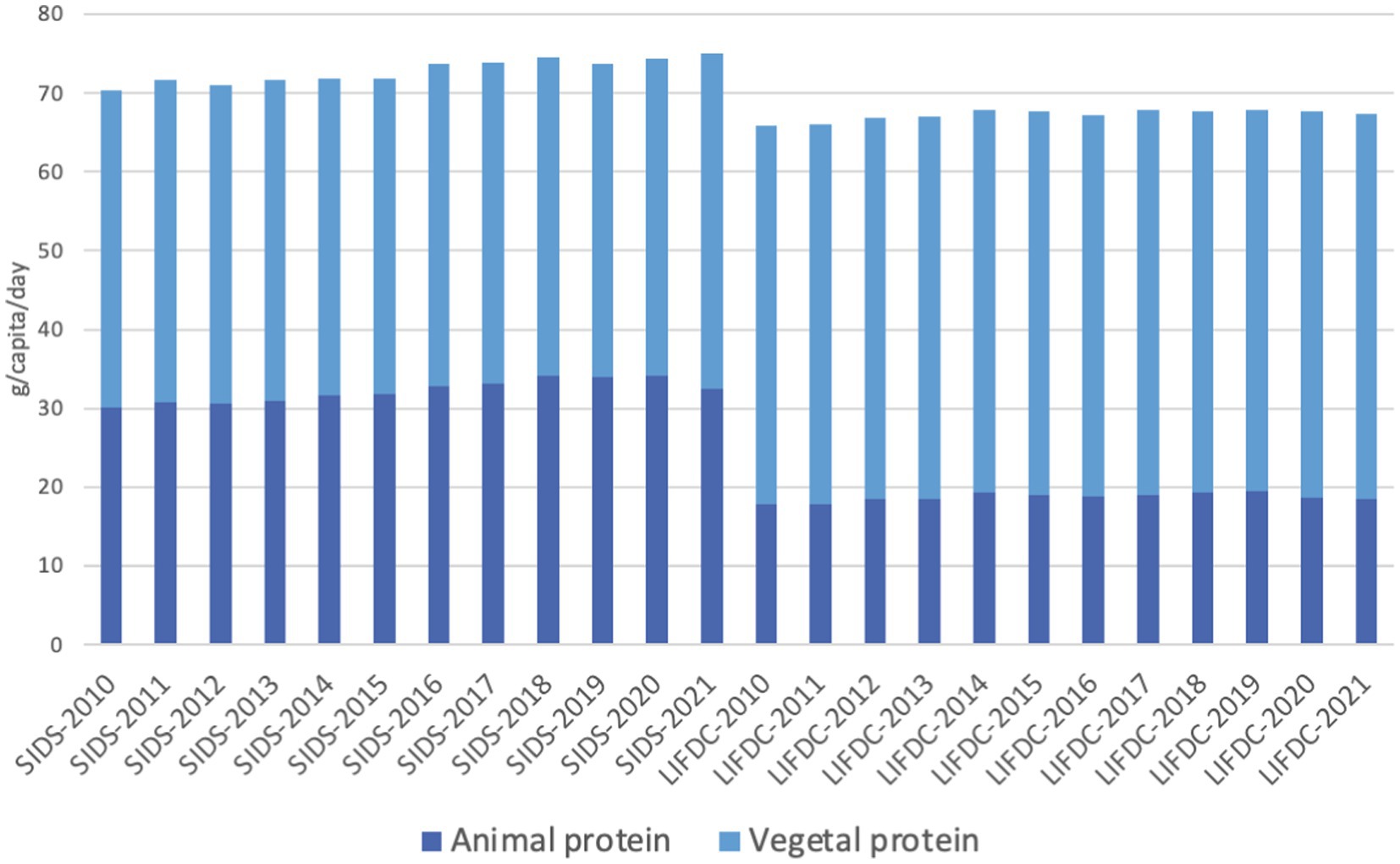
Figure 3. Dietary protein supply from animal and vegetal sources for special groups, in g/capita/day. Notes: SIDS, Small Island Developing States; NFIDC, Net Food Importing Developing Countries. Reproduced from FAO. 2023b. FAOSTAT. Food Balances. Food Balances (2010-). November 2023, licensed under CC BY 4.0.
Figure 4 shows the top five providers of protein from crops and livestock, in 2021. Wheat flour was the main source of protein in the world, and in Africa, Asia and Europe, while it was chicken meat in the Americas and in Oceania. Among animal food, chicken meat is the main source of protein everywhere except Europe and Asia, where pig meat is the main source. Other relevant sources are cattle meat in the Americas, chicken meat in Asia and pig meat in Oceania. Raw milk of cattle was within the top five main sources in all regions except Africa, where four out of the five main sources were cereals. Raw milk of cattle + meat was within the top five providers of protein in all the regions.
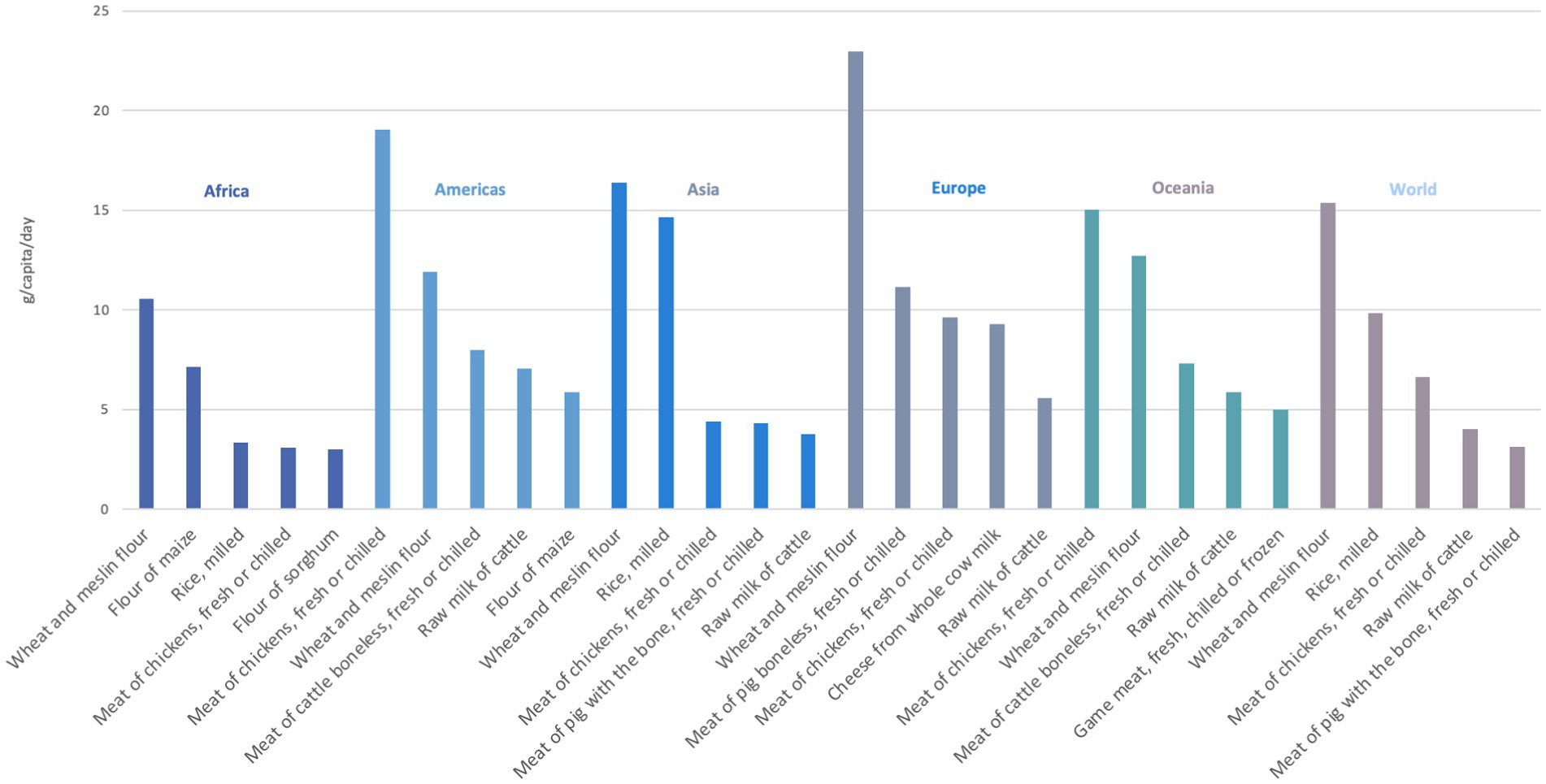
Figure 4. Top five main food sources of dietary protein by region and in the world, in 2021, in g/capita/day. Reproduced from FAO. 2023. FAOSTAT. Food Balances. Supply Utilization Accounts (2010-) [on the internet], licensed under CC BY 4.0. Population and Employment. Annual Population [on the internet], licensed under CC BY 4.0.
As presented in Figure 5, since 1961, in the world, the production of milk (from all livestock including the amount used to feed them) and meat (in terms of dressed carcass weight, excluding offal and slaughter fats) have increased (16); however, at different paces. While the production of meat has increased five-fold since 1961, that of milk increased only by a factor of 2.7. In per capita terms (18), the global production of meat has almost doubled since 1961, while that of milk remained fairly constant.

Figure 5. Index numbers of the production of meat and milk in the world between 1961 and 2021 (1961 = 100). Note: Production of raw milk (from all livestock including the amount used to feed them); Production of meat (red and white meat from commercial and farm slaughter) is given in terms of dressed carcass weight, excluding offal and slaughter fats. Reproduced from FAO. 2023. FAOSTAT. Production. Crops and livestock products [on the internet], licensed under CC BY 4.0.
Discussion and recommendations
Presented here is a brief review of UN-led evidence-based initiatives on protein, along production and consumption data from FAOSTAT, the combination of which forms the foundation of policies and programmes, and indeed, the part of the SDG monitoring. But the current activities and data are only small pieces for a bigger puzzle requiring integration of many sectors and disciplines. Looking back at some of the recommendations from the 1971 UNGA meeting (8), it should have been predictable that ‘increased production of animal proteins, particularly through research on increasing forage yields and production’ could lead to environmental degradation and biodiversity loss; or that ‘increased production from marine and freshwater fishery resources’ could lead to crises in the capture fisheries sector with over-fishing, and extreme pollution from the farmed fish sector. Similarly, what are the consequences of our current trajectory for protein production, consumption, and research?
FAOSTAT provides useful data on consumption and production for national and global assessments, and monitoring trends over time, but more granularity and greater disaggregation would improve the value of these data sets for achieving goals and targets related to human nutrition generally, and protein specifically. It is clear, despite all the efforts and initiatives focussing on human nutrition, that the world is not on track for meeting the 2030 Agenda. In the time remaining, different forms of knowledge, including traditional knowledge from the millennia of lived science of indigenous peoples, need to be given greater attention, and more transdisciplinary and multisectoral collaborations need to be marshaled for sustainable development to be a reality. This includes the realm of protein, resolving and/or avoiding another protein fiasco.
Author contributions
BB: Conceptualization, Writing – original draft, Writing – review & editing, Formal analysis. AM: Data curation, Formal analysis, Software, Writing – original draft, Writing – review & editing. CC: Formal analysis, Methodology, Writing – original draft, Writing – review & editing.
Funding
The author(s) declare that no financial support was received for the research, authorship, and/or publication of this article.
Conflict of interest
The authors declare that the research was conducted in the absence of any commercial or financial relationships that could be construed as a potential conflict of interest.
The author(s) declared that they were an editorial board member of Frontiers, at the time of submission. This had no impact on the peer review process and the final decision.
Publisher’s note
All claims expressed in this article are solely those of the authors and do not necessarily represent those of their affiliated organizations, or those of the publisher, the editors and the reviewers. Any product that may be evaluated in this article, or claim that may be made by its manufacturer, is not guaranteed or endorsed by the publisher.
Author disclaimer
The views expressed in this publication are those of the author(s) and do not necessarily reflect the views or policies of the Food and Agriculture Organization of the United Nations.
References
1. League of Nations . Report on the physiological bases of nutrition. Geneva: Quarterly bulletin of the health organization (1936). 3: 391–570.
2. FAO. Protein requirements In:. Report of the FAO committee on protein requirements, vol. 16. Rome: FAO Nutritional Studies (1957)
3. WHO. Report of the first joint FAO/WHO expert committee on nutrition. Geneva: World Health Organization (1949).
4. FAO. Report of the conference of FAO, fifteenth session [internet]. Rome: Food and Agriculture Organization of the United Nations (1969).
5. FAO . Report of the council of FAO United States of America. Washington, DC: Food and Agriculture Organization of the United Nations (1950).
6. Williams, CD . A nutritional disease of childhood associated with a maize diet. Archs Dis Chldh. (1933) 8:423–33. doi: 10.1136/adc.8.48.423
7. WHO . Joint FAO/WHO expert committee on nutrition: Report on the first session. 16th ed. Geneva: World Health Organization (1950).
9. Gounelle de Pontanel, H . Protein advisory Group of the United Nations System. Proteins from hydrocarbons; the proceedings of the 1972 symposium at Aix-En-Provence and relevant guidelines of the UN protein advisory group In:. Organising committee; distributed by academic press. London, New York: (1973). 285.
10. UN General Assembly . Right to food. General Assembly Seventieth session. (2015). Available at: https://www.ohchr.org/sites/default/files/Documents/Issues/Food/A-70-287.pdf (Accessed February 2, 2024).
11. Mclaren, DS . The great protein fiasco. Lancet. (1974) 304:93–6. doi: 10.1016/S0140-6736(74)91649-3
12. FAO . (1969). Report of the conference of FAO, 15th Session, Parts II and III Rome, 8–27 November 1969. Available at: https://www.fao.org/4/x5568E/x5568e00.htm#Contents (Accessed November 21, 2023).
14. G. William Webb in Conversation . (2017). The protein gap – Nutritional science’s biggest error. Available at: https://theconversation.com/the-protein-gap-nutritional-sciences-biggest-error-76202
15. FAO . FAOSTAT Food Balances. (2010). New food balance sheet methodology. Available at: https://www.fao.org/faostat/en/#data/FBS (Accessed November 21, 2023).
16. Grande, F, Ueda, Y, Masangwi, S, and Holmes, B. Global nutrient conversion table for FAO supply utilization accounts. Rome: FAO (2024).
17. Hamadeh, N, Van Rompaey, C, Metreau, E, and Eapen, SG. (2024). New World Bank country classifications by income level: 2022-2023. World Bank Blogs. Available at: https://blogs.worldbank.org/opendata/new-world-bank-country-classifications-income-level-2022-2023 (Accessed February 2, 2024).
18. FAOSTAT . Population and employment. Annual Population. (2023). Available at: https://www.fao.org/faostat/en/#data/OA (Accessed November 21, 2023).
Keywords: protein, United Nations, policy, nutrition, FAOSTAT, Food and Agriculture Organization of the United Nations
Citation: Burlingame B, Moltedo A and Cafiero C (2024) Global protein sustainability and the United Nations, through to the 2030 agenda. Front. Nutr. 11:1383898. doi: 10.3389/fnut.2024.1383898
Edited by:
Wouter Hendriks, Wageningen University and Research, NetherlandsReviewed by:
Diane Zimmermann, Cereal Partners Worldwide, SwitzerlandSergio Schneider, Federal University of Rio Grande do Sul, Brazil
Hettie Carina Schönfeldt, University of Pretoria, South Africa
Copyright © 2024 Burlingame, Moltedo and Cafiero. This is an open-access article distributed under the terms of the Creative Commons Attribution License (CC BY). The use, distribution or reproduction in other forums is permitted, provided the original author(s) and the copyright owner(s) are credited and that the original publication in this journal is cited, in accordance with accepted academic practice. No use, distribution or reproduction is permitted which does not comply with these terms.
*Correspondence: Barbara Burlingame, YmFyYmFyYS5idXJsaW5nYW1lQGdtYWlsLmNvbQ==;Yi5idXJsaW5nYW1lQG1hc3NleS5hYy5ueg==