- Science news
- Featured news
- Orcas seen killing young great white sharks by flipping them upside-down
Orcas seen killing young great white sharks by flipping them upside-down
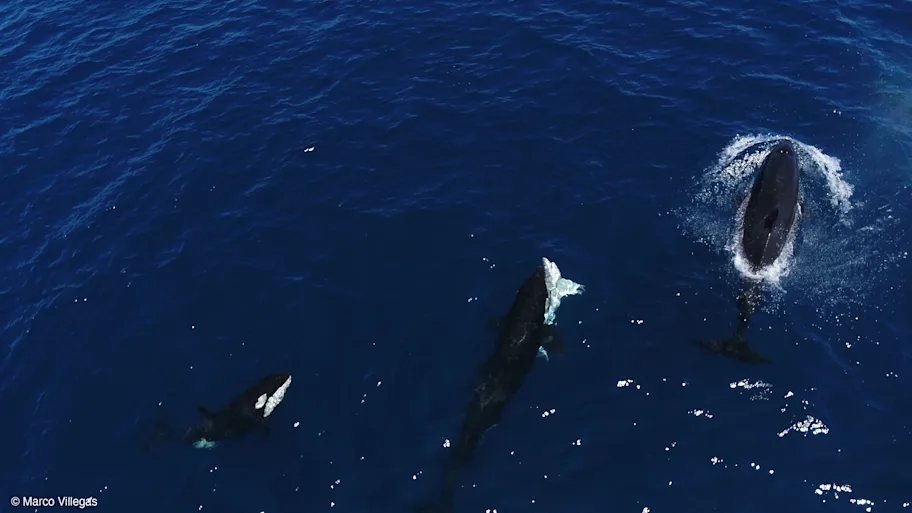
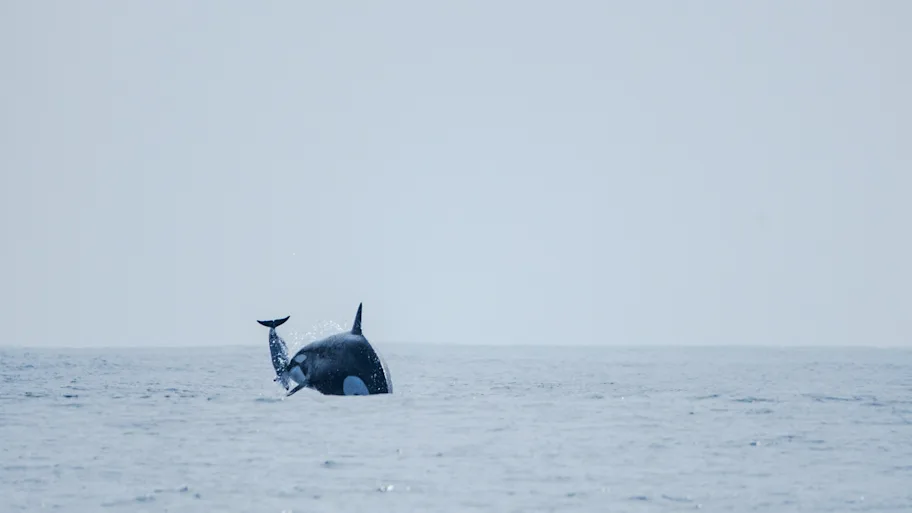
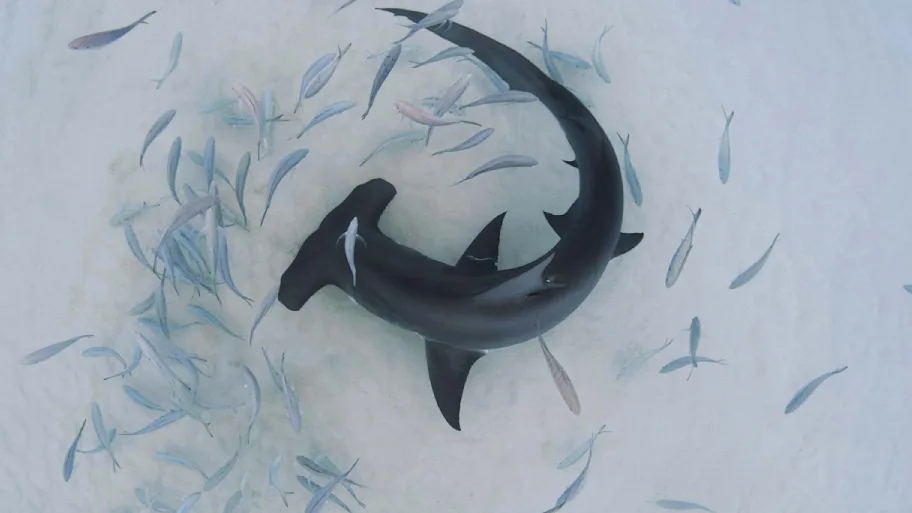
An adult great white shark has just one predator: the orca. Until recently, orcas have only been observed regularly preying on these sharks in South Africa, where they usually prefer to hunt larger adults, which provide more food once caught. But now scientists have observed a specialist shark-hunting pod in the Gulf of California repeatedly targeting juvenile white sharks, flipping them upside-down and taking out their energy-rich livers to share with the pod. They could be taking advantage of a local shark nursery to hunt younger, less experienced individuals which are easier to catch and subdue.
A specialized shark-hunting pod of orcas in the Gulf of California has been caught on camera expertly targeting young great white sharks — flipping them upside-down to eat the energy-rich liver. The pod, known as Moctezuma’s pod, could be taking advantage of warming waters altering shark nursery areas to hunt juveniles, which lack the experience to flee as older sharks do. These observations suggest that orcas may hunt white sharks more often than we realized. However, a broader survey collecting more data is needed to draw strong conclusions.
“I believe that orcas that eat elasmobranchs — sharks and rays — could eat a great white shark, if they wanted to, anywhere they went looking for one,” said marine biologist Erick Higuera Rivas, project director at Conexiones Terramar and Pelagic Life and lead author of the article in Frontiers in Marine Science. “This behavior is a testament to orcas’ advanced intelligence, strategic thinking, and sophisticated social learning, as the hunting techniques are passed down through generations within their pods.”
Predators become prey
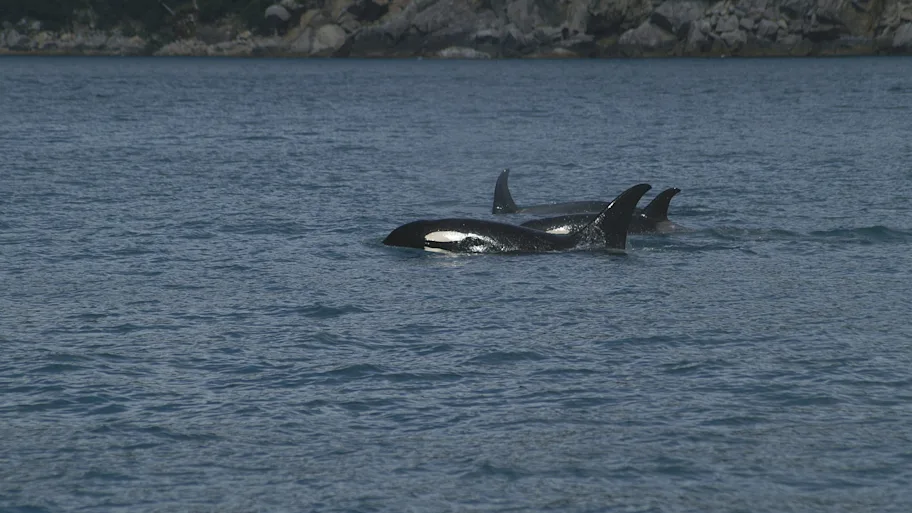
The scientists spotted two hunts, killing three white sharks, during routine monitoring of the orcas. They recorded the hunts in detail, identifying the individual orcas involved from features on their dorsal fins.
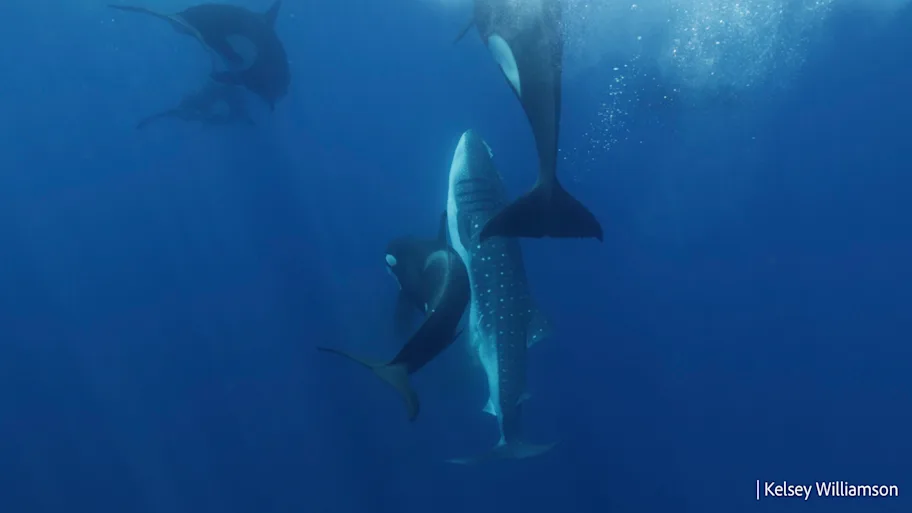
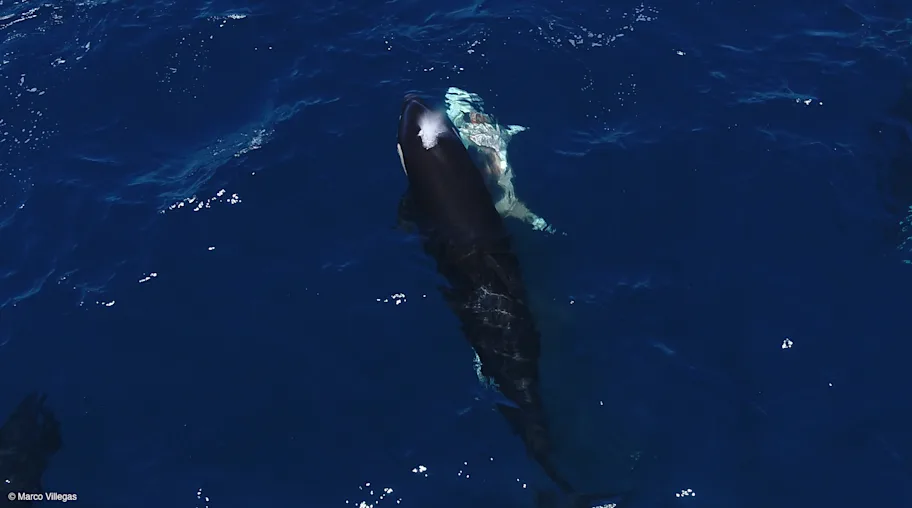
During the first hunt, in August 2020, five orcas were seen pursuing a juvenile white shark. They pushed it to the surface and worked together to turn it upside down. Ultimately, they took it underwater and reappeared with the shark’s liver in their mouths. Shortly afterwards, they did the same with a second juvenile shark. A second hunt, witnessed in August 2022, followed a similar pattern: five orcas pushed a juvenile white shark onto its back and up to the surface. The shark was bleeding from its gills, and its liver was visible. The orcas were seen eating it.
Turning a shark upside down like that induces a state called tonic immobility, by changing the shark’s awareness of its surroundings in a way that paralyzes it.
“This temporary state renders the shark defenseless, allowing the orcas to extract its nutrient-rich liver and likely consume other organs as well, before abandoning the rest of the carcass,” explained Higuera.
By looking at the sharks’ injuries, scientists think that orcas could have developed a specialized technique to induce this state which minimizes the chances of being bitten. It might be simpler to do this with smaller (and therefore younger) great white sharks, or less experienced juveniles might be easier prey.
“This is the first time we are seeing orcas repeatedly target juvenile white sharks,” said Dr Salvador Jorgensen of California State University, an author of the article. “Adult white sharks react quickly to hunting orcas, completely evacuating their seasonal gathering areas and not returning for months. But these juvenile white sharks may be naive to orcas. We just don't know yet whether white shark anti-predator flight responses are instinctual or need to be learned.”
After identification, the orca pod turned out to be the one called Moctezuma’s pod, named after a prominent member of the pod. This pod has already been seen hunting rays as well as whale and bull sharks, and may have learned from their experiences how to tackle great white sharks.
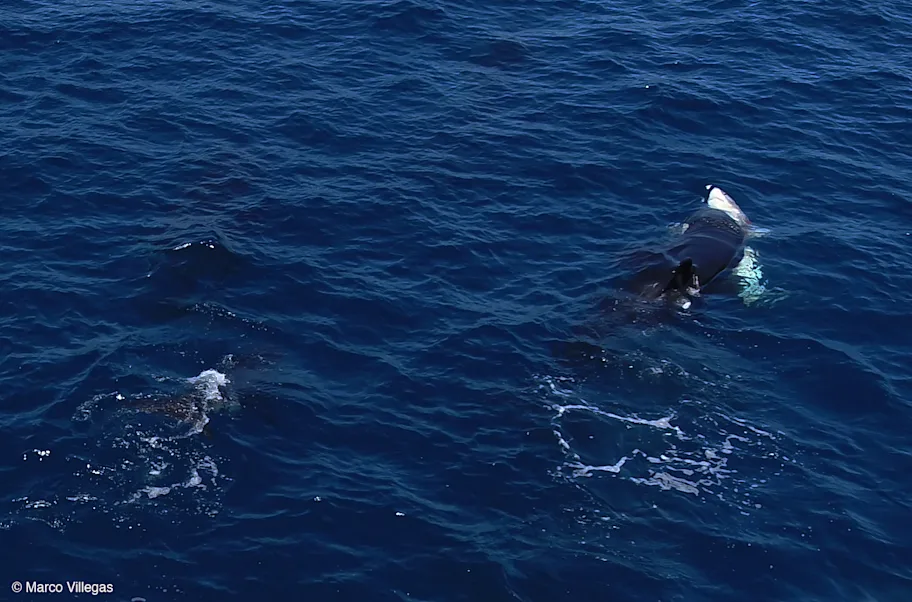
Read and download original article
Changing ranges, changing diets?
Changes in the distribution of white sharks in the Pacific may have presented Moctezuma’s pod with an opportunity. Climate events like El Niño appear to have altered white shark nursery areas and increased their presence in the Gulf of California, which could mean that they are more exposed to this pod — and each new cohort of juveniles could be a vulnerable seasonal target.
However, these are only observations. The scientists plan to follow up with a detailed survey of this orca population’s diet, which would clarify whether they regularly hunt white sharks or if they focus on the juveniles when they’re available. This won’t be easy, though: fieldwork is expensive and orca hunts are unpredictable.
“So far we have only observed this pod feeding on elasmobranchs,” said Dr Francesca Pancaldi of the Instituto Politécnico Nacional Centro Interdisciplinario de Ciencias Marinas, co-author. “There could be more. Generating information about the extraordinary feeding behavior of killer whales in this region will lead us to understand where their main critical habitats are, so we can create protected areas and apply management plans to mitigate human impact.”
To view footage of the orcas hunting, please see this link. Video courtesy of Marco Villegas and Erick Higuera.
REPUBLISHING GUIDELINES: Open access and sharing research is part of Frontiers’ mission. Unless otherwise noted, you can republish articles posted in the Frontiers news site — as long as you include a link back to the original research. Selling the articles is not allowed.