
Climate action
12 Jul 2021
Just 25 mega-cities produce 52% of the world’s urban greenhouse gas emissions
Just 25 mega-cities produce 52% of the world’s urban greenhouse gas emissions, finds new study in Frontiers in Sustainable Cities
Climate action
12 Jul 2021
Just 25 mega-cities produce 52% of the world’s urban greenhouse gas emissions, finds new study in Frontiers in Sustainable Cities
Climate action
29 Jun 2021
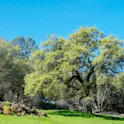
California’s blue oak woodlands are threatened by hotter and more frequent extreme droughts due to climate change: Frontiers in Climate
Climate action
11 May 2021
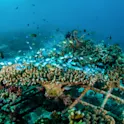
New practices for reef restoration can protect coasts floods: Frontiers in Marine Science

Climate action
05 May 2021
By Robert Hanley / Durham University communications team The Arenal Volcano seen from the Monteverde Cloud Forest. Monteverde-Arenal is one of 21 Important Bird and Biodiversity Areas (IBA) in Costa Rica. Credit: Sorin Vacaru Photography / Shutterstock.com Researchers show that the current network of Important Bird and Biodiversity Areas (IBAs) across the Americas should remain able to house the majority of bird species of conservation concern even after climate change. While individual bird species may shift their distribution range, 73% of species of conservation concern are likely to persist in at least half of the IBAs in which they occur, and 90% of species in at least a quarter of their current IBAs. This implies that future conservation efforts in the Caribbean and Central and South America can focus on expanding the current IBA network. A new study, led by Durham University and published in the journal Frontiers in Ecology and Evolution, investigates the impacts of potential climate change scenarios on the network of Important Bird and Biodiversity Areas (IBAs) across the Caribbean, and Central and South America. The research was carried out in collaboration with Senckenberg Biodiversity and Climate Research Centre, BirdLife International and the National Audubon Society. IBAs are […]

Climate action
21 Apr 2021
Earth Day 2021’s theme is Restore Our Earth™, which focuses on natural processes, emerging green technologies, and innovative thinking that can restore the world’s ecosystems. Check out our curated list of the best Research Topics addressing these issues!

Climate action
14 Dec 2020
Climate change increases likelihood of harmful algal blooms in oceans: Frontiers in Climate
Climate action
05 Nov 2020
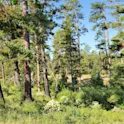
Larger trees store disproportionably more carbon in Pacific Northwest temperate rainforest: Frontiers in Forests and Global Change
Climate action
24 Sep 2020
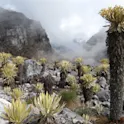
What will happen to the Andean Páramos under climate change? Frontiers in Ecology and Evolution

Climate action
18 Sep 2020
Frontiers in Climate’s new Research Topic in collaboration with Stripe is uniting industry stakeholders to upscale negative emission goals

Climate action
17 Aug 2020
Climate change worsens effect of eutrophication on coastal ecosystems: Frontiers in Marine Science

Climate action
31 Jul 2020
Indigenous people take lead on conservation of boreal forests: Frontiers in Forests and Global Change
Climate action
04 Feb 2020
A team of scientific editors has been awarded US $100,000 by Swiss open-access publisher Frontiers in recognition of an outstanding special issue research collection on coral reef science and conservation.

Climate action
17 Oct 2019
A Stanford-led study suggests ecosystem investments to minimize storm damage; Frontiers in Marine Science
Climate action
16 Oct 2019
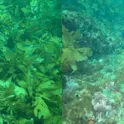
Researchers examined the cumulative impacts of recent extreme climate events on marine habitats around Australia; Frontiers in Marine Science

Climate action
06 Sep 2019
Researchers have fine-tuned the records used to make global climate predictions using high-resolution microscopic techniques and geochemical modeling; Frontiers in Marine Science
Get the latest research updates, subscribe to our newsletter