Life sciences
27 Jan 2026
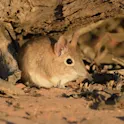
96% accurate footprint tracker for tiny mammals could help reveal ecosystem health
New footprint identification technology can identify ecosystem-critical species which were once only distinguishable by DNA.
Life sciences
27 Jan 2026
New footprint identification technology can identify ecosystem-critical species which were once only distinguishable by DNA.
Featured news
15 Jan 2026
Scientists found that some mosquitoes really are targeting humans more than other food sources, but it could be a matter of convenience as biodiversity dwindles and other food sources are displaced
Featured news
20 Aug 2025
Majority of living species concentrated among few disproportionately rich groups with high rates of diversification, shows first-of-its-kind study

Featured news
29 Jul 2025
A study on savannah-living chimpanzees suggests the need to move safely on thin tree branches could explain why early hominins that could walk upright kept their tree-climbing adaptations.
Environment
24 Jun 2025
Stable isotope analysis can tell apart ivory from mammoths dug up from the permafrost and modern elephants, closing a loophole for selling elephant ivory

Featured news
04 Jun 2025
June 8 marks World Ocean Day and people from all corners of the planet come together to protect and restore our blue planet. To celebrate, we’re highlighting five recently published Frontiers articles on the ocean and the fantastic animals that live there.
Featured news
14 May 2025
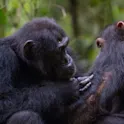
Scientists observed chimpanzees in Uganda apparently cleaning and treating their own and others’ wounds.

Social science
05 Dec 2024
At Frontiers, we bring some of the world’s best research to a global audience. But with tens of thousands of articles published each year, it’s impossible to cover all of them. Here are just five amazing papers you may have missed.

Featured news
06 Aug 2024
At Frontiers, we bring some of the world’s best research to a global audience. But with tens of thousands of articles published each year, it’s impossible to cover all of them. Here are just five amazing papers you may have missed.
Featured news
17 Nov 2023
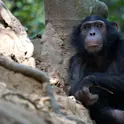
by Angharad Brewer Gillham, Frontiers science writer Image/Seth Phillips Termites are a crucial source of nutrients for chimpanzees, who fish for them with tools, but they’re not always accessible. Now, researchers copying chimpanzee tools and techniques have shown that chimpanzees living in western Tanzania can only reliably fish for termites in the early wet season, when other foods are abundant. These chimpanzees fish for termites because they can, not because they need to. The results raise the possibility that chimpanzees could even be predicting termite availability before they go fishing. The discovery that chimpanzees use tools to fish for termites revolutionized our understanding of their abilities — but we still don’t have crucial context to help us understand termite fishing and chimpanzee minds. Are chimpanzees fishing for a seasonal treat or trying their luck? Researchers based at the University of California Santa Cruz (UCSC) and University College London (UCL) investigated the relationship between termite availability and chimpanzee fishing. They found that termites are most available early in the wet season. Although other foods are abundant at that time, chimpanzees choose to termite fish then. “I believe these results set up an interesting hypothesis about wild chimpanzee foraging cognition,” said […]
Environment
06 Nov 2023
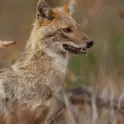
by Deborah Pirchner, Frontiers science writer Image: Shutterstock.com At Frontiers, we bring some of the world’s best research to a global audience. But with tens of thousands of articles published each year, it’s impossible to cover all of them. Here are just five amazing papers you may have missed. Carnivore territories might soon overlap – and some species profit more than others Some of Europe’s large carnivore populations, including jackals and lynxes, are growing and expanding their territories. The golden jackal, a wolf-like generalist that once occupied only the Balkan area, is currently expanding its territory. At the same time, the Eurasian lynx, a specialized predator previously hunted close to extinction, is slowly recovering. Writing in Frontiers in Ecology and Evolution, researchers have now modeled jackal and lynx distribution in Europe for current and future scenarios. Currently, it is estimated that the overlap of jackal and lynx territories is 13%. This overlap is likely to increase, given both species’ expansion. The researchers’ findings showed that both predators expanding their territories, leading to a dynamic where they coexist for the first time, may favor one species and threaten the other: Their predictions show an increase in habitat suitability for the golden […]

Environment
13 Oct 2023
By Mischa Dijkstra, Frontiers science writer Texas ocelot, Leopardus pardalis albescens. Image credit: Kline Lab, University of Texas Rio Grande Valley Traffic collisions are a major cause of death of endangered Texas ocelots. Researchers have now shown that recently designed wildlife exits, meant to allow ocelots to leave highways surrounded by fences, function as they are designed to do. 10 mammal species apart from ocelots learned to use them correctly. The authors concluded that these exits are a useful conservation measure in Texas, not only for ocelots. The Texas ocelot (Leopardus pardalis albescens) is endangered due to historic hunting, habitat loss, inbreeding, and traffic collisions. Today, only between 50 and 80 ocelots remain in the US, exclusively in Willacy and Cameron counties in southern Texas. These two populations are isolated from the larger one in northwestern Mexico by highways and urban development. “Here we show that a range of species, including middle-sized carnivores such as bobcats and coyotes, successfully use wildlife exits, a new type of mitigation structure specifically designed for the US endangered ocelot,” said first author Zarina Sheikh, a former graduate student at the University of Texas Rio Grande Valley, about their new study in Frontiers in Ecology […]
Featured news
22 Aug 2023
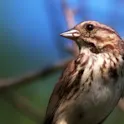
By Deborah Pirchner, Frontiers science writer Image: Rob Lachlan New behavioral traits are often the first response of animals to changing environmental conditions. As cities increasingly become habitats of wildlife, researchers have studied behavioral changes in birds and examined how urbanization impacts parental care behavior of male song sparrows. The team found that in cities, where male song sparrows are known to be more aggressive than in rural surroundings, male birds visited nests more often than rural conspecifics visited countryside nests. When animals settle in new environments, or when their natural habitats are rapidly changed by human influence, their behaviors change. One such behavioral change that has been observed in several bird species that settled in cities is increased aggression, born out of the need to defend territories. City-living sparrows have, due to lower species density, fewer encounters with their kin than in the countryside. Yet, urban song sparrows have been shown to be consistently more aggressive in defending their territories. Now, a team of researchers in the US has investigated the effects of urbanization and the associated increase in male aggression on the parental care provided by male birds. “Male songbirds in temperate zones are thought to reduce […]

Featured news
02 Aug 2023
By Deborah Pirchner, Frontiers science writer Image: Shutterstock.com At Frontiers, we bring some of the world’s best research to a global audience. But with tens of thousands of articles published each year, it’s impossible to cover all of them. Here are just five amazing papers you may have missed. Certain foods help ease chronic pain Chronic pain caused by rheumatic diseases often requires prolonged treatment using drugs which are associated with side effects. Eating a certain diet, however, has been suggested as a possible way to alleviate chronic pain symptoms. Recommended foods include berries, fatty fish, and avocados. In a pilot study, researchers in Spain have evaluated the efficacy of an anti-inflammatory diet in patients with chronic pain. They have published their findings in Frontiers in Nutrition. In a first step, the researchers designed a 13-item anti-inflammatory dietary guide, including anti-inflammatory foods like curcumin and coffee. Foods with inflammatory properties, for example red meat, gluten, and cow’s milk, were excluded from the list. In the second part of the study, participants followed the diet for four months. The researchers found a positive correlation between the anti-inflammatory food participants ate and physical characteristics, stress, and pain. Consuming the anti-inflammatory diet also […]
Featured news
05 Jul 2023
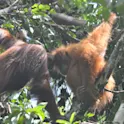
By Mischa Dijkstra, Frontiers science writer An unflanged migrant orangutan male (on the left side) and an adolescent local orangutan female (on the right side) are peering at each other. Orangutan species: Pongo abelii. Image credit: Caroline Schuppli, SUAQ Project, http://www.suaq.org Researchers analyzed 30 years of observations on a total of 152 male migrant orangutans on Sumatra and Borneo and showed evidence that migrants learn about unfamiliar foods in their new home range by ‘peering’ at experienced locals: intensely observing them at close distance. Peering was most frequently seen when locals consumed foods that were rare or hard to process Orangutans are dependent on their mothers longer than any other non-human animal, nursing until they are at least six years old and living with her for up to three years more, learning how to find, choose, and process the exceedingly varied range of foods they eat. But how do orangutans that have left their mothers and now live far from their natal ranges, where the available foods may be very different, decide what to eat and figure out how to eat it? Now, an international team of authors has shown that in such cases, migrants follow the rule ‘observe, and […]
Get the latest research updates, subscribe to our newsletter