Featured news
12 Feb 2026
Rich medieval Danes bought graves ‘closer to God’ despite leprosy stigma, archaeologists find
Study of inequality in medieval graves shows that stigmatized illnesses didn’t bar people from socially prestigious burials
Featured news
12 Feb 2026
Study of inequality in medieval graves shows that stigmatized illnesses didn’t bar people from socially prestigious burials

Featured news
06 Nov 2025
In this guest editorial, Frontiers author Prof Carla Jaimes Betancourt, an anthropologist focusing on the Amazon, present the results of interdisciplinary and collaborative archaeological research conducted in the southwestern Amazon. Their work highlights the rich cultural heritage found at the sites and the importance of protecting these landscapes.
Humanities
31 Jul 2025
New methods make the ‘invisible visible’ to find evidence of deeply rooted cultural practice which otherwise might have been lost in the archaeological record
Featured news
17 Jul 2025
Differences in cut-marks left behind by butchery can’t be explained by different resources, tools, or skill levels, indicating cultural practices might be responsible.

Humanities
24 Jul 2024
A pilot study indicates that fire-roasted birds are easier to process, but only birds butchered raw show cutmarks — evidence that we can use to understand Neanderthal diets.
Humanities
17 May 2024
A violent blaze, possibly linked to the Carthaginian army crossing the Pyrenees to fight the Romans, flared up so quickly people couldn’t save their animals or their valuables

Featured news
29 Feb 2024
Archaeologists analyze the carbon isotope values of hazelnuts from ancient sites to see what the local woods were like.
Featured news
07 Feb 2023
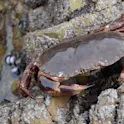
by Angharad Brewer Gillham, Frontiers science writer Image: Tomasz Ochocki/Shutterstock.com Scientists studying archaeological remains at Gruta da Figueira Brava, Portugal, discovered that Neanderthals were harvesting shellfish to eat – including brown crabs, where they preferred larger specimens and cooked them in fires. Archeologists say this disproves the idea that eating marine foods gave early modern humans’ brains the competitive advantage. In a cave just south of Lisbon, archeological deposits conceal a Paleolithic dinner menu. As well as stone tools and charcoal, the site of Gruta de Figueira Brava contains rich deposits of shells and bones with much to tell us about the Neanderthals that lived there – especially about their meals. A study published in Frontiers in Environmental Archaeology shows that 90,000 years ago, these Neanderthals were cooking and eating crabs. “At the end of the Last Interglacial, Neanderthals regularly harvested large brown crabs,” said Dr Mariana Nabais of the Catalan Institute of Human Paleoecology and Social Evolution (IPHES-CERCA), lead author of the study. “They were taking them in pools of the nearby rocky coast, targeting adult animals with an average carapace width of 16cm. The animals were brought whole to the cave, where they were roasted on coals and […]
Get the latest research updates, subscribe to our newsletter