PV
paul v. doskey
Michigan Technological University
Houghton, United States
339
Total downloads
2,954
Total views and downloads
Submit your idea
Select the journal/section where you want your idea to be submitted:
Manuscript Summary Submission Deadline 30 January 2026 | Manuscript Submission Deadline 29 May 2026
This Research Topic is currently accepting articles.
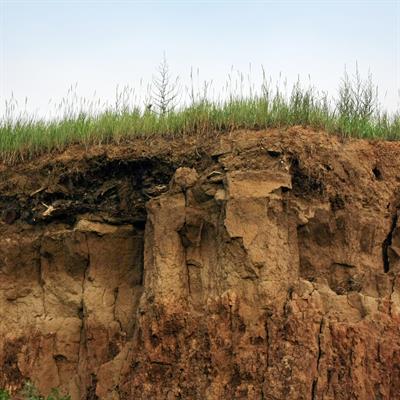
Trace gases like carbon dioxide (CO2), methane (CH4), and nitrous oxide (N2O) are generated in soil through microbial transformations of carbon and nitrogen species. Respiration of soil organic matter (SOM) in forest, savanna, grassland, and cultivated soils produces CO2 emissions that represent about 40% of the total emissions from the Earth’s surface. Anaerobic decomposition of SOM in high-latitude wetland and permafrost soils contributes approximately 40% of the source of CH4 to the atmosphere. About 25% of the global source of N2O is generated by denitrification in cultivated soils. Future emissions of CO2, CH4, and N2O from the pedosphere are expected to be altered by rising temperatures, wildfires, drought, and more frequent, intense rainfall events. Thus, a mechanistic understanding of the physical, chemical, and biological processes that produce and transport biogenic trace gases within soils and across the soil-atmosphere interface is key to predicting future emissions.
Next generation, process-scale models of land ecosystem-atmosphere exchange will include soil biogeochemical models with enzyme-explicit representations of microbial function, microbe interactions with the soil physicochemical environment, and coupling of macronutrient cycles. Advances in the mass spectrometric analysis of dissolved- and solid-phase SOM have made it possible to visualize and quantify changes in the molecular composition of metabolic intermediates on seasonal and decadal time scales. Molecular biological methods are now used to investigate the composition and activity of the soil microbial community. We welcome manuscripts on process-scale investigations and modeling studies of (1) the biogeochemistry of SOM across diverse ecosystems (e.g., forest, savanna, grassland, wetland, permafrost, and cultivated soils), (2) enzyme kinetics for microbial substrates in soil, and (3) the exchange of trace gases across the soil-atmosphere interface. Submissions are also encouraged on the effects of environmental change on the dynamics of SOM and trace gas emissions from the pedosphere.
To gather further insights into (1) the dynamics of SOM in forest, savanna, grassland, wetland, permafrost, and cultivated soils and (2) the emissions of trace gases from the surface, we welcome articles addressing, but not limited to, the following themes:
• Advances in enzyme-specific modeling of microbial activities in soil
• Integration of molecular biological techniques to assess soil microbial communities
• Effects of environmental change on the seasonal and decadal dynamics of SOM
• Process-scale modeling of biogeochemical cycles and land-atmosphere gas exchange
• Laboratory investigations into the enzyme kinetics of microbial substrates in soils
This Research Topic accepts the following article types, unless otherwise specified in the Research Topic description:
Articles that are accepted for publication by our external editors following rigorous peer review incur a publishing fee charged to Authors, institutions, or funders.
Keywords: biogeochemical model, soil, land-atmosphere, gas exchange, biogeochemical, microbial enzyme kinetics, microbial substrates, dynamics
Important note: All contributions to this Research Topic must be within the scope of the section and journal to which they are submitted, as defined in their mission statements. Frontiers reserves the right to guide an out-of-scope manuscript to a more suitable section or journal at any stage of peer review.
Michigan Technological University
Houghton, United States
Pacific Northwest National Laboratory (DOE)
Richland, United States
School of Forest Resource and Environmental Science, Michigan Technological University
Houghton, United States
University of East Anglia
Norwich, United Kingdom
Manuscripts can be submitted to this Research Topic via the main journal or any other participating journal.
Submit your idea
Select the journal/section where you want your idea to be submitted: