MA
margarita arianoutsou
National and Kapodistrian University of Athens
Athens, Greece
1,925
Total views and downloads
Submit your idea
You will be redirected to our submission process.
Manuscript Submission Deadline 30 June 2026
This Research Topic is currently accepting articles.
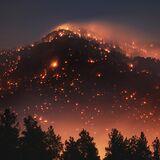
Fire is a fundamental ecological force shaping biodiversity dynamics in Mediterranean-climate ecosystems. It influences species composition, community structure, and crucial ecosystem processes, thereby promoting the unique mosaic landscapes characteristic of these regions. Recent research has demonstrated how variations in fire intensity, frequency, and extent create landscapes with habitats at various successional stages, contributing to both short-term disturbance and long-term ecological resilience. However, natural fire regimes are increasingly disrupted by human activities such as fire suppression and land-use change, causing fuel accumulation and raising the risk of destructive, high-intensity wildfires. Moreover, climate change exacerbates these challenges, rendering Mediterranean regions more susceptible to frequent and severe fires. While some studies advocate for proactive management, such as prescribed burning, to mimic natural cycles and conserve biodiversity, significant knowledge gaps remain regarding fire’s complex ecological roles and its interaction with global change drivers.
This Research Topic aims to deepen scientific understanding of how fire—both as a renewing and threatening agent—affects the biodiversity and functioning of Mediterranean ecosystems. The main objective is to investigate fire’s influence not only at the level of species and communities, but also across broader ecological and temporal scales. We seek to highlight research that untangles the mechanisms driving fire-induced ecological adaptations, explores fire’s role in maintaining ecosystem processes and landscape patterns, and evaluates management strategies that ensure biodiversity conservation while reducing fire-associated risks.
To gather further insights into fire’s impact on Mediterranean biodiversity, this Research Topic will focus on studies specific to Mediterranean-type ecosystems and explicitly related to fire-biodiversity interactions. We welcome contributions addressing, but not limited to, the following themes:
• Εffects of varying fire regimes on biodiversity at the landscape level
• The interplay between fire regimes and other global change drivers (e.g., climate change, land-use change, biological invasions)
• Evolution of adaptations to fire
• Fire, biodiversity, ecosystems function (nutrient cycling, decomposition, productivity, pollination) and services
• Effects of fire on plant, animal and soil biota dynamics
• Modeling of fire effects on biodiversity components across spatial and temporal scales
• Development, assessment, and innovation in fire management and conservation strategies to maintain ecological integrity
• Policy frameworks and landscape planning efforts designed to balance ecological benefits of fire and potential negative impacts
This Research Topic accepts the following article types, unless otherwise specified in the Research Topic description:
Articles that are accepted for publication by our external editors following rigorous peer review incur a publishing fee charged to Authors, institutions, or funders.
Keywords: Fire, biodiversity, Mediterranean climate, species composition, ecosystem processes, community structure
Important note: All contributions to this Research Topic must be within the scope of the section and journal to which they are submitted, as defined in their mission statements. Frontiers reserves the right to guide an out-of-scope manuscript to a more suitable section or journal at any stage of peer review.
Manuscripts can be submitted to this Research Topic via the main journal or any other participating journal.
Submit your idea
You will be redirected to our submission process.
