HB
himanshu bargali
Gurukul Kangri University
Haridwar, India
190
Total downloads
5,675
Total views and downloads
Submit your idea
You will be redirected to our submission process.
Manuscript Submission Deadline 31 March 2026
This Research Topic is currently accepting articles.
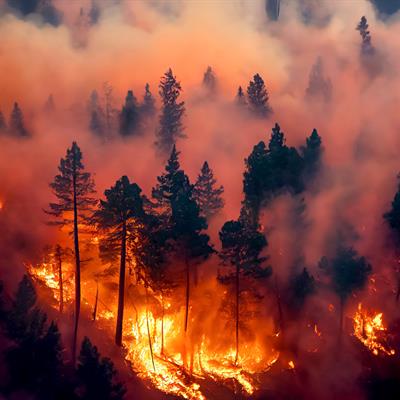
Climate change has significantly altered fire regimes worldwide, leading to an increase in the frequency, intensity, and severity of wildfires. Human activities have contributed to an increased risk of extreme fire events since the 1950s, with recent decades witnessing a surge in concurrent heat waves, droughts, and fire weather conditions. The projected rise in global temperatures beyond 1.5°C within the 21st century is expected to exacerbate these trends, making it increasingly challenging to mitigate fire-related disasters and their cascading impacts on ecosystems and communities.
Forests, which play a crucial role as carbon sinks, are becoming less effective at storing CO2 due to ongoing emissions and large-scale disturbances like wildfires. Increased fire activity releases stored carbon back into the atmosphere, further accelerating climate change. Current projections indicate that with every increment of global warming, the likelihood of compound extreme events, such as simultaneous heat waves and droughts, will rise, making fire management more complex. At 1.5°C warming, fire damage is expected to intensify, while water scarcity worsens. If warming surpasses 2°C, climate-induced changes will accelerate, with more frequent and severe droughts and wildfires. In the worst-case scenario of a 4°C temperature increase, approximately 35% of Earth's biomes will experience substantial transformation, with burned areas projected to rise by 50-70% and fire frequency increasing by around 30% compared to current levels.
This Research Topic aims to address the escalating threats posed by climate-driven wildfires and develop innovative, science-based strategies for sustainable fire management and adaptation. Despite significant advancements in fire ecology, remote sensing, and modeling, a critical gap remains in integrating interdisciplinary approaches to mitigate wildfire risks while enhancing forest resilience. This collection seeks to bring together contributions from researchers, policymakers, and practitioners to explore emerging methodologies and solutions that strengthen adaptive capacity against fire risks.
Scope and Subthemes: This collection will focus on a range of topics related to wildfire risk assessment, mitigation strategies, and climate change adaptation, including but not limited to:
• Climate change impacts on fire frequency, severity, and spatial distribution
• The role of carbon sinks and wildfire emissions in the global carbon cycle
• Ecological consequences of wildfires on biodiversity, soil health, and ecosystem services
• Socio-economic dimensions of wildfire risk and community adaptation strategies
• Indigenous and traditional fire management practices for sustainable landscapes
• Advances in remote sensing, AI-based fire prediction models, and real-time fire monitoring
• Integrated fire management approaches, including nature-based solutions and landscape planning
• Policy frameworks and governance mechanisms for wildfire resilience
We invite submissions of original research articles, reviews, case studies, and policy perspectives that contribute to advancing knowledge and solutions for sustainable wildfire management in the context of climate change. Through this collection, we aim to foster interdisciplinary collaborations and actionable insights that enhance the resilience of forests and communities to escalating fire risks.
This Research Topic accepts the following article types, unless otherwise specified in the Research Topic description:
Articles that are accepted for publication by our external editors following rigorous peer review incur a publishing fee charged to Authors, institutions, or funders.
Keywords: Wildfire risk, climate change, forest resilience, fire management, ecosystem adaptation, carbon dynamics, remote sensing, extreme fire events, sustainable land management, biodiversity conservation
Important note: All contributions to this Research Topic must be within the scope of the section and journal to which they are submitted, as defined in their mission statements. Frontiers reserves the right to guide an out-of-scope manuscript to a more suitable section or journal at any stage of peer review.
Gurukul Kangri University
Haridwar, India
Govind Ballabh Pant National Institute of Himalayan Environment and Sustainable Development
Almora, India
Department of Zoology and Environmental Science, Gurukul Kangri University
Haridwar, India
El Colegio de la Frontera Sur (Ecosur)
San Cristóbal de las Casas, Mexico
Manuscripts can be submitted to this Research Topic via the main journal or any other participating journal.
Submit your idea
You will be redirected to our submission process.
