UN
udo nehren
Technical University of Cologne
Cologne, Germany
1,686
Total views and downloads
Submit your idea
Select the journal/section where you want your idea to be submitted:
Manuscript Summary Submission Deadline 28 February 2026 | Manuscript Submission Deadline 30 June 2026
This Research Topic is currently accepting articles.
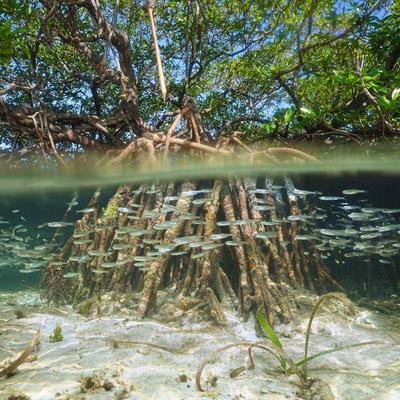
Mangroves are increasingly recognized as vital Nature-Based Solutions (NbS) for addressing climate change impacts, promoting biodiversity, and supporting human well-being. These unique coastal ecosystems act as powerful carbon sinks, protect communities from climate-related disasters and natural hazards, and support rich biodiversity. Furthermore, mangroves provide critical ecosystem services that bolster local livelihoods through community-based management, support public health, and offer opportunities for sustainable ecotourism. Advances in space technology, including remote sensing, are enhancing our ability to monitor, assess, and protect these vital ecosystems effectively.
This Research Topic welcomes contributions that explore the multifaceted role of mangroves in delivering NbS, focusing on six key areas: 1) biodiversity conservation, 2) sustainable local livelihoods, 3) natural hazards and disaster risk reduction, 4) carbon markets, 5) ecotourism, and 6) public health improvements. We encourage submissions focusing on field work, as well as ones that leverage remote sensing technologies (including UAVs, LiDAR, SAR and satellite imagery) to monitor, assess, restore, protect and manage mangrove ecosystems. Contributions can include original research, case studies, opinion pieces, and reviews that explore both ecological and socio-economic dimensions.
This Research Topic aims to explore the multifaceted role of mangroves as Nature-Based Solutions (NbS) in addressing climate change and supporting sustainable development. We invite contributions that investigate ecological, social, and technological dimensions of mangrove conservation and management. Specific themes related to mangroves include:
Biodiversity conservation; Sustainable local livelihoods; Disaster risk reduction and resilience to natural hazards; Carbon sequestration and involvement in carbon markets; Ecotourism as a sustainable economic activity; Public health improvements; Community-based management approaches; Applications of space technology and remote sensing for monitoring and management.
We welcome a diverse range of manuscript types that advance knowledge and practical understanding, including:
• Original research articles presenting novel data and insights;
• Case studies highlighting practical management or conservation experiences;
• Opinion and Perspective pieces discussing emerging challenges or innovations;
• Review articles synthesizing current knowledge and identifying research gaps.
This Research Topic accepts the following article types, unless otherwise specified in the Research Topic description:
Articles that are accepted for publication by our external editors following rigorous peer review incur a publishing fee charged to Authors, institutions, or funders.
Keywords: Nature-based solutions (NbS), mangroves, natural hazards, climate change adaptation, biodiversity conservation, community-based management, carbon markets, ecotourism, public health, remote sensing, disaster risk reduction
Important note: All contributions to this Research Topic must be within the scope of the section and journal to which they are submitted, as defined in their mission statements. Frontiers reserves the right to guide an out-of-scope manuscript to a more suitable section or journal at any stage of peer review.
Manuscripts can be submitted to this Research Topic via the main journal or any other participating journal.
Submit your idea
Select the journal/section where you want your idea to be submitted: