
Balancing Hydropower and Freshwater Environments in the Global South

Cover image for Research Topic "Balancing Hydropower and Freshwater Environments in the Global South"
122kviews
Editorial13 October 2021
Editorial: Balancing Hydropower and Freshwater Environments in the Global South

mitigation strategies focused on select species and locations. This special issue of Frontiers Research Topics addresses this gap. Authors present research that aims to better understand the trade-offs among hydropower, freshwater ecosystems, and social impacts with particular focus on the global south. The articles highlight the impacts of hydropower on freshwater systems and mechanisms for potential mitigation. With good planning and understanding of both perspectives, win-win benefits for both aquatic systems and river development may be possible.Key topics in the special issue include:

Providing sustainable outcomes for humans, whist minimising environmental impacts, is a constant challenge for resource managers (Silva et al. 2018). Engineers, developers, and ecologists must work together to bring about the best outcomes for people and the rivers upon which they depend (Baumgartner et al. 2014b). Incorporating the most up-to-date scientific knowledge is essential to ensure sustainable outcomes are possible. We hope that this special issue will go some part towards helping inform the broader debate about river development and ensure that we collectively continue to seek a protective balance between development and conservation.
1,951 views

METHODS
7 May 2021
Quantifying Cooperation Benefits for New Dams in Transboundary Water Systems Without Formal Operating Rules
Jose M. Gonzalez, 9 more and Julien J. Harou

7,337 views

19 citations

Dam-Induced Hydrologic Alterations in the Rivers Feeding the Pantanal
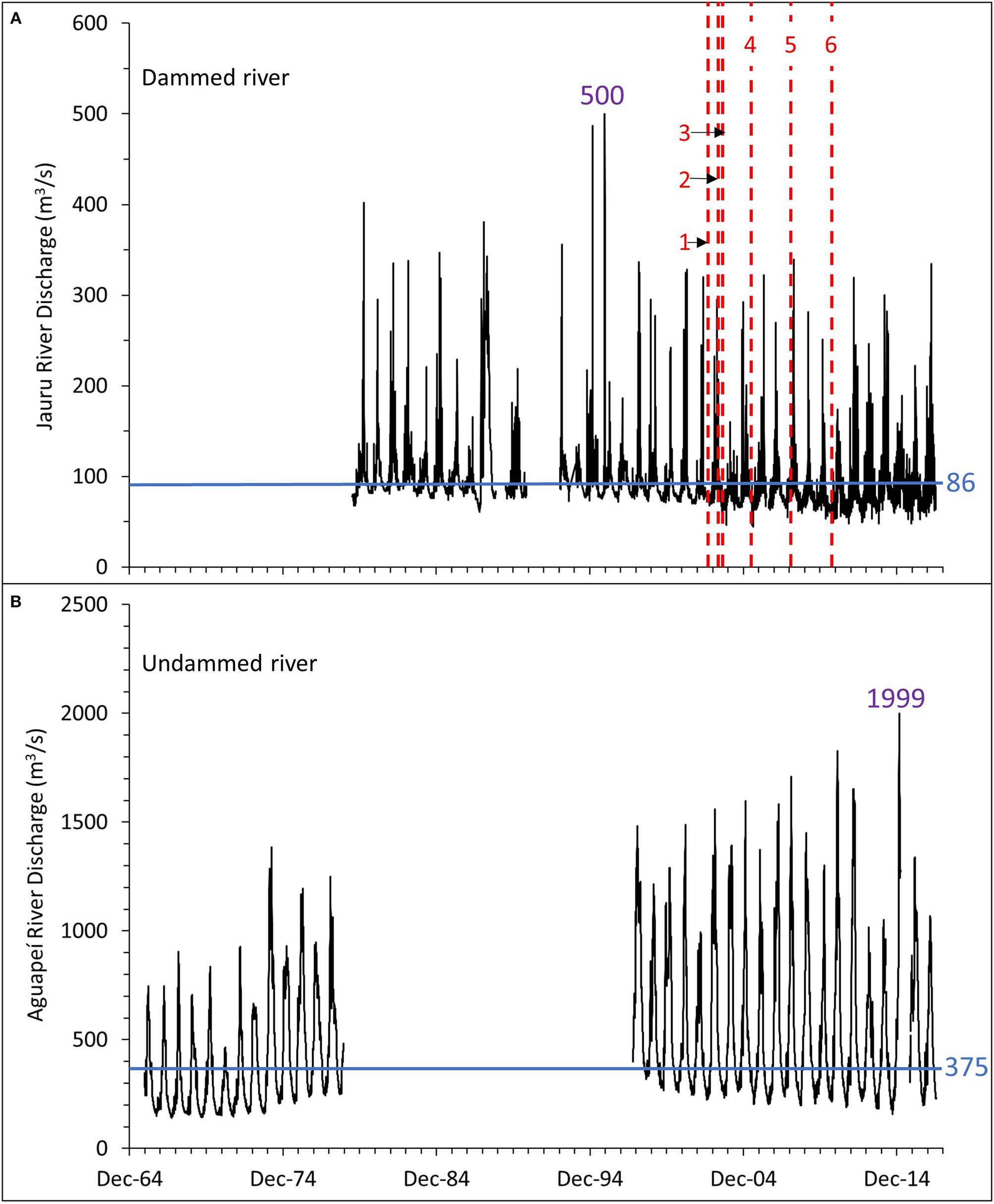
Tropical river basins have experienced dramatically increased hydropower development over the last twenty years. These alterations have the potential to cause changes in hydrologic and ecologic systems. One heavily impacted system is the Upper Paraguay River Basin, which feeds the Pantanal wetland. The Pantanal is a Ramsar Heritage site and is one of the world’s largest freshwater wetlands. Over the past twenty years, the number of hydropower facilities in the Upper Paraguay River Basin has more than doubled. This paper uses the Indicators of Hydrologic Alteration (IHA) method to assess the impact of twenty-four of these dams on the hydrologic regime over twenty years (10 years before and 10 years after dam installation) and proposes a method to disentangle the effects of dams from other drivers of hydrologic change using undammed “control” rivers. While most of these dams are small, run-of-the-river systems, each dam significantly altered at least one of the 33 hydrologic indicators assessed. Across all studied dams, 88 of the 256 calculated indicators changed significantly, causing changes of 5 to 40%, compared to undammed reaches. These changes were most common in indicators that quantify the frequency and duration of high and low pulses, along with those for the rate and frequency of hydrologic changes. Importantly, the flow regime in several undammed reaches also showed significant alterations, likely due to climate and land-use changes, supporting the need for measurements in representative control systems when attributing causes to observed change. Basin-wide hydrologic changes (in both dammed and undammed rivers) have the potential to fundamentally alter the hydrology, sediment patterns, and ecosystem of the Pantanal wetland. The proposed refinement of the IHA methods reveals crucial differences between dam induces alteration and those assigned to other drivers of change; these need to be better understood for more efficient management of current hydropower plants or the implementation of future dams.

10,863 views

59 citations

ORIGINAL RESEARCH
25 March 2021
Hydropeaking by Small Hydropower Facilities Affects Flow Regimes on Tributaries to the Pantanal Wetland of Brazil
Juliane Stella M. C. de Figueiredo, 8 more and Stephen K. Hamilton

5,363 views

17 citations

Further Development of Small Hydropower Facilities May Alter Nutrient Transport to the Pantanal Wetland of Brazil
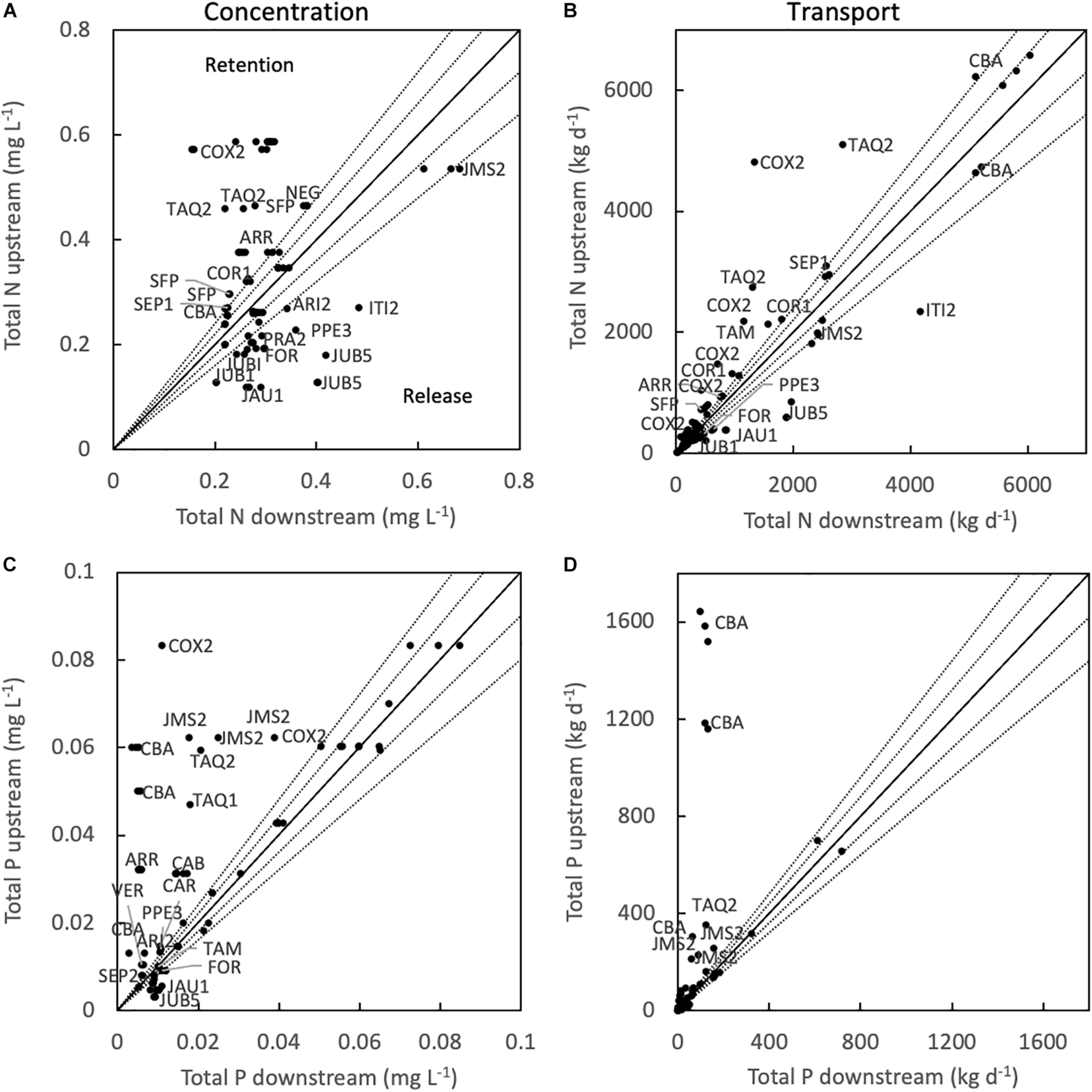
Small hydropower (SHP) facilities are the most common kind of hydroelectric dams being built around the world, and although they are generally viewed as less environmentally harmful than larger dams, there has been little research to support that assertion, particularly in tropical and subtropical regions where the most new SHPs are being constructed. Numerous SHPs have been built, and many more are in development or proposed, in rivers that drain into the Pantanal, a world-renowned floodplain wetland system located mostly in Brazil. The upland tributaries transport sediments and nutrients into the Pantanal, thereby affecting the geomorphological dynamics and biological productivity of downstream floodplains. This study presents measurements from upstream and downstream of 25 current hydropower facilities, most of which are SHPs, throughout the upland watersheds of the Upper Paraguay River basin to reveal how these facilities may affect the concentrations and transport of nutrients in rivers flowing to the Pantanal. In addition, a predictive model using artificial neural networks estimates the impact of building 80 future SHPs on nutrient transport into the Pantanal, based on observations at current facilities as well as the spatial distribution of future facilities. Overall impacts of current hydropower facilities were not large, and in many cases were indistinguishable based on comparisons between upstream and downstream. The short water residence times of reservoirs associated with SHPs likely explain their tendency to have little or no effect on nutrient transport. However, model predictions for hydropower facilities that may be built in the future, many on rivers with higher discharge and sediment loads, point to significant reductions in overall TN (8%) and TP (29%) transport, with potential negative consequences for river and floodplain productivity. Negative impacts may be either because the rivers carry low nutrient concentrations and are thereby sensitive to oligotrophication, or they are particularly important overall nutrient sources supporting ecosystem productivity in downstream rivers and floodplains. These results support recommendations that several river systems presently lacking dams in their lower reaches should be excluded from future hydropower development to maintain the nutrient supply to the Pantanal.

9,532 views

13 citations

ORIGINAL RESEARCH
16 November 2020
Further Development of Small Hydropower Facilities Will Significantly Reduce Sediment Transport to the Pantanal Wetland of Brazil
Ibraim Fantin-Cruz, 7 more and Stephen K. Hamilton

5,032 views

27 citations

Natural river flow provides the conditions required to sustain freshwater ecosystems, and the greater the departure from the natural regime, the greater the loss of those ecosystems. In South America, new hydropower dams are continuously being constructed and planned in regions within and around the Amazon basin and in the Upper Paraguay river basin, a region notable for the Pantanal, a huge wetland ecosystem that is largely dependent on the flow regime of the Paraguay river and its tributaries. In this context, it is meaningful to examine the hydrological changes caused by the major Manso dam, that is operating since 2001 at the headwaters of one of the major tributaries of the Paraguay river. This was done for the same case study by other authors in previous studies using only gauging stations data. However, those previous assessments were limited due to the confounding effects of climate variability and the necessity of relatively long term observed time series. Here, we applied a modelling approach to evaluate the changes in hydrological regime caused by Manso dam operation. Our modelling approach was based on the combination of the MGB large-scale hydrologic model with the SIRIPLAN large-scale wetland model. The models were applied, using river reaches from 2 to 10 km, in two scenarios during the period from 2003 to 2015. In the first scenario we used naturalized streamflow at the dam site as input to the hydrological model. In the second scenario we used observed reservoir outflow time series as input to the hydrological model. Our results show that Manso dam has a regulation effect that decreases high flows, increases low flows and reduces lateral connectivity. The decrease in high flows is limited to the region upstream of the Pantanal floodplain, while increase in low flows extends into Pantanal. Timing of maximum and minimum flows is less affected, except for the river reach immediately downstream of the dam. Our results improve the assessment of spatial patterns of hydrologic alteration, giving more confidence in the assessment of magnitude and spatial extension of the effects of Manso dam in the Pantanal region.

5,823 views

35 citations

ORIGINAL RESEARCH
21 October 2020
Relationship of Freshwater Fish Recruitment With Distinct Reproductive Strategies and Flood Attributes: A Long-Term View in the Upper Paraná River Floodplain
Anielly Galego de Oliveira, 5 more and Angelo Antonio Agostinho

6,073 views

30 citations

Development of large scale hydropower is proceeding rapidly in the Mekong basin without adequate consideration of the severe and cumulative impacts the dams and reservoirs will, and are already beginning to, have on biodiversity, livelihoods and the economies of the lower Mekong countries. Migratory aquatic species will be particularly affected, and global experience indicates that fishways proposed for large mainstream and tributary dams will not provide effective amelioration. An offset strategy of remediating small weirs, flood control devices, regulators and irrigation works on tributaries and flood plains is more likely to be an effective and economically efficient means of supplementing fisheries to compensate for the negative impact of mainstream dams. Mainstream hydropower developments may result in future stranded assets, high electricity costs and even threaten the sovereignty of lower Mekong countries.

14,649 views

53 citations

Large storage dams have widely documented impacts on downstream aquatic environments, but hydroelectric dams with little or no capacity for storage of water inflows (i.e., run-of-river) have received less attention. Two of the world’s largest run-of-river hydropower dams (Jirau and Santo Antônio, Brazil) are located on the Madeira River, the largest tributary to the Amazon River. Here we examine whether the Madeira dams have affected downstream seasonal flood pulses and short-term (daily and sub-daily) flow dynamics. We show that the combined effects of these dams on seasonal flood pulses were modest. However, dam operations significantly increased day-to-day and sub-daily flow variability. The increase in short-term flow variability is largely explained by rapid, short-term variations in river flow caused by fluctuations in energy demand (hydropeaking). Both the magnitude of hydropeaking and the mean absolute day-to-day change in discharge downstream of the dams doubled after dam closure. In addition, the median hourly rate of water level change downstream of the dams was three times higher than upstream. Our findings highlight that even run-of-river dams on very large rivers such as the Madeira—whose average discharge at the dam site is larger than that of the Mississippi River at its mouth—can alter downstream hydrology through hydropeaking. Although little studied in tropical floodplain rivers, hydropeaking by large run-of-river dams may be detrimental to downstream aquatic organisms and human populations that utilize the river for navigation and fisheries.

10,181 views

65 citations