
Promoting Health and Addressing Disparities Amongst Indigenous Populations

123kviews
Editorial13 December 2024
Editorial: Promoting health and addressing disparities amongst Indigenous populations

Indigenous populations worldwide endure persistent health inequities shaped by colonial legacies, systemic discrimination, and socio-economic marginalization. These disparities manifest in elevated rates of preventable diseases, limited access to healthcare, and poorer health outcomes compared to non-Indigenous populations. Discrimination can be a fundamental cause of the health inequalities that exist among Indigenous peoples. Additionally, it has a direct negative impact on health and well-being, as the mistreatment, stereotypes, and lack of quality care they experience discourage them from accessing health services. Therefore, generating multidimensional public policies that protect these groups is essential (Ortiz-Prado et al., 2021;Wylie & McConkey, 2019). Despite global commitments to health equity, barriers such as cultural disconnects, geographic isolation, lack of resources, or geneal exclusion of Indigenous people, and inadequate policy implementation hinder meaningful progress. The studies in this editorial illuminate the multifaceted health challenges faced by Indigenous communities and underscore the urgent need for culturally grounded, community-driven solutions. By navigating through the breadth of research compiled here, we aim to highlight research studies that clearly advocate for Indigenous health equity and inspire action to bridge these gaps.

This editorial presents 19 papers exploring diverse health challenges and innovative interventions for Indigenous populations. These studies exemplify how integrating cultural knowledge and community engagement can drive impactful changes.One of the central themes is access to healthcare. In Australia, the uptake of health assessments among Indigenous populations remains limited due to logistical barriers, cultural disconnects, and systemic inefficiencies (Usher et al., 2023). Indigenous clinical leadership emerges as a crucial enabler, highlighting the importance of empowering communities to lead health initiatives. Similarly, in Mexico, the COVID-19 pandemic exacerbated reproductive health inequities, halving contraceptive use among Indigenous women (Castro-Porras et al., 2023). These findings emphasize the fragility of healthcare systems during crises and the need for resilient, inclusive solutions.Mental health is another recurring focus. The adaptation of mental health interventions for Diné adolescents during the pandemic underscores how culturally tailored approaches can mitigate the psychological impacts of isolation and systemic inequities (Allison-Burbank et al., 2024). In parallel, the validation of historical loss scales for Native Hawaiian adults highlights the intergenerational trauma affecting mental health, pointing to the necessity of tools that capture culturally specific experiences (Antonio et al., 2024) Addressing maternal and child health disparities is also vital. In Ecuador, community-driven sexual education programs emerged as a promising strategy to reduce teenage pregnancies in Indigenous populations (Tituaña et al., 2024). Similarly, research in Aboriginal and Torres Strait Islander communities in Australia revealed that culturally safe maternal care can help reduce stillbirth disparities (Massi et al., 2024). For Diné toddlers, an innovative language intervention combined traditional values with developmental care to address delays caused by systemic neglect (Billey et al., 2024). These studies collectively advocate for interventions that respect Indigenous cultural values while addressing health inequities.The impact of systemic discrimination on Indigenous health is undeniable. Research on American Indian and Alaska Native populations documented pervasive experiences of exclusion, stigmatization, and physical and verbal threats can contribute to poorer health outcomes if not addressed by the larger population (Begay et al., 2024). Similarly, colonial legacies have entrenched disparities in brain health, with a review calling for culturally aligned care models that prioritize community connections and resilience (Henderson et al., 2024).Finally, environmental health emerges as a critical domain. Water contamination caused by mining in Diné communities exemplifies how systemic injustices extend to resource access (Tsosie, 2024). Innovative solutions, such as point-of-use water filters, reflect the resilience and ingenuity of Indigenous communities in addressing these challenges.

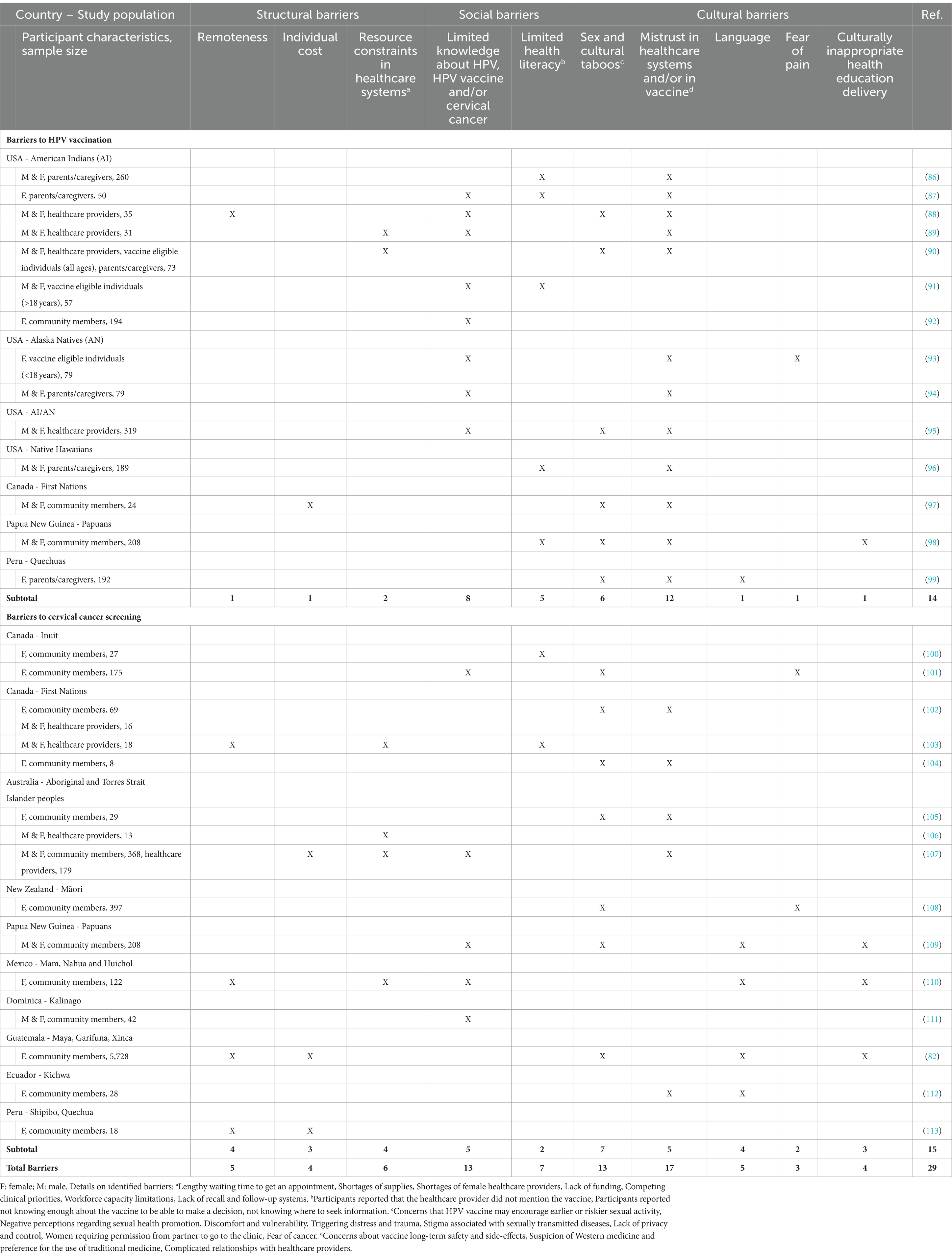
• Preventative Health Assessments in Indigenous Populations of Australia (Usher et al., 2023) This study analyzed the uptake of health assessments by Indigenous Australians. Findings revealed barriers such as limited access to services, lengthy assessments, and cultural disconnects. Indigenous clinical leadership was identified as crucial to improving participation. The study emphasizes the need for culturally sensitive strategies to enhance health outcomes. This scientometric analysis identified a shift from deficit-focused studies to applied, culturally safe approaches. The study calls for advancing equity through respectful collaborations with Indigenous communities and addressing structural barriers within healthcare systems.• Colonial Drivers and Cultural Protectors of Brain Health Among Indigenous Peoples (Henderson et al., 2024) This review explored how colonial legacies have shaped brain health disparities. It emphasized the need for culturally relevant care models and tools, as well as addressing systemic stressors like discrimination and unequal access to care.• Small for gestational age and anthropometric body composition from early childhood to adulthood (Hansen et al., 2024) This cohort study examines changes in anthropometric measurements, including fat measures, across the life course comparing small for gestational age and non-small for gestational age individuals living in urban and remote communities.• Honoring Our Teachings: Children's Storybooks as Indigenous Public Health Practice (Maudrie et al., 2024) This study described the development of a culturally grounded storybook promoting mental health and resilience among AIAN children. By integrating cultural teachings with public health guidance, the project highlighted storytelling as an effective community-based intervention.• A community-embedded approach to increasing the health literacy of Aboriginal children in a regional area (Good et al., 2024) This study explores the implementation of a child-centred, co-designed and communityintegrated program to improve health and well-being outcomes for Aboriginal children in the middle childhood years.• A Psychometric Analysis of Historical Loss Scales Among Native Hawaiian Adults (Antonio et al., 2024) This study validated tools for measuring historical loss and its associated symptoms, such as depression and anxiety. It underscores the importance of addressing intergenerational trauma in developing culturally sensitive interventions for Native Hawaiian communities.• A Rural Teledentistry Care Experience in a Mapuche Community in Chile (Beltrán et al., 2024) This study demonstrated the potential of teledentistry to address oral health disparities in rural Indigenous communities. The approach improved access to care and reduced health inequities for elders.• Factors Influencing Survival and Mortality in Aboriginal Australians with Bronchiectasis (Heraganahally et al., 2024) The study identified factors such as ICU visits and pseudomonas infections as increasing mortality risk, while higher BMI and better lung function were protective. These findings stress the need for targeted interventions to reduce mortality.• Reducing Teenage Pregnancy in Rural Ecuadorian Indigenous Communities (Tituaña et al., 2024) The study emphasized the importance of culturally tailored sexual education programs to address teenage pregnancy. Community engagement and youth-focused approaches were deemed essential for reducing pregnancy rates among Indigenous adolescents.• Adapting Safety Planning Interventions for Diné Communities (Allison-Burbank et al., 2024) This project culturally adapted mental health interventions for Diné adolescents during COVID-19. It highlighted the value of community-driven approaches in addressing mental health challenges.• Development of "+Language is Medicine" for Navajo Toddlers (Billey et al., 2024) The study created a culturally responsive intervention to address developmental delays in Diné toddlers. The program integrates Indigenous values and language, emphasizing culturally grounded approaches to early childhood health.• Addressing Cervical Cancer Disparities in Indigenous Women in Latin America (Muslin, 2024) This article highlighted structural and cultural barriers to HPV vaccination and cervical cancer screening. It advocates for community-driven, culturally tailored interventions to reduce disparities.• Menopause, Blood Pressure, and Osteoporosis in Rural Women (Jin et al., 2024) The study found associations between high blood pressure and osteoporosis in postmenopausal women, emphasizing the need for gender-sensitive healthcare strategies in resource-limited settings.• Discrimination Among American Indian and Alaska Native Populations (Begay et al., 2024) This study documented widespread experiences of discrimination and its detrimental health effects. It calls for public health strategies to mitigate these impacts on Indigenous communities.• Mining Legacies and Water Contamination in Navajo Communities (Tsosie, 2024) This article explored water contamination challenges in Diné communities and proposed innovative, community-centered filtration solutions to improve water safety.• Looking After Bubba for All Our Mob (Massi et al., 2024) This study addressed stillbirth disparities in Aboriginal communities, advocating for culturally safe, family-centered approaches and Indigenous birthing practices to improve maternal health outcomes.

The collective insights from these 19 studies underscore a compelling call to action: addressing health disparities among Indigenous populations is not only a moral imperative but a vital step toward achieving global health equity. Promoting Indigenous health demands more than addressing systemic inequities-it requires valuing cultural knowledge, empowering community leadership, and prioritizing co-designed, culturally sensitive solutions. The articles in this Research Topic provide valuable insights into the unique health challenges faced by Indigenous communities and offer pathways to bridge these gaps. However, much work remains to be done. Centering Indigenous voices in research, policy, and practice is essential for driving meaningful and sustainable progress. Only through sustained efforts and equity-driven policies can we hope to close the health gap and secure a healthier, more just future for all Indigenous populations.

4,241 views

7 citations

ORIGINAL RESEARCH
12 July 2024
A psychometric analysis of the adapted historical loss scale and historical loss associated symptoms scale among native Hawaiian adults
Mapuana C. K. Antonio, 10 more and Joseph Keawe‘aimoku Kaholokula

5,216 views

7 citations

METHODS
16 January 2025
The adaptation process of a safety planning intervention to promote connectedness and reduce distress in Diné adolescents and adults during the COVID-19 pandemic
Joshuaa Dominic Allison-Burbank, 6 more and Emily E. Haroz

3,552 views

1 citations

A rural teledentistry care experience: a geriatric approach to assessing oral health status and treatment needs in older adults from a Mapuche community in Chile
ORIGINAL RESEARCH
5 June 2024
A rural teledentistry care experience: a geriatric approach to assessing oral health status and treatment needs in older adults from a Mapuche community in Chile
Víctor Beltrán, 6 more and Wilfried Engelke
Background: Limited attention has been given to oral health challenges faced by older Indigenous populations, especially in rural settings, where disparities exist. This study aims to assess oral health in a rural Mapuche community in southern Chile, utilizing geriatric technology support, and exploring the connection between geriatric health and oral well-being to fill a gap in this context.A cross-sectional study was conducted involving 76 independent older adults from a rural Mapuche community who required dental care. Assessments were in a remote care setting gathering extensive data including comprehensive geriatric assessments, medical and dental conditions using a geriatric teledentistry platform (TEGO®). Statistical analysis involved descriptive analysis, logistic regression, and both multiple correspondence analysis and k-means cluster analysis.The sample comprised individuals with limited formal education and a high degree of vulnerability. Geriatric assessments unveiled cognitive deterioration, frailty, depression risk, and multimorbidity. A distribution of the DMFT index, number of remaining teeth, number of occluding pairs, number of teeth with restorative needs and other relevant clinical findings was conducted based on sociodemographic, and medical-geriatric-dental characteristics, and additionally, a Multinomial Logistic Regression Analysis of Dentition Variables in Relation to Geriatric Assessments was performed. The dental burden was substantial, with an average DMFT index of 25.96 (SD 4.38), high prevalence of non-functional dentition (89.3%), periodontal disease (83%), xerostomia (63.2%) and oral mucosal lesions (31.5%). Age, lower education, depression, daily medication number and sugary consumption frequency were associated with a decreased average number of teeth (p<0.05). Multiple correspondence analysis and k-means cluster analysis identified 4 clusters, with the edentulous and functional dentition groups being the most distinct.This study uncovers a substantial dental burden and intricate medical-geriatric conditions interlinked among Indigenous older adults in a rural Chilean Mapuche community. The implementation of a geriatric technological ecosystem in the community enabled the resolution of less complex oral health issues and facilitated remote consultations with specialists, reducing the necessity for travel to health centers. This underscores the need for innovative dental public health initiatives to address health disparities and improve the overall well-being of older Indigenous adults.

10,339 views

25 citations

METHODS
19 June 2024
Development of a culturally enhanced caregiver-facilitated language nutrition intervention “+Language is Medicine” to address developmental delay in Diné (Navajo) toddlers
Taylor Billey, 5 more and Joshuaa D. Allison-Burbank

5,324 views

6 citations

Addressing the burden of cervical cancer for Indigenous women in Latin America and the Caribbean: a call for action
Cervical cancer, primarily caused by human papillomavirus (HPV) infection, poses a significant global health challenge. Due to higher levels of poverty and health inequities, Indigenous women worldwide are more vulnerable to cervical cancer than their non-Indigenous counterparts. However, despite constituting nearly 10% of the population in Latin America and the Caribbean (LAC), the true extent of the burden of cervical cancer among Indigenous people in this region remains largely unknown. This article reviews the available information on cervical cancer incidence and mortality, as well as HPV infection prevalence, among Indigenous women in LAC. The limited existing data suggest that Indigenous women in this region face a heightened risk of cervical cancer incidence and mortality compared to non-Indigenous women. Nevertheless, a substantial knowledge gap persists that must be addressed to comprehensively assess the burden of cervical cancer among Indigenous populations, especially through enhancing cancer surveillance across LAC countries. Numerous structural, social and cultural barriers hindering Indigenous women's access to HPV vaccination and cervical cancer screening worldwide have been identified and are reviewed in this article. The discussion highlights the critical role of culturally sensitive education, community engagement, and empowerment strategies in overcoming those barriers. Drawing insights from the success of targeted strategies in certain high-income countries, the present article advocates for research, policies and healthcare interventions tailored to the unique context of LAC countries.

5,833 views

10 citations

ORIGINAL RESEARCH
7 May 2024
Factors influencing survival and mortality among adult Aboriginal Australians with bronchiectasis—A 10-year retrospective study
Subash S. Heraganahally, 4 more and Timothy Howarth

2,553 views

7 citations

Introduction: This study aimed to understand the sociocultural context of teenage pregnancy in an Ecuadorian city with a large indigenous population, to gauge the acceptability of a multifaceted pregnancy prevention program for adolescents, and to elicit perspectives on the optimal program design from adolescents and adult key informants. Methods: We ascertained qualitative data via an online, electronic survey administered from August to September 2020. Open- and closed-ended questions elicited perspectives relating to burden of adolescent pregnancies, acceptability of pregnancy prevention programs, and optimal design of future programs. Twenty-four adolescents (13-19 years of age) and 15 adult key informants working in the healthcare, business, and education sectors in Cotacachi completed the survey. Survey responses were analyzed using a structural and in vivo coding, and an inductive approach to consensus-building around key themes. Results: Most adolescent survey respondents (75%) believed that teen pregnancy is “fairly common” in Cotacachi, and 41.7% believed differences in teen pregnancy rates are not associated with ethnicity. In comparison, 66.7% of adult survey respondents said teen pregnancy disproportionately occurs among indigenous teenagers. Additionally, 45.8% of adolescent and 80% of adult survey respondents believed that a comprehensive sexual education program would help reduce teenage pregnancy rates by imparting reliable sexual health knowledge. Adult respondents noted that the past programs were unsuccessful in preventing teenage pregnancy because of these programs’ inability to fully engage teenagers’ attention, very short time duration, or inappropriate consideration of cultural context. Discussion: In Cotacachi, Ecuador, a sexual health education program is both desired and feasible according to adult and teenager key informants. A successful program must adapt to the cultural context and engage youth participation and attention.

7,693 views

9 citations

ORIGINAL RESEARCH
2 May 2024
Menopause modified the association of blood pressure with osteoporosis among gender: a large-scale cross-sectional study
Haidong Jin, 6 more and Jun Pan

2,799 views

6 citations

ORIGINAL RESEARCH
16 April 2024
Looking after bubba for all our mob: Aboriginal and Torres Strait Islander community experiences and perceptions of stillbirth
Luciana Massi, 12 more and Kym M. Rae

5,963 views

5 citations

ORIGINAL RESEARCH
23 February 2024
Honoring our teachings: children’s storybooks as indigenous public health practice
Tara L. Maudrie, 12 more and Victoria M. O’Keefe

3,605 views

2 citations

ORIGINAL RESEARCH
21 February 2024
Small for gestational age and anthropometric body composition from early childhood to adulthood: the Aboriginal Birth Cohort study
Craig Hansen, 1 more and Gurmeet R. Singh

2,708 views

6 citations

MINI REVIEW
7 February 2024
Colonial drivers and cultural protectors of brain health among Indigenous peoples internationally
Rita Henderson, 6 more and Pamela Roach
Despite relatively higher rates of dementia among Indigenous populations internationally, research into drivers of disparities in brain health and cognitive function has tended to focus on modifiable risk factors over cultural understandings and contextual determinants. By seeking to characterize social and cultural factors that shape brain health and cognition in Indigenous populations, this mini scoping review expands prevailing schools of thought to include Indigenous knowledge systems. This reveals important gaps in culturally aligned care. It also reclaims horizons for research important to Indigenous Peoples that have garnered diminished attention in biomedical approaches. Twenty-three sources were included for data extraction. This synthesis of 23 sources includes health communication about dementia, health provider knowledge about Indigenous health, culturally relevant screening and assessment tools, and culturally grounded care models. Much of the focus is currently still on modifiable risk factors that reside at individual factors, whereas attention to wider social factors that impact populations is needed, as stressors through isolation, discrimination, and unequal care are widely reported. Going forward, identifying structural barriers to living well and recognizing the importance of connection to culture will benefit both Indigenous and non-Indigenous understandings of brain health.

4,377 views

14 citations

ORIGINAL RESEARCH
30 November 2023
Mapping the knowledge structure and trends in Australian Indigenous health and wellbeing research from 2003 to 2022: a scientometric analysis
Michelle A. Krahe, 2 more and Cindy Shannon

4,275 views

1 citations

Coming together for something good: recommendations from a scoping review for dissemination and implementation science to improve indigenous substance use disorder treatment
REVIEW
17 October 2023
Coming together for something good: recommendations from a scoping review for dissemination and implementation science to improve indigenous substance use disorder treatment
Katherine A. Hirchak, 15 more and Aimee N. C. Campbell
Introduction: Dissemination and Implementation (D&I) science is growing among Indigenous communities. Indigenous communities are adapting and implementing evidence-based treatments for substance use disorders (SUD) to fit the needs of their communities. D&I science offers frameworks, models, and theories to increase implementation success, but research is needed to center Indigenous knowledge, enhancing D&I so that it is more applicable within Indigenous contexts. In this scoping review, we examined the current state of D&I science for SUD interventions among Indigenous communities and identified best-practice SUD implementation approaches. Methods: PubMed and PsycINFO databases were queried for articles written in English, published in the United States, Canada, Australia, and New Zealand. We included key search terms for Indigenous populations and 35 content keywords. We categorized the data using the adapted and extended Reach, Effectiveness, Adoption, Implementation, and Maintenance (RE-AIM) framework that emphasizes equity and sustainability. RE-AIM has also been used as a primary model to consistently identify implementation outcomes. Results: Twenty articles were identified from the original unduplicated count of over 24,000. Over half the articles discussed processes related to Reach, Adoption, and Implementation. Effectiveness was discussed by 45% of the studies (n=9), with 25% of the articles discussing Maintenance/sustainability (n=5). Findings also highlighted the importance of the application of each RE-AIM domain for meaningful, well-defined community-engaged approaches. Conclusion: Finding indicated a need to prioritize Indigenous methods to culturally center, realign and adapt Western treatments and frameworks to increase health equity and improve SUD treatment outcomes. Utility in the use of the modified RE-AIM and the continued modification for Indigenous communities was also noted.

5,247 views

15 citations