 Yuchang Liu
 Yongzhong Yang2†
 Haoran Xu
- 1School of Public Affairs, Zhejiang Gongshang University, Hangzhou, China
- 2Business School, Sichuan University, Chengdu, China
With the widespread adoption of generative AI in creative industries, individuals increasingly face a choice between human–human co-creation and human–AI co-creation. Prior comparisons of these modes have largely focused on output quality, efficiency, and user experience, while giving less attention to co-creation intention. Drawing on creativity theory, we argue that perceived novelty and perceived usefulness are the key mechanisms linking co-creator types to co-creation intention, and we test this account across four empirical studies. The results show that, relative to co-creating with humans, co-creating with AI significantly increases participants’ perceived novelty and, counterintuitively, perceived usefulness, thereby increasing co-creation intention. Qualitative interviews identify three principal drivers of why AI is regarded as more useful—efficiency, value, and relationship. Furthermore, we find that the need to belong exerts a moderating effect. Overall, this research extends creativity theory to the AI collaboration context, challenges the conventional assumption that “AI offers greater novelty whereas humans offer greater usefulness,” and uncovers social-motivational boundary conditions in technology-assisted creative work.
1 Introduction
The rapid development of generative AI in recent years has triggered a surge of human–AI co-creation (Nah et al., 2023). Co-creation is the process by which different actors interact and collaborate to jointly create content or value (Liu et al., 2024). With the diffusion of tools such as ChatGPT and Midjourney, AI is increasingly becoming an essential partner in creative work—spanning text writing, visual arts, and product design—thereby substantially expanding the boundaries of co-creation (Doshi and Hauser, 2024; Mariani and Dwivedi, 2024; Horton et al., 2023). Against this backdrop, the research scope of co-creation has extended from traditional human–human co-creation to human–AI co-creation, becoming a focal topic for both academia and industry.
Prior work has begun to compare human–human co-creation and human–AI co-creation along multiple dimensions, including creative quality (Tang et al., 2024; Koivisto and Grassini, 2023; Doshi and Hauser, 2024), efficiency (Noy and Zhang, 2023; Koivisto and Grassini, 2023; Anthony et al., 2023), trust mechanisms (Anthony et al., 2023; Kim et al., 2025; Horton et al., 2023), and creative experience and motivation (McGuire et al., 2024; Tang et al., 2024; Wu et al., 2025), and reveals that the two types of co-creation partners are preferred for different outcomes.
Existing research has largely focused on differences at the level of outcomes or process, yet has seldom examined whom individuals actually prefer to partner with when they face a choice among different co-creator types. Preliminary evidence suggests that co-creation preferences are not fixed but are shaped by situational factors and psychological trade-offs (Zhang et al., 2025). However, the lack of systematic inquiry into this issue not only constrains scholarly understanding of the psychological foundations of human–AI co-creation, but also weakens the effective role that AI can play in creative practice. Accordingly, this study centers on a key question: in co-creation tasks, are individuals more inclined to choose a human partner or an AI partner—and what psychological mechanisms underlie this choice?
At its core, co-creation is a creative process, and evaluations of creative quality have long rested on two core dimensions: novelty and usefulness (Runco and Jaeger, 2012). Accordingly, this study adopts creativity theory as its framework and introduces perceived novelty and perceived usefulness as the key mediating mechanisms that explain how different co-creator types shape individuals’ co-creation intention. Equipped with a vast knowledge base and divergent thinking, AI can generate unexpected ideas and thus evoke a stronger sense of novelty (Doshi and Hauser, 2024; Tigre Moura et al., 2023); by contrast, human partners possess distinctive advantages in contextual understanding, commonsense reasoning, and emotional support, thereby enhancing the usefulness and practical value of collaborative outcomes (Huang et al., 2024; Markovitch et al., 2024; Revilla et al., 2023). We therefore infer that different co-creator types influence co-creation intention by altering individuals’ perceived novelty and perceived usefulness.
This research aims to systematically compare human–human co-creation and human–AI co-creation in terms of the mechanisms through which they influence co-creation intention, to identify the mediating roles of perceived novelty and perceived usefulness, and to further examine the moderating role of the need to belong in this process. To this end, we conducted four studies in sequence: Study 1 (n = 150) employed a scenario-based experiment to provide an initial test of the effect of co-creator types (human vs. AI) on co-creation intention and to examine mediation via perceived novelty and perceived usefulness. Study 2 (n = 243) replicated the findings of Study 1 under a different experimental context and additionally tested self-efficacy as a potential alternative mediator. Study 3 (qualitative interviews, n = 50) probed the counterintuitive result from the first two studies—namely, that human–AI co-creation was perceived as higher in perceived usefulness—to uncover its underlying drivers. Study 4 (n = 294) built on the preceding findings to further assess whether the need to belong moderates the mediating effect of perceived usefulness.
This study makes three key contributions. First, it integrates humans and AI as two distinct co-creator types within a unified framework, systematically compares their effects on co-creation intention, and uncovers the mediating roles of perceived novelty and perceived usefulness. This not only extends creativity theory to the domain of co-creation but also responds to current calls to elucidate the psychological mechanisms of human–AI co-creation. Second, contrary to the conventional assumption, our results show that AI elevates not only perceived novelty but also perceived usefulness, thereby challenging the entrenched belief that “humans are more useful whereas AI is more novel.” This counterintuitive finding enriches our understanding of AI’s role in creative processes. Third, we verify the moderating effect of the need to belong, revealing the pivotal role of social-motivational factors in technology-assisted creative activities and providing more complete boundary conditions for research on human–AI co-creation.
2 Literature review
2.1 Human–human co-creation vs. human–AI co-creation
Co-creation typically refers to a process in which two or more actors interact and collaborate to jointly produce content or value (Liu et al., 2024). In conventional settings, co-creation primarily manifests as interpersonal collaboration—namely, human–human co-creation. This mode is widespread in the cultural and creative industries, including design teams (Dubois et al., 2024), advertising creative teams (Klein, 2025), R&D teams (Jeong et al., 2024), and artistic production (Wandel-Brannigan and Matamala, 2024). The advantages of human–human co-creation include pooling diverse perspectives, thereby improving creative quality and originality (Baruah and Green, 2023; Autrey et al., 2024; Grund et al., 2025), and building trust and social capital through sustained interaction, which in turn enhances the quality of collaboration (van Zoonen et al., 2024; Reus et al., 2023) and provides resources for subsequent cooperation and the diffusion of innovation (Pyo et al., 2023; Li et al., 2024).
The rise of generative AI in recent years has broken the constraint of humans as the sole co-creators and opened new perspectives for co-creation research. An expanding body of practice and scholarship now explores human–AI co-creation, such as assisting with copywriting, brainstorming ideas, and drafting design proposals (McGuire et al., 2024; Doshi and Hauser, 2024; Nah et al., 2023). AI can produce diverse sketches and concepts to stimulate designers’ imagination and provide support during evaluation (Yu, 2025), thereby helping to overcome fixation and discover novel solution paths (Yu, 2025; Ma and Huo, 2024). At the same time, AI’s virtually unbounded capacity for content generation markedly improves efficiency (Grewal et al., 2024; Koivisto and Grassini, 2023); for example, in programming tasks, developers can complete work more quickly with AI tools (Wu et al., 2025). These developments have led scholars and practitioners to hold high expectations for human–AI co-creation, viewing it as a promising means to extend the boundaries of human creativity (Wu et al., 2025).
With the accumulation of research, comparisons between human–human co-creation and human–AI co-creation have become a focal topic (see Table 1). Overall, the extant literature does not yield a simple answer to “which mode is superior,” but rather presents a complex and nuanced picture. Human–human co-creation holds advantages in creative quality, affective fulfillment, and trust relationships, tending to generate more original and ingenious ideas (Tang et al., 2024; Koivisto and Grassini, 2023), to spark serendipitous insights through interpersonal interplay and to enhance trust, satisfaction, and creative confidence (Pick et al., 2024; Anthony et al., 2023; Wu et al., 2025), and to strengthen individuals’ sense of ownership and sustained motivation through empathetic feedback (Tang et al., 2024). However, interpersonal collaboration also exhibits limitations—for example, constraints in efficiency and scale and a tendency toward frictions and conformity effects (Longworth et al., 2024; Yu, 2025).

Table 1. Human–human co-creation vs. human–AI co-creation.
By comparison, human–AI co-creation—enabled by generative AI—exhibits strong efficiency and scalability: it can rapidly produce large volumes of ideas (Koivisto and Grassini, 2023) and, on average, may even be more creative than an individual working alone (Doshi and Hauser, 2024; Wu et al., 2025). Yet its limitations are also salient: its trust foundations are more fragile, hinging primarily on technical performance and thus easily undermined by errors or algorithmic concerns (Horton et al., 2023; Bellaiche et al., 2023; Hitsuwari et al., 2023). Moreover, it lacks the socio-emotional exchange and the sense of agency characteristic of interpersonal collaboration (Ma and Huo, 2024; Zhou et al., 2023; Lyu et al., 2022; Tang et al., 2024).
Given the distinct strengths and limitations of human–human co-creation and human–AI co-creation, a growing research question is: in real-world contexts, whom do people actually prefer to co-create with? Existing studies indicate that such preferences are not fixed but are shaped by specific contexts and psychological trade-offs (Zhang et al., 2025). For example, co-creation intention may be jointly influenced by individuals’ intrinsic motivation (Roy et al., 2023), self-efficacy (Zhang et al., 2025), team climate (Bangun et al., 2023), and the level of trust (Liu et al., 2025). On the one hand, some creative workers—especially younger practitioners in writing and design—exhibit positive attitudes toward human–AI co-creation (Chellappa and Luximon, 2024); on the other hand, many remain cautious or even resistant (Haan, 2023), worrying that AI may undermine creative distinctiveness (Doshi and Hauser, 2024), diminish their sense of accomplishment (McGuire et al., 2024), or threaten job security (Horton et al., 2023). Therefore, whether people prefer to co-create with AI or with humans is not only an open theoretical question but also one of practical importance for optimizing human–AI co-creation and leveraging complementary strengths.
2.2 Creativity theory: the mediating roles of perceived novelty and perceived usefulness
Creativity theory holds that novelty and usefulness are the two core dimensions that define creativity (Runco and Jaeger, 2012). In other words, only outcomes that are both novel and useful qualify as truly creative. From this view, perceptions of novelty and usefulness may mediate individuals’ intention to engage in co-creation. When people perceive a co-creation mode as more novel or more useful, they are more likely to initiate and sustain that collaboration (Lenart-Gansiniec et al., 2025; Xie et al., 2023).
2.2.1 The mediating role of perceived novelty
Perceived novelty refers to individuals’ subjective sense of how new an experience or outcome is—namely, the extent to which it feels unprecedented, unfamiliar, and capable of eliciting unexpected stimulation and surprise (Runco and Jaeger, 2012). In the context of co-creation, a high level of perceived novelty means participants regard the focal idea as distinctive and new, thereby becoming more readily engaged and experiencing more positive affect. Compared with human partners, AI—drawing on a vast and heterogeneous knowledge base—can generate nontraditional and even unexpected solutions (Doshi and Hauser, 2024; Tigre Moura et al., 2023); such cross-domain generation often feels refreshing and sparks new inspiration (Chen et al., 2025). For example, Li et al. (2025) shows that customers experience a heightened sense of novelty when robots are involved, which in turn strengthens their willingness to co-create value. Moreover, in human collaboration, individuals often suppress out-of-the-box ideas due to concerns about criticism; when interacting with AI, evaluation apprehension (i.e., the feeling of being judged) is comparatively weaker, making people more willing to propose unconventional ideas and thereby further amplifying perceived novelty (Bullock Muir et al., 2024). Therefore, we infer that, relative to human–human co-creation, human–AI co-creation is more likely to elicit stronger perceived novelty.
Furthermore, perceived novelty is not only a cognitive experience but also a psychological motivator. Motivational theory posits that novelty seeking and exploration are important drivers of intrinsic motivation (Deci and Ryan, 2000; González-Cutre et al., 2016). Prior research shows that perceived novelty can heighten interest and the willingness to persist: for instance, augmented reality (AR) technology increases consumers’ purchase intention by creating unprecedented interactive experiences (Söderström et al., 2024), and in generative-AI applications, novelty is regarded as a key condition for users’ continued use of ChatGPT (Wolf and Maier, 2024). In co-creation settings, novel outcomes elicit curiosity, surprise, and excitement, thereby enhancing positive affect and sustained engagement (Honda and Yanagisawa, 2025). Thus, when co-creation experiences routinely evoke a sense of novelty, participants are more likely to derive enjoyment and a sense of accomplishment and to display higher co-creation intention. Accordingly, we propose:
H1: Compared with human–human co-creation, human–AI co-creation increases individuals’ perceived novelty, which in turn enhances co-creation intention.
2.2.2 The mediating role of perceived usefulness
Perceived usefulness typically refers to the extent to which individuals believe that using a particular tool or collaborating with a particular partner will enhance their performance or help them achieve their goals (Davis, 1989). In human–human co-creation settings, human partners hold advantages in contextualized understanding, commonsense reasoning, and the integration of tacit knowledge; they can discern subtle needs, provide immediate feedback, and coordinate the overall direction, thereby minimizing deviations and errors (DeChurch et al., 2024; Sun et al., 2024). This process not only fosters a stronger sense of safety and effectiveness but also heightens participants’ subjective perception of the collaboration’s usefulness. Moreover, human partners can offer emotional support and social feedback during interaction; these non-functional values are likewise foundational to co-creation (Tang et al., 2024; McGuire et al., 2024) and further strengthen participants’ judgments that the collaboration is “worthwhile” (Grenier et al., 2024; Jiang et al., 2024). Therefore, human–human co-creation often yields higher perceived usefulness.
By contrast, although AI enjoys advantages in creativity and efficiency, its recommendations may at times misalign with subtle contextual needs or lack feasibility, necessitating additional screening and verification (Farquhar et al., 2024; Chen et al., 2024). More importantly, behavioral research shows that when people observe algorithmic errors, they tend to exhibit algorithm aversion, becoming more cautious about—and even discounting—subsequent algorithmic suggestions (Kim et al., 2025; Horton et al., 2023). This implies that uncertainty surrounding AI’s reliability and contextual fit may depress individuals’ subjective evaluations of its perceived usefulness.
From the Technology Acceptance Model (TAM) and its extensions, perceived usefulness has consistently emerged as a key antecedent of adoption and continuance intentions (Davis, 1989; Venkatesh and Davis, 2000; Venkatesh et al., 2003). In co-creation settings, if creative workers believe that a given collaboration mode (e.g., human–human co-creation) can consistently yield more useful outcomes, they are more likely to invest in it and exhibit higher co-creation intention (Liu and Huang, 2025). This logic also accords with the concept of outcome expectations in motivational theory: when people anticipate that collaborating with a particular type of partner will lead to better performance or more useful results, their co-creation intention increases significantly (Bandura, 1991). Accordingly, we propose (see Figure 1):

Figure 1. Research model.
H2: Compared with human–AI co-creation, human–human co-creation increases individuals’ perceived usefulness, which in turn enhances co-creation intention.
3 Study 1: effects of co-creator types on co-creation intention
The primary aim of Study 1 is to examine how different co-creator types (human vs. AI) affect individuals’ content co-creation intention, and to test the mediating roles of perceived novelty and perceived usefulness in this relationship.
3.1 Experimental design and participants
We employed a single-factor, between-subjects design (co-creator type: human vs. AI). Using G*Power 3.1, the required sample size was estimated at 128 (number of groups = 2, effect size = 0.25, α = 0.05, power = 0.80). We recruited 165 participants with prior experience using generative AI via the online platform Credamo.1 After attention checks, 150 valid responses remained. Of these, 53.3% were female; 84.6% were aged 21–40; and 81.3% held associate/bachelor’s degrees.
3.2 Procedure and measures
Participants were randomly assigned to the human–human co-creation or human–AI co-creation condition and read the corresponding scenario materials. The vignette was self-developed following the recommendations of Lelo de Larrea (2025) and asked participants to imagine engaging in a creative task in which, together with a human partner (vs. AI), they produced a short story including both text and plot. After reading the scenario, participants completed the perceived novelty scale (Yang and Xu, 2025; Cronbach’s α = 0.935), the perceived usefulness scale (Davis, 1989; α = 0.852), and the co-creation intention scale (You and Robert Jr, 2018; α = 0.887). All items were rated on a 7-point Likert scale (1 = strongly disagree, 7 = strongly agree). Finally, participants reported basic demographic information and received CNY 1 as compensation. The full vignette and procedure are provided in Appendix A.
3.3 Results
3.3.1 Basic effects tests
Using perceived novelty and perceived usefulness as dependent variables, with co-creator type as the independent variable and controlling for gender, age, and education, we conducted ANOVAs. Results showed that, relative to human–human co-creation, human–AI co-creation significantly increased perceived novelty [M_AI = 5.80, SD = 0.86; M_human = 4.07, SD = 1.73; F(1,148) = 60.35, p < 0.001, ηp2 = 0.29]. By contrast, human–human co-creation did not increase perceived usefulness relative to AI [M_AI = 5.89, SD = 0.73; M_human = 5.31, SD = 1.20; F(1,148) = 13.03, p < 0.001, ηp2 = 0.08]. Human–AI co-creation also significantly increased co-creation intention compared with human–human co-creation [M_AI = 6.12, SD = 0.62; M_human = 5.35, SD = 1.23; F(1,148) = 23.29, p < 0.001, ηp2 = 0.14]. Regression analyses with perceived novelty and perceived usefulness predicting co-creation intention indicated that perceived novelty positively predicted co-creation intention [β = 0.26, t(146) = 5.57, p < 0.001], and perceived usefulness also positively predicted co-creation intention [β = 0.73, t(146) = 17.92, p < 0.001] (see Figure 2).
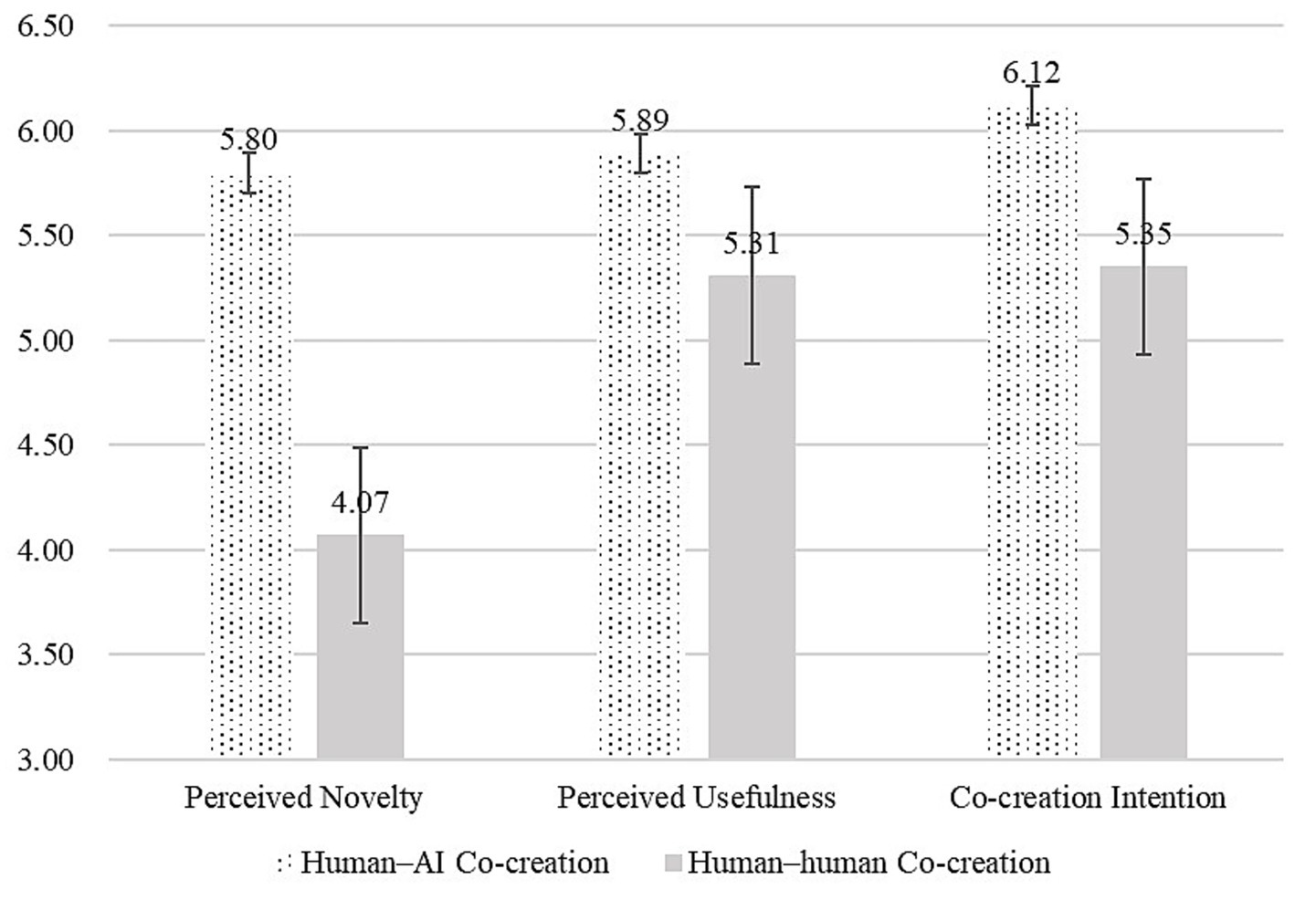
Figure 2. Effects of co-creator types (Study 1).
3.3.1.1 Mediation analysis
We used Hayes’s (2017) PROCESS macro (Model 4; bootstrapping = 5,000) to test mediation. The total effect of co-creator type on co-creation intention was significant [β = 0.769, SE = 0.159, t = 4.83, p < 0.001, 95% CI (0.454, 1.084)], whereas the direct effect was not [β = 0.041, SE = 0.087, t = 0.48, p = 0.635, 95% CI (−0.130, 0.212)], indicating full mediation. Further analyses showed a significant indirect effect via perceived novelty [β = 0.292, SE = 0.065, 95% CI (0.172, 0.427)] and a significant indirect effect via perceived usefulness [β = 0.436, SE = 0.133, 95% CI (0.189, 0.706)]. The difference between the two indirect effects was not significant [β = −0.144, SE = 0.133, 95% CI (−0.424, 0.101)]. In sum, Study 1 supports H1 but not H2: relative to human–human co-creation, human–AI co-creation increases both perceived novelty and perceived usefulness, thereby enhancing co-creation intention.
3.4 Discussion
The findings indicate that individuals are, overall, more willing to engage in human–AI co-creation. This tendency arises because, relative to human partners, AI more strongly enhances perceived novelty and perceived usefulness, thereby increasing co-creation intention. Notably, the results did not support H2; instead, the experiment showed that human–AI co-creation heightened perceived usefulness and significantly promoted co-creation intention. This unexpected pattern reveals a theoretically intriguing phenomenon that warrants further investigation. In addition, prior research suggests that self-efficacy may be an important factor shaping individuals’ willingness to use AI (Zhang et al., 2025; Lin, 2025). Accordingly, Study 2 will formally test the proposed mediation model in a new experimental context and further examine whether task self-efficacy may operate as an alternative mediating mechanism.
4 Study 2: replicating the effects of co-creator types on co-creation intention
The purpose of Study 2 is to vary the participant sample and task context to enhance the generalizability of Study 1’s conclusions, and to examine whether task self-efficacy may serve as an alternative mediating explanation.
4.1 Experimental design and participants
We employed a single-factor, between-subjects design (co-creator type: human vs. AI). Via the Credamo platform, we recruited 270 participants with prior experience using generative AI; after attention checks, 243 valid responses remained. Among them, 56.8% were female; 86.5% were aged 21–40; and 79.8% held associate/bachelor’s degrees.
4.2 Procedure and measures
The procedure closely mirrored Study 1. Participants were randomly assigned to the human–human co-creation or human–AI co-creation condition and read the corresponding scenario. The vignette asked them to imagine undertaking a creative task—designing a promotional poster, including the slogan and layout—together with a human partner (vs. AI) to produce the final work. After reading the scenario, participants completed the perceived novelty scale (Yang and Xu, 2025; Cronbach’s α = 0.907), the perceived usefulness scale (Davis, 1989; α = 0.717), the co-creation intention scale (You and Robert Jr, 2018; α = 0.780), and the task self-efficacy scale (Tierney and Farmer, 2002; α = 0.716). Finally, they reported basic demographic information and received CNY 1 as compensation. The full vignette and procedure are provided in Appendix B.
4.3 Results
4.3.1 Basic effects tests
Using perceived novelty, perceived usefulness, and self-efficacy as dependent variables, with co-creator type as the independent variable and controlling for gender, age, and education, we conducted ANOVAs. Results showed that, relative to human–human co-creation, human–AI co-creation significantly increased perceived novelty [M_AI = 5.55, SD = 0.84; M_human = 4.60, SD = 1.58; F(1,241) = 34.92, p < 0.001, ηp2 = 0.13]. By contrast, human–human co-creation did not increase perceived usefulness relative to AI [M_AI = 5.88, SD = 0.60; M_human = 5.72, SD = 0.61; F(1,241) = 4.52, p = 0.035, ηp2 = 0.02]. Human–AI co-creation also significantly increased co-creation intention compared with human–human co-creation [M_AI = 5.96, SD = 0.68; M_human = 5.71, SD = 0.77; F(1,241) = 7.05, p = 0.008, ηp2 = 0.028]. Regression analyses indicated that perceived novelty positively predicted co-creation intention [β = 0.226, t(238) = 4.57, p < 0.01] and perceived usefulness also positively predicted co-creation intention [β = 0.581, t(238) = 10.55, p < 0.01] (see Figure 3).
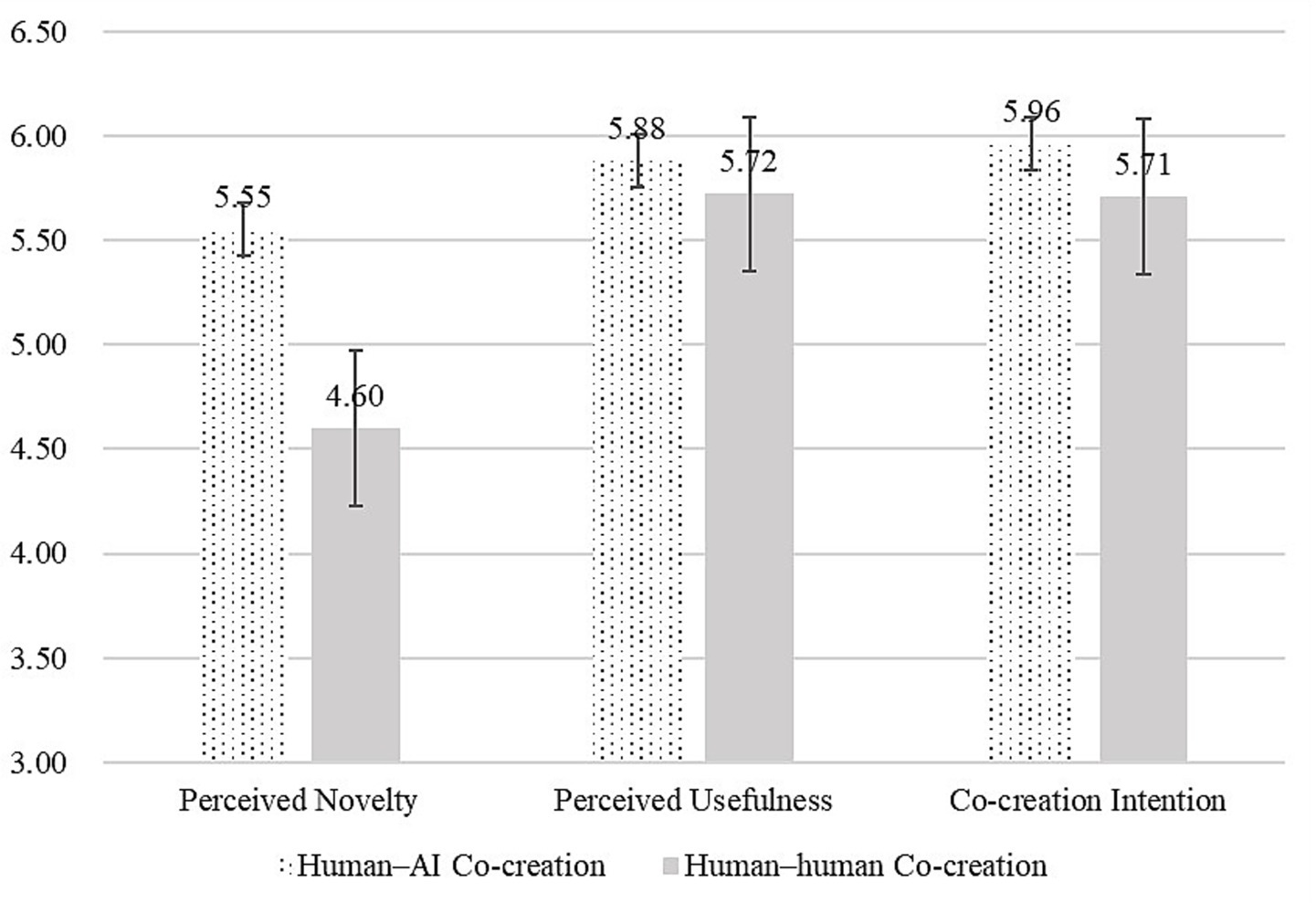
Figure 3. Effects of co-creator types (Study 2).
4.3.1.1 Mediation analysis
We used Hayes’s (2017) PROCESS macro (Model 4; bootstrapping = 5,000) to test mediation. The total effect of co-creator type on co-creation intention was significant [β = 0.248, SE = 0.094, t = 2.66, p = 0.009, 95% CI (0.064, 0.432)], whereas the direct effect was not [β = 0.016, SE = 0.072, t = 0.22, p = 0.825, 95% CI (−0.125, 0.157)], indicating full mediation. Further analyses showed a significant indirect effect via perceived novelty [β = 0.118, SE = 0.031, 95% CI (0.062, 0.182)] and a significant indirect effect via perceived usefulness [β = 0.116, SE = 0.058, 95% CI (0.008, 0.230)]; by contrast, the indirect effect via task self-efficacy was not significant [β = −0.002, SE = 0.010, 95% CI (−0.024, 0.018)]. Taken together, Study 2 again supported H1 but not H2: consistent with Study 1, human–AI co-creation increased both perceived novelty and perceived usefulness, thereby promoting co-creation intention, while the alternative mediation through task self-efficacy was ruled out.
4.4 Discussion
Study 2 replicated the findings of Study 1 in a new task context: H1 was supported, confirming that human–AI co-creation enhances perceived novelty; however, H2 was not supported. In contrast, AI co-creation also significantly increased perceived usefulness, further enhancing co-creation intention. Additionally, this study ruled out task self-efficacy as a potential mediator. These results strengthen the robustness of the effects across different creative tasks. Therefore, Study 3 will employ qualitative methods to explore the underlying reasons why people perceive human–AI co-creation as more useful.
5 Study 3: exploring why human–AI co-creation is perceived as more useful
Study 3 aims to further validate the findings of Studies 1 and 2 through qualitative research and to explore the key reasons why human–AI co-creation is perceived as more useful.
5.1 Research design and participants
This study employed semi-structured online interviews to conduct an exploratory analysis from participants’ subjective experiences. We newly recruited 50 participants, all of whom had firsthand experience co-creating separately with AI and with humans, to enable comparative evaluations of the two forms of co-creation. Among them, 52% were female; 82% were aged 21–40; and 88% held associate/bachelor’s degrees. The interviews used open-ended prompts centered on four core questions: (1) Which do you perceive as more novel—human–AI co-creation or human–human co-creation? (2) Which do you perceive as more useful? (3) With whom are you more willing to co-create? (4) Compared with humans, in what specific ways is human–AI co-creation useful? Please provide at least five descriptors.
5.2 Results
Findings from the semi-structured interviews further corroborated the main results of the first two experiments: most participants preferred human–AI co-creation and judged AI superior to human–human co-creation on both perceived novelty and perceived usefulness. Specifically, 76% of respondents (n = 38) preferred co-creating with AI, 92% (n = 46) viewed AI as more novel, and 74% (n = 37) viewed AI as more useful. These results support H1 and are consistent with the conclusions regarding H2 in the first two studies.
Drawing on word-frequency analysis and thematic analysis, responses to “Compared with humans, in what ways is human–AI co-creation useful?” clustered strongly around three factors—efficiency, value, and relationship (see Figure 4).
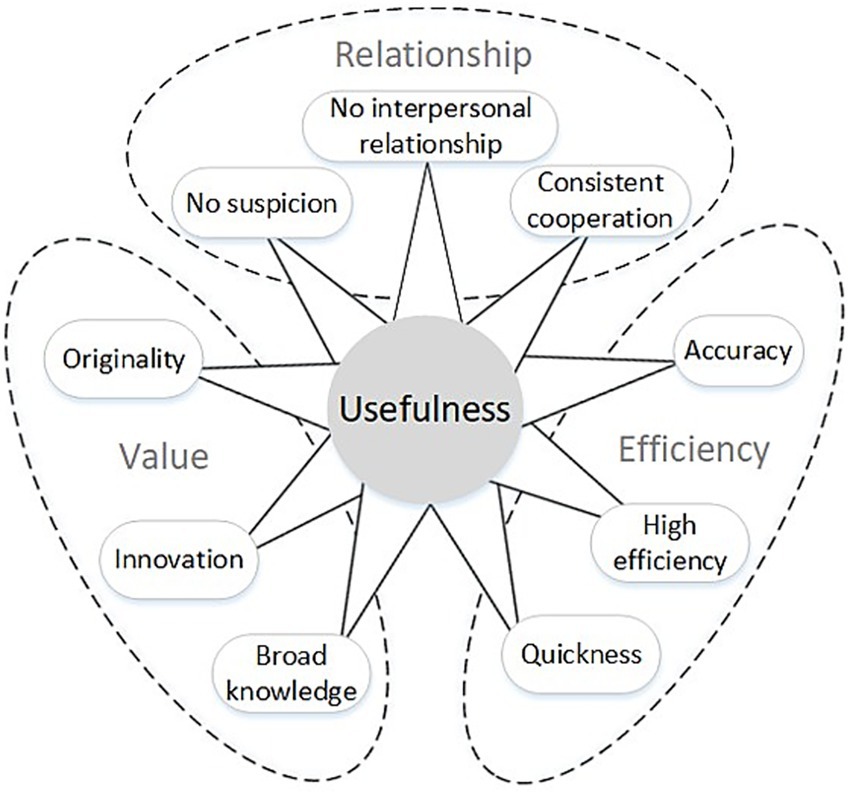
Figure 4. Drivers of AI’s Usefulness.
The analyses further revealed three driving factors of AI’s usefulness: efficiency, value, and relationship. Participants widely reported that AI markedly improves work efficiency, with “high efficiency” (n = 34), “quickness” (n = 18), and “accuracy” (n = 15) emerging as the primary usefulness descriptors. In addition, AI’s value for innovation and cross-domain knowledge acquisition was recognized: terms such as “broad knowledge” (n = 10), “originality” (n = 9), and “innovation” (n = 5) reflect AI’s advantages in creative inspiration and breaking mental sets. Finally, AI’s relationship characteristics—captured by “no interpersonal relationship” (n = 8), “no suspicion” (n = 7), and “consistent cooperation” (n = 4)—suggest that collaboration with AI avoids emotional volatility and communication barriers, thereby improving collaborative efficiency.
5.3 Discussion
Study 3 focused on clarifying why participants perceive human–AI co-creation as more useful and identified three themes: efficiency, value, and relationship. This aligns closely with current research on the application of AI in creative collaboration.
First, efficiency is among the most important reasons why AI is perceived as highly useful. The study finds that AI can generate a large number of ideas within a very short time, markedly improving work efficiency (Noy and Zhang, 2023). This is consistent with Wu et al. (2025), who show that programmers using AI tools complete tasks significantly faster. In addition, Koivisto and Grassini (2023) note that AI can tirelessly and with great quickness output large volumes of preliminary ideas, substantially enhancing the efficiency and scalability of creative production—a performance advantage that makes AI an ideal partner in the creative process.
Second, value captures AI’s advantages in breaking entrenched mindsets and providing cross-domain knowledge. With a vast knowledge base and diverse modes of thinking, AI furnishes creative workers with perspectives and solution paths that extend beyond everyday experience (Yu, 2025; Ma and Huo, 2024). These attributes—broad knowledge, originality, and innovation—enhance perceived novelty and make AI a pivotal source of creative inspiration. Yu (2025) notes that by generating diverse sketches and concept proposals, AI can stimulate designers’ imagination and offer effective assistance, an inspirational edge that helps overcome fixation and uncover entirely new solutions. Moreover, AI’s value in innovation and knowledge acquisition has been further substantiated in creative and design domains (Ma and Huo, 2024; Mariani and Dwivedi, 2024).
Finally, relationship highlights the distinctive value of human–AI co-creation in “de-interpersonalized” collaboration. Many respondents reported that co-creating with AI avoids the emotional volatility, conflicts of interest, and communication barriers common in human collaboration (Bullock Muir et al., 2024). This mode of no interpersonal relationship allows individuals to focus on the creative task without emotional burdens or interpersonal frictions. Hu et al. (2025) further found that, when collaborating with AI, participants typically regard it as a tool or assistant rather than an equal creative agent, which streamlines the relationship, fosters consistent cooperation, and helps improve task completion efficiency. Koivisto and Grassini (2023) likewise noted that AI can circumvent affective interference that may arise in human collaboration, making the cooperative process smoother.
6 Study 4: the moderating role of the need to belong
Although AI has demonstrated significant advantages in many areas, human collaboration still holds unique value in terms of emotional support, creative motivation, and shared sense of accomplishment (Tang et al., 2024; McGuire et al., 2024). However, as Wu et al. (2025) pointed out, prolonged reliance on AI may reduce individuals’ sense of challenge and weaken curiosity and creative motivation. Additionally, Tang et al. (2024) found that participants collaborating with AI did not experience significant increases in creative confidence or creative motivation, in stark contrast to those collaborating with humans. This disparity suggests that individuals’ social needs may play an important role in influencing their preferences and engagement in collaborative efforts. Specifically, in creative collaboration, the emotional bonds and social interactions between humans often serve to spark higher levels of creative motivation and shared sense of achievement.
A growing body of empirical research on co-creation has incorporated social motivational factors, as briefly summarized in Table 2. In human–human co-creation research, the need to belong has frequently been recognized as a key factor influencing co-creative behavior. The need to belong is an intrinsic social motive where individuals desire to form close interpersonal relationships (Baumeister and Leary, 1995), and it significantly influences people’s preferences and engagement in collaborative efforts (Afota et al., 2024). However, in studies on human–AI co-creation or comparisons between two co-creation types, while many have examined social motivational factors such as trust (Daly et al., 2025), empathy (Zhu et al., 2025; Qian and Wan, 2025), reliance (Siemon et al., 2025) and commitment feeling (Wang et al., 2025), the need to belong, although a fundamental social motivation, has rarely been directly investigated or has been treated only as a mediating variable. Building on these observations, this study introduces the need to belong as a moderator to help uncover individual differences in response to different co-creation types and to further clarify the boundary conditions under which social motivations operate in human–AI co-creation.
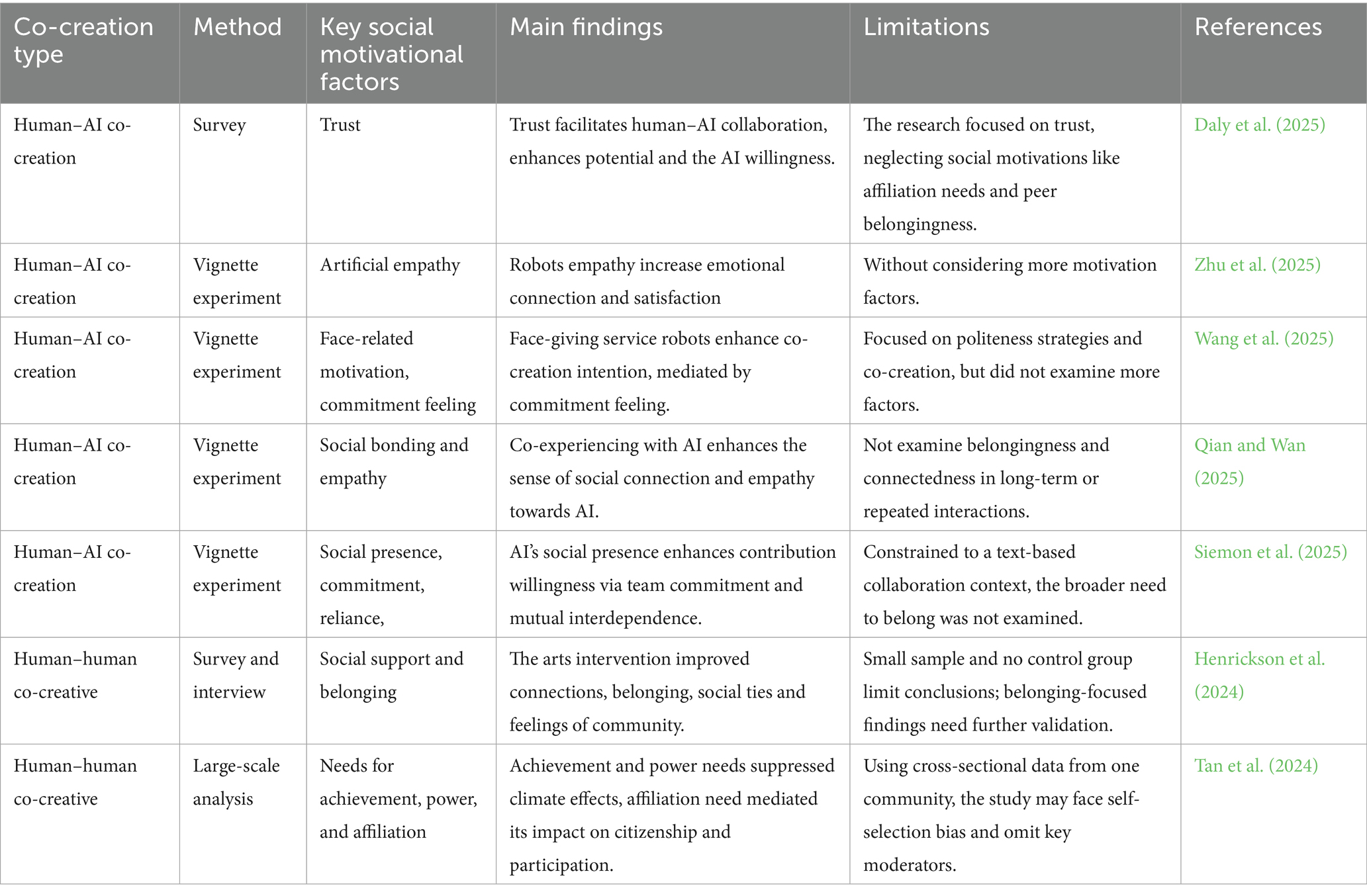
Table 2. Empirical studies on social motivation in co-creation.
In co-creation contexts, individuals with a high need to belong are more likely to perceive human partners as providing emotional support and social interaction, thereby enhancing the perceived usefulness of the collaboration. Conversely, individuals with a low need to belong are more focused on task efficiency and knowledge advantages, making them more likely to perceive human–AI co-creation as more useful. In contrast, novelty is more dependent on AI’s cross-domain generation abilities and non-traditional thinking, rather than being influenced by the individual’s level of need to belong. Accordingly, this study proposes the following hypotheses:
H3a: The need to belong moderates the mediating effect of perceived usefulness. Specifically, for individuals with a low need to belong, human–AI co-creation enhances perceived usefulness more than human–human co-creation, thereby increasing co-creation intention; for individuals with a high need to belong, the difference in perceived usefulness between human–AI co-creation and human–human co-creation is not significant.
H3b: The need to belong does not moderate the mediating effect of perceived novelty. In other words, regardless of the level of the need to belong, human–AI co-creation always enhances perceived novelty more than human–human co-creation, thereby promoting co-creation intention.
To test these hypotheses, this study conducted Supplementary Study 4, aiming to further examine whether the need to belong moderates the mechanism through which co-creator type affects co-creation intention via perceived usefulness. Additionally, to eliminate the potential interference from the emotionally social tasks used in the first two studies, we chose cognitive-analytical tasks (Zhang et al., 2025) and included cognitive load as an alternative mediator to enhance the robustness and generalizability of the results.
6.1 Experimental design and participants
We adopted a mixed design with a between-subjects factor (co-creator type: human vs. AI) and a within-subjects factor (the need to belong). Via the Credamo platform, we recruited 350 participants with prior experience using generative AI; after attention checks, 294 valid responses remained. Among them, 53.1% were female; 75.1% were aged 21–40; and 81.3% held associate/bachelor’s degrees.
6.2 Procedure and measures
Participants were randomly assigned to the human–human co-creation or human–AI co-creation condition and read the following vignette: “You are participating in a creative task. Your goal is to write a popular-science article, including information gathering and writing. You will complete the entire creation process together with a human partner (vs. AI) to produce the final work.” The measurement procedure mirrored Study 2, with the additional assessment of the need to belong. The need to belong scale (Cronbach’s α = 0.743) was adapted from Leary et al. (2013). The full vignette and procedure are provided in Appendix C.
6.3 Results
We conducted mediation analysis using Hayes’s (2017) PROCESS macro (Model 4; bootstrapping = 5,000). The results were consistent with those of Studies 2 and 3: the total effect of co-creator type on co-creation intention was significant [β = 0.221, SE = 0.078, t = 2.84, p = 0.005, 95% CI (0.068, 0.375)], but the direct effect was not significant [β = −0.051, SE = 0.066, t = −0.77, p = 0.441, 95% CI (−0.180, 0.079)], indicating full mediation. Further analysis revealed that both novelty [β = 0.069, SE = 0.027, 95% CI (0.023, 0.130)] and usefulness [β = 0.220, SE = 0.050, 95% CI (0.127, 0.322)] played significant mediating roles, while cognitive load was not significant [β = −0.017, SE = 0.021, 95% CI (−0.049, 0.008)], ruling out the alternative explanation.
We conducted a mediated moderation analysis using PROCESS Model 7 (Hayes, 2017) with 5,000 bootstrap resamples. The results showed that the interaction between co-creator type and the need to belong did not significantly affect novelty [β = −0.193, SE = 0.150, t = −1.283, p = 0.201, 95% CI (−0.489, 0.103)], but had a significant negative effect on usefulness [β = −0.466, SE = 0.077, t = −6.024, p < 0.001, 95% CI (−0.618, −0.314)]. Conditional effect analysis revealed that at low levels of the need to belong, the positive effect of co-creator type on usefulness was strongest [β = 0.855, SE = 0.102, t = 8.427, p < 0.001, 95% CI (0.656, 1.055)], whereas at high levels of the need to belong, this effect was not significant [β = −0.008, SE = 0.101, t = −0.081, p = 0.936, 95% CI (−0.207, 0.191)].
Further moderated mediation analyses indicated that the indirect effect via perceived novelty was not moderated by the need to belong [β = −0.017, SE = 0.017, 95% CI (−0.058, 0.010)], whereas the indirect effect via perceived usefulness was significantly moderated [β = −0.264, SE = 0.057, 95% CI (−0.380, −0.158)]. Specifically, at low levels of the need to belong the indirect effect was significant (β = 0.484, SE = 0.086, 95% CI [0.326, 0.660]), whereas at high levels it was not [β = −0.005, SE = 0.057, 95% CI (−0.116, 0.109)]. H3a and H3b were supported (see Figure 5).
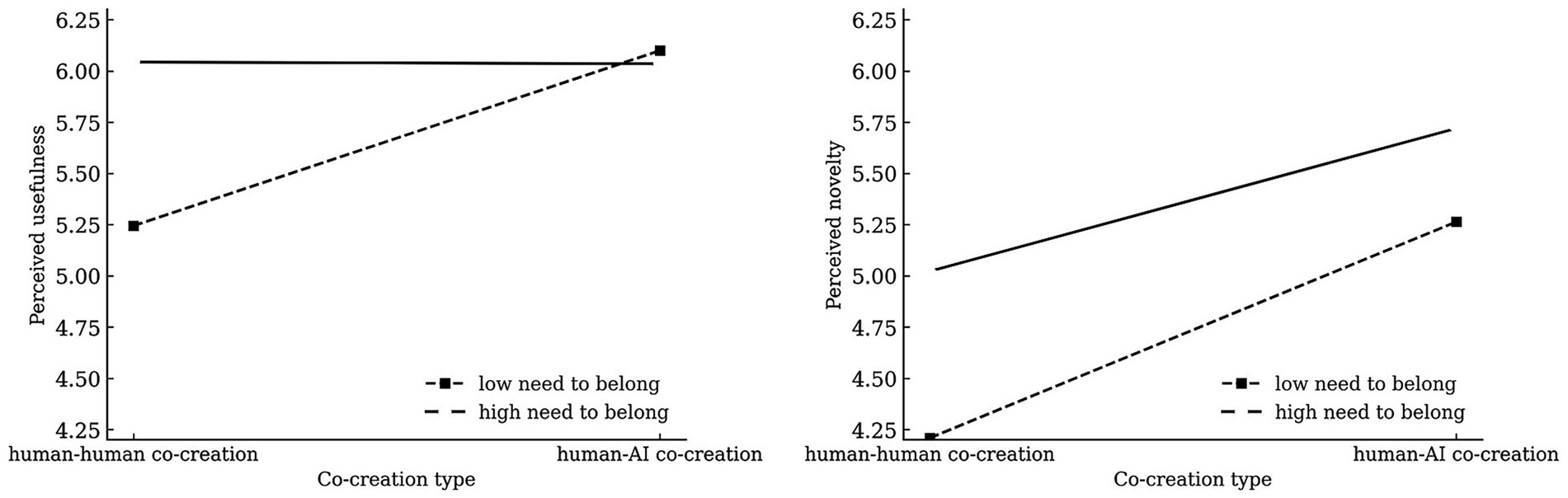
Figure 5. Interaction plot of the moderation effect.
6.4 Discussion
Study 4 further corroborated the earlier findings in the context of cognitive analytical content. Moreover, it revealed a critical moderating role of the need to belong in the mediation via perceived usefulness. Specifically, the indirect effect of collaboration type on co-creation intention through perceived usefulness was stronger among individuals lower in need to belong and weaker among those higher in need to belong. These results delineate a social-motivational boundary for the usefulness pathway while maintaining the overall pattern observed in prior studies.
7 Conclusion and discussion
7.1 Research conclusions
This study systematically examined the effects of different co-creator types (human vs. AI) on co-creation intention and their underlying mechanisms through three scenario-based experiments (Studies 1, 2, and 4) and one semi-structured interview (Study 3). The specific conclusions are as follows.
First, relative to co-creating with humans, people are generally more inclined to engage in human–AI co-creation. This inclination primarily stems from AI’s marked advantages in enhancing perceived novelty and perceived usefulness. Situated within creativity theory (Runco and Jaeger, 2012), this pattern indicates that human–AI collaboration can raise novelty and usefulness concurrently rather than trading one off against the other, thereby strengthening intention. Human–AI co-creation not only feels more novel than traditional human–human co-creation but also exhibits distinctive practical value, thereby broadly increasing individuals’ co-creation intention. This conclusion holds across task types and study designs without reiterating study-specific details; in aggregate, whether in emotional social tasks (e.g., short-story creation and promotional-poster design) or in cognitive analytical content (e.g., popular-science writing), AI significantly elevates participants’ willingness to create through novel co-creation modes and efficient creative support. Moreover, the analyses rule out task self-efficacy and cognitive load as alternative mediators, reinforcing the centrality of perceived novelty and perceived usefulness within a creativity-theoretic account of co-creation intention.
Second, the perceived usefulness of co-creating with AI can be explained by three primary drivers: efficiency, value, and relationship. On efficiency, AI can generate a large number of ideas in a very short time; this high efficiency makes collaboration with AI especially attractive for complex, time-pressured tasks, where AI can deliver quick feedback and support. On value, drawing on a powerful knowledge base and diverse ways of thinking, AI helps break conventional creative frames and offers new perspectives and solution concepts—capabilities that are particularly salient in the creative industries. AI’s originality and cross-domain capacity not only provide fresh inspiration but also strengthen creators’ recognition of AI as a collaborative partner. Finally, along the relationship dimension, AI’s “de-interpersonalized” character affords a distinctive advantage: in human–AI co-creation, individuals need not worry about emotional volatility, communication barriers, or interpersonal conflict; this low emotional cost mode of collaboration smooths the creative process and increases participants’ satisfaction with AI as a partner.
Finally, the need to belong plays a critical moderating role in the mediation via perceived usefulness. The study shows that individuals low in the need to belong are more likely to perceive human–AI co-creation as more useful, which, in turn, increases their co-creation intention. In contrast, individuals high in the need to belong focus more on emotional support and social interaction, and therefore, their perceived usefulness increases to a lesser extent when co-creating with AI. This difference suggests that individuals’ social needs significantly moderate their preferences for different co-creator types: those low in the need to belong tend to prioritize task efficiency and the practicality of creative outcomes, while those high in the need to belong place greater value on emotional communication and social interaction with human partners. Thus, the need to belong not only plays an important role in the formation of co-creation intention but also offers a differentiated perspective on AI’s application in co-creation based on individual differences.
7.2 Theoretical contributions
This study is the first to systematically compare the effects of human and AI as co-creators on co-creation intention, filling a gap in previous research on preferences regarding human–AI collaboration. Existing studies have primarily focused on objective indicators such as creative efficiency, quality, and psychological effectiveness, with less attention given to individual preferences. For instance, Tang et al. (2024) examined the impact of human–AI co-creation on creative quality, and Huang et al. (2024) explored trust and acceptance in human–AI collaboration. However, these studies did not address the subjective question of “with whom are people more willing to co-create?” By directly comparing human and AI as co-creation partners, this study provides systematic empirical evidence, thus extending the understanding of co-creation preferences in the human–AI collaboration field.
This study further extends the application of creativity theory to the AI-collaboration context, distinctly differentiating itself from existing research that only explores the independent role of perceived novelty or perceived usefulness in isolation (Liu and Huang, 2025; Keith et al., 2024). It specifies perceived novelty and perceived usefulness as parallel mediating variables that form the cognitive pathway linking co-creator types to co-creation intention. Creativity theory posits that novelty and usefulness are core dimensions for evaluating creativity (Runco and Jaeger, 2012), providing the theoretical foundation for understanding outcomes in human–AI co-creation. Although prior work has touched upon perceptions of novelty and usefulness in AI collaboration, it has not integrated these two dimensions into a unified analytical framework nor revealed the internal mechanism through which they synergistically influence co-creation intention. The mediation model advanced here—where co-creator types influence co-creation intention through perceived novelty and perceived usefulness—rectifies the analytical limitation of “single perceptual dimension” in existing research, clarifies how human–AI co-creation enhances co-creation intention through a dual cognitive pathway rather than a single-dimensional effect, and thus deepens and expands the application boundary of creativity theory in the human–AI context.
The study also finds that AI, as a co-creation partner, not only increases participants’ perceived novelty of creative outputs but also significantly enhances their perceived usefulness. This result directly challenges the conventional assumption that “humans are more useful whereas AI is more novel” (Chen and Chan, 2024; Revilla et al., 2023), offering a new theoretical lens for adjusting role perceptions in human–AI collaboration. Traditional views hold that humans have the advantage in the practical usefulness of creative work, while AI mainly contributes innovative ideas. However, Doshi and Hauser (2024) show that generative AI elevates not only the novelty of ideas but also their usefulness. In line with this, our findings indicate that human–AI co-creation simultaneously boosts perceived novelty and perceived usefulness, breaking the cognitive bias of fragmented functions between the two and prompting a reassessment of human and AI roles in co-creation.
Finally, this study for the first time integrates social motivation (the need to belong) into the human–AI application framework of creativity theory, finding that the need to belong moderates the mediation via perceived usefulness, thereby revealing the crucial role of social motivation in the effects of AI co-creation. Baumeister and Leary (1995) argue that humans possess a strong need to belong, which shapes attitudes and behaviors in collaboration (Afota et al., 2024). Consistent with this view, Bergdahl et al. (2023) also find that individuals’ social motives significantly influence their acceptance of AI technologies and their willingness to collaborate. Our results show that when the need to belong is low, AI significantly increases the perceived usefulness of creative outputs, thereby enhancing co-creation intention; when the need to belong is high, this effect is not significant. These findings clarify the boundary conditions for the application of creativity theory in the human–AI collaboration context. By integrating a comprehensive framework where co-creator types operate through dual perceptual mediation, with social motivation acting as a moderator, they address the deficiency of existing research in exploring contextual boundaries and provide a more holistic theoretical reference for the development of theories in the field of human–AI collaboration.
7.3 Managerial implications
First, organizations introducing generative AI should clearly position it as an augmenting rather than replacing co-creation partner. Managers can help employees understand that AI’s primary function is to expand creative boundaries, enhance efficiency, and integrate diverse knowledge instead of substituting human thought. Creative platforms can incorporate human–AI co-creation progress bars or contribution visualization modules that highlight users’ creative input, thereby reinforcing their sense of agency and creative confidence. Interface cues, guidance texts, and feedback messages can emphasize human involvement and originality, shaping the perception of AI as a co-creator of inspiration rather than an automated author. These practical designs can reduce users’ resistance and foster positive engagement with AI systems.
Second, organizations promoting AI applications should account for employees’ psychological and motivational differences. Since individuals vary in their need for belonging, social interaction, and efficiency orientation, AI systems should provide differentiated and adaptive interface modes. For employees with high belonging needs, interfaces can include social interaction elements such as emotionally expressive AI dialogue, team-based co-creation spaces, or co-signature displays that convey joint authorship, helping maintain emotional connection and social presence. For those with low belonging needs, AI tools should emphasize functional simplicity, speed, and task efficiency through features like quick generation, personalized command memory, or modular output settings. Such adaptive design ensures that users’ motivational profiles align with system affordances, improving satisfaction and sustained co-creation engagement.
Finally, managers should proactively prevent the potential demotivating effects of AI by reinforcing human value and achievement. Creative teams can adopt phased co-creation mechanisms in which AI assists during the ideation and content generation stages, while human members retain responsibility for synthesis, judgment, and final innovation. Organizations should also establish recognition and reward systems that highlight human contributions—for instance, maintaining creator attributions in AI-assisted works, incorporating “human–AI collaboration quality” indicators into performance appraisals, and encouraging employees to share best practices in AI-assisted creativity. These actionable measures sustain intrinsic motivation, balance technological benefits with human needs, and help build a more human-centered and sustainable AI co-creation environment.
7.4 Limitations and future directions
First, Although our hypotheses were supported across varied experimental scenarios, these tasks still differ from fully authentic content co-creation. Future work will therefore move beyond survey vignettes to field experiments in organizational and platform settings, preregistered where feasible, to test behaviorally consequential outcomes and strengthen external validity. Building on the present triangulation, we will also broaden the qualitative inquiry to map additional candidate mechanisms that may shape partner preference, and then use targeted experimental manipulations to adjudicate among them in more complex tasks and diverse participant populations. This multi-method program will allow us to replicate the core effects under higher ecological realism, examine boundary conditions, and connect perceived usefulness to observed collaborative performance.
Second, this study focused on writing and image-generation tasks—domains where AI is widely used and professional barriers are relatively low—while paying less attention to more complex operations (e.g., model design, video production). The mechanisms underlying individuals’ co-creation intention may differ across task forms and warrant deeper investigation.
Third, external factors may drive dynamic changes in co-creation intention and merit further study. For example, as task complexity increases, individuals may prefer collaborators who excel at that task; thus, task complexity may influence individuals’ intention to engage in content co-creation with AI.
Fourth, this study did not conduct an exploratory analysis of the potential mechanisms underlying perceived usefulness. We focused on establishing the core effect and providing a targeted qualitative refinement of the construct rather than mapping a full process model. Future research will undertake deeper mechanism-focused work, beginning with broader qualitative exploration to surface candidate pathways and followed by targeted experimental tests that probe mediation and boundary conditions across more complex tasks and diverse samples.
Fifth, our samples were recruited in China via Credamo. This limits generalizability and raises cultural alternative explanations. Norms related to collectivism, power distance, and relational orientation may shape how people evaluate the usefulness of an AI partner and how willing they are to co-create. Future work should test whether the effects replicate across cultures with different value profiles. We recommend multi-country replications using matched procedures and measurement invariance checks, along with preregistration and harmonized materials. Field studies in workplaces and classrooms would increase ecological validity by observing partner choice and performance in real tasks. Studies that track behavior over time could examine longer term adoption and switching between co-creating with humans and co-creating with AI.
Data availability statement
The raw data supporting the conclusions of this article will be made available by the authors, without undue reservation.
Ethics statement
Ethical approval was not required for the studies involving humans in accordance with the local legislation and institutional requirements. The studies were conducted in accordance with the local legislation and institutional requirements. The participants provided their written informed consent to participate in this study.
Author contributions
YL: Conceptualization, Data curation, Formal analysis, Writing – original draft, Writing – review & editing. YY: Conceptualization, Investigation, Methodology, Project administration, Resources, Supervision, Writing – original draft, Writing – review & editing. HX: Conceptualization, Data curation, Formal analysis, Writing – original draft, Writing – review & editing.
Funding
The author(s) declare that no financial support was received for the research and/or publication of this article.
Conflict of interest
The authors declare that the research was conducted in the absence of any commercial or financial relationships that could be construed as a potential conflict of interest.
Generative AI statement
The authors declare that no Gen AI was used in the creation of this manuscript.
Any alternative text (alt text) provided alongside figures in this article has been generated by Frontiers with the support of artificial intelligence and reasonable efforts have been made to ensure accuracy, including review by the authors wherever possible. If you identify any issues, please contact us.
Publisher’s note
All claims expressed in this article are solely those of the authors and do not necessarily represent those of their affiliated organizations, or those of the publisher, the editors and the reviewers. Any product that may be evaluated in this article, or claim that may be made by its manufacturer, is not guaranteed or endorsed by the publisher.
Supplementary material
The Supplementary material for this article can be found online at: https://www.frontiersin.org/articles/10.3389/fpsyg.2025.1695532/full#supplementary-material
Footnotes
References
Afota, M. C., Provost Savard, Y., Léon, E., and Ollier-Malaterre, A. (2024). Changes in belongingness, meaningful work, and emotional exhaustion among new high-intensity telecommuters: insights from pandemic remote workers. J. Occup. Organ. Psychol. 97, 817–840. doi: 10.1111/joop.12494
Anthony, C., Bechky, B. A., and Fayard, A.-L. (2023). “Collaborating” with AI: taking a system view to explore the future of work. Organ. Sci. 34, 1672–1694. doi: 10.1287/orsc.2022.1651
Autrey, R. L., Drasgow, F., Jackson, K. E., and Klevsky, E. (2024). Connectors: a catalyst for team creativity. Account. Rev. 99, 57–80. doi: 10.2308/TAR-2020-0671
Bandura, A. (1991). Social cognitive theory of self-regulation. Organ. Behav. Hum. Decis. Process. 50, 248–287. doi: 10.1016/0749-5978(91)90022-L
Bangun, Y., Fatima, J. K., and Talukder, M. (2023). Demystifying employee co-creation: optimism and pro-social behaviour as moderators. J. Serv. Theory Pract. 33, 556–576. doi: 10.1108/JSTP-08-2022-0165
Baruah, J., and Green, K. (2023). Innovation in virtual teams: the critical role of anonymity across divergent and convergent thinking processes. J. Creat. Behav. 57, 588–605. doi: 10.1002/jocb.603
Baumeister, R. F., and Leary, M. R. (1995). The need to belong: desire for interpersonal attachments as a fundamental human motivation. Psychol. Bull. 117, 497–529. doi: 10.1037/0033-2909.117.3.497
Bellaiche, L., Shahi, R., Turpin, M. H., Ragnhildstveit, A., Sprockett, S., Barr, N., et al. (2023). Humans versus AI: whether and why we prefer human-created compared to AI-created artwork. Cogn. Res. Princ. Implic. 8:42. doi: 10.1186/s41235-023-00499-6
Bergdahl, J., Latikka, R., Celuch, M., Savolainen, I., Soares Mantere, E., Savela, N., et al. (2023). Self-determination and attitudes toward artificial intelligence: cross-national and longitudinal perspectives. Telemat. Inform. 82:102013. doi: 10.1016/j.tele.2023.102013
Bullock Muir, A., Tribe, B., and Forster, S. (2024). Creativity on tap? The effect of creativity anxiety under evaluative pressure. Creat. Res. J. 37, 654–663. doi: 10.1080/10400419.2024.2330800
Chellappa, V., and Luximon, Y. (2024). Understanding the perception of design students towards ChatGPT. Comput. Educ. Artif. Intell. 7:100281. doi: 10.1016/j.caeai.2024.100281
Chen, D., Huang, R. S., Jomy, J., Wong, P., Yan, M., Croke, J., et al. (2024). Performance of multimodal artificial intelligence chatbots evaluated on clinical oncology cases. JAMA Netw. Open 7:e2437711. doi: 10.1001/jamanetworkopen.2024.37711
Chen, L., Song, Y., Guo, J., Sun, L., Childs, P., and Yin, Y. (2025). How generative AI supports human in conceptual design. Des. Sci. 11:e9. doi: 10.1017/dsj.2025.2
Chen, Z., and Chan, J. (2024). Large language model in creative work: the role of collaboration modality and user expertise. Manag. Sci. 70, 9101–9117. doi: 10.1287/mnsc.2023.03014
Daly, S. J., Hearn, G., and Papageorgiou, K. (2025). Sensemaking with AI: how trust influences human–AI collaboration in health and creative industries. Soc. Sci. Humanit. Open 11:101346. doi: 10.1016/j.ssaho.2025.101346
Davis, F. D. (1989). Perceived usefulness, perceived ease of use, and user acceptance of information technology. MIS Q. 13, 319–340. doi: 10.2307/249008
DeChurch, L. A., Lungeanu, A., and Contractor, N. S. (2024). Think like a team: shared mental models predict creativity and problem-solving in space analogs. Acta Astronaut. 214, 701–711. doi: 10.1016/j.actaastro.2023.10.022
Deci, E. L., and Ryan, R. M. (2000). The “what” and “why” of goal pursuits: human needs and the self-determination of behavior. Psychol. Inq. 11, 227–268. doi: 10.1207/S15327965PLI1104_01
Doshi, A. R., and Hauser, O. P. (2024). Generative AI enhances individual creativity but reduces the collective diversity of novel content. Sci. Adv. 10:eadn5290. doi: 10.1126/sciadv.adn5290
Dubois, L.-E., Le Masson, P., and Weil, B. (2024). That was fun, now what?: modelizing knowledge dynamics to explain co-design's shortcomings. Des. Stud. 95:101274. doi: 10.1016/j.destud.2024.101274
Farquhar, S., Kossen, J., Kuhn, L., and Gal, Y. (2024). Detecting hallucinations in large language models using semantic entropy. Nature 630, 625–630. doi: 10.1038/s41586-024-07421-0
González-Cutre, D., Sicilia, Á., Sierra, A. C., Ferriz, R., and Hagger, M. S. (2016). Understanding the need for novelty from the perspective of self-determination theory. Pers. Individ. Differ. 102, 159–169. doi: 10.1016/j.paid.2016.06.036
Grenier, S., Gagné, M., and O'Neill, T. A. (2024). Self-determination theory and its implications for team motivation. Appl. Psychol. 73, 1833–1865. doi: 10.1111/apps.12526
Grewal, D., Satornino, C. B., Davenport, T., and Guha, A. (2024). How generative AI is shaping the future of marketing. J. Acad. Mark. Sci. 53, 702–722. doi: 10.1007/s11747-024-01064-3
Grund, C., Harbring, C., and Klinkenberg, L. (2025). An experiment on creativity in virtual teams. J. Econ. Behav. Organ. 231:106926. doi: 10.1016/j.jebo.2025.106926
Haan, K. 2023). Over 75% of consumers are concerned about misinformation from artificial intelligence. Forbes Advisor. Available online at: https://www.forbes.com/advisor/business/artificial-intelligence-consumer-sentiment/ (Accessed August 10, 2025)
Hayes, A. F. (2017). Introduction to mediation, moderation, and conditional process analysis: a regression-based approach. 2nd Edn. New York, NY: Guilford Press.
Henrickson, L., Jennings, G., and Bewick, B. M. (2024). Belonging through creative connections: a feasibility study of an arts-based intervention to facilitate social connections between university students. Cogent Educ. 11:2373181. doi: 10.1080/2331186X.2024.2373181
Hitsuwari, J., Ueda, Y., Yun, W., and Nomura, M. (2023). Does human–AI collaboration lead to more creative art? Aesthetic evaluation of human-made and AI-generated haiku poetry. Comput. Human Behav. 139:107502. doi: 10.1016/j.chb.2022.107502
Honda, S., and Yanagisawa, H. (2025). The impact of Shannon surprise of motion on interest and sustained engagement: exploring the potential of motion design. Res. Eng. Des. 36:15. doi: 10.1007/s00163-025-00456-y
Horton, C. B. Jr., White, M. W., and Iyengar, S. S. (2023). Bias against AI art can enhance perceptions of human creativity. Sci. Rep. 13:19001. doi: 10.1038/s41598-023-45202-3
Huang, D., Markovitch, D. G., and Stough, R. A. (2024). Can chatbot customer service match human service agents on customer satisfaction? An investigation in the role of trust. J. Retail. Consum. Serv. 76:103600. doi: 10.1016/j.jretconser.2023.103600
Hu, M., Zhang, G., Chong, L., Cagan, J., and Goucher-Lambert, K. (2025). How being outvoted by AI teammates impacts human–AI collaboration. Int. J. Hum.-Comput. Interact.. Advance online publication. doi: doi: 10.1080/10447318.2024.2345980
Jeong, I., Chattopadhyay, P., Shin, S. J., and Park, O. (2024). When less is more: the proportion of creative members and R&D team innovative performance. Hum. Perform. 37, 163–183. doi: 10.1080/08959285.2024.2366222
Jiang, C., He, L., and Xu, S. (2024). Relationships among Para-social interaction, perceived benefits, community commitment, and customer citizenship behavior: evidence from a social live-streaming platform. Acta Psychol. 250:104534. doi: 10.1016/j.actpsy.2024.104534
Keith, M. G., Freier, L. M., Childers, M., Ponce-Pore, I., and Brooks, S. (2024). What makes an idea risky? The relations between perceptions of idea novelty, usefulness, and risk. J. Creat. Behav. 58, 6–27. doi: 10.1002/jocb.621
Kim, J. Y., Lester, C., and Yang, X. J. (2025). Beyond binary decisions: evaluating the effects of AI error type on trust and performance in AI-assisted tasks. Hum. Factors 67, 1062–1083. doi: 10.1177/00187208251326795
Klein, A. (2025). Team structural control and team resilience: an empirical study of creative project-based teams. J. Bus. Res. 186:115002. doi: 10.1016/j.jbusres.2024.115002
Koivisto, M., and Grassini, S. (2023). Best humans still outperform artificial intelligence in a creative divergent thinking task. Sci. Rep. 13:13601. doi: 10.1038/s41598-023-40858-3
Leary, M. R., Kelly, K. M., Cottrell, C. A., and Schreindorfer, L. S. (2013). Construct validity of the need to belong scale: mapping the nomological network. J. Pers. Assess. 95, 610–624. doi: 10.1080/00223891.2013.819511
Lelo de Larrea, G. (2025). How to develop and validate experimental scenarios?Int. J. Contemp. Hosp. Manag. 37, 853–870. doi: 10.1108/IJCHM-04-2024-0495
Lenart-Gansiniec, R., Czakon, W., and Meyer, N. (2025). Antecedents of researchers’ behavioral intentions to use crowdsourcing in science: a multilevel approach. Rev. Manag. Sci. 19, 1411–1445. doi: 10.1007/s11846-024-00797-3
Li, M., Lu, M., Akram, U., and Cheng, S. (2024). Understanding how customer social capital accumulation in brand communities: a gamification affordance perspective. J. Retail. Consum. Serv. 78:103761. doi: 10.1016/j.jretconser.2024.103761
Li, M., Sun, X., Qiu, H., and Zhao, M. (2025). The impacts of employee-robot hybrid teams on customers’ value cocreation and codestruction behaviors. Int. J. Hosp. Manag. 130:104264. doi: 10.1016/j.ijhm.2025.104264
Lin, H. F. (2025). An integrated model examining frontline employee willingness to work with retail service robots. J. Serv. Theory Pract. 35, 464–482. doi: 10.1108/JSTP-07-2024-0231
Liu, J., Cheng, V. T. P., Zhu, Z., and Wu, D. (2025). Antecedents and consequences of value co-creation in tourist behaviours: empirical evidence from smart tourism application. Curr. Issue Tour. 1-17, 1–17. doi: 10.1080/13683500.2025.2523543
Liu, X., Liu, P., and Li, M. (2024). Factors influencing value co-creation in cultural and creative enterprises: an empirical study. Heliyon 10:e35100. doi: 10.1016/j.heliyon.2024.e35100
Liu, Y.-L. E., and Huang, Y.-M. (2025). Exploring the perceptions and continuance intention of AI-based text-to-image technology in supporting design ideation. Int. J. Hum.-Comput. Interact. 41, 694–706. doi: 10.1080/10447318.2024.2311975
Longworth, G. R., de Boer, J., Goh, K., Agnello, D. M., McCaffrey, L., Zapata Restrepo, J. R., et al. (2024). Navigating process evaluation in co-creation: a health CASCADE scoping review of used frameworks and assessed components. BMJ Glob. Health 9:e014483. doi: 10.1136/bmjgh-2023-014483
Lyu, Y., Wang, X., Lin, R., and Wu, J. (2022). Communication in human–AI co-creation: perceptual analysis of paintings generated by a text-to-image system. Appl. Sci. 12:11312. doi: 10.3390/app122211312
Mariani, M., and Dwivedi, Y. K. (2024). Generative artificial intelligence in innovation management: a preview of future research developments. J. Bus. Res. 175:114542. doi: 10.1016/j.jbusres.2024.114542
Markovitch, D. G., Stough, R. A., and Huang, D. (2024). Consumer reactions to chatbot versus human service: an investigation in the role of outcome valence and perceived empathy. J. Retail. Consum. Serv. 79:103847. doi: 10.1016/j.jretconser.2024.103847
Marrone, R., Zamecnik, A., Joksimovic, S., Johnson, J., and De Laat, M. (2024). Understanding student perceptions of artificial intelligence as a teammate. Technol. Knowl. Learn. 30, 1847–1869. doi: 10.1007/s10758-024-09780-z
Ma, X., and Huo, Y. (2024). Drawing a satisfying picture: an exploratory study of human–AI interaction in AI painting through breakdown-repair communication strategies. Inf. Process. Manag. 61:103755. doi: 10.1016/j.ipm.2024.103755
McGuire, J., De Cremer, D., and Van de Cruys, T. (2024). Establishing the importance of co-creation and self-efficacy in creative collaboration with artificial intelligence. Sci. Rep. 14:18525. doi: 10.1038/s41598-024-69423-2
Nah, F.-H., Zheng, R., Cai, J., Siau, K., and Chen, L. (2023). Generative AI and ChatGPT: applications, challenges, and AI–human collaboration. J. Inf. Technol. Case Appl. Res. 25, 277–304. doi: 10.1080/15228053.2023.2233814
Noy, S., and Zhang, W. (2023). Experimental evidence on the productivity effects of generative artificial intelligence. Science 381, 187–192. doi: 10.1126/science.adh2586
Pick, H., Fahoum, N., Zoabi, D., and Shamay-Tsoory, S. G. (2024). Brainstorming: interbrain coupling in groups forms the basis of group creativity. Commun. Biol. 7:911. doi: 10.1038/s42003-024-06614-7
Pyo, T.-H., Tamrakar, C., Lee, J. Y., and Choi, Y. S. (2023). Is social capital always “capital”?: measuring and leveraging social capital in online user communities for in-group diffusion. J. Bus. Res. 158:113690. doi: 10.1016/j.jbusres.2023.113690
Qian, Y., and Wan, X. (2025). Co-experiencing with AI: effects on social bonding and empathy in human–AI relationships. Technol. Soc. 83:103009. doi: 10.1016/j.techsoc.2025.103009
Rae, V. I., Smith, S. E., Hopkins, S. R., and Tallentire, V. R. (2024). From corners to community: exploring medical students’ sense of belonging through co-creation in clinical learning. BMC Med. Educ. 24:474. doi: 10.1186/s12909-024-05413-2
Reus, B., Moser, C., and Groenewegen, P. (2023). Knowledge sharing quality on an enterprise social network: social capital and the moderating effect of being a broker. J. Knowl. Manag. 27, 187–204. doi: 10.1108/JKM-02-2023-0115
Revilla, E., Saenz, M. J., Seifert, M., and Ma, Y. (2023). Human–artificial intelligence collaboration in prediction: a field experiment in the retail industry. J. Manag. Inf. Syst. 40, 1071–1098. doi: 10.1080/07421222.2023.2267317
Roy, S. K., Singh, G., Hatton, C., Dey, B., Ameen, N., and Kumar, S. (2023). Customers’ motives to co-create in smart services interactions. Electron. Commer. Res. 23, 1367–1400. doi: 10.1007/s10660-022-09633-w
Runco, M. A., and Jaeger, G. J. (2012). The standard definition of creativity. Creat. Res. J. 24, 92–96. doi: 10.1080/10400419.2012.650092
Siemon, D., Elshan, E., de Vree, T., Ebel, P., and de Vree, G. (2025). Beyond anthropomorphism: social presence in human–AI collaboration processes. J. Manag. Stud.. (Advance online publication). doi: 10.1111/joms.70000
Söderström, C., Mikalef, P., Dypvik Landmark, A., and Gupta, S. (2024). Augmented reality (AR) marketing and consumer responses: a study of cue-utilization and habituation. J. Bus. Res. 182:114813. doi: 10.1016/j.jbusres.2024.114813
Sun, X., Huang, R., Jiang, Z., Lu, J., and Yang, S. (2024). On tacit knowledge management in product design: status, challenges, and trends. J. Eng. Des. 36, 1673–1710. doi: 10.1080/09544828.2023.2301232
Tang, M., Hofreiter, S., Werner, C. H., Zielińska, A., and Karwowski, M. (2024). “Who” is the best creative thinking partner? An experimental investigation of human–human, human–internet, and human–AI co-creation. J. Creat. Behav. 59:e1519. doi: 10.1002/jocb.1519
Tan, Q., Tan, J., and Gao, X. (2024). How does the online innovation community climate affect the user’s value co-creation behavior: the mediating role of motivation. PLoS One 19:e0301299. doi: 10.1371/journal.pone.0301299
Tierney, P., and Farmer, S. M. (2002). Creative self-efficacy: its potential antecedents and relationship to creative performance. Acad. Manag. J. 45, 1137–1148. doi: 10.2308/3069429
Tigre Moura, F., Castrucci, C., and Hindley, C. (2023). Artificial intelligence creates art? An experimental investigation of value and creativity perceptions. J. Creat. Behav. 57, 534–549. doi: 10.1002/jocb.600
van Zoonen, W., Sivunen, A. E., and Blomqvist, K. B. (2024). Out of sight—out of trust? An analysis of the mediating role of communication frequency and quality in the relationship between workplace isolation and trust. Eur. Manag. J. 42, 515–526. doi: 10.1016/j.emj.2023.04.006
Venkatesh, V., and Davis, F. D. (2000). A theoretical extension of the technology acceptance model: four longitudinal field studies. Manag. Sci. 46, 186–204. doi: 10.1287/mnsc.46.2.186.11926
Venkatesh, V., Morris, M. G., Davis, G. B., and Davis, F. D. (2003). User acceptance of information technology: toward a unified view. MIS Q. 27, 425–478. doi: 10.2307/30036540
Wandel-Brannigan, C., and Matamala, A. (2024). Spectrums of co-creation: an analysis of the co-creation process in the development of the Irish National Opera’s community VR opera, out of the ordinary/as an nGnách. J. Arts Manag. Law Soc. 54, 295–314. doi: 10.1080/10632921.2024.2442947
Wang, Y., Zhong, X., and Mu, W. (2025). Giving face or not losing face? The effect of AI service robot politeness strategy on value co-creation in hospitality. Tour. Manag. Perspect. 58:101370. doi: 10.1016/j.tmp.2025.101370
Wolf, V., and Maier, C. (2024). ChatGPT usage in everyday life: a motivation-theoretic mixed-methods study. Int. J. Inf. Manag. 79:102821. doi: 10.1016/j.ijinfomgt.2024.102821
Wu, S., Liu, Y., Ruan, M., Chen, S., and Xie, X.-Y. (2025). Human-generative AI collaboration enhances task performance but undermines humans’ intrinsic motivation. Sci. Rep. 15:15105. doi: 10.1038/s41598-025-98385-2
Xie, L., Liu, C., Li, Y., and Zhu, T. (2023). How to inspire users in virtual travel communities: the effect of activity novelty on users’ willingness to co-create. J. Retail. Consum. Serv. 75:103448. doi: 10.1016/j.jretconser.2023.103448
Yang, Y., and Xu, H. (2025). Perception of AI creativity: dimensional exploration and scale development. J. Creat. Behav. 59:e70028. doi: 10.1002/jocb.70028
You, S., and Robert, L. P. Jr. 2018. Human–robot similarity and willingness to work with a robotic co-worker. In Proceedings of the 2018 ACM/IEEE International Conference on Human–Robot Interaction (HRI '18) (pp. 251–260). Chicago, IL.
Yu, W. F. (2025). AI as a co-creator and a design material: transforming the design process. Des. Stud. 97:101303. doi: 10.1016/j.destud.2025.101303
Zhang, C., Zheng, W., Li, T., and Wang, X. (2025). 与人共创还是与AI共创?共创主体类型对内容共创意愿的影响研究 [co-creation with humans or AI? The influence of co-creator types on content co-creation intention]. J. Psychol. Sci. 48, 210–219. doi: 10.16719/j.cnki.1671-6981.20250120
Zhang, X., Singh, S., Li, J., and Shao, X. (2024). Exploring the effects of value co-creation strategies in event services on attendees' citizenship behaviors: the roles of customer empowerment and psychological ownership. J. Retail. Consum. Serv. 76:103619. doi: 10.1016/j.jretconser.2023.103619
Zhou, Q., Li, B., Han, L., and Jou, M. (2023). Talking to a bot or a wall? How chatbots vs. human agents affect anticipated communication quality. Comput. Human Behav. 143:107674. doi: 10.1016/j.chb.2023.107674
Keywords: artificial intelligence, co-creation intention, perceived novelty, perceived usefulness, the need to belong, creativity theory
Citation: Liu Y, Yang Y and Xu H (2025) From humans to AI: understanding why AI is perceived as the preferred co-creation partner. Front. Psychol. 16:1695532. doi: 10.3389/fpsyg.2025.1695532
Edited by:
Wenjing Chen, Beijing University of Posts and Telecommunications (BUPT), ChinaReviewed by:
Zhongzhen Lin, Guangdong University of Technology, ChinaYanru Lyu, Beijing Technology and Business University, China
Copyright © 2025 Liu, Yang and Xu. This is an open-access article distributed under the terms of the Creative Commons Attribution License (CC BY). The use, distribution or reproduction in other forums is permitted, provided the original author(s) and the copyright owner(s) are credited and that the original publication in this journal is cited, in accordance with accepted academic practice. No use, distribution or reproduction is permitted which does not comply with these terms.
*Correspondence: Haoran Xu, eHVoci45N0BxcS5jb20=
†These authors have contributed equally to this work and share first authorship