 Helong Si1†
 Quan Wang1,2,3*†Yuanyuan Guo1,2,3†Yuxin Zhao1,2,3
 Hongya Li1,2,3Shuna Li1,2,3Shuxiang Wang1,2,3
 Baocheng Zhu1,2,3
- 1College of Life Science, Hebei Agricultural University, Baoding, Hebei, China
- 2Hebei Forage Microbial Technology Innovation Center, Baoding, Hebei, China
- 3Hebei Agriculture Waste Resource Utilization Engineering Research Center, Baoding, Hebei, China
The chromatographic column is the core of a high-performance liquid chromatography (HPLC) system, and must have excellent separation efficiency and selectivity. Therefore, functional modification materials for monolithic columns have been rapidly developed. This study is a systematic review of the recently reported functionalized monolithic columns. In particular, the study reviews the types of functional monomers under different modification conditions, as well as the separation and detection techniques combined with chromatography, and their development prospects. In addition, the applications of functionalized monolithic columns in food analysis, biomedicine, and the analysis of active ingredient of Chinese herbal medicines in recent years are also discussed. Also reviewed are the functionalized monolithic columns for qualitative and quantitative analysis. It provided a reference for further development and application of organic polymer monolithic columns.
1 Introduction
As harmful substances continue to affect human health through biochemical reactions, the safety of ingredients in food and medicine has become a focus of increasing attention (Aydoğan et al., 2019; Madikizela et al., 2022). Especially with the improvement of people’s living standards and the advancement of science and technology, growth-promoting hormones, antibiotics, pesticides, food additives, etc. are being abused in order to ensure the flavor and output of commodities. Due to incidents, such as the occurrence of mold infestation in Chinese herbal medicines during processing and storage, the presence of above standard levels of mycotoxins in rotting fruits and vegetables and excessive heavy metals in water due to anthropogenic and geogenic pollution, etc., the accurate analysis of food and medicine components to detect contaminants that pose significant health risks before entering the market has become a top priority. However, due to the complexity of the matrix and the trace state of residual contaminants, conventional detection methods, such as enzyme-linked immunosorbent assay (ELISA), capillary electrophoresis (CE), and gas chromatography (GC) (Stilo et al., 2021) cannot meet the needs. Therefore, fast, efficient and sensitive liquid chromatography (LC) column detection methods have been widely studied. The use of HPLC for the qualitative and quantitative detection of pharmaceuticals is also a standard analytical technique commonly used in pharmaceutics, and at the same time, it shows its unprecedented advantages in the separation and enrichment of trace mixtures (Zacharis, 2009).
As the core of HPLC, monolithic columns are widely used in fields, such as food (Nunez et al., 2012; Jandera, 2013), medicine (Bunch and Wang, 2011; Memon et al., 2019), environmental (Candel et al., 2009; Liu et al., 2017), proteomics (Meent and de Jong, 2011; Ma et al., 2019), etc., due to their advantages of high sensitivity, reusability and eco-friendliness (Miyabe and Guiochon, 2004; Zou et al., 2009; Sharma et al., 2019). In terms of sensitivity, the monolithic column is used for the quantitative and qualitative analysis of active ingredients in foods and medicines, which is more accurate and efficient than other techniques. In terms of safety, the optimized special monomer is more sensitive to trace components in various micron-scale food and drug samples. The organic polymer monolithic column is highly selective, with low mass transfer resistance and high permeability compared to conventional commercial columns. It greatly reduces analysis time while reducing the use of organic solvents. In recent years, the advances of functionalization of monolithic columns have attracted considerable attention. In particular, the improvement of the specific adsorption of monolithic columns, affinity material aptamers and molecular imprinting technique (MIT) have become hot research topics. Monomers have also been developed and used for various purposes, such as nanomaterials to increase the adsorption capacity and mechanical strength, chiral selectors for the resolution of chiral compounds, and ionic liquids (ILs) to improve thermal stability. In order to achieve sensitive and accurate determination of analytes and reduce non-specific adsorption, solid-phase microextraction has been combined with HPLC tandem mass spectrometry (HPLC-MS/MS), LC-MS, capillary electrochromatography (CEC) and other analytical detection methods. The use of early pretreatment greatly reduces the baseline effect of the sample and improves the extraction recovery rate, and in combination with effective detection techniques, the detection effect of two-dimensional (2D)-LC (Jandera et al., 2014; Franco et al., 2016) is achieved.
The application of monolithic columns is also constantly developing and improving. The early stages of their development mainly focused on the detection and enrichment of active components in samples, and later they were widely used in the analysis and quantification of trace harmful residues. This review focuses on the application of organic polymer monolithic columns in food and medicine.
2 Functionalization of monolithic columns
2.1 Aptamer
Aptamers are synthetic oligonucleotides or peptides with specific secondary and tertiary structures. They were identified in vitro through systematic evolution of ligands by exponential enrichment (SELEX) (Zhao et al., 2008). The high specificity of aptamers is achieved by binding to target proteins, and they are used as excellent ligands for biosensors, targeted drug therapy and chromatographic detection (Wang K. et al., 2014; Jiang et al., 2015). Among the various specific adsorption materials, antibodies are easily degraded and expensive, while molecularly imprinted polymers (MIPs) have relatively poor selective adsorption. On the basis of their strong specificity, aptamers have the advantages of ease of synthesis, rapid regeneration, efficient recognition, and target capture (Lyu et al., 2020).
In recent years, aptamers have often been used as affinity materials in the preparation of monolithic columns, which are widely used in sample pretreatment and specific detection. In order to avoid the single characteristic of an aptamer, it is often coupled with other functional monomers to obtain a multifunctional affinity monolithic column for the actual preparation. (Xu et al., 2020) exploited the strong conjugation of gold nanoparticles (AuNPs) with the thiol (-SH) functional group to increase the aptamer contact sites. A super-high aptamer coverage density could reach 3,636 pmol μl−1. The extraction yield of zearalenone (ZEN) was greatly improved by using hybrid monolithic column with high aptamer density. A preparation and analysis scheme of an aptamer-affinity monolithic column is shown in Figure 1. (Lyu et al., 2020) detected ultratrace amounts of the mycotoxin ochratoxin A in beer, by coupling two selective adsorption materials, namely aptamers and MIPs, which combines the advantages of the two materials, and still maintains high specific adsorption efficiency in the presence of a variety of interference materials.
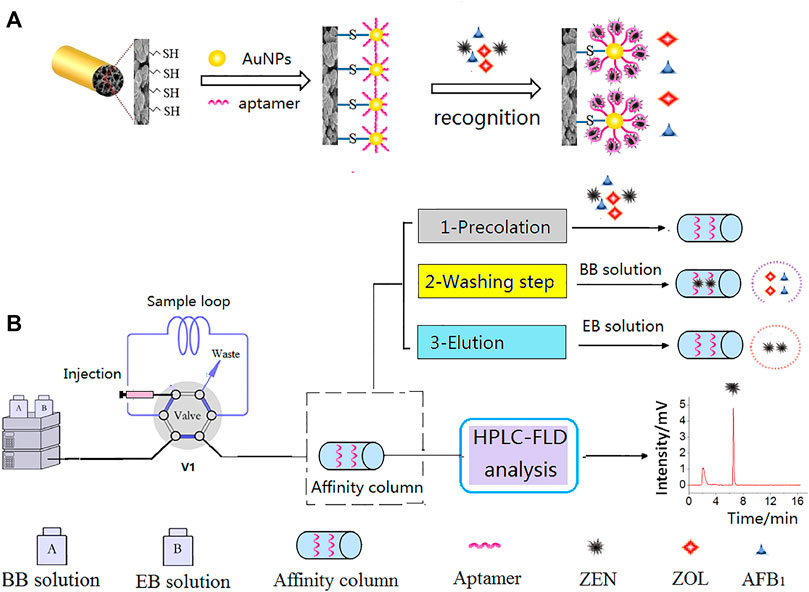
FIGURE 1. Scheme of preparation of AuNPs@aptamer@ poly (TMOS-co-MPTMS) affinity monolith (A) and online selective analysis of ZEN coupled with HPLC (B). Reprinted with permission from Ref. (Xu et al., 2020). Copyright 2020 Elsevier.
Aptamers can change the status quo that analyzing and detecting trace substances with monolithic columns is difficult. Combining aptamers with other novel functional monomers is also an important research direction.
2.2 Nanomaterials
As a result of their ultra-high specific surface area, mechanical strength and thermal stability, nanomaterials have long been the focus of research in monolithic column chromatography analysis and sample pretreatment (Beeram et al., 2017). Carbon nanotubes are allotropes of carbon and, like graphene, have sp2-hybridized carbon atoms arranged in a honeycomb lattice. They have adsorption characteristics and certain chirality, and can be used as an adsorbent for chromatographic analysis and solid-phase extraction (SPE), or can be added to a monolithic column to achieve enantiomeric separation (Hemasa et al., 2017; Khalil et al., 2020). (Andre and Guillaume, 2012) attached AuNPs to the surface of boron nitride nanotubes (BNNT), thereby significantly improving the retention and separation efficiency of sulfur-based compounds, and demonstrated the performance of BNNT for the first time. For the problems of low solubility and easy agglomeration of graphene oxide (GO), different graphene composite materials have been developed to compensate for these deficits. Additionally (Qu et al., 2016) deposited silica NPs (SiO2 NPs) on the surface of GO with a special layered structure. They prepared columns modified with GO (GO@column), GO and SiO2 NPs (GO-SiO2 NPs@column), and SiO2 NPs (SiO2 NPs@column), as shown in Figure 2. Their results showed that the column modified with GO/SiO2 NPs-C18@column is more efficient and can be applied to the separation of complex samples. Subsequent work has continuously optimized the surface coating of GO for higher column separation efficiency. For instance (Huang L. et al., 2019) used Fe3O4 grafting to modify GO, which enlarged the gap between GO flakes and provided multiple binding sites for analytes. Compared to traditional imprinting materials, nanostructured imprinting materials are small in size and easy to remove. (Zhai et al., 2015) used the method of coating GO with molecularly imprinted polymers, which not only increased the loading rate of the monolithic column, but also led to the enhancement of the sensitivity for the target.
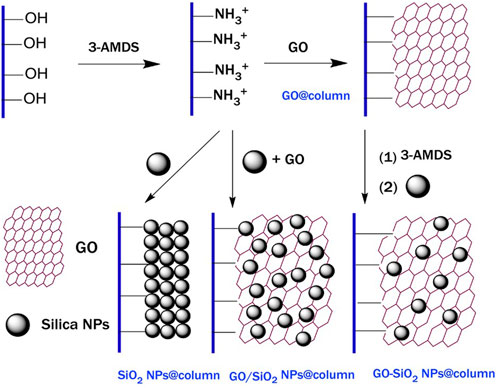
FIGURE 2. Schematic representation of the fabrication processes of the GO@column, GO/SiO2 NPs@column, GO-SiO2 NPs@column, and SiO2 NPs@column. Reprinted with permission from Ref. (Qu et al., 2016). Copyright 2016 Wiley-VCH.
Nanomaterials form a variety of composite materials through graft modification, which takes advantage of various materials, and increases sample selectivity while increasing monolithic column efficiency.
2.3 Chiral selector
There are many chiral compounds on the market today, especially in the pharmaceutical industry, more than half of which are chiral drugs. Commercial chiral columns suffer from high brittleness and manufacturing difficulties. The use of monolithic columns to achieve enantiomeric separation has become a common practice. Due to their good molecular recognition capabilities, polysaccharide derivatives, macrocyclic antibiotics and cinchona alkaloids are often used in the resolution of chiral compounds. For example (Wang et al., 2016) used cinchona alkaloids as chiral selectors to determine the enantiomers of N-derivatized di-and tri-peptides in dietary supplements, and their results show enantiomeric impurities below the limit of detection (LOD). In addition (Zhao et al., 2021) successfully separated ephedrine and pseudoephedrine from ephedra crude extracts using a home-made ß-cyclodextrin monolithic column. Based on their verification results, it is reasonable to speculate that there are various interaction forces between the enantiomer and A-β-cyclodextrin. (Echevarría et al., 2019) first used the chiral selector cellulose tris (3,5-dimethylphenyl carbamate) in a polymeric monolith column for enantiomeric resolution. The column has enantioselectivity values up to 7.1 and enantioresolutions up to 2.4 in short analysis times. Vancomycin is a macrocyclic antibiotic whose 18 stereocenters and various functional groups are the key to chiral recognition. In another study, a vancomycin derivative was coated on a column to separate the dansyl amino acid enantiomers (Pittler and Schmid, 2010).
Chiral separation can exclude most substances with toxic and side effects, but the application for practical samples is still at an immature stage. The recognition properties and separation mechanisms of chiral monolithic columns still needs to be further investigated.
2.4 Ionic liquid
As an excellent organic solvent, IL is an excellent solvent for radical polymerization due to its characteristics of high thermal stability, easy adjustment, good high solubility and efficient separation of anions and cations. Compared with traditional ILs, IL monolithic columns can also be obtained by grafting IL molecules onto halide-modified monolithic column materials by nucleophilic substitution. For example, 1-butyl-3-vinylimidazolium bromide (Lei et al., 2020) and pentafluorobenzyl imidazolium bromide IL synthesized by the nucleophilic substitution reaction of 1-vinylimidazole and pentafluorobenzyl bromide (Shan et al., 2015). The IL is often combined with the polymer by methods such as covalent grafting to enhance the stability of the monomer and improve the separation efficiency of the monolithic column (Chen et al., 2019). Phosphorylcholine (ChoP) is an amphiphilic molecule with a high structural similarity to cell membrane components, and is often used in the manufacture of biomimetic medical devices. (Lei et al., 2020) prepared IL monolithic columns by grafting 2-methacryloyloxyethyl phosphorylcholine (MChoP) onto ILs (as shown in Figure 3A), to provide a hydrophilic surface for the stationary phase, while the IL also reduces the defect of poor overall column stability. In some reports, polyhedral oligomeric siloxane (POSS) was introduced into the IL monolithic column (as shown in Figure 3B) to improve the mechanical stability and pH tolerance of the column (Shan et al., 2015; Huang et al., 2021).
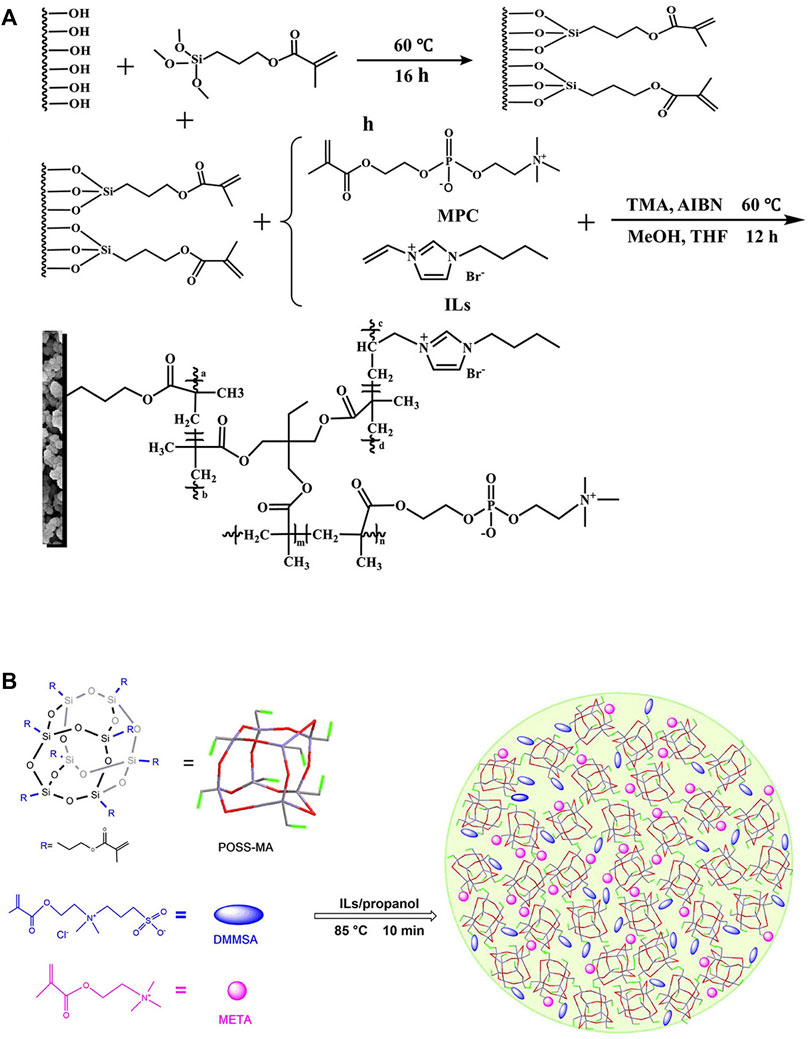
FIGURE 3. (A): Preparation of poly (MPC-co-ILs-co-TMA) monolithic column. Reprinted with permission from Ref [34]. Copyright 2020 Elsevier. (B): Preparation of poly (POSS-co-META-co-DMMSA) monolithic column. Reprinted with permission from Ref. [37]. Copyright 2021 Elsevier.
ILs have been studied in many aspects due to their unique advantages, but there is still a huge room for development in the exploration of new IL complexes.
2.5 Deep eutectic solvent
Deep eutectic solvents (DESs) are a new class of green solvents similar to ILs. Compared with ILs, they are low cost, low toxicity and simple to prepare, and have gradually developed into highly effective functional monomers. DESs are a eutectic mixture of a quaternary ammonium salt and a hydrogen bond donor, such as a carboxylic acid, amide or alcohol (Zhang et al., 2016; Wang et al., 2018a). Recently (Wang et al., 2018b) reported the copolymerization of a DES, synthesized from chlorocholine chloride and itaconic acid as monomers, with ethylene glycol dimethacrylate, which formed a novel monolithic column (as shown in Figure 4A). They showed that as a separation column for CEC, the monolithic column can well separate small molecular organisms and alkaloids. Compared with the traditional MIP, the MIP monolithic column prepared with DESs as a porogen has a higher affinity, but also leads to the reduction of imprinted sites. Wei et al. (Wei et al., 2019) exploited the high specificity of the metal pivot to compensate for this deficiency, and prepared a metal pivot-bound DES-Co-MIP monolithic column as shown in Figure 4B. The GO modified with 3-(trimethoxysilyl) propylmethacrylate (γ-MPS) was well dispersed in the DESs (choline chloride-alcohol) and room temperature ILs (1-hexyl-3-methylimidazolium tetrafluoroborate), which not only improves the solubility of graphene, but also reduces the interlayer stacking (Li X. X. et al., 2018).
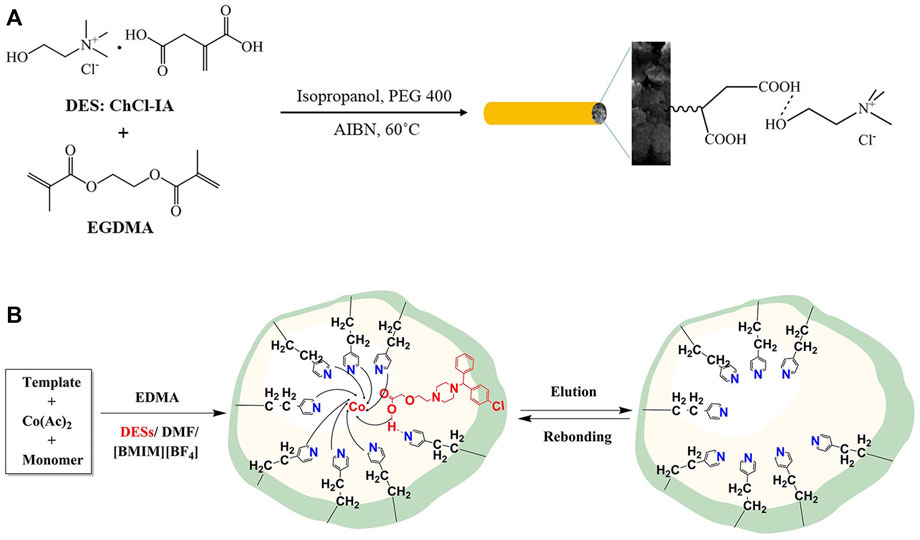
FIGURE 4. (A): Schematic illustration for fabrication of DES-based monolithic column. Reprinted with permission from Ref. [40]. Copyright 2018 Elsevier (B): The preparation schematic diagram of DES-Co2+-MIP. Reprinted with permission from Ref. [41]. Copyright 2019 Elsevier.
As an easily modified solvent, DESs can be combined with other functional monomers to form copolymerized compounds, bringing out the advantages of each monomer. DESs have great development prospects in chromatographic analysis and detection. The characteristics and shortages of various functional monomers was listed in Table 1.
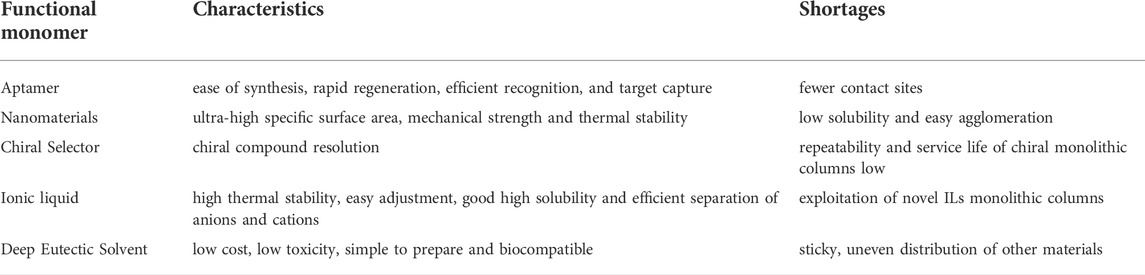
TABLE 1. Characteristics and shortages of each functional monomer.
3 Chromatographic detection technology
3.1 Molecular imprinting technology
MIT is a technology that can synthesize target molecules by simulating the specific interaction between enzymes and substrates. The principle is that the monomer and the cross-linking agent are copolymerized, and the target molecule is used as a template molecule to combine with the monomer functional group to form a site. When the template molecule is removed, a cavity is formed, and the target molecule is selectively recognized (as shown in Figure 5) (Hermawan et al., 2020; Shen et al., 2021; Pu et al., 2022). A molecularly imprinted polymer (MIP) is synthesized by MIT, and it is used in the separation and detection by integral column chromatography to improve the specific recognition function of the target molecule. The MIP monolithic columns have significant affinity and selectivity for target molecules, but their limited binding sites reduce the column efficiency to a certain extent. In recent years, the high specific surface area of some NPs has attracted considerable attention of researchers. (Ma and Row, 2019) prepared GO-coated molecularly imprinted monolithic columns using ciprofloxacin (CIP) and levofloxacin (LEV) as dual templates, and GO to improve the adsorption capacity and compensate for the low adsorption efficiency. In the practical application of MIP monolithic columns, the problems of low column binding rate and poor repeatability are also due to the incomplete removal of template molecules. This problem can be effectively avoided by preparing the MIPs using the sol-gel method (Moein et al., 2019). (Derazshamshir et al., 2021) designed molecularly imprinted capillary monolithic columns for the separation of the enantiomeric form of the chiral antidepressant S-citalopram (S-CIT) in aqueous solution. Compared with the non-imprinted (NIP S-CIT) monolithic capillary column, the calculated imprinting factor (I.F:1.81) proved the high selectivity of MIP S-CIT monolithic capillary column for S-CIT.
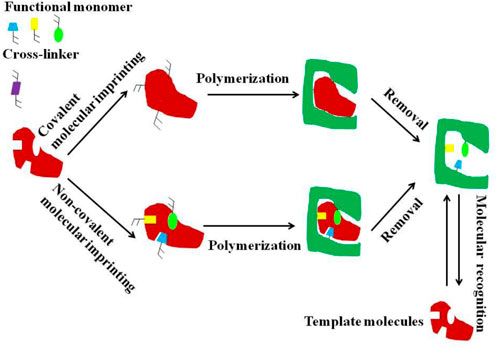
FIGURE 5. Schematic diagram of molecular imprinting technique. Reprinted with permission from Ref. (Pu et al., 2022). Copyright 2022 Elsevier.
The MIT is a widely used modification technology to improve specific adsorption. The MIT has great potential in sample pretreatment and chromatographic analysis due to its advantages of high selectivity and high specificity.
3.2 In-tube solid-phase microextraction
The actual sample has complex components, less target molecules, and contains non-volatile endogenous compounds. These compounds are irreversibly adsorbed on the monolithic column, which not only shortens the service life of the monolithic column, but also reduces the analytical sensitivity (Costa Queiroz et al., 2019). Therefore, pretreatment before sample detection becomes an indispensable operation. SPE is the most used traditional sample pretreatment technique. In 1997, Eisert and Pawliszyn proposed the in-tube solid-phase microextraction (SPME) technique in order to couple SPE with HPLC to realize the automation of sample detection (Eisert and Pawliszyn, 1997). In the in-tube SPME technique a capillary column is coated with a capillary surface as an extract. Besides significantly shortening the pretreatment time, this technique reduces the use of organic solvents, and has the advantages of low cost and simple operation. In addition, in-tube SPME can be coupled to various instruments. Especially in combination with HPLC, the sample preparation, separation, and analysis process automation are achieved (Kataoka, 2021). (Wu et al., 2019) coupled in-tube SPME online with HPLC-MS (as shown in Figure 6A), which greatly reduced the influence of baseline effects, and achieved the enrichment of tobacco alkaloids through a simple operation. (Wang K. et al., 2014) installed an optimized SPE column at the six-port valve position as a pretreatment device, connected a C18 column as an analytical column, injected the sample in load mode and eluted the sample matrix with water to complete the sample pretreatment. After pretreatment, the six-port valve was changed to injection mode, and the mobile phase flowed through the SPE column to elute the sample and entered the C18 column for detection and analysis (as shown in Figure 6B). This semi-automated analysis approach greatly reduced time and solvent consumption. (Wu F. et al., 2021) used in-tube SPME-MS for the online detection of benzimidazoles in chicken and pork samples. Their results were more pronounced and had a lower signal-to-noise ratio than MS-only detection.
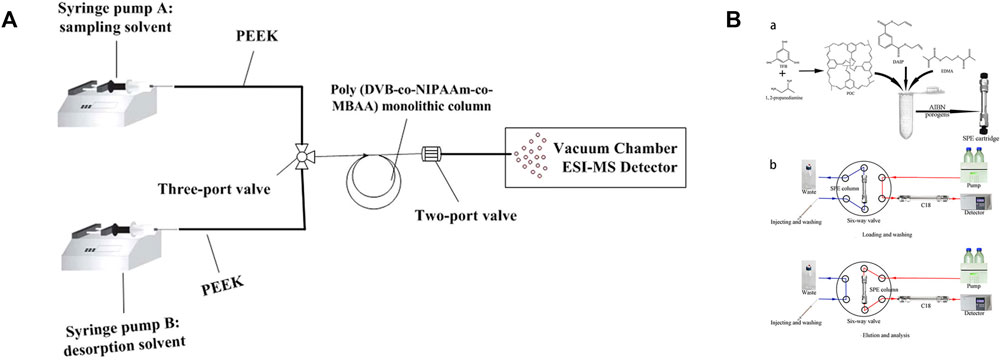
FIGURE 6. (A): Construction of the online in-tube SPME-MS system. Reprinted with permission from Ref. (Wu et al., 2019). Copyright 2019 Elsevier (B): SPE column synthesis scheme (A) and the SPE–HPLC procedures (B). Reprinted with permission from Ref. (Wang L. et al., 2021). Copyright 2021 Wiley-VCH.
The overall material is an ideal material for SPE as an extraction adsorbent due to its high permeability. The development of extraction phases with higher selectivity and extraction efficiency and the flexible use of in-tube SPME are future innovations. The achievement of automated, miniaturized, high-throughput instruments and sustainable, green scientific analysis techniques is the future development trend.
3.3 Combining multiple technologies
Besides combining various functional monomers to form composite materials, multiple detection technologies are also combined in order to achieve high specificity, high sensitivity and high accuracy detection. SPE is performed before the column is applied to preprocess the sample to remove the complex matrix, but its selectivity is low and the content of the target substance is small. The pretreatment work cannot achieve the desired effect. Therefore, combining SPE with MIT and functionalized monolithic columns to improve the selectivity of pretreatment. (Zhai et al., 2017) used a GO/SiO2-MISPE combination chip to efficiently and selectively extract and enrich Rhodamine B in chili powder samples. The combined with nanomaterials enhances the binding ability of template molecules and increases the adsorption area of the monolithic column (Li Y. et al., 2021).
HPLC is often used in combination with MS and fluorescence detection (FLD) to achieve sensitive and accurate results. HPLC-MS/MS is a commonly used method for substance detection with high accuracy and sensitivity. HPLC-FLD has the advantages of high resolution, low cost, and good stability. (Nian et al., 2018) used online SPE combined with online detection by HPLC-MS/MS, which takes 16 min for one analysis and can be repeated 600 times, and indeed achieves fast and efficient automatic detection. This is also the future development direction.
4 Applications of polymer monolithic columns in food and medicine
4.1 Application in food
4.1.1 Determination of active ingredients
The purpose of detecting active ingredients in food with the monolithic column is twofold, one is to perform high-purity enrichment of the beneficial main active ingredients, and the other is to distinguish adulterants and low-cost food ingredients. For instance, ß-sitosterol in plant oil samples has significant anti-inflammatory and antitumor effects, but it is difficult to detect. A new monolithic column was prepared and a new method was developed for online enrichment and determination of ß-sitosterol in plant oil samples by online SPE combined with HPLC (Guo et al., 2019; Wang et al., 2019). Phenolic acids have excellent antioxidant activity. (Kuo et al., 2018) used activated carbon polymer monolithic columns to extract phenolic acids in fruit wine and cranberry samples for the first time. Phenolic acid standards showed high extraction recovery rates, ranging from 76.4 to 101% (<3.1% RSDs) and 73.4–100.5% (<4.0% RSDs), respectively. The alkaloids in medicinal and edible plants have great medicinal properties, but plant components seriously interfere with the quantitative analysis due to complex matrices. The poly (tetrahydrofurfuryl methacrylate-co-3,4-ethylenedioxy-N-methylamphetamine-co-triallyl isocyanurate (poly (THFMA-co-EDMA-co-TAIC)) monolith column prepared by the research group of (Li et al., 2019) is a simple, rapid and efficient method for the detection of alkaloids in edible plants. In addition, it has good accuracy and repeatability, and the accuracy illustrated by spiked recovery ranged from 98.89–102.06%. (Pang et al., 2019a) prepared a home-made chromatographic monolithic column for the quantitative determination of six aroma compounds in edible spices, namely, anethole from star anise, trans-cinnamaldehyde from cinnamon, hydroxy-alpha-sanshool from zanthoxylum, as well as 6-gingerol, 8-gingerol, and 10-gingerol from ginger. The detection of real species in different habitats showed that the method has good specificity and durability. Rapid separation and enrichment of fat-soluble vitamins in commercial products have been achieved using HPLC columns, which compared with some traditional methods, is suitable for large-scale analysis with high purity, flexibility and efficiency, and saving time and labor (Kurdi et al., 2017).
4.1.2 Food additives
The abuse and illegal addition of food additives, such as synthetic dyes, nitrates, optical brighteners, etc., pose a huge threat to human health. Relevant laws that strictly regulate the types and dosages of food additives have been passed (Wu L. et al., 2021; Cox et al., 2021). For use in the sample analysis step before the product leaves the factory, researchers try to prepare monolithic columns with different functional monomers to optimize the detection efficiency based on the complexity of the sample components. Li et al. (Li W. J. et al., 2013) prepared a poly (N-isopropylacrylamide-co-N, N0-methylene bisacrylamide) monolithic column for the determination of food dyes (tartrazine, sunset yellow, allura red, and azorubine) in soft drink samples. The technique introduced γ-alumina NPs, which effectively improved the organic polymer swelling process and low loading. The preparation of a novel IL-modified organic polymer monolithic column for the determination of five acidic food additives in Coca-Cola was recently reported by researchers to have high extraction efficiency, and a recovery rate that reached 85.4–98.3% (Wang T. T. et al., 2014). Additionally (Zhai et al., 2017) developed a solid-phase extraction chip embedded with array monolithic columns of MIP-coated silanized GO (GO/SiO2-MISPE), which had higher adsorption capacity, selectivity and affinity than conventional MISPE columns. It was effectively used to eliminate impurities in chili powder and monitor the harmful dye Rhodamine B, with enrichment factor greater than 110 times. Nitrate (NO3−) and nitrite (NO2−) have great potential toxicity as food additives and preservatives. Lin et al. (Lin et al., 2019) developed a home-made VIM-EDMA monolithic column for the detection of NO3−and NO2− in vegetables, and the sensitivity of this method for the detection of NO3− and NO2− reached the acceptable daily intake (ADI) levels specified by the European Union.
4.1.3 Mycotoxins
Mycotoxins are toxic secondary metabolites produced by fungi that are usually unavoidable during plant growth and food storage. In order to ensure food safety and human health, current relevant food safety laws and regulations in China limit the maximum residues of mycotoxins in food or raw materials (Stoev, 2015; Avery et al., 2019). (Zhang et al., 2021) used aptamer capillary monolithic columns as specific adsorbents, and ultra-HPLC (UHPLC)-MS/MS technique for the determination of patulin in apple juices. This ultra-sensitive detection method solved the problems of low patulin content and difficult detection in food samples. (Li Q. et al., 2021) prepared a home-made capillary device for instant detection of ochratoxin A consisting of aptamer-functionalized silica photonic crystal microspheres, which could automatically extract target molecules with a sample recovery rate of 86–108%, and its point-of-care analysis could also be expanded for multi-target molecular screening assays. A carbon quantum dot-coated pseudomolecularly imprinted polymer monolithic column, with 5,7-dimethoxycoumarin as the virtual template of aflatoxin B (AFB1), was used to selectively enrich and analyze AFB1 in peanuts, taking advantage of the high surface area of carbon quantum dots (CDs) to increase molecularly imprinting binding sites, which achieved an enrichment factor of more than 71-fold for this column (Liang et al., 2018).
4.1.4 Antimicrobials and synthetic pesticides
Antibiotics, plant growth regulators, insecticides and disinfectants are used as drugs to promote growth and treatment of animal and plant diseases, and their uncontrolled use has resulted in the proliferation of drug-resistant strains of microorganisms. These antimicrobial drugs not only pollute the environment, but also transfer to the human body through the medium of food, and cause damage to human health. Therefore, it is very important to sensitively and accurately detect the antimicrobial drug residues in food samples (Nasr et al., 2014; Huang L. F. et al., 2019). The common problems in monitoring the analysis of real samples are the matrix complexity of real samples and the difficulty of antibiotic extraction. Liu et al. (2016) effectively reducing the matrix effect by combining the quick, easy, cheap, effective, rugged, and safe (QuEChERS) method with the poly (lauryl methacrylate-co-methacrylic acid-co-ethylene glycol dimethacrylate) poly (LMA-MAA-EDMA) monolithic column to determine chloramphenicol, thiamphenicol and florfenicol in milk and honey. In addition, Lirio et al. (Lirio et al., 2016) reduced the complexity of the samples by using aluminum-based metal-organic framework (Al-MOF)-organic polymer monoliths as adsorbents for the SPME of penicillin from river water and milk samples. A novel monolithic capillary column based on a NH2-MIL-53(Al) MOF was developed for the determination of eight trace sulfonamides in fish and chicken samples, by combining the advantages of MOF and SPME, and enabled the recovery of sulfonamides with a recovery rate of 85.7–113% (Zhang et al., 2020). Molecular imprinting combines functional monomers, such as acryloyl-β-cyclodextrin (A-β-CD), which not only improves the selectivity, but also does not significantly reduce the adsorption efficiency. For instance (Liang et al., 2019) and (Zhang et al., 2014) prepared molecularly imprinted monolithic columns for the detection of benzimidazole fungicides in citrus samples and antibacterial agents in enriched meat.
Real samples are complex and variable in the actual detection process. In order to obtain high accuracy, strong specificity, simple and efficient detection results, it is necessary to continuously explore the detection and analysis of organic polymer monolithic columns for daily food produce. The organic polymer monolithic columns have great future potential in food testing, as shown in Table 2 (Li W. J. et al., 2013; Zhang et al., 2013; Wang T. T. et al., 2014; Zhang et al., 2014; Lin et al., 2015; Zhai et al., 2015; Huang et al., 2016; Lirio et al., 2016; Liu et al., 2016; Wang et al., 2016; Chocholouš et al., 2017; Zhai et al., 2017; Zhang et al., 2017; Chen et al., 2018; Liang et al., 2018; Huang L. et al., 2019; Liang et al., 2019; Lin et al., 2019; Wang et al., 2019; Lei et al., 2020; Lyu et al., 2020; Xu et al., 2020; Zhang et al., 2020; Li Q. et al., 2021; Dong et al., 2021; Ganewatta and El Rassi, 2021; Zhang et al., 2021) the application of monolithic columns in food testing has been increasing in recent years.
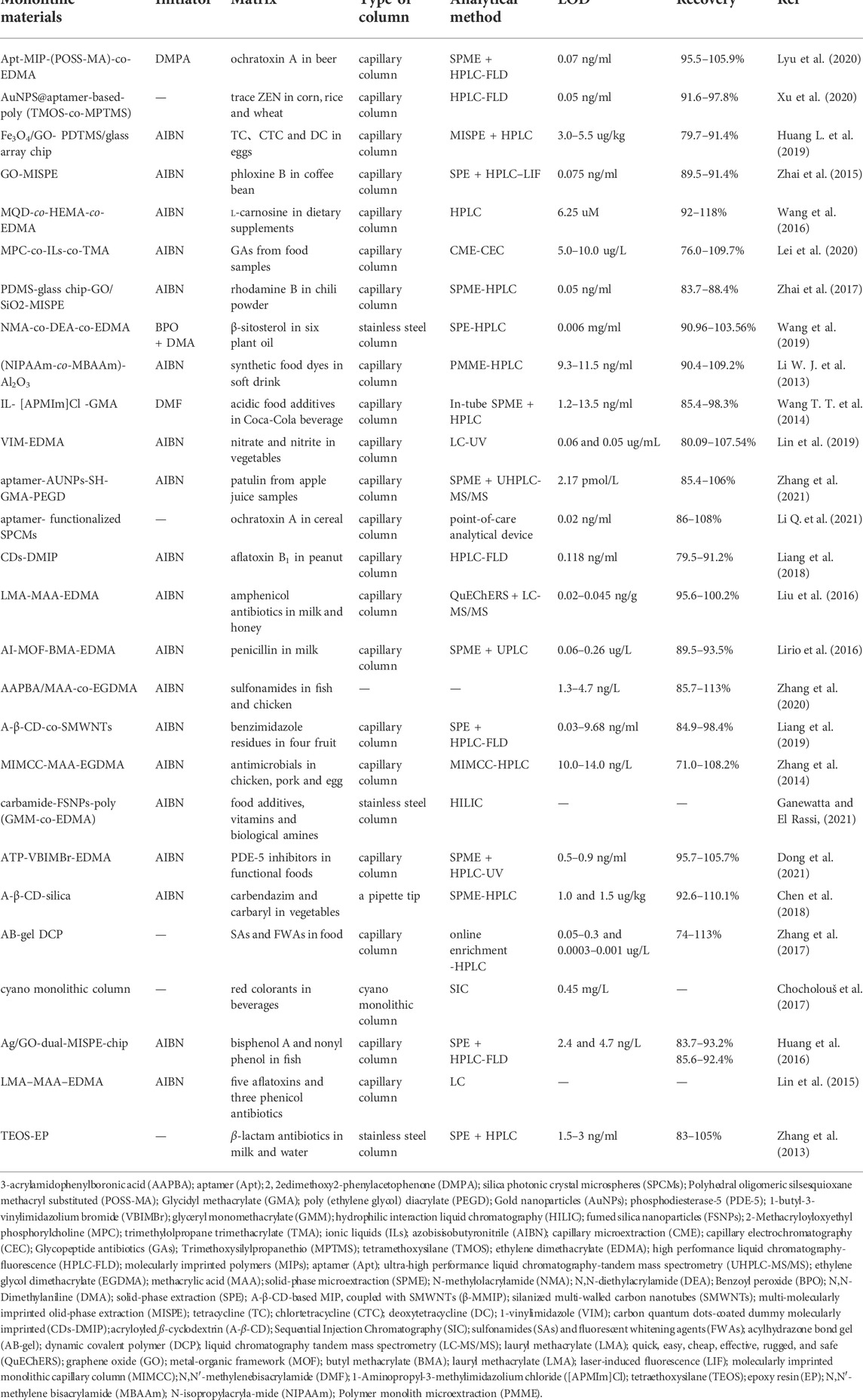
TABLE 2. Application of polymer monolithic columns in food.
4.2 Application in medicine
4.2.1 Detection and analysis of drug levels in humans and animals
With the development of modern scientific and medical technology, people’s health risks from contaminants in food, drinking water, medicines and the enironment have attracted more and more attention. Although current drug treatments can achieve successful outcomes for most human diseases, the pharmacokinetics and pharmacodynamics of each drug are still different among different individuals, and different blood drug concentrations and side effects will also affect people’s health (Tang et al., 2018). Therefore, effective monitoring of drug concentrations in patients is of critical for improving clinical treatment (Novak et al., 2005; Kang et al., 2011). Non-steroidal anti-inflammatory drugs (ketoprofen, fenbufen and ibuprofen) are generally used to treat chronic pain, rheumatism, etc. They are over-the-counter drugs without prescription control, but when used for a long time, they may cause gastrointestinal bleeding and cardiovascular disease (Luo et al., 2011; Tang et al., 2018). Lyu et al. (Lyu et al., 2015) successfully developed a new type of aluminum terephthalate metal-organic polymer (MIL-53(Al)), and used in polymer monolith microextraction (PMME) capillary monolithic columns for the detection of relatively low concentration of non-steroidal anti-inflammatory drugs in urine, with detection limit and quantification limit reaching from 0.12–0.24 g L−1 and 0.40–0.85 g L−1, respectively. Javanbakht et al. (Javanbakht et al., 2012) used in situ MIT to prepare tramadol-imprinted monolithic column in stainless steel tube to directly determine the content of tramadol in human urine and plasma samples. by an online analysis process, which is shown in Figure 7A. Their method achieved detection limits of 0.03 ng ml−1 and 0.30 ng ml−1, respectively, and recovery rates of 90.5–93.1 and 93.3–96.0%, which effectively prevented the abuse of tramadol. (Wang R. et al., 2021) synthesized a monolithic column incorporating Schiff base network-1 (SNW-1), as shown in Figure 7B, and used it for the determination of three antiepileptic drugs (carbamazepine, oxcarbazepine, lamotrigine) in epilepsy patients, in order to solve the problem that the drug concentration in the plasma cannot be detected in time to prevent the adverse reactions caused by the narrow treatment range of antiepileptic drugs. Its detection limit was 0.2 ng ml−1, and the recovery rate was in the range of 88.6–106.1%, indicating that the method has a good application prospect in the extraction and quantitative analysis of antiepileptic drugs. CIP and LEV are second-generation fluoroquinolone antibiotics widely used in the treatment of Gram-negative and Gram-positive bacteria, but their metabolism is slow and prone to allergic reactions and drug resistance (Misurac et al., 2013; Vella et al., 2015; Okan et al., 2017; Tang and Row, 2018). Therefore (Ma and Row, 2019) developed an IL-based, bimolecularly imprinted polymer-coated GO SPE monolithic column for the simultaneous determination of the levels of CIP and LEV in human urine, and achieved recovery rates greater than 93.8% for both antibiotics. Mompo-Rosello et al. (Rosello et al., 2020) modified a methacrylate monolithic column with imidazolium-based IL and used it as the stationary phase for SPE to extract five ß-blockers from human urine achieving a detection limit of 1.4–40 μg L−1, which makes it useful to detect the use of beta-blockers as stimulants. (Lee et al., 2012) used online column conversion ultrafast HPLC-MS-/MS to obtain a good separation of eight barbiturates in human plasma, within 3 min, with a C18 monolithic column, and achieved a quantitative accuracy of 92.0–108%, which is useful in the clinical and toxicological analysis of barbiturates. Chaloemsuwiwattanakan et al. (2016) developed a micro-LC-based synthetic capillary monolithic column for the rapid detection of iodohexanol in human serum, with a detection limit of 0.44 mg L−1, and a recovery rate of 102–104%. Effective dose control of iodohexanol and assessment of renal function were reported (Denis et al., 2008; De Baere et al., 2012; Hellqvist et al., 2015).
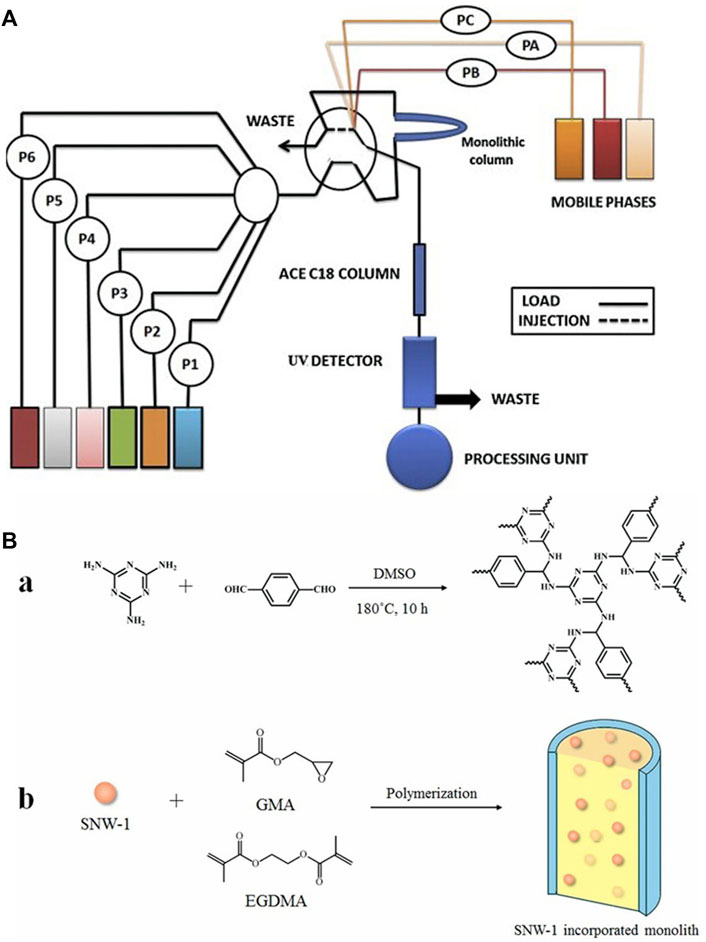
FIGURE 7. (A): Schematic representation for operation of the on-line assay of the tramadol by monolithic column coupled with HPLC. Reprinted with permission from Ref. (Javanbakht et al., 2012). Copyright 2012 Elsevier (B): Schematic of (A) synthesis of SNW-1 and (B) preparation of SNW-1-monolithic column. Reprinted with permission from Ref. (Wang R. et al., 2021). Copyright 2021 Elsevier.
Also, there are similar problems in animals, and the drug level in animals will directly or indirectly affect the environment and human health. Guo et al. (Guo et al., 2017) developed a new molecularly imprinted monolithic column (MIMC) coupled with a 2D-LC (MIMC-2D-LC) method to determine the level of clenbuterol in complex matrices and successfully analyzed clenbuterol in liver and urine samples. Song et al. (2019) used roxithromycin as a virtual template to prepare MIPs of macrolides based on MIP monolithic microextraction (MIPMME) HPLC-MS/MS monolithic column for the analysis of macrolide antibiotic (MAL) residues in pork, chicken and beef samples. Their results showed that MIMCs exhibited better retention capacity for six MALs. Using spiramycin as a virtual template, Zhou et al. (2016) synthesized a molecularly imprinted polymer monolithic column with high selectivity for azithromycin (AZI). They achieved a detection limit and a quantification limit of 0.03 and 0.1 g kg−1, respectively, which could effectively monitor residual AZI and its analogues in edible animal tissues to reduce their damage to human liver and heart. In recent years, the application of monolithic columns in medicine has increased, as shown in Table 3 (Xiao et al., 2015; Chen et al., 2016; Wang et al., 2018a; Salih et al., 2018; Peng et al., 2020; Andre and Guillaume, 2021; Derazshamshir et al., 2021; Wang L. et al., 2021; Wu F. et al., 2021; Zhao et al., 2021; Ghanem et al., 2022).
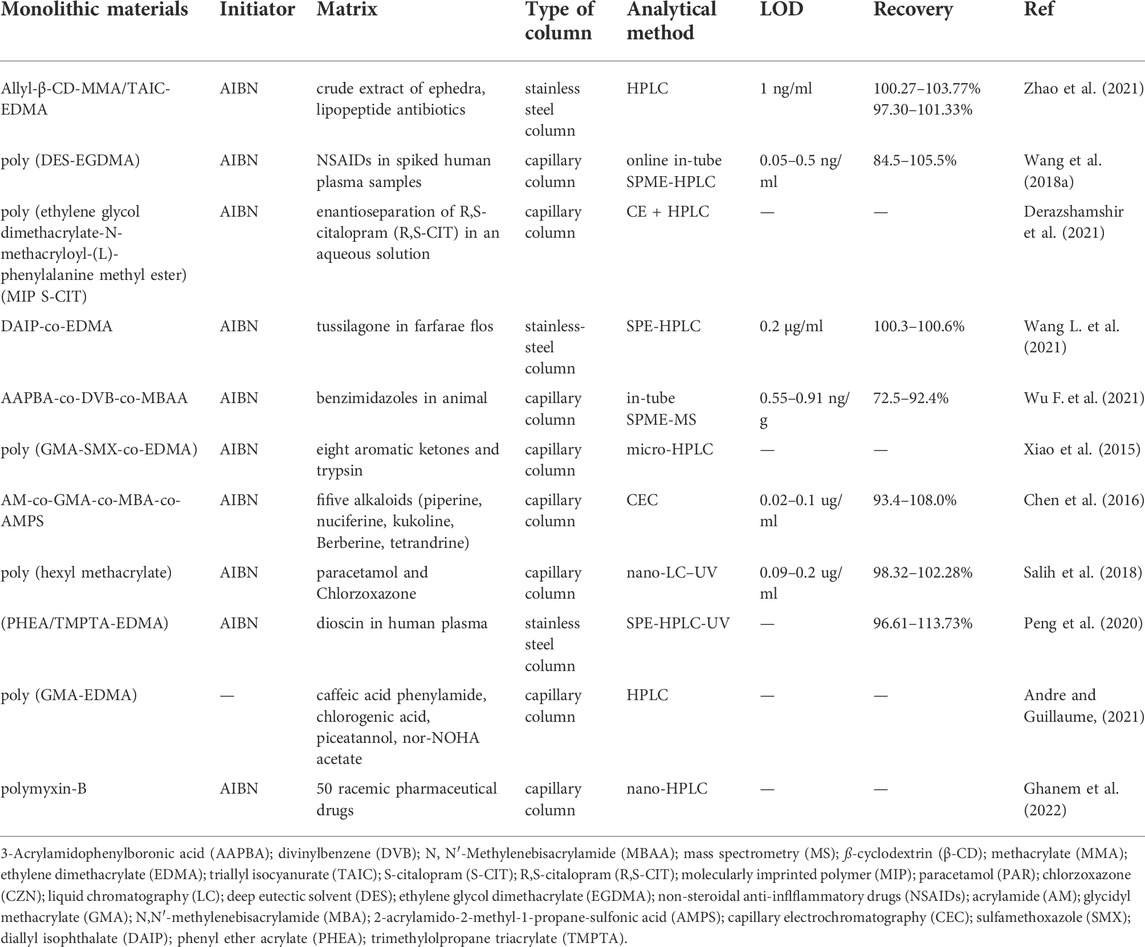
TABLE 3. Application of polymer monolithic columns in medicine.
4.2.2 Analytical applications in chinese herbal medicine
Traditional Chinese medicine (TCM) has been widely used in the treatment of various diseases since ancient times. However, TCM is rich in a variety of active components, and the components are similar in structure and very different in content, which makes TCM formulations extremely complex (Zhang et al., 2018; Zheng et al., 2020). It is not easy to accurately separate and analyze each active ingredient. Therefore, before the analysis of TCM samples, more sample pretreatment work is required. The existing methods include liquid-liquid extraction, supercritical fluid extraction, ultrasonic-assisted extraction, microwave-assisted extraction, etc. However, most of them require high investment cost, are time-consuming, and their extraction efficiency is low. These inferior properties limit their application. In addition, SPE is also one of the commonly used methods, but its use is also affected by the limited stability of the adsorbent and poor reusability. Consequently, monolithic columns that can be used for trace and structural analysis have been prepared by modifying adsorbents and combining HPLC, MS, and diode array detection (Sun et al., 2021). The Chinese medicine Schisandra has antioxidant, detoxification, anticancer and anti-fatigue properties (Wang et al., 2012; Li Z. et al., 2018) developed a biochromatographic column using immobilized liposomes as a membrane model, and separated more than 40 components of Schisandra chinensis using a 2D chromatography system (shown in Figure 8), and preliminarily established a three-dimensional chromatographic fingerprint of Schisandra chinensis. Sun et al. (2021) prepared a porous organic polymer/vinylic-functionalized covalent organic framework (POP/V-COF) monolithic column with large specific surface area and good stability through a one-step reaction, and used it with a C18 chromatographic column to determine the four active components in a Danshen drink decoction online. They achieved a LOD and a limit of quantification (LOQ) for the four active ingredients of 15–30 and 50–100 ng ml−1, demonstrating that these columns are useful for the quality evaluation of TCM formulations. Five kinds of coumarins (latemycin, oxyomycin, xanthoxin, 5-hydroxy-8-methoxypsoralen) in Angelica extract have been reported to show anti-inflammatory, analgesic, efficacy in the treatment of abnormal pigmentation disorders and other biological activities (Matsuo et al., 2020; Guo et al., 2021; Yang et al., 2021; Yuan et al., 2022). (Chen Z. et al., 2012) synthesized a methacrylate monolithic column and used sodium deoxycholate and a silver daily mobile phase to achieve the baseline separation of five structurally similar coumarins within 6 min, with recovery rates ranging from 87.5–95.0%, a LOD below 0.15 g ml−1, and a LOQ below 0.30 g ml−1. (Pang et al., 2019b) prepared MOF-polymer monolithic columns using modified MOF materials and N-methacrylamide as monomers. They were able to extract and purify triterpenoid ursolic acid from Chinese herbal medicine samples with complex matrices, with a LOD and a LOQ of 0.17 μg ml−1 and 0.57 μg ml−1, respectively, indicating that they can be applied to the determination and enrichment of ursolic acid in routine laboratory TCM samples. (Wang and Shen, 2019) synthesized a new type of porous monolithic column using the original free radical, exceeding the theoretical plate number of 31,000 plates m−1, and separated the six main drugs in the TCM Panax notoginseng within 10 min (Chen X. et al., 2012) developed a novel 2D HepG2/ceramic matrix composite (CMC)/monolithic column/time of flight (TOF)-MS (2D HepG2/CMC/monolithic column/TOF-MS) system, by applying monolithic columns to the second dimension (HPLC or GC-MS) for offline or online analysis of one-dimensional retained fractions. Screening of antitumor components of berberine, tetrahydropalmitine, baicalin oxymatrine and matrine, revealed a time-saving, efficiency-enhancing new method for lead discovery.
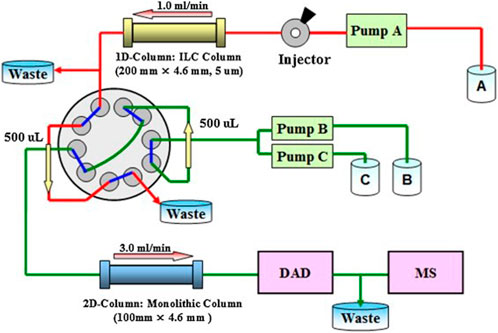
FIGURE 8. Flowchart of the detection of Schisandra chinensis by immobilized liposome biochromatographic column in two-dimensional chromatography system. Reprinted with permission from Ref. (Wang et al., 2012). Copyright 2012 Elsevier.
4.2.3 Analytical application in the separation and detection of enantiomeric drugs
A pair of enantiomeric drugs usually exhibit similar physicochemical properties (e.g., color, odor, solubility), but have different physiological activities, and some may have severe toxic side effects, like thalidomide (Svec, 2005; Sun et al., 2019). Therefore, good chiral separation of enantiomeric drugs is essential. Rocco et al. (Barnes et al., 2013) performed baseline separation of the enantiomers of nomifensine and naproxen by synthesizing a hydroxypropyl-β-cyclodextrin (HP-β-CD) capillary monolith. (Li M. et al., 2013) used ß-cyclodextrin-modified AuNPs (CD-AuNPs) monomers as the stationary phase (the modification scheme of CD-GNP is shown in Figure 9A) for CEC to perform baseline separation of three pairs of drug enantiomers (chlorpheniramine, zopiclone, and tropicamide), with a resolution of 1.85 and their experimental results are shown in Figure 9B. Bao et al. (2021) prepared an anionic carboxymethyl-β-cyclodextrin (CM-β-CD) silica hybrid monolithic column (preparation process is shown in Figure 10A) by a “one-pot” method for the chiral separation of 10 racemic compounds. Their recovery rates reached 96.79–97.88%, and the column was successfully applied to the detection of enantiomeric impurities of S-ofloxacin, and the molecular recognition mechanism is shown in Figure 10B. Dixit and Park, (2015) synthesized derivatives of zirconium tetraoxide and erythromycin of 3-triethoxysilylpropyl carbamoylated derivative of erythromycin (TEOSPC-ERY) by an in situ sol-gel method. They used the organic-inorganic mixed monolithic column to separate six basic chiral drugs, and the highest resolution obtained was Rs = 3.33. Thus, the above studies showed that monolithic columns have good application prospects as a stationary phase in LC to separate chiral drugs, and may be a very useful quality control tool for evaluating enantiomeric drugs.
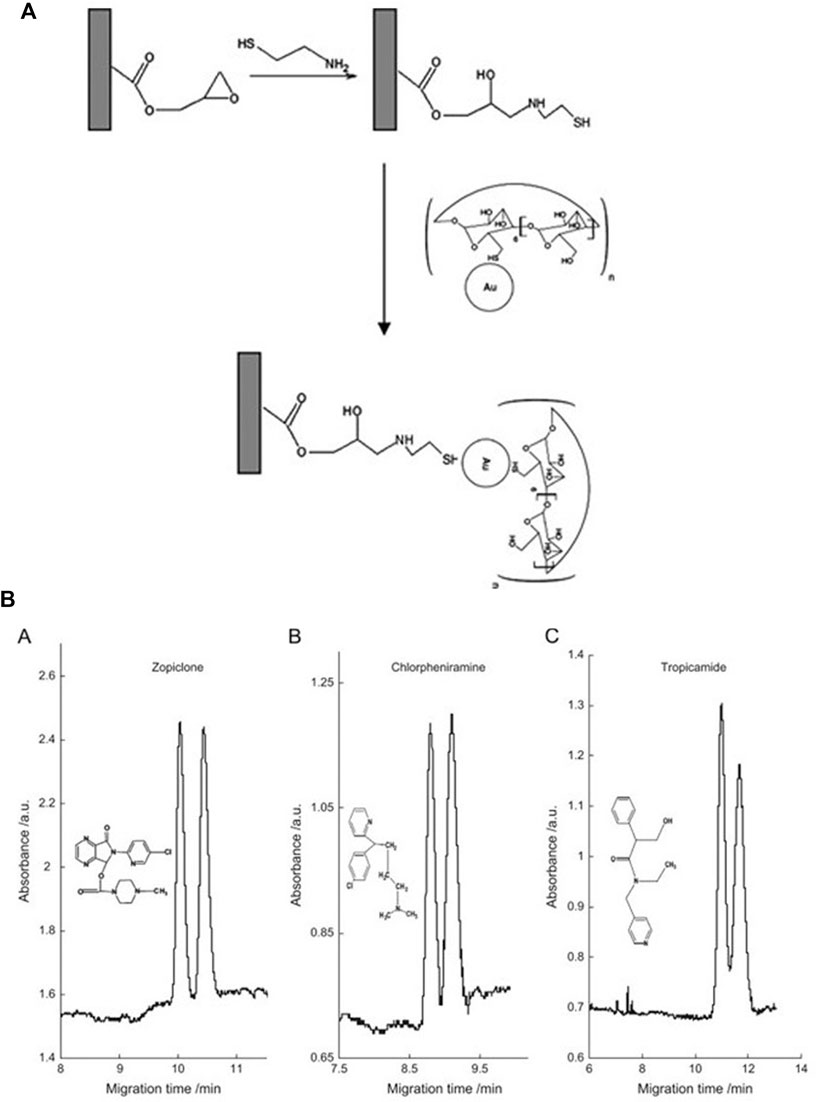
FIGURE 9. (A): Reaction scheme for the fabrication of the CD-GNP-modified monolithic column (B): Electropherograms of separations of three drug enantiomer pairs using the CD-GNP-modified monolithic columns. A 25 mM phosphate buffer (pH 3.0) was used as the running buffer. The separation electric field strength was 312.5 V/cm. Detection was carried out on-column at 214 nm. Samples were injected electrokinetically at 5 kV for 3 s. Reprinted with permission from Ref. (Li M. et al., 2013). Copyright 2013 Elsevier.
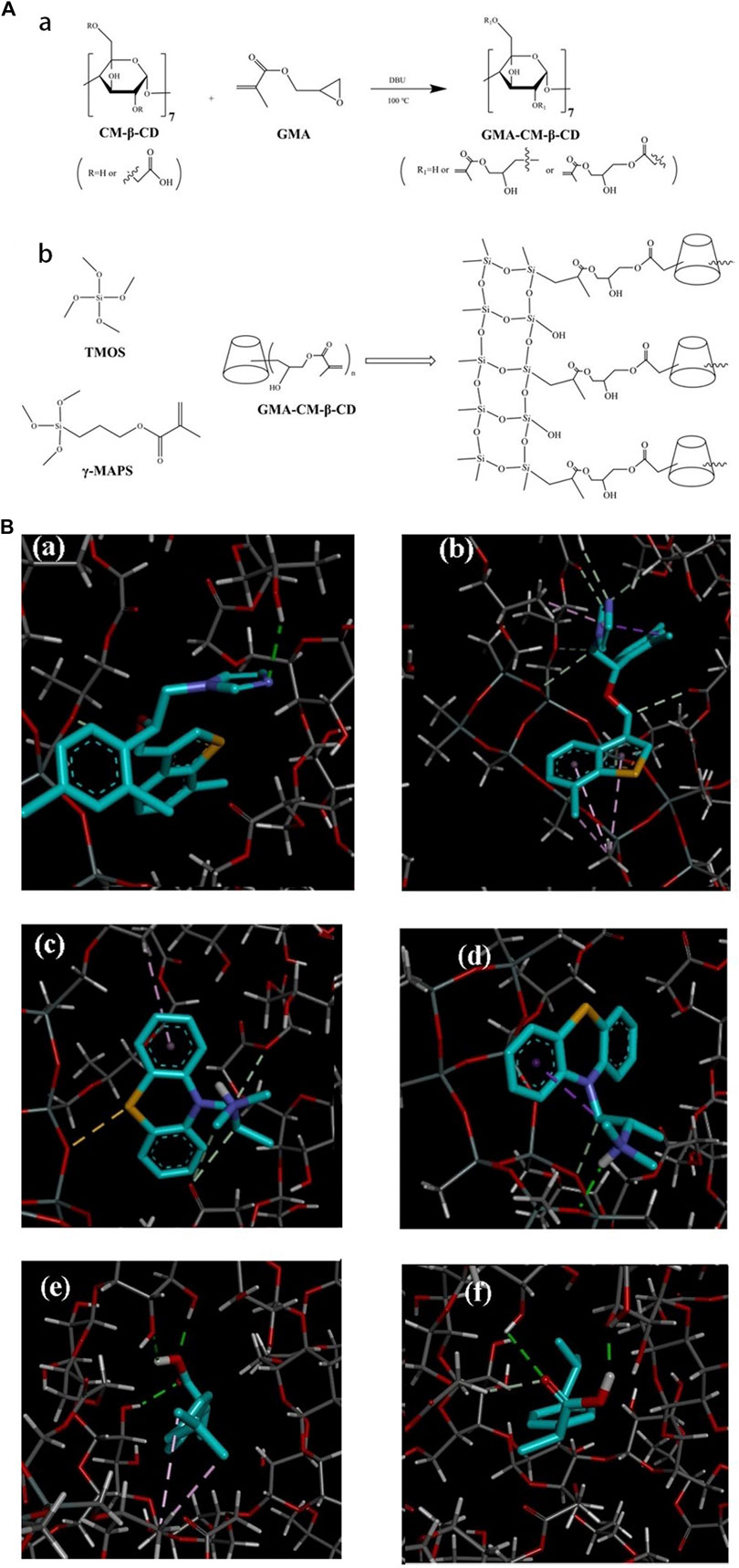
FIGURE 10. (Continued).
5 Conclusion and prospects
In the continuous improvement and optimization, monolithic columns still have a huge development potential, which is worthy of further exploration. In this review, the different modified materials of monolithic columns and their advantages were reviewed, revealing that they are still not competitive compared to traditional commercial silica monolithic columns and cannot be put into use in large quantities (Guiochon, 2007). First, the stability and repeatability of organic polymer monolithic columns cannot achieve the effect of batch preparation, which is also for a problem limiting its commercial use. Second, the practical application of monolithic columns is complex and diverse, and whether it can meet the standards of practical needs is still an issue to be solved. The monolithic column is used in two dimensions, the front part is pretreated by SPME, and the latter part achieves the effect of sample detection. This kind of separation, analysis and detection that tends to be automated should be the focus of future development. The monolithic column is directionally functionalized as required to prepare a functionalized monolithic column with directional separation characteristics, high separation efficiency, batch preparation, and green friendly, which still requires continuous research and exploration by scientific researchers.
Author contributions
HS and QW were involved in the conception and design of the manuscript. YG and YZ wrote the first draft. HL, SL, SW, and BZ participated in the proofreading of the manuscript.
Funding
This work was funded by the Science and Technology Planning Project of Hebei Province (No. 20322909D), the Natural Science Foundation of Hebei Province (No. C2020204149) and the Central Government Guides Local Science and Technology Development Projects (No. 216Z6502G).
Conflict of interest
The authors declare that the research was conducted in the absence of any commercial or financial relationships that could be construed as a potential conflict of interest.
Publisher’s note
All claims expressed in this article are solely those of the authors and do not necessarily represent those of their affiliated organizations, or those of the publisher, the editors and the reviewers. Any product that may be evaluated in this article, or claim that may be made by its manufacturer, is not guaranteed or endorsed by the publisher.
Abbreviations
CE, capillary electrophoresis; CEC, capillary electrochromatography; DESs, Deep eutectic solvents; ELISA, enzyme-linked immunosorbent assay; GC, gas chromatography; HPLC, high-performance liquid chromatography; HPLC-MS/MS, HPLC tandem mass spectrometry; HPLC-FLD, HPLC-fluorescence detection; LC, liquid chromatography; LOQ, limit of quantification; LOD, limit of detection; MIT, molecular imprinting technique; MIPs, molecularly imprinted polymers; ILs, ionic liquids; SPE, solid-phase extraction; SPME, solid-phase microextraction; TCM, Traditional Chinese medicine.
References
Andre, C., and Guillaume, Y. C. (2012). Boron nitride nanotubes and their functionalization via quinuclidine-3-thiol with gold nanoparticles for the development and enhancement of the HPLC performance of HPLC monolithic columns. Talanta 93, 274–278. doi:10.1016/j.talanta.2012.02.033
Andre, C., and Guillaume, Y. C. (2021). Development of a new nano arginase HPLC capillary column for the fast screening of arginase inhibitors and evaluation of their binding affinity. J. Chromatogr. B 1175, 122751. doi:10.1016/j.jchromb.2021.122751
Avery, S. V., Singleton, I., Magan, N., and Goldman, G. H. (2019). The fungal threat to global food security. Fungal Biol. 123 (8), 555–557. doi:10.1016/j.funbio.2019.03.006
Aydoğan, C., Gökaltun, A., Denizli, A., and El-Rassi, Z. (2019). Organic polymer-based monolithic capillary columns and their applications in food analysis. J. Sep. Sci. 42, 962–979. doi:10.1002/jssc.201801051
Bao, W., Zhang, C., Yang, M., Nan, D., Liu, T., Guo, X., et al. (2021). Preparation and modeling study of novel carboxymethyl-β-cyclodextrin silica hybrid monolithic column for enantioseparations in capillary electrochromatography. Microchem. J. 170, 106719. doi:10.1016/j.microc.2021.106719
Barnes, D. G., Vidiassov, M., Ruthensteiner, B., Fluke, C. J., Quayle, M. R., McHenry, C. R., et al. (2013). Embedding and publishing interactive, 3-dimensional, scientific figures in portable document format (PDF) files. PLoS ONE 8 (9), e69446. doi:10.1371/journal.pone.0069446
Beeram, S. R., Rodriguez, E., Doddavenkatanna, S., Li, Z., Pekarek, A., Peev, D., et al. (2017). Nanomaterials as stationary phases and supports in liquid chromatography. Electrophoresis 38 (19), 2498–2512. doi:10.1002/elps.201700168
Bunch, D. R., and Wang, S. (2011). Applications of monolithic columns in liquid chromatography-based clinical chemistry assays. J. Sep. Sci. 34 (16-17), 2003–2012. doi:10.1002/jssc.201100189
Candel, A. C ., Estelles, M. L., and Aucejo, A. M. (2009). Comparative evaluation of liquid chromatography versus gas chromatography using a beta-cyclodextrin stationary phase for the determination of BTEX in occupational environments. Talanta 78 (4-5), 1286–1292. doi:10.1016/j.talanta.2009.01.055
Chaloemsuwiwattanakan, T., Sangcakul, A., Kitiyakara, C., Nacapricha, D., Wilairat, P., Chaisuwan, P., et al. (2016). Simple and fast analysis of iohexol in human serums using micro-hydrophilic interaction liquid chromatography with monolithic column. J. Sep. Sci. 39 (18), 3521–3527. doi:10.1002/jssc.201600475
Chen, Z., Ye, Q., Liu, L., and Dong, H. (2016). Simultaneous determination of five alkaloid compounds in a drug based on a hydrophilic monolithic column by capillary electrochromatography. J. Chromatogr. Sci. 54 (1), 88–95.
Chen, L., Li, M., Ai, Y., Dang, X., Huang, J., Chen, H., et al. (2018). One-pot preparation of an acryloyled beta-cyclodextrin-silica hybrid monolithic column and its application for determination of carbendazim and carbaryl. Food Chem. x. 269, 181–186. doi:10.1016/j.foodchem.2018.07.006
Chen, R., Zhou, H., Liu, M., Yan, H., and Qiao, X. (2019). Ionic liquids-based monolithic columns: Recent advancements and their applications for high-efficiency separation and enrichment. Trends Anal. Chem. 111, 1–12. doi:10.1016/j.trac.2018.11.026
Chen, X., Cao, Y., Lv, D., Zhu, Z., Zhang, J., Chai, Y., et al. (2012). Comprehensive two-dimensional HepG2/cell membrane chromatography/monolithic column/time-of-flight mass spectrometry system for screening anti-tumor components from herbal medicines. J. Chromatogr. A 1242, 67–74. doi:10.1016/j.chroma.2012.04.034
Chen, Z., Wang, J., Chen, D., Fan, G., and Wu, Y. (2012). Sodium desoxycholate-assisted capillary electrochromatography with methacrylate ester-based monolithic column on fast separation and determination of coumarin analogs in Angelica dahurica extract. Electrophoresis 33 (18), 2884–2891. doi:10.1002/elps.201200120
Chocholouš, P., Dědková, L., Boháčová, T., Šatínský, D., and Solich, P. (2017). Fast separation of red colorants in beverages using cyano monolithic column in sequential injection chromatography. Microchem. J. 130, 384–389. doi:10.1016/j.microc.2016.10.022
Costa Queiroz, M. E., Donizeti de Souza, I., and Marchioni, C. (2019). Current advances and applications of in-tube solid-phase microextraction. TrAC Trends Anal. Chem. 111, 261–278. doi:10.1016/j.trac.2018.12.018
Cox, S., Sandall, A., Smith, L., Rossi, M., and Whelan, K. (2021). Food additive emulsifiers: a review of their role in foods, legislation and classifications, presence in food supply, dietary exposure, and safety assessment. Nutr. Rev. 79 (6), 726–741. doi:10.1093/nutrit/nuaa038
De Baere, S., Smets, P., Finch, N., Heiene, R., De Backer, P., Daminet, S., et al. (2012). Quantitative determination of exo- and endo-iohexol in canine and feline samples using high performance liquid chromatography with ultraviolet detection. J. Pharm. Biomed. Anal. 61, 50–56. doi:10.1016/j.jpba.2011.11.022
Denis, M. C., Venne, K., Lesiege, D., Francoeur, M., Groleau, S., Guay, M., et al. (2008). Development and evaluation of a liquid chromatography-mass spectrometry assay and its application for the assessment of renal function. J. Chromatogr. A 1189 (1-2), 410–416. doi:10.1016/j.chroma.2007.12.061
Derazshamshir, A., Gokturk, I., Yilmaz, F., and Denizli, A. (2021). S-citalopram imprinted monolithic columns for capillary electrochromatography enantioseparations. Electrophoresis 42 (24), 2672–2682. doi:10.1002/elps.202100222
Dixit, S., and Park, J. H. (2015). Enantioseparation of basic chiral drugs on a carbamoylated erythromycin-zirconia hybrid monolith using capillary electrochromatography. J. Chromatogr. A 1416, 129–136. doi:10.1016/j.chroma.2015.09.018
Dong, L., Chen, Y., Chen, S., Hou, C., Wang, S., Xuan, R., et al. (2021). Novel synthesized attapulgite nanoparticles-based hydrophobic monolithic column for in-tube solid-phase microextraction of thiosildenafil, pseudovardenafil, and norneosildenafil in functional foods. Anal. Bioanal. Chem. 413 (7), 1871–1882. doi:10.1007/s00216-021-03155-4
Echevarría, R. N., Keunchkarian, S., Villarroel-Rocha, J., Sapag, K., and Reta, M. (2019). Organic monolithic capillary columns coated with cellulose tris(3, 5-dimethylphenyl carbamate) for enantioseparations by capillary HPLC. Microchem. J. 149, 104011. doi:10.1016/j.microc.2019.104011
Eisert, R., and Pawliszyn, J. (1997). Automated in-tube solid-phase microextraction coupled to high-performance liquid chromatography. Anal. Chem. 69 (16), 3140–3147. doi:10.1021/ac970319a
Franco, M. S., Padovan, R. N., Fumes, B. H., and Lanças, F. M. (2016). An overview of multidimensional liquid phase separations in food analysis. Electrophoresis 37 (13), 1768–1783. doi:10.1002/elps.201600028
Ganewatta, N., and El Rassi, Z. (2021). Polymethacrylate-based monolithic column with incorporated carbamide-modified fumed silica nanoparticles for hydrophilic liquid interaction chromatography. J. Liq. Chromatogr. Relat. Technol. 44 (3-4), 255–264. doi:10.1080/10826076.2021.1899940
Ghanem, A., Marzouk, A. A., El-Adl, S. M., and Fouad, A. (2022). A polymer-based monolithic capillary column with polymyxin-B chiral selector for the enantioselective nano-High performance liquid chromatographic pharmaceutical analysis. J. Chromatogr. A 1662, 462714. doi:10.1016/j.chroma.2021.462714
Guiochon, G. (2007). Monolithic columns in high-performance liquid chromatography. J. Chromatogr. A 1168 (1-2), 101–168. doi:10.1016/j.chroma.2007.05.090
Guo, P., Luo, Z., Xu, X., Zhou, Y., Zhang, B., Chang, R., et al. (2017). Development of molecular imprinted column-on line-two dimensional liquid chromatography for selective determination of clenbuterol residues in biological samples. Food Chem. x. 217, 628–636. doi:10.1016/j.foodchem.2016.09.021
Guo, B., Wang, H., Lan, D., Pang, X., Li, Y., Liu, H., et al. (2019). Effect of different initiators on temperature-sensitive monolithic columns and application in online enrichment of β-sitosterol. J. Appl. Polym. Sci. 136 (25), 47683. doi:10.1002/app.47683
Guo, C., Hou, X., Liu, Y., Zhang, Y., Xu, H., Zhao, F., et al. (2021). Novel Chinese angelica polysaccharide biomimetic nanomedicine to curcumin delivery for hepatocellular carcinoma treatment and immunomodulatory effect. Phytomedicine 80, 153356. doi:10.1016/j.phymed.2020.153356
Hellqvist, A., Heiene, R., De Baere, S., Croubels, S., and Hedeland, Y. (2015). Development of a capillary electrophoretic method for determination of plasma clearance of iohexol in dogs and cats. Biomed. Chromatogr. 29 (4), 504–513. doi:10.1002/bmc.3304
Hemasa, A. L., Naumovski, N., Maher, W. A., and Ghanem, A. (2017). Application of carbon nanotubes in chiral and achiral separations of pharmaceuticals, biologics and chemicals. Nanomater. (Basel). 7 (7), 186. doi:10.3390/nano7070186
Hermawan, B. A., Mutakin, M., and Hasanah, A. N. (2020). Role of porogenic solvent type on the performance of a monolithic imprinted column. Chem. Pap. 75 (4), 1301–1311. doi:10.1007/s11696-020-01399-5
Huang, L., Zhai, H., Liang, G., Su, Z., Yuan, K., Lu, G., et al. (2016). Chip-based dual-molecularly imprinted monolithic capillary array columns coated Ag/GO for selective extraction and simultaneous determination of bisphenol A and nonyl phenol in fish samples. J. Chromatogr. A 1474, 14–22. doi:10.1016/j.chroma.2016.10.074
Huang, L., Yu, W., Guo, X., Huang, Y., Zhou, Q., Zhai, H., et al. (2019). Chip-based multi-molecularly imprinted monolithic capillary array columns coated Fe3O4/GO for selective extraction and simultaneous determination of tetracycline, chlortetracycline and deoxytetracycline in eggs. Microchem. J. 150, 104097. doi:10.1016/j.microc.2019.104097
Huang, L. F., Jia, B., Jiang, L., Liu, W. L., Xia, L. Y., Lv, Y. K., et al. (2019). Preparation of restricted-access material precolumns by grafting delta-gluconolactone onto a hybrid silica monolithic column for on-line solid-phase extraction of tetracycline residues from milk. J. Sep. Sci. 42 (4), 843–850. doi:10.1002/jssc.201801130
Huang, T., Zhang, W., Lei, X., Chen, H., Lin, C., Wu, X., et al. (2021). Rapid polymerization of polyhedral oligomeric siloxane-based zwitterionic sulfoalkylbetaine monolithic column in ionic liquid for hydrophilic interaction capillary electrochromatography. J. Chromatogr. A 1659, 462651. doi:10.1016/j.chroma.2021.462651
Jandera, P., Hájek, T., and Staňková, M. (2014). Monolithic and core–shell columns in comprehensive two-dimensional HPLC: a review. Anal. Bioanal. Chem. 407 (1), 139–151. doi:10.1007/s00216-014-8147-3
Jandera, P. (2013). Advances in the development of organic polymer monolithic columns and their applications in food analysis-a review. J. Chromatogr. A 1313, 37–53. doi:10.1016/j.chroma.2013.08.010
Javanbakht, M., Moein, M. M., and Akbari-adergani, B. (2012). On-line clean-up and determination of tramadol in human plasma and urine samples using molecularly imprinted monolithic column coupling with HPLC. J. Chromatogr. B 911, 49–54. doi:10.1016/j.jchromb.2012.10.019
Jiang, F., Liu, B., Lu, J., Li, F., Li, D., Liang, C., et al. (2015). Progress and challenges in developing aptamer-functionalized targeted drug delivery systems. Int. J. Mol. Sci. 16 (10), 23784–23822. doi:10.3390/ijms161023784
Kang, J., Park, Y. S., Kim, S. H., Kim, S. H., and Jun, M. Y. (2011). Modern methods for analysis of antiepileptic drugs in the biological fluids for pharmacokinetics, bioequivalence and therapeutic drug monitoring. Korean J. Physiol. Pharmacol. 15 (2), 67. doi:10.4196/kjpp.2011.15.2.67
Kataoka, H. (2021). In-tube solid-phase microextraction: current trends and future perspectives. J. Chromatogr. A 1636, 461787. doi:10.1016/j.chroma.2020.461787
Khalil, W. F., El-Sayyad, G. S., El Rouby, W. M. A., Sadek, M. A., Farghali, A. A., El-Batal, A. I., et al. (2020). Graphene oxide-based nanocomposites (GO-chitosan and GO-EDTA) for outstanding antimicrobial potential against some Candida species and pathogenic bacteria. Int. J. Biol. Macromol. 164, 1370–1383. doi:10.1016/j.ijbiomac.2020.07.205
Kuo, Y. C., Heish, W. Q., Huang, H. Y., and Liu, W. L. (2018). Application of mesoporous carbon-polymer monolith for the extraction of phenolic acid in food samples. J. Chromatogr. A 1539, 12–18. doi:10.1016/j.chroma.2018.01.050
Kurdi, S. E., Muaileq, D. A., Alhazmi, H. A., Bratty, M. A., and Deeb, S. E. (2017). Comparing monolithic and fused core HPLC columns for fast chromatographic analysis of fat-soluble vitamins. Acta Pharm. 67 (2), 203–213. doi:10.1515/acph-2017-0013
Lee, X. P., Kumazawa, T., Hasegawa, C., Arinobu, T., Seno, H., Suzuki, O., et al. (2012). High-throughput determination of barbiturates in human plasma using on-line column-switching ultra-fast liquid chromatography–tandem mass spectrometry. Forensic Toxicol. 31 (1), 9–20. doi:10.1007/s11419-012-0155-4
Lei, X., Cui, J., Wang, S., Huang, T., and Wu, X. (2020). Preparation of a biomimetic ionic liquids hybrid polyphosphorylcholine monolithic column for the high efficient capillary microextraction of glycopeptide antibiotics. J. Chromatogr. A 1623, 461175. doi:10.1016/j.chroma.2020.461175
Li, M., Bai, L., Peng, S., Sun, F., Wang, L., Liu, H., et al. (2019). Simple quantitative analytical methods for the determination of alkaloids from medicinal and edible plant foods using a homemade chromatographic monolithic column. J. Chromatogr. B 1128, 121784. doi:10.1016/j.jchromb.2019.121784
Li, M., Tarawally, M., Liu, X., Liu, X., Guo, L., Yang, L., et al. (2013). Application of cyclodextrin-modified gold nanoparticles in enantioselective monolith capillary electrochromatography. Talanta 109, 1–6. doi:10.1016/j.talanta.2013.03.035
Li, Q., Liang, B., Li, W., Li, W., Sun, J., Jiao, S., et al. (2021). A capillary device made by aptamer-functionalized silica photonic crystal microspheres for the point-of-care detection of Ochratoxin A. Sens. Actuators B Chem. 330, 129367. doi:10.1016/j.snb.2020.129367
Li, W. J., Zhou, X., Tong, S. S., and Jia, Q. (2013). Poly(N-isopropylacrylamide-co-N, N'-methylene bisacrylamide) monolithic column embedded with gamma-alumina nanoparticles microextraction coupled with high-performance liquid chromatography for the determination of synthetic food dyes in soft drink samples. Talanta 105, 386–392. doi:10.1016/j.talanta.2012.10.065
Li, X. X., Zhang, L. S., Wang, C., Huang, Y. P., and Liu, Z. S. (2018). Green synthesis of monolithic column incorporated with graphene oxide using room temperature ionic liquid and eutectic solvents for capillary electrochromatography. Talanta 178, 763–771. doi:10.1016/j.talanta.2017.10.014
Li, Y., Lan, S., and Zhu, T. (2021). Recent advances of graphene-based sorptive materials in extraction: a review. TrAC Trends Anal. Chem. 142, 116319. doi:10.1016/j.trac.2021.116319
Li, Z., He, X., Liu, F., Wang, J., and Feng, J. (2018). A review of polysaccharides from schisandra chinensis and schisandra sphenanthera: properties, functions and applications. Carbohydr. Polym. 184, 178–190. doi:10.1016/j.carbpol.2017.12.058
Liang, G., Zhai, H., Huang, L., Tan, X., Zhou, Q., Yu, X., et al. (2018). Synthesis of carbon quantum dots-doped dummy molecularly imprinted polymer monolithic column for selective enrichment and analysis of aflatoxin B1 in peanut. J. Pharm. Biomed. Anal. 149, 258–264. doi:10.1016/j.jpba.2017.11.012
Liang, G., Guo, X., Tan, X., Mai, S., Chen, Z., Zhai, H., et al. (2019). Molecularly imprinted monolithic column based on functionalized β-cyclodextrin and multi-walled carbon nanotubes for selective recognition of benzimidazole residues in citrus samples. Microchem. J. 146, 1285–1294. doi:10.1016/j.microc.2019.02.064
Lin, S. L., Wu, Y. R., Lin, T. Y., and Fuh, M. R. (2015). Preparation and evaluation of poly(alkyl methacrylate-co-methacrylic acid-co-ethylene dimethacrylate) monolithic columns for separating polar small molecules by capillary liquid chromatography. Anal. Chim. Acta X. 871, 57–65. doi:10.1016/j.aca.2015.02.015
Lin, S. L., Hsu, J. W., and Fuh, M. R. (2019). Simultaneous determination of nitrate and nitrite in vegetables by poly(vinylimidazole-co-ethylene dimethacrylate) monolithic capillary liquid chromatography with UV detection. Talanta 205, 120082. doi:10.1016/j.talanta.2019.06.082
Lirio, S., Liu, W. L., Lin, C. L., Lin, C. H., and Huang, H. Y. (2016). Aluminum based metal-organic framework-polymer monolith in solid-phase microextraction of penicillins in river water and milk samples. J. Chromatogr. A 1428, 236–245. doi:10.1016/j.chroma.2015.05.043
Liu, H. Y., Lin, S. L., and Fuh, M. R. (2016). Determination of chloramphenicol, thiamphenicol and florfenicol in milk and honey using modified QuEChERS extraction coupled with polymeric monolith-based capillary liquid chromatography tandem mass spectrometry. Talanta 150, 233–239. doi:10.1016/j.talanta.2015.12.045
Liu, Y., Liu, J., Li, X., Zhao, K., Zhang, P., Ding, S., et al. (2017). Determination of meropenem and ertapenem in lagoon water, bedding soil, and silage by high-performance liquid chromatography–tandem mass spectrometry. Anal. Lett. 50 (9), 1387–1396. doi:10.1080/00032719.2016.1226322
Luo, Y. B., Zheng, H. B., Wang, J. X., Gao, Q., Yu, Q. W., Feng, Y. Q., et al. (2011). An anionic exchange stir rod sorptive extraction based on monolithic material for the extraction of non-steroidal anti-inflammatory drugs in environmental aqueous samples. Talanta 86, 103–108. doi:10.1016/j.talanta.2011.08.020
Lyu, D. Y., Yang, C. X., and Yan, X. P. (2015). Fabrication of aluminum terephthalate metal-organic framework incorporated polymer monolith for the microextraction of non-steroidal anti-inflammatory drugs in water and urine samples. J. Chromatogr. A 1393, 1–7. doi:10.1016/j.chroma.2015.03.020
Lyu, H., Sun, H., Zhu, Y., Wang, J., Xie, Z., Li, J., et al. (2020). A double-recognized aptamer-molecularly imprinted monolithic column for high-specificity recognition of ochratoxin A. Anal. Chim. Acta X. 1103, 97–105. doi:10.1016/j.aca.2019.12.052
Ma, W., and Row, K. H. (2019). Simultaneous determination of levofloxacin and ciprofloxacin in human urine by ionic-liquid-based, dual-template molecularly imprinted coated graphene oxide monolithic solid-phase extraction. J. Sep. Sci. 42 (3), 642–649. doi:10.1002/jssc.201800939
Ma, S., Li, Y., Ma, C., Wang, Y., Ou, J., Ye, M., et al. (2019). Challenges and advances in the fabrication of monolithic bioseparation materials and their applications in proteomics research. Adv. Mat. 31 (50), e1902023. doi:10.1002/adma.201902023
Madikizela, L. M., Nomngongo, P. N., and Pakade, V. E. (2022). Synthesis of molecularly imprinted polymers for extraction of fluoroquinolones in environmental, food and biological samples. J. Pharm. Biomed. Anal. 208, 114447. doi:10.1016/j.jpba.2021.114447
Matsuo, Y., Yamaguchi, E., Hakamata, R., Ootomo, K., Takatori, K., Fukaya, H., et al. (2020). Benzofuran and coumarin derivatives from the root of Angelica dahurica and their PPAR-gamma ligand-binding activity. Phytochemistry 173, 112301. doi:10.1016/j.phytochem.2020.112301
Meent, M. H., and de Jong, G. J. (2011). Novel liquid-chromatography columns for proteomics research. Trends Anal. Chem. 30 (11), 1809–1818. doi:10.1016/j.trac.2011.06.012
Memon, N., Qureshi, T., Bhanger, M. I., and Malik, M. I. (2019). Recent Trends in fast liquid chromatography for pharmaceutical analysis. Curr. Anal. Chem. 15 (4), 349–372. doi:10.2174/1573411014666180912125155
Misurac, J. M., Knoderer, C. A., Leiser, J. D., Nailescu, C., Wilson, A. C., Andreoli, S. P., et al. (2013). Nonsteroidal anti-inflammatory drugs are an important cause of acute kidney injury in children. J. Pediatr. X. 162 (6), 1153–1159.e1. doi:10.1016/j.jpeds.2012.11.069
Miyabe, K., and Guiochon, G. (2004). Characterization of monolithic columns for HPLC. J. Sep. Sci. 27 (10-11), 853–873. doi:10.1002/jssc.200401772
Moein, M. M., Abdel-Rehim, A., and Abdel-Rehim, M. (2019). Recent applications of molecularly imprinted sol-gel methodology in sample preparation. Molecules 24 (16), 2889. doi:10.3390/molecules24162889
Nasr, J. J., Shalan, S., and Belal, F. (2014). Simultaneous determination of tylosin and josamycin residues in muscles, liver, eggs and milk by MLC with a monolithic column and time-programmed UV detection: Application to baby food and formulae. Chem. Cent. J. 8 (1), 37. doi:10.1186/1752-153x-8-37
Nian, Q., Ai, L., Li, D., Chen, X., Zhang, L., Wang, M., et al. (2018). Rapid monitoring of plant growth regulators in bean sprouts via automated on-line polymeric monolith solid-phase extraction coupled with liquid chromatography tandem mass spectrometry. Anal. Bioanal. Chem. 410 (27), 7239–7247. doi:10.1007/s00216-018-1334-x
Novak, P. H., Ekins-Daukes, S., Simpson, C. R., Milne, R. M., Helms, P., McLay, J. S., et al. (2005). Acute drug prescribing to children on chronic antiepilepsy therapy and the potential for adverse drug interactions in primary care. Br. J. Clin. Pharmacol. 59 (6), 712–717. doi:10.1111/j.1365-2125.2004.02237.x
Nunez, O., Gallart-Ayala, H., Martins, C. P., and Lucci, P. (2012). New trends in fast liquid chromatography for food and environmental analysis. J. Chromatogr. A 1228, 298–323. doi:10.1016/j.chroma.2011.10.091
Okan, M., Sari, E., and Duman, M. (2017). Molecularly imprinted polymer based micromechanical cantilever sensor system for the selective determination of ciprofloxacin. Biosens. Bioelectron. X. 88, 258–264. doi:10.1016/j.bios.2016.08.047
Pang, X., Bai, L., Wang, Z., Yang, H., Liu, H., Yan, H., et al. (2019a). Establishment of quantitatively analytical methods for the determination of aroma components in edible spices using a homemade chromatographic monolithic column. Chromatographia 82 (9), 1345–1354. doi:10.1007/s10337-019-03761-6
Pang, X., Liu, H., Yu, H., Zhang, M., Bai, L., Yan, H., et al. (2019b). A metal organic framework polymer monolithic column as a novel adsorbent for on-line solid phase extraction and determination of ursolic acid in Chinese herbal medicine. J. Chromatogr. B 1125, 121715. doi:10.1016/j.jchromb.2019.121715
Peng, S., Bai, L., Shi, X., Li, M., Wang, L., Sun, F., et al. (2020). A rapid method for on-line solid-phase extraction and determination of dioscin in human plasma using a homemade monolithic sorbent combined with high-performance liquid chromatography. Anal. Bioanal. Chem. 412 (2), 473–480. doi:10.1007/s00216-019-02256-5
Pittler, E., and Schmid, M. G. (2010). Enantioseparation of dansyl amino acids by HPLC on a monolithic column dynamically coated with a vancomycin derivative. Biomed. Chromatogr. 24 (11), 1213–1219. doi:10.1002/bmc.1430
Pu, J., Wang, H., Huang, C., Bo, C., Gong, B., Ou, J., et al. (2022). Progress of molecular imprinting technique for enantioseparation of chiral drugs in recent ten years. J. Chromatogr. A 1668, 462914. doi:10.1016/j.chroma.2022.462914
Qu, Q., Xuan, H., Zhang, K., Ding, Y., and Xu, Q. (2016). Graphene oxide-SiO2 hybrid nanostructure as coating material for capillary electrochromatography. Electrophoresis 37 (10), 1367–1375. doi:10.1002/elps.201500548
Rosello, O. M., Castello, A. R., Alfonso, E. F. S., Angel, M. J. R., Alvarez-Coque, M. C. G., Martinez, J. M. H., et al. (2020). Extraction of beta-blockers from urine with a polymeric monolith modified with 1-allyl-3-methylimidazolium chloride in spin column format. Talanta 214, 120860. doi:10.1016/j.talanta.2020.120860
Salih, M. E., Aqel, A., Abdulkhair, B. Y., Alothman, Z. A., Abdulaziz, M. A., Badjah-Hadj-Ahmed, A. Y., et al. (2018). Simultaneous determination of paracetamol and chlorzoxazone in their combined pharmaceutical formulations by reversed-phase capillary liquid chromatography using a polymethacrylate monolithic column. J. Chromatogr. Sci. 56 (9), 819–827. doi:10.1093/chromsci/bmy058
Shan, Y., Qiao, L., Shi, X., and Xu, G. (2015). Preparation and evaluation of a novel hybrid monolithic column based on pentafluorobenzyl imidazolium bromide ionic liquid. J. Chromatogr. A 1375, 101–109. doi:10.1016/j.chroma.2014.11.084
Sharma, G., Tara, A., and Sharma, V. D. (2019). Advances in monolithic silica columns for high-performance liquid chromatography. J. Anal. Sci. Technol. 8 (1), 16. doi:10.1186/s40543-017-0125-x
Shen, R., Yu, Y.-C., and Lan, R. (2021). Progress in application of dual/multi-template molecularly imprinted polymers. Chin. J. Anal. Chem. 49 (10), e21205–e21215. doi:10.1016/s1872-2040(21)60118-4
Song, X., Zhou, T., Zhang, J., Su, Y., Zhou, H., He, L., et al. (2019). Preparation and application of molecularly imprintedmonolithic extraction column for the selective microextraction of multiple macrolide antibiotics from animal muscles. Polym. (Basel) 11 (7), 1109. doi:10.3390/polym11071109
Stilo, F., Bicchi, C., Reichenbach, S. E., and Cordero, C. (2021). Comprehensive two-dimensional gas chromatography as a boosting technology in food-omic investigations. J. Sep. Sci. 44 (8), 1592–1611. doi:10.1002/jssc.202100017
Stoev, S. D. (2015). Foodborne mycotoxicoses, risk assessment and underestimated hazard of masked mycotoxins and joint mycotoxin effects or interaction. Environ. Toxicol. Pharmacol. 39 (2), 794–809. doi:10.1016/j.etap.2015.01.022
Sun, J., Gunduz, M. G., Zhang, J., Yu, J., and Guo, X. (2019). Direct enantiomeric resolution of seventeen racemic 1, 4-dihydropyridine-based hexahydroquinoline derivatives by HPLC. Int. J. Mol. Sci. 20 (10), 2513. doi:10.3390/ijms20102513
Sun, F., Wang, L., Yu, C., Liu, H., Yan, H., Bai, L., et al. (2021). Fabrication of a monolithic adsorbent with multi-sites and its application in the extraction of active components from traditional Chinese medicine formula. Microchem. J. 169, 106591. doi:10.1016/j.microc.2021.106591
Svec, F. (2005). Recent developments in the field of monolithic stationary phases for capillary electrochromatography. J. Sep. Sci. 28 (8), 729–745. doi:10.1002/jssc.200400086
Tang, W., and Row, K. H. (2018). Novel controllable hydrophilic thermo-responsive molecularly imprinted resin adsorbent prepared in water for selective recognition of alkaloids by thermal-assisted dispersive solid phase extraction. J. Pharm. Biomed. Anal. 160, 386–396. doi:10.1016/j.jpba.2018.08.019
Tang, W., Dai, Y., and Row, K. H. (2018). Evaluation of fatty acid/alcohol-based hydrophobic deep eutectic solvents as media for extracting antibiotics from environmental water. Anal. Bioanal. Chem. 410 (28), 7325–7336. doi:10.1007/s00216-018-1346-6
Vella, J., Busuttil, F., Bartolo, N. S., Sammut, C., Ferrito, V., Serracino-Inglott, A., et al. (2015). A simple HPLC-UV method for the determination of ciprofloxacin in human plasma. J. Chromatogr. B 989, 80–85. doi:10.1016/j.jchromb.2015.01.006
Wang, Q., and Shen, S. (2019). Preparation, characterization, and application of a porous poly (TAIC-co-MMA-co-EDMA) monolithic column for small molecules of aromatics and Chinese herbal medicine notoginseng by HPLC. Talanta 194, 649–657. doi:10.1016/j.talanta.2018.09.112
Wang, S., Wang, C., Zhao, X., Mao, S., Wu, Y., Fan, G., et al. (2012). Comprehensive two-dimensional high performance liquid chromatography system with immobilized liposome chromatography column and monolithic column for separation of the traditional Chinese medicine Schisandra chinensis. Anal. Chim. Acta X. 713, 121–129. doi:10.1016/j.aca.2011.10.062
Wang, K., Tao, Z. H., Xu, L., and Liu, Y. Q. (2014). Research and development of functionalized aptamer based biosensor. Chin. J. Anal. Chem. 42 (2), 298–304. doi:10.1016/s1872-2040(13)60712-4
Wang, T. T., Chen, Y. H., Ma, J. F., Hu, M. J., Li, Y., Fang, J. H., et al. (2014). A novel ionic liquid-modified organic-polymer monolith as the sorbent for in-tube solid-phase microextraction of acidic food additives. Anal. Bioanal. Chem. 406 (20), 4955–4963. doi:10.1007/s00216-014-7923-4
Wang, Q., Sanchez-Lopez, E., Han, H., Wu, H., Zhu, P., Crommen, J., et al. (2016). Separation of N-derivatized di- and tri-peptide stereoisomers by micro-liquid chromatography using a quinidine-based monolithic column - analysis of l-carnosine in dietary supplements. J. Chromatogr. A 1428, 176–184. doi:10.1016/j.chroma.2015.09.016
Wang, R., Li, W., and Chen, Z. (2018). Solid phase microextraction with poly(deep eutectic solvent) monolithic column online coupled to HPLC for determination of non-steroidal anti-inflammatory drugs. Anal. Chim. Acta X. 1018, 111–118. doi:10.1016/j.aca.2018.02.024
Wang, R., Mao, Z., and Chen, Z. (2018). Monolithic column with polymeric deep eutectic solvent as stationary phase for capillary electrochromatography. J. Chromatogr. A 1577, 66–71. doi:10.1016/j.chroma.2018.09.046
Wang, H., Liu, H., Guo, B., Lan, D., Pang, X., Yan, H., et al. (2019). A novel poly (NMA-co-DEA-co-EDMA) monolithic column as a sorbent for online solid-phase extraction and its application in the determination of beta-sitosterol in plant oil samples. Food Chem. x. 278, 594–600. doi:10.1016/j.foodchem.2018.11.104
Wang, L., Liu, M., Sun, F., Liu, H., Yan, H., Bai, L., et al. (2021). Extraction and determination of tussilagone from Farfarae Flos with online solid-phase extraction-high-performance liquid chromatography using a homemade monolithic cartridge doped with porous organic cage material. J. Sep. Sci. 44 (24), 4412–4421. doi:10.1002/jssc.202100649
Wang, R., Wan, T., Li, W., and Chen, Z. (2021). Schiff base network-1 incorporated monolithic column for in-tube solid phase microextraction of antiepileptic drugs in human plasma. Talanta 226, 122098. doi:10.1016/j.talanta.2021.122098
Wei, Z. H., Sun, X., Mu, L. N., Huang, Y. P., and Liu, Z. S. (2019). Improving affinity of imprinted monolithic polymer prepared in deep eutectic solvent by metallic pivot. J. Chromatogr. A 1602, 48–55. doi:10.1016/j.chroma.2019.05.034
Wu, F., Yang, S., Wang, L., Wei, W., and Ding, C. F. (2019). Simultaneous enrichment and analysis of tobacco alkaloids by microextraction coupled with mass spectrometry using a poly (N-isopropyl-acrylamide-co-divinyl-benzene-co-N, N'-methylene diacrylamide) monolithic column. Talanta 198, 118–127. doi:10.1016/j.talanta.2019.01.073
Wu, F., Li, L., Guan, P., Tang, K., Yu, S., Ding, C. F., et al. (2021). Simultaneous enrichment and analysis of benzimidazole by in-tube SPME-MS based on poly (3-Acrylamidophenylboronic acid-co-divinylbenzene-co-N, N'-methylenebisacrylamide) monolithic column. Talanta 224, 121402. doi:10.1016/j.talanta.2020.121402
Wu, L., Zhang, C., Long, Y., Chen, Q., Zhang, W., Liu, G., et al. (2021). Food additives: From functions to analytical methods. Crit. Rev. Food Sci. Nutr. 61, 1–21. doi:10.1080/10408398.2021.1929823
Xiao, Y., Guo, J., Ran, D., Duan, Q., Crommen, J., Jiang, Z., et al. (2015). One-pot preparation of a sulfamethoxazole functionalized affinity monolithic column for selective isolation and purification of trypsin. J. Chromatogr. A 1400, 47–53. doi:10.1016/j.chroma.2015.04.046
Xu, J., Chi, J., Lin, C., Lin, X., and Xie, Z. (2020). Towards high-efficient online specific discrimination of zearalenone by using gold nanoparticles@aptamer-based affinity monolithic column. J. Chromatogr. A 1620, 461026. doi:10.1016/j.chroma.2020.461026
Yang, M., Su, W., Yang, L., Kong, H., Wei, H., Sun, H., et al. (2021). Anti-apoptotic effect of angelica polysaccharide (APS) on cryopreservation of platelets. Blood 138 (Suppl. 1), 3250. doi:10.1182/blood-2021-151963
Yuan, H., Wu, X., Wang, X., and Yuan, C. (2022). Chinese herbal decoction astragalus and angelica exerts its therapeutic effect on renal interstitial fibrosis through the inhibition of MAPK, PI3K-Akt and TNF signaling pathways. Genes Dis. 9 (2), 510–521. doi:10.1016/j.gendis.2020.06.001
Zacharis, C. K. (2009). Accelerating the quality control of pharmaceuticals using monolithic stationary phases: A review of recent HPLC applications. J. Chromatogr. Sci. 47, 443–451. doi:10.1093/chromsci/47.6.443
Zhai, H., Su, Z., Chen, Z., Liu, Z., Yuan, K., Huang, L., et al. (2015). Molecularly imprinted coated graphene oxide solid-phase extraction monolithic capillary column for selective extraction and sensitive determination of phloxine B in coffee bean. Anal. Chim. Acta X. 865, 16–21. doi:10.1016/j.aca.2015.01.028
Zhai, H., Huang, L., Chen, Z., Su, Z., Yuan, K., Liang, G., et al. (2017). Chip-based molecularly imprinted monolithic capillary array columns coated GO/SiO2 for selective extraction and sensitive determination of rhodamine B in chili powder. Food Chem. x. 214, 664–669. doi:10.1016/j.foodchem.2016.07.124
Zhang, Y., Liu, H., Zhang, X., Lei, H., Bai, L., Yang, G., et al. (2013). On-line solid phase extraction using organic-inorganic hybrid monolithic columns for the determination of trace beta-lactam antibiotics in milk and water samples. Talanta 104, 17–21. doi:10.1016/j.talanta.2012.11.022
Zhang, Q., Xiao, X., and Li, G. (2014). Porous molecularly imprinted monolithic capillary column for on-line extraction coupled to high-performance liquid chromatography for trace analysis of antimicrobials in food samples. Talanta 123, 63–70. doi:10.1016/j.talanta.2014.02.010
Zhang, L. S., Zhao, Q. L., Li, X. X., Li, X. X., Huang, Y. P., Liu, Z. S., et al. (2016). Green synthesis of mesoporous molecular sieve incorporated monoliths using room temperature ionic liquid and deep eutectic solvents. Talanta 161, 660–667. doi:10.1016/j.talanta.2016.09.030
Zhang, C., Luo, X., Wei, T., Hu, Y., Li, G., Zhang, Z., et al. (2017). Acylhydrazone bond dynamic covalent polymer gel monolithic column online coupling to high-performance liquid chromatography for analysis of sulfonamides and fluorescent whitening agents in food. J. Chromatogr. A 1519, 28–37. doi:10.1016/j.chroma.2017.09.002
Zhang, X. F., Chen, J., Yang, J. L., and Shi, Y. P. (2018). UPLC-MS/MS analysis for antioxidant components of Lycii Fructus based on spectrum-effect relationship. Talanta 180, 389–395. doi:10.1016/j.talanta.2017.12.078
Zhang, Q. C., Xia, G. P., Liang, J. Y., Zhang, X. L., Jiang, L., Zheng, Y. G., et al. (2020). NH2-MIL-53(Al) polymer monolithic column for in-tube solid-phase microextraction combined with UHPLC-MS/MS for detection of trace sulfonamides in food samples. Molecules 25 (4), 897. doi:10.3390/molecules25040897
Zhang, Q., Yang, Y., Zhang, C., Zheng, Y., Wu, Y., Wang, X., et al. (2021). Development of an aptamer-functionalized capillary monolithic column for the highly-selective and highly-efficient recognition of patulin. Food control. 119, 107461. doi:10.1016/j.foodcont.2020.107461
Zhao, Q., Li, X. F., and Le, X. C. (2008). Aptamer-modified monolithic capillary chromatography for protein separation and detection. Anal. Chem. 80 (10), 3915–3920. doi:10.1021/ac702567x
Zhao, Y., Si, H., Zhao, X., Li, H., Ren, J., Li, S., et al. (2021). Fabrication of an allyl-β-cyclodextrin based monolithic column with triallyl isocyanurate as co-crosslinker and its application in separation of lipopeptide antibiotics by HPLC. Microchem. J. 168, 106462. doi:10.1016/j.microc.2021.106462
Zheng, Y., Fan, C., Liu, M., Chen, Y., Lu, Z., Xu, N., et al. (2020). Overall quality control of the chemical and bioactive consistency of ShengMai Formula. J. Pharm. Biomed. Anal. 189, 113411. doi:10.1016/j.jpba.2020.113411
Zhou, T., Yang, H., Jin, Z., Liu, Q., Song, X., He, L., et al. (2016). Determination of azithromycin residue in pork using a molecularly imprinted monolithic microcolumn coupled to liquid chromatography with tandem mass spectrometry. J. Sep. Sci. 39 (7), 1339–1346. doi:10.1002/jssc.201501249
Keywords: functionalized conolithic column, modification, application, food, medicine
Citation: Si H, Wang Q, Guo Y, Zhao Y, Li H, Li S, Wang S and Zhu B (2022) Functionalized monolithic columns: Recent advancements and their applications for high-efficiency separation and enrichment in food and medicine. Front. Chem. 10:951649. doi: 10.3389/fchem.2022.951649
Received: 24 May 2022; Accepted: 06 July 2022;
Published: 05 August 2022.
Edited by:
Olga López-Guarnido, University of Granada, SpainCopyright © 2022 Si, Wang, Guo, Zhao, Li, Li, Wang and Zhu. This is an open-access article distributed under the terms of the Creative Commons Attribution License (CC BY). The use, distribution or reproduction in other forums is permitted, provided the original author(s) and the copyright owner(s) are credited and that the original publication in this journal is cited, in accordance with accepted academic practice. No use, distribution or reproduction is permitted which does not comply with these terms.
*Correspondence: Quan Wang, d2FuZ3F1YW4yMTBAMTYzLmNvbQ==
†These authors have contributed equally to this work