 Longlong Chen
 Lin Du
 Jie Li
 Lingling Yang
 Qian Yi
 Chujun Zhao
- Key Laboratory for Micro-/Nano- Optoelectronic Devices of Ministry of Education & Hunan Provincial Key Laboratory of Low-Dimensional Structural Physics and Devices, School of Physics and Electronics, Hunan University, Changsha, China
We experimentally demonstrated that the stable dissipative solitons can be generated from the Yb-doped fiber laser with the interaction of mechanically exfoliated NbSe2 and the evanescent field of the D-shaped fiber. The modulation depth of the saturable absorber with exfoliated layered NbSe2 is 17.26% and the saturation intensity is 34.8 kW/cm2, respectively. With the proposed saturable absorber, the Yb-doped fiber laser can deliver stable dissipative soliton with pulse duration 174 ps, repetition rate 14.7 MHz and signal-to-noise ratio 59.8 dB at the pump power 300 mW. The experimental results provide an insight for the ultrafast non-linear optical response of layered transition metal dichalcogenide, which may provide strategies for developing high-performance ultrafast non-linear optical devices.
Introduction
The high-power picosecond Yb-doped fiber lasers have emerged not only as an alternative for industrial and scientific applications, but also as a research platform for soliton dynamics [1–4]. With the excellent features of high efficiency, broad gain bandwidth, and compact configuration, Yb-doped fiber lasers are currently the laser system of choice for the laser processing of materials, such as welding, drilling and precision cutting [5]. In addition, the energy scaling of fiber laser depends strongly on the non-linearity and cavity dispersion management, and thus the Yb-doped fiber laser usually operating in the normal dispersion regime can provide a platform to investigate the generation of the dissipative soliton and its dynamics [1, 3, 6]. In view of the compact structure, stable performance and other excellent properties, passively mode-locked Yb-doped fiber lasers modulated by saturable absorber (SA) have aroused extensive attention. With the evolution of the non-linear optical materials, such as graphene [7–9], transition metal dichalcogenides (TMDs) [10–13], topological insulators [14–16], black phosphorus [17, 18], carbon nanotubes [19–21], MXenes [22–24], pulsed lasers are being investigated more extensively to meet versatile requirements. However, the preparation and transfer processes inevitably lead to poor repeatability and reliability, and it has been challenging to tune the intrinsic non-linear optical response of the low-dimensional materials [6]. Therefore, finding the suitable materials remain an important step toward developing high-performance ultrafast lasers. Particularly, among the layered materials, the TMDs have been investigated most actively for its excellent non-linear optical performance and versatile material options.
Niobium Diselenide (NbSe2), one kind of TMDs, is known as a prototypical charge-density wave (CDW) material [25–30] with superconducting performance [27, 31–35], which involves separate fundamental physical research and applications. NbSe2 can also be in contact with other semiconductor materials to form lateral or vertical heterojunctions, which can improve the mobility of the device and thus be used to prepare high-efficient field effect transistors [36, 37]. Moreover, NbSe2 exhibit a remarkable optical response under different wavelengths and intensity excitations [38, 39]. When it comes to the non-linear optics regime with increasing incident intensity, the non-linear optical response of NbSe2 quantum dots and nanoparticles have been investigated via the mode-locked Yb-doped, Er-doped fiber lasers [40], and Tm-doped fiber laser generation [41]. However, the non-linear optical response and applications of the few-layer NbSe2 have not been explored, which can broaden the understanding of NbSe2 in reduced dimensionality and the application in non-linear optics and ultrafast photonics.
Here, we prepared the few-layer NbSe2 by mechanical exfoliation method, and investigated its non-linear optical absorption characteristics at a wavelength around 1 μm. Due to the interaction between few-layer NbSe2 and the evanescent field of the D-shaped fiber, the stable mode-locked picosecond Yb-doped fiber laser has been delivered successfully with a signal-to-noise ratio of 59.8 dB at wavelength of 1036 nm.
Material Characterizations
The few-layer NbSe2 was prepared by mechanical exfoliation method from its bulk counterpart. The Raman spectroscopy was used to characterize the NbSe2 sample, as shown in Figure 1A, and the peaks locate at 217.1 and 234.2 cm−1, the same as previously reported results [42, 43]. A spectrophotometer (Shimadzu UV-3600Plus) was used to measure the linear absorption curve of layered NbSe2, as shown in Figure 1B. From visible to near-infrared, the few-layer NbSe2 shows a decreasing absorption, and the absorption becomes weak beyond 1,200 nm. The scanning electron microscope (SEM) picture in Figure 1C shows that the exfoliated NbSe2 exhibits a layered structure and relatively large area. Figure 1D shows the characterization results of selective area electron diffraction (SAED), which shows that the sample has good crystallinity. The energy dispersive spectrometer (EDS) characterization of the sample is shown in Figure 1E, where only Nb and Se atoms are present, with Cu atoms indicates the metal screen. Furthermore, the atomic ratio of Nb/Se is 0.56 (≈1/2), indicating that the sample is NbSe2. Figure 1F shows the atomic force microscope (AFM) characterization of the nanosheets, which shows that the thickness of the nanosheets is about 13 nm. The NbSe2 is about 9–10 layers considering that the thickness of the monolayer of NbSe2 is about 1.1 nm [44], showing the few-layer nature of the NbSe2.
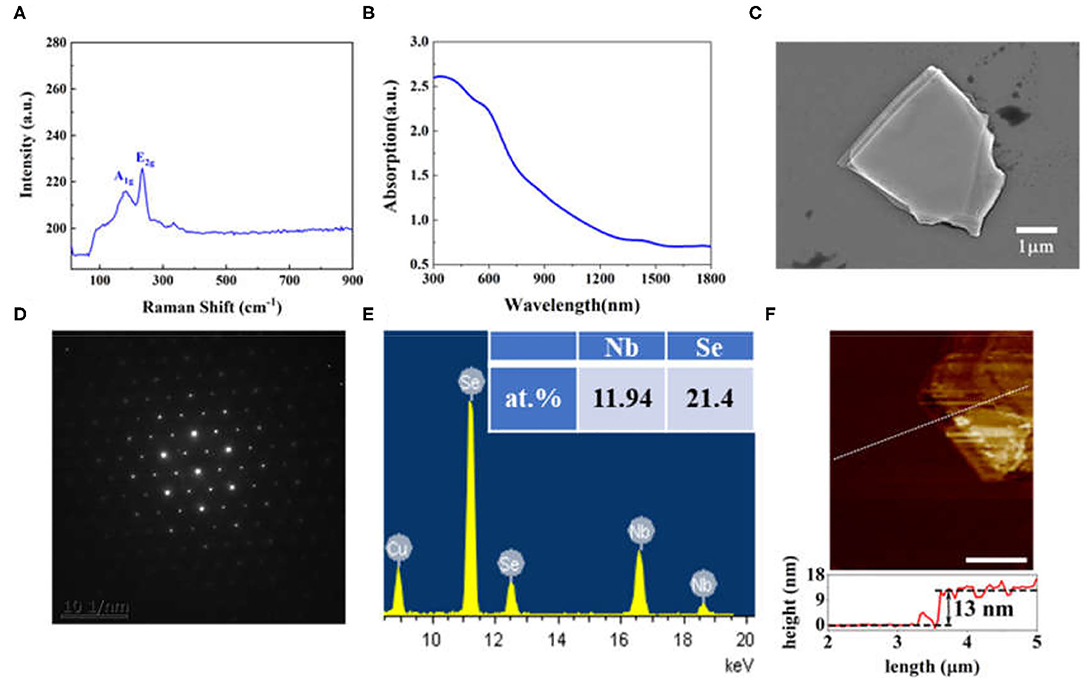
Figure 1. The characterizations of the few-layer NbSe2. (A) Raman spectroscopy. (B) Linear absorption spectrum. (C) SEM image. (D) SAED image. (E) EDS energy spectrum (the atomic percentages of Nb and Se are illustrated in the upper right corner). (F) AFM image.
The non-linear optical measurements of NbSe2 have been realized using open aperture Z-scan technique [45]. The wavelength, pulse duration, repetition rate of the light source used in the experiments are 1,064 nm, 4 ns, 100 kHz, respectively. Figure 2A shows the measured Z-scan result of the layered NbSe2, which exhibits the saturable absorption behavior with an upward peak at the beam focus. The experimental results have been fitted using a non-linear transmission function, as shown in Figure 2B. The relationship between light transmittance T and incident light intensity I is
where αs is the modulation depth, αns is the non-saturable components, and Isa is the saturation intensity [46]. Fitting the results, the modulation depth is 17.26% and the saturation intensity is 34.8 kW/cm2, respectively. The low saturation intensity resulting from the metallic layered NbSe2 is favorable for the generation of low-threshold laser pulses [47, 48].
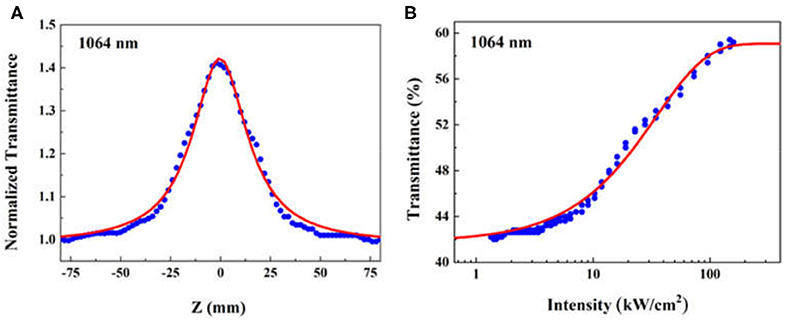
Figure 2. (A) Nonlinear saturable absorption properties of few-layer NbSe2. (B) Transmittance plotted as a function of input intensity.
Experimental Results and Discussions
A ring cavity has been designed to achieve the dissipative soliton output from the mode-locked Yb-doped fiber laser based on layered NbSe2 SA, as shown in Figure 3. The length of the entire ring cavity is about 13.6 m long, which contains an ytterbium-doped fiber (LIEKKI Yb1200–4/125) with a length of 0.7 m (group velocity dispersion of 24.22 ps2/km) and a 12.9 m HI-1060 single mode fiber (group velocity dispersion of 21.91 ps2/km). The pump is a 980 nm laser diode that can deliver pump laser up to 500 mW. Then, a 980/1,060 nm wavelength division multiplexer (WDM) is used to couple the pump into the ring fiber cavity. The isolator (ISO) is used to maintain the unidirectionality of light and the polarization controller (PC) is used to regulate the birefringence of the cavity. A fiber coupler is used to output 1% of the light. Then, the spectrometer (Ando AQ-6317B) and 4 GHz oscilloscope (DS09404A) are used to monitor the output light.
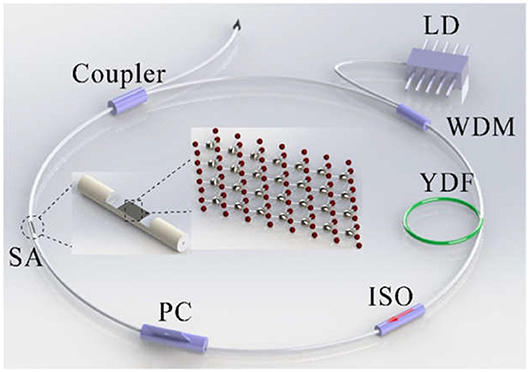
Figure 3. Experimental setup of the few-layer NbSe2-based mode-locked Yb-doped fiber laser.
Initially, there was no sample coverage on the D-shaped optical fiber. As the pump power increased, the mode-locking phenomenon could not be observed on the oscilloscope by adjusting the PCs. After the sample was transferred on the D-shaped fiber, we could observe the mode-locking phenomenon by carefully adjusting the PCs. Figure 4A shows a typical oscilloscope pulse sequence at an input power of 300 mW. The spectral curve is shown in Figure 4B, which shows that the center wavelength is 1036 nm and the 3 dB bandwidth is about 3.4 nm. The time bandwidth product (TBP) is 161.6, which indicates that the fiber laser is highly chirped. At an input power of 300 mW, Figure 4C shows a single pulse with a full width at half maximum (FWHM) of 174 ps by Gaussian fitting. As shown in Figure 4D, the radio frequency (RF) spectrum shows a distinct peak at 14.7 MHz, which matches the repetition rate of the mode-locked fiber laser. The signal-to-noise ratio (SNR) of the RF spectrum is 59.8 dB, indicating that the output mode-locked pulse has excellent stability.
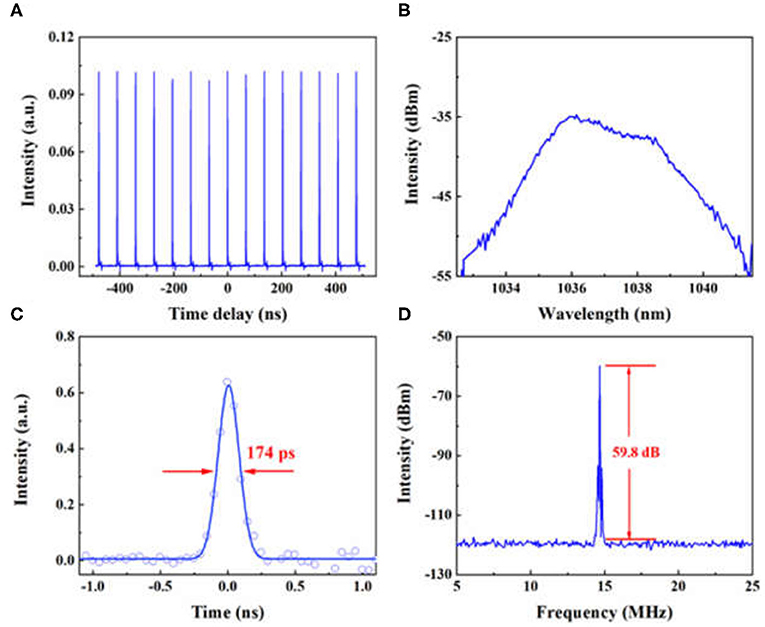
Figure 4. Experimental results of the mode-locked fiber. (A) Oscilloscope trace. (B) Optical spectrum. (C) Single pulse trace measured by oscilloscope. (D) RF spectrum.
To verify the long-term stability of the output pulse, we record the spectral line of the output pulse every 10 min under the same test conditions, as shown in Figure 5. The plot shows that neither the intensity nor the peak position of the spectrum has shifted or changed after a long-time measurement, and the bandwidth of the spectrum has not changed. Moreover, there are no additional peaks in the spectrum. Similarly, after 3 weeks, we re-examined the nanosheets for stability and found no significant change in spectrum or peak position, which proves that the output pulse is very stable.
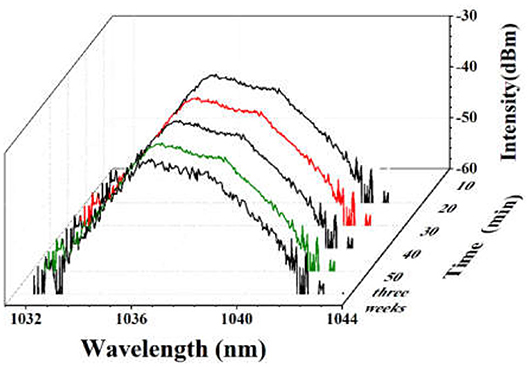
Figure 5. Long-term spectrum measurement results.
To illustrate the advantages of mechanically exfoliated NbSe2 as SA, we compared the performance of lasers modulated with NbSe2 quantum dots and NbSe2 nanoparticles, as shown in Table 1. Moreover, Table 1 also lists the ultrafast mode-locked fiber lasers based on low-dimensional material saturable absorbers that have been studied in recent years. From the table, we can see that compared to the fiber lasers based on saturable absorbers of low-dimensional materials, NbSe2 exhibits the larger modulation depth, which can help the formation of narrower pulses [49, 50]. Compared to NbSe2 quantum dots SA as well as NbSe2 nanoparticles SA in the Table 1, we can see that mode-locked fiber laser modulated by mechanically exfoliated few-layer NbSe2 has the highest signal-to-noise ratio, indicating that the modulation of NbSe2 can help to achieve more stable mode-locking operation. With the high modulation depth and optimized cavity configuration, the Yb-doped fiber laser based on layered NbSe2 can deliver stable and narrower pulse. In view of the simple preparation method of mechanical exfoliation and almost no damage to the material, the mechanical exfoliated NbSe2 can provide a solution for ultrafast photonics applications combined with the optimized evanescent field coupling method and cavity design.
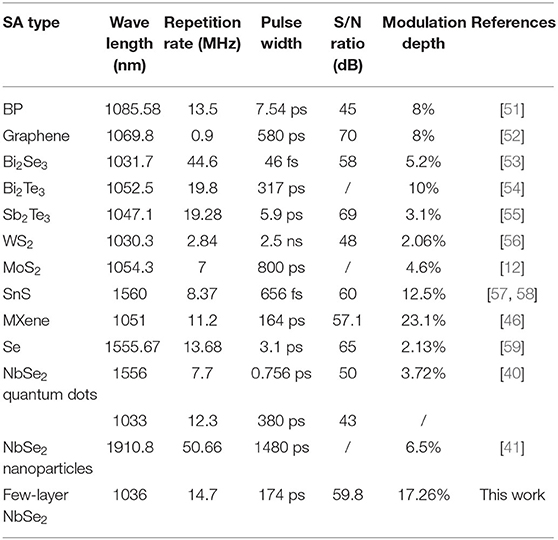
Table 1. Ultrafast mode-locked fiber laser performance for low-dimensional materials.
Conclusions
In summary, we have achieved a stable dissipative soliton output from the all-fiberized passively mode-locked Yb-doped fiber laser based on the few-layer NbSe2 prepared by mechanical exfoliated method. We have verified the non-linear optical performance of the few-layer NbSe2 via Z-scan technique, and obtained stable dissipative soliton generation with pulse duration 174 ps, repetition rate 14.7 MHz and signal-to-noise ratio 59.8 dB at the pump power 300 mW. The experimental results provide an insight for the ultrafast non-linear optical response of layered transition metal dichalcogenide, which may provide design guidelines for developing high-performance ultrafast non-linear optical devices.
Data Availability Statement
The raw data supporting the conclusions of this article will be made available by the authors, without undue reservation.
Author Contributions
LC and CZ designed experiments and wrote the manuscript. LC carried out experiments. LC, LD, JL, LY, QY, and CZ analyzed experimental results. All authors contributed to the article and approved the version submitted.
Funding
This work was supported in part by the National Natural Science Foundation of China under Grant 61775056 and 61805076, and in part by the Natural Science Foundation of Hunan Province under Grant 2017JJ1013 and 2019JJ50080.
Conflict of Interest
The authors declare that the research was conducted in the absence of any commercial or financial relationships that could be construed as a potential conflict of interest.
References
1. Cheng Z, Li H, Wang P. Simulation of generation of dissipative soliton, dissipative soliton resonance and noise-like pulse in Yb-doped mode-locked fiber lasers. Opt Express. (2015) 23:5972–81. doi: 10.1364/OE.23.005972
2. Huang S, Wang Y, Yan P, Zhao J, Li H, Lin R. Tunable and switchable multi-wavelength dissipative soliton generation in a graphene oxide mode-locked Yb-doped fiber laser. Opt Express. (2014) 22:11417–26. doi: 10.1364/OE.22.011417
3. Liu L, Liao JH, Ning QY, Yu W, Luo AP, Xu SH, et al. Wave-breaking-free pulse in an all-fiber normal-dispersion Yb-doped fiber laser under dissipative soliton resonance condition. Opt Express. (2013) 21:27087–92. doi: 10.1364/OE.21.027087
4. Keller U. Recent developments in compact ultrafast lasers. Nature. (2003) 424:831–8. doi: 10.1038/nature01938
5. Pan C-L, Zaytsev A, Lin C-H, You Y-J. Progress in short-pulse Yb-doped fiber oscillators and amplifiers. In: Lee C-C, editor. The Current Trends of Optics and Photonics. Vol. 129. Dordrecht: Springer (2015). p. 61–100. doi: 10.1007/978-94-017-9392-6
6. Lu S, Du L, Kang Z, Li J, Huang B, Jiang G, et al. Stable dissipative soliton generation from Yb-doped fiber laser modulated via evanescent field interaction with gold nanorods. IEEE Photonics J. (2018) 10:6101008. doi: 10.1109/JPHOT.2018.2872405
7. Sotor J, Pasternak I, Krajewska A, Strupinski W, Sobon G. Sub-90 fs a stretched-pulse mode-locked fiber laser based on a graphene saturable absorber. Opt Express. (2015) 23:27503–8. doi: 10.1364/OE.23.027503
8. Song YW, Jang SY, Han WS, Bae MK, Geim K, Novoselov KS. Graphene mode-lockers for fiber lasers functioned with evanescent field interaction. Appl Phys Lett. (2010) 96:051122. doi: 10.1063/1.3309669
9. Bonaccorso F, Sun Z, Hasan T, Ferrari AC. Graphene photonics and optoelectronics. Nat Photonics. (2010) 4:611–22. doi: 10.1038/nphoton.2010.186
10. Woodward RI, Howe RCT, Runcorn TH, Hu G, Torrisi F, Kelleher EJR, et al. Wideband saturable absorption in few-layer molybdenum diselenide (MoSe2) for Q-switching Yb-, Er- and Tm-doped fiber lasers. Opt Express. (2015) 23:20051–61. doi: 10.1364/oe.23.020051
11. Khazaeinezhad R, Kassani SH, Jeong H, Nazari T, Yeom D, Oh K. Mode-locked all-fiber lasers at both anomalous and normal dispersion regimes based on spin-coated MoS2 nano-sheets on a side-polished fiber. IEEE Photonics J. (2015) 7:1–9. doi: 10.1109/JPHOT.2014.2381656
12. Zhang H, Lu S, Zheng J, Du J, Wen S, Tang D, et al. Molybdenum disulfide (MoS2) as a broadband saturable absorber for ultra-fast photonics. Opt Express. (2014) 22:7249–60. doi: 10.1364/OE.22.007249
13. Wang S, Yu H, Zhang H, Wang A, Zhao M, Chen Y, et al. Broadband few-layer MoS2 saturable absorbers. Adv Mater. (2014) 26:3538–44. doi: 10.1002/adma.201306322
14. Luo Z, Huang Y, Weng J, Cheng H, Lin Z, Xu B, et al. 1.06μm Q-switched ytterbium-doped fiber laser using few-layer topological insulator Bi2Se3 as a saturable absorber. Opt Express. (2013) 21:29516–22. doi: 10.1364/OE.21.029516
15. Zhao C, Zou Y, Chen Y, Wang Z, Lu S, Zhang H, et al. Wavelength-tunable picosecond soliton fiber laser with Topological Insulator: Bi2Se3 as a mode locker. Opt Express. (2012) 20:27888–95. doi: 10.1364/OE.20.027888
16. Zhao C, Zhang H, Qi X, Chen Y, Wang Z, Wen S, et al. Ultra-short pulse generation by a topological insulator based saturable absorber. Appl Phys Lett. (2012) 101:211106. doi: 10.1063/1.4767919
17. Sotor J, Sobon G, Macherzynski W, Paletko P, Abramski KM. Black phosphorus saturable absorber for ultrashort pulse generation. Appl Phys Lett. (2015) 107:051108. doi: 10.1063/1.4927673
18. Xia F, Wang H, Jia Y. Rediscovering black phosphorus as an anisotropic layered material for optoelectronics and electronics. Nat Commun. (2014) 5:4458. doi: 10.1038/ncomms5458
19. Qin G, Suzuki T, Ohishi Y. Widely tunable passively mode-locked fiber laser with carbon nanotube films. Opt Rev. (2010) 17:97–9. doi: 10.1007/s10043-010-0017-4
20. Yamashita S, Set SY, Goh CS, Kikuchi K. Ultrafast saturable absorbers based on carbon nanotubes and their applications to passively mode-locked fiber lasers. Electr Commun Jpn. (2007) 90:17–24. doi: 10.1002/ecjb.20272
21. Kieu K, Mansuripur M. Femtosecond laser pulse generation with a fiber taper embedded in carbon nanotube/polymer composite. Opt Lett. (2007) 32:2242–4. doi: 10.1364/OL.32.002242
22. Wu Q, Jin X, Chen S, Jiang X, Hu Y, Jiang Q, et al. MXene-based saturable absorber for femtosecond mode-locked fiber lasers. Opt Express. (2019) 27:10159–70. doi: 10.1364/OE.27.010159
23. Tuo M, Xu C, Mu H, Bao X, Wang Y, Xiao S, et al. Ultrathin 2D transition metal carbides for ultrafast pulsed fiber lasers. ACS Photonics. (2018) 5:1808–16. doi: 10.1021/acsphotonics.7b01428
24. Dong Y, Chertopalov S, Maleski K, Anasori B, Hu L, Bhattacharya S, et al. Saturable absorption in 2D Ti3C2 MXene thin films for passive photonic diodes. Adv Mater. (2018) 30:1705714. doi: 10.1002/adma.201705714
25. Guster B, Rubio Verdú C, Robles R, Zaldívar J, Dreher P, Pruneda M, et al. Coexistence of elastic modulations in the charge density wave state of 2H-NbSe2. Nano Lett. (2019) 19:3027–32. doi: 10.1021/acs.nanolett.9b00268
26. Weber F, Hott R, Heid R, Lev LL, Caputo M, Schmitt T, et al. Three-dimensional Fermi surface of 2H-NbSe2: Implications for the mechanism of charge density waves. Phys Rev B. (2018) 97:235122. doi: 10.1103/PhysRevB.97.235122
27. Lian C, Si C, Duan W. Unveiling charge-density wave, superconductivity, and their competitive nature in two-dimensional NbSe2. Nano Lett. (2018) 18:2924–9. doi: 10.1021/acs.nanolett.8b00237
28. Silva Guillén JÁ, Ordejón P, Guinea F, Canadell E. Electronic structure of 2H-NbSe2 single-layers in the CDW state. 2D Mater. (2016) 3:035028. doi: 10.1088/2053-1583/3/3/035028
29. Arguello CJ, Chockalingam SP, Rosenthal EP, Zhao L, Gutierrez C, Kang J, et al. Visualizing the charge density wave transition in 2H-NbSe2 in real space. Phys Rev B. (2014) 89:235115. doi: 10.1103/PhysRevB.89.235115
30. Weber F, Rosenkranz S, Castellan JP, Osborn R, Hott R, Heid R, et al. Extended phonon collapse and the origin of the charge-density wave in 2H-NbSe2. Phys Rev Lett. (2011) 107:107403. doi: 10.1103/PhysRevLett.107.107403
31. Sohn E, Xi X, He W, Jiang S, Wang Z, Kang K, et al. An unusual continuous paramagnetic-limited superconducting phase transition in 2D NbSe2. Nat Mater. (2018) 17:504–9. doi: 10.1038/s41563-018-0061-1
32. Zou Y, Chen Z, Zhang E, Xiu Fx, Matsumura S, Yang L, et al. Superconductivity and magnetotransport of single-crystalline NbSe2 nanoplates grown by chemical vapour deposition. Nanoscale. (2017) 9:16591–5. doi: 10.1039/c7nr06617a
33. Ugeda MM, Bradley AJ, Zhang Y, Onishi S, Chen Y, Ruan W, et al. Characterization of collective ground states in single-layer NbSe2. Nat Phys. (2016) 12:92–7. doi: 10.1038/NPHYS3527
34. Xu J, Liu C, Wang M, Ge J, Liu Z, Yang X, et al. Artificial topological superconductor by the proximity effect. Phys Rev Lett. (2014) 112:217001. doi: 10.1103/PhysRevLett.112.217001
35. D'Anna G, Gammel PL, Ramirez AP, Yaron U, Oglesby CS, Bucher E, et al. Evidence of surface superconductivity in 2H-NbSe2 single crystals. Phys Rev B. (1996) 54:6583–6. doi: 10.1103/PhysRevB.54.6583
36. Wang Y, Kim JC, Wu RJ, Martinez J, Song X, Yang J, et al. Van der Waals contacts between three-dimensional metals and two-dimensional semiconductors. Nature. (2019) 568:70–4. doi: 10.1038/s41586-019-1052-3
37. Leong WS, Ji Q, Mao N, Han Y, Wang H, Goodman AJ, et al. Synthetic lateral metal-semiconductor heterostructures of transition metal disulfides. J Am Chem Soc. (2018) 140:12354–8. doi: 10.1021/jacs.8b07806
38. Nguyen L, Komsa H-P, Khestanova E, Kashtiban RJ, Peters JJP, Lawlor S, et al. Atomic Defects and Doping of Monolayer NbSe2. ACS Nano. (2017) 11:2894–904. doi: 10.1021/acsnano.6b08036
39. Huang Y, Chen R, Zhang J, Huang Y. Electronic transport in NbSe2 two-dimensional nanostructures: semiconducting characteristics and photoconductivity. Nanoscale. (2015) 7:18964–70. doi: 10.1039/c5nr05430c
40. Shi Y, Long H, Liu S, Tsang YH, Wen Q. Ultrasmall 2D NbSe2 based quantum dots used for low threshold ultrafast lasers. J Mater Chem C. (2018) 6:12638–42. doi: 10.1039/c8tc04635b
41. Liu X, Tian Z, Tang Y. NbSe2 nanoparticles mode-locked 2 μm thulium fiber laser. High Pow Las Par Bea. (2020) 32:011013. doi: 10.11884/HPLPB202032.190458
42. Zhang X, Tan Q, Wu J, Shi W, Tan P. Review on the Raman spectroscopy of different types of layered materials. Nanoscale. (2016) 8:6435–50. doi: 10.1039/c5nr07205k
43. Xi X, Zhao L, Wang Z, Berger H, Forró L, Shan J, et al. Strongly enhanced charge-density-wave order in monolayer NbSe2. Nat Nanotechnol. (2015) 10:765–70. doi: 10.1038/NNANO.2015.143
44. Wang H, Huang X, Lin J, Cui J, Chen Y, Zhu C, et al. High-quality monolayer superconductor NbSe2 grown by chemical vapour deposition. Nat Commun. (2017) 8:394. doi: 10.1038/s41467-017-00427-5
45. Li J, Zhang Z, Du L, Miao L, Yi J, Huang B, et al. Highly stable femtosecond pulse generation from a MXene Ti3C2Tx (T = F, O, or OH) mode-locked fiber laser. Photonics Res. (2019) 7:260–4. doi: 10.1364/PRJ.7.000260
46. Yi J, Du L, Li J, Yang L, Hu L, Huang S, et al. Unleashing the potential of Ti2CTx MXene as a pulse modulator for mid-infrared fiber lasers. 2D Mater. (2019) 6:045038. doi: 10.1088/2053-1583/ab39bc
47. Lau KY, Ng EK, Abu Bakar MH, Abas AF, Alresheedi MT, Yusoff Z, et al. Low threshold L-band mode-locked ultrafast fiber laser assisted by microfiber-based carbon nanotube saturable absorber. Opt Commun. (2018) 413:249–54. doi: 10.1016/j.optcom.2017.12.056
48. Woodward RI, Kelleher EJR, Howe RCT, Hu G, Torrisi F, Hasan T, et al. Tunable Q-switched fiber laser based on saturable edge-state absorption in few-layer molybdenum disulfide (MoS2). Opt Express. (2014) 22:31113–22. doi: 10.1364/OE.22.031113
49. Xu H, Wan X, Ruan Q, Yang R, Du T, Chen N, et al. Effects of nanomaterial saturable absorption on passively mode-locked fiber lasers in an anomalous dispersion regime: simulations and experiments. IEEE J Sel Top Quantum Electron. (2018) 24:1–9. doi: 10.1109/JSTQE.2017.2697045
50. Yang X, Chen Y, Zhao C, Zhang H. Pulse dynamics controlled by saturable absorber in a dispersion-managed normal dispersion Tm-dopedmode-locked fiber laser. Chin Opt Lett. (2014) 12:031405. doi: 10.3788/COL201412.031405
51. Hisyam MB, Rusdi MFM, Latiff AA, Harun SW. Generation of mode-locked ytterbium doped fiber ring laser using few-layer black phosphorus as a saturable absorber. IEEE J Sel Top Quantum Electron. (2017) 23:39–43. doi: 10.1109/JSTQE.2016.2532270
52. Zhao L, Tang D, Zhang H, Wu X, Bao Q, Loh KP. Dissipative soliton operation of an ytterbium-doped fiber laser mode locked with atomic multilayer graphene. Opt Lett. (2010) 35:3622–4. doi: 10.1364/OL.35.003622
53. Dou Z, Song Y, Tian J, Liu J, Yu Z, Fang X. Mode-locked ytterbium-doped fiber laser based on topological insulator: Bi2Se3. Opt Express. (2014) 22:24055–61. doi: 10.1364/OE.22.024055
54. Li L, Yan P, Wang Y, Duan L, Sun H, Si J. Yb-doped passively mode-locked fiber laser with Bi2Te3 deposited. Chinese Phys B. (2015) 24:124204. doi: 10.1088/1674-1056/24/12/124204
55. Kowalczyk M, Bogusławski J, Zybała R, Mars K, Mikuła A, Soboń G, et al. Sb2Te3-deposited D-shaped fiber as a saturable absorber for mode-locked Yb-doped fiber lasers. Opt Mater Express. (2016) 6:2273–82. doi: 10.1364/OME.6.002273
56. Guoyu H, Song Y, Li K, Dou Z, Tian J, Zhang X. Mode-locked ytterbium-doped fiber laser based on tungsten disulphide. Laser Phys Lett. (2015) 12:125102. doi: 10.1088/1612-2011/12/12/125102
57. Xie Z, Zhang F, Liang Z, Fan T, Li Z, Jiang X, et al. Revealing of the ultrafast third-order nonlinear optical response and enabled photonic application in two-dimensional tin sulfide. Photonics Res. (2019) 7:494–502. doi: 10.1364/PRJ.7.000494
58. Wu L, Xie Z, Lu L, Zhao J, Wang Y, Jiang X, et al. Few-layer tin sulfide: a promising black-phosphorus-analogue 2D material with exceptionally large nonlinear optical response, high stability, and applications in all-optical switching and wavelength conversion. Adv Opt Mater. (2018) 6:1700985. doi: 10.1002/adom.201700985
Keywords: fiber lasers, non-linear optics, non-linear optical devices, laser mode locking, transition metal dichalcogenide (TMD)
Citation: Chen L, Du L, Li J, Yang L, Yi Q and Zhao C (2020) Dissipative Soliton Generation From Yb-Doped Fiber Laser Modulated by Mechanically Exfoliated NbSe2. Front. Phys. 8:320. doi: 10.3389/fphy.2020.00320
Received: 17 May 2020; Accepted: 13 July 2020;
Published: 21 August 2020.
Edited by:
Xiaohui Li, Shaanxi Normal University, ChinaCopyright © 2020 Chen, Du, Li, Yang, Yi and Zhao. This is an open-access article distributed under the terms of the Creative Commons Attribution License (CC BY). The use, distribution or reproduction in other forums is permitted, provided the original author(s) and the copyright owner(s) are credited and that the original publication in this journal is cited, in accordance with accepted academic practice. No use, distribution or reproduction is permitted which does not comply with these terms.
*Correspondence: Chujun Zhao, Y2p6aGFvQGhudS5lZHUuY24=