 Michael J. Lavell1,2*
 Ayden J. Kish1,3Andrew T. Sexton1,2Eugene S. Evans2Ibrahim Mohammad2
 Sara Gomez-Ramirez1,3William Scullin1
 Marcus Borscz4,5
 Sergey Pikuz4
 Thomas A. Mehlhorn4,6Max Tabak4Greg Ainsworth4
 Adam B. Sefkow1,2,3,7*
- 1Laboratory for Laser Energetics, University of Rochester, Rochester, NY, United States
- 2Department of Mechanical Engineering, University of Rochester, Rochester, NY, United States
- 3Department of Physics and Astronomy, University of Rochester, Rochester, NY, United States
- 4HB11 Energy Holdings Pty Ltd, Freshwater, NSW, Australia
- 5School of Physics, University of New South Wales, Sydney, NSW, Australia
- 6Mehlhorn Engineering Consulting, Beaverton, OR, United States
- 7Department of Computer Science, University of Rochester, Rochester, NY, United States
We present particle-in-cell simulations with Monte Carlo collisions of fusion burn waves in compressed deuterium–tritium and proton–boron plasmas. We study the energy balance in the one-dimensional expansion of a hot-spot by simulating Coulomb collisions, fusion reactions, and bremsstrahlung emission with a Monte Carlo model and inverse bremsstrahlung absorption using a new PIC model. This allows us to self-consistently capture the alpha particle heating and radiative losses in the expanding hot-spot and surrounding cold fuel. After verifying our model in a code-to-code comparison with both kinetic and fluid codes for the case of a deuterium–tritium hot-spot, we simulate the expansion of a proton–boron hot-spot initialized at 200 keV and 1,000 g/
1 Introduction
Recent experiments at the National Ignition Facility (NIF) demonstrated fusion ignition of an inertial confinement fusion target [1, 2]. The experiment used deuterium–tritium (D–T) fuel because it has the largest fusion cross section at the lowest center-of-mass energy, and therefore the lowest density and temperature requirements to reach ignition conditions. There are, however, various challenges that come with using DT fuel: the radioactive isotope tritium is not naturally abundant, is expensive to breed, and decays relatively quickly (half-life of
produces a helium-4 ion (4He or
Alternative fusion fuels exist; however, their reactions have smaller cross sections and need higher center-of-mass energies and so require higher densities and temperatures to reach ignition conditions. Figure 1 shows the fusion cross sections [3–5] as a function of the center-of-mass energy for D–T, deuterium–deuterium (D–D)
deuterium–helium-3 (D–3He)
and proton–boron-11 (
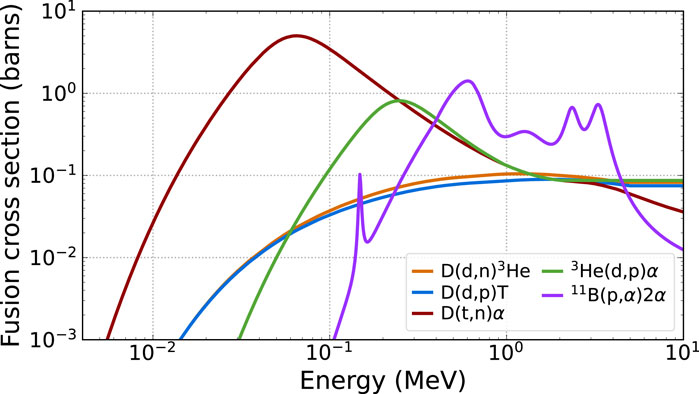
Figure 1. Fusion cross sections as a function of the center-of-mass energy from Bosch and Hale [3], the International Atomic Energy Agency Evaluated Nuclear Data File [4], and Tentori and Belloni [5].
Of these reactions,
In order to improve the feasibility of
We present numerical simulations of burning
The paper is organized as follows: in Section 2, we describe the numerical methods and present verification tests of the bremsstrahlung emission and IBA models; in Section 3, we present simulations of fusion burn waves in compressed DT and
2 Methods
The PIC-MCC method numerically integrates the Boltzmann equation
where
and then successively integrating particle information in time in response to the sum of the acting forces.
In this study, we consider a simplified model where the only forces that particles experience are due to binary particle interactions. This approximation is appropriate for the high-density, highly-collisional systems we consider in this report, but can lead to erroneous charge separation that will be addressed in future studies by considering electromagnetic effects. We use the binary Monte Carlo collision model [20, 26–30] to simulate Coulomb collisions, fusion reactions, and bremsstrahlung radiation. The method works by randomly pairing particles within a computational cell of the simulation domain and sampling the probability of the collision or reaction to occur. This approach allows evaluation of relativistic binary interactions between arbitrarily weighted particles. Reference [18] describes and verifies the method for several scattering channels implemented in TRIFORCE using the binary collision method, including Coulomb collisions and fusion reactions. In Sections 2.1, 2.2, we describe how the bremsstrahlung emission is implemented within the binary scattering framework and we introduce a new model for simulating radiation absorption.
2.1 Model description
2.1.1 Bremsstrahlung emission
Bremsstrahlung emission was incorporated into TRIFORCE using a method similar to the binary collision algorithm presented by Martinez et al. [28]. We implement the same kinematics and cross sections as Martinez et al., but handle arbitrary particle weighting in a different manner: Martinez et al. randomly pairs particles within a computational cell and accounts for arbitrary numerical weights when computing the reaction probability by following the methods of Nanbu and Yonemura [26] and Pérez et al. [27], while our implementation follows the corrected binary method developed by Higginson et al. [30].
The probability
where
where
where the number of possible partners
A reaction occurs when
Bremsstrahlung differential cross sections as functions of the emitted photon energy are either loaded in from Seltzer and Berger [35] tables (collected from the Geant4 database [36–38]) or computed using the model introduced by Martinez et al. [28]. Seltzer–Berger differential cross sections are shown in Figure 2 for atomic numbers
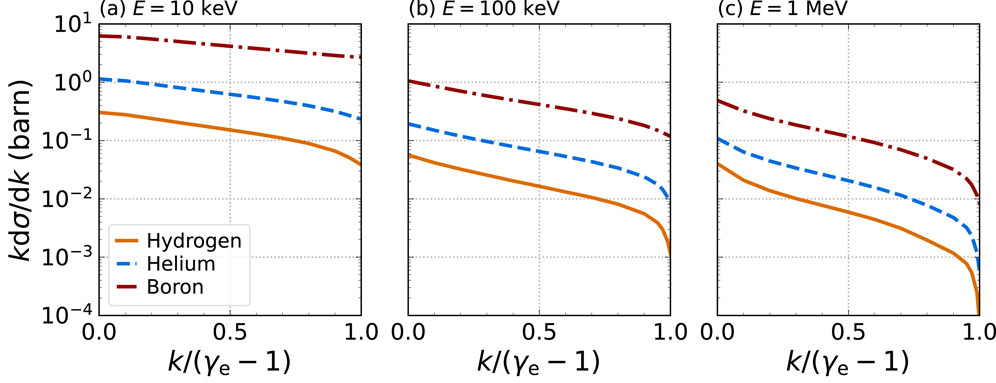
Figure 2. Bremsstrahlung differential cross sections as a function of
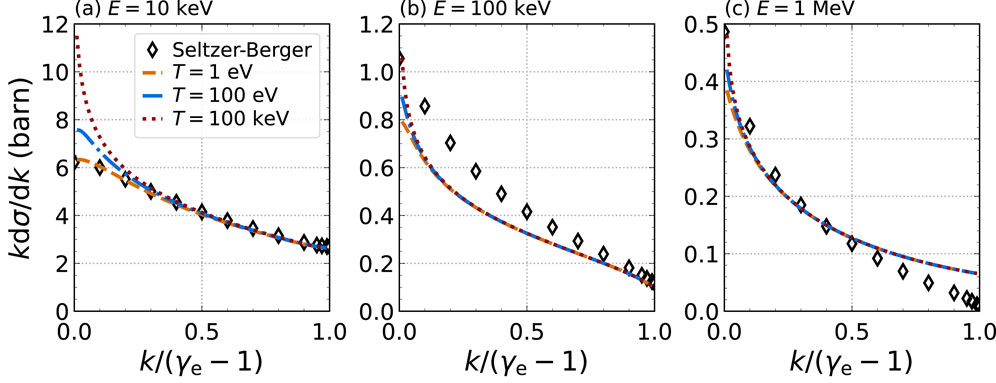
Figure 3. Bremsstrahlung differential cross sections of Seltzer and Berger [35] compared with analytic expressions from Martinez et al. including screening effects from bound electrons, free electrons, and ions (curves) for electron–ion interactions with energies (A) 10 keV, (B) 100 keV, and (C) 1 MeV. The temperature correction in Martinez’s Thomas–Fermi–Debye model results in an increase in the cross section at low photon energies, shown for plasma temperatures equal to 1 eV (orange curve), 100 eV (blue curve), and 100 keV.
2.1.2 Inverse bremsstrahlung absorption
We introduce a new PIC model for simulating IBA, the process of an electron absorbing radiation as it scatters in the Coulomb field of an ion [39, 40]. Previous PIC and Fokker-Planck studies of collisional absorption of radiation typically take wave-based approaches to study this phenomena [41–49], i.e., oscillations in the electromagnetic fields directly accelerate electrons. Since our bremsstrahlung emission model generates radiation in the form of photon macroparticles, we take a more kinetic approach for simulating radiation absorption. While our model allows us to simulate the energy deposition of photon macroparticles in the plasma, by treating photons as classical particles the model does not retain the collective behavior of the wave-based approach, and therefore, it is incapable of simulating phase-dependent phenomena [50].
Our model is based on the power deposited in a plasma by a laser, a method originally used for ray-based radiation-hydrodynamics simulations [31]. Consider a laser with wavelength
where the photon number density is related to the laser properties by
where
where
In the particle-based IBA method, we remove the deposited energy from each of the photon macroparticles in a cell, and then distribute it to the kinetic energy of the each of the electron macroparticles in the cell. The energy lost by a single photon in a simulation time step due to Coulomb scattering with
and the strength of the photon’s electric field is
Finally, the total energy removed from
is evenly distributed amongst the electrons in the cell. The electron Lorentz factors
and their momenta are increased accordingly,
2.2 Model verification
We verify the bremsstrahlung emission model within the binary collision framework and IBA PIC model by simulating three test cases: the first produces bremsstrahlung emission due to a monoenergetic electron beam incident on cold solid boron; the second is a code-to-code comparison with HYDRA of laser heating of a hydrogen plasma; and the third simulates photon emission and absorption by thermal electrons in a fully ionized thermonuclear
In Figure 4, we show the photon count and spectra produced from solid boron interacting with a 1-MeV electron beam with a 10th of the solid’s ion density. The simulation consists of a single cubic cell with sides of length 1
and photon energy spectra
(shown at 40 fs) for the three cases of particle weighting. In Figure 5, we consider the same simulation except the solid-density cold boron is replaced with fully ionized boron at 1,000 g/
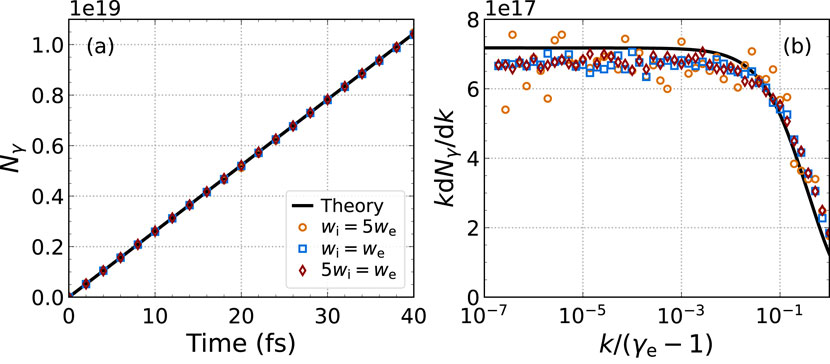
Figure 4. Bremsstrahlung emission from a 1-MeV electron beam incident on solid-density boron. The simulation results (markers) match the theoretical predictions (black curve) for the (A) total photon count and (B) normalized photon energy spectra independent of the ratio of the weights of the electron and ion macroparticles.
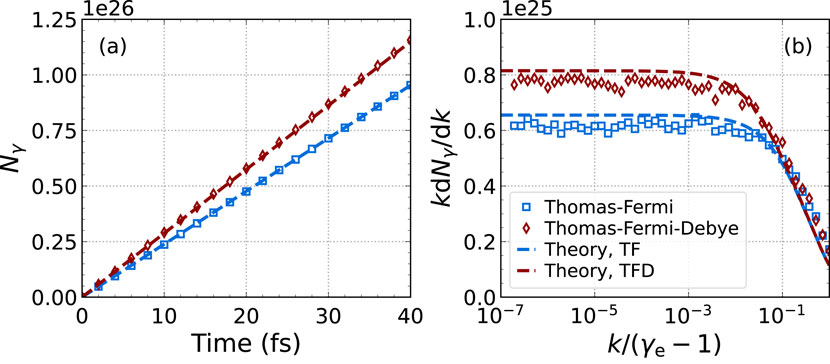
Figure 5. Bremsstrahlung emission from 1-MeV electrons in a charge-neutral fully ionized boron plasma at 200 keV and 1,000 g/
Next, we simulate laser heating of a hydrogen plasma. The charge neutral plasma starts at room temperature, has a density of
where
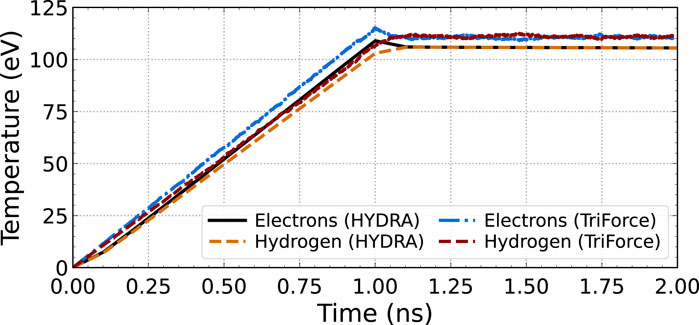
Figure 6. Simulated laser heating of a neutral electron–hydrogen plasma including bremsstrahlung emission and inverse bremsstrahlung absorption. The laser with intensity
For the third test case, we measure the radiation and fusion power density in a fully ionized
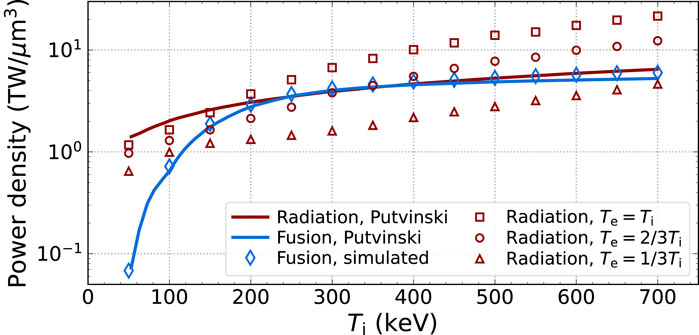
Figure 7. Simulated power density measurements (markers) for a fully ionized
3 Results
In this section, we present simulated fusion burn waves in compressed DT and
Figures 8–11 show plasma profiles and integrated metrics from an expanding DT hot-spot. A charge-neutral fully ionized DT plasma with uniform mass density
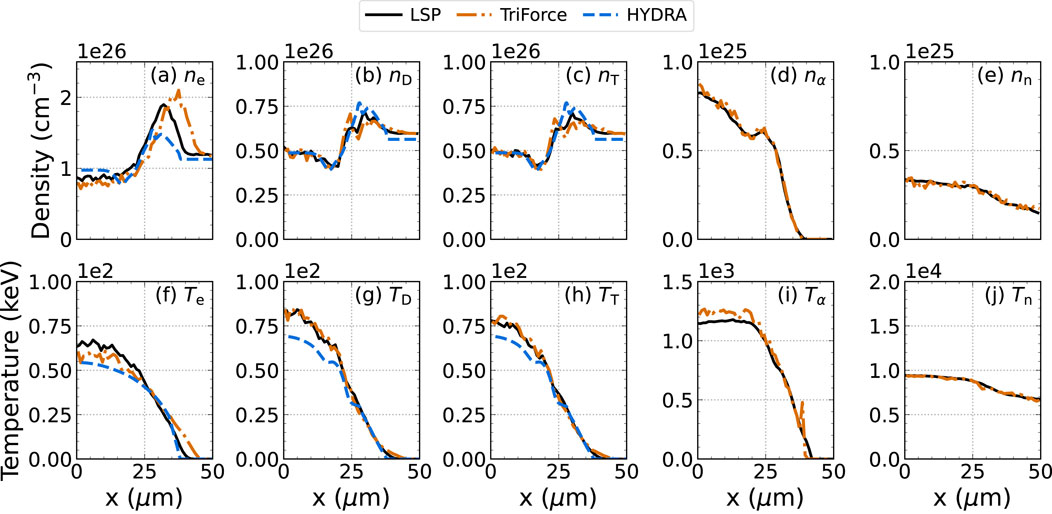
Figure 8. Simulated expansion of a 30-keV DT hot-spot into a 10-eV DT plasma considering Coulomb collisions and fusion reactions. The initial interface between the hot and cold regions with a uniform density of 500 g/
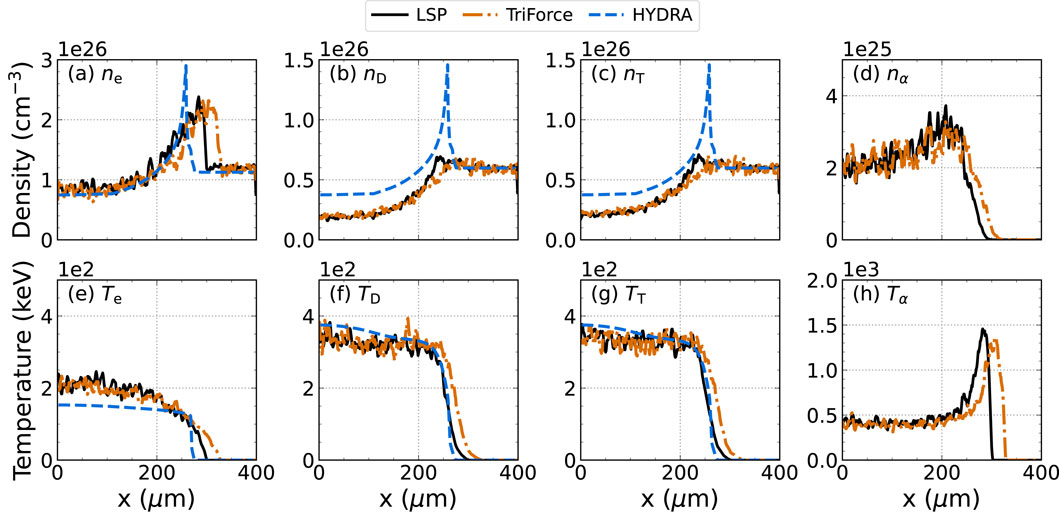
Figure 9. Simulated expansion of a 30-keV DT hot-spot into cold fuel at 40 ps simulated with LSP (black), TRIFORCE (orange), and HYDRA (blue). Plots (A-D) show density and plots (E-H) show temperature for the electron, deuterium, tritium, and alpha plasma species. Some smoothing is applied to the results from the particle codes.
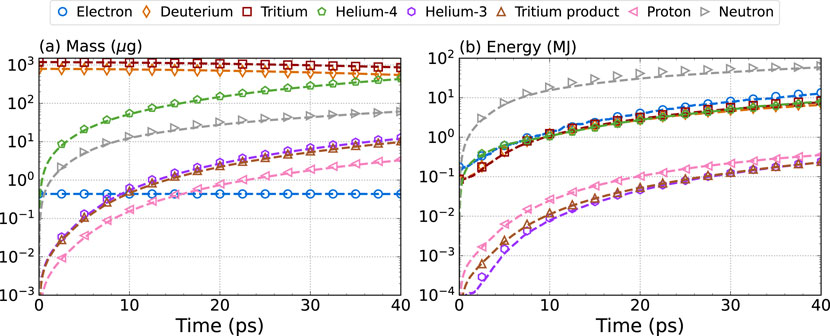
Figure 10. The total mass and energy as a function of time for the simulated release of 30-keV DT into cold DT including Coulomb collisions and fusion reactions between D–D, D–T, and D–3He. Shown are the (A) integrated mass and (B) kinetic energy for each of the plasma species simulated with TRIFORCE (markers) and LSP (curves).
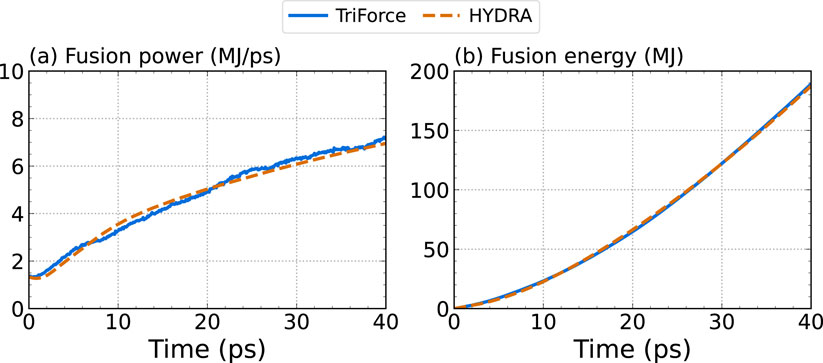
Figure 11. (A) Fusion power and (B) total fusion energy produced from the DT hot-spot simulated with TRIFORCE (blue) and HYDRA (orange).
Next, we consider the case of a
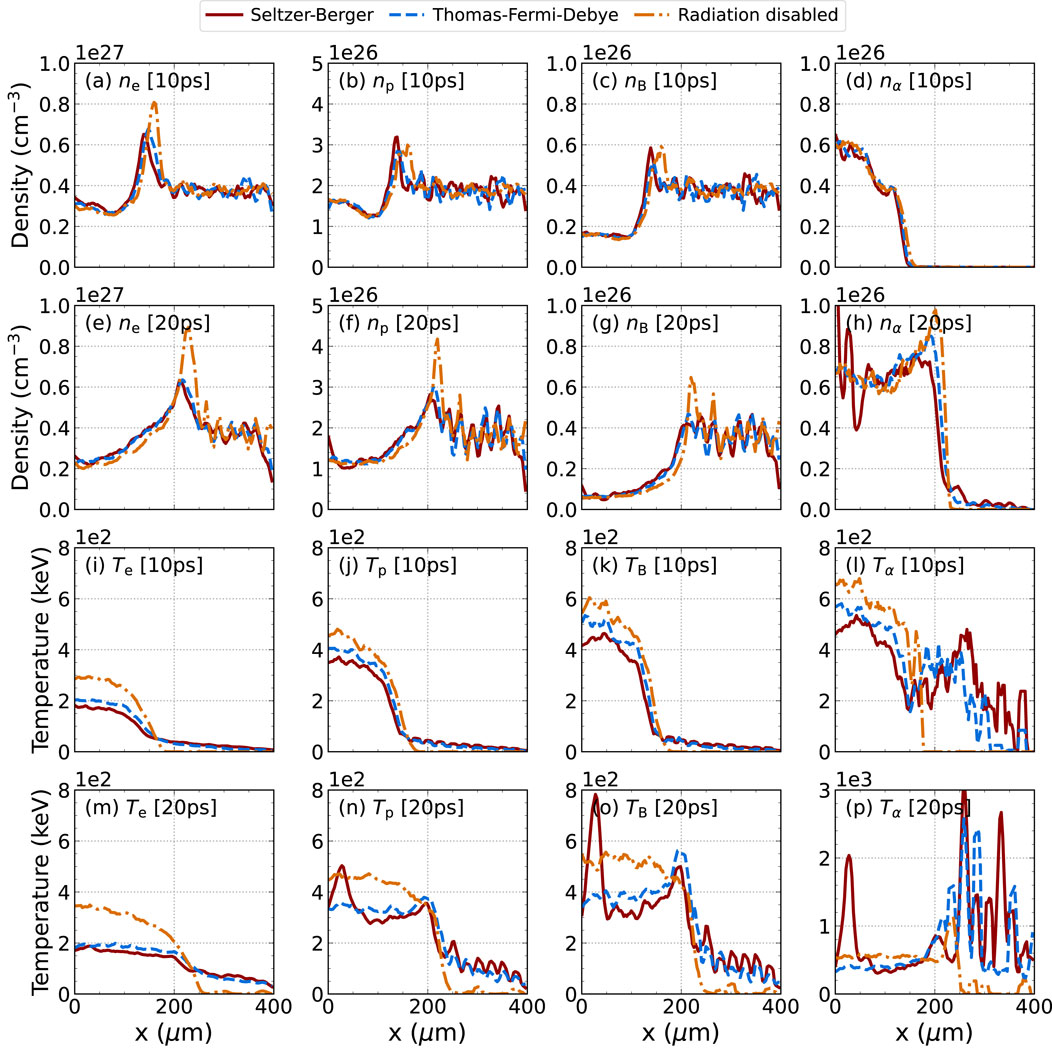
Figure 12. Simulated expansion of a 200-keV
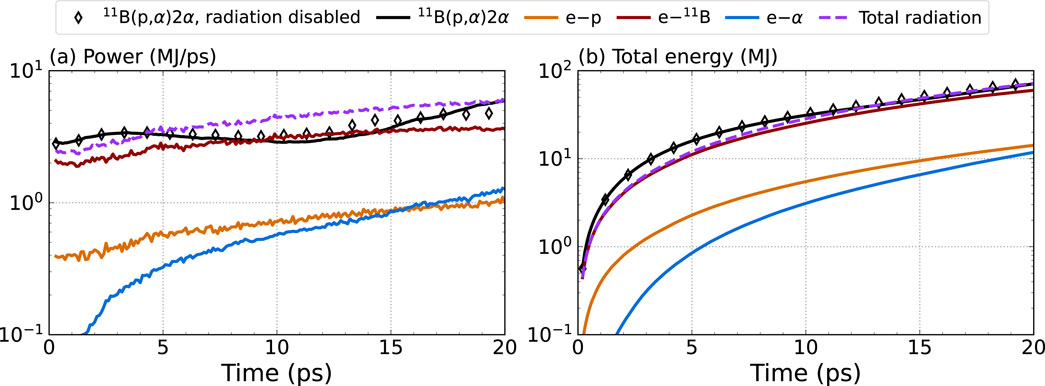
Figure 13. Fusion (black) and radiation (orange, red, blue, purple) (A) power and (B) total energy for each of the reactions using the TFD model for bremsstrahlung cross sections simulated during the expansion of a hot spot of
4 Discussion
Previous studies of the energy balance in
Our model predicts that including radiation increases the transfer of thermal energy from the hot-spot to the surrounding fuel. While the electron temperature drops by almost a factor of two due to bremsstrahlung emission, the cold plasma temperature increases by almost four orders of magnitude (10 eV–100 keV) due to IBA over the course of 20 ps. The radiative cooling of the hot spot leads to less thermal work being done and a slower shock front, whereas, radiative heating of the cold fuel decreases the stopping of fusion alpha leading to non-local energy deposition. Currently, our model predicts the development of additional modes late in time in the density and temperature of the initially-cold region. While they appear to coincide with the spikes in the temperature of the alphas, we are still working to understand if these modes are physical or numerical artifacts.
There are certain limitations to our simulation results due to missing physics. The absence of electromagnetic fields in these simulations means that we do not currently capture the collective effects and instabilities that stem from particle coupling at long range. This is expected to have an impact on the separation of the electron and ion wave fronts and the burn wave propagation speed; more specifically, it will reduce the electron heat flow and increase the ion heat flow through a pressure gradient. The omission of field effects is evident in the discrepancy between electron and ion densities in Figure 9 where the electron pileup at the shock front exceeds the ion density. While charge separation is not seen in the charge neutral HYDRA solution, we expect long-range electron–ion coupling will play a minor role in the overall plasma dynamics. Electromagnetic LSP simulations of the DT burn wave (not shown in this report) predicted field energies that were
A greater limitation to our results is that the planar description of expansion underestimates the thermal expansion work compared to spherical expansion, and therefore, our results predict a faster wave front, less ion cooling and more self-heating of the hot spot than expected in an equivalent ICF target. However, planar expansion also underestimates the available fuel mass for the wave to propagate through and burn. Simulating the strongly ignited DT case in 1D spherical geometry with HYDRA (not shown in this report) led to an increase in the fusion power from 7 MJ/ps to 45 MJ/ps and fusion energy from 190 MJ to 430 MJ at 40 ps compared to the case simulated with planar geometry.
We note that, in light of the foregoing limitations, this work is not intended to argue the case for
In future work, we will continue to improve the model and explore the ignition space of
Additionally, we plan to improve the fidelity of future simulations by including the fast-ignition heating process of a beam heating an assembled isochoric plasma. Kinetic effects, such as nonlocal transport where density and temperature gradients are comparable to or shorter than the mean free path length, may play an increasingly important role. With TRIFORCE and the PIC-MCC approach, we can continue to investigate kinetic physics in reacting multi-species plasmas at extreme conditions.
Data availability statement
The raw data supporting the conclusions of this article will be made available by the authors, without undue reservation.
Author contributions
ML: Conceptualization, Data curation, Formal Analysis, Investigation, Methodology, Software, Validation, Visualization, Writing–original draft, Writing–review and editing. AK: Software, Writing–review and editing. ATS: Software, Writing–review and editing. EE: Software, Writing–review and editing. IM: Software, Writing–review and editing. SG-R: Writing–review and editing. WS: Software, Writing–review and editing. MB: Conceptualization, Writing–review and editing. SP: Conceptualization, Writing–review and editing. TM: Conceptualization, Writing–review and editing. MT: Conceptualization, Writing–review and editing. GA: Conceptualization, Writing–review and editing. ABS: Conceptualization, Funding acquisition, Project administration, Resources, Supervision, Writing–review and editing.
Funding
The author(s) declare that financial support was received for the research, authorship, and/or publication of this article. This material is based upon work supported by the US DOE ARPA-E under Award No. DE-AR0001272, US DOE Office of Fusion Energy Science (OFES) INFUSE program under Award No. DE-SC0024460, US DOE OFES under Award No. DE-SC0017951, and US DOE NNSA University of Rochester “National Inertial Confinement Program” under Award No. DE-NA0004144. This report was prepared as an account of work sponsored by an agency of the US Government. Neither the US Government nor any agency thereof, nor any of their employees, makes any warranty, express or implied, or assumes any legal liability or responsibility for the accuracy, completeness, or usefulness of any information, apparatus, product, or process disclosed, or represents that its use would not infringe privately owned rights. Reference herein to any specific commercial product, process, or service by trade name, trademark, manufacturer, or otherwise does not necessarily constitute or imply its endorsement, recommendation, or favoring by the US Government or any agency thereof.
Acknowledgments
ML and ABS thank B. Martinez and L. Gremillet for helpful discussions and the referees for their encouragement to introduce radiation absorption to the calculations.
Conflict of interest
Authors MB, SP, TM, MT, and GA were employed by HB11 Energy Holdings Pty Ltd. Author TM was employed by Mehlhorn Engineering Consulting.
The remaining authors declare that the research was conducted in the absence of any commercial or financial relationships that could be construed as a potential conflict of interest.
Publisher’s note
All claims expressed in this article are solely those of the authors and do not necessarily represent those of their affiliated organizations, or those of the publisher, the editors and the reviewers. Any product that may be evaluated in this article, or claim that may be made by its manufacturer, is not guaranteed or endorsed by the publisher.
Author disclaimer
The views and opinions of authors expressed herein do not necessarily state or reflect those of the US Government or any agency thereof.
References
1. Zylstra AB, Hurricane OA, Callahan DA, Kritcher AL, Ralph JE, Robey HF, et al. Burning plasma achieved in inertial fusion. Nature (2022) 601:542–8. doi:10.1038/s41586-021-04281-w
2. Zylstra A, Kritcher A, Hurricane O, Callahan D, Ralph J, Casey D, et al. Experimental achievement and signatures of ignition at the national ignition facility. Phys Rev E (2022) 106:025202. doi:10.1103/physreve.106.025202
3. Bosch HS, Hale GM. Improved formulas for fusion cross-sections and thermal reactivities. Nucl Fusion (1992) 32:611–31. doi:10.1088/0029-5515/32/4/i07
4. Brown DA, Chadwick MB, Capote R, Kahler AC, Trkov A, Herman MW, et al. ENDF/B-VIII. 0: the 8th major release of the nuclear reaction data library with CIELO-project cross sections, new standards and thermal scattering data. Nucl Data Sheets (2018) 148:1–142. doi:10.1016/j.nds.2018.02.001
5. Tentori A, Belloni F. Revisiting p–11B fusion cross section and reactivity, and their analytic approximations. Nucl Fusion (2023) 63:086001. doi:10.1088/1741-4326/acda4b
6. Hora H, Korn G, Giuffrida L, Margarone D, Picciotto A, Krasa J, et al. Fusion energy using avalanche increased boron reactions for block-ignition by ultrahigh power picosecond laser pulses. Laser Part Beams (2015) 33:607–19. doi:10.1017/s0263034615000634
7. Liu KF, Chao AW. Accelerator based fusion reactor. Nucl Fusion (2017) 57:084002. doi:10.1088/1741-4326/aa7642
8. Eliezer S, Martinez-Val JM. A novel fusion reactor with chain reactions for proton–boron-11. Laser Part Beams (2020) 38:39–44. doi:10.1017/s0263034619000818
9. Kolmes EJ, Ochs IE, Fisch NJ. Wave-supported hybrid fast-thermal p–11B fusion. Phys Plasmas (2022) 29:110701. doi:10.1063/5.0119434
10. McKenzie W, Batani D, Mehlhorn TA, Margarone D, Belloni F, Campbell EM, et al. HB11—understanding hydrogen–boron fusion as a new clean energy source. J Fusion Energ (2023) 42:17. doi:10.1007/s10894-023-00349-9
11. Mehlhorn TA, Labun L, Hegelich BM, Margarone D, Gu MF, Batani D, et al. Path to increasing p-b11 reactivity via ps and ns lasers. Laser Part Beams (2022) 2022:e1. doi:10.1155/2022/2355629
12. Tabak M, Hammer J, Glinsky ME, Kruer WL, Wilks SC, Woodworth J, et al. Ignition and high gain with ultrapowerful lasers. Phys Plasmas (1994) 1:1626–34. doi:10.1063/1.870664
13. Roth M, Cowan TE, Key MH, Hatchett SP, Brown C, Fountain W, et al. Fast ignition by intense laser-accelerated proton beams. Phys Rev Lett (2001) 86:436–9. doi:10.1103/physrevlett.86.436
14. Fernández JC, Albright BJ, Beg FN, Foord ME, Hegelich BM, Honrubia JJ, et al. Fast ignition with laser-driven proton and ion beams. Nucl Fusion (2014) 54:054006. doi:10.1088/0029-5515/54/5/054006
15. Eliezer S, Schweitzer Y, Nissim N, Martinez Val JM. Mitigation of the stopping power effect on proton–boron-11 nuclear fusion chain reactions. Front Phys (2020) 8:573694. doi:10.3389/fphy.2020.573694
16. Belloni F, Batani K. Multiplication processes in high-density h-11b fusion fuel. Laser Part Beams (2022) 2022:e11. doi:10.1155/2022/3952779
17. Sefkow AB, Shaw JG, Carroll-Nellenback J, Pai S, Blackman EG, Cao D, et al. Introduction to TriForce: a multiphysics code for hybrid fluid-kinetic simulations. Bull Am Phys Soc (2019) 64. BAPS.2019.DPP.JP10.125.
18. Lavell MJ, Kish AJ, Sexton AT, Masti RL, Mohammad I, Kim MJ, et al. Verification of a Monte Carlo binary collision model for simulating elastic and inelastic collisions in particle-in-cell simulations. Phys Plasmas (2024) 31. doi:10.1063/5.0190352
19. Birdsall CK. Particle-in-cell charged-particle simulations, plus Monte Carlo collisions with neutral atoms, PIC-MCC. IEEE Trans Plasma Sci (1991) 19:65–85. doi:10.1109/27.106800
20. Nanbu K. Probability theory of electron–molecule, ion–molecule, molecule–molecule, and coulomb collisions for particle modeling of materials processing plasmas and cases. IEEE Trans Plasma Sci (2000) 28:971–90. doi:10.1109/27.887765
21. Welch DR, Rose DV, Clark RE, Genoni TC, Hughes TP. Implementation of an non-iterative implicit electromagnetic field solver for dense plasma simulation. Comput Phys Commun (2004) 164:183–8. doi:10.1016/j.cpc.2004.06.028
22. Welch DR, Rose DV, Cuneo ME, Campbell RB, Mehlhorn TA. Integrated simulation of the generation and transport of proton beams from laser-target interaction. Phys Plasmas (2006) 13:063105. doi:10.1063/1.2207587
23. Marinak MM, Tipton RE, Landen OL, Murphy TJ, Amendt P, Haan SW, et al. Three-dimensional simulations of Nova high growth factor capsule implosion experiments. Phys Plasmas (1996) 3:2070–6. doi:10.1063/1.872004
24. Marinak MM, Haan SW, Dittrich TR, Tipton RE, Zimmerman G. A comparison of three-dimensional multimode hydrodynamic instability growth on various National Ignition Facility capsule designs with HYDRA simulations. Phys Plasmas (1998) 5:1125–32. doi:10.1063/1.872643
25. Marinak MM, Kerbel GD, Gentile NA, Jones O, Munro D, Pollaine S, et al. Three-dimensional HYDRA simulations of national ignition facility targets. Phys Plasmas (2001) 8:2275–80. doi:10.1063/1.1356740
26. Nanbu K, Yonemura S. Weighted particles in coulomb collision simulations based on the theory of a cumulative scattering angle. J Comput Phys (1998) 145:639–54. doi:10.1006/jcph.1998.6049
27. Pérez F, Gremillet L, Decoster A, Drouin M, Lefebvre E. Improved modeling of relativistic collisions and collisional ionization in particle-in-cell codes. Phys Plasmas (2012) 19:083104. doi:10.1063/1.4742167
28. Martinez B, Lobet M, Duclous R, d’Humières E, Gremillet L. High-energy radiation and pair production by coulomb processes in particle-in-cell simulations. Phys Plasmas (2019) 26. doi:10.1063/1.5118339
29. Higginson DP, Link A, Schmidt A. A pairwise nuclear fusion algorithm for weighted particle-in-cell plasma simulations. J Comput Phys (2019) 388:439–53. doi:10.1016/j.jcp.2019.03.020
30. Higginson DP, Holod I, Link A. A corrected method for coulomb scattering in arbitrarily weighted particle-in-cell plasma simulations. J Comput Phys (2020) 413:109450. doi:10.1016/j.jcp.2020.109450
31. Follett RK, Colaïtis A, Turnbull D, Froula DH, Palastro JP. Validation of ray-based cross-beam energy transfer models. Phys Plasmas (2022) 29. doi:10.1063/5.0123462
32. Del Gaudio F, Grismayer T, Fonseca RA, Silva LO. Compton scattering in particle-in-cell codes. Plasma Phys (2020) 86:905860516. doi:10.1017/s002237782000118x
33. Wu D, Yu W, Fritzsche S, He XT. Particle-in-cell simulation method for macroscopic degenerate plasmas. Phys Rev E (2020) 102:033312. doi:10.1103/physreve.102.033312
34. Liu SJ, Wu D, Hu TX, Liang TY, Ning XC, Liang JH, et al. Proton–boron fusion scheme taking into account the effects of target degeneracy. Phys Rev Res (2024) 6:013323. doi:10.1103/physrevresearch.6.013323
35. Seltzer SM, Berger MJ. Bremsstrahlung energy spectra from electrons with kinetic energy 1 keV–10 GeV incident on screened nuclei and orbital electrons of neutral atoms with Z= 1–100. At Data Nucl Data tables (1986) 35:345–418. doi:10.1016/0092-640x(86)90014-8
36. Agostinelli S, Allison J, Amako K, Apostolakis J, Araujo H, Arce P, et al. Geant4—a simulation toolkit. Nucl Instrum Methods Phys Res (2003) 506:250–303. doi:10.1016/s0168-9002(03)01368-8
37. Allison J, Amako K, Apostolakis J, Araujo H, Dubois PA, Asai M, et al. Geant4 developments and applications. IEEE Trans Nucl Sci (2006) 53:270–8. doi:10.1109/tns.2006.869826
38. Allison J, Amako K, Apostolakis J, Arce P, Asai M, Aso T, et al. Recent developments in Geant4. Nucl Instrum Methods Phys Res (2016) 835:186–225. doi:10.1016/j.nima.2016.06.125
39. Rand S. Inverse bremsstrahlung with high-intensity radiation fields. Phys Rev (1964) 136:B231–7. doi:10.1103/physrev.136.b231
40. Langdon AB. Nonlinear inverse bremsstrahlung and heated-electron distributions. Phys Rev Lett (1980) 44:575–9. doi:10.1103/physrevlett.44.575
41. Paes ACJ, Serbeto A, Alves MV, Galvão RMO, Hussein MS. A particle-in-cell simulation of nonlinear amplification of inverse bremsstrahlung electron acceleration. Journ Phys D: Appl Phys (1997) 30:1759–62. doi:10.1088/0022-3727/30/12/012
42. Weber S, Bonnaud G, Gauthier JC. Role of collisions in particle-in-cell modeling of high-density short-pulse laser-plasma interaction. Phys Plasmas (2001) 8:387–90. doi:10.1063/1.1340619
43. Detering F, Bychenkov VY, Rozmus W, Sydora R, Capjack CE. Langevin representation of laser heating in pic simulations. Comp Phys Commun (2002) 143:48–53. doi:10.1016/s0010-4655(01)00432-5
44. Detering F, Rozmus W, Brantov A, Bychenkov VY, Capjack CE, Sydora R. Particle-in-cell simulations of heat flux driven ion acoustic instability. Phys Plasmas (2005) 12. doi:10.1063/1.1835344
45. Weng SM, Sheng ZM, Zhang J. Inverse bremsstrahlung absorption with nonlinear effects of high laser intensity and non-maxwellian distribution. Phys Rev E (2009) 80:056406. doi:10.1103/physreve.80.056406
46. Moritaka T, Baiotti L, Lin A, Weiwu L, Sakawa Y, Kuramitsu Y, et al. Plasma particle-in-cell simulations with qed reactions for pair production experiments using a high-z solid target. J Phys Conf Ser (2013) 454:012016. doi:10.1088/1742-6596/454/1/012016
47. Mehdian H, Kargarian A, Hajisharifi K. Kinetic (particle-in-cell) simulation of nonlinear laser absorption in a finite-size plasma with a background inhomogeneous magnetic field. Phys Plasmas (2015) 22. doi:10.1063/1.4921934
48. Arber TD, Bennett K, Brady CS, Lawrence-Douglas A, Ramsay MG, Sircombe NJ, et al. Contemporary particle-in-cell approach to laser-plasma modelling. Plasma Phys Controlled Fusion (2015) 57:113001. doi:10.1088/0741-3335/57/11/113001
49. Vyskočil J, Klimo O, Weber S. Simulations of bremsstrahlung emission in ultra-intense laser interactions with foil targets. Plasma Phys Controlled Fusion (2018) 60:054013. doi:10.1088/1361-6587/aab4c3
50. Reitsma AJW, Trines RMGM, Bingham R, Cairns RA, Mendonça JT, Jaroszynski DA. Photon kinetic modeling of laser pulse propagation in underdense plasma. Phys Plasmas (2006) 13. doi:10.1063/1.2366577
51. Goldston RJ, Rutherford PH. Introduction to plasma physics. 1st ed. edn. Bristol, England: IOP Publishing Ltd. (1988).
52. Putvinski SV, Ryutov DD, Yushmanov PN. Fusion reactivity of the pB11 plasma revisited. Nucl Fusion (2019) 59:076018. doi:10.1088/1741-4326/ab1a60
53. Nevins WM. A review of confinement requirements for advanced fuels. J Fusion Energ (1998) 17:25–32. doi:10.1023/a:1022513215080
54. Zenitani S, Nakano S. Loading a relativistic kappa distribution in particle simulations. Phys Plasmas (2022) 29:113904. doi:10.1063/5.0117628
55. Welch DR, Genoni TC, Clark RE, Rose DV. Adaptive particle management in a particle-in-cell code. J Comput Phys (2007) 227:143–55. doi:10.1016/j.jcp.2007.07.015
56. Higginson DP, Link AJ. A cartesian-diffusion Langevin method for hybrid kinetic-fluid coulomb scattering in particle-in-cell plasma simulations. J Comput Phys (2022) 457:110935. doi:10.1016/j.jcp.2021.110935
57. Atzeni S, Meyer-ter Vehn J The physics of inertial fusion: beam plasma interaction, hydrodynamics, hot dense matter, 125. Oxford, United Kingdom: OUP Oxford (2004).
58. Martínez-Val JM, Eliezer S, Piera M, Velarde G. Fusion burning waves in proton–boron-11 plasmas. Phys Lett A (1996) 216:142–52. doi:10.1016/0375-9601(96)00252-6
59. Eliezer S, Martínez-Val JM. Proton–boron-11 fusion reactions induced by heat-detonation burning waves. Laser Part Beams (1998) 16:581–98. doi:10.1017/s0263034600011411
60. Gryziński M. Fusion chain reaction—chain reaction with charged particles. Phys Rev (1958) 111:900–5. doi:10.1103/physrev.111.900
61. Wu D, He XT, Yu W, Fritzsche S. Monte Carlo approach to calculate proton stopping in warm dense matter within particle-in-cell simulations. Phys Rev E (2017) 95:023207. doi:10.1103/physreve.95.023207
Keywords: proton-boron fusion, burning plasma, aneutronic fusion, particle-in-cell, Monte Carlo collisions
Citation: Lavell MJ, Kish AJ, Sexton AT, Evans ES, Mohammad I, Gomez-Ramirez S, Scullin W, Borscz M, Pikuz S, Mehlhorn TA, Tabak M, Ainsworth G and Sefkow AB (2024) A kinetic study of fusion burn waves in compressed deuterium–tritium and proton–boron plasmas. Front. Phys. 12:1440037. doi: 10.3389/fphy.2024.1440037
Received: 28 May 2024; Accepted: 26 August 2024;
Published: 13 September 2024.
Edited by:
Noaz Nissim, Soreq Nuclear Research Center, IsraelReviewed by:
Suming Weng, Shanghai Jiao Tong University, ChinaKarl Lackner, Max Planck Institute for Plasma Physics (IPP), Germany
Copyright © 2024 Lavell, Kish, Sexton, Evans, Mohammad, Gomez-Ramirez, Scullin, Borscz, Pikuz, Mehlhorn, Tabak, Ainsworth and Sefkow. This is an open-access article distributed under the terms of the Creative Commons Attribution License (CC BY). The use, distribution or reproduction in other forums is permitted, provided the original author(s) and the copyright owner(s) are credited and that the original publication in this journal is cited, in accordance with accepted academic practice. No use, distribution or reproduction is permitted which does not comply with these terms.
*Correspondence: Michael J. Lavell, bWxhdmVsbEB1ci5yb2NoZXN0ZXIuZWR1; Adam B. Sefkow, YWRhbS5zZWZrb3dAcm9jaGVzdGVyLmVkdQ==