 Jie Hu*
 Xuan Kang
- ZhongHua Vocational College, Yunnan University of Finance and Economics, Kunming, China
Driven by the digital wave, the security and efficiency of financial management networks are key factors determining the competitiveness and sustainable development of enterprises. Faced with complex and ever-changing network threats in multi-server environments, traditional static security strategies are no longer sufficient to meet the security needs of modern enterprises. It is particularly important to develop a security protocol that can adapt to environmental changes and defend against potential threats. Therefore, we propose a lightweight adaptive security protocol for financial management networks in multi-server environments. This protocol uses a hash function to negotiate session keys at low computation and communication overhead, effectively protecting the transmission security of confidential messages. In addition, informal and formal analysis proves that this protocol has high security and can resist various network attack methods. We demonstrate the efficiency of the protocol in practical applications through performance comparisons. It not only has low communication overhead and good computational efficiency but also achieves lightweight message transmission, making it easy to deploy and use in multi-server environments.
Highlights
• We propose a lightweight adaptive security protocol for financial management networks in multi-server network environments.
• Informal and formal analysis methods are used to analyze the specific security of the protocol.
• Through performance comparison, it is proven that this scheme has low communication overhead and good computation overhead.
1 Introduction
Financial management is the core link of enterprise operation in today’s digital age. Its security and efficiency are directly related to the survival and development of the enterprise [1]. With the rapid advancement of technologies such as cloud computing and the Internet of Things (IoT), enterprise financial management systems are gradually transitioning from traditional single-machine or LAN models to multi-server, cross-regional, and high-concurrency network environments [2]. This transformation not only greatly enhances the flexibility and real-time performance of financial management but also poses unprecedented challenges to the security of the system. The accompanying network information security issues constantly threaten the privacy and security of information in our communication process [3]. The identity authentication key protocol designed based on cryptography can enable users to securely enjoy the convenience brought by network services and effectively ensure network information security [4].
With the expansion of enterprise scale and the globalization of business, financial management systems become increasingly complex. The amount of data that needs to be processed has exploded, with extremely high requirements for real-time, accurate, and secure data [5]. To address these challenges, enterprises adopt multi-server architectures and improve system stability and reliability through technologies such as load balancing, data redundancy, and disaster recovery backup. However, while a multi-server environment brings convenience, it also exacerbates the difficulty of security management [6]. The financial management network in a multi-server environment faces complex and ever-changing network threats, including but not limited to data breaches, illegal access, service interruptions, and advanced persistent threats [7]. Once these risks become a reality, they cause incalculable economic losses and reputational damage to the enterprise.
Traditional static security strategies are no longer effective in dealing with increasingly complex and ever-changing network attack methods [8]. Therefore, developing a financial management network security protocol that can adapt to environmental changes and intelligently identify and defend against potential threats has become the key to ensuring the security of enterprise assets and promoting sustainable business development. Traditional security protocols are designed for a single server [9]. When a user needs to request network services, providing authentication factors such as identity and password to the single server can obtain the service requested by the server. Due to the rapid development of the network, there are a large number of servers in the current Internet environment [10]. When users want to request services, they need to register with all the requested single servers. Then, users need to remember all the authentication factors, such as identity and password verification, when registering. This is obviously a huge resource burden for users, and there are extensive illegal attacks on the public channel of communication between users and servers [11]. It is very likely that a set of user identity or authentication factors are disclosed and attacked, thus affecting the security of other systems. This is undoubtedly a huge security risk. The factors that must be considered when designing security protocols for different multi-server network environments are also different [12, 13]. Therefore, in the design process of security protocol in a multi-server environment, it is not only necessary to meet the security requirements of the application environment but also to balance computational and communication costs to achieve better performance.
Especially driven by the current global wave of informatization, as the core support for enterprise operations, enterprise financial management systems are undergoing unprecedented changes and challenges. With the expansion of enterprise scale and the globalization of business, traditional financial management models are no longer able to meet the high requirements of modern enterprises for data processing speed, system stability, and information security [14]. In a multi-server environment, financial management systems not only need to handle massive amounts of financial data but must also ensure the security and integrity of these data during cross-regional and cross-network transmission [15]. An adaptive security protocol can automatically adjust security policies according to changes in the network environment to effectively resist various network attacks. It ensures the security and integrity of financial data. At the same time, the protocol can optimize system performance and enhance user experience while ensuring security. Our main contributions are summarized as follows.
(1) Considering the requirements of financial management networks in multi-server network environments, we propose a lightweight adaptive security protocol. In this protocol, both communication parties need to register at the control server and then engage in security negotiations. Through a hash function, this protocol can negotiate session keys with lower computational and communication costs. This protects the transmission of confidential messages and enhances communication security.
(2) This protocol adopts both informal and formal analysis methods to analyze the specific security of the protocol, which strongly demonstrates the high security of this protocol. Through performance comparison, it is proven that this protocol has low communication overhead and good computation overhead. Lightweight message transmission is convenient for practical applications. This protocol achieves security and practicality and is more appropriate for multi-server environments.
The other parts of the article are described. Section Ⅱ and Section Ⅲ systematically review the current research status in related fields. Section Ⅳ comprehensively introduces the design ideas, specific implementation steps, and key technical details of the security protocol. Section Ⅴ and Section Ⅵ, respectively, focus on the security verification and performance analysis of the protocol. Finally, Section Ⅶ is the summary.
2 Literature review
With the significant advancement of communication technology, ensuring the confidentiality and privacy of user information has become particularly important. Therefore, there have been many studies on multi-server authentication protocols both domestically and internationally.
Lamport [16] first proposed a password-based remote identity authentication scheme, which was based on a verification table and password. Subsequently, researchers proposed an increasing number of authentication schemes, but most of them were suitable for single-server environments. However, due to the increasing demand for security, relying solely on verification tables could not guarantee communication security. In a single-server architecture, when users needed to request services from different servers, remembering the identity and password when logging into each server was challenging. To solve the problem of users needing to remember manage multiple physical passwords and multiple high entropy passwords, an increasing number of identity authentication schemes that could be applied to multi-server environments were proposed. Tsaur et al. [17] introduced the concept of a multi-service model and built an authentication mechanism in a multi-server environment based on the RSA public key cryptosystem and Lagrange interpolation inequality principle. Subsequently, Li et al. [18] integrated neural network technology into a multi-server authentication architecture. Chang et al. [19] proposed a remote authentication scheme that did not require verification table maintenance, and users did not need to remember multi-server passwords, significantly improving the user experience. Yoon et al. [20] used elliptic curve public key encryption technology and designed a three-factor authentication scheme aimed at enhancing security in multi-server environments. However, subsequent research [21] pointed out that this scheme had shortcomings in resisting internal attacks, smart card theft, offline password cracking, and impersonation attacks. In response, Kalra et al. [22] proposed an efficient and cost-optimized multi-server authentication protocol that utilized smart card bidirectional authentication and elliptic curve cryptography technology to achieve higher security. Guo et al. [23] also designed a smart card-based authentication scheme in multi-server architecture, which clearly defined the roles of the registration server, service server, and user. Both users and application servers needed to perform registration once on the registration server. Three-party authentication mode was implemented using the ElGamal public key cryptosystem. Subsequently, the Burrows Abadi Needham logic provided formal proof of the proposed scheme.
Gupta et al. [24] proposed a key exchange authentication scheme that combines biometric cryptography and smart card technology in a distributed multi-client server architecture, particularly for scenarios with multiple registration centers. Subsequently, Li et al. [25] conducted an in-depth analysis of biometric-based identity verification and key negotiation schemes in multi-server environments. They proposed corresponding improvement strategies based on this to further enhance the security and efficiency of the authentication mechanism. Wang et al. [26] reviewed several authentication schemes applicable to multi-server architectures this year and pointed out the security vulnerabilities of the corresponding schemes, proving that the schemes were ineffective in practical applications. Pelaez et al. [27] proposed an enhanced lightweight cloud computing authentication scheme for IoT, which also included a substage called connection attempt evidence. It provided evidence about user and service participation. Unfortunately, the study by Yu et al. [28] revealed significant shortcomings in the security of [27], pointing out that it could not effectively resist impersonation attacks, session key leakage, and replay attacks. They also proposed a secure and lightweight three-factor authentication scheme specifically designed for IoT in cloud computing environments. This scheme innovatively incorporated secret parameters and biometric authentication elements to ensure enhanced mutual authentication mechanisms and user anonymity, effectively addressing various security threats.
Wong et al. [29] focused on the application of 5G wireless sensor networks in electronic health systems and designed a three-factor fast authentication scheme that balances time constraints and user anonymity. This authentication scheme combined a three-factor authentication scheme of biometric, password, and smart card methods to ensure a highly secure communication environment supported by sensors. It maintained user anonymity during the communication process. Tsai et al. [30] proposed a multi-server authentication scheme for online banking transaction environments that used a hash-based multi-server authentication scheme combined with smart cards to authenticate online banking customers and transactions. It provided powerful security features and lower maintenance costs for the online banking platforms of financial institutions. The solution supported interface connection with the banking system, making it easy to integrate the solution into existing banking systems. Sudhakar et al. [31] proposed a multi-server environment-enhanced authentication scheme based on passwords and smart cards by improving the security flaws of [32]. The improved scheme formally proved the security authentication of the scheme using BAN logic and simulated various attacks through Internet security protocol and automatic verification of application tools. The results showed that the improved scheme had better security and performance.
In their research on ensuring authentication security in multi-server environments, Xia et al. [33] introduced the principle of elliptic curve cryptography and designed a three-factor authentication key agreement scheme, significantly enhancing the security of the system. Akram et al. [34] proposed an efficient anonymous authentication key protocol for multi-server infrastructure within the same year. This protocol effectively resisted various security challenges, including impersonation attacks, insider attacks, and password modification attacks. Finally, a formal security analysis of the proposed solution was conducted using a random oracle model. Analysis and comparison showed that this scheme was highly effective for anonymous authentication and key schemes. Wu et al. [35] pointed out the shortcomings of the protocol [36] in terms of fully forward secrecy protection and susceptibility to privileged internal attacks. In response to these security vulnerabilities, they designed a customized authentication key exchange scheme for 5G network multi-server architecture.
Km et al. [37] focused on improving security in multimedia IoT environments and proposed an enhanced multi-factor authentication scheme with provable security. Hsu et al. [38] developed an end-to-end cryptographic authentication key exchange scheme for multi-server architecture in edge computing networks. This scheme allowed end users to use easy-to-remember passwords for initial login and then used external agents to calculate shared keys to achieve secure communication with specific service end users. It was particularly worth mentioning that this scheme provided a high degree of user anonymity protection during the communication process.
3 Preliminaries
3.1 Network model
Figure 1 shows the three main participants in multi-server architecture authentication: the control server, the user, and the application server [22–38]. The control server is the registration center. Each user needs to avoid registering on a specific server that presents a particular service. The registry operates under the assumption that the user and the server providing the service trust it. The application server and user first complete the registration process and obtain the corresponding data information authorized by the registration center. The above data information is used for the future mutual authentication process between the user and the server. Distributed application servers can cross geographical boundaries and provide diverse services to remote users. Users only need to complete a one-time registration process through the registration center to obtain access permissions and seamlessly integrate with multiple authorized application servers, thus conveniently obtaining the required resources and services.
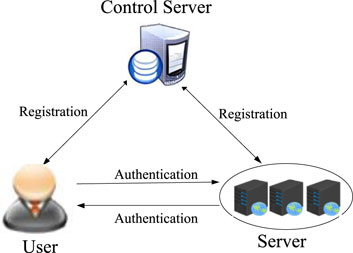
Figure 1. System model.
3.2 Attacker model
In a multi-server environment, attackers in the security protocol generally possess the following capabilities [30–42]. According to the Dolev Yao model, the attacker’s attack on the user is as follows: An attacker can not only eavesdrop on all messages propagated on the public channel during the protocol but also intercept, modify, and forge them before sending.
3.3 Safety objectives
(1) The basic functions that this protocol should implement are bidirectional authentication and session key negotiation. To ensure the legitimacy of the participants in the session key negotiation process, mutual authentication of the identities of the participants should be implemented first. The session key should be jointly negotiated among the participants and cannot be generated and distributed by one party in the negotiation process.
(2) This protocol should resist all sorts of common attacks, such as denial of service attacks, man-in-the-middle attacks, impersonation attacks, offline password guessing attacks, etc.
3.4 One-way hash function
The cryptography one-way hash function can convert the input into a certain length of output, that is
(1) For any
(2) For any
(3) For any
4 Proposed scheme
4.1 Initialization stage
The control server (
4.2 Server registration stage
The server
4.3 User registration stage
1. For
2.
3 After the
4. After
4.4 User login stage
When
If the above conditions hold,
Finally,
4.5 Mutual authentication and key negotiation stage
1. When
2.
3. After receiving
5 Protocol security analysis
5.1 Informal analysis
The method of conducting security analysis in this article is to use informal language to provide a detailed introduction to the security of the proposed protocol.
5.1.1 Mutual authentication and key negotiation
During the authentication process,
5.1.2 Denial of service attack
The login request of
5.1.3 Man-in-the-middle attack
The attacker may capture
5.1.4 Counterfeit attack
If the attacker
5.1.5 Replay attack
In this protocol, the timestamp is not only used in the login stage but also plays a major part in the authentication key negotiation stage. It specifies the threshold
5.1.6 User anonymity
First, the attacker is unable to directly steal identity information from the user’s smart card, partly because the smart card avoids storing the user’s temporary identity within it. On the other hand, even if the attacker causes the message
Second, for the messages spread in the open letter, there is no similar information in the messages, even if the messages sent by the same user are authenticated with different servers. The attacker cannot track the user’s identity. Therefore, this protocol has very good anti-tracking properties.
5.1.7 Forward safety
The key in this protocol is
5.1.8 Session key security
In this article,
5.2 Analysis of security proof
The tool for verifying protocol security in this article is the random oracle model. Next, we provide a detailed introduction to the security model and inquiry model used for security proof [39].
5.2.1 Security model
The two main parties in this protocol are
5.2.2 Inquiry model
The attacker’s attack capability is simulated by the following five interrogation models.
Send
Theorem 1. If and only if the attack advantage
5.2.3 Safety certificate
It is assumed that
Finally, because
According to the above formulas, the following equation can be inferred, which proves Theorem 1.
6 Performance analysis
6.1 Computation overhead
Because the main purpose of designing this protocol is to pursue a lightweight identity authentication protocol while ensuring security, only hash and exclusive OR (XOR) operations are involved in the design process. In this section, we compare the computational cost of our scheme with [43–47], as shown in Table 1. This scheme has the lowest computational cost except for [43, 44], where
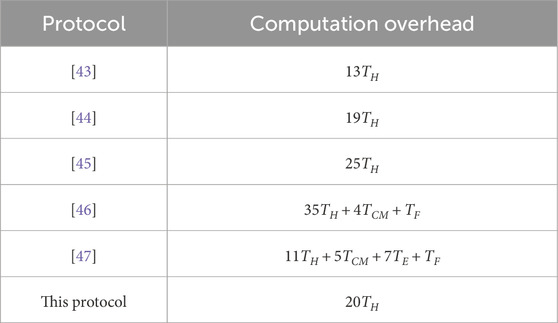
Table 1. Computation overhead comparison.
By comparing the computational costs in Table 1, we can see that this protocol has slightly higher computational costs than [43, 44] but lower computational costs than [45–47]. However, [43] cannot perform mutual authentication and [44] cannot resist replay attacks. For security protocols, security attributes are the most important, so it is practical to exchange high security and low communication costs with appropriate computational costs. Therefore, this protocol has reasonable computational overhead and better security, which can better meet the traditional multi-server network environment with higher security requirements.
6.2 Communication overhead
To contrast the communication overhead more intuitively, the identity length is marked as
Table 2 shows the number of message flow transmissions for the protocols in the table. In Figure 2, we have only two protocol message streams, which is the lowest of the protocols compared. There are also obvious differences in message transmission bytes: [43] has 1600 bits. [44] has 3040 bits, [45] has 2336 bits, [46] has 2560 bits, and [47] has 1376 bits. This protocol transmits two messages in the logon and authentication key negotiation stage. First,
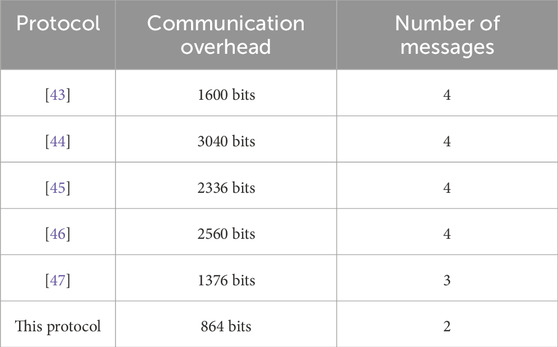
Table 2. Communication overhead comparison.
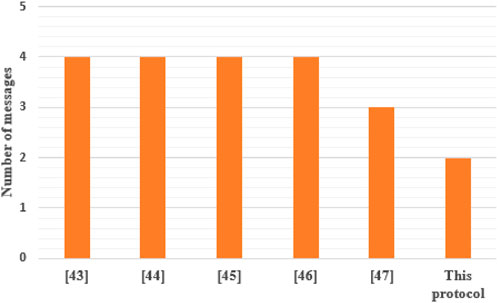
Figure 2. Number of messages.
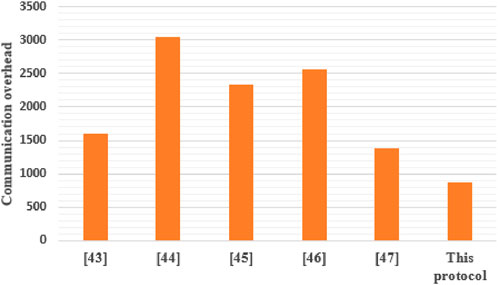
Figure 3. Communication overhead.
7 Conclusion
This article delves into the security and efficiency challenges faced by enterprise financial management networks in the digital age, particularly in the rapid development of technologies such as cloud computing and IoT. The inevitable trend for financial management systems to transition from single-machine or local area network models to multi-server, cross-regional, and high-concurrency network environments is highlighted. Although this transformation significantly improves the flexibility and real-time performance of financial management, it also makes system security issues increasingly prominent. This becomes a key consideration for the sustainable development and survival of enterprises. The issue of network information security, especially data privacy and communication security, has become an important issue that urgently needs to be addressed. We propose a lightweight, adaptive security protocol for special requirements in multi-server environments. This protocol effectively enhances the identity authentication strength and session key security of both communication parties, reducing the risk of data leakage and illegal access. This article comprehensively evaluates the security of the protocol using both informal and formal analysis, ensuring its robustness in various attack scenarios. In addition, we also fully consider the practicality and performance optimization issues of this protocol. By designing with low computational and communication costs, as well as a lightweight message transmission mechanism, this protocol demonstrates good efficiency and user experience in practical applications.
Data availability statement
The original contributions presented in the study are included in the article/supplementary material; further inquiries can be directed to the corresponding author.
Author contributions
JH: conceptualization, data curation, investigation, methodology, project administration, resources, supervision, validation, writing–original draft, and writing–review and editing. XK: formal analysis, investigation, project administration, resources, supervision, validation, and writing–review and editing.
Funding
The author(s) declare that no financial support was received for the research, authorship, and/or publication of this article.
Conflict of interest
The authors declare that the research was conducted in the absence of any commercial or financial relationships that could be construed as a potential conflict of interest.
Generative AI statement
The author(s) declare that no Generative AI was used in the creation of this manuscript.
Publisher’s note
All claims expressed in this article are solely those of the authors and do not necessarily represent those of their affiliated organizations, or those of the publisher, the editors and the reviewers. Any product that may be evaluated in this article, or claim that may be made by its manufacturer, is not guaranteed or endorsed by the publisher.
References
1. Gonzalez-Urango H, Mu E, Ujwary-Gil A, Florek-Paszkowska A. Analytic network process in economics, finance and management: Contingency factors, current trends and further research. Expert Syst Appl (2024) 237:121415. doi:10.1016/j.eswa.2023.121415
2. Budiasih Y. The influence of digital technology on financial management. Account Stud Tax J (Count) (2024) 1(1):92–100. doi:10.62207/wb6d3c96
3. Song N. Design and development of inclusive finance network security system model based on neural network algorithm. In: 2024 Asia-Pacific Conference on Software Engineering, Social Network Analysis and Intelligent Computing (SSAIC). IEEE (2024). 539–43.
4. Lyu M, Gharakheili HH, Sivaraman V. A survey on enterprise network security: Asset behavioral monitoring and distributed attack detection. IEEE Access (2024) 12:89363–83. doi:10.1109/access.2024.3419068
5. Okoye CC, Nwankwo EE, Usman FO, Mhlongo NZ, Odeyemi O, Ike CU. Securing financial data storage: A review of cybersecurity challenges and solutions. Int J Sci Res Archive (2024) 11(1):1968–1983. doi:10.30574/ijsra.2024.11.1.0267
6. Atadoga A, Sodiya EO, Umoga UJ, Amoo OO. A comprehensive review of machine learning's role in enhancing network security and threat detection. World J Adv Res Rev (2024) 21(2):877–886. doi:10.30574/wjarr.2024.21.2.0501
7. Chen R, Mou Y, Li W. A provably secure multi-server authentication scheme based on Chebyshev chaotic map. J Inf Security Appl (2024) 83:103788. doi:10.1016/j.jisa.2024.103788
8. Akinsanya MO, Ekechi CC, Okeke CD. The evolution of cyber resilience frameworks in network security: a conceptual analysis. Computer Sci & IT Res J (2024) 5(4):926–949.
9. Miao J, Wang Z, Wu Z, Ning X, Tiwari P. A blockchain-enabled privacy-preserving authentication management protocol for Internet of Medical Things. Expert Syst Appl (2024) 237:121329. doi:10.1016/j.eswa.2023.121329
10. Mahmood K, Ghaffar Z, Farooq M, Yahya K, Das AK, Chaudhry SA. A security enhanced chaotic-map based authentication protocol for internet of drones. IEEE Internet Things J (2024) 11:22301–9. doi:10.1109/jiot.2024.3379930
11. Miao J, Wang Z, Wang M, Garg S, Hossain MS, Rodrigues JJ. Secure and efficient communication approaches for Industry 5.0 in edge computing. Computer Networks (2024) 242:110244. doi:10.1016/j.comnet.2024.110244
12. Shukla S, Patel SJ. A design of provably secure multi-factor ECC-based authentication protocol in multi-server cloud architecture. Cluster Comput (2024) 27(2):1559–80. doi:10.1007/s10586-023-04034-6
13. Barman S, Chattopadhyay S, Samanta D. A lightweight authentication protocol for a blockchain-based off-chain medical data access in multi-server environment. SN Computer Sci (2024) 5(3):292. doi:10.1007/s42979-024-02660-4
14. Prabhakar NVSS, Talari S, Jangirala S, Vangapa P. Security analysis of two authentication and key agreement protocols based on multi-server architecture. In: 2023 4th International Conference on Intelligent Technologies (CONIT). IEEE (2024). p. 1–7. doi:10.1109/CONIT61985.2024.10626922
15. Lee TF, Chang IP, Huang WJ. A Privacy-preserving Authenticated Key Agreement Scheme based on Physically Unclonable Functions for Multi-server Architecture. IEEE Transactions on Services Computing (2024).
16. Lamport L. Password authentication with insecure communication. Commun Acm (1981) 24(11):770–2. doi:10.1145/358790.358797
17. Tsaur WJ, Wu CC, Lee WB. A flexible user authentication for multi-server internet services. In: First International Conference on Networking Colmar:the series Lecture Notes in Computer Science. France: Springer Berlin Heidelberg (2001). p. 174–83.
18. Li LH, Lin LC, Wang MS. A remote password authentication scheme for multiserver architecture using neural networks. IEEE Trans Neural Networks (2001) 12(6):1498–504. doi:10.1109/72.963786
19. Lin IC, Hwang MS, Li LH. A new remote user authentication scheme for multi-server architecture. Future Generation Computer Syst (2003) 19(1):13–22. doi:10.1016/s0167-739x(02)00093-6
20. Yoon EJ, Yoo KY. Robust biometrics-based multi-server authentication with key agreement scheme for smart cards on elliptic curve cryptosystem. The J Supercomputing (2013) 63(1):235–55. doi:10.1007/s11227-010-0512-1
21. Kim H, Jeon W, Lee K, Lee Y, Won D. Cryptanalysis and improvement of a Biometrics-based multi-server authentication with key agreement scheme, 451. IACR Cryptology ePrint Archive (2011).
22. Kalra S, Sood S. Advanced remote user authentication protocol for multi-server architecture based on ecc. J Inf Security Appl (2013) 18(2-3):98–107. doi:10.1016/j.jisa.2013.07.005
23. Guo D, Wen F. Analysis and improvement of a robust smart card based-authentication scheme for multi-server architecture. Wireless Personal Commun (2014) 78(1):475–90. doi:10.1007/s11277-014-1762-7
24. Gupta PC, Dhar J. Hash based multi-server key exchange protocol using smart card. Wireless Personal Commun (2016) 87(1):225–44. doi:10.1007/s11277-015-3040-8
25. Li Y, Zhiming Z, Khurram KM. Cryptanalysis and improvement of a biometrics-based authentication and key agreement scheme for multi-server environments. Plos One (2018) 13(3):e0194093. doi:10.1371/journal.pone.0194093
26. Wang D, Zhang X, Zhang Z, Wang P. Understanding security failures of multi-factor authentication schemes for multi-server environments. Comput Security (2020) 88(Jan.):101619–13. doi:10.1016/j.cose.2019.101619
27. Martínez-Peláez R, Toral-Cruz H, Parra-Michel JR, García V, Mena LJ, Félix VG, et al. An enhanced lightweight IoT-based authentication scheme in cloud computing circumstances. Sensors (2019) 19(9):2098. doi:10.3390/s19092098
28. Yu SJ, Park KS, Park YHY. A secure lightweight three-factor authentication scheme for IoT in cloud computing environment. Sensors (2019) 19:3598. doi:10.3390/s19163598
29. Wong MK, Hsu CL, Le TV, Hsieh MC, Lin TW. Three-factor fast authentication scheme with time bound and user anonymity for multi-server e-health systems in 5g-based wireless sensor networks. Sensors (2020) 20(9):2511. doi:10.3390/s20092511
30. Tsai CH, Su PC. The application of multi-server authentication scheme in internet banking transaction environments. In: Information systems and e-business management (2020). p. 1–29.
31. Sudhakar T, Natarajan V, Gopinath M, Saranyadevi J. An enhanced authentication protocol for multi-server environment using password and smart card. Wireless PersonalCommunications (2020) 115:2779–803. doi:10.1007/s11277-020-07462-4
32. Sahoo SS, Mohanty S, Majhi B. An improved and secure two-factor dynamic ID based authenticated key agreement scheme for multi-server environment. Wireless Personal Commun (2018) 101:1307–33. doi:10.1007/s11277-018-5764-8
33. Xia M, Li S, Liu L. A secure three-factor authenticated key agreement scheme for multi-server environment. Comput Mater Continua (2020) 64(3):1673–89. doi:10.32604/cmc.2020.010177
34. Akram MA, Ghaffar Z, Mahmood K, Kumari S, Agarwal K, Chen CM. An anonymous authenticated key-agreement scheme for multi-server infrastructure. Human-centric Comput Inf Sci. (2020) 10:22. doi:10.1186/s13673-020-00227-9
35. Wu TY, Lee ZY, Obaidat MS, Kumari S, Kumar S, Chen CM. An authenticated key exchange protocol for multi-server architecture in 5G networks. IEEE Access (2020) 8:28096–108. doi:10.1109/access.2020.2969986
36. Wu F, Li X, Xu L, Sangaiah AK, Rodrigues JJ. Authentication protocol for distributed cloud computing: An explanation of the security situations for internet-of-things-enabled devices. IEEE Consumer Electronics Mag (2018) 7(6):38–44. doi:10.1109/mce.2018.2851744
37. Km A, Wa A, As A, Altaf I, Lodhi MA, Islam SH. An enhanced and provably secure multi-factor authenticationscheme for Internet-of-Multimedia-Things environments. Comput & Electr Eng (2020) 88:106888. doi:10.1016/j.compeleceng.2020.106888
38. Hsu CL, Le TV, Lu CF, Lin TW, Chuang TH. A privacy-preserved e2e authenticated key exchange protocol for multi-server architecture in edge computing networks. IEEE Access (2020) 8:40791–808. doi:10.1109/access.2020.2976431
39. Miao J, Wang Z, Ning X, Shankar A, Maple C, Rodrigues JJ. A UAV-assisted authentication protocol for internet of vehicles. IEEE Trans Intell Transportation Syst (2024) 25(8):10286–97. doi:10.1109/tits.2024.3360251
40. Tanveer M, Chelloug SA, Alabdulhafith M, El-Latif AAA. Lightweight authentication protocol for connected medical IoT through privacy-preserving access. Egypt Inform J (2024) 26:100474. doi:10.1016/j.eij.2024.100474
41. Xiao N, Wang Z, Sun X, Miao J. A novel blockchain-based digital forensics framework for preserving evidence and enabling investigation in industrial Internet of Things. Alexandria Eng J (2024) 86:631–643. doi:10.1016/j.aej.2023.12.021
42. Chen C, Guo H, Wu Y, Gao Y, Liu J. A novel two-factor multi-gateway authentication protocol for WSNs. Ad Hoc Networks (2023) 141:103089. doi:10.1016/j.adhoc.2023.103089
43. Lu Y, Li L, Peng H, Yang X, Yang Y. A lightweight ID based authentication and key agreement protocol for multi-server architecture. Int J Distributed Sensor Networks (2015) 11(3):635890. doi:10.1155/2015/635890
44. Xue K, Hong P, Ma C. A lightweight dynamic pseudonym identity based authentication and key agreement protocol without verification tables for multi-server architecture. J Computer Syst Sci (2014) 80(1):195–206. doi:10.1016/j.jcss.2013.07.004
45. Li X, Xiong L, Ma J, Wang W. An efficient and security dynamic identity based authentication protocol for multi-server architecture using smart cards. J Netw & Computer Appl (2012) 35(2):763–9.
46. Cui J, Yu J, Zhong H, Wei L, Liu L. Chaotic map-based authentication scheme using physical unclonable function for internet of autonomous vehicle. IEEE Trans Intell Transportation Syst (2022) 24(3):3167–81. doi:10.1109/tits.2022.3227949
Keywords: financial management network, multi-server, security, protocol, lightweight
Citation: Hu J and Kang X (2025) Adaptive security protocol for financial management networks in multi-server environments. Front. Phys. 13:1509626. doi: 10.3389/fphy.2025.1509626
Received: 11 October 2024; Accepted: 20 February 2025;
Published: 24 March 2025.
Edited by:
Chengyi Xia, Tianjin Polytechnic University, ChinaReviewed by:
Dawei Zhao, Qilu University of Technology, ChinaZhigang Li, Zhengzhou University of Light Industry, China
Copyright © 2025 Hu and Kang. This is an open-access article distributed under the terms of the Creative Commons Attribution License (CC BY). The use, distribution or reproduction in other forums is permitted, provided the original author(s) and the copyright owner(s) are credited and that the original publication in this journal is cited, in accordance with accepted academic practice. No use, distribution or reproduction is permitted which does not comply with these terms.
*Correspondence: Jie Hu, cHkxOTA5QHludWZlLmVkdS5jbg==