 Ghaleb H. Alnahdi
 Susanne Schwab
- 1Department of Special Education, College of Education, Prince Sattam Bin Abdulaziz University, Alkharj, Saudi Arabia
- 2Centre for Teacher Education, University of Vienna, Vienna, Austria
- 3Research Focus Area Optentia, North-West University, Vanderbijlpark, South Africa
This study aimed to determine the predictors for Saudi Arabian teachers' self-efficacy to work in inclusive education. Five independent variables were tested in this study: attitudes toward inclusive education, participants' educational major, having relative with disability, working with students with disability and gender. Further, predictors of teachers' attitudes toward inclusive education were examined. The sample was 185 elementary-school teachers in Saudi Arabia. The Arabic version of the Teacher Efficacy for Inclusive Practices scale was used to measure self-efficacy. To assess attitudes toward inclusion an Arabic version of the Sentiments, Attitudes, and Concerns about Inclusive Education Revised subscale was used. Results showed teacher attitude toward inclusion are strongly linked with teachers' self-efficacy to work in inclusive classrooms. Further, participants with a relative with a disability showed more positive attitudes for inclusive education. Levels of self-efficacy were unaffected by gender, having a special education degree, or having a relative with a disability. In sum, this study highlighted the importance of teachers' attitudes toward inclusive education as a main predictor of teachers' self-efficacy.
Introduction
The inclusion of students with disabilities in regular schools has evolved rapidly over recent decades in Saudi Arabia (Alnahdi et al., 2019) as well as throughout the world (see e.g., Schwab, 2020 for Europe). This results in an increasing number of schools that include students with disabilities. Preparing teachers to work with students with disabilities has also been considered in Saudi Arabia, as evident by the expansion of the number of special education departments in universities.
One of the challenges of this major change in the education system is determining how to prepare teachers for their new responsibilities and to provide the best possible support for students with special education needs. In this context, it is important to examine what variables influence the implementation of inclusive education. Based on previous research, teachers' attitudes toward inclusive education (e.g., Avramidis and Norwich, 2002; De Boer et al., 2011; Pit-ten Cate et al., 2018; Schwab, 2018) and their level of self-efficacy to teach in inclusive education (e.g., Malinen and Savolainen, 2016; Yada et al., 2019; Savolainen et al., 2020) are important factors for successful inclusive education (see the review of Mieghem et al., 2018).
Theoretically, the assumption that teachers' attitudes toward inclusive education are highly important for the implementation quality of inclusive education, can be grounded using the theory of planned behavior (Ajzen and Fishbein, 1977; Ajzen, 1991). Within this theory the assumption was be made that teachers' behavior in inclusive classes is shaped by teachers' attitudes as well and perceived behavioral control (and perceived subjective norms), Also empirical evidence was already given indicating that more positive attitudes toward inclusive education are linked with more inclusive behavior of teachers (e.g., Hellmich et al., 2019; Schwab et al., 2019). Further, teachers' self-efficacy toward inclusive education can be interpreted as a component of perceived behavioral control. High self-efficacy means that teachers are highly confident about their skills to work in inclusive education. According to Bandura, self-efficacy refers to people's beliefs in their “capabilities to organize and execute the courses of action required to produce given attainments” (Bandura, 1997; p. 3). Similarly as for attitudes, also for teachers self-efficacy beliefs some empirical evidence was found that it predicts teachers' actual behavior (e.g., Ghaith and Yaghi, 1997; Milner, 2002; Ryan et al., 2015; Miller et al., 2017). Regarding the relationship between teachers' attitudes toward inclusive education and teachers' self-efficacy beliefs, several studies indicated a positive relation (e.g., Varcoe and Boyle, 2014; Desombre et al., 2018; Saloviita, 2018; Yada et al., 2018; Miesera et al., 2019; Savolainen et al., 2020).
Predictors of Teachers' Self-Efficacy and Attitudes Toward Inclusive Education
As possible predicators for teachers' attitudes toward inclusive education, teachers sociodemographic characteristics, such as gender and age, have been investigated frequently. However, for self-efficacy beliefs this was less frequently the case This might be related to the fact that, according to Tschannen-Moran and Hoy (2007), “demographic variables have typically not been strong predictors of the efficacy beliefs of teachers” (p. 952). In general, the existing literature provides no conclusions on whether gender effects teachers' self-efficacy. Some studies indicate that female teachers have a higher self-efficacy than male teachers (e.g., Tait and Mundia, 2013), while other studies (e.g., Tschannen-Moran and Hoy, 2007; Antoniou et al., 2017; Schwab et al., 2017) found no differences or even contrary results [higher self-efficacy for male teachers see e.g., Sak (2015)]. Interestingly, in terms of teachers' attitudes toward inclusive education, a clear gender effect has been shown; the review of De Boer et al. (2011) and a more recent overview by Schwab (2018) indicate that female teachers tend to hold a more positive attitude toward inclusive schooling than their male counterparts.
Next to teachers' gender, teachers' contact with students with special needs has been examined in previous studies. Although contact might be associated with teachers' attitudes toward inclusive schooling [for an overview see, e.g., Schwab (2018)], there is little evidence of the connection between teachers' contact with students with special needs and teachers' self-efficacy. For example, Schwab et al. (2017) found that contact has no effect on teachers' self-efficacy. However, Leyser et al. (2011) found that contact with children with special educational needs has a positive effect on teachers' self-efficacy.
In addition to teachers' gender, and previous contact experiences, also teachers professional experiences/familiarity with inclusive education and/or special needs education has been studied as predictors of both, teachers' self-efficacy as well as their attitudes. For instance, Gebhardt et al. (2015) demonstrated that special education teachers (in special schools) have higher self-efficacy than regular teachers (in mainstream settings). Similarly, Sharma et al. (2015) found that majoring in special education is a significant predictor of self-efficacy. Also, Leyser et al. (2011) and Schwab (2019) confirmed higher self-efficacy in special needs teachers than regular teachers.
In general (preservice), teachers' self-efficacy beliefs have been intensively studied worldwide: Australia (Sharma et al., 2012), China (Malinen et al., 2012), Europe [see, e.g., Schwab et al. (2017) for Austria and Germany; Savolainen et al. (2012) for Finland], Japan (Yada and Savolainen, 2017; Yada et al., 2018), Pakistan (Sharma et al., 2015), Saudi Arabia (Alnahdi, 2019, 2020a), and South Africa (Savolainen et al., 2012). Vieluf et al. (2013) found in a cross-national study of 23 countries that teachers' self-efficacy varies between countries because countries differ in cultural value orientation and teachers from different countries might vary in their response styles. Similarly, teachers' attitudes has been studies in several countries and for instance the cross-cultural study of Leyser et al. (1994) indicated country specific differences in the results. Educational policies in inclusive education and the implementation of these policies vary widely across countries (Schwab, 2020). Therefore, it seems to be important to investigate teachers' self-efficacy as well as their attitudes toward inclusive education in a culture specific way.
Research Hypothesis
Although many studies have examined teachers' self-efficacy in different countries, there is little research from Saudi Arabia. As teachers' self-efficacy seems to be culturally influenced, this study aims to investigate if the predictors summarized in the introduction predict Saudi Arabian teachers' self-efficacy. Moreover, the present study will explicitly examine predictors of teachers' attitudes toward inclusive education and investigate whether the influence of predictors is similar for both constructs.
Based on the literature review, the following hypotheses are proposed:
• Higher self-efficacy beliefs of teachers to work in inclusive education are associated with more positive attitudes toward inclusive education.
• Female teachers have a more positive attitude toward inclusive education than male teachers.
• Teachers' attitudes toward inclusive education are positively influenced by previous contact with students with special needs.
• Teachers who majored in special education have higher perceived self-efficacy to work in inclusive education than other teachers.
• Teachers who majored in special education express more positive attitudes toward inclusive education than regular teachers.
In addition to the hypotheses above, the influence of gender and contact with students with special needs on teachers' self-efficacy will also examined. However, no concrete hypothesis was developed based on the previous literature.
Materials and Methods
Sample and Data
The study's participants were 214 teachers from eight elementary schools in the city of Riyadh, Saudi Arabia. After excluding questionnaires in which <50% of the items were answered (29), 185 participants were included in the analysis. Participation was voluntary, and the teachers had no obligation to complete the questionnaires. Approximately 15% of participants included in the analysis were female teachers and 85% were male. Teachers who majored in special education made up 40% of the participants, while the remaining 60% were teachers with other educational backgrounds. Around 47% of the sample have relative with disability, and around 44% are working with students with disabilities.
Instruments
Teachers' Self-Efficacy to Work in Inclusive Education
The Teacher Efficacy for Inclusive Practices (TEIP) scale (see Appendix 1), developed by Sharma et al. (2012), was used to measure teachers' perceived self-efficacy to implement inclusive classroom practices. The TEIP scale (18 items) includes three domains that measure efficacy in managing behavior (EFMB subscale), efficacy in inclusive instruction (EFII subscale), and efficacy in collaboration (EFC subscale). Each domain contains six items. The scale's psychometrics were tested and approved for the Arabic version (Alnahdi, 2019, 2020a). For example, construct validity was tested by confirmatory factor analysis and acceptable fit indices were obtained (see Appendix 2). The goodness of fit index (GFI) was > 0.9, and the comparative fit index (CFI) was >0.9, indicating good fit (Hu and Bentler, 1998; Pugesek et al., 2003). In addition, the standardized root mean square (SRMR) was 0.0466, which indicates a good fit (Hu and Bentler, 1998, 1999; Schermelleh-Engel et al., 2003). A six-point Likert scale was used for each question item. A high score indicates a “high sense of perceived teaching efficacy for teaching in inclusive classrooms” (Sharma et al., 2012; p. 15).
Teachers' Attitudes Toward Inclusive Education
The attitude toward inclusions subscale from the Sentiments, Attitudes, and Concerns about Inclusive Education Revised Scale (SACIE-R) by Forlin et al. (2011) was used to assess teachers' attitudes. For the present study, however, one item was excluded from the original subscale (students who are inattentive should be in regular classes): the researchers believed that it might not be understood by participants as it was proposed in the English version because it could be interpreted in a way as to include many unintended students. A 4-point Likert scale was used for each item. A score close to the midpoint mean score (2.5) indicates that the teachers, on average, do not hold strong attitudes for or against inclusive education (Malinen et al., 2012).
The participants also completed a short demographic questionnaire to indicate their gender and college major. Teachers' contact with students with special needs/disabilities was obtained through two questions: do you have a relative with a disability (no/yes), and have you worked with students with disabilities (no/yes).
Statistical Analysis
IBM SPSS Statistics 21 software was used for statistical analysis. First, Cronbach's alpha was calculated to determine the reliability of the TEIP scale as a whole, each of the three domains, and the attitudes subscale of the SACIE-R scale. Second, descriptive statistics—means and standard deviations—were calculated. Third, multiple regression analysis was performed to examine self-efficacy predictors. Fourth, analysis of variance (ANOVA) was conducted to examine any differences in self-efficacy and attitudes by teachers who majored in special education and other teachers. Fifth, multiple regression analysis was conducted to examine attitudes toward inclusive education predictors.
Results
Instruments and Descriptive Results
The internal consistency of the TEIP scale was examined by computing the Cronbach's alpha coefficient. The Cronbach's alpha reliability for the TEIP scale was 0.963. In addition, the Cronbach's alpha reliability for its three subscales (EFMB, EFII, and EFC) was 0.908, 0.907, and 0.896, respectively, which indicates very good consistency within each domain (George and Mallery, 2003). The Cronbach's alpha reliability for the attitudes subscale of SACIE was 0.725 (see Table 1).

Table 1. Means (M), standard deviations (SD), and reliability (Cronbach's alpha coefficients) of the TEIP and its three subscales, as well as the attitudes scale.
According to teachers' self-efficacy, the mean scores all show a rather high value compared to the theoretical mean of the scale (3.5): all means of the three subscales, as well as the total mean score, are above 3.5. For teachers' attitudes, the mean score indicates a neutral attitude because the empirical mean is close to the theoretical mean of the scale (2.5).
Predictors of Self-Efficacy
Table 2 shows that attitudes are the only significant predictor of teachers' self-efficacy. We performed multiple regression analysis (stepwise) with self-efficacy (TEIP) as the dependent variable and using all other variables as predictors (major, gender, relative with a disability, work experience with students with disabilities, and attitudes toward inclusion). The results showed that most of these independent variables do not significantly predict teachers' self-efficacy. The only significant model found that attitudes was a predictor, which explained around 28% of the variance (R2 = 0.28, F(1, 112) = 9.61, p = 0.002).

Table 2. Multiple regression statistics to predict teachers' self-efficacy.
In the above-described regression analysis, college major had no effect on the overall TEIP score. However, to further examine whether teachers with a special education major showed higher self-efficacy than those with other majors on the three subscales, we used ANOVA. Results shown in Table 3 indicated that there are no statistically significant mean differences on the TEIP scale between teachers with a special education major and teachers with other majors. In addition, no statistically significant mean differences were detected for any of the three subscales. Moreover, no statistically significant mean differences were found on attitudes toward inclusion of students with disabilities based on major.
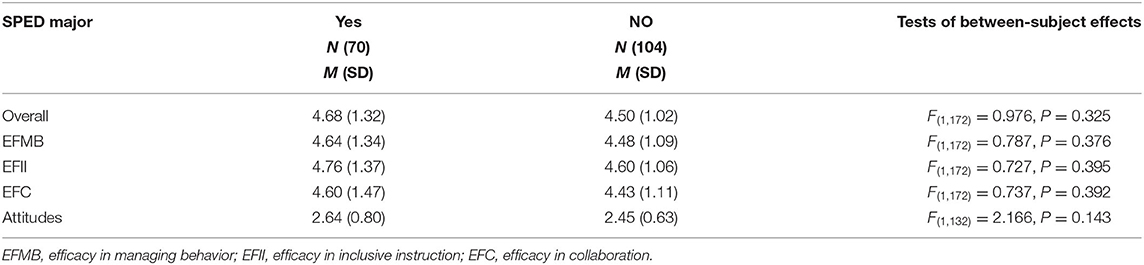
Table 3. Means/standard deviations and ANOVA statistics by teachers' major.
Predictors of Attitudes Toward Inclusive Education
We ran multiple regression analysis (stepwise) with attitudes as the dependent variable and by adding all other variables as predictors (major, gender, relative with a disability, self-efficacy, and work experience with students with disabilities). As shown in Table 4, the significant model with having a relative with a disability and self-efficacy as the predictors explained 17% of the variance in attitudes toward inclusive education (R2 = 0.17, F(2, 111) = 11.46, p < 0.05). The other significant model with one predictor (having a relative with a disability) explained 12% of the variance in attitudes (R2 = 0.12, F(1, 112) = 15, p < 0.05). Thus, we conclude that having a relative with a disability is the best single predictor in our set of variables. Second, adding self-efficacy to the model improved the explained variance by the model from 12% to around 17% (R2 increased to 0.17).
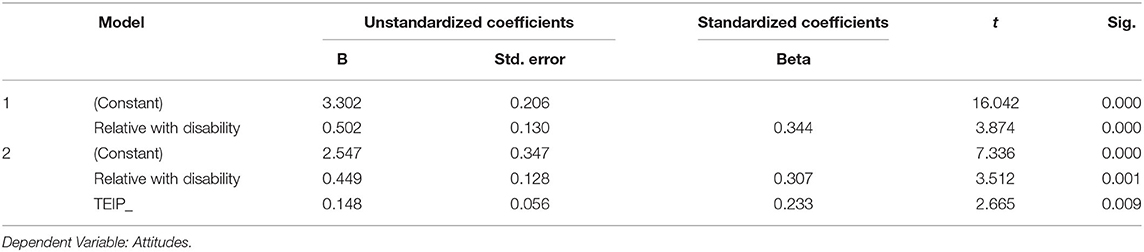
Table 4. Multiple regression coefficients to predict teachers' attitudes.
Discussion
As teachers' self-efficacy beliefs are known as a crucial variable in implementing inclusive education, much research over the past decades has focused on this topic. However, this is the one of few studies to measure the self-efficacy and attitudes of teachers in Saudi Arabia using the TEIP and SACIE-R scales. As these scales have been used already in different countries, this study is a meaningful addition that allows direct comparisons between studies across cultures.
First, the results for the psychometric qualities of TEIP indicated high reliability, and the expected factorial structure was confirmed. As for the descriptive results, we found that Saudi Arabian teachers expressed high levels of self-efficacy in general: they were around 80% confident about their abilities to work in inclusive classrooms (with a mean around 4.5, in a 1-6 score range). Finnish teachers scored a similar TEIP mean (Savolainen et al., 2012). However, teachers in this study had a lower TEIP mean than teachers in Bangladesh (Ahsan et al., 2012) and in South Africa (Savolainen et al., 2012). Interestingly, there was little variance between the efficacy on the three subscales (efficacy in managing behavior, inclusive instruction, and collaboration). This finding is in contrast with some studies that found teachers scored lowest on self-efficacy in managing students' behavior (e.g., Yada and Savolainen, 2017). Generally, students' behavior problems are assumed to be challenging for teachers' self-efficacy (Spilt and Koomen, 2009). For instance, Schwab (2019) found that hyperactivity and inattention of students have an impact on teachers' self-efficacy.
Regarding teachers' attitudes toward inclusive education, the results of the present study show neutral to slightly positive attitudes toward inclusive education. For comparison, the Saudi Arabian teachers scored higher than Japanese teachers (Yada and Savolainen, 2017). However, this might be attributed to the culture-based response style, which increases approval rates with some items in some cultures more than others (Morren et al., 2011). Teachers' attitudes toward inclusive education was the only predictor of teachers' self-efficacy. This result is consistent with other studies' findings, confirming a positive relationship between positive attitudes toward inclusive education and high levels of self-efficacy (e.g., Sharma et al., 2012). Other variables examined in this study (having a relative with a disability, gender, major, or work experience with students with disability) did not significantly contribute to explaining teachers' self-efficacy. We expected that teachers who majored in special education in college would have greater self-efficacy to work with students with different abilities than teachers with other majors. Due to the fact that they are prepared specifically to work with students with disabilities, we assumed that those teachers would have a greater knowledge of teaching students with special needs. Moreover, they were expected to have more knowledge of legislation and policy, which can be a predictor of teaching efficacy for inclusive practices (Forlin et al., 2014). However, our findings did not show that teachers who majored in special education had a significantly greater self-efficacy than other teachers, either on the overall TEIP or on its three subscales.
This result is different from a previous findings from a study of Pakistani teachers (Sharma et al., 2015), which found that special education teachers expressed higher perceived self-efficacy. The lack of a difference in the self-efficacy between teachers who majored in special education and other teachers in Saudi Arabia might be explained by one of following reasons. Teachers in Saudi Arabia are currently influenced by the national movement to recognize the rights of all students to receive education in the schools located closest to their residences. This might close the gap in awareness that used to distinguish teachers who majored in special education from other teachers. Another explanation may relate to gender: the majority of teachers in this study were men, and a future study with more female teachers who majored in special education might produce more positive attitudes that would be consistent with different studies that found female from different range of ages, hold more positive attitudes toward peers with disabilities or toward inclusive education (Vignes et al., 2009; De Boer et al., 2012; Barakat, 2014; Schwab, 2018; Alnahdi et al., 2019; Alnahdi, 2020b) in comparison with their male counterparts.
Conclusion and Implications
The results of this study underpin the importance of teachers' attitudes toward inclusive education as a main predictor of teachers' self-efficacy beliefs. Therefore, education officials should work on developing teachers' attitudes on two levels. First, this work should begin in special education departments in universities. Universities should consider applicants' attitudes toward people with disabilities in general and toward inclusive education more specifically when admitting students into special education programs. Second, raising teachers' awareness of disability rights of students can be used to influence teachers' self-efficacy to work in inclusive education, as has been found in prior studies.
Limitations
To the best of our knowledge, this study is one of the first studies conducted in an Arabic country to explore the relationship between teachers' self-efficacy and attitudes toward inclusive education. However, there are a few limitations that must be considered in understanding the results. First, despite the effort to collect data from more teachers and cover many variables, given the time and other research constraints of this study, the study sample was not large enough to adequately detect differences based on our independent variables. Second, the scales used in this study were translated from English to Arabic. Although the translation process was carefully performed, it is possible that some of the items in the Arabic version did not preserve the essence of the original version. Therefore, future research should examine both versions to uncover any different meanings and ensure that the Saudi Arabian version of the TEIP is measurement invariant with respect to the original version. Third, the findings as to the relationships between the dependent variables and the examined predictors should be interpreted with caution in terms of generalization, and this study should be replicated with a different sample to ensure the generalisability of its findings.
Data Availability Statement
The datasets generated for this study are available on request to the corresponding author.
Ethics Statement
Ethical review and approval was not required for the study on human participants in accordance with the local legislation and institutional requirements. The patients/participants provided their written informed consent to participate in this study.
Author Contributions
GA did collect and analyze the data and drafted the manuscript. SS participated in the introduction and the discussion sections. All authors contributed to the article and approved the submitted version.
Funding
This project was supported by the Deanship of Scientific Research at Prince Sattam Bin Abdulaziz University under research project #2020/02/11930.
Conflict of Interest
The authors declare that the research was conducted in the absence of any commercial or financial relationships that could be construed as a potential conflict of interest.
Abbreviations
EFC, efficacy in collaboration; EFII, efficacy in inclusive instruction; EFMB, efficacy in managing behavior; SACIE-R, Sentiments, Attitudes, and Concerns about Inclusive Education Revised Scale; TEIP, Teacher Efficacy for Inclusive Practices.
References
Ahsan, M. T., Sharma, U., and Deppeler, J. M. (2012). Exploring pre-service teachers' perceived teaching-efficacy, attitudes and concerns about inclusive education in Bangladesh. Int. J. Whole School. 8, 1–20.
Ajzen, I. (1991). The theory of planned behavior. Organ. Behav. Hum. Decis. Process 50, 179–211. doi: 10.1016/0749-5978(91)90020-T
Ajzen, I., and Fishbein, M. (1977). Attitude-behavior relations: a theoretical analysis and review of empirical research. Psychol. Bull. 84, 888–918. doi: 10.1037/0033-2909.84.5.888
Alnahdi, G. H. (2019). The Arabic version of the teacher efficacy for inclusive practices (TEIP-AR) scale: a construct validity study. Cogent Educ. 6:1618516. doi: 10.1080/2331186X.2019.1618516
Alnahdi, G. H. (2020a). Are we ready for inclusion? Teachers' perceived self-efficacy for inclusive education in Saudi Arabia. Int. J. Disabil. Dev. Educ. 67, 182–193. doi: 10.1080/1034912X.2019.1634795
Alnahdi, G. H. (2020b). Factors influencing the decision to major in special education in Saudi Arabia. South Afr. J. Educ. 40, 1–9. doi: 10.15700/saje.v40n2a1742
Alnahdi, G. H., Saloviita, T., and Elhadi, A. (2019). Inclusive education in Saudi Arabia and Finland: pre-service teachers' attitudes. Support Learn. 34, 71–85. doi: 10.1111/1467-9604.12239
Antoniou, A. S., Geralexis, I., and Charitaki, G. (2017). Special educators' teaching self-efficacy determination: a quantitative approach. Psychology 8, 1642–1656. doi: 10.4236/psych.2017.811108
Avramidis, E., and Norwich, B. (2002). Teachers' attitudes towards integration/inclusion: a review of the literature. Eur. J. Special Needs Educ. 17, 129–147. doi: 10.1080/08856250210129056
Barakat, A. (2014). Attitudes of students of college of education and arts in Arar toward people with disabilities and their relationship to some variables. J. Special Educ. Zagazig Univ. 9, 104–154.
De Boer, A., Pijl, S. J., and Minnaert, A. (2011). Regular primary schoolteachers' attitudes towards inclusive education: a review of the literature. Int. J. Inclusive Educ. 15, 331–353. doi: 10.1080/13603110903030089
De Boer, A., Pijl, S. P., and Minnaert, A. E. (2012). Students' attitudes towards peers with disabilities: a review of the literature. Int. J. Disabil. Dev. Educ. 59, 379–392. doi: 10.1080/1034912X.2012.723944
Desombre, C., Lamotte, M., and Jury, M. (2018). French teachers' general attitude toward inclusion: The indirect effect of teacher efficacy. Educ. Psychol. 39, 38–50. doi: 10.1080/01443410.2018.1472219
Forlin, C., Earle, C., Loreman, T., and Sharma, U. (2011). The sentiments, attitudes, and concerns about inclusive education revised (SACIE-R) scale for measuring pre-service teachers' perceptions about inclusion. Exceptionality Educ. Int. 21, 50–65. doi: 10.5206/eei.v21i3.7682
Forlin, C., Sharma, U., and Loreman, T. (2014). Predictors of improved teaching efficacy following basic training for inclusion in Hong Kong. Int. J. Inclusive Educ. 18, 718–730. doi: 10.1080/13603116.2013.819941
Gebhardt, M., Schwab, S., Nusser, L., and Hessels, M. G. (2015). Einstellungen und selbstwirksamkeit von lehrerinnen und lehrern zur schulischen inklusion in deutschland – eine analyse mit daten des nationalen bildungspanels Deutschlands (NEPS). Empirische Pädagogik 29, 211–229.
George, D., and Mallery, P. (2003). SPSS for Windows Step by Step: Answers to Selected Exercises. A Simple Guide and Reference. Boston, MA: Allyn & Bacon. 1461–1470.
Ghaith, G., and Yaghi, H. (1997). Relationships among experience, teacher efficacy, and attitudes toward the implementation of instructional innovation. Teach. Teacher Educ. 13, 451–458. doi: 10.1016/S0742-051X(96)00045-5
Hellmich, F., Löper, M., and Görel, G. (2019). The role of primary school teachers' attitudes and self-efficacy beliefs for everyday practices in inclusive classrooms – a study on the verification of the “theory of planned behaviour.” J. Res. Special Educ. Needs 19, 36–48. doi: 10.1111/1471-3802.12476
Hu, L. T., and Bentler, P. M. (1998). Fit indices in covariance structure modeling: Sensitivity to under parameterized model misspecification. Psychol. Methods 3, 424–453. doi: 10.1037/1082-989X.3.4.424
Hu, L. T., and Bentler, P. M. (1999). Cutoff criteria for fit indexes in covariance structure analysis: Conventional criteria versus new alternatives. Struct. Eq. Model. 6, 1–55. doi: 10.1080/10705519909540118
Leyser, Y., Kapperman, G., and Keller, R. (1994). Teacher attitudes toward mainstreaming: a cross-cultural study in six nations. Eur. J. Special Needs Educ. 9, 1–15. doi: 10.1080/0885625940090101
Leyser, Y., Zeiger, T., and Romi, S. (2011). Changes in self-efficacy of prospective special and general education teachers: implication for inclusive education. Int. J. Disabil. Dev. Educ. 58, 241–255. doi: 10.1080/1034912X.2011.598397
Malinen, O. P., and Savolainen, H. (2016). The effect of perceived school climate and teacher efficacy in behavior management on job satisfaction and burnout: a longitudinal study. Teach. Teacher Educ. 60, 144–152. doi: 10.1016/j.tate.2016.08.012
Malinen, O. P., Savolainen, H., and Xu, J. (2012). Beijing in-service teachers' self-efficacy and attitudes towards inclusive education. Teach. Teacher Educ. 28, 526–534. doi: 10.1016/j.tate.2011.12.004
Mieghem, A. V. K, Verschueren, K., Petry, and Struyf, E. (2018). An analysis of research on inclusive education: a systematic search and meta review. Int. J. Inclusive Educ. 24, 675–689. doi: 10.1080/13603116.2018.1482012
Miesera, S., DeVries, J. M., Jungjohann, J., and Gebhardt, M. (2019). Correlation between attitudes, concerns, self-efficacy and teaching intentions in inclusive education evidence from German pre-service teachers using international scales. J. Res. Special Educ. Needs 19, 103–114. doi: 10.1111/1471-3802.12432
Miller, A. D., Ramirez, E. M., and Murdock, T. B. (2017). The influence of teachers' self-efficacy on perceptions: perceived teacher competence and respect and student effort and achievement. Teach. Teach. Educ. 64, 260–269. doi: 10.1016/j.tate.2017.02.008
Milner, H. R. (2002). A case study of an experienced English teacher's self-efficacy and persistence through “crisis” situations: theoretical and practical considerations. High School J. 86, 28–35. doi: 10.1353/hsj.2002.0020
Morren, M., Gelissen, J. P., and Vermunt, J. K. (2011). Dealing with extreme response style in cross-cultural research: a restricted latent class factor analysis approach. Sociol. Methodol. 41, 13–47. doi: 10.1111/j.1467-9531.2011.01238.x
Pit-ten Cate, I. M., Markova, M., Krischler, M., and Krolak-Schwerdt, S. (2018). Promoting inclusive education: the role of teachers' competence and attitudes. Insights Learn. Disabil. 15, 49–63.
Pugesek, B. H., Tomer, A., and Von Eye, A. (Eds.). (2003). Structural Equation Modeling: Applications in Ecological and Evolutionary Biology. Cambridge University Press. doi: 10.1017/CBO9780511542138
Ryan, A. M., Kuusinen, C. M., and Bedoya-Skoog, A. (2015). Managing peer relations: a dimension of teacher self-efficacy that varies between elementary and middle school teachers and is associated with observed classroom quality. Contemp. Educ. Psychol. 41, 147–156. doi: 10.1016/j.cedpsych.2015.01.002
Sak, R. (2015). Comparison of self-efficacy between male and female pre-service early childhood teachers. Early Child Dev. Care 185, 1629–1640. doi: 10.1080/03004430.2015.1014353
Saloviita, T. (2018). Attitudes of teachers towards inclusive education in Finland. Scand. J. Educ. Res. 64, 270–282. doi: 10.1080/00313831.2018.1541819
Savolainen, H., Engelbrecht, P., Nel, M., and Malinen, O. P. (2012). Understanding teachers' attitudes and self-efficacy in inclusive education: Implications for pre-service and in-service teacher education. Eur. J. Special Needs Educ. 27, 51–68. doi: 10.1080/08856257.2011.613603
Savolainen, H., Malinen, O.-P., and Schwab, S. (2020). Teacher efficacy predicts teachers' attitudes towards inclusion—a longitudinal cross-lagged analysis. Int. J. Inclusive Educ. 1–15. doi: 10.1080/13603116.2020.1752826
Schermelleh-Engel, K., Moosbrugger, H., and Müller, H. (2003). Evaluating the fit of structural equation models: tests of significance and descriptive goodness-of-fit measures. Methods Psychol. Res. Online 8, 23–74. Available online at: http://citeseerx.ist.psu.edu/viewdoc/download?doi=10.1.1.509.4258&rep=rep1&type=pdf
Schwab, S. (2018). Attitudes Towards Inclusive Schooling. A Study on Students', Teachers' and Parents' Attitudes. New York, NY: Waxmann Verlag.
Schwab, S. (2019). Teachers' student-specific self-efficacy in relation to teacher and student variables. Educ. Psychol. 39, 4–18. doi: 10.1080/01443410.2018.1516861
Schwab, S. (2020). “Inclusive and special education in Europe,” in Oxford Research Encyclopedia of Education (Oxford: Oxford University Press). doi: 10.1093/acrefore/9780190264093.013.1230. Retrieved from: https://oxfordre.com/education/view/10.1093/acrefore/9780190264093.001.0001/acrefore-9780190264093-e-1230 (accessed June 8, 2021).
Schwab, S., Hellmich, F., and Görel, G. (2017). Self-efficacy of prospective Austrian and German primary school teachers regarding the implementation of inclusive education. J. Res. Special Educ. Needs 17, 205–217. doi: 10.1111/1471-3802.12379
Schwab, S., Sharma, U., and Hoffmann, L. (2019). How inclusive are the teaching practices of my German, maths and English teachers? Psychometric properties of a newly developed scale to assess personalisation and differentiation in teaching practices. Int. J. Inclusive Educ. 1–16. doi: 10.1080/13603116.2019.1629121
Sharma, U., Loreman, T., and Forlin, C. (2012). Measuring teacher efficacy to implement inclusive practices. J. Res. Special Educ. Needs 12, 12–21. doi: 10.1111/j.1471-3802.2011.01200.x
Sharma, U., Shaukat, S., and Furlonger, B. (2015). Attitudes and self-efficacy of pre-service teachers towards inclusion in Pakistan. J. Res. Special Educ. Needs 15, 97–105. doi: 10.1111/1471-3802.12071
Spilt, J. L., and Koomen, H. M. (2009). Widening the view on teacher–child relationships: teachers' narratives concerning disruptive versus nondisruptive children. School Psych. Rev. 38, 86–101. doi: 10.1080/02796015.2009.12087851
Tait, K., and Mundia, L. (2013). A comparison of Brunei and Hong Kong-SAR student teachers' self-efficacy in implementing inclusive education practices: implications for teacher education. Asian Soc. Sci. 10, 51–60. doi: 10.5539/ass.v10n1p51
Tschannen-Moran, M., and Hoy, A. W. (2007). The differential antecedents of self-efficacy beliefs of novice and experienced teachers. Teach. Teach. Educ. 23, 944–956. doi: 10.1016/j.tate.2006.05.003
Varcoe, L., and Boyle, C. (2014). Pre-service primary teachers' attitudes towards inclusive education. Educ. Psychol. 34, 323–337. doi: 10.1080/01443410.2013.785061
Vieluf, S., Kunter, M., and Van de Vijver, F. J. (2013). Teacher self-efficacy in cross-national perspective. Teach. Teach. Educ. 35, 92–103. doi: 10.1016/j.tate.2013.05.006
Vignes, C., Godeau, E., Sentenac, M., Coley, N., Navarro, F., Grandjean, H., et al. (2009). Determinants of students' attitudes towards peers with disabilities. Dev. Med. Child Neurol. 51, 473–479. doi: 10.1111/j.1469-8749.2009.03283.x
Yada, A.A, Tolvanen, A., Malinen, O. P., Imai-Matsumura, K., Shimada, H., et al. (2019). Teachers' self-efficacy and the sources of efficacy: a cross-cultural investigation in Japan and Finland. Teach. Teach. Educ. 81, 13–24. doi: 10.1016/j.tate.2019.01.014
Yada, A., and Savolainen, H. (2017). Japanese in-service teachers' attitudes toward inclusive education and self-efficacy for inclusive practices. Teach. Teach. Educ. 64, 222–229. doi: 10.1016/j.tate.2017.02.005
Yada, A., Tolvanen, A., and Savolainen, H. (2018). Teachers' attitudes and self-efficacy on implementing inclusive education in Japan and Finland: a comparative study using multi-group structural equation modelling. Teach. Teach. Educ. 75, 343–355. doi: 10.1016/j.tate.2018.07.011
Appendix
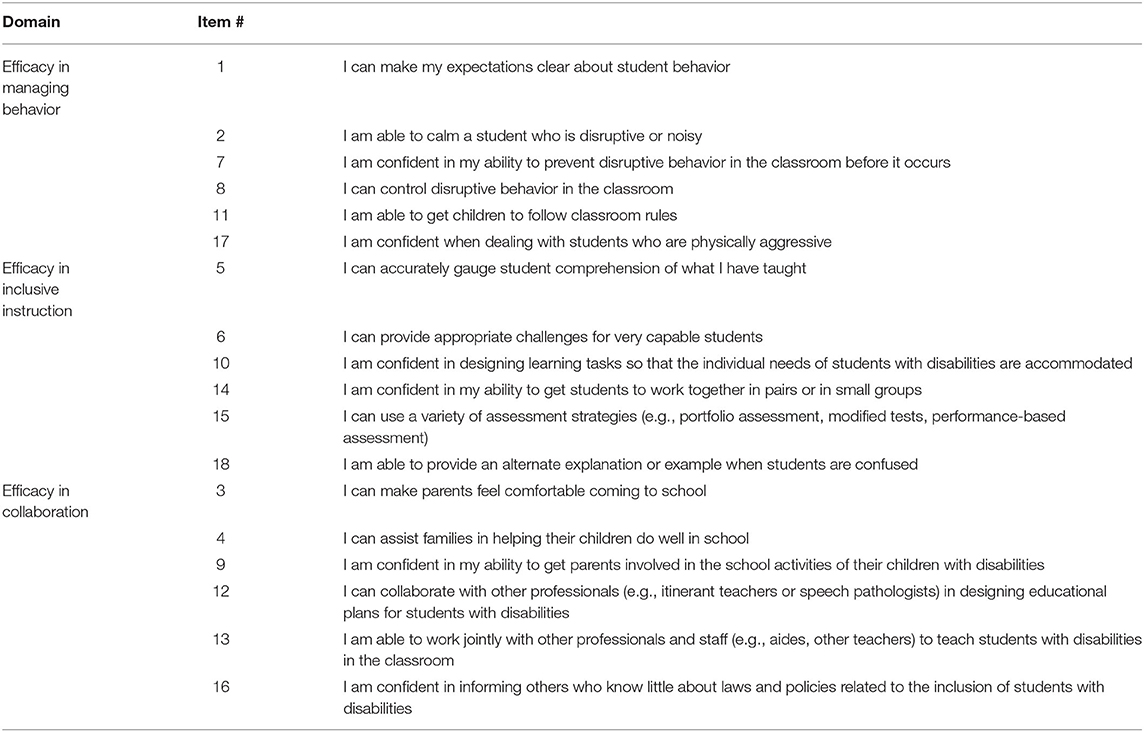
Appendix 1. The teacher efficacy for inclusive practices (TEIP) scale (18 items).

Appendix 2. Goodness-of-fit indices for three-factor models of the TEIP scale.
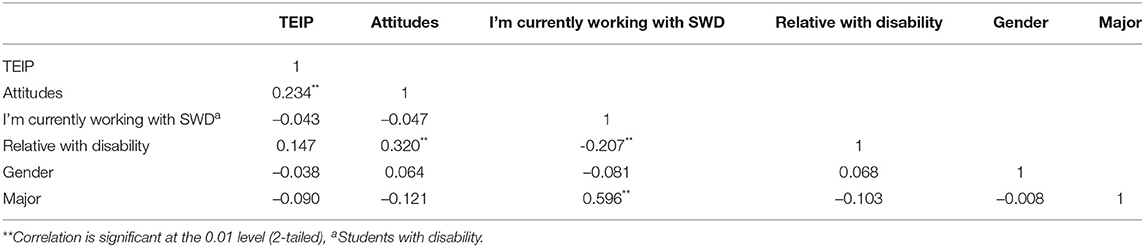
Appendix 3. Correlations.
Keywords: self-efficacy, Saudi Arabia, special education teachers, major, attitudes, inclusive education
Citation: Alnahdi GH and Schwab S (2021) Special Education Major or Attitudes to Predict Teachers' Self-Efficacy for Teaching in Inclusive Education. Front. Psychol. 12:680909. doi: 10.3389/fpsyg.2021.680909
Received: 15 March 2021; Accepted: 18 May 2021;
Published: 30 June 2021.
Edited by:
Sabine Pirchio, Sapienza University of Rome, ItalyReviewed by:
Sammy K. Ho, Hong Kong Baptist University, ChinaMarta Aparicio Puerta, University of Granada, Spain
Copyright © 2021 Alnahdi and Schwab. This is an open-access article distributed under the terms of the Creative Commons Attribution License (CC BY). The use, distribution or reproduction in other forums is permitted, provided the original author(s) and the copyright owner(s) are credited and that the original publication in this journal is cited, in accordance with accepted academic practice. No use, distribution or reproduction is permitted which does not comply with these terms.
*Correspondence: Ghaleb H. Alnahdi, Z2hhbG5haGRpQGdtYWlsLmNvbQ==; Susanne Schwab, c3VzYW5uZS5zY2h3YWJAdW5pdmllLmFjLmF0