 Ziling Zhang
 Muyang Guo
- 1Alliance Manchester Business School, The University of Manchester, Manchester, United Kingdom
- 2School of Event and Communication, Shanghai University of International Business and Economics, Shanghai, China
Change has been universally acknowledged as the perpetual theme for routine organizational life. As cultural tourism, a major element of global tourism consumption accounting for 40% of tourism employment, is becoming increasingly flourishing and promising, tourism organizations are also obliged to implement a series of organizational changes to adapt to the trending culturalization in the tourism domain. In light of this, this research, by outlining important sub-themes and trends of cultural tourism research, tracks the evolution of cultural tourism as a research field over the previous decades so as to analyze existing interconnections between the systematic review and tourism organizational change. Based on these interconnections, the research also manages to propose several potential implications for tourism organizations to optimize their future implement of daily organizational changes for the sake of adaptative survival and development.
Introduction
In a business environment that is increasingly volatile and dynamic, organizations strive consistently to adjust and adapt their operations to changing conditions (Hope Hailey and Balogun, 2002). Existing literature on organizational management has widely admitted the centrality of change in organizational life (North, 1996; Orlikowski, 1996; Weick, 1998; Al-Haddad and Kotnour, 2015; Errida and Lotfi, 2021). Thanks to the changing nature of all things in life (James, 1996) as well as the fact that organizations are creations of human agents who are the main source of change seeds (Feldman, 2000), organizational change has been universally accepted as a pervasive norm, an inevitable routine, and a consistent operation (Tsoukas and Chia, 2002). As organizations have been increasingly regarded as an emergent property of change (Errida and Lotfi, 2021), traditional misconception that change exists merely as an exception or an epiphenomenon (Beer and Nohria, 2000) has gradually been weeded out. In other words, change is becoming the only certain stability in organizations, making change management a compulsory course for all kinds of organizations, including tourism organizations, to survive the elusory future (Kickert, 2014; Soulard et al., 2019; Errida and Lotfi, 2020).
In addition to the common rationale for tourism organizations to adapt to changes (i.e., change management is compulsory for all kinds of organizations), the volatility of the tourism context proves to be a more urgent rationale for tourism organizations to change readily (Smith et al., 2014). Specifically, recent decades have witnessed the inextricable link between culture and tourism turning into a specific form of consumption known as cultural tourism (Richards, 2018), which is a significant revolution in the tourism context. Accounting for 40% of the global tourism revenues (UNWTO, 2021), cultural tourism possesses unprecedentedly promising prospects by acquiring its place in the tourism policy of 89% UNWTO member countries around the world (UNWTO, 2018; Petrei et al., 2020; UNESCO, 2022) as well as showing a market volume growth rate up to 130% during the recent 5 years (OECD, 2018; UNWTO, 2021). Thus, it is inevitable for tourism organizations to make some changes to adapt to the rising of cultural tourism.
In light of this, the research first makes a systematic review that summarizes some of the most important sub-themes associated with cultural tourism research. It then analyzes the interconnections between each sub-theme of cultural tourism research and tourism organizational change management, based on which the research finally manages to figure out potential implications for tourism organizations to make and manage changes.
A review of cultural tourism research and interconnections with tourism organizational change
As cultural tourism is gaining plenty of popularity in both the tourism industry and the tourism literature, it is necessary to have a general understanding on extant cultural tourism research. Therefore, this multi-sectional part first reviews and summarizes cultural tourism literature in terms of such research topics as the current research status, definition, typology, important branches, and optimal development strategies. Then the review presented in each section functions as the primary evidence to figure out the interconnections between cultural tourism research and tourism organizational change (as is shown in Table 2), laying foundations for proposing potential implications in the next part.
Current status of cultural tourism research
To acquire a better understanding of the current research status of cultural tourism, we adopt a Google Scholar search for the term cultural tourism to generate the total number of cultural tourism research publications in each year of 1990–2021. Note that in order to improve the results accuracy, only publications specifically focusing on the term cultural tourism (i.e., excluding publications that only mention the full term or part of the term) are included in the samples. As is shown in Figure 1, the recent three decades (1990–2021) have witnessed a significant uptrend on the total volume of cultural tourism research publications. Specifically, growth was particularly sharp between 2005 and 2020.
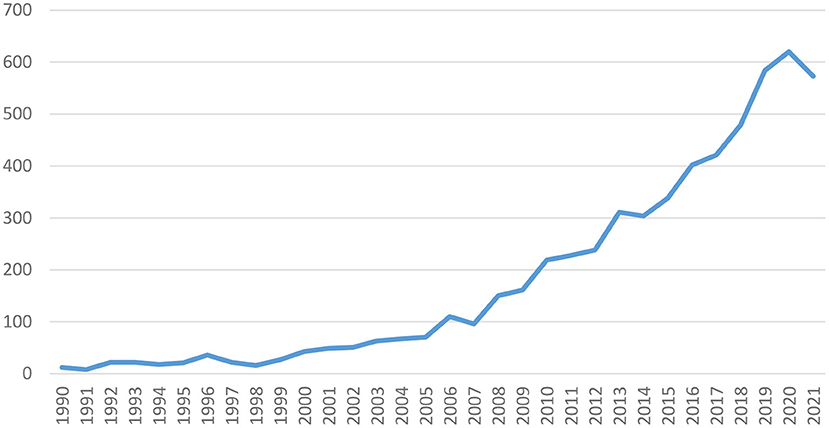
Figure 1. 1990–2021 number of cultural tourism publications.
We then further figure out the proportion of high-quality publications in total publications for each year of 1990–2021 (data source: Google Scholar) so as to learn about the quality of cultural tourism publications. Note that we define high-quality publications as those published on journals with three-star or above based on the 2021 ABS academic journal guide. According to Figure 2 (i.e., the proportion of high-quality publications for each year of 1990–2021) and Figure 3 (i.e., the corresponding pie chart of Figure 2), we can learn that despite the obvious fluctuations, the general trend for each year's proportion of high-quality publications is still going up, demonstrating that the quality of cultural tourism research is also growing continuously.
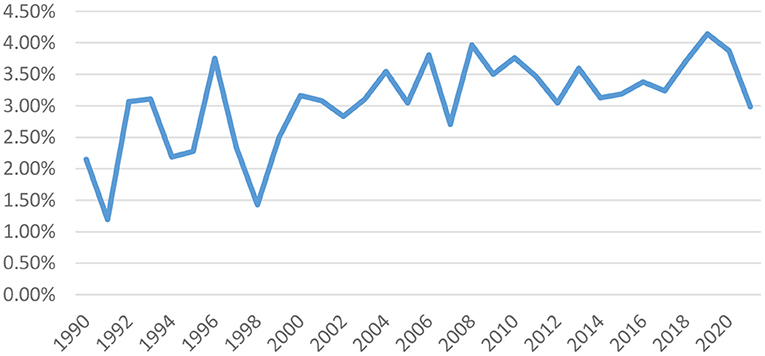
Figure 2. 1990–1992 proportion of high-quality publications.
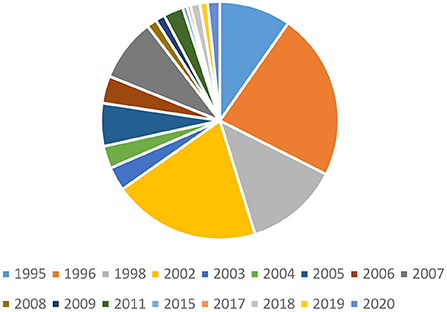
Figure 3. Pie chart for 1990–2022 proportion of high-quality publications.
Cultural tourism is also widely discussed in various research fields. According to Table 1, cultural tourism is most frequently discussed in Economics (20.91%), followed by Management (20.29%; data source: Google Scholar). In terms of specific themes, such themes as connotations (i.e., a form of cultural consumption; e.g., Barbieri and Mahoney, 2009; Falk, 2011; Du Cros and McKercher, 2020), motivations and typology (e.g., Lee and Hsu, 2013; Chang et al., 2014; Packer and Ballantyne, 2016), cultural heritage tourism (e.g., Yankholmes and McKercher, 2015; Patuelli et al., 2016), gastronomy tourism (e.g., Everett and Aitchison, 2008; Montanari, 2009), shopping tourism (e.g., Rabbiosi, 2011; Saayman and Saayman, 2012; Choi et al., 2016b), destination branding (e.g., Josiassen et al., 2013; Barnes et al., 2014; Mariani and Giorgio, 2017), and tourism experience (e.g., Chatterley et al., 2013) are frequently discussed in extant literature. Additionally, some research also shows some interest in themes such as economic effects (e.g., Cisneros-Martínez and Fernández-Morales, 2015; Ponferrada, 2015; Noonan and Rizzo, 2017; Artal-Tur et al., 2018; Guccio et al., 2018), creative economy (e.g., Ponzini et al., 2016; Fahmi et al., 2017; Mostafanezhad and Promburom, 2018), and anthropology (e.g., Ochoa Zuluaga, 2015; Pabel et al., 2017).
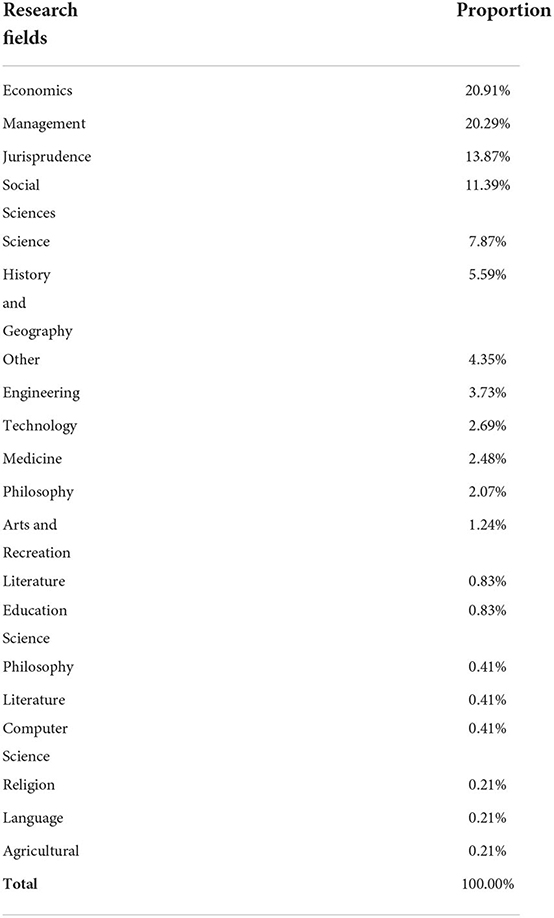
Table 1. Proportion in various research fields.
Generally, cultural tourism is a flourishing topic in the tourism research, which is another evidence for cultural tourism to be a trending type of tourism. In light of this, tourism organizations have to adjust their strategy and positioning to better embrace culturedness, thus hedging the potential risks caused by the failure to comply with the promising trend in the tourism domain.
Definition
Thanks to the changing nature of cultural tourism, there exists no perfect definition that gives an absolutely thorough interpretation. Nevertheless, some definitions are of relatively widespread coverage and are illuminating for further identification of the notion. For example, Richards (2003, 2007) believed that cultural tourism is the movement of people toward cultural attractions, somewhere other than their habitual place of residence, to obtain information and knowledge to fulfill their cultural demands. In 2017, the UNWTO updated the definition as “A type of tourism activity where the essential motivation of tourists is to learn, discover, experience and consume both tangible and intangible cultural resources in a tourism destination” (UNWTO, 2017, p. 30). Compared to Richards's definition, the new one expands the boundary of traditional physical-heritages-based cultural resources by including intangible ones, innovatively relating cultural tourism to ways of life, creativity, and everyday culture (Richards, 2018; UNWTO, 2018). In 2018, Richards (2018) further defined cultural tourism as a collection of cultural practices engaged in by a wide range of actors, especially by tourists themselves. In light of this, it seems that cultural tourism is no longer regarded as a merely specific form of tourism or a coherent tourism market, but is attached with a new identification embracing expanding broadness and complexity (Jovicic, 2016; Richards, 2018). With regard to this issue, tourism organizations are also expected to equip with transformative sense and dynamic thinking to adapt to the changing nature of cultural tourism.
Typology of cultural tourists
The typology of cultural tourists is also a popular topic in cultural tourism research. According to Barbieri and Mahoney (2009), cultural tourists could be either general or specific based on their degree of mixing or omnivorousness in cultural tourism behavior. Apart from a general grouping like this, cultural tourists can also be classified into specific groups or segments based on cultural experience appetites (e.g., art museum lovers, movie fans, etc.; Baltaci and Cakici, 2022), age, physical contexts (e.g., holiday type and attraction setting; Richards and van der Ark, 2013), and motivations (i.e., the most common and effective criterion; Du Cros and McKercher, 2020). For example, younger visitors tend to consume contemporary art, creativity, and modern architecture, whereas older visitors tend to be frequenters of traditional monuments and museums (Richards and van der Ark, 2013). Pearce (1982) divided the needs of tourists into five levels from low to high based on Maslow's hierarchy of needs. The higher the level of needs, the greater the sense of satisfaction felt by tourists. Correia et al. (2013) roughly divided the motivations of cultural tourists into two types: one is culture-seeking motivation, and the other is non-cultural motivation. Specifically, the former type usually includes culture learning, which is the stem of culture-seeking motivation and is frequently highlighted by scholars, while the latter, however, includes anything other than culture learning (Packer and Ballantyne, 2016).
Based on the degree of culturedness (Jovicic, 2016) presented by the two motivation types (i.e., cultural and non-cultural), cultural tourists can be further divided into two types: tourists who consider culture consumption as their main motivation, and those for whom culture consumption is only an alternative that is complementary, secondary, or even accidental (Galí-Espelt, 2012). Note that the degree of culturedness could be measured in terms of the duration of visit and the frequency of cultural experiences (Galí-Espelt, 2012; Jovicic, 2016), and that the majority of cultural tourists tend to seek a combination of learning and hedonic-entertainment consumption-related dimensions, or edutainment, a unique blend of education and entertainment, form the process of cultural tourism (Geissler et al., 2006; Kay, 2006; Ballantyne and Packer, 2016; Jovicic, 2016).
Given that the diversity and complexity of cultural tourists are constantly increasing, tourism organizations are responsible to set up diverse functional departments to cover various demands of tourists up to the hilt.
Important sub-themes and branches
This section discusses several flourishing sub-themes or branches in cultural tourism research. In addition to cultural heritage tourism, which is the most lineal branch of cultural tourism research, this section also includes gastronomy tourism and shopping tourism, two promising cultural tourism sub-themes developed by the prosperous culturalization process in gastronomy and shopping domain (Timothy, 2011; Báez-Montenegro and Devesa-Fernández, 2017; Redondo-Carretero et al., 2017; Richards, 2018).
Cultural heritage tourism
Originating from tourism managers' business instinct that cultural heritage can be a driver of tourism development, cultural heritage tourism is regarded as the most lineal branch of cultural tourism (Smith, 2015; Gravari-Barbas, 2018). As Timothy (2011) put it, cultural tourism and heritage tourism have minimal distinction. According to Park (2013), cultural heritage tourism is defined as visits or experiences of physical or immaterial relics of the past. It is also noted as a product of cultural patrimony that contains even smallest piece of existing cultures such as folkways and everyday scenes (Timothy and Nyaupane, 2009; Richards, 2018).
Extant literature on cultural heritage tourism tend to show great interest in list of World Heritage Sites (WHS), especially in terms of the negative side. For example, Frey and Steiner (2011) are skeptical to the rationality of WHS list. They argued that the benefits of a WHS designation is limited to cultural destinations that fail to generate fair notability and related developmental resources, rather than to destinations that are already well-known and flourishing. Alberts and Hazen (2010) also questioned the credibility of the criteria for WHS designation by pointing out that these criteria could lead to ambiguous definitions and varying interpretations in different cultural settings. In addition, Patuelli et al. (2016) suggested that the existence of WHS list can be a primary fuse for an even fiercer inter-destination competition.
The conservation, preservation, and protection of cultural heritage is also a popular topic in cultural heritage tourism research. For example, Hall et al. (2016) identified that cultural landscapes, local rituals, built environments, buried archeology, and climate changes could be potential threats for the conservation of cultural heritages. They also proposed that strategies like planning time-scales, monitoring, management, maintenance, loss and obsolescence could be effective to deal with these challenges. By analyzing real-life cases of Hong Kong and Singapore, Li (2003) focused on the contradictions between the conservation and change of cultural heritage and concluded that the balance point between the two depends to the actual impacts (i.e., cultural or economic returns vs. residents' life quality) brought by the cultural heritages.
Other than the aforementioned two issues (i.e., WHS list and conservation), many researchers also pay attention to other issues in the development of cultural tourism. For example, Gravari-Barbas (2018, p. 3) concerned that tourism might become a “heritage-production machine,” as heritage tourism is tourist-centered and is subject to tourists demands (Urry, 1992; Yang, 2011; Park, 2013; Dela Santa and Tiatco, 2019). Zhang (2022) argued that more and more local residents suffered from the over-tourism in their homelands and that the elimination of local perspectives and livelihoods may result in emigration and depopulation, which eventually affects the cultural site's viability. Generally, people are increasingly concentrating on the trade-off between further development and long-term sustainability.
According to this section, cultural heritage tourism, which is the stem of cultural tourism, is usually associated with various professional staff such as museum commentators, historic buildings maintenance engineers, and archaeologists etc. In light of this, tourism organizations are obliged to optimize personnel management through professional training, precise selection, and scientific evaluation.
Gastronomy tourism
Gastronomy tourism is known to be one of the most important sub-themes of cultural tourism research, for it is believed to be of much culturedness (Jovicic, 2016). For most tourists, food is not only sustenance, but also a cultural artifact with a myriad of facets that can be enjoyed in various locations and through many different activities (e.g., food trails, events, and festivals; Everett and Aitchison, 2008). As Cohen (1992) put it, tourist cuisines are by nature new and sui generis cultural products whose tourists-adaptive transformation is not only mere fusion or hybridization of exotic and local elements but also a multidirectional and multidimensional innovation or creation. Meneguel et al. (2019) also suggested that gastronomy tourism is usually acknowledged as a cultural practice where typical cuisines are treated as sensory and experiential heritage and that the emergence of gastronomy tourism revitalizes and diversifies tourism, thus promoting gastronomy culture, multi-ethnicity, and global exposure. Another evidence for the cultural influence of gastronomy tourism is that it is by nature the swelling of cultural food consumption (Montanari, 2009). As heritage unites with ritualistic elements, cultural food consumption, a symbolic portrayal of its root culture, helps to arouse the connection between individuals and their own cultural heritage (Horng and Tsai, 2010; Wu et al., 2021). Additionally, such factors as dining atmospherics (Ha and Jang, 2010; Jang et al., 2012; Jang and Ha, 2015), employees' appearance or ethnicity (Baker and Kim, 2018), the presence of other customers (Song et al., 2019), menu design (Kim et al., 2017; Yu et al., 2020), and service innovation (Su, 2011) will potentially influence consumers' cultural food consumption experiences, thus increasing the culturedness of gastronomy tourism (Sims, 2010).
Throughout the 30-year research history of gastronomy in the tourism domain (Okumus, 2021), gastronomy tourism has been acknowledged as a unifier in terms of multiple perspectives. In terms of major contents, gastronomy tourism, interchangeably named culinary tourism, food tourism, or taste tourism in some studies (Okumus et al., 2018), is the combination of understanding, savoring, and consuming the local food and culture in tourist destinations and is usually associated with cuisine, gourmet, tasting, and wine tourism (Smith and Xiao, 2008). Similarly, Henderson (2009) defined gastronomy tourism as the binding agent of a series of intentional and exploratory participating behaviors in gastronomy activities, such as food preparation, food display, cooking, and dining. In terms of involved parties, gastronomy tourism is also known as the bond between the primary and secondary food producers, food festivals, restaurants, and local food tasting sites (Hall and Mitchell, 2000). In terms of its relevant domains, gastronomy tourism “represents a multifaceted research area rising in prominence” with the potential to function as an instrument that regenerates “academic research to the forefront of geographical theory, tourism policy, cultural studies, and sociological analysis” (Everett and Aitchison, 2008, p. 151).
In more recent research on gastronomy tourism, scholars tend to pay attention to such topics as gastronomy tourism experience, scale and measurement, and luxury gastronomy tourism. For example, many related studies tend to explore gastronomy experience in tourism through cognitive evaluations (Berbel-Pineda et al., 2019; Sthapit et al., 2019; Lai et al., 2021), although Richards (2021) argued that the literature on gastronomy experience has shifted from a cognitive to an emotive approach. Specifically, a small group of scholars (Williams et al., 2019; Mohamed et al., 2020; Promnil, 2021) got to realize that affective gastronomy experience turns out to be a stronger inspirer for tourists' satisfaction and behavioral intention than cognitive attributes do. In terms of scale and measurement, Bastiaansen et al. (2019) proposed a scale to measure local food preference, inspired by which Hsu et al. (2022) created a valid and reliable scale for measuring tourists' affective gastronomy experiences (TAGES) in tourism destinations. As for luxury gastronomy tourism, Balderas-Cejudo et al. (2022) found it a top type of gastronomy tourism and that its impacts on local development are usually shown through local Michelin-starred restaurants.
Thanks to the dominant role played by taste (i.e., one of the important involved senses) in tourists' ecological body-environment exchange, gastronomy, a burgeoning subfield of sociological and anthropological research (Beardsworth et al., 2002), became a crucial precondition (Hall and Sharples, 2008), a leading attraction (Dann, 1996), and one of the most important components of tourism activities (MacCannell, 1973; Urry, 1990; Cohen and Avieli, 2004). Meanwhile, as an indispensable branch of cultural tourism, gastronomy tourism proves to be economically (Okumus et al., 2007), environmentally (Hjalager and Richards, 2002), sociologically (Richards, 2002), and psychologically (Graburn, 1977; Cohen, 1986; Quan and Wang, 2004; Everett, 2008; Henderson, 2009; Björk and Kauppinen-Räisänen, 2017; Ellis and Mattison Thompson, 2018) influential. In light of this, gastronomy tourism is expected to keep on flourishing (Hsu et al., 2022) and continue to be a priority of tourism and hospitality research in the next 75 years (2020–2095) (Okumus, 2021) despite the worldwide health crisis. As [(Everett, 2019), p. 9] put it, “Food tourism research is still very much on a journey and has much still to offer, therefore I urge scholars to consider adding new empirical contributions which analyze new aspects of this form of tourism activity.”
Shopping tourism
Shopping tourism is another flourishing sub-theme of cultural tourism, for shopping is a common cultural activity among those forces driving the choice of tourism destinations, especially in cultural tourism destinations where cultural creative economy is prosperous and booming (Saayman and Saayman, 2012). As a direct sociocultural experience, shopping is a mediator through which tourists manage to develop familiarity with the unique culture and distinct features of the target tourism destinations, thus improving tourists' satisfaction and pleasure (Rabbiosi, 2011; Way and Robertson, 2013; Choi et al., 2016a; Sun et al., 2017). When visitors are in shopping places, they can get in close touch with the cultural connotations of tourist destinations as well as create unique travel experiences of their own through interactive behaviors such as information search and counter-offer behavior (Liu et al., 2019).
Initially proposed by Jansen-Verbeke (1991), shopping tourism got its first definition as a tour with the main purpose of purchasing products from Timothy and Butler (1995). It is then further defined as a specialized tour in which tourists tend to spend more than 50% of net tourism expenses (i.e., total tourism expenses excluding lodging and transportation costs) on pure shopping activities (Michalkó and Varadi, 2004; Timothy, 2005; Saayman and Saayman, 2012; Jin et al., 2020). In more recent years, shopping tourism, combining both tangible (i.e., tangible consumer goods such as souvenirs and gifts) and intangible (i.e., intangible touristic experiences) stimulations, is defined as a contemporary form of tourism fostered by individuals for whom purchasing goods outside of their usual environment is a determining factor in their decision to travel (UNWTO, 2015; Sharma et al., 2018; Jiang and Yu, 2020).
In addition to its culturedness and definition, extant literature on shopping tourism is also frequently focused on such topics as attributes of shopping tourism (Baker et al., 1988, 2002; Henderson et al., 2011; Albayrak et al., 2016; Lee and Choi, 2020), cross-border shopping (Yeung et al., 2004; Wong and Wan, 2013), souvenir shopping (Masset and Decrop, 2021), passengers' shopping motivations (Lin and Chen, 2013), duty-free shopping (Han and Hyun, 2018), the typology of shopping tourists (Choi et al., 2016a), and shopping risk management (Hsieh and Tsao, 2014). In addition, Kattiyapornpong and Miller (2012) found that shopping tourism could function as one of the competitive advantages of tourism destinations, thus bringing tremendous economic benefits to local development. Lee and Choi (2020) examined the effects of asymmetric shopping tourism attributes on shopping destination satisfaction levels and designed two pyramid-shaped figures prioritizing both shopping-specific attributes and destination-specific attributes based on the categorization of their asymmetric impacts. Choi et al. (2018) examined the trust in the shopping destination as an antecedent of shopping tourists' perceptions of value based on an RFT framework. Correia et al. (2019) dug deep into Chinese tourist perceptions of luxury shopping visits to Hong Kong to explore the nature of luxury buying behavior.
According to Section Gastronomy tourism and Section Shopping tourism, gastronomy and shopping, the two representative components of general tourism, are both on their way to become part of cultural tourism through the process of culturalization. Therefore, it is necessary for tourism organizations to take on the culture-oriented strategy so as to conform to the inevitable trend of culturalization.
Optimization of the cultural tourism development
This section reviews literature on the optimization of cultural tourism development, including destination branding and consumer experience, two significant tools to optimize cultural tourism development.
Destination branding in tourism
Branding of tourism destinations is an essential tool for tourism destinations to attract more tourists and thus to flourish. By far, there is barely any research specifically focusing on destination branding in cultural tourism. However, destination branding in general tourism has generated a bunch of attention from scholars, from which we can capture some of the developmental patterns of destination branding in cultural tourism.
As the market competition intensifies, more and more companies and organizations get to realize that tourist destinations also need to make the most of such valuable assets as their developed brands to position and differentiate themselves properly (Aaker, 2009). Therefore, tourism branding, usually known as destination branding, has become a key theme for tourism researchers since the late 1990's (Liu et al., 2020). For example, Konecnik and Gartner (2007) explored the effectiveness of customer-based destination brand equity (CBDBE) and proposed a comprehensive evaluation system consisting of four dimensions: image, awareness, quality, and loyalty. Furthermore, the determinants of CBDBE have been identified from three main perspectives: tourists' travel-related factors (e.g., destination experience and consumption social visibility); DMOs' branding-related factors (e.g., DMOs' cooperation or power); and resident-related factors (e.g., tourist–resident interaction; Marzano and Scott, 2009; Josiassen et al., 2013; Barnes et al., 2014; Mariani and Giorgio, 2017). Applying traditional research methods of brand image and brand personality to tourism destinations, Hosany et al. (2006) found that destination image is closely related to destination personality and that the emotional component of destination image captures the majority of variance on destination personality dimensions. Taking the Gold Coast in Australia as a case study, Marzano and Scott (2009) concluded that a lack of unity and collaboration amongst stakeholders could barely affect the positive outcomes brought by a destination branding process. The authors also provided a detailed inventory of the interests advanced by stakeholders' power in the forms of persuasion and authority in a branding process.
In the past decade, the connotation of destination branding is becoming increasingly comprehensive. According to Campelo et al. (2014), destination branding is meant to combine a tourism destination's environmental, social, and cultural capital, thus creating a unique and differential image of the destination. Pike and Page (2014) proposed that DMOs should also include local residents (other than visitors) into their target audience base during destination branding. Additionally, destination brand image is no longer an exclusive creation of DMOs alone, but a complex co-creation of thousands of social media users who tend to share their traveling experiences and feelings online (Lo et al., 2011; Mak, 2017). In light of this, scholars began to explore the potential use of mainstream social media platforms (e.g., Instagram) for destination branding purposes (Fournier and Avery, 2011; Fatanti and Suyadnya, 2015; Oliveira and Panyik, 2015). When it comes to the connection between consumers and destination branding, scholars tend to focus on destination brand love (DBL), which is usually defined as a multi-dimensional construct including passionate love, emotional attachment, self-brand integration, and self-brand identification in the context of tourism (Tsai, 2014; Lee and Hyun, 2016; Aro et al., 2018; Zhang et al., 2020). Through manifesting their love toward certain destination brands, tourists manage to express their consumer identity and personality, getting closer to their ideal self (Batra et al., 2012; Belk, 2014).
From the year 2020 on, research on destination branding has become more detail-oriented and innovative when a great many scholars tend to focus on topics that are either further extensions of existing ones or accumulative innovations. For example, further to the series of research on mainstream social media platforms for destination branding purposes, Filieri et al. (2021) explored how destination brand love (DBL) is expressed on Instagram using a mixed-methods approach. Pan et al. (2021) innovatively explore destination brand image from the perspective of gender, contributing greatly to the measurement scale development of destination gender, which is an important topic in destination branding literature. Considering New Zealand as a space tourism destination, Scott (2022) proposed that the destination branding of New Zealand should be updated with the development of the society to include cultural factors, geopolitical factors, and sustainability-related factors.
Consumer experience in cultural tourism
Consumer experience, a central concept in marketing (Pine et al., 1999), is also a pivotal construct in the tourism industry and is usually known as tourism experience under touristic context (Otto and Ritchie, 1996; Sørensen and Jensen, 2015). Extant literature on tourism experience has proved that the key to retain flow of tourists is to create a memorable tourism experience for them, which is also applicable for cultural tourism.
Many researchers have long been working on exploring the essence of tourism experiences. According to Chen et al. (2014), a tourism experience is different from general consumer experiences in that it is strongly driven by service and hospitality. It usually occurs in distinct stages including at-home stage, at-the-destination stage, and after-returning stage (Chatterley et al., 2013). In as early as 1979, Cohen found that the ultimate tourism experience could be compared as a religious experience or the result of pilgrimage, where tourists search for something less tangible than the trip and more rewarding than just being there (Vallee, 1987). Mannell and Iso-Ahola suggested in 1987 that the core of leisure tourism experience is flow experience and that the search for the ultimate tourism experience is a quest for authenticity, center, meaning, or values. From the perspective of psychology, the main benefits of leisure tourism experiences emanate from the interplay of two forces: escaping (of routine and stressful environments) and seeking (for recreational opportunities of certain intrinsic rewards). However, it remains a problem to neatly distinct plain tourism experience from leisure experience (Mannell and Iso-Ahola, 1987).
As the famous tourism anthropologist Cohen (1979) put it, different tourists need different tourism experiences, which is of special significance for tourists. For example, excitement-seeking tourists tend to show a special preference for adventure tourism, while food lovers turn out to be loyal customers of gastronomy tourism (Gyimóthy and Mykletun, 2004; Konu, 2015; Sthapit, 2019). However, due to factors such as heterogeneity in customer preferences, uncertainties in destination choices, and contingencies related to group activities (Hsiao et al., 2015), tourism experience proves to be a quite complex concept that is neither definition-friendly nor manipulation-friendly (Mei, 2014). In light of this, many tourism firms begin to introduce co-creation, a tourism designing mode in which tourists function as independent co-creators rather than passive consumers to create value in interactive consumer-firm relationships (Dalonso et al., 2014; Prebensen et al., 2017; Geng et al., 2022; Sun et al., 2022). In a high co-creation context, tourist wellbeing increases with increased active participation (Björk, 2014). Moreover, thanks to all the individual resources devoted to the co-creation of tourism experience, psychological ownership also comes into play and enhances tourists' subjective value, thus stimulating tourists' loyalty (i.e., intentions to re-visit; Prebensen et al., 2013; Sugathan and Ranjan, 2019).
Tourism experience is usually recognized as a psychological phenomenon where expectations, individual sensing and perception, and memorizing are crucial components (Larsen, 2007). Theoretically, the boundary of tourism experience can be extended to various psychological fields such as cognitive psychology and social psychology. For example, research on experiential consumption believes that from the perspective of tourist psychology, it is the experience of shopping at a tourism destination, rather than the physical goods purchased, that really matters in tourism consumption. Furthermore, as MacCannell (2002) put it, a tourism experience is by nature an experiential commodity whose value is legitimated by consumers' pursuit of ego fulfillment. Therefore, the essence of tourism consumption is also experiential consumption (Moldes et al., 2019; Gilovich and Gallo, 2020; Puente-Díaz and Cavazos-Arroyo, 2021). Experiential consumption is a concept originally proposed by Van Boven and Gilovich (2003). Using the experience sampling method, Kumar et al. (2020) found that experiential shopping would lead to more instant happiness, which is a sense of happiness perceived by consumers from a certain consumption behavior (Dunn and Weidman, 2015). Experiential consumption will also lead to more positive emotions (Carter and Gilovich, 2010; Barton et al., 2019), more jealousness (Lin et al., 2018), more interactive behavior (Chen et al., 2021), and fewer regrets (Rosenzweig and Gilovich, 2012).
According to Section Destination branding in tourism and Section Consumer experience in cultural tourism, extant literature on cultural tourism development has been increasingly emphasizing the power of people. Specifically, optimizing destination branding and promoting tourist experience are both effective methods centered on destination-tourist bonding. In light of this, tourism organizational change in the future may as well center on people and thus pass on to the promising humanity-centered times.
Summary of interconnections
Combining all the sub-interconnections mentioned in the last paragraph of each section, the general interconnections between the review of cultural tourism research and the change of tourism organizations can be summarized as: tourism organizations are interconnected with cultural tourism research in terms of changes in strategy, structure, personnel management, and organizational culture, and thus are obliged to implement multi-facet changes to adapt to the volatile tourism industry. Table 2 summarizes and reviews all the aforementioned interconnections for quick check.
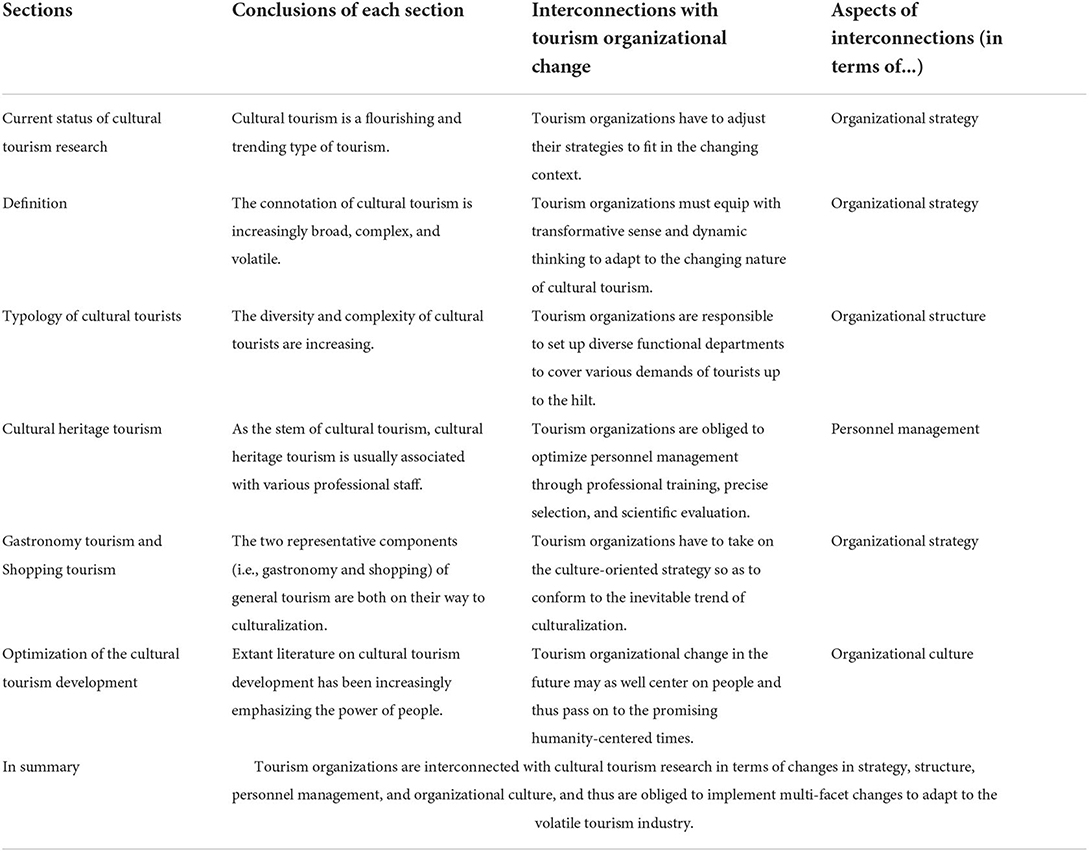
Table 2. Summary of interconnections.
Implications for tourism organizational change
Based on the systematic literature review of cultural tourism research presented in Part 2 as well as its interconnections with tourism organizational change (as is shown in Table 2), several irradiative implications could be proposed for tourism organizations to implement feasible changes. In this part, all the potential implications will be presented section by section and will be further summarized into Table 3.
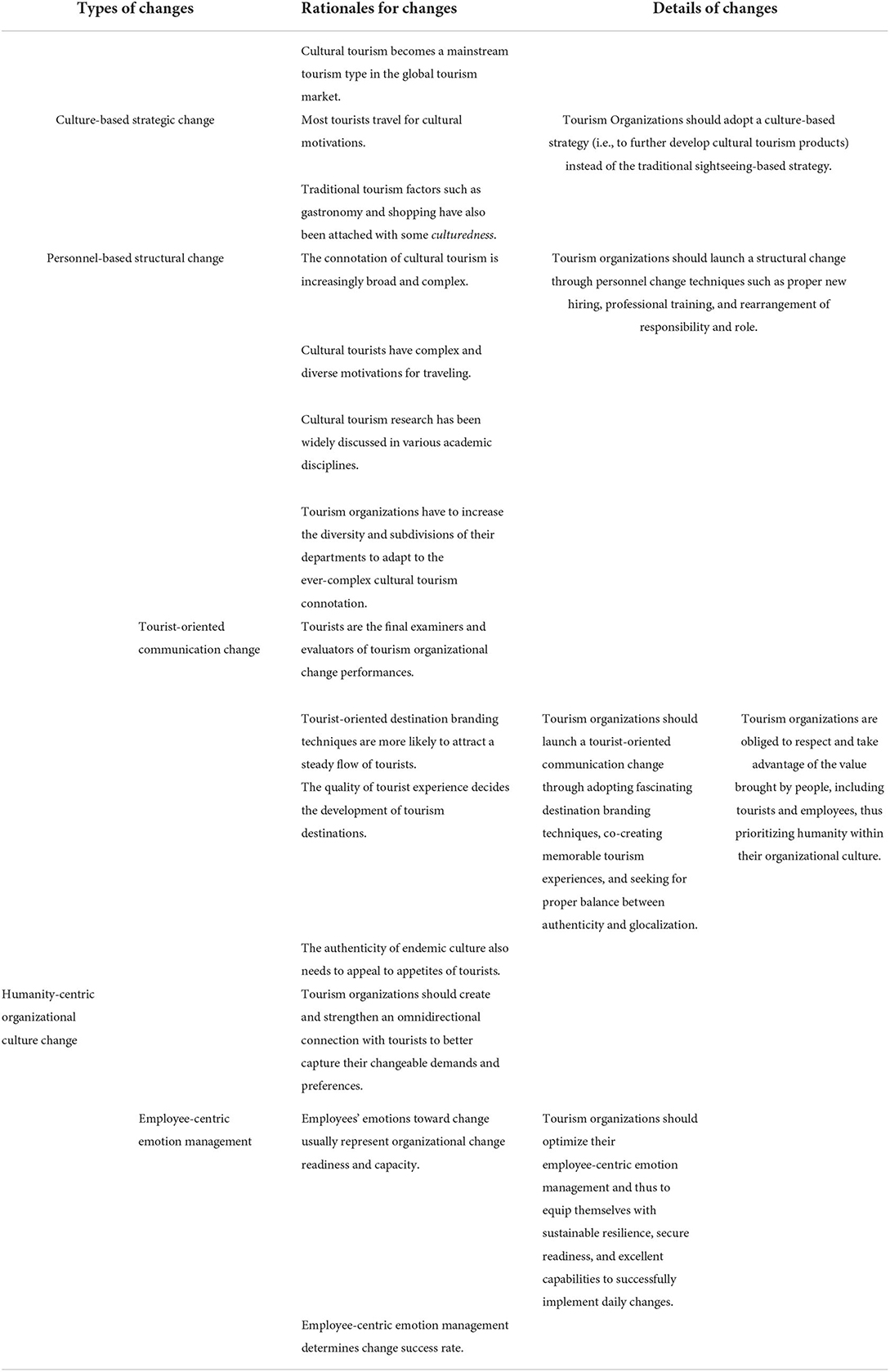
Table 3. Implications for tourism organizational changes.
Culture-based strategic change
Above all, it is inevitable for tourism organizations to change their traditional sightseeing-based strategies into culture-based ones. For one thing, cultural tourism, instead of traditional tourism, is gradually becoming a mainstream tourism type in the global tourism market (UNWTO, 2018, 2021). According to the aforementioned Figures 1, 2, cultural tourism research is becoming increasingly flourishing, which turns out to be another evidence for the growing status of cultural tourism. For another thing, traveling motivations of most tourists are more or less of some culturedness (Jovicic, 2016) when traditional non-cultural motivations such as relaxation-seeking, sports-seeking, family-relationship-seeking, pressure-escaping, autonomy (freedom)-seeking (Özel and Kozak, 2012), identity (achievement)-seeking (Bond and Falk, 2013), and novelty-seeking (Sugathan and Ranjan, 2019; Prayag et al., 2021; Pereira et al., 2022) are increasingly being reduced to appendants of cultural motivations. For example, gastronomy, which has long been acknowledged as a traditional mainstream touristic motivation way off cultural stuff, is now universally accepted as a cultural motivation by tourists (Cohen, 1992; Everett and Aitchison, 2008; Jovicic, 2016). In addition, the swelling of cultural food consumption is gradually driving gastronomy tourism to become an important sub-sector of cultural tourism as well as an inevitable component of general tourism (i.e., gastronomy is a necessary component of all types of tourism activities; Montanari, 2009; Sims, 2010). Similar mechanism also applies in shopping, the closest companion of tourism (Jansen-Verbeke, 1991). The boom of cultural souvenir shopping and tourists' evergreen shopping enthusiasm toward cultural intellectual properties (IP) are robust evidence for the prevailing sense of culturedness in touristic shopping activities (Masset and Decrop, 2021). Therefore, tourism organizations, by launching a strategic change where culture-based strategy substitute for traditional sightseeing-based strategy, should quickly adapt to the cultural revolution in the tourism industry to survive the volatile future.
Personnel-based structural change
Thanks to the increasing complexity of cultural tourism connotation, tourism organizations are also subject to adaptive structural change that is focused on personnel management. According to Richards (2018), the connotation of cultural tourism is increasingly focused on the pursuit of broadness by including concepts such as in-betweenness and non-tourism. The expanding broadness of cultural tourism connotation can also be reflected by diverse typologies of cultural tourists. Specifically, cultural tourists have been classified upon factors such as personal appetite (Barbieri and Mahoney, 2009; Baltaci and Cakici, 2022), age (Richards and van der Ark, 2013), physical contexts (Richards and van der Ark, 2013; Richards, 2018), and motivations (Pearce, 1982; Correia et al., 2013; Jovicic, 2016; Packer and Ballantyne, 2016; Du Cros and McKercher, 2020). As Russo and Richards (2016) put it, cultural tourists can no longer be regarded as static categories when most actors engaged in the process of cultural tourism begin to perform different roles relative to one another. Additionally, the increasing broadness and complexity of the connotation and typology enhance the connection between cultural tourism and some major academic disciplines such as management, sociology, economics, anthropology, and psychology, which is consistent with our finding that cultural tourism has been widely discussed in various research fields (see Table 1). In light of this, tourism organizations are obliged to launch a structural change by increasing the diversity and subdivision of their departments, thus adapting to the increasing complexity of the newly adopted culture-based strategy.
More importantly, structural changes are usually accompanied with personnel management such as new hiring, professional training, rotation of role and responsibilities, and scientific performance evaluation (Graetz and Smith, 2010). By putting together a group of selected employees with enough expertise, position power, credibility, and leadership skills, proper personnel changes potentially solidify structural changes that took place in tourism organizations (Kotter, 1995; Thomas et al., 2011). For example, hiring professional chefs to guarantee the authenticity of local ethnic restaurants (Cohen and Avieli, 2004; Chatzopoulou et al., 2019; Meneguel et al., 2019; Yu et al., 2020), training restaurant employees to improve service awareness by removing the order barrier of tourists (Lai et al., 2019; Yu et al., 2020), and properly arranging and balancing responsibilities of different departments to gather joint efforts (Smith and Xiao, 2008), are all feasible ways for tourism organizations to make structural changes in preparation for the adoption of gastronomic culture-based strategies. In general, tourism organizations are suggested to make personnel-based structural changes to guarantee their readiness and capacity and thus to further consolidate their newly adopted culture-based strategy.
Humanity-centric organizational culture change
According to Section Destination branding in tourism and Section Consumer experience in cultural tourism, methods that are adopted to optimize the development of cultural tourism are increasingly centered on the importance of people. For example, more and more consumer psychological techniques are applied to destination branding when improving consumer experience becomes the key to attract a steady flow of tourists in most destinations. As Feldman (2000) put it, human agents are the initial source and trigger for all the potential development and changes. Therefore, tourism organizations are obliged to respect and take advantage of the value brought by people, including tourists and employees, thus prioritizing humanity within their organizational culture.
Tourist-oriented communication mechanism
Tourism organizations are first obligated to develop a tourist-oriented communication mechanism, for the final performances of organizational change are inclined to be examined and evaluated by consumers (i.e., tourists). A successful tourist-oriented communication mechanism is usually associated with fascinating destination branding (Aaker, 2009), memorable tourism experience (Sørensen and Jensen, 2015), and proper balance between authenticity and glocalization (Soulard et al., 2019). Firstly, tourism organizations should adopt more tourist-oriented techniques such as arousing destination brand love (Lee and Hyun, 2016), inspiring self-brand integration (Tsai, 2014), as well as taking advantage of tourists' respect and trust toward authoritative titles (e.g., the list of World Heritage Sites; Jimura, 2011) to carry forward the brand of a target destination, thus strengthening the tourists-destination connection (Aro et al., 2018; Zhang et al., 2020). Secondly, tourism organizations should also create a memorable tourism experience, which proves to be the key to attract a steady flow of tourists (Mei, 2014), through bonding techniques such as encouraging co-creation of tourists (Dalonso et al., 2014; Prebensen et al., 2017; Geng et al., 2022; Sun et al., 2022). Thirdly, endemic tourism destinations should maintain the balance between authenticity and glocalization to deal with the dilemma caused by tourists' curiosity toward a different culture and their limited tolerance toward a strange taste. For example, some endemic restaurants in tourism destinations try to slightly adapt their traditional cuisines to the taste of ecdemic tourists, thus bringing the authentic culture of the tourism destination and simultaneously improving tourists' dining satisfaction (Cohen and Avieli, 2004; Soulard et al., 2019). Therefore, tourism organizations are recommended to launch a tourist-oriented communication change to better capture tourists' changeable demands and preferences.
Employee-centric emotion management
Tourism organizations are also obliged to properly manage employees' emotions toward upcoming organizational changes, which prove to be essential to the success of change implementation (Errida and Lotfi, 2021). According to Al-Haddad and Kotnour (2015), the general success rate of organizational change has long been under 30%, indicating a sustained need to improve the success rate by minimizing destructive barriers such as employees' negative emotions and attitudes toward change (Rafferty et al., 2013). According to most literature on change management, employees' emotions toward change, usually known as the change motivation of employees, are inclined to represent organizational change readiness and capacity (Project Management Institute, 2013; Combe, 2014; Alwheeb and Rea, 2017). As employees usually function as the active impellers of changes (Mento et al., 2002), their change motivations and emotions, which are usually influenced by each interest-based personnel reshuffle during organizational change (Shah et al., 2016), turn out to be determinants of the change success rate (Fernandez and Rainey, 2006; Hodges, 2017). Therefore, it is vital for tourism organizations to optimize their employee-centric emotion management and thus to equip themselves with sustainable resilience, secure readiness, and excellent capabilities to successfully implement daily changes.
Additionally, these implications have been summarized into Table 3 for quick check.
Conclusion
This study, based on a brief review addressing the tremendous expansion of cultural tourism scholarship that has evolved into a well-defined research field incorporating multi-disciplinary perspectives, manages to figure out several feasible implications for tourism organizations to implement proper organizational changes for adaptative development. According to the evolutionary process from fragmentation to systematization in cultural tourism research (Richards, 2018), cultural tourism is continuously growing from a niche market consisting of intellectuals and high-income tourists toward a mass-market open to a much wider range of people, becoming a promising trend that directs future change implementations of tourism organizations (Noonan and Rizzo, 2017). In general, this study, based on a brief review of cultural tourism research that illustrates its interconnections with organizational changes, has figured out several implications in terms of changes in organizational strategy, organizational structure, personnel management, and organizational culture. Therefore, tourism organizations are recommended to pursue culturedness, accompanied by corresponding means to continuously implement proper changes to hedge the potential volatility in future development.
Data availability statement
The original contributions presented in the study are included in the article/supplementary material, further inquiries can be directed to the corresponding author.
Author contributions
ZZ: writing and final proofreading. MG: data collection, analysis, and producing figures and reference list. All authors contributed to the article and approved the submitted version.
Conflict of interest
The authors declare that the research was conducted in the absence of any commercial or financial relationships that could be construed as a potential conflict of interest.
Publisher's note
All claims expressed in this article are solely those of the authors and do not necessarily represent those of their affiliated organizations, or those of the publisher, the editors and the reviewers. Any product that may be evaluated in this article, or claim that may be made by its manufacturer, is not guaranteed or endorsed by the publisher.
References
Albayrak, T., Caber, M., and Çömen, N. (2016). Tourist shopping: the relationships among shopping attributes, shopping value, and behavioral intention. Tour. Manag. Perspect. 18, 98–106. doi: 10.1016/j.tmp.2016.01.007
Alberts, H. C., and Hazen, H. D. (2010). Maintaining authenticity and integrity at cultural world heritage sites. Geogr. Rev. 100, 56–73. doi: 10.1111/j.1931-0846.2010.00006.x
Al-Haddad, S., and Kotnour, T. (2015). Integrating the organizational change literature: a model for successful change. J. Organ. Chang. Manag. 28, 234–262. doi: 10.1108/JOCM-11-2013-0215
Alwheeb, M., and Rea, D. M. (2017). Assessing organizational readiness for the improvement and change initiatives in public hospitals. Manag. Issues. Healthcare. Syst. 3, 49–57. doi: 10.33844/mihs.2017.60346
Aro, K., Suomi, K., and Saraniemi, S. (2018). Antecedents and consequences of destination brand love—a case study from Finnish Lapland. Tour. Manag. 67, 71–81. doi: 10.1016/j.tourman.2018.01.003
Artal-Tur, A., Briones-Peñalver, A. J., and Villena-Navarro, M. (2018). Tourism, cultural activities and sustainability in the Spanish Mediterranean regions: a probit approach. Tour. Manag. Stud. 14, 7–18. doi: 10.18089/tms.2018.14101
Báez-Montenegro, A., and Devesa-Fernández, M. (2017). Motivation, satisfaction and loyalty in the case of a film festival: differences between local and non-local participants. J. Cult. Econ. 41, 173–195. doi: 10.1007/s10824-017-9292-2
Baker, J., Berry, L. L., and Parasuraman, A. (1988). The marketing impact of branch facility design. J. Retail Bank. 10, 33–42.
Baker, J., Parasuraman, A., Grewal, D., and Voss, G. B. (2002). The influence of multiple store environment cues on perceived merchandise value and patronage intentions. J. Mark. 66, 120–141. doi: 10.1509/jmkg.66.2.120.18470
Baker, M. A., and Kim, K. (2018). The role of language, appearance, and smile on perceptions of authenticity versus rapport. Int. J. Hosp. Manag. 74, 171–179. doi: 10.1016/j.ijhm.2018.04.011
Balderas-Cejudo, A., Gavilan, D., and Fernandez-Lores, S. (2022). Michelin-starred Restaurants and Its Contribution to Luxury Gastronomy Tourism. The Emerald Handbook of Luxury Management for Hospitality and Tourism (Bingley: Emerald Publishing Limited), 321–334. doi: 10.1108/978-1-83982-900-020211016
Ballantyne, R., and Packer, J. (2016). Visitors' perceptions of the conservation education role of zoos and aquariums: implications for the provision of learning experiences. Visit. Stud. 19, 193–210. doi: 10.1080/10645578.2016.1220185
Baltaci, M., and Cakici, A. C. (2022). Serendipitous Cultural Tourist: L. oliveira, Advances in Hospitality, Tourism, and the Services Industry (Pennsylvania, PA: IGI Global), 332–350. doi: 10.4018/978-1-7998-8528-3.ch018
Barbieri, C., and Mahoney, E. (2009). Cultural tourism behaviour and preferences among the live-performing arts audience: an application of the univorous–omnivorous framework. Int. J. Tour. Res. 2009, jtr.767. doi: 10.1002/jtr.767
Barnes, S. J., Mattsson, J., and Sørensen, F. (2014). Destination brand experience and visitor behavior: testing a scale in the tourism context. Ann. Tour. Res. 48, 121–139. doi: 10.1016/j.annals.2014.06.002
Barton, G., Baguley, M., Kerby, M., and MacDonald, A. (2019). “Exploring how quality children's literature can enhance compassion and empathy in the classroom context,” in Compassion and Empathy in Educational Contexts, eds G. Barton and S. Garvis (Cham: Palgrave Macmillan). doi: 10.1007/978-3-030-18925-9_9
Bastiaansen, M., Lub, X. D., Mitas, O., Jung, T. H., Ascenção, M. P., Han, D.-I., et al. (2019). Emotions as core building blocks of an experience. Int. J. Contemp. Hosp. Manag. 31, 651–668. doi: 10.1108/IJCHM-11-2017-0761
Batra, R., Ahuvia, A., and Bagozzi, R. P. (2012). Brand love. J. Mark. 76, 1–16. doi: 10.1509/jm.09.0339
Beardsworth, A., Bryman, A., Keil, T., Goode, J., Haslam, C., and Lancashire, E. (2002). Women, men and food: the significance of gender for nutritional attitudes and choices. Br. Food J. 104, 470–491. doi: 10.1108/00070700210418767
Beer, M., and Nohria, N. (2000). Cracking the code of change. Harv. Bus. Rev. 78, 133–141. Available online at: https://hbr.org/2000/05/cracking-the-code-of-change
Belk, R. (2014). Digital consumption and the extended self. J. Mark. Manag. 30, 1101–1118. doi: 10.1080/0267257X.2014.939217
Berbel-Pineda, J. M., Palacios-Florencio, B., Ramírez-Hurtado, J. M., and Santos-Roldán, L. (2019). Gastronomic experience as a factor of motivation in the tourist movements. Int. J. Gastron. Food Sci. 18, 100171. doi: 10.1016/j.ijgfs.2019.100171
Björk, P. (2014). Tourist experience value: tourist experience and life satisfaction. Creat. Exp. Value Tour. 2014, 22–32. doi: 10.1079/9781780643489.0022
Björk P. Kauppinen-Räisänen H. (2017). Interested in eating and drinking? How food affects travel satisfaction and the overall holiday experience. Scand. J. Hosp. Tour. 17, 9–26. doi: 10.1080/15022250.2016.1215871
Bond, N., and Falk, J. (2013). Tourism and identity-related motivations: why am I here (and not there)?: who am i and why am i here…and not there? Int. J. Tour. Res. 15, 430–442. doi: 10.1002/jtr.1886
Campelo, A., Aitken, R., Thyne, M., and Gnoth, J. (2014). Sense of place: the importance for destination branding. J. Travel Res. 53, 154–166. doi: 10.1177/0047287513496474
Carter, T. J., and Gilovich, T. (2010). The relative relativity of material and experiential purchases. J. Pers. Soc. Psychol. 98, 146–159. doi: 10.1037/a0017145
Chang, L. L., Backman, K., and Chih Huang, Y. (2014). Creative tourism: a preliminary examination of creative tourists' motivation, experience, perceived value and revisit intention. Int. J. Cult. Tour. Hosp. Res. 8, 401–419. doi: 10.1108/IJCTHR-04-2014-0032
Chatterley, C., Linden, K. G., and Javernick-Will, A. (2013). Identifying pathways to continued maintenance of school sanitation in Belize. J. Water Sanit. Hyg. Dev. 3, 411–422. doi: 10.2166/washdev.2013.128
Chatzopoulou, E., Gorton, M., and Kuznesof, S. (2019). Understanding authentication processes and the role of conventions: a consideration of Greek ethnic restaurants. Ann. Tour. Res. 77, 128–140. doi: 10.1016/j.annals.2019.06.004
Chen, J. S., Prebensen, N. K., and Uysal, M. (2014). Dynamic drivers of tourist experiences. Creat. Exp. Value Tour. 2014, 11–21. doi: 10.1079/9781780643489.0011
Chen, K., Wang, Q., Wang, X., and Xing, C. (2021). The difference between experiential and material consumption: research methods and effects. Adv. Psychol. Sci. 29, 1111–1121. doi: 10.3724/SP.J.1042.2021.01111
Choi, M., Law, R., and Heo, C. Y. (2016b). Shopping destinations and trust – tourist attitudes: Scale development and validation. Tour. Manag. 54, 490–501. doi: 10.1016/j.tourman.2016.01.005
Choi, M., Law, R., and Heo, C. Y. (2018). An investigation of the perceived value of shopping tourism. J. Travel Res. 57, 962–980. doi: 10.1177/0047287517726170
Choi, M. J., Heo, C. Y., and Law, R. (2016a). Developing a typology of Chinese shopping tourists: an application of the schwartz model of universal human values. J. Travel Tour. Mark. 33, 141–161. doi: 10.1080/10548408.2014.997961
Cisneros-Martínez, J. D., and Fernández-Morales, A. (2015). Cultural tourism as tourist segment for reducing seasonality in a coastal area: the case study of Andalusia. Curr. Issues Tour. 18, 765–784. doi: 10.1080/13683500.2013.861810
Cohen, E. (1979). A phenomenology of tourist experiences. Sociology 13, 179–201. doi: 10.1177/003803857901300203
Cohen, E., and Avieli, N. (2004). Food in tourism: attraction and impediment. Ann. Tour. Res. 31, 755–778. doi: 10.1016/j.annals.2004.02.003
Cohen, S. (1986). Contrasting the hassles scale and the perceived stress scale: who's really measuring appraised stress? Am. Psychol. 41, 716–718. doi: 10.1037/0003-066X.41.6.716
Combe, M. (2014). Change Readiness: Focusing Change Management Where It Counts. Newtown Square, PA: Project Management Institute.
Correia, A., Kozak, M., and Ferradeira, J. (2013). From tourist motivations to tourist satisfaction. Int. J. Cult. Tour. Hosp. Res. 7, 411–424. doi: 10.1108/IJCTHR-05-2012-0022
Correia, A., Kozak, M., and Kim, S. (2019). Investigation of luxury values in shopping tourism using a fuzzy-set approach. J. Travel Res. 58, 77–91. doi: 10.1177/0047287517741005
Dalonso, Y. S., Lourenço, J. M., Remoaldo, P. C., and Panosso Netto, A. (2014). Tourism experience, events and public policies. Ann. Tour. Res. 46, 181–184. doi: 10.1016/j.annals.2014.03.003
Dann, G. M. S. (1996). Tourists' images of a destination-an alternative analysis. J. Travel Tour. Mark. 5, 41–55. doi: 10.1300/J073v05n01_04
Dela Santa, E., and Tiatco, S. A. (2019). Tourism, heritage and cultural performance: developing a modality of heritage tourism. Tour. Manag. Perspect. 31, 301–309. doi: 10.1016/j.tmp.2019.06.001
Du Cros, H., and McKercher, B. (2020). Cultural Tourism. London: Routledge. doi: 10.4324/9780429277498
Dunn, E. W., and Weidman, A. C. (2015). Building a science of spending: lessons from the past and directions for the future. J. Consum. Psychol. 25, 172–178. doi: 10.1016/j.jcps.2014.08.003
Ellis, D., and Mattison Thompson, F. (2018). The effect of wine knowledge type on variety seeking behavior in wine purchasing. J. Wine Res. 29, 71–86. doi: 10.1080/09571264.2018.1471393
Errida, A., and Lotfi, B. (2020). Measuring change readiness for implementing a project management methodology: an action research study. Acad. Strat. Manag. J. 19, 1–17. Available online at: https://www.semanticscholar.org/paper/Measuring-Change-Readiness-for-Implementing-a-an-Errida-Lotfi/8b4c99dafcbc04a5684b3dcca31b57a8f2736d98
Errida, A., and Lotfi, B. (2021). The determinants of organizational change management success: literature review and case study. Int. J. Eng. Bus. Manag., 13, 184797902110162. doi: 10.1177/18479790211016273
Everett, S. (2008). Beyond the visual gaze? The pursuit of an embodied experience through food tourism. Tour. Stud. 8, 337–358. doi: 10.1177/1468797608100594
Everett, S. (2019). Theoretical turns through tourism taste-scapes: the evolution of food tourism research. Res. Hosp. Manag. 9, 3–12. doi: 10.1080/22243534.2019.1653589
Everett, S., and Aitchison, C. (2008). The role of food tourism in sustaining regional identity: a case study of Cornwall, South West England. J. Sustain. Tour. 16, 150–167. doi: 10.2167/jost696.0
Fahmi, F. Z., McCann, P., and Koster, S. (2017). Creative economy policy in developing countries: the case of Indonesia. Urban Stud. 54, 1367–1384. doi: 10.1177/0042098015620529
Falk, J. H. (2011). Contextualizing falk's identity-related visitor motivation model. Visit. Stud. 14, 141–157. doi: 10.1080/10645578.2011.608002
Fatanti, M. N., and Suyadnya, I. W. (2015). Beyond user gaze: how instagram creates tourism destination brand? Procedia Soc. Behav. Sci. 211, 1089–1095. doi: 10.1016/j.sbspro.2015.11.145
Feldman, M. (2000). Organizational routines as a source of continuous change. Organ. Sci. 11, 611–629. doi: 10.1287/orsc.11.6.611.12529
Fernandez, S., and Rainey, H. G. (2006). Managing successful organizational change in the public sector. Public. Admin. Rev. 66, 168–176. doi: 10.1111/j.1540-6210.2006.00570.x
Filieri, R., Yen, D. A., and Yu, Q. (2021). #ILoveLondon: an exploration of the declaration of love towards a destination on Instagram. Tour. Manag. 85, 104291. doi: 10.1016/j.tourman.2021.104291
Fournier, S., and Avery, J. (2011). The uninvited brand. Bus. Horiz. 54, 193–207. doi: 10.1016/j.bushor.2011.01.001
Frey, B. S., and Steiner, L. (2011). World heritage list: does it make sense? Int. J. Cult. Policy. 17, 555–573. doi: 10.1080/10286632.2010.541906
Galí-Espelt, N. (2012). Identifying cultural tourism: a theoretical methodological proposal. J. Herit. Tour. 7, 45–58. doi: 10.1080/1743873X.2011.632480
Geissler, G. L., Rucks, C. T., and Edison, S. W. (2006). Understanding the role of service convenience in art museum marketing: an exploratory study. J. Hosp. Leis. Mark. 14, 69–87. doi: 10.1300/J150v14n04_05
Geng, R., Sun, R., Li, J., Guo, F., Wang, W., and Sun, G. (2022). The impact of firm innovativeness on consumer trust in the sharing economy: a moderated mediation model. Asia Pac. J. Mark. Logist. 34, 1078–1098. doi: 10.1108/APJML-10-2020-0748
Gilovich, T., and Gallo, I. (2020). Consumers' pursuit of material and experiential purchases: a review. Consum. Psychol. Rev. 3, 20–33. doi: 10.1002/arcp.1053
Graetz, F., and Smith, A. C. T. (2010). Managing organizational change: a philosophies of change approach. J. Chang. Manag. 10, 135–154. doi: 10.1080/14697011003795602
Gravari-Barbas, M. (2018). Tourism as a heritage producing machine. Tour. Manag. Perspect. 25, 173–176. doi: 10.1016/j.tmp.2018.01.004
Guccio, C., Lisi, D., Mignosa, A., and Rizzo, I. (2018). Does cultural heritage monetary value have an impact on visits? An assessment using official Italian data. Tour. Econ. 24, 297–318. doi: 10.1177/1354816618758729
Gyimóthy, S., and Mykletun, R. J. (2004). Play in adventure tourism. Ann. Tour. Res. 31, 855–878. doi: 10.1016/j.annals.2004.03.005
Ha, J., and Jang, S. (2010). Perceived values, satisfaction, and behavioral intentions: the role of familiarity in Korean restaurants. Int. J. Hosp. Manag. 29, 2–13. doi: 10.1016/j.ijhm.2009.03.009
Hall, C. M., Baird, T., James, M., and Ram, Y. (2016). Climate change and cultural heritage: conservation and heritage tourism in the Anthropocene. J. Herit. Tour. 11, 10–24. doi: 10.1080/1743873X.2015.1082573
Hall, C. M., and Mitchell, R. (2000). Wine tourism in the Mediterranean: a tool for restructuring and development. Thunderbird Int. Bus. Rev. 42, 445–465. doi: 10.1002/1520-6874(200007/08)42:4<445::AID-TIE6>3.0.CO;2-H
Hall, C. M., and Sharples, L. (2008). Food events, festivals and farmers' markets: an introduction. Food and wine festivals and events around the world. Dev. Manag. Markets 2008, 3–22. doi: 10.4324/9780080887951
Han, H., and Hyun, S. S. (2018). Investigating customers' shopping behaviors at airport duty-free shops: impact of shopping flow and alternative shopping malls' attractiveness. Asia Pac. J. Tour. Res. 23, 627–638. doi: 10.1080/10941665.2018.1485717
Henderson, J. C. (2009). Food tourism reviewed. Br. Food J. 111, 317–326. doi: 10.1108/00070700910951470
Henderson, J. C., Chee, L., Mun, C. N., and Lee, C. (2011). Shopping, tourism and retailing in Singapore. Manag. Leis. 16, 36–48. doi: 10.1080/13606719.2011.532599
Hjalager, A. M., and Richards, G. (2002). Tourism and Gastronomy (Vol. 11). London: Routledge. doi: 10.4324/9780203218617
Hodges, J. (2017). Building capabilities for change: the crucial role of resilience. Dev. Learn. Org., 31, 5–8. doi: 10.1108/DLO-07-2016-0064
Hope Hailey, V., and Balogun, J. (2002). Devising context sensitive approaches to change: the example of glaxo wellcome. Long. Range. Plan. 35, 153–178. doi: 10.1016/S0024-6301(02)00035-3
Horng, J. S., and Tsai, C. T. (2010). Government websites for promoting East Asian culinary tourism: a cross-national analysis. Tour. Manag. 31, 74–85. doi: 10.1016/j.tourman.2009.01.009
Hosany, S., Ekinci, Y., and Uysal, M. (2006). Destination image and destination personality: an application of branding theories to tourism places. J. Bus. Res. 59, 638–642. doi: 10.1016/j.jbusres.2006.01.001
Hsiao, C., Lee, Y. H., and Chen, W. J. (2015). The effect of servant leadership on customer value co-creation: a cross-level analysis of key mediating roles. Tour. Manag. 49, 45–57. doi: 10.1016/j.tourman.2015.02.012
Hsieh, M. T., and Tsao, W. C. (2014). Reducing perceived online shopping risk to enhance loyalty: a website quality perspective. J. Risk Res. 17, 241–261. doi: 10.1080/13669877.2013.794152
Hsu, F. C., Liu, J., and Lin, H. (2022). Affective components of gastronomy tourism: measurement scale development and validation. Int. J. Contemp. Hosp. Manag. 2021, 1112. doi: 10.1108/IJCHM-09-2021-1112
Jang, S., and Ha, J. (2015). The influence of cultural experience: emotions in relation to authenticity at ethnic restaurants. J. Foodserv. Bus. Res. 18, 287–306. doi: 10.1080/15378020.2015.1051436
Jang, S., Ha, J., and Park, K. (2012). Effects of ethnic authenticity: investigating Korean restaurant customers in the U.S. Int. J. Hosp. Manag. 31, 990–1003. doi: 10.1016/j.ijhm.2011.12.003
Jansen-Verbeke, M. (1991). Leisure shopping: a magic concept for the tourism industry? Tour. Manag. 12, 9–14. doi: 10.1016/0261-5177(91)90024-N
Jiang, L., and Yu, L. (2020). Consumption of a literary tourism place: a perspective of embodiment. Tou. Geogr. 22, 127–150. doi: 10.1080/14616688.2019.1586985
Jimura, T. (2011). The impact of world heritage site designation on local communities – a case study of Ogimachi, Shirakawa-mura, Japan. Tour. Manag. 32, 288–296. doi: 10.1016/j.tourman.2010.02.005
Jin, H., Moscardo, G., and Murphy, L. (2020). Exploring Chinese outbound tourist shopping: a social practice framework. J. Travel Res. 59, 156–172. doi: 10.1177/0047287519826303
Josiassen, A., Lukas, B. A., Whitwell, G. J., and Assaf, A. G. (2013). The halo model of origin images: conceptualisation and initial empirical test: the country-image model. J. Consum. Behav. 12, 253–266. doi: 10.1002/cb.1405
Jovicic, D. (2016). Cultural tourism in the context of relations between mass and alternative tourism. Curr. Issues Tour. 19, 605–612. doi: 10.1080/13683500.2014.932759
Kattiyapornpong, U., and Miller, K. E. (2012). Propensity to shop: identifying who shops til they drop. J. Travel Tour. Mark. 29, 552–565. doi: 10.1080/10548408.2012.703027
Kay, P. (2006). “Tourist benefits research: old and new issues and uses in a cultural tourism context,” in CAUTHE 2006 City Proc. 16th Counc. Hosp. Tour. Educ. Conf (Melbourne, FL: Victoria University). 809–824.
Kickert, W. J. M. (2014). Specificity of change management in public organizations: conditions for successful organizational change in Dutch ministerial departments. Am. Rev. Public. 6, 693–717. doi: 10.1177/0275074013483871
Kim, J. H., Youn, H., and Rao, Y. (2017). Customer responses to food-related attributes in ethnic restaurants. Int. J. Hosp. Manag. 61, 129–139. doi: 10.1016/j.ijhm.2016.11.003
Konecnik, M., and Gartner, W. C. (2007). Customer-based brand equity for a destination. Ann. Tour. Res. 34, 400–421. doi: 10.1016/j.annals.2006.10.005
Konu, H. (2015). Developing a forest-based wellbeing tourism product together with customers – an ethnographic approach. Tour. Manag. 49, 1–16. doi: 10.1016/j.tourman.2015.02.006
Kumar, A., Killingsworth, M. A., and Gilovich, T. (2020). Spending on doing promotes more moment-to-moment happiness than spending on having. J. Exp. Soc. Psychol. 88, 103971. doi: 10.1016/j.jesp.2020.103971
Lai, I. K. W., Liu, Y., and Lu, D. (2021). The effects of tourists' destination culinary experience on electronic word-of-mouth generation intention: the experience economy theory. Asia Pac. J. Tour. Res. 26, 231–244. doi: 10.1080/10941665.2020.1851273
Lai, M. Y., Khoo-Lattimore, C., and Wang, Y. (2019). Food and cuisine image in destination branding: toward a conceptual model. Tour. Hosp. Res. 19, 238–251. doi: 10.1177/1467358417740763
Larsen, S. (2007). Aspects of a psychology of the tourist experience. Scand. J. Hosp. Tour. 7, 7–18. doi: 10.1080/15022250701226014
Lee, J. S., and Choi, M. (2020). Examining the asymmetric effect of multi-shopping tourism attributes on overall shopping destination satisfaction. J. Travel Res. 59, 295–314. doi: 10.1177/0047287519832373
Lee, K. H., and Hyun, S. S. (2016). The effects of perceived destination ability and destination brand love on tourists' loyalty to post-disaster tourism destinations: the case of Korean Tourists to Japan. J. Travel Tour. Mark. 33, 613–627. doi: 10.1080/10548408.2016.1167349
Lee, T. H., and Hsu, F. Y. (2013). Examining how attending motivation and satisfaction affects the loyalty for attendees at aboriginal festivals: how attending motivation and satisfaction affects loyalty. Int. J. Tour. Res. 15, 18–34. doi: 10.1002/jtr.867
Li, Y. (2003). Heritage tourism: the contradictions between conservation and change. Tour. Hosp. Res. 4, 247–261. doi: 10.1177/146735840300400305
Lin, R., van de Ven, N., and Utz, S. (2018). What triggers envy on Social Network Sites? A comparison between shared experiential and material purchases. Comput. Hum. Behav. 85, 271–281. doi: 10.1016/j.chb.2018.03.049
Lin, Y. H., and Chen, C. F. (2013). Passengers' shopping motivations and commercial activities at airports – the moderating effects of time pressure and impulse buying tendency. Tour. Manag. 36, 426–434. doi: 10.1016/j.tourman.2012.09.017
Liu, H., Wu, L., and Li, X. (2019). Social media envy: how experience sharing on social networking sites drives millennials' aspirational tourism consumption. J. Travel Res. 58, 355–369. doi: 10.1177/0047287518761615
Liu, Y., Hultman, M., Eisingerich, A. B., and Wei, X. (2020). How does brand loyalty interact with tourism destination? Exploring the effect of brand loyalty on place attachment. Ann. Tour. Res. 81, 102879. doi: 10.1016/j.annals.2020.102879
Lo, I. S., McKercher, B., Lo, A., Cheung, C., and Law, R. (2011). Tourism and online photography. Tour. Manag. 32, 725–731. doi: 10.1016/j.tourman.2010.06.001
MacCannell, D. (1973). Staged authenticity: arrangements of social space in tourist settings. Am. J. Sociol. 79, 589–603. doi: 10.1086/225585
MacCannell, D. (2002). Empty Meeting Grounds: The Tourist Papers. London: Routledge. doi: 10.4324/9780203412145
Mak, A. H. N. (2017). Online destination image: comparing national tourism organisation's and tourists' perspectives. Tour. Manag. 60, 280–297. doi: 10.1016/j.tourman.2016.12.012
Mannell, R. C., and Iso-Ahola, S. E. (1987). Psychological nature of leisure and tourism experience. Ann. Tour. Res. 14, 314–331. doi: 10.1016/0160-7383(87)90105-8
Mariani, M. M., and Giorgio, L. (2017). The “Pink Night” festival revisited: meta-events and the role of destination partnerships in staging event tourism. Ann. Tour. Res. 62, 89–109. doi: 10.1016/j.annals.2016.11.003
Marzano, G., and Scott, N. (2009). Power in destination branding. Ann. Tour. Res. 36, 247–267. doi: 10.1016/j.annals.2009.01.004
Masset, J., and Decrop, A. (2021). Meanings of tourist souvenirs: from the holiday experience to everyday life. J. Travel Res. 60, 718–734. doi: 10.1177/0047287520915284
Mei, X. Y. (2014). Boring and expensive: the challenge of developing experience-based tourism in the Inland region, Norway. Tour. Manag. Perspect. 12, 71–80. doi: 10.1016/j.tmp.2014.09.003
Meneguel, C. R., de, A., Mundet, L., and Aulet, S. (2019). The role of a high-quality restaurant in stimulating the creation and development of gastronomy tourism. Int. J. Hosp. Manag. 83, 220–228. doi: 10.1016/j.ijhm.2018.10.018
Mento, A., Jones, R., and Dirndorfer, W. (2002). A change management process: Grounded in both theory and practice. J. Chang. Manag. 3, 45–59. doi: 10.1080/714042520
Michalkó, G., and Varadi, Z. (2004). Croatian shopping tourism in Hungary: the case study of Barcs. Tourism. 52, 13327461. Available online at: https://www.semanticscholar.org/paper/Croatian-shopping-tourism-in-Hungary%3A-the-case-of-Michalk%C3%B3-V%C3%A1radi/a1d5ea72964bfa71bb105ee75feb5f96497fea59
Mohamed, M. E. A., Hewedi, M. M., Lehto, X., and Maayouf, M. (2020). Egyptian food experience of international visitors: a multidimensional approach. Int. J. Contemp. Hosp. Manag. 32, 2593–2611. doi: 10.1108/IJCHM-02-2020-0136
Moldes, O., Banerjee, R., Easterbrook, M. J., Harris, P. R., and Dittmar, H. (2019). Identity changes and well-being gains of spending money on material and experiential consumer products. J. Econ. Psychol. 72, 229–244. doi: 10.1016/j.joep.2019.04.003
Montanari, A. (2009). Geography of taste and local development in Abruzzo (Italy): project to establish a training and research centre for the promotion of enogastronomic culture and tourism. J. Herit. Tour. 4, 91–103. doi: 10.1080/17438730802366482
Mostafanezhad, M., and Promburom, T. (2018). ‘Lost in Thailand': the popular geopolitics of film-induced tourism in northern Thailand. Soc. Cult. Geogr. 19, 81–101. doi: 10.1080/14649365.2016.1257735
Noonan, D. S., and Rizzo, I. (2017). Economics of cultural tourism: issues and perspectives. J. Cult. Econ. 41, 95–107. doi: 10.1007/s10824-017-9300-6
North, D. (1996). “Epilogue: economic performance through time,” in Empirical Studies in Institutional Change, eds L. J. Alston, T. Eggertsson, and D. North (Cambridge: Cambridge University Press), 342–355. doi: 10.1017/CBO9781139174633.023
Ochoa Zuluaga, G. I. (2015). Global Tourism Chains and Local Development in the Amazon: Implications for Community Wellbeing. ‘s-Hertogenbosch: BOXPress BV.
Okumus, B. (2021). Food tourism research: a perspective article. Tour. Rev. 76, 38–42. doi: 10.1108/TR-11-2019-0450
Okumus, B., Koseoglu, M. A., and Ma, F. (2018). Food and gastronomy research in tourism and hospitality: a bibliometric analysis. Int. J. Hosp. Manag. 73, 64–74. doi: 10.1016/j.ijhm.2018.01.020
Okumus, B., Okumus, F., and McKercher, B. (2007). Incorporating local and international cuisines in the marketing of tourism destinations: the cases of Hong Kong and Turkey. Tour. Manag. 28, 253–261. doi: 10.1016/j.tourman.2005.12.020
Oliveira, E., and Panyik, E. (2015). Content, context and co-creation: digital challenges in destination branding with references to Portugal as a tourist destination. J. Vacat. Mark. 21, 53–74. doi: 10.1177/1356766714544235
Orlikowski, W. J. (1996). Improvising organizational transformation over time: a situated change perspective. Inform. Systems. Res. 7, 63–92. doi: 10.1287/isre.7.1.63
Otto, J. E., and Ritchie, J. R. B. (1996). The service experience in tourism. Tour. Manag. 17, 165–174. doi: 10.1016/0261-5177(96)00003-9
Özel, Ç. H., and Kozak, N. (2012). Motive based segmentation of the cultural tourism market: a study of Turkish domestic tourists. J. Qual. Assur. Hosp. Tour. 13, 165–186. doi: 10.1080/1528008X.2012.645199
Pabel, A., Prideaux, B., and Thompson, M. (2017). Tourists' preferences with Indigenous tourism experiences in the Wet Tropics of Queensland, Australia. J. Hosp. Tour. Manag. 31, 142–151. doi: 10.1016/j.jhtm.2016.11.004
Packer, J., and Ballantyne, R. (2016). Conceptualizing the visitor experience: a review of literature and development of a multifaceted model. Visit. Stud. 19, 128–143. doi: 10.1080/10645578.2016.1144023
Pan, L., Lu, L., and Zhang, T. (2021). Destination gender: scale development and cross-cultural validation. Tour. Manag. 83, 104225. doi: 10.1016/j.tourman.2020.104225
Patuelli, R., Mussoni, M., and Candela, G. (2016). The Effects of World Heritage Sites on Domestic Tourism: A Spatial Interaction Model for Italy. Spatial Econometric Interaction Modelling (Cham: Springer International Publishing), 281–315. doi: 10.1007/978-3-319-30196-9_13
Pearce, P. L. (1982). Perceived changes in holiday destinations. Ann. Tour. Res. 9, 145–164. doi: 10.1016/0160-7383(82)90044-5
Pereira, V., Gupta, J. J., and Hussain, S. (2022). Impact of travel motivation on tourist's attitude toward destination: evidence of mediating effect of destination image. J. Hosp. Tour. Res. 46, 946–971. doi: 10.1177/1096348019887528
Petrei, F., Cavallo, L., and Santoro, M. T. (2020). Cultural tourism: an integrated analysis based on official data. Qual. Quant. 54, 1705–1724. doi: 10.1007/s11135-019-00929-y
Pike, S., and Page, S. J. (2014). Destination Marketing Organizations and destination marketing: a narrative analysis of the literature. Tour. Manag. 41, 202–227. doi: 10.1016/j.tourman.2013.09.009
Pine, B. J., Pine, J., and Gilmore, J. H. (1999). The Experience Economy: Work Is Theatre and Every Business a Stage. Boston, MA: Harvard Business Press.
Ponferrada, M. L. V. (2015). Evolución del turismo en España: el turismo cultural. Int. J. Sci. Manag. Tour. 1, 75–95. Available online at: https://dialnet.unirioja.es/servlet/articulo?codigo=5665969
Ponzini, D., Fotev, S., and Mavaracchio, F. (2016). Place Making or Place Faking? The Paradoxical Effects of Transnational Circulation of Architectural and Urban Development Projects. Reinventing the Local in Tourism (Bristol: Multilingual Matters), 153–170. doi: 10.21832/9781845415709-012
Prayag, G., Alrawadieh, Z., and Alrawadieh, Z. (2021). Motivation, emotion and world heritage status in discerning the heritage tourists: a segmentation perspective. Tour. Manag. Perspect. 40, 100906. doi: 10.1016/j.tmp.2021.100906
Prebensen, N. K., Chen, J. S., and Uysal, M. (2017). Co-creation in Tourist Experiences. New York, NY: Routledge. doi: 10.4324/9781315645919
Prebensen, N. K., Vittersø, J., and Dahl, T. I. (2013). Value co-creation significance of tourist resources. Ann. Tour. Res. 42, 240–261. doi: 10.1016/j.annals.2013.01.012
Project Management Institute (2013). Managing Change in Organizations: A Practice Guide. Newtown Square, PA: PMI.
Promnil, N. (2021). Community-based gastronomy tourism development-the case of Northern Thailand. Turk. J. Comput. Math. Educ. 12, 3228–3235. Available online at: https://turcomat.org/index.php/turkbilmat/article/view/9135/7065
Puente-Díaz, R., and Cavazos-Arroyo, J. (2021). Experiential gifts as meaningful moments and memories: their influence on nostalgia, and relive intention. Psychol. Mark. 38, 553–563. doi: 10.1002/mar.21455
Quan, S., and Wang, N. (2004). Towards a structural model of the tourist experience: an illustration from food experiences in tourism. Tour. Manag. 25, 297–305. doi: 10.1016/S0261-5177(03)00130-4
Rabbiosi, L. (2011). Subsidiary roles and reverse knowledge transfer: an investigation of the effects of coordination mechanisms. J. Int. Manag. 17, 97–113. doi: 10.1016/j.intman.2010.10.001
Rafferty, A. E., Jimmieson, N. L., and Armenakis, A. A. (2013). Change readiness: A multilevel review. J. Manag. 39, 110–135. doi: 10.1177/0149206312457417
Redondo-Carretero, M., Camarero-Izquierdo, C., Gutiérrez-Arranz, A., and Rodríguez-Pinto, J. (2017). Language tourism destinations: a case study of motivations, perceived value and tourists' expenditure. J. Cult. Econ. 41, 155–172. doi: 10.1007/s10824-017-9296-y
Richards, G. (2002). Tourism attraction systems. Ann. Tour. Res. 29, 1048–1064. doi: 10.1016/S0160-7383(02)00026-9
Richards, G. (2003). “Gastronomy: an essential ingredient in tourism production and consumption?” in Tourism and Gastronomy (Routledge), 17–34.
Richards, G. (2007). Cultural Tourism: Global and Local Perspectives. New York, NY: The Haworth Hospitality Press.
Richards, G. (2018). Cultural tourism: a review of recent research and trends. J. Hosp. Tour. Manag. 36, 12–21. doi: 10.1016/j.jhtm.2018.03.005
Richards, G. (2021). Evolving research perspectives on food and gastronomic experiences in tourism. Int. J. Contemp. Hosp. Manag. 33, 1037–1058. doi: 10.1108/IJCHM-10-2020-1217
Richards, G., and van der Ark, L. A. (2013). Dimensions of cultural consumption among tourists: multiple correspondence analysis. Tour. Manag. 37, 71–76. doi: 10.1016/j.tourman.2013.01.007
Rosenzweig, E., and Gilovich, T. (2012). Buyer's remorse or missed opportunity? Differential regrets for material and experiential purchases. J. Pers. Soc. Psychol. 102, 215–223. doi: 10.1037/a0024999
Russo, A. P., and Richards, G. (2016). Reinventing the Local in Tourism: Producing, Consuming and Negotiating Place. Bristol: Channel View Publications. doi: 10.21832/9781845415709
Saayman, M., and Saayman, A. (2012). Determinants of spending: an evaluation of three major sporting events: determinants of spending of major sporting events. Int. J. Tour. Res. 14, 124–138. doi: 10.1002/jtr.841
Scott, M. (2022). A space tourism destination: environmental, geopolitical and tourism branding considerations for New Zealand as a ‘launch state'. J. Sustain. Tour. 30, 2240–2253. doi: 10.1080/09669582.2020.1817049
Shah, N., Irani, Z., and Sharif, A. M. (2016). Big data in an HR context: exploring organizational change readiness, employee attitudes and behaviors. J. Bus. Res. 70, 366–378. doi: 10.1016/j.jbusres.2016.08.010
Sharma, P., Chen, I. S. N., and Luk, S. T. K. (2018). Tourist shoppers' evaluation of retail service: a study of cross-border versus international outshoppers. J. Hosp. Tour. Res. 42, 392–419. doi: 10.1177/1096348015584439
Sims, R. (2010). Putting place on the menu: the negotiation of locality in UK food tourism, from production to consumption. J. Rural Stud. 26, 105–115. doi: 10.1016/j.jrurstud.2009.09.003
Smith, M. K. (2015). Issues in Cultural Tourism Studies. London: Routledge. doi: 10.4324/9781315767697
Smith, R., King, D., and Sidhu, R. (2014). The Effective Change Manager's Handbook: Essential Guidance to the Change Management Body of Knowledge, 1st Edn. London: Kogan Page Ltd, APMG-International.
Smith, S. L. J., and Xiao, H. (2008). Culinary tourism supply chains: a preliminary examination. J. Travel Res. 46, 289–299. doi: 10.1177/0047287506303981
Song, H., Phan, B. V., and Kim, J. H. (2019). The congruity between social factors and theme of ethnic restaurant: Its impact on customer's perceived authenticity and behavioural intentions. J. Hosp. Tour. Manag. 40, 11–20. doi: 10.1016/j.jhtm.2019.05.001
Sørensen, F., and Jensen, J. F. (2015). Value creation and knowledge development in tourism experience encounters. Tour. Manag. 46, 336–346. doi: 10.1016/j.tourman.2014.07.009
Soulard, J., McGehee, N. G., and Stern, M. (2019). Transformative tourism organizations and glocalization. Ann. Tour. Res. 76, 91–104. doi: 10.1016/j.annals.2019.03.007
Sthapit, E. (2019). Memories of gastronomic experiences, savoured positive emotions and savouring processes. Scand. J. Hosp. Tour. 19, 115–139. doi: 10.1080/15022250.2017.1402702
Sthapit, E., Coudounaris, D. N., and Björk, P. (2019). Extending the memorable tourism experience construct: an investigation of memories of local food experiences. Scand. J. Hosp. Tour. 19, 333–353. doi: 10.1080/15022250.2019.1689530
Su, C. S. (2011). The role of service innovation and customer experience in ethnic restaurants. Serv. Ind. J. 31, 425–440. doi: 10.1080/02642060902829302
Sugathan, P., and Ranjan, K. R. (2019). Co-creating the tourism experience. J. Bus. Res. 100, 207–217. doi: 10.1016/j.jbusres.2019.03.032
Sun, G., Sun, R., Li, J., Wang, W., and Johnson, L. (2022). Consumers' trust propensity and continuous use intention toward the sharing economy: a moderated mediation model. J. Consum. Behav. 21, 871–879. doi: 10.1002/cb.2045
Sun, G., Wang, W., Cheng, Z., Li, J., and Chen, J. (2017). The intermediate linkage between materialism and luxury consumption: evidence from the emerging market of China. Soc. Indic. Res. 132, 475–487. doi: 10.1007/s11205-016-1273-x
Thomas, R., Sargent, L. D., and Hardy, C. (2011). Managing organizational change: negotiating meaning and power-resistance relations. Organ. Sci. 22, 22–41. doi: 10.1287/orsc.1090.0520
Timothy, D. J. (2005). Shopping Tourism, Retailing and Leisure. Bristol: Multilingual Matters. doi: 10.21832/9781873150610
Timothy, D. J. (2011). Cultural Heritage and Tourism: An Introduction, Vol. 4. Bristol: Channel View Publications. doi: 10.21832/9781845411787
Timothy, D. J., and Butler, R. W. (1995). Cross-boder shopping. Ann. Tour. Res. 22, 16–34. doi: 10.1016/0160-7383(94)00052-T
Timothy, D. J., and Nyaupane, G. P. (2009). Cultural Heritage and Tourism in the Developing World. New York, NY: Routledge. doi: 10.4324/9780203877753
Tsai, S. P. (2014). Love and satisfaction drive persistent stickiness: investigating international tourist hotel brands: love and satisfaction drive persistent stickiness. Int. J. Tour. Res. 16, 565–577. doi: 10.1002/jtr.1950
Tsoukas, H., and Chia, R. (2002). On organizational becoming: rethinking organizational change. Organ. Sci. 13, 567–582. doi: 10.1287/orsc.13.5.567.7810
UNWTO (2017). Committee on Tourism and Competitiveness (CTC). Madrid: World Tourism Organization (UNWTO).
UNWTO (2021). Big Data in Cultural Tourism: Building Sustainability and Enhancing Competitiveness. Madrid: World Tourism Organization (UNWTO).
Urry, J. (1992). The tourist gaze “revisited”. Am. Behav. Sci. 36, 172–186. doi: 10.1177/0002764292036002005
Vallee, P. (1987). Authenticity as a Factor in Segmenting the Canadian Travel Market. Waterloo, ON: University of Waterloo.
Van Boven, L., and Gilovich, T. (2003). To do or to have? That is the question. J. Pers. Soc. Psychol. 85, 1193–1202. doi: 10.1037/0022-3514.85.6.1193
Way, K. A., and Robertson, L. J. (2013). Shopping and tourism patterns of attendees of the bikes, blues and BBQ festival. J. Hosp. Mark. Manag. 22, 116–133. doi: 10.1080/19368623.2012.627261
Weick, K. (1998). Improvisation as a mindset for organizational analysis. Organ. Sci. 9, 543–555. doi: 10.1287/orsc.9.5.543
Williams, H. A., Yuan, J., and Williams, R. L. (2019). Attributes of memorable gastro-tourists' experiences. J. Hosp. Tour. Res. 43, 327–348. doi: 10.1177/1096348018804621
Wong, I. A., and Wan, Y. K. P. (2013). A systematic approach to scale development in tourist shopping satisfaction: linking destination attributes and shopping experience. J. Travel Res. 52, 29–41. doi: 10.1177/0047287512457263
Wu, L. L., Liu, S. Q., Huang, H., and Yu, X. (2021). Photo vs. art? The design of consumption guidance in cultural food consumption. Int. J. Hosp. Manag. 97, 103008. doi: 10.1016/j.ijhm.2021.103008
Yang, L. (2011). Ethnic tourism and cultural representation. Ann. Tour. Res. 38, 561–585. doi: 10.1016/j.annals.2010.10.009
Yankholmes, A., and McKercher, B. (2015). Understanding visitors to slavery heritage sites in Ghana. Tour. Manag. 51, 22–32. doi: 10.1016/j.tourman.2015.04.003
Yeung, S., Wong, J., and Ko, E. (2004). Preferred shopping destination: Hong Kong versus Singapore: Hong Kong versus Singapore. Int. J. Tour. Res. 6, 85–96. doi: 10.1002/jtr.474
Yu, X., Huang, H., Liu, S. Q., and Lu, Z. (2020). Signaling authenticity of ethnic cuisines via handwriting. Ann. Tour. Res. 85, 103054. doi: 10.1016/j.annals.2020.103054
Zhang, M., Geng, R., Hong, Z., Song, W., and Wang, W. (2020). The double-edged sword effect of service recovery awareness of frontline employees: from a job demands-resources perspective. Int. J. Hosp. Manag. 88, 102536. doi: 10.1016/j.ijhm.2020.102536
Keywords: tourism organizational change, change management, implications, brief review, cultural tourism research
Citation: Zhang Z and Guo M (2022) Change of tourism organizations: Implications from a review of cultural tourism research. Front. Psychol. 13:1000117. doi: 10.3389/fpsyg.2022.1000117
Received: 21 July 2022; Accepted: 20 September 2022;
Published: 05 October 2022.
Edited by:
Wangshuai Wang, Xi'an Jiaotong-Liverpool University, ChinaReviewed by:
Hua Fan, Shanghai International Studies University, ChinaHanwei Wang, Henan Agricultural University, China
Copyright © 2022 Zhang and Guo. This is an open-access article distributed under the terms of the Creative Commons Attribution License (CC BY). The use, distribution or reproduction in other forums is permitted, provided the original author(s) and the copyright owner(s) are credited and that the original publication in this journal is cited, in accordance with accepted academic practice. No use, distribution or reproduction is permitted which does not comply with these terms.
*Correspondence: Ziling Zhang, emhhbmd6aWxpbmcxNDEyQGdtYWlsLmNvbQ==