 Hongming Zhu
- School of Foreign Languages, Harbin University, Harbin, China
This study investigated the differences in the consonant context on the four corner vowels (/i/, /u/, /æ/, and /ɑ/) between native and Chinese speakers using the AESOP-ILAS 1 corpus dataset. Ninety-six test subjects with manually adjusted data comprising of 12 native speakers (the control group) and 84 non-native speakers (the targeted group), with 58 Chinese speakers (even gender distribution), 22 Taiwanese speakers (quasi-equal gender distribution), and 4 Hakka-speaking women, were chosen for the analysis. By adopting continuous speech initially, a general comparison of the vowel space for the native and the non-native speakers is presented. Next, the vowel space of the liquid and glide sonorants in the onset and the coda position are compared. The nasal sonorants are compared in their subsections. Finally, the study analyzed the obstructive sounds and compared the vowel spaces of different pronunciation sites (alveolar, labial, posterior alveolar, and palatal sounds). Since male speakers typically having longer vocal tracts, their vowels may be more centralized or lower in pronunciation compared to females. In order to comprehensively understand the spatial distribution of vowels, it is valuable to further analyze whether there are differences in vowel production patterns between male and female speakers in the native and non-native language groups. Compared to native speakers, Chinese English learners have a larger range of vowel spaces, which may be due to the fact that the corpus is collected from sentences rather than isolated words. Chinese learners exhibit lower F1 and F2 values on corner vowels, with particularly significant differences between /ɑ/ and /u/. These differences are influenced by adjacent phonemes, such as the/w/sound at the beginning and end of syllables. The study suggest that improving the stress distribution of Chinese learners in sentences will significantly enhance their pronunciation level.
1 Introduction
Vowels play a crucial role in English pronunciation, especially in Second Language Acquisition (SLA; Celce-Murcia et al., 1996). Pronunciation issues often arise for Chinese speakers (L1) learning English, especially when producing English vowels (Flege et al., 1997). Although existing acoustic research has focused on these phonetic challenges, most of them are concentrated in controlled experimental environments, making it difficult to reflect real language usage scenarios. As Chen et al. (2001) pointed out, the vowel space of second language learners is usually more constrained than that of native speakers, which means that their range of vowel sounds and perceptual abilities are relatively limited.
Standard American English is typically described as having around 10–12 distinct vowels (Peterson and Barney, 1952; Ladefoged and Johnson, 2015), which are categorized based on tongue position: front, central, or back. Four key corner vowels—/i/ (high-front), /u/ (high-back), /æ/ (low-front), and /ɑ/ (low-back)—establish the vowel space for a speaker, varying acoustically due to differences in vocal tract anatomy and individual articulation patterns (Hillenbrand et al., 1995). Research in second language (L2) acquisition has shown that the production of these vowels is influenced by multiple factors, including age of acquisition (Flege et al., 1999), first language (L1) phonological transfer (Best and Tyler, 2007), and phonetic training experience (Bradlow et al., 1997). For Chinese English learners, their pronunciation difficulties are not only due to differences in the phoneme system between their native language and the target language (Flege, 1995), but also involve fundamental differences in the acoustic implementation of similar vowels. Although the basic vowel system proposed by Jones (1960) still has reference value, contemporary research emphasizes the reshaping effect of perceptual training and pronunciation learning on the production of second language vowels, especially for phonemes that do not exist in the native language phonology (Escudero, 2005; Munro and Derwing, 2008).
Cardinal vowels serve as reference points for vowel articulation, with each language's vowels mapped relative to these idealized positions. However, the exact proximity of these vowels in both English and Chinese may differ. For example, the/i/sound in “heed” is closer to cardinal vowel 1, which may not align perfectly with the Chinese /i/ in “衣” (meaning: clothe). This discrepancy highlights the challenges faced by Chinese learners, who may produce vowels with significantly different acoustic properties from native speakers, even when articulating the same sounds. Understanding these acoustic differences is essential for improving pronunciation accuracy.
Although early research focused mainly on experimental data, there is still a research gap regarding the accuracy of English pronunciation by Chinese learners, especially in terms of pronunciation performance in natural language streams. The acoustic and pronunciation characteristics of vowels are influenced by multiple linguistic factors, including the phonological environment, speed, and production context of vowels. Among them, adjacent consonants (especially consonants before and after the target vowel) will significantly alter their spectral characteristics. For instance, Stevens and House (1963) demonstrated that consonant context can significantly alter the formant values of vowels, with F2 shifts varying based on the surrounding consonants. Further research by Hillenbrand et al. (2001) confirmed the influence of phonetic environments on vowel identification, though the role of consonants in vowel intelligibility is less pronounced.
Given these findings, it is crucial to examine the acoustic differences in vowel production between native and non-native speakers. This study focuses on the pronunciation of the four corner vowels (/i/, /u/, /æ/, and /ɑ/) by 488 Taiwanese Chinese (L1) speakers from the AESOP-ILAS (Asian English Speech Corpus Project) dataset. Specifically, the study analyzes first formant (F1) and second formant (F2) frequencies of these vowels produced by 96 test subjects, including 12 native English speakers (the control group) and 84 non-native speakers (the target group). The results are compared across different consonant contexts, including sonorants, nasals, and obstruents, as well as the place of articulation (alveolar, labial, post-alveolar, and velar) to better understand the effects of consonantal environment on vowel production.
The research questions of this study are as follows:
1. Compared with the vowels produced by American native English speakers, how different are the formant F1 and F2 values produced by Chinese learners?
2. How does the vowel space differ in size and shape for the Chinese learners as compared with the Americans?
3. To what extent does the phonological environment influence the production of the target monophthongs?
2 Methodology
2.1 Data description
This study is based on the AESOP-ILAS (Asian English Speech Corpus Project—Institute of Linguistics, Academia Sinica) corpus, which is composed of the speech of Taiwanese learners of English. The data is separated into two parts: AESOP-ILAS 1 and AESOP-ILAS 2. The AESOP-ILAS 1 corpus data is adopted in this study as it contains a more diverse dataset. This enables better separation of segmental and suprasegmental characteristics. AESOP-ILAS 1 is 8.64 GB in size and has 500 hours of of speech recordings, including L1 English speech data by 12 American English native speakers and L2 English speech by 488 Taiwanese Chinese speakers coming from 12 universities or institutes located in Taiwan. The recording time of each speaker is approximately 1 hour. The recording time of each L1 speaker is approximately 5.25 and 8.7 hours for each L2 speaker.
2.2 Test subjects
The dataset has 12 native English speakers and 488 non-native speakers. For the native speakers, the dataset is evenly distributed with six males and six females. As for the non-native speakers, 58 spoke Chinese, with a nearly even distribution between men and women; 22 spoke Taiwanese, with a quasi-equal number of men and women; and four women spoke Hakka. Since nearly 70% of the non-native speakers are Chinese speakers, the background language will not influence the vowel production. Most of the non-native men, 15 in total, had between 5 and 10 years of English experience; 8 had between 10 and 15 years of experience; 6 had between 15 and 20 years of experience; and 1 had more than 20 years of experience. As for women, 13 had between 5 and 10 years of experience, 13 had between 10 and 15 years of experience, and 2 had between 15 and 20 years of experience.
All recordings were made in a quiet room such as a classroom or in the office of the instructor, using a Sennheiser PC 155 headset with a unidirectional microphone. The capture and digitalization were made with the TWNAESOP Recording software from the CUHK-SIAT (the Chinese University of Hong Kong and Shenzhen Institutes of Advanced Technology). The labels were automatically generated using the Hidden Markov Toolkit and some of them were manually adjusted.
Among the 500 subjects in the AESOP1 database, 96 had manually adjusted data, comprising of 12 native speakers, who are referred to as the control group, and 84 non-native speakers, who are referred to as the targeted group. Each of the 96 test subjects was asked to finish seven reading tasks and one picture description task. With the exception of the last picture description task, all of the seven reading tasks have been transcribed. Consequently, our four target corner vowels /i/, /u/, /æ/, and /ɑ/ are extracted from the sentences used in these seven tasks.
The recording of AESOP-ILAS 1 was conducted from 2009 to 2012 and it contains eight recorded tasks comprising six elicited read speech tasks, one fully aided computer-prompted dialogue task, and one partially aided picture description task. All of the transcriptions of the recordings are presented in Appendices A–G, where an asterisk (*) indicates that there are no corner vowels appear in that sentence.
2.3 Formant measurements
The four targeted corner vowels are compared based on the averaged formant (F1 and F2) values from the control group (L1) with that of the target group (L2). Instead of comparing the formants (F1 and F2) at the middle of the target vowel as in Chen (1999), this study proposes to measure them at three locations: the start, middle, and end portion of the vowel and then take their average. These targeted corner vowels were obtained from the sentences in tasks 1–7. For example, the /ɑ/ from the word “Apartment” [əpɑrtmənt], “supermarket” [supərmɑrkɪt], and so on. From the dataset, 4,982 tokens for the /ɑ/ sound, 7,753 tokens for the /æ/ sound, 11,803 tokens for the /i/ sound, and 6,806 tokens for the /u/ sound were extracted. From these tokens, the relevant formant values are extracted.
The procedure is based on using Praat Software, version 6.2.19, running on a Microsoft Windows PC. It is as follows: for a given speaker, the audio sample file for the task was loaded together with a labeled file containing the time segments of each phoneme. This allowed the localization of the desired corner vowel in the audio segment, as shown in Figure 1, where the top window shows the waveform, the middle window shows the spectrogram, and the lower window shows the time intervals of the occurrence of the phonemes. Once such a segment is identified, in this case, /ɑ/, from the sentence “I said apartment five times,” which begins at 1.875765 second (s) and ends at 1.936765 s, the time duration (0.0610 s) is sliced into four equal intervals of 0.0152 s (0.0610/4) to obtain three sample points (A at 1.8910 s, B at 1.9062 s, and C at 1.9214 s) as shown in Figure 2. Using linear predictive coding (LPC), the formant (F1 and F2) values at these three locations are computed by the software based on the spectra. These three pairs of formant values are then averaged to produce a single pair of formant (F1 and F2) values for that particular corner vowel. This average value gives a more representative value as it takes into consideration the transition (high to low) at the start of the vowel, the steady state, and the final transition (high to low) at the end of the phoneme. By so doing, any hesitation or on-the-fly correction in the pronunciation of the corner vowel can be detected. This procedure is repeated for any further occurrences of that particular vowel in the speech segment.
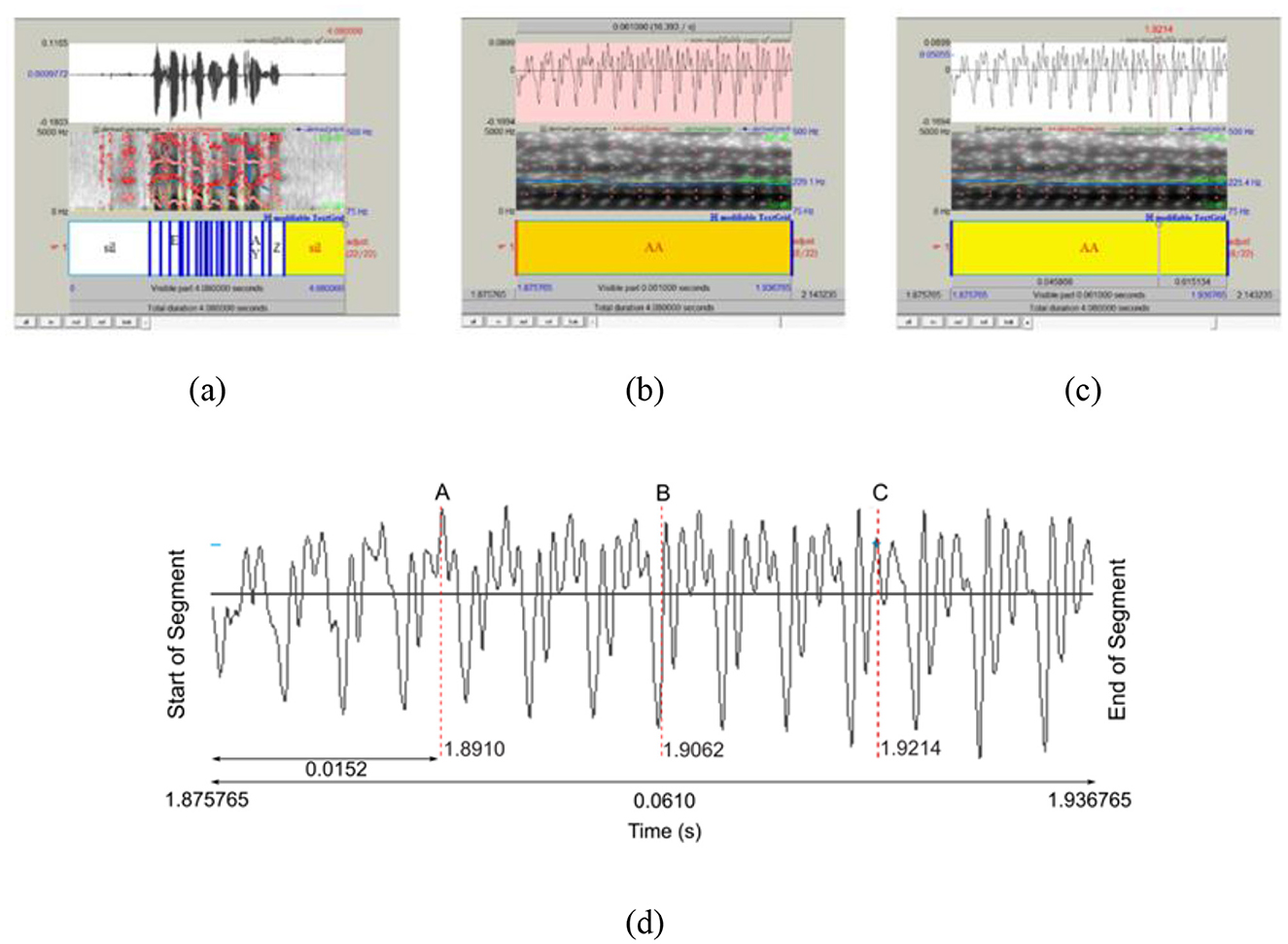
Figure 1. A visualization of capturing a vowel. (a) Visual representation of the sound making up the speech; (b) selection of the desired vowel, /ɑ/, sound; (c) extraction of the formants F1 and F2 at a particular point in time; (d) extraction of Formant Frequencies.

Figure 2. Vowel space for native and Chinese speakers. (a) Female. (b) Male.
The same set of procedures is carried out again for the other corner vowels of interest and is repeated for all the participants. With this, the core data set of this study is obtained and it contains 31,344 distinct data points.
3 Results and discussion
3.1 General view of the corner vowels production for native and Chinese speakers
The vowel space for native and Chinese females is shown in Figure 2a in the bark scale. Since the tongue height is inversely related to the F1, the lower the value, the higher the tongue position. Regarding the F2, the higher the value, the more fronted the tongue position. In this regard, as compared with their native counterparts, Chinese female speakers tend to use a lower and more pulled-back tongue position relative to the palate. This difference in the height of the tongue is nearly similar for the high vowels (/i/ and /u/) and slightly smaller for the lower front vowels (/æ/). As for the lower back vowel, /ɑ/, however, is pronounced at a much lower tongue position. As for the advancement of the tongue, which can be interpreted from the F2 value, the high vowels are pronounced with a more pulled-back tongue position. The pull-back is more for /u/ than for the high vowels. As for the low vowels (/æ/ and /ɑ/), they are pronounced with the same advancement of the tongue.
The following observations can be made about the Chinese speakers:
1. For /i/, Chinese speakers tend to pronounce it with a lower, more open lip and a more pulled-back tongue position.
2. For /u/, Chinese speakers tend to pronounce it with a lower and more pulled-back tongue position than their native counterparts. Additionally, there are more variations in the F2 for /u/ in native and Chinese speakers than for the other corner vowels.
3. For /æ/, the tongue position is lower with a more open mouth position.
4. For /ɑ/, the tongue is in a lower position with more rounded lips.
The mean and standard deviations of the formants F1 and F2 in hertz, together with the number of speakers and tokens collected for the females and males, are summarized in Table 1. For the males, a similar observation to the females can be observed.
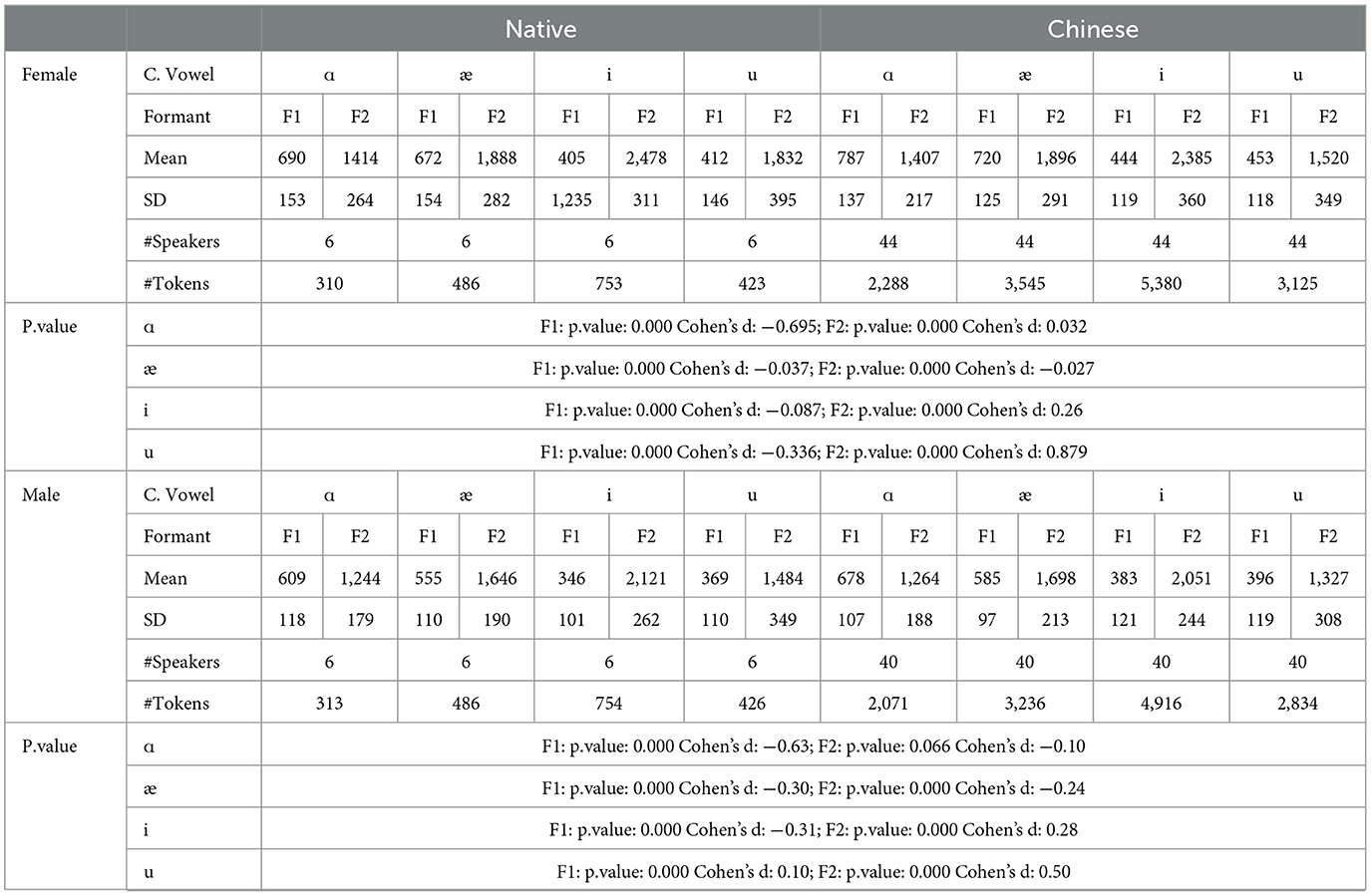
Table 1. F1 and F2 for native and Chinese speakers.
Out of the 849 tokens with the /u/ sound by the native speakers, 287 tokens begin with the /t/ sound, and 334 tokens begin with the /j/ sound. Among the 849 tokens for the /u/ sound in the coda position, only 24 tokens are followed by a silent sound, and an /l/ or /s/ sound follows the rest. Vowels like /i/, /u/, and /ɑ/ are mostly used without a coda, and usually, the consonant sounds /l/ and /s/ are on the onset position of the following word. For example, the /l/ sound comes from the word “learn” in the sentence: “if you want to learn Vietnamese, I think it will be easier than Japanese” (Appendix C Record 2013). Among the 287 tokens that begin with the T sound, it is quite possible that the carrier word is the preposition word “to.” Similarly, among the 334 tokens that begin with a /j/ sound, the majority are for the word “you,” and few are for “January” (36 tokens), “computer” (11 tokens), “usually” (12 tokens), and “disputing” (12 tokens). The native speakers pronounce the vowel correctly by not stressing the preposition “to”; consequently, they pronounce it as a reduced vowel like a schwa. This effect can be observed in the following sentences: Did he go to the hospital? (Appendix C Record 2001), He had no trouble learning how to make a video (Appendix C Record 2011), and If you want to learn Vietnamese (Appendix C Record 2013). This is also done for words in the infinitive form. As for the 263 tokens with the pronunciation of “you,” out of the 344 tokens with the Y sound, only 12 “you's” should be emphasized according to the text: I can run faster than you can. Expect for this sentence, all the 249 other “you's” should not be emphasized. The native speakers know that when “you” is used as a pronoun or as a functional word, it must not be emphasized.
When used as a function word, both “to” and “you” are pronounced with reduced strength by the native speakers, resulting in the /u/ sounding like schwa, which will put the tongue in a much more fronted position. In contrast, the Chinese speakers put the same stress on the syllables when pronouncing “to” and “you,” which pulls back and lowers the tongue to pronounce the/u/sound.
The pronunciation of the /u/ sound in the following subsections will likely follow the same general pattern.
3.2 Effect of the consonant context on the corner vowel
3.2.1 Sonorants
Sonorants are a group of speech sounds produced with a relatively open vocal tract, allowing air to flow freely. These sounds include glide, nasals, and liquids. Since most vowels are produced with the consonants in the onset or coda positions, the consonantal effects on the vowels will be examined. The sonorants have been split into the liquids and the nasals. The nasals are treated separately because the vowels are significantly affected by nasalization. These create anti-formants, which reduce the intensity of the formants, blurring the peak of formant frequencies, which results in an erroneous calculation in formant tracking.
3.2.1.1 Sonorants in the onset position
In this case, the liquid consonants /r/ and /l/ and the glide consonants /j/ and /w/ were included while the nasal ones were excluded. It can be seen from the Figures 3a, b that besides the /ɑ/ sound, the other three corner vowels /i/, /æ/, and /u/, almost follow the general trend. The statistics of the formants are given in Table 2. One possible explanation for the deviation in the pronunciation of /ɑ/ is as follows:
![Two vowel charts compare native and non-native speakers for female and male subjects. Chart (a) for females and chart (b) for males show vowel formant frequencies F1 and F2. Each chart plots vowels [i], [æ], [u], [α], [ə] with solid lines for native and dotted lines for non-native speakers, highlighting formant differences.](https://www.frontiersin.org/files/Articles/1598904/fpsyg-16-1598904-HTML/image_m/fpsyg-16-1598904-g003.jpg)
Figure 3. Vowel spaces for onset sonorants. (a) Female. (b) Male.
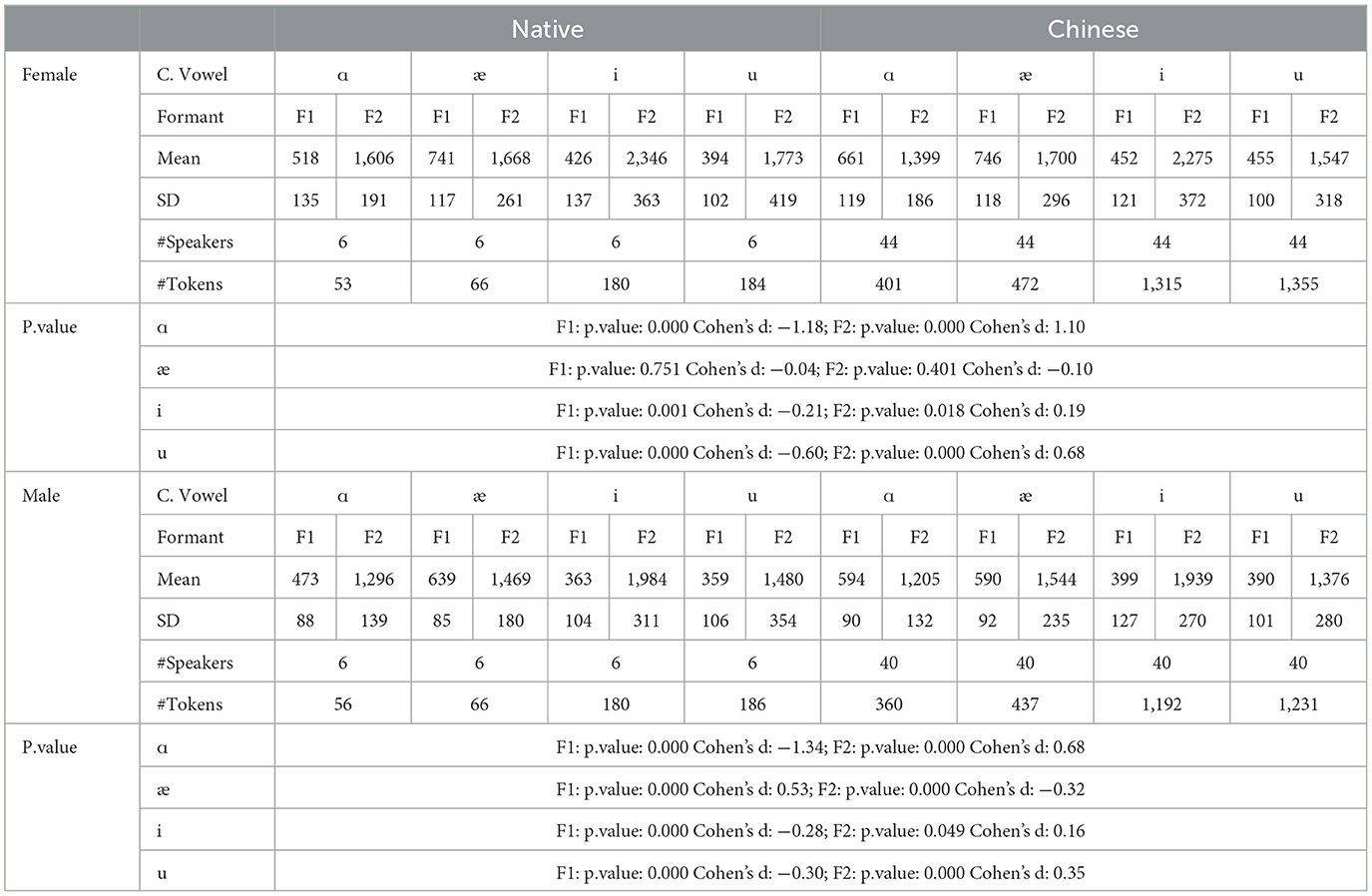
Table 2. The F1 and F2 by native and Chinese speakers for onset sonorants.
Among the four sonorants (/r/, /l/, /j/, /w/) on the onset position of the /ɑ/ sound, only the /w/ sound appears in this case. The /w/ sound in the onset position can affect the production of the /ɑ/ sound as /w/ is a labial-velar sound, which involves rounding the lips and raising the tongue, similar to the pronunciation of velars. When /w/ is followed by an /ɑ/, which is a low vowel, the lips tend to remain rounded, meanwhile, the tongue's elevation is still at a velar sound position, resulting in a more rounded or protruded lip position for the /ɑ/ sound. This tongue position results in lower F1 and F2 values. We can also see from the statistics that the pronunciation of the corner variables /æ/ and /i/ are relatively similar among the native and non-native females. As for the males, only the F2 for /i/ is relatively similar.
3.2.1.2 Sonorant in the coda position
The liquid consonants /r/ (12 tokens) and /l/ (86 tokens) and the glide consonants /j/ (48 tokens) and /w/ (87 tokens) were considered while the nasal sounds were excluded. The formant F1 and F2 values in Hertz are given in Table 3.
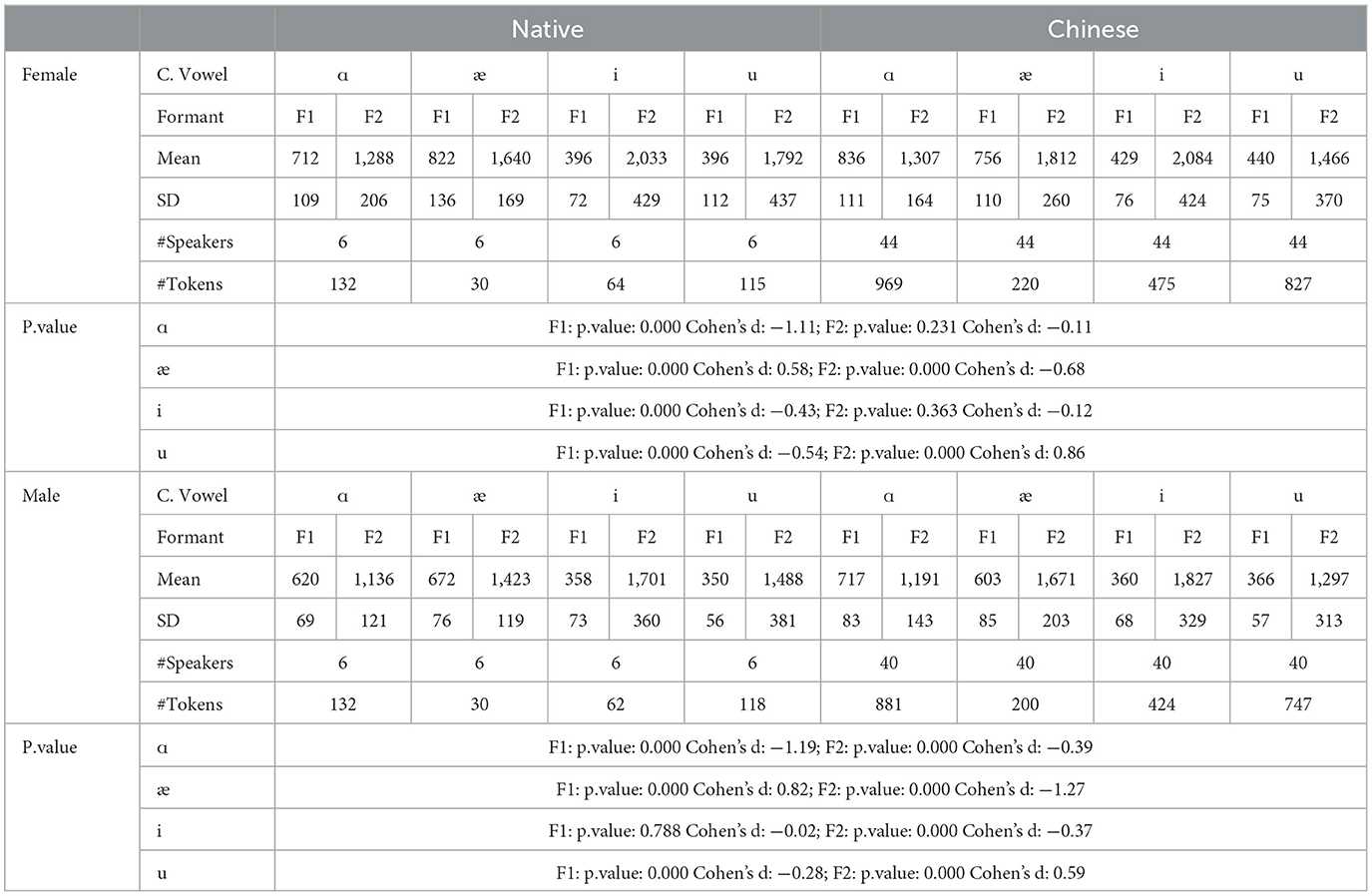
Table 3. The F1 and F2 by native and Chinese speakers for coda sonorants.
In general, Chinese female speakers tend to pronounce the corner vowels with a more frontal tongue position at a lower tongue height, except for /æ/, which is pronounced at a slightly higher position. Additionally, the vowel space for the Chinese speakers is larger than that of the native speakers, and the distance between /i/ and /u/ for the native speakers is shorter than their Chinese counterparts. This is primarily due to the pronunciation of /i/. Of the 126 tokens from native speakers for male and female, the majority (102 tokes) end with sonorants /w/, and /l/ and /r/ sounds are 12 tokens for each. The /w/ sound in the coda position can affect the production of the /i/ sound as /w/ is a labial-velar sound, which involves rounding the lips and raising the tongue, similar to the pronunciation of velars. When /i/ is followed by a /w/ sound, which is a low vowel, the lips tend to be prepared for a rounded position. Meanwhile, the tongue's position is relatively posterior, resulting in a lower F1 and F2 value. The tongue position can be visualized in Figures 4a, b for the females and males respectively. The statistics are provided in Table 4, where it can be seen that there is a small Cohen's d value for F2 for /ɑ/ and for /i/ for the females and F1 for /i/ for the males.
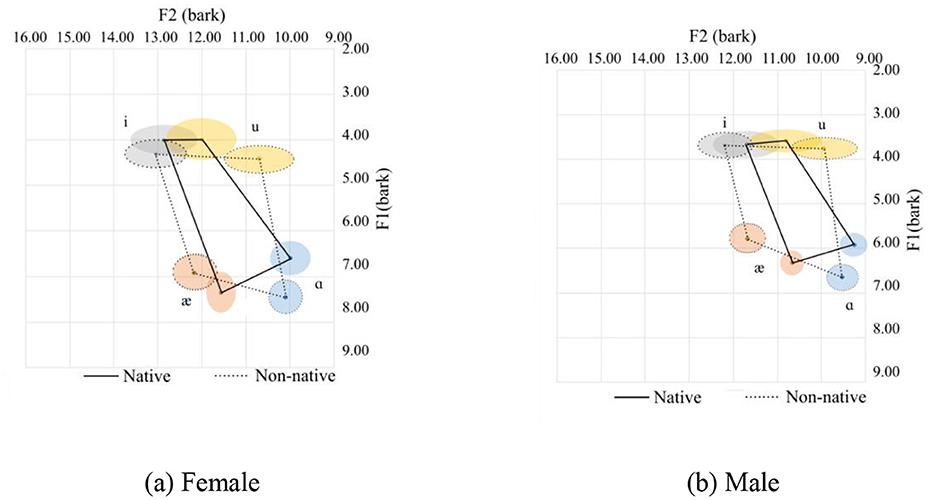
Figure 4. Vowel spaces for coda sonorants. (a) Female. (b) Male.
3.2.2 Nasals
Nasal sounds are speech sounds produced by allowing air to flow through the nose as well as the mouth. The pronunciation is achieved by lowering the soft palate (or velum) at the back of the mouth, allowing air to pass through the nasal cavity while also passing through the mouth. The resulting sound is often described as having a nasal quality. The nasalization of the sound produced can significantly affect the formant F1 and F2 values due to the formation of anti-formants. Hence the nasal sonorants are considered here.
3.2.2.1 Nasals in the onset position
In this case, the consonants /n/, /m/, and /η/ were included. In general, Chinese speakers tend to pronounce the upper corner vowels /i/ and /u/ with a more pulled-back and at a lower tongue height position. Additionally, the tongue height for /i/ and /u/ is similar. As for the low corner vowels /æ/ and /ɑ/, /æ/ is similar to the native's pronunciation, with a slightly more frontal pronunciation in the females' pronunciation, while it is different for the males' pronunciation, which is much more frontal. On the other hand, /ɑ/ is quite different as it is pronounced with a more frontal and lower tongue position than the female native speakers. The vowel space for the Chinese speakers is slightly smaller than their native counterparts for the sonorant nasal coda.
Although the two graphs, Figures 5a, b, show an inconsistent pattern between the female and the male speakers, they follow the general pattern, as discussed in Section 3.1. The statistics are summarized in Table 4.
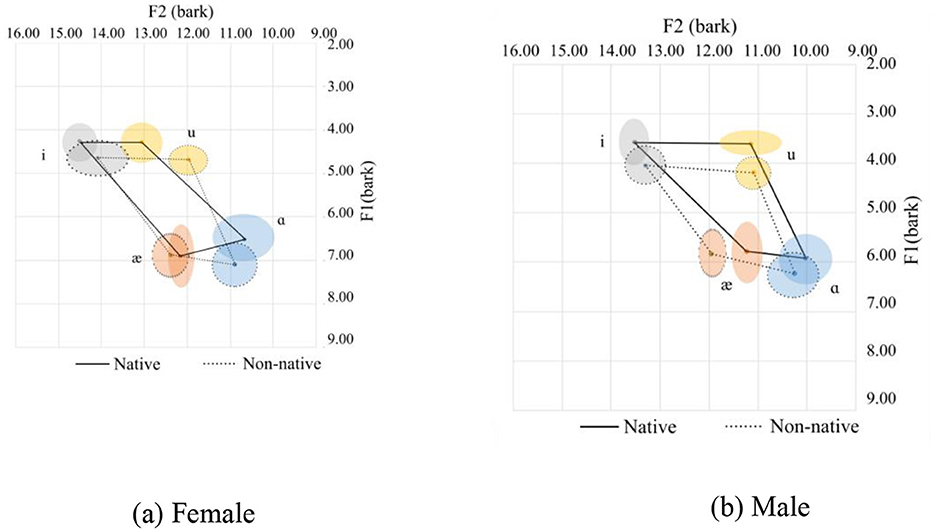
Figure 5. Vowel space for onset nasals. (a) Female. (b) Male.
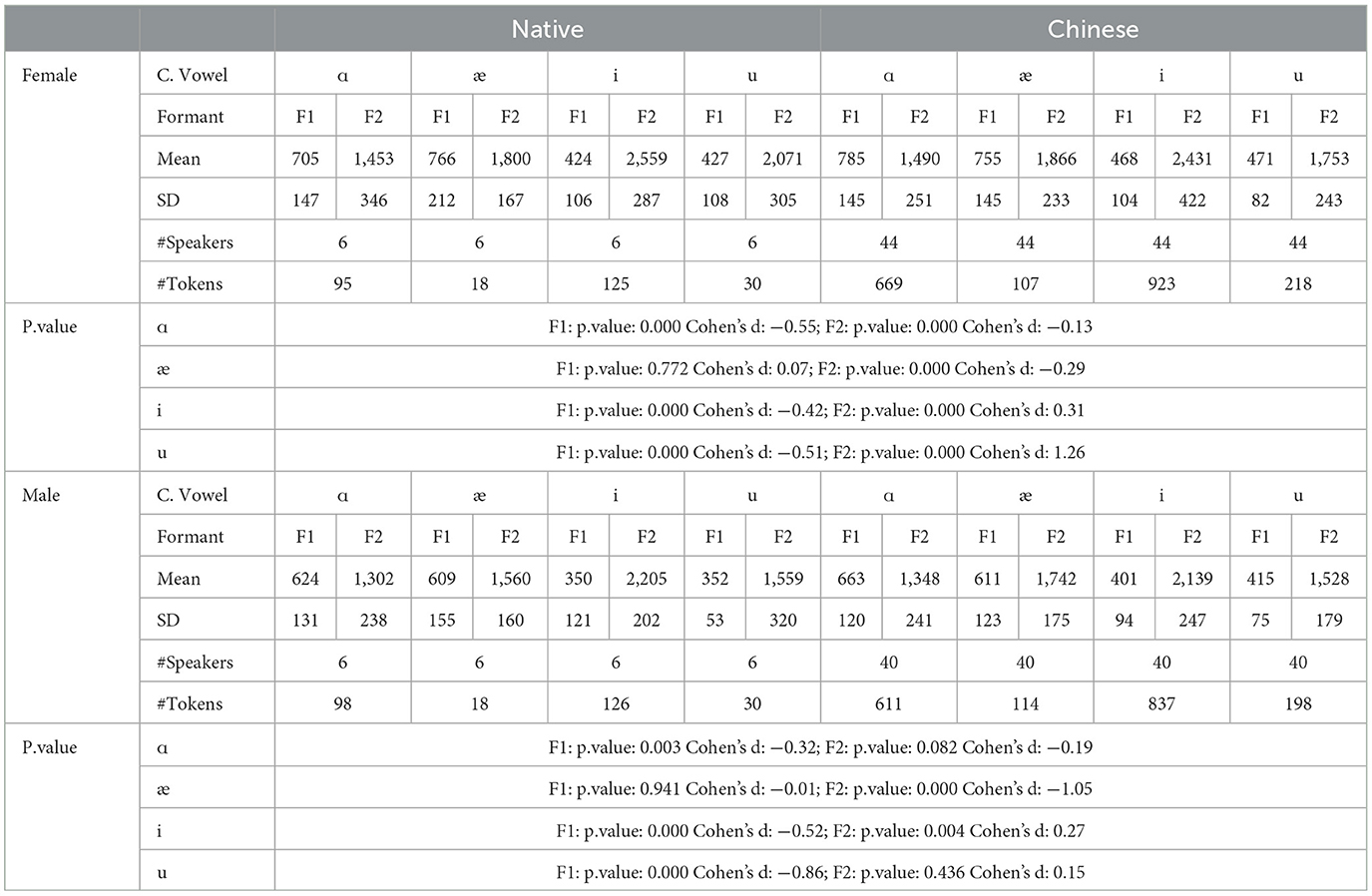
Table 4. The F1 and F2 by native and Chinese speakers for onset nasals.
3.2.2.2 Nasals in the coda position
It can be observed from Figures 6a, b that the vowel space for the Chinese speakers is much larger than that of the native-speakers. Except for /i/, the Chinese female speakers pronounce all the other corner vowels with a more posterior tongue. It is also observed that the tongue' elevation is lower for the Chinese speakers. /u/ is also pronounced with a much more posterior tongue position by the Chinese speakers.
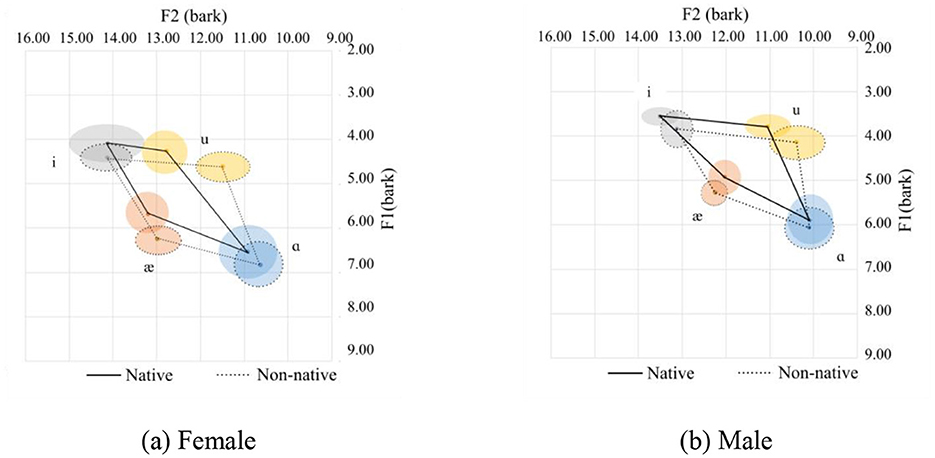
Figure 6. Vowel spaces for coda nasals. (a) Female. (b) Male.
The three corner vowels /i/, /u/, and /ɑ/ follow a similar pattern except for /æ/, for which the native speakers pronounce with a conspicuous higher tongue position with more rounded lips than the Chinese speakers. A possible reason is as follows:
Of the 972 tokens for the native speakers' /æ/ sound, 300 tokens end with the sonorant nasals (/n/, /m/, and /η/). Among these, 288 tokens belong to the alveolar sound /n/, and the 12 remaining tokens belong to the /η/ sound. There are no tokens for the /m/ sound. So, generally speaking, after pronouncing the /æ/ sound, the tongue will be raised in anticipation of the nasal /n/ sound, which is an alveolar nasal sound. Naturally, the tongue will move closer to the alveolar ridge area, lowering the F1 value. The statistics of the data are summarized in Table 5 where we can see the strong similarity in the pronunciation of /ɑ/ for the males.
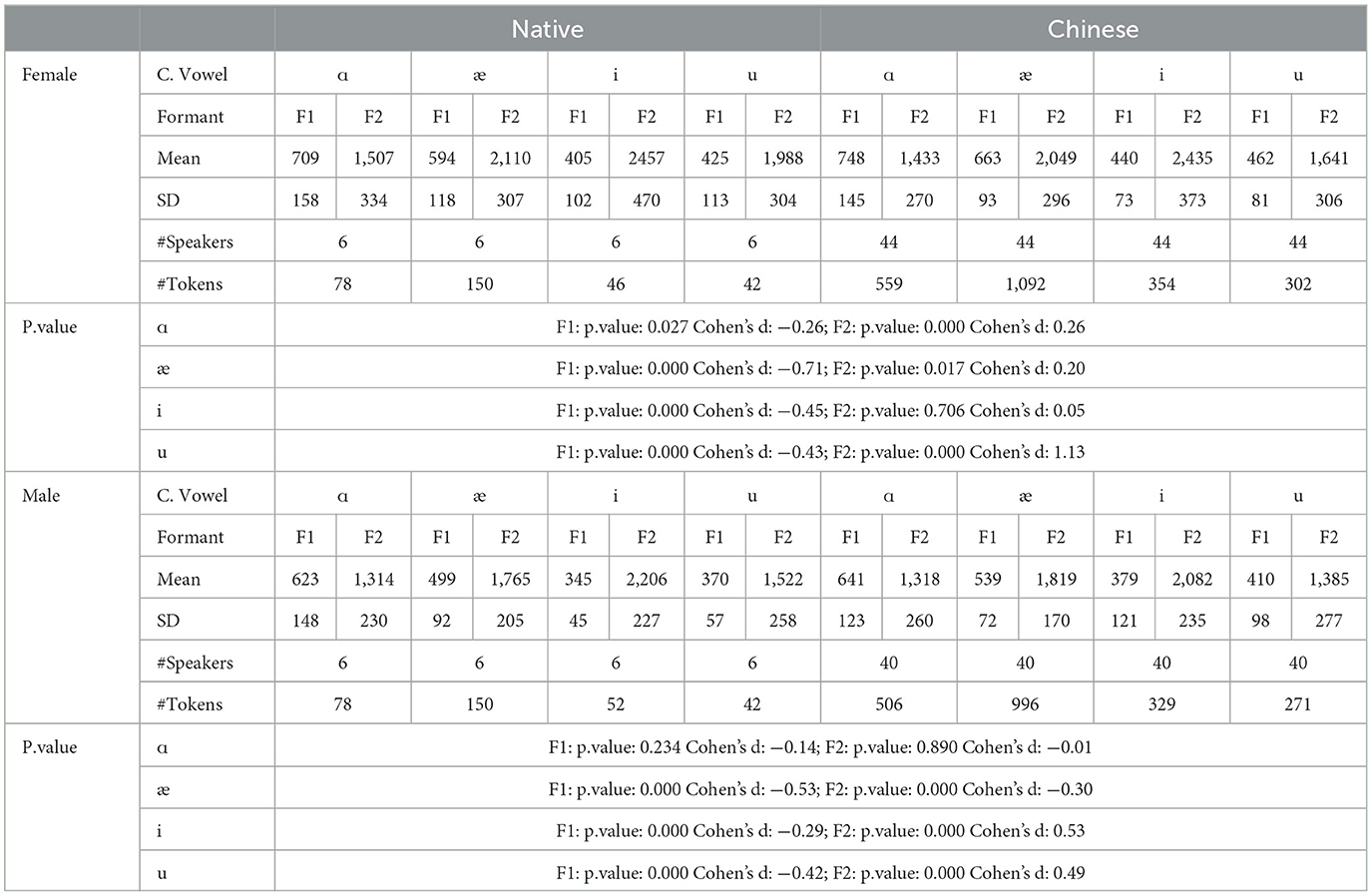
Table 5. The F1 and F2 by native and Chinese speakers for coda nasals.
Generally, an anti-formant effect is likely to occur whenever there is a nasal sound after a vowel. The nasal cavity is open when the vowel sound is pronounced, and the velum will go down earlier than expected to prepare the following nasal sound. However, the current corpus does not show that case.
3.2.3 Obstruents
The obstruents are speech sounds that involve a more obstructed vocal tract than the sonorants, resulting in a burst of sound or friction when produced, such as stops, fricatives, and affricates.
3.2.3.1 Obstruent in the onset position
In this case, the consonants /t/ /s/ /d/ /z/ /p/ /b/ /v/ /f/ /θ/ /ð*/ /ʃ/ /ʒ/ and /k/ were included. As can be seen from Figure 7a, the vowel space for the Chinese female speakers is significantly larger than that produced by the native female speakers. The Chinese female speakers pronounce the upper corner vowels, /i/ and /u/, with a slightly more posterior tongue position for /i/ and a much more posterior position for /u/. As for the lower corner vowels, these are pronounced with a slightly more frontally and in a lower tongue position than the natives. There is a partial overlap in the pronunciation of all three corner vowels, /ɑ/, /æ/, and /i/, by the native and Chinese speakers and no overlap in the pronunciation of /u/. A similar trend can be observed for the male speakers.
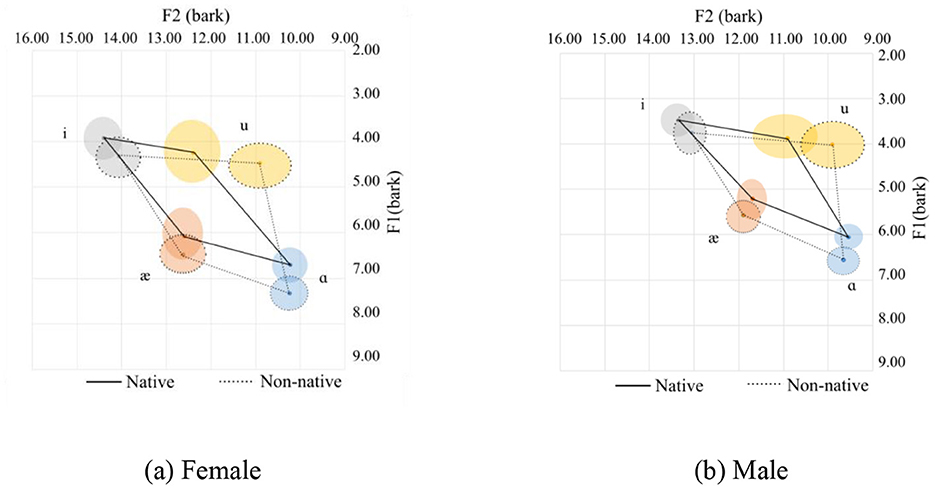
Figure 7. Vowel spaces for onset obstruents. (a) Female. (b) Male.
Although the difference between the female and the male speakers can be seen easily in Figures 7a, b, the observed pattern for each is consistent with the general pattern shown in Figure 5. This consonant environment (obstruent in the onset position) does not affect the production of the corner vowels beyond that observed in the general trend in Section 3.1. The statistics are summarized in Table 6 below.
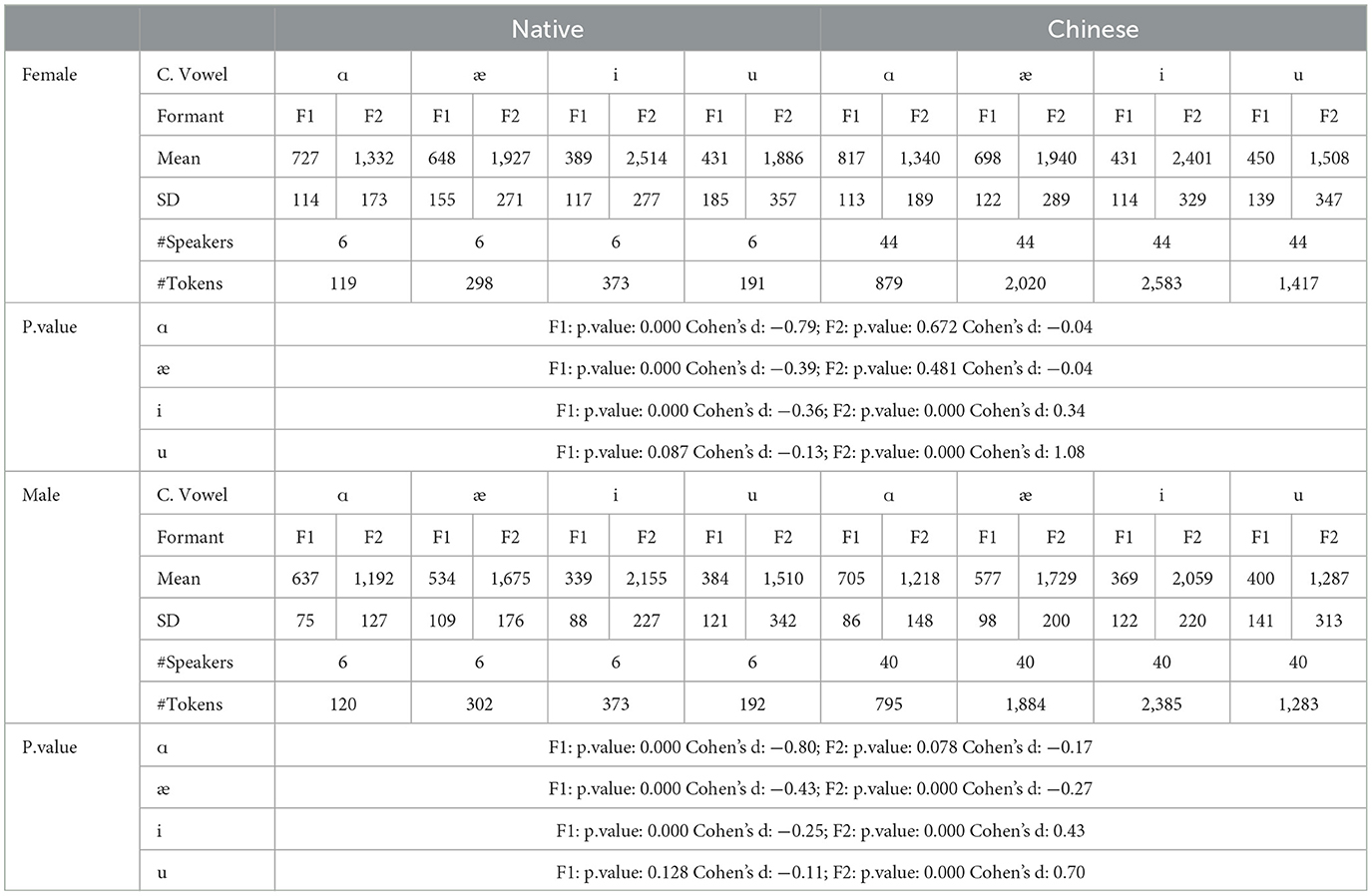
Table 6. The F1 and F2 by native and Chinese speakers for onset obstruents.
3.2.3.2 Obstruent in the coda position
In this case, the consonants /t/ /s/ /d/ /z/ /p/ /b/ /v/ /f/ /θ/ /ð*/ /ʃ/ /ʒ/ and /k/ were included. The vowel space for the Chinese female speakers is significantly larger than that produced by the native female speakers due mainly to the pronunciation of /u/. The female Chinese speakers pronounce the upper corner vowels with a lower tongue position. The tongue's elevation is similar for both corner vowels, /i/ and /u/, by the Chinese speakers as opposed to a slightly more elevated tongue position for /u/ by the native female speakers. The tongue position is slightly more posterior for /i/ but is significantly more pulled back for /u/ for pronunciations by the Chinese female speakers. For the lower corner vowels, the native females' tongue position tends to be more elevated but at a similar tongue advancement. In general, the pronunciation of /u/ in the obstruent coda position is more different for the Chinese speakers. These are shown in Figures 8a, b and the statistics are summarized in Table 7.

Figure 8. Vowel spaces for coda obstruents. (a) Female. (b) Male.

Table 7. The F1 and F2 by native and Chinese speakers for coda obstruents.
Based on the dataset, the obstruent in the coda position does not affect the production of the four corner vowels beyond that observed in Section 3.1 is still applicable.
3.2.4 Different places of articulations
The place of articulation refers to the specific location where speech sounds are produced in the vocal tract. These locations can be divided into two main categories: oral and nasal. The orals include the alveolar, dental, glottal, labials, palatal, post alveolar and velar. Only the alveolar, labials, post alveolar, and velar are considered.
3.2.4.1 Alveolar in the onset position
The consonants /t/, /s/, /d/ and /z/ were included in this case. It can be observed from Figures 9a, b that the vowel space for the native speakers is smaller than that of the Chinese speakers. Except for /u/, the sounds produced by the native and Chinese speakers overlap. In general, for the upper corner vowels, the tongue position is more pulled-back and is slightly lower for the Chinese speakers. As for the lower corner vowels, Chinese female speakers pronounce them slightly more frontally and in a lower tongue position. The general trend in Section 3.1 can still be applied to the alveolar sounds in the onset position in this dataset. The formant values are summarized in Table 8 together with their statistics.
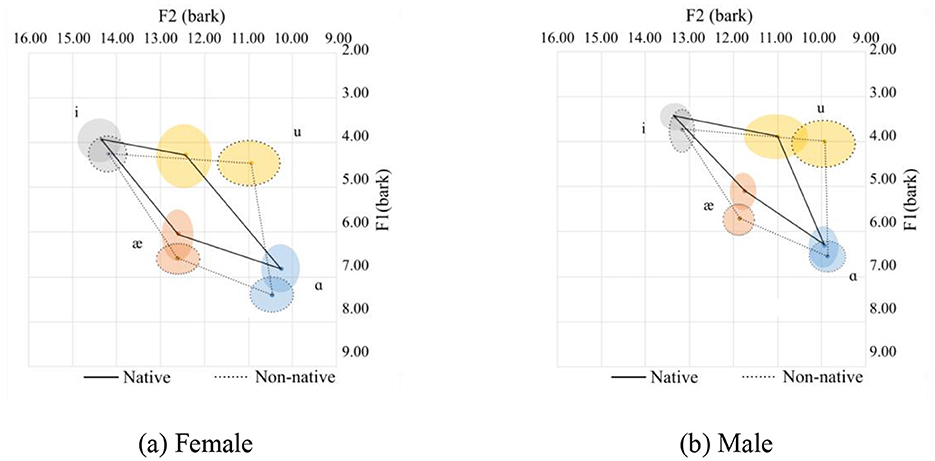
Figure 9. Vowel spaces for onset obstruent alveolars. (a) Female. (b) Male.

Table 8. The F1 and F2 by native and Chinese speakers for onset obstruent alveolars.
3.2.4.2 Alveolar in the coda position
The consonants /t/, /s/, /d/ and /z/ were included. It can be seen from Figure 10 that there is a partial overlap in the sound produced by both groups except for /u/. Besides, the vowel space for the Chinese female speakers is larger. The tongue's elevation is lower for the Chinese females for all corner vowels, and the tongue is more frontal for the lower corner vowels.
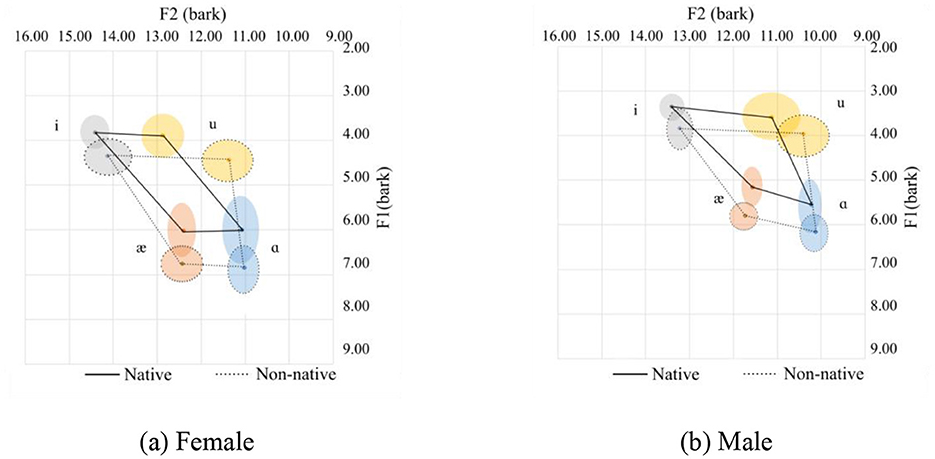
Figure 10. Vowel spaces for coda obstruent alveolars. (a) Female. (b) Male.
Although the difference between females and males can be easily seen in Figures 10a, b, the general pattern of each is consistent with the general pattern shown in Figure 5. Apparently, this consonant environment (Alveolar in the onset position) does not have a significant effect on the production of the corner vowels. The statistics are provided in Table 9 below.
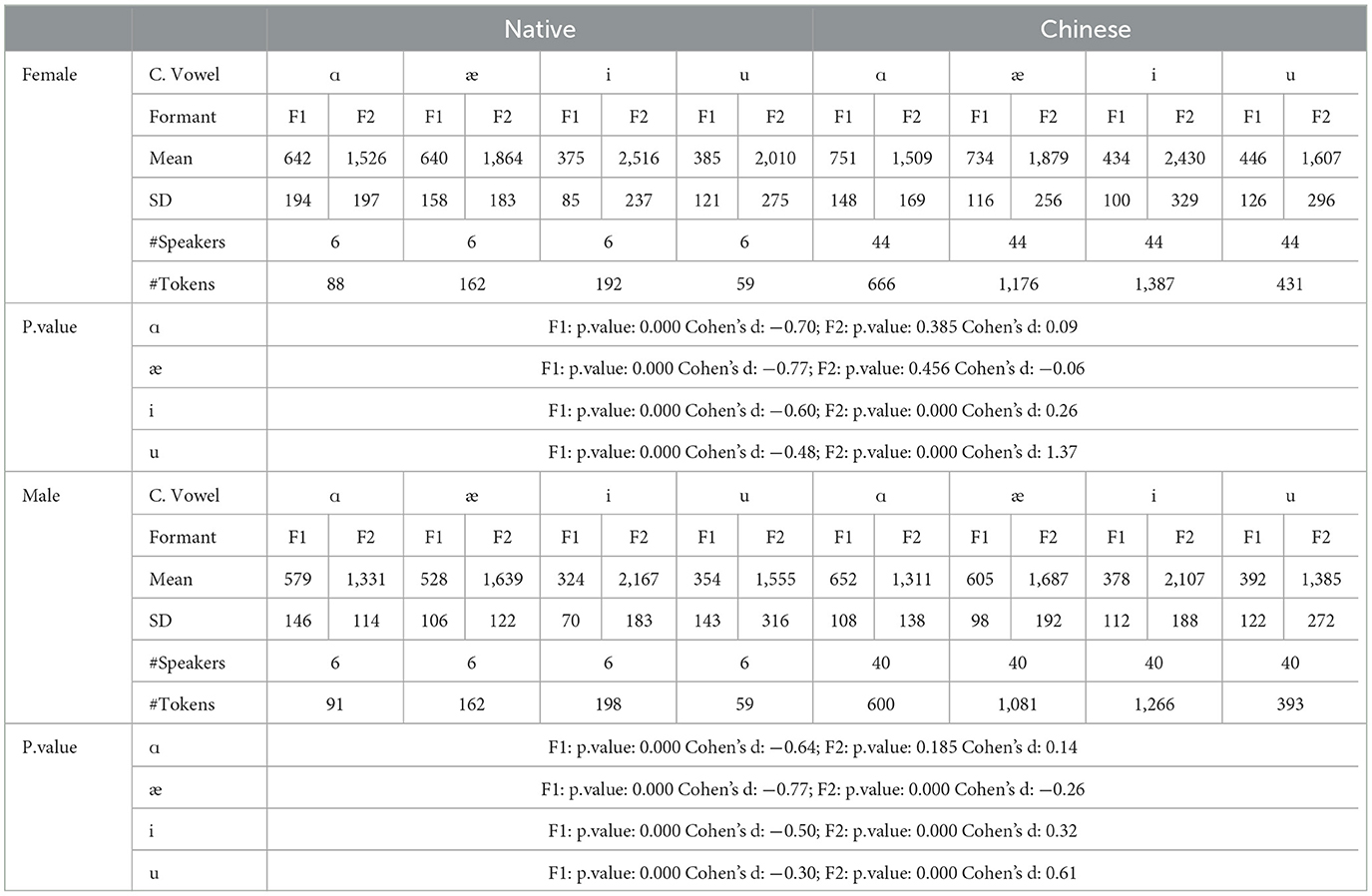
Table 9. The F1 and F2 by native and Chinese speakers for coda obstruent alveolars.
3.2.4.3 Labials in the onset position
The consonants /p/, /b/, /v/, and /f/ were included. In general, the vowel space for Chinese female speakers is slightly larger than that of native female speakers as can be seen from Figure 11a. In addition, the sound produced for the two front corner vowels, /i/ and /æ/, is partially overlapped, while the sound produced for the rear corner vowels, /u/ and /ɑ/, is not overlapped. Moreover, it can be readily observed that the difference between the /u/ sound is relatively small for Chinese speakers. Out of the 849 tokens for the vowel /u/ sound, only 24 tokens for the native speakers belong to the labials in the onset position. These tokens belong to the /f/ sound. And all of the 24 /f/ sounds end with the final /d/ sound, which can be traced to the word “food” in the sentence “I like Japanese food, but Korean food is too spicy for me.” Compared with the function words “to” and “you,” “food” is a content word that should be stressed. Consequently, for the female and male native speakers, the /u/ sound has a lower and posterior tongue position which the Chinese speakers also have. The vowel space for the males are given in Figure 11b and the statistics are provided in Table 10.
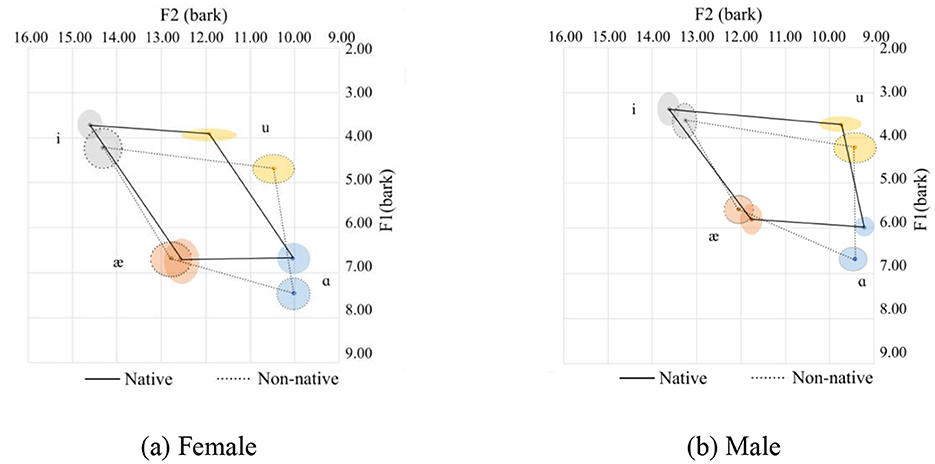
Figure 11. Vowel spaces for onset obstruent labials. (a) Female. (b) Male.
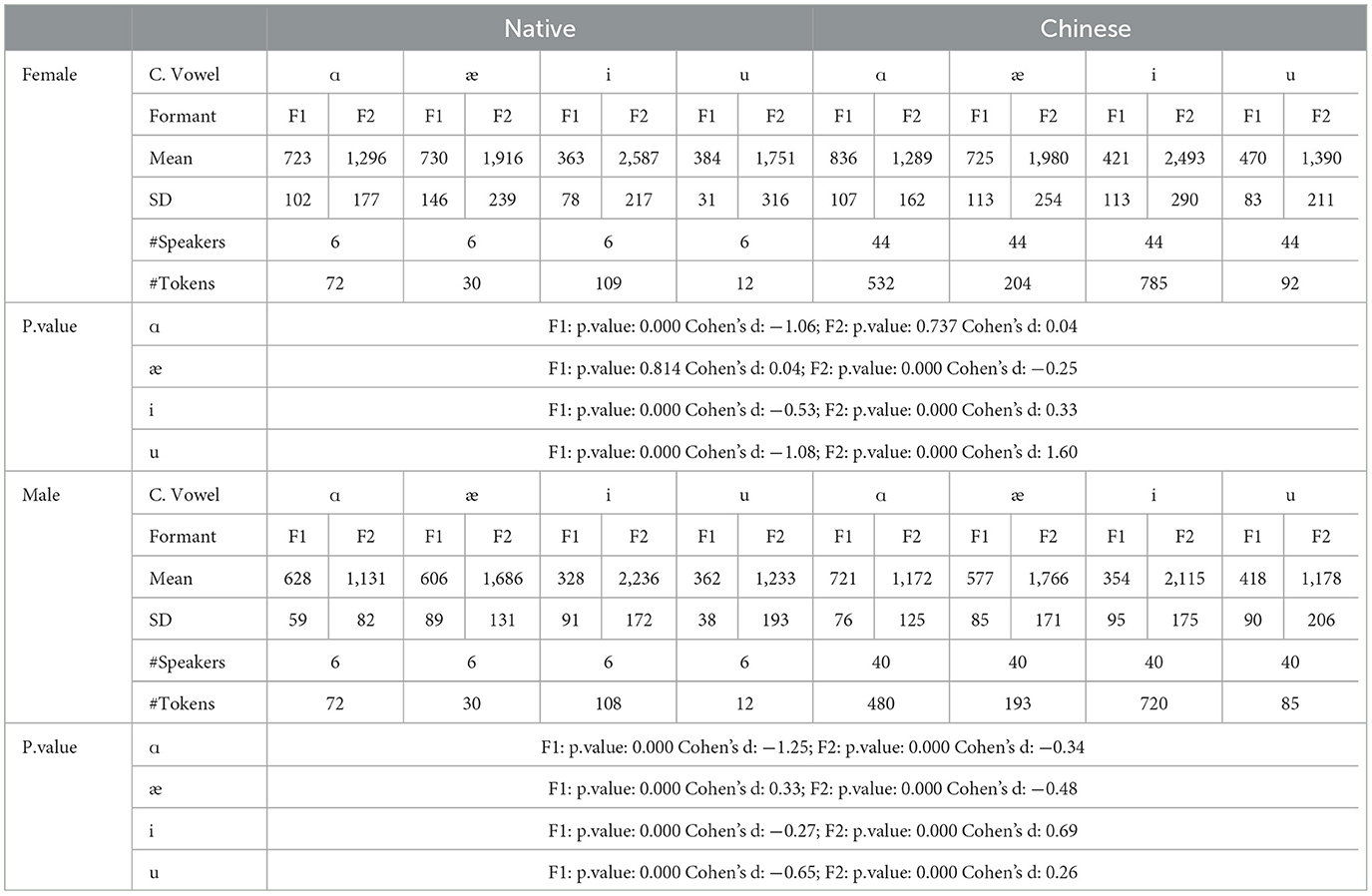
Table 10. The F1 and F2 by native and Chinese speakers for onset obstruent labials.
3.2.4.4 Labials in the coda position
This section contains only three corner vowels including /i/, /u/, and /æ/, as this dataset does not contain the /ɑ/ sound. This explains why the shape of Figures 12a, b is triangular instead of quadrilateral. In general, the vowel space for the native female speakers is significantly smaller than that of the Chinese female speakers. There is a relatively good overlap for the corner vowels /i/ and /æ/ and no overlap for /u/.

Figure 12. Vowel spaces for coda obstruent labials. (a) Female. (b) Male.
In general, even without the /ɑ/ sound, it can be seen that the pattern of the remaining three corner vowel sounds follows the general trend as in Figure 5. It is worth mentioning that, with obstruent labials in the coda position, it is evident that, for Chinese speakers, the pronunciation of the vowel /æ/ is quite accurate as the centroid of this particular sound is very close to the one for the native speakers regardless of the gender. The summary of the dataset for this section is provided in Table 11.

Table 11. The F1 and F2 by native and Chinese speakers for coda obstruent labials.
3.2.4.5 Post-alveolar in the onset position
The consonants containing /ʒ/ and /ʃ/ are considered for the post-alveolar in the onset position. Only the three corner vowels /ɑ/, /æ/, and /i/ are present.
In general, Chinese speakers pronounce the corner vowels for the post-alveolar in a more pulled-back tongue position. From Figures 13a, b, the height of the tongue is similar for /i/ and higher for both /æ/ and /ɑ/, and the vowel space is smaller for the Chinese speakers. In addition, there is a partial overlap in the pronunciation of all the corner vowels between the two groups. This means that the Chinese speakers' overall pronunciation is quite similar to the native speakers except for the /æ/ sound.
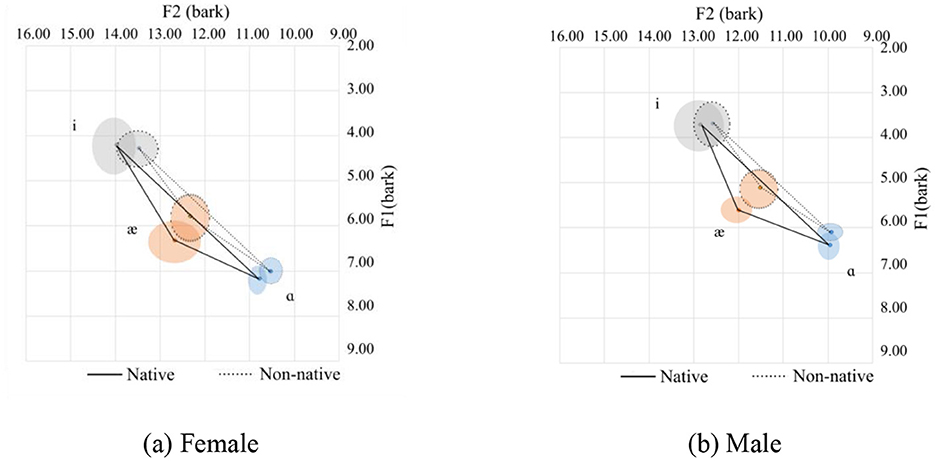
Figure 13. Vowel spaces for onset post-alveolars. (a) Female. (b) Male.
It can be seen that the /æ/ sound for the native speakers is a little lower and more fronted than that of the Chinese speakers. A possible explanation is as follows. Out of the 972 tokens for the /æ/ sound for native speakers, only 72 belong to the /ʒ/ sound in the onset post-alveolar position. Among these 72 tokens, 36 end with the /n/ sound, and the remaining 36 end with the /p/ sound. By looking through the corpus, the /p/ sound belongs to the word “Japanese,” and the /n/ sound belongs to the word “January.” The native speakers acknowledged that these should be pronounced with strength. The first syllable for January or the second syllable for Japanese is consequently stressed. On the contrary, the Chinese speakers did not pronounce it with stress. A summary of the statistics of the formant values are provided in Table 12.
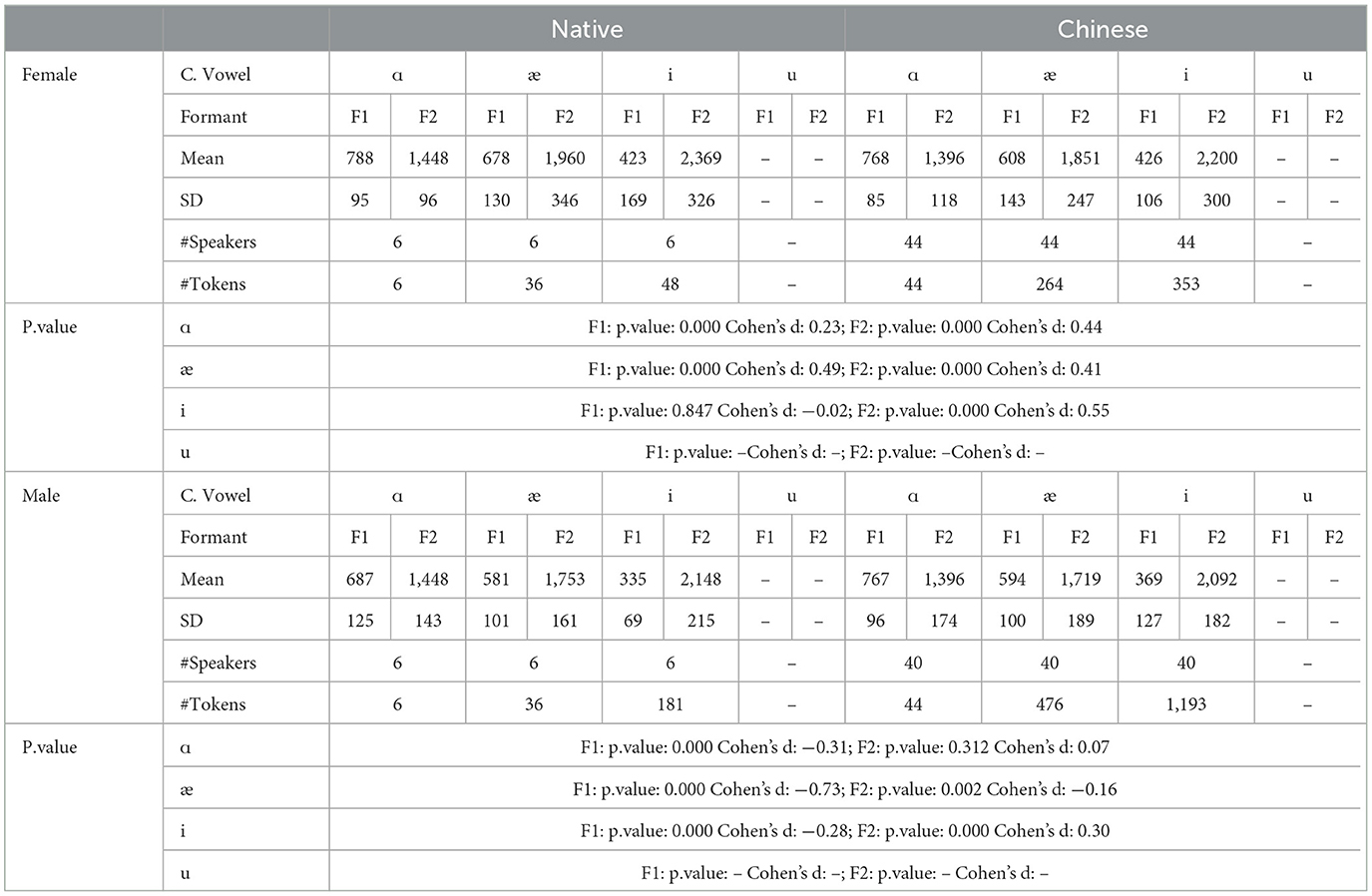
Table 12. The F1 and F2 by native and Chinese speakers for onset post-alveolars.
3.2.4.6 Velars in the coda position
For the velar in the coda position, there is only the consonant /k/, and the vowel space is composed of only three corner vowels including /æ/, /i/, and /u/. Figures 14a, b together with Table 13 summarizes the data.
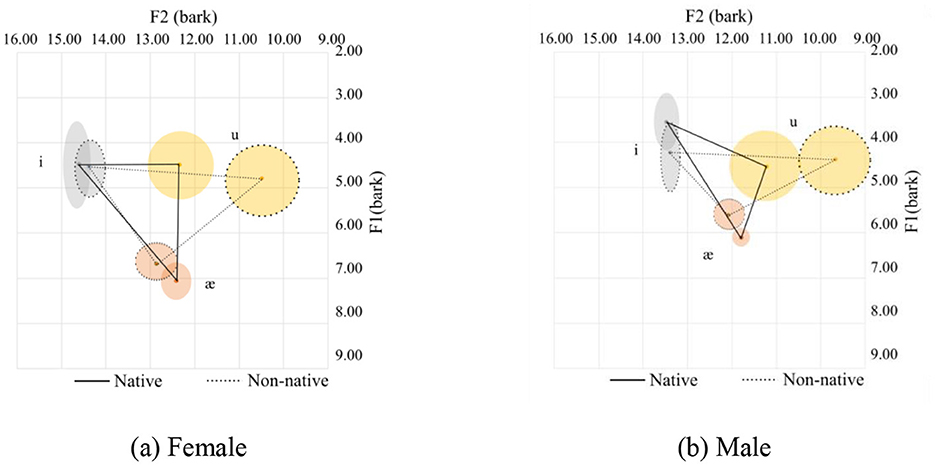
Figure 14. Vowel spaces for coda obstruent velars. (a) Female. (b) Male.
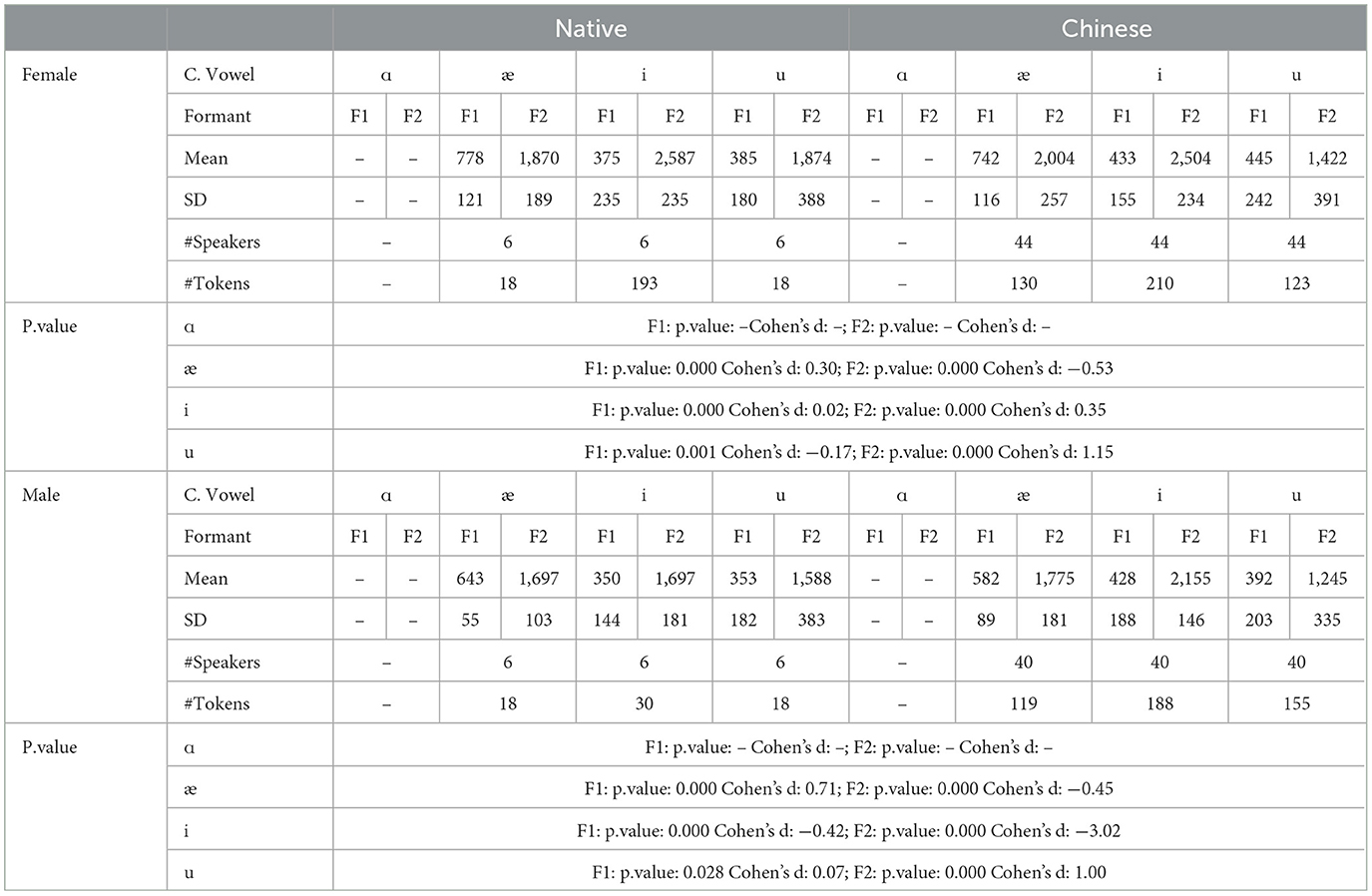
Table 13. The F1 and F2 by native and Chinese speakers for coda obstruent velars.
In general, the vowel space for Chinese female speakers is significantly larger than that of the native females owing to the pronunciation of /u/. Of the 849 tokens produced by the native speakers for the /u/ sound, 36 tokens end with the velar /k/ sound. Out of these, 12 tokens are for the word “you,” 12 tokens are for the word “to,” and the remaining 12 tokens are for the word “who.” The words “you,” “to,” and “who” server as the functional words in the sentence, which explains why the /u/ sound is pronounced with reduced emphasis like the schwa. In contrast, Chinese speakers do not consider these as functional words and pronounce them with emphasis.
3.3 Discussion
3.3.1 Vowel space
It's not difficult to see that compared to Chen's data, the vowel space derived from this corpus is much smaller, regardless of whether the speakers are native or Chinese, male or female. One possible explanation for this is that the speech samples for the present study are mostly from a sentence instead of an isolated word, that is to say, vowels in this study are from “continuous speech” with numerous segments that exercise the full articulation of the tongue in the oral cavity (Lindblom, 1983). In this case, it is highly probable that vowels are produced without being fully articulated, and the overall speakers' vowel space should shrink accordingly. In contrast, the vowels from Chen's study were read in the same carrier sentence: “Say _____ again five times.” In this case, the subjects put some stress on the target word, resulting in the vowels included in the target words being produced in a fully articulated form. The vowel space from the two studies are provided in Figures 15a, b.
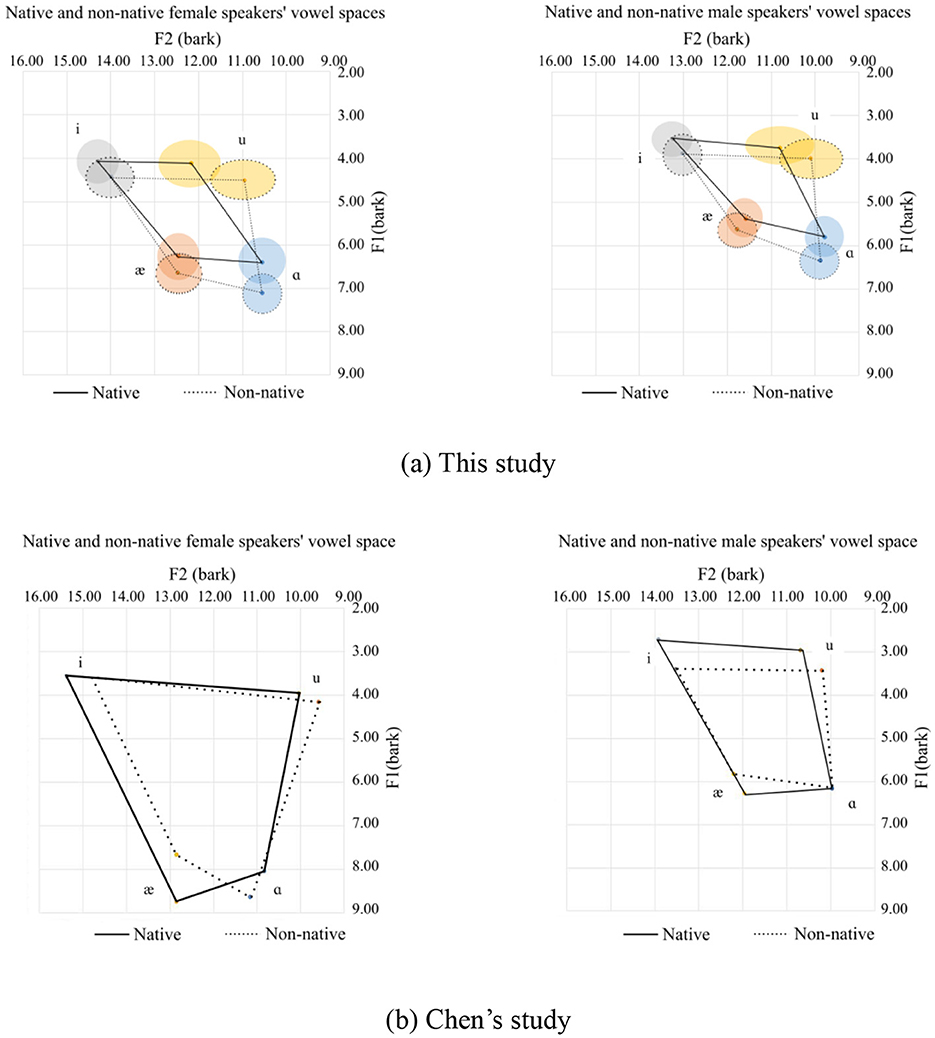
Figure 15. Comparison of vowel spaces between this study and Chen's study. (a) This study. (b) Chen's study.
3.3.2 Effect of the consonant context on the vowel production
The vowels in this study are not from a uniform carrier sentence as carried out in Chen (1999), Peterson and Barney (1952), and Hillenbrand et al. (1995). Although the same vowels are pooled to calculate the mean and standard deviation of the vowel, words, including the target vowel, are different. This means that the same vowels are not from a homogenous phonological environment. Segmental variations may cause changes in the formant values because of coarticulation. The general trend shown in Figure 5 may have different facets. Instead of dividing segmental environments according to the identity of onset and coda segments, we grouped some consonants according to their phonological features, such as sonorant, obstruent, labial, etc. Compared to the general trend in Figure 5, not all phonological features have a conspicuous effect, as the dataset did not contain enough tokens. The groups are summarized in Table 14.
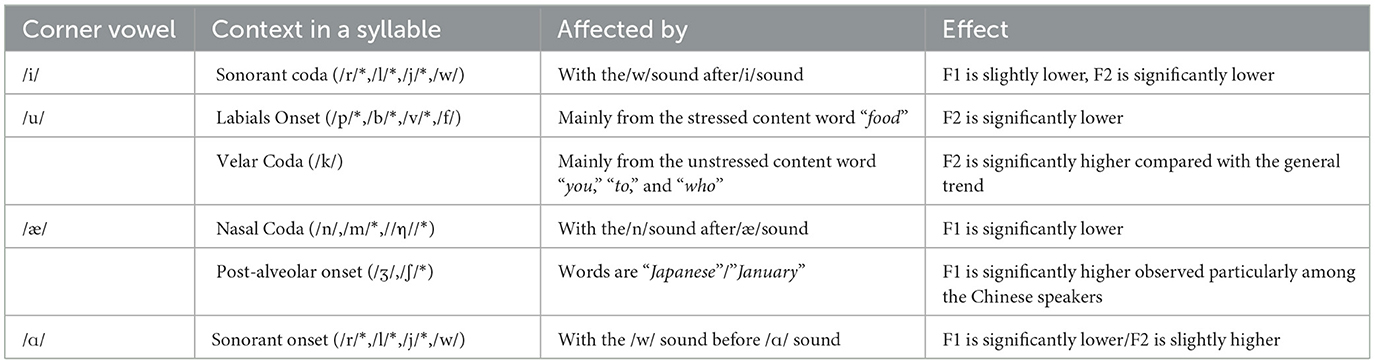
Table 14. Summary of the contextual consonantal effects on the vowels.
These observations and their explanations are as follows:
• The labial-velar sound /w/ in the coda position mainly affects the /i/ corner vowel. This /w/ sound requires the rounding of the lips and raising of the tongue, resulting in /i/ being pronounced similarly to a velar. When /w/ precedes /i/, the lips anticipate a rounded position, while the tongue is relatively pulled back, resulting in a lower F1 and F2 value.
• The /u/ corner vowel is affected by an /f/ consonant in the labial coda position. The dataset contains only 24 tokens for the /u/ vowel for the native speakers belonging to the /f/ sound, which is a labial in the onset position. And all of the 24 F sounds end with the final /d/ sound, which can be traced to the word “food” in the sentence “I like Japanese food, but Korean food is too spicy for me.” Compared with the function words “to” and “you,” “food” is a content word that should be stressed. Consequently, the native speakers produce the /u/ sound with a lower and more pulled-back tongue position than the Chinese speakers.
/u/ is also affected by the consonant velar /k/ in the coda position due to the words “you,” “to,” and “who,” which serve as the function word in the sentences. This explains why the /u/ sound is pronounced with reduced emphasis, like the schwa by the native speakers. In contrast, Chinese speakers do not consider these as functional words and pronounce them with emphasis.
• The /æ/ corner vowel was mostly affected by the anticipation of the nasal /n/ sound, which requires the tongue to be raised to produce the alveolar nasal sound. Consequently, this anticipation moves the tongue closer to the alveolar ridge area, which naturally lowers the F1 value.
It can be observed that the /æ/ sound for the native speakers is slightly lower and more fronted than that of the Chinese speakers. A possible explanation is that the influence is due to the /ʒ/ sound in the onset post-alveolar position followed by either an /n/ or a /p/ sound. By looking through the corpus, the one with the /p/ sound belongs to the word “Japanese,” and the one with the /n/ sound belongs to the word “January.” The native speakers know that these should be pronounced with a strong tone, regardless of whether the first syllable is for January or the second for Japanese. On the contrary, the Chinese speakers did not pronounce it with a relatively strong tone.
• The /ɑ/ corner vowel can be affected by the /w/ sound in the onset position. /w/ is a labial-velar sound, which requires the rounding of the lips and raising the tongue, similar to the pronunciation of the velars. When /w/ precedes /ɑ/, which is a low vowel, the lips tend to remain rounded with the tongue still in the velar position resulting in a more rounded or protruded lips position for the /ɑ/ sound. This lowers the F1 and F2 values.
4 Conclusions
In this contribution, the pronunciation of the four corner vowels /i/, /u/, /æ/, and /ɑ/ from the AESOP-ILAS dataset source has been studied to understand better the factors that can help Chinese speakers achieve more native like pronunciation. Unlike previous studies, which measured the formants at the middle of the target vowel, the formants in this study were measured at the start, middle, and end portions of the vowel pronunciation, and then their averages were taken. A significant reduction in the vowel space was observed in this study compared to previous studies, irrespective of the speaker's linguistic background or gender. This observation could be attributed to the methodology used to collect the speech samples as the vowel sounds were derived from a predominantly sentence-based corpus, meaning they were extracted from continuous speech where the tongue fully exercises its articulatory potential. Consequently, the vowels produced were not fully articulated, resulting in a reduced vowel space.
Unexpectedly, the vowel space for the Chinese speakers was larger than that of the native speakers compared with previous studies due to the speech samples coming from a sentence rather than an isolated word, which painted a more reliable picture of the vowel space. In addition, Chinese speakers pronounced the corner vowels with lower F1 and F2 values or with a lower and pulled-back tongue position, and the most striking difference was with the pronunciation of /ɑ/ and /u/.
The differences in the /u/ corner vowel were traced back to the pronunciation of “to,” “you,” and “who,” which significantly raised F2 for /u/ in the velar coda position with consonant /k/, and to the word “food” in the labial onset position, which significantly lowered F2. As for /ɑ/, it was affected by a preceding /w/ sound in the sonorant onset position, which lowered F1 and raised F2. The difference in /i/ was mostly observed in the sonorant coda position with a following /w/ sound, which lowered F1 and F2. /æ/ was mostly affected in the nasal coda position by a preceding /n/ sound which lowered the F1 formant, and in the post-alveolar in the onset position due to the pronunciation of the words “January” and “Japanese,” which raised F1. It is believed that by incorporating when to stress a certain word in a sentence, the pronunciation of the Chinese speakers will be greatly improved.
Data availability statement
The original contributions presented in the study are included in the article/supplementary material, further inquiries can be directed to the corresponding author.
Author contributions
HZ: Visualization, Resources, Writing – original draft, Validation, Formal analysis, Writing – review & editing, Funding acquisition, Data curation, Supervision, Methodology, Software.
Funding
The author(s) declare that financial support was received for the research and/or publication of this article. This work was supported by the 2024 Young Doctor Scientific Research Start-up Fund Project of Harbin University (HUDF2024206), and the 2025 Heilongjiang Provincial Key Research Project on Economic and Social Development (Foreign Language Specialization) Project Number: WY2025072.
Conflict of interest
The author declares that the research was conducted in the absence of any commercial or financial relationships that could be construed as a potential conflict of interest.
Generative AI statement
The author(s) declare that no Gen AI was used in the creation of this manuscript.
Publisher's note
All claims expressed in this article are solely those of the authors and do not necessarily represent those of their affiliated organizations, or those of the publisher, the editors and the reviewers. Any product that may be evaluated in this article, or claim that may be made by its manufacturer, is not guaranteed or endorsed by the publisher.
Supplementary material
The Supplementary Material for this article can be found online at: https://www.frontiersin.org/articles/10.3389/fpsyg.2025.1598904/full#supplementary-material
References
Best, C. T., and Tyler, M. D. (2007). “Nonnative and second-language speech perception: commonalities and complementarities,” in Language Experience in Second Language Speech Learning: In Honor of James Emil Flege, eds. O.-S. Bohn and M. J. Munro (Amsterdam: John Benjamins), 13–34. doi: 10.1075/lllt.17.07bes
Bradlow, A. R., Pisoni, D. B., Akahane-Yamada, R., and Tohkura, Y. (1997). Training Japanese listeners to identify English/r/and/l/: IV. Some effects of perceptual learning on speech production. J. Acoustical Soc. Am. 101, 2299–2310. doi: 10.1121/1.418276
Celce-Murcia, M., Brinton, D. M., and Goodwin, J. M. (1996). Teaching Pronunciation: A Reference for Teachers of English to Speakers of Other Languages. Cambridge: Cambridge University Press.
Chen, Y. (1999). The acoustic realization of English vowels by Mandarin speakers (Unpublished doctoral dissertation). University of Illinois at Urbana-Champaign, Champaign, IL, United States.
Chen, Y., Robb, M., Gilbert, H., and Lerman, J. (2001). Vowel production by Mandarin speakers of English. Clin. Linguist. Phonetics 15, 427–440. doi: 10.1080/02699200110044804
Escudero, P. (2005). Linguistic perception and second language acquisition: Explaining the attainment of optimal phonological categorization (Doctoral dissertation). Utrecht University, Utrecht, Netherlands. LOT Dissertation Series.
Flege, J. E. (1995). “Second language speech learning: theory, findings, and problems,” in Speech Perception and Linguistic Experience: Issues in Cross-Language Research, ed. W. Strange (New York, NY: York Press), 233–277.
Flege, J. E., Bohn, O.-S., and Jang, S. (1997). Effects of experience on non-native speakers' production and perception of English vowels. J. Phon. 25, 437–470. doi: 10.1006/jpho.1997.0052
Flege, J. E., Munro, M. J., and MacKay, I. R. A. (1999). Factors affecting strength of perceived foreign accent in a second language. J. Acoust. Soc. Am. 97, 3125–3134. doi: 10.1121/1.413041
Hillenbrand, J., Clark, M. J., and Houde, R. A. (2001). Some effects of duration on vowel recognition. J. Acoust. Soc. Am. 110, 3013–3022. doi: 10.1121/1.1323463
Hillenbrand, J., Getty, L. A., Clark, M. J., and Wheeler, K. (1995). Acoustic characteristics of American English vowels. J. Acoust. Soc. Am. 97, 3099–3111. doi: 10.1121/1.411872
Lindblom, B. (1983). “Economy of speech gestures,” in The Production of Speech, ed. P. F. MacNeilage (Cham: Springer), 217–245. doi: 10.1007/978-1-4613-8202-7_10
Munro, M. J., and Derwing, T. M. (2008). Segmental acquisition in adult ESL learners: a longitudinal study of vowel production. Lang. Learn. 58, 479–502. doi: 10.1111/j.1467-9922.2008.00448.x
Peterson, G. E., and Barney, H. L. (1952). Control methods used in a study of the vowels. J. Acoust. Soc. Am. 24, 175–184. doi: 10.1121/1.1906875
Keywords: formant F1 and F2, Chinese, English pronunciation, AESOP ILAS 1, vowel space, consonant context
Citation: Zhu H (2025) Effect of the consonant context on the corner vowel produced by native and Chinese speakers: based on AESOP corpora. Front. Psychol. 16:1598904. doi: 10.3389/fpsyg.2025.1598904
Received: 24 March 2025; Accepted: 08 July 2025;
Published: 17 September 2025.
Edited by:
Antonio Bova, Catholic University of the Sacred Heart, ItalyReviewed by:
Ammar A. A. Al Abdely, University of Anbar, IraqYizhou Lan, Shenzhen University, China
Copyright © 2025 Zhu. This is an open-access article distributed under the terms of the Creative Commons Attribution License (CC BY). The use, distribution or reproduction in other forums is permitted, provided the original author(s) and the copyright owner(s) are credited and that the original publication in this journal is cited, in accordance with accepted academic practice. No use, distribution or reproduction is permitted which does not comply with these terms.
*Correspondence: Hongming Zhu, emh1aG9uZ21pbmdAaHJidS5lZHUuY24=