Life sciences
21 Jan 2026
DNA tests reveal mysterious beluga family trees
Groundbreaking DNA analysis of Alaskan beluga whales shows both males and females have many different mates.
Life sciences
21 Jan 2026
Groundbreaking DNA analysis of Alaskan beluga whales shows both males and females have many different mates.
Featured news
29 May 2025
Oceanic whitetip and tiger sharks peacefully co-fed on a carcass close to Hawaii’s Big Island. Such extremely rare observations could help scientists understand shark ecology better.
Featured news
07 Apr 2025
A phytoplankton bloom damaged habitats, deprived bottlenose dolphins of nutritious prey, and led to a sharp rise in strandings and deaths.
Featured news
21 Mar 2025
Scientists tracking endangered great hammerhead sharks show that Andros Island, in the Bahamas, is a year-round refuge for some individuals that choose not to migrate.
Life sciences
05 Mar 2025
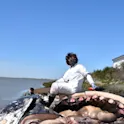
Q&A with Brendan Cottrell, who, with co-authors, investigated the practicality of using smartphones to create 3D scans of stranded marine life that can aid in postmortem examinations and help scientists and conservationists protect marine species.

Featured news
08 Dec 2023
Data spanning 40 years shows changes in the subtropical North Atlantic Ocean near the island of Bermuda, including warming by 1°C
Climate action
13 Sep 2022
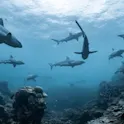
By Tayyibah Aziz, science writer Image: Shutterstock Many existing marine protected areas fail to adequately consider the needs of sharks, rays, and chimaeras, as data about many species is limited. In a new publication, scientists have developed a new framework to consider the species’ biological and ecological needs and inform planning to secure the protection they desperately need in the face of extinction. To date, shark, ray, and chimaera species have not been sufficiently considered in the planning of marine protected areas. However, a publication in Frontiers in Marine Science by researchers from the International Union for Conservation of Nature (IUCN) Shark Specialist Group (SSC), IUCN’s Ocean Team, and the IUCN Marine Mammal Protected Areas Taskforce have developed a new framework to fundamentally change how sharks are considered in the design of protected areas and therefore support the protection they desperately need in the face of extinction. Ciaran Hyde, consultant to the IUCN Ocean Team, explained: “We still have so much to learn about many shark, ray, and chimaera species, but unfortunately several studies indicate that many protected areas are failing to adequately meet their needs. However, Important Shark and Ray Areas (ISRAs) will help to identify areas for these […]
Life sciences
16 Sep 2020
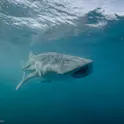
Female whale sharks are the world’s largest fish: Frontiers in Marine Science
Life sciences
19 Aug 2020
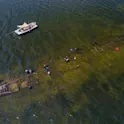
Shipwreck habors a rich spatially structured microbial community: Frontiers in Microbiology
Young Minds
08 Jun 2020
How can young people get involved in celebrating, researching and protecting our oceans on World Oceans Day?
Featured news
01 Apr 2020
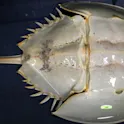
New method could save hundreds of thousands of horseshoe crabs per year and enable life-saving clinical uses for humans: Frontiers in Marine Science

Environment
14 Jan 2020
Casting a genetic net identifies more marine vertebrates than traditional surveys but has limits: Frontiers in Marine Science
Featured news
06 Mar 2019
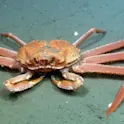
Researchers have documented a group of tanner crabs vigorously feeding at a methane seep on the seafloor off British Columbia – one of the first times a commercially harvested species has been seen using this energy source; Frontiers in Marine Science
Featured news
16 Aug 2018
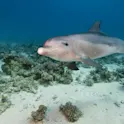
Physiological differences within the same species of dolphin explain huge variations in usual diving depths: Frontiers in Physiology
Frontiers news
13 Feb 2018
The article, on vitamin B12 production by a marine microbe, comes from scientists at the University of California and Woods Hole Oceanographic Institution.
Get the latest research updates, subscribe to our newsletter