FP
fabio piccinelli
University of Verona
Verona, Italy
3,068
Total downloads
17k
Total views and downloads
The fascinating properties of metal complexes are increasingly attracting worldwide interest from researchers. These properties have significant impacts across several fields, such as biomedicine and materials chemistry. Metal complexes can exhibit antibacterial, antiviral, and antitumor activities. Additionally, their spectroscopic and magnetic properties are important in the technological sector for designing functional materials, such as phosphors for LED devices and permanent magnets. Coordination compounds are also crucial for metal ion sequestration and recycling (e.g., in the recovery of rare earth elements).
This research topic aims to address recent advances in the field of coordination compounds of metal ions. In particular, experimental and/or theoretical contributions dealing with their antibacterial, antiviral, and antitumor activities will be considered. Regarding the spectroscopic properties of these species, contributions about energy transfer mechanisms from organic molecules (ligands) to metal ions are welcome. Furthermore, studies focused on the magnetic properties of metal complexes, as well as the thermodynamics of metal ion coordination, are also included. Both fundamental and applied studies are accepted.
We welcome Original Research, Review, Mini Review and Perspective articles on themes including, but not limited to:
• Theoretical and/or experimental studies on the antibacterial, antiviral, and antitumor activity of coordination compounds with any type of metal ions
• Theoretical and/or experimental studies on the magnetic properties of metal complexes and related practical applications
• Thermodynamic properties of coordination compounds, with particular reference to the selective sequestration of metal ions for recycling
• Theoretical and/or experimental analysis of the energy transfer process from an organic molecule (ligand) to a transition metal ion (including both d- and f-elements)
• Applied studies on materials or devices where luminescence efficiency has been optimized through critical analysis of the factors affecting energy transfer efficiency.
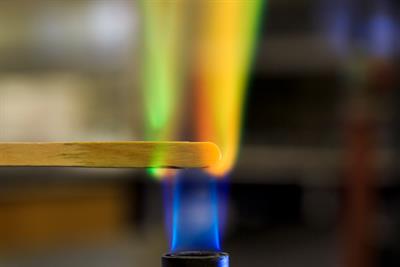
Keywords: ligand-to-metal energy transfer, luminescence efficiency, biological optical probes, phosphors for lighting, biomedical properties, single-molecule magnet, metal ion extraction and recycling.
Important note: All contributions to this Research Topic must be within the scope of the section and journal to which they are submitted, as defined in their mission statements. Frontiers reserves the right to guide an out-of-scope manuscript to a more suitable section or journal at any stage of peer review.