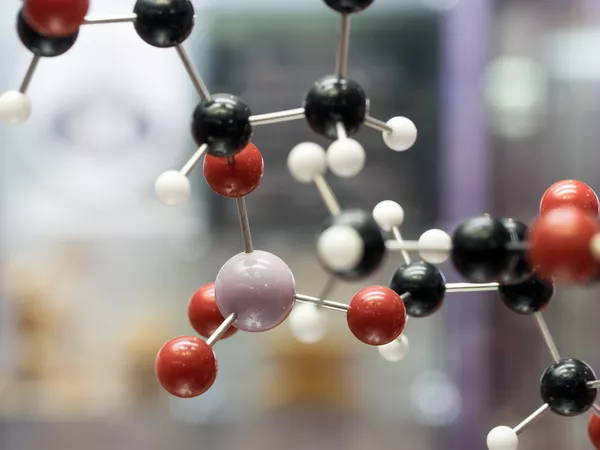
Molecular representation is a fundamental technique for transforming chemical structures into computer-readable formats, forming the cornerstone of modern drug discovery. By encoding physicochemical properties and structural information through mathematical and computational methods, it enables systematic analysis of molecular behavior. Traditional approaches rely on molecular descriptors and fingerprint spectra for quantitative structure–activity relationship (QSAR) analysis and virtual screening. With the rapid advancement of artificial intelligence (AI) and deep learning, new representation strategies based on graph neural networks (GNNs), natural language processing (NLP), and 3D structures have emerged. These methods have markedly accelerated drug discovery, shifting the field from traditional trial-and-error processes toward more efficient and automated pipelines.
This Research Topic seeks to systematically review and explore the applications and challenges of diverse molecular representation methods in drug development. Specifically, it aims to trace the evolution from traditional descriptors to modern AI-driven techniques, highlighting their strengths and limitations across different stages of drug discovery (e.g., target identification, lead compound discovery, and optimization). We particularly encourage discussions on cutting-edge directions such as multimodal learning, contrastive learning, and explainable artificial intelligence (XAI), which offer potential solutions to persistent challenges including data sparsity, limited model generalization, and the opacity of “black box” predictions. The ultimate goal is to advance more robust, interpretable, and efficient molecular characterization methods to meet the growing complexity of drug discovery and to shorten the R&D cycle for innovative therapeutics.
We welcome original research articles, reviews, and perspectives from multidisciplinary fields, with emphasis on (but not limited to) the following topics:
• Novel molecular characterization methods: algorithms based on graphs, sequences, 3D structures, or multimodal integration.
• Applications in drug discovery tasks: virtual screening, molecular property prediction, ADMET modeling, drug–drug interaction (DDI) prediction, retrosynthetic analysis, and molecular generation.
• Interpretability and robustness: methods and insights that enhance the transparency, stability, and reliability of AI-based predictions.
• Emerging technologies: applications of large language models (LLMs), self-supervised learning, and other frontier approaches in molecular characterization.
Article types and fees
This Research Topic accepts the following article types, unless otherwise specified in the Research Topic description:
- Editorial
- FAIR² Data
- FAIR² DATA Direct Submission
- Mini Review
- Opinion
- Original Research
- Perspective
- Review
Articles that are accepted for publication by our external editors following rigorous peer review incur a publishing fee charged to Authors, institutions, or funders.
Keywords: molecular representation, drug discovery, drug-drug interaction
Important note: All contributions to this Research Topic must be within the scope of the section and journal to which they are submitted, as defined in their mission statements. Frontiers reserves the right to guide an out-of-scope manuscript to a more suitable section or journal at any stage of peer review.