Abstract
This scientific paper aims to provide a thorough examination of the current state of research on nanomaterials in the context of Low Energy Nuclear Reactions (LENR). The paper explores various nanomaterials, their synthesis methods, and their impact on facilitating and enhancing LENR processes. Special attention is given to the unique properties of nanomaterials that make them particularly suitable for LENR applications, such as increased surface area, quantization effects, and improved hydrogen absorption kinetics. The review also delves into experimental findings and theoretical models that shed light on the mechanisms through which nanomaterials induce and support LENR. The sustained interest in LENR arises from experiments consistently demonstrating the potential for significant energy gains, suggesting cost-effective energy production. Furthermore, these processes exhibit advantages such as negligible radiation during operation, minimal radioactive waste, and the absence of greenhouse gas emissions. While the path to commercialization is lengthy, strides are being made by various companies recognizing the challenge of consistently producing materials to reliably trigger LENR. Current research focuses on employing nanoparticles to reliably induce LENR, drawing inspiration from reports indicating the efficacy of loose nanoparticles in triggering these reactions. The hypothesis posits that nanoparticles affixed to surfaces enhance performance and ease of handling in research and commercial setups. The rationale for using nanoparticles lies in their ability to facilitate hydrogen penetration into solid materials, crucial for observing LENR phenomena. This capability is attributed to the substantial surface area of nanoparticles, allowing them to absorb more reactants like hydrogen. Recent studies delve into understanding the behavior of metallic nanoparticles concerning the energy spectrum of electrons and implanted ions as a function of particle size. Notably, as nanoparticles decrease in size, quantization effects emerge, potentially modifying the interaction of quasiparticles within nanoclusters. Specific examples, such as Pd-Rh alloys, demonstrate accelerated hydrogen uptake kinetics in nanoparticles compared to bulk materials, emphasizing the importance of nanoscale properties. This topic provides a broad scope for exploring the intersection of nanomaterials and LENR, allowing for an in-depth analysis of the current state of research and the potential for future advancements. By understanding and harnessing the unique properties of nanomaterials, significant progress can be made in the field of LENR, potentially leading to practical and sustainable energy solutions.
Graphical Abstract
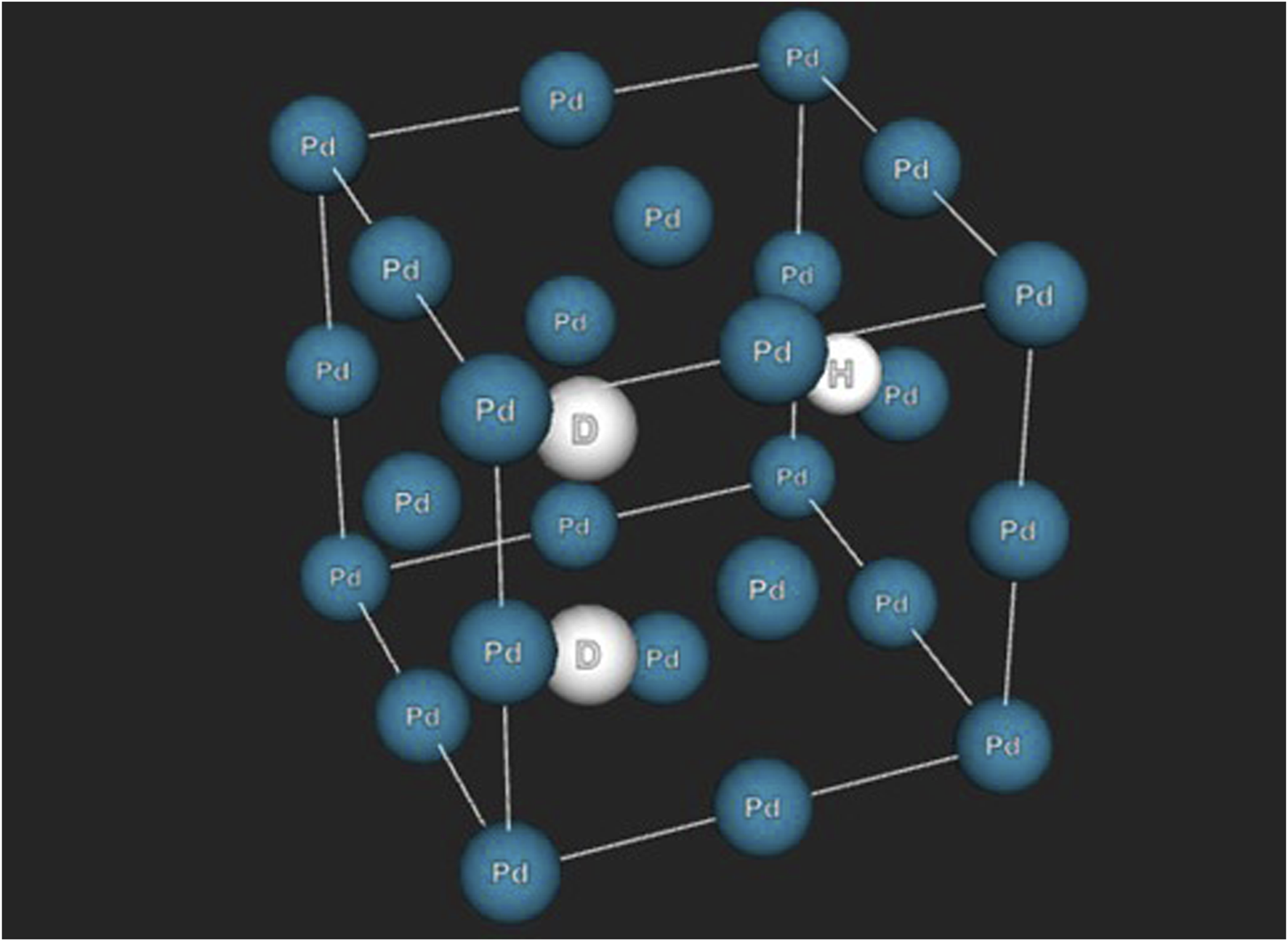
Graphical abstract for LENR review article.
1 Introduction
The Fleischmann-Pons effect, which manifests as the production of excess thermal energy during an electrochemical process using heavy water, has spurred the search for an alternative energy source later termed low-energy nuclear reactions (LENR) (Krivit, 2008). LENR, historically known as “cold fusion,” has a long research history dating back to Fleischmann and Pons’ statements in 1989. Despite the controversy, significant experimental evidence has been collected to support the possibility of stimulating nuclear reactions using chemical energy (Nagel and Fazel, 2012). For example, during the electrolysis of heavy water on palladium electrodes in the presence of an external electric or magnetic field, energetic particles were discovered, possibly indicating the occurrence of nuclear reactions (Szpak et al., 2007).
The authors of one study discovered anomalous heat release and oscillatory processes in the recombination reactions of hydrogen (H2) and oxygen (O2) on palladium-based catalysts. In some cases, the amount of heat generated exceeded the expectations of thermodynamic calculations for water formation reactions. This may indicate unusual kinetic phenomena or new physical processes possibly related to LENR (Lalik et al., 2015). Significant thermal energy release, possibly associated with LENR, has also been observed during the interaction of heterogeneous hydrocarbon plasma with nickel foil, as evidenced by the detection of elements such as lithium, aluminum, and calcium resulting from transmutation on the target surface (Klimov and Pashchina, 2022).
The available data suggest evidence of new types of nuclear interactions. One of the key signs is excess heat generation that greatly exceeds the energy input, indicating the presence of energy sources other than chemical reactions. Observations also indicate the production of neutrons and tritium, as evidenced by low-level radiation detected that is not consistent with that typically associated with conventional nuclear reactions. This raises questions about the mechanisms of LENR and underscores the need for further research in this area. Additionally, there is evidence of elemental transmutation, where some elements are transformed into others in the absence of the high energies typically required for nuclear fusion. These observations highlight the unusual nature of LENR and have important implications for understanding fundamental processes in nuclear physics (Storms, 2015a).
Three seemingly different physical phenomena—metal hydride cells, exploding wires, and the solar corona—actually have a common basis. Under certain conditions, which are now clearly defined, electromagnetic energy is collectively used. This energy provides sufficient kinetic energy to a specific portion of the electrons, allowing them to combine with protons or other ions, resulting in the production of neutrons through weak interactions. These newly produced neutrons subsequently combine with other nuclei, initiating low-energy nuclear reactions and transmutations. It should be noted that understanding these phenomena requires consideration of all three interactions described in the standard model (electromagnetic, weak, and nuclear). Although collective effects are involved, no new physics beyond the standard model is required to accelerate electrons (Srivastava et al., 2010).
A pattern has been revealed in which the interaction of deuterium with metal materials, such as molybdenum and palladium in the form of nanowires, at low temperatures leads to the synthesis of helium isotopes 3He and 4He. This pattern is based on the observation that helium concentrations depend on the kinetic energies of deuterium nuclei and the temperature of the experimental setup. Thus, the study indicates that certain conditions for the interaction of deuterium with metals in the solid state contribute to the process of helium synthesis at relatively low temperatures (Alexandrov, 2021).
Mayer proposes that the excess energy in LENR may arise from a phase transition producing superconducting electrons, which in turn stimulate a chain of nuclear reactions. A portion of the electrons in the palladium cathode may become superconducting, which reduces the overall resistance and facilitates nuclear reactions leading to excess heat (Mayer, 2019).
Achieving effectiveness with repeatability and a set of minimum required performance indicators, the process of integrating LENR devices into modern society may encounter certain difficulties due to socio-economic risks. According to Grimshaw, the successful integration of LENR into society requires the development of strategies to manage changes in the economy, employment, and energy infrastructure (Grimshaw, 2020).
Nanomaterials, defined as materials with structures at the nanoscale, typically less than 100 nm in at least one dimension, are gaining immense attention in both scientific research and industrial applications. Their unique physical and chemical properties, arising from their small size and high surface area to volume ratio, lead to enhanced reactivity, strength, electrical properties, and more. These properties enable innovative solutions across various fields, including medicine, electronics, energy, and environmental protection (Dina, 2023). Nanomaterials often exhibit superior mechanical, thermal, electrical, and catalytic properties compared to their bulk counterparts. Their use spans diverse fields such as drug delivery, electronics, renewable energy, and environmental remediation (Tolubayeva et al., 2023). The development and commercialization of nanomaterials drive economic growth by enabling new products and improving existing ones.
For instance, palladium nanoparticles (Pd) are used in catalytic converters to reduce vehicle emissions and serve as catalysts in hydrogenation and carbon-carbon coupling reactions, such as the Suzuki-Miyaura and Heck reactions. In electronics, palladium nanoparticles are utilized in hydrogen detection sensors due to their high sensitivity and selectivity and are employed in conductive inks for flexible electronics. In medicine, palladium nanoparticles are used in photothermal therapy to selectively destroy cancer cells and are explored as carriers for targeted drug delivery systems, enhancing effectiveness and reducing side effects (Klebowski et al., 2022).
Similarly, nickel nanoparticles (Ni) are used as effective catalysts in hydrogenation reactions in the petrochemical and food industries and contribute to catalytic reactions in fuel cells, leading to cleaner energy production. They are used in high-density data storage devices and in ferrofluids for seals, damping, and medical imaging. In energy storage, nickel nanoparticles are used in electrodes of nickel-metal hydride (NiMH) batteries, enhancing capacity and performance, and are explored for use in supercapacitors, providing high power density and long cycle life. In environmental remediation, nickel nanoparticles remove contaminants from water through adsorption and catalytic degradation and are involved in the catalytic breakdown of organic pollutants.
Zinc oxide nanoparticles (ZnO) exhibit strong antibacterial activity, making them useful in coatings for medical devices and antimicrobial textiles. They are also being explored as carriers for targeted drug delivery systems, enhancing effectiveness and reducing side effects. In electronics and optoelectronics, ZnO nanoparticles are used in the fabrication of semiconductor devices, including transistors and diodes, due to their wide bandgap and high electron mobility, and are incorporated into sunscreens and other UV-protective coatings because of their excellent ability to absorb ultraviolet light. ZnO nanoparticles are utilized in solar cells to improve light absorption and conversion efficiency and are employed in gas sensors and biosensors due to their high sensitivity and rapid response times (Paltusheva et al., 2022). Additionally, ZnO nanoparticles are used in the degradation of environmental pollutants through photocatalytic processes, breaking down harmful substances in air and water.
Nanomaterials play a key role in hydrogen-related technologies, including its production, storage, and utilization. Nanoparticles of metals like platinum, palladium, and nickel are used as catalysts for hydrogen production via water electrolysis. Nanomaterials such as magnesium nanoparticles and carbon-based composites are being investigated to improve hydrogen storage due to their high capacity and stability. Nanomaterials are also used to enhance the efficiency of fuel cells, which convert hydrogen into electricity.
The relevance of nanomaterials is underscored by their unique properties and extensive applications across various industries. Palladium and nickel nanoparticles, along with zinc oxide nanoparticles, demonstrate the transformative potential of nanotechnology. Their roles in catalysis, electronics, medicine, energy, and environmental protection showcase their versatility and promise for future advancements. As research continues, the development of nanomaterials is expected to drive significant technological progress and economic growth.
2 Theories
Storms notes that various attempts to reconcile LENR with physical laws and observations often fail to satisfy the requirements of the scientific community due to a lack of stable reproducibility and inconsistency with traditional nuclear physics models (Storms, 2015b). In modern physics, not only is the theory of the LENR effect the subject of scientific discussions and debates (Storms, 2013), but there are also other phenomena whose nature contradicts established concepts. A striking example is the theory that considers the properties of superluminal particles and their interaction with ordinary matter, describing phenomena like superluminal particles and magnetic monopoles, which can be critical for understanding fundamental interactions in particle physics (Fredericks, 2020).
Yeong E. Kim and Alexander L. Zubarev present two main theoretical models: Bose-Einstein Fusion and Quantum Plasma Nuclear Fusion (QPNF), based on the assumption that under certain conditions, hydrogen or deuterium can behave like a plasma, facilitating nuclear fusion. These theories explain how nuclei can overcome the Coulomb barrier to fusion at low energies. The predictive ability of the QPNF model is confirmed by its agreement with experimental results, including anomalous heat production and nuclear products. The theory’s proposals are applied to various experimental setups such as deuterated metals/alloys and acoustic cavitation experiments, offering prospects for safe and clean LENR-based energy production (Kim and Zubarev, 2006).
P. Kálmán, T. Keszthelyi, and D.J. Nagel explore the three-body mechanism, in which one nucleus acts as a catalyst for the fusion of two other nuclei. This mechanism allows nuclear reactions to be carried out at room temperatures without the release of gamma radiation, which aligns with the experimental data of Pons and Fleischmann and other modern researchers, accompanied by anomalous heat release and transmutations without high-energy radiation (Kálmán et al., 2021).
To understand the physics of LENR in the solid state, Schwinger models are proposed, using the coupling of nuclear and Coulomb energies to achieve the excited state of helium-4 (4He). Mali and Vavra, based on quantum mechanics for deep electron orbits, promote LENR by pushing electrons deeper into nuclear potentials. Sinha focuses on the natural pairing of electrons in the crystal lattice to form polarized D+D− pairs, promoting LENR in linear defects in solids (Meulenberg and Sinha, 2022). Results from simulations of ion injection into multilayer metal lattices such as palladium, graphite, calcium, and nickel at ion beam energies of 5 keV, 10 keV, and 20 keV showed that the most likely values for vacancy formation were found at 10 keV for graphite, calcium, and nickel. It was also noted that the ion energy and the configuration of vacancies significantly affect the probability of nuclear reactions (Woo and Noh, 2011).
The LENR model proposed by Storms describes conditions in a material known as a nuclear active environment, where gaps of a certain size form for the accumulation of hydrogen isotopes and their collective fusion, releasing energy and nuclear products. Energy activation associated with deuteron availability, as well as gap formation and properties, plays a critical role in the successful performance of LENR (Storms, 2022). According to Jainaer, who describes the model of condensed plasmoids, LENR can be maintained for a long time due to tunneling through the Coulomb barrier. Such condensed plasmoids are represented as ultra-dense, high-strength plasma structures with strong magnetic confinement, inside which a high density of electron gas and a powerful magnetic field created by an internal current are found (Jaitner, 2020a). There are also suggestions that protons or deuterons may capture electrons at the cathode, leading to new possibilities for nuclear reactions through plasmonic excitations. It is believed that these plasmonic excitations promote electron capture and increase the probability of nuclear reactions at low energies (Russell, 2008).
Zuppero and Dolan present a model that applies principles of chemical physics and solid mechanics to explain LENR. This model explains how the binding energy between reactants is transferred to electrons, making them hot, while the reaction products remain relatively “cold.” The model predicts the transmutation of radioactive fission products into normal elements, which can reduce radioactivity. Additionally, the mechanism of electron catalysis is discussed, which can reduce the repulsive pressure between nuclear reactants, allowing them to get close enough for a reaction to occur (Zuppero and Dolan, 2019). Exchange reactions between hydrogen and deuterium, catalyzed by palladium nanoparticles, can also lead to the release of heat. This assumption is supported by the results of heat measurements, analysis of residual gases, and calculations of the available energy from hydrogen and deuterium exchange reactions (Dmitriyeva et al., 2012).
Tommaso and Vassallo believe that the usual barriers to nuclear fusion at low energies are not an obstacle for ultra-dense hydrogen, described as a chain of bosonic electrons with protons or deuterons. According to the Zitterbewegung model, the electron is considered as a ring of current rotating in a circle with a radius related to the Compton wavelength of the electron (Di Tommaso and Vassallo, 2019). The authors of another study propose a model in which coherent correlated states of interacting particles can contribute to LENR. In such states, Coulomb barriers are overcome, optimizing the conditions for nuclear interactions (Vysotskii and Vysotskyy, 2015).
M. Davidson proposes using variable mass theories within the framework of relativistic quantum mechanics to explain anomalous low-energy nuclear phenomena (LENR). According to Davidson, traditional models of quantum mechanics may not sufficiently account for changes in particle mass that can occur under LENR conditions. Such changes may play a key role in LENR, leading to new, unusual nuclear properties (Davidson, 2014).
The mechanism for increasing electron mass, according to the Widom-Larsen theory, suggests that protons in a metal hydride can capture electrons with increased mass due to fluctuations in the electromagnetic field, allowing them to overcome the barrier to convert protons into neutrons. However, experimental neutron scattering data from protons in palladium, used to estimate the vibrational frequency and average proton displacement, indicate that the increase in electron mass is less than one percent, well below the threshold required for neutron production. Tennfors’s critique of Widom and Larsen’s model highlights the inadequacy of increasing electron mass and the problems in achieving the required charge density for efficient neutron production. It is also noted that the actual electric field and β values obtained by Widom and Larsen are significantly lower than those needed to initiate neutron production. The possibility of errors in calculations associated with electric field modeling based on incorrect assumptions about electron density and other parameters is also emphasized (Tennfors, 2013).
A meta-theory of LENR phenomena is also being developed, based on the latest advances in nanotechnology, superconductivity, plasma physics, astrophysics, and materials science. These advances allow the creation of nanoscale structures with unique properties. Superconductivity studies enable understanding of the behavior of materials at very low temperatures. Additionally, the meta-theory includes principles of plasma physics, which explain the behavior of plasma, a state of matter having the properties of gas and plasma, as well as astrophysics, which studies physical processes in cosmic objects such as stars and galaxies (Hadjichristos and Gluck, 2013).
Despite the extensive material of the proposed theoretical works on LENR, the search for keys to revealing reactions and building effective systems continues and today it is proposed to involve the capabilities of artificial intelligence in the processes of theoretical and experimental work (Bari et al., 2024). Pankaj Jain et al. (Jain et al., 2022) explain LENR from the point of view of photon interactions. Since, as the authors believe, the induction of LENR and overcoming of the Coulomb barrier is possible with electromagnetic disturbance, as a result of which an intermediate state is formed, which can pass into the final nuclear state under the action of an additional disturbance, for example, under the action of a laser. In this case, phonon oscillations, or enhanced optical potentials under laser stimulation, reduce the Coulomb barrier due to the formation of deuterium ions (D⁻) at certain frequencies (Sinha and Meulenberg, 2006). On the surface of the metal cathode in water, coherent domains with quasi-free electrons are created, which causes plasma oscillations. At high voltage, a regime arises in which the weak interaction between the electron and proton can lead to the formation of neutrons and initiate nuclear transmutations at the cathode. The energy emitted by the water plasma excites plasmonic oscillations, creating conditions for nuclear reactions at low energies (Cirillo et al., 2012). To enhance this process, the design of dynamic systems may include high-frequency modulation of the external field or oscillators to regulate the frequency of particle interactions. (Vysotskii et al., 2013). However, energy localization, such as in a crystal lattice, and particle wave interference impose limitations on the experimental conditions for LENR in solids. A crystal lattice may produce energy bands that favor the reaction, while a disordered structure may form localized states that hinder synthesis, which is important to consider when using polycrystalline or nanostructured materials. Successful experiments depend on fine-tuning the material structure and conditions to enhance tunneling through the Coulomb barrier (Ramkumar et al., 2023). Taking crystallinity into account may also contribute to the success of emerging approaches that focus on increasing the density of sites for cluster formation, or on creating nanostructures through palladium deposition on nickel microstructures (Yang et al., 2009). Gradual improvement of such systems and the use of AI-based computational models to precisely control experimental conditions can significantly improve the probability and controllability of the reaction.
3 Experiment
A. Klimov describes the transformation processes of chemical elements during LENR experiments conducted using a plasma vortex reactor. The experiments demonstrated a significant decrease in the concentrations of transmuted elements during the formation of weakly ionized nonequilibrium plasma, indicating their high instability. A binuclear atom model is proposed to explain these results, presenting a new method of transmutation of elements in LENR and opening up prospects for understanding and controlling nuclear processes at the atomic level (Klimov, 2022a).
Experimental work in the search for excess heat release commonly employs calorimeters operating on the Seebeck effect. These devices use thermoelectric materials that create a voltage difference in the presence of a temperature difference. Seebeck calorimeters (Figure 1) respond quickly to temperature changes, allowing rapid detection of heat flow changes and are relatively easy to use. However, maintaining a stable support temperature can present technical difficulties, and careful calibration is required for accurate results (Sisik and Nagel, 2020). The importance of calorimetric analyses for understanding interaction mechanisms is confirmed by studies on the thermal behavior of polarized Pd/D electrodes obtained by the co-deposition method, which recorded excess heat release (Szpak et al., 2004). Using a simple calorimetric technique that maintains isothermal conditions in an electrolytic cell with palladium electrodes loaded with deuterium at a temperature close to the boiling point of D2O, excess power exceeding the input electrolytic power was detected, even after breaking the electrical circuit (Mengoli et al., 1998).
FIGURE 1

Typical image of a Seebeck calorimeter used for LENR.
Stimulation of the catalyst can be achieved by applying pulses between the outer and inner layers of the metal using a special platform for generating pulses and accurately measuring power (Tanzella et al., 2020). In the work of E.J. Beiting and D. Romein, the reaction between nickel and hydrogen was stimulated using specialized high-temperature reactor equipment, maintaining certain temperatures and pressures inside the reactor, which were controlled and recorded during the experiments (Beiting, 2019). Nanosecond stimulation in these systems increased both the absolute power generated by LENR and the performance ratio. F. Tanzella et al. showed that frequent low-voltage pulses are more efficient in terms of energy production compared to less frequent high-voltage pulses, confirming the potential of nanosecond stimulation to improve energy production efficiency through LENR in Ni-H2 systems (Tanzella et al., 2019).
Studying low-temperature elastic anomalies and heat release in deuterated palladium allows a better understanding of the dynamic interaction of deuterons in its metal lattice. Detected changes in elastic parameters indicate possible microstructural changes that may have implications for understanding LENR. These data may support the hypothesis about the role of nanostructured metal lattices in LENR, especially in light of their internal microstructural interactions and influence on nuclear processes (Numata and Fukuhara, 1997). The study conducted by Takahashi and colleagues highlights the importance of nanostructured palladium surfaces in proton interaction and hydride formation. These hydrides may play a key role in inducing and maintaining nuclear reactions leading to abnormal heat release in LENR systems. Palladium, due to its ability to form hydrides, can be an effective catalyst for reactions with hydrogen or deuterium. Nanostructured palladium surfaces have a large surface area, increasing the contact area with the gas and facilitating the formation of hydrides. This can stimulate nuclear reactions that produce heat (Schmidt et al., 2022).
Activation of hydrogen and the creation of nuclear-active nanocavities in the metal through multi-stage interaction demonstrates significant heat release, confirming the possibility of obtaining energy from low-energy nuclear reactions. Moreover, a meta-theory of LENR phenomena has been developed, based on recent advances in nanotechnology, superconductivity, plasma physics, astrophysics, and materials science (Hadjichristos and Gluck, 2013). The anomalous heat release using nanostructured multilayer metal composites and hydrogen exceeds any known chemical reactions and is not accompanied by gamma rays or neutrons, indicating the safety of the process for humans. Multilayer nickel-based composites loaded with hydrogen and heated to induce a heat release reaction reached energy values of more than 10 keV per hydrogen atom (Iwamura et al., 2024). Using samples from nanosized multilayer composites of nickel and copper for the reaction of excess heat release allows achieving a maximum value of 1.1 MJ; the average energy value for the entire absorbed amount of hydrogen was 16 keV/atom H or 1.5 GJ/mol H (Iwamura et al., 2020). Experiments with multilayer nanocomposites of other metals exposed to hydrogen or deuterium have shown the generation of excess energy and bursts of heat (Iwamura et al., 2022). The impact of hydrogen and deuterium on nanometallic composites and powders of palladium-nickel and copper-nickel with the addition of zirconium for the reaction leads to the release of excess thermal power at the level of 80–400 W/kg when maintaining the interaction for a long time, especially using re-annealed samples. The heat release reaction is assumed to be associated with nuclear processes, supported by weak neutron emission and high values of specific reaction energy (from 100 eV/D to 500 eV/D) (Takahashi et al., 2020).
The electrode materials are usually metals such as Pd, Ti, Ni, etc. (Srinivasan, 2015; Srinivasan, 2009), or alloys such as palladium/boron. The addition of boron to palladium forms two phases with different lattice parameters, improving mechanical properties and crack resistance (Imam et al., 2019). Experiments conducted in Seebeck calorimeters based on copper alloys with boron and lithium, enriched with hydrogen, also showed heat release exceeding the expected value (McCarthy and Journal of Condensed Matter Nuclear, 2019).
Francesco Celani and his colleagues, in “Electromagnetic Excitation of Coaxially-Coiled Constantan Wires by High-Power, High-Voltage, Microsecond Pulses,” demonstrated the possibility of reproducible LENR experiments using constantan alloy wires. The researchers used constantan, an alloy of copper and nickel, for its ability to dissociate molecular hydrogen to the atomic state at low temperatures and adsorb atomic hydrogen into its lattice at higher temperatures. Using microsecond pulses of high voltage and power, the researchers stimulated the electromigration of hydrogen in constantan wires, confirming the possibility of releasing excess energy when the material is activated by electrical pulses (Celani et al., 2022). Significant abnormal heat generation effects were observed when the pressure was reduced below 100 mbar in constantan alloy wires used under direct and alternating current conditions in a deuterium atmosphere at temperatures from 300°C to 500°C. Data indicate that the effects of anomalous heat release are associated with the amount of absorbed deuterium and the presence of nonequilibrium conditions (Celani et al., 2020). The specific surface area of constantan alloys can be increased by treatment with high-power pulses, improving hydrogen dissociation properties. An increase in the generation of excess power is facilitated by a rise in reactor temperature caused by the use of noble gases, such as xenon, in an H2/D2 atmosphere (Celani et al., 2019).
It was also discovered that the enhancement of LENR processes is facilitated by defects in the crystal structure of the material, specifically Structurally Activated Vacancies (SAV), which are caused by the presence of vacancies in the lattice. SAV phases in palladium, associated with the presence of vacancies of deuterium atoms in the crystal lattice, can change the structural and electronic properties of the material. For instance, γ (Pd₇VacD₆–₈), δ (Pd₃VacD₄ with an octahedral structure), and δ′ (Pd₃VacD₄ with a tetrahedral structure) significantly alter the structural and electronic properties of palladium (Staker, 2020). The importance of structural defects for increasing hydrogen density in metals and lowering the energy threshold to initiate LENR has been shown in studies of hydrogen capture mechanisms in the crystal lattices of face-centered cubic metals such as nickel (Nee et al., 2019). Sinha considers defects as potential catalysts for LENR, as they improve conditions for nuclear interactions by altering electron density and local electric fields in the crystalline lattice (Sinha, 2015).
According to Wang et al. (2024), palladium hydrides, classified into interstitial and complex hydrides, play a key role in LENR. Interstitial hydrides are usually nonstoichiometric and have a disordered structure, while complex hydrides consist of anionic complexes of palladium hydride and metal cations. The study shows that highly hydrogenated palladium can reach a PdH_1 stoichiometry under certain conditions. Although the existence of hydrides with very high hydrogen content (such as PdH_2 or PdH_3) is difficult to prove experimentally, theoretical studies confirm their stability and possible structures (Wang et al., 2024).
LENR research is also exploring the potential of using femto-atoms and femto-molecules, which have unique properties that can accelerate the decay of radioactive substances without releasing hard radiation, for the treatment of radioactive waste (Meulenberg and Paillet, 2019). When developing materials most suitable for increasing the efficiency of LENR, analytical approaches such as terahertz (THz) imaging and spectroscopy are applied. These techniques allow for a deeper understanding of the structural and chemical characteristics of the reacting materials (Tanzella et al., 2022).
D. Lets proposes a technique for using two lasers with frequencies of 8, 15, and 20 THz to stimulate palladium cathodes. His experiments showed that in a significant number of cases (161 out of 170), there was excess heat generation exceeding the energy supplied by the lasers, indicating a nuclear power source, which is an important distinction from chemical or thermal processes. The use of dual laser stimulation, where lasers at different frequencies irradiate palladium cathodes, allows precise targeting of these deuterium-rich cathodes (Letts, 2015).
Y. E. Kim explores Bose-Einstein nuclear fusion (BECNF) as a possible mechanism for LENR in micro- and nanoscale metal particles. Experiments have shown that protons and deuterons become more mobile in metals when heated or exposed to electric fields, increasing the likelihood of nuclear reactions at low temperatures. The synthesis of helium-4 in a metallic environment at room or reduced temperature has been observed, indicating a different reaction pathway facilitated by the metal matrix. Bose-Einstein theory suggests that deuterons in metals can form Bose-Einstein condensates, increasing the rate of fusion under certain conditions (Kim, 2013).
Table 1 summarizes data from various studies on LENR, including descriptions of reaction mechanisms, experimental results such as measurements of excess heat and elemental transmutation, and key observations and conclusions of scientists about LENR processes.
TABLE 1
| Mechanism | Experimental data | Observations | Size effects | Source |
|---|---|---|---|---|
| Heterogeneous plasma creation | Relative concentrations of new transmuted elements measured, significant decay instability noted | Transmuted elements like Fe, Cu found | Size of eroded particles | Klimov (2022a) |
| Quantum-mechanical model of condensed plasmoids (CPs) | High-velocity electrons in CPs enable tunneling of hydrogen nuclei through the Coulomb barrier, facilitating nuclear fusion | Dense electron environment critical for reactions | Minimum distance of nuclei | Jaitner (2020a) |
| Weakly ionized non-equilibrium plasma (WINP) and transmutation | Transmutation instability accelerated by WINP, analysis of decay over time, considerable decay instability | Decay instability of transmuted elements after WINP | Not specific | Klimov (2022a) |
| Formation of nanoplasmonics active environment (NAE) in Ni-H systems | Heat generation in Ni-H systems, presence of NAE, creation of Rydberg States, formation of Hydrogen Boson Cluster States (BCS) | Excess heat, gamma/alpha radiation, strong magnetic emissions measured up to 1.6T, transmutations noted specifically with even isotopes of Ni | Influence of nanostructure on heat generation and nuclear reactions, noting the short lifetime of magnetic traps on Ni surfaces | Hadjichristos and Gluck (2013) |
| Interactions of heavy electrons with protons potentially leading to nuclear reactions | Observation of high electron mass in nano-structured clusters leading to potential proton interactions and theoretical basis for transmutation processes | Decay-instability of transmuted elements observed; accelerated by weakly ionized non-equilibrium plasma | Discussion of electron mass changes in confined spaces suggesting size-dependent nuclear behavior | Alexandrov (2008) |
| Use of palladium-boron (Pd-B) alloys in LENR experiments | Reliable LENR results produced with Pd-B alloys; transmutation processes involving helium production observed | Highly reliable LENR results and reproducibility in experiments using palladium-boron alloys | Discussion of the role of alloy composition and structure in the reproducibility of LENR experiments | Imam et al. (2019) |
| High-temperature calorimetric measurements for Ni/H2 reactions | High-temperature calorimetric measurements showcased Ni/H2 reactions generating heat through a controlled high-temperature cell | Decay-instability of transmuted chemical elements noted, influenced by non-equilibrium plasma | Size effects observed in the efficiency and rates of transmutation reactions | Beiting and Romein (2019) |
| Nano-sized multilayer metal composites with hydrogen | Experiments demonstrated excess energy generation, indicating nuclear processes due to transmutation | Stable and reproducible results in LENR experiments highlighted by material composition | Scaling down to nano-sized structures affects reaction rates and efficiency | Klimov (2022b) |
| Nanosecond pulse stimulation | Measured the power emanating from catalysts using different stimulation methods | Power output and stimulation power measurements at various stimulation frequencies and durations | Skin-effect principle at metal–ceramic interface | Francis Tanzella et al. (2020) |
| LENR in FCC metals with vacancies | High hydrogen loading in nickel samples confirmed by temperature programmed desorption studies | Potential high-density hydrogen environments in FCC metals contribute to low LENR ignition energy | Lattice confinement of hydrogen enhances the screening potential and reaction rates | Han et al. (2019) |
| Hydrogen loading and high-temperature reactions in nickel | High-temperature exothermic reactions in nickel-hydrogen systems measured calorimetrically, demonstrating significant heat generation | Excess heat generation significantly higher than chemical reactions suggest; ongoing high-temperature studies confirm this | High temperatures facilitate hydrogen absorption and increased reaction rates | Beiting and Romein (2019) |
| LENR involving electrochemical loading of deuterium into palladium | Significant heat generation that could not be accounted by chemical reactions alone, indicating nuclear reactions | Observations support LENR hypothesis but require further validation and understanding of underlying nuclear processes | Effects noted with specific configurations of palladium and deuterium | Kasagi et al. (2000) |
| Interaction of hydrogen ions with nano-clusters in nickel | Creation of transmutation products like Li, Al, and Ca detected; significant thermal energy release observed with a COP of about 5–6 | Hydrocarbon plasma interactions with nickel foil lead to physical changes (melting, evaporation) and nuclear transmutations | Size of created transmutation products and holes in nickel foil observed | Klimov (2022c) |
| LENR in gas-loaded nickel and hydrogen systems | Review of scientific bases for LENR in gas-loaded nickel-hydrogen systems, including prototype generators demonstrating substantial heat | Supports potential commercial viability of LENR devices based on nickel and hydrogen | Focus on scalability and reaction efficiency in nickel-hydrogen systems | Nagel (2015) |
| LENR in copper alloys with hydrogen | Hydrogen infused into copper alloys at high temperatures showed substantial power generation without harmful byproducts | Indicates potential for commercial energy applications with minimal environmental impact | Copper alloys demonstrate LENR at moderate pressures and high temperatures | McCarthy and Journal of Condensed Matter Nuclear (2019) |
| Various LENR mechanisms involving nano-structured surfaces, gas permeation, and transmutation reactions | Measurements of excess heat, transmutation evidence, and nanoscale interactions | Observations of anomalous heat effects, transmutations, and changes in material properties under specific experimental conditions | Influence of material size and structure on LENR processes, particularly in nano-sized multilayer metal composites | (Iwamura et al., 2020); (Kim, 2013) |
| Transmutation induced by deuterium permeation | Decay instability of transmuted elements | Large plasmoid interactions and surface impacts causing elemental transmutation | Impacts result in stable and unstable isotopes | Shigenori Tsuruga et al. (2015) |
| Exothermic reactions in Ni/H2 | High temperatures and pressures achieved in reactor setups | High temperature reactions without nuclear radiation | Reactions scaled up to kilowatt levels | Beiting and Romein (2019) |
| Nano-sized metal multilayer composite interaction with hydrogen | Significant excess energy generation | Heat bursts observed during hydrogen evacuation and heating cycles | Nano-layers enhance reaction rates | Iwamura et al. (2020) |
| Palladium-boron alloys in LENR | Reliable LENR results with reproducibility | Pd-B alloys retain high fractions of deuterium, essential for LENR reactions | Alloying affects material properties enhancing LENR. | Imam et al. (2019) |
| Size and performance scaling of Seebeck calorimeters | Calibration constants and minimum detectable power | Used to measure heat production in LENR experiments | Performance scales with size, affecting sensitivity | Bengisu Sisik (2020) |
| Electron capture model | Emission of charged particles | Reproducible nuclear events | Not specified | Stanislaw Szpak and Gordon (2007) |
| Quantum mechanical model of condensed plasmoids | High-density environment enabling tunneling and fusion | Creation of ultra-dense plasmoids with high current | Plasmoids of 40 p.m., enabling nuclear fusion | Jaitner (2020b) |
| Electron quasi-particle catalysis of nuclear reactions | Production of neutrons from energetic electrons inside the nucleus | Stimulation of transmutation reactions | Electron effective mass and chemical size reduction | Zuppero and Dolan (2019) |
| Unified theory of LENR and transmutation | Low reproducibility of experimental results | Nuclear reactions in deuterated/hydrogenated metals | Quantum plasma nuclear fusion applicable to various experimental settings | Kim and Zubarev (2006) |
Summary analysis of LENR studies.
4 Application
LENR cells represent a promising advancement in green nuclear energy, utilizing nanostructured electrodes to initiate nuclear reactions at low temperatures. At the University of Illinois, Professor Miley is leading efforts to develop new forms of “cold fusion,” including the reactions of protons and deuterons with hydrogenated solid lattices such as palladium. These LENR cells have the potential to become “green” nuclear batteries, offering high energy density without radiation or pollution, thus making them attractive options for clean technologies. Further research and testing are planned to confirm the effectiveness and reliability of LENR cells in industrial settings (Miley et al., 2012).
D.J. Nagel proposes commercializing the use of gas loading in the nickel-hydrogen system. This method simplifies and controls the introduction of hydrogen into nickel, significantly reducing complexity and increasing efficiency. Gas loading ensures uniform distribution of hydrogen throughout the material, facilitating more efficient reactions. This approach is promising for studying low-energy nuclear reactions and developing commercial generators, as it offers more reliable and controllable methods that can be successfully implemented in industry (Nagel, 2015).
The phenomenon of heat release in low-energy reactions with light water and hydrogen (Miley and Shrestha, 2006) is particularly intriguing when integrated with hydrogen-releasing photoelectrochemical cells. Nanostructured materials (Table 2) used in power cells for low-temperature nuclear reactions could pave the way for “green” nuclear “batteries” with exceptional energy density, surpassing current storage technologies (Miley et al., 2009). According to Table 2, Pd nanoparticles exhibit a remarkable hydrogen storage capacity, reaching a maximum of 2.25 wt% with 50 nm Mg₂Cu nanopowder.
TABLE 2
| Nano-sized structure | Synthesis | Size/morphology | Temperature/pressure | Storage capacities of hydrogen | References |
|---|---|---|---|---|---|
| Pd-embedded carbon nanotubes | impregnation and the reduction of Pd2+ ions | 4–8 nm/nanoparticle | 298K/2.2 MPa | 0.35 wt% | Rather et al. (2007) |
| Pd-embeded silica nanotubes | sol-gel | 3.5 nm/nanoparticle | 298 K | 1.90 wt% | Jung et al. (2007) |
| Polymer coated Pd | polyol process | 10–40 nm/nanoparticles | 324 K/2 MPa | 0.58 wt% | Sahu et al. (2014) |
| Pd sphere | chemical reduction | 300 nm/hollow sphere | 298K/14 Mpa | 1.22 wt% | Amaladasse et al. (2021) |
| Mg2Cu | mechanical alloying | 50 nm/nanopowder | 573K | 2.25 wt% | Jurczyk et al. (2007) |
| Pd particles | dealloying method | 10 nm/nanoparticle | 423K/0.026 MPa | 0.5 wt% | Liu et al. (2013) |
| Pd particles in ZrO2 matrix | solid fusion cycle | 50 A (Pd) | 0.1–10 MPa | 0.5–0.7 wt% | Liu et al. (2013) |
Comparative characteristics of nanostructures for hydrogen storage.
These findings highlight the potential of LENR technology in revolutionizing energy storage and providing sustainable, high-density energy solutions for the future.
5 Conclusion
This review highlights the unique potential of nanomaterials in advancing Low Energy Nuclear Reactions (LENR), emphasizing their significant role in optimizing hydrogen absorption, enhancing surface interactions, and facilitating nuclear processes at low energy thresholds. Nanostructured materials, particularly palladium and nickel nanoparticles, exhibit exceptional hydrogen storage capacities and catalytic properties, which are crucial for LENR applications. The reviewed studies demonstrate the value of nanoscale engineering in improving reaction consistency, energy output, and minimizing radiation risks, all of which are vital for LENR’s path toward practical and safe energy production solutions.
Despite substantial experimental evidence and theoretical developments supporting LENR’s potential, reproducibility and reliable activation mechanisms remain challenges. Continued advancements in nanotechnology, coupled with rigorous experimental setups such as Seebeck calorimetry and nanosecond pulse stimulation, are essential to unlocking LENR’s full potential. Future research should focus on refining synthesis techniques for nanostructures, exploring novel alloys, and integrating machine learning models to predict and optimize reaction conditions. By addressing these challenges, LENR could emerge as a transformative energy technology, providing clean and sustainable solutions for global energy needs.
Statements
Author contributions
NB: Conceptualization, Funding acquisition, Investigation, Methodology, Project administration, Supervision, Writing–original draft. ZK: Data curation, Formal Analysis, Visualization, Writing–review and editing. DN: Conceptualization, Investigation, Validation, Writing–review and editing. DB: Conceptualization, Data curation, Formal Analysis, Resources, Software, Writing–original draft, Writing–review and editing.
Funding
The author(s) declare that financial support was received for the research, authorship, and/or publication of this article. This research has been funded by the Science Committee of the Ministry of High Education and Science of the Republic of Kazakhstan (Grant No. АР23490626 “Research and development of ZnO/BiVO4 and Cu2O/ZnO photoelectrodes to create highly efficient tandem light-driven hydrogen production systems”).
Acknowledgments
The authors acknowledge the assistance of OpenAI’s ChatGPT-4 in creating Figure 1 - “typical image of a Seebeck calorimeter used for LENR”, which contributed to the clarity and illustration of this manuscript.
Conflict of interest
The authors declare that the research was conducted in the absence of any commercial or financial relationships that could be construed as a potential conflict of interest.
Publisher’s note
All claims expressed in this article are solely those of the authors and do not necessarily represent those of their affiliated organizations, or those of the publisher, the editors and the reviewers. Any product that may be evaluated in this article, or claim that may be made by its manufacturer, is not guaranteed or endorsed by the publisher.
References
1
Alexandrov D. (2008). “Heavy electrons in nano-structure clusters of disordered,” in ICCF-14 international conference on condensed matter nuclear science. Washington, DC.
2
Alexandrov D. (2021). Low‐energy nuclear fusion reactions in solids: experiments. Int. J. Energy Res.45 (8), 12234–12246. 10.1002/er.6356
3
Amaladasse F. Gupta A. Shervani S. Sivakumar S. Balani K. Subramaniam A. (2021). Enhanced reversible hydrogen storage in palladium hollow spheres. Part. Sci. Technol.39 (5), 617–623. 10.1080/02726351.2020.1776433
4
Bari A. Garg T. Wu Y. Singh S. Nagel D. (2024). Exploring artificial intelligence techniques to research low energy nuclear reactions. Front. Artif. Intell.7, 1401782. 10.3389/frai.2024.1401782
5
Beiting D. R. E. J. (2019). High-temperature calorimetric measurements of heat for Ni/H2 exothermic reactions. Int. Soc. Condens. Matter Nucl. Sci. (ISCMNS), 41–51.
6
Beiting E. J. Romein D. (2019). J. Condens. Matter Nucl. Sci.29, 41–51.
7
Bengisu Sisik D. J. N. (2020). Review of Seebeck calorimeters used in LENR experiments. J. Condens. Matter Nucl. Sci. Int. Soc. Condens. Matter Nucl. Sci. (ISCMNS), 234–251.
8
Celani F. Lorenzetti C. Vassallo G. Purchi E. Fiorilla S. Cupellini S. et al (2020). J. Condens. Matter Nucl. Sci.33, 46–73.
9
Celani F. Ortenzi B. Spallone A. Lorenzetti C. Purchi E. Fiorilla S. et al (2019). J. Condens. Matter Nucl. Sci.29, 52–74.
10
Celani F. Spallone A. Lorenzetti C. Purchi E. Fiorilla S. Cupellini S. et al (2022). J. Condens. Matter Nucl. Sci.36, 408–435.
11
Cirillo D. Del Giudice E. Germano R. Sivasubrammanian S. Srivastava Y. Tontodonato V. et al (2012). “Water plasma modes and nuclear transmutations on the metallic cathode of a plasma discharge electrolytic cell,” in Materials and applications for sensors and transducers, 124-+.
12
Davidson M. (2014). Theories of variable mass particles and low energy nuclear phenomena. Found. Phys.44 (2), 144–174. 10.1007/s10701-014-9774-4
13
Dina B. , (2023). 1248–1268.
14
Di Tommaso A. O. Vassallo G. (2019). J. Condens. Matter Nucl. Sci.29, 525–547.
15
Dmitriyeva O. Cantwell R. McConnell M. Moddel G. (2012). Origin of excess heat generated during loading Pd-impregnated alumina powder with deuterium and hydrogen. Thermochim. Acta543, 260–266. 10.1016/j.tca.2012.05.037
16
Francis Tanzella R. G. Liu J. George R. Mass and Heat Flow Calorimetry in Brillouin’s Reactor, International Society for Condensed Matter Nuclear Science (ISCMNS) (2020). J. Condens. Matter Nucl. Sci., 33–45.
17
Fredericks K. A. (2020). J. Condens. Matter Nucl. Sci.33, 145–167.
18
Grimshaw T. W. (2020). J. Condens. Matter Nucl. Sci.32, 15–25.
19
Hadjichristos J. Gluck P. (2013) “Heat energy from hydrogen-metal nuclear interactions,” in 9th international conference on processes in isotopes and molecules (PIM). Cluj Napoca, Romania, 8–13.
20
Han A. V. S. Nee H. Prados-Estéves F. M. (2019). Lattice confinement of hydrogen in FCC metals for fusion reactions, international society for condensed matter nuclear science (ISCMNS). J. Condens. Matter Nucl. Sci.
21
Imam M. A. Nagel D. J. Miles M. H. (2019). J. Condens. Matter Nucl. Sci.29, 1–11.
22
Iwamura Y. Itoh T. Kasagi J. Murakami S. Saito M. (2020). J. Condens. Matter Nucl. Sci.33, 1–13.
23
Iwamura Y. Itoh T. Yamauchi S. Takahashi T. (2024). Anomalous heat generation that cannot be explained by known chemical reactions produced by nano-structured multilayer metal composites and hydrogen gas. Jpn. J. Appl. Phys.63 (3), 037001. 10.35848/1347-4065/ad2622
24
Iwamura Y. Kasagi J. Itoh T. Takahashi T. Saito M. Shibasaki Y. et al (2022). J. Condens. Matter Nucl. Sci.36, 285–302.
25
Jain P. Kumar A. Pala R. Rajeev K. (2022). Photon-induced low-energy nuclear reactions. PRAMANA-JOURNAL Phys.96, 96. 10.1007/s12043-022-02347-6
26
Jaitner L. (2020a). J. Condens. Matter Nucl. Sci.33, 168–193.
27
Jaitner L. (2020b). “Condensed plasmoids (CPs) – a quantum-mechanical model of the nuclear active environment of LENR,” in Journal of condensed matter nuclear science, international society for condensed matter nuclear science (ISCMNS). Germany: Nandlstadt, 168–193.
28
Jung J. H. Rim J. A. Lee S. J. Cho S. J. Kim S. Y. Kang J. K. et al (2007). Pd-doped double-walled silica nanotubes as hydrogen storage material at room temperature. J. Phys. Chem. C111 (6), 2679–2682. 10.1021/jp066644w
29
Jurczyk M. Okonska I. Iwasieczko W. Jankowska E. Drulis H. (2007). Thermodynamic and electrochemical properties of nanocrystalline Mg2Cu-type hydrogen storage materials. J. Alloys Compd.429 (1-2), 316–320. 10.1016/j.jallcom.2006.04.024
30
Kálmán P. Keszthelyi T. Nagel D. J. (2021). J. Condens. Matter Nucl. Sci.34, 59–96.
31
Kasagi H. Y. J. Baba T. Noda T. (2000). “Low-energy nuclear fusion reactions in solids, Italian physical society,” in Proceedings of the 8th international conference on cold fusion (ICCF-8), lerici (La spezia), Italy. Bologna, Italy.
32
Kim Y. E. (2013). “Nuclear reactions in micro/nano-scale metal particles,” in Few-body systems. Springer: Springer-Verlag, 25–30.
33
Kim Y. E. Zubarev A. L. (2006). Condensed matter nuclear science, 462-+.
34
Klebowski B. Stec M. Depciuch J. Panek A. Krzempek D. Komenda W. et al (2022). CANCERS, 14. 10.3390/cancers14235899
35
Klimov A. (2022a). J. Condens. Matter Nucl. Sci.36, 305–312.
36
Klimov A. (2022b). Decay-instability of transmuted chemical elements obtained in LENR experiment, international conference on condensed matter nuclear science (ICCF). J. Condens. Matter Nucl. Sci., 305–311.
37
Klimov A. Pashchina A. (2022). J. Condens. Matter Nucl. Sci.36, 312–318.
38
Klimov A. P. A. (2022c). LENR- experiment on heterogeneous hydrocarbon plasma jet interaction with Ni-Foil-Target. Int. Soc. Condens. Matter Nucl. Sci. (ISCMNS), 312–317.
39
Krivit S. B. (2008). Curr. Sci.94 (7), 854–857.
40
Lalik E. Drelinkiewicz A. Kosydar R. Szumelda T. Bielanska E. Groszek D. et al (2015). Oscillatory behavior and anomalous heat evolution in recombination of H2 and O2 on Pd-based catalysts. Industrial and Eng. Chem. Res.54 (28), 7047–7058. 10.1021/acs.iecr.5b00686
41
Letts D. (2015). Curr. Sci.108 (4), 559–561.
42
Liu T. Xie L. Li Y. Q. Li X. G. Pang S. J. Zhang T. (2013). Hydrogen/deuterium storage properties of Pd nanoparticles. J. Power Sources237, 74–79. 10.1016/j.jpowsour.2013.03.015
43
Mayer F. J. (2019). Superconductivity and low-energy nuclear reactions. Results Phys.12, 2075–2077. 10.1016/j.rinp.2019.02.027
44
McCarthy W. H. Journal of Condensed Matter Nuclear (2019). Science29, 191–201.
45
Mengoli G. Bernardini M. Manduchi C. Zannoni G. (1998). Calorimetry close to the boiling temperature of the D2O/Pd electrolytic system. J. Electroanal. Chem.444 (2), 155–167. 10.1016/s0022-0728(97)00634-7
46
Meulenberg A. Paillet J. L. (2019). J. Condens. Matter Nucl. Sci.29, 453–471.
47
Meulenberg A. Sinha K. P. (2022). J. Condens. Matter Nucl. Sci.36, 333–353.
48
Miley G. H. Shrestha P. J. (2006). Condensed matter nuclear science, 34-+.
49
Miley G. H. Yang X. L. Hora H. (2012). Small power cells based on low energy nuclear reaction (LENR) – a new type of “green” nuclear energy. Fusion Sci. Technol.61 (1T), 458–462. 10.13182/fst12-a13463
50
Miley G. H. Yang X. L. Leon H. Shrestha P. J. Hora H. (2009). Nanotech conference & expo 2009, vol 3, technical proceedings: nanotechnology 2009: biofuels, renewable energy, coatings fluidics and compact modeling, 115–+.
51
Nagel D. J. (2015). Curr. Sci.108 (4), 646–652.
52
Nagel D. J. Fazel K. C. (2012). Low energy nuclear reactions: exciting new science and potential clean energy. Fusion Sci. Technol.61 (1T), 463–468. 10.13182/fst12-a13464
53
Nee H. H. Subashiev A. V. Prados-Estéves F. M. (2019). J. Condens. Matter Nucl. Sci.29, 493–502.
54
Numata H. Fukuhara M. (1997). Low-temperature elastic anomalies and heat generation of deuterated palladium. Fusion Technol.31 (3), 300–310. 10.13182/fst97-a30833
55
Paltusheva Z. Ashikbayeva Z. Tosi D. Gritsenko L. (2022). Highly sensitive zinc oxide fiber-optic biosensor for the detection of CD44 protein. BIOSENSORS-BASEL12, 1015. 10.3390/bios12111015
56
Ramkumar K. Kumar H. Jain P. (2023). A toy model for low-energy nuclear fusion. PRAMANA-JOURNAL Phys.97, 109. 10.1007/s12043-023-02587-0
57
Rather S. Zacharia R. Hwang S. W. Naik M. Nahm K. S. (2007). Hydrogen uptake of palladium-embedded MWCNTs produced by impregnation and condensed phase reduction method. Chem. Phys. Lett.441 (4-6), 261–267. 10.1016/j.cplett.2007.05.006
58
Russell J. L. (2008). Low energy nuclear reaction polyplasmon postulate. Ann. Nucl. Energy35 (11), 2059–2072. 10.1016/j.anucene.2008.05.011
59
Sahu D. Mishra P. Das N. Verma A. Gumma S. (2014). Surf. Rev. Lett.21 (2), 1450022. 10.1142/s0218625x1450022x
60
Schmidt T. O. Ngoipala A. Arevalo R. L. Watzele S. A. Lipin R. Kluge R. M. et al (2022). Elucidation of structure–activity relations in proton electroreduction at Pd surfaces: theoretical and experimental study (small 30/2022). Small18 (30). 10.1002/smll.202270159
61
Shigenori Tsuruga K. M. Tanaka Y. Shimazu T. Fujimori K. Nishida T. (2015). Transmutation reaction induced by deuterium permeation through nanostructured multi-layer thin film. Mitsubishi Heavy Ind. Tech. Rev. Mitsubishi Heavy Ind. Tech. Rev. Mitsubishi Heavy Ind. Jpn.52 (4), 106–110.
62
Sinha K. Meulenberg A. (2006). Curr. Sci.91, 907–912.
63
Sinha K. P. (2015). Curr. Sci.108 (4), 516–518.
64
Sisik B. Nagel D. J. (2020). J. Condens. Matter Nucl. Sci.33, 234–251.
65
Srinivasan M. (2009). Low-energy nuclear reactions and new. Energy Technol. Sourceb.2 1029, 35–57.
66
Srinivasan M. (2015). Curr. Sci.108 (4), 624–627.
67
Srivastava Y. N. Widom A. Larsen L. (2010). A primer for electroweak induced low-energy nuclear reactions. Pramana-Journal Phys.75 (4), 617–637. 10.1007/s12043-010-0143-3
68
Staker M. R. (2020). Estimating volume fractions of superabundant vacancy phases and their potential roles in low energy nuclear reactions and high conductivity in the palladium – isotopic hydrogen system. Mater. Sci. Eng. B-Advanced Funct. Solid-State Mater.259, 114600. 10.1016/j.mseb.2020.114600
69
Stanislaw Szpak P. A. M.-B. Gordon F. E. (2007) “Further evidence of nuclear reactions in the Pd/D lattice: emission of charged particles,” in The Science of nature (naturwissenschaften). San Diego, CA, USA: Springer-Verlag, 394–397.
70
Storms E. (2013). Efforts to explain low-energy nuclear reactions. Naturwissenschaften100 (11), 1103. 10.1007/s00114-013-1101-y
71
Storms E. (2015a). Curr. Sci.108 (4), 535–539.
72
Storms E. (2015b). Curr. Sci.108 (4), 531–534.
73
Storms E. (2022). J. Condens. Matter Nucl. Sci.36, 377–395.
74
Szpak S. Mosier-Boss P. A. Gordon F. E. (2007). Further evidence of nuclear reactions in the Pd/D lattice: emission of charged particles. Naturwissenschaften94 (6), 511–514. 10.1007/s00114-007-0221-7
75
Szpak S. Mosier-Boss P. A. Miles M. H. Fleischmann M. (2004). Thermal behavior of polarized Pd/D electrodes prepared by co-deposition. Thermochim. Acta410 (1-2), 101–107. 10.1016/s0040-6031(03)00401-5
76
Takahashi A. Ido H. Hattori A. Seto R. Kamei A. Hachisuka J. et al (2020). J. Condens. Matter Nucl. Sci.33, 14–32.
77
Tanzella F. George R. Godes R. (2019). J. Condens. Matter Nucl. Sci.29, 202–210.
78
Tanzella F. Godes R. George R. Rahman A. (2022). J. Condens. Matter Nucl. Sci.36, 97–109.
79
Tanzella F. Godes R. Liu J. George R. (2020). J. Condens. Matter Nucl. Sci.33, 33–45.
80
Tennfors E. (2013). On the idea of low-energy nuclear reactions in metallic lattices by producing neutrons from protons capturing “heavy” electrons. J. Plus128 (2), 15. 10.1140/epjp/i2013-13015-3
81
Tolubayeva D. Gritsenko L. Kedruk Y. Aitzhanov M. Nemkayeva R. Abdullin K. (2023). Effect of hydrogen plasma treatment on the sensitivity of ZnO based electrochemical non-enzymatic biosensor. BIOSENSORS-BASEL13, 793. 10.3390/bios13080793
82
Vysotskii V. Adamenko S. Vysotskyy M. (2013). Acceleration of low energy nuclear reactions by formation of correlated states of interacting particles in dynamical systems. Ann. Nucl. ENERGY62, 618–625. 10.1016/j.anucene.2013.02.021
83
Vysotskii V. I. Vysotskyy M. V. (2015). Curr. Sci.108 (4), 524–530.
84
Wang Q. R. Zhang S. Y. Guo J. P. Chen P. (2024). Advances in highly hydrided palladium. Front. Mater.11. 10.3389/fmats.2024.1365526
85
Woo T. H. Noh S. W. (2011). Lattice squeezed nuclear reaction (LSNR) of power-cell for nanoscopic investigations using ion beam injections. Int. J. Green Energy8 (5), 511–517. 10.1080/15435075.2011.588768
86
Yang X. Miley G. Hora H. (2009). Condensed matter cluster reactions in LENR power cells for a radical new type of space power source, SPACE. Propuls. and ENERGY Sci. Int. FORUM SPESIF-, 450–458. 10.1063/1.3115552
87
Zuppero A. Dolan T. J. (2019). J. Condens. Matter Nucl. Sci.29, 376–391.
Summary
Keywords
lenr, hydrogen, deuterium, hydrogen energy, palladium, nanomaterials, hydrogen storage
Citation
Bakranov N, Kuli Z, Nagel D and Bakranova D (2024) Nanomaterials engineering for enhanced low energy nuclear reactions: a comprehensive review and future prospects. Front. Mater. 11:1500487. doi: 10.3389/fmats.2024.1500487
Received
23 September 2024
Accepted
07 November 2024
Published
20 November 2024
Volume
11 - 2024
Edited by
Dimiter Alexandrov, Lakehead University, Canada
Reviewed by
Mariya Aleksandrova, Technical University, Sofia, Bulgaria
Emilio Mariotti, University of Siena, Italy
Updates
Copyright
© 2024 Bakranov, Kuli, Nagel and Bakranova.
This is an open-access article distributed under the terms of the Creative Commons Attribution License (CC BY). The use, distribution or reproduction in other forums is permitted, provided the original author(s) and the copyright owner(s) are credited and that the original publication in this journal is cited, in accordance with accepted academic practice. No use, distribution or reproduction is permitted which does not comply with these terms.
*Correspondence: Dina Bakranova, dinabakranova@gmail.com
Disclaimer
All claims expressed in this article are solely those of the authors and do not necessarily represent those of their affiliated organizations, or those of the publisher, the editors and the reviewers. Any product that may be evaluated in this article or claim that may be made by its manufacturer is not guaranteed or endorsed by the publisher.