 Weijun Ren1
 Zhongwei Zhang
 Cuncun Chen
 Jie Chen
- 1Center for Phononics and Thermal Energy Science, China–EU Joint Lab for Nanophononics, School of Physics Science and Engineering, Tongji University, Shanghai, China
- 2Institute of Systems Science and Department of Physics, College of Information Science and Engineering, Huaqiao University, Xiamen, China
Room-temperature superconductivity has been attracting increasing attention in recent years. Recent studies have proved the potential of compressed H-rich materials for achieving room-temperature superconductivity. In this paper, we study the phononic thermal transport in the rare earth yttrium hydrides allotropes under 0, 50, and 300 GPa by using Boltzmann transport equation. We find that the lattice thermal conductivity of yttrium hydrides increases with the pressure among different allotropes, which is attributed to the increase of bond strength and the decrease of phonon-phonon scattering due to structural compression. Yttrium hydrides structure at high pressure of 300 GPa is the superconducting phase, and has high thermal conductivity around 1,360 Wm−1K−1 at room temperature. Comparison of phonon properties with existing high thermal conductivity materials further uncovers the origin for the observed high thermal conductivity. For the zero pressure allotrope, a large number of optical flat bands mix with the low-frequency acoustic phonons, which significantly increases the phonon scattering channel and effectively suppresses the phonon lifetime. As for yttrium hydrides allotropes under 50 and 300 GPa, there are two obvious band gaps in the phonon dispersion relation, and the band gap of the structure at 300 GPa is significantly wider. The occurrence of the band gap effectively inhibits the absorption and emission process of the three-phonon interactions, leading to the decrease of phonon scattering and thus the increase of the phonon lifetime and thermal conductivity at high pressure. Our work reveals the physical mechanism of the thermal transport behaviors in yttrium hydrides structures under different pressures.
Introduction
Because of the fascinating electrical transport ability, the high transition temperature (Tc) superconductivity has attracted lots of research attention (Wigner and Huntington, 1935; Ashcroft, 1968). Previous studies demonstrated that the light element riched metallic solids at high pressure possess promising high-Tc phonon-mediated superconductivity due to the high Debye temperature and strong electron-phonon coupling, such as the H-riched materials (Kim et al., 2010; Errea et al., 2016; Zhong et al., 2016). H-rich materials have been considered as a potential superconductor at high pressure (Ashcroft, 2004; Wang H. et al., 2012) because they can become metallic and superconducting at much lower pressure than hydrogen due to “chemical compression” (Soroka et al., 2018). Extensive explorations of the superconducting high pressure phase diagrams of rare earth (Sc, Y, La, Ce, Pr, etc.) hydrides are revealed (Li and Peng, 2017; Liu et al., 2017; Peng et al., 2017), concentrating on H-rich materials by performing swarm intelligence algorithm based on Crystal structure Analysis by Particle Swarm Optimization structure searches (Wang et al., 2010; Wang Y. et al., 2012). For example, Peng et al. (2017) reported some high pressure phases of yttrium hydrides (YH3) that are more likely to be superconducting materials.
On the other hand, the thermal transport property is crucial for the performance and reliability of various devices, which can have promising applications in both thermal management and thermoelectric devices (Shi et al., 2012; Alva et al., 2018; Hu et al., 2018; Xie et al., 2018; Zhang and Chen, 2018; Zhang et al., 2018; Ouyang et al., 2019; Zhu et al., 2019; Xu et al., 2020; Zhang et al., 2020a; Zhang et al., 2020b). Especially the materials with high thermal conductivity and excellent mechanical properties are of great importance in solving the heat dissipation problem of highly integrated electronic devices (Ghosh et al., 2008). Meanwhile, the thermal transport properties of superconductors have also been investigated (Li et al., 2015; Tanaka et al., 2017; Hummel et al., 2020). For example, Ito et al. (2005) found the thermal conductivity of the yttrium hydrides can reach about 80 W/mK, which is larger than that of metal and depends significantly on temperatures. Moreover, previous studies also demonstrated that lattice thermal conduction can be largely tuned by external pressure or strains (Chen et al., 2014; Ouyang and Hu, 2015; Liu et al., 2016). Remarkably, due to the change of the valence electronic state of Y atom under high pressure, there is more possibility of bonding between Y atom and H atom (Heil et al., 2019). Among these different yttrium hydrides, YH3 allotropes provides a broad platform for the study of the structural behavior and pressure tunable thermal properties (Liu et al., 2017; Soroka et al., 2018; Grishakov et al., 2019). For example, YH3 is insulating in nature at ambient pressure (0 GPa) (Jarosik et al., 2017), while the insulator to superconductor transition in YH3 occurs at pressure around 20 GPa (Kim et al., 2009; Kim et al., 2010). More interestingly, with increasing external pressure, the system becomes normal metallic (i.e., not superconductivity) around 35 GPa, eventually, the superconducting phase re-emerges in YH3 when pressure is greater than 50 GPa (Kim et al., 2010). As lots of new allotropes of YH3 at different pressures have been proposed recently, it would be interesting to study the thermal conductivity of these new superconductors and also the effect of pressure on their thermal transport properties. Here, we focus on the effect of pressure on thermal conductivity of yttrium hydrides allotropes, so we choose the stable structures for YH3 under different pressures (0, 50, and 300 GPa) as research objects.
In this work, based on the Boltzmann transport equation and ab initio calculations, we study the phononic thermal transport properties of yttrium hydrides allotropes at different pressures. We limit our discussion on the lattice thermal conductivity only, as the electron contribution and electron-phonon coupling are neglected. The simulation results indicate that the lattice thermal conductivity of yttrium hydrides is strongly dependent on the pressure. An unexpected high thermal conductivity, around 1,360 Wm−1K−1 at room temperature, is observed in the structure under high pressure (300 GPa). The underlying mechanisms are studied from the structural compressibility, group velocity phonon dispersion, and phonon lifetime. Our study uncovers thermal transport behaviors in yttrium hydrides, and also provides the perspective to achieve high lattice thermal conductivity via pressure.
Computational Method
The computational studies in this paper are based on the generalized gradient approximation by adopting the Perdew-Burke-Ernzerhof parametrization as the exchange-correlation for density functional theory. The projector augmented wave potentials are adopted for Y and H in Y-H system with the Vienna ab initio simulation package (Kresse and Furthmüller, 1996). Due to the application of high pressure phase hydrogen, the plane wave basis set is employed with the energy cutoff of 1,000 eV in calculations at 50 and 300 GPa, whereas the energy cutoff adopted in YH3 at 0 GPa is 450 eV. Brillouin zone sampling is done with a 16 × 16 × 16 Monkhorst-Pack k-points mesh (Monkhorst and Pack, 1976) for the YH3 structures. In order to ensure the accuracy of the results and decrease the calculation scale, the self-consistent convergence of the total energy is set to 10–7 eV/atom. Combining the Vienna ab initio simulation package and PHONOPY package (Togo et al., 2008), the phonon dispersion relation and density of states are obtained for all structures.
The lattice thermal conductivity (
where
where
The anharmonic three-phonon scattering process is the dominating phonon scattering mechanism in pristine crystals, and the resulting phonon lifetime can be calculated based on the Fermi’s Golden Rule as the inversion of the intrinsic scattering rate (Li et al., 2012)
where
where
The phase space of all possible three-phonon scattering processes that conserve both energy and quasi-lattice momentum based on phonon dispersions and Fermi's Golden Rule is determined. The allowed three-phonon scattering processes must conform to
where
Results and Discussion
Phonon Dispersion and Group Velocity
The unit cells of YH3 under different pressures are displayed in Figure 1. As reported by Peng et al. (2017), these crystals have strong thermal stability. The three types of YH3 are all three-dimensional structures with different space groups and number of atoms in their unit cells (Peng et al., 2017). The optimized lattice constants and atomic position coordinates of YH3 in our calculations are obtained from the work by Peng et al. (2017), as listed in Table 1. These different phases of YH3 provide a valuable comparison for revealing the deep relationship among structures, electrical properties and thermal conductivities (Ashcroft, 1968; Ashcroft, 2004; Grishakov et al., 2019). Due to the same stoichiometry of YH3 crystals, we denote these structures with different pressures for convenience in the following sections.
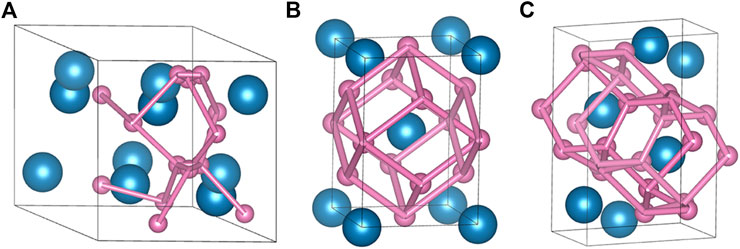
FIGURE 1. The unit cell of YH3 crystals under different pressures. (A) YH3 at 0 GPa, (B) YH3 at 50 GPa, (C) YH3 at 300 GPa. The pink ball is H, and the blue ball is rare earth yttrium (Y).
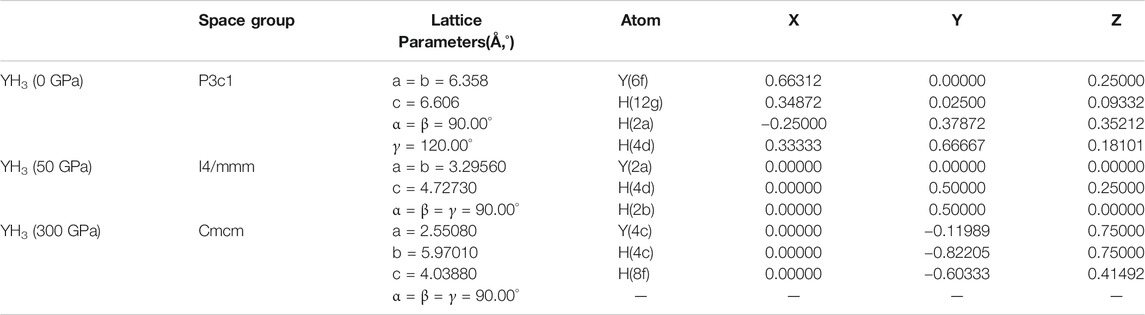
TABLE 1. Structural parameters of YH3 for 0, 50 and 300 GPa, respectively, adapted from Ref. (Peng et al., 2017).
Figure 2 shows the phonon dispersions for YH3 structures calculated based on the harmonic force constant matrix under different pressures. For the zero pressure structure, the phonon band below 6 THz is notably flattened, which provides more channels for phonon-phonon scattering. In contrast, the phonon dispersion of YH3 at 50 and 300 GPa have two obvious band gaps. The first band gap is between acoustic and medium optical branches, and the second band gap is between medium optical and highest optical branches. With the increase of pressure, the first band gap becomes wider. For instance, the first band gap of YH3 at 300 GPa is 12.5 THz, which is 42% wider than that of YH3 at 50 GPa. The appearance of phonon band gap can effectively inhibit the absorption and emission three-phonons processes and further affect the thermal conductivity (Lindsay et al., 2013), which implies the high thermal conductivity of YH3 under 300 GPa.
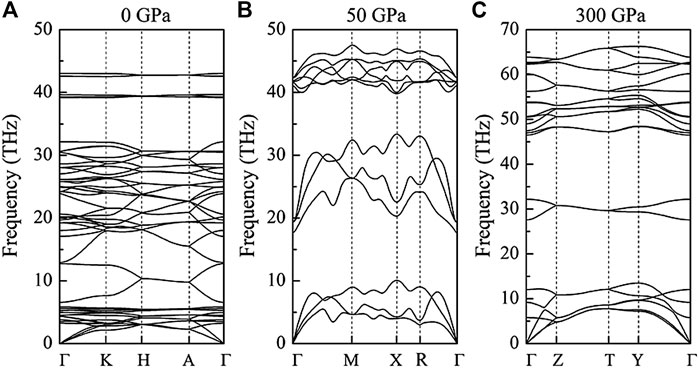
FIGURE 2. The phonon dispersion for YH3 under different pressures.
In addition, YH3 structure becomes even harder with the increase of pressure, which is manifested by the increases of frequency for both acoustic and optical phonon branches. By comparing their lattice constants between these three YH3 structures in Table 1, we can find that the unit cell volume is compressed by more than 70% when the pressure increases from 0 to 300 GPa. As the unit cell volume of YH3 is compressed, all bond lengths in YH3 decrease significantly, and the bond energy increases sharply, especially the H-H bonds with weak covalent interactions. The enhancement of band energy will increase the harmonic force constant, which will bring a vast improvement in phonon frequency and group velocity of YH3. Consequently, as shown in Figure 3, this dependence leads to the increase of phonon group velocities with pressure, particularly for the substantial enhancement in group velocity for low frequency phonons (below 15 THz). The phonon group velocity of YH3 at 300 GPa is the largest, which is significantly higher than the case at 0 GPa.
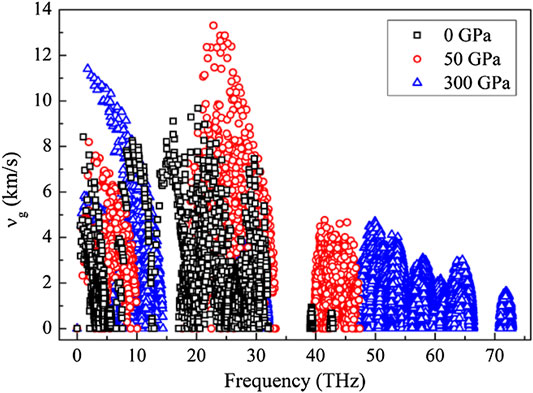
FIGURE 3. Phonon group velocity for YH3 under different pressures.
Thermal Conductivity
Figure 4 shows the calculated temperature dependent thermal conductivities of YH3 structures, which decreases significantly as temperature increases for all pressures. In our calculation, anharmonic phonon-phonon scattering acts as a major scattering mechanism in pristine crystals without defect or boundary scattering. At high temperature, more phonons are excited due to the enhanced phonon population with temperature. At the same time, the anharmonic effect is enhanced, which greatly increases the scattering rate and limits the phonon mean free path. Moreover, we find that thermal conductivities of YH3 under different pressures follow the ĸ∼T−1 law quite well at high temperatures, indicating the dominance of U-process in the three-phonon scattering process (Zhang et al., 2017a). More significantly, the enhancement of thermal conductivity is observed with increasing pressure. The room temperature thermal conductivity of YH3 reaches 1,360 Wm−1K−1 at 300 GPa. Such high thermal conductivity is comparable to the superior thermal conductive materials, such as graphene (∼3,000 Wm−1K−1) (Balandin, 2011), boron arsenide (∼1,400 Wm−1K−1) (Feng et al., 2017; Kang et al., 2018; Li et al., 2018; Tian et al., 2018), boron phosphide (580 Wm−1K−1) (Zheng et al., 2018), BC2N (1,200 Wm−1K−1) (Shafique and Shin, 2019). In addition, the room temperature thermal conductivities of YH3 at 0 and 50 GPa are around 10 and 70 Wm−1K−1, respectively. Previous studies reveal that thermal conductivity in solids is positively associated with external pressure, and the relationship is almost linear when the lattice structure is not changed (Mann et al., 2016). In this work, the observed dependence of thermal conductivity in YH3 on pressure is highly nonlinear, suggesting that the influences of phase transformation and structure variation are quite significant to the thermal conductivity of YH3. For the whole temperature range, the thermal conductivity of YH3 at 300 GPa is at least one order of magnitude higher than that at low pressure. However, it can be seen from Figure 3 that the phonon group velocities for three structures, although different, are still on the same order of magnitude. Obviously, the phonon group velocity is not the dominant factor responsible for the observed significantly different thermal conductivity.
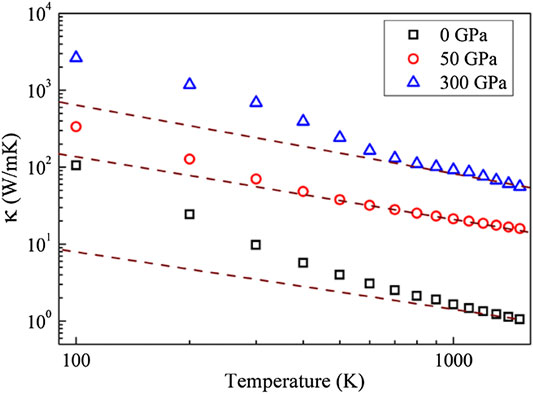
FIGURE 4. Temperature dependent lattice thermal conductivity of YH3 under different pressures. The dashed lines indicate the κ∼T−1 dependence.
To further explore the different thermal conductivity among three structures, the normalized accumulative thermal conductivities at 300 K vs. phonon frequency are presented in Figure 5. It is noteworthy that accumulative thermal conductivities in all YH3 structures increase rapidly with frequency in the low-frequency acoustic region (<15 THz), indicating the dominant contributions from acoustic phonon branches. With the increased frequency of phonon, the accumulative thermal conductivity of YH3 at 0 GPa converges after ∼4.8 THz, while the saturation frequency is ∼9.8 THz and ∼12.6 THz (vertical lines in Figure 5) for the 50 GPa structure and 300 GPa structure, respectively. This increase of saturation frequency with pressure among different structures is consistent with the lifting of phonon frequency upon pressure in the dispersion relation observed in Figure 2.
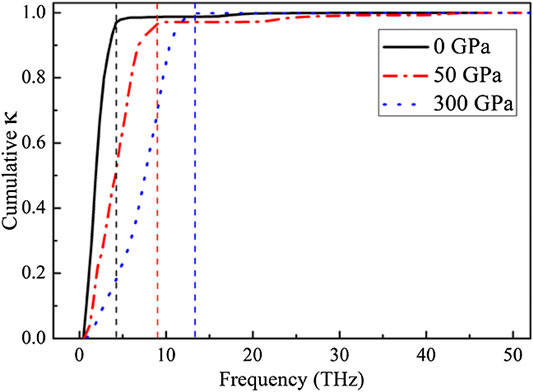
FIGURE 5. Normalized accumulative thermal conductivity for YH3 under different pressures. The vertical dashed lines highlight the upper bound of acoustic branches for different YH3 structures.
Phonon Lifetime and Phase Space
Considering that the harmonic property in terms of phonon group velocity is on the same order of magnitude among three YH3 structures, the anharmonic phonon-phonon scatterings should have a significant impact on thermal transport in YH3. In this regard, we further compare in Figure 6A the phonon lifetime of three YH3 structures at 300 K. The phonon lifetime of YH3 at 300 GPa is significantly higher than that in other two structures for the whole frequency range, while the phonon lifetime in the structure at 0 GPa is the smallest. Particularly for the low-frequency phonons below 15 THz, the phonon lifetime in the structure at 300 GPa is at least one order of magnitude higher than that in other two structures, which is consistent with the observed notable difference in thermal conductivity. This result further indicates that the large difference in thermal conductivities of structures under different pressures is mainly caused by anharmonic phonon-phonon scattering. Moreover, we found that the phonon relaxation time of YH3 is on the same order of magnitude as that of the high thermal conductivity materials such as graphene (Zhang et al., 2017b). Therefore, the large phonon group velocity and relaxation time, especially in the low frequency region (<15 THz), eventually lead to the high thermal conductivity of YH3 at 300 GPa.
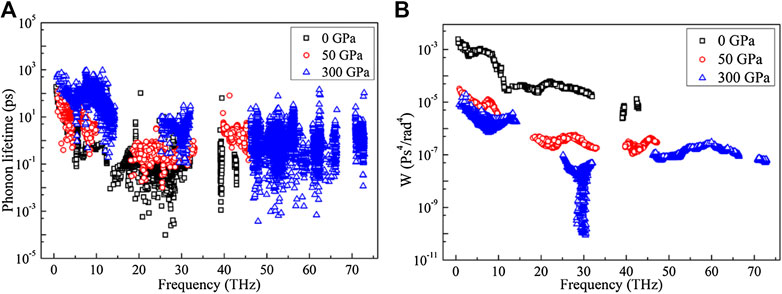
FIGURE 6. The phonon lifetime (A) and phase space (B) of YH3 under different pressures at 300 K.
The suppression of phonon lifetime should be originated from the detailed phonon-phonon scattering channels, which can be evaluated by the phase space parameter W in Eq. 6. The phase space parameter W essentially quantifies the existing scattering channels for various phonons, with a large value indicating frequent phonon-phonon scattering process thus a small phonon lifetime (Li and Mingo, 2014).
As shown in Figure 6B, the phase space of the structure at 0 GPa is the largest for the whole frequency range, followed by the structure at 50, and 300 GPa. This observation also agrees well with the obtained phonon lifetime in Figure 6A. As we mentioned before, there are two obvious band gaps in the phonon dispersion for the YH3 structures at 50 and 300 GPa, which is absent in the structure at 0 GPa. Moreover, the band gap for the structure at 300 GPa is notably wider than that at 50 GPa. The existence of band gap makes the phonon absorption process (
Conclusion
We have studied the lattice thermal conductivities of YH3 structures under different pressures by using Boltzmann transport equation and first-principle calculations. It is found that thermal conductivity of YH3 increases nonlinearly with pressure. Strikingly, the YH3 structure at 300 GPa, which is the superconducting phase, has remarkably high thermal conductivity around 1,360 W m−1K−1 at room temperature. For the YH3 structure at 0 GPa, a large number of flat bands appear at the low-frequency region in the phonon dispersion relation, and are mixed with the acoustic branches, which causes the strong phonon-phonon scattering and thus effectively suppresses the phonon lifetime and thermal conductivity. With increasing pressure, the unit cell volume of YH3 is compressed by more than 70% and YH3 structure changes from a hexagonal to a cubic crystal system. The increase of group velocity due to the enhancement of bond energy and the weakened phonon-phonon scattering are both responsible for the ultrahigh thermal conductivity of YH3 at 300 GPa. Our study uncovers the phononic thermal transport properties of yttrium hydrides allotropes, and also provides a new opportunity to achieve high thermal dissipation ability with external pressure.
Data Availability Statement
The raw data supporting the conclusions of this article will be made available by the authors, without undue reservation.
Author Contributions
WR performed the calculations. JC supervised the project. All authors discussed the results and wrote the manuscript.
Funding
This project is supported in part by the grants from the National Natural Science Foundation of China (Grant Nos. 11890703 and 11775158), Science and Technology Commission of Shanghai Municipality (Grant Nos. 19ZR1478600 and 18JC1410900), the Fundamental Research Funds for the Central Universities (Grant No. 22120200069), and Open Fund of Hunan Provincial Key Laboratory of Advanced Materials for New Energy Storage and Conversion (Grant No. 2018TP1037_201901).
Conflict of Interest
The authors declare that the research was conducted in the absence of any commercial or financial relationships that could be construed as a potential conflict of interest.
References
Alva, G., Lin, Y., and Fang, G. (2018). An overview of thermal energy storage systems. Energy 144, 341–378. doi:10.1016/j.energy.2017.12.037
Ashcroft, N. W. (1968). Metallic hydrogen: a high-temperature superconductor?. Phys. Rev. Lett. 21, 1748–1749. doi:10.1103/physrevlett.21.1748
Ashcroft, N. W. (2004). Hydrogen dominant metallic alloys: high temperature superconductors?. Phys. Rev. Lett. 92, 187002. doi:10.1103/physrevlett.92.187002
Balandin, A. A. (2011). Thermal properties of graphene and nanostructured carbon materials. Nature Mater 10, 569–581. doi:10.1038/nmat3064
Beldjoudi, K., Sahraoui, F. A., and Bouhemadou, A. (2019). Pressure effect on the structural, elastic and thermodynamic properties of the BeP2N4 compound: first-principles investigation. Comput. Condens. Matter 21, e00408. doi:10.1016/j.cocom.2019.e00408
Chen, J., Walther, J. H., and Koumoutsakos, P. (2014). Strain engineering of kapitza resistance in few-layer graphene. Nano Lett. 14, 819–825. doi:10.1021/nl404182k
Errea, I., Calandra, M., Pickard, C. J., Nelson, J. R., Needs, R. J., Li, Y., et al. (2016). Quantum hydrogen-bond symmetrization in the superconducting hydrogen sulfide system. Nature 532, 81–84. doi:10.1038/nature17175
Feng, T., Lindsay, L., and Ruan, X. (2017). Four-phonon scattering significantly reduces intrinsic thermal conductivity of solids. Phys. Rev. B 96, 161201. doi:10.1103/physrevb.96.161201
Feng, T., Qiu, B., and Ruan, X. (2015). Coupling between phonon-phonon and phonon-impurity scattering: a critical revisit of the spectral Matthiessen's rule, Phys. Rev. B 92, 235206. doi:10.1103/physrevb.92.235206
Ghosh, S., Calizo, I., Teweldebrhan, D., Pokatilov, E. P., Nika, D. L., Balandin, A. A., et al. (2008). Extremely high thermal conductivity of graphene: prospects for thermal management applications in nanoelectronic circuits. Appl. Phys. Lett. 92, 151911. doi:10.1063/1.2907977
Grishakov, K. S., Degtyarenko, N. N., and Mazur, E. A. (2019). Electron, phonon, and superconducting properties of yttrium and sulfur hydrides under high pressures. J. Exp. Theor. Phys. 128, 105–114. doi:10.1134/s1063776119010072
Heil, C., di Cataldo, S., Bachelet, G. B., and Boeri, L. (2019). Superconductivity in sodalite-like yttrium hydride clathrates, Phys. Rev. B 99, 220502. doi:10.1103/physrevb.99.220502
Hu, S., Zhang, Z., Jiang, P., Chen, J., Volz, S., Nomura, M., et al. (2018). Randomness-induced phonon localization in graphene heat conduction. J. Phys. Chem. Lett. 9, 3959–3968. doi:10.1021/acs.jpclett.8b01653
Hummel, P., Lechner, A. M., Herrmann, K., Biehl, P., Rössel, C., Wiedenhöft, L., et al. (2020). Thermal transport in ampholytic polymers: the role of hydrogen bonding and water uptake. Macromolecules 53, 5528–5537. doi:10.1021/acs.macromol.0c00596
Ito, M., Matsunaga, J., Setoyama, D., Muta, H., Kurosaki, K., Uno, M., et al. (2005). Thermal properties of yttrium hydride. J. Nucl. Mater. 344, 295–297. doi:10.1016/j.jnucmat.2005.04.058
Jarosik, M. W., Szczȩśniak, R., Wrona, I. A., and Kostrzewa, M. (2017). Non-BCS superconducting state in yttrium hydride at a record low value of the external pressure. Solid State Commun. 250, 5–8. doi:10.1016/j.ssc.2016.11.002
Kang, J. S., Li, M., Wu, H., Nguyen, H., and Hu, Y. (2018). Experimental observation of high thermal conductivity in boron arsenide. Science 361, 575–578. doi:10.1126/science.aat5522
Kim, D. Y., Scheicher, R. H., and Ahuja, R. (2009). Predicted high-temperature superconducting state in the hydrogen-dense transition-metal hydride YH3 at 40 K and 17.7 GPa. Phys. Rev. Lett. 103, 077002. doi:10.1103/physrevlett.103.077002
Kim, D. Y., Scheicher, R. H., Mao, H.-k., Kang, T. W., and Ahuja, R. (2010). General trend for pressurized superconducting hydrogen-dense materials. Proc. Natl. Acad. Sci. U. S. A. 107, 2793–2796. doi:10.1073/pnas.0914462107
Kresse, G., and Furthmüller, J. (1996). Efficient iterative schemes forab initiototal-energy calculations using a plane-wave basis set. Phys. Rev. B 54, 11169–11186. doi:10.1103/physrevb.54.11169
Kundu, A., Mingo, N., Broido, D. A., and Stewart, D. A. (2011). Role of light and heavy embedded nanoparticles on the thermal conductivity of SiGe alloys. Phys. Rev. B 84, 125426. doi:10.1103/physrevb.84.125426
Li, R., Cheng, X., Xie, Q., Sun, Y., Li, D., Li, Y., et al. (2015). Topological metal of NaBi with ultralow lattice thermal conductivity and electron-phonon superconductivity. Sci. Rep. 5, 8446. doi:10.1038/srep08446
Li, S., Zheng, Q., Lv, Y., Liu, X., Wang, X., Huang, P. Y., et al. (2018). High thermal conductivity in cubic boron arsenide crystals. Science 361, 579–581. doi:10.1126/science.aat8982
Li, W., Carrete, J., Katcho, N. A., and Mingo, N. (2014). ShengBTE: a solver of the Boltzmann transport equation for phonons. Comput. Phys. Commun. 185, 1747–1758. doi:10.1016/j.cpc.2014.02.015
Li, W., Lindsay, L., Broido, D. A., Stewart, D. A., and Mingo, N. (2012). Thermal conductivity of bulk and nanowire Mg2SixSn1-x alloys from first principles. Phys. Rev. B 86, 174307. doi:10.1103/physrevb.86.174307
Li, W., and Mingo, N. (2014). Thermal conductivity of fully filled skutterudites: role of the filler. Phys. Rev. B 89, 184304. doi:10.1103/physrevb.89.184304
Li, W., and Mingo, N. (2015). Ultralow lattice thermal conductivity of the fully filled skutterudite YbFe4Sb12 due to the flat avoided-crossing filler modes. Phys. Rev. B 91, 144304. doi:10.1103/physrevb.91.144304
Li, X., and Peng, F. (2017). Superconductivity of pressure-stabilized vanadium hydrides. Inorg. Chem. 56, 13759–13765. doi:10.1021/acs.inorgchem.7b01686
Lindsay, L., and Broido, D. A. (2008). Three-phonon phase space and lattice thermal conductivity in semiconductors. J. Phys. Condens. Matter 20, 165209. doi:10.1088/0953-8984/20/16/165209
Lindsay, L., Broido, D. A., and Reinecke, T. L. (2013). First-Principles determination of ultrahigh thermal conductivity of boron arsenide: a competitor for diamond?. Phys. Rev. Lett. 111, 025901. doi:10.1103/physrevlett.111.025901
Liu, H., Naumov, I. I., Hoffmann, R., Ashcroft, N. W., and Hemley, R. J. (2017). Potential high-Tc superconducting lanthanum and yttrium hydrides at high pressure. Proc. Natl. Acad. Sci. U. S. A. 114, 6990–6995. doi:10.1073/pnas.1704505114
Liu, H., Qin, G., Lin, Y., and Hu, M. (2016). Disparate strain dependent thermal conductivity of two-dimensional penta-structures. Nano Lett. 16, 3831–3842. doi:10.1021/acs.nanolett.6b01311
Liu, L.-L., Sun, H.-J., Wang, C. Z., and Lu, W.-C. (2017). High-pressure structures of yttrium hydrides. J. Phys. Condens. Matter 29, 325401. doi:10.1088/1361-648x/aa787d
Mann, S., Rani, P., Kumar, R., Dubey, G. S., and Jindal, V. K. (2016). Thermodynamic properties of pure and doped (B, N) graphene. RSC Adv. 6, 12158–12168. doi:10.1039/c5ra25239c
Michael, B., and Michael, E. W. (2011). Isotopic compositions of the elements 2009 (IUPAC technical report). Pure Appl. Chem. 83, 397–410. doi:10.1351/PAC-REP-10-06-02
Monkhorst, H. J., and Pack, J. D. (1976). Special points for Brillouin-zone integrations Phys. Rev. B 13, 5188–5192. doi:10.1103/physrevb.13.5188
Omini, M., and Sparavigna, A. (1995). An iterative approach to the phonon Boltzmann equation in the theory of thermal conductivity. Phys. B Condens. Matter 212, 101–112. doi:10.1016/0921-4526(95)00016-3
Ouyang, T., and Hu, M. (2015). Competing mechanism driving diverse pressure dependence of thermal conductivity of XTe (X = Hg, Cd, and Zn). Phys. Rev. B 92, 235204. doi:10.1103/physrevb.92.235204
Ouyang, Y., Zhang, Z., Li, D., Chen, J., and Zhang, G. (2019). Emerging theory, materials, and screening methods: new opportunities for promoting thermoelectric performance. Ann. Phys. 531, 1800437. doi:10.1002/andp.201800437
Peng, F., Sun, Y., Pickard, C. J., Needs, R. J., Wu, Q., and Ma, Y. (2017). Hydrogen clathrate structures in rare earth hydrides at high pressures: possible route to room-temperature superconductivity. Phys. Rev. Lett. 119, 107001. doi:10.1103/physrevlett.119.107001
Shafique, A., and Shin, Y.-H. (2019). Ultrahigh and anisotropic thermal transport in the hybridized monolayer (BC2N) of boron nitride and graphene: a first-principles study. Phys. Chem. Chem. Phys. 21, 17306–17313. doi:10.1039/c9cp02068c
Shi, L., Chen, J., Zhang, G., and Li, B. (2012). Thermoelectric figure of merit in Ga-doped [0001] Z00nO nanowires. Phys. Lett. 376, 978–981. doi:10.1016/j.physleta.2011.12.040
Soroka, O., Sturm, J. M., van de Kruijs, R. W. E., Lee, C. J., and Bijkerk, F. (2018). Control of YH3 formation and stability via hydrogen surface adsorption and desorption, Appl. Surf. Sci. 455, 70–74. doi:10.1016/j.apsusc.2018.05.134
Tamura, S.-i. (1983). Isotope scattering of dispersive phonons in Ge. Phys. Rev. B 27, 858–866. doi:10.1103/physrevb.27.858
Tanaka, K., Tse, J. S., and Liu, H. (2017). Electron-phonon coupling mechanisms for hydrogen-rich metals at high pressure. Phys. Rev. B 96, 100502. doi:10.1103/physrevb.96.100502
Tian, F., Song, B., Chen, X., Ravichandran, N. K., Lv, Y., Chen, K., et al. (2018). Unusual high thermal conductivity in boron arsenide bulk crystals. Science 361, 582–585. doi:10.1126/science.aat7932
Togo, A., Oba, F., and Tanaka, I. (2008). First-principles calculations of the ferroelastic transition between rutile-type and CaCl2-typeSiO2 at high pressures. Phys. Rev. B 78, 134106. doi:10.1103/physrevb.78.134106
Wang, Y., Lv, J., Zhu, L., and Ma, Y. (2010). Crystal structure prediction via particle-swarm optimization. Phys. Rev. B 82, 094116. doi:10.1103/physrevb.82.094116
Wang, H., Tse, J. S., Tanaka, K., Iitaka, T., and Ma, Y. (2012). Superconductive sodalite-like clathrate calcium hydride at high pressures. Proc. Natl. Acad. Sci. U. S. A. 109, 6463–6466. doi:10.1073/pnas.1118168109
Wang, Y., Lv, J., Zhu, L., and Ma, Y. (2012). CALYPSO: a method for crystal structure prediction. Comput. Phys. Commun. 183, 2063–2070. doi:10.1016/j.cpc.2012.05.008
Wigner, E., and Huntington, H. B. (1935). On the possibility of a metallic modification of hydrogen. J. Chem. Phys. 3, 764–770. doi:10.1063/1.1749590
Xie, G., Ju, Z., Zhou, K., Wei, X., Guo, Z., Cai, Y., et al. (2018). Ultra-low thermal conductivity of two-dimensional phononic crystals in the incoherent regime. Npj Comput. Mater. 4, 21. doi:10.1038/s41524-018-0076-9
Xu, X., Zhou, J., and Chen, J. (2020). Thermal transport in conductive polymer-based materials. Adv. Funct. Mater. 30, 1904704. doi:10.1002/adfm.201904704
Zhang, Z., and Chen, J. (2018). Thermal conductivity of nanowires. Chin. Phys. B 27, 035101. doi:10.1088/1674-1056/27/3/035101
Zhang, Z., Chen, J., and Li, B. (2017a). Negative Gaussian curvature induces significant suppression of thermal conduction in carbon crystals. Nanoscale 9, 14208–14214. doi:10.1039/c7nr04944g
Zhang, Z., Hu, S., Chen, J., and Li, B. (2017b). Hexagonal boron nitride: a promising substrate for graphene with high heat dissipation. Nanotechnology 28, 225704. doi:10.1088/1361-6528/aa6e49
Zhang, Z., Hu, S., Nakayama, T., Chen, J., and Li, B. (2018). Reducing lattice thermal conductivity in schwarzites via engineering the hybridized phonon modes. Carbon 139, 289–298. doi:10.1016/j.carbon.2018.06.057
Zhang, Z., Hu, S., Xi, Q., Nakayama, T., Volz, S., Chen, J., et al. (2020a). Tunable phonon nanocapacitor built by carbon schwarzite based host-guest system. Phys. Rev. B 101, 081402(R). doi:10.1103/physrevb.101.081402
Zhang, Z., Ouyang, Y., Cheng, Y., Chen, J., Li, N., and Zhang, G. (2020b). Size-dependent phononic thermal transport in low-dimensional nanomaterials. Phys. Rep. 860, 1–26. doi:10.1016/j.physrep.2020.03.001
Zheng, Q., Li, S., Li, C., Lv, Y., Liu, X., Huang, P. Y., et al. (2018). High thermal conductivity in isotopically enriched cubic boron phosphide. Adv. Funct. Mater. 28, 1805116. doi:10.1002/adfm.201805116
Zhong, X., Wang, H., Zhang, J., Liu, H., Zhang, S., Song, H.-F., et al. (2016). Tellurium hydrides at high pressures: high-temperature superconductors, Phys. Rev. Lett. 116, 057002. doi:10.1103/physrevlett.116.057002
Keywords: Peierls-Boltzmann transport equation, lattice thermal conductivity, superconductor, phonon lifetime, first-principle calculations
Citation: Ren W, Zhang Z, Chen C, Ouyang Y, Li N and Chen J (2020) Phononic Thermal Transport in Yttrium Hydrides Allotropes. Front. Mater. 7:569090. doi: 10.3389/fmats.2020.569090
Received: 03 June 2020; Accepted: 27 October 2020;
Published: 17 November 2020.
Edited by:
Weifeng Li, Shandong University, ChinaReviewed by:
Ibrahim Sayed Hussein, King Khalid University, Saudi ArabiaYinchang Zhao, Yantai University, China
Yandong Ma, Shandong University, China
Copyright © 2020 Ren, Zhang, Chen, Ouyang, Li and Chen. This is an open-access article distributed under the terms of the Creative Commons Attribution License (CC BY). The use, distribution or reproduction in other forums is permitted, provided the original author(s) and the copyright owner(s) are credited and that the original publication in this journal is cited, in accordance with accepted academic practice. No use, distribution or reproduction is permitted which does not comply with these terms.
*Correspondence: Jie Chen, amllQHRvbmdqaS5lZHUuY24=