 Ali Rehman1
 Waris Khan
- 1Department of Mathematics, Faculty of Ocean Engineering Technology and Informatics, Universiti Malaysia Terengganu, Terengganu, Malaysia
- 2Department of Mathematics and Statistics, Hazara University Mansehra, Mansehra, Pakistan
- 3Mechanical Engineering, Faculty of Engineering & Technology, Future University in Egypt, New Cairo, Egypt
- 4Department of Mathematics, University of Swabi, Swabi, Pakistan
- 5School of Mathematical Sciences, Jiangsu University, Zhenjiang, Jiangsu, China
- 6Mechanical Engineering Department, College of Engineering, Prince Sattam Bin Abdulaziz University, Wadi addawaser, Saudi Arabia
- 7Production Engineering and Mechanical Design Department, Faculty of Engineering, Mansoura University, Mansoura, Egypt
The heat transfer ratio plays an important role in the industrial and engineering sectors; in this model, the authors used the hybrid nanofluid because the heat transfer ratio of the hybrid nanofluid is more than that of the base fluid. The key objective of this research work is to boost up the heat transfer ratio, for example, not only the accomplishment of energy is enough but is also expected to regulate the feeding of energy, and this is possible only to approve the development of heat transmission liquids to the mechanism of the expenditures of energy and improvement. The current research study investigates the influence of Marangoni convection, solar radiation, and viscous dissipation on the bioconvection couple stress flow of the hybrid nanofluid over a shrinking surface. This type of flow has some important application in the industrial and engineering sectors for the purpose of cooling and heating effect. To transform the non-dimensionless form of the differential equation to the dimensionless form, the authors used the defined similarity transformation. The transformed dimensionless form of the differential equation is solved by the homotopic analysis method. The obtained important result is determined with the help of graphs which is obtained from velocity and temperature equations. The impression of different parameters such as couple stress parameter, Marangoni convection parameter, nanoparticle volume fraction, solar radiation parameter, magnetic field parameter, thermophoresis parameter, Eckert number, and Prandtl number is taken over graphs. The skin friction coefficient and Nusselt number are described in the form of tables.
Introduction
Nanotechnology has produced massive consciousness amongst the researchers due to its wide possibility of applications in different branches of science and technology. The important use of the research on nanotechnology is to boost the heat transfer ratio. To enhance the heat transfer ratio, different approaches are used for the regular fluid. Several researchers work on the combination of solid and liquid for the improvement of ratio. The importance of magneto-Marangoni convection due to the immoderate uses precisely, sprinkling of thin film flow, use in the important apparatus in atom, and helpful in making semiconductors, played a very enormous role in the process of welding and showed good performance in the crystal growth. Marangoni convection is also used in material science, varnish, and silicon melts and plays an important role in factories and industries. Moreover, to color the ground, the Marangoni phenomenon is commonly used. The pigment is hanged on the exterior surface of the essential medium like water or other thickness fluids in this procedure. Das et al. (2008) for the first time introduced the concept of nanofluids. Buongiorno (2006) studied the convective heat transport in nanofluids. Due to the important uses of nuclear reactors, plasma studies, wire drawing, hot rolling, and manufacturing of glass fiber, researchers take more interest in the flow of nanofluids over the extending surface and attended by Lorentz’s effect. Makinde and Aziz (2011) used a stretching surface to study the boundary-layer flow of a nanofluid. Rana and Bhargava (2012) used a non-linear stretching surface to study the flow and heat transfer of a nanofluid. Khan and Pop (2010) used a stretching surface to study boundary-layer flow of a nanofluid. Makinde et al. (2016) used a stretching surface to study the MHD flow of a variable viscosity nanofluid over a radially stretching convective surface with radiative heat. Besthapu et al. (2017) used a stretching surface to study the MHD flow of the nanofluid. Acharya et al. (2016) used a stretching surface to study ramification of variable thickness on MHD TiO2 and Ag nanofluid. Acharya NDas and Prabir (2016) used two parallel plates to study squeezing flow of Cu–water and Cu–kerosene nanofluids. Das et al. (2016) used a shrinking sheet to study the onset of the nanofluid in the presence of a heat source/sink. Ishfaq et al. (2016) used a stretching surface to study the estimation of the boundary-layer flow of a nanofluid. Rana P Bhargava and Beg (2012) used a pour surface to study the mixed convective boundary-layer flow of a nanofluid numerically. The researchers take more interest in magneto-Marangoni convection which is produced due to the surface tension. The purpose behind this is some important applications such as, scattering of the thin liquid layer, atomic reactor, the processing of semiconductors, dynamic use in the welding process, crystal growth, material science, varnish, and silicon melt. The other important application of Marangoni convection is fine art mechanism, for instance, pigment on the ground. Pop Postelnicu (2001) studied the effect of Marangoni convection. Al-Mudhaf and Chamkha (2005) with the help of a porous medium investigated the Marangoni convection effect. Wang (2006) used a series solution method to study the influence of Marangoni convection. Chen (2007) discussed the inspiration of Marangoni convection. Magyari and Chamkha (2007) using the high magnitude of Re discussed the inspiration of Marangoni convection. Zheng et al. (Lin et al., 2013; Lin et al., 2014) studied the MHD Marangoni convection along with the thermal gradients. Aly and Ebaid (2016) used the Laplace transform to study the Marangoni flow over a permeable surface. Ellahi et al. (2016) used the ethylene glycol-based nanofluid to study the different shapes of nano-scale materials. Xu and Chen (Jiao et al., 2016) used permeable media to study Marangoni convection. Sheikholeslami and Chamkha (2017) studied the MHD Marangoni convection along with the two-phase nanoliquid hydrothermal model. The researchers take more interest in the novel kind of nanofluid known as the hybrid nanofluid due to a high heat transmission relation, which plays a significant role in the field of science and technology (Hussanan et al., 2019). They studied novel kind known as the hybrid nanofluid flow for some useful applications in manufacturing. (Eastman et al., 1996; Eastman et al., 1999; Moldoveanu et al., 2019; Kumar et al., 2020; Wakif et al., 2020). The thermal conductivity of EG (ethylene glycol) is little as compared to the other nanofluid. The required demand of the heat transfer ratio for current technologies and the wide requirement for thermal energy cannot be satisfied by the usually used fluids. The heat transfer ratio of the base fluid increases when the base liquids are mixed by the addition of minor shaped particles (Buongiorno et al., 2009). Thus, the increase in thermal possessions of usual fluids advanced strong interest of researchers to conduct more research. The overflowing literature on nanofluid and CNTs both (SWCNTs and MWCNTs) is studied by numerous researchers. Normally used in the energy sector and nanoscience (Kandasamy et al., 2016), copper oxide water was studied by Animasaun et al. (2019), carbon nanotube/water by Aman et al. (2017), heat transfer enrichment using the carbon nanotube by Raza et al. (2019), and the investigation of
Mathematical formulation
Consider a two-dimensional time-independent laminar incompressible flow of
where
The boundary conditions for the given flow problem are as follows:
From Eq. 4, we see that the velocity of the fluid and temperature changes along the x axis and above the x axis, the temperature of the surface remains constant, and the velocity of the fluid particles is zero;
To convert the non-dimensionless form of Eqs 2, 3, we introduced a dimensionless function of
In Eq. 5,
The boundary conditions for the given flow problem are as follows:
where
The non-dimensionless forms of skin friction and Nusselt number are as follows:
Using Eq. 5 in Eq 9, we have the dimensionless forms of skin friction and Nusselt number.
Solution by the HAM
To solve Eqs 6, 7 along with the boundary conditions (8), we apply the homotopy analysis method (HAM) with the following technique. The solutions having the auxiliary parameters
The initial guesses are selected as follows:
The linear operators are taken as
which have the following properties:
where
The resultant non-linear operatives
The basic idea of the HAM is described in Liao (2003), Liao (2004b), Liao (2010), and Acharya et al. (2017); the zeroth -order problems from Eqs 6, 7 are as follows:
The equivalent boundary conditions are as follows:
where
Expanding
where
The secondary constraints
The
The corresponding boundary conditions are
Here,
Stability analysis
The time-based stability of the multiple solutions as time changes is studied. This analysis was first presented by Merkin (1986) and then followed by Weidman et al. (2006). In order to achieve the solution time-based stability, the unsteady form of Eqs 2, 3 must be considered by suggesting the new dimensionless time variable equation one which will be unchanged. The unsteady forms of Eqs 2, 3 are
First, consider the new variables as follows:
Now, using Eq. 29 in Eqs 30, 31, the unsteady forms of Eqs 29, 30 become
The unsteady boundary conditions are
Now, consider the following perturbation function (Harris et al., 2009):
Equation 34 is used to apply a small disturbance
Subject to the boundary conditions
Without the loss of generality, we set
The solution will be stable if and only if the eigenvalue is positive, which shows the initial decay as time passes, and if the eigenvalue is negative at that point, the flow solution shows the initial growth of development, and the solution is said to be unstable as time passes.
Results and discussion
The important aim of this study is to deliver the idea of boost of the heat transfer, which is used in the new technology. In our study, we used different types of hybrid nanofluids for the improvement of the heat transfer ratio, which play an important role, for example, not only is the achievement of energy enough but is also expected to adjust the consumption of energy, and this is possible only to improve the development of heat transmission liquids to mechanism of the expenditures of energy and improvement. Most of the heat transmission is the demand of the industry and other related scientific fields. The second and important feature of this research is the enhancement of heat to reduce energy consumptions. The flow problem is conducted using a shrinking and stretching surface. The outputs of this study will be used to reduce energy consumption in industry and other engineering fields. In our research study, we used a new type of nanofluid known as the hybrid nanofluid for the enhancement of the heat transfer ratio because the heat transfer ratio of hybrid nanofluid is more than that of the base fluids. The hard elements dissolve in the base liquid, and after its constant diffusion, the hybrid nanofluid is produced. To transform the non-dimensionless form of the differential equation to the dimensionless form of the differential equation, the authors used the defined similarity transformation. The transformed dimensionless form of the differential equations is solved by the approximate analytical method. The total results obtained from the given flow problem are presented through figures. (Buongiorno, 2006; Khan and Pop, 2010; Makinde and Aziz, 2011; Rana and Bhargava, 2012; Acharya et al., 2016; Acharya N Das and Prabir, 2016; Makinde et al., 2016; Besthapu et al., 2017), the influence of different parameters on the velocity profile is presented in figures (Buongiorno, 2006; Khan and Pop, 2010; Makinde and Aziz, 2011; Rana and Bhargava, 2012; Makinde et al., 2016), and the influence of different parameters on the temperature profile is presented in figures (Acharya et al., 2016; Acharya NDas and Prabir, 2016; Besthapu et al., 2017). Table 1 shows the thermo-physical properties of water,
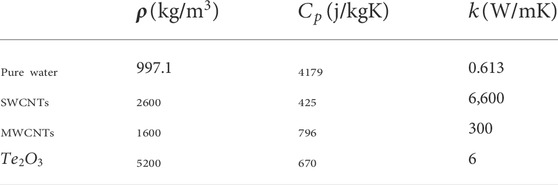
TABLE 1. Thermo-physical properties of water,
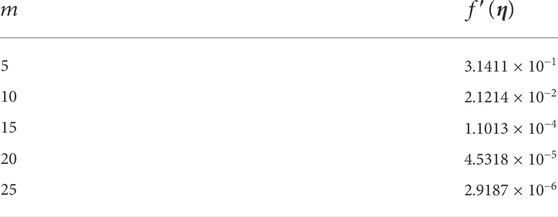
TABLE 2. Convergence of the defined problem for the velocity equation; from table 2, we noted that as we increase the number of iteration, the residual error decreases and strong convergence is obtained.
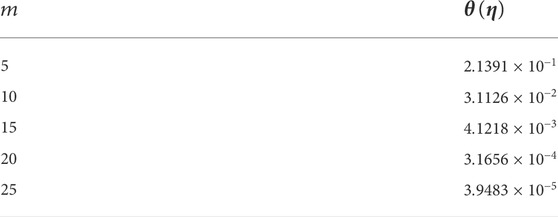
TABLE 3. Convergence of the defined problem for the temperature equation; from table 3, we see that as we increase the number of iteration, the residual error decreases and strong convergence is obtained.
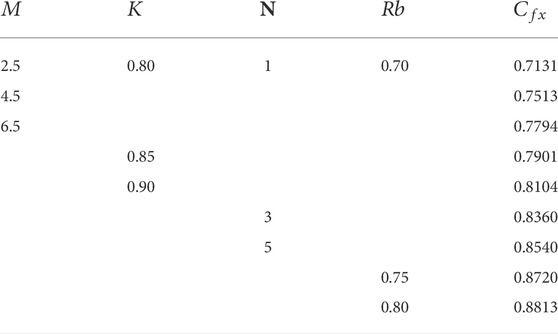
TABLE 4. Consequence of different parameters such as
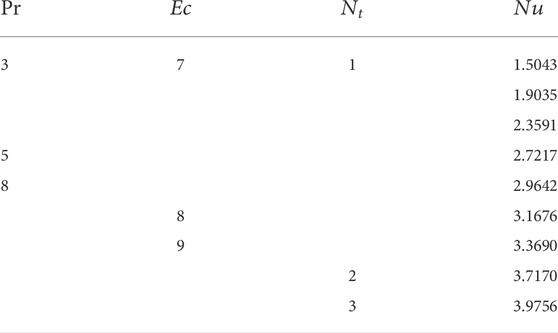
TABLE 5. Consequence of
Table 6 shows the comparison of the present work with already published work for the velocity equation.
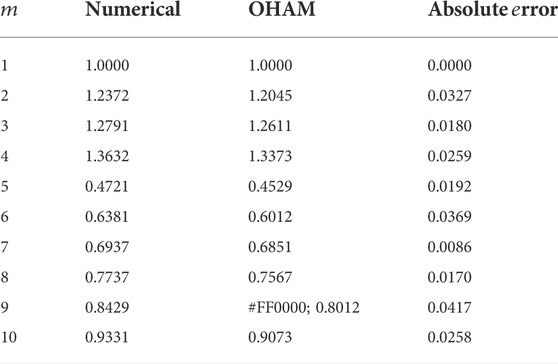
TABLE 6. OHAM and numerical comparison for
Table 7 shows the comparison of the present work with already published work for the temperature equation.
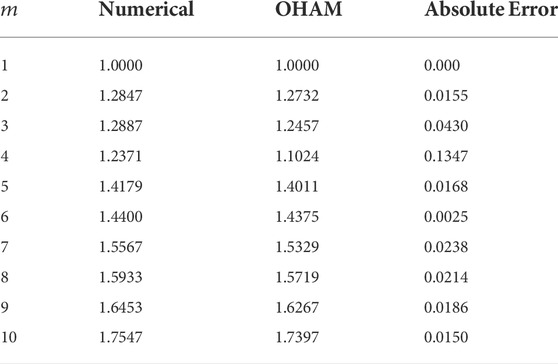
TABLE 7. OHAM and numerical comparison for
There are two solutions in a certain range of parameters; an investigation of stability is conducted to find the most stable solution between them. To solve Eqs 24, 25 and the boundary conditions ((Liao, 1997)), the bvp4c solver in MATLAB software is used. This tool helps solve the equations numerically. Table 8 shows the certain values of
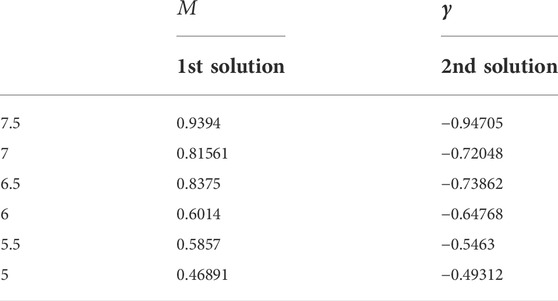
TABLE 8. List of several values of the smallest eigenvalue
Figure 2 shows variation in
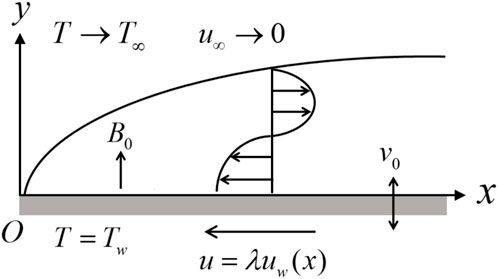
FIGURE 1. Geometry of the flow problem.
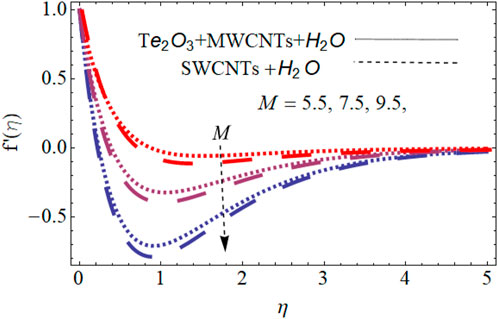
FIGURE 2. Inspiration of the magnetic field parameter on velocity profile.
Figure 3 shows the variation in nanoparticle volume fraction
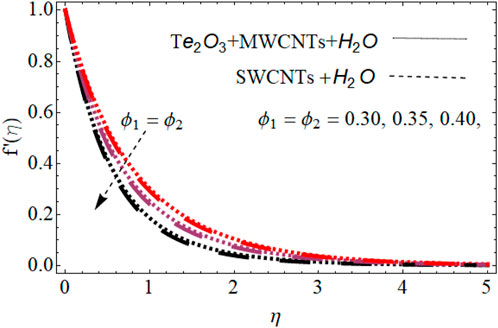
FIGURE 3. Inspiration of the nanoparticle volume fraction on the velocity profile.
Figure 4 shows the variation in couple stress
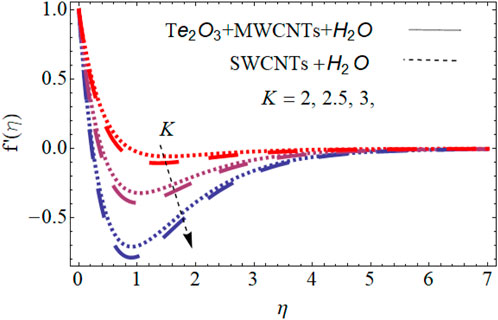
FIGURE 4. Inspiration of the couple stress parameter on the velocity profile.
Figure 5 shows the impact of the solar radiation parameter on velocity distribution for both
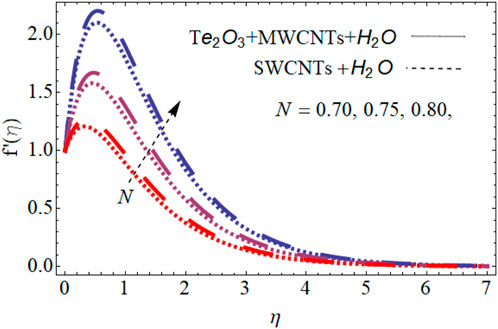
FIGURE 5. Inspiration of the solar radiation parameter on the velocity profile.
Figure 6 shows the variation in Marangoni convection
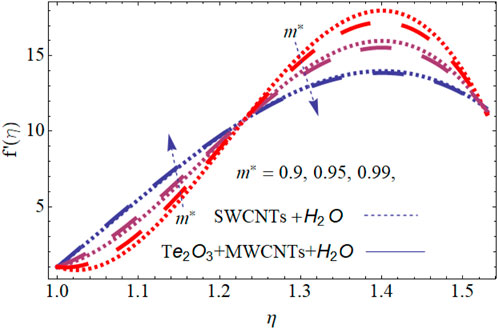
FIGURE 6. Inspiration of Marangoni convection on the velocity profile.
Figure 7 shows the relation between the solar radiation parameter and temperature profile for both
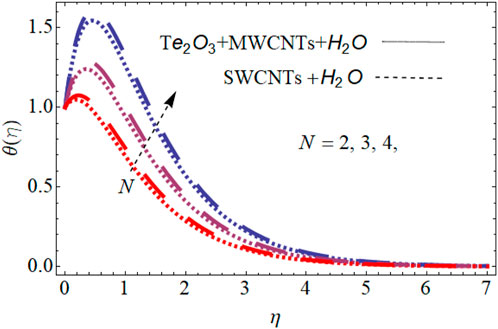
FIGURE 7. Inspiration of the solar radiation parameter on the temperature profile.
Figure 8 shows the relation between Eckert number and temperature profile for both
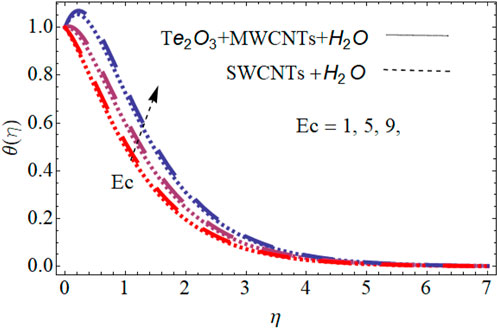
FIGURE 8. Inspiration of the thermophoresis parameter on the temperature profile.
Figure 9 shows schemed
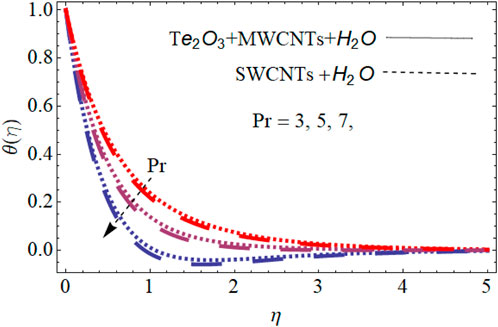
FIGURE 9. Inspiration of Prandtl number on the temperature profile.
Figure 10 shows that the fluid velocity increases when the effect of the shrinking and shrinking parameters
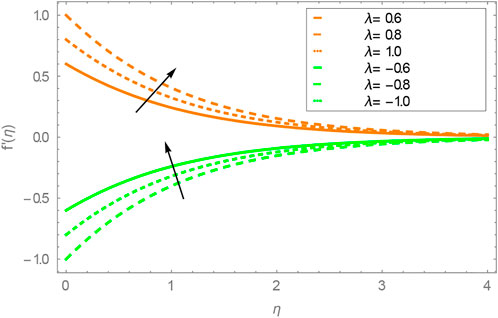
FIGURE 10. Inspiration of shrinking and stretching parameters
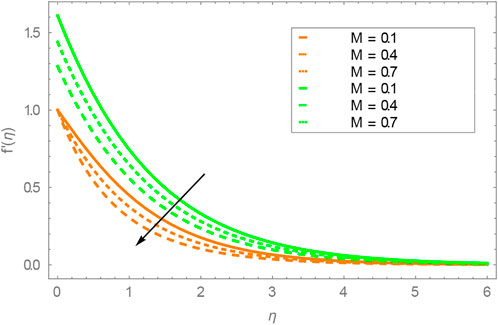
FIGURE 11. Inspiration of shrinking and stretching parameters
Conclusion
This study investigates the influence of Marangoni convection, solar radiation, and viscous dissipation on the bioconvection couple stress flow of the hybrid nanofluid over a shrinking surface is investigated analytically. The novelty of current research is that for the first time, the influence of Marangoni convection, solar radiation, and viscous dissipation on the bioconvection couple stress flow of the hybrid nanofluid over a stretching surface is investigated analytically. To transform the non-dimensionless form of the DE (differential equation) to the dimensionless form of DE (differential equation), we used similarity transformation. The transformed dimensionless form of the DEs (differential equations) are solved by the approximate analytical method. In the future, we will face the problem to adjust the consumptions of energy; in our research article, we used a hybrid nanofluid which helped in the enhancement of the heat transfer ratio, which have some important applications, for example, not only the achievement of energy is enough but is also expected to adjust the consumptions of energy, and this is possible only to approve the development of heat transmission liquids to the mechanism of the expenditures of energy and improvement. Most of the heat transmission is the demand of the industry and other related scientific fields. Former to the application of nanotechnology, analysts and engineers have challenged such huge numbers of questions recognizing with heat transmission fluids. Still, with the development of nanometer-sized particles, and its uses in the heat transfer fluids have overall improved thermal conductivity. The development of heat transport via nanofluid has involved a number of scientists due to a lot of uses in various sectors such as distillation and separation of bio-molecules, biosensors, atomic system cooling, manufacture of glass fiber, thermal storing, in solar water boiler, in the field of defense, MRI, thermal absorption process, drug delivery, and transportation (thermal management od vehicle and cooling of engine). The impression of different parameters is taken by graphs for the velocity equation and the temperature equation. The key findings of the present research article are as follows:
1.Increasing the value of the solar radiation parameter increases the velocity field.
2.Increasing the value of the magnetic field parameter decreases the velocity field.
3.Increasing the value of nanoparticle volume fraction decreases the velocity field.
4.Increasing the value of the couple stress parameter decreases the velocity field.
5.Increasing the value of the Marangoni convection parameter doubles the effect in velocity field.
6.Increasing the value of the Prandtl number decreases the temperature field.
7.Increasing the value of the solar radiation parameter increases the temperature field.
8.Increasing the value of the Eckert number increases the temperature field.
Data availability statement
The original contributions presented in the study are included in the article/supplementary materials; further inquiries can be directed to the corresponding author.
Author contributions
All authors listed have made a substantial, direct, and intellectual contribution to the work and approved it for publication.
Funding
The authors will pay all the outstanding dues after the acceptance of this manuscript.
Conflict of interest
The authors declare that the research was conducted in the absence of any commercial or financial relationships that could be construed as a potential conflict of interest.
Publisher’s note
All claims expressed in this article are solely those of the authors and do not necessarily represent those of their affiliated organizations, or those of the publisher, the editors, and the reviewers. Any product that may be evaluated in this article, or claim that may be made by its manufacturer, is not guaranteed or endorsed by the publisher.
References
Acharya, N., Das, K., and Prabir, K. K. (2016). Ramification of variable thickness on MHD TiO2 and Ag nanofluid flow over a slendering stretching sheet using NDM. Eur. Phys. J. Plus 131, 303. doi:10.1140/epjp/i2016-16303-4
Acharya, N., Das, K., and Prabir, K. K. (2016). Squeezing flow of Cu–Water and Cu–Kerosene nanofluid flow between two parallel plates. Alex Eng. J. 55, 1177–1186. doi:10.1016/j.aej.2016.03.039
Acharya, N., Das, K., and Kundu, P. K. (2017). Cattaneo–christov intensity of magnetised upper-convected maxwell nanofluid flow over an inclined stretching sheet: A generalised fourier and fick's perspective. Int. J. Mech. Sci. 130, 167–173. doi:10.1016/j.ijmecsci.2017.05.043
Al-Mudhaf, A., and Chamkha, A. J. (2005). Similarity solutions for MHD thermo-solutal Marangoni convection over a flat surface in the presence of heat generation or absorption effects. Heat. Mass Transf. 42, 112–121. doi:10.1007/s00231-004-0611-8
Aly, E. H., and Ebaid, A. (2016). Exact analysis for the effect of heat transfer on MHD and radiation Marangoni boundary layer nanofluid flow past a surface embedded in a porous medium. J. Mol. Liq. 215, 625–639. doi:10.1016/j.molliq.2015.12.108
Aman, S., Khan, I., Ismail, Z., Salleh, M. Z., and Al-Mdallal, Q. M. (2017). Heat transfer enhancement in free convection flow of CNTs Maxwell nanofluids with four different types of molecular liquids. Sci. Rep. 7 (2), 2445–45. doi:10.1038/s41598-017-01358-3
Animasaun, I. L., Mahanthesh, B., Jagun, A. O., Bankole, T. D., Sivaraj, R., Shah, N. A., et al. (2019). Significance of Lorentz force and thermoelectric on the flow of 29 nm CuO–water nanofluid on an upper horizontal surface of a paraboloid of revolution. J. Heat. Transf. 141 (2), 384–402. Journal of Heat Transfer. doi:10.1115/1.4041971
Baranovskii, E. S., Burmasheva, N. V., and Prosviryakov, E. Y. (2021). Exact solutions to the Navier–Stokes equations with couple stresses. Symmetry 13 (8), 1355. doi:10.3390/sym13081355
Besthapu, P., Ul Haq, R., Bandari, S., and Al-Mdallal, M. Q. (2017). Mixed convection flow of thermally stratified MHD nanofluid over an exponentially stretching surface with viscous dissipation effect. J. Taiwan Inst. Chem. Eng. 71, 307–314. doi:10.1016/j.jtice.2016.12.034
Buongiorno, J. (2006). Convective transport in nanofluids. J. Heat. Transf. 128, 240–250. doi:10.1115/1.2150834
Buongiorno, J., Venerus, D. C., Prabhat, N., Mckrell, T., Townsend, J., Christianson, R., et al. (2009). A benchmark study on the thermal conductivity of nanofluids. J. Appl. Phys. 106 (9), 094312–312. doi:10.1063/1.3245330
Chen, C. H. (2007). Marangoni effects on forced convection of power-law liquids in a thin film over a stretching surface. Phys. Lett. A 370, 51–57. doi:10.1016/j.physleta.2007.05.024
Daniel, Y. S., Aziz, Z. A., Ismail, Z., Bahar, A., and Salah, F. (2020). Slip role for unsteady MHD mixed convection of nanofluid over stretching sheet with thermal radiation and electric field. Indian J. Phys. 94 (2), 195–207. doi:10.1007/s12648-019-01474-y
Daniel, Y. S., Aziz, Z. A., Ismail, Z., Bahar, A., and Salah, F. (2019). Stratified electromagnetohydrodynamic flow of nanofluid supporting convective role. Korean J. Chem. Eng. 36 (7), 1021–1032. doi:10.1007/s11814-019-0247-5
Daniel, Y. S., Aziz, Z. A., Ismail, Z., and Salah, F. (2017). Double stratification effects on unsteady electrical MHD mixed convection flow of nanofluid with viscous dissipation and Joule heating. J. Appl. Res. Technol. 15 (5), 464–476. doi:10.1016/j.jart.2017.05.007
Daniel, Y. S., Aziz, Z. A., Ismail, Z., and Salah, F. (2018). Effects of slip and convective conditions on MHD flow of nanofluid over a porous nonlinear stretching/shrinking sheet. Aust. J. Mech. Eng. 16 (3), 1–17. doi:10.1080/14484846.2017.1358844
Daniel, Y. S., Aziz, Z. A., Ismail, Z., and Salah, F. (2017). Entropy analysis in electrical magnetohydrodynamic (MHD) flow of nanofluid with effects of thermal radiation, viscous dissipation, and chemical reaction. Theor. Appl. Mech. Lett. 7 (4), 235–242. doi:10.1016/j.taml.2017.06.003
Daniel, Y. S., Aziz, Z. A., Ismail, Z., and Salah, F. (2017). Entropy analysis of unsteady magnetohydrodynamic nanofluid over stretching sheet with electric field. Int. J. Multiscale Comput. Eng. 15 (6), 545–565. doi:10.1615/intjmultcompeng.2017021952
Daniel, Y. S., Aziz, Z. A., Ismail, Z., and Salah, F. (2020). Hydromagnetic slip flow of nanofluid with thermal stratification and convective heating. Aust. J. Mech. Eng. 18 (2), 147–155. doi:10.1080/14484846.2018.1432330
Daniel, Y. S., Aziz, Z. A., Ismail, Z., and Salah, F. (2018). Impact of thermal radiation on electrical MHD flow of nanofluid over nonlinear stretching sheet with variable thickness. Alexandria Eng. J. 57 (3), 2187–2197. doi:10.1016/j.aej.2017.07.007
Daniel, Y. S., Aziz, Z. A., Ismail, Z., and Salah, F. (2017). Numerical study of Entropy analysis for electrical unsteady natural magnetohydrodynamic flow of nanofluid and heat transfer. Chin. J. Phys. 55 (5), 1821–1848. doi:10.1016/j.cjph.2017.08.009
Daniel, Y. S., Aziz, Z. A., Ismail, Z., and Salah, F. (2018). Slip effects on electrical unsteady MHD natural convection flow of nanofluid over a permeable shrinking sheet with thermal radiation. Eng. Lett. 26 (1), 195–207. doi:10.1007/s12648-019-01474-y
Daniel, Y. S., Aziz, Z. A., Ismail, Z., and Salah, F. (2019). Thermal radiation on unsteady electrical MHD flow of nanofluid over stretching sheet with chemical reaction. J. King Saud Univ. - Sci. 31 (4), 804–812. doi:10.1016/j.jksus.2017.10.002
Daniel, Y. S., Aziz, Z. A., Ismail, Z., and Salah, F. (2018). Thermal stratification effects on MHD radiative flow of nanofluid over nonlinear stretching sheet with variable thickness. J. Comput. Des. Eng. 5 (2), 232–242. doi:10.1016/j.jcde.2017.09.001
Daniel, Y. S., and Daniel, S. K. (2015). Effects of buoyancy and thermal radiation on MHD flow over a stretching porous sheet using homotopy analysis method. Alexandria Eng. J. 54 (3), 705–712. doi:10.1016/j.aej.2015.03.029
Daniel, Y. S. (2016). Laminar convective boundary layer slip flow over a flat plate using homotopy analysis method. J. Inst. Eng. India. Ser. E 97 (2), 115–121. doi:10.1007/s40034-016-0084-6
Daniel, Y. S. (2017). MHD laminar flows and heat transfer adjacent to permeable stretching sheets with partial slip condition. J. Adv. Mech. Eng. 4 (1), 1–15. doi:10.7726/jame.2017.1001
Daniel, Y. S. (2016). Steady MHD boundary-layer slip flow and heat transfer of nanofluid over a convectively heated of a non-linear permeable sheet. J. Adv. Mech. Eng. 3 (1), 1–14. doi:10.7726/jame.2016.1001
Daniel, Y. S. (2015). Steady MHD laminar flows and heat transfer adjacent to porous stretching sheets using HAM. Am. J. heat mass Transf. 2 (3), 146–159. doi:10.7726/ajhmt.2015.1010
Das, K., Acharya, N., and Prabir, K. K. (2016). The onset of nanofluid flow past a convectively heated shrinking sheet in presence of heat source/sink: A lie group approach. Appl. Therm. Eng. 103, 38–46. doi:10.1016/j.applthermaleng.2016.03.112
Das, S. K., Choi, S. U. S., Yu, W., and Pradeep, Y. (2008). Nanofluids: Science and technology. NJ: Wiley.
Eastman, J. A., Cho, S. U. S., Li, S., Soyez, G., Thompson, L. J., and Dimelfi, R. J. (1999). Novel thermal properties of nanostructured materials. J. Metastable Nanocrystal Mater. 2, 629–634. doi:10.4028/www.scientific.net/msf.312-314.629
Eastman, J. A., Choi, U. S., Li, S., Thompson, L. J., and Lee, S. (1996). Enhanced thermal conductivity through the development of nanofluids (No. ANL/MSD/CP-90462. IL (United States): Argonne National Lab. CONF-961202-94).
Ellahi, R., Zeeshan, A., and Hassan, M. (2016). Particle shape effects on Marangoni convection boundary layer flow of a nanofluid. Int. J. Numer. Methods Heat. Fluid Flow. 26, 2160–2174. doi:10.1108/hff-11-2014-0348
Garia, R., Rawat, S. K., Kumar, M., and Yaseen, M. (2021). Hybrid nanofluid flow over two different geometries with cattaneo–christov heat flux model and heat generation: A model with correlation coefficient and probable error. Chin. J. Phys. 74, 421–439. doi:10.1016/j.cjph.2021.10.030
Gladys, T., and Reddy, G. R. (2022). Contributions of variable viscosity and thermal conductivity on the dynamics of non-Newtonian nanofluids flow past an accelerating vertical plate. Partial Differ. Equations Appl. Math. 5, 100264. doi:10.1016/j.padiff.2022.100264
Gumber, P., Yaseen, M., Rawat, S. K., and Kumar, M. (2022). Heat transfer in micropolar hybrid nanofluid flow past a vertical plate in the presence of thermal radiation and suction/injection effects. Partial Differ. Equations Appl. Math. 5, 100240. doi:10.1016/j.padiff.2021.100240
Haq, R. U., Rashid, I., and Khan, Z. H. (2017). Effects of aligned magnetic field and CNTs in two different base fluids over a moving slip surface. J. Mol. Liq. 24 (3), 682–688. doi:10.1016/j.molliq.2017.08.084
Harris, S. D., Ingham, D. B., and Pop, I. (2009). Mixed convection boundary-layer flow near the stagnation point on a vertical surface in a porous medium: Brinkman model with slip. Transp. Porous Media 77, 267–285. [CrossRef]. doi:10.1007/s11242-008-9309-6
Hussanan, A., Salleh, M. Z., Khan, I., and Chen, Z. M. (2019). Unsteady water functionalized oxide and non-oxide nanofluids flow over an infinite accelerated plate. Chin. J. Phys. 6 (2), 115–131. doi:10.1016/j.cjph.2019.09.020
Hussanan, A., Salleh, M. Z., and Khan, I. (2018). Microstructure and inertial characteristics of a magnetite ferrofluid over a stretching/shrinking sheet using effective thermal conductivity model. J. Mol. Liq. 255, 64–75. doi:10.1016/j.molliq.2018.01.138
Ishfaq, N., Khan, Z. H., Khan, W., and Culham, J. R. (2016). Estimation of boundary layer flow of a nanofluid past a stretching sheet: A revised model. J. Hydrodyn. 28, 596–602. doi:10.1016/s1001-6058(16)60663-7
Jiao, C., Zheng, L., Lin, Y., Ma, L., and Chen, G. (2016). Marangoni abnormal convection heat transfer of power-law fluid driven by temperature gradient in porous medium with heat generation. Int. J. Heat. Mass Transf. 92, 700–707. doi:10.1016/j.ijheatmasstransfer.2015.09.017
Joseph, S. P. (2020). Some exact solutions for incompressible couple stress fluid flows. Malaya J. Mat. S, 648–652. doi:10.26637/mjm0s20/0123
Kandasamy, R., Mohamad, R., and Ismoen, M. (2016). Impact of chemical reaction on Cu, Al2O3 and SWCNTs–nanofluid flow under slip conditions. Eng. Sci. Technol. Int. J. 19 (2), 700–709. doi:10.1016/j.jestch.2015.11.011
Khan, W. A., and Pop, I. (2010). Boundary-layer flow of a nanofluid past a stretching sheet. Int. J. Heat. Mass Transf. 53, 2477–2483. doi:10.1016/j.ijheatmasstransfer.2010.01.032
Kumar, K. A., Sandeep, N., Sugunamma, V., and Animasaun, I. L. (2020). Effect of irregular heat source/sink on the radiative thin film flow of MHD hybrid ferrofluid. J. Therm. Anal. Calorim. 139 (3), 2145–2153. doi:10.1007/s10973-019-08628-4
Liao, S. (2003). Beyond perturbation: Introduction to the homotopy analysis method. Boca Raton: Chapman & Hall/CRC.
Liao, S. J. (1997). A kind of approximate solution technique which does not depend upon small parameters (II) – an application in fluid mechanics. Int. J. Non. Linear. Mech. 32, 815–822. doi:10.1016/s0020-7462(96)00101-1
Liao, S. J. (2010). An optimal homotopy-analysis approach for strongly nonlinear differential equations. Commun. Nonlinear Sci. Numer. Simul. 15, 2003–2016. doi:10.1016/j.cnsns.2009.09.002
Liao, S. J. (2012). Homotopy analysis method in nonlinear differential equations. Shanghai 200030China: Springer & Higher Education Press Heidelberg.
Liao, S. J. (2004). On the homotopy analysis method for nonlinear problems. Appl. Math. Comput. 147, 499–513. doi:10.1016/s0096-3003(02)00790-7
Liao, S. (2004). On the homotopy analysis method for nonlinear problems. Appl. Math. Comput. 147, 499–513. doi:10.1016/s0096-3003(02)00790-7
Lin, Y., Zheng, L., and Zhang, X. (2013). Magneto-hydrodynamics thermo-capillaryMarangoni convection heat transfer of power-law fluids driven by temperature gradient. J. Heat. Transf. 135, 051702. doi:10.1115/1.4023394
Lin, Y., Zheng, L., and Zhang, X. (2014). Radiation effects on Marangoni convectionflow and heat transfer in pseudo-plastic non-Newtonian nanofluids with variable thermal conductivity. Int. J. Heat. Mass Transf. 77, 708–716. doi:10.1016/j.ijheatmasstransfer.2014.06.028
Magyari, E., and Chamkha, A. J. (2007). Exact analytical solutions for thermo-solutal Marangoni convection in the presence of heat and mass generation or consumption. Heat. Mass Transf. 43, 965–974. doi:10.1007/s00231-006-0171-1
Makinde, O. D., and Aziz, A. (2011). Boundary layer flow of a nanofluid past a stretching sheet with a convective boundary condition. Int. J. Therm. Sci. 50, 1326–1332. doi:10.1016/j.ijthermalsci.2011.02.019
Makinde, O. D., Mabood, F., Khan, W. A., and Tshehla, M. S. (2016). MHD flow of a variable viscosity nanofluid over a radially stretching convective surface with radiative heat. J. Mol. Liq. 219, 624–630. doi:10.1016/j.molliq.2016.03.078
Merkin, J. H. (1986). On dual solutions occurring in mixed convection in a porous medium. J. Eng. Math. 20, 171–179. [CrossRef]. doi:10.1007/bf00042775
Mishra, A., and Kumar, M. (2019). Influence of viscous dissipation and heat generation/absorption on Ag-water nanofluid flow over a Riga plate with suction. Inter. J. Fluid Mech. Res. 46 (2), 113–125. doi:10.1615/interjfluidmechres.2018025291
Mishra, A., and Kumar, M. (2020). Thermal performance of MHD nanofluid flow over a stretching sheet due to viscous dissipation, Joule heating and thermal radiation. Int. J. Appl. Comput. Math. 6 (4), 1–17. doi:10.1007/s40819-020-00869-4
Mishra, A., and Kumar, M. (2020). Velocity and thermal slip effects on MHD nanofluid flow past a stretching cylinder with viscous dissipation and Joule heating. SN Appl. Sci. 2 (8), 1–13. doi:10.1007/s42452-020-3156-7
Mishra, A., and Kumar, M. (2019). Viscous dissipation and Joule heating influences past a stretching sheet in a porous medium with thermal radiation saturated by silver–water and copper–water nanofluids. Spec. Top. Rev. Porous Media. 10 (2), 171–186. doi:10.1615/specialtopicsrevporousmedia.2018026706
Mishra, A., Kumar Pandey, A., and Kumar, M. (2021). Thermal performance of Ag–water nanofluid flow over a curved surface due to chemical reaction using Buongiorno's model. Heat. Transf. 50 (1), 257–278. doi:10.1002/htj.21875
Mishra, A., Pandey, A. K., Chamkha, A. J., and Kumar, M. (2020). Roles of nanoparticles and heat generation/absorption on MHD flow of Ag–H2O nanofluid via porous stretching/shrinking convergent/divergent channel. J. Egypt. Math. Soc. 28 (1), 17–18. doi:10.1186/s42787-020-00079-3
Moldoveanu, G. M., Minea, A. A., Huminic, G., and Huminic, A. (2019). Al2O3/TiO2 hybrid nanofluids thermal conductivity. J. Therm. Anal. Calorim. 13 (7), 583–592. doi:10.1007/s10973-018-7974-4
Muhammad, T., Waqas, H., A Khan, S., Ellahi, R., and Sait, S. M. (2020). Significance of nonlinear thermal radiation in 3D eyring–powell nanofluid flow with arrhenius activation energy. J. Therm. Anal. Calorim. 10 (2), 929–944. doi:10.1007/s10973-020-09459-4
PopPostelnicu, A. T. G. (2001). Thermo-solutal Marangoni forced convection boundarylayers. Meccanica 36, 555–571. doi:10.1023/A:1017431224943
Qasim, M., Khan, Z. H., Khan, W. A., and Shah, I. A. (2014). MHD boundary layer slip flow and heat transfer of ferrofluid along a stretching cylinder with prescribed heat flux. PloS one 9 (1), e83930–930. doi:10.1371/journal.pone.0083930
Rachid, H., Ouazzani, M. T., and Lahlou, N. (2021). Entropy generation and mechanical efficiency in laminar peristaltic flow through an elliptical duct. Heat. Transf. 50 (8), 8525–8539. doi:10.1002/htj.22288
Rana, P., Bhargava, R., and Beg, O. A. (2012). Numerical solution for mixed convection boundary layer flow of a nanofluid along an inclined plate embedded in a porous medium. Comput. Math. Appl. 64, 2816–2832. doi:10.1016/j.camwa.2012.04.014
Rana, P., and Bhargava, R. (2012). Flow and heat transfer of a nanofluid over a nonlinearly stretch- ing sheet: A numerical study. Commun. Nonlinear Sci. Numer. Simul. 17, 212–226. doi:10.1016/j.cnsns.2011.05.009
Raza, M., Ellahi, R., Sait, S., M Sarafraz, M., Shadloo, M. S., and Waheed, I. (2019). Enhancement of heat transfer in peristaltic flow in a permeable channel under induced magnetic field using different CNTs. J. Therm. Anal. Calorim. 3 (1), 1277–1291. doi:10.1007/s10973-019-09097-5
Sheikholeslami, M., and Chamkha, A. J. (2017). Influence of Lorentz forces on nanofluid forced convection considering Marangoni convection. J. Mol. Liq. 225, 750–757. doi:10.1016/j.molliq.2016.11.001
Sheikholeslami, M., Kataria, H. R., and Mittal, A. S. (2017). Radiation effects on heat transfer of three dimensional nanofluid flow considering thermal interfacial resistance and micro mixing in suspensions. Chin. J. Phys. 55 (6), 2254–2272. doi:10.1016/j.cjph.2017.09.010
Srinivas, J., and Ramana Murthy, J. V. (2016). Thermal analysis of a flow of immiscible couple stress fluids in a channel. J. Appl. Mech. Tech. Phy. 57 (6), 997–1005. doi:10.1134/s0021894416060067
Wakif, A., Chamkha, A., Thumma, T., Animasaun, I. L., and Sehaqui, R. (2020). Thermal radiation and surface roughness effects on the thermo-magneto-hydrodynamic stability of alumina–copper oxide hybrid nanofluids utilizing the generalized Buongiorno’s nanofluid model. J. Therm. Anal. Calorim. 2 (1), 1201–1220. doi:10.1007/s10973-020-09488-z
Wang, C. Y. (2006). Liquid film sprayed on a stretching surface. Chem. Eng. Commun. 193, 869–878. doi:10.1080/00986440500267352
Weidman, P. D., Kubitschek, D. G., and Davis, A. M. J. (2006). The effect of transpiration on self-similar boundary layer flow over moving surfaces. Int. J. Eng. Sci. 44, 730–737. [CrossRef]. doi:10.1016/j.ijengsci.2006.04.005
Yaseen, A. (2021), Opposing flow of a MHD hybrid nanofluid flow past a permeable moving surface with heat source/sink and thermal radiation. Partial Differ. Equations Appl. Math. 4., 100168, doi:10.1016/j.padiff.2021.100168
Yaseen, M., Rawat, S. K., and Kumar, M. (2022). Cattaneo–Christov heat flux model in Darcy–Forchheimer radiative flow of MoS2–SiO2/kerosene oil between two parallel rotating disks. J. Therm. Anal. Calorim., 1–23. doi:10.1007/s10973-022-11248-0
Yaseen, M., Rawat, S. K., and Kumar, M. (2022). Hybrid nanofluid (MoS2–SiO2/water) flow with viscous dissipation and Ohmic heating on an irregular variably thick convex/concave‐shaped sheet in a porous medium. Heat. Trans. 51 (1), 789–817. doi:10.1002/htj.22330
Nomenclature
Abbreviations
x, y Cartesian coordinates
u, v velocity components
Uw velocities of the stretching sheet
Keywords: hybrid nanofluid, shrinking surface, OHAM BVP2.0 package, Marangoni convection, solar radiation
Citation: Rehman A, Khan W, Abdelrahman A, Jan R, Khan MS and Galal AM (2022) Influence of Marangoni convection, solar radiation, and viscous dissipation on the bioconvection couple stress flow of the hybrid nanofluid over a shrinking surface. Front. Mater. 9:964543. doi: 10.3389/fmats.2022.964543
Received: 08 June 2022; Accepted: 29 July 2022;
Published: 21 October 2022.
Edited by:
M. K. Samal, Bhabha Atomic Research Centre (BARC), IndiaReviewed by:
Ashish Mishra, Tula’s Institute, IndiaSawan Rawat, KIET Group of Institutions, India
Yahaya Shagaiya Daniel, Kaduna State University, Nigeria
Copyright © 2022 Rehman, Khan, Abdelrahman, Jan, Khan and Galal. This is an open-access article distributed under the terms of the Creative Commons Attribution License (CC BY). The use, distribution or reproduction in other forums is permitted, provided the original author(s) and the copyright owner(s) are credited and that the original publication in this journal is cited, in accordance with accepted academic practice. No use, distribution or reproduction is permitted which does not comply with these terms.
*Correspondence: Waris Khan, d2FyaXNraGFuNzU4QHlhaG9vLmNvbQ==