 Umar Nazir1
 Muhammad Sohail2*
 Samaira Naz3
 Kanit Mukdasai1Manoj Singh4Abha Singh5Chandika Rama Mohan6
 Sayed M. Eldin7*Ahmed M. Galal8,9
- 1Department of Mathematics, Faculty of Science, Khon Kaen University, Khon Kaen, Thailand
- 2Institute of Mathematics, Khwaja Fareed University of Engineering and Information Technology, Rahim Yar Khan, Pakistan
- 3Department of Mathematics, Government College University Faisalabad, Faisalabad, Pakistan
- 4Department of Mathematics, Faculty of Science, Jazan University, Jazan, Saudi Arabia
- 5Department of Basic Sciences, College of Sciences and Theoretical Studies, Dammam-Branch, Saudi Electronic University, Riyad, Saudi Arabia
- 6Clinical Nutrition Department Applied Medical Science College Jazan University, Jazan, Saudi Arabia
- 7Center of Research, Faculty of Engineering, Future University in Egypt, New Cairo, Egypt
- 8Mechanical Engineering Department, College of Engineering, Prince Sattam Bin Abdulaziz University, Al-Kharj, Saudi Arabia
- 9Production Engineering and Mechanical Design Department, Faculty of Engineering, Mansoura University, Mansoura, Egypt
This study of synovial fluid was conducted by considering two different nanofluid models over a two-dimensional stretched surface using nanoparticles of different shapes. We obtained remarkable results regarding the impact of nanoparticles on thermal performance. Through this study, we assessed heat and mass transfer and the involvement of magnetic dipole of chemically reactive species in two-dimensional steady incompressible flow. Heat generation was incorporated in the energy equation and a first-order chemical reaction was involved in the mass transport phenomenon. The concept of boundary layer was adopted to derive the physical problem in Cartesian coordinates, with results in the form of coupled partial differential equations (PDEs). The derived PDEs were highly non-linear, and exact solutions were not possible. Therefore, the PDEs were converted into non-linear ordinary differential equations (ODEs) using appropriate similarity transformation and then solved numerically via the finite element method. The impact of numerous emerging parameters on the solutions are displayed graphically, and the physical significance is discussed. An increment in
1 Introduction
In laboratories worldwide, researchers are investigating a wide range of possible applications for nanofluids. These applications include mineral oils, water, solar energy, and microelectronics. It is possible that using chemotherapy in conjunction with nanoparticles will result in the death of cancer cells. The operation of the thermal extrusion mechanism is not due to the presence of low-energy reservoirs but rather to the process by which nanoparticles are produced. Thermo-physical properties of nano-liquids, such as thermal infusibility and thermal conductivity, are among the most advanced in the industry, which could benefit various industries. It is possible to use nanomaterials in multiple applications, such as cooling of engines, processing of pharmaceuticals, operation of fuel cells, and function of residential cooling systems. Large-capacity cooling systems are now feasible thanks to the energy-saving characteristics of nano-liquids. A nano liquid-based smart material has the potential to regulate the flow of heat and act as a heat valve. In addition to these applications, there are potential uses of nano-liquids in geothermal energy production and fuel production for nuclear reactors. Both the minimum quantity cooling lubrication (MQCL) and the MQCG nanofluid technologies benefit the environment due to their reduced reliance on oil and grease. They not only cool and lubricate but also eliminate the need for cutting fluids. Choi and Eastman (1995) developed the concept of nanofluids. Nanofluids are characterized by nanoparticles suspended in liquids. The behavior of a nano-liquid can be significantly altered depending on the temperature and viscosity of the fluid’s boundary layer. Khan et al. (2021a) discussed the role of gold nanoparticles in Sisko fluid under the impacts of thermal radiation and Lorentz force using slip conditions toward a curved surface. Khan et al. (2021b) derived mono and hybrid nanomaterials in motion at the stagnation point utilizing characteristics of the microstructure of moveable frames via non-isothermal condition. Khan et al. (2022a) studied various impacts of stagnation point characteristics in thermal and mass diffusion fields under the role of magnetic fields containing graphene oxide and water nanoparticles on the surface. Khan et al. (2022b) have driven multiple features of AA7075 and AA7072 nanoparticles within heat transfer on a cylinder utilizing slip conditions. Akbar et al. (2022) described the heat transfer mechanism of unsteady peristaltic liquid, including variable thermal properties, via the exact solution approach. Akram et al. (2022a) modeled the flow of peristaltic propulsion in the motion of TiO2/10W40 nanoparticles using mechanisms of electro-osmotics in a curved microchannel. Maraj et al. (2017) estimated the consequences of Lorentz force and thermal deposition in a vertical channel filled with carbon nanotubule (CNT) nanoparticles. Akram et al. (2022b) modeled a flow problem based on peristaltic transport that involved adding a mixture of nanoparticles considering Lorentz force in aqueous media. Shafee et al. (2021) developed a non-equilibrium theory that sheds light on how the shape factor, Lorentz force, and radiation term influence heat transfer and behavior in nanomaterials. Akbar et al. (2019) analyzed features of ethylene glycol in thermal transfer when inserting suspensions of different shaped nanoparticles in a vertical channel. Habib and Akbar (2021) investigated the use of dispersed nanoparticles to combat Staphylococcus aureus in clinical isolates.
When electrokinetic Jeffrey fluid and peristalsis are combined, a phenomenon known as the Soret–Dufour cross-diffusion effect occurs. When scientists are trying to figure out how streamlines move, they frequently consider the “trapping theory” as one of the possible explanations. Peristalsis is defined as a wave-like movement of fluids through a channel, which happens naturally in the body. The production of heat is caused by the passage of a chemically reactive liquid through a porous medium with the assistance of a semi-infinite vertical permeable plate, which also contributes to the movement of the liquid. Hall currents and a liquid called Jeffrey liquid have been studied by Babu et al. (2020). Ali et al. (2020) researched how heat and thermal energy moved through the stretching cylinder in Jeffrey fluids. During an experiment conducted by Aleem and Alex, there was a consistent flow of Jeffrey fluid between two hot plates. The existence of a strong magnetic field piqued their interest in this subject matter. According to Saif et al. (2020), the mechanisms that control the flow of magnetic hydrodynamic (MHD) fluid and heat transfer are governed by the curvature of the stretching surface. Research conducted by Gireesha et al. (2020) looked at the three-dimensional flow of radiating Jeffrey liquids on a stretched surface. According to Manjunatha et al. (2020), the effects of heat and solutes on peristaltic flow of Jeffrey fluid are not uniformly distributed throughout the system. This plan defies logic in every way. Sinha et al. (2020) investigated the effects of thermal radiation and Hall current on a nanofluid. Use of a thermal tube that vibrated and emitted moving ultrasound waves was required for that method. The effect of a specific variable electrical field on the flow of Jeffrey fluid is illustrated in Haroun (2020). As part of their experiment, they observed the non-steady and hydromagnetic flow using a flat plate and a magnetic field to observe the flow of the electrical conductor but incompressible fluid. In a porous Darcy-type medium, a third-grade nano-liquid that is optically dense and electrically conductive transfers heat to a porous surface via a Lie symmetry mechanism. This surface is located in the middle of the medium. This nano-liquid has a high density when measured in light and electricity. Maraj et al. (2022) discussed the results of rotational flow in a channel filled with hybrid nanoparticles under the impact of Lorentz forces using slip conditions. Akram et al. (2021) estimated theoretical results of thermal transfer with a mixture of hybrid nanoparticles and base fluid (water) in microchannels via electroosmotic pumping.
Bioconvection makes the growth process easier for bacteria and algae suspended in water. Microorganisms make the process of bioconvection possible. Microbes capable of bioconvection rise to the surface because they are 5–10 percent denser than water. They are referred to as “bioconvective” because of this characteristic. The action of these microorganisms causes the primary fluid to become thicker as a side effect. Examples of bioconvection can be observed in a wide variety of organic applications and microsystems, pharmaceuticals, biopolymers, environmentally friendly applications, developments in the utilization of cost-effective energy sources, microbial advanced oil recovery, biosensors and biotechnology, and continuous numerical display. One industry that uses bioconvection is the continuous numerical display (CND) industry. In their analysis, they examined MHD flow of nanofluids in the vicinity of a stretching surface, taking both velocity slip and viscous dissipation into account; in their research on the ferromagnetic materials of general Newtonian fluids, Khan et al. used bioconvection species that were chemically and paraboloid reactive. For example, Shehzad et al. (2020) have demonstrated that fluid can flow through spinning discs, analogous to the way water flows through tubes. Khan et al. (2020) proposed the hypothesis that gyrotactic microorganisms move around in nano-liquids that have thixotropic viscosity. According to Veera Krishna (2020), a magnetic field is generated when a steady convective magnetohydrodynamic flow of a viscous nanofluid is combined with a permeable porous surface that expands exponentially. As a consequence of the interaction of these two variables, the magnetic field will exhibit some movement. The Carreau–Yasuda nanofluid flow was the result of combining the findings of Hassan et al. (Waqas et al., 2020) on second-order velocity slip and moving microorganisms. Akram et al. (2022c) analyzed electroosmotic flow based on peristalsis flow of silver–water nanomaterials by implementing two approaches. Research conducted by Hosseinzadeh et al. (2020) focused on second-grade convective nanofluid flows. A square cavity that was open on all sides was used to investigate how an oxytactic microbe moved throughout the space. The Boussinesq–Darcy approximation was utilized for both the flow of heat and bioconvection. Activation energy and gyrotactic microorganisms are being used to study nanofluid rheology throughout porous media. A horizontal porous expansion sheet can influence the flow of a fluid infested with gyrotactic microorganisms in a manner comparable to that of a magnetohydrodynamic model for students using the third-grade model (Madhukesh et al., 2022).
Rostami et al. (2022) studied the hydro-thermal analysis. Moreover, the studies reported by, Hosseinzadeh et al. (2021a); Hosseinzadeh et al. (2021b); Sohail et al. (2022a); Sohail et al. (2022b); Hou et al. (2022) are prepared to notice the comportment of numerous involved parameters on momentum and thermal transport. There are no studies in the existing literature that involve synovial fluid and consider the two different nanofluid models over a two-dimensional stretched surface through use of different shaped nanoparticles. In the current study, the modeled problem is solved numerically, and the results are displayed through tables and graphs.
2 Model characteristics and mathematical analysis
The following assumptions were made:
➢ SF (synovial fluid) is considered over a 2D surface;
➢ Several shapes (cylinder, brick, sphere, and platelet) of nanoparticles are addressed;
➢ Magnetic dipole is considered;
➢ Correlations based on nanoparticles are assumed;
➢ Heat source is taken out;
➢ Chemical species and thermo-phoretic properties are addressed;
➢ Base fluid is taken as mineral oil;
➢ Figure 1 represents the geometry of the model.
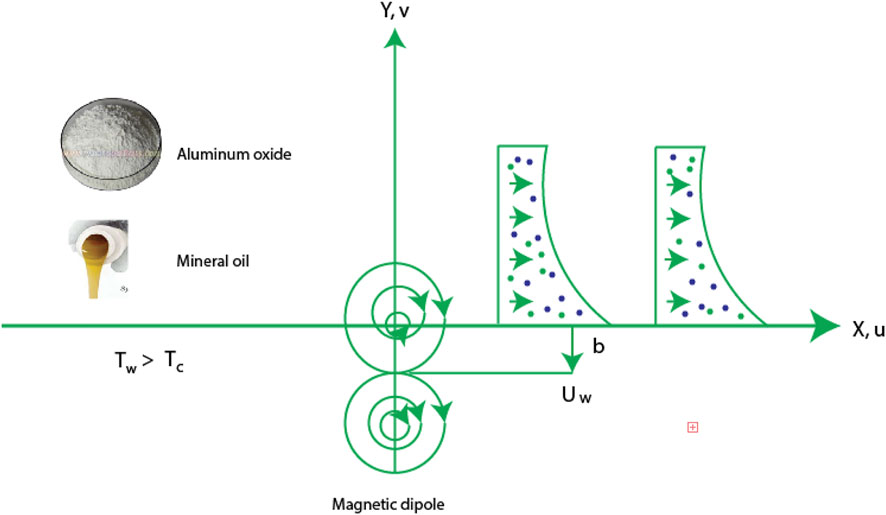
FIGURE 1. Geometry of a flat plate including magnetic dipole.
Two models of viscosity (Salmi et al., 2022) are defined as
Here, Eqs 1, 2 are known as model-I and model II, respectively. Governing equations (Salmi et al., 2022; Wang et al., 2022) are derived utilizing conservation laws. PDEs in view of SF implicating magnetic dipole are
Two models regarding momentum equations are obtained using Eqs (1) and (2). Momentum equation for model-I is
The momentum equation for model-II is
The mass diffusion equation (Madhukesh et al., 2022) is defined as
Developing boundary conditions (Wang et al., 2022) are
The magnetic field via magnetic dipole (Wang et al., 2022) is
Components of magnetic dipole (Wang et al., 2022) are
The magnitude of magnetic dipole (Wang et al., 2022) is
Similarity variables (Gul et al., 2020; Wang et al., 2022) are defined as
Dimensionless representations of ODEs (Gul et al., 2020; Salmi et al., 2022; Wang et al., 2022) are
Correlations based on nanoparticles were captured as indicated as follows. The nanoparticle properties are listed in Table 1 and Table 2 contains information about nanoparticle shapes (Naseem et al., 2021).

TABLE 1. Thermal properties associated with nanoparticles in base liquid (Hanif and Shafie, 2022; Wang et al., 2022).
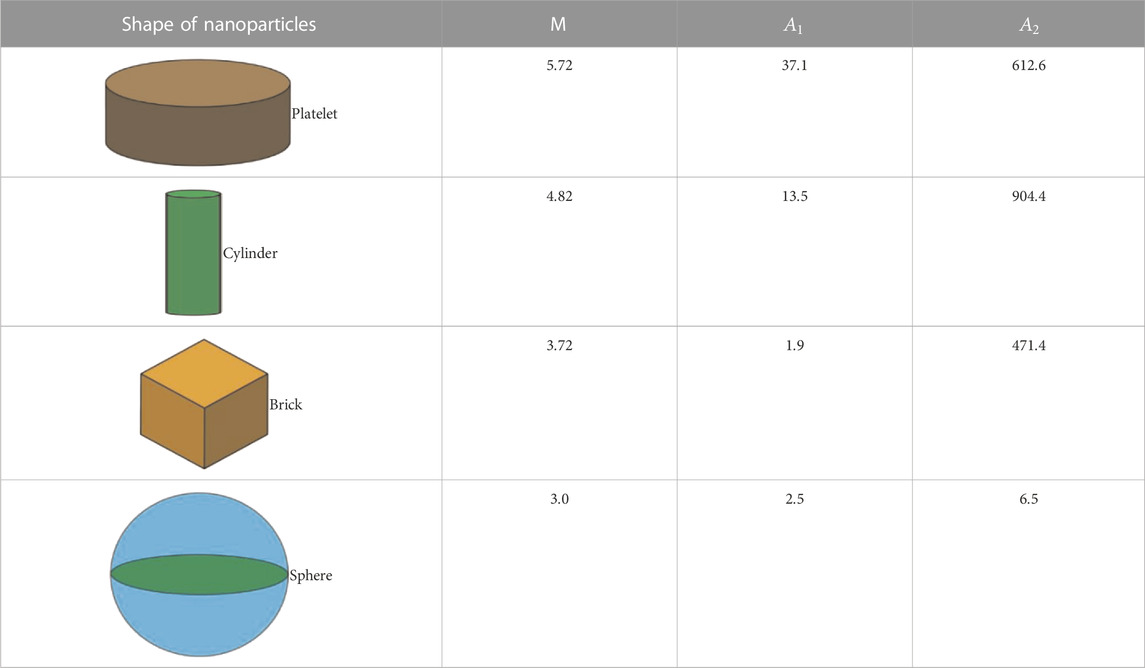
TABLE 2. Shapes of nanoparticles associated with size (Naseem et al., 2021).
Boundary conditions (BCs) are
Parameters are defined as
Surface forces for model-I and model-II (Salmi et al., 2022) were delivered as
Temperature and concentration gradients for biological fluid (Salmi et al., 2022) are
3 Finite element analysis
The finite element method (FEM) was utilized to simulate numerical solution of ODE-associated BCs. Steps for explanation of the FEM are listed as follows.
Step-I: In step-I, the desired domain of the problem was discretized into a number of elements. Weak form was achieved using the concept of weighted residual. Shape functions based on linear-type polynomial were derived as follows.
The variables
The shape function is
Step-II: Stiffness elements were calculated over each element based on the breakdown of the problem domain. Moreover, a global stiffness matrix was achieved. The Picard approach was implemented to differentiate linear systems from non-linear systems.The residual view is defined as
Step-III: In this step, the system of linear equations is
Step-IV: Maple 18 was used to develop code regarding the FEM. The computational domain was taken as
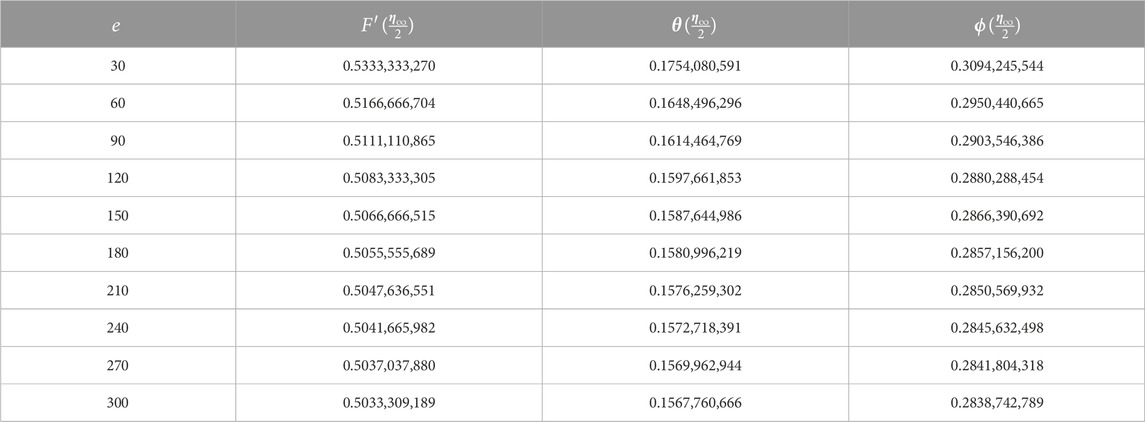
TABLE 3. Grid size analysis in terms of velocity, concentration, and temperature fields simulated by 300 elements when

TABLE 4. Validation results for Nusselt number based on published data (Muhammad and Nadeem, 2017) when
4 Explanations regarding graphical outcomes
This study describes the development of a 2D model associated with mass diffusion and thermal energy in two viscosity models. Shape effects based on cylinder, platelet, brick, and sphere were assessed in mineral oil. Chemical reaction and heat generation/absorption were also investigated. It is important to note that magnetic dipoles were taken out in this research project. Such considerations were used to generate a complex model, and the complex model was solved by implementing a finite element approach. Detailed outcomes based on graphical outcomes associated flow, mass diffusion, and thermal energy are discussed below.
4.1 Comparative impacts of viscosity models via flow distribution
The impacts of magnetic dipole number, heat source parameter, Weissenberg number, and Reynolds number on flow distribution were observed using model-I and model-II. These graphical outcomes are shown in Figures 2–4. Figure 2 demonstrates the distribution of
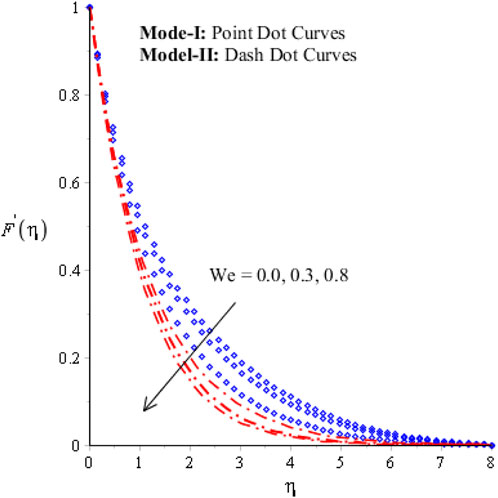
FIGURE 2. Effect of
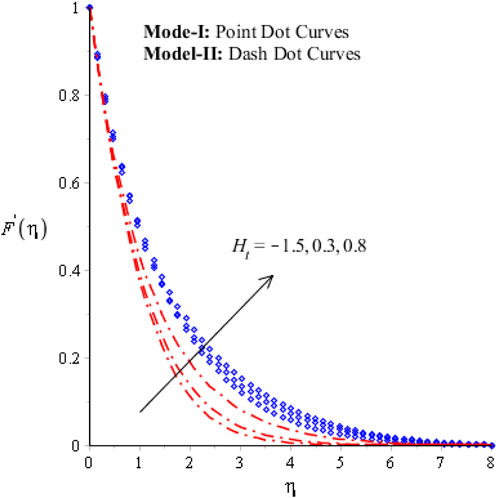
FIGURE 3. Effect of
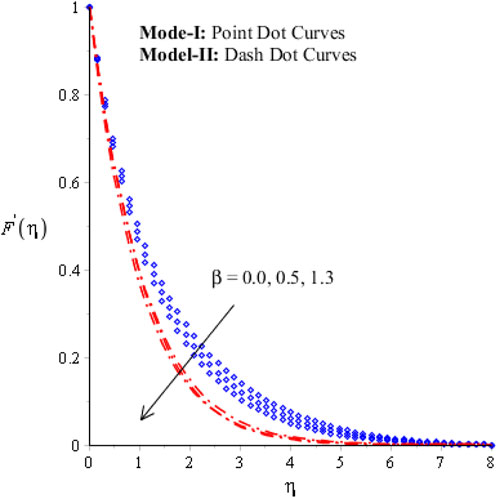
FIGURE 4. Effect of
4.2 Comparative effects of viscosity models via thermal distribution
Figures 5–7 are plotted to estimate the effects of heat source number, Prandtl number, and magnetic dipole number on temperature profile. These figures indicate measurement of thermal distribution via model-I and model-II, which account for the impacts of nanoparticle shape. Figure 5 illustrates visualization of
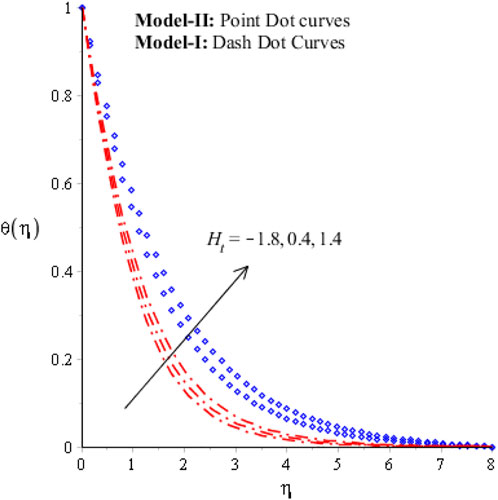
FIGURE 5. Effect of
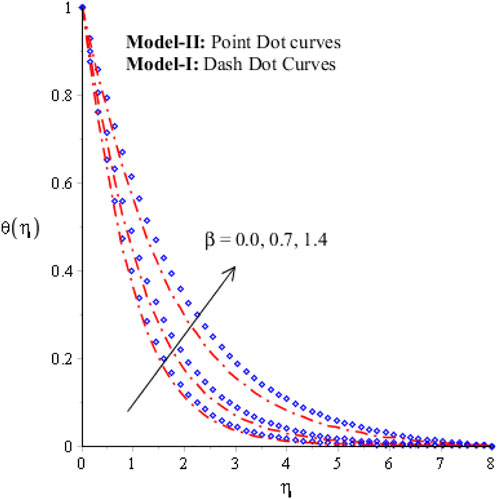
FIGURE 6. Effect of

FIGURE 7. Effect of
4.3 Comparative impacts of viscosity models via concentration distribution
Figures 8–10 show estimation of various important impacts of parameters on thermal energy that occurred in two viscosity models that account for impacts of nanoparticle shape. We demonstrate impacts of
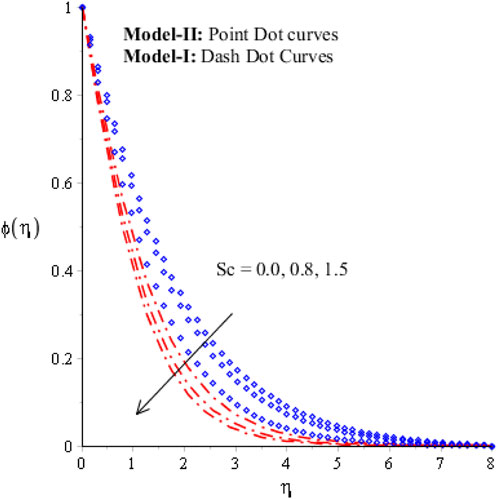
FIGURE 8. Effect of
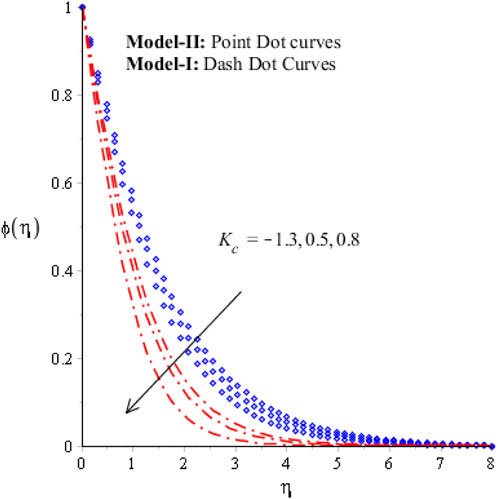
FIGURE 9. Effect of
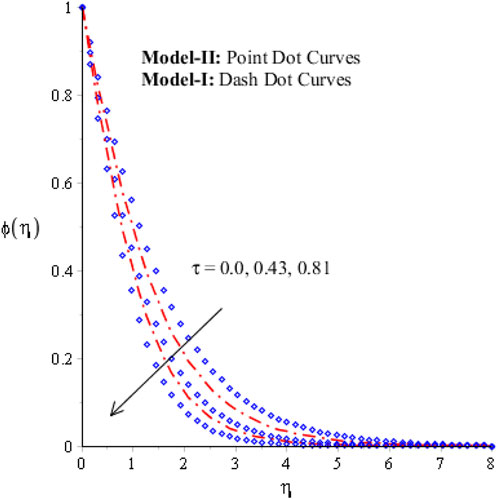
FIGURE 10. Effect of
4.4 Visualizations of mass diffusion rate, skin friction coefficient, and heat energy rate against different parameters
Impacts of
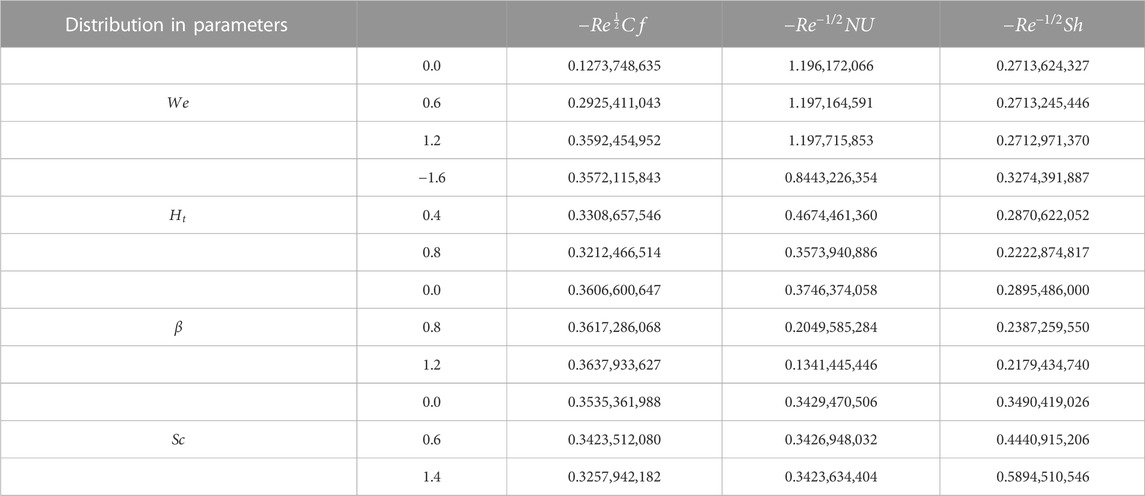
TABLE 5. Numerical behavior of
5 Conclusion
The numerical scheme, namely, finite element algorithm, has been applied successfully for the solution of heat and mass transportation in bio-fluids, implicating magnetic dipole in the effects of shape factors and nanoparticles. Important outcomes of the current study are:
➢ Velocity field increases relative to change in magnetic dipole and heat sink, but velocity field decreases with enhancement in
➢ The production for temperature field and mass diffusion for model-II is higher than that for mass diffusion and temperature field for model-I;
➢ Temperature gradient declines with enhancement in heat sink, magnetic dipole, and Weissenberg number, but opposite treatment was investigated in temperature field;
➢ An increment in
➢ Maximum acceleration in velocity for model-I was greater than acceleration in velocity field for model-II.
Data availability statement
The raw data supporting the conclusions of this article will be made available by the authors, without undue reservation.
Author contributions
All authors listed have made a substantial, direct, and intellectual contribution to the work and approved it for publication.
Acknowledgments
This study is supported via funding from Prince Sattam bin Abdulaziz University project number (PSAU/2023/R/1444).
Conflict of interest
The authors declare that the research was conducted in the absence of any commercial or financial relationships that could be construed as a potential conflict of interest.
Publisher’s note
All claims expressed in this article are solely those of the authors and do not necessarily represent those of their affiliated organizations, or those of the publisher, the editors, and the reviewers. Any product that may be evaluated in this article, or claim that may be made by its manufacturer, is not guaranteed or endorsed by the publisher.
References
Akbar, N. S., Iqbal, Z., Ahmad, B., and Maraj, E. N. (2019). Mechanistic investigation for shape factor analysis of SiO2/MoS2–ethylene glycol inside a vertical channel influenced by oscillatory temperature gradient. Can. J. Phys. 97 (9), 950–958. doi:10.1139/cjp-2018-0717
Akbar, N. S., Maraj, E. N., Noor, N. F. M., and Habib, M. B. (2022). Exact solutions of an unsteady thermal conductive pressure driven peristaltic transport with temperature-dependent nanofluid viscosity. Case Stud. Therm. Eng. 35, 102124. doi:10.1016/j.csite.2022.102124
Akram, J., Akbar, N. S., Alansari, M., and Tripathi, D. (2022). Electroosmotically modulated peristaltic propulsion of TiO2/10W40 nanofluid in curved microchannel. Int. Commun. Heat Mass Transf. 136, 106208. doi:10.1016/j.icheatmasstransfer.2022.106208
Akram, J., Akbar, N. S., and Tripathi, D. (2021). A theoretical investigation on the heat transfer ability of water-based hybrid (Ag–Au) nanofluids and Ag nanofluids flow driven by electroosmotic pumping through a microchannel. Arabian J. Sci. Eng. 46 (3), 2911–2927. doi:10.1007/s13369-020-05265-0
Akram, J., Akbar, N. S., and Tripathi, D. (2022). Analysis of electroosmotic flow of silver-water nanofluid regulated by peristalsis using two different approaches for nanofluid. J. Comput. Sci. 62, 101696. doi:10.1016/j.jocs.2022.101696
Akram, J., Akbar, N. S., and Tripathi, D. (2022). Electroosmosis augmented MHD peristaltic transport of SWCNTs suspension in aqueous media. J. Therm. Analysis Calorim. 147 (3), 2509–2526. doi:10.1007/s10973-021-10562-3
Ali, U., Rehman, K. U., and Malik, M. Y. (2020). Thermal energy statistics for jeffery fluid flow regime: A generalized fourier’s law outcomes. Phys. A Stat. Mech. its Appl. 542, 123428. doi:10.1016/j.physa.2019.123428
Babu, D. D., Venkateswarlu, S., and Keshava Reddy, E. (2020). Multivariate Jeffrey fluid flow past a vertical plate through porous medium. J. Appl. Comput. Mech. 6 (3), 605–616.
Choi, S. U., and Eastman, J. A. (1995). Enhancing thermal conductivity of fluids with nanoparticles (No. ANL/MSD/CP-84938; CONF-951135-29). Lemont, Illinois: Argonne National Lab. ANL.
Gireesha, B. J., Umeshaiah, M., Prasannakumara, B. C., Shashikumar, N. S., and Archana, M. (2020). Impact of nonlinear thermal radiation on magnetohydrodynamic three dimensional boundary layer flow of Jeffrey nanofluid over a nonlinearly permeable stretching sheet. Phys. A Stat. Mech. its Appl. 549, 124051. doi:10.1016/j.physa.2019.124051
Gul, T., Khan, A., Bilal, M., Alreshidi, N. A., Mukhtar, S., Shah, Z., et al. (2020). Magnetic dipole impact on the hybrid nanofluid flow over an extending surface. Sci. Rep. 10 (1), 8474–8513. doi:10.1038/s41598-020-65298-1
Habib, M. B., and Akbar, N. S. (2021). New trends of nanofluids to combat Staphylococcus aureus in clinical isolates. J. Therm. Analysis Calorim. 143 (3), 1893–1899. doi:10.1007/s10973-020-09502-4
Hanif, H., and Shafie, S. (2022). Interaction of multi-walled carbon nanotubes in mineral oil based Maxwell nanofluid. Sci. Rep. 12 (1), 4712–4716. doi:10.1038/s41598-022-07958-y
Haroun, M. H. (2020). On electrohydrodynamic flow of Jeffrey fluid through a heating vibrating cylindrical tube with moving endoscope. Archive Appl. Mech. 90 (6), 1305–1315. doi:10.1007/s00419-020-01665-8
Hosseinzadeh, K., Asadi, A., Mogharrebi, A. R., Ermia Azari, M., and Ganji, D. D. (2021a). Investigation of mixture fluid suspended by hybrid nanoparticles over vertical cylinder by considering shape factor effect. J. Therm. Analysis Calorim. 143 (2), 1081–1095. doi:10.1007/s10973-020-09347-x
Hosseinzadeh, K., Moghaddam, M. E., Asadi, A., Mogharrebi, A. R., Jafari, B., Hasani, M. R., et al. (2021b). Effect of two different fins (longitudinal-tree like) and hybrid nano-particles (MoS2-TiO2) on solidification process in triplex latent heat thermal energy storage system. Alexandria Eng. J. 60 (1), 1967–1979. doi:10.1016/j.aej.2020.12.001
Hosseinzadeh, K., Roghani, S., Mogharrebi, A. R., Asadi, A., Waqas, M., and Ganji, D. D. (2020). Investigation of cross-fluid flow containing motile gyrotactic microorganisms and nanoparticles over a three-dimensional cylinder. Alexandria Eng. J. 59 (5), 3297–3307. doi:10.1016/j.aej.2020.04.037
Hou, E., Jabbar, N., Nazir, U., Sohail, M., Javed, M. B., Shah, N. A., et al. (2022). Significant mechanism of Lorentz force in energy transfer phenomena involving viscous dissipation via numerical strategy.
Khan, M. I., Haq, F., Khan, S. A., Hayat, T., and Khan, M. I. (2020). Development of thixotropic nanomaterial in fluid flow with gyrotactic microorganisms, activation energy, mixed convection. Comput. methods programs Biomed. 187, 105186. doi:10.1016/j.cmpb.2019.105186
Khan, U., Zaib, A., Bakar, S. A., and Ishak, A. (2021). Stagnation-point flow of a hybrid nanoliquid over a non-isothermal stretching/shrinking sheet with characteristics of inertial and microstructure. Case Stud. Therm. Eng. 26, 101150. doi:10.1016/j.csite.2021.101150
Khan, U., Zaib, A., Ishak, A., Eldin, S. M., Alotaibi, A. M., Raizah, Z., et al. (2022). Features of hybridized AA7072 and AA7075 alloys nanomaterials with melting heat transfer past a movable cylinder with Thompson and Troian slip effect. Arabian J. Chem. 16, 104503. doi:10.1016/j.arabjc.2022.104503
Khan, U., Zaib, A., and Ishak, A. (2021). Magnetic field effect on Sisko fluid flow containing gold nanoparticles through a porous curved surface in the presence of radiation and partial slip. Mathematics 9 (9), 921. doi:10.3390/math9090921
Khan, U., Zaib, A., Ishak, A., Waini, I., Pop, I., Elattar, S., et al. (2022). Stagnation point flow of a water-based graphene-oxide over a stretching/shrinking sheet under an induced magnetic field with homogeneous-heterogeneous chemical reaction. J. Magnetism Magnetic Mater. 565, 170287. doi:10.1016/j.jmmm.2022.170287
Madhukesh, J. K., Varun Kumar, R. S., Punith Gowda, R. J., Prasannakumara, B. C., and Shehzad, S. A. (2022). Thermophoretic particle deposition and heat generation analysis of Newtonian nanofluid flow through magnetized Riga plate. Heat. Transf. 51 (4), 3082–3098. doi:10.1002/htj.22438
Manjunatha, G., Rajashekhar, C., Vaidya, H., Prasad, K. V., Makinde, O. D., and Viharika, J. U. (2020). Impact of variable transport properties and slip effects on MHD Jeffrey fluid flow through channel. Arabian J. Sci. Eng. 45 (1), 417–428. doi:10.1007/s13369-019-04266-y
Maraj, E. N., Akbar, N. S., Iqbal, Z., and Azhar, E. (2017). Framing the MHD mixed convective performance of CNTs in rotating vertical channel inspired by thermal deposition: Closed form solutions. J. Mol. Liq. 233, 334–343. doi:10.1016/j.molliq.2017.03.041
Maraj, E. N., Zehra, I., and SherAkbar, N. (2022). Rotatory flow of MHD (MoS2-SiO2)/H2O hybrid nanofluid in a vertical channel owing to velocity slip and thermal periodic conditions. Colloids Surfaces A Physicochem. Eng. Aspects 639, 128383. doi:10.1016/j.colsurfa.2022.128383
Muhammad, N., and Nadeem, S. (2017). Ferrite nanoparticles Ni-Zn Fe2O4, Mn-Zn Fe2O4 and Fe2O4 in the flow of ferromagnetic nanofluid. Eur. Phys. J. Plus 132 (9), 377–412. doi:10.1140/epjp/i2017-11650-2
Naseem, T., Nazir, U., Sohail, M., Alrabaiah, H., Sherif, E. S. M., and Park, C. (2021). Numerical exploration of thermal transport in water-based nanoparticles: A computational strategy. Case Stud. Therm. Eng. 27, 101334. doi:10.1016/j.csite.2021.101334
Rostami, A. K., Hosseinzadeh, K., and Ganji, D. D. (2022). Hydrothermal analysis of ethylene glycol nanofluid in a porous enclosure with complex snowflake shaped inner wall. Waves Random Complex Media 32 (1), 1–18. doi:10.1080/17455030.2020.1758358
Saif, R. S., Muhammad, T., Sadia, H., and Ellahi, R. (2020). Hydromagnetic flow of Jeffrey nanofluid due to a curved stretching surface. Phys. A Stat. Mech. its Appl. 551, 124060. doi:10.1016/j.physa.2019.124060
Salmi, A., Madkhali, H. A., Arif, U., Alharbi, S. O., and Malik, M. Y. (2022). Thermal bio-convective transport in biological fluid using two viscosity models. Case Stud. Therm. Eng. 34, 101924. doi:10.1016/j.csite.2022.101924
Shafee, A., Rezaeianjouybari, B., and Tlili, I. (2021). Treatment of nanofluid within porous media using non-equilibrium approach. J. Therm. Analysis Calorim. 144 (4), 1571–1583. doi:10.1007/s10973-020-09587-x
Shehzad, S. A., Reddy, M. G., Rauf, A., and Abbas, Z. (2020). Bioconvection of Maxwell nanofluid under the influence of double diffusive Cattaneo–Christov theories over isolated rotating disk. Phys. Scr. 95 (4), 045207. doi:10.1088/1402-4896/ab5ca7
Sinha, V. K., Kumar, B., Seth, G. S., and Nandkeolyar, R. (2020). Features of Jeffrey fluid flow with Hall current: A spectral simulation. Pramana 94 (1), 64–68. doi:10.1007/s12043-020-1940-y
Sohail, M., El-Zahar, E. R., Mousa, A. A. A., Nazir, U., Althobaiti, S., Althobaiti, A., et al. (2022a). Finite element analysis for ternary hybrid nanoparticles on thermal enhancement in pseudo-plastic liquid through porous stretching sheet. Sci. Rep. 12 (1), 9219–9313. doi:10.1038/s41598-022-12857-3
Sohail, M., Nazir, U., El-Zahar, E. R., Alrabaiah, H., Kumam, P., Mousa, A. A. A., et al. (2022b). A study of triple-mass diffusion species and energy transfer in Carreau–Yasuda material influenced by activation energy and heat source. Sci. Rep. 12 (1), 10219–10317. doi:10.1038/s41598-022-13890-y
Veera Krishna, M. (2020). Heat transport on steady MHD flow of copper and alumina nanofluids past a stretching porous surface. Heat. Transf. 49 (3), 1374–1385. doi:10.1002/htj.21667
Wang, F., Sohail, M., Nazir, U., El-Zahar, E. R., Park, C., and Jabbar, N. (2022). An implication of magnetic dipole in Carreau Yasuda liquid influenced by engine oil using ternary hybrid nanomaterial. Nanotechnol. Rev. 11 (1), 1620–1632. doi:10.1515/ntrev-2022-0100
Waqas, H., Khan, S. U., Bhatti, M. M., and Imran, M. (2020). Significance of bioconvection in chemical reactive flow of magnetized Carreau–Yasuda nanofluid with thermal radiation and second-order slip. J. Therm. Analysis Calorim. 140 (3), 1293–1306. doi:10.1007/s10973-020-09462-9
Nomenclature
PDEs Partial differential equations
ODEs Ordinary differential equations
FEM Finite element method
ODEs Ordinary differential equations
Keywords: nanomaterial shape, biological fluid, heat source, nanoparticles, magnetic dipole, thermo-phoretic particle, flat plate
Citation: Nazir U, Sohail M, Naz S, Mukdasai K, Singh M, Singh A, Mohan CR, Eldin SM and Galal AM (2023) Effective role of mineral oil and biological nanomaterial on thermal energy influenced by magnetic dipole and nanoparticle shape. Front. Mater. 10:1107661. doi: 10.3389/fmats.2023.1107661
Received: 25 November 2022; Accepted: 12 January 2023;
Published: 03 February 2023.
Edited by:
Ali Saleh Alshomrani, King Abdulaziz University, Saudi ArabiaReviewed by:
Noreen Akbar, National University of Sciences and Technology (NUST), PakistanAurang Zaib, Federal Urdu University of Arts, Sciences and Technology Islamabad, Pakistan
Copyright © 2023 Nazir, Sohail, Naz, Mukdasai, Singh, Singh, Mohan, Eldin and Galal. This is an open-access article distributed under the terms of the Creative Commons Attribution License (CC BY). The use, distribution or reproduction in other forums is permitted, provided the original author(s) and the copyright owner(s) are credited and that the original publication in this journal is cited, in accordance with accepted academic practice. No use, distribution or reproduction is permitted which does not comply with these terms.
*Correspondence: Muhammad Sohail, bXVoYW1tYWRfc29oYWlsMTExQHlhaG9vLmNvbQ==; Sayed M. Eldin, c2F5ZWQuZWxkaW4yMkBmdWUuZWR1LmVn