 Jason D. Runyan
 Ellen G. Steinke
- Psychology Department, Indiana Wesleyan University, Marion, IN, USA
Virtues, broadly understood as stable and robust dispositions for certain responses across morally relevant situations, have been a growing topic of interest in psychology. A central topic of discussion has been whether studies showing that situations can strongly influence our responses provide evidence against the existence of virtues (as a kind of stable and robust disposition). In this review, we examine reasons for thinking that the prevailing methods for examining situational influences are limited in their ability to test dispositional stability and robustness; or, then, whether virtues exist. We make the case that these limitations can be addressed by aggregating repeated, cross-situational assessments of environmental, psychological and physiological variables within everyday life—a form of assessment often called ecological momentary assessment (EMA, or experience sampling). We, then, examine how advances in smartphone application (app) technology, and their mass adoption, make these mobile devices an unprecedented vehicle for EMA and, thus, the psychological study of virtue. We, additionally, examine how smartphones might be used for virtue development by promoting changes in thought and behavior within daily life; a technique often called ecological momentary intervention (EMI). While EMA/I have become widely employed since the 1980s for the purposes of understanding and promoting change amongst clinical populations, few EMA/I studies have been devoted to understanding or promoting virtues within non-clinical populations. Further, most EMA/I studies have relied on journaling, PDAs, phone calls and/or text messaging systems. We explore how smartphone app technology provides a means of making EMA a more robust psychological method, EMI a more robust way of promoting positive change, and, as a result, opens up new possibilities for studying and promoting virtues.
Introduction
Over the past 15 years, virtues have received increased attention in the psychological sciences. This has, in large part, been a result of the positive psychology movement (Seligman and Csikszentmihalyi, 2000; Seligman et al., 2005). Positive psychology is a subfield of psychological science devoted to a deliberate attentiveness to human flourishing and its promotion. And virtues have been a central focus of positive psychology (Seligman et al., 2005; Kristjánsson, 2013; Worthington et al., 2014).
This increased attention to virtues, and positive psychology in general, has not gone without criticism (e.g., Gable et al., 2005; Held, 2005; Sundararajan, 2005; Kristjánsson, 2010, 2013; McNulty and Fincham, 2012). In this review, our goal is not to defend positive psychology. We, however, propose that there is virtue in the psychological study of virtues. We, further, propose that smartphone technology opens up a new means of studying, and possibly promoting, virtue. In making our case, we discuss:
• philosophical and psychological work concerning virtue stability (persistence over time) and robustness (cross-situational persistence);
• smartphone application (app) advances pertaining to the measurement of human (and physiological) activity and experience within daily life; and
• the use of mobile app technology for ecological momentary assessment and intervention as it pertains to the study of virtues.
Virtues and Situational Studies: Questions of Stability and Robustness
Dating at least as far back as Aristotle's analytic treatment of virtues, there has been a long history of understanding virtues as a kind of disposition (hexis). This Aristotelian conception is often referred to as the traditional conception (cf. Timpe and Boyd, 2014); and, following a marked decline in interest, virtues understood along Aristotelian lines have received renewed attention in moral philosophy. This renewed attention is in large part a result of the influence of works by Anscombe (1958), Foot (1978), and MacIntyre (1984).
According to a traditional Aristotelian conception, virtues are human excellences understood as a subclass of psychological disposition, or that is, ability to behave or think in certain ways, or have certain psychological responses, across relevant situations (Aristotle, 2000 I.13; Aristotle EE II.1218-20). Expressing virtues is constitutive of a flourishing (eudaimonic) life, or, that is, a deeply fulfilling, well-lived life of growth (cf. Aristotle EE I.7-II.1; Fowers, 2012). While a person can be virtuous without flourishing, and even while suffering, a person cannot flourish without being virtuous1. In the way a good ax cuts wood well, a flourishing person expresses virtues (Aristotle EE II.1213-34). And virtues are expressed by actively doing or thinking certain things, or by feeling certain emotions or having certain passive responses (e.g., refraining from certain behavior), in morally relevant situations (cf. Jayawickreme and Chemero, 2008).
Virtues, understood as a subclass of disposition, have been recognized as having three important characteristics (Timpe and Boyd, 2014). First, they are relatively stable. Virtues tend to persist over some period of time. Thus, we generally cannot be sure whether someone has a virtue until they have expressed it on multiple occasions. Similarly, we generally cannot be sure whether someone has a virtue until they have expressed it under various virtue-relevant situations. And this relates to the second characteristic of virtues. Virtues are relatively robust in the sense that they are consistently expressed across a range of situations. Third, virtues are interconnected in the sense that having one virtue increases the probability of having others (cf. Watson, 1984; MacIntyre, 1999; Annas, 2011).
In modern psychology, Allport provided an early treatment that supported the conception of virtues as a kind of relatively stable, robust and interconnected disposition or trait (cf. Allport, 1960)2. However, more recently, a number of moral psychologists have argued that there are good experimental grounds for thinking virtues do not actually exist (cf. Nahmias, 2010). The argument is that virtues are no more than unmaterialized ideals. The grounds for this argument come from studies indicating that, to a significant degree, a person's situation can influence their conduct and thought without them being aware of it (Hunt, 1965; Mischel, 1968; Ross and Nisbett, 1991; Doris, 1998, 2002; Harman, 1999). In one of the most well-known of these studies—Zimbardo's Stanford Prison Experiment—college students began exhibiting guard-like or inmate-like behavior after only a few days of taking on the role of either a guard or a prisoner in a mock prison (Haney et al., 1973). In another well-known experiment, Milgram (1963) found that a majority of participants would administer what they thought to be a potentially lethal shock to individuals they had never met if ordered to by an experimenter as part of what was presented to them as a scientific study (see also Hartshorne and May, 1928; Asch, 1951; Isen and Levin, 1972). Additionally, over the past 20 years, a wealth of studies have indicated that priming individuals by having them, for example, read words with either prosocial or antisocial connotations, or handle certain kinds of objects (e.g., smooth, rough, heavy, hot, cold), can influence their subsequent behavior and judgments without them realizing it (e.g., Williams and Bargh, 2008; Ackerman et al., 2010; Bargh and Shalev, 2012).
The kinds of situational studies mentioned above have been thought to provide evidence against the existence of virtues as relatively stable and robust dispositions; that is, as dispositions consistently expressed across relevant situations over a period of time (Harman, 1999; Doris, 2002). However, while drawing attention to the extent and ways situations can influence individuals, to think these studies provide evidence against the existence of virtues, conceived of as a type of stable and robust disposition, is to infer too much. As Croom (2014) and others (e.g., Alzola, 2008) have recently pointed out, thinking these studies provide evidence against the existence of virtues results from: oversimplifying an Aristotelian conception of virtues as perfectly stable and robust dispositions; and/or drawing unwarranted conclusions from these studies.
First, as Anscombe (1958, p. 14) has pointed out, regardless of the virtues possessed by the average person, there may be a complete set of virtues each of which is possessed by some people. Virtues may be rare without being nonexistent; and, granted they exist, they are likely rare. Thus, when studying whether virtues exist, it is necessary to distinguish candidates for having a certain stable and robust disposition from other individuals in order to examine whether relevant situational influences have similar effects on both groups. So it is necessary to examine exemplars (e.g., Colby and Damon, 1992, 1999; Dunlop and Walker, 2013). Situational factors may not influence exemplars in the way they do the average person. Exemplars may express a virtue despite situational influences that make it difficult to do so. This, however, has not been tested in the situational studies purported to call the existence of virtues in question. As a result, the situational effects observed in these studies should not be generalized to the entire human population. Even if such situational effects are found in the majority, this does not provide evidence that virtues do not exist.
Second—and in keeping with the above—the situational studies purported to provide evidence that virtues are nonexistent do not even provide evidence that virtues are not possessed by a subgroup within the samples studied (cf. Miller, 2013). Thus, at most, these studies indicate that certain virtues are rare. For instance, in Darley and Batson's (1973) “Good Samaritan” study, only 10% of seminarians that participated in the study helped someone who appeared to need medical attention as they rushed to give a talk for which they were very late. While these observations might be taken to indicate that 90% of the seminarians lack a certain virtue, it clearly should not be taken to indicate that all of them do.
Third, many of the studies thought to call into question the existence of virtues have used undergraduate students who may still be developing in ways relevant to the development of virtues. It has been observed that the prefrontal cortex, and its connectivity to other regions, typically continues to develop up to late- or post-adolescence. This development is inversely correlated with novelty seeking (e.g., Pfefferbaum et al., 1994; Reiss and Havercamp, 1996; Sowell et al., 1999, 2003; Gogtay et al., 2004; Kelley et al., 2004; Segalowitz and Davies, 2004; Somerville et al., 2010, 2011) and impulsivity (Shannon et al., 2011), which are, in turn, likely to be inversely correlated with possessing stable and robust psychological dispositions, including virtues. Thus, many of these studies are performed using samples that tend toward not having yet developed certain, stable psychological dispositions.
Fourth, to provide evidence that virtues do not exist, it would need to be shown that engaging in practices thought to contribute to virtue development does not mitigate situational influences on an individual's responses. However, none of the situational studies thought to bring the existence of virtues in question tests this.
Fifth, a substantial amount of evidence indicates that cross-situational consistencies in responses characteristic of relatively stable and robust dispositions—such as virtues—are often missed without the aggregation of repeated, cross-situational measurements (Dlugokinski and Firestone, 1973, 1974; Staub, 1974; Epstein, 1979, 1983; Rushton, 1980, 1984; Rushton et al., 1981, 1983; Fleeson, 2001; Furr, 2009). The reason is there are multiple responses characteristic of these kinds of dispositions and there is some degree of variability in their expression as a result of interfering factors (Fleeson and Noftle, 2008; Miller, 2013). Thus, using one or two situational tests to examine whether an individual possesses a disposition, or virtue, is an insufficient and unreliable approach to testing dispositional stability and robustness.
In sum, situational studies thought to provide evidence against the existence of virtues are not optimally designed to test whether virtues exist, and, thus, should not be taken to indicate they do not. There is, on the other hand, accumulating evidence that at least some individuals do possess virtues.
First, studies that aggregate repeated, cross-situational measurements of responses provide evidence that at least some individuals express relatively stable and robust psychological dispositions (Ozer, 1986; Fleeson, 2001, 2004; McNiel and Fleeson, 2006; John et al., 2008; Donnellan and Lucas, 2009), even if they are not impervious to situational influences (Fleeson, 2007; Fleeson and Noftle, 2008; Bleidorn, 2009). It is likely that some of these dispositions contribute to psychological health and growth and so, in keeping with a broadly conceived Aristotelian tradition, are virtues.
Second, it has been observed that at least some psychological states tend to fluctuate around a “set point” (e.g., Suh et al., 1996; Diener and Lucas, 1999; Diener et al., 2006; Keltner, 2009). Since a psychological state can be the expression of a disposition, this observation provides further evidence that relatively stable and robust psychological dispositions exist. And, again, it is likely that some of these dispositions contribute to psychological health and growth; and so—again in keeping with an Aristotelian tradition—are virtues.
Third, virtues can be possessed in degrees and the degree to which a virtue is possessed can be used to predict patterns of responses, such as the frequency of virtue-relevant responses across relevant situations (cf. Miller, 2013). At the same time, as with all dispositions, there are factors that can interfere with the expression of virtues. Thus, some variability in virtue expression across relevant situations is to be expected, and this variability can be used to measure degree of virtue possession (Miller, 2013).
Finally, as we will see in what follows, there is growing psychological and neurophysiological evidence suggesting that training can promote the development of relatively stable and robust psychological dispositions which contribute to flourishing; or, that is, to virtue development understood along Aristotelian lines.
In this review we make the case that advances in smartphone technology open up a new approach to the psychological study of relatively stable and robust dispositions. We also make the case that putting this technology to use in this capacity promises to add to mounting psychological and neurophysiological evidence that certain individuals possess virtues understood along Aristotelian lines. Having stated this, we should be careful not to undervalue longstanding, everyday evidence that, throughout history, certain individuals have consistently expressed virtues in spite of strong situational influences to the contrary (see Colby and Damon, 1992). For instance, steadfast individuals who hid Jews in Nazi Germany, or undermined the Nazi regime in other ways, have been well documented and readily come to mind (e.g., see Marsh, 2014). We should, instead, seek to learn from such exemplars. Further, we should be careful not to undervalue the fact virtues have remained a useful, relevant and commonplace construct for thousands of years.
Keeping the above in mind, we propose the integration of something ancient and something cutting-edge: the study of virtues and the use of smartphone app technology. We propose that recent advancements in smartphone app technology, and the mass adoption of this technology, opens up a new means of examining and developing virtues through ecological momentary assessment (EMA) and ecological momentary intervention (EMI), respectively. In the remainder of this review, we, first, introduce EMA and discuss how smartphone technology provides a vehicle for making EMA a robust psychological method. We, second, examine how smartphone EMA studies promise to add to our knowledge of virtues; and, in particular, virtue stability and robustness. We, then, introduce EMI and examine how smartphone technology provides a vehicle for making EMI a widespread and effective way of promoting positive change. Finally, we discuss the promise smartphone EMI holds as an effective means of promoting virtue development.
EMA and Smartphone Apps
Quantitative psychological studies have, traditionally, relied heavily on surveys and laboratory experiments. Both approaches have well-known and long-endured limitations. Surveys require people to make retrospective and often generalized judgments, which tend to be affected by memory limitations and recall biases (cf. Schwarz, 2007). Laboratory experiments do not occur within the context of a person's daily life; and context can influence a person's states and responses (cf. Hammond et al., 1998; Wilhelm et al., 2011), which raises questions about ecological validity (Shiffman et al., 2008). Additionally, since neither surveys nor laboratory experiments involve repeated, cross-situational sampling, both approaches fail to detect intrasubject variability within the context of an individual's everyday life (cf. Hammaker, 2012). This is particularly relevant with respect to studying virtues since, as observed in the previous section, the extent to which an individual's states and responses vary across situations—as well as individual differences in this regard—are crucial to measure when examining virtue possession.
Though earlier analogs existed, ecological momentary assessment (EMA, also referred to as experience sampling or ambulatory assessment) developed in the 1980s as a way of addressing the limitations of traditional quantitative methods in psychological science (Csikszentmihalyi and Larson, 1987; Stone and Shiffman, 1994; Shiffman et al., 2008). In particular, it was developed as a form of assessment that allowed repeated sampling within the various situations of daily life. In EMA, individuals are prompted, at fixed or random times, to respond to questions about what they are presently doing and/or experiencing (or what they have done and/or experienced in the recent past), repeatedly, throughout a period of time within the course of their daily affairs. EMA has been implemented in a number of ways, including through the use of stopwatches and paper-and-pencil diaries, PDAs (personal digital assistants; e.g., PalmPilots), phone calls and text messages. However, progress in smartphone technology has, recently, opened up a new mode of EMA.
With the release of the iPhone OS2 operating system in 2008, smartphones that could run third-party applications, or “apps,” began being used in the daily activities of millions of people. By 2009, with the release of the iPhone OS3 operating system, millions began carrying devices that could run multiple apps continuously in the background; and some of these apps could run without an internet connection. Today, a number of companies make smartphones with this capability and approximately 1.91 billion people carry these devices (eMarketer, 2015). It is projected that by 2018 this number will increase to 2.56 billion.
In more economically “developed” countries, the near ubiquitous use of smartphone apps makes EMA practical for widespread use. For the first time, EMA can be conducted in a robust and dynamic way by using a tool that is already a part of daily life for a large percentage of the population (Raento et al., 2009). The widespread use of smartphones opens up a means of collecting psychological data within the moments of daily life along with data collected through various types of sensors (e.g., global positioning systems (GPS), microphones, cameras, activity monitors, heart rate monitors). And, unlike with other modes of EMA, participants need not be trained to use a new device. Additionally, whereas using PDAs for EMA requires a certain amount of programming expertise, flexible smartphone app-based EMA systems are being developed and distributed that allow researchers to create their own EMA designs through a user-friendly web interface that requires no programming expertise (for a list see Conner, 2014; Konrath, 2015; also see Table 1)3. Further, smartphone app-based EMA systems have been created that automatically enter data into datasets as the data streams in from participants' smartphones. This increases the practicality of handling the relatively large amounts of data collected in EMA studies, which can easily approach ten thousand items of data.
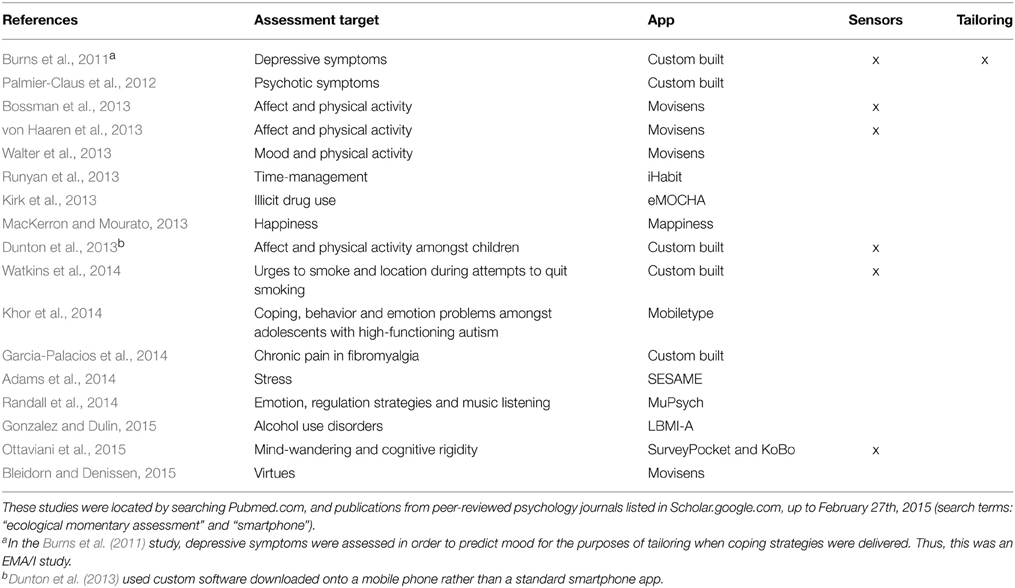
Table 1. EMA peer-reviewed psychological studies using smartphone apps.
In addition to making EMA more practical for widespread use, smartphone app-based EMA systems have been designed to ensure that participants respond to questions “in the moment,” or, that is, soon after being alerted to do so. Some systems time stamp responses so that the time lapse between when a person is notified to answer a question and when they answer it can be calculated. Some systems also allow researchers to give participants a limited time window to respond to questions after being notified. These features help ensure that individuals are not merely giving a convenience sampling, which has been an issue with other modes of EMA (e.g., Stone et al., 2002).
As shown in Table 1, since 2011, there have been a number of psychological EMA studies conducted using smartphone apps. Several of these involved acquiring data through environmental, activity and/or physiological sensors together with self-report. One has involved tailoring assessments to the individual, and their moment-to-moment experiences, in response to their location and activity level.
To date, most app-based EMA studies have been conducted on clinical populations and many have been pilot studies. There have, however, been a number of non app-based EMA studies that have examined momentary dispositional expressions (see Table 2). To our knowledge, only one EMA study (published after this manuscript was under review) has systematically focused on assessing virtues using momentary responses (see Bleidorn and Denissen, 2015). Nevertheless, EMA provides a means of repeatedly measuring an individual's states, experiences and responses, as well as the extent to which these vary, using multiple measures throughout the moments and situations of everyday life. And, as we saw in the previous section, repeated, cross-situational sampling using an aggregate of measures is crucial for the psychological study of virtues; and, in particular, for testing dispositional stability and robustness. Further, as Wichers (2014) has recently observed, measuring moment-to-moment states and events can provide insight concerning patterns contributing to the development of enduring unhealthy or healthy mental conditions. Thus, app-based EMA—as a means of measuring moment-to-moment states and events—provides an unprecedented vehicle for studying dispositions, including those that contribute to psychological well-being; i.e., virtues.
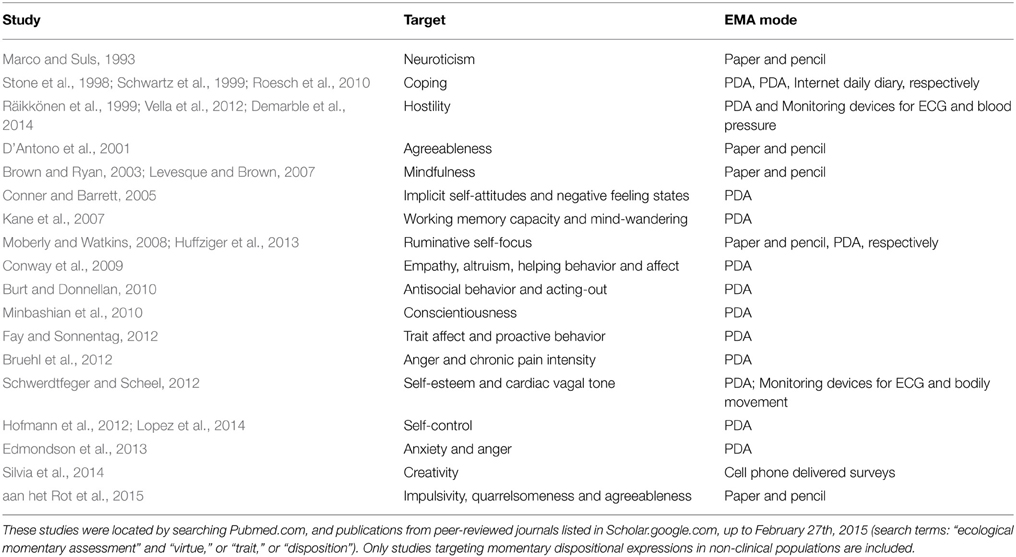
Table 2. EMA peer-reviewed psychological studies targeting momentary dispositional expression within non-clinical populations.
Virtues and App-Based EMA
Traditionally, in Western thought, wisdom, justice, temperance, and courage have been thought of as “cardinal” (derived from the Latin “cardo” meaning hinge), or principal, virtues (e.g., Wisdom of Solomon 8:7; Plato, 380 BC/1991; Ambrose et al., (377 AD/1961)). Aristotle, however, influentially extended this list and understood virtues to be optimal points between deficiencies and excesses (cf. Aristotle EE; see Table 3). Additionally, within Christian theology, faith, hope, and love (or charity) have traditionally been upheld as key “theological virtues” (e.g., 1 Corinthians 13:13; Aquinas, 1274/1948).
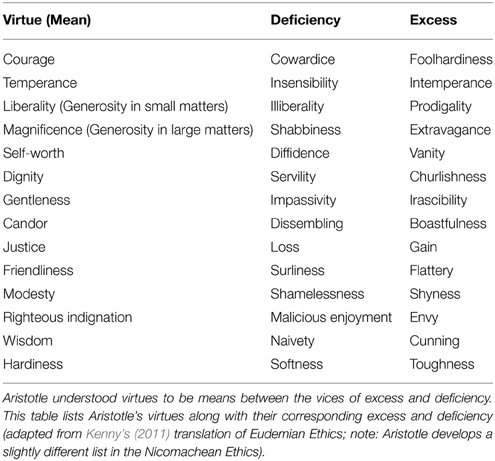
Table 3. Aristotle's list of virtues.
Recently, the case has been made that six “overarching” characteristics are widely upheld as virtues across most cultures (Peterson and Seligman, 2004; Dahlsgaard et al., 2005; Seligman et al., 2005; but see Shryack et al., 2010). These are: wisdom, courage, humanity, justice, temperance, and transcendence (see Table 4). And there has been some indication that rankings of these characteristics strongly correlate across many countries (n = 54) and, to some extent, transcend ethnic, cultural and religious differences (Park et al., 2006; but see van Oudenhoven et al., 2012).
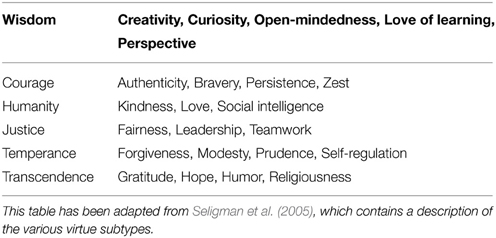
Table 4. Peterson and Seligman's (2004) “Virtues in Action” classification of virtues.
However, rather than understanding virtues as a prescribed set of characteristics, following the broadly conceived Aristotelian conception we outlined earlier, we understand virtues to be a kind of relatively stable and robust psychological disposition the expression of which contributes to a fulfilling, well-lived life of growth; or, that is, to a flourishing life. Whatever else a fully flourishing life may involve, such a life involves psychological growth, psychological (eudaimonic) well-being and physical health (cf. Ryan and Deci, 2001; Keyes, 2007; Ryff and Singer, 2008; Deci and Ryan, 2008a)4. In this case, since psychological growth, psychological well-being and physical health are measurable, which dispositions contribute to a flourishing life, and, thus, should be included in a list of virtues, can be empirically studied. What should be considered a virtue is also an important matter since a flourishing life is obviously desirable. That being said, it should be kept in mind that dispositions which contribute to a flourishing life may lead to flourishing under a certain range of circumstances without leading to flourishing under all circumstances. For instance, certain characteristics may contribute to flourishing only when possessed by a critical number of individuals within a social group. Further, characteristics may contribute to flourishing when possessed in clusters but not on their own. Thus, under certain circumstances, an individual may suffer despite, and even as a result of, expressing virtue. Likewise, an individual may not experience physical health despite expressing virtue.
Over the past several years, flourishing has received increased attention in psychological science, and a number of studies have identified psychological characteristics that correlate with psychological growth, psychological well-being and/or physical health. Dispositional resilience has been positively correlated with successful adaptation to life stress (Ong et al., 2006) and with the well-being of widows (O'Rourke, 2004; Rossi et al., 2007). Additionally, dispositional mindfulness has been positively associated with both psychological well-being and physical health (e.g., Bernstein et al., 2011; Baer et al., 2012; Bowlin and Baer, 2012; Tamagawa et al., 2013); and individual differences in dispositional mindfulness predict psychological health (e.g., Baer, 2003; Baer et al., 2004). Other dispositions positively associated with psychological and/or physical health, include gratitude (e.g., Wood et al., 2010; Emmons and Mishra, 2011), optimism (e.g., Scheier and Carver, 1987; Scheier et al., 1989, 2001; Engberg et al., 2013; Carver and Scheier, 2014; He et al., 2014), self-efficacy (e.g., Bandura, 2004; Luszczynska et al., 2005), compassion (e.g., MacBeth and Gumley, 2012), altruism (e.g., Brown et al., 2009), self-regulation (e.g., Nix et al., 1999; Wrosch et al., 2003; Deci and Ryan, 2008b; Simon and Durand-Bush, 2014), forgiving (e.g., Berry and Worthington, 2001; Farrow et al., 2001; Maltby and Day, 2001; Seybold and Hill, 2001; Lawler-Row, 2010), spirituality (e.g., Hill and Pargament, 2003; Miller and Thoresen, 2003; Kuo et al., 2014; Reutter and Bigatti, 2014), religiosity (e.g., Hummer et al., 1999; McCullough et al., 2000; Oman and Thoresen, 2005; Greenfield and Marks, 2007; Park, 2007), and wisdom (e.g., Webster and Deng, 2014).
Most of the studies associating dispositions with flourishing—including those mentioned above—rely on surveys to measure the disposition in question. They examine associations between the possession of these dispositions and some measure, or correlate, of flourishing. This approach, however, is not ideal for measuring, or then studying, dispositions for several reasons.
First, surveys assessing dispositions do not involve measuring the expression of dispositions within the context of an individual's daily life; or allow directly associating this expression with flourishing. Rather, as we noted at the beginning of the previous section, surveys ask for generalized retrospective judgments removed from a person's daily context, which are susceptible to recall biases.
Second, as they do not involve repeated, cross-situational sampling, surveys assessing dispositions cannot effectively measure intrasubject variability in the expression of a disposition. As a result, this approach does not provide an effective means of measuring dispositional stability or robustness, which, as we have already seen, is paramount to the psychology study of virtues.
In contrast, EMA allows: (1) the detection of dispositional expression, and its correlates, within the context of daily life using multiple measures; and (2) the measurement of dispositional stability and robustness through repeated cross-situational sampling. EMA, thus, provides (3) a more thorough and direct means of examining the relationship between dispositions and flourishing than traditional approaches that rely on surveys. We will discuss points (1)–(3) in sequential order.
(1) Through the incorporation of environmental, activity, and physiological sensors, app-based EMA opens up various ways of detecting:
(i) the expression of virtues;
(ii) correlates of having or expressing these dispositions; and
(iii) the relevant features of the situations in which they are expressed.
Virtues can be expressed by psychological states (e.g., emotional states, motivational states) as well as by what people think and do (e.g., Bartlett and DeSteno, 2006; DeSteno et al., 2010). Thus, EMA can be used to detect virtue expression by asking people questions pertaining to their recent or current psychological states, experiences, thought life and/or behavior (for e.g., see studies listed in Table 2) as well as by administering brief psychological tests (cf. Schlicht et al., 2013). An EMA app can prompt individuals to respond to questions, or take brief tests, repeatedly at various moments, and across various situations, throughout the day. As a result, rather than asking people to make generalized retrospective judgments (e.g., “In the past month, I have…”), an individual can be asked about their current or recent states, experiences or conduct (e.g., “Over the past hour, I have…”). And survey-style instruments assessing virtues might be adapted so that, rather than asking for generalized judgments, they ask for reports concerning the present or recent past (cf. Fleeson, 2001).
For example, Hofmann et al. (2014) recently used EMA to repeatedly prompt people at random times over a 3-day period to report moral and immoral behavior over the previous hour. This allowed for the detection of patterns in moral behavior (e.g., social contagion, moral licensing) and awareness (e.g., a relative tendency to note others' immoral rather than moral behavior). More recently, Bleidorn and Denissen (2015) took adjectives associated with, and listed in, Peterson and Seligman's (2004) six Virtues in Action classifications (see Table 4) that could be meaningfully inserted into the following sentence: “I behaved particularly… during the last hour.” They, then, used app-based EMA to deliver these sentences to participants up to six times a day over a 10-day period in order to have them rate their behavior in the past hour. Amongst their participants—working mothers and fathers—they found that an individual's average virtue rating, the degree of variability in their rating, and the way an individual typically responded in certain contexts were relatively stable.
In addition to delivering questions, smartphones can be used to randomly capture conversations or other activities (e.g., Mehl et al., 2012). Further, prompts can be given immediately after these recordings asking individuals to report their states, experiences or thoughts; and/or asking them to upload a picture or video of their surroundings. This allows the association of life events and situations with momentary states, experiences and/or responses that would, otherwise, be forgotten once individuals are more temporally and spatially removed from the event or situation. It also allows the capture of contextual details that an individual would, otherwise, be unaware of or forget.
Activity sensors (e.g., Fitbit, Polo tech, Apple Watch; Moviesens) can also be used to record any physical and physiological activities correlated with an individual's momentary responses, states and/or experiences (e.g., D'Antono et al., 2001; Schwerdtfeger and Scheel, 2012; Bossman et al., 2013; von Haaren et al., 2013; Demarble et al., 2014; Dunton et al., 2014). Participants might, further, be prompted to take saliva samples in order to examine potential biochemical correlates (e.g., cortisol, oxytocin or progesterone levels) of dispositional expression (e.g., Brown et al., 2008; Entringer et al., 2011; Koven and Max, 2014). Or they might take a pharmacological agent (e.g., tryptophan, an anti-anxiolytic, an anti-depressant) while participating in an EMA study targeting dispositional expression (cf. Moskowitz et al., 2001; Moskowitz and Young, 2006).
In the near future, app-based EMA will also allow the isolation of neurophysiological correlates of having and/or expressing certain dispositions within certain situations. For example, mobile electroencephalography (EEG) caps (e.g., Eegosports) could be synced with an EMA app in order to record event-related potentials, or preparatory neural activities such as readiness-potentials (RPs); i.e., relative changes in the activity of the primary motor cortex and surrounding regions associated with preparedness to act (e.g., Freude and Ullsperger, 1987; Coles et al., 1988; Coles, 1989; Deecke et al., 1990; Shibasaki and Hallett, 2006; Ibanez et al., 2012; Nachev and Hacker, 2014). Through these means we might find that, when an individual has a certain disposition, certain preparatory activities occur under certain situations. Similarly, app-based EMA that incorporates mobile EEG might allow the detection of other neurophysiological correlates of expressing dispositions similar to those recently measured for forgiving using fMRI, where an increase in activity in the angular gyrus was associated with forgiving (see Figure 1).
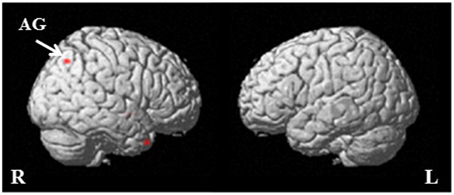
Figure 1. Neural differences between forgiving and not forgiving as measured by fMRI. The red shows where increased activity was observed when participants forgave in comparison to when they did not (taken from Strang et al., 2014). AG, angular gyrus; R, right; L, left.
(2) By allowing various ways of detecting (i)–(iii)—listed above—smartphone app-based EMA provides a vehicle for more direct and repeated measurement of disposition-relevant responses across various daily situations using an aggregate of measures. It, thus, provides a means of collecting cross-situational data to populate a frequency distribution of an individual's disposition-relevant responses organized by the degree to which each expresses the disposition in question. From this distribution, a mean score for an individual's dispositional expression and the variability of this expression can be calculated (Fleeson and Noftle, 2008). In this way, EMA provides a way of measuring the typical degree to which, and consistency with which, an individual expresses a disposition throughout the relevant situations of their daily life over a period of time. So it provides a means of directly measuring the stability and robustness of a disposition, or virtue. In so doing, it provides a way for assessing not simply whether an individual has a virtue but the degree to which they have a virtue.
We should expect individuals who possess a certain virtue to typically express that virtue across a certain range of situations (Jayawickreme and Chemero, 2008). That is, given an Aristotelian conception, we should expect a virtue to be, to a certain degree, stable and robust. However, similar to the way the expression of other relatively stable and robust dispositions have been observed to vary (Ozer, 1986; McNiel and Fleeson, 2006; John et al., 2008; Donnellan and Lucas, 2009), some variability in the expression of a virtue should also be expected (see Miller, 2013). Nevertheless, the stronger, or more formed, a virtue, the more consistency there will be in its expression across relevant situations. This is because the stronger a virtue, the more frequently it is expressed in demanding situations, and despite interfering factors (Miller, 2013). So, after repeated cross-situational sampling of virtue-relevant responses, the degree to which an individual has a virtue can be measured as a function of the individual's mean score for its expression and the variability with which they express the virtue across relevant situations (cf. Fleeson, 2001; see Figure 2).
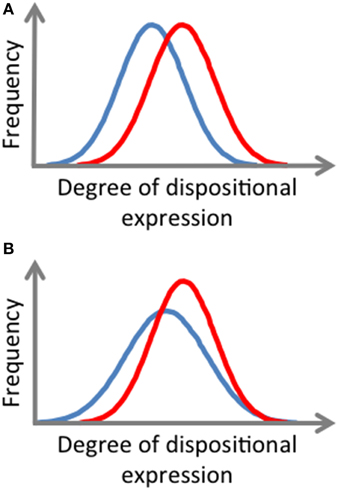
Figure 2. Illustrative frequency distributions of momentary, cross-situational dispositional expressions displaying differences in degree of virtue possession. (A) The red curve displays a distribution representing a higher typical degree of virtue expression (higher mean score) than the blue curve. (B) The red curve represents a higher typical degree of (higher mean score), and more consistent (less variable), virtue expression than the blue curve.
Thus, to recapitulate, EMA provides a way of repeatedly measuring virtue-relevant responses across various situations. This allows the measurement of the degree to which a person has a virtue along two dimensions: the degree to which they typically express the virtue and the consistency with which they express the virtue. These observations are in keeping with observations made concerning distributions of responses relevant to the expression of dispositions more generally (e.g., Mischel, 1968; Epstein, 1979, 1983; Fleeson, 2001; Fleeson and Noftle, 2008).
(3) As observed above, EMA provides a means of repeatedly and more directly assessing dispositional expression across an individual's daily situations. It, thus, provides a vehicle for not only assessing whether an individual has a virtue, but also the degree to which they typically express a virtue and the consistency with which they express a virtue. And since the degree to which an individual typically expresses a virtue and the consistency with which they express the virtue have implications for flourishing, EMA provides a thorough means of examining the relationship between virtues and flourishing.
To illustrate, EMA opens up a way of measuring the degree to which an individual is typically grateful and the consistency with which an individual is grateful. And both should be expected to promote flourishing given gratitude is a virtue. Thus, by allowing a direct assessment of both, EMA provides a thorough and direct means of examining the relationship between dispositional gratitude and flourishing. Further, since EMA allows the detection of dispositional expression within daily life, it also provides a good means of examining what may mediate relationships between dispositions, like gratitude, and flourishing as well as the interconnectedness of virtues (e.g., whether developing dispositional gratitude might directly correlate with developing others).
Before continuing we should mention that there are several limitations associated with EMA. Asking participants to repeatedly respond to prompts and questions over time, and within daily life, places a high demand on participants thereby increasing the likelihood of participant dropout and decreasing response rates (e.g., Shiffman et al., 2008). To compensate, participants need greater incentive than with traditional surveys. Also, there are issues regarding the invasion of privacy, which must be carefully addressed (Trull, 2015). Further, under certain conditions, EMA has been shown to result in reactivity (cf. Shiffman et al., 2008).
Having examined the advantages and limitations of using EMA—and specifically app-based EMA—to study virtues, we will now examine recent developments in EMI and the possibilities they open up for promoting dispositional development.
EMI, Positive Change, and Smartphone Apps
Clinicians and therapists have often sought ways to improve the impact of therapy between sessions and the efficacy of interventions (Heron and Smyth, 2010). With this aim, over the past several years, researchers have been exploring the use of mobile devices to intervene and interact with clients within the context and moments of their daily life. This form of intervention, called ecological momentary intervention (EMI), has—similar to EMA—been implemented using PDAs, phone calls, text messages and, most recently, smartphone apps. EMI has developed largely as an extension of interventions involving computer- and internet-based cognitive-behavioral therapy (CBT; e.g., Butler et al., 2006; Andersson and Cuijper, 2009; Moore et al., 2011; Spence et al., 2011).
Self-monitoring has long been known to, under certain conditions, raise self-awareness and promote positive behavioral development (e.g., Harris and Lahey, 1982; Korotitsch and Nelson-Gray, 1999; Shapiro and Cole, 1999; Shiffman et al., 2008; Cohen et al., 2013; Maas et al., 2013). Specifically, it has been theorized that being asked questions about one's momentary states, experiences, behaviors and/or thoughts close to the time and context of their occurrence may help one become more mindful of their occurrence thereby providing opportunity for change (cf. Goodwin et al., 2008)5. Recent evidence suggests that EMI may be particularly effective for self-monitoring and raising self-awareness (Robinson et al., 2013; Runyan et al., 2013). For instance, in a recent study, our lab used an EMA/I app (iHabit) to ask undergraduate freshman how they were spending their time at various points throughout the day for three separate weeks during a semester (Runyan et al., 2013). Compared to controls, at the end of the study freshman using the app reported wasting nearly twice as much time throughout the semester. Further, amongst those using the app—but not amongst controls—this self-report predicted semester GPA comparable to the best single predictors of first semester GPA (i.e., high-school GPA and ACT score). The implication is that using the app promoted self-awareness concerning time-management.
In addition to prompting self-monitoring, EMIs have been used to:
• motivate (Rodgers et al., 2005; Franklin et al., 2006);
• encourage engagement in practices or the use of previously learned skills (e.g., DBT coach, Rizvi et al., 2011);
• aid in the development of new skills (Villani et al., 2012; Bless et al., 2014);
• notify (Dulin et al., 2014) or distract (Rodgers et al., 2005) individuals when they are at risk of engaging in addictive behavior; and
• provide individuals with personalized summary data (Hurling et al., 2007; Bless et al., 2014).
Though most EMI studies using smartphone apps are in developmental stages (e.g., Pramana et al., 2014; Wenze et al., 2014), there is some initial evidence from a number of health, clinical, and therapeutic domains that, in certain forms, EMI may promote positive dispositional development (e.g., Heron and Smyth, 2010; Cohn et al., 2011; Donker et al., 2013; see Table 5).
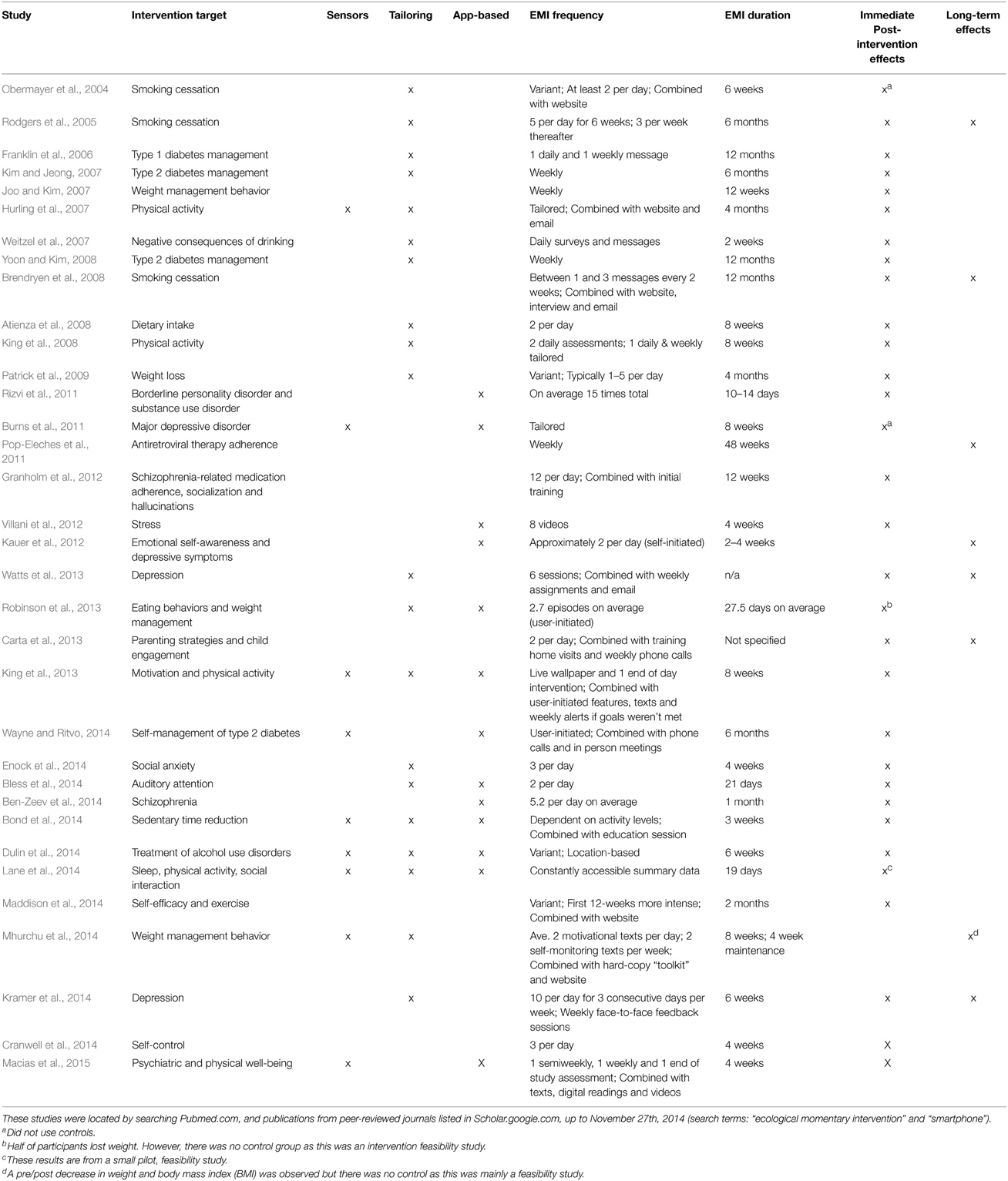
Table 5. Peer-reviewed studies reporting effective smartphone/iPod EMIs.
For example, in a smoking cessation study, text messages were sent to participants about health practices. Participants were also sent motivational stories or distraction topics (sports, travel, general interest, etc.) during times they were likely to smoke (Rodgers et al., 2005). Nearly 1000 messages were designed for this study and were sent to individual participants based on factors such as smoking history and preferences. The intervention was largely successful. In comparison to controls, twice as many people in the EMI group reported that they had quit smoking after 6 weeks.
In another recent EMI study, participants performed a cognitive task to improve auditory attention on an iPod touch twice a day for 3 weeks (Bless et al., 2014). This experimental group, unlike the control group, showed improved auditory attention and evidence of functional neural plasticity in regions associated with auditory processing (left posterior temporal gyrus) and executive function (right middle frontal gyrus) during an auditory attention task as measured using fMRI (see Figure 3).
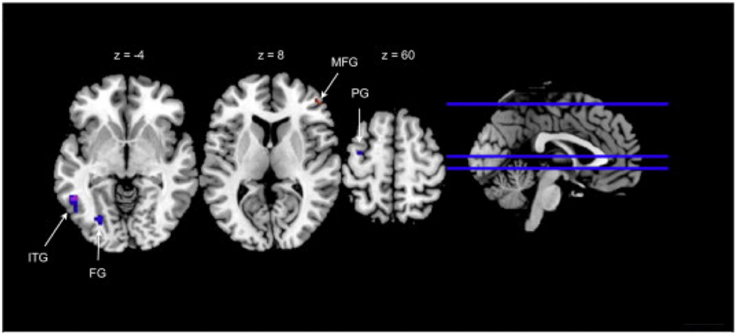
Figure 3. Neural differences between those trained in an auditory attention task and controls as measured by fMRI. Brain regions displaying significant decreases at points during a selective auditory attention task amongst trained participants (taken and adapted from Bless et al., 2014). Z, horizontal plane coordinate; ITG, inferior temporal gyrus; FG, fusiform gyrus; PG, precentral gyrus; MFG, middle frontal gyrus; red, forced-left response conditions; blue, forced-right response conditions; purple, overlap.
As we noted earlier, an important part of the psychological study of virtue is the examination of whether stable and robust dispositions can be developed. And though most app-based EMIs are in various exploratory stages, as we will discuss next, they hold promise for incorporating interventions that promote positive dispositional development into the daily activities of a large non-clinical, non-therapeutic population. In initial studies, effects during and immediately following EMI have been documented more than long-term effects (see Table 5). However, smartphone app-based systems that couple EMA and EMI provide an unprecedented means of testing whether EMI can help promote dispositional, including virtue, development.
Virtues and App-Based EMI
Little is directly known about the efficacy of EMI approaches to virtue development. In this section we, thus, discuss reasons for thinking such approaches have promise. In particular, we point out how app-based EMI offers a versatile, multifaceted and interactive way of promoting training, mindfulness, self-awareness, motivation and environmental awareness within the context of everyday life. We, then, outline parameters that may influence the effectiveness of EMI and an approach to optimizing EMIs for virtue development.
In addition to being practical due to the widespread use of smartphones, app-based EMI may be a particularly efficacious approach to promoting virtue development since it provides a versatile and multifaceted means of interacting with individual's within their everyday context. Developing a disposition, such as a virtue, is a learning process through which a behavior or response becomes a stable and robust habitual response or automatic response (e.g., Wood and Neal, 2007; Gawronski and Cesario, 2013). Learning context is important for this process.
There has been extensive animal research on the importance of learning context for response learning. First, animal studies reveal that learning contexts can function as “occasion-setters” such that, while they do not elicit a learned response themselves, they influence an animal's learned response to another stimulus thereby “setting the occasion” for this response (cf. Schmajuk and Holland, 1998; Bouton, 2010). Second, after learning a new response, animals often revert back to previous responses within contexts that vary from the context in which the new response was learned (cf. Bouton and Bolles, 1979; Peck and Bouton, 1990). Third, animals can be conditioned in one context (context A) and counterconditioned—or conditioned to give an opposing response—in another (context B), and continue to show the initial, conditioned response in context A and the opposing, counterconditioned response in context B (cf. Bouton and Bolles, 1979; Bouton and Peck, 1989; Merchant et al., 2013). Fourth, it has been observed that, under certain training conditions, a learned contextual response can persist even though memory for a conditioned stimulus (CS)/unconditioned stimulus (US) association has been impaired through localized inhibition of neurobiochemical processes crucial for the formation of long-term memory (i.e., memory persisting at least 48 h) for CS/US association (Runyan et al., 2004).
Extending from these animal studies, human studies have revealed that context is similarly important in the learning of habitual responses and automatic responses (e.g., Rydell and Gawronski, 2009; Wood and Neal, 2009; Gawronski and Cesario, 2013). Additionally, there is evidence that contextual cues can influence preparatory neural states associated with a certain response and the likelihood an individual will respond in that way in certain contexts (e.g., Deiber et al., 1996; Thoenissen et al., 2002; Toni et al., 2002; Praamstra et al., 2009; Moisa et al., 2012). In particular, addiction studies have shown that recovering individual's are more likely to relapse within contexts associated with the addictive behavior (e.g., Crombag et al., 2008); and this has been associated with plasticity in specific brain regions, including the lateral hypothalamus (e.g., Marchant et al., 2009, 2014). Further, there is evidence indicating that the tendency to give a habitual response becomes more stable and robust with the repetition of the response in various contexts (e.g., Bouton, 2000; Neal et al., 2006, 2011). Taken together, these observations provide evidence that, by promoting the development of habitual responses or automatic responses within an individual's daily context, EMIs aimed at virtue development may be particularly effective. Given this, EMA data coupled with GPS data could be used to trigger app-based EMIs in particular spatiotemporal locations to promote the learning of habitual or automatic responses in new, or various, contexts; especially in contexts where an individual finds change difficult (e.g., Watkins et al., 2014).
One way that EMI might be effective in promoting virtue development is by prompting individuals to engage in practices, or in training, aimed at developing a particular virtue (cf. Magidson et al., 2014). Working memory training has been shown to improve cognitive abilities and to result in neural plasticity (e.g., Klingberg, 2010). There is some suggestion that practicing gratitude increases dispositional gratitude (Emmons and McCullough, 2003; Seligman et al., 2005). Additionally, self-regulation exercises have been shown to improve self-regulation (Baumeister et al., 2006; Cranwell et al., 2014). Further, in a recent study, participants were given empathy and compassion training (Klimecki et al., 2014; cf. Klimecki et al., 2012). After empathy training, participants experienced increased negative affect associated with increased activity in the anterior insula and the anterior midcingulate cortex (two regions previously associated with empathy for pain) in response to watching videos depicting human suffering. After compassion training, these same individuals also experienced increased positive affect associated with increased activity in the ventral striatum, pregenual anterior cingulate cortex and medial orbitofrontal cortex (see Figure 4). The same effects were not found in controls who underwent memory training. The implication is that training can result in increased empathy and compassion as measured by affective responses and associated brain activity states.
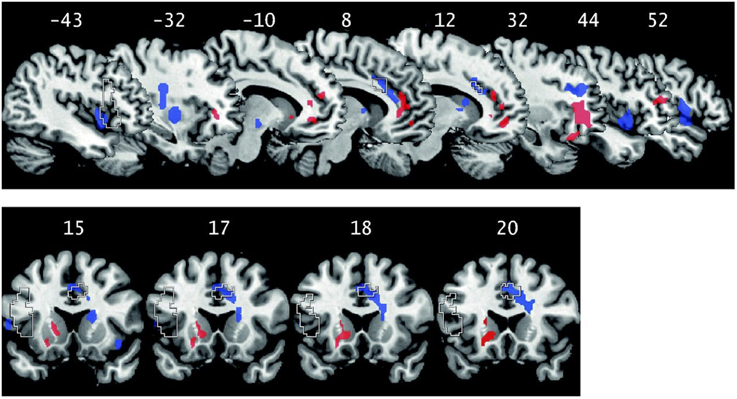
Figure 4. Functional neural changes corresponding with empathy training (red) and compassion training (blue) in comparison to memory control as measured by fMRI (adapted from Klimecki et al., 2014). Dashed lines represent regions associated with empathy for pain in a recent meta-analysis by Lamm et al. (2011). Numbers on the top row are the sagittal plane coordinates. Numbers on the bottom row are the coronal plane coordinates.
App-based EMI may be a particularly effective way of administering dispositional training of the kind mentioned above since smartphone app technology can support multifaceted, interactive and progressive training within various contexts throughout an individual's daily routine. For instance, training might involve prompting individuals to engage in app-delivered activities or exercises, interact with app-based games, or with videos or pictures, throughout the day. And training might get more demanding over time.
Another way EMI might promote virtue development is by specifically targeting mindfulness. According to the predominating definition in psychology, mindfulness is purposeful, non-evaluative awareness of one's present experiences and mental states moment-to-moment (Kabat-Zinn, 2003; but see Brown and Ryan, 2003; Jankowski and Holas, 2014). Not only is mindfulness thought by some to be a virtue—and there is evidence that dispositional mindfulness does promote mental health and resilience (e.g., Brown et al., 2007)—there is some suggestion that mindfulness may help promote the development of other virtues and, thus, provide a case where virtues are interconnected. It is theorized that mindfulness promotes positive change by promoting awareness of one's immediate experiences and states from a somewhat detached state, which may, in turn, promote self-awareness and self-regulation (Shapiro et al., 2006; Jankowski and Holas, 2014).
EMA observations support the theory that mindfulness promotes self-regulation (e.g., Brown and Ryan, 2003). Additionally, mindfulness training (involving attentional fixation on and nonjudgmental awareness of moment-to-moment experiences) can improve working memory and attention (Tang et al., 2007; Lutz et al., 2008; Jha et al., 2010; MacLean et al., 2010). These improvements have been associated with increased activity in the left dorsolateral prefrontal and dorsal anterior cingulate cortex (Allen et al., 2012). Mindfulness has also been observed to reduce interference from emotionally salient distractors (Ortner et al., 2007), which has been associated with increased activity in the medial prefrontal cortex and right anterior insula (Allen et al., 2012).
App-based EMI approaches to virtue development might prompt and remind individuals to engage in dynamic and progressive mindfulness exercises within the context of daily life. There are a number of mindfulness apps currently available (Plaza et al., 2013). However, at present there has been little work on the effectiveness of app-based EMIs aimed at promoting mindfulness (but see Chittaro and Vianello, 2014). Further, as we will see toward the end of this section, there are a number of parameters that are likely to influence whether EMIs are efficacious.
In addition to prompting various practices, trainings or exercises within everyday contexts, effective app-based EMIs for virtue development might be designed by incorporating effective components of computer- and internet-based therapeutic interventions (cf. Kaltenthaler et al., 2006; Barak et al., 2008; Tillfors et al., 2008; Andersson, 2009; Bergström et al., 2010; Newman et al., 2011; Andersson et al., 2013; Musiat and Tarrier, 2014). Web-based cognitive-behavioral therapy and guided self-help interventions have been observed to be efficacious in treating eating disorders (Hötzel et al., 2013), insomnia (Holmqvist et al., 2014), suicidal ideation, depressive symptoms, anxiety (van Straten et al., 2008; March et al., 2009; Cuijpers et al., 2013), posttraumatic stress disorder (Knaevelsrud and Maercker, 2007) and physical inactivity (van Stralen et al., 2009a,b, 2010, 2011). In multiple cases, these interventions have been observed to facilitate long-term change (e.g., Knaevelsrud and Maercker, 2007; Litz et al., 2007; March et al., 2009; Ruwaard et al., 2010; van Stralen et al., 2011; Cuijpers et al., 2013; Lappalainen et al., 2014).
In these computer- and internet-based approaches:
(1) self-monitoring and self-awareness (e.g., Litz et al., 2007; Morris et al., 2010),
(2) self-efficacy and motivation (Litz et al., 2007; Turner et al., 2007; Carlbring and Smit, 2008; Warmerdam et al., 2010; Hötzel et al., 2013), and
(3) environmental awareness (van Stralen et al., 2009a)
are among the strongest mediators of enduring change. And, as we will discuss in turn below, app-based EMI might be used to effectively promote each.
(1) As mentioned in the previous section, research from our own lab shows that using an EMA/I app to ask individuals questions about their responses at random times throughout their daily activities can raise self-awareness (Runyan et al., 2013). Additionally, app-based EMIs might allow individuals to monitor summary data generated from their responses. Further, by incorporating sensors, app-based EMI provides a means of increasing self-awareness by increasing a person's ability to self-monitor. App-based EMIs that interface with mobile EEG (cf. Curran and Stokes, 2003), physical activity sensors and/or other physiological activity sensors (e.g., sensors for muscle tension, temperature, galvanic skin response, blood pressure or heart-rate; see Sutarto et al., 2010; Schwerdtfeger and Scheel, 2012; Bossman et al., 2013; von Haaren et al., 2013; Demarble et al., 2014; Dunton et al., 2014) could provide biofeedback allowing an individual to self-monitor to an extent otherwise impossible within close spatial and temporal proximity to a focal event or state (cf. Keedwell and Linden, 2013; Linden, 2014; Schoenberg and David, 2014). Feedback concerning preparatory neural activities, muscle tension, blood pressure and/or heart rate (e.g., Koval et al., 2013) within certain contexts might enable an individual to monitor patterns in their behaviors, thought life, states and/or experiences of which they would otherwise be unaware.
(2) There is indication that self-monitoring promotes self-regulation and positive behavioral development when individuals have the opportunity and motivation to change (cf. Bandura, 1991; Korotitsch and Nelson-Gray, 1999; Shiffman et al., 2008; Quinn et al., 2010). Therefore, app-based EMIs might effectively promote positive change not only by providing a means for self-monitoring but by also increasing motivation through:
• repeatedly asking individuals directed questions;
• prompting goal-setting;
• pushing motivational statements, videos or pictures and promoting positive self-talk to increase outcome expectancy (i.e., belief that one's efforts will lead to the achievement of a desirable end) and self-efficacy (i.e., belief in one's ability to achieve one's goal; Bandura, 1986, 1997);
• reminding individuals of their own intentions and values; and/or
• intermittently giving individuals progress and accomplishment reports (which has been shown to increase motivation and promote positive behavioral development; e.g., Korotitsch and Nelson-Gray, 1999; Kramer et al., 2014; Mhurchu et al., 2014).
Also, a social component to app-based EMI, where individuals can interact with others who are using the same EMI in order to develop the same virtue, might also increase motivation as well as self-efficacy (cf. Obermayer et al., 2004; Przeworski and Newman, 2004; Hurling et al., 2007; Brendryen et al., 2008; Cafazzo et al., 2012; King et al., 2013).
(3) With regard to increasing environmental awareness, app-based EMIs that incorporate GPS (e.g., Yüce et al., 2012; Hollett and Leander, 2013; Huang and Luo, 2014; Watkins et al., 2014), and utilize smartphone microphones and cameras, might be designed to notify individuals about aspects of their environment. In this way, app-based EMIs might be designed to raise awareness of contextual/situational triggers for responses that the individual desires to change as well as awareness of opportunities to respond in ways that are expressions of a virtue. App-based EMIs might also raise awareness of environmental resources and/or social support that may help an individual in their effort to change (e.g., van Stralen et al., 2009a; Mhurchu et al., 2014).
Whether EMI can effectively promote virtue development—and the optimal conditions for this development—remains to be directly and systematically tested. In particular, it remains to be seen whether EMIs, including app-based EMIs, can promote long-term dispositional development that persists following the termination of the intervention. Relevant parameters of EMI in need of testing are:
(i) duration of intervention;
(ii) frequency of interactions;
(iii) duration of each interaction;
(iv) whether interactions occur at varied or fixed times;
(v) whether, and the degree to which, the intervention is intermittent or continuous over a period of time;
(vi) degree of variation or repetition between interactions;
(vii) how broadly or narrowly the intervention is focused (e.g., number of responses targeted, types of interactions provided);
(viii) whether the intervention is individualized/tailored;
(ix) whether the intervention progresses over time (e.g., involves scaffolding);
(x) whether the intervention involves social interaction; and
(xi) the degree to which the intervention is engaging (e.g., interesting, meaningful and/or fun).
Given EMI can promote virtue development, optimal conditions are likely to depend somewhat on the virtue. Nevertheless, there are also likely to be some common optimal conditions. We hypothesize that these optimal conditions will, to a certain degree, track those for instrumental learning whereby intentionally modified responses in early stages of learning are cued by stimuli as expressions of a habitual response or automatic response in later stages (e.g., Dickinson et al., 1995; Schachtman and Reilly, 2011). In this case, EMIs that maintain the highest levels of engagement, motivation and awareness of opportunities to respond or otherwise behave in ways that are expressions of a virtue, over the longest period of time, are likely to be the most effective (e.g., Rescorla and Solomon, 1967; Sutherland and Mackintoch, 1971; Rescorla and Wagner, 1972; Bandura, 1977). This is likely to be accomplished by EMIs that:
1. focus on one virtue at a time (cf. Kamin, 1968; Rescorla and Wagner, 1972);
2. progress and involve scaffolding (cf. Salomon, 1993; Pea, 2004);
3. are tailored to the individual and incorporate the individual's judgments, values and aims (cf. Levey and Martin, 1975; Shanks and Dickinson, 1991; Kreuter et al., 2000a,b; Strecher et al., 2005);
4. involve social interaction amongst individuals with similar aims (cf. Bandura, 1977, 1986, 1997); and
5. interact with individuals at varied, rather than fixed, intervals and provide positive reinforcement for virtue development (e.g., make virtue development, and interaction with the intervention, varied, interesting, meaningful and/or fun).
Scheduling intermittent EMAs as an individual uses an EMI aimed at promoting virtue development provides a way of assessing and optimizing the efficacy of EMI in real-time (cf. Voogt et al., 2013). As we have already discussed, EMA can be used to assess virtue expression, and/or detect correlates of this expression. And a smartphone app can be used to administer both EMA and EMI.
Conclusions
There seems to be conclusive reasons for thinking that some people possess virtues understood as relatively stable and robust psychological dispositions that contribute to a deeply fulfilling, well-lived life of growth (i.e., a flourishing life)—and situational studies have not presented reasons for thinking otherwise. Further, since knowledge of what contributes to flourishing is worth seeking, virtues are worth studying. As a result of the widespread use of smartphones and advancements in smartphone technology, app-based EMA provides a new means for examining the stability, robustness and interconnectedness of virtues, and the physiological (including neurophysiological) correlates of having and/or expressing virtues. In short, app-based EMA provides a wholistic approach to examining the extent to which virtues are possessed as well as the personal, physiological and biochemical characteristics of individuals who possess and express virtues, which promises to provide new insight. Additionally, app-based EMI provides a new and powerful vehicle for promoting the development of virtues where virtues should be expressed—within the context of our daily lives.
Conflict of Interest Statement
The corresponding author is a co-creator of iHabit and LifeData systems and is a founding partner of LifeData, an LLC which creates mobile device-based ecological momentary assessment and intervention systems.
Acknowledgments
This work has been supported by a Lilly Research Award.
Footnotes
1. ^It should be noted that the Aristotelian tradition is a eudaimonic tradition in which happiness, or flourishing, is analyzed in terms of living a fulfilled and deeply satisfying life of growth through expressing virtues (Kenny, 2011, pp. xii–xiv). This tradition is in opposition to hedonic traditions in which happiness is analyzed in terms of affect or subjective well-being (cf. Deci and Ryan, 2008a). At the same time, accepting a eudaimonic analysis does not entail, or typically involve, thinking it can never be the case that a person who is exercising virtues is not flourishing; or that a flourishing life will not include subjective well-being or pleasure.
2. ^Two points should be made here: (1) First, Allport, and many psychologists since, talk of traits (i.e., personality traits, character traits) rather than psychological dispositions; and, while, “trait” and “disposition” are commonly used interchangeably, traits are often thought of as a type of more stable disposition. Having said this, there are variations in the use of the term “disposition.” Sometimes, “disposition” and “trait” are both used to refer to any relatively stable and robust psychological characteristic, including deficiencies or the lack of certain psychological abilities (e.g., Eysenck and Eysenck, 1969; Watson and Clark, 1984; McCrae and Costa, 2003). Other times, often in philosophical psychology, a psychological disposition is understood as any psychological ability, some of which are not, in and of themselves, typically understood as a trait or aspect thereof (e.g., Annas, 2011; Anjum et al., 2013; Hyman, 2014). For our purposes here, it is not crucial to analyze various conceptions of psychological traits or dispositions, or how these conceptions overlap. It suffices to point out that, often, there is overlap in the use of “trait” and “disposition,” and, for our purposes here, a psychological disposition is a psychological ability. A virtue is, then, a subclass of psychological disposition or ability as outlined above (also see Mumford, 1998). (2) Second, according to Allport (1960), the study of virtues involves value judgments and, thus, is a study for moral philosophy rather than psychological science. As will become clear, we take a different view.
3. ^Most smartphone app-based EMA systems work on either Apple or Android devices, which make up the majority of smartphones in use. Only two work with both: illumivu and LifeData.
4. ^Psychological well-being is not to be confused with subjective well-being (for e.g. see Ryff and Singer, 2008; Ryff, 2013). See note 1.
5. ^It should be noted that it has also been theorized that simply being aware of being observed, or of having one's behavior assessed, effects one's behavior—a phenomenon known as the Hawthorne effect (Solomon, 1949; Sommer, 1968; Parsons, 1974; Wickstrom and Bendix, 2000). However, recently, mixed evidence for the Hawthorne effect has lead to serious questions about the adequacy of this construct. Rather than there being a Hawthorne effect, evidence indicates that multiple conditions lead to various effects when one is aware of being assessed or of having one's behavior assessed (see Gale, 2004; McCambridge et al., 2014). Here, we focus on one such condition: increased self-awareness.
References
aan het Rot, M., Moskowitz, D. S., and Young, S. N. (2015). Impulsive behavior in interpersonal encounters: associations with quarrelsomeness and agreeableness. Br. J. Psychol. 106, 151–161. doi: 10.1111/bjop.12070
Ackerman, J. M., Nocera, C. C., and Bargh, J. A. (2010). Incidental haptic sensations influence social judgments and decisions. Science 328, 1712–1715. doi: 10.1126/science.1189993
PubMed Abstract | Full Text | CrossRef Full Text | Google Scholar
Adams, P., Rabbi, M., Rahman, T., Matthews, M., Voida, A., Gay, G., et al. (2014). “Towards personal stress informatics: comparing minimally invasive techniques for measuring daily stress in the wild,” in Proceedings of the 8th International Conference on Pervasive Computing Technologies for Healthcare, 72–79.
Allen, M., Dietz, M., Blair, K. S., van Beek, M., Rees, G., Vestergaard-Poulsen, P., et al. (2012). Cognitive-affective neural plasticity following active-controlled mindfulness intervention. J. Neurosci. 32, 15601–15610. doi: 10.1523/JNEUROSCI.2957-12.2012
PubMed Abstract | Full Text | CrossRef Full Text | Google Scholar
Allport, A. (1960). Becoming: Considerations for a Psychology of Personality. New Haven, CT: Yale University Press.
Alzola, M. (2008). Character and environment: the status of virtues in organizations. J. Bus. Ethics 78, 343–357. doi: 10.1007/s10551-006-9335-7
Ambrose (377 AD/1961). On Paradise. Transl. J. Savage. Washington, DC: The Catholic University of America Press.
Andersson, G. (2009). Using the internet to provide cognitive behaviour therapy. Behav. Res. Ther. 47, 175–180. doi: 10.1016/j.brat.2009.01.010
PubMed Abstract | Full Text | CrossRef Full Text | Google Scholar
Andersson, G., and Cuijper, P. (2009). Internet-based and other computerized psychological treatments for adult depression: a meta-analysis. Cogn. Behav. Ther. 38, 196–205. doi: 10.1080/16506070903318960
PubMed Abstract | Full Text | CrossRef Full Text | Google Scholar
Andersson, G., Hesser, H., Hummerdal, D., Bergman-Nordgren, L., and Calrbring, P. (2013). A 3.5-year follow-up of internet-delivered cognitive behavior therapy for major depression. J. Mental Health 22, 155–164. doi: 10.3109/09638237.2011.608747
PubMed Abstract | Full Text | CrossRef Full Text | Google Scholar
Anjum, R. L., Lie, S. A. N., and Mumford, S. (2013). “Dispositions and ethics,” in Powers and Capacities in Philosophy: The New Aristotelianism, eds R. Groff and J. Greco (New York, NY: Routledge), 231–247.
Anscombe, G. E. M. (1958). Modern moral philosophy. Philosophy 33, 1–19. doi: 10.1017/S0031819100037943
Aquinas, T. (1274/1948). Summa Theologica. Transl. Fathers of the Dominican Province. Notre Dame, IN: Christian Classics.
Asch, S. E. (1951). “Effects of group pressure upon the modification and distortion of judgment,” in Groups, Leadership and Men, ed H. Guetzkow (Pittsburgh, PA: Carnegie Press), 177–190.
Atienza, A. A., King, A. C., Oliveira, B. M., Ahn, D. K., and Gardner, C. D. (2008). Using hand-held computer technologies to improve dietary intake. Am. J. Prevent. Med. 34, 514–518. doi: 10.1016/j.amepre.2008.01.034
PubMed Abstract | Full Text | CrossRef Full Text | Google Scholar
Baer, R. A. (2003). Mindfulness training as a clinical intervention: a conceptual and empirical review. Clin. Psychol. Sci. Pract. 10, 125–143. doi: 10.1093/clipsy.bpg015
Baer, R. A., Lykins, E. L. B., and Peters, J. R. (2012). Mindfulness and self-compassion as predictors of psychological wellbeing in long-term meditators and matched nonmeditators. J. Posit. Psychol. 7, 230–238. doi: 10.1080/17439760.2012.674548
Baer, R. A., Smith, G. T., and Allen, K. B. (2004). Assessment of mindfulness by self-report the Kentucky inventory of mindfulness skills. Assessment 11, 191–206. doi: 10.1177/1073191104268029
PubMed Abstract | Full Text | CrossRef Full Text | Google Scholar
Bandura, A. (1977). Self-efficacy: toward a unifying theory of behavioral change. Psychol. Rev. 84, 191–215. doi: 10.1037/0033-295X.84.2.191
PubMed Abstract | Full Text | CrossRef Full Text | Google Scholar
Bandura, A. (1986). Social Foundations of Thought and Action: A Social Cognitive Theory. Englewood Cliffs, NJ: Prentice-Hall.
Bandura, A. (1991). Social cognitive theory of self-regulation. Org. Behav. Hum. Decis. Process. 50, 248–287. doi: 10.1016/0749-5978(91)90022-L
Bandura, A. (2004). Health promotion by social cognitive means. Health Educ. Behav. 31, 143–164. doi: 10.1177/1090198104263660
PubMed Abstract | Full Text | CrossRef Full Text | Google Scholar
Barak, A., Hen, L., Boniel-Nissim, M., and Shapira, N. (2008). A comprehensive review and a meta-analysis of the effectiveness of internet-based psychotherapeutic interventions. J. Technol. Hum. Serv. 26, 109–160. doi: 10.1080/15228830802094429
Bargh, J. A., and Shalev, I. (2012). The substitutability of physical and social warmth in daily life. Emotion 12, 154–162. doi: 10.1037/a0023527
PubMed Abstract | Full Text | CrossRef Full Text | Google Scholar
Bartlett, M. Y., and DeSteno, D. (2006). Gratitude and prosocial behavior helping when it costs you. Psychol. Sci. 17, 319–325. doi: 10.1111/j.1467-9280.2006.01705.x
PubMed Abstract | Full Text | CrossRef Full Text | Google Scholar
Baumeister, R. F., Gailliot, M., DeWall, C. N., and Oaten, M. (2006). Self−regulation and personality: how interventions increase regulatory success, and how depletion moderates the effects of traits on behavior. J. Personal. 74, 1773–1802. doi: 10.1111/j.1467-6494.2006.00428.x
PubMed Abstract | Full Text | CrossRef Full Text | Google Scholar
Ben-Zeev, D., Brenner, C. J., Begale, M., Duffecy, J., Mohr, D. C., and Mueser, K. T. (2014). Feasibility, acceptability, and preliminary efficacy of a smartphone intervention for schizophrenia. Schizophr. Bull. 40, 1244–1253. doi: 10.1093/schbul/sbu033
PubMed Abstract | Full Text | CrossRef Full Text | Google Scholar
Bergström, J., Andersson, G., Ljótsson, B., Rück, C., Andréewitch, S., Karlsoon, A., et al. (2010). Internet-versus group-administered cognitive behaviour therapy for panic disorder in a psychiatric setting: a randomised trial. BMC Psychiatry 10:54. doi: 10.1186/1471-244X-10-54
PubMed Abstract | Full Text | CrossRef Full Text | Google Scholar
Bernstein, A., Tanay, G., and Vujanovic, A. A. (2011). Concurrent relations between mindful attention and awareness and psychopathology among trauma-exposed adults: preliminary evidence of transdiagnostic resilience. J. Cogn. Psychother. 25, 99–113. doi: 10.1891/0889-8391.25.2.99
Berry, J. W., and orthington, E. L. Jr. (2001). Forgivingness, relationship quality, stress while imagining relationship events, and physical and mental health. J. Couns. Psychol. 48, 447–455. doi: 10.1037/0022-0167.48.4.447
Bleidorn, W. (2009). Linking personality states, current social roles and major life goals. Eur. J. Pers. 23, 509–530. doi: 10.1002/per.731
Bleidorn, W., and Denissen, J. J. A. (2015). Virtues in action—the new look of character traits. Br. J. Psychol. doi: 10.1111/bjop.12117. [Epub ahead of print].
PubMed Abstract | Full Text | CrossRef Full Text | Google Scholar
Bless, J. J., Westerhausen, R., Kompus, K., Gudmundsen, M., and Hugdahl, K. (2014). Self-supervised, mobile-application based cognitive training of auditory attention: a behavioral and fMRI evaluation. Inter. Intervent. 1, 102–110. doi: 10.1016/j.invent.2014.06.001
Bond, D. S., Thomas, J. G., Raynor, H. A., Moon, J., Sieling, J., Trautvetter, J., et al. (2014). B-MOBILE-A smartphone-based intervention to reduce sedentary time in overweight/obese individuals: a within-subjects experimental trial. PLoS ONE 9:e100821. doi: 10.1371/journal.pone.0100821
PubMed Abstract | Full Text | CrossRef Full Text | Google Scholar
Bossman, T., Kanning, M., Koudela-Hamila, S., Hey, S., and Ebner-Priemer, U. (2013). The association between short periods of everyday life activities and affective states: a replication study using ambulatory assessment. Front. Psychol. 4:102. doi: 10.3389/fpsyg.2013.00102
Bouton, M. E. (2000). A learning theory perspective on lapse, relapse, and the maintenance of behavioral change. Health Psychol. 19, 57–63. doi: 10.1037/0278-6133.19.Suppl1.57
PubMed Abstract | Full Text | CrossRef Full Text | Google Scholar
Bouton, M. E. (2010). “The multiple forms of ‘context’ in associative learning theory,” in The Mind in Context, eds B. Mesquita, L. Feldman, and E. R. Smith (New York, NY: Guilford Press), 233–258.
Bouton, M. E., and Bolles, R. C. (1979). Role of conditioned contextual stimuli in reinstatement of extinguished fear. J. Exp. Psychol. Anim. Behav. Process. 5, 368–378. doi: 10.1037/0097-7403.5.4.368
PubMed Abstract | Full Text | CrossRef Full Text | Google Scholar
Bouton, M. E., and Peck, C. A. (1989). Context effects on conditioning, extinction, and reinstatement in an appetitive conditioning preparation. Anim. Learn. Behav. 17, 188–198. doi: 10.3758/BF03207634
Bowlin, S. L., and Baer, R. A. (2012). Relationships between mindfulness, self-control, and psychological functioning. Pers. Indiv. Diff. 52, 411–415. doi: 10.1016/j.paid.2011.10.050
Brendryen, H., Drozd, F., and Kraft, P. (2008). A digital smoking cessation program delivered through internet and cell phone without nicotine replacement (happy ending): randomized controlled trial. J. Med. Inter. Res. 10, e51. doi: 10.2196/jmir.1005
PubMed Abstract | Full Text | CrossRef Full Text | Google Scholar
Brown, G. L., McGarvey, E. L., Shirtcliff, E. A., Keller, A., Granger, D. A., and Flavin, K. (2008). Salivary cortisol, dehydroepiandrosterone, and testosterone interrelationships in healthy young males: a pilot study with implications for studies of aggressive behavior. Psychiatry Res. 159, 67–76. doi: 10.1016/j.psychres.2007.06.012
PubMed Abstract | Full Text | CrossRef Full Text | Google Scholar
Brown, K. W., and Ryan, R. M. (2003). The benefits of being present: mindfulness and its role in psychological well-being. J. Pers. Soc. Psychol. 84, 822–848. doi: 10.1037/0022-3514.84.4.822
PubMed Abstract | Full Text | CrossRef Full Text | Google Scholar
Brown, K. W., Ryan, R. M., and Creswell, J. D. (2007). Mindfulness: theoretical foundations and evidence for its salutary effects. Psychol. Inquiry 18, 211–237. doi: 10.1080/10478400701598298
Brown, S. L., Smith, D. M., Schulz, R., Kabeto, M. U., Ubel, P. A., Poulin, M., et al. (2009). Caregiving behavior is associated with decreased mortality risk. Psychol. Sci. 20, 488–494. doi: 10.1111/j.1467-9280.2009.02323.x
PubMed Abstract | Full Text | CrossRef Full Text | Google Scholar
Bruehl, S., Liu, X., Burns, J. W., Chont, M., and Jamison, R. N. (2012). Associations between daily chronic pain intensity, daily anger expression, and trait anger expressiveness: an ecological momentary assessment study. Pain 153, 2352–2358. doi: 10.1016/j.pain.2012.08.001
PubMed Abstract | Full Text | CrossRef Full Text | Google Scholar
Burns, M. N., Begale, M., Duffecy, J., Gergle, D., Karr, C. J., Giangrande, E., et al. (2011). Harnessing context sensing to develop a mobile intervention for depression. J. Med. Inter. Res. 13, e55. doi: 10.2196/jmir.1838
PubMed Abstract | Full Text | CrossRef Full Text | Google Scholar
Burt, S. A., and Donnellan, M. B. (2010). Evidence that the subtypes of antisocial behavior questionnaire (STAB) predicts momentary reports of acting-out behavior. Pers. Indiv. Diff. 48, 917–920. doi: 10.1016/j.paid.2010.02.021
Butler, A. C., Chapman, J. E., Forman, E. M., and Beck, A. T. (2006). The empirical status of cognitive-behavioral therapy: a review of meta-analyses. Clin. Psychol. Rev. 26, 17–31. doi: 10.1016/j.cpr.2005.07.003
PubMed Abstract | Full Text | CrossRef Full Text | Google Scholar
Cafazzo, J. A., Casselman, M., Hamming, N., Katzman, D. K., and Palmert, M. R. (2012). Design of an mHealth app for the self-management of adolescent type 1 diabetes: a pilot study. J. Med. Inter. Res. 14, e70. doi: 10.2196/jmir.2058
PubMed Abstract | Full Text | CrossRef Full Text | Google Scholar
Carlbring, P., and Smit, F. (2008). Randomized trial of internet-delivered self-help with telephone support for pathological gamblers. J. Consult. Clin. Psychol. 76, 1090–1094. doi: 10.1037/a0013603
PubMed Abstract | Full Text | CrossRef Full Text | Google Scholar
Carta, J. J., Lefever, J. B., Bigelow, K., Borkowski, J., and Warren, S. F. (2013). Randomized trial of a cellular phone-enhanced home visitation parenting intervention. Pediatrics 132, S167–S173. doi: 10.1542/peds.2013-1021Q
PubMed Abstract | Full Text | CrossRef Full Text | Google Scholar
Carver, C. S., and Scheier, M. F. (2014). Dispositional optimism. Trends Cogn. Sci. 18, 293–299. doi: 10.1016/j.tics.2014.02.003
PubMed Abstract | Full Text | CrossRef Full Text | Google Scholar
Chittaro, L., and Vianello, A. (2014). Computer-supported mindfulness: evaluation of a mobile thought distancing application on naive meditators. Int. J. Hum. Comput. Stud. 72, 337–348. doi: 10.1016/j.ijhcs.2013.11.001
Cohen, J. S., Edmunds, J. M., Brodman, D. M., Benjamin, C. L., and Kendall, P. C. (2013). Using self-monitoring: implementation of collaborative empiricism in cognitive-behavioral therapy. Cogn. Behav. Pract. 20, 419–428. doi: 10.1016/j.cbpra.2012.06.002
Cohn, A. M., Hunter−Reel, D., Hagman, B. T., and Mitchell, J. (2011). Promoting behavior change from alcohol use through mobile technology: the future of ecological momentary assessment. Alcohol. Clin. Exp. Res. 35, 2209–2215. doi: 10.1111/j.1530-0277.2011.01571.x
PubMed Abstract | Full Text | CrossRef Full Text | Google Scholar
Colby, A., and Damon, W. (1992). Some Do Care: Contemporary Lives of Moral Commitment. New York, NY: The Free Press.
Colby, A., and Damon, W. (1999). “The development of extraordinary moral commitment,” in Morality in Everyday Life: Developmental Perspectives, eds M. Killen and D. Hart (Cambridge: Cambridge University Press), 342–370.
Coles, M. G. H. (1989). Modern mind−brain reading: psychophysiology, physiology, and cognition. Psychophysiology 26, 251–269. doi: 10.1111/j.1469-8986.1989.tb01916.x
PubMed Abstract | Full Text | CrossRef Full Text | Google Scholar
Coles, M. G. H., Gratton, G., and Donchin, E. (1988). Detecting early communication: using measures of movement-related potentials to illuminate human information processing. Biol. Psychol. 26, 69–89. doi: 10.1016/0301-0511(88)90014-2
PubMed Abstract | Full Text | CrossRef Full Text | Google Scholar
Conner, T., and Barrett, L. S. (2005). Implicit self-attitudes predict spontaneous affect in daily life. Emotion 5, 476–488. doi: 10.1037/1528-3542.5.4.476
PubMed Abstract | Full Text | CrossRef Full Text | Google Scholar
Conner, T. S. (2014). Experience Sampling and Ecological Momentary Assessment with Mobile Phones. Available online at: http://www.otago.ac.nz/psychology/otago047475.pdf
Conway, J. M., Rogelberg, S. G., and Pitts, V. E. (2009). Workplace helping: interactive effects of personality and momentary positive affect. Hum. Perform. 22, 321–339. doi: 10.1080/08959280903120279
Cranwell, J., Benford, S., Houghton, R. J., Golembewski, M., Fischer, J. E., and Hagger, M. S. (2014). Increasing self-regulatory energy using an internet-based training application delivered by smartphone technology. Cyberpsychol. Behav. Soc. Netw. 17, 181–186. doi: 10.1089/cyber.2013.0105
PubMed Abstract | Full Text | CrossRef Full Text | Google Scholar
Crombag, H. S., Bossert, J. M., Koya, E., and Shaham, Y. (2008). Context-induced relapse to drug seeking: a review. Philos. Trans. R. Soc. B Biol. Sci. 363, 3233–3243. doi: 10.1098/rstb.2008.0090
PubMed Abstract | Full Text | CrossRef Full Text | Google Scholar
Croom, A. M. (2014). Vindicating virtue: a critical analysis of the situationist challenge against Aristotelian moral psychology. Integr. Psychol. Behav. Sci. 48, 18–47. doi: 10.1007/s12124-013-9249-8
PubMed Abstract | Full Text | CrossRef Full Text | Google Scholar
Csikszentmihalyi, M., and Larson, R. (1987). Validity and reliability of the experience-sampling method. J. Nervous Mental Dis. 175, 526–536. doi: 10.1097/00005053-198709000-00004
PubMed Abstract | Full Text | CrossRef Full Text | Google Scholar
Cuijpers, P., Berking, M., Andersson, G., Quigley, L., Kleiboer, A., and Dobson, K. S. (2013). A meta-analysis of cognitive-behavioural therapy for adult depression, alone and in comparison with other treatments. Can. J. Psychiatry 58, 386–392.
Curran, E. A., and Stokes, M. A. (2003). Learning to control brain activity: a review of the production and control of EEG components for driving brain–computer interface (BCI) systems. Brain Cogn. 51, 326–336. doi: 10.1016/S0278-2626(03)00036-8
PubMed Abstract | Full Text | CrossRef Full Text | Google Scholar
D'Antono, B., Ditto, B., Moskowitz, D. S., and Rios, N. (2001). Interpersonal behavior and resting blood pressure in college women: a daily monitoring study. J. Psychosom. Res. 50, 309–318. doi: 10.1016/S0022-3999(01)00199-4
PubMed Abstract | Full Text | CrossRef Full Text | Google Scholar
Dahlsgaard, K., Peterson, C., and Seligman, M. E. P. (2005). Shared virtue: the convergence of valued human strengths across culture and history. Rev. Gen. Psychol. 9, 203–213. doi: 10.1037/1089-2680.9.3.203
Darley, J. M., and Batson, C. D. (1973). “From Jerusalem to Jericho”: a study of situational and dispositional variables in helping behavior. J. Pers. Soc. Psychol. 27, 100–108. doi: 10.1037/h0034449
Deci, E. L., and Ryan, R. M. (2008a). Hedonia, eudaimonia, and well-being: an introduction. J. Happ. Stud. 9, 1–11. doi: 10.1007/s10902-006-9018-1
Deci, E. L., and Ryan, R. M. (2008b). Facilitating optimal motivation and psychological well-being across life's domains. Can. Psychol. 49, 14–23. doi: 10.1037/0708-5591.49.1.14
Deecke, L., Lang, W., Uhl, F., and Podreka, I. (1990). “Looking where the action is: negative DC shifts as indicators of cortical activity,” in From Neuron to Action: An Appraisal of Fundamental and Clinical Research, eds L. Deecke, J. C. Eccles, and V. Mountcastle (Berlin; Heidelberg: Springer), 25–41.
Deiber, M. P., Ibañez, V., Sadato, N., and Hallett, M. (1996). Cerebral structures participating in motor preparation in humans: a positron emission tomography study. J. Neurophysiol. 75, 233–247.
Demarble, J. B., Moskowitz, D. S., Tardif, J.-C., and D'Antono, B. (2014). The relation between hostility and concurrent levels of inflammation is sex, age, and measure dependent. J. Psychosom. Res. 76, 384–393. doi: 10.1016/j.jpsychores.2014.02.010
PubMed Abstract | Full Text | CrossRef Full Text | Google Scholar
DeSteno, D., Bartlett, M. Y., Baumann, J., Williams, L. A., and Dickens, L. (2010). Gratitude as moral sentiment: emotion-guided cooperation in economic exchange. Emotion 10, 289–293. doi: 10.1037/a0017883
PubMed Abstract | Full Text | CrossRef Full Text | Google Scholar
Dickinson, A., Balleine, B., Watt, A., Ganzalez, F., and Boakes, R. A. (1995). Motivational control after extended instrumental training. Anim. Learn. Behav. 23, 197–206. doi: 10.3758/BF03199935
Diener, E., and Lucas, R. E. (1999). “Personality and subjective well-being,” in Well-Being: The Foundations of Hedonic Psychology, eds D. Kahneman, E. Diener, and N. Schwartz (New York, NY: Sage), 213–229.
Diener, E., Lucas, R. E., and Scollon, C. N. (2006). Beyond the hedonic treadmill: revising the adaptation theory of well-being. Am. Psychol. 61, 305–314. doi: 10.1037/0003-066X.61.4.305
PubMed Abstract | Full Text | CrossRef Full Text | Google Scholar
Dlugokinski, E., and Firestone, I. J. (1973). Congruence among four methods of measuring other-centeredness. Child Dev. 44, 304–308. doi: 10.2307/1128051
PubMed Abstract | Full Text | CrossRef Full Text | Google Scholar
Dlugokinski, E., and Firestone, I. J. (1974). Other centeredness and susceptibility to charitable appeals: effects of perceived discipline. Dev. Psychol. 10, 21–28. doi: 10.1037/h0035560
Donker, T., Petrie, K., Proudfoot, J., Clarke, J., Birch, M.-R., and Christensen, H. (2013). Smartphones for smarter delivery of mental health programs: a systematic review. J. Med. Inter. Res. 15, e247. doi: 10.2196/jmir.2791
PubMed Abstract | Full Text | CrossRef Full Text | Google Scholar
Donnellan, M. B., and Lucas, R. E. (2009). Introduction to personality and assessment at age 40: reflections on the legacy of the person-situation debate and the future of person-situation integration. J. Res. Pers. 43, 117–119. doi: 10.1016/j.jrp.2009.02.010
Doris, J. M. (1998). Persons, situations, and virtue ethics. Nous 32, 504–530. doi: 10.1111/0029-4624.00136
Doris, J. M. (2002). Lack of Character: Personality and Moral Behavior. Cambridge: Cambridge University Press.
Dulin, P. L., Gonzalez, V. M., and Campbell, K. (2014). Results of a pilot test of a self-administered smartphone-based treatment system for alcohol use disorders: usability and early outcomes. Subst. Abus. 35, 168–175. doi: 10.1080/08897077.2013.821437
PubMed Abstract | Full Text | CrossRef Full Text | Google Scholar
Dunlop, W. L., and Walker, L. J. (2013). The personality profile of brave exemplars: a person-centered analysis. J. Res. Pers. 47, 380–384. doi: 10.1016/j.jrp.2013.03.004
Dunton, G. F., Dzubur, E., Kawabata, K., Yanez, B., Bo, B., and Intille, S. (2014). Development of a smartphone application to measure physical activity using sensor-assisted self-report. Front. Public Health 2:12. doi: 10.3389/fpubh.2014.00012
PubMed Abstract | Full Text | CrossRef Full Text | Google Scholar
Dunton, G. F., Huh, J., Leventhal, A. M., Riggs, N., Hedeker, D., Spruijt-Metz, D., et al. (2013). Momentary assessment of affect, physical feeling states, and physical activity in children. Health Psychol. 33, 255–263. doi: 10.1037/a0032640
PubMed Abstract | Full Text | CrossRef Full Text | Google Scholar
Edmondson, D., Shaffer, J. A., Chaplin, W. F., Burg, M. M., Stone, A. A., and Schwartz, J. E. (2013). Trait anxiety and trait anger measured by ecological momentary assessment and their correspondence with traditional trait questionnaires. J. Res. Pers. 47, 843–852. doi: 10.1016/j.jrp.2013.08.005
PubMed Abstract | Full Text | CrossRef Full Text | Google Scholar
eMarketer. (2015). 2 Billion Consumers Worldwide to Get Smart(Phones) by 2016. Available online at: http://www.emarketer.com/Article/2-Billion-Consumers-Worldwide-Smartphones-by-2016/1011694
Emmons, R. A., and McCullough, M. E. (2003). Counting blessings versus burdens: an experimental investigation of gratitude and subjective well-being in daily life. J. Pers. Soc. Psychol. 84, 377–389. doi: 10.1037/0022-3514.84.2.377
PubMed Abstract | Full Text | CrossRef Full Text | Google Scholar
Emmons, R. A., and Mishra, A. (2011). “Why gratitude enhances well-being: what we know, what we need to know,” in Designing Positive Psychology: Taking Stock and Moving Forward, eds K. M. Sheldon, T. B. Kashdan, and M. F. Steger (New York: Oxford University Press), 248–262.
Engberg, H., Jeune, B., Andersen-Ranberg, K., Martinussen, R., Vaupel, J. W., and Christensen, K. (2013). Optimism and survival: does an optimistic outlook predict better survival at advanced ages? A twelve-year follow-up of Danish nonagenarians. Aging Clin. Exp. Res. 25, 517–525. doi: 10.1007/s40520-013-0122-x
PubMed Abstract | Full Text | CrossRef Full Text | Google Scholar
Enock, P. M., Hofmann, S. G., and McNally, R. J. (2014). Attention bias modification training via smartphone to reduce social anxiety: a randomized, controlled multi-session experiment. Cogn. Ther. Res. 38, 200–216. doi: 10.1007/s10608-014-9606-z
Entringer, S., Buss, C., Andersen, J., Chicz-DeMet, A., and Wadhwa, P. D. (2011). Ecological momentary assessment of maternal cortisol profiles over a multiple-day period predicts the length of human gestation. Psychosom. Med. 73, 469–474. doi: 10.1097/PSY.0b013e31821fbf9a
PubMed Abstract | Full Text | CrossRef Full Text | Google Scholar
Epstein, S. (1979). The stability of behavior: I. On predicting most of the people much of the time. J. Pers. Soc. Psychol. 37, 1097–1126. doi: 10.1037/0022-3514.37.7.1097
Epstein, S. (1983). Aggregation and beyond: some basic issues on the prediction of behavior. J. Pers. 51, 360–392. doi: 10.1111/j.1467-6494.1983.tb00338.x
Eysenck, H. J., and Eysenck, S. B. G. (1969). Personality Structure and Measurement. New York, NY: Routledge.
Farrow, T. F. D., Zheng, Y., Wilkinson, I. D., Spence, S. A., Deakin, J. F. W., Tarrier, N., et al. (2001). Investigating the functional anatomy of empathy and forgiveness. Neuroreport 12, 2433–2438. doi: 10.1097/00001756-200108080-00029
PubMed Abstract | Full Text | CrossRef Full Text | Google Scholar
Fay, D., and Sonnentag, S. (2012). Within-person fluctuations of proactive behavior: how affect and experienced competence regulate work behavior. Hum. Perform. 25, 72–93. doi: 10.1080/08959285.2011.631647
Fleeson, W. (2001). Towards a structure- and process-integrated view of personality: traits as density distributions of states. J. Pers. Soc. Psychol. 80, 1011–1027. doi: 10.1037/0022-3514.80.6.1011
PubMed Abstract | Full Text | CrossRef Full Text | Google Scholar
Fleeson, W. (2004). Moving personality beyond the person-situation debate: the challenge and the opportunity of within-person variability. Curr. Dir. Psychol. Sci. 13, 83–87. doi: 10.1111/j.0963-7214.2004.00280.x
Fleeson, W. (2007). Situation-based contingencies underlying trait-content manifestation in behavior. J. Pers. 75, 825–862. doi: 10.1111/j.1467-6494.2007.00458.x
PubMed Abstract | Full Text | CrossRef Full Text | Google Scholar
Fleeson, W., and Noftle, E. (2008). The end of the person–situation debate: an emerging synthesis in the answer to the consistency question. Soc. Pers. Psychol. Comp. 2, 1667–1684. doi: 10.1111/j.1751-9004.2008.00122.x
Fowers, B. J. (2012). An aristotelian framework for the human good. J. Theor. Philos. Psychol. 32, 10–23. doi: 10.1037/a0025820
Franklin, V. L., Waller, A., Pagliari, C., and Greene, S. A. (2006). A randomized controlled trial of Sweet Talk, a text−messaging system to support young people with diabetes. Diabet. Med. 23, 1332–1338. doi: 10.1111/j.1464-5491.2006.01989.x
PubMed Abstract | Full Text | CrossRef Full Text | Google Scholar
Freude, G., and Ullsperger, P. (1987). The readiness potential—movement-correlated changes in bioelectric brain activity. Psychiatrie Neurologie Medizinische Psychologie 39, 449–459.
Furr, M. (2009). Profile analysis in person–situation integration. J. Res. Pers. 43, 196–207. doi: 10.1016/j.jrp.2008.08.002
Gable, S. L., Shelly, L., and Jonathan, H. (2005). What (and why) is positive psychology? Rev. Gen. Psychol. 9, 103–110. doi: 10.1037/1089-2680.9.2.103
Gale, E. (2004). The Hawthorne studies-a fable for our times? Q. J. Med. 97, 439–449. doi: 10.1093/qjmed/hch070
PubMed Abstract | Full Text | CrossRef Full Text | Google Scholar
Garcia-Palacios, A., Herrero, R., Belmonte, M. A., Castilla, D., Guixeres, J., Molinari, G., et al. (2014). Ecological momentary assessment for chronic pain in fibromyalgia using a smartphone: a randomized crossover study. Eur. J. Pain 18, 862–872. doi: 10.1002/j.1532-2149.2013.00425.x
PubMed Abstract | Full Text | CrossRef Full Text | Google Scholar
Gawronski, B., and Cesario, J. (2013) Of mice and men: what animal research can tell us about context effects on automatic responses in humans. Pers. Soc. Psychol. Rev. 17, 187–215. doi: 10.1177/1088868313480096
PubMed Abstract | Full Text | CrossRef Full Text | Google Scholar
Gogtay, N., Giedd, J. N., Lusk, L., Hayashi, K. M., Greenstein, D., Vaituzis, A. C., et al. (2004). Dynamic mapping of human cortical development during childhood through early adulthood. Proc. Natl. Acad. Sci. U.S.A. 101, 8174–8179. doi: 10.1073/pnas.0402680101
PubMed Abstract | Full Text | CrossRef Full Text | Google Scholar
Gonzalez, V. M., and Dulin, P. L. (2015). Comparison of a smartphone app for alcohol use disorders with an internet-based intervention plus bibliotherapy: a pilot study. J. Consult. Clin. Psychol. 83, 335–345. doi: 10.1037/a0038620
PubMed Abstract | Full Text | CrossRef Full Text | Google Scholar
Goodwin, M. S., Velicer, W. F., and Intille, S. S. (2008). Telemetric monitoring in the behavioral sciences. Behav. Res. Methods 40, 328–341. doi: 10.3758/BRM.40.1.328
PubMed Abstract | Full Text | CrossRef Full Text | Google Scholar
Granholm, E., Ben-Zeev, D., Link, P. C., Bradshaw, K. R., and Holden, J. L. (2012). Mobile Assessment and Treatment for Schizophrenia (MATS): a pilot trial of an interactive text-messaging intervention for medication adherence, socialization, and auditory hallucinations. Schizophr. Bull. 38, 414–425. doi: 10.1093/schbul/sbr155
PubMed Abstract | Full Text | CrossRef Full Text | Google Scholar
Greenfield, E. A., and Marks, M. F. (2007). Religious social identity as an explanatory factor for associations between more frequent formal religious participation and psychological well-being. Int. J. Psychol. Relig. 17, 245–259. doi: 10.1080/10508610701402309
PubMed Abstract | Full Text | CrossRef Full Text | Google Scholar
Hammaker, E. L. (2012). “Why researchers should think ‘within-person’: a paradigmatic rationale,” in Handbook of Research Methods for Studying Daily Life, eds M. Mehl and T. Conner (New York, NY: Guilford), 43–61.
Hammond, J. S., Keeney, R. L., and Raiffa, H. (1998). The hidden traps in decision making. Harv. Bus. Rev. 76, 47–58.
Haney, C., Banks, W. C., and Zimbardo, P. G. (1973). A study of prisoners and guards in a simulated prison. Naval Res. Rev. 30, 4–17.
Harman, G. (1999). Moral philosophy meets social psychology: virtue ethics and the fundamental attribution error. Proc. Aristotelian Soc. 99, 315–331. doi: 10.1111/1467-9264.00062
Harris, F., and Lahey, B. B. (1982). Subject reactivity in direct observational assessment: a review and critical analysis. Clin. Psychol. Rev. 2, 523–538. doi: 10.1016/0272-7358(82)90028-9
Hartshorne, H., and May, M. A. (1928). Studies in the Nature of Character: Studies in Deceit. London: Macmillan.
He, F., Zhou, Q., Zhao, Z., Zhang, Y., and Guan, H. (2014). Effects of perceived social support and dispositional optimism on the depression of burn patients. J. Health Psychol. doi: 10.1177/1359105314546776. [Epub ahead of print].
PubMed Abstract | Full Text | CrossRef Full Text | Google Scholar
Held, B. S. (2005). The “Virtues” of positive psychology. J. Theor. Philos. Psychol. 25, 1–34. doi: 10.1037/h0091249
Heron, K. E., and Smyth, J. M. (2010). Ecological momentary interventions: incorporating mobile technology into psychosocial and health behaviour treatments. Br. J. Health Psychol. 15, 1–39. doi: 10.1348/135910709X466063
PubMed Abstract | Full Text | CrossRef Full Text | Google Scholar
Hill, P. C., and Pargament, K. I. (2003). Advances in the conceptualization and measurement of religion and spirituality: implications for physical and mental health research. Am. Psychol. 58, 64–74. doi: 10.1037/0003-066X.58.1.64
PubMed Abstract | Full Text | CrossRef Full Text | Google Scholar
Hofmann, W., Baumeister, R. F., Förster, G., and Vohs, K. D. (2012). Everyday temptations: an experience sampling study of desire, conflict, and self-control. J. Pers. Soc. Psychol. 102, 1318–1335. doi: 10.1037/a0026545
PubMed Abstract | Full Text | CrossRef Full Text | Google Scholar
Hofmann, W., Wiseneski, D. C., Brandt, M. J., and Skitka, L. J. (2014). Morality in everyday life. Science 345, 1340–1343. doi: 10.1126/science.1251560
PubMed Abstract | Full Text | CrossRef Full Text | Google Scholar
Hollett, T., and Leander, K. M. (2013). “Location-based environments and technologies,” in The SAGE Handbook of Digital Technology Research, eds S. Price, C. Jewitt, and B. Brown (London: Sage).
Holmqvist, M., Vincent, N., and Walsh, K. (2014). Web-vs telehealth-based delivery of cognitive behavioral therapy for insomnia: a randomized controlled trial. Sleep Med. 15, 187–195. doi: 10.1016/j.sleep.2013.10.013
PubMed Abstract | Full Text | CrossRef Full Text | Google Scholar
Hötzel, K., von Brachel, R., Schlossmacher, L., and Vocks, S. (2013). Assessing motivation to change in eating disorders: a systematic review. J. Eat. Disord. 1, 38–39. doi: 10.1186/2050-2974-1-38
PubMed Abstract | Full Text | CrossRef Full Text | Google Scholar
Huang, J. H., and Luo, G. Y. (2014). Irregular sampling of GPS signal for real-time implementation of pipelined PFFT. Appl. Mech. Materials 519, 969–974.
Huffziger, S., Ebner-Priemer, U., Eisenbach, C., Koudela, S., Reinhard, I., Zamoscik, V., et al. (2013). Induced ruminative and mindful attention in everyday life: an experimental ambulatory assessment study. J. Behav. Ther. Exp. Psychiatry 44, 322–328. doi: 10.1016/j.jbtep.2013.01.007
PubMed Abstract | Full Text | CrossRef Full Text | Google Scholar
Hummer, R. A., Rogers, R. G., Nam, C. B., and Ellison, C. G. (1999). Religious involvement and US adult mortality. Demography 36, 273–285. doi: 10.2307/2648114
PubMed Abstract | Full Text | CrossRef Full Text | Google Scholar
Hunt, J. M. (1965). Traditional personality theory in the light of recent evidence. Am. Sci. S3, 80–96.
Hurling, R., Catt, M., De Boni, M., Fairley, B. M., Hurst, T., Murray, P., et al. (2007). Using internet and mobile phone technology to deliver an automated physical activity program: randomized controlled trial. J. Med. Inter. Res. 9:e7. doi: 10.2196/jmir.9.2.e7
PubMed Abstract | Full Text | CrossRef Full Text | Google Scholar
Hyman, J. (2014). Desires, dispositions and deviant causal chains. Philosophy 89, 83–112. doi: 10.1017/S0031819113000685
Ibanez, A., Melloni, M., Huepe, D., Helgiu, E., Rivera-Rei, A., Canales-Johnson, A., et al. (2012). What event-related potentials (ERPs) bring to social neuroscience? Soc. Neurosci. 7, 632–649. doi: 10.1080/17470919.2012.691078
PubMed Abstract | Full Text | CrossRef Full Text | Google Scholar
Isen, A. M., and Levin, P. F. (1972). Effect of feeling good on helping: cookies and kindness. J. Pers. Soc. Psychol. 21, 384–388. doi: 10.1037/h0032317
PubMed Abstract | Full Text | CrossRef Full Text | Google Scholar
McNulty, J. K., and Fincham, F. D. (2012). Beyond positive psychology? Toward a contextual view of psychological processes and well-being. Am. Psychol. 67, 101–210. doi: 10.1037/a0024572
PubMed Abstract | Full Text | CrossRef Full Text | Google Scholar
Jankowski, T., and Holas, P. (2014). Metacognitive model of mindfulness. Conscious. Cogn. 28, 64–80. doi: 10.1016/j.concog.2014.06.005
PubMed Abstract | Full Text | CrossRef Full Text | Google Scholar
Jayawickreme, E., and Chemero, A. (2008). Ecological moral realism: an alternative theoretical framework for studying moral psychology. Rev. Gen. Psychol. 12, 118–126. doi: 10.1037/1089-2680.12.2.118
Jha, A. P., Stanley, E. A., Kiyonaga, A., Wong, L., and Gelfand, L. (2010). Examining the protective effects of mindfulness training on working memory capacity and affective experience. Emotion 10, 54–64. doi: 10.1037/a0018438
PubMed Abstract | Full Text | CrossRef Full Text | Google Scholar
John, O. P., Naumann, L. P., and Soto, C. J. (2008). “Paradigm shift to the integrative Big Five trait taxonomy,” in Handbook of Personality: Theory and Research, 3rd Edn., eds O. P. John, R. W. Robbins, and L. A. Pervin (New York, NY: Guilford), 114–158.
Joo, N. S., and Kim, B. T. (2007). Mobile phone short message service messaging for behaviour modification in a community-based weight control programme in Korea. J. Telemed. Telecare 13, 416–420. doi: 10.1258/135763307783064331
PubMed Abstract | Full Text | CrossRef Full Text | Google Scholar
Kabat-Zinn, J. (2003). Mindfulness-based interventions in context: past, present, and future. Clin. Psychol. Sci. Pract. 10, 144–156. doi: 10.1093/clipsy.bpg016
Kaltenthaler, E., Brazier, J., De Nigris, E., Tumur, I., Ferriter, M., Beverley, C., et al. (2006). Computerised cognitive behaviour therapy for depression and anxiety update: a systematic review and economic evaluation. Health Technol. Assess. 10, 1–186. doi: 10.3310/hta10330
PubMed Abstract | Full Text | CrossRef Full Text | Google Scholar
Kamin, L. J. (1968). “‘Attention-like’ processes in classical conditioning,” in Miami Symposium on the Prediction of Behavior, 1967: Aversive Stimulation, ed M. R. Jones (Coral Gables, FL: University of Miami Press), 9–31.
Kane, M. J., Brown, L. H., McVay, J. C., Myin-Germeys, I., and Kwapil, T. R. (2007). For whom the mind wanders, and when: an experience-sampling study of working memory and executive control in daily life. Psychol. Sci. 18, 614–621. doi: 10.1111/j.1467-9280.2007.01948.x
PubMed Abstract | Full Text | CrossRef Full Text | Google Scholar
Kauer, S. D., Reid, S. C., Crooke, A. H. D., Khor, A., Hearps, S. J. C., Jorm, A. F., et al. (2012). Self-monitoring using mobile phones in the early stages of adolescent depression: randomized controlled trial. J. Med. Inter. Res. 14, e67. doi: 10.2196/jmir.1858
PubMed Abstract | Full Text | CrossRef Full Text | Google Scholar
Keedwell, P. A., and Linden, D. E. J. (2013). Integrative neuroimaging in mood disorders. Curr. Opin. Psychiatry 26, 27–32. doi: 10.1097/YCO.0b013e32835a0b63
PubMed Abstract | Full Text | CrossRef Full Text | Google Scholar
Kelley, A. E., Schochet, T., and Landry, C. F. (2004). Risk taking and novelty seeking in adolescence: introduction to part I. Ann. N.Y. Acad. Sci. 1021, 27–32. doi: 10.1196/annals.1308.003
PubMed Abstract | Full Text | CrossRef Full Text | Google Scholar
Keltner, D. (2009). Born to be Good: The Science of a Meaningful Life. New York, NY: WW Norton & Company.
Kenny, A. (2011). “Introduction,” in The Eudemian Ethics, Aristotle, trans ed A. Kenny (Oxford: Oxford University Press).
Keyes, C. L. M. (2007). Promoting and protecting mental health as flourishing: a complementary strategy for improving national mental health. Am. Psychol. 62, 95–108. doi: 10.1037/0003-066X.62.2.95
PubMed Abstract | Full Text | CrossRef Full Text | Google Scholar
Khor, A. S., Gray, K. M., Reid, S. C., and Melvin, G. A. (2014). Feasibility and validity of ecological momentary assessment in adolescents with high-functioning autism and Asperger's disorder. J. Adoles. 37, 37–46. doi: 10.1016/j.adolescence.2013.10.005
PubMed Abstract | Full Text | CrossRef Full Text | Google Scholar
Kim, H. S., and Jeong, H. S. (2007). A nurse short message service by cellular phone in type−2 diabetic patients for six months. J. Clin. Nurs. 16, 1082–1087. doi: 10.1111/j.1365-2702.2007.01698.x
PubMed Abstract | Full Text | CrossRef Full Text | Google Scholar
King, A. C., Ahn, D. K., Oliveira, B. M., Atienza, A. A., Castro, C. M., and Gardner, C. D. (2008). Promoting physical activity through hand-held computer technology. Am. J. Prevent. Med. 34, 138–142. doi: 10.1016/j.amepre.2007.09.025
PubMed Abstract | Full Text | CrossRef Full Text | Google Scholar
King, A. C., Heckler, E. B., Grieco, L. A., Winter, S. J., Sheats, J. L., Buman, M. P., et al. (2013). Harnessing different motivational frames via mobile phones to promote daily physical activity and reduce sedentary behavior in aging adults. PLoS ONE 8:e62613. doi: 10.1371/journal.pone.0062613
PubMed Abstract | Full Text | CrossRef Full Text | Google Scholar
Kirk, G. D., Linas, B. S., Westergaard, R. P., Piggott, D., Bollinger, R. C., Chang, L. W., et al. (2013). The exposure assessment in current time study: implementation, feasibility, and acceptability of real-time data collection in a community cohort of illicit drug users. AIDS Res. Treat. 2013:594671. doi: 10.1155/2013/594671
PubMed Abstract | Full Text | CrossRef Full Text | Google Scholar
Klimecki, O. M., Leiberg, S., Lamm, C., and Singer, T. (2012). Functional neural plasticity and associated changes in positive affect after compassion training. Cereb. Cortex 9, 873–879. doi: 10.1093/cercor/bhs142
PubMed Abstract | Full Text | CrossRef Full Text | Google Scholar
Klimecki, O. M., Leiberg, S., Ricard, M., and Singer, T. (2014). Differential pattern of functional brain plasticity after compassion and empathy training. Soc. Cogn. Affect. Neurosci. 9, 873–879. doi: 10.1093/scan/nst060
PubMed Abstract | Full Text | CrossRef Full Text | Google Scholar
Klingberg, T. (2010). Training and plasticity of working memory. Trends Cogn. Sci. 14, 317–324. doi: 10.1016/j.tics.2010.05.002
PubMed Abstract | Full Text | CrossRef Full Text | Google Scholar
Knaevelsrud, C., and Maercker, A. (2007). Internet-based treatment for PTSD reduces distress and facilitates the development of a strong therapeutic alliance: a randomized controlled clinical trial. BMC Psychiatry 7:13. doi: 10.1186/1471-244X-7-13
PubMed Abstract | Full Text | CrossRef Full Text | Google Scholar
Konrath, S. (2015). “Positive technology. Using mobile phones for psychosocial interventions,” in Encyclopedia of Mobile Phone Behavior, ed Z. Yan (Hershey, PA: IGI Global).
Korotitsch, W. J., and Nelson-Gray, R. O. (1999). An overview of self-monitoring research in assessment and treatment. Psychol. Assess. 11, 415–425. doi: 10.1037/1040-3590.11.4.415
Koval, P., Ogrinz, B., Kuppens, P., Van den Bergh, O., Tuerlinckx, F., and Sütterlin, S. (2013). Affective instability in daily life is predicted by resting heart rate variability. PLoS ONE 8:e81536. doi: 10.1371/journal.pone.0081536
PubMed Abstract | Full Text | CrossRef Full Text | Google Scholar
Koven, N. S., and Max, L. K. (2014). Basal salivary oxytocin level predicts extra-but not intra-personal dimensions of emotional intelligence. Psychoneuroendocrinology 44, 20–29. doi: 10.1016/j.psyneuen.2014.02.018
PubMed Abstract | Full Text | CrossRef Full Text | Google Scholar
Kramer, I., Simons, C. J., Hartmann, J. A., Mennet-Lothmann, C., Viechtbauer, W., and Peelers, F. (2014). A therapeutic application of the experience sampling method in the treatment of depression: a randomized controlled trial. World Psychiatry 13, 68–77. doi: 10.1002/wps.20090
PubMed Abstract | Full Text | CrossRef Full Text | Google Scholar
Kreuter, M., Farrell, D., Olevitch, L., and Brennan, L. (2000a). Tailoring Health Messages: Customizing Communication with Computer Technology. Mahwah, NJ: Lawrence Erlbaum Associates.
Kreuter, M. W., Oswald, D. L., Bull, F. C., and Clark, E. M. (2000b). Are tailored health education materials always more effective than non-tailored materials? Health Educ. Res. 15, 305–315. doi: 10.1093/her/15.3.305
PubMed Abstract | Full Text | CrossRef Full Text | Google Scholar
Kristjánsson, K. (2010). Positive psychology, happiness, and virtue: the troublesome conceptual issues. Rev. Gen. Psychol. 14, 296–310. doi: 10.1037/a0020781
Kristjánsson, K. (2013). Virtues and Vices in Positive Psychology. Cambridge: Cambridge University Press.
Kuo, B. C. H., Arnold, R., and Rodriguez-Rubio, B. (2014). Mediating effects of coping in the link between spirituality and psychological distress in a culturally diverse undergraduate sample. Mental Health Relig. Cult. 17, 173–184. doi: 10.1080/13674676.2013.780015
Lamm, C., Decety, J., and Singer, T. (2011). Meta-analytic evidence for common and distinct neural networks associated with directly experienced pain and empathy for pain. Neuroimage 54, 2492–2502. doi: 10.1016/j.neuroimage.2010.10.014
PubMed Abstract | Full Text | CrossRef Full Text | Google Scholar
Lane, N. D., Lin, M., Mohammod, M., Yang, X., Lu, H., Cardone, G., et al. (2014). BeWell: sensing sleep, physical activities and social interactions to promote wellbeing. Mob. Netw. Appl. 19, 345–359. doi: 10.1007/s11036-013-0484-5
Lappalainen, P., Granlund, A., Siltanen, S., Ahonen, S., Vitikainen, M., Tolvanen, A., et al. (2014). ACT Internet-based vs face-to-face? A randomized controlled trial of two ways to deliver acceptance and commitment therapy for depressive symptoms: an 18-month follow-up. Behav. Res. Ther. 61, 43–54. doi: 10.1016/j.brat.2014.07.006
PubMed Abstract | Full Text | CrossRef Full Text | Google Scholar
Lawler-Row, K. A. (2010). Forgiveness as a mediator of the religiosity—Health relationship. Psychol. Relig. Spirit. 2, 1–16. doi: 10.1037/a0017584
Levesque, C., and Brown, K. W. (2007). Mindfulness as a moderator of the effect of implicit motivational self-concept on day-to-day behavioral motivation. Motivat. Emot. 31, 284–299. doi: 10.1007/s11031-007-9075-8
Levey, A. B., and Martin, I. (1975). Classical conditioning of human ‘evaluative’ responses. Behav. Res. Ther. 13, 221–226. doi: 10.1016/0005-7967(75)90026-1
PubMed Abstract | Full Text | CrossRef Full Text | Google Scholar
Linden, D. E. J. (2014). Neurofeedback and networks of depression. Dialog. Clin. Neurosci. 16, 103–112.
Litz, B. T., Engel, C. C., Bryant, R. A., and Papa, A. (2007). A randomized, controlled proof-of-concept trial of an Internet-based, therapist-assisted self-management treatment for posttraumatic stress disorder. Am. J. Psychiatry 164, 1676–1683. doi: 10.1176/appi.ajp.2007.06122057
PubMed Abstract | Full Text | CrossRef Full Text | Google Scholar
Lopez, R., Hofmann, W., Wagner, D. D., Kelly, W. M., and Heatherton, T. F. (2014). Neural predictors of giving in to temptation in daily life. Psychol. Sci. 25, 1337–1344. doi: 10.1177/0956797614531492
PubMed Abstract | Full Text | CrossRef Full Text | Google Scholar
Luszczynska, A., Gutierrez-Dona, B., and Schwarzer, R. (2005). General self-efficacy in various domains of human functioning: evidence from five countries. Int. J. Psychol. 40, 80–89. doi: 10.1080/00207590444000041
Lutz, A., Slagter, H. A., Dunne, J. D., and Davidson, R. J. (2008). Attention regulation and monitoring in meditation. Trends Cogn. Sci. 12, 163–169. doi: 10.1016/j.tics.2008.01.005
PubMed Abstract | Full Text | CrossRef Full Text | Google Scholar
Maas, J., Hietbrink, L., Rinck, M., and Keijsers, G. P. J. (2013). Changing automatic behavior through self-monitoring: does overt change also imply implicit change? J. Behav. Ther. Exp. Psychiatry 44, 279–284. doi: 10.1016/j.jbtep.2012.12.002
PubMed Abstract | Full Text | CrossRef Full Text | Google Scholar
MacBeth, A., and Gumley, A. (2012). Exploring compassion: a meta-analysis of the association between self-compassion and psychopathology. Clin. Psychol. Rev. 32, 545–552. doi: 10.1016/j.cpr.2012.06.003
PubMed Abstract | Full Text | CrossRef Full Text | Google Scholar
Macias, C., Panch, T., Hicks, Y. M., Scolnick, J. S., Weene, D. L., Öngür, D., et al. (2015). Using smartphone apps to promote psychiatric and physical well-being. Psychiatric Q. doi: 10.1007/s11126-015-9337-7. [Epub ahead of print].
PubMed Abstract | Full Text | CrossRef Full Text | Google Scholar
MacIntyre, A. (1999). Dependent Rational Animals: why Human Beings Need the Virtues. Chicago, IL: Open Court.
MacKerron, G., and Mourato, S. (2013). Happiness is greater in natural environments. Glob. Environ. Change 23, 992–1000. doi: 10.1016/j.gloenvcha.2013.03.010
MacLean, K. A., Ferrer, E., Aichele, S. R., Bridwell, D. A., Zanesco, A. P., Jacobs, T. A., et al. (2010). Intensive meditation training improves perceptual discrimination and sustained attention. Psychol. Sci. 21, 829–839. doi: 10.1177/0956797610371339
PubMed Abstract | Full Text | CrossRef Full Text | Google Scholar
Maddison, R., Pfaeffli, L., Stewart, R., Kerr, A., Jiang, Y., Rawstorn, J., et al. (2014). The HEART mobile phone trial: the partial mediating effects of self-efficacy on physical activity among cardiac patients. Front. Public Health 2:56. doi: 10.3389/fpubh.2014.00056
PubMed Abstract | Full Text | CrossRef Full Text | Google Scholar
Magidson, J. F., Roberts, B. W., Collado-Rodriguez, A., and Lejuez, C. W. (2014). Theory-driven intervention for changing personality: expectancy value theory, behavioral activation, and conscientiousness. Dev. Psychol. 50, 1442–1450. doi: 10.1037/a0030583
PubMed Abstract | Full Text | CrossRef Full Text | Google Scholar
Maltby, J., and Day, L. (2001). Spiritual involvement and belief: the relationship between spirituality and Eysenck's personality dimensions. Pers. Indiv. Diff. 30, 187–192. doi: 10.1016/S0191-8869(00)00024-6
March, S., Spence, S. H., and Donovan, C. L. (2009). The effects of an internet-based cognitive-behavioral therapy intervention for child anxiety disorders. J. Pediatric Psychol. 34, 474–487. doi: 10.1093/jpepsy/jsn099
Marchant, N. J., Hamlin, A. S., and McNally, G. P. (2009). Lateral hypothalamus is required for context-induced reinstatement of extinguished reward seeking. J. Neurosci. 29, 1331–1342. doi: 10.1523/JNEUROSCI.5194-08.2009
PubMed Abstract | Full Text | CrossRef Full Text | Google Scholar
Marchant, N. J., Rabei, R., Kaganovsky, K., Caprioli, D., Bossert, J. M., Bonci, A., et al. (2014). A critical role of lateral hypothalamus in context-induced relapse to alcohol seeking after punishment-imposed abstinence. J. Neurosci. 34, 7447–7457. doi: 10.1523/JNEUROSCI.0256-14.2014
PubMed Abstract | Full Text | CrossRef Full Text | Google Scholar
Marco, C. A., and Suls, J. (1993). Daily stress and the trajectory of mood: spillover, response assimilation, contrast and chronic negative affectivity. J. Pers. Soc. Psychol. 64, 1053–1063. doi: 10.1037/0022-3514.64.6.1053
PubMed Abstract | Full Text | CrossRef Full Text | Google Scholar
McCambridge, J., Witton, J., and Elbourne, D. R. (2014). Systematic review of the Hawthorne effect: new concepts are needed to study research participation effects. J. Clin. Epidemiol. 67, 267–277. doi: 10.1016/j.jclinepi.2013.08.015
PubMed Abstract | Full Text | CrossRef Full Text | Google Scholar
McCrae, R. R., and Costa, P. T. (2003). Personality in Adulthood: a Five-Factor Theory Perspective. New York, NY: The Guilford Press.
McCullough, M. E., Hoyt, W. T., Larson, D. B., Koenig, H. G., and Thoresen, C. (2000). Religious involvement and mortality: a meta-analytic review. Health Psychol. 19, 211–222. doi: 10.1037/0278-6133.19.3.211
PubMed Abstract | Full Text | CrossRef Full Text | Google Scholar
McNiel, J. M., and Fleeson, W. (2006). The causal effects of extraversion on positive affect and neuroticism on negative affect: manipulating state extraversion and state neuroticism in an experimental approach. J. Res. Pers. 40, 529–550. doi: 10.1016/j.jrp.2005.05.003
Mehl, M. R., Robbins, M. L., and Deters, F. G. (2012). Naturalistic observation of health-relevant social processes: the electronically activated recorder methodology in psychosomatics. Psychosom. Med. 74, 410–417. doi: 10.1097/PSY.0b013e3182545470
PubMed Abstract | Full Text | CrossRef Full Text | Google Scholar
Merchant, H., Harrington, D. L., and Meck, W. H. (2013). Neural basis of the perception and estimation of time. Annu. Rev. Neurosci. 36, 313–336. doi: 10.1146/annurev-neuro-062012-170349
PubMed Abstract | Full Text | CrossRef Full Text | Google Scholar
Mhurchu, C. N., Whittaker, R., McRobbie, H., Ball, K., Crawford, D., Michie, J., et al. (2014). Feasibility, acceptability and potential effectiveness of a mobile health (mHealth) weight management programme for New Zealand adults. BMC Obesity 1:10. doi: 10.1186/2052-9538-1-10
Milgram, S. (1963). Behavioral study of obedience. J. Abnorm. Soc. Psychol. 67, 371–378. doi: 10.1037/h0040525
PubMed Abstract | Full Text | CrossRef Full Text | Google Scholar
Miller, W. R., and Thoresen, C. E. (2003). Spirituality, religion, and health: an emerging research field. Am. Psychol. 58, 24–35. doi: 10.1037/0003-066X.58.1.24
PubMed Abstract | Full Text | CrossRef Full Text | Google Scholar
Minbashian, A., Wood, R. E., and Beckmann, N. (2010). Task-contingent conscientiousness as a unit of personality at work. J. Appl. Psychol. 95, 793–806. doi: 10.1037/a0020016
PubMed Abstract | Full Text | CrossRef Full Text | Google Scholar
Moberly, N. J., and Watkins, E. R. (2008). Ruminative self-focus and negative affect: an experience sampling study. J. Abnorm. Psychol. 117, 314–323. doi: 10.1037/0021-843X.117.2.314
PubMed Abstract | Full Text | CrossRef Full Text | Google Scholar
Moisa, M., Siebner, H. R., Pohmann, R., and Thielscher, A. (2012). Uncovering a context-specific connectional fingerprint of human dorsal premotor cortex. J. Neurosci. 32, 7244–7252. doi: 10.1523/JNEUROSCI.2757-11.2012
PubMed Abstract | Full Text | CrossRef Full Text | Google Scholar
Moore, B. A., Fazzino, T., Garnet, B., Cutter, C. J., and Barry, D. T. (2011). Computer-based interventions for drug use disorders: a systematic review. J. Subst. Abus. Treat. 40, 215–223. doi: 10.1016/j.jsat.2010.11.002
PubMed Abstract | Full Text | CrossRef Full Text | Google Scholar
Morris, M. E., Kathwala, Q., Leen, T. K., Gorenstein, E. E., Guilak, F., Labhard, M., et al. (2010). Mobile therapy: case study evaluations of a cell phone application for emotional self-awareness. J. Med. Inter. Res. 12, e10. doi: 10.2196/jmir.1371
PubMed Abstract | Full Text | CrossRef Full Text | Google Scholar
Moskowitz, D. S., Pinard, G., Zuroff, D. C., Annable, L., Stat, D., and Young, S. N. (2001). The effect of tryptophan on social interaction in every day life: a placebo-controlled study. Neuropsychopharmacology 25, 277–289. doi: 10.1016/S0893-133X(01)00219-6
PubMed Abstract | Full Text | CrossRef Full Text | Google Scholar
Moskowitz, D. S., and Young, S. N. (2006). Ecological momentary assessment: What it is and why it is a method of the future in clinical psychopharmacology. J. Psychiatry Neurosci. 31, 13–20. doi: 10.1186/1471-2369-15-29
PubMed Abstract | Full Text | CrossRef Full Text | Google Scholar
Musiat, P., and Tarrier, N. (2014). Collateral outcomes in e-mental health: a systematic review of the evidence for added benefits of computerized cognitive behavior therapy interventions for mental health. Psychol. Med. 44, 1–14. doi: 10.1017/S0033291714000245
PubMed Abstract | Full Text | CrossRef Full Text | Google Scholar
Nachev, P., and Hacker, P. (2014). The neural antecedents to voluntary action: a conceptual analysis. Cogn. Psychol. 5, 193–218. doi: 10.1080/17588928.2014.934215
PubMed Abstract | Full Text | CrossRef Full Text | Google Scholar
Nahmias, E. (2010). “Introduction,” in Moral Psychology: Historical and Contemporary Readings, eds T. Nadelhoffer, E. Nahmias, and S. Nichols (Oxford: Wiley-Blackwell), 163–166.
Neal, D. T., Wood, W., and Quinn, J. M. (2006). Habits—a repeat performance. Curr. Dir. Psychol. Sci. 15, 196–202. doi: 10.1111/j.1467-8721.2006.00435.x
Neal, D. T., Wood, W., Wu, M., and Kurlander, D. (2011). The pull of the past: when do habits persist despite conflict with motives? Pers. Soc. Psychol. Bull. 37, 1428–1437. doi: 10.1177/0146167211419863
PubMed Abstract | Full Text | CrossRef Full Text | Google Scholar
Newman, M. G., Szkodny, L. E., Llera, S. J., and Przeworski, A. (2011). A review of technology-assisted self-help and minimal contact therapies for anxiety and depression: is human contact necessary for therapeutic efficacy? Clin. Psychol. Rev. 31, 89–103. doi: 10.1016/j.cpr.2010.09.008
PubMed Abstract | Full Text | CrossRef Full Text | Google Scholar
Nix, G. A., Ryan, R. M., Manly, J. B., and Deci, E. L. (1999). Revitalization through self-regulation: the effects of autonomous and controlled motivation on happiness and vitality. J. Exp. Soc. Psychol. 35, 266–284. doi: 10.1006/jesp.1999.1382
O'Rourke, N. (2004). Psychological resilience and the well-being of widowed women. Ageing Int. 29, 267–280. doi: 10.1007/s12126-996-1002-x
Obermayer, J. L., Riley, W. T., Asif, O., and Jean-Mary, J. (2004). College smoking-cessation using cell phone text messaging. J. Am. Coll. Health 53, 71–78. doi: 10.3200/JACH.53.2.71-78
PubMed Abstract | Full Text | CrossRef Full Text | Google Scholar
Oman, D., and Thoresen, C. E. (2005). “Do religion and spirituality influence health,' in Handbook of the Psychology of Religion and Spirituality, eds R. F. Paloutzian and C. L. Park (New York, NY: Guilford Press), 435–459.
Ong, A. D., Bergeman, C. S., Bisconti, T. L., and Wallace, K. A. (2006). Psychological resilience, positive emotions, and successful adaptation to stress in later life. J. Pers. Soc. Psychol. 91, 730–749. doi: 10.1037/0022-3514.91.4.730
PubMed Abstract | Full Text | CrossRef Full Text | Google Scholar
Ortner, C. N. M., Kilner, S. J., and Zelazo, P. D. (2007). Mindfulness meditation and reduced emotional interference on a cognitive task. Motiv. Emot. 31, 271–283. doi: 10.1007/s11031-007-9076-7
Ottaviani, C., Medea, B., Lonigro, A., Tarvainen, M., and Couyoumdjian, A. (2015). Cognitive rigidity is mirrored by autonomic inflexibility in daily life perseverative cognition. Biol. Psychol. 107, 24–30. doi: 10.1016/j.biopsycho.2015.02.011
PubMed Abstract | Full Text | CrossRef Full Text | Google Scholar
Ozer, D. J. (1986). Consistency in Personality: A Methodological Framework. Berlin: Springer-Verlag.
Palmier-Claus, J. E., Ainsworth, J., Machin, M., Barrowclough, C., Dunn, G., Barkus, E., et al. (2012). The feasibility and validity of ambulatory self-report of psychotic symptoms using a smartphone software application. BMC Psychiatry 12:172. doi: 10.1186/1471-244X-12-172
PubMed Abstract | Full Text | CrossRef Full Text | Google Scholar
Park, C. L. (2007). Religiousness/spirituality and health: a meaning systems perspective. J. Behav. Med. 30, 319–328. doi: 10.1007/s10865-007-9111-x
PubMed Abstract | Full Text | CrossRef Full Text | Google Scholar
Park, N., Peterson, C., and Seligman, M. (2006). Character strengths in fifty-four nations and the fifty US states. J. Posit. Psychol. 1, 118–129. doi: 10.1080/17439760600619567
Parsons, H. (1974). What happened at Hawthorne? Science 183, 922–932. doi: 10.1126/science.183.4128.922
PubMed Abstract | Full Text | CrossRef Full Text | Google Scholar
Patrick, K., Raab, F., Adams, M. A., Dillon, L., Zabinski, M., Rock, C. L., et al. (2009). A text message-based intervention for weight loss: randomized controlled trial. J. Med. Inter. Res. 11, e1. doi: 10.2196/jmir.1100
PubMed Abstract | Full Text | CrossRef Full Text | Google Scholar
Pea, R. D. (2004). The social and technological dimensions of scaffolding and related theoretical concepts for learning, education, and human activity. J. Learn. Sci. 13, 423–451. doi: 10.1207/s15327809jls1303_6
Peck, C. A., and Bouton, M. E. (1990). Context and performance in aversive-to-appetitive and appetitive-to-aversive transfer. Learn. Motiv. 21, 1–31. doi: 10.1016/0023-9690(90)90002-6
Peterson, C., and Seligman, M. (2004). Character Strengths and Virtues: a Handbook and Classification. Washington, DC: American Psychological Association.
Pfefferbaum, A., Mathalon, D. H., Sullivan, E. V., Rawles, J. M., Zipursky, R. B., and Lim, K. O. (1994). A quantitative magnetic resonance imaging study of changes in brain morphology from infancy to late adulthood. JAMA Neurol. 51, 874–887. doi: 10.1001/archneur.1994.00540210046012
PubMed Abstract | Full Text | CrossRef Full Text | Google Scholar
Plaza, I., Demarzo, M. M. P., Herrera-Mercadal, P., and García-Campayo, J. (2013). Mindfulness-based mobile applications: literature review and analysis of current features. J. Med. Inter. Res. 1, e24. doi: 10.2196/mhealth.2733
PubMed Abstract | Full Text | CrossRef Full Text | Google Scholar
Pop-Eleches, C., Thirumurthy, H., Habyarimana, J. P., Zivin, J. G., Goldstein, M. P., De Walque, D., et al. (2011). Mobile phone technologies improve adherence to antiretroviral treatment in a resource-limited setting: a randomized controlled trial of text message reminders. AIDS (Lond.) 25, 825–834. doi: 10.1097/QAD.0b013e32834380c1
Praamstra, P., Kourtis, D., and Nazarpour, K. (2009). Simultaneous preparation of multiple potential movements: opposing effects of spatial proximity mediated by premotor and parietal cortex. J. Neurophysiol. 102, 2084–2095. doi: 10.1152/jn.00413.2009
PubMed Abstract | Full Text | CrossRef Full Text | Google Scholar
Pramana, G., Parmanto, B., Kendall, P. C., and Silk, J. S. (2014). The SmartCAT: an m-Health platform for ecological momentary intervention in child anxiety treatment. Telemed. e-Health 20, 419–427. doi: 10.1089/tmj.2013.0214
PubMed Abstract | Full Text | CrossRef Full Text | Google Scholar
Przeworski, A., and Newman, M. G. (2004). Palmtop computer-assisted group therapy for social phobia. J. Clin. Psychol. 60, 179–188. doi: 10.1002/jclp.10246
PubMed Abstract | Full Text | CrossRef Full Text | Google Scholar
Quinn, J. M., Pascoe, A., Wood, W., and Neal, D. T. (2010). Can't control yourself? Monitor those bad habits. Pers. Soc. Psychol. Bull. 36, 499–511. doi: 10.1177/0146167209360665
PubMed Abstract | Full Text | CrossRef Full Text | Google Scholar
Raento, M., Oulasvirta, A., and Eagle, N. (2009). Smartphones an emerging tool for social scientists. Soc. Methods Res. 37, 426–454. doi: 10.1177/0049124108330005
Räikkönen, K., Matthew, K. A., Flory, J. D., Owens, J. F., and Gump, B. B. (1999). Effects of optimism, pessimism, and trait anxiety on ambulatory blood pressure and mood during everyday life. J. Pers. Soc. Psychol. 76, 104–113. doi: 10.1037/0022-3514.76.1.104
PubMed Abstract | Full Text | CrossRef Full Text | Google Scholar
Randall, W. M., Rickard, N. S., and Vella-Brodrick, D. A. (2014). Emotional outcomes of regulation strategies used during personal music listening: a mobile experience sampling study. Musicae Scientiae 18, 275–291. doi: 10.1177/1029864914536430
Reiss, S., and Havercamp, S. (1996). The sensitivity theory of motivation: implications for psychopathology. Behav. Res. Ther. 34, 621–632. doi: 10.1016/0005-7967(96)00041-1
PubMed Abstract | Full Text | CrossRef Full Text | Google Scholar
Rescorla, R. A., and Solomon, R. L. (1967). Two-process learning theory: relationships between pavlovian conditioning and instrumental learning. Psychol. Rev. 74, 151–182. doi: 10.1037/h0024475
PubMed Abstract | Full Text | CrossRef Full Text | Google Scholar
Rescorla, R. A., and Wagner, A. R. A. (1972). “A theory of Pavlovian conditioning: variations in the effectiveness of reinforcement and nonreinforcement,” in Classical Conditioning II: Current Research and Theory, eds A. Black and W. F. Prokasy (New York, NY: Appelton-Century-Crofts), 64–99.
Reutter, K. K., and Bigatti, S. M. (2014). Religiosity and spirituality as resiliency resources: moderation, mediation, or moderated mediation? J. Sci. Study Relig. 53, 56–72. doi: 10.1111/jssr.12081
Rizvi, S. L., Dimeff, L. A., Skutch, J., Carroll, D., and Linehan, M. M. (2011). A pilot study of the DBT coach: an interactive mobile phone application for individuals with borderline personality disorder and substance use disorder. Behav. Ther. 42, 589–600. doi: 10.1016/j.beth.2011.01.003
PubMed Abstract | Full Text | CrossRef Full Text | Google Scholar
Robinson, E., Aveyard, P., Daley, A., Jolly, K., Lewis, A., Lycett, D., et al. (2013). Eating attentively: a systematic review and meta-analysis of the effect of food intake memory and awareness on eating. Am. J. Clin. Nutr. 97, 728–742. doi: 10.3945/ajcn.112.045245
PubMed Abstract | Full Text | CrossRef Full Text | Google Scholar
Rodgers, A., Corbett, T., Bramley, D., Riddell, T., Wills, M., Lin, R. B., et al. (2005). Do u smoke after txt? Results of a randomised trial of smoking cessation using mobile phone text messaging. Tobacco Control 14, 255–261. doi: 10.1136/tc.2005.011577
PubMed Abstract | Full Text | CrossRef Full Text | Google Scholar
Roesch, S. C., Aldridge, A. A., Stocking, S. N., Villodas, F., Leung, Q., Bartley, C. E., et al. (2010). Multilevel factor analysis and structural equation modeling of daily diary coping data: modeling trait and state variation. Multiv. Behav. Res. 45, 767–789. doi: 10.1080/00273171.2010.519276
PubMed Abstract | Full Text | CrossRef Full Text | Google Scholar
Ross, L., and Nisbett, R. E. (1991). The Person and the Situation: Perspectives of Social Psychology. New York, NY: Mcgraw-Hill Book Company.
Rossi, N. E., Bisconti, T. L., and Bergeman, C. S. (2007). The role of dispositional resilience in regaining life satisfaction after the loss of a spouse. Death Stud. 31, 863–883. doi: 10.1080/07481180701603246
PubMed Abstract | Full Text | CrossRef Full Text | Google Scholar
Runyan, J. D., Moore, A. N., and Dash, P. (2004). A role for the prefrontal cortex in memory storage for trace fear conditioning. J. Neurosci. 24, 1288–1295. doi: 10.1523/JNEUROSCI.4880-03.2004
PubMed Abstract | Full Text | CrossRef Full Text | Google Scholar
Runyan, J. D., Steenbergh, T. A., Bainbridge, C., Daugherty, D. A., Oke, L., and Fry, B. N. (2013). A smartphone ecological momentary assessment/intervention “app” for collecting real-time data and promoting self-awareness. PLoS ONE 8:e71325. doi: 10.1371/journal.pone.0071325
PubMed Abstract | Full Text | CrossRef Full Text | Google Scholar
Rushton, P., Brainerd, C. J., and Pressley, M. (1983). Behavioral development and construct validity: the principle of aggregation. Psychol. Bull. 94, 18–38. doi: 10.1037/0033-2909.94.1.18
Rushton, P., Chrisjohn, R. D., and Fekken, C. G. (1981). The altruistic personality and the self-report altruism scale. Pers. Indiv. Diff. 2, 293–302. doi: 10.1016/0191-8869(81)90084-2
Ruwaard, J., Broeksteeg, J., Schrieken, B., Emmelkamp, P., and Lange, A. (2010). Web-based therapist-assisted cognitive behavioral treatment of panic symptoms: a randomized controlled trial with a three-year follow-up. J. Anx. Disord. 24, 387–396. doi: 10.1016/j.janxdis.2010.01.010
PubMed Abstract | Full Text | CrossRef Full Text | Google Scholar
Ryan, R. M., and Deci, E. L. (2001). On happiness and human potentials: a review of research on hedonic and eudaimonic well-being. Annu. Rev. Psychol. 52, 141–166. doi: 10.1146/annurev.psych.52.1.141
PubMed Abstract | Full Text | CrossRef Full Text | Google Scholar
Rydell, R. J., and Gawronski, B. (2009). I like you, I like you not: understanding the formation of context-dependent automatic attitudes. Cogn. Emot. 23, 1118–1152. doi: 10.1080/02699930802355255
Ryff, C. D. (2013). “Eudaimonic well-being and health: mapping consequences of self-realization,” in The Best Within Us: Positive Psychology Perspectives on Eudaimonia, ed A. S. Waterman (Washington, DC: American Psychological Association), 77–89.
Ryff, C. D., and Singer, B. H. (2008). Know thyself and become what you are: a eudaimonic approach to psychological well-being. J. Happin. Stud. 9, 13–39. doi: 10.1007/s10902-006-9019-0
Salomon, G. (1993). “On the nature of pedagogic computer tools: the case for the writing partner,” in Computers as Cognitive Tools, eds S. P. Lajoie and S. J. Derry (Mahwah, NJ: Lawrence Erlbaum Associates), 179–196.
Schachtman, T. R., and Reilly, S. S. (2011). “Things you always wanted to know about learning theory but were afraid to ask,” in Associative Learning and Conditioning Theory: Human and Non-human Applications, eds T. R. Schachtman and S. S. Reilly (New York, NY: Oxford University Press), 3–26.
Scheier, M. E., and Carver, C. S. (1987). Dispositional optimism and physical well-being: the influence of generalized outcome expectancies on health. J. Pers. 55, 169–210. doi: 10.1111/j.1467-6494.1987.tb00434.x
PubMed Abstract | Full Text | CrossRef Full Text | Google Scholar
Scheier, M. F., Carver, C. S., and Bridges, K. (2001). “Optimism, pessimism, and psychological well-being,” in Optimism and Pessimism: Implications for Theory, Research, and Practice, ed E. C. Change (Washington, DC: American Psychological Association), 127–145.
Scheier, M. F., Matthews, K. A., Owens, J. F., Magovern, G. F., Lefebvre, R. C., Abbott, R. A., et al. (1989). Dispositional optimism and recovery from coronary artery bypass surgery: the beneficial effects on physical and psychological well-being. J. Pers.Soc. Psychol. 57, 1024–1040. doi: 10.1037/0022-3514.57.6.1024
PubMed Abstract | Full Text | CrossRef Full Text | Google Scholar
Schlicht, W., Ebner-Priemer, U. W., and Kanning, M. (2013). Ecological momentary assessment and intervention in physical activity and well-being: affective reactions, social-cognitive factors, and behaviors as determinants of physical activity and exercise. Front. Psychol. 4:916. doi: 10.3389/fpsyg.2013.00916
PubMed Abstract | Full Text | CrossRef Full Text | Google Scholar
Schmajuk, N. A., and Holland, P. C. (1998). Occasion Setting: Associative Learning and Cognition in Animals. Washington, DC: American Psychological Association.
Schoenberg, P. L. A., and David, A. S. (2014). Biofeedback for psychiatric disorders: a systematic review. Appl. Psychophysiol. Biofeedback 39, 109–135. doi: 10.1007/s10484-014-9246-9
PubMed Abstract | Full Text | CrossRef Full Text | Google Scholar
Schwartz, J. E., Neale, J., Marco, C., Shiffman, S., and Stone, A. A. (1999). Does trait coping exist? A momentary assessment approach to the evaluation of traits. J. Pers. Soc. Psychol. 77, 360–369. doi: 10.1037/0022-3514.77.2.360
PubMed Abstract | Full Text | CrossRef Full Text | Google Scholar
Schwarz, N. (2007). “Retrospective and concurrent self-reports: the rationale for real-time data capture,” in The Science of Real-time Data Capture: Self-reports in Health Research, eds A. A. Stone, S. Schiffman, A. A. Atienza, and L. Nebeling (New York, NY: Oxford University Press), 3–23.
Schwerdtfeger, A. R., and Scheel, S.-M. (2012). Self-esteem fluctuations and cardiac vagal control in everyday life. Int. J. Psychophysiol. 83, 328–335. doi: 10.1016/j.ijpsycho.2011.11.016
PubMed Abstract | Full Text | CrossRef Full Text | Google Scholar
Segalowitz, S. J., and Davies, P. L. (2004). Charting the maturation of the frontal lobe: an electrophysiological strategy. Brain Cogn. 55, 116–133. doi: 10.1016/S0278-2626(03)00283-5
PubMed Abstract | Full Text | CrossRef Full Text | Google Scholar
Seligman, M. E. P., and Csikszentmihalyi, M. (2000). Positive psychology: an introduction. Am. Psychol. 55, 5–14. doi: 10.1037/0003-066X.55.1.5
PubMed Abstract | Full Text | CrossRef Full Text | Google Scholar
Seligman, M. E. P., Steen, T. A., Park, N., and Peterson, C. (2005). Positive psychology progress: empirical validation of interventions. Am. Psychol. 60, 410–421. doi: 10.1037/0003-066X.60.5.410
PubMed Abstract | Full Text | CrossRef Full Text | Google Scholar
Seybold, K. S., and Hill, P. C. (2001). The role of religion and spirituality in mental and physical health. Cur. Dir. Psychol. Sci. 10, 21–24. doi: 10.1111/1467-8721.00106
Shanks, D. A., and Dickinson, A. (1991). Instrumental judgment and performance under variations in action-outcome contingency and contiguity. Mem. and Cogn. 19, 353–360. doi: 10.3758/BF03197139
PubMed Abstract | Full Text | CrossRef Full Text | Google Scholar
Shannon, B. J., Raichle, M. E., Snyder, A. Z., Fair, D. A., Mills, K. L., Zhang, D., et al. (2011). Premotor functional connectivity predicts impulsivity in juvenile offenders. Proc. Natl. Acad. Sci. U.S.A. 108, 11241–11245. doi: 10.1073/pnas.1108241108
PubMed Abstract | Full Text | CrossRef Full Text | Google Scholar
Shapiro, E. S., and Cole, C. L. (1999). Self-monitoring in assessing children's problems. Psychol. Asses. 11, 448–457. doi: 10.1037/1040-3590.11.4.448
Shapiro, S. L., Carlson, L. E., Astin, J. A., and Freedman, B. (2006). Mechanisms of mindfulness. J. Clin. Psychol. 62, 373–386. doi: 10.1002/jclp.20237
PubMed Abstract | Full Text | CrossRef Full Text | Google Scholar
Shibasaki, H., and Hallett, M. (2006). What is the Bereitschaftspotential? Clin. Neurophysiol. 117, 2341–2356. doi: 10.1016/j.clinph.2006.04.025
PubMed Abstract | Full Text | CrossRef Full Text | Google Scholar
Shiffman, S., Stone, A. A., and Hufford, M. R. (2008). Ecological momentary assessment. Annual Rev. Clin. Psychol. 4, 1–32. doi: 10.1146/annurev.clinpsy.3.022806.091415
Shryack, J., Steger, M. F., Krueger, R. F., and Kallie, C. S. (2010). The structure of virtue: an empirical investigation of the dimensionality of the virtues in action inventory of strengths. Pers. Individ. Differ. 48, 714–719. doi: 10.1016/j.paid.2010.01.007
Silvia, P. J., Beaty, R. E., Nusbaum, E. C., Eddington, K. M., Levin-Aspenson, H., and Kwapil, T. R. (2014). Everyday creativity in daily life: an experience-sampling study of “little c” creativity. Psychol. Aesthet. Creativity Arts 8, 183–188. doi: 10.1037/a0035722
Simon, C. R., and Durand-Bush, N. (2014). Does self-regulation capacity predict psychological well-being in physicians?. Psychol. Health Med. 1–11. doi: 10.1080/13548506.2014.936887
PubMed Abstract | Full Text | CrossRef Full Text | Google Scholar
Solomon, R. L. (1949). An extension of control group design. Psychol. Bullet. 46, 137–150. doi: 10.1037/h0062958
PubMed Abstract | Full Text | CrossRef Full Text | Google Scholar
Somerville, L. H., Hare, T., and Casey, B. J. (2011). Frontostriatal maturation predicts cognitive control failure to appetitive cues in adolescents. J. Cogn. Neurosci. 23, 2123–2134. doi: 10.1162/jocn.2010.21572
PubMed Abstract | Full Text | CrossRef Full Text | Google Scholar
Somerville, L. H., Jones, R. M., and Casey, B. J. (2010). A time of change: behavioral and neural correlates of adolescent sensitivity to appetitive and aversive environmental cues. Brain Cogn. 72, 124–133. doi: 10.1016/j.bandc.2009.07.003
PubMed Abstract | Full Text | CrossRef Full Text | Google Scholar
Sowell, E. R., Peterson, B. S., Thompson, P. M., Welcome, S. E., Henkenius, A. L., and Toga, A. W. (2003). Mapping cortical change across the human life span. Nat. Neurosci. 6, 309–315. doi: 10.1038/nn1008
PubMed Abstract | Full Text | CrossRef Full Text | Google Scholar
Sowell, E. R., Thompson, P. M., Holmes, C. J., Jernigan, T. L., and Toga, A. W. (1999). In vivo evidence for post-adolescent brain maturation in frontal and striatal regions. Nat. Neurosci. 2, 859–861. doi: 10.1038/13154
PubMed Abstract | Full Text | CrossRef Full Text | Google Scholar
Spence, J., Titov, N., Dear, B. F., Johnston, L., Solley, K., Lorian, C., et al. (2011). Randomized controlled trial of Internet-delivered cognitive behavioral therapy for posttraumatic stress disorder. Depress. Anxiety 28, 541–550. doi: 10.1002/da.20835
PubMed Abstract | Full Text | CrossRef Full Text | Google Scholar
Staub, E. (1974). Helping a distressed person: social, personality, and stimulus determinants. Adv. Exp. Soc. Psychol. 7, 293–341. doi: 10.1016/S0065-2601(08)60040-4
Stone, A. A., Schwartz, J. E., Neale, J. E., Shiffman, S., Marco, C. A., Hickcox, M., et al. (1998). A comparison of coping assessed by ecological momentary assessment and retrospective recall. J. Person. Soc. Psychol. 74, 1670–1680. doi: 10.1037/0022-3514.74.6.1670
PubMed Abstract | Full Text | CrossRef Full Text | Google Scholar
Stone, A. A., and Shiffman, S. (1994). Ecological momentary assessment (EMA) in behavorial medicine. Ann. Behav. Med. 16, 199–202.
Stone, A. A., Shiffman, S., Schwartz, J. E., Broderick, J. E., and Hufford, M. R. (2002). Patient non-compliance with paper dairies. BMJ 324, 1193–1194. doi: 10.1136/bmj.324.7347.1193
PubMed Abstract | Full Text | CrossRef Full Text | Google Scholar
Strang, S., Utikal, V., Fischbacher, U., Weber, B., and Falk, A. (2014). Neural correlates of receiving an apology and active forgiveness: an fMRI study. PLoS ONE 9:e87654. doi: 10.1371/journal.pone.0087654
PubMed Abstract | Full Text | CrossRef Full Text | Google Scholar
Strecher, V. J., Shiffman, S., and West, R. (2005). Randomized controlled trial of a web-based computer-tailored smoking cessation program as a supplement to nicotine patch therapy. Addiction 100, 682–688. doi: 10.1111/j.1360-0443.2005.01093.x
PubMed Abstract | Full Text | CrossRef Full Text | Google Scholar
Suh, E., Diener, E., and Fujita, F. (1996). Events and subjective well-being: only recent events matter. J. Person. Soc. Psychol. 70, 1091–1102. doi: 10.1037/0022-3514.70.5.1091
PubMed Abstract | Full Text | CrossRef Full Text | Google Scholar
Sundararajan, L. (2005). Happiness donut: a confucian critique of positive psychology. J. Theor. Philos. Psychol. 25, 35–60. doi: 10.1037/h0091250
Sutarto, A. P., Wahab, M. N. A., and Zin, N. M. (2010). Heart rate variability (HRV) biofeedback: a new training approach for operator's performance enhancement. J. Ind. Eng. Manag. 3, 176–198. doi: 10.3926/jiem.2010.v3n1.p176-198
Sutherland, N. S., and Mackintoch, N. J. (1971). Mechanisms of Animal Discrimination Learning. London: Academic Press.
Tamagawa, R., Giese-Davis, J., Speca, M., Doll, R., Stephen, J., and Carlson, L. E. (2013). Trait mindfulness, repression, suppression, and self−reported mood and stress symptoms among women with breast cancer. J. Clin. Psychol. 69, 264–277. doi: 10.1002/jclp.21939
PubMed Abstract | Full Text | CrossRef Full Text | Google Scholar
Tang, Y. Y., Ma, Y., Wang, J., Fan, Y., Feng, S., Lu, Q., et al. (2007). Short-term meditation training improves attention and self-regulation. Proc. Natl. Acad. Sci. 104, 17152–17156. doi: 10.1073/pnas.0707678104
PubMed Abstract | Full Text | CrossRef Full Text | Google Scholar
Thoenissen, D., Zilles, K., and Toni, I. (2002). Differential involvement of parietal and precentral regions in movement preparation and motor intention. J. Neurosci. 22, 9024–9034.
Tillfors, M., Carlbring, P., Furmark, T., Lewenhaupt, S., Spak, M., Eriksson, A., et al. (2008). Treating university students with social phobia and public speaking fears: internet delivered self-help with or without live group exposure sessions. Depress. Anxiety 25, 708–717. doi: 10.1002/da.20416
PubMed Abstract | Full Text | CrossRef Full Text | Google Scholar
Timpe, K., and Boyd, C. A. (eds.). (2014). Virtues and Their Vices. Oxford: Oxford University Press.
Toni, I., Shah, N. J., Fink, G. R., Thoenissen, D., Passingham, R. E., and Zilles, K. (2002). Multiple movement representations in the human brain: an event-related fMRI study. J. Cogn. Neurosci. 14, 769–784. doi: 10.1162/08989290260138663
PubMed Abstract | Full Text | CrossRef Full Text | Google Scholar
Turner, J. A., Holtzman, S., and Mancl, L. (2007). Mediators, moderators, and predictors of therapeutic change in cognitive-behavioral therapy for chronic pain. Pain 127, 276–286. doi: 10.1016/j.pain.2006.09.005
PubMed Abstract | Full Text | CrossRef Full Text | Google Scholar
van Oudenhoven, J. P., de Raad, B., Carmona, C., Helbig, A. K., and van der Linden, M. (2012). Are virtues shaped by national cultures or religions?. Swiss J. Psychol. 71, 29–34. doi: 10.1024/1421-0185/a000068
van Stralen, M. M., de Vries, H., Bolman, C., Mudde, A. N., and Lechner, L. (2010). Exploring the efficacy and moderators of two computer-tailored physical activity interventions for older adults: a randomized controlled trial. Ann.Behav. Med. 39, 139–150. doi: 10.1007/s12160-010-9166-8
PubMed Abstract | Full Text | CrossRef Full Text | Google Scholar
van Stralen, M. M., de Vries, H., Mudde, A. N., Bolman, C., and Lechner, L. (2009a). The working mechanisms of an environmentally-tailored physical activity intervention for older adults: a randomized control trial. Int. J. Behav. Nutr. Phys. Act. 6:83. doi: 10.1186/1479-5868-6-83
van Stralen, M. M., de Vries, H., Mudde, A. N., Bolman, C., and Lechner, L. (2009b). Determinants of initiation and maintenance of physical activity among older adults: a literature review. Health Psychol. Rev. 3, 147–207. doi: 10.1080/17437190903229462
van Stralen, M. M., de Vries, H., Mudde, A. N., Bolman, C., and Lechner, L. (2011). The long-term efficacy of two computer-tailored physical activity interventions for older adults: main effects and mediators. Health Psychol. 30, 442–452. doi: 10.1037/a0023579
PubMed Abstract | Full Text | CrossRef Full Text | Google Scholar
van Straten, A., Cuijpers, P., and Smits, N. (2008). Effectiveness of a web-based self-help intervention for symptoms of depression, anxiety, and stress: randomized controlled trial. J. Med. Inter. Res. 10, e7. doi: 10.2196/jmir.954
PubMed Abstract | Full Text | CrossRef Full Text | Google Scholar
Vella, J. E., Kamarck, T. W., Flory, J. D., and Manuck, S. (2012). Hostile mood and social strain during daily life: a test of the transactional model. Ann. Behav. Med. 44, 341–352. doi: 10.1007/s12160-012-9400-7
PubMed Abstract | Full Text | CrossRef Full Text | Google Scholar
Villani, D., Grassi, A., Cognetta, C., Cipresso, P., Toniolo, D., and Riva, G. (2012). The effects of a mobile stress management protocol on nurses working with cancer patients: a preliminary controlled study. Stud. Health Technol. Inform. 173, 524–528. doi: 10.3233/978-1-61499-022-2-524
PubMed Abstract | Full Text | CrossRef Full Text | Google Scholar
von Haaren, B., Loeffler, S. N., Haertel, S., Anastasopoulou, P., Stumpp, J., Hey, S., et al. (2013). Characteristics of the activity-affect association in inactive people: an ambulatory assessment study in daily life. Front. Psychol. 4:163. doi: 10.3389/fpsyg.2013.00163
PubMed Abstract | Full Text | CrossRef Full Text | Google Scholar
Voogt, C. V., Kuntsche, E., Kleinjan, M., Poelen, E. A. P., Lemmers, L. A. C. J., and Engels, R. C. M. E. (2013). Using ecological momentary assessment in testing the effectiveness of an alcohol intervention: a two-arm parallel group randomized controlled trial. PLoS ONE 8:e78436. doi: 10.1371/journal.pone.0078436
PubMed Abstract | Full Text | CrossRef Full Text | Google Scholar
Walter, K., von Haaren, B., Löffler, S., Härtel, S., Jansen, C.-P., Werner, C., et al. (2013). Acute and medium term effects of a 10-week running intervention on mood state in apprentices. Front. Psychol. 4:411. doi: 10.3389/fpsyg.2013.00411
PubMed Abstract | Full Text | CrossRef Full Text | Google Scholar
Warmerdam, L., van Straten, A., Jongsma, J., Twisk, J., and Cuijpers, P. (2010). Online cognitive behavioral therapy and problem-solving therapy for depressive symptoms: exploring mechanisms of change. J. Behav. Ther. Exp. Psychiatry 41, 64–70. doi: 10.1016/j.jbtep.2009.10.003
PubMed Abstract | Full Text | CrossRef Full Text | Google Scholar
Watkins, K. L., Regan, S. D., Nguyen, N., Businelle, M. S., Kendzor, D. E., Lam, C., et al. (2014). Advancing cessation research by integrating EMA and geospatial methodologies: associations between tobacco retail outlets and real-time smoking urges during a quit attempt. Nicot. Tobacco Res. 16, S93–S101. doi: 10.1093/ntr/ntt135
PubMed Abstract | Full Text | CrossRef Full Text | Google Scholar
Watson, D., and Clark, L. A. (1984). Negative affectivity: the disposition to experience aversive emotional states. Psychol. Bull. 96, 465–490. doi: 10.1037/0033-2909.96.3.465
PubMed Abstract | Full Text | CrossRef Full Text | Google Scholar
Watts, S., Mackenzie, A., Thomas, C., Griskaitis, A., Mewton, L., Williams, A., et al. (2013). CBT for depression: a pilot RCT comparing mobile phone vs. computer. BMC Psychiatry 13:49. doi: 10.1186/1471-244X-13-49
PubMed Abstract | Full Text | CrossRef Full Text | Google Scholar
Wayne, N., and Ritvo, P. (2014). Smartphone-enabled health coach intervention for people with diabetes from a modest socioeconomic strata community: single-arm longitudinal feasibility study. J. Med. Inter. Res. 16, e149. doi: 10.2196/jmir.3180
PubMed Abstract | Full Text | CrossRef Full Text | Google Scholar
Webster, J. D., and Deng, X. C. (2014). Paths from trauma to intrapersonal strength: worldview, posttraumatic growth, and wisdom. J. Loss Trauma. 20, 253–266. doi: 10.1080/15325024.2014.932207
Weitzel, J. A., Bernhardt, J. M., Usdan, S., Mays, D., and Glanz, K. (2007). Using wireless handheld computers and tailored text messaging to reduce negative consequences of drinking alcohol. J. Stud. Alcohol Drugs 68, 534–537. doi: 10.15288/jsad.2007.68.534
Wenze, S. J., Armey, M. F., and Miller, I. W. (2014). Feasibility and acceptability of a mobile intervention to improve treatment adherence in bipolar disorder: a pilot study. Behav. Modif. 38, 497–515. doi: 10.1177/0145445513518421
PubMed Abstract | Full Text | CrossRef Full Text | Google Scholar
Wichers, M. (2014). The dynamic nature of depression: a new micro-level perspective of mental disorder that meets current challenges. Psychol. Med. 44, 1349–1360. doi: 10.1017/S0033291713001979
PubMed Abstract | Full Text | CrossRef Full Text | Google Scholar
Wickstrom, G., and Bendix, T. (2000). The “Hawthorne effect”-what did the original Hawthorne studies actually show? Scand. J. Work Environ. Health 26, 363–367. doi: 10.5271/sjweh.555
PubMed Abstract | Full Text | CrossRef Full Text | Google Scholar
Wilhelm, P., Perrez, M., and Pawlik, K. (2011). “Conducting research in daily life: a historical overview,” in Handbook of Research Methods for Studying Daily Life, M. Mehl and T. Conner (New York, NY: Guilford), 108–123.
Williams, L. E., and Bargh, J. A. (2008). Experiencing physical warmth promotes interpersonal warmth. Science 322, 606–607. doi: 10.1126/science.1162548
PubMed Abstract | Full Text | CrossRef Full Text | Google Scholar
Wood, A. M., Froh, J. J., and Geraghty, A. W. A. (2010). Gratitude and well-being: a review and theoretical integration. Clin. Psychol. Rev. 30, 890–905. doi: 10.1016/j.cpr.2010.03.005
PubMed Abstract | Full Text | CrossRef Full Text | Google Scholar
Wood, W., and Neal, D. T. (2007). A new look at habits and the habit-goal interface. Psychol. Rev. 114, 843–863. doi: 10.1037/0033-295X.114.4.843
PubMed Abstract | Full Text | CrossRef Full Text | Google Scholar
Wood, W., and Neal, D. T. (2009). The habitual consumer. J. Consum. Psychol. 19, 579–592. doi: 10.1016/j.jcps.2009.08.003
PubMed Abstract | Full Text | CrossRef Full Text | Google Scholar
Worthington, E. L. Jr., Lavelock, C., Van, D. R., Jennings, D. J., Tongeren, A. L., Ii, G., et al. (2014). “Virtue in positive psychology,” in Virtues and Their Vices, eds K. Timpe and C.A. Boyd (New York: Oxford University Press), 433–458.
Wrosch, C., Scheier, M. F., Miller, G. E., Schulz, R., and Carver, C. S. (2003). Adaptive self-regulation of unattainable goals: goal disengagement, goal reengagement and subjective well-being. Pers. Soc. Psychol. Bull. 29, 1494–1508. doi: 10.1177/0146167203256921
PubMed Abstract | Full Text | CrossRef Full Text | Google Scholar
Yoon, K.-H., and Kim, H.-S. (2008). A short message service by cellular phone in type 2 diabetic patients for 12 months. Diabet. Res. Clin. Prac. 79, 256–261. doi: 10.1016/j.diabres.2007.09.007
PubMed Abstract | Full Text | CrossRef Full Text | Google Scholar
Keywords: experience sampling, mindfulness, self-awareness, habits, automaticity, character traits, virtues, dispositions
Citation: Runyan JD and Steinke EG (2015) Virtues, ecological momentary assessment/intervention and smartphone technology. Front. Psychol. 6:481. doi: 10.3389/fpsyg.2015.00481
Received: 04 November 2014; Accepted: 02 April 2015;
Published: 06 May 2015.
Edited by:
Snehlata Jaswal, Indian Institute of Technology Jodhpur, IndiaReviewed by:
Martina K. Kanning, University of Stuttgart, GermanyPietro Cipresso, Istituto di Ricovero e Cura a Carattere Scientifico Istituto Auxologico Italiano, Italy
Sara Konrath, Indiana University, USA
Copyright © 2015 Runyan and Steinke. This is an open-access article distributed under the terms of the Creative Commons Attribution License (CC BY). The use, distribution or reproduction in other forums is permitted, provided the original author(s) or licensor are credited and that the original publication in this journal is cited, in accordance with accepted academic practice. No use, distribution or reproduction is permitted which does not comply with these terms.
*Correspondence: Jason D. Runyan, Psychology Department, Indiana Wesleyan University, 4201 S. Washington St., Marion, IN 46953, USA,amFzb24ucnVueWFuQGluZHdlcy5lZHU=