 Frances Hoferichter
- 1Department of Education and Psychology, Free University of Berlin, Berlin, Germany
- 2Department of Educational Science, Ernst-Moritz-Arndt-Universität Greifswald, Greifswald, Germany
The current cross-national study investigates the potential buffering role of socio-motivational relationships for the association of achievement drive (AD) and test anxiety (TX) in secondary school students from Canada and Germany. One thousand and eighty-eight students (54% girls, Mage = 13.71, SD = 0.53, age span 12–15 years) from the state of Brandenburg and 389 students from Quebéc (55.9% girls, Mage = 13.43, SD = 0.82, age span 12–16 years) were asked about their socio-motivational relationships with their teachers and peers, their drive for achievement, and TX. Multigroup latent moderated structural equations were conducted to test for the moderator role of socio-motivational relationships that would buffer feelings of TX related to the drive for achievement. The analyses revealed the two-sided role socio-motivational relationships can have for students with different levels of AD; intensifying or mitigating feelings of TX. Thereby, the results of this study extend the buffering hypothesis by Cohen and Wills (1985). Cross-national differences between Canada and Germany were found concerning the studied moderators on the association of AD and TX: While for German students teacher–student relationships acted as moderator, for Canadian students student–student relationships and teachers acting as positive motivators displayed a moderator role.
Introduction
The drive for achievement has been found to be a basic human need which includes the individual’s desire to successfully accomplish challenges, succeed in competitions, and excel in activities evaluated as important (Atkinson, 1957; McClelland et al., 1976; Covington, 1992). Achievement drive (AD) has been defined in many different ways, yet it is usually described as a mentality by which individuals compare themselves and their performances to the standards of others against whom they stand in competition (Singh, 2011). It has also been understood as a combination of personality traits related to successful performances and/or failure-avoiding behavior (Atkinson, 1974) and has been conceptualized as task-oriented behavior (Nicholls, 1984; Ames, 1992), constituting a learned drive (Atkinson, 1957; McClelland, 1961). Based on the manifold definitions regarding AD, the current study views the drive for achievement as a multifaceted construct.
Achievement Drive in the Western World
In the context of education, achievement is actively promoted as an absolute necessity and it is given high priority (Kaplan and Maehr, 2007). This notion is accompanied by teachers’ beliefs and instructional practices, which are mainly oriented toward mainstream cultural themes such as competition and individualism (Boykin et al., 2005; Tyler et al., 2006). Besides academic goals such as learning, improving performance, demonstrating ability, and outperforming others, social goals such as enhancing a sense of belonging, obtaining social approval by peers, teachers, parents, and gaining tangible rewards for academic performances were identified as the main rationale for students’ AD (Dowson and McInerney, 2003; Levy et al., 2004; Hoferichter and Raufelder, 2014).
On a behavioral and cognitive level, the drive for achievement has been shown to play a divergent role: on the one hand, it is a prerequisite for successful learning, performance, and adaptive behavior (Wang et al., 1993; Pintrich and Schunk, 1996; Weinstein, 1998; Steinmayr and Spinath, 2008) and is positively related to students’ persistence, academic efficacy, positive attitudes toward school, school engagement, and a positive school self-concept (Eccles et al., 1998; Elliot, 1999; Harackiewicz et al., 2002; March and Craven, 2005; for a review, see Urdan, 1997). On the other hand, some problematic outcomes have been found to be positively related to AD, for example behavior of avoidance, anxiety, disruptive behavior, low retention of knowledge, and the use of superficial learning strategies (Covington, 1992; Selkirk et al., 2011), which are also elements of test anxiety (TX; Zeidner, 1998; Frydenberg, 2002; Cortina, 2008). Hence, students who strive for academic achievement are eager to avoid failure and may feel constant pressure to perform well (cf. Atkinson, 1957; Midgley et al., 2001). Adding to these results, Pekrun (2000) found that achievement related anxiety was the most frequently reported emotion among school and university students.
Achievement Drive and Test Anxiety in the School Context
Studies on academic motivation stress the importance of students’ social environments (Pintrich and Schunk, 1996; Eccles and Roeser, 2011), as their motivation emerges from interactions within the school context, especially in the classroom (Ames, 1992; Urdan and Schoenfelder, 2006). With increasing grade level, students’ academic performance and competition with classmates enter the spotlight (Wigfield et al., 1991; Midgley, 1993), while they become increasingly aware of their own abilities and thus familiar with the concept of achievement (Nicholls and Miller, 1983; Nicholls, 1984). As a consequence, students’ desire to succeed and avoid failure catapults some into a profound emotional conflict and ultimately tempts them to cheat (Schab, 1991; Anderman et al., 1998), avoid novelty, and challenges (Gheen and Midgley, 1999). Students’ fear of publicly revealing their incompetence poses a major threat to their person (Schwarzer, 2000) by inducing feelings of shame and insecurity, which often intensify TX (Covington and Omelich, 1988; Covington, 1992; Elliot and McGregor, 1999; Elliot et al., 1999). TX is a multi-faceted personality trait which consists of cognitive and affective components (Hoferichter et al., 2015), including the lack of self-confidence, worrying thoughts about individual performance and the consequences of failure as well as emotional and physical tension (Hodapp and Benson, 1997; Meijer, 2001; Lowe et al., 2011), which overall may impair performance in achievement situations (Zeidner, 1998). Alongside personal characteristics (Schwarzer, 2000; Komarraju et al., 2011; Hoferichter and Raufelder, 2013) and previous negative experiences with evaluations (Pekrun, 2001), the occurrence and development of TX is essentially influenced by peers and teachers (Harter, 1996; Grills and Ollendick, 2002; Biggs et al., 2010; Hoferichter et al., 2014a).
Environmental Factors: Socio-Motivational Relationships with Peers and Teachers
Additionally, researchers found that students’ perception of the school context and its various aspects influences their motivation to achieve as well as their TX. In particular, supportive teachers and peers have been found to strengthen students’ motivation (Wang and Eccles, 2013), grade point average, school adjustment, well-being, and lead to a decrease in TX levels as well as dropout rates from school (Buhs et al., 2006; Perry et al., 2007; Rudasill et al., 2010; Wentzel et al., 2010; Hoferichter and Raufelder, 2013). In particular, studies have shown that positive relationships and feelings of belonging to a school context function as buffer and therefore protect individuals in stressful situations, for example during negative experiences in school and in risky situations (Cohen and Wills, 1985; Stravynski and Boyer, 2001; Adams et al., 2011; Johnson et al., 2011; Cavanaugh and Buehler, 2015). Following this premise, Cohen and Wills (1985) formulated the buffering hypotheses, which postulates that relationships perceived as supportive, for example with classmates in college, friends, and co-workers, buffer feelings of stress. Feeling part of a larger dependable and stable structure with which one shares commonalities and socio-emotional ties can be defined as a sense of belonging or connectedness (Sarason, 1974; Unger and Wandesman, 1985). The fundamental need to connect with others is a basic motivating principle of humankind (Smith and Mackie, 2000), which drives the individual to initiate and maintain social relationships and secures mental as well as physical health (Resnick et al., 1993; Adler and Brett, 1998). In this sense, it has been found that people who feel connected with others report higher self-esteem and are less stressed and anxious in comparison to individuals, who report less connectedness (Lee and Robbins, 1998; Lee et al., 2002).
Additionally, cross national studies have shown that peers and teachers are not only perceived as supportive and trustworthy individuals on an interpersonal level but are also viewed as a source of motivation, which students depend on for their own academic achievement (Raufelder et al., 2013b; Hoferichter et al., 2014b). Further research in this field suggests that when students perceive their peers and teachers as motivators, they tend to experience higher TX as they try to meet the expectations of peers and teachers (Hoferichter et al., 2014a). Students also tend to avoid challenges and novelty when their teacher emphasizes the importance of demonstrating ability in the classroom (Gheen and Midgley, 1999). In this sense, students with dependent teacher or peer relationships tend to face behavioral and social problems at school and show poor academic performance (Pianta and Nimetz, 1991; Hamre and Pianta, 2001; Sabol and Pianta, 2012).
Cross-National Findings
Although the concepts of AD and TX have received much international scholarly attention (Bodas and Ollendick, 2005; Areepattamannil, 2012; De Castella et al., 2013), both national and cross-national research has predominantly taken a narrow approach that focuses on individuals and regrettably neglects contextual variables, which may vary across countries (Markus and Kitayama, 1991; Bodas and Ollendick, 2005), as for example the impact of peers and teachers on students’ AD and TX (cf. Shernoff and Schmidt, 2008). The educational setting wherein students learn and develop their personality and individual competences has an incisive impact on motivation, social competence, and relationships with peers and teachers (Salili et al., 2001; Hurrelmann, 2006; Bünger and Raufelder, 2014; Hoferichter et al., 2014a). For example, while Germany and Canada are both considered to be individualistic societies (Triandis, 1995) and as members of the Organization for Economic Co-operation and Development (OECD), both are committed to certain economic and educational goals, the transfer of knowledge and the scope for and maintenance of social relationships in school vary considerably between these two countries (for an overview, see Hoferichter et al., 2014a). For example, German students report a competitive classroom environment (Graudenz and Randoll, 1997) and generally perceive the scholastic performance of their peers as an incentive for their own performance (Kaufmann, 2007; Raufelder et al., 2013a). The relationship between students and their teachers is generally loose and impersonal as the emphasis of German schools lies on the transfer of knowledge (Graudenz and Randoll, 1997; Beckmann, 2000; Hesse, 2004). In contrast, Canadian schools stress the development and maintenance of social skills, for example with peers and teachers, which consequently helps build a supportive scholastic environment (Wilson and Lam, 2004). One particular cross-national study found that Canadian students especially value social support from friends at school, which was related to high levels of intrinsic achievement motivation (Vitoroulis et al., 2012).
Given the scarcity of cross-national studies on the interplay between AD and TX within the field of education and psychology (Midgley et al., 2001; Stankov, 2010), we address this gap by considering both Canadian and German secondary school students. According to Kinga and McInerney (2014), although culture influences basic motivational processes, cross-national differences have barely been considered and the need to “culturalize educational psychology” is still present (Pajares, 2007). Moreover, in light of the buffering hypothesis (Cohen and Wills, 1985), we investigated whether socio-motivational relationships, such as teacher–student relationships (TSR), student–student relationships (SSR), teachers acting as positive motivators, and peers acting as positive motivators, can function as moderators in the relationship between AD and TX. In other words: Do socio-motivational relationships buffer feelings of TX related to the drive for achievement?
Hypothesis 1
We hypothesize that social relationships with peers and teachers moderate the association between AD and TX among Canadian and German secondary school students.
Hypothesis 2
We hypothesize that motivational relationships with peers and teachers moderate the association between AD and TX across the two samples.
Materials and Methods
Participants and Procedure
During the school year of 2011/2012 and 2012/2013, a total of 1477 seventh and eighth grade students from Germany and Canada participated in the current study. One thousand and eighty-eight German secondary school students (54% girls, 46% boys; Mage = 13.71, SD = 0.53, age span 12–15 years) from the state of Brandenburg evaluated a set of given statements addressing their socio-motivational relationships with peers and teachers, TX, and AD. The schools were selected at random, after the governmental Department of Education, Youth, and Sport for Brandenburg gave permission to conduct the study. Since German law prohibits obtaining information about a third party’s socio-economic status (SES), we could not ask our participants about their parents’ or guardians’ financial situation or educational background.
Alongside the German participants, 389 secondary school students from Quebéc also participated in the study (56% girls, 44% boys; Mage = 13.43, SD = 0.82, age span 12–16 years). Various institutions authorized the questionnaire: the ethic commission of Concordia University, the English Montréal School Board (EMSB) and the governing board of each participating school. The Canadian students answered the same questionnaire as the German students, albeit in English.
In both countries, parental permission was obtained and students were informed that the survey was anonymous, confidential, and that their participation was entirely voluntary. Data collection took place on two consecutive days in classrooms or in the cafeteria.
Measures
Achievement Drive
This subscale is part of the questionnaire Achievement Motivation for students (Petermann and Winkel, 2007). The scale consists of eight items and features a reliability of α = 0.82 for the German sample and α = 0.81 for the Canadian sample. Examples of the questions posed to students include: “I make an effort so that my performance is better than the average” and “I prefer to work on tasks that challenge me.” Their answers were classified on a 5-point Likert scale ranging from 1 (not true at all) to 5 (absolutely true).
Test Anxiety
This subscale is also part of the questionnaire Achievement Motivation for students (Petermann and Winkel, 2007). The scale consists of four items and has a reliability of α = 0.72 for the German sample and α = 0.71 for the Canadian sample. Questions include “I get very nervous before exams” and “I am afraid to fail when I have to solve a difficult task,” while answers were classified on a 5-point Likert scale ranging from 1 (not true at all) to 5 (absolutely true).
Peers as Positive Motivators (PPM)
This subscale is part of the relationships and motivation (REMO) scale (Raufelder et al., 2013a) and consists of nine statements such as “When my friends learn, I am also motivated to learn more” or “My friends and I motivate each other to make an effort at school.” This subscale has a reliability of α = 0.80 for German students and α = 0.83 for Canadian students. Students answered questions on a 4-point Likert scale from 1 (strongly disagree) to 4 (strongly agree).
Teachers as Positive Motivators (TPM)
This subscale was also taken from the REMO scale (Raufelder et al., 2013a) and consists of six items with a reliability of α = 0.78 for German students and α = 0.76 for Canadians. Students were asked to answer statements such as “I will make more of an effort in a subject when I think the teacher believes in me” or “When a teacher helps me, I try to do well in the subject.” The answers to the questions ranged from 1 (strongly disagree) to 4 (strongly agree) on a 4-point Likert scale.
Student–Student Relationships
This measure assesses a sense of belonging and the inclusion into the class structure. The instrument was borrowed from the Programme for International Student Assessment (PISA; Kunter et al., 2002) and has an internal reliability of α = 0.70 for German students and α = 0.72 for Canadians. Students rated six statements such as “In our class there are some students that receive little attention from others” and “You easily become an outsider when you are not doing what the class believes to be right” on a 4-point Likert scale from 1 (strongly disagree) to 4 (strongly agree). The negative items were converted for the current analyses. Thus, high quality SSR describe a tendency to deny negative group behavior such as exclusion, while low quality SSR encode the perception of an excluding class setting, hence a problematic interaction between individuals and groups.
Teacher–Student Relationships
This scale was also borrowed from the PISA (Kunter et al., 2002) and has an internal reliability of α = 0.78 for the German sample and α = 0.83 for the Canadian sample. On a 4-point Likert scale from 1 (strongly disagree) to 4 (strongly agree) students were asked to rate five statements such as “Most of the teachers treat me fairly” and “When I need additional help, I get it from my teachers.”
Statistical Analyses
First, two models were conducted on the basis of item solutions and not yet parcels. Accordingly, the fit statistic for the model including SSR and TSR was as follows: CFI: 0.90, TFI: 0.90, SRMR: 0.06, RMSEA: 0.05 (0.05–0.05), while the fit statistic for the model including TPM and PPM was as follows: CFI: 0.90, TFI: 0.90, SRMR: 0.06, RMSEA: 0.04 (0.04–0.05). However, after carefully considering the advantages and disadvantages of parceling, we decided to work with parcels, rather than with item based solutions. Working with parcels has become a common procedure in research applying structural equation models (for a review, see Bandalos and Finney, 2001), although it has also been controversially discussed (Marsh et al., 2013), as it may camouflage misspecification with item parcels in confirmatory factor analysis models. Nonetheless, the application of parcels has been shown to result in better fitting solutions and less bias in estimates of structural parameters in comparison to item based solutions (Bandalos, 2002; Little et al., 2002; Nasser and Wisenbaker, 2003). Little et al. (2002) list various reasons, why working with parcels can be advantageous: (1) spurious correlations may be a result of estimating large numbers of items, (2) specific sources of variance that may not be from primary interest may be shared by a subset of items from a large item pool, (3) stable solutions are less likely to be a result of item-level data. Hence, by applying the technique of parceling, the original large number of items is being reduced, yielding stable solutions by preventing potential spurious correlations and variance sharing. Additionally, in their simulation study, Nasser and Wisenbaker (2003) advise using parcels over item solutions, if the sample size exceeds 100, which is the case in the current study.
Subsequently, to test our hypotheses, parcels were built randomly from the scales PPM, TPM, SSR, TSR, AD, and TX to ensure that all measurement information would enter the multigroup moderated structural equations. Building parcels randomly is a common technique in psychological research (Prats, 1990; Marsh et al., 1998; Nasser and Wisenbaker, 2003). Subsequently, all items of the measures were transformed randomly into two parcels each. Hence, the nine items from the PPM scale were transformed into two parcels consisting of four and five items each (PPMP1, PPMP2). The six items of the TPM scale were also transformed into two parcels consisting each of three items (TPMP1, TPMP2), the six items of the SSR scale were transformed into two parcels consisting of three items each (SSRP1, SSRP2), the items of the TSR scale were transformed into two parcels consisting of three and two items each (TSRP1, TSRP2). Furthermore, the eight items of the AD scale were transformed into two parcels with each four items (ADP1, ADP2), and the four items of the TX scale were transformed into two parcels with each two items (TXP1, TXP2).
Multigroup Latent Moderated Structural Equations
Multigroup latent moderated structural equation (MGLMS) models in Mplus 7 (Muthén and Muthén, 1998–2013) were used to test the hypothesized relations between all variables of interest and to investigate latent interaction effects across the German and Canadian samples. In particular, two MGLMS were conducted to test (1) the moderating role of SSR and TSR as well as (2) the moderating role of PPM and TPM for the association of AD and TX among German and Canadian students using a step-wise latent moderated structural equations (LMS) technique (Klein and Moosbrugger, 2000) respectively.
Latent moderated structural equations represent an extension of ordinary structural equation models (SEM), as they explicitly take into account the non-normality caused by the latent non-linear interaction terms (Klein and Moosbrugger, 2000). Simulation studies have proven that LMS provide efficient parameter estimators and a reliable model difference test, showing no indication of bias of standard errors (Klein, 2000; Klein and Muthén, 2007; Moosbrugger et al., 2009).
As no perfect fit statistic can be obtained for models that include latent interactions, three models without interaction terms were considered first in order to determine the model fit of the corresponding measurement model: Measurement invariance was tested by comparing an (1) unrestricted measurement model with a (2) weak measurement model by using the χ2-difference test (Satorra and Bentler, 2001). In the unrestricted measurement model, factor loadings and intercepts are free with no restriction whatsoever, i.e., the factor loadings and the intercepts may differ across both countries. In the weak measurement model, equal factor loadings but free intercepts among German and Canadian students are assumed. A non-significant χ2-difference indicates measurement invariance, rendering a comparison between the two country samples feasible.
Subsequently, the weak measurement model with group differences between the two nations was compared with a (3) strong measurement model without group differences by using the χ2-difference test (Satorra and Bentler, 2001). The strong measurement model enforces equal factor loadings and intercepts across both groups of students. A significant χ2-difference test indicates pronounced group differences such that (2) the weak measurement model describes the data better than the strong measurement model does and can thus be used for further analysis.
The model fit was estimated in Mplus using four primary fit indices as recommended by Hu and Bentler (1999): chi-square test of model fit (χ2), root mean square error of approximation (RMSEA), comparative fit index (CFI), and Tucker-Lewis index (TLI).
Finally, an extended model was derived from the best identified model (unrestricted, weak, or strong measurement model) through the addition of interaction terms. In order to determine which model would fit the data best—the model with interaction terms or the model without interaction terms—both models were compared by means of a log-likelihood difference test (Satorra and Bentler, 2001; Geiser, 2012).
Results
Model (A)—Student–Student Relationships/Teacher–Student Relationships
In order to determine which model had the best data fit, the unrestricted model [χ2(24) = 36.10, p < 0.001, CFI = 0.99, TLI = 0.98, SRMR = 0.02, RMSEA (90% CIs) = 0.03 (0.01–0.04)] was compared to the weak measurement model [χ2(28) = 37.36, p < 0.001, CFI = 0.99, TLI = 0.99, SRMR = 0.02, RMSEA (90% CIs) = 0.02 (0.01–0.04)], which was then compared to the strong measurement model [χ2(32) = 81.21, p < 0.001, CFI = 0.97, TLI = 0.95, SRMR = 0.04, RMSEA (90% CIs) = 0.05 (0.03–0.06)] by running a chi-square difference test. When comparing the unrestricted model with the weak measurement model, the χ2-difference test did not reach a level of significance [χ2(4) = 1.62, p = 0.81], which confirms weak measurement invariance. When comparing the weak measurement model with the strong measurement model, the χ2-difference test yielded a significance level [χ2(4) = 52.52, p < 0.001], suggesting that the strong measurement model fits the data significantly worse than the weak measurement model. In other words, we can confirm weak measurement invariance and are therefore able to draw conclusions about the association of variables across Germany and Canada (Yuan and Bentler, 2004; Geiser, 2012).
Model (B)—Peers as Positive Motivators/Teachers as Positive Motivators
Similar analyses were conducted for model (B), comparing the unrestricted measurement model [χ2(24) = 52.05, p < 0.001, CFI = 0.99, TLI = 0.98, SRMR = 0.02, RMSEA (90% CIs) = 0.04 (0.03–0.05)] to the weak measurement model [χ2(28) = 59.28, p < 0.001, CFI = 0.99, TLI = 0.98, SRMR = 0.03, RMSEA (90% CIs) = 0.04 (0.03–0.05)]. When doing so, the difference test did not reach a level of significance [χ2(4) = 7.432, p = 0.115], thus confirming weak measurement invariance. Furthermore, the weak measurement model was compared to the strong measurement model [χ2(32) = 97.20, p < 0.001, CFI = 0.98, TLI = 0.96, SRMR = 0.04, RMSEA (90% CIs) = 0.05 (0.04–0.06)], by running a chi-square difference test to identify any essential cross-national differences. By comparing the weak measurement model with the strong measurement model, the difference test revealed a significant difference [χ2(4) = 41.05, p < 0.001], meaning that the strong measurement model fits the data worse than the weak measurement model does. Consequently, we are able to draw conclusions about the association of variables across Germany and Canada.
Multigroup Latent Moderated Structural Equation 1 (MGLMS 1 with SSR and TSR as Moderators)
Interaction terms were added to the weak measurement model to test the hypothesis that SSR and TSR moderate the association between AD and TX. Consequently, the weak measurement model without interaction terms was compared with the weak measurement model with interaction terms by applying a log-likelihood difference test to evaluate which model would fit the data best. The difference test revealed a better data fit for the model with interaction terms (MGLMS 1) than for the model without interaction terms [χ2(4) = 20.83, p < 0.001].
For Canadian students, SSR moderate the association between AD and TX (B = 0.40, SE = 0.13, p < 0.05), whereas TSR were not identified as a significant moderator. Additional direct effects can be derived from the MGLMS 1 (Figure 1). Among Canadian students, the association between SSR and TX is significant (B = –2.13, SE = 0.50, p < 0.001). Hence, the better students perceive their relationship with other students to be, the less they report feelings of TX.
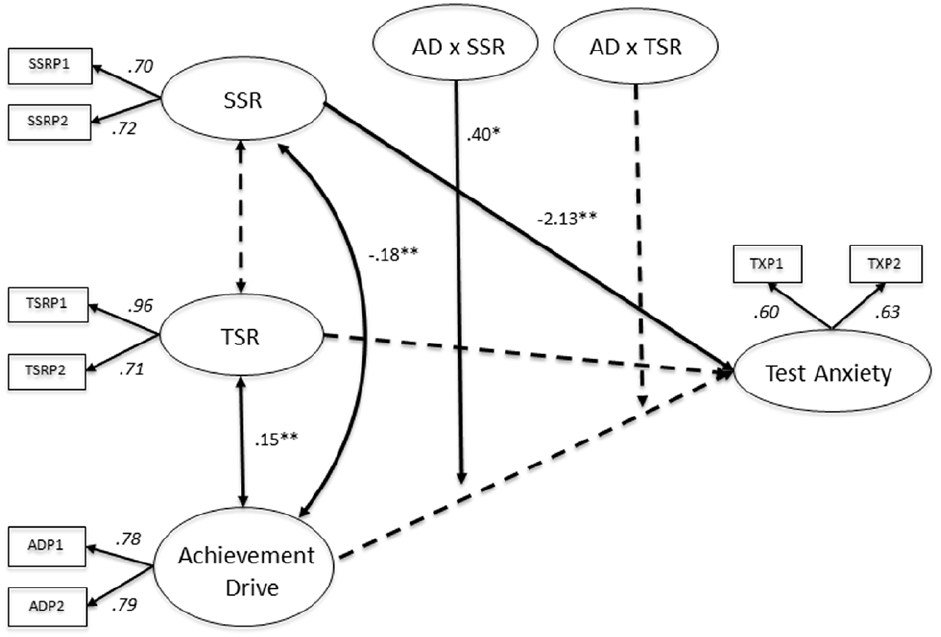
Figure 1. Multigroup latent moderated structural equations (MGLMS) for the Canadian sample. Significant effects are shown as unstandardized coefficients (B), bold pathways are significant at *p < 0.05, **p < 0.001; dotted pathways are not significant. Factor loadings are standardized (based on the standardized results of the weak measurement model seen as the final model only reports unstandardized results). TSR, teacher–student relationships; SSR, student–student relationships; AD, achievement drive.
As Figure 2 illustrates, students with rather low quality SSR tend to report high levels of TX over the whole range of AD, with TX decreasing with increasing AD. In contrast, students with rather high SSR report substantially lower levels of TX. In this case TX practically does not vary with changing AD any more. Hence, the perception of high quality SSR buffers feelings of TX in students over the entire range of AD. In turn, students who report rather low quality relationships with their peers start off with higher levels of TX, which decrease with increasing AD but remain clearly above TX levels of students with higher SSR. In conclusion, SSR buffer the association of AD and TX for Canadian students, independent of their levels of AD.
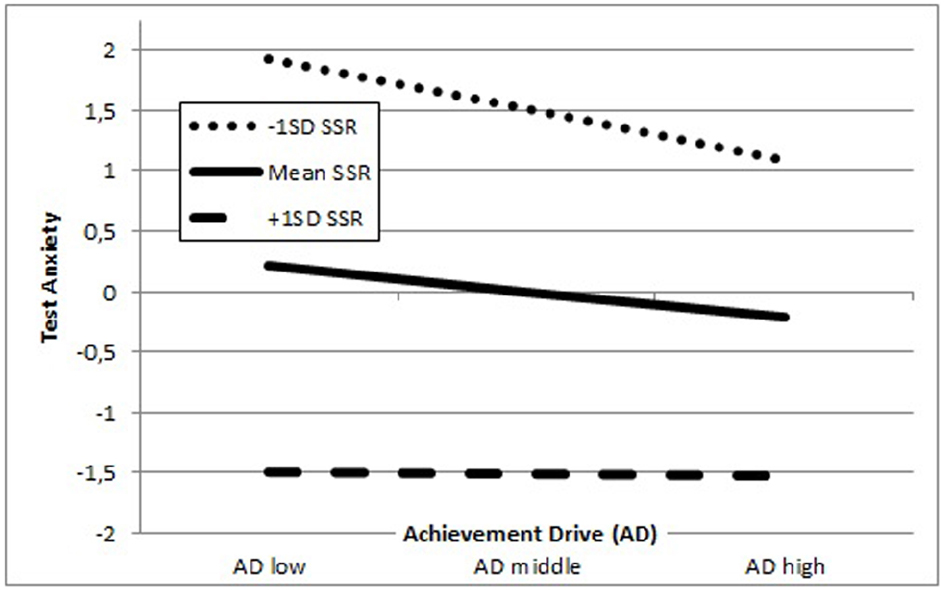
Figure 2. Representation of student–student relationships (SSR) as moderator in the association of achievement drive (AD) and test anxiety (TX) for Canadian secondary school students; the Y-axis measures test anxiety and the X-axis indicates achievement drive.
When investigating the moderating role of social relationships among German secondary school students, TSR emerged as moderator (B = –0.21, SE = 0.11, p < 0.05), while SSR did not moderate the association between AD and TX. Additional direct effects can be derived from the MGLMS 1 for German secondary school students (see Figure 3). In detail, AD is positively related to TX (B = 0.91, SE = 0.46, p < 0.05), indicating that students oriented to achieve also show higher levels of TX.
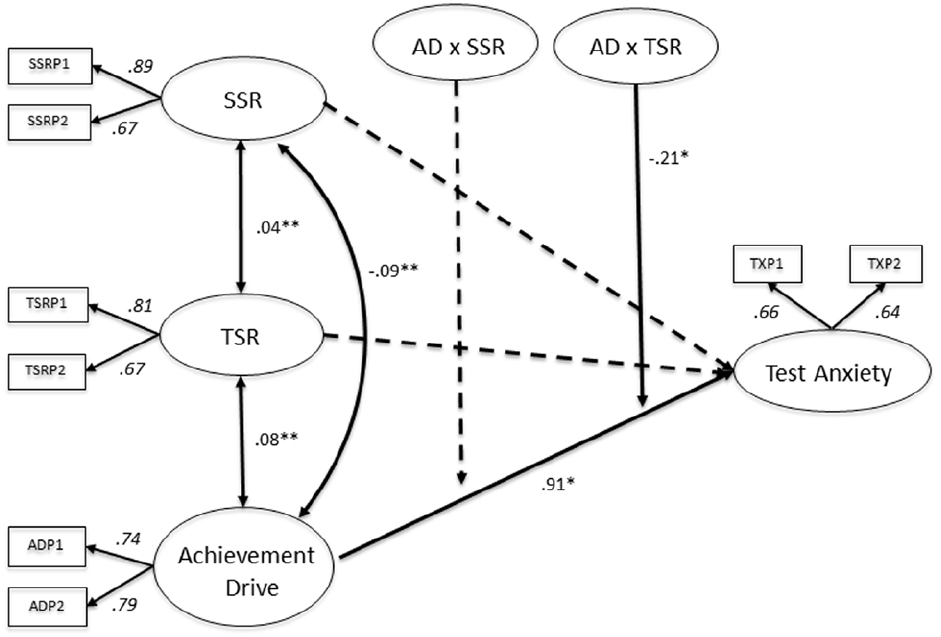
Figure 3. Multigroup latent moderated structural equations (MGLMS) for the German sample. Significant effects shown as unstandardized coefficients (B), bold pathways are significant at *p < 0.05, **p < 0.001; dotted pathways are not significant. Factor loadings are standardized (based on the standardized results of the weak measurement model seen as the final model only reports unstandardized results). TSR, teacher–student relationships; SSR, student–student relationships; AD, achievement drive.
The results depicted in Figure 4 indicate that German secondary school students who report low AD and high quality TSR experience increased TX compared to students who have a low AD and low quality TSR. With increasing AD the reported levels of TX increase, irrespective of the quality of TSR, while the slopes of all student groups are similar. In summary, TSR act as moderator in the association between AD and TX, however it cannot be interpreted as a buffer.
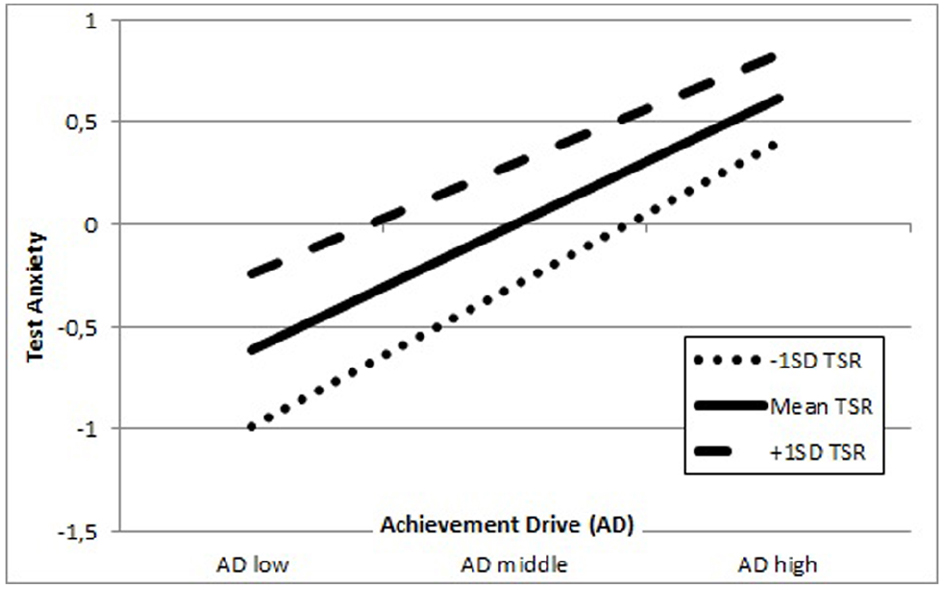
Figure 4. Representation of teacher–student relationships (TSR) as moderator in the association between achievement drive (AD) and test anxiety (TX) among German secondary school students; the Y-axis measures test anxiety and the X-axis indicates achievement drive.
Multigroup Latent Moderated Structural Equation 2 (MGLMS 2 with PPM and TPM as Moderators)
The hypothesis that PPM and TPM would moderate the association between AD and TX (MGLMS 2) among German and Canadian secondary school students was tested, following a similar procedure to that used for the MGLMS 1: interaction terms were added to the weak measurement model (MGLMS 2), which was compared to a model without interaction terms using the log-likelihood difference test to evaluate which model would fit the data best. Having reached a level of significance [χ2(4) = 11.93, p < 0.05] the model with interaction terms (MGLMS 2) was favored.
Upon examining the Canadian data for potential moderators, TPM were found to moderate the association between AD and TX (B = –0.73, SE = 0.28, p < 0.05). Furthermore, the MGLMS 2 revealed significant direct effects (Figure 5). For Canadian students, AD is related to TX (B = 0.25, SE = 0.12, p < 0.05), indicating that the more students are oriented toward achievement, the more they report of TX. Additionally, TPM and TX are significantly related (B = 0.43, SE = 0.21, p < 0.05). Hence, students who depend on teachers in their role as motivators tend to have high TX levels.
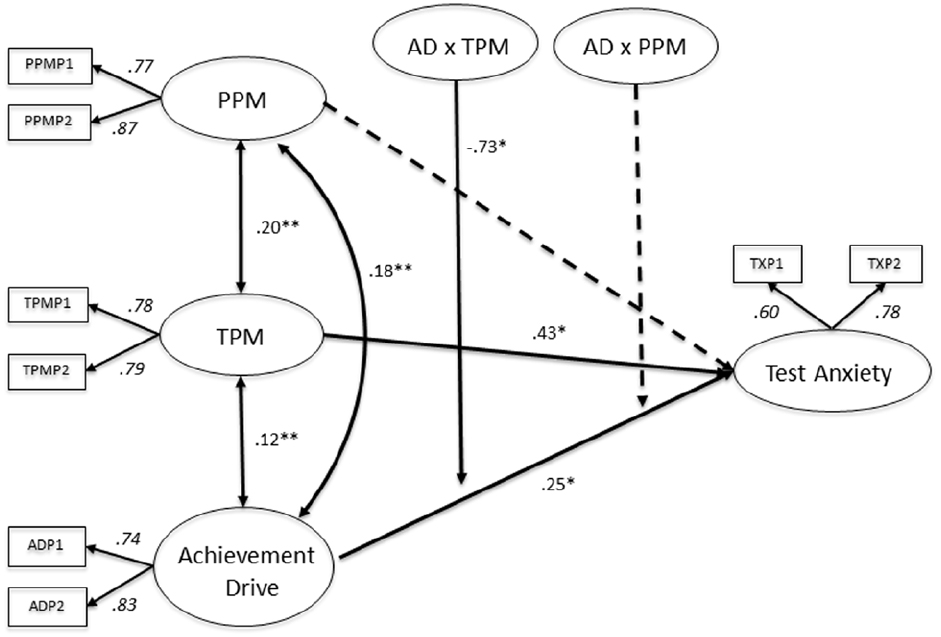
Figure 5. Multigroup latent moderated structural equations (MGLMS) for the Canadian sample. Significant effects shown as unstandardized coefficients (B), bold pathways are significant at *p < 0.05, **p < 0.001; dotted pathways are not significant. Factor loadings are standardized (based on the standardized results of the weak measurement model seen as the final model only reports unstandardized results). PPM, peers as positive motivators; TPM, teachers as positive motivators; AD, achievement drive.
As depicted in Figure 6, students scoring low on AD and low on TPM also report low on TX. Whereas, students who report low AD while relying on their teachers as a source of motivation tend to have higher levels of TX. With increasing AD the reported levels of TX increase for students with average and below average TPM. In contrast, levels of TX do not increase with higher AD for students with a high level of TPM. There is a trend toward lower TX with increasing AD for this subgroup of students. In summary, the tendency of increasing levels of TX with increasing AD (see Figure 5, for the direct effect) is neutralized and to some extend reversed by a perception of teachers acting as positive motivators, thus displaying nicely the buffering effect of TPM.
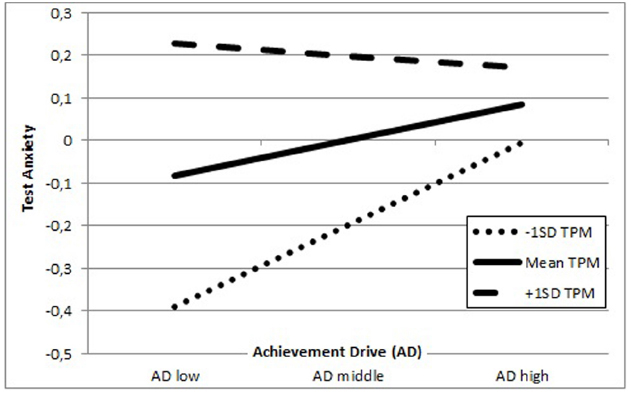
Figure 6. Representation of teachers as positive motivators (TPM) as moderator in the association between achievement drive (AD) and test anxiety (TX) among Canadian secondary school students; the Y-axis shows test anxiety and the X-axis shows achievement drive.
Among German students, neither TPM nor PPM were found to moderate the association between AD and TX (Figure 7). Direct effects of the MGLMS 2 reveal a significant relationship between AD and TX (B = 0.15, SE = 0.05, p < 0.05). Similar to Canadian students, the more students are oriented toward achievement, the more they report of TX. Furthermore, there is a significant association between TPM and TX (B = 0.31, SE = 0.10, p < 0.05), indicating that students who depend on teachers in their role as motivators tend to have high TX levels.
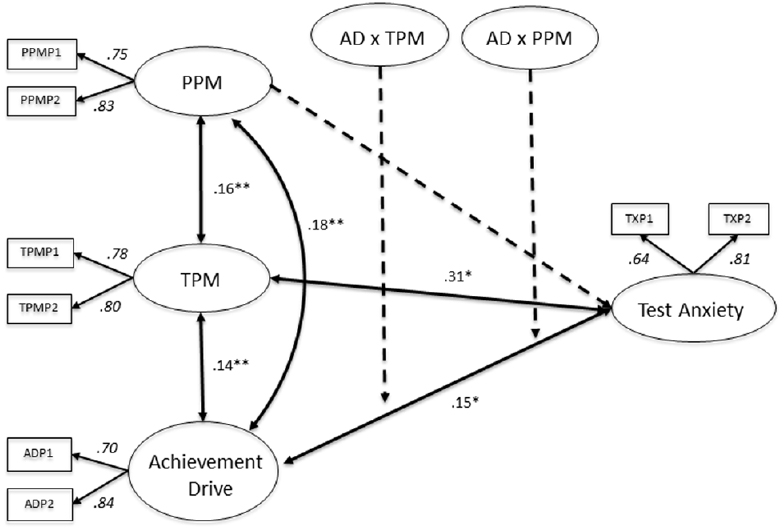
Figure 7. Multigroup latent moderated structural equations (MGLMS) for the German sample. Significant effects shown as unstandardized coefficients (B), bold pathways are significant at *p < 0.05, **p < 0.001; dotted pathways are not significant. Factor loadings are standardized (based on the standardized results of the weak measurement model seen as the final model only reports unstandardized results). PPM, peers as positive motivators; TPM, teachers as positive motivators; AD, achievement drive.
Discussion
The current study examined the relationship between AD and TX among Canadian and German secondary school students. Moreover, it explored the potential of socio-motivational relationships, such as SSR, TSR, PPM, and TPM, in buffering the association of AD and TX. To our knowledge, no such study was implemented to date. To test our original hypotheses, two MGLMS were examined.
The Buffering Role of Student–Student and Teacher–Student Relationships Among Canadian and German Secondary School Students
The first hypothesis was partially confirmed since SSR significantly moderated the relationship between AD and TX for Canadian students and TSR acted as moderator among German secondary school students. However, TSR did not moderate this association among Canadian students and SSR were not found to act as moderator among German students.
Canadian students who experienced high quality SSR, hence perceived the class environment as inclusive and supportive tended to report the lowest TX levels in comparison to students with average or below average SSR. Various studies have found that peers help students orient themselves along mutual educational expectations and trajectories, values, behavior as well as school adjustment (Hussong, 2002; Espelage et al., 2003; Kiuru et al., 2007; McGloin et al., 2014), while reciprocal enforcement and socialization takes place (Harris, 1995; Shin and Ryan, 2014). The prospect of gaining prestigious status is given in case peer values are being followed and certain behavior is being demonstrated (Rubin et al., 2006). Hence, peers’ academic success is an incentive for students to boost their academic performance (Kaufmann, 2007). In fact, with increasing levels of AD, students who felt part of a peer groups continued to report low TX levels as found among Canadian students. Hence, they perceived their SSR as protector against feelings of TX. In fact, students perceiving high quality peer relationships showed increased well-being, self-esteem, and decreased levels of TX (cf. Leary and Baumeister, 2000; Arnett, 2007; Flanagan et al., 2008; Hoferichter and Raufelder, 2014).
Canadian students who simultaneously experienced low AD and poor quality SSR reported high levels of TX. These students might not be as engaged in school and learning activities with their classmates as they may have different priorities other than to excel academically and to engage in social relationships with classmates. With increasing levels of AD, TX levels tended to decrease, however still being higher than of students with high quality SSR. It can be assumed that the student group reporting high achievement orientation and low quality SSR is more confident about their performance, hence showing lower TX scores than students with low AD and low quality peer relationships.
German students who reported low AD and simultaneously perceived a high quality relationship with their teachers, tended to report a high degree of TX in comparison to students with low AD and low quality TSR. However, even for the first mentioned student type the TX levels appeared to be below average. Students might feel that they have to fulfill teacher’s expectations, which in turn lead to higher levels of TX. In fact, research has indicated the existent link between expectations set by significant others and high levels of TX as well as low school performance (cf. Zeidner, 1998; Zohar, 1998; Gill and Reynolds, 1999). Students who perceive their relationships as obligatory under a stressful event do not benefit from these relationships (Bolger and Eckenrode, 1991). Furthermore, German students also reported increasing TX levels with increasing AD, irrespective of their relationship quality with teachers. This result was confirmed by the significant positive association between AD and TX. Numerous research indicates that the desire to achieve is accompanied by the fear of failure (Hodapp and Benson, 1997; Zeidner, 1998; Elliot and McGregor, 1999) and pressure to perform (cf. Atkinson, 1974; Singh, 2011), while in turn the latter represent the main stressors in daily school life (Seiffge-Krenke, 1995).
In summary, SSR buffered feelings of TX related to AD among Canadian students, while for German students their TSR acted as moderator but intensified feelings of TX. Canadian teachers see the provision of teacher and peer support for students’ academic and personal development as well as the development of moral and civil values as constituting an integral part of their teaching profession (Hesse, 2004). In contrast, the TSR for German secondary school students can be described as rather impersonal (Hesse, 2004) and is characterized by an imbalance of power between students and teachers (Raufelder, 2007). This could explain why achievement oriented students with ranging quality of TSR tend to report high TX levels, while no pattern of mitigation deriving from TSR could be found.
The Buffering Role of Teachers as Positive Motivators Among Canadian Secondary School Students
The second hypothesis was also partially confirmed as TPM moderated the association between AD and TX among Canadian secondary school students only. Students with low AD who turned to their teachers for motivation, experienced higher TX levels compared to low achievement oriented students who did not rely on their teachers for motivation. Hence, students that gain their motivation from their relationships with teachers may feel pressured to meet teachers’ expectations in test situations (Hoferichter et al., 2014a). Further research indicates that students who mainly depend on teachers to feel motivated tend to report higher TX as well as negative social interactions, including behavioral problems at school (Pianta and Nimetz, 1991; Hamre and Pianta, 2001; Sabol and Pianta, 2012; Hoferichter and Raufelder, 2014). Other students who are neither eager to excel at school tasks nor do they turn to their teachers for their own motivation, are less test anxious. Seen as the prospect of attaining academic success and being able to relate to the teacher might not appeal to them, they might not be all that sensitive to scholastic matters in general. For students relying on their teachers to motivate them, levels of TX slightly decreased with increasing AD. In this case it is students’ relationships with their teachers that motivate them in school and thus buffer the effect of AD on TX. In addition to these findings, Williams (1980) found that high achieving students tend to identify with their teachers more than low achieving students. Seen as these students are eager to succeed, their motivating relationship with teachers dampens the development of TX. This finding supports the buffering hypothesis, according to which social relationships protect individuals from the detrimental effects of stressful situations, which in the current study are pressure to perform and the avoidance of failure as components of AD (Cohen and Wills, 1985; Stravynski and Boyer, 2001; Adams et al., 2011; Johnson et al., 2011). In fact, high achieving students who lack a motivating relationship with their teachers report higher TX with increasing AD as they do not profit from their teachers in this respect.
Further research would be well advised to evaluate other related aspects that might add to this model. For example, personality aspects such as neuroticism have been shown to be related to high anxiety levels (Chamorro-Premuzic et al., 2008) and TX in particular (Spielberger and Vagg, 1995; Fitch, 2004; Hoferichter and Raufelder, 2013), while conscientiousness and agreeableness are predictors of close and non-conflictual relationships (Zee et al., 2013). Furthermore, social exclusion and feelings of isolation and loneliness are all factors that might contribute to the development of TX (Lee and Robbins, 1998; Gaspar de Matos et al., 2003; Bukowski et al., 2010).
Conclusion
In summary, this study reveals the qualitative impact of socio-motivational relationships on secondary school students’ AD and TX measured in Canada and Germany. This study provides a model of key interactions in the school context that work to support academic performances and alleviate negative outcomes such as TX. In particular, this study reveals how TSR, SSR, and TPM can lead to contradictory outcomes depending on students’ attitude toward AD. Moreover, these variables and their respective effects may vary across nations, in this case Canada and Germany. The contradicting buffering effects of socio-motivational relationships present themselves as two sides of the same coin and contribute to cross-national research. For instance, in the German sample high quality TSR do not protect against TX among achievement oriented students but contribute to a further increase of TX. Yet in Canada, teachers perceived as positive motivators protect achievement oriented students from feeling test anxious. Additionally, among Canadian students, SSR buffer feelings of TX.
The results of this study may be of use to teachers and educators by helping them alleviate students’ TX through careful consideration of individual differences and increased awareness of group dynamics and team spirit in school, which are founded on socio-motivational relationships. This study aims to disentangle the relationship between AD and TX by considering the role of socio-motivational relationships among Canadian and German secondary school students. Its results address the alarming trend observed by Schab (1991) among students of the Western hemisphere: students mention fear of failure as being the most common reason for cheating on tests and homework, while viewing dishonesty as a necessity and attributing successful career paths to fraudulent activities. In the long term, the promotion of competition and egocentric activities as opposed to cooperation with peers seems to remain a dominant trend in contemporary educational models. McClelland (1961) already identified this trend in his often cited work on the “Achieving Society,” which has not lost its validity in the 50 years since its original publication (McClelland, 2010).
The trend to surpass competitors by all means may be deeply rooted in contemporary Western societies and might have contributed to the general increment of school-related anxiety observed over the last decades (Spielberger and Rickman, 1990; Twenge, 2000). To counteract this trend, socio-motivational relationships may buffer TX related to AD as observed in the case of Canadian students who are oriented toward teachers acting as motivators as well as for those who report high quality SSR. With the variables studied, the buffering role of socio-motivational relationships for German students could not be established as it was established for Canadian students, because German students, perceiving high and low quality TSR displayed increasing TX levels with increasing AD. No moderator has been found in Germany to mitigate feelings of TX related to AD.
Strengths, Limitations, and Future Directions
This study compares the buffering effect of socio-motivational relationships in the association between AD and TX among Canadian and German students. By disclosing both possible buffering outcomes, i.e., intensifying or dampening TX that emerges from AD, the findings contribute to the literature and provide practical implications for schools. The buffering hypothesis proposed by Cohen and Wills (1985), which assumes that social relationships generally mitigate stressful situations, is hereby extended. The current study reveals the dual effect of socio-motivational relationships in school contexts, which function as buffers in the interplay of AD and TX, varying across Canada and Germany. This study follows a contextual and cross-national approach, which has rarely been used in the disciplines of education and psychology (cf. Markus and Kitayama, 1991; Bodas and Ollendick, 2005; Shernoff and Schmidt, 2008), by acknowledging socio-motivational relationships as potential buffers among Canadian and German students. Readers should be aware of the current study’s limitation when interpreting its results. The study applies to adolescent students between 12 and 16 years of age from Quebéc and Brandenburg, who commented on their socio-motivational relationships with their teachers and peers, their drive for achievement, and TX. Due to the cross-sectional nature of our data, causal effects must not be derived from the results provided.
With our study, we hope to invoke further contextual and cross-national studies, as we believe this approach to be particularly fruitful to the field of education and psychology. Prospective studies may build on this study by including different age groups (e.g., elementary students) from various countries (e.g., China, South Africa, Russia, etc.) and therefore accounting for different educational systems, informed by many sources (reports from teachers, peers, parents, etc.), and following a longitudinal design with multiple measurement points over time.
Conflict of Interest Statement
The authors declare that the research was conducted in the absence of any commercial or financial relationships that could be construed as a potential conflict of interest.
Acknowledgments
The research has been funded by the Volkswagen Foundation (II/84452) as well as by the Konrad-Adenauer-Foundation.
References
Adams, R. E., Santo, J. B., and Bukowski, W. M. (2011). The presence of a best friend buffers the effects of negative experiences. Dev. Psychol. 47, 1786–1791. doi: 10.1037/a0025401
Adler, A., and Brett, C. (1998). Social Interest: Adler’s Key to the Meaning of Life. Oxford: Oneworld Publications.
Ames, C. (1992). Classrooms: goals, structures, and student motivation. J. Educ. Psychol. 84, 261–271. doi: 10.1037/0022-0663.84.3.261
Anderman, E. M., Griesinger, T., and Westerfield, G. (1998). Motivation and cheating during early adolescence. J. Educ. Psychol. 90, 84–93. doi: 10.1037/0022-0663.90.1.84
Areepattamannil, S. (2012). Mediational role of academic motivation in the association between school self-concept and school achievement among Indian adolescents in Canada and India. Soc. Psychol. Educ. 15, 367–386. doi: 10.1007/s11218-012-9187-1
Arnett, J. J. (2007). Emerging adulthood, a 21st century theory: a rejoinder to Hendry and Kloep. Child Dev. Perspect. 1, 80–82. doi: 10.1111/j.1750-8606.2007.00018.x
Atkinson, J. W. (1957). Motivational determinants of risk-taking behavior. Psychol. Rev. 64, 359–412. doi: 10.1037/h0043445
Atkinson, J. W. (1974). “The mainstreams of achievement oriented activity,” in Motivation and Achievement, eds J. W. Atkinson and J. O. Raynor (Washington, DC: Winston), 11–39.
Bandalos, D. L. (2002). The effects of item parceling on goodness-of-fit and parameter estimate bias in structural equation modeling. Struct. Equ. Modeling 9, 78–102. doi: 10.1207/S15328007SEM0901_5
Bandalos, D. L., and Finney, S. J. (2001). “Item parceling issues in structural equation modeling,” in Advanced Structural Equation Modeling: New Developments and Techniques, eds G. A. Marcoulides and R. E. Schumacker (Mahwah, NJ: Lawrence Erlbaum Associates, Inc.), 78–102.
Beckmann, H.-K. (2000). “Lehrer(aus)bildung in Deutschland: Kontinuität, Wandel und Strukturprobleme [Teacher training in Germany: continuity, change and structural problems],” in Aktuelle Schulsysteme: Portugal, Kroatien, Marokko, USA, Niederlande, Deutschland, Vol. 59, ed. P. H. Heidelberg (Heidelberg: Institut für Weiterbildung), 40–58.
Biggs, B. K., Nelson, J. M., and Sampilo, M. L. (2010). Peer relations in the anxiety-depression link: test of a mediation model. Anxiety Stress Coping 23, 431–447. doi: 10.1080/10615800903406543
Bodas, J., and Ollendick, T. H. (2005). Test anxiety: a cross-cultural perspective. Clin. Child Fam. Psychol. Rev. 8, 65–88. doi: 10.1007/s10567-005-2342-x
Bolger, N., and Eckenrode, J. (1991). Social relationships, personality, and anxiety during a major stressful event. J. Pers. Soc. Psychol. 61, 440–449. doi: 10.1037/0022-3514.61.3.440
Boykin, A. W., Tyler, K. M., and Miller, O. (2005). In search of cultural themes and their expressions in the dynamics of classroom life. Urban Educ. 40, 521–549. doi: 10.1177/0042085905278179
Buhs, E. S., Ladd, G. W., and Herald, S. L. (2006). Peer exclusion and victimization: processes that mediate the relation between peer group rejection and children’s classroom engagement and achievement? J. Educ. Psychol. 98, 1–13. doi: 10.1037/0022-0663.98.1.1
Bukowski, W. M., Laursen, B., and Hoza, B. (2010). The snowball effect: friendship moderates escalations in depressed affect among avoidant and excluded children. Dev. Psychopathol. 22, 749–757. doi: 10.1017/S095457941000043X
Bünger, S., and Raufelder, D. (2014). Moderiert die soziale Kompetenz adoleszenter Schüler den Zusammenhang zwischen ihren schulischen Peer-Beziehungen und ihrer Motivation? [Does social competence of adolescent students moderate the link between their peer relationships and motivation?] Diskurs Kindheits Jugendforschung 9, 337–351. doi: 10.2378/peu2014.art24d
Cavanaugh, A. M., and Buehler, C. (2015). Adolescent loneliness and social anxiety: the role of multiple sources of support. J. Soc. Pers. Relationsh. 23, 1–22. doi: 10.1177/0265407514567837
Chamorro-Premuzic, T., Ahmetoglu, G., and Furnham, A. (2008). Little more than personality: dispositional determinants of test anxiety (the Big Five, core self-evaluations, and self-assessed intelligence). Learn. Indiv. Differ. 18, 258–263. doi: 10.1016/j.lindif.2007.09.002
Cohen, S., and Wills, T. A. (1985). Stress, social support, and the buffering hypothesis. Psychol. Bull. 98, 310–357. doi: 10.1037/0033-2909.98.2.310
Cortina, K. S. (2008). “Leistungsängstlichkeit [performance anxiety],” in Handbuch der Pädagogischen Psychologie, Vol. 1, eds W. Schneider and M. Hasselhorn (Göttingen: Hogrefe), 50–61.
Covington, M. V. (1992). Making the Grade: A Self-Worth Perspective on Motivation and School Reform. Cambridge: Cambridge University Press.
Covington, M. V., and Omelich, C. L. (1988). Achievement dynamics: the interaction of motives, cognitions, and emotions over time. Anxiety Stress Coping 1, 165–183. doi: 10.1080/08917778808248717
De Castella, K., Byrne, D., Covington, M., and Graesser, A. C. (2013). Unmotivated or motivated to fail? A cross-cultural study of achievement motivation, fear of failure, and student disengagement. J. Educ. Psychol. 105, 861–880. doi: 10.1037/a0032464
Dowson, M., and McInerney, D. M. (2003). What do students say about their motivational goals?: towards a more complex and dynamic perspective on student motivation. Contemp. Educ. Psychol. 28, 91–113. doi: 10.1016/S0361-476X(02)00010-3
Eccles, J. S., and Roeser, R. W. (2011). Schools as developmental contexts during adolescence. J. Res. Adolesc. 21, 225–241. doi: 10.1111/j.1532-7795.2010.00725.x
Eccles, J. S., Wigfield, A., and Schiefele, U. (1998). “Motivation to succeed,” in Handbook of Child Psychology, eds W. Damon and N. Eisenberg (New York, NY: Wiley), 1017–1095.
Elliot, A. J. (1999). Approach and avoidance motivation and achievement goals. Educ. Psychol. 34, 169–189. doi: 10.1207/s15326985ep3403_3
Elliot, A. J., and McGregor, H. A. (1999). Test anxiety and the hierarchical model of approach and avoidance achievement motivation. J. Pers. Soc. Psychol. 76, 628–644. doi: 10.1037/0022-3514.76.4.628
Elliot, A. J., McGregor, H. A., and Gable, S. (1999). Achievement goals, study strategies, and exam performance: a mediational analysis. J. Educ. Psychol. 91, 549–563. doi: 10.1037/0022-0663.91.3.549
Espelage, D. L., Holt, M. K., and Henkel, R. R. (2003). Examination of peer-group contextual effects on aggression during early adolescence. Child Dev. 74, 205–220. doi: 10.1111/1467-8624.00531
Fitch, B. D. (2004). A Test of The Relationship Between Personality Traits and Test Anxiety. Ph.D. thesis, Fielding Graduate University, Santa Barbara, CA.
Flanagan, K. S., Erath, S. A., and Bierman, K. L. (2008). Unique associations between peer relationships and social anxiety in early adolescence. J. Clin. Child Adoles. Psychol. 37, 759–769. doi: 10.1080/15374410802359700
Frydenberg, E. (ed.). (2002). Beyond Coping: Meeting Goals, Visions, and. (Challenges). New York, NY: Oxford University Press.
Gaspar de Matos, M., Barrett, P., Dadds, M., and Shortt, A. (2003). Anxiety, depression, and peer relationships during adolescence: results from the Portuguese national health behaviour in school-aged children survey. Eur. J. Psychol. Educ. 18, 3–14. doi: 10.1007/BF03173600
Gheen, M. H., and Midgley, C. (1999). “I’d rather not do it the hard way”: student and classroom characteristics relating to eighth graders’ avoidance of academic challenge. Paper Presented at the Annual Meeting of the American Educational Research Association Meeting, Montreal, QC.
Gill, S., and Reynolds, A. J. (1999). Educational expectations and school achievement of urban African American Children. J. Sch. Psychol. 37, 403–424. doi: 10.1016/S0022-4405(99)00027-8
Graudenz, I., and Randoll, D. (1997). So dänisch wie möglich, so deutsch wie nötig? Eine vergleichende Untersuchung zur Wahrnehmung von Schule durch Abiturienten [As Danish as possible, so German as necessary? A comparative study of the perception of school through high school seniors]. Frankfurt: Böhlau.
Grills, A. E., and Ollendick, T. H. (2002). Peer victimization, global self-worth, and anxiety in middle school children. J. Clin. Child Adolesc. Psychol. 31, 59–68. doi: 10.1207/S15374424JCCP3101_08
Hamre, B. K., and Pianta, R. C. (2001). Early teacher-child relationships and the trajectory of children’s school outcomes through eighth grade. Child Dev. 72, 625–638. doi: 10.1111/1467-8624.00301
Harackiewicz, J. M., Barron, K. E., Tauer, J. M., and Elliot, A. J. (2002). Predicting success in college: a longitudinal study of achievement goals and ability measures as predictors of interest and performance from freshman year through graduation. J. Educ. Psychol. 94, 562–575. doi: 10.1037/0022-0663.94.3.562
Harris, J. R. (1995). Where is the child’s environment? A group socialization theory of development. Psychol. Rev. 102, 458–489. doi: 10.1037/0033-295X.102.3.458
Harter, S. (1996). “Teacher and classmate influences on scholastic motivation, self-esteem, and level of voice in adolescents,” in Social Motivation—Understanding Children’s School Adjustment, eds J. Juvonen and K. Wentzel (Cambridge: University Press), 11–42.
Hesse, H.-G. (2004). “Values and attitudes and their influence on education,” in Conditions of School Performance in Seven Countries. A Quest for Understanding the International Variation of PISA Results, eds H. Döbert, E. Klieme, and W. Sroka (Münster: Waxmann), 302–304.
Hodapp, V., and Benson, J. (1997). The multidimensionality of test anxiety: a test of different models. Anxiety Stress Coping 10, 219–244. doi: 10.1080/10615809708249302
Hoferichter, F., and Raufelder, D. (2013). Examining the role of social relationships in the association between neuroticism and test anxiety—results from a study with German secondary school students. Educ. Psychol. 33, 1–18. doi: 10.1080/01443410.2013.849326
Hoferichter, F., and Raufelder, D. (2014). “Ein Modell inter-individueller Unterschiede sozio-motivationaler Beziehungen von Sekundarschülern mit ihren Peers und Lehrern [A model of inter-individual differences, socio-motivational relationships of secondary school students with their peers and teachers],” in Beziehungen in Schule und Unterricht—Teil 3 Soziale Beziehungen im Kontext von Motivation und Leistung, Vol. 3, Reihe Theorie und Praxis der Schulpädagogik Band 25, eds C. Tillack, J. Fetzer, and D. Raufelder (Immenhausen: Prolog), 170–200.
Hoferichter, F., Raufelder, D., and Eid, M. (2014a). The mediating role of socio-motivational relationships in the interplay of perceived stress, neuroticism, and test anxiety among adolescent students. Psychol. Sch. 51, 736–752. doi: 10.1002/pits.21778
Hoferichter, F., Raufelder, D., Eid, M., and Bukowski, W. (2014b). Knowledge transfer or social competence?—a comparison of German and Canadian adolescent students on their socio-motivational relationships in school. Sch. Psychol. Int. 35, 627–648. doi: 10.1177/0143034314552345
Hoferichter, F., Raufelder, D., Ringeisen, T., Rohrmann, S., and Bukowski, W. M. (2015). Assessing the multi-faceted nature of test anxiety among secondary students: an English version of the German Test Anxiety Questionnaire: PAF-E. J. Psychol. doi: 10.1080/00223980.2015.1087374 [Epub ahead of print].
Hu, L. T., and Bentler, P. M. (1999). Cutoff criteria for fit indexes in covariance structural analysis: Conventional criteria versus new alternatives. Struct. Equ. Modeling 6, 1–55. doi: 10.1080/10705519909540118
Hurrelmann, K. (2006). Einführung in die Sozialisationstheorie [Introduction to the theory of socialization]. Weinheim: Beltz.
Hussong, A. M. (2002). Differentiating peer contexts and risk for adolescent substance use. J. Youth Adolesc. 31, 207–220. doi: 10.1023/A:1015085203097
Johnson, J., Wood, A. M., Gooding, P., Taylor, P. J., and Tarrier, N. (2011). Resilience to suicidality: the buffering hypothesis. Clin. Psychol. Rev. 31, 563–591. doi: 10.1016/j.cpr.2010.12.007
Kaplan, A., and Maehr, M. L. (2007). The contributions and prospects of goal orientation theory. Educ. Psychol. Rev. 19, 141–184. doi: 10.1007/s10648-006-9012-5
Kaufmann, A. (2007). “Merkmale und Einstellungen von Schülern [Characteristics and attitudes of students],” in Kompetenzaufbau und Laufbahnen im Schulsystem. Ergebnise einer Längssschnittuntersuchung an Grundschulen, ed. H. Ditton (Münster: Waxmann), 117–143.
Kinga, R. B., and McInerney, D. M. (2014). Culture’s consequences on student motivation: capturing cross-cultural universality and variability through personal investment Theory. Educ. Psychol. 49, 175–198. doi: 10.1080/00461520.2014.926813
Kiuru, N., Aunola, K., Vuori, J., and Nurmi, J. E. (2007). The role of peer groups in adolescents’ educational expectations and adjustment. J. Youth Adolesc. 36, 995–1009.
Klein, A. (2000). Moderatormodelle. Verfahren zur Analyse von Moderatoreffekten in Strukturgleichungsmodellen [Moderator models. Methods for the analysis of moderator effects in structural equation models]. Hamburg: Dr. Kovac.
Klein, A., and Moosbrugger, H. (2000). Maximum likelihood estimation of latent interaction effects with the LMS method. Psychometrika 65, 457–474. doi: 10.1007/BF02296338
Klein, A. G., and Muthén, B. O. (2007). Quasi maximum likelihood estimation of structural equation models with multiple interaction and quadratic effects. Multivariate Behav. Res. 42, 647–673. doi: 10.1080/00273170701710205
Komarraju, M., Karau, S. J., Schmeck, R. R., and Avdic, A. (2011). The Big Five personality traits, learning styles, and academic achievement. Pers. Individ. Dif. 51, 472–477. doi: 10.1016/j.paid.2011.04.019
Kunter, M., Schümer, G., Artelt, C., Baumert, J., Klieme, E., Neubrand, M., et al. (2002). Dokumentation der Erhebungsinstrumente [Documentation of the data collection instruments], Vol. 72. Berlin: Max-Planck-Institut für Bildungsforschung.
Leary, M. R., and Baumeister, R. F. (2000). “The nature and function of self-esteem: sociometer theory,” in Advances in Experimental Social Psychology, Vol. 32, ed. M. P. Zanna (San Diego, CA: Academic Press), 1–62.
Lee, R. M., Keough, K. A., and Sexton, J. D. (2002). Social connectedness, social appraisal, and perceived stress in college women and men. J. Couns. Devel. 80, 355–361. doi: 10.1002/j.1556-6678.2002.tb00200.x
Lee, R. M., and Robbins, S. B. (1998). The relationship between social connectedness and anxiety, self-esteem, and social identity. J. Couns. Psychol. 45, 338–345. doi: 10.1037/0022-0167.45.3.338
Levy, I., Kaplan, A., and Patrick, H. (2004). Early adolescents’ achievement goals, social status, and attitudes towards cooperation with peers. Soc. Psychol. Educ. 7, 127–159. doi: 10.1023/B:SPOE.0000018547.08294.b6
Little, T. D., Cunningham, W. A., Shahar, G., and Widaman, K. F. (2002). To parcel or not to parcel: exploring the question, weighing the merits. Struc. Equ. Modeling 9, 151–173. doi: 10.1207/S15328007SEM0902_1
Lowe, P. A., Grumbein, M. J., and Raad, J. M. (2011). Examination of the psychometric properties of the Test Anxiety Scale for Elementary Students (TAS–E) Scores. J. Psychoeduc. Assess. 29, 503–514. doi: 10.1177/0734282910395894
March, H. W., and Craven, R. G. (2005). “A reciprocal effects model of the causal ordering of self-concept and achievement. New support for the benefits of enhancing self-concept,” in International Advances in Self Research: New Frontiers for Self Research, eds H. W. Marsh, R. G. Craven, and D. M. McInerney (Greenwich, CT: Information Age), 15–52.
Markus, H. R., and Kitayama, S. (1991). Culture and the self: implications for cognition, emotion, and motivation. Psychol. Rev. 98, 224–253. doi: 10.1037/0033-295X.98.2.224
Marsh, H. W., Hau, K.-T., Balla, J. R., and Grayson, D. (1998). Is more ever too much? The number of indicators per factor in confirmatory factor analysis. Multivariate Behav. Res. 33, 181–220. doi: 10.1207/s15327906mbr3302_1
Marsh, H. W., Lüdtke, O., Nagengast, B., Morin, A. J. S., and Von Davier, M. (2013). Why item parcels are (almost) never appropriate: two wrongs do not make a right- camouflaging misspecification with item parcels in CFA models. Psychol. Methods 18, 257–284. doi: 10.1037/a0032773
McClelland, D. C., Atkinson, J. W., Clark, R., and Lowell, E. (1976). The Achievement Motive. New York, NY: Appleton, Century, Crofts.
McGloin, J., Sullivan, C., and Thomas, K. (2014). Peer influence and context: the interdependence of friendship groups, schoolmates and network density in predicting substance use. J. Youth Adolesc. 43, 1436–1452. doi: 10.1007/s10964-014-0126-7
Meijer, J. (2001). Learning potential and anxious tendency: test anxiety as a bias factor in educational testing. Anxiety Stress Coping 14, 337–362. doi: 10.1080/10615800108248361
Midgley, C. (1993). “Motivation and middle level schools,” in Advances in Motivation and Achievement, Vol. 8, eds P. Pintrich and M. L. Maehr (Greenwich, CT: JAI Press), 219–276.
Midgley, C., Kaplan, A., and Middleton, M. J. (2001). Performance-approach goals: Good for what, for whom, under what circumstances, and at what cost? J. Educ. Psychol. 93, 77–86. doi: 10.1037/0022-0663.93.1.77
Moosbrugger, H., Schermelleh-Engel, K., Kelava, A., and Klein, A. G. (2009). “Testing multiple nonlinear effects in structural equation modeling: a comparison of alternative estimation approaches,” in Structural Equation Modelling in Educational Research: Concepts and Applications, eds T. Teo and M. S. Khine (Rotterdam, NL: Sense Publishers), 103–136.
Muthén, L. K., and Muthén, B. (1998–2013). Mplus User’s Guide. 7th Edn. Los Angeles, CA: Muthén & Muthén.
Nasser, F., and Wisenbaker, J. A. (2003). A Monte Carlo study investigating the impact of item parceling on measures of fit in confirmatory factor analysis. Educ. Psychol. Meas. 63, 729–757. doi: 10.1177/0013164403258228
Nicholls, J. G. (1984). Achievement motivation: conceptions of ability, subjective experience, task choice, and performance. Psychol. Rev. 91, 328–346. doi: 10.1037/0033-295X.91.3.328
Nicholls, J. G., and Miller, A. T. (1983). The differentiation of the concepts of difficulty and ability. Child Dev. 54, 951–959. doi: 10.2307/1129899
Pajares, F. (2007). “Culturalizing educational psychology,” in Culture, Motivation, and Learning: A Multicultural Per-Spective, eds F. Salili and R. Hoosain (Charlotte, NC: Information Age), 19–42.
Pekrun, R. (2000). “A social-cognitive, control-value theory of achievement emotions,” in Motivational Psychology of Human Development. Developing Motivation and Motivating Development, ed. J. Heckhausen (New York, NY: Elsevier), 143–164.
Pekrun, R. (2001). “Test anxiety and academic achievement,” in International Encyclopedia of the Social and Behavioral Sciences, 1st Edn, eds N. J. Smelser and P. B. Baltes (New York, NY: Elsevier), 15610–15614.
Perry, K. E., Donohue, K. M., and Weinstein, R. S. (2007). Teaching practices and the promotion of achievement and adjustment in first grade. J. Sch. Psychol. 45, 269–292. doi: 10.1016/j.jsp.2007.02.005
Petermann, F., and Winkel, S. (2007). FLM 7-13 Fragebogen zur Leistungsmotivation für Schüler der 7. bis 13. Klasse [FLM 7-13 Questionnaire about achievement motivation among students of grades 7 to 13]. Bern: Hogrefe.
Pianta, R. C., and Nimetz, S. L. (1991). Relationships between children and teachers: Associations with classroom and home behavior. J. Appl. Dev. Psychol. 12, 379–393. doi: 10.1016/0193-3973(91)90007-Q
Pintrich, P. R., and Schunk, D. H. (1996). Motivation in Education: Theory, Research, and Applications. Englewood Cliffs, NJ: Prentice-Hall.
Prats, D. C. (1990). The effects of forming miniscales on the construct validity of the test anxiety inventory. Paper Presented at the National Council of Measurement of Education, Boston.
Raufelder, D. (2007). Von Machtspielen zu Sympathiegesten. Das Verhältnis von Lehrern und Schülern im Bildungsprozess [Of power games to sympathy gestures. The relationship of teachers and students in the educational process]. Marburg: Tectum.
Raufelder, D., Drury, K., Jagenow, D., Hoferichter, F., and Bukowski, W. (2013a). Development and validation of the Relationship and Motivation (REMO) scale to assess students’ perceptions of peers and teachers as motivators in adolescence. Learn. Indiv. Differ. 24, 182–189. doi: 10.1016/j.lindif.2013.01.001
Raufelder, D., Jagenow, D., Drury, K., and Hoferichter, F. (2013b). Social relationships and motivation in secondary school: four different motivation types. Learn. Indiv. Differ. 24, 89–95. doi: 10.1016/j.lindif.2012.12.002
Resnick, M. D., Harris, L. J., and Blum, R. W. (1993). The impact of caring and connectedness on adolescent health and well-being. J. Paediatr. Child Health 29, S3–S9. doi: 10.1111/j.1440-1754.1993.tb02257.x
Rubin, K. H., Bukowski, W. M., and Parker, J. (2006). “Peer interactions, relationships, and groups,” in Handbook of Child Psychology, Vol. 3, Social, Emotional, and Personality Development, eds N. Eisenberg, W. Damon, and R. M. Lerner (Hoboken, NJ: John Wiley & Sons), 197–219.
Rudasill, K. M., Gallagher, K. C., and White, J. M. (2010). Temperamental attention and activity, classroom emotional support, and academic achievement in third grade. J. Sch. Psychol. 48, 113–134. doi: 10.1016/j.jsp.2009.11.002
Sabol, T. J., and Pianta, R. C. (2012). Recent trends in research on teacher-child relationships. Attach. Hum. Dev. 14, 213–231. doi: 10.1080/14616734.2012.672262
Salili, F., Chiu, C.-Y., and Lai, S. (2001). “The influence of culture and context on students’ motivational orientation and performance,” in Student Motivation: The Culture and Context of Learning. Plenum Series on Human Exceptionality, eds F. Salili, C.-Y. Chiu, and Y.-Y. Hong (Dordrecht: Kluwer Academic Publishers), 221–247.
Satorra, A., and Bentler, P. M. (2001). A scaled difference chi-square test statistic for moment structure analysis. Psychometrika 66, 507–514. doi: 10.1007/BF02296192
Schab, F. (1991). Schooling without learning: thirty years of cheating in high school. Adolescence 26, 839–847.
Schwarzer, R. (2000). Streß, Angst und Handlungsregulation [Stress, anxiety and action regulation], Vol. 4. Stuttgart: Kohlhammer.
Selkirk, L. C., Bouchey, H. A., and Eccles, J. S. (2011). Interactions among domain-specific expectancies, values, and gender: predictors of test anxiety during early adolescence. J. Early Adolesc. 31, 361–389. doi: 10.1177/0272431610363156
Shernoff, D., and Schmidt, J. (2008). Further evidence of an engagement-achievement paradox among U.S. high school students. J. Youth Adolesc. 37, 564–580. doi: 10.1007/s10964-007-9241-z
Shin, H., and Ryan, A. (2014). Friendship networks and achievement goals: an examination of selection and influence processes and variations by gender. J. Youth Adolesc. 43, 1453–1464. doi: 10.1007/s10964-014-0132-9
Singh, K. (2011). Study of achievement motivation in relation to academic achievement of students. Int. J. Educ. Plan. Adm. 1, 161–171.
Spielberger, C. D., and Rickman, R. L. (1990). “Assessment of state and trait anxiety,” in Anxiety: Psychobiological and Clinical Perspectives, eds N. Sartorius, V. Andreoli, G. Cassano, L. Eisenberg, P. Kielkolt, P. Pancheri, et al. (New York, NY: Hemisphere Publishing), 69–83.
Spielberger, C. D., and Vagg, P. R. (eds). (1995). Test Anxiety: Theory, Assessment, and Treatment. Washington, DC: Taylor & Francis.
Steinmayr, R., and Spinath, B. (2008). Sex differences in school achievement: what are the roles of personality and achievement motivation? Eur. J. Pers. 22, 185–209. doi: 10.1002/per.676
Stankov, L. (2010). Unforgiving Confucian culture: a breeding ground for high academic achievement, test anxiety and self-doubt? Learn. Individ. Differ. 20, 555–563. doi: 10.1016/j.lindif.2010.05.003
Stravynski, A., and Boyer, R. (2001). Loneliness in relation to suicide ideation and parasuicide: a population-wide study. Suicide Life Threat. Behav. 31, 32–40.
Triandis, H. C. (1995). Individualism and Collectivism. New Directions in Social Psychology. Boulder, CO: Westview Press.
Twenge, J. M. (2000). The age of anxiety? The birth cohort change in anxiety and neuroticism, 1952–1993. J. Pers. Soc. Psychol. 79, 1007–1021. doi: 10.1037/0022-3514.79.6.1007
Tyler, K. M., Wade Boykin, A., and Walton, T. R. (2006). Cultural considerations in teachers’ perceptions of student classroom behavior and achievement. Teach. Teach. Educ. 22, 998–1005. doi: 10.1016/j.tate.2006.04.017
Unger, D., and Wandesman, A. (1985). The importance of neighbors: the social, cognitive and affective components of neighboring. Am. J. Community Psychol. 13, 139–170. doi: 10.1007/BF00905726
Urdan, T. C. (1997). “Achievement Goal Theory: past results, future directions,” in Advances in Motivation and Achievement, Vol. 10, eds M. L. Maehr and P. Pintrich (London: Jai Press), 99–141.
Urdan, T. C., and Schoenfelder, E. (2006). Classroom effects on student motivation: goal structures, social relationships, and competence beliefs. J. Sch. Psychol. 44, 331–349. doi: 10.1016/j.jsp.2006.04.003
Vitoroulis, I., Schneider, B. H., Cerviño Vasquez, C., del Pilar Soteras de Toro, M., and Santana Gonzáles, Y. (2012). Perceived parental and peer support in relation to Canadian, Cuban, and Spanish adolescents’ valuing of academics and intrinsic academic motivation. J. Cross Cult. Psychol. 43, 704–722. doi: 10.1177/0022022111405657
Wang, M., Haertel, G., and Walberg, H. (1993). Toward a knowledge base for school learning. Rev. Educ. Res. 63, 249–294. doi: 10.3102/00346543063003249
Wang, M.-T., and Eccles, J. S. (2013). School context, achievement motivation, and academic engagement: a longitudinal study of school engagement using a multidimensional perspective. Learn. Instr. 28, 12–23. doi: 10.1016/j.learninstruc.2013.04.002
Weinstein, R. S. (1998). “Promoting positive expectations in schooling,” in How Students Learn: Reforming Schools Through Learner-Centered Education, eds N. Lambert and B. McCombs (Washington, DC: American Psychological Association), 81–111.
Wentzel, K. R., Battle, A., Russell, S. L., and Looney, L. B. (2010). Social supports from teachers and peers as predictors of academic and social motivation. Contemp. Educ. Psychol. 35, 193–202. doi: 10.1016/j.cedpsych.2010.03.002
Wigfield, A., Eccles, J. S., Mac Iver, D., Reuman, D. A., and Midgley, C. (1991). Transitions during early adolescence: changes in children’s domain specific self-perceptions and general self-esteem across the transition to junior high school. Dev. Psychol. 27, 552–565. doi: 10.1037/0012-1649.27.4.552
Williams, P. (1980). Adolescent identification and academic achievement: reporting the awareness of similarity to role models. J. Youth Adolesc. 9, 315–321. doi: 10.1007/BF02087983
Wilson, D. N., and Lam, T. C. M. (2004). “Canada,” in Conditions of School Performance in Seven Countries. A Quest for Understanding the International Variation of PISA Results, eds H. Döbert, E. Klieme, and W. Sroka (Münster, Germany: Waxmann), 15–64.
Yuan, K.-H., and Bentler, P. M. (2004). On chi-square difference and z-tests in mean and covariance structure analysis when the base model is misspecified. Educ. Psychol. Meas. 64, 737–757. doi: 10.1177/0013164404264853
Zee, M., Koomen, H. M. Y., and Van der Veen, I. (2013). Student-teacher relationship quality and academic adjustment in upper elementary school: the role of student personality. J. Sch. Psychol. 51, 517–533. doi: 10.1016/j.jsp.2013.05.003
Keywords: achievement drive, German and Canadian secondary school students, multigroup latent moderated structural equations, socio-motivational relationships, test anxiety
Citation: Hoferichter F, Raufelder D and Eid M (2015) Socio-motivational moderators—two sides of the same coin? Testing the potential buffering role of socio-motivational relationships on achievement drive and test anxiety among German and Canadian secondary school students. Front. Psychol. 6:1675. doi: 10.3389/fpsyg.2015.01675
Received: 31 August 2015; Accepted: 16 October 2015;
Published: 31 October 2015.
Edited by:
Jesus De La Fuente, University of Almería, SpainReviewed by:
Guido Alessandri, Sapienza University of Rome, ItalyDave Putwain, Edge Hill University, UK
Copyright © 2015 Hoferichter, Raufelder and Eid. This is an open-access article distributed under the terms of the Creative Commons Attribution License (CC BY). The use, distribution or reproduction in other forums is permitted, provided the original author(s) or licensor are credited and that the original publication in this journal is cited, in accordance with accepted academic practice. No use, distribution or reproduction is permitted which does not comply with these terms.
*Correspondence: Frances Hoferichter, ZnJhbmNlcy5ob2ZlcmljaHRlckBmdS1iZXJsaW4uZGU=