 Rouwen Cañal-Bruland
- Department of Sport Psychology, Institute of Sport Science, Friedrich-Schiller-University Jena, Jena, Germany
Spotting the intentions of a pickpocket in a crowded environment may save a few dollars. If you are a police officer, then identifying a suspect who is pretending to reach for a wallet while actually pulling a gun can be a matter of life or death. These examples illustrate that detecting deceptive intentions from other persons' actions is of great practical importance in many social contexts. Although it is well known that humans can identify deceptive intentions based on bodily cues, our understanding of deception detection, however, is still quite limited, partly because a comprehensive theoretical framework of deception detection is lacking. This is different for pro-social human interactions like playing a piano duet. In this context, overarching and unifying explanations are available based on the concept of embodied simulation. Here I propose that embodied simulation is perhaps the most promising steppingstone to develop a comprehensive embodied theory of deception detection as well. Embodied simulation is typically construed as the interplay between action and perception and it also incorporates the interplay with cognition and emotion. In my view, integrating and studying motor, perceptual, cognitive and emotional processes is imperative to understand how deceptive intentions can be detected from human movements. This opinion paper aims at fleshing out this idea and providing some first suggestions and hypotheses on how to achieve the ultimate goal to develop an encompassing embodied theory of deception detection in (anti)social interactions.
To start with, deception can be defined as an act that aims to mislead an observer into making an incorrect judgment about the actor's (i.e., deceiver's) true action intention (Cañal-Bruland and Schmidt, 2009). To date most research on deception has been dedicated to detecting deceit in verbal communication (i.e., lying) (e.g., Bond et al., 1992; Frank and Ekman, 1997; Ekman et al., 1999); less research has been devoted to non-verbal cues in catching liars (e.g., Ekman and Friesen, 1969; Vrij, 2004, 2006); and, despite its obvious relevance, remarkably little research has been done to better understand the detection of deceptive intentions embodied in movements (e.g., Runeson and Frykholm, 1983; Cañal-Bruland and Schmidt, 2009; Sebanz and Shiffrar, 2009).
Since the pioneering work by Runeson and Frykholm (1983) it is commonly accepted that observers can distinguish between deceptive and non-deceptive intentions based on bodily cues. Their original study revealed that information conveyed by joint kinematics alone was not only sufficient to accurately judge the weight of a carried box but also to recognize whether the actor carrying the box intended to mislead the observer about the true weight of the box. Yet, despite Runeson and Frykholm's important finding, as well as recent work exploring expertise effects and neuronal mechanisms contributing to successful deception detection from bodily actions (e.g., Kunde et al., 2011; Brault et al., 2012; Tomeo et al., 2012; Mori and Shimada, 2013; Wright et al., 2013; Renden et al., 2014; Wright and Jackson, 2014), the underlying psychological processes that allow human observers to successfully recognize deceptive intentions from others' bodily actions remain largely unknown.
To unravel the psychological processes that allow human observers to successfully recognize deceptive actions from others' bodily actions, it is of paramount importance to develop and establish an encompassing theoretical framework to study and explain deception detection. A novel theoretical backdrop is necessary because in contrast to the study of pro-social human interactions (including joint actions such as playing a piano duet, see Sebanz et al., 2006), there is a definite need for such a theoretical framework to account for antisocial human interactions, in which human agents attempt to mislead and potentially harm others. This is particularly true for the field of deception detection.
Here it is proposed that the most promising way to develop a theory for deception detection is to start from recent theories of embodiment that have proven successful in explaining pro-social human interactions by focusing on the tight links between perception and action such as the common coding theory (Prinz, 1997; Hommel et al., 2001; Schütz-Bosbach and Prinz, 2007). These theories are groundbreaking in that they break away from the Cartesian view that perception and action constitute distinct entities. On the contrary, they argue that perceptual processes are grounded in the motor system in a way that action capabilities and intentions shape what we see and how we interpret what we see.
However, these ideas need be extended in order to establish an embodied theory of deception detection, because next to perceptual and motor influences on deception detection, other psychological processes may also contribute to antisocial human interactions such as cognitions (e.g., thoughts) and emotions (e.g., empathic feelings). Hence, I suggest to supplement existing perception-action theories with findings from social cognitive neuroscience pointing at the links between perception and action representations with cognitions and emotions (Gallese, 2001, 2003; Keysers and Gazzola, 2009). Key assumption of this idea is that the ability underlying the successful detection of deceptive action intentions in others' movements is rooted in embodied simulation (Freedberg and Gallese, 2007). Embodied simulation enables observers to (implicitly) activate their own internal representations of bodily states associated with the observed actions, emotions and cognitions (Freedberg and Gallese, 2007). I suggest that a deeper understanding of antisocial human interactions such as in deception detection can only be gained if we integrate not only the mapping of motor and perceptual representations, but also include the interplay between internal representations of bodily states with cognitions and emotions.
The concept of embodied simulation can unify motor, perceptual, cognitive and emotional processes into one integrative framework that has the potential to develop into a novel, comprehensive embodied theoretical framework for the exploration of deception detection (see Figure 1).
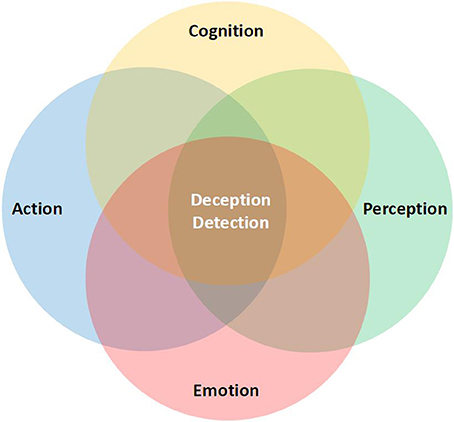
Figure 1. An embodied theoretical framework for the exploration of deception detection.
How can one test the assumptions and implications of this view? To start with, common-coding theory argues that the perception and production of (deceptive and non-deceptive) actions share common representations (Prinz, 1997; Hommel et al., 2001; Schütz-Bosbach and Prinz, 2007). Because perception and action are deemed tightly coupled by common representations, they can mutually induce each other. This reciprocal influence has been substantiated by neurophysiological studies that identified brain networks that respond to the observation as well as the production of an action (Di Pellegrino et al., 1992; Rizzolatti and Craighero, 2004). It follows that a high similarity between perceptual and motor representations promotes action perception. That is, observers are predicted to be perceptually better attuned to observed movements that form part of one's own motor repertoire, typically acquired through personal action experience (Schütz-Bosbach and Prinz, 2007). In other words, the more action experience an observer has accumulated with executing a specific movement, the better the perception of the same movement should be when executed by another person (referred to as the “motor experience hypothesis,” Cañal-Bruland et al., 2010). This contention has received empirical support from both behavioral studies (Knoblich and Flach, 2001; Loula et al., 2005; Casile and Giese, 2006; Cañal-Bruland et al., 2011, 2012) and brain imaging recordings (Calvo-Merino et al., 2005, 2006).
There is initial evidence that this hypothesis also holds true for deception detection. Sebanz and Shiffrar (2009) reported that expert basketball players outperformed novices in identifying fake pass movements when presented with short video clips but not with static images (see also Jackson et al., 2006; Cañal-Bruland and Schmidt, 2009; Cañal-Bruland et al., 2010). They also showed that experts maintained their superior performance when presented with point-light-animations (only displaying kinematic landmarks), while novices did not perform better than chance (see also Williams et al., 2009). These results indicate that the motor repertoire of an observer indeed plays a crucial role in deception detection.
As depicted in Figure 1, detecting deception from bodily cues by means of embodied simulation is not exclusively confined to the fundamental links between perception and action but also includes the inference of cognitive and emotional states. There is initial evidence for such interactions showing that knowledge about the likelihood of deceptive actions biases judgments about whether an observed movement may be deceptive or not (Cañal-Bruland and Schmidt, 2009; see also Wright et al., 2013; Mann et al., 2014).
Movements convey critical information (Johansson, 1973, 1976; for a review, see Blake and Shiffrar, 2007) that allow human observers to discriminate subtle movement differences (Cutting et al., 1978; Runeson and Frykholm, 1983; Bertenthal et al., 1985). A seminal experimental approach is to present participants with a subset of anatomical landmarks representing different joint centers of an actor as moving points of light, called point-light displays (PLDs; see Cañal-Bruland and Williams, 2010). Of particular relevance for embodied simulation is that based on such PLDs humans are able to recognize one's own identity (Beardsworth and Buckner, 1981; Jokisch et al., 2006), the identity of friends (Cutting and Kozlowski, 1977), gender (Pollick et al., 2005), and also to predict action intentions and movement effects (Abernethy et al., 2001; Huys et al., 2009; Williams et al., 2009), including the detection of deceptive action intentions (Runeson and Frykholm, 1983; Sebanz and Shiffrar, 2009). Perhaps even more relevant for the embodied simulation argument is that based on kinematics alone human observers can also accurately identify emotions like happiness and sadness (Dittrich et al., 1996; Atkinson et al., 2004) or discern expression intensities in dance movements (Sevdalis and Keller, 2012). Intriguingly, in a recent study by Sevdalis and Keller (2012) judgment accuracy was positively correlated with self-reported empathy indices. This underscores the role of emotions such as empathic feelings for judgments of observed movements and links directly to the convincing evidence that embodied simulation also accounts for how humans empathize with each other (Gallese, 2001; Gallese et al., 2004; de Vignemont and Singer, 2006).
To summarize, because (a) movements convey critical information for action recognition and the inference of cognitive and emotional states of human agents, and because (b) human observers are able to identify action intentions as well as cognitive and emotional states from others' bodily actions by means of embodied simulation, it seems imperative to explore the joint contributions of perceptual, motor, cognitive and emotional processes to deception detection, with the aim to develop an integrative embodied theory of deception detection. A promising way to do so is based on the following observation: if cognitions and emotions influence perception-action-informed judgments about deceptive action intentions, there are essentially two possible ways in which this could be effectuated: (1) either cognitions and emotions influence the perceptual sensitivity directly, which then eventually leads to different judgments, or (2) cognitions and emotions change, that is, shift the judgment criterion (independent of the perceptual sensitivity), thereby causing a judgment bias. Based on some preliminary findings from my own lab (Cañal-Bruland and Schmidt, 2009; Cañal-Bruland et al., 2015), I consider the latter more likely than the former. That is, I hypothesize that cognitions as well as emotions bias the judgments about rather than perception of deceptive actions. However, future research is needed to scrutinize these ideas and thereby improve our understanding of deception detection in action.
Author Contributions
The author confirms being the sole contributor of this work and approved it for publication.
Conflict of Interest Statement
The author declares that the research was conducted in the absence of any commercial or financial relationships that could be construed as a potential conflict of interest.
References
Abernethy, B., Gill, D. P., Parks, S. L., and Packer, S. T. (2001). Expertise and the perception of kinematic and situational probability information. Perception 30, 233–252. doi: 10.1068/p2872
Atkinson, A. P., Dittrich, W. H., Gemmell, A. J., and Young, A. W. (2004). Emotion perception from dynamic and static body expressions in point-light and full-light displays. Perception 33, 717–746. doi: 10.1068/p5096
Beardsworth, T., and Buckner, T. (1981). The ability to recognize oneself from a video recording of one's movement without one's body. Bull. Psychon. Soc. 18, 19–22. doi: 10.3758/BF03333558
Bertenthal, B. I., Proffitt, D. R., Spetner, N. B., and Thomas, M. A. (1985). The development of infant's sensitivity to biomechanical displays. Child Dev. 56, 531–543. doi: 10.2307/1129742
Blake, R., and Shiffrar, M. (2007). Perception of human motion. Annu. Rev. Psychol. 58, 47–73. doi: 10.1146/annurev.psych.57.102904.190152
Bond, C. F. Jr., Omar, A., Pitre, U., Lashley, B. R., Skaggs, L. M., and Kirk, C. T. (1992). Fishy-looking liars: deception judgment from expectancy violation. J. Pers. Soc. Psychol. 63, 969–977. doi: 10.1037/0022-3514.63.6.969
Brault, S., Bideau, B., Kulpa, R., and Craig, C. M. (2012). Detecting deception in movement: the case of the side-step in rugby. PLoS ONE 7:e37494. doi: 10.1371/journal.pone.0037494
Calvo-Merino, B., Glaser, D. E., Grèzes, J., Passingham, R. E., and Haggard, P. (2005). Action observation and acquired motor skills: an fMRI study with expert dancers. Cereb. Cortex 15, 1243–1249. doi: 10.1093/cercor/bhi007
Calvo-Merino, B., Grèzes, J., Glaser, D. E., Passingham, R. E., and Haggard, P. (2006). Seeing or doing? Influence of visual and motor familiarity in action observation. Curr. Biol. 16, 1905–1910. doi: 10.1016/j.cub.2006.07.065
Cañal-Bruland, R., Balch, L., and Niesert, L. (2015). Judgement bias in predicting the success of one's own basketball free throws but not those of others. Psychol. Res. 79, 548–555. doi: 10.1007/s00426-014-0592-2
Cañal-Bruland, R., Kreinbucher, C., and Oudejans, R. R. D. (2012). Motor experience influences ball and strike judgments in baseball. Int. J. Sport Psychol. 43, 137–152.
Cañal-Bruland, R., Mooren, M., and Savelsbergh, G. J. (2011). Differentiating experts' anticipatory skills in beach volleyball. Res. Q. Exerc. Sport 82, 667–674. doi: 10.1080/02701367.2011.10599803
Cañal-Bruland, R., and Schmidt, M. (2009). Response bias in judging deceptive movements. Acta Psychol. (Amst). 130, 235–240. doi: 10.1016/j.actpsy.2008.12.009
Cañal-Bruland, R., van der Kamp, J., and van Kesteren, J. (2010). An examination of motor and perceptual contributions to recognizing deception in others' actions. Hum. Mov. Sci. 29, 94–102. doi: 10.1016/j.humov.2009.10.001
Cañal-Bruland, R., and Williams, A. M. (2010). Recognizing and predicting movement effects: identifying critical movement features. Exp. Psychol. 57, 320–326. doi: 10.1027/1618-3169/a000038
Casile, A., and Giese, M. A. (2006). Non-visual motor learning influences the recognition of biological motion. Curr. Biol. 16, 69–74. doi: 10.1016/j.cub.2005.10.071
Cutting, J. E., and Kozlowski, L. T. (1977). Recognizing friends by their walk: gait perception without familiarity cues. Bull. Psychon. Soc. 9, 353–356. doi: 10.3758/BF03337021
Cutting, J. E., Proffitt, D. R., and Kozlowski, L. T. (1978). A biomechanical invariant for gait perception. J. Exp. Psychol. Hum. Percep. Perform. 4, 357–372. doi: 10.1037/0096-1523.4.3.357
de Vignemont, F., and Singer, T. (2006). The emphatic brain: how, when, and why? Trends Cogn. Sci. 10, 435–441. doi: 10.1016/j.tics.2006.08.008
Di Pellegrino, G., Fadiga, L., Fogassi, L., Gallese, V., and Rizzolatti, G. (1992). Understanding motor events: a neuropsychological study. Exp. Brain Res. 91, 176–180. doi: 10.1007/BF00230027
Dittrich, W. H., Troscianko, T., Lea, S. E., and Morgan, D. (1996). Perception of emotion from dynamic point-light displays represented in dance. Perception 25, 727–738. doi: 10.1068/p250727
Ekman, P., and Friesen, W. V. (1969). Non-verbal leakage and clues to deception. Psychiatry 32, 88–105. doi: 10.1080/00332747.1969.11023575
Ekman, P., O'Sullivan, M., and Frank, M. G. (1999). A few can catch a liar. Psychol. Sci. 10, 263–266. doi: 10.1111/1467-9280.00147
Frank, M. G., and Ekman, P. (1997). The ability to detect deceit generalizes across different types of high-stake lies. J. Pers. Soc. Psychol. 72, 1429–1439. doi: 10.1037/0022-3514.72.6.1429
Freedberg, D., and Gallese, V. (2007). Motion, emotion and empathy in aesthetic experience. Trends Cogn. Sci. 11, 197–203. doi: 10.1016/j.tics.2007.02.003
Gallese, V. (2001). The ‘shared manifold’ hypothesis: from mirror neurons to empathy. J. Conscious. Stud. 8, 33–50.
Gallese, V. (2003). The manifold nature of interpersonal relations: the quest for a common mechanism. Philos. Trans. R. Soc. Biol. Sci. 358, 517–528. doi: 10.1098/rstb.2002.1234
Gallese, V., Keysers, C., and Rizzolatti, G. (2004). A unifying view of the basis of social cognition. Trends Cogn. Sci. 8, 396–403. doi: 10.1016/j.tics.2004.07.002
Hommel, B., Müsseler, J., Aschersleben, G., and Prinz, W. (2001). The theory of event coding (TEC): a framework for perception and action planning. Behav. Brain Sci. 24, 849–878. doi: 10.1017/S0140525X01000103
Huys, R., Cañal-Bruland, R., Hagemann, N., Beek, P. J., Smeeton, N. J., and Williams, A. M. (2009). Global information pickup underpins anticipation of tennis shot direction. J. Mot. Behav. 41, 158–170. doi: 10.3200/JMBR.41.2.158-171
Jackson, R. C., Warren, S., and Abernethy, B. (2006). Anticipation skill and susceptibility to deceptive movements. Acta Psychol. 123, 355–371. doi: 10.1016/j.actpsy.2006.02.002
Johansson, G. (1973). Visual perception of biological motion and a model for its analysis. Percept. Psychophys. 14, 201–211. doi: 10.3758/BF03212378
Johansson, G. (1976). Spatio-temporal differentiation and integration in visual motion perception. Psychol. Rev. 38, 379–393. doi: 10.1007/bf00309043
Jokisch, D., Daum, I., and Troje, N. F. (2006). Self-recognition versus recognition of others by biological motion: viewpoint-dependent effects. Perception 35, 911–920. doi: 10.1068/p5540
Keysers, C., and Gazzola, V. (2009). Expanding the mirror: vicarious activity for actions, emotions and sensations. Curr. Opin. Neurobiol. 19, 1–6. doi: 10.1016/j.conb.2009.10.006
Knoblich, G., and Flach, R. (2001). Predicting the effects of actions: interactions of perception and action. Psychol. Sci. 12, 467–472. doi: 10.1111/1467-9280.00387
Kunde, W., Skirde, S., and Weigelt, M. (2011). Trust my face: cognitive factors of head fakes in Sports. J. Exp. Psychol. Appl. 17, 110–127. doi: 10.1037/a0023756
Loula, F., Prasad, S., Harber, K., and Shiffrar, M. (2005). Recognizing people from their movement. J. Exp. Psychol. Hum. Percept. Perform. 31, 210–220. doi: 10.1037/0096-1523.31.1.210
Mann, D. L., Schaefers, T., and Cañal-Bruland, R. (2014). Action preferences and the anticipation of action outcomes in penalty situations. Acta Psychol. (Amst). 152, 1–9. doi: 10.1016/j.actpsy.2014.07.004
Mori, S., and Shimada, T. (2013). Expert anticipation from deceptive action. Attent. Percept. Psychophys. 75, 751–770. doi: 10.3758/s13414-013-0435-z
Pollick, F. E., Kay, J. W., Heim, K., and Stringer, R. (2005). Gender recognition from point-light walkers. J. Exp. Psychol. Hum. Percep. Perform. 31, 1247–1265. doi: 10.1037/0096-1523.31.6.1247
Prinz, W. (1997). Perception and action planning. Eur. J. Cogn. Psychol. 9, 129–154. doi: 10.1080/713752551
Renden, P., Kerstens, S., Oudejans, R. R. D., and Cañal-Bruland, R. (2014). Foul or dive? Motor contributions to judging ambiguous foul situations in football. Eur. J. Sport Sci. 14, S221–S227. doi: 10.1080/17461391.2012.683813
Rizzolatti, G., and Craighero, L. (2004). The mirror-neuron system. Annu. Rev. Neurosci. 27, 169–192. doi: 10.1146/annurev.neuro.27.070203.144230
Runeson, S., and Frykholm, G. (1983). Kinematic specification of dynamics as an informational basis for person-and-action perception: expectation, gender recognition, and deceptive intention. J. Exp. Psychol. Gen. 112, 585–615. doi: 10.1037/0096-3445.112.4.585
Schütz-Bosbach, S., and Prinz, W. (2007). Perceptual resonance: action-induced modulation of perception. Trends Cogn. Sci. 11, 349–355. doi: 10.1016/j.tics.2007.06.005
Sebanz, N., Bekkering, H., and Knoblich, G. (2006). Joint action: bodies and minds moving together. Trends Cogn. Sci. 10, 70–76. doi: 10.1016/j.tics.2005.12.009
Sebanz, N., and Shiffrar, M. (2009). Bluffing bodies: inferring intentions from actions. Psychon. Bull. Rev. 16, 170–175. doi: 10.3758/PBR.16.1.170
Sevdalis, V., and Keller, P. E. (2012). Perceiving bodies in motion: expression intensity, empathy, and experience. Exp. Brain Res. 222, 447–453. doi: 10.1007/s00221-012-3229-y
Tomeo, E., Cesari, P., Aglioti, S. M., and Urgesi, C. (2012). Fooling the kickers but not the goalkeepers: behavioural and neurophysiological correlates of fake action detection in soccer. Cereb. Cortex 23, 2765–2778. doi: 10.1093/cercor/bhs279
Vrij, A. (2004). Why professionals fail to catch liars and how they can improve. Legal Crim. Psychol. 9, 159–181. doi: 10.1348/1355325041719356
Vrij, A. (2006). “Nonverbal communication and deception,” in The Sage Handbook of Nonverbal Communication, eds V. Manusov and M. L. Patterson (Thousand Oaks, CA: Sage Publications), 341–359.
Williams, A. M., Huys, R., Cañal-Bruland, R., and Hagemann, N. (2009). The dynamical information underpinning anticipation skill. Hum. Mov. Sci. 28, 362–370. doi: 10.1016/j.humov.2008.10.006
Wright, M. J., Bishop, D. T., Jackson, R. C., and Abernethy, B. (2013). Brain regions concerned with the identification of deceptive soccer moves by higher-skilled and lower-skilled players. Front. Hum. Neurosci. 7:851. doi: 10.3389/fnhum.2013.00851
Keywords: action, perception and action, cognition, emotion, embodiment, deception detection, social interaction, embodied simulation
Citation: Cañal-Bruland R (2017) Deception Detection in Action: Embodied Simulation in Antisocial Human Interactions. Front. Psychol. 8:166. doi: 10.3389/fpsyg.2017.00166
Received: 24 November 2016; Accepted: 25 January 2017;
Published: 07 February 2017.
Edited by:
Evangelos Himonides, University College London, UKReviewed by:
Derrick D. Brown, Radboud University Nijmegen, NetherlandsCopyright © 2017 Cañal-Bruland. This is an open-access article distributed under the terms of the Creative Commons Attribution License (CC BY). The use, distribution or reproduction in other forums is permitted, provided the original author(s) or licensor are credited and that the original publication in this journal is cited, in accordance with accepted academic practice. No use, distribution or reproduction is permitted which does not comply with these terms.
*Correspondence: Rouwen Cañal-Bruland, cm91d2VuLmNhbmFsLmJydWxhbmRAdW5pLWplbmEuZGU=