 Felipe Hernández-Perlines*
 Wenkai Xu
- Department of Business Administration, Faculty of Legal and Social Science, University of Castilla-La Mancha, Toledo, Spain
This study analyzes the effect of conditional mediation of environment-absorptive capacity in international entrepreneurial orientation of family businesses. Results involve data from 218 Spanish family businesses, analyzed with SmartPLS 3.2.7 software. This paper presents a relevant contribution both to the academic field and the performance of family firms, helping to understand the process of transforming international entrepreneurial orientation into a better international performance through absorptive capacity while family businesses invest their efforts in aligning international entrepreneurial orientation and absorptive capacity with international results, bearing in mind the positive moderator effect of environment. The most relevant contribution of this work is to integrate in the same model the mediating effect of the absorption capacity and the moderating effect of the environment: the effect of the international entrepreneurial orientation on the international performance of family businesses improves with the mediation of the absorptive capacity (the variability of international performance goes from 32.5 to 40.6%) and the moderation of the environment (to variability of international performance goes from 40.6 to 45.3%).
Introduction
In the past few years, entrepreneurial orientation, internationalization (IEO), absorptive capacity (ACAP), and environment (ENV) have drawn much academic and business interest. This study attempts to address the above concerns by checking how these concepts relate to each other. The first two concepts can be related through what has come to be known as “international entrepreneurial orientation.” It is an emerging area of research that seeks to analyze the innovative, risky and proactive behaviors of companies with international activity (Kropp et al., 2006). There are two ways of to contextualize IEO (Covin and Miller, 2014): (a) it can put into operation by using traditional scales in an international context, or (b) it can be conceptualized as a subcategory of entrepreneurship. This study has opted for the former option, that is, regarding IEO as a similar construct to entrepreneurial orientation, only framed in an international context. In order to make this construct operative, the study used the scale proposed by Miller (1983), Covin and Slevin (1989), and Covin and Miller (2014). With everything, we pose the following research question: Does the international entrepreneurial orientation influence the international performance of family businesses?
This study responds to the research request made by Rauch et al. (2009), Wales et al. (2011), and Covin and Miller (2014), to further analyze entrepreneurial orientation considering other variables that may mediate or moderate. First, we analyze the mediating effect of ACAP. ACAP has been selected due to its relevance for firms when competing in an increasingly competitive environment (Jansen et al., 2005). This effect has already been analyzed in a previous work by Hernández-Perlines et al. (2017) for this group of family businesses. The difference with respect to said work is the dependent variable: in the work of Hernández-Perlines et al. (2017), the dependent variable was the performance of family businesses, in this research the dependent variable is the international performance of family businesses. In short, the second research question: does ACAP mediate the influence of IEO on the international performance of family firms?
Both IEO and ACAP have been analyzed at a company level (Covin and Lumpkin, 2011).
The fourth element that has been considered in this study is the ENV. It plays a remarkable role in the development of IEO (Covin and Slevin, 1991; Zahra et al., 1997; Kreiser et al., 2010). Among published papers, there are some outlining studies analyzing the moderator effect of ENV on entrepreneurial orientation of companies which put into practice strategies of internationalization (Miller, 1983; Russell and Russell, 1992; Tan, 1996; Balabanis and Katsikea, 2004). To analyze the moderating effect, we pose the third research question of this work: does the ENV moderate the mediating effect of ACAP on the influence of IEO on the international performance of family businesses?
The firms under study are family businesses located in Spain. The reason behind this choice is that family businesses, as happens in other countries, represent a major part of the productive system. Spanish family businesses represent 88.8% of all active companies, 57.1% of GVA and 66.7% of private employment (Corona and Del Sol, 2016). Thus, this type of business is an important engine of growth and welfare (Astrachan and Shanker, 2003; Sirmon et al., 2008).
To analyze results and contrast hypotheses, this study suggests a PLS-SEM model of structural equations, using SmartPLS 3.2.7 software (Ringle et al., 2015). Data is collected from the answers to a questionnaire sent by email to the CEOs of family businesses registered in the Spanish Institute for Family Business. Data collection took place during the months of June to November 2016 and valid information was obtained from 218 Spanish family businesses.
This study is structured as follows: after the introduction, the most important literature on IEO, ACAP and ENV will be reviewed, and the hypotheses that have been considered in the research model designed will be considered. In the materials and methods section, the sample is described, as have been measured the different variables considered and the method of analysis used to test the hypotheses. In the results section, the hypotheses are tested and the results obtained in the conditional mediation model proposed are analyzed. Finally, in the discussion section, the main conclusions of the research work are offered and the main limitations of the work are highlighted and future lines of research are indicated.
Theoretical Background and Research Hypotheses
International Entrepreneurial Orientation
Although research in the field of business internationalization has made considerable progress in recent years, the challenge of responding to questions that arise as a result of an increasingly global and competitive business environment still persists (Werner, 2002).
Previous studies have proven the existence of a positive relationship between entrepreneurial orientation and performance (Miller, 1983; Covin and Slevin, 1989; Barringer and Bluedon, 1990; Zahra, 1991; Zahra and Covin, 1995; Wiklund, 1999; Wiklund and Shepherd, 2005), so entrepreneurial orientation is considered a valuable predictor of business success (Kraus et al., 2012).
In business organization literature, the study of internationalization has been addressed from different approaches1; although, in recent years, the entrepreneurship approach has emerged strongly. This approach has a high explanatory power of the process of creating value by companies operating abroad (Jones and Coviello, 2005; Weerawardena et al., 2007; Joardar and Wu, 2011). This is how the concept of IEO arises, as a different, dynamic way of explaining why companies become internationalized (e.g., Freeman and Cavusgil, 2007; Sundqvist et al., 2012).
Most studies analyze the influence of IEO in the overall performance of the company. However, many companies, in order to maintain and even improve their competitiveness, seek to develop their business beyond national borders (Autio et al., 2000; Sapienza et al., 2006), thus reducing their dependence on domestic or national markets (Ciravegna et al., 2014). Therefore, one of the most important contributions of this study is to analyze the influence of IEO in international business performance. The latter is measured based on a multi-item scale, which includes international intensity, perceived satisfaction in the international activity and internationalization results (Balabanis and Katsikea, 2004; Dimitratos et al., 2004; Etchebarne et al., 2010). The approach used aims at shedding light on the explanatory power of entrepreneurial orientation from a different, dynamic perspective when analyzing the process of internationalization (Hernández-Perlines et al., 2016a). Based on this, the first research hypothesis can be drawn:
H1: IEO positively influences the international performance of family businesses.
Absorptive Capacity
What the different authors analyze is not so much how IEO influences business profits, but rather which factors affect this relationship. Lumpkin and Dess (1996) had already analyzed the effect of a number of factors on entrepreneurial orientation in relation to business performance. Some other research studies have explored the role of internal factors such as availability of resources (Wiklund and Shepherd, 2005), marketability, strategy formation process (Covin et al., 2006; García-Villaverde et al., 2013), internal social context (De Clercq et al., 2010), family generations involved in management (Chirico et al., 2011), the effect of technology (Knight, 2000), business capabilities (Ahimbisibwe and Abaho, 2013), the competitive strategy (Hernández-Perlines et al., 2016a) and a set of internal factors (Balabanis and Katsikea, 2004).
Other research studies have shown the role of external factors such as hostility, turbulence and dynamic environment2 (Covin and Covin, 1990; Namen and Slevin, 1993; Dess et al., 1997; Wiklund and Shepherd, 2005), the life cycle of industry (Lumpkin and Dess, 2001), external networks (Lee et al., 2001; Stam and Elfring, 2008) or the effect of industry and the market (Lohrke et al., 2015). Finally, Dess et al. (1997) integrated internal and external factors into a configurational model.
This study focuses on the mediating effect of ACAP in the influence of entrepreneurial orientation on business performance. ACAP has been selected due to its relevance for firms, which -in order to survive certain pressures- are forced to recognize, assimilate and apply new knowledge (Jansen et al., 2005). ACAP arises as a key research topic in business strategy (Jansen et al., 2005). The concept of ACAP was originally developed by Cohen and Levinthal (1990). These authors define it as the ability of firms to identify, assimilate and exploit new knowledge. It is an essential intangible asset for success and depends on the level of prior knowledge, which will facilitate the identification and processing of new knowledge. However, ACAP has undergone several reformulations. Zahra and George (2002) revived the interest in this concept by reviewing a number of research studies on the topic and offering a reconceptualization, as a result of integrating previous findings. To them, ACAP is “a set of organizational routines and processes by which firms systematically acquire, assimilate, transform and utilize knowledge” (Zahra and George, 2002, p. 186).
Zahra and George's reconceptualization (2002) has led to plenty of literature on ACAP (Volberda et al., 2010). There are studies addressing the multidimensional nature of ACAP (Jansen et al., 2005; Lane et al., 2006; Todorova and Durisin, 2007) and others analyze the background of ACAP (Kogut and Zander, 1992; Lyles and Salk, 1996; Lane and Lubatkin, 1998; Dijksterhuis et al., 1999; Van den Bosch et al., 1999; Argote and Ingram, 2000; Lane et al., 2001; Lenox and King, 2004; Andersen and Foss, 2005).
The mediating effect of ACAP has been extensively analyzed in the literature. Among others, we highlight the work of Van den Bosch et al. (1999), who analyzed the mediating effect of the ACAP between new knowledge and adaptation of the organization. On the other hand, Wu et al. (2010) studied it in technology management capacity and new product development performance. Adisa and Rose (2013) analyze this mediating effect in the transfer of knowledge; Liu et al. (2013) in IT capabilities on the performance of the company; Wang and Chen (2013) in human resources practices and organizational innovation performance; Saenz et al. (2014) in innovative capacity and buyer-supplier relationships and, Aljanabi et al. (2014) analyzed the mediating effect of the ACAP between organizational support factors and technological innovation. Finally, Leal-Rodríguez et al. (2014) examined the ACAP in relation to the results of innovative capacity. The ACAP also acts as a mediator between the innovation and the performance of the firm (Ferreras-Méndez et al., 2015), or between the training and the performance of the firm (Hernández-Perlines et al., 2016b). The ACAP manages to improve performance when used in combination with innovation capacity (Tzokas et al., 2015). In this sense, the work of Yá-ez-Araque et al. (2017), proposes a model of double mediation of the ACAP and the innovative capacity between training and performance.
The EO has a positive effect on the performance of the company when combined with high levels of ACAP, potential and realized (Sciascia et al., 2014). In an earlier paper by Hernández-Perlines et al. (2017), the mediation of ACAP in the influence of IEO on the performance of family firm is already analyzed. In the present work, the same database is shared: 218 Spanish family firm. The difference with the work of Hernández-Perlines et al. (2017) is the dependent variable: in the work of Hernández-Perlines et al. (2017) the performance of the family firm is used, while in the current study it uses international performance of the family firm: in the first case 4 items are used and in this work three types of variables are used (frequency of International activity, satisfaction of International activity, and results of internationalization). It is true that between the two types of performance the correlation is high, in this case 0.754, but it is not the same type of performance. Therefore, the second hypothesis can be stated:
H2: The ACAP positively mediates the relationship between IEO and international performance of family businesses.
The mediating model approach involves considering two relationships. On the one hand, IEO positively affects ACAP and on the other, ACAP positively influences the international performance of family businesses.
The first relationship focuses on the positive effect of IEO on ACAP (Wales et al., 2013). IEO allows generating ACAP from the identification and evaluation of new opportunities (Teng, 2007; Zahra et al., 2009; Qian and Acs, 2013). Therefore, this study can affirm that IEO becomes a background for ACAP (Brettel et al., 2011). Based on the above, the following hypothesis can be raised:
H2a: IEO positively influences the ACAP of family businesses.
Moreover, the literature review reveals plenty of studies on the positive relationship between ACAP and business profits (Mowery et al., 1996; Lewin et al., 1999; Mukherjee et al., 2000; Lane et al., 2001, 2006; Stock et al., 2001; Tsai, 2001; Zahra and George, 2002; Jansen et al., 2005; Todorova and Durisin, 2007; Bergh and Lim, 2008; Yeoh, 2009; Wales et al., 2013). Thus, the third hypothesis can be stated as follows:
H2b: ACAP positively influences the international performance of family businesses.
Environment
The inclusion of the ENV in the model is justified by the fact that in dynamic environments companies with a high orientation toward entrepreneurship obtain better results (Wiklund and Shepherd, 2005). The EO provides additional benefits to companies when they operate in a dynamic environment (Rosenbusch et al., 2013). Miller (1983) states that the ENV and its dimensions have a positive moderating effect on the entrepreneurial orientation. Companies that adapt to dynamic environments take better advantage of opportunities presented to them (Covin and Slevin, 1989). Russell and Russell (1992) argue that dynamic and hostile environments favor the achievement of higher levels of performance. On the other hand, Wood and Robertson (1997) and Francis and Collins-Dodd (2000) affirm that the influence of the entrepreneurial orientation in the performance of the companies will be greater in dynamic and unstable environments. On the other hand, Lohrke et al. (2015)indicate that the relationship between entrepreneurial orientation and performance is moderated by market and industry factors. Also, Zahra and Garvis (2000) highlight the positive moderating effect of hostile environments on the influence of entrepreneurial orientation on corporate performance. Dimitratos et al. (2004) argue that environmental conditions have a positive moderating effect on the relationship between entrepreneurial orientation and performance. Kuivalainen et al. (2010) affirm that the competitiveness of the environment reinforces the influence of the entrepreneurial orientation on the entrepreneurial performance. For Casillas and Moreno (2010) the dynamism of the environment has a significant moderating impact on the entrepreneurial orientation. Cruz and Nordqvist (2012) the competitive ENV is strongly correlated with the entrepreneurial orientation. The competitiveness of the firm operating in turbulent environments is determined by their entrepreneurial orientation and ACAP (García-Sánchez et al., 2017). In a dynamic environment, ACAP acquires special relevance (Liao et al., 2003). The ACAP strengthens the entrepreneurial orientation relationship and the performance in turbulent markets (Engelen et al., 2014) and allows to achieve superior performance in dynamic environments (Verma et al., 2017). For Van Doorn et al. (2017) the ACAP allows to improve the understanding of the ENV when the top management of the company has a high entrepreneurial orientation.
Of the different dimensions of the ENV, in this work we have opted for hostility and dynamism for being the most studied in the literature (Covin and Slevin, 1989, 1991; Zahra, 1991; Antoncic and Hisrich, 2004).
The following moderator hypothesis exposed is a result of the previous:
H3: ENV moderates the mediation of ACAP on IEO of international performance of family businesses.
The previous moderator hypothesis may be divided into two sub-hypothesis:
H3a: ENV moderates the relation between IEO and ACAP in family businesses.
H3b: ENV moderates the relation between ACAP and the international performance of family businesses.
Once the literature review has been carried out and the corresponding hypotheses have been presented, the conceptual model is shown in Figure 1.
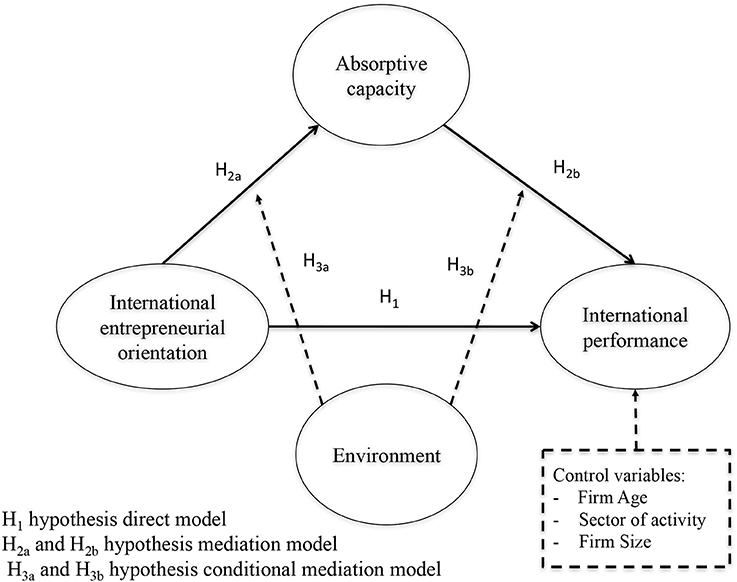
Figure 1. Structural model.
Materials and Methods
Sample
Data was collected from a questionnaire sent via email -through LimeSurvey v. 2.5.- to the CEOs/Directors of a sample of companies taken from the Spanish Institute for Family Business (hereinafter IEF, as it is known in Spanish). The participation in the study was voluntary and participants were advised of the anonymity of their answers. Participants were sent a letter presenting the research and its purpose. Research Ethics Committee must not intervene in this type of studies like our research work in Spain. The questionnaire involves Likert-type questions (1–5). The sample consists of 1,045 family businesses registered in the IEF, who produced 218 responses, which represents 20.86%. Fieldwork was conducted between June to November 2016 (see Table 1).
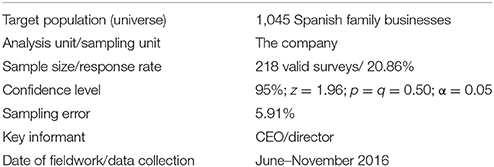
Table 1. Overview of the fieldwork.
The statistical power of the sample is analyzed through Cohen's retrospective test (1992). This is done using the G*Power 3.1.9.2 programme (Faul et al., 2009). As a result, the statistical power of the family business sample is 0.998; above the 0.80 limit established by Cohen (1992) (see Figure 2).
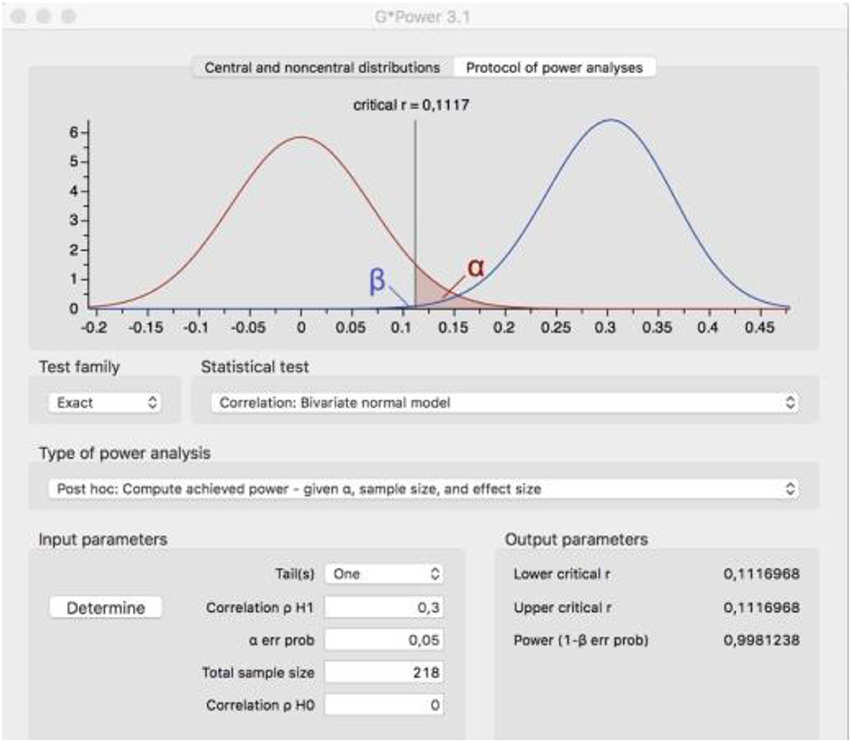
Figure 2. Statistical power of the sample.
Measurement of Variables
International Entrepreneurial Orientation
This variable was measured according to the scale proposed by Miller (1983) and then modified by Covin and Slevin (1989), and Covin and Miller (2014). These authors think that IEO can be measured in three dimensions: innovativeness (3 items), proactiveness (3 items) and risk-taking (3 items). These variables were applied to a 5-point Likert scale.
Absorptive Capacity
Measurement of ACAP uses a four-dimension scale validated by Flatten et al. (2011), who evaluate the extent to which the firm engages in knowledge acquisition activities (acquisition, three items), assimilates acquired information with existing knowledge (assimilation, four items), transforms recently adapted knowledge (transformation, four items), and commercially exploits knowledge transformed into competitive advantage (exploitation, three items).
International Performance
In the present work, international performance is measured according to a multi-item scale based on exporting intensity, which was included as a measure of international performance by some authors such as Zahra et al. (1997) and Morgan et al. (2004). We also included perceived satisfaction in exporting performance, which was previously included by some authors such as Cavusgil and Zou (1994), Balabanis and Katsikea (2004), Dimitratos et al. (2004), and Zahra et al. (1997). Both previous variables were measured according to a 5-point Likert scale. Finally, the third item included to measure international performance refers to exporting results and had previously been used by some authors such as Zahra et al. (1997), Morgan et al. (2004), and Ibeh (2003).
Environment
Scales proposed by Robertson and Chetty (2000), Balabanis and Katsikea (2004), Dimitratos et al. (2004), Etchebarne et al. (2010), and Kuivalainen et al. (2010) have been used to measure hostility and dynamism of environment.
Control Variables
The control variables under study are: size (number of employees), age (years of service since start-up) and activity sector (industry and services) of the family business. These variables are often used in studies on family business (Chrisman et al., 2005).
Data Analysis
In order to test hypotheses and analyze both the direct effect and the mediating effect, this study conducted the Partial Least Square (PLS) method, a structural equation multivariate quantitative method. The PLS method allows addressing the research questions, due to its predictive nature (Sarstedt et al., 2014; Hair et al., 2017); as it allows observing different causal relationships (Jöreskog and Wold, 1982; Astrachan et al., 2014) and because it is less demanding with regard to the minimum sample size (Henseler et al., 2015). The software used for data analysis through SEM-PLS was SmartPLS v.3.2.7 (Ringle et al., 2015).
Findings
The model is analyzed and interpreted in two steps to ensure that the measurement scales are valid and reliable (Barclay et al., 1995):
1) Analysis of the measurement model;
2) Analysis of the structural model.
Analysis of the Measurement Model
Following recommendations by Roldán and Sánchez-Franco (2012), the first step was to analyze composite reliability values, Cronbach's alpha and the Average Variance Extracted (AVE), in order to check the reliability of the constructs under study. The aforementioned values exceed the thresholds recommended by literature3, so the convergent validity of the selected scales is supported (see Table 2).
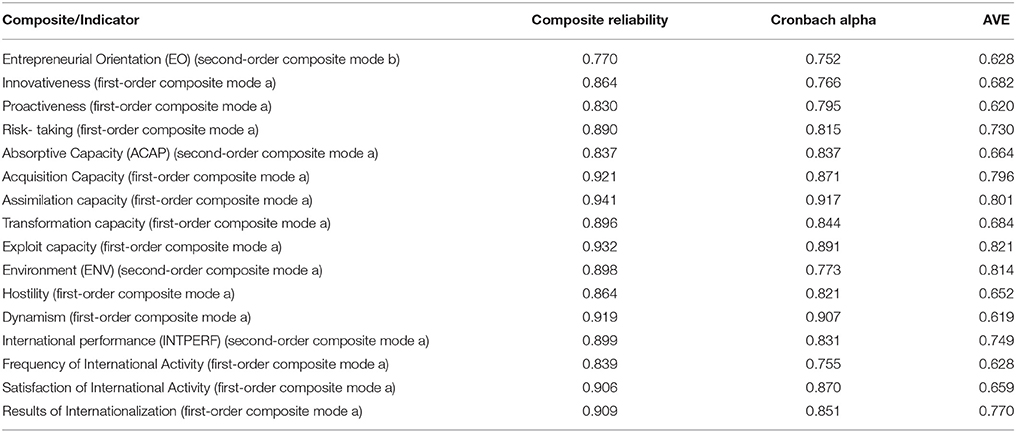
Table 2. Composites and indicators.
Discriminant validity was also calculated, which measures the extent to which a compound is truly different from other compounds (Hair et al., 2017). To do so, AVE square roots values for each compound were compared with correlations between constructs associated with the construct in question (Fornell and Larcker, 1981). Results show that AVE values are higher than the corresponding correlations in all cases (see Tables 3–6).
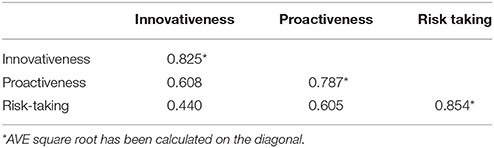
Table 3. Discriminant validity of entrepreneurial orientation.
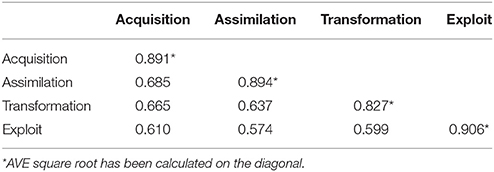
Table 4. Discriminant validity of absorptive capacity.
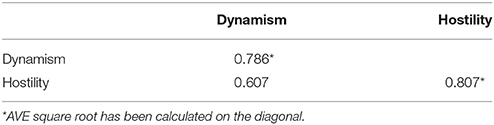
Table 5. Discriminant validity environment.
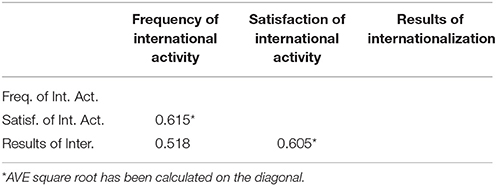
Table 6. Discriminant validity of international performance.
In addition, the HTMT index can be calculated for type A compounds. This index measures discriminant validity among indicators of the same compound and among indicators of different compounds. For discriminant validity to occur, HTMT values must be below 0.85 (Henseler et al., 2015) (see Table 7).
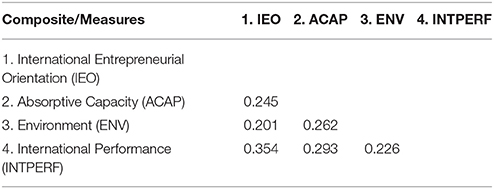
Table 7. Heterotrait-Monotrait (HTMT) Ratio.
Finally, HTMTinference is calculated based on bootstrapping (5000 subsamples). There is discriminant validity when the resulting interval contains values lower than 1. This is the case of this study (see Table 8).

Table 8. HTMTinference.
Entrepreneurial orientation became operational as a second-order type B compound, calculated in two stages based on scores of latent variables (Wright et al., 2012). In order to validate the entrepreneurial orientation compound, this study took into account recommendations by Diamantopoulos et al. (2008). In the case of a second-order type B compound, the items involved should not present any collinearity problem (Diamantopoulos and Winklhofer, 2001). Collinearity problems may only occur when the Inflation Variance Factor (IVF) reaches or exceeds the value 5 (Kleinbaum et al., 1988). In this case, no collinearity problems were observed (see Table 9).
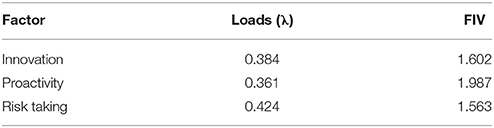
Table 9. Collinearity of entrepreneurial orientation.
Analysis of the Structural Model
Once the convergent validity and the discriminant validity of the measurement model were confirmed, testing of the relationships between variables took place. In order to find out the effects, this study followed the steps suggested by Hair et al. (2017).
First, the direct effect between IEO and international performance of family businesses was analyzed. To do so, the value of the path coefficient was checked, along with its significance (by applying the bootstrapping procedure of 5,000 resamples). The effect is positive and significant (β = 0.419; p < 0.001) (see Figure 3 and Table 11). Of the model it appears that the IEO explains 32.5% of the international performance variance of family businesses.
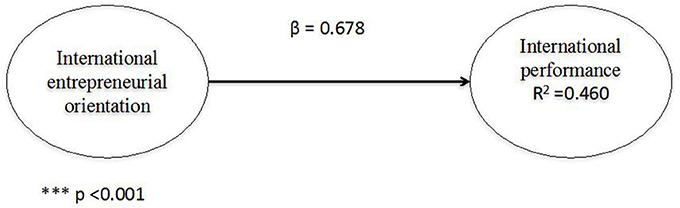
Figure 3. Direct model.
The second step was to include the effect of the mediating variable (ACAP). As observed in Figure 4 and Table 11, the indirect effect is positive and significant (between IEO and ACAP) H2a: β = 0.696; p < 0.001; and between ACAP and international performance H2b: β = 0.439; p < 0.001). The mediating effect completely eliminates the direct effect, since the direct relationship between the IEO and the international performance of family businesses has a β = −0.093 and is not significant.
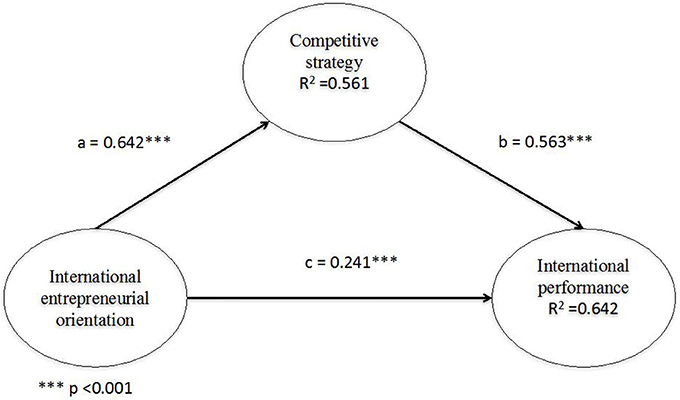
Figure 4. Mediation model.
In the model, IEO explains 38.3% of the variance of ACAP, which, in turn, explains 40.6% of the variance of international performance of family businesses (see Figure 4 and Table 11). Therefore, this study has proven the mediation between ACAP in relation to IEO and international performance of family businesses. Additionally, this mediating effect is a total effect, as it removes the direct effect (Baron and Kenny, 1986; Cepeda et al., 2016).
Third step consists on introducing moderator effect of ENV when comparing IEO vs. ACAP (first moderator effect) as well as in the relation between ACAP and international performance (second moderator effect). As we can see, moderator effect of ENV is present both in the relation IEO vs. ACAP (β = 0.239; p < 0.001) and ACAP vs. international performance (β = 0.257; p < 0.001). Moreover, this moderator effect increases explained the variance of international performance almost in 8%, from 40.6 to 45.3%, confirming the double moderator effect of ENV of the proposed model (see Figure 5). Eventually, we observe that the magnitude of moderator effect of entrepreneurial orientation is average (Chin, 2010) with a value for the first moderator effect of environment f2 = 0.19 (environment moderates the relation between IEO and ACAP) and a result of 0.24 for the second moderator effect of environment (ENV moderates the relation between ACAP and international performance).
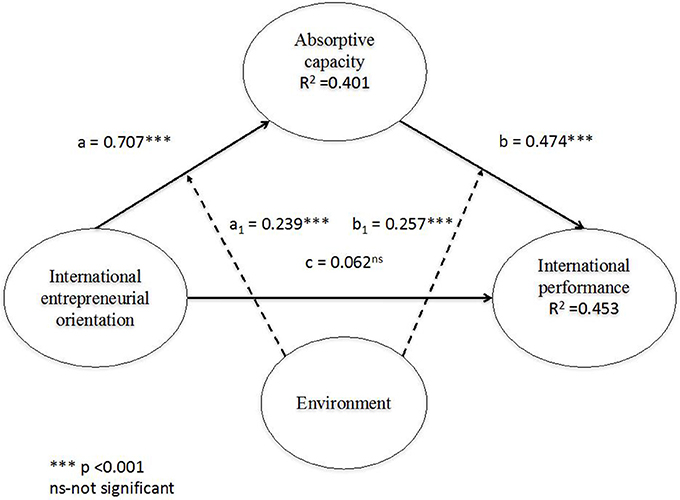
Figure 5. Conditional mediation model.
None of the control variables has an influence that may be considered relevant (the path coefficients are less than 0.2) and are not significant (the value of t is lower than recommended (p < 0.001) (see Table 10).
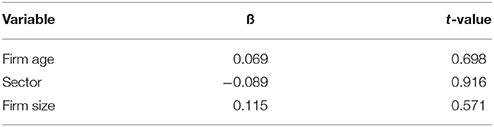
Table 10. Control variables.
The comparison of the two models—taking into account quality parameters—shows that the mediation model is better than the direct model: the Standardized Root Mean Square Residual (SRMR) is improved4. The direct model obtains a 0.073 SRMR, whereas the mediation model obtains a 0.061 SRMR, and the conditional mediation model obtains a 0.057 SRMR. Both values are below the threshold set by Henseler et al. (2015). A summary of the results and of hypotheses can be seen in Table 11.
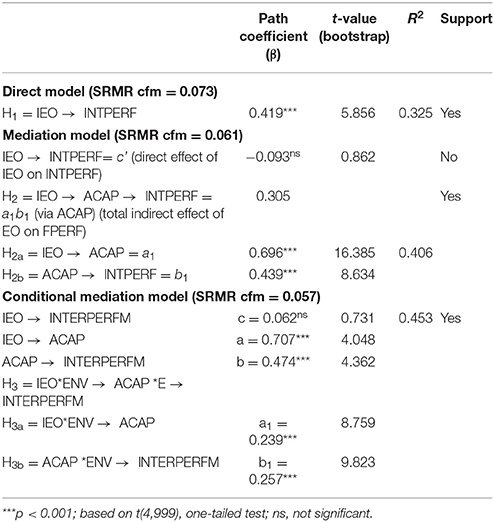
Table 11. Structural model.
Conclusion
The first conclusion of this model is that the dimensions used to measure the different variables and the variables themselves have values of reliability and convergent and discriminant validity above the thresholds established by the literature (Fornell and Larcker, 1981; Henseler et al., 2015; Hair et al., 2017). In addition, the models proposed have an adequate goodness of fit (the SRMR is below 0.08 recommended by Henseler et al., 2015).
The second conclusion of this study is that international performance of family businesses can be explained to a great extent by IEO. This result is consistent with previous studies (Miller and Friesen, 1983; Stetz et al., 2000; Kreiser et al., 2002; Wiklund and Shepherd, 2005; Lechner and Gudmundsson, 2014; Engelen et al., 2015; Hernández-Perlines et al., 2016a). In the direct model suggested, IEO explains 32.5% of the variance of international performance of family businesses. These results show that the first hypothesis is met, so the international presence of the firm will be determined by the firm's ability to detect new business opportunities, which can sometimes imply an increase in risk.
The third ACAP is demonstrated: it can have a direct role (e.g., Liao et al., 2003; Engelen et al., 2014), a moderating role (e.g., Engelen et al., 2014) or a mediating role (e.g., Ferreras-Méndez et al., 2015). This mediating role of the ACAP is observed in different situations (e.g., Aljanabi et al., 2014; Leal-Rodríguez et al., 2014; Hernández-Perlines et al., 2016b). In the previous work of Hernández-Perlines et al. (2017) the ACAP mediated between IEO and the performance of family businesses. In the present work, it is shown that ACAP plays a mediating role in the relationship between IEO and the international performance of family businesses. Taking into account the ACAP allows maximizing the potential of the model, which explains the variation of international performance up to 40.6%. Therefore, this study confirms the second hypothesis and helps identify the role of ACAP as a mediator.
Finally, the ENV acts as a positive moderator in the mediation model of the ACAP between the IEO and the international performance of family firm. In our case, the consideration of the ENVsupposes to improve the explanation of the variance of the international performance of the family firms up to 45.3%. This study confirms the moderating effect of the environment, and also confirms that in turbulent environments, ACAP becomes an essential part of improving EO (Todorova and Durisin, 2007). The ACAP allows to improve the understanding of the ENV (Van Doorn et al., 2017), achieving a superior performance in dynamic environments (Verma et al., 2017). In short, in turbulent environments, ACAP reinforces the influence of entrepreneurial orientation in the performance of the company (Engelen et al., 2014)
The implications of this study in relation to family business management are as follows:
1. Entrepreneurial behavior is an important factor in the international performance of family businesses (in line with Hernández-Perlines et al., 2016a).
2. IEO acts as a background for ACAP (in line with Wales et al., 2013).
3. Taking into account ACAP will allow family businesses to improve their international profits [in similar terms with what stated by Yeoh (2009)].
4. Family businesses can use the mediation of ACAP to improve their international profits through IEO, as a mediating variable.
As for limitations of the study, the first limitation is using a single informant in Likert-type scales. To overcome this limitation, the study follows recommendations by Rong and Wilkinson (2011), Woodside (2013), and Woodside et al. (2015), who suggest the appropriate selection of the person in the company to whom the questionnaire is addressed (i.e., senior executive, as recommended by Dal Zotto and Van Kranenburg, 2008). Questionnaires were sent through a computer process [e. g. email, as recommended by Torchiano et al. (2013)]. Emails requested participation, explained the research objectives and facilitated an email address to contact in case there were any questions. Furthermore, participants received emails to remind them to complete the questionnaire. The second limitation is the sample of businesses used. These are firms registered in the Spanish Institute for Family Business (IFE). The use of other databases such as SABI (Iberian Balance Sheets Analysis System) is also suggested.
As future research lines, this study suggests conducting longitudinal studies to analyze the effect of time or the presence of family members in business management, or the generational level. Also, comparative studies with other firms/countries are suggested, in order to check for significant differences. Finally, this study suggests analyzing the mediating effect of ACAP by taking into account both its potential and realized dimensions (Zahra and George, 2002).
Ethics Statement
Ethics approval for this research was not required as per institutional and national guidelines. Consent from all research participants was obtained by virtue of survey completion.
Author Contributions
All authors listed, have made substantial, direct and intellectual contribution to the work, and approved it for publication.
Conflict of Interest Statement
The authors declare that the research was conducted in the absence of any commercial or financial relationships that could be construed as a potential conflict of interest.
Footnotes
1. ^This study highlights four approaches to analyze the process of business internationalization: process approach, approach of resources and capabilities, network approach and international entrepreneurship approach.
2. ^The moderating effect of the environment is one of the objectives of this work.
3. ^Carmines and Zeller (1979) recommend values above 0.7 for factorial loads; and Fornell and Larcker (1981) recommend values over 0.7; 0.7 and 0.5 for composite reliability, Cronbach's alpha and Average Variance Extracted values (AVE), respectively.
4. ^This measure has been proposed by Hu and Bentler (1998) and Henseler et al. (2015) and allows analyzing the goodness of fit of the proposed model.
References
Adisa, F., and Rose, J. (2013). The mediating role of absorptive capacity in knowledge transfer: ERP implementations in small and medium sized enterprises in Sub-Sahara Africa. Int. J. Enterprise Inf. Syst. 9, 1–19. doi: 10.4018/jeis.2013040101
Ahimbisibwe, G. M., and Abaho, E. (2013). Export entrepreneurial orientation and export performance of SMEs in Uganda. Glob. Adv. Res. J. Manage. Bus. Stud. 2, 56–62.
Aljanabi, A. Q. R. A., Noor, N. A. M., and Kumar, D. M. (2014). The mediating role of absorptive capacity in its effect on organizational support factors and technological innovation. Inf. Manage. Bus. Rev. 6, 25–41.
Andersen, T. J., and Foss, N. J. (2005). Strategic opportunity and economic performance in multinational enterprises: the role and effects of information and communication technology. J. Int. Manage. 11, 293–310. doi: 10.1016/j.intman.2005.03.008
Antoncic, B., and Hisrich, R. D. (2004). Corporate entrepreneurship contingencies and organizational wealth creation. J. Manage. Dev. 23, 518–550. doi: 10.1108/02621710410541114
Argote, L., and Ingram, P. (2000). Knowledge transfer: a basis for competitive advantage in firms. Organ. Behav. Hum. Decis. Process. 82, 150–169. doi: 10.1006/obhd.2000.2893
Astrachan, C. B., Patel, V. K., and Wanzenried, G. (2014). A comparative study of CB-SEM and PLS-SEM for theory development in family firm research. J. Family Bus. Strat. 5, 116–128. doi: 10.1016/j.jfbs.2013.12.002
Astrachan, J. H., and Shanker, M. C. (2003). Family businesses' contribution to the US economy: a closer look. Family Bus. Rev. 16, 211–219. doi: 10.1177/08944865030160030601
Autio, E., Sapienza, H. J., and Almeida, J. G. (2000). Effects of age at entry, knowledge intensity, and imitability on international growth. Acad. Manage. J. 43, 909–924. doi: 10.2307/1556419
Balabanis, G., and Katsikea, E. (2004). Being an entrepreneurial exporter: does it pay?. Int. Bus. Rev. 12, 233–252. doi: 10.1016/S0969-5931(02)00098-7
Barclay, D., Higgins, C., and Thompson, R. (1995). The partial least squares (PLS) approach to causal modeling: personal computer adoption and use as an illustration. Tech. Stud. 2, 285–309.
Baron, R. M., and Kenny, D. A. (1986). The moderator–mediator variable distinction in social psychological research: conceptual, strategic, and statistical considerations. J. Pers. Soc. Psychol. 51, 1173–1182 doi: 10.1037/0022-3514.51.6.1173
Barringer, R. B., and Bluedon, A. C. (1990). The relationship between corporate entrepreneurship and strategic management. Strat. Manage. J. 20, 421–444. doi: 10.1002/(SICI)1097-0266(199905)20:5<421::AID-SMJ30>3.0.CO;2-O
Bergh, D. D., and Lim, E. N. K. (2008). Learning how to restructure: absorptive capacity and improvisational views of restructuring actions and performance. Strat. Manage. J. 29, 593–616. doi: 10.1002/smj.676
Brettel, M., Greve, G. I., and Flatten, T. C. (2011). Giving up linearity: absorptive capacity and performance. J. Manage. Issues 23, 164–189. Available online at: http://www.jstor.org/stable/23209224
Carmines, E. G., and Zeller, R. A. (1979). Reliability and Validity Assessment. Beverly Hills, CA: Sage Publications.
Casillas, J. C., and Moreno, A. M. (2010). The relationship between entrepreneurial orientation and growth: the moderating role of family involvement. Entrepreneurship Region. Dev. 22, 265–291. doi: 10.1080/08985621003726135
Cavusgil, S. T., and Zou, S. (1994). Marketing strategy-performance relationship: an investigation of the empirical link in export market ventures. J. Mark. 58, 1–21. doi: 10.2307/1252247
Cepeda, G., Henseler, J., Ringle, C., and Roldán, J. L. (2016). Prediction-oriented modeling in business research by means of partial least squares path modeling. J. Bus. Res. 69, 4545–4551. doi: 10.1016/j.jbusres.2016.03.048
Chirico, F., Sirmon, D. G., Sciascia, S., and Mazzola, P. (2011). Resource orchestration in family firms: investigating how entrepreneurial orientation, generational involvement, and participative strategy affect performance. Strat. Entrepreneurship J. 5, 307–326. doi: 10.1002/sej.121
Chrisman, J. J., Chua, J. H., and Sharma, P. (2005). Trends and directions in the development of a strategic management theory of the family firm. Entrepreneurship Theor. Pract. 29, 555–576. doi: 10.1111/j.1540-6520.2005.00098.x
Ciravegna, L., Majano, S. B., and Zhan, G. (2014). The inception of internationalization of small and medium enterprises: the role of activeness and networks. J. Bus. Res. 67, 1081–1089. doi: 10.1016/j.jbusres.2013.06.002
Cohen, W. M., and Levinthal, D. A. (1990). Absorptive capacity: a new perspective on learning and innovation. Adm. Sci. Q. 35, 128–152. doi: 10.2307/2393553
Corona, J., and Del Sol, I. (2016). La Empresa Familiar en Espa-a 2015 (Barcelona: Instituto de la Empresa Familiar). Available from http://www.iefamiliar.com/upload/documentos/ubhiccx9o8nnzc7i.pdf
Covin, J. G., and Covin, T. J. (1990). Competitive aggressiveness, environmental context, and small firm performance. Entrepreneurship Theor. Pract. 13, 35–50. doi: 10.1177/104225879001400406
Covin, J. G., Green, K. M., and Slevin, D. P. (2006). Strategic process effects on the entrepreneurial orientation-sales growth rate relationship. Entrepreneurship Theor. Pract. 30, 57–81. doi: 10.1111/j.1540-6520.2006.00110.x
Covin, J. G., and Lumpkin, G. T. (2011). Entrepreneurial orientation theory and research: reflections on a needed construct. Entrepreneurship Theor. Pract. 35, 855–872. doi: 10.1111/j.1540-6520.2011.00482.x
Covin, J. G., and Miller, D. (2014). International entrepreneurial orientation: conceptual considerations, research themes, measurement issues, and future research directions. Entrepreneurship Theor. Pract. 38 11–44. doi: 10.1111/etap.12027
Covin, J. G., and Slevin, D. P. (1989). Strategic management of small firms in hostile and benign environments. Strate. Manage. J. 10, 75–87. doi: 10.1002/smj.4250100107
Covin, J. G., and Slevin, D. P. (1991). A conceptual model of entrepreneurship as firm behavior. Entrepreneurship Theor. Pract. 16, 7–25. doi: 10.1177/104225879101600102
Cruz, C., and Nordqvist, M. (2012). Entrepreneurial orientation in family firms: a generational perspective. Small Bus. Econom. 38, 33–49. doi: 10.1007/s11187-010-9265-8
Dal Zotto, C., and Van Kranenburg, H. (2008). Management and Innovation in the Media Industry (Cheltenham: Edward Elgar Publishing).
De Clercq, D., Dimov, D., and Thongpapanl, N. T. (2010). The moderating impact of internal social exchange processes on the entrepreneurial orientation–performance relationship. J. Bus. Ventur. 25, 87–103. doi: 10.1016/j.jbusvent.2009.01.004
Dess, G. G., Lumpkin, G. T., and Covin, J. G. (1997). Entrepreneurial strategy making and firm performance: tests of contingency and configurational models. Strate. Manage. J. 18, 677–695. doi: 10.1002/(SICI)1097-0266(199710)18:9<677::AID-SMJ905>3.0.CO;2-Q
Diamantopoulos, A., Riefler, P., and Roth, K. P. (2008). Advancing formative measurement models. J. Bus. Res. 6, 1203–1218. doi: 10.1016/j.jbusres.2008.01.009
Diamantopoulos, A., and Winklhofer, H. M. (2001). Index construction with formative indicators: an alternative to scale development. J. Mark. Res. 38, 269–277. doi: 10.1509/jmkr.38.2.269.18845
Dijksterhuis, M. S., Van den Bosch, F. A., and Volberda, H. W. (1999). Where do new organizational forms come from? Management logics as a source of coevolution. Organ. Sci. 10, 569–582. doi: 10.1287/orsc.10.5.569
Dimitratos, P., Lioukas, S., and Carter, S. (2004). The relationship between entrepreneurship and international performance: the importance of domestic environment. Int. Bus. Rev. 13, 19–41. doi: 10.1016/j.ibusrev.2003.08.001
Engelen, A., Gupta, V., Strenger, L., and Brettel, M. (2015). Entrepreneurial orientation, firm performance, and the moderating role of transformational leadership behaviors. J. Manage. 41, 1069–1097. doi: 10.1177/0149206312455244
Engelen, A., Kube, H., Schmidt, S., and Flatten, T. C. (2014). Entrepreneurial orientation in turbulent environments: the moderating role of absorptive capacity. Res. Policy 43, 1353–1369. doi: 10.1016/j.respol.2014.03.002
Etchebarne, M. S., Geldres, V. V., and García-Cruz, R. (2010). El impacto de la orientación emprendedora en el desempe-o exportador de la firma. ESIC Mark. Econo. Bus. J. 137, 165–220.
Faul, F., Erdfelder, E., Buchner, A., and Lang, A. G. (2009). Statistical power analyses using G* power 3.1: tests for correlation and regression analyses. Behav. Res. Methods 41, 1149–1160. doi: 10.3758/BRM.41.4.1149
Ferreras-Méndez, J. L., Newell, S., Fernández-Mesa, A., and Alegre, J. (2015). Depth and breadth of external knowledge search and performance: the mediating role of absorptive capacity. Ind. Mark. Manage. 47, 86–97. doi: 10.1016/j.indmarman.2015.02.038
Flatten, T. C., Engelen, A., Zahra, S. A., and Brettel, M. (2011). A measure of absorptive capacity: scale development and validation. Eur. Manage. J. 29, 98–116. doi: 10.1016/j.emj.2010.11.002
Fornell, C., and Larcker, D. F. (1981). Evaluating structural equation models with unobservable variables and measurement error. J. Mark. Res. 18, 39–50. doi: 10.2307/3151312
Francis, J., and Collins-Dodd, C. (2000). The impact of firms' export orientation on the export performance of high-tech small and medium-sized enterprises. J. Int. Mark. 8, 84–103. doi: 10.1509/jimk.8.3.84.19631
Freeman, S., and Cavusgil, S. T. (2007). Toward a typology of commitment states among managers of born-global firms: a study of accelerated internationalization. J. Int. Mark. 15, 1–40. doi: 10.1509/jimk.15.4.1
García-Sánchez, E., García-Morales, V. J., and Martín-Rojas, R. (2017). Analysis of the influence of the environment, stakeholder integration capability, absorptive capacity, and technological skills on organizational performance through corporate entrepreneurship. Int. Entrepreneurship Manage. J. 13, 1–33. doi: 10.1007/s11365-017-0436-9
García-Villaverde, P. M., Ruiz-Ortega, M. J., and Canales, J. I. (2013). Entrepreneurial orientation and the threat of imitation: the influence of upstream and downstream capabilities. Eur. Manage. J. 31, 263–277. doi: 10.1016/j.emj.2012.11.006
Hair, J. F., Hult, G. T. M., Ringle, C. M., and Sarstedt, M. (2017). A Primer on Partial Least Squares Structural Equation Modeling (PLS-SEM). Thousand Oaks, CA: Sage.
Henseler, J., Ringle, C. M., and Sarstedt, M. (2015). A new criterion for assessing discriminant validity in variance-based structural equation modeling. J. Acad. Mark. Sci. 43, 115–135. doi: 10.1007/s11747-014-0403-8
Hernández-Perlines, F., Moreno-García, J., and Yá-ez-Araque, B. (2017). Family firm performance: the influence of entrepreneurial orientation and absorptive capacity. Psychol. Mark. 34, 1057–1068. doi: 10.1002/mar.21045
Hernández-Perlines, F., Moreno-García, J., and Ya-ez-Araque, B. (2016a). The mediating role of competitive strategy in international entrepreneurial orientation. J. Bus. Res. 69, 5383–5389. doi: 10.1016/j.jbusres.2016.04.142
Hernández-Perlines, F., Moreno-García, J., and Yá-ez-Araque, B. (2016b). Using fuzzy-set qualitative comparative analysis to develop an absorptive capacity-based view of training. J. Bus. Res. 69, 1510–1515. doi: 10.1016/j.jbusres.2015.10.133
Hu, L. T., and Bentler, P. M. (1998). Fit indices in covariance structure modeling: sensitivity to underparameterized model misspecification. Psychol. Methods 3, 424–453. doi: 10.1037/1082-989X.3.4.424
Ibeh, K. I. (2003). Toward a contingency framework of export entrepreneurship: conceptualisations and empirical evidence. Small Business Econ. 20, 49–68. doi: 10.1023/A:1020244404241
Jansen, J. J. P., Van den Bosch, F. A. J., and Volberda, H. W. (2005). Managing potential and realized absorptive capacity: how do organizational antecedents matter?. Acad. Manag. J. 48, 999–1015. doi: 10.5465/AMJ.2005.19573106
Joardar, A., and Wu, S. (2011). Examining the dual forces of individual entrepreneurial orientation and liability of foreignness on international entrepreneurs. Can. J. Admin. Sci. 28, 328–340. doi: 10.1002/cjas.203
Jones, M. V., and Coviello, N. E. (2005). Internationalisation: conceptualising an entrepreneurial process of behaviour in time. J. Int. Business Stud. 36, 284–303. doi: 10.1057/palgrave.jibs.8400138
Jöreskog, K. G., and Wold, H. O. (1982). Systems Under Indirect Observation: Causality, Structure, Prediction 139. North Holland: Elsevier.
Kleinbaum, D. G., Kupper, L. L., Muller, K. E., and Nizam, A. (1988). One-Way Analysis of Variance. Applied Regression Analysis and Other Multivariable Methods. Boston, MA: PWS-Kent Publishing.
Knight, G. (2000). Entrepreneurship and marketing strategy: the SME under globalization. J. Int. Market. 8, 12–32. doi: 10.1509/jimk.8.2.12.19620
Kogut, B., and Zander, U. (1992). Knowledge of the firm, combinative capabilities, and the replication of technology. Organ. Sci. 3, 383–397. doi: 10.1287/orsc.3.3.383
Kraus, S., Rigtering, J. C., Hughes, M., and Hosman, V. (2012). Entrepreneurial orientation and the business performance of SMEs: a quantitative study from the Netherlands. Rev. Manag. Sci. 6, 161–182. doi: 10.1007/s11846-011-0062-9
Kreiser, P. M., Marino, L. D., and Weaver, K. M. (2002). Assessing the psychometric properties of the entrepreneurial orientation scale: a multi-country analysis. Entrepreneurship Theory Pract. 26, 71–94. doi: 10.1177/104225870202600405
Kreiser, P. M., Marino, L. D., Dickson, P., and Weaver, K. M. (2010). Cultural influences on entrepreneurial orientation: The impact of national culture on risk taking and proactiveness in SMEs. Entrepreneurship Theory Pract. 34, 959–983. doi: 10.1111/j.1540-6520.2010.00396.x
Kropp, F., Lindsay, N. J., and Shoham, A. (2006). Entrepreneurial, market, and learning orientations and international entrepreneurial business venture performance in South African firms. Int. Market. Rev. 23, 504–523. doi: 10.1108/02651330610703427
Kuivalainen, O., Puumalainen, K., Sintonen, S., and Kyläheiko, K. (2010). Organizational capabilities and internationalization of the small and medium-sized information and communications technology firms. J. Int. Entrepreneurship 8, 135–155. doi: 10.1007/s10843-010-0057-7
Lane, P. J., Koka, B. R., and Pathak, S. (2006). The reification of absorptive capacity: a critical review and rejuvenation of the construct. Acad. Manag. Rev. 3, 833–863. doi: 10.5465/AMR.2006.22527456
Lane, P. J., and Lubatkin, M. (1998). Relative absorptive capacity and inter-organizational learning. Strat. Manag. J. 19, 461–477. doi: 10.1002/(SICI)1097-0266(199805)19:5<461::AID-SMJ953>3.0.CO;2-L
Lane, P. J., Salk, J. E., and Lyles, M. A. (2001). Absorptive capacity, learning, and performance in international joint ventures. Strat. Manag. J. 22, 1139–1161. doi: 10.1002/smj.206
Leal-Rodríguez, A. L., Ariza-Montes, J. A., Roldán, J. L., and Leal-Millán, A. G. (2014). Absorptive capacity, innovation and cultural barriers: a conditional mediation model. J. Bus. Res. 67, 763–768. doi: 10.1016/j.jbusres.2013.11.041
Lechner, C., and Gudmundsson, S. V. (2014). Entrepreneurial orientation, firm strategy and small firm performance. Int. Small Business J. 32, 36–60. doi: 10.1177/0266242612455034
Lee, C., Lee, K., and Pennings, J. M. (2001). Internal capabilities, external networks, and performance: a study on technology-based ventures. Strat. Manag. J. 22, 615–640. doi: 10.1002/smj.181
Lenox, M., and King, A. (2004). Prospects for developing absorptive capacity through internal information provision. Strat. Manag. J. 25, 331–345. doi: 10.1002/smj.379
Lewin, A. Y., Long, C. P., and Carroll, T. N. (1999). The coevolution of new organizational forms. Organ. Sci. 10, 535–550. doi: 10.1287/orsc.10.5.535
Liao, J., Welsch, H., and Stoica, M. (2003). Organizational absorptive capacity and responsiveness: an empirical investigation of growth-oriented SMEs. Entrepreneurship Theory Pract. 28, 63–85. doi: 10.1111/1540-8520.00032
Liu, H., Ke, W., Wei, K. K., and Hua, Z. (2013). The impact of IT capabilities on firm performance: the mediating roles of absorptive capacity and supply chain agility. Decis. Support Syst. 54, 1452–1462. doi: 10.1016/j.dss.2012.12.016
Lohrke, F. T., Franklin, G. M., and Kothari, V. B. (2015). Top management international orientation and small business exporting performance: The moderating roles of export market & industry factors. J. Small Business Strategy 10, 13–24.
Lumpkin, G. T., and Dess, G. G. (1996). Clarifying the entrepreneurial orientation construct and linking it to performance. Acad. Manag. Rev. 21, 135–172.
Lumpkin, G. T., and Dess, G. G. (2001). Linking two dimensions of entrepreneurial orientation to firm performance: the moderating role of environment and industry life cycle. J. Business Ventur. 16, 429–451. doi: 10.1016/S0883-9026(00)00048-3
Lyles, M. A., and Salk, J. E. (1996). Knowledge acquisition from foreign parents in international joint ventures: an empirical examination in the Hungarian context. J. Int. Business Stud. 27, 877–903. doi: 10.1057/palgrave.jibs.8490155
Miller, D. (1983). The correlates of entrepreneurship in three types of firms. Manage. Sci. 29, 770–791. doi: 10.1287/mnsc.29.7.770
Miller, D., and Friesen, P. (1983). Strategy making and environment: the third link. Strat. Manag. J. 4, 221–235. doi: 10.1002/smj.4250040304
Morgan, N. A., Kaleka, A., and Katsikeas, C. S. (2004). Antecedents of export venture performance: a theoretical model and empirical assessment. J. Mark. 68, 90–108. doi: 10.1509/jmkg.68.1.90.24028
Mowery, D. C., Oxley, J. E., and Silverman, B. S. (1996). Strategic alliances and interfirm knowledge transfer. Strat. Manag. J. 17, 77–91. doi: 10.1002/smj.4250171108
Mukherjee, A., Mitchell, W., and Talbot, F. B. (2000). The impact of new manufacturing requirements on production line productivity and quality at a focused factory. J. Oper. Manag. 18, 139–168. doi: 10.1016/S0272-6963(99)00023-6
Namen, J. L., and Slevin, D. P. (1993). Entrepreneurship and the concept of fit: a model and empirical tests. Strat. Manag. J. 14, 137–153 doi: 10.1002/smj.4250140205
Qian, H., and Acs, Z. J. (2013). An absorptive capacity theory of knowledge spillover entrepreneurship. Small Business Econ. 40, 185–197. doi: 10.1007/s11187-011-9368-x
Rauch, A., Wiklund, J., Lumpkin, G. T., and Frese, M. (2009). Entrepreneurial orientation and business performance: an assessment of past research and suggestions for the future. Entrepreneurship Theory Pract. 33, 761–787. doi: 10.1111/j.1540-6520.2009.00308.x
Ringle, C. M., Wende, S., and Becker, J. M. (2015). Smart PLS 3. Boenningstedt: SmartPLS GmbH. Available online at: Retrieved from http://www.smartpls.com
Robertson, C., and Chetty, S. K. (2000). A contingency-based approach to understanding export performance. Int. Bus. Rev. 9, 211–235. doi: 10.1016/S0969-5931(99)00037-2
Roldán, J. L., and Sánchez-Franco, M. J. (2012). “Variance-based structural equation modeling: guidelines for using partial least squares in information systems research,” in Research Methodologies, Innovations and Philosophies in Software Systems Engineering and Information Systems, eds M. Mora, O. Gelman, A. Steenkamp, and M. Raisinghani (Hershey, PA: IGI Global), 193–221.
Rong, B., and Wilkinson, I. F. (2011). What do managers' survey responses mean and what affects them? The case of market orientation and firm performance. Aust. Market. J. 19, 137–147. doi: 10.1016/j.ausmj.2011.04.001
Rosenbusch, N., Rauch, A., and Bausch, A. (2013). The mediating role of entrepreneurial orientation in the task environment–performance relationship: a meta-analysis. J. Manage. 39, 633–659. doi: 10.1177/0149206311425612
Russell, R. D., and Russell, C. J. (1992). An examination of the effects of organizational norms, organizational structure, and environmental uncertainty on entrepreneurial strategy. J. Manage. 18, 639–656. doi: 10.1177/014920639201800403
Saenz, M. J., Revilla, E., and Knoppen, D. (2014). Absorptive capacity in buyer–supplier relationships: empirical evidence of its mediating role. J. Supply Chain Manag. 50, 18–40. doi: 10.1111/jscm.12020
Sapienza, H. J., Autio, E., George, G., and Zahra, S. A. (2006). A capabilities perspective on the effects of early internationalization on firm survival and growth. Acad. Manag. Rev. 31, 914–933. doi: 10.5465/AMR.2006.22527465
Sarstedt, M., Ringle, C. M., Smith, D., Reams, R., and Hair, J. F. Jr. (2014). Partial least squares structural equation modeling (PLS-SEM): a useful tool for family business researchers. J. Fam. Business Strat. 5, 105–115. doi: 10.1016/j.jfbs.2014.01.002
Sciascia, S., D'oria, L., Bruni, M., and Larra-eta, B. (2014). Entrepreneurial orientation in low-and medium-tech industries: the need for absorptive capacity to increase performance. Eur. Manag. J. 32, 761–769. doi: 10.1016/j.emj.2013.12.007
Sirmon, D. G., Arregle, J. L., Hitt, M. A., and Webb, J. W. (2008). The role of family influence in firms' strategic responses tothreat of imitation. Entrepreneurship Theory Pract. 32, 979–998. doi: 10.1111/j.1540-6520.2008.00267.x
Stam, W., and Elfring, T. (2008). Entrepreneurial orientation and new venture performance: the moderating role of intra-and extraindustry social capital. Acad. Manag. J. 51, 97–111. doi: 10.5465/AMJ.2008.30744031
Stetz, P. E., Howell, R., Stewart, A., Blair, J. D., and Fottler, M. D. (2000). Multidimensionality of entrepreneurial firm-level processes: do the dimensions covary? Front. Entrepreneurship Res. 188, 653–667.
Stock, G. N., Greis, N. P., and Fischer, W. A. (2001). Absorptive capacity and new product development. J. High Technol. Manag. Res. 12, 77–91. doi: 10.1016/S1047-8310(00)00040-7
Sundqvist, S., Kyläheiko, K., Kuivalainen, O., and Cadogan, J. W. (2012). Kirznerian and Schumpeterian entrepreneurial– oriented behavior in turbulent export markets. Int. Market. Rev. 29, 203–219. doi: 10.1108/02651331211216989
Tan, J. (1996). Regulatory environment and strategic orientations in a transitional economy: a study of Chinese private enterprise. Entrepreneurship Theory Pract. 21, 31–47. doi: 10.1177/104225879602100103
Teng, B. S. (2007). Corporate entrepreneurship activities through strategic alliances: a resource-based approach toward competitive advantage. J. Manag. Stud. 44, 119–142. doi: 10.1111/j.1467-6486.2006.00645.x
Todorova, G., and Durisin, B. (2007). Absorptive capacity: valuing a reconceptualization. Acad. Manag. Rev. 32, 774–786. doi: 10.5465/AMR.2007.25275513
Torchiano, M., Tomassetti, F., Ricca, F., Tiso, A., and Reggio, G. (2013). Relevance, benefits, and problems of software modelling and model driven techniques A survey in the Italian industry. J. Syst. Softw. 86, 2110–2126. doi: 10.1016/j.jss.2013.03.084
Tsai, W. (2001). Knowledge transfer in intraorganizational networks: Effects of network position and absorptive capacity on business unit innovation and performance. Acad. Manag. J. 44, 996–1004. doi: 10.2307/3069443
Tzokas, N., Kim, Y. A., Akbar, H., and Al-Dajani, H. (2015). Absorptive capacity and performance: the role of customer relationship and technological capabilities in high-tech SMEs. Indust. Market. Manag. 47, 134–142. doi: 10.1016/j.indmarman.2015.02.033
Van den Bosch, F. A. J., Volberda, H. W., and de Boer, M. (1999). Coevolution of firm absorptive capacity and knowledge environment: Organizational forms and combinative capabilities. Organ. Sci. 10, 551–568. doi: 10.1287/orsc.10.5.551
Van Doorn, S., Heyden, M. L., and Volberda, H. W. (2017). Enhancing entrepreneurial orientation in dynamic environments: the interplay between top management team advice-seeking and absorptive capacity. Long Range Plan. 50, 134–144. doi: 10.1016/j.lrp.2016.06.003
Verma, V., Bharadwaj, S. S., and Nanda, M. (2017). Comparing agility and absorptive capacity for superior firm performance in dynamic environment. Int. J. Business Environ. 9, 1–17. doi: 10.1504/IJBE.2017.084703
Volberda, H. W., Foss, N. J., and Lyles, M. A. (2010). Perspective-absorbing the concept of absorptive capacity: how to realize its potential in the organization field. Organ. Sci. 21, 931–951. doi: 10.1287/orsc.1090.0503
Wales, W. J., Parida, V., and Patel, P. C. (2013). Too much of a good thing? Absorptive capacity, firm performance, and the moderating role of entrepreneurial orientation. Strat. Manag. J. 34, 622–633. doi: 10.1002/smj.2026
Wales, W., Monsen, E., and McKelvie, A. (2011). The organizational pervasiveness of entrepreneurial orientation. Entrepreneurship Theory Pract. 5, 895–923. doi: 10.1111/j.1540-6520.2011.00451.x
Wang, D., and Chen, S. (2013). Does intellectual capital matter? High-performance work systems and bilateral innovative capabilities. Int. J. Manpower 34, 861–879. doi: 10.1108/IJM-07-2013-0167
Weerawardena, J., Mort, G. S., Liesch, P. W., and Knight, G. (2007). Conceptualizing accelerated internationalization in the born global firm: a dynamic capabilities perspective. J. World Business 42, 294–306. doi: 10.1016/j.jwb.2007.04.004
Werner, S. (2002). Recent developments in international management research: a review of 20 top management journals. J. Manag. 28, 277–305. doi: 10.1177/014920630202800303
Wiklund, J. (1999). The sustainability of the entrepreneurial orientation–performance relationship. Entrepreneurship Theory Pract. 24, 37–48. doi: 10.1177/104225879902400103
Wiklund, J., and Shepherd, D. (2005). Entrepreneurial orientation and small business performance: a configurational approach. J. Business Ventur. 20, 71–91. doi: 10.1016/j.jbusvent.2004.01.001
Wood, V. R., and Robertson, K. R. (1997). Strategic orientation and export success: an empirical study. Int. Market. Rev. 14, 424–444. doi: 10.1108/02651339710192975
Woodside, A. G. (2013). Moving beyond multiple regression analysis to algorithms: calling for adoption of a paradigm shift from symmetric to asymmetric thinking in data analysis and crafting theory. J. Business Res. 66, 463–472. doi: 10.1016/j.jbusres.2012.12.021
Woodside, A. G., Prentice, C., and Larsen, A. (2015). Revisiting problem gamblers' harsh gaze on casino services: applying complexity theory to identify exceptional customers. Psychol. Market. 32, 65–77. doi: 10.1002/mar.20763
Wright, R. T., Campbell, D. E., Thatcher, J. B., and Roberts, N. (2012). Operationalizing multidimensional constructs in structural equation modeling: recommendations for IS research. Commun. Assoc. Inform. Syst. 30, 367–412. Available online at: http://aisel.aisnet.org/cais/vol30/iss1/23
Wu, W., Yang, Y., Deng, Q., and Yu, B. (2010). “Technology management capability and new product development performance: the mediating role of absorptive capacity,” in 2010 Proceedings of Technology Management for Global Economic Growth (PICMET) PICMET'10 (Phuket), 1–9.
Yá-ez-Araque, B., Hernández-Perlines, F., and Moreno-García, J. (2017). From training to organizational behavior: a mediation model through absorptive and innovative capacities. Front. Psychol. 8:1532. doi: 10.3389/fpsyg.2017.01532
Yeoh, P. L. (2009). Realized and potential absorptive capacity: understanding their antecedents and performance in the sourcing context. J. Market. Theory Pract. 17, 21–36. doi: 10.2753/MTP1069-6679170102
Zahra, S. A. (1991). Predictors and financial outcomes of corporate entrepreneurship: an exploratory study. J. Business Ventur. 6, 259–285. doi: 10.1016/0883-9026(91)90019-A
Zahra, S. A., and Covin, J. G. (1995). Contextual influences on the corporate entrepreneurship performance relationship: a longitudinal analysis. J. Business Ventur. 10, 43–58. doi: 10.1016/0883-9026(94)00004-E
Zahra, S. A., Filatotchev, I., and Wright, M. (2009). How do threshold firms sustain corporate entrepreneurship? The role of boards and absorptive capacity. J. Business Ventur. 24, 248–260. doi: 10.1016/j.jbusvent.2008.09.001
Zahra, S. A., and Garvis, D. M. (2000). International corporate entrepreneurship and firm performance: the moderating effect of international environmental hostility. J. Business Ventur. 15, 469–492. doi: 10.1016/S0883-9026(99)00036-1
Zahra, S. A., and George, G. (2002). Absorptive capacity: a review, reconceptualization and extension. Acad. Manage. Rev. 27, 185–203. doi: 10.5465/AMR.2002.6587995
Keywords: international entrepreneurial orientation, absorptive capacity, environment, international performance, conditional mediation, family businesses
Citation: Hernández-Perlines F and Xu W (2018) Conditional Mediation of Absorptive Capacity and Environment in International Entrepreneurial Orientation of Family Businesses. Front. Psychol. 9:102. doi: 10.3389/fpsyg.2018.00102
Received: 01 September 2017; Accepted: 22 January 2018;
Published: 08 February 2018.
Edited by:
Gabriela Topa, Universidad Nacional de Educación a Distancia (UNED), SpainReviewed by:
Serena Cubico, University of Verona, ItalyInmaculada Jaén, Departamento de Economía Aplicada I, Universidad de Sevilla, Spain
Copyright © 2018 Hernández-Perlines and Xu. This is an open-access article distributed under the terms of the Creative Commons Attribution License (CC BY). The use, distribution or reproduction in other forums is permitted, provided the original author(s) and the copyright owner are credited and that the original publication in this journal is cited, in accordance with accepted academic practice. No use, distribution or reproduction is permitted which does not comply with these terms.
*Correspondence: Felipe Hernández-Perlines, ZmVsaXBlLmhwZXJsaW5lc0B1Y2xtLmVz