 Maria Preciado
 M. Teresa Anguera
 Mauricio Olarte
 Daniel Lapresa
- 1Department of Social Psychology and Quantitative Psychology, Faculty of Psychology, University of Barcelona, Barcelona, Spain
- 2Faculty of Psychology, Institute of Neurosciences, University of Barcelona, Barcelona, Spain
- 3National Administrative Department of Statistics, Bogotá, Colombia
- 4Department of Educational Sciences, University of La Rioja, Logroño, Spain
Objective: This systematic mixed study review, focuses on the use of observation methodology in elite men's football matches, which constitutes an innovative approach, that opens up a new panorama of useful and productive research.
Method: The methods used in this study follow the recommendations for systematic reviews and meta-analysis guidelines (PRISMA). The search was carried out in five databases. Ninety-four articles out of 3,195 were selected and analyzed. In order to achieve a quality assessment, the guide was used to inform evaluations based on observation methodology (GREOM) (Portell et al., 2015), recognized by the EQUATOR network.
Results: From the methodological review analysis, information obtained indicates that 97% of the researches used direct observation and 3% indirect observation. On the other hand, 56.5% of the articles explain the instrument used and 77% justify the applied observational design. A quantitative comparison of the proportions was made in several methodological aspects, which resulted in only 15.21% reviewing the quality of the data, and that 67.3% of the articles contributed to the mixed methods approach. The methodological review allowed us to establish procedural profiles. The results indicate that 67% of the articles have been published in English, and of these, 77% were published in journals that have an impact factor. The majority of the researchers, 53.26%, belong to Spanish entities. The most studied substantive aspects were goal (34%), possession of the ball (28%), and corner (27%). The most observed events were Leagues, World Cups, individual players and other events.
Conclusions: The results obtained refer to both substantive and methodological aspects and allow us to configure a systematic review of mixed studies, in which we emphasize the aspects of a “systematic review” and a “mixed study,” within an integrated perspective.
Introduction
Currently there is a growing interest in the realization of studies that evaluate the quality of research, combining conceptual, and methodological reviews. We know that systematic reviews present methodological conflicts when the leitmotiv focuses on a procedural interest. Despite that fact, there have been precedents in which the selection criteria for primary studies were carried out based on the combination of a methodological criterion and another noun (López-Fernández et al., 2017) or by considering procedural criteria, such as units of analysis or operationalization of constructs (Durach et al., 2017) or by focusing on terminological matters (Logan et al., 2018). We consider it an enrichment for the systematic mixed study review itself, and in our case, the vertebrate element consists of the combination of a methodological criterion, which is observational methodology, and a substantive criterion, which is elite male football; all inscribed in a mixed methods perspective.
According to Hong and Pluye (2018, p. 1), “Systematic reviews are considered among the best sources of research evidence, are used for decision making, and are helpful in coping with the rapidly increasing volume of scientific literature.” Now, if we specify more, “we (…) define a systematic review as a review of existing research using explicit accountable rigorous research methods” (Gough et al., 2012, p. 2) or, in more detail, “a systematic review is a review of a clearly formulated question that uses systematic and explicit methods to identify, select, and critically appraise relevant research, and to collect and analyze data from the studies that are included in the review” (Moher et al., 2009, p. 265).
The general claim of systematic reviews has been to obtain a comprehensive synthesis of evidence (Higgins and Green, 2011) about a space of knowledge in which various publications have been generated (Grant and Booth, 2009; Boland et al., 2013; Maden and Kotas, 2016). The “space of knowledge,” in this work, is procedural, which represents a new line of research, given that it will provide all the necessary elements to assess the strengths and weaknesses of research in mixed methodological aspects as well as in the substantive. We have taken a step forward, entering the mixed methods perspective, and according to Pluye and Hong (2014), mixed study reviews integrate qualitative, quantitative and mixed methods perspectives. These authors, in turn, define mixed methods as: a research approach in which a researcher or team of researchers integrates (a) qualitative and quantitative research questions, (b) qualitative research methods and quantitative research designs, (c) techniques for collecting and analyzing qualitative and quantitative data, and (d) qualitative findings and quantitative results (Pluye and Hong, 2014, p, 29).
Sandelowski et al. (2006), as well as Heyvaert et al. (2013), concur with Pluye and Hong (2014) in proposing the confluence of QUAN (quantitative), QUAL (qualitative), and MM (mixed methods) articles in systematic reviews. Each of them responds to its methodological approach, although here we are particularly interested in the focus on mixed methods. At present, systematic mixed study reviews have been proposed to provide an answer to a well-defined substantive question that internalizes an integration between qualitative and quantitative elements (Moseholm and Fetters, 2017).
Mixed methods can be conceptualized from epistemological debates between supporters of qualitative and quantitative aspects (Pluye and Hong, 2014), and it is required—and we advise—to use them with the utmost rigor, considering their differentiation from the multimethods approach (Anguera et al., 2018b), which has not always been clear. Guaranteeing integration and qualitative-quantitative symmetry (Anguera et al., 2017a), are questions that remain unresolved.
Male football, without contemplating a methodological plus, has been subject to other systematic reviews (Sarmento et al., 2014, 2018; Trewin et al., 2017; McGuckian et al., 2018), and is also an elite category in various sports (Spindler et al., 2018).
Performance in football is a polyhedral issue, a product of the dynamic interaction between competitors through game actions consisting of different complementary facets; physical, technical, tactical, etc. (Barbosa et al., 2013; Liu et al., 2016). In recent years we have witnessed a vertiginous evolution in the match analysis, mainly motivated by the emergence of automatic registration procedures, which allows the immediate acquisition of a large amount of data related to the positioning of the players in relation to the game (Castellano et al., 2014). However, these data, obtained through a computerized video tracking system, need to be enriched with other technical-tactical data, recorded semi-automatically through visualization, recording, and coding (Hernández-Mendo et al., 2014).
This evolution could not remain indifferent to the approach of mixed methods studies, which during the last two decades have overcome a traditional procedural confrontation that has affected all scientific fields, and consequently, also studies on sport (Anguera et al., 2017b) and therefore, on professional football. Johnson et al. (2007, p. 123) defined mixed methods research as “the type of research in which a researcher or team of researchers combines elements of qualitative and quantitative research approaches (e.g., use of qualitative and quantitative viewpoints, data collection, analysis, inference techniques) for the broad purposes of breadth and depth of understanding and corroboration” (Johnson et al., 2007, p. 123). This new methodological positioning has required a deep reflection on the key concepts of mixed methods and has promoted the articulation of ways in which to integrate qualitative and quantitative elements.
In the search for a rigorous and flexible methodological framework which allows the possibility of capturing the behaviors that unfold over time (Bakeman and Quera, 2011) and the consequent performance of diachronic analysis that allow the detection of regular behavioral structures we find that many of the studies analyzed have resorted to observational methodology (Anguera, 1979; Anguera et al., 2017b), and there is ample evidence over the last years in football (Jonsson et al., 2006; Castellano et al., 2007; Lapresa et al., 2013, 2015, 2016, 2018). This extensive scientific production in football, conducted from observational methodology, is based precisely on the need for investigations to adapt to mixed methods.
Currently, the observational methodology considered to be mixed methods in itself, has established that in the same study the stages QUAL-QUAN-QUAL are complemented, according to the connect path recommended by Creswell and Plano Clark (2011) in addition to the merged and embed paths. We consider that this approach is optimal, given that it starts (QUAL stage) with a qualitative collection of data, which can initially be descriptive, but will be systematized, especially when it is already coded from the ad hoc prepared observation instrument. This provides all the information collected in a matrix of codes, with columns as the dimensions/sub-dimensions of the observation instrument, and rows as the contemplated observed units. This is then segmented according to the established criteria in each case. In a second stage (QUAN stage), the quality control of the data is carried out and once passed, a quantitative data analysis is carried out. This provides the results of the study, which, in a third stage (QUAL stage) is interpreted in light of the scientific problem posed and the results are then obtained by reference authors of the question studied.
From this proposal by Creswell and Plano Clark (2011), we highlight the relevant role of connect, that reveals the value of the transformative capacity that the data facilitates for the intended integration (O'Cathain et al., 2010), which in recent years had promoted conceptual and procedural advances.
As indicated by Anguera and Hernández-Mendo (2014), at the dawn of Sports Psychology there was hardly any observation known as a research methodology (Tod et al., 2010). It was Martens (1979), on the one hand, and Smith et al. (1977), on the other, who respectively proposed the use of observation in the field of sport and proposed an initial observation instrument.
Biddle (1997), who in a study in the most prestigious journals of the time—The Journal of Sport and Exercise Psychology (ISEP) and The International Journal of Sport Psychology (IJSP)—realized that during the nineties, most quantitative sports studies were based on regression and discriminant analysis techniques, and most qualitative sports studies focused on interviewing and content analysis. And Morris (1999) reported that observational studies (in addition to case studies) accounted for 2% of scientific production in this field between 1979 and 1998. Consequently, the use of observation in sport was negligible.
Bakeman and Gottman (1997, p. 3) define systematic observation “as a particular approach to quantifying behavior,” that marks an issue of exceptional transcendence and that we have always had in mind. In our research group numerous works have been published (Anguera, 1979, 2003; Anguera et al., 2001, 2017a, 2018a; Blanco-Villaseñor et al., 2003; Sánchez-Algarra and Anguera, 2013; Portell et al., 2015), over several decades, which have contributed to the consolidation of the observational methodology. It is a “new” way of carrying out scientific studies in situations in which both the naturalness of the situation and spontaneous behavior are respected. In the eighties and nineties more works were published that are considered precursors of systematic observation, and in the sports field, and, specifically, in professional football, it has had high applicability.
In Anguera et al. (2017b), one more step is taken, justifying the inclusion of purely observational studies of sport and physical activity as mixed methods, and we did various works that go in this direction (Camerino et al., 2012b; Anguera et al., 2014; Anguera and Hernández-Mendo, 2016), establishing that observational methodology can be considered a mixed method in itself and therefore, through successive stages combines qualitative and quantitative elements.
Observational research applied to the study of sport, starting in the first decade of this second millennium, has been progressively structured on solid methodological foundations that we can consider consolidated today, in regards to observational designs (Anguera et al., 2011), and the record's systematization and coding (Anguera and Blanco-Villaseñor, 2003). In addition, in recent years, work has been done not only on the consolidation of direct observation (Anguera, 2003; Sánchez-Algarra and Anguera, 2013; Portell et al., 2015; Anguera et al., 2017b), but in the conceptualization and development of indirect observation (Anguera et al., 2018c), which can be very relevant in the study of different aspects of professional football.
A recent milestone (July 2017) of great importance, highlighting the relevance of observational methodology, is the publication of guidelines for the evaluation of the effectiveness in studies based on observational methodology, that can be found on the EQUATOR Network [http://www.equator-network.org/reporting-guidelines/guidelines-for-reporting-evaluations-based-on-observational-methodology/], and which are open to the international scientific community. Highlighting the incidence of systematic observation in scientific studies of sport—which of course includes football—it is equally relevant that in 2016 a Research Topic was launched in the journal Frontiers in Psychology, with high visibility, entitled Systematic observation: Engaging researchers in the study of daily life as it is lived [http://journal.frontiersin.org/researchtopic/4846/systematic-observation-engaging-researchers-in-the-study-of-daily-life-as-it-is-lived], which has intensified the use of systematic observation, and in 2018 the same scientific journal initiated another Research Topic entitled Best Practice Approaches for Mixed Methods Research in Psychological Science [https://research-topic-management-app.frontiersin.org/manage/8170/dashboard], in which a good number of articles consider, already previously justified in Anguera and Hernández-Mendo (2016) and Anguera et al. (2017b), that observational methodology could be regarded as mixed methods in itself. We hope that they will follow the advances mentioned in synthetizing (Anguera and Hernández-Mendo, 2019). In this work we adopt the assertion, that the observational methodology could be considered as mixed methods in itself as leitmotiv.
Currently, experience of this approach has been gained aiding its application through indirect observation and now in the field of sports (García-Fariña et al., 2018), which initially only appeared as possible in direct observation (Anguera et al., 2017b, 2018c; Anguera, 2019, 2020).
The interest in the integration between qualitative and quantitative elements is the leitmotiv that in recent years most characterize authors who are positioned in the mixed methods approach, and this influence shows a growing maturity, which is progressively being implemented in scientific literature (Onwuegbuzie et al., 2009; O'Cathain et al., 2010; Moseholm and Fetters, 2017).
The objective of this systematic mixed study review focuses on the use of observational methodology without neglecting the substantive in elite male football matches, constituting an innovative approach that opens up a new useful and productive research landscape.
This unfolding interest for the new advances in mixed methods allows us to argue that this study on the systematic mixed study review focuses on the procedural aspect of systematic observation, although it is substantively situated in studies carried out on elite football.
Methods
Procedure
According to the recommendations of the elements of the Preferred Reporting Items for Systematic reviews and Meta analyses Guidelines (PRISMA) to present the findings of systematic reviews (Liberati et al., 2009), the search was carried out in electronic databases; these databases included the web of science, Scopus, ProQuest, Google Scholar, Scielo, and Dianet plus. The topic focused on observational research in elite football. The temporary location of the bibliographic references corresponds to the period from January 1996 to December 2018. The descriptors used were football, soccer, men, analysis, observation, defense, match analysis, performance analysis, notational analysis, game analysis, tactical analysis, and game patterns.
The inclusion criteria were as follows: empirical articles in Spanish, English, and Portuguese, published in any country, in the indicated period that contained some of the descriptors, specification of the objective, and guarantee that they had a minimum of quality in accordance with the selected GREOM scale (Portell et al., 2015), and also the checklist to measure the quality of the reporting of sports-related observational studies (Chacón-Moscoso et al., 2018). Exclusion criteria included: other sports, women, children, other research and population methods, coaches, and goalkeepers. The review process was carried out with the keywords and the Boolean operator AND, OR, NOT. Ninety-four articles of a total of 3,197 were selected and analyzed through a systematic mixed methods review.
The search procedure was carried out simultaneously by two of the main investigators, then the articles were selected by relevance of title and objective topic, continuing with the reading of the abstracts by those responsible for the search. The researchers compared the articles, grouping them into categories according to the minimum quality of the GREOM, then analyzed the differences and discussed those that presented some doubts. Finally, once the final selection was made, a complete reading of the selected documents was submitted, subject to the approval of both researchers. When doubts had no solution, a third party was consulted to define the selections; this entire procedure was carried out to avoid the risk of bias.
The process of selecting the primary documents is shown in the following PRISMA flow diagram (Figure 1).
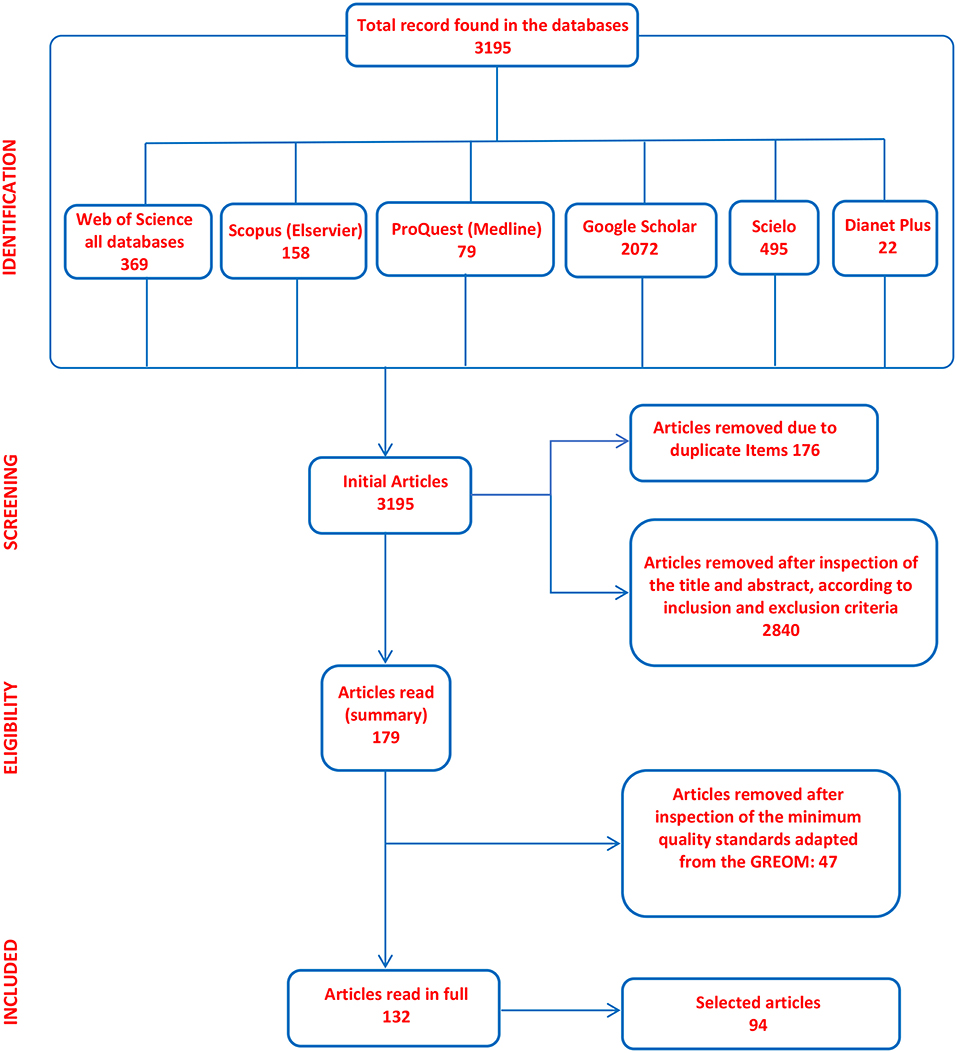
Figure 1. Selection process of primary documents.
Issues for Methodological Review
We have referred to the GREOM guide (Portell et al., 2015), which provides consistency and strength to the scientific logic of observational studies, when considering the following aspects:
Direct/Indirect Observation
Within the framework of Domain A of the GREOM, and the result of the conceptualization that has been carried out over the last few years, the difference between direct (Sánchez-Algarra and Anguera, 2013) and indirect observation (Anguera et al., 2018c; Anguera, 2019) has been clarified, which basically corresponds, respectively, to total or partial perceptivity. Direct observation is considered a situation in which the starting point is the recording of the game sessions and is, therefore, derived from visually perceptible information. On the contrary, works in which documentary, tabular or graphic information from a sports institution or companies that make these data bases, were considered as an indirect observation. This differentiation should barely affect the development of the stages of the procedure.
Observational Design
Domain B of the GREOM specifies the relevance of the observational design, which acts as a guideline for the researcher conducting the study. The concept of observational designs (Anguera et al., 2001, 2011) has contributed to consistency in the use of observation in sports (Anguera and Hernández-Mendo, 2014). A new flexible structure has been configured that channels scientific procedure from perceptible reality data, and a clear congruence has been fostered in the construction of instruments, in the decision about the data, and in possible subsequent data analyses.
Observation and Recording Instruments
Both instrument modalities are required in systematic observation studies. Bearing in mind that the observation instrument is of a non-standard nature, and has been tailor-made (ad hoc), following the GREOM guidelines its modality is specified (category system, field format, combination of field format and category system, or rating scales) (Anguera et al., 2007; Sánchez-Algarra and Anguera, 2013). It also indicates what recording instrument, a computer program (Hernández-Mendo et al., 2014), was used to carry out the recording and/or, where appropriate, what electronic device was used (such as tracking systems, and others).
Record Parameters
There are many types of records, from descriptive or non-systematized to those that are fully systematized, and that is what is required. In these, as proposed by Bakeman (1978), it is fundamental to differentiate between the primary record parameters, which are the three progressive levels of frequency, order and duration (Anguera et al., 2017b). Depending on the decision of each case, which is highly relevant, and congruent with the proposed observational design, the lines to follow with regards to data quality control and data analysis are set.
Data Quality
In systematic observation studies, perceptual (possible unobservability, vision field reduction, etc.) and interpretative difficulties are frequently found (discretion when applying the regulation, even if it is minimal, in certain actions), and records are therefore potentially affected by various types of biases (Anguera et al., 2018a), both in inter-observers, where appropriate training is relevant, and as intra-observers, which seeks to reveal interpretative stability. Currently, the interest in complementing quantitative and qualitative approaches in the same study when carrying out data quality control has increased (Arana et al., 2016). Ample documentation on data quality exists (Blanco-Villaseñor, 1991, 1993, 2001), and specific information from each work is collected.
Analysis of Data and Results Obtained
From the methodological structure of observational studies, data analysis is not a capricious or unsubstantiated question, but should depend on the observational design and the nature of the data (Blanco-Villaseñor et al., 2003). There is therefore a wide range of analytical possibilities, which are basically characterized as quantitative types of analysis that stem from qualitative data, responding to the integration of qualitative and quantitative elements that characterize mixed methods.
Results
Descriptive Analysis
Of the total articles (94) analyzed, 64 are written in English (68%), 23 in Spanish (24%), and 7 in Portuguese (7%). The first article in the systematic review that gathers scientific information on observational analysis of male elite football is from 1996. After 2000, an increase in the presence of these studies is observed
Next, different aspects related to the primary works are reviewed:
Country of Origin of the Institutions Where Authors Belong
As for the institutions to which the authors belong, the vast majority, 54% (51) include universities in Spain (considering the participation of all universities in Spain and agreements with other institutions), making it the country with the greatest representation. Brazil is second, with 14 (15%) universities and the United Kingdom third, with 10 (10%) institutions see Table 1.
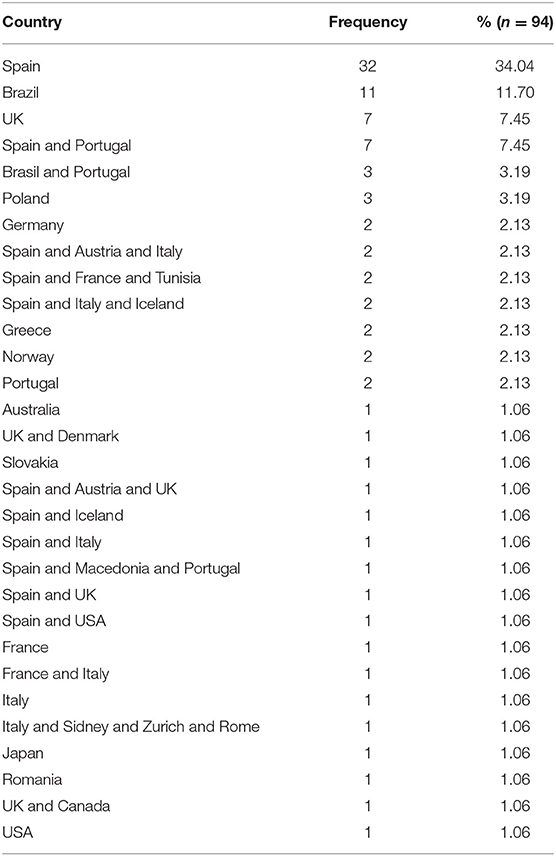
Table 1. Country of origin of the institutions where authors belong.
The vast majority (94.68%) of work come from universities, except for three articles that belong to a research institute (3.19%) and two others that do not specify their origin (2.12%).
Journals in Which Primary Studies Were Published and Impact Factor
The total number of journals in which the 94 articles were published was 36. Of this total, 14 [with 50 publications (53%)], have an impact factor, and 22 [with 44 publications (46%)], were not published in impact journals. The Journal of Sport Sciences presents the largest number of selected papers, with a total of 13 articles, which corresponds to 13.8% of all publications (94) and 36% of all journals (36), see Table 2.
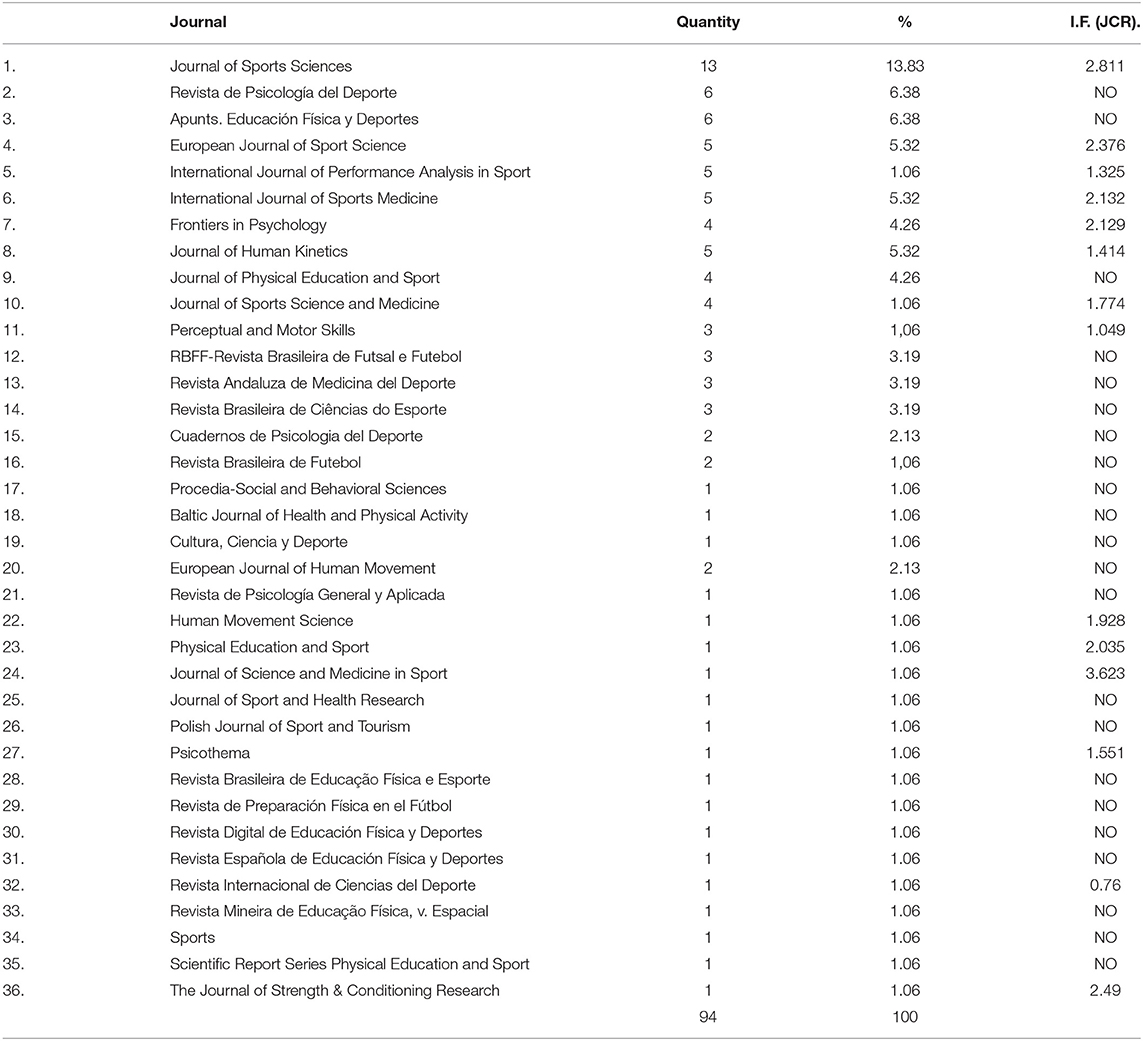
Table 2. Journals in which primary studies were published and impact factor.
Authors, Publication Years, Aim of Study, and Observed Events
The articles were ordered alphabetically by author, and they were assigned a numerical code, in order to facilitate their location and expedite their use. Table 3 presents authors, publication year, object of study, and observed events.
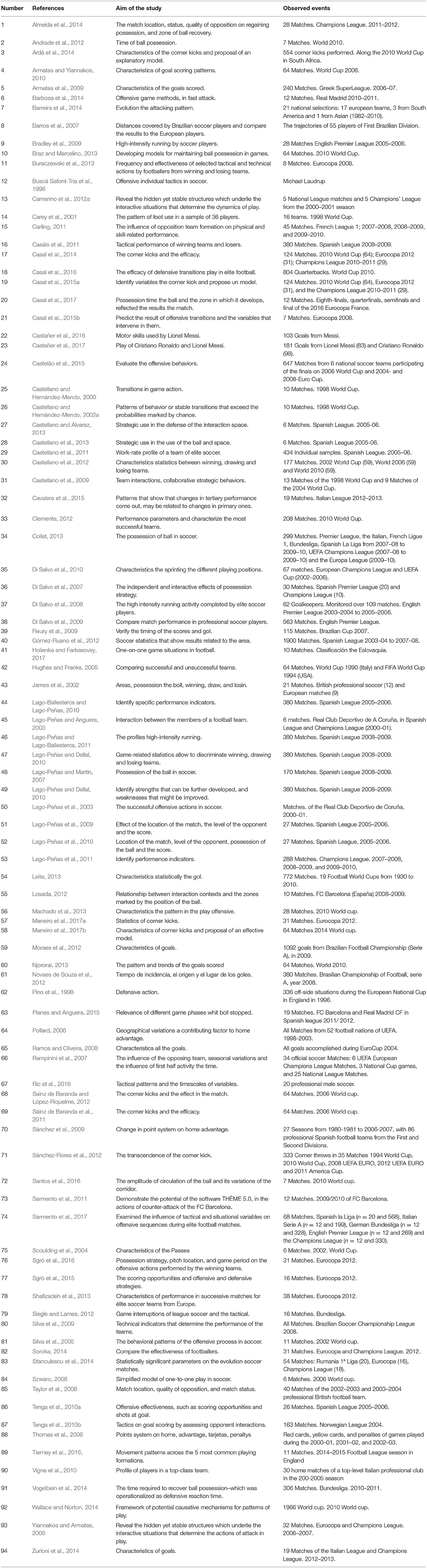
Table 3. Authors, publication years, object of study, and observed events.
Authors
Of the total selected articles, 10% (9) are signed by a single author and 90% (85) are a collaboration of two or more authors.
Object of study
In order to find common references among the different primary works, the following terms were selected from professional football, as categories coined as such by various authors, which allowed the development of an illustrative table: goal, corner, winning, draw, losing, possession balloon, pass, home and away, distance and speed, fouls, and cards, 1 × 1 duel, penalty, marking, number of attackers, free kick, number of defenders, tactic, transition, formation.
Once the object of study is identified in each of the articles, shown in Table 4, the specific football categories observed in each study are specified.
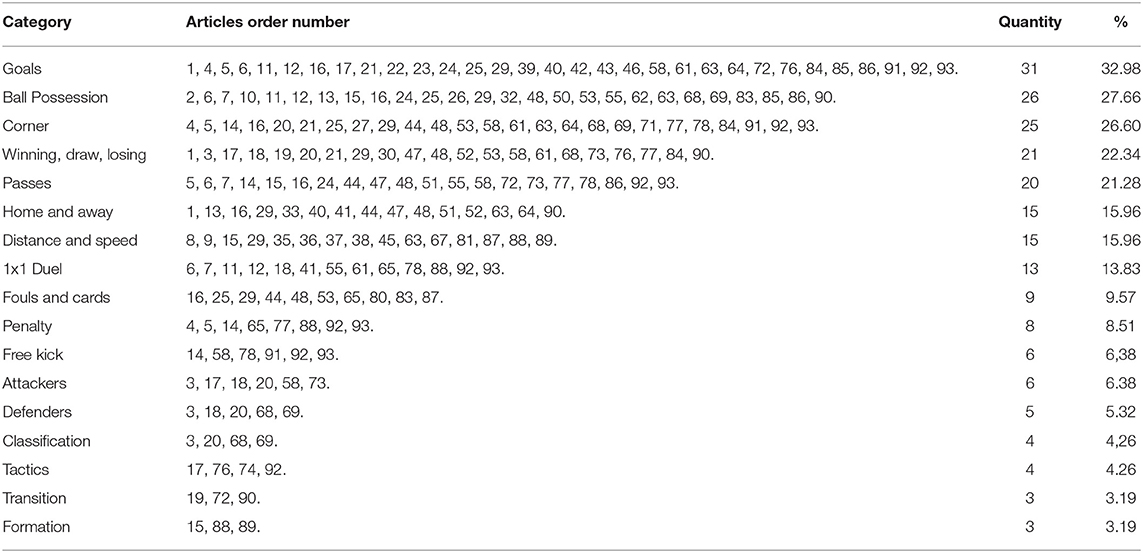
Table 4. Football-specific categories that are part of the object of study in reviewed articles.
The specific issues most studied were those related to the goal 32% (31), ball possession with 27% (26), corner with 27% (25), winning, drawing, losing with 23% (21), passes with 21% (20), Home and away and distance with 16% (15), each one; 1 × 1 duels with 14% (13), fouls and/or Red and/or yellow cards with 10% (9), penalty with 9% (8), attackers and free throws with 7% respectively (6), defenders 5% (5), Classification and tactics with 4% respectively, transition and formation with 3%, respectively. It is necessary to indicate that in almost all the primary documents, several questions are studied. The total articles in this paragraph thus exceeds 100%.
Item Observed events
We have considered it important to review it, although being very aware that the quantity of these do not imply a greater quality or depth of the analysis of the investigation.
In terms of the number of games studied, 24 analyzed between 1 and 20 games, 23 articles analyzed between 21 and 50 games, 21 articles analyzed between 101 and 500 games, 10 articles analyzed between 51 and 100 games and 7 articles analyzed more than 500 games. The rest of the articles analyzed isolated games or events that were not considered when selecting the number of events (hence the sum of these articles does not represent the total of the primary documents).
Four criteria can be distinguished, descending in number of articles: 1. Leagues, 2. World, 3. Other studies, and 4. Individual player analysis.
Leagues are competitions that generate the most interest in football reviewed works, with a total of 47 (50%) articles. The Champions League (15) is the most studied; followed by the Spanish League (14), the Premier League (6), La Liga Italiana (4); The French and the Bundesliga, with 3 investigations respectively; and finally an article from each of the following leagues: Brazilian, Norwegian League, Greek Super League and the League of Romania. It is necessary to clarify that more than one event could be studied in the same article, although in this study we tried to discriminate between them or explain each one separately, and therefore the sum of frequencies is not the total of the primary documents used.
World Cups occupy the second place as a study event, with a total of 30 (29%) investigations. The most studied world cup is South Africa 2010, which presents 11 articles; followed by Germany 2006 (6); France 1998 (5); continues Japan 2002 (3), and sharing last place; 1994, 2004, 1990, Italy 1990 and Brazil 2014 all with one investigation.
The third place of research interest is occupied by various sporting events, with 18 (19%) articles on the UEFA European Championships in different periods. There are also other articles that focus on games played in several world cups, seasons or championships which were followed for several years. Finally, teams from Brazil, Slovakia, Spain, and England were studied in their own nation's championships and/or in several seasons.
In fourth place there are single case studies focused on the in-depth study of an athlete, and that correspond to Messi and Laudrup, individually for each, in one case, and to Messi and Ronaldo, comparatively, in another.
Methodological Review of the Selected Articles
According to Gough et al. (2012) and Gough (2015), we can prioritize particular characteristics. In this sense, to carry out an adequate screening we have chosen to identify the basic methodological characteristics of the published work, with acute awareness that the option for each one indicates a certain procedural positioning.
The methodological review of the primary documents has been carried out according to the aspects outlined in section Issues for methodological review.
Table 5 shows the 94 primary works related to the analytical review carried out. We try to show the existing procedural differences between primary documents that are manifested from the GREOM application. This allowed us to detect that statistically significant differences exist in the comparison of the following procedural aspects:
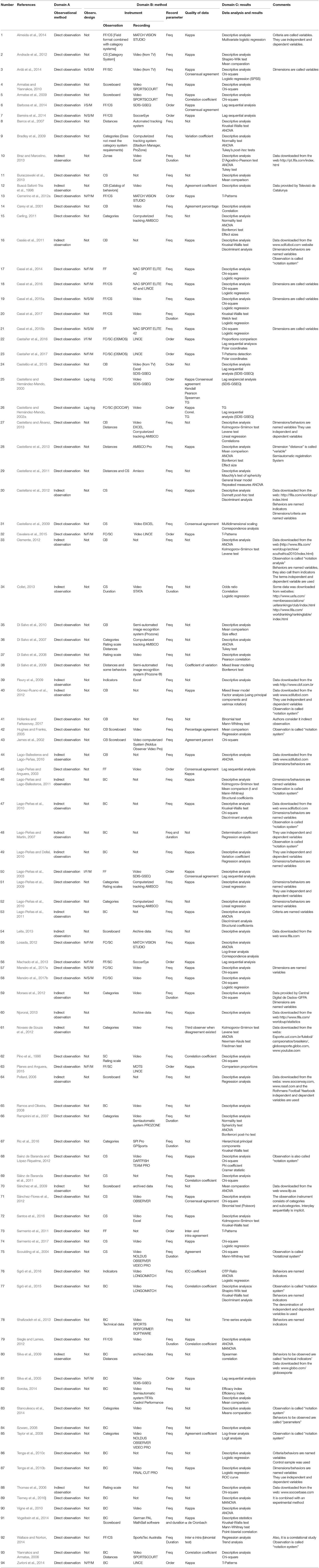
Table 5. Analytical review of primary works according to a GREOM adaptation (Portell et al., 2015).
(a) Directobservation vs.indirect observation,(b) observational design(IPU: Idiographic/Point/Unidimensional, NPU: Nomothetic/Point/Unidimensional, IFU: Idiographic/Follow-up/Unidimensional,NFU: Nomothetic/Follow-up/Unidimensional,IPM: Idiographic/Point/Multidimensional,NPM: Nomothetic/Point/Multidimensional,IFM: Idiographic/Follow-up/Multidimensional,NFM: Nomothetic/Follow-up/Multidimensional)vs. no observational design, (c) frequency vs. order parameter, (d) data quality control vs. no data quality control, (e) only descriptive analysis vs. non-descriptive data analysis, and (f) only descriptive analysis vs. detection of regularities (although this one with less statistical significance).
Additionally, comments are included regarding relevant information not included in the previous methodological structure, constructed according to the selected minimums of GREOM.
Using the 94 primary documents, a detailed comparison analysis of proportions has been made in order to know if there is a statistically significant difference between the indicators of the methodological procedure specified in GREOM, considered in Table 5 (see Table 6). Among the results obtained, the highly significant difference, compared to the initial approach of the study, between the use of direct observation vs. indirect observation stands out, as well as that of an observational design proposal compared to those who did not propose it. Similarly, among the primary works studied, there is also statistically significant differences between studies in which only the frequency parameter was used in comparison to those based on order and duration parameters. A significant difference was also found between the authors who carried quality controlled the data and those who did not. Finally, there was also a significant difference between authors who only used descriptive statistics compared to those who used other analysis techniques (although some of them also made a descriptive analysis).
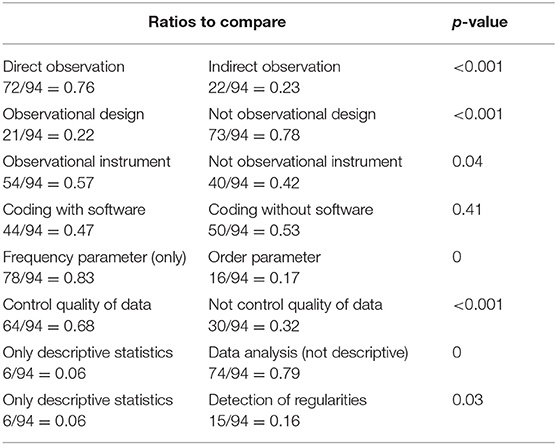
Table 6. Proportion comparisons corresponding to quality indicators of the observational methodology.
From the results obtained, we can suggest some methodological profiles that emerge from the primary documents analyzed, which are presented in Table 7. This proposal of methodological profiles for primary articles is based on the detailed methodological revision (Table 5) and provides five possibilities that offer a gradation of methodological consistency in descending order. Except for the E (Miscellaneous) profile, they constitute procedural schemes that are of interest and can be considered as reference guides for new works in this area.
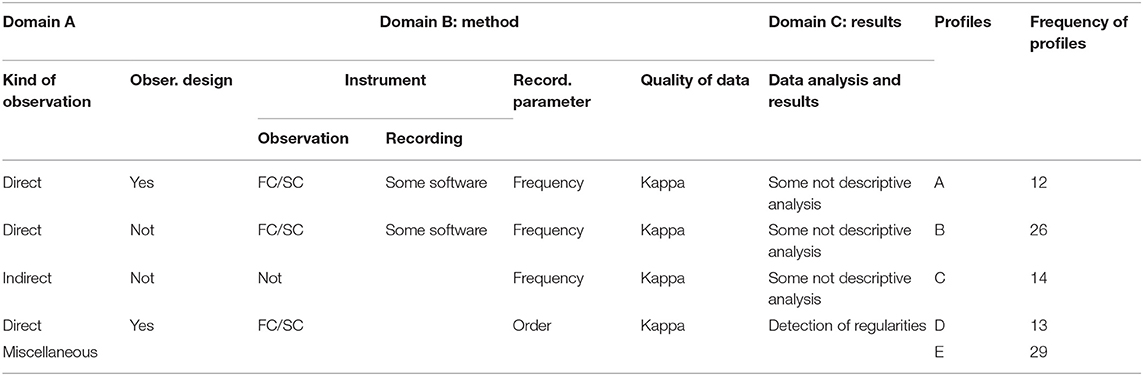
Table 7. Profiles that emerge from the systematic review.
Discussion
This systematic mixed study review has been carried out in order to synthesize 92 observational studies on elite male football. It continues by first stating some aspects derived from the descriptive analysis, and then refers to the mixed method approach. Next, some aspects derived from the descriptive analysis are exposed, and then refers to mixed method approaches.
Descriptive Perspective Discussion
From a descriptive perspective, the country of origin of the authors institutions, the journals in which the articles are published and their range in terms of impact factor, authors and publication year, object of study, observed events, basic football categories, and different types of events were considered as substantial aspects.
Country of Origin of the Institutions Where Authors Belong
Table 1 shows the country of origin of the institutions where authors belong. The country which corresponds to the majority of the institutions where authors belong is Spain (32), which represent 33.68% of the total primary documents, and with 54% participation from other institutions (51). This data has a double interpretation: on the one hand, Spain has some of the best football teams in the world and also has a large number of followers. On the other hand, the development of observational methodology is vanguard in that country, which is evident by the development carried out in the last two decades as well as the growing number of publications in scientific journals, especially in computer program construction (Hernández-Mendo et al., 2014), generalizability theory development (Blanco-Villaseñor, 2001), the application of certain quantitative analytical techniques aimed at detecting behavior patterns, such as sequential analysis of delays (Bakeman and Quera, 2011; Lapresa et al., 2013, as a sample, according Bakeman, 1978), polar coordinate analysis (Castañer et al., 2017, as a sample, following Sackett, 1980), or T-Pattern detection (Jonsson et al., 2006, as a sample, following seminal works of Magnusson, 1996, 2000, 2018), which combine the two characteristics of suitability for categorical data as well as providing relative information about the structure of regularities detected in the game from different approaches.
We also have 11 articles with Brazilian authors, occupying the second place. It is explained by the great interest that football arouses in Brazil, although publication quality is not highlighted, most are not in English nor of high impact, and it is necessary for observational methodology to be further developed.
The third country with the highest number of authors of origin is England, where there is also a great fondness for football and high interest in match analysis.
Journals in Which the Articles Were Published in and Impact Factor
As reflected in Table 2, the primary documents were published in 36 journals, highlighting the Journal of Sports Sciences with 12 primary documents (13% of the total), which has an impact factor of 2,539 (2016), in quartile 1.
With 32% of articles were published in impact factor journals such as the Journal of Human Kinetics, European Journal of Sport Science, International Journal of Performance Analysis in Sport, International Journal of Sports Medicine, Frontiers in Psychology, and all with 5% and 4% contributions, indicating between 5 and 4 articles published. A very similar percentage among all of them indicates that, although with some variation, that all journals have a very similar interest in this type of research.
Of the 36 journals in which primary documents of this research have been published, 22 have an impact factor, which represents 77% of the total. From this we interpret that these journals are interested in publishing research carried out through observational methodology.
Authors, Publication Year, Object of Study, and Observed Events
In terms of the number of games studied per investigation, the largest number of articles, 22, studied between 1 and 20 games, 20 articles analyzed between 21 and 50 games, 18 articles studied between 101 and 500 games, 9 articles analyzed between 51 and 100 games and 6 articles analyzed more than 500 games.
Football-Specific Categories That Are Part of the Object of Study in Reviewed Articles
Table 4 shows how goals occupy the central place of interest, in line with the words of Roffé et al. (2007, p. 228), “In the sport of football, the most important event that can happen during a competition is probably the goal, for any of the two opponents. It is evident that there are others (substitutions, expulsions, errors, half part) that also have a certain value, but that may not have the determining capacity of the goal in the final result.” The goal was observed in 31 investigations, in 34% of cases. The second place of interest is ball possession, which is very important in football and was studied on 26 occasions. Third, stand out corner kicks considered as strategic plays, were observed in 28 primary documents, which shows the great importance of this type of play, not only for researchers but for football in general.
On the other hand, we can see that the events that garnered the most interest are those that received most coverage through the media and those that are more often followed by soccer fans, such as football world championships, championship competitions and national leagues. Investigating at an individual level the most outstanding players called, “prodigies,” are also interesting, such as Messi, Ronaldo, or Laudrup.
Methodological Approach
In accordance with the Guidelines for reporting evaluations based on observational methodology (GREOM) (Portell et al., 2015), recognized by EQUATOR Network, the analytical review of primary documents has allowed to evidence the procedural profile of each work, from the approach of the observational methodology.
In Table 6 the methodological structure of each primary document is presented in detail, which has allowed for a procedural profile extraction, considering the A domains corresponding to the observation type (direct/indirect); B, corresponding to Method (observational design, observation and recording instrument, primary parameter of registration, and data quality control); and C, corresponding to data analysis.
From the detailed analysis of each primary document it has been possible, on the one hand, to make a proportional comparison between the compliance or lack thereof of different methodological aspects (see Table 6); and, on the other, to extract different profiles, which allow us to reflect on the mixed methods perspective (see Table 7).
Systematic Mixed Study Review Discussion
According to the profile that should characterize it, the integration made between qualitative and quantitative elements stands out, as required by the mixed method perspective, and from a double point of view.
On the one hand, the primary documents conform to the observational methodology, and in certain cases it can be considered a mixed method in itself. In Anguera and Hernández-Mendo (2016), it is argued that the observational methodology approach, based on qualitative-quantitative complementarity, consists of an orderly succession of stages, which are: 1) obtaining qualitative data, 2) progressive transformation in a quantification record process—although the quantitizing that we propose is not used by Tashakkori and Teddlie (1998) or Sandelowski et al. (2009), 3) quantitative treatment of information from analytical techniques adequate for categorical data (Anguera et al., 2014), 4) Result interpretation with a return to qualitative data, perfectly embedded in mixed methods.
Classical authors in the mixed methods discipline, such as Creswell et al. (2003, p. 233), refer to quantification, as we have indicated in the Introduction. But the great difference with observational methodology (Anguera et al., 2017b), in favor of it, is that quantification is more robust, since it is not only based on the counting of behavior occurrences, such as frequency, but in other primary parameters (Bakeman, 1978; Anguera et al., 2001; Bakeman and Quera, 2011; Quera, 2018) such as order and duration, which present a progressive order of inclusion.
Deepening this issue further, in Anguera et al. (2017b), it is clearly argued that quantification (also known as “quantitizing”) in observational methodology is particularly robust, and the progressive inclusion order of the primary frequency-order-duration parameters (Bakeman, 1978) refers to the fact that frequency is the parameter that provides the least information, order adds sequence information essential for the detection of regularities (patterns of behavior) and knowing the structure that emerges from recorded data—and duration adds to order and frequency time units that can successfully contribute to modulating regularities and structure information.
In Anguera et al. (2017b, p. 6) it is said: “This specific consideration of the order parameter is crucial for detecting hidden structures through the quantitative analysis of relationships between different codes in systematized observational datasets (…). Precisely because it contains information on order and duration, the initial data set, which is derived from an extremely rich qualitative component, can be analyzed using a wide range of quantitative techniques, producing a set of quantitative results that are then interpreted qualitatively, permitting seamless integration.” Consequently, the order parameter is essential in this quantitizing that we contemplate, and that we collected in profile D of Table 7. This shows how the 13 primary documents that form it can be considered mixed methods themselves, by realizing the quantitizing using the order parameter from the registry. Furthermore, as a result of this quantitizing power, it is possible to perform a powerful quantitative analysis, such as the lag sequential analysis (Lago-Peñas and Anguera, 2003; Silva et al., 2005; Barbosa et al., 2013; Lapresa et al., 2013; Barreira et al., 2014) and more recently, the polar coordinates analysis (Castellano and Hernández-Mendo, 2002b; Castañer et al., 2016, 2017; Aragón et al., 2017), or T-Pattern detection (Cavalera et al., 2015; Amatria et al., 2017; Lapresa et al., 2018), all of them originating from qualitative data.
From another point of view, an integration between qualitative and quantitative elements was also made here: the qualitative review was carried out on different procedural aspects of the GREOM in all primary documents and the quantitative analysis made by the proportion comparison (Table 6) allowed us to delimit the different methodological approaches made in systematic observation studies and to quantitatively know to what extent they have been contemplated in the primary documents.
Limitations
As in all research work, different limitations should be noted:
a) Traditionally, few mixed methods studies have been published in the field of Sports Science, as evidenced in Table 1 of Anguera et al. (2017b). The number of studies is smaller if we focus on observational studies (Camerino et al., 2012b), with even fewer studies on elite male football.
b) There is still no methodological “culture” on systematic observation in the case of some authors, and a consequence of this limitation is the high number of works in the E profile (Miscellanous), in which there are missing elements that we consider substantial for this methodology.
c) We previously referred (section Journals in which primary studies were published and impact factor) that 22 of the journals that primary documents were selected from for this study have no impact factor. Although a minority in comparison to the total, we would have preferred better data.
Conclusions
Based on a careful selection of 94 primary documents, a systematic mixed study review of observational studies in elite male football has been carried out. A comprehensive synthesis of evidence the aim of this study, which was reached after conducting a rigorous review of primary documents from different points of view.
A rare feature, but on which authors have placed special emphasis, is to consider this review both from the methodological approach and substantive approach.
For the systematic review carried out, the mixed methods perspective was adopted because it is one of the most relevant approaches on the field. This method is extremely powerful and is considered the best analysis approach for scientific studies on football. Within this approach, observational methodology is the leitmotiv that structures all elite male football studies, and GREOM is used as the guiding thread. Consistent with this approach, each of the different essential aspects were considered in the revision of the primary documents, and the differences between them have been assessed. Likewise, some profiles have been developed that allow methodological characterization of each of the primary documents.
Finally, we position ourselves in the mixed methods perspective, with the desire to integrate qualitative and quantitative elements in conventional systematic reviews, and have thus added the preparation of some methodological profiles which open new perspectives.
Data Availability Statement
The datasets generated for this study are available on request to the corresponding author.
Author Contributions
MP developed the initial idea and the project and drafted the manuscript. MA contributed to the development of project from methodological side. MO and DL contributed to development of manuscript. All authors approved the submitted version of the mansucript.
Conflict of Interest
The authors declare that the research was conducted in the absence of any commercial or financial relationships that could be construed as a potential conflict of interest.
Acknowledgments
The authors gratefully acknowledge the support of a Spanish government subproject Integration ways between qualitative and quantitative data, multiple case development, and synthesis review as main axis for an innovative future in physical activity and sports research [PGC2018-098742-B-C31] (2019–2021) (Ministerio de Ciencia, Innovación y Universidades, Programa Estatal de Generación de Conocimiento y Fortalecimiento Científico y Tecnológico del Sistema I+D+i), that is part of the coordinated project New approach of research in physical activity and sport from mixed methods perspective (NARPAS_MM) [SPGC201800X098742CV0]. In addition, the second author thanks the support of the Generalitat de Catalunya Research Group, GRUP DE RECERCA I INNOVACIÓ EN DISSENYS (GRID). Tecnología i aplicació multimedia i digital als dissenys observacionals [Grant number 2017 SGR 1405]. Also, this study was funded by grants from the University of La Rioja. MP also recognizes the support of the University of Barcelona (Vice-Rectorate for Doctorate and Research Promotion) for the funds it obtained.
References
Almeida, C. H., Ferreira, A. P., and Volossovitch, A. (2014). Effects of match location, match status and quality of opposition on regaining possession in UEFA Champions League. J. Hum. Kinet. 41, 203–214. doi: 10.2478/hukin-2014-0048
Amatria, M., Lapresa, D., Arana, J., Anguera, M. T., and Jonsson, G. K. (2017). Detection and selection of behavioral patterns using Theme: a concrete example in grassroots soccer. Sports 5:20. doi: 10.3390/sports5010020
Andrade, M. O. C., Padilha, M., Costa, I. T., and de Pesquisa, N. (2012). Análise da posse de bola da seleção espanhola na Copa do Mundo de futebol FIFA-África do Sul/2010: estudo comparativo entre as fases classificatória e eliminatória. Revista Mineira Educação Física Espacial 2071–2079.
Anguera, M. T. (1979). Observational typology. Quality and Quantity. Eur. Am. J. Methodol. 13, 449–484. doi: 10.1007/BF00222999
Anguera, M. T. (2003). “Observational methods (General),” in Encyclopedia of Psychological Assessment, Vol. 2, ed R. Fernández-Ballesteros (London: Sage, 632–637.
Anguera, M. T. (2019). “Desarrollando la Observación Indirecta: Alcance, Proceso, y Habilidades Metodológicas en el Análisis de Textos [Developing Indirect Observation: Scope, Process, and Methodological Skills in the Analysis of Texts],” in Patrones de habilidades metodológicas y conceptuales de análisis, evaluación e intervención en ciencias del comportamiento, ed. C. Santoyo (Mexico: UNAM/PAPIIT), IN306715.
Anguera, M. T. (2020). “Is it possible to perform “Liquefying” actions in conversational analysis? The detection of structures in indirect observation,” in The Temporal Structure of Multimodal Communication, Vol. 164, eds L. Hunyadi and I. Szekrényes (Cham: Intelligent Systems Reference Library; Springer), 45–67. doi: 10.1007/978-3-030-22895-8_3
Anguera, M. T., and Blanco-Villaseñor, A. (2003). “Registro y codificación en el comportamiento deportivo [Recording and coding in sports behavior],” in Psicología del Deporte, Vol. 2. Metodología. (Buenos Aires: Efdeportes), 6–34. Available online at: www.efdeportes.com
Anguera, M. T., Blanco-Villaseñor, A., Hernández-Mendo, A., and Losada, J. L. (2011). Diseños observacionales: ajuste y aplicación en psicología del deporte [Observational designs: their suitability and application in sports psychology]. Cuadernos Psicol. Deporte 11, 63–76.
Anguera, M. T., Blanco-Villaseñor, A., and Losada, J. L. (2001). Diseños Observacionales, cuestión clave en el proceso de la metodología observacional [Observational designs: a key in the process of observational metodology]. Metodol. Ciencias Comportamiento 3, 135–161.
Anguera, M. T., Blanco-Villaseñor, A., Losada, J. L., and Portell, M. (2018a). Pautas para elaborar trabajos que utilizan la metodología observacional [Guidelines for designing and conducting a study that applies observational methodology]. Anuario Psicol. 48, 9–17. doi: 10.1016/j.anpsic.2018.02.001
Anguera, M. T., Blanco-Villaseñor, A., Losada, J. L., Sánchez-Algarra, P., and Onwuegbuzie, A. J. (2018b). Revisiting the difference between mixed methods and multimethods: is it all in the name? Quality and Quantity 52, 2757–2770. doi: 10.1007/s11135-018-0700-2
Anguera, M. T., Camerino, O., Castañer, M., and Sánchez-Algarra, P. (2014). Mixed methods en actividad física y deporte [Mixed methods in research into phisical activity and sport]. Rev. Psicol. Deporte 23, 123–130.
Anguera, M. T., Camerino, O., Castañer, M., Sánchez-Algarra, P., and Onwuegbuzie, A. J. (2017a). The specificity of observational studies in physical activity and sports sciences: moving forward in mixed methods research and proposals for achieving quantitative and qualitative symmetry. Front. Psychol. 8:2196. doi: 10.3389/fpsyg.2017.02196
Anguera, M. T., and Hernández-Mendo, A. (2014). Metodología observacional y psicología del deporte. Estado de la cuestión [Observational methodology and sports psychology: state of affairs]. Revista de Psicol. Deporte 23, 103–109.
Anguera, M. T., and Hernández-Mendo, A. (2016). Avances en estudios observacionales en Ciencias del Deporte desde los mixed methods [Advances in mixed methods observational studies in sports sciences]. Cuadernos Psicol. Deporte 16, 17–30. doi: 10.4321/S1578-84232015000100002
Anguera, M. T., and Hernández-Mendo, A. (2019). Quantitizing y Synthetizing en el Análisis de Eventos en Psicología del Deporte. ¿Vías Conectadas? Cuadernos de Psicología del Deporte, 19, editorial invitada
Anguera, M. T., Jonsson, G. K., and Sánchez-Algarra, P. (2017b). Liquefying text from human communication processes: a methodological proposal based on T-pattern detection. J. Multimodal Commun. Stud. 4, 10–15.
Anguera, M. T., Magnusson, M. S., and Jonsson, G. K. (2007). Instrumentos no estándar [Non-standard instruments]. Avances Med. 5, 63–82.
Anguera, M. T., Portell, M., Chacón-Moscoso, S., and Sanduvete-Chaves, S. (2018c). Indirect observation in everyday contexts: Concepts and methodological guidelines within a mixed methods framework. Front. Psychol. 9:13. doi: 10.3389/fpsyg.2018.00013
Aragón, S., Lapresa, D., Arana, J., Anguera, M. T., and Garzón, B. (2017). An example of the informative potential of polar coordinate analysis: sprint tactics in elite 1500 m track events. Meas. Phys. Educ. Exerc. Sci. 16, 279–286. doi: 10.1080/1091367X.2016.1245192
Arana, J., Lapresa, D., Anguera, M. T., and Garzón, B. (2016). Ad hoc procedure for optimising agreement between observational records. Anales Psicol. 32, 589–595. doi: 10.6018/analesps.32.2.213551
Ardá, T., Maneiro, R., Rial, A., Losada, J. L., and Casal, C. A. (2014). Análisis de la eficacia de los saques de esquina en la copa del mundo de fútbol 2010. Un intento de identificación de variables explicativas [Efficiency analysis of corner kicks in the 2010 World Cup. Trying to identify the explanatory variables]. Revista Psicol. Deporte 23, 165–172.
Armatas, V., and Yiannakos, A. (2010). Analysis and evaluation of goals scored in 2006 World Cup. J. Sport Health Res. 2, 119–128.
Armatas, V., Yiannakos, A., Papadopoulou, S., and Skoufas, D. (2009). Evaluation of goals scored in top ranking soccer matches: Greek “Super League” 2006-07. Serbian J. Sports Sci. 3, 39–43.
Bakeman, R. (1978). “Untangling streams of behavior: sequential analysis of observation data,” in Observing Behavior, Vol. 2: Data Collection and Analysis Methods, ed G. P. Sackett (Baltimore, MD: University of Park Press, 63–78.
Bakeman, R., and Gottman, J. M. (1997). Observing Interaction. An Introduction to Sequential Analysis, 2nd Edn. Cambridge: Cambridge University Press. doi: 10.1017/CBO9780511527685
Bakeman, R., and Quera, V. (2011). Sequential Analysis and Observational Methods for the Behavioral Sciences. Cambridge: Cambridge University Press. doi: 10.1017/CBO9781139017343
Barbosa, A., Sarmento, H., Anzano, A., Anguera, M. T., and Campaniço, J. (2013). Estudo dos métodos de jogo ofensivo no futebol: Circunscrição das ações de desenvolvimiento com a ativação zonal [Study of offensive play methods in football: cicumscription of develooment actions with zonal activation]. Revista Mineira Educação Fisica 9, 593–599.
Barbosa, A., Sarmento, H., Neto, J., and Campaniço, J. (2014). Fast attack starts, in soccer. Analysis of Real Madrid. J. Phys. Educ. Sport 14:164. doi: 10.7752/jpes.2014.02026
Barreira, D., Garganta, J., Castellano, J., Prudente, J., and Anguera, M. T. (2014). Evolución del ataque en el fútbol de élite entre 1982 y 2010: Aplicación del análisis secuencial de retardos [Evolution of attacking patterns in elite-level football between 1982 and 2020: the application of lag sequential analysis]. Revista Psicol. Deporte 23, 139–146.
Barros, R. M., Misuta, M. S., Menezes, R. P., Figueroa, P. J., Moura, F. A., Cunha, S. A., et al. (2007). Analysis of the distances covered by first division Brazilian soccer players obtained with an automatic tracking method. J. Sports Sci. Med. 6, 233–242.
Biddle, S. J. H. (1997). Current trends in sport and exercise psychology research. Psychologist 10, 63–69.
Blanco-Villaseñor, A. (1991). La teoría de la generalizabilidad aplicada a diseños observacionales [Generalizability theory applied to observational designs]. Revista Mexicana Análisis Conducta 17, 23–63.
Blanco-Villaseñor, A. (1993). “Fiabilidad, precisión, validez y generalización de los diseños observacionales” [Reliability, precisión validity and observational designs generalization], in Metodología Observacional en la Investigación Psicológica, ed M. T. Anguera (Barcelona: P.P.U., 149–261
Blanco-Villaseñor, A. (2001). Generalizabilidad de observaciones uni y multifaceta: estimadores LS y ML [Generalizability of mono and multifaceted observations: LS and ML estimators]. Metodol. Ciencias Comportamiento 3, 161–193.
Blanco-Villaseñor, A., Losada, J. L., and Anguera, M. T. (2003). Analytic techniques in observational designs in environment behavior relation. Medio Ambiente Comportamiento Humano 4, 111–126.
Bradley, P. S., Sheldon, W., Wooster, B., Olsen, P., Boanas, P., and Krustrup, P. (2009). High-intensity running in English FA Premier League soccer matches. J. Sports Sci. 27, 159–168. doi: 10.1080/02640410802512775
Braz, T. V., and Marcelino, V. R. (2013). Modelos de manutençã da posse de bola em jogos da FIFA World Cup 2010 [Ball possession maintenance models in FIFA World Cup 2010 matches]. Revista Brasileira Futsal Futebol 5, 90–99.
Buraczewski, T., Cicirko, L., and Gawlik, D. (2013). Differentiated analysis of offensive actions by football players in selected matches from The Euro 2008. Polish J. Sport Tourism 20, 188–193. doi: 10.2478/pjst-2013-0017
Buscá Safont-Tria, B., Pont Nicolau, J., Artero Traver, V., and Riera, J. (1996). Propuesta de análisis de la táctica individual ofensiva en el fútbol [Individual offensive tactics proposed analysis in football]. Apunts 43, 63–74.
Camerino, O., Castañer, M., and Anguera, M. T. (2012b). Mixed Methods Research in the Movement Sciences: Case Studies in Sport, Physical Education and Dance. Abingdon: Routledge. doi: 10.4324/9780203132326
Camerino, O. F., Chaverri, J., Anguera, M. T., and Jonsson, G. K. (2012a). Dynamics of the game in soccer: detection of T-patterns. Eur. J. Sport Sci. 12, 216–224. doi: 10.1080/17461391.2011.566362
Carey, D. P., Smith, G., Smith, D. T., Shepherd, J. W., Skriver, J., Ord, L., et al. (2001). Footedness in world soccer: an analysis of France'98. J. Sports Sci. 19, 855–864. doi: 10.1080/026404101753113804
Carling, C. (2011). Influence of opposition team formation on physical and skill-related performance in a professional soccer team. Eur. J. Sport Sci. 11, 155–164. doi: 10.1080/17461391.2010.499972
Casáis, L., Lago-Peñas, C., Lago-Ballesteros, J., Iglesias, S., and Gómez, M. (2011). Indicadores de rendimiento competitivo que diferencias equipos ganadores y perdedores de la liga española [Competitive performance indicators that differentiate successful and unsuccessful teams of the Spanish league]. Revista Preparación Física en el Fútbol. 2, 44–53.
Casal, A. C., Maneiro, R., Ardá, T., Losada, J. L., and Rial, A. (2014). Effectiveness of indirect free kicks in elite soccer. Int. J. Perform. Anal. Sport 14, 744–760. doi: 10.1080/24748668.2014.11868755
Casal, C. A., Andújar, M. A., Losada, J. L., Ardá, T., and Maneiro, R. (2016). Identification of defensive performance factors in the 2010 FIFA World Cup South Africa. Sports 4:54. doi: 10.3390/sports4040054
Casal, C. A., Losada, J. L., and Ardá, T. (2015b). Análisis de los factores de rendimiento de las transiciones ofensivas en el fútbol de alto nivel [Role conflict and team conflict as debilitators of collective efficacy]. Revista Psicol. Deporte 24, 103–110.
Casal, C. A., Maneiro, R., Ardá, T., Losada, J. L., and Rial, A. (2015a). Analysis of corner kick success in elite football. Int. J. Perform. Anal. Sport 15, 430–451. doi: 10.1080/24748668.2015.11868805
Casal, C. A., Maneiro, R., Ardá, T., Marí, F. J., and Losada, J. L. (2017). Possession zone as a performance indicator in football. The game of the best teams. Front. Psychol. 8:1176. doi: 10.3389/fpsyg.2017.01176
Castañer, M., Barreira, D., Camerino, O., Anguera, M. T., Canton, A., and Hileno, R. (2016). Goal scoring in soccer: a polar coordinate analysis of motor skills used by lionel messi. Front. Psychol. 7:806. doi: 10.3389/fpsyg.2016.00806
Castañer, M., Barreira, D., Camerino, O., Anguera, M. T., Fernandes, T., and Hileno, R. (2017). Mastery in goal scoring, T-pattern detection and polar coordinate analysis of motor skills used by Lionel Messi and Cristiano Ronaldo. Front. Psychol. 8:741. doi: 10.3389/fpsyg.2017.00741
Castelão, D. P., Garganta, J., Afonso, J., and da Costa, I. T. (2015). Análise sequencial de comportamentos ofensivos desempenhados por seleções nacionais de futebol de alto rendimento. Revista Brasileira Ciências Esporte 37, 230–236. doi: 10.1016/j.rbce.2015.05.001
Castellano, J., and Álvarez, D. (2013). Uso defensivo del espacio de interacción en fútbol. RICYDE [Defensive use of the interaction space in football. RICYDE]. Revista Internacional Ciencias Deporte 9, 126–136. doi: 10.5232/ricyde2013.03203
Castellano, J., Alvarez, D., and Bradley, P. S. (2014). Evaluation of research using computerised tracking systems (Amisco® and Prozone®) to analyse physical performance in elite soccer: a systematic review. Sports Med. 44, 701–712. doi: 10.1007/s40279-014-0144-3
Castellano, J., Álvarez-Pastor, D., and Blanco-Villaseñor, Á. (2013). Análisis del espacio de interacción en fútbol [Analyzing the space for interaction in soccer]. Revista Psicol. Deporte 22, 437–446.
Castellano, J., Blanco-Villaseñor, A., and Alvarez, D. (2011). Contextual variables and time-motion analysis in soccer. Int. J. Sports Med. 32, 415–421. doi: 10.1055/s-0031-1271771
Castellano, J., Casamichana, D., and Lago, C. (2012). The use of match statistics that discriminate between successful and unsuccessful soccer teams. J. Hum. Kinet. 31, 137–147. doi: 10.2478/v10078-012-0015-7
Castellano, J., Hernández Mendo, A., Morales, V., and Anguera, M. T. (2007). Optimizing a probabilistic model of the development of play in soccer. Quality and Quantity. Int. J. Methodol. 41, 93–104. doi: 10.1007/s11135-005-3148-0
Castellano, J., and Hernández-Mendo, A. (2000). Análisis secuencial en el fútbol de rendimiento [Sequential analysis in soccer]. Psicothema 12, 117–121.
Castellano, J., and Hernández-Mendo, A. (2002a). Análisis diacrónico de la acción de juego en fútbol [Diachronic analysis of game action in soccer]. Revista Digital Educación Física Deportes 49, 1–5.
Castellano, J., and Hernández-Mendo, A. (2002b). Aportaciones del análisis de coordenadas polares en la descripción de las transformaciones de los contextos de interacción defensivos en Fútbol [Polar coordinates analysis contributions in the description of defensive interaction contexts transformations in Football]. Cronos 1, 42–48.
Castellano, J., Hernández-Mendo, A., and Morales-Sánchez, V. (2009). Una propuesta para estimar la cohesión en los equipos de fútbol [A proposal to estimate the cohesion of football teams]. Revista Psicol. Gen. Aplicada 62, 63–74.
Cavalera, C., Diana, B., Elia, M., Guldberg, K. J., Zurloni, V., and Anguera, M. T. (2015). T-pattern analysis in soccer games: relationship between time and attack actions. Cuadernos Psicologia Deporte 15, 41–50. doi: 10.4321/S1578-84232015000100004
Chacón-Moscoso, S., Sanduvete-Chaves, S., Anguera, M. T., Losada, J. L., Portell, M., and Lozano-Lozano, J. A. (2018). Preliminary checklist for reporting observational studies in sports areas: content validity. Front. Psychol. 9:291. doi: 10.3389/fpsyg.2018.00291
Clemente, F. M. (2012). Study of successful teams on FIFA World Cup 2010 through Notational Analysis. Pamukkale J. Sport Sci. 3, 90–103.
Collet, C. (2013). The possession game? A comparative analysis of ball retention and team success in European and international football, 2007–2010. J. Sports Sci. 31, 123–136. doi: 10.1080/02640414.2012.727455
Creswell, J. W., and Plano Clark, V. L. (2011). Designing and Conducting Mixed Methods Research. Thousand Oaks, CA: SAGE.
Creswell, J. W., Plano Clark, V. L., Gutmann, M. L., and Hanson, W. E. (2003). “Advanced mixed methods research designs,” in Handbook of Mixed Methods in Social and Behavioral Research, eds A. Tashakkori, and C. Teddlie (Thousand Oaks, CA: Sage, 209–249.
Di Salvo, V., Baron, R., González-Haro, C., Gormasz, C., Pigozzi, F., and Bachl, N. (2010). Sprinting analysis of elite soccer players during European Champions League and UEFA Cup matches. J. Sports Sci. 28, 1489–1494. doi: 10.1080/02640414.2010.521166
Di Salvo, V., Baron, R., Tschan, H., Calderon Montero, F., Bachl, N., and Pigozzi, F. (2007). Performance characteristics according to playing position in elite soccer. Int. J. Sports Med. 28, 222–227. doi: 10.1055/s-2006-924294
Di Salvo, V., Benito, P. J., Calderon, F. J., Di Salvo, M., and Pigozzi, F. (2008). Activity profile of elite goalkeepers during football match-play. J. Sports Med. Phys. Fitness 48:443.
Di Salvo, V., Gregson, W., Atkinson, G., Tordoff, P., and Drust, B. (2009). Analysis of high intensity activity in Premier League soccer. Int. J. Sports Med. 30, 205–212. doi: 10.1055/s-0028-1105950
Durach, C. F., Kembro, J., and Wieland, A. (2017). A new paradigm for systematic literature reviews in supply chain management. J. Supply Chain Manag. 53, 67–85. doi: 10.1111/jscm.12145
Fleury, A. P., Gonçalves, R. A. R., and Navarro, A. C. (2009). Incidência de gols na Copa do Brasil 2007 [Goal incidence in the Brasil Cup 2007]. Revista Brasileira Futsal Futebol 1, 27–31.
García-Fariña, A., Jiménez, F., and Anguera, M. T. (2018). Observation of physical education teachers' communication: detecting patterns in verbal behavior. Front. Psychol. 9:334. doi: 10.3389/fpsyg.2018.00334
Gómez-Ruano, M. A., Gómez-Lopez, M., Lago, C., and Sampaio, J. (2012). Effects of game location and final outcome on game-related statistics in each zone of the pitch in professional football. Eur. J. Sport Sci. 12, 393–398. doi: 10.1080/17461391.2011.566373
Gough, D. (2015). Qualitative and mixed methods in systematic reviews. Syst. Rev. 4:181. doi: 10.1186/s13643-015-0151-y
Gough, D., Thomas, J., and Oliver, S. (2012). Clarifying differences between review designs and methods. Syst. Rev. 1, 28.
Grant, M., and Booth, A. (2009). A typology of reviews: an analysis of 14 review types and associated methodologies. Health Informat. Librar. Rev. 26, 91–108. doi: 10.1111/j.1471-1842.2009.00848.x
Hernández-Mendo, A., Castellano, J., Camerino, O., Jonsson, G. K., Blanco-Villaseñor, A., Lopes, A., et al. (2014). Programas informáticos de registro, control de calidad del dato, y análisis de datos [Observational software, data quality control and data analysis]. Revista Psicol. Deporte 23, 111–121.
Heyvaert, M., Maes, B., and Onghena, P. (2013). Mixed methods research synthesis: definition, framework, and potential. Qual. Quant. 47, 659–676. doi: 10.1007/s11135-011-9538-6
Higgins, J. P. T., and Green, S. (2011). Cochrane Handbook for Systematic Reviews of Interventions, Version 5.1.0 [updated March 2011]. The Cochrane collaboration. Available online at: http://handbook.cochrane.org.
Holienka, M., and Farkasovsy, D. (2017). Solving one-on-one game situations by outside midfielders in top-level football. J. Phys. Educ. Sport 17, 70–72. doi: 10.7752/jpes.2017.s1011
Hong, Q. N., and Pluye, P. (2018). A conceptual framework for critical appraisal in systematic mixed studies reviews. J. Mixed Methods Res. doi: 10.1177/1558689818770058. [Epub ahead of print].
Hughes, M., and Franks, I. (2005). Analysis of passing sequences, shots and goals in soccer. J. Sports Sci. 23, 509–514. doi: 10.1080/02640410410001716779
James, N., Mellalieu, S. D., and Hollely, C. (2002). Analysis of strategies in soccer as a function of European and domestic competition. Int. J. Perform. Anal. Sport 2, 85–103. doi: 10.1080/24748668.2002.11868263
Johnson, R. B., Onwuegbuzie, A. J., and Turner, L. A. (2007). Toward a definition of mixed methods research. J. Mixed Methods Res. 1, 112–133. doi: 10.1177/1558689806298224
Jonsson, G. K., Anguera, M. T., Blanco-Villaseñor, A., Losada, J. L., Hernández-Mendo, A., Ardá, T., et al. (2006). Hidden patterns of play interaction in soccer using SOF-CODER. Behav. Res. Methods 38, 372–381. doi: 10.3758/BF03192790
Lago-Ballesteros, J., and Lago-Peñas, C. (2010). Performance in team sports: identifying the keys to success in soccer. J. Hum. Kinet. 25, 85–91. doi: 10.2478/v10078-010-0035-0
Lago-Peñas, C., and Anguera, M. T. (2003). Utilización del análisis secuencial en el estudio de las interacciones entre jugadores en el fútbol de rendimiento [Sequential analysis use in the interactions study between players in football performance]. Revista Española Psicol. Deporte 12, 27–37.
Lago-Peñas, C., Cancela, J. M., Fernández, F., López, M. P., and Veiga, J. (2003). Evaluación de las acciones ofensivas en el fútbol de rendimiento mediante indicadores de éxito en diseños diacrónicos intensivos retrospectivos [Evaluation of offensive actions in elite football through success indicators in retrospective intensive diachronic designs]. Apunts. Educación Física y Deportes 2, 96–102.
Lago-Peñas, C., Casáis Martínez, L., Domínguez Lago, E., Martín Acero, R., and Seirullo, F. (2010). La influencia de la localización del partido, el nivel del oponente y el marcador en la posesión del balón en el fútbol de alto nivel [The influence of match location, opponent level and the score in ball possession in high level football]. Apunt. Educación Fsica Deportes 102, 78–86.
Lago-Peñas, C., Casáis, L., Domínguez, E., Lago, J., and Rey, E. (2009). Influencia de las variables contextuales en el rendimiento físico en el fútbol de alto nivel [Influence of contextual variables on physical performance in high level football]. Motricidad Eur. J. Hum. Mov. 23, 107–121 doi: 10.5232/ricyde2009.01409
Lago-Peñas, C., and Dellal, A. (2010). Ball possession strategies in elite soccer according to the evolution of the match-score: the influence of situational variables. J. Hum. Kinet. 25, 93–100. doi: 10.2478/v10078-010-0036-z
Lago-Peñas, C., and Lago-Ballesteros, J. (2011). Game location and team quality effects on performance profiles in professional soccer. J. Sports Sci. Med. 10, 465–471.
Lago-Peñas, C., Lago-Ballesteros, J., and Rey, E. (2011). Differences in performance indicators between winning and losing teams in the UEFA Champions League. J. Hum. Kinet. 27, 135–146. doi: 10.2478/v10078-011-0011-3
Lago-Peñas, C., and Martín, R. (2007). Determinants of possession of the ball in soccer. J. Sports Sci. 25, 969–974. doi: 10.1080/02640410600944626
Lapresa, D., Álvarez, I., Anguera, M. T., Arana, J., and Garzón, B. (2015). Comparative analysis of the use of space in 7-a-side and 8-a-side soccer: how to determine the minimum sample size in observational methodology. Motricidade 11, 92–103. doi: 10.6063/motricidade.4138
Lapresa, D., Arana, J., Anguera, M. T., and Garzón, B. (2013). Comparative analysis of the sequentiality using SDIS-GSEQ and THEME: a concrete example in soccer. J. Sports Sci. 31, 1687–1695. doi: 10.1080/02640414.2013.796061
Lapresa, D., Arana, J., Anguera, M. T., Pérez-Castellanos, J. I., and Amatria, M. (2016). Application of logistic regression models in observational methodology: game formats in grassroots football in initiation into football. Anal. Psicol. 32, 288–294. doi: 10.6018/analesps.32.1.186951
Lapresa, D., Del Río, A., Arana, J., Amatria, M., and Anguera, M. T. (2018). Use of effective play-space by U12 FC Barcelona players: an observational study combining lag sequential analysis and T-pattern detection. Int. J. Perform. Anal. Sport 18, 293–309. doi: 10.1080/24748668.2018.1475195
Leite, S. S. W. (2013). Analysis of goals in soccer World Cups and the determination of the critical phase of the game. Facta Univ. Ser. Phys. Educ. Sport 11, 247–253.
Liberati, A., Altman, D. G., Tetzlaff, J., Mulrow, C., Gøtzsche, P. C., Ioannidis, J. P., et al. (2009). The PRISMA statement for reporting systematic reviews and meta-analyses of studies that evaluate health care interventions: explanation and elaboration. PLoS Med. 6:e1000100. doi: 10.1371/journal.pmed.1000100
Liu, H., Gómez, M. A., Gonçalves, B., and Sampaio, J. (2016). Technical performance and match-to-match variation in elite football teams. J. Sports Sci. 34, 509–518. doi: 10.1080/02640414.2015.1022578
Logan, S. W., Ross, S. M., Chee, K., Stodden, D. F., and Robinson, L. E. (2018). Fundamental motor skills: a systematic review of terminology. J. Sports Sci. 36, 781–796. doi: 10.1080/02640414.2017.1340660
López-Fernández, G., Barrios, M., Goberna-Tricas, J., and Gómez-Benito, J. (2017). Breastfeeding during pregnancy: a systematic review. Women Birth 30, e292–300. doi: 10.1016/j.wombi.2017.05.008
Losada, J. L. (2012). Equilibrio Dinámico entre Zonas y Contextos de Interacción en el fútbol [Dynamic Balance between Areas and Contexts of Interaction in Soccer]. Eur. J. Hum. Mov. 28, 171–183.
Machado, J. C., Barreira, D., and Garganta, J. (2013). Attacking efficacy and game pattern variability in soccer. Revista Brasileira Educação Física Esporte 27, 667–677. doi: 10.1590/S1807-55092013000400014
Maden, M., and Kotas, E. (2016). Evaluating approaches to quality assessment in library and information science LIS systematic reviews: a methodology review. Evid. Based Lib. Inf. Pract. 11, 149–176. doi: 10.18438/B8F630
Magnusson, M. S. (1996). Hidden real-time patterns in intra- and inter-individual Behavior. Eur. J. Psychol. Assess. 12, 112–123.
Magnusson, M. S. (2000). Discovering hidden time patterns in behavior: T-patterns and their detection. Behav. Res. Methods Instruments Comput. 32, 93–110. doi: 10.3758/BF03200792
Magnusson, M. S. (2018). “Temporal patterns in interactions,” in The Cambridge Handbook of Group Interaction Analysis, eds E. Brauner, M. Boos, and M. Kolbe (Cambridge: Cambridge University Press, 323–353.
Maneiro, R., Ardá, T., Rial, A., Losada, J. L., Casal, C. A., and López-García, S. (2017a). Análisis descriptivo y comparativo de los saques de esquina. UEFA Euro 2012 [Descriptive and comparative analysis of corner kicks. UEFA Euro 2012]. Revista Andaluza Medicina Deporte 10, 95–99. doi: 10.1016/j.ramd.2016.06.013
Maneiro, R., Losada, J. L., Casal, C. A., and Ardá, A. S. (2017b). Multivariate analysis of indirect free kick in the FIFA World Cup 2014. Ann. Psychol. 33, 461–470. doi: 10.6018/analesps.33.3.271031
McGuckian, T. B., Cole, M. H., and Pepping, G.-J. (2018). A systematic review of the technology-based assessment of visual perception and exploration behaviour in association football. J. Sports Sci. 36, 861–880. doi: 10.1080/02640414.2017.1344780
Moher, D., Liberati, A., Tetzlaff, J., Altman, D. G., and PRISMA Group (2009). Preferred reporting items for systematic reviews and meta-analyses: the PRISMA statement. Ann. Intern. Med. 11, 264–269. doi: 10.7326/0003-4819-151-4-200908180-00135
Moraes, J. C., Cardoso, M. S., Vieira, R., and Oliveira, L. (2012). Perfil caracterizador dos gols em equipes de futebol de elevado rendimento. Revista Brasileira Futsal Futebol 4, 140–150.
Morris, T. (1999). The message of methods: developing research methodology in sport psychology. J. Wuhan Instit. Phys. Educ. 33, 20–27.
Moseholm, E., and Fetters, M. D. (2017). Conceptual models to guide integration during analysis in convergent mixed methods studies. Methodol. Innovat. 10, 1–11. doi: 10.1177/2059799117703118
Njororai, W. W. S. (2013). Analysis of goals scored in the 2010 world cup soccer tournament held in South Africa. J. Phys. Educ. Sport 13, 6–13. doi: 10.7752/jpes.2013.01002
Novaes de Souza, E. L., Farah, B. Q., and Dias, R. M. T. (2012). Tempo de incidência dos gols no Campeonato Brasileiro de Futebol 2008 [Time of goals scored in the Brazilian Football Championship 2008]. Revista Brasileira Ciências Esporte 34, 421–431. doi: 10.1590/S0101-32892012000200012
O'Cathain, A., Murphy, E., and Nicholl, J. (2010). Three techniques for integrating data in mixed methods studies. BMJ 341:c4587. doi: 10.1136/bmj.c4587
Onwuegbuzie, A. J., Slate, J. R., Leech, N. L., and Collins, K. M. T. (2009). Mixed data analysis: advanced integration techniques. Int. J. Mult. Res. Approaches 3, 13–33. doi: 10.5172/mra.455.3.1.13
Pino, J., Cimarro, J., and Gusi, N. (1998). Estudio observacional de las situaciones de fuera de juego en la Eurocopa Inglaterra 96 [Observational study of offside situations in Eurocopa England 96]. Apunts. Educación Física y Deportes, 52, 43–52.
Planes, X., and Anguera, M. T. (2015). Rellevància dels diferents moments del joc i de les accions a baló parat (abp) en els rendiments del FC Barcelona i Real Madrid durant la lliga nacional de futbol professional 2011/12 [Relevance of the Different Game Phases and Set Pieces in F.C. Barcelona's and Real Madrid's Performance During the 2011-12 Professional Football League Season]. Apunts Educación Física Deportes 3, 56–63. doi: 10.5672/apunts.2014-0983.cat(2015/3).121.07
Pluye, P., and Hong, Q. N. (2014). Combining the power of stories and the power of numbers: mixed methods research and mixed studies reviews. Annu. Rev. Public Health 35, 29–45. doi: 10.1146/annurev-publhealth-032013-182440
Pollard, R. (2006). Worldwide regional variations in home advantage in association football. J. Sports Sci. 24, 231–240. doi: 10.1080/02640410500141836
Portell, M., Anguera, M. T., Chacón-Moscoso, S., and Sanduvete Chaves, S. (2015). Guidelines for reporting evaluations based on observational methodology. Psicothema 27, 283–289. doi: 10.7334/psicothema2014.276
Quera, V. (2018). “Analysis of interaction sequences,” in The Cambridge Handbook of Group Interaction Analysis, eds E. Brauner, M. Boos, and M. Kolbe (Cambridge: Cambridge University Press), 295–322. doi: 10.1017/9781316286302.016
Ramos, L. A., and Oliveira, M. H. (2008). Futebol: classificação e análise dos gols da EuroCopa 2004. Revista Brasileira Futebol 1, 42–48.
Rampinini, E., Coutts, A. J., Castagna, C., Sassi, R., and Impellizzeri, F. M. (2007). Variation in top level soccer match performance. Int. J. Sports Med. 28, 1018–1024. doi: 10.1055/s-2007-965158
Ric, A., Torrents, C., Gonçalves, B., Sampaio, J., and Hristovski, R. (2016). Soft-assembled multilevel dynamics of tactical behaviors in soccer. Front. Psychol. 7:1513. doi: 10.3389/fpsyg.2016.01513
Roffé, M., De la Vega, R., Garcia-Mas, A., and Llinás, J. (2007). Las crisis durante el juego: el gol psicológico. Revista Psicol. Deporte 16, 227–240.
Sackett, GP. (1980). “Lag sequential analysis as a data reduction technique in social interaction research,” in Exceptional Infant. Psychosocial Risks in Infant-Environment Transactions, eds D. B. Sawin, R. C. Hawkins, L. O. Walker, and J. H. Penticuff (New York, NY: Brunner/Mazel, 300–340
Sainz de Baranda, P., and López-Riquelme, D. (2012). Analysis of corner kicks in relation to match status in the 2006 World Cup. Eur. J. Sport Sci. 12, 121–129. doi: 10.1080/17461391.2010.551418
Sáinz de Baranda, P., López-Riquelme, D., and Ortega, E. (2011). Criterios de eficacia ofensiva del saque de esquina en el Mundial de Alemania 2006: aplicaciones al entrenamiento [Criteria of corner kick offensive efficiency in the Germany World Cup 2006: training applications]. Revista Española Educación Física Deportes 395, 47–59.
Sánchez, P. A., García-Calvo, T., Leo, F. M., Pollard, R., and Gómez, M. A. (2009). An analysis of home advantage in the top two Spanish professional football leagues. Percept. Mot. Skills 108, 789–797. doi: 10.2466/pms.108.3.789-797
Sánchez-Algarra, P., and Anguera, M. T. (2013). Qualitative/quantitative integration in the inductive observational study of interactive behaviour: impact of recording and coding predominating perspectives. Quality and Quantity. Int. J. Method. 47, 1237–1257. doi: 10.1007/s11135-012-9764-6
Sánchez-Flores, J., García-Manso, J. M., Martín-González, J. M., Ramos-Verde, E., Arriaza-Ardiles, E., and Da Silva-Grigoletto, M. E. (2012). Análisis y evaluación del lanzamiento de esquina (córner) en el fútbol de alto nivel [Analysis and evaluation of the corner in high level football]. Revista Andaluza Medicina Deporte 5, 140–146. doi: 10.1016/S1888-7546(12)70022-9
Sandelowski, M., Voils, C., and Barroso, J. (2006). Defining and designing mixed research synthesis studies. Res. Schools 13, 29–40.
Sandelowski, M., Voils, C. I., and Knafl, G. (2009). On quantitizing. J. Mix. Methods Res. 3, 208–222. doi: 10.1177/1558689809334210
Santos, R., Moraes, E., and Teoldo, I. (2016). Match status and width of ball circulation of the Spanish national soccer team in the 2010 Fifa® World Cup. Revista Brasileira Ciências Esporte 38, 358–362. doi: 10.1016/j.rbce.2016.01.011
Sarmento, H., Anguera, M. T., Pereira, A., and Araujo, D. (2018). Talent identification and development in male football: a systematic review. Sports Med. 48, 907–931. doi: 10.1007/s40279-017-0851-7
Sarmento, H., Barbosa, A., Campaniço, J., Anguera, M. T., and Leitão, J. (2011). T-patterns detection in the counter-attack of the F. C. Barcelona. Sci. Rep. Ser. Phys. Educ. Sport 15, 12–16.
Sarmento, H., Figueiredo, A., Lago-Peñas, C., Milanovic, Z., Barbosa, A., Tadeu, P., et al. (2017). Influence of tactical and situational variables on offensive sequences during elite Football Matches. J. Strength Cond. Res. 32, 2331–2339. doi: 10.1519/JSC.0000000000002147
Sarmento, H., Marcelino, R., Anguera, M. T., Campaniço, J., Matos, N., and Leitão, J. (2014). Match analysis in football – a systematic review. J. Sport Sci. 32, 1831–1843. doi: 10.1080/02640414.2014.898852
Scoulding, A., James, N., and Taylor, J. (2004). Passing in the Soccer World Cup 2002. Int. J. Perform. Anal. Sport 4, 36–41. doi: 10.1080/24748668.2004.11868302
Sgrò, F., Aiello, F., Casella, A., and Lipoma, M. (2016). Offensive strategies in the European Football Championship 2012. Percept. Motor Skills 123, 792–809. doi: 10.1177/0031512516667455
Sgrò, F., Barresi, M., and Lipoma, M. (2015). The analysis of discriminant factors related to team match performances in the 2012 European Football Championship. J. Phys. Educ. Sport 15, 460–465. doi: 10.7752/jpes.2015.03069
Shafizadeh, M., Taylor, M., and Lago-Peñas, C. (2013). Performance consistency of international soccer teams in Euro 2012: a time series analysis. J. Hum. Kinet. 38, 213–226. doi: 10.2478/hukin-2013-0061
Siegle, M., and Lames, M. (2012). Game interruptions in elite soccer. J. Sports Sci. 30, 619–624. doi: 10.1080/02640414.2012.667877
Silva, A., Sánchez Bañuelos, F., Garganta, J., and Anguera, M. T. (2005). Patrones de juego en el fútbol de alto rendimiento. Análisis secuencial del proceso ofensivo en el campeonato del mundo Corea-Japón 2002 [Tactical patterns in the higse performance soccer sequential. Analysis of the offensive process in the world championship of Corea-Japan 2002]. Cultura Ciencia Deporte 1, 65–72. doi: 10.12800/ccd.v1i2.95
Silva, A. S., Silva, S. D., Paoli, P. B., Bottino, A. A., and Marins, J. C. B. (2009). Análise de correlação dos indicadores técnicos que determinam o desempenho das equipes no Campeonato Brasileiro de Futebol [Correlation analysis of the technical indicators that determine team performance in the Brazilian Football Championship]. Revista Brasileira Futebol 2, 40–45.
Smith, R. E., Smoll, F. L., and Hunt, E. B. (1977). A system for the behavioral assessment of athletic coaches. Res. Q. 48, 401–407. doi: 10.1080/10671315.1977.10615438
Soroka, A. (2014). Trends in the gameplay of European football players. Baltic J. Health Phys. Activity 6:267. doi: 10.2478/bjha-2014-0025
Spindler, D. J., Allen, M. S., Vella, S. A., and Swann, C. (2018). The psychology of elite cycling: a systematic review. J. Sports Sci. 36, 1943–1954 doi: 10.1080/02640414.2018.1426978
Stanculescu, G., Melenco, I., and Popa, C. (2014). A comparative Study on the Evolution of the Parameters in Professional Soccer Matches. Proc. Soc. Behav. Sci. 127, 63–67. doi: 10.1016/j.sbspro.2014.03.213
Szwarc, A. (2008). The efficiency model of soccer player's actions in cooperation with other team players at the FiFA World Cup. Hum. Mov. 9, 56–61. doi: 10.2478/v10038-008-0002-y
Taylor, J. B., Mellalieu, S. D., James, N., and Shearer, D. A. (2008). The influence of match location, quality of opposition, and match status on technical performance in professional association football. J. Sports Sci. 26, 885–895. doi: 10.1080/02640410701836887
Tenga, A., Holme, I., Ronglan, L. T., and Bahr, R. (2010a). Effect of playing tactics on goal scoring in Norwegian professional soccer. J. Sports Sci. 28, 237–244. doi: 10.1080/02640410903502774
Tenga, A., Holme, I., Ronglan, L. T., and Bahr, R. (2010c). Effect of playing tactics on achieving score-box possessions in a random series of team possessions from Norwegian professional soccer matches. J. Sports Sci. 28, 245–255. doi: 10.1080/02640410903502766
Tenga, A., Ronglan, L. T., and Bahr, R. (2010b). Measuring the effectiveness of offensive match-play in professional soccer. Eur. J. Sport Sci. 10, 269–277. doi: 10.1080/17461390903515170
Thomas, S., Reeves, C., and Smith, A. (2006). English soccer teams' aggressive behavior when playing away from home. Percept. Mot. Skills 102, 317–320. doi: 10.2466/pms.102.2.317-320
Tierney, P. J., Young, A., Clarke, N. D., and Duncan, M. J. (2016). Match play demands of 11 versus 11 professional football using Global Positioning System tracking: variations across common playing formations. Hum. Mov. Sci. 49, 1–8. doi: 10.1016/j.humov.2016.05.007
Tod, D., Thatcher, J., and Rahman, R. (2010). Sport Psychology. New York, NY: Palgrave Macmillan. doi: 10.1007/978-1-137-01429-0
Trewin, J., Meylan, C., Varley, M. C., and Cronin, J. (2017). The influence of situational and environmental factors on match-running in soccer: a systematic review. Sci. Med. Football 1, 183–194. doi: 10.1080/24733938.2017.1329589
Vigne, G., Gaudino, C., Rogowski, I., Alloatti, G., and Hautier, C. (2010). Activity profile in elite Italian soccer team. Int. J. Sports Med. 31, 304–310. doi: 10.1055/s-0030-1248320
Vogelbein, M., Nopp, S., and Hökelmann, A. (2014). Defensive transition in soccer–are prompt possession regains a measure of success? A quantitative analysis of German Fußball-Bundesliga 2010/2011. J. Sports Sci. 32, 1076–1083. doi: 10.1080/02640414.2013.879671
Wallace, J. L., and Norton, K. I. (2014). Evolution of World Cup soccer final games 1966–2010: Game structure, speed and play patterns. J. Sci. Med. Sport 17, 223–228. doi: 10.1016/j.jsams.2013.03.016
Yiannakos, A., and Armatas, V. (2006). Evaluation of the goal scoring patterns in European Championship in Portugal 2004. Int. J. Perform. Anal. Sport 6, 178–188. doi: 10.1080/24748668.2006.11868366
Keywords: professional soccer, mixed methods, systematic observation, methodological systematic review, GREOM
Citation: Preciado M, Anguera MT, Olarte M and Lapresa D (2019) Observational Studies in Male Elite Football: A Systematic Mixed Study Review. Front. Psychol. 10:2077. doi: 10.3389/fpsyg.2019.02077
Received: 14 June 2019; Accepted: 26 August 2019;
Published: 18 October 2019.
Edited by:
Bruno Travassos, University of Beira Interior, PortugalReviewed by:
Hugo Borges Sarmento, University of Coimbra, PortugalJoão Cláudio Machado, Universidade Federal do Amazonas, Brazil
Copyright © 2019 Preciado, Anguera, Olarte and Lapresa. This is an open-access article distributed under the terms of the Creative Commons Attribution License (CC BY). The use, distribution or reproduction in other forums is permitted, provided the original author(s) and the copyright owner(s) are credited and that the original publication in this journal is cited, in accordance with accepted academic practice. No use, distribution or reproduction is permitted which does not comply with these terms.
*Correspondence: Maria Preciado, cHJlY2lhZG8wMzBAZ21haWwuY29t