 Tobore Onojighofia Tobore
- Independent Researcher, San Diego, CA, United States
Scholars across an array of disciplines including social psychologists have been trying to explain the meaning of love for over a century but its polysemous nature has made it difficult to fully understand. In this paper, a quadruple framework of attraction, resonance or connection, trust, and respect are proposed to explain the meaning of love. The framework is used to explain how love grows and dies and to describe brand love, romantic love, and parental love. The synergistic relationship between the factors and how their variations modulate the intensity or levels of love are discussed.
Introduction
Scholars across an array of disciplines have tried to define the meaning and nature of love with some success but questions remain. Indeed, it has been described as a propensity to think, feel, and behave positively toward another (Hendrick and Hendrick, 1986). However, the application of this approach has been unsuccessful in all forms of love (Berscheid, 2010). Some social psychologists have tried to define love using psychometric techniques. Robert Sternberg Triangular Theory of Love and Clyde and Susan Hendrick’s Love Attitudes Scale (LAS) are notable attempts to employ the psychometric approach (Hendrick and Hendrick, 1986; Sternberg, 1986). However, data analysis from the administration of the LAS, Sternberg’s scale and the Passionate Love Scale by Hatfield and Sprecher’s (1986) found a poor association with all forms of love (Hendrick and Hendrick, 1989). Other studies have found a poor correlation between these and other love scales with different types of love (Whitley, 1993; Sternberg, 1997; Masuda, 2003; Graham and Christiansen, 2009).
In recent years, the neuropsychological approach to study the nature of love has gained prominence. Research has compared the brain activity of people who were deeply in love while viewing a picture of their partner and friends of the same age using functional magnetic resonance imaging (fMRI) and concluded that there is a specialized network of the brain involved in love (Bartels and Zeki, 2000). Indeed, several lines of investigation using fMRI have described a specialized area of the brain mediating maternal love (Noriuchi et al., 2008; Noriuchi and Kikuchi, 2013) and, fMRI studies have implicated multiple brain systems particularly the reward system in romantic love (Aron et al., 2005; Fisher et al., 2005, 2010; Beauregard et al., 2009). Brain regions including ventral tegmental area, anterior insula, ventral striatum, and supplementary motor area have been demonstrated to mediate social and material reward anticipation (Gu et al., 2019). Although brain imaging provides a unique insight into the nature of love, making sense of the psychological significance or inference of fMRI data is problematic (Cacioppo et al., 2003).
Also, there has been growing interests in the neurobiology of love. Indeed, evidence suggests possible roles for oxytocin, vasopressin, dopamine, serotonin, testosterone, cortisol, morphinergic system, and nerve growth factor in love and attachment (Esch and Stefano, 2005; De Boer et al., 2012; Seshadri, 2016; Feldman, 2017). However, in many cases, definite proof is still lacking and the few imaging studies on love are limited by selection bias on the duration of a love affair, gender and cultural differences (De Boer et al., 2012).
So, while advances have been made in unraveling the meaning of love, questions remain and a framework that can be employed to understand love in all its forms remains to be developed or proposed. The objective of this article is to propose a novel framework that can be applied to all forms of love.
Theoretical Background and Hypothesis Development (The AAC Model)
In the past few decades, the psychological literature has defined and described different forms of love and from these descriptions, the role of attraction, attachment-commitment, and caregiving (AAC), appears to be consistent in all forms of love.
Attraction theory is one of the first approaches to explain the phenomenon of love and several studies and scholarly works have described the importance of attraction in different forms of love (Byrne and Griffitt, 1973; Berscheid and Hatfield, 1978; Fisher et al., 2006; Braxton-Davis, 2010; Grant-Jacob, 2016). Attraction has been described as an evolutionary adaptation of humans for mating, reproduction, and parenting (Fisher et al., 2002a, 2006).
The role of attachment in love has also been extensively investigated. Attachment bonds have been described as a critical feature of mammals including parent-infant, pair-bonds, conspecifics, and peers (Feldman, 2017). Indeed, neural networks including the interaction of oxytocin and dopamine in the striatum have been implicated in attachment bonds (Feldman, 2017). The key features of attachment include proximity maintenance, safety and security, and separation distress (Berscheid, 2010). Multiple lines of research have proposed that humans possess an innate behavioral system of attachment that is essential in love (Harlow, 1958; Bowlby, 1977, 1988, 1989; Ainsworth, 1985; Hazan and Shaver, 1987; Bretherton, 1992; Carter, 1998; Burkett and Young, 2012). Attachment is essential to commitment and satisfaction in a relationship (Péloquin et al., 2013) and commitment leads to greater intimacy (Sternberg, 1986).
Also, several lines of evidence have described the role of caregiving in love. It has been proposed that humans possess an inborn caregiving system that complements their attachment system (Bowlby, 1973; Ainsworth, 1985). Indeed, several studies have used caregiving scale and compassionate love scale, to describe the role of caring, concern, tenderness, supporting, helping, and understanding the other(s), in love and relationships (Kunce and Shaver, 1994; Sprecher and Fehr, 2005). Mutual communally responsive relationships in which partners attend to one another’s needs and welfare with the expectation that the other will return the favor when their own needs arise (Clark and Mills, 1979; Clark and Monin, 2006), have been described as key in all types of relationships including friendship, family, and romantic and compassionate love (Berscheid, 2010).
Attachment and caregiving reinforce each other in relationships. Evidence suggests that sustained caregiving is frequently accompanied by the growth of familiarity between the caregiver and the receiver (Bowlby, 1989, p. 115) strengthening attachment (Berscheid, 2010). Several studies have proposed that attachment has a positive influence on caregiving behavior in love and relationships (Carnelley et al., 1996; Collins and Feeney, 2000; Feeney and Collins, 2001; Mikulincer, 2006; Canterberry and Gillath, 2012; Péloquin et al., 2013).
The AAC model can be seen across the literature on love. Robert Sternberg triangular theory of love which proposes that love has three components —intimacy, passion, and commitment (Sternberg, 1986), essentially applies the AAC model. Passion, a key factor in his theory, is associated with attraction (Berscheid and Hatfield, 1978), and many passionate behaviors including increased energy, focused attention, intrusive thinking, obsessive following, possessive mate guarding, goal-oriented behaviors and motivation to win and keep a preferred mating partner (Fisher et al., 2002b, 2006; Fisher, 2005). Also, evidence indicates that attachment is central to intimacy, another pillar of the triangular theory (Morris, 1982; Feeney and Noller, 1990; Oleson, 1996; Grabill and Kent, 2000). Commitment, the last pillar of the triangular theory, is based on interdependence and social exchange theories (Stanley et al., 2010), which is connected to mutual caregiving and secure attachment.
Hendrick and Hendrick’s (1986), Love Attitudes Scale (LAS) which measures six types of love (Hendrick and Hendrick, 1986) is at its core based on the AAC model. Similarly, numerous works on love (Rubin, 1970; Hatfield and Sprecher, 1986; Fehr, 1994; Grote and Frieze, 1994), have applied one or all of the factors in the ACC model. Berscheid (2010), proposed four candidates for a temporal model of love including companionate love, romantic love, and compassionate love and adult attachment love. As described, these different types of love (romantic, companionate, compassionate, and attachment) all apply at least one or all of the factors in the AAC model.
New Theory (The Quadruple Framework)
The AAC model can be fully captured by four fundamental factors; attraction, connection or resonance, trust, and respect, providing a novel framework that could explain love in all its forms. Table 1 shows the core factors of love, and the four factors derived from them.
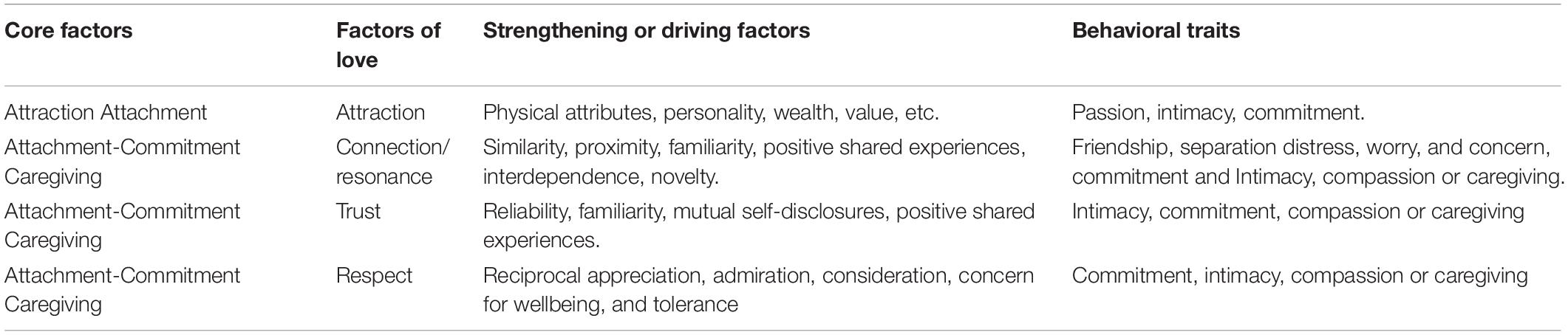
Table 1. Factors of love.
Attraction
Evidence suggests that both attachment and attraction play a role in obsession or passion observed in love (Fisher et al., 2005; Honari and Saremi, 2015). Attraction is influenced by the value or appeal perceived from a relationship and this affects commitment (Rusbult, 1980).
Connection or Resonance
Connection is key to commitment, caregiving, and intimacy. It creates a sense of oneness in relationships and it is strengthened by proximity, familiarity, similarity, and positive shared experiences (Sullivan et al., 2011; Beckes et al., 2013). Homogeneity or similarity has been observed to increase social capital and engagement among people (Costa and Kahn, 2003a, b), and it has been described as foundational to human relationships (Tobore, 2018, pp. 6–13). Research indicates that similarity plays a key role in attachment and companionship as people are more likely to form long-lasting and successful relationships with those who are more similar to themselves (Burgess and Wallin, 1954; Byrne, 1971; Berscheid and Reis, 1998; Lutz-Zois et al., 2006). Proximity plays a key role in caregiving as people are more likely to show compassion to those they are familiar with or those closest to them (Sprecher and Fehr, 2005). Similarity and proximity contribute to feelings of familiarity (Berscheid, 2010). Also, caregiving and empathy are positively related to emotional interdependence (Hatfield et al., 1994).
Trust
Trust is crucial for love (Esch and Stefano, 2005) and it plays an important role in relationship intimacy and caregiving (Rempel and Holmes, 1985; Wilson et al., 1998; Salazar, 2015), as well as attachment (Rodriguez et al., 2015; Bidmon, 2017). Familiarity is a sine qua non for trust (Luhmann, 1979), and trust is key to relationship satisfaction (Simpson, 2007; Fitzpatrick and Lafontaine, 2017).
Respect
Respect is cross-cultural and universal (Frei and Shaver, 2002; Hendrick et al., 2010) and has been described as fundamental in love (Hendrick et al., 2011). It plays a cardinal role in interpersonal relations at all levels (Hendrick et al., 2010). Indeed, it is essential in relationship commitment and satisfaction (Hendrick and Hendrick, 2006) and relationship intimacy and attachment (Alper, 2004; Hendrick et al., 2011).
Synergetic Interactions of the Four Factors
Connection and Attraction
Similarity, proximity, and familiarity are all important in connection because they promote attachment and a sense of oneness in a relationship (Sullivan et al., 2011; Beckes et al., 2013). Research indicates that proximity (Batool and Malik, 2010) and familiarity positively influence attraction (Norton et al., 2015) and several lines of evidence suggests that people are attracted to those similar to themselves (Sykes et al., 1976; Wetzel and Insko, 1982; Montoya et al., 2008; Batool and Malik, 2010; Collisson and Howell, 2014). Also, attraction mediates similarity and familiarity (Moreland and Zajonc, 1982; Elbedweihy et al., 2016).
Respect and Trust
Evidence suggests that respect promotes trust (Ali et al., 2012).
Connection, Respect, Trust, and Attraction
Trust affects attraction (Singh et al., 2015). Trust and respect can mediate attitude similarity and promote attraction (Singh et al., 2016).
So, although these factors can operate independently, evidence suggests that the weakening of one factor could negatively affect the others and the status of love. Similarly, the strengthening of one factor positively modulates the others and the status of love.
Love Cycle
Relationships are dynamic and change as events and conditions in the environment change (Berscheid, 2010). Love is associated with causal conditions that respond to these changes favorably or negatively (Berscheid, 2010). In other words, as conditions change, and these factors become present, love is achieved and if they die, it fades. Figure 1 below explains how love grows and dies. Point C in the figure explains the variations in the intensity or levels of love and this variation is influenced by the strength of each factor. The stronger the presence of all factors, the higher the intensity and the lower, the weaker the intensity of love. The concept of non-love is similar to the “non-love” described in Sternberg’s triangular theory of love in which all components of love are absent (Sternberg, 1986).
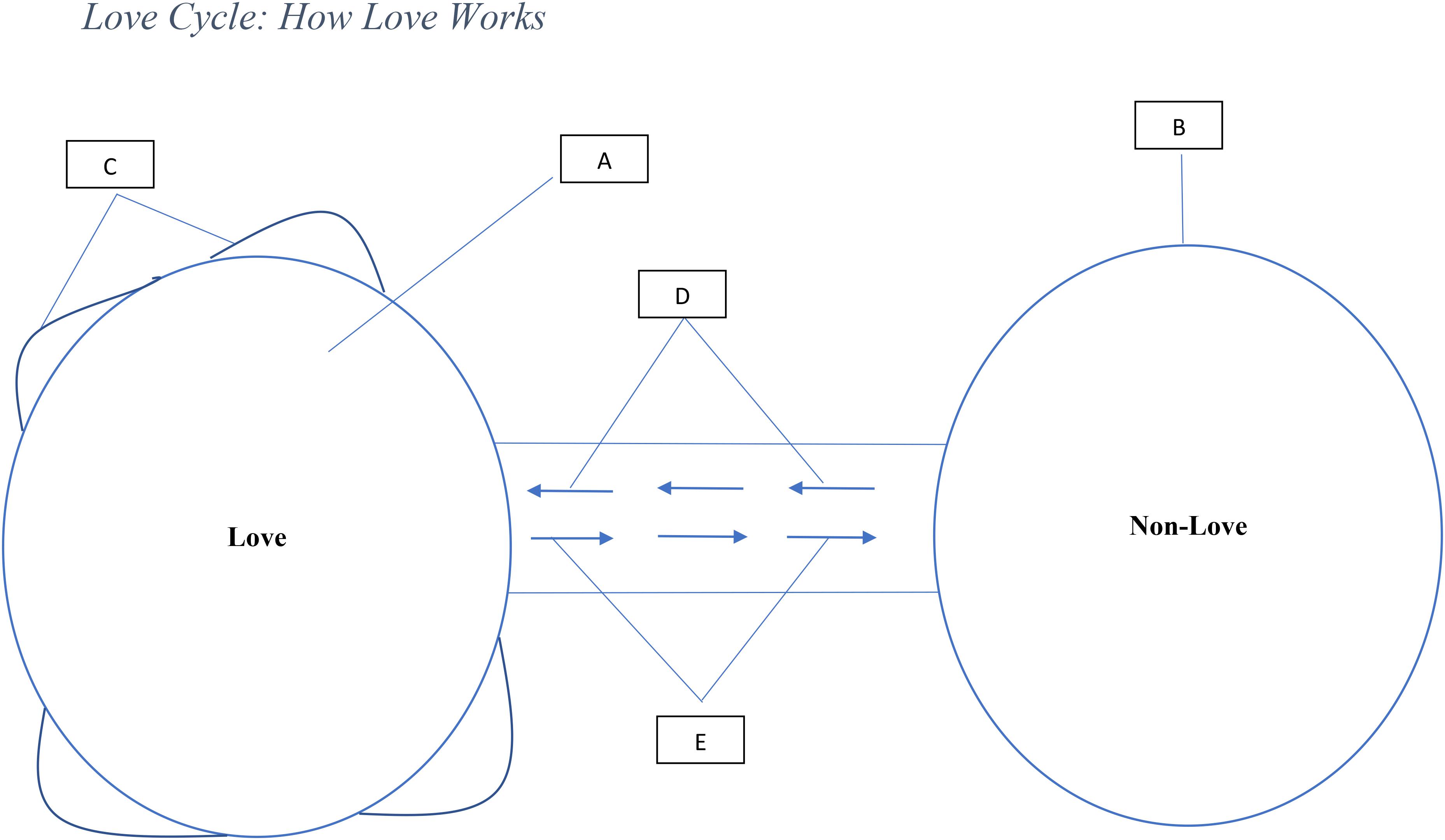
Figure 1. Description: (A) Presence of love (all factors are present). (B) Absence of love (state of non-love or state where all factors are latent or dormant). (C) Different levels of love due to variations in the four factors. (D) Movement from non-love toward love (developmental stage: at least one but not all four factors are present). (E) Movement away from love toward non-love (decline stage: at least one or more of the four factors are absent).
Application of the Quadruple Framework on Romantic, Brand and Parental Love
Romantic, parental and brand love have been chosen to demonstrate the role of these factors and their interactions in love because there is significant existing literature on them. However, they can be applied to understand love in all its forms.
Romantic Love
Attraction and Romantic Love
Attraction involves both physical and personality traits (Braxton-Davis, 2010; Karandashev and Fata, 2014). To this end, attraction could be subdivided into sexual or material and non-sexual or non-material attraction. Sexual or material attraction includes physical attributes such as beauty, aesthetics, appeal, wealth, etc. In contrast, non-sexual or non-material attraction includes characteristics such as personality, social status, power, humor, intelligence, character, confidence, temperament, honesty, good quality, kindness, integrity, etc. Both types of attraction are not mutually exclusive.
Romantic love has been described as a advanced form of human attraction system (Fisher et al., 2005) and it fits with the passion component of Sternberg’s triangular theory of love which he described as the quickest to recruit (Sternberg, 1986). Indeed, research indicates that physical attractiveness and sensual feelings are essential in romantic love and dating (Brislin and Lewis, 1968; Regan and Berscheid, 1999; Luo and Zhang, 2009; Braxton-Davis, 2010; Ha et al., 2010; Guéguen and Lamy, 2012) and sexual attraction often provides the motivational spark that kickstarts a romantic relationship (Gillath et al., 2008). Behavioral data suggest that love and sex drive follow complementary pathways in the brain (Seshadri, 2016). Indeed, the neuroendocrine system for sexual attraction and attachment appears to work synergistically motivating individuals to both prefer a specific mating partner and to form an attachment to that partner (Seshadri, 2016). Sex promotes the activity of hormones involved in love including arginine vasopressin in the ventral pallidum, oxytocin in the nucleus accumbens and stimulates dopamine release which consequently motivates preference for a partner and strengthens attachment or pair-bonding (Seshadri, 2016).
Also, romantic love is associated with non-material attraction. Research indicates that many people are attracted to their romantic partner because of personality traits like generosity, kindness, warmth, humor, helpfulness, openness to new ideas (Giles, 2015, pp. 168–169). Findings from a research study on preferences in human mate selection indicate that personality traits such as kindness/considerate and understanding, exciting, and intelligent are strongly preferred in a potential mate (Buss and Barnes, 1986). Indeed, character and physical attractiveness have been found to contribute jointly and significantly to romantic attraction (McKelvie and Matthews, 1976).
Attraction is key to commitment in a romantic relationship (Rusbult, 1980), indicating that without attraction a romantic relationship could lose its luster. Also, romantic attraction is weakened or declines as the reason for its presence declines or deteriorates. If attraction is sexual or due to material characteristics, then aging or any accident that compromises physical beauty would result in its decline (Braxton-Davis, 2010). Loss of fortune or social status could also weaken attraction and increase tension in a relationship. Indeed, tensions about money increase marital conflicts (Papp et al., 2009; Dew and Dakin, 2011) and predicted subsequent divorce (Amato and Rogers, 1997).
Connection and Romantic Love
Connection or resonance fits with the intimacy, and commitment components of Sternberg’s triangular theory of love (Sternberg, 1986). Connection in romantic love involves intimacy, friendship or companionship and caregiving and it is strengthened by novelty, proximity, communication, positive shared experiences, familiarity, and similarity. It is what creates a sense of oneness between romantic partners and it is expressed in the form of proximity seeking and maintenance, concern, and compassion (Neto, 2012). Evidence suggests that deeper levels of emotional involvement or attachment increase commitment and cognitive interdependence or tendency to think about the relationship in a pluralistic manner, as reflected in the use of plural pronouns to describe oneself, romantic partner and relationship (Agnew et al., 1998).
Research indicates that both sexual attraction and friendship are necessary for romantic love (Meyers and Berscheid, 1997; Gillath et al., 2008; Berscheid, 2010), indicating that connection which is essential for companionship plays a key role in romantic love. A study on college students by Hendrick and Hendrick (1993) found that a significant number of the students described their romantic partner as their closest friend (Hendrick and Hendrick, 1993), reinforcing the importance of friendship or companionship in romantic love.
Similarity along the lines of values, goals, religion, nationality, career, culture, socioeconomic status, ethnicity, language, etc. is essential in liking and friendship in romantic love (Berscheid and Reis, 1998). Research indicates that a partner who shared similar values and interests were more likely to experience stronger love (Jin et al., 2017). Indeed, the more satisfied individuals were with their friendships the more similar they perceived their friends to be to themselves (Morry, 2005). Also, similarity influences perceptions of familiarity (Moreland and Zajonc, 1982), and familiarity plays a role in the formation of attachment and connectedness because it signals safety and security (Bowlby, 1977). Moreover, similarity and familiarity affect caregiving. Sprecher and Fehr (2005), found compassion or caregiving were lower for strangers, and greatest for dating and marital relationships, indicating that similarity and familiarity enhance intimacy and positively influences caregiving (Sprecher and Fehr, 2005).
Proximity through increased exposure is known to promote liking (Saegert et al., 1973), familiarity and emotional connectedness (Sternberg, 1986; Berscheid, 2010). Exposure through fun times and direct and frequent communication is essential to maintaining and strengthening attachment and connectedness (Sternberg and Grajek, 1984). In Sternberg’s triangular theory, effective communication is described as essential and affects the intimacy component of a relationship (Sternberg, 1986). Indeed, intimacy grows from a combination of mutual self-disclosure and interactions mediated by positive partner responsiveness (Laurenceau et al., 1998, 2005; Manne et al., 2004), indicating that positive feedback and fun times together strengthens connection.
Also, sexual activity is an important component of the reward system that reinforces emotional attachment (Seshadri, 2016), indicating that sexual activity may increase emotional connectedness and intimacy. Over time in most relationships, predictability grows, and sexual satisfaction becomes readily available. This weakens the erotic and emotional experience associated with romantic love (Berscheid, 2010). Research shows that a reduction in novelty due to the monotony of being with the same person for a long period is the reason for this decline in sexual attraction (Freud and Rieff, 1997, p. 57; Sprecher et al., 2006, p. 467). According to Sternberg (1986), the worst enemy of the intimacy component of love is stagnation. He explained that too much predictability can erode the level of intimacy in a close relationship (Sternberg, 1986). So, novelty is essential to maintaining sexual attraction and strengthening connection in romantic love.
Jealousy and separation distress which are key features of romantic love (Fisher et al., 2002b), are actions to maintain and protect the emotional union and are expressions of a strong connection. Research has found a significant correlation between anxiety and love (Hatfield et al., 1989) and a positive link between romantic love and jealousy in stable relationships (Mathes and Severa, 1981; Aune and Comstock, 1991; Attridge, 2013; Gomillion et al., 2014). Indeed, individuals who feel strong romantic love tend to be more jealous or sensitive to threats to their relationship (Orosz et al., 2015).
Connection in romantic love is weakened by distance, a dearth of communication, unsatisfactory sexual activity, divergences or dissimilarity of values and interests, monotony and too much predictability.
Trust and Romantic Love
Trust is the belief that a partner is, and will remain, reliable or dependable (Cook, 2003). Trust in romantic love fits with the intimacy, and commitment components of Sternberg’s triangular theory of love which includes being able to count on the loved one in times of need, mutual understanding with the loved one, sharing of one’s self and one’s possessions with the loved one and maintaining the relationship (Sternberg, 1986).
It has been proposed that love activates specific regions in the reward system which results in a reduction in emotional judgment and fear (Seshadri, 2016). This reduced fear or trust has been identified as one of the most important characteristics of a romantic relationship and essential to fidelity, commitment, monogamy, emotional vulnerability, and intimacy (Laborde et al., 2014). Indeed, trust can deepen intimacy, increase commitment and increase mutual monogamy, and make a person lower their guards in the belief that they are safe from harm (Larzelere and Huston, 1980; Bauman and Berman, 2005). People with high trust in romantic relationships tend to expect that their partner will act in their interest causing them to prioritize relationship dependence over making themselves invulnerable from harm or self-protection (Luchies et al., 2013). In contrast, people with low trust in their partner tend to be unsure about whether their partner will act in their interests and prioritize insulating themselves from harm over relationship dependence (Luchies et al., 2013).
Trust takes time to grow into a romantic relationship. Indeed, people in a relationship come to trust their partners when they see that their partner’s action and behavior moves the relationship forward or acts in the interest of the relationship and not themself (Wieselquist et al., 1999). Research indicates that trust is associated with mutual self-disclosure (Larzelere and Huston, 1980), and positive partner responsiveness which are both essential to the experience of friendship and intimacy in romantic relationships (Larzelere and Huston, 1980; Reis and Shaver, 1988; Laurenceau et al., 1998).
Also, trust influences caregiving and compassion. Evidence suggests that compassion is positively related to trust (Salazar, 2015). Mutual communal responsiveness or caregiving in relationships in which partners attend to one another’s needs and welfare is done because they are confident that the other will do the same when or if their own needs arise (Clark and Monin, 2006). Repeated acts of communal responsiveness given with no expectation of payback provide a partner with a sense of security and trust and increase the likelihood that they will be communally responsive if or when the need arises (Clark and Monin, 2006), and contributes to a sense of love in romantic relationships (Berscheid, 2010).
Loss or weakening of trust could spell the end of romantic love. Indeed, mistrust corrupts intimacy and often indicates that a relationship has ended or near its end (LaFollette and Graham, 1986) and it makes mutual monogamy, and commitment difficult to achieve in a romantic relationship (Towner et al., 2015). A study on individuals who had fallen out of romantic love with their spouse found that loss of trust and intimacy was part of the reason for the dissolution of love (Sailor, 2013).
Respect and Romantic Love
Multiple lines of evidence suggest that respect is expected in both friendships and romantic relationships (Gaines, 1994, 1996). In romantic love, it entails consideration, admiration, high regard, and value for the loved one as a part of one’s life (Sternberg and Grajek, 1984; Hendrick et al., 2011).
Gottman (1999), found that the basis for a stable and satisfactory marital relationship is friendship filled with fondness and admiration (Gottman, 1999). Respect is considered one of the most important things married couples want from their partner (Gottman, 1994). Grote and Frieze (1994), found that respect correlates with companionate or friendship love (Grote and Frieze, 1994), indicating that respect is essential to intimacy and relationship satisfaction. Also, respect is positively correlated with passion, altruism, self-disclosure, and relationship overall satisfaction (Frei and Shaver, 2002; Hendrick and Hendrick, 2006). It is associated with the tendency to overlook a partner’s negative behavior or respond with pro-relationship actions or compassion to their shortcomings (Rusbult et al., 1998; Gottman, 1999).
Absence or a lack of respect could spell the end of romantic love. Research indicates that there is an expectation of mutual respect in friendship and most relationships and people reacted negatively when this expectation is violated (Hendrick et al., 2011), indicating that a lack of respect could negatively affect commitment and attraction. Indeed, denial of respect is an important negative behavior in friendships and most relationships (Gaines, 1994, 1996) and a lack of respect is a violation of what it means to love one ‘s partner in a close romantic relationship (Hendrick et al., 2011). Gottman (1993, 1994) identified contempt, criticism, defensiveness, and stonewalling as four of the relationally destructive behavior and he labeled them as “the four horsemen of the apocalypse.”
Romantic love summary
Romantic love involves the interactions and synergistic interplay between respect, connection, trust, and attraction. All four must be present in love. Any event that results in the loss of any of these factors could cause romantic love to gradually decline and unless effort is made to replenish it, it will eventually fade or collapse. Romantic love is dynamic and requires significant investment from both partners to keep it alive.
Parental Love
Attraction and Parental Love
Attraction plays an essential role in parental love and it could be material or non-material. Material attraction involves the child’s health, gender, accomplishments or success, and attractiveness. In contrast, non-material attraction includes traits such as intelligence, character, and other personality traits.
Evidence suggests that culture influences gender preference with attraction greater for sons in most cases (Cronk, 1993). Indeed, mothers and fathers have been found to favor the more intelligent and more ambitious/industrious child (Lauricella, 2009). Also, parental perception that investment in a child will cost more than the benefits to be gained from taking care of the child might influence negative behavior toward the child. Indeed, multiple lines of evidence suggest that parental unemployment increases the rates of child maltreatment and abuse (Steinberg et al., 1981; Lindo et al., 2013). Research indicates that teen mothers who have poor social support reported greater unhappiness, were at greater risk for child abuse and often employed the use of physical punishment toward their child (Haskett et al., 1994; de Paúl and Domenech, 2000).
Also, several studies have suggested that parents tended to favor healthy children (Mann, 1992; Barratt et al., 1996; Hagen, 1999). However, when resources are plentiful, parents tend to invest equally in less healthy or high-risk children (Beaulieu and Bugental, 2008), because they have abundant resources to go around without compromising the reproductive value of healthy children (Lauricella, 2009).
Connection and Parental Love
Connection creates a sense of oneness between parent and child and involves caregiving, intimacy, and attachment. It is influenced by proximity, positive and unique shared experiences, and similarity along virtually every dimension between parent and child.
Proximity, and similarity increases attachment and intimacy between parent and child. Research shows that parents are perceived as favoring genetically related children (Salmon et al., 2012), and evidence suggests that paternal resemblance predicted paternal favoritism (Lauricella, 2009). Parental proximity and similarity to a biological child are unique because it is based on genes and blood. In contrast, intimacy between a parent and an adopted child is based solely on shared experiences and proximity and takes time to grow and on many occasions may not develop (Hooks, 1990; Hughes, 1999).
Dissimilarities or discrepancy in values, attitudes, etc., can create problems between children and parents and can have a profound effect on their relationship. Indeed, evidence suggests that the rebel child tended to be less close to the parents (Rohde et al., 2003). Research has found that adolescents who are less religious than their parents tend to experience lower-quality relationships with their parents which results in higher rates of both internalizing and externalizing symptoms (Kim-Spoon et al., 2012). When parents and family members were very religious, and a child comes out as an atheist, relationship quality could suffer in the form of rejection, anger, despair, or an inability to relate to one another (Zimmerman et al., 2015). A study of lesbian, gay, and bisexual youngsters, for patterns of disclosure of sexual orientation to families, found that those who had disclosed reported verbal and physical abuse by parents and family members (D’Augelli et al., 1998). Honor killing of female children which have been reported in Pakistan and some parts of the Middle East because of deviation from traditional gender roles or crossing of social boundaries that are deemed as taboo in their culture (Lindsey and Sarah, 2010), is another example of the negative effects of the discrepancy in values between parents and child.
Unique shared experiences between parent and child could increase connection. Bank (1988) observed that the development of favoritism seems to require that the “child’s conception or birth be unusual or stressful,” (Bank, 1988). Evidence suggests that parents most favored child tended to be last-born child and this is linked to their unique position, vulnerability and neediness (Rohde et al., 2003). Also, proximity, positive experiences and time spent together increases connection and intimacy. Research indicates that parents tend to give more love and support to the grown child they were historically closest to and got along with (Siennick, 2013). A study of primiparous women found that mothers with greater contact with their infants were more reluctant to leave them with someone else, and engaged more intimately with their child (Klaus et al., 1972).
Divorce could create distance between a parent and child, weakening connection and intimacy. Indeed, one of the outcomes of divorce is the lessening of contact between divorced non-custodial fathers and their children (Appleby and Palkovitz, 2007), and this can reduce intimacy (Guttmann and Rosenberg, 2003).
Also, parental separation distress, worry, and concern for their child’s welfare, academic performance, and future are expressions of connection and a lack thereof is a sign of poor connection. Indeed, the levels of concern and worry expressed between children and their parents influenced their perceptions of the relationship quality (Hay et al., 2007).
Trust and Parental Love
Trust is essential to parental attachment, intimacy, and caregiving. When there is mistrust, attachment and intimacy between a parent and their child are disrupted or unable to blossom. In Africa and many parts of the world, there have been reports of children being condemned and abandoned by their parents simply because they are tagged as witches with mysterious evil powers (Tedam, 2014; Bartholomew, 2015; Briggs and Whittaker, 2018). The tag of “witchcraft” stirs up fear and anger, causing the child to be perceived as a deadly threat which inevitably damages attachment, intimacy and eliminates the need for caregiving.
Research has found that firstborn children were most likely to be chosen as those to whom mothers would turn when facing personal problems or crises (Suitor and Pillemer, 2007). This tendency may be linked to trust. Moreover, evidence suggests that the rebel child tended to be less close to the parents (Rohde et al., 2003). In other words, the more obedient, and reliable child is likely to gain the confidence and intimacy of the parents. In contrast, the disobedient and unreliable child is excluded or kept at a distance. Also, trust and poor connection could influence inheritance and disinheritance decisions. Indeed, estrangement, alienation and disaffection of a parent toward a child could result in disinheritance (Batts, 1990; Brashier, 1994, 1996; Foster, 2001; Arroyo et al., 2016).
Respect and Parental Love
Respect in parental love entails treating the child with consideration and regard. This consideration and regard for the child are essential to intimacy, caregiving and attachment. Indeed, respect is foundational to a harmonious relationship between parent and child (Dixon et al., 2008). Evidence suggests that humans possess an innate behavioral system that leads them to form an attachment to a familiar person who provides care, comfort, and protection (Harlow, 1958; Bowlby, 1989). Repeated acts of caregiving contribute to a sense of love in all types of relationships (Berscheid, 2010), reinforcing the role of parental caregiving in fostering intimacy and attachment with the child.
Taking care of an infant’s needs, and making sure they are safe and well, all fall under consideration and regard for the child. Child abuse and neglect (Tedam, 2014; Bartholomew, 2015; Briggs and Whittaker, 2018), is a display of a lack of consideration for the child’s need.
Also, respect in parental love involves admiration. Research has found that fathers treated more ambitious/industrious sons with high regard, and both parents favored the more intelligent and more ambitious/industrious daughters (Lauricella, 2009) indicating that a child that engages in activities or behavior that is highly regarded by their parents may gain favor with their parents, strengthening intimacy and vice versa.
Parental love summary
Parental love involves the interactions and synergistic interplay between respect, connection, trust, and attraction. Any event that results in the loss of any of these factors could cause parental love to gradually decline. In many cases, the behavior and actions of a child significantly influence parental love.
Brand Love
Brand love has been defined as the level of passionate emotional attachment a satisfied or happy consumer has for a brand and evidence suggests it is very similar to interpersonal love (Russo et al., 2011).
Attraction and Brand Love
Attraction plays an essential role in brand love. Material attraction for a brand includes attributes like superior design, quality, and aesthetics, price, benefits, etc. Non-material attraction involves social status symbol, brand personality, uniqueness, distinctiveness, user experience, image, etc. evidence suggests that when talking about loved brands, people often talk passionately about the brand’s many attractive qualities such as its exceptional performance, good-looking design, value for money, and other positive attributes (Fournier, 1998; Whang et al., 2004; Carroll and Ahuvia, 2006; Batra et al., 2012). Research on brand love has found that brand attractive attributes such as prestige or uniqueness influence brand passion which affects relevant factors such as purchase intention (Bauer et al., 2007).
Also, brand attraction influences brand loyalty, and commitment. Indeed, research indicates that brand benefits influences brand loyalty or commitment (Huang et al., 2016). Brand personality (image, distinctiveness, and self-expressive value) is strongly associated with brand identification and loyalty (Kim et al., 2001; Elbedweihy et al., 2016).
Connection and Brand Love
Connection is essential to brand love. It involves brand attachment, commitment, and intimacy and it is strengthened by brand identification, image, familiarity or awareness, proximity, length or frequency of usage and similarity or congruences along virtually every dimension including values, lifestyle, goals, etc. between brand and customer. Brand awareness which means brand familiarity has been described as essential for people to identify with a brand (Pascual and Académico, 2015), and it indirectly affects current purchases (Esch et al., 2006).
Also, brand identification promotes a sense of oneness between a brand and a customer strengthening commitment and it is driven by brand self-similarity, brand prestige and brand distinctiveness (Stokburger-Sauer et al., 2008). Indeed, brand identification contributes to the development of brand love and brand loyalty (Alnawas and Altarifi, 2016) and brand image and identification influence loyalty and positive word of mouth (Carroll and Ahuvia, 2006; Batra et al., 2012; Anggraeni and Rachmanita, 2015). Brand identity, values and lifestyle similarities to those of the customer appear to have a strong and significant relationship with brand love (Batra et al., 2012; Rauschnabel and Ahuvia, 2014; Alnawas and Altarifi, 2016; Elbedweihy et al., 2016). Findings from research suggest that customer-to-customer similarity and sense of community drive consumer brand identification, loyalty, and engagement (Bergkvist and Bech-Larsen, 2010; Elbedweihy et al., 2016).
Moreover, proximity and interaction play a role in brand love. Indeed, the duration of the relationship between a customer and a brand is essential in brand love (Albert et al., 2007). Fournier (1998), discussed interdependence which involved frequent brand interactions as necessary for a strong brand relationship (Fournier, 1998). Similarly, Batra et al. (2012) found that having a long-term relationship, positive emotional connection and frequent interactions with a brand was an important aspect of brand love (Batra et al., 2012). Indeed, shared experiences and history between a person and a brand can increase their emotional attachment, make the brand to become an important part of the person’s identity narrative and increases their loyalty to the brand (Thomson et al., 2005; Pedeliento et al., 2016).
Just like romantic love, concern and worry and proximity seeking, or maintenance are an expression of emotional connectedness to the brand. Indeed, anticipated separation distress has been described as a core element of brand love (Batra et al., 2012), and consumers are likely to feel strong desires to maintain proximity with their loved objects, even feeling “separation distress” when they are distanced from them (Thomson et al., 2005; Park et al., 2010).
Also, novelty through continued innovation is vital to maintaining and strengthening both attraction and connection. According to the Harvard business review, the relationship between brand and consumer go through “ruts” and to “keep the spark” alive, innovation and news are essential (Halloran, 2014). Research indicates that innovation plays a role in brand equity and it impacts brand identification or resonance (Sinha, 2017).
Lack of brand familiarity or awareness, poor or negative user experience, a dearth of innovation and increased dissimilarities in values and lifestyles between brand and consumer can all weaken brand connection.
Trust and Brand Love
Trust is essential to brand attachment, intimacy, and commitment. It involves confidence and reliability, or dependability of the brand and it is influenced by brand image, familiarity, values, user experience, and quality. Indeed, brand trust directly influences brand love (Turgut and Gultekin, 2015; Meisenzahl, 2017) and a strong relationship exists between brand love and brand trust and identification (Albert and Merunka, 2013). Evidence suggests that brand familiarity influences brand trust (Ha and Perks, 2005) and brand trust and experience, positively influence brand attachment (Erciş et al., 2012; Chinomona, 2013; Chinomona and Maziriri, 2017).
Also, brand trust affects brand purchase, loyalty, and commitment. Evidence suggests that a strong relationship exists between brand love and brand trust, brand commitment, positive word of mouth, and willingness to pay a higher price for the brand (Albert and Merunka, 2013). Research indicates that brand trust positively affects brand loyalty (Setyawan and Kussudiyarsana, 2015), directly influences brand purchase intentions (Yasin and Shamim, 2013) and positively influences current and future purchases (Erciş et al., 2012). Indeed, more than any other factor, brand trust has been identified as essential for future purchases of a brand (Esch et al., 2006). It is essential in determining purchase loyalty and attitudinal loyalty and it plays a role in brand market share (Chaudhuri and Holbrook, 2001). Brand trust affects both affective and continuance commitment and affective commitment influences repurchase intention and loyalty (Erciş et al., 2012).
Brand quality is essential to brand trust and love. Indeed, Fournier (1998), discussed the role of brand quality in brand love and highlighted the role of trust in relationship satisfaction and strength (Fournier, 1998). Also, brand trust has been found to positively affect resistance to negative information and repurchase intention (Turgut and Gultekin, 2015).
Brand trust is weakened by poor user experience, brand quality, brand image, and a lack of brand familiarity.
Respect and Brand Love
Brand respect is essential in brand love and plays an important role in brand attachment, intimacy, and commitment. It is influenced by brand identification, values, image, experience, and quality. Brand respect is displayed by the customer in the form of high regard, admiration for the brand, brand loyalty and consideration or tolerance of negative information. Indeed, brand familiarity positively affects brand respect (Zhou, 2017), indicating that brand familiarity increases regard for a brand. Evidence suggests that brand image positively influences brand respect and love (Cho, 2011), indicating that brand image modulates a customer’s regard and admiration for a brand.
Brand respect influences brand commitment and loyalty. Indeed, a strong relationship has been found between brand respect and brand loyalty (Cho, 2011) and brand admiration results in greater brand loyalty, stronger brand advocacy, and higher brand equity (Park et al., 2016). Brand respect affects the behavioral outcomes of brand love such as affective commitment, and willingness to pay a price premium (Garg et al., 2016; Park et al., 2016).
Also, evidence suggests that customers’ admiration or high regard for a brand contributes to why they tend to ignore negative information about the brand (Elbedweihy et al., 2016). Fournier (1998), included respect as one of the components of brand partner quality. This means that respect is one of the factors that reflects the consumer’s evaluation of the brand’s performance (Fournier, 1998).
A lack of respect could negatively influence the relationship between a brand and a customer. Indeed, people react negatively when the expectation of respect is violated (Hendrick et al., 2011) and a violation of expectation between brand and customer has been found to contribute to brand hate (Zarantonello et al., 2016).
Brand love summary
Brand love involves the interactions and synergistic interplay between respect, connection, trust, and attraction. Any event that results in the loss of any of these factors could cause brand love to gradually decline and unless effort is made to replenish it, it will eventually fade or collapse. Brand love is dynamic and requires significant investment from the brand to keep it alive.
Strengths and Advances Made by the Quadruple Theory
The quadruple theory builds on many of the strengths of previous theories of love and it applies a temporal approach that has been proposed as the best way to understand love (Berscheid, 2010). It goes further than previous theories for several reasons. Firstly, it could potentially be applied to any form of love although, only brand, romantic and parental love were discussed in this paper due to the paucity of scholarly articles on other forms of love. One of the reasons current love scales and approaches have been unable to be applied in all forms of love (Hendrick and Hendrick, 1989; Whitley, 1993; Sternberg, 1997; Masuda, 2003; Graham and Christiansen, 2009), is because they capture only a part of the ACC model, unlike the quadruple framework which fully captures it.
Unlike previous theories, the quadruple theory’s application of the complex factor of connection/resonance gives it an edge in furthering our understanding of love. Proximity, positive shared experience, familiarity, and similarity are vital to connection and connection has the most profound influence on all the other factors.
Also, the dynamism and variation of these factors provide a fresh way to understand love from its development to collapse. As Figure 1 shows, love tends to take time to mature in a relationship and can die as these factors rise and decline. Figure 1 shows that variations in the presence of these factors represent different levels of love. Love in any relationship is influenced by the events in the environment it is embedded, and it responds favorably or negatively to these changes. Indeed, people get sick, old, lose their finances, travel in search of greener pastures creating distance, develop new interests different from their partner’s and all these influences the presence and absence of love. One brand becomes more innovative, improves its product quality and users experience over another and people gradually love it more than the one they previously loved. In other words, love is very dynamic and may be divided into high, moderate and low. Another point highlighted in Figure 1 is that the absence of one factor represents the absence of love and only the presence of all factors represents the presence of love. Indeed, the decline of a factor can be replenished in response to changes in the environment causing the reestablishment of love. Trust could decline but attraction and respect remain and over time trust could be replenished.
This dynamic understanding of love implies that it can be nurtured and sustained. As an example, for a brand to be loved and to maintain that love, it must make products that are attractive (appealing). It must be able to connect to its target customers by reaching out through adverts to achieve familiarity and it must ensure that its values, goals, actions are consistently similar to those of its customer base. Also, it must ensure its services and products and actions promote and maintain trust with its customers. It must respect (value) its customer’s interests and ensure that its services and products continue to receive the admiration of its customers. Table 2 describes how brand love can be nurtured and preserved.
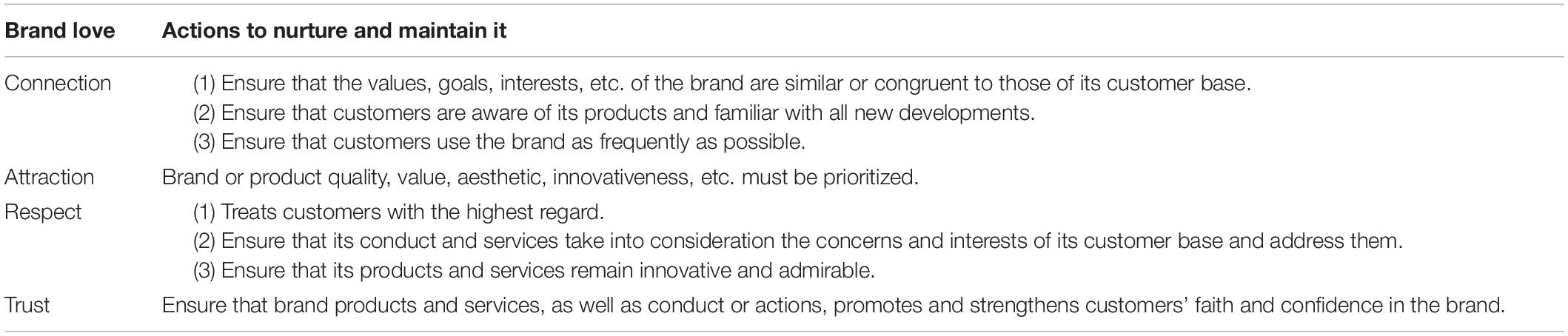
Table 2. Brand love can be nurtured and maintained.
Using this framework, a love scale or algorithm could be developed to ascertain the presence or absence of love in any relationship. Such a scale must effectively capture these four factors and must consider the type of love being calculated in its approach. As an example, in trying to create a scale for romantic love, sexual attraction, and activity may be important for attraction and connection (depending on the age of the partners) but would be unnecessary in the calculation of brand or parental love.
Major Challenges for the Theory
One of the biggest challenges the theory faces is the lack of psychometric data to prove many of its claims. Most of its arguments are based on decades of psychological data, but its lack of psychometric data weakens the theory significantly. Also, the entire premise of the theory is based on the ACC model, which has not been validated as essential or foundational to understanding love. Perhaps, something else needs to be added to the model that the theory may have missed. The argument that the quadruple theory captures the ACC model better than previous theories on love is an argument that has not been validated, and it remains to be seen if this is true. Also, the argument that it can be applied to all forms of love apart from the three discussed remains to be tested and verified.
Conclusion
Gaps currently exist in our understanding of love and evidences from the existing literature show that a framework that can be applied to all forms of love is needed. The quadruple theory hopes to be that framework. It is likely to broaden our understanding of the complex nature of love. It could make love less complex by making it something that can be cultivated or nurtured, regulated and preserved. Future research should consider the modulatory roles of peptides, neurotransmitters, and hormones on these factors and their influence on love as well as the integrated parts of the brain that modulates all these factors and how they work synergistically in different stages of love.
It is important to note that love is universal and applies to people of all cultures, races, ethnicities, religion and sexual orientations. Indeed, romantic love as described by the quadruple theory applies equally to heterosexual relationships and to the relationships of people in the LGTBQ community.
In conclusion, culture has a monumental influence on what people feel, think, and how they behave toward other people and things in their environment (Karandashev, 2015; Ching Hei and David, 2018). So, it can be considered a modulating factor on the factors discussed and on love.
Author Contributions
The author confirms being the sole contributor of this work and has approved it for publication.
Conflict of Interest
The author declares that the research was conducted in the absence of any commercial or financial relationships that could be construed as a potential conflict of interest.
References
Agnew, C. R., Van Lange, P. A. M., Rusbult, C. E., and Langston, C. A. (1998). Cognitive interdependence: commitment and the mental representation of close relationships. J. Pers. Soc. Psychol. 74, 939–954. doi: 10.1037/0022-3514.74.4.939
Albert, N., and Merunka, D. (2013). The role of brand love in consumer-brand relationships. J. Consum. Mark. 30, 258–266. doi: 10.1108/07363761311328928
Albert, N., Merunka, D., and Valette-Florence, P. (2007). When consumers love their brands: exploring the concept and its dimensions. J. Bus. Res. 61, 1062–1075. doi: 10.1016/j.jbusres.2007.09.014
Ali, S. H. S., Mansur, N., and Abdullah, Z. (2012). Analyzing the issue of respect and trust: determining the mediating role of religion. Procedia Soc. Behav. Sci. 58, 614–623. doi: 10.1016/J.SBSPRO.2012.09.1039
Alnawas, I., and Altarifi, S. (2016). Exploring the role of brand identification and brand love in generating higher levels of brand loyalty. J. Vacat. Mark. 22, 111–128. doi: 10.1177/1356766715604663
Alper, G. (2004). Voices from the unconscious. J. Loss Trauma 10, 73–81. doi: 10.1080/15325020490890660
Amato, P. R., and Rogers, S. J. (1997). A longitudinal study of marital problems and subsequent divorce. J. Marriage Fam. 59, 612–624. doi: 10.2307/353949
Anggraeni, A., and Rachmanita. (2015). Effects of brand love, personality and image on word of mouth; the case of local fashion brands among young consumers. Procedia Soc. Behav. Sci. 211, 442–447. doi: 10.1016/J.SBSPRO.2015.11.058
Appleby, D. W., and Palkovitz, R. (2007). Factors Influencing a Divorced Father’ s Involvement with His Children. Available online at: http://digitalcommons.liberty.edu/ccfs_fac_pubs/7 (accessed February 22, 2020).
Aron, A., Fisher, H., Mashek, D. J., Strong, G., Li, H., and Brown, L. L. (2005). Reward, motivation, and emotion systems associated with early-stage intense romantic love. J. Neurophysiol. 94, 327–337. doi: 10.1152/jn.00838.2004
Arroyo, E., Amayuelas, I., and Amorós, E. F. (2016). Kinship bonds and emotional ties: lack of a family relationship as ground for disinheritance. Eur. Rev. Priv. Law 2, 203–222.
Attridge, M. (2013). Jealousy and relationship closeness. SAGE Open 3:215824401347605. doi: 10.1177/2158244013476054
Aune, K. S., and Comstock, J. (1991). Experience and expression of jealousy: comparison between friends and romantics. Psychol. Rep. 69, 315–319. doi: 10.2466/pr0.1991.69.1.315
Barratt, M. S., Roach, M. A., and Leavitt, L. A. (1996). The impact of low-risk prematurity on maternal behaviour and toddler outcomes. Int. J. Behav. Dev. 19, 581–602. doi: 10.1177/016502549601900308
Bartholomew, L. (2015). Child abuse linked to beliefs in witchcraft. Trans. Soc. Rev. 5, 193–198. doi: 10.1080/21931674.2015.1028809
Batool, S., and Malik, N. I. (2010). Role of attitude similarity and proximity in interpersonal attraction among friends. Int. J. Innov. Manage. Technol. 1.
Batra, R., Ahuvia, A., and Bagozzi, R. P. (2012). Brand love. J. Mark. 76, 1–16. doi: 10.1509/jm.09.0339
Batts, D. A. (1990). I Didn’t ask to be born: the American law of disinheritance and a proposal for change to a sytem of protected inheritance recommended citation. Hastings L. J. 41, 1197–1270.
Bauer, H. H., Heinrich, D., and Martin, I. (2007). “How to create high emotional consumer-brand relationships? The causalities of brand passion,” in Proceedings of the Australian and New Zealand Marketing Academy (ANZMAC) Conference 2007, Dunedin, 2189–2198.
Bauman, L. J., and Berman, R. (2005). Adolescent relationships and condom use: trust, love and commitment. AIDS Behav. 9, 211–222. doi: 10.1007/s10461-005-3902-2
Beaulieu, D. A., and Bugental, D. (2008). Contingent parental investment: an evolutionary framework for understanding early interaction between mothers and children. Evol. Hum. Behav. 29, 249–255. doi: 10.1016/j.evolhumbehav.2008.01.002
Beauregard, M., Courtemanche, J., Paquette, V., and St-Pierre, É. L. (2009). The neural basis of unconditional love. Psychiatry Res. Neuroimaging 172, 93–98. doi: 10.1016/j.pscychresns.2008.11.003
Beckes, L., Coan, J. A., and Hasselmo, K. (2013). Familiarity promotes the blurring of self and other in the neural representation of threat. Soc. Cogn. Affect. Neurosci. 8, 670–677. doi: 10.1093/scan/nss046
Bergkvist, L., and Bech-Larsen, T. (2010). Two studies of consequences and actionable antecedents of brand love. J. Brand Manage. 17, 504–518. doi: 10.1057/bm.2010.6
Berscheid, E. (2010). Love in the fourth dimension. Annu. Rev. Psychol. 61, 1–25. doi: 10.1146/annurev.psych.093008.100318
Berscheid, E., and Hatfield, E. (1978). Interpersonal Attraction. Boston, MA: Addison-Wesley Pub. Co.
Berscheid, E. A., and Reis, H. T. (1998). “Attraction and close relationships,” in The Handbook of Social Psychology, 4th Edn, Vol. 2, eds D. T. Gilbert, S. T. Fiske, and G. Lindzey (Boston, MA: McGraw-Hill), 193–281.
Bidmon, S. (2017). How does attachment style influence the brand attachment – brand trust and brand loyalty chain in adolescents? Int. J. Advert. 36, 164–189. doi: 10.1080/02650487.2016.1172404
Bowlby, J. (1973). “Affectional bonds: their nature and origin,” in Loneliness: The Experience of Emotional and Social Isolation, ed. R. S. Weiss (Cambridge, MA: MIT Press), 38–52.
Bowlby, J. (1977). The making and breaking of affectional bonds: aetiology and psychopathology in light of attachment theory. Br. J. Psychiatry 130, 201–210. doi: 10.1136/bmj.a3133
Bowlby, J. (1988). A SECURE BASE Parent-Child Attachment and Healthy Human Development A Member of the. New York, NY: Perseus Books Group.
Brashier, R. C. (1996). Protecting the child from disinheritance: Must Louisiana stand alone? Repository citation protecting the child from disinheritance: Must Louisiana Stand Alone? Louis. L. Rev. 57.
Bretherton, I. (1992). The origins of attachment theory: John Bowlby and Mary Ainsworth. Dev. Psychol. 28, 759–775. doi: 10.1037/0012-1649.28.5.759
Briggs, S., and Whittaker, A. (2018). Protecting Children from Faith-Based Abuse through Accusations of Witchcraft and Spirit Possession: Understanding Contexts and Informing Practice. Br. J. Soc. Work 48, 2157–2175. doi: 10.1093/bjsw/bcx155
Brislin, R. W., and Lewis, S. A. (1968). Dating and physical attractiveness: replication. Psychol. Rep. 22, 976–976. doi: 10.2466/pr0.1968.22.3.976
Burgess, E. W., and Wallin, P. (1954). Courtship, Engagement, and Marriage, 1st Edn. New York, NY: Lippincott.
Burkett, J. P., and Young, L. J. (2012). The behavioral, anatomical and pharmacological parallels between social attachment, love and addiction. Psychopharmacology 224, 1–26. doi: 10.1007/s00213-012-2794-x
Buss, D. M., and Barnes, M. (1986). Preferences in human mate selection. J. Pers. Soc. Psychol. 50, 559–570. doi: 10.1037/0022-3514.50.3.559
Byrne, D., and Griffitt, W. (1973). Interpersonal attraction. Annu. Rev. Psychol. 24, 317–336. doi: 10.1146/annurev.ps.24.020173.001533
Cacioppo, J. T., Berntson, G. G., Lorig, T. S., Norris, C. J., Rickett, E., and Nusbaum, H. (2003). Just because you’re imaging the brain doesn’t mean you can stop using your head: a primer and set of first principles. J. Pers. Soc. Psychol. 85, 650–661. doi: 10.1037/0022-3514.85.4.650
Canterberry, M., and Gillath, O. (2012). Attachment and Caregiving Functions, Interactions, and Implications. Available online at: https://gillab.ku.edu/sites/gillab.drupal.ku.edu/files/docs/canterberrygillathchp14.pdf (accessed February 22, 2020).
Carnelley, K. B., Pietromonaco, P. R., and Jaffe, K. (1996). Attachment, caregiving, and relationship functioning in couples: Effects of self and partner. Pers. Relat. 3, 257–278. doi: 10.1111/j.1475-6811.1996.tb00116.x
Carroll, B. A., and Ahuvia, A. C. (2006). Some antecedents and outcomes of brand love. Mark. Lett. 17, 79–89. doi: 10.2307/40216667
Carter, C. S. (1998). Neuroendocrine perspectives on social attachment and love. Psychoneuroendocrinology 23, 779–818.
Chaudhuri, A., and Holbrook, M. B. (2001). The chain of effects from brand trust and brand affect to brand performance: the role of brand loyalty. J. Mark. 65, 81–93. doi: 10.1509/jmkg.65.2.81.18255
Ching Hei, K., and David, M. K. (2018). How love is perceived by malaysian malay children. Int. J. Linguist. Lit. Transl. 1, 80–104.
Chinomona, E., and Maziriri, E. (2017). The influence of brand trust, brand familiarity and brand experience on brand attachment: a case of consumers in the Gauteng Province of South Africa. J. Econ. Behav. Stud. 9, 69–81.
Chinomona, R. (2013). The influence of brand experience on brand satisfaction, Trust And Attachment In South Africa. Int. Bus. Econ. Res. J. 12, 1303–1316. doi: 10.19030/iber.v12i10.8138
Cho, E. (2011). Development of a Brand Image Scale and the Impact of Lovemarks on Brand Equity. Ph.D. dissertation, Iowa State University, Ames, IA.
Clark, M. S., and Mills, J. (1979). Interpersonal attraction in exchange and communal relationships. J. Pers. Soc. Psychol. 37, 12–24. doi: 10.1037/0022-3514.37.1.12
Clark, M. S., and Monin, J. K. (2006). “Giving and receiving communal responsiveness as love,” in The New Psychology of Love, eds R. J. Sternberg and K. Weis (New Haven, CT: Yale University Press), 200–221.
Collins, N. L., and Feeney, B. C. (2000). A safe haven: an attachment theory perspective on support seeking and caregiving in intimate relationships. J. Pers. Soc. Psychol. 78, 1053–1073.
Collisson, B., and Howell, J. L. (2014). The liking-similarity effect: perceptions of similarity as a function of liking. J. Soc. Psychol. 154, 384–400. doi: 10.1080/00224545.2014.914882
Costa, D. L., and Kahn, M. E. (2003a). Civic engagement and community heterogeneity: an economist’s perspective. Perspect. Polit. 1, 103–111. doi: 10.1017/S1537592703000082
Costa, D. L., and Kahn, M. E. (2003b). Understanding the American Decline in Social Capital, 1952-1998. Kyklos 56, 17–46. doi: 10.1111/1467-6435.00208
D’Augelli, A. R., Hershberger, S. L., and Pilkington, N. W. (1998). Lesbian, gay, and bisexual youth and their families: disclosure of sexual orientation and its consequences. Am. J. Orthopsychiatry 68, 361–371.
De Boer, A., Van Buel, E. M., and Ter Horst, G. J. (2012). Love is more than just a kiss: a neurobiological perspective on love and affection. Neuroscience 201, 114–124. doi: 10.1016/j.neuroscience.2011.11.017
de Paúl, J., and Domenech, L. (2000). Childhood history of abuse and child abuse potential in adolescent mothers: a longitudinal study. Child Abuse Negl. 24, 701–713.
Dew, J. P., and Dakin, J. (2011). Financial disagreements and marital conflict tactics. J. Financial Ther. 2:7. doi: 10.4148/jft.v2i1.1414
Dixon, S. V., Graber, J. A., and Brooks-Gunn, J. (2008). The roles of respect for parental authority and parenting practices in parent-child conflict among African American, Latino, and European American families. J. Fam. Psychol. 22, 1–10. doi: 10.1037/0893-3200.22.1.1
Elbedweihy, A. M., Jayawardhena, C., Elsharnouby, M. H., and Elsharnouby, T. H. (2016). Customer relationship building: the role of brand attractiveness and consumer–brand identification. J. Bus. Res. 69, 2901–2910. doi: 10.1016/j.jbusres.2015.12.059
Erciş, A., Ünal, S., Candan, F. B., and Yıldırım, H. (2012). The effect of brand satisfaction, trust and brand commitment on loyalty and repurchase intentions. Procedia Soc. Behav. Sci. 58, 1395–1404. doi: 10.1016/j.sbspro.2012.09.1124
Esch, F., Langner, T., Schmitt, B. H., and Geus, P. (2006). Are brands forever? How brand knowledge and relationships affect current and future purchases. J. Prod. Brand Manage. 15, 98–105. doi: 10.1108/10610420610658938
Esch, T., and Stefano, G. B. (2005). The neurobiology of love. Neuroendocrinol. Lett. 26, 175–192. doi: 10.2174/157340005774575037
Feeney, B. C., and Collins, N. L. (2001). Predictors of caregiving in adult Intimate relationships: an attachment theoretical perspective. J. Pers. Soc. Psychol. 80, 972–994. doi: 10.1037/0022-3514.80.6.972
Feeney, J. A., and Noller, P. (1990). Attachment Style as a Predictor of Adult Romantic Relationships. J. Pers. Soc. Psychol. 58, 281–291. doi: 10.1016/j.psychres.2018.01.010
Fehr, B. (1994). Prototype-based assessment of laypeople’s views of love. Pers. Relat. 1, 309–331. doi: 10.1111/j.1475-6811.1994.tb00068.x
Feldman, R. (2017). The neurobiology of human attachments. Trends Cogn. Sci. 21, 80–99. doi: 10.1016/j.tics.2016.11.007
Fisher, H. (2005). Why We Love: The Nature and Chemistry of Romantic Love. New York, NY: Henry Holt and Co.
Fisher, H., Aron, A., and Brown, L. L. (2005). Romantic love: an fMRI study of a neural mechanism for mate choice. J. Comp. Neurol. 493, 58–62. doi: 10.1002/cne.20772
Fisher, H. E., Aron, A., and Brown, L. L. (2006). Romantic love: a mammalian brain system for mate choice. Philos. Trans. R. Soc. Lond. Ser. B Biol. Sci. 361, 2173–2186. doi: 10.1098/rstb.2006.1938
Fisher, H. E., Aron, A., Mashek, D., Li, H., Strong, G., and Brown, L. L. (2002a). The neural mechanisms of mate choice: a hypothesis. Neuro Endocrinol. Lett. 23(Suppl. 4), 92–97.
Fisher, H. E., Aron, A., Mashek, D., Li, H., and Brown, L. L. (2002b). Defining the brain systems of lust, romantic attraction, and attachment. Arch. Sex. Behav. 31, 413–419.
Fisher, H. E., Brown, L. L., Aron, A., Strong, G., and Mashek, D. (2010). Reward, addiction, and emotion regulation systems associated with rejection in love. J. Neurophysiol. 104, 51–60. doi: 10.1152/jn.00784.2009
Fitzpatrick, J., and Lafontaine, M.-F. (2017). Attachment, trust, and satisfaction in relationships: investigating actor, partner, and mediating effects. Pers. Relat. 24, 640–662. doi: 10.1111/pere.12203
Fournier, S. (1998). Consumers and their brands: developing relationship theory in consumer research. J. Consum. Res. 24, 343–373.
Frei, J. R., and Shaver, P. R. (2002). Respect in close relationships: prototype definition, self-report assessment, and initial correlates. Pers. Relat. 9, 121–139. doi: 10.1111/1475-6811.00008
Gaines, S. O. (1994). Exchange of respect-denying behaviors among male-female friendships. J. Soc. Pers. Relat. 11, 5–24. doi: 10.1177/0265407594111001
Gaines, S. O. (1996). Impact of interpersonal traits and gender-role compliance on interpersonal resource exchange among dating and engaged/married couples. J. Soc. Pers. Relat. 13, 241–261. doi: 10.1177/0265407596132005
Garg, R., Mukherjee, J., Biswas, S., and Kataria, A. (2016). An investigation into the concept of brand love and its proximal and distal covariates. J. Relat. Mark. 15, 135–153. doi: 10.1080/15332667.2016.1209047
Gillath, O., Mikulincer, M., Birnbaum, G. E., and Shaver, P. R. (2008). When sex primes love: subliminal sexual priming motivates relationship goal pursuit. Pers. Soc. Psychol. Bull. 34, 1057–1069. doi: 10.1177/0146167208318141
Gomillion, S., Gabriel, S., and Murray, S. L. (2014). A friend of yours is no friend of mine. Soc. Psychol. Pers. Sci. 5, 636–643. doi: 10.1177/1948550614524447
Gottman, J. (1993). A theory of marital dissolution and stability. J. Fam. Psychol. 7, 57–75. doi: 10.1037/0893-3200.7.1.57
Gottman, J. (1994). What Predicts Divorce?: The Relationship Between Marital Processes and Marital Outcomes. Hillsdale, NJ: Lawrence Erlbaum Associates.
Gottman, J. M. (1999). The Marriage Clinic: A Scientifically-Based Marital Therapy. New York, NY: W.W. Norton.
Grabill, C. M., and Kent, K. A. K. (2000). Attachment style and intimacy in friendship. Pers. Relat. 7, 363–378.
Graham, J. M., and Christiansen, K. (2009). The reliability of romantic love: a reliability generalization meta-analysis. Pers. Relat. 16, 49–66. doi: 10.1111/j.1475-6811.2009.01209.x
Grant-Jacob, J. A. (2016). Love at first sight. Front. Psychol. 7:1113. doi: 10.3389/fpsyg.2016.01113
Grote, N. K., and Frieze, I. H. (1994). The measurement of friendship-based love in intimate relationships. Pers. Relat. 1, 275–300. doi: 10.1111/j.1475-6811.1994.tb00066.x
Gu, R., Huang, W., Camilleri, J., Xu, P., Wei, P., Eickhoff, S. B., et al. (2019). Love is analogous to money in human brain: COORDINATE-based and functional connectivity meta-analyses of social and monetary reward anticipation. Neurosci. Biobehav. Rev. 100, 108–128. doi: 10.1016/j.neubiorev.2019.02.017
Guéguen, N., and Lamy, L. (2012). Men’s social status and attractiveness. Swiss J. Psychol. 71, 157–160. doi: 10.1024/1421-0185/a000083
Guttmann, J., and Rosenberg, M. (2003). Emotional intimacy and children’s adjustment: a comparison between single-parent divorced and intact families. Educ. Psychol. 23, 457–472. doi: 10.1080/01443410303213
Ha, H.-Y., and Perks, H. (2005). Effects of consumer perceptions of brand experience on the web: brand familiarity, satisfaction and brand trust. J. Consum. Behav. 4, 438–452. doi: 10.1002/cb.29
Ha, T., Overbeek, G., and Engels, R. C. M. E. (2010). Effects of attractiveness and social status on dating desire in heterosexual adolescents: an experimental study. Arch. Sex. Behav. 39, 1063–1071. doi: 10.1007/s10508-009-9561-z
Halloran, T. (2014). The Eight Phases of Brand Love. Available online at: https://hbr.org/2014/02/the-eight-phases-of-brand-love (accessed February 22, 2020).
Haskett, M. E., Johnson, C. A., and Miller, J. W. (1994). Individual differences in risk of child abuse by adolescent mothers: assessment in the perinatal period. J. Child Psychol. Psychiatry 35, 461–476.
Hatfield, E., Brinton, C., and Cornelius, J. (1989). Passionate love and anxiety in young adolescents. Motiv. Emot. 13, 271–289. doi: 10.1007/BF00995539
Hatfield, E., Cacioppo, J. T., and Rapson, R. L. (1994). Emotional contagion. Curr. Dir. Psychol. Sci. 2, 96–99. doi: 10.1111/1467-8721.ep10770953
Hatfield, E., and Sprecher, S. (1986). Measuring passionate love in intimate relationships. J. Adolesc. 9, 383–410.
Hay, E. L., Fingerman, K. L., and Lefkowitz, E. S. (2007). The experience of worry in parent–adult child relationships. Pers. Relat. 14, 605–622. doi: 10.1111/j.1475-6811.2007.00174.x
Hazan, C., and Shaver, P. (1987). Romantic love conceptualized as an attachment process. J. Pers. Soc. Psychol. 52, 511–524.
Hendrick, C., and Hendrick, S. (1986). A theory and method of love. J. Pers. Soc. Psychol. 50, 392–402. doi: 10.1037/0022-3514.50.2.392
Hendrick, C., and Hendrick, S. S. (1989). Research on love: Does it measure up? J. Pers. Soc. Psychol. 56, 784–794.
Hendrick, C., Hendrick, S. S., and Zacchilli, T. L. (2011). Respect and love in romantic relationships. Actas Investig. Psicol. 1, 316–329.
Hendrick, S. S., and Hendrick, C. (1993). Lovers as friends. J. Soc. Pers. Relat. 10, 459–466. doi: 10.1177/0265407593103011
Hendrick, S. S., and Hendrick, C. (2006). Measuring respect in close relationships. J. Soc. Pers. Relat. 23, 881–899. doi: 10.1177/0265407506070471
Hendrick, S. S., Hendrick, C., and Logue, E. M. (2010). Respect and the family. J. Fam. Theory Rev. 2, 126–136. doi: 10.1111/j.1756-2589.2010.00046.x
Honari, B., and Saremi, A. A. (2015). The study of relationship between attachment styles and obsessive love style. Procedia Soc. Behav. Sci. 165, 152–159. doi: 10.1016/J.SBSPRO.2014.12.617
Hooks, P. J. (1990). The real mother-issues in adoption. Jefferson J. Psychiatry 8:8. doi: 10.29046/JJP.008.2.005
Huang, S.-M., Fang, S.-R., Fang, S.-C., and Huang, C.-C. (2016). The influences of brand benefits on brand loyalty: intermediate mechanisms. Aust. J. Manage. 41, 141–160. doi: 10.1177/0312896214553516
Jin, W., Xiang, Y., and Lei, M. (2017). The deeper the love, the deeper the hate. Front. Psychol. 8:1940. doi: 10.3389/fpsyg.2017.01940
Karandashev, V. (2015). Unit 5 social psychology and culture subunit 4 interpersonal and intergroup relations article 2 6-1-2015 recommended citation Karandashev. Online Read. Psychol. Cult. 5. doi: 10.9707/2307-0919.1135
Karandashev, V., and Fata, B. (2014). Change in physical attraction in early romantic relationships. Interpers. Int. J. Pers. Relatsh. 8, 257–267. doi: 10.5964/ijpr.v8i2.167
Kim, C. K., Han, D., and Park, S.-B. (2001). The effect of brand personality and brand identification on brand loyalty: applying the theory of social identification. Jpn. Psychol. Res. 43, 195–206. doi: 10.1111/1468-5884.00177
Kim-Spoon, J., Longo, G. S., and McCullough, M. E. (2012). Adolescents who are less religious than their parents are at risk for externalizing and internalizing symptoms: the mediating role of parent-adolescent relationship quality. J. Fam. Psychol. 26, 636–641. doi: 10.1037/a0029176
Klaus, M. H., Jerauld, R., Kreger, N. C., McAlpine, W., Steffa, M., and Kennell, J. H. (1972). Maternal attachment. N. Engl. J. Med. 286, 460–463. doi: 10.1056/NEJM197203022860904
Kunce, L. J., and Shaver, P. R. (1994). “An attachment-theoretical approach to caregiving in romantic relationships,” in Advances in Personal Relationships, Attachment Processes in Adulthood, Vol. 5, eds Bartholomew and D. Perlman (London: Jessica Kingsley Publishers), 205–237.
Laborde, N. D., vanDommelen-Gonzalez, E., and Minnis, A. M. (2014). Trust - that’s a big one: intimate partnership values among urban Latino youth. Cult. Health Sex. 16, 1009–1022. doi: 10.1080/13691058.2014.921837
LaFollette, H., and Graham, G. (1986). Honesty and intimacy. J. Soc. Pers. Relat. 3, 3–18. doi: 10.1177/0265407586031001
Larzelere, R. E., and Huston, T. L. (1980). The dyadic trust scale: toward understanding interpersonal trust in close relationships. J. Marriage Fam. 42, 595–604. doi: 10.2307/351903
Laurenceau, J.-P., Barrett, L. F., and Rovine, M. J. (2005). The interpersonal process model of intimacy in marriage: a daily-diary and multilevel modeling approach. J. Fam. Psychol. 19, 314–323. doi: 10.1037/0893-3200.19.2.314
Laurenceau, J.-P., Feldman Barrett, L., and Pietromonaco, P. R. (1998). Intimacy as an interpersonal process& quot; the importance of self-disclosure, partner disclosure, and perceived partner responsiveness in interpersonal exchanges. J. Pers. Soc. Psychol. 74, 1238–1251.
Lauricella, A. M. (2009). Why do Mommy and Daddy Love You More? An Investigation of Parental Favoritism from an Evolutionary Perspective. Available online at: https://etd.ohiolink.edu/rws_etd/document/get/bgsu1250869200/inline (accessed February 22, 2020).
Lindo, J. M., Schaller, J., and Hansen, B. (2013). Economic Downturns and Child Abuse. NBER Working Paper No. 18994. Cambridge, MA: National Bureau of Economic Research.
Lindsey, D., and Sarah, B. (2010). Interpreting honor crimes: the institutional disregard towards female victims of family violence in the Middle East. Int. J. Criminol. Sociol. Theory 3.
Luchies, L. B., Rusbult, C. E., Kumashiro, M., Eastwick, P. W., Coolsen, M. K., and Finkel, E. J. (2013). Trust and biased memory of transgressions in romantic relationships. J. Pers. Soc. Psychol. 104, 673–694. doi: 10.1037/a0031054
Luo, S., and Zhang, G. (2009). What leads to romantic attraction: similarity. Reciprocity, security, or beauty? Evidence from a speed-dating study. J. Personal. 77, 933–964. doi: 10.1111/j.1467-6494.2009.00570.x
Lutz-Zois, C. J., Bradley, A. C., Mihalik, J. L., and Moorman-Eavers, E. R. (2006). Perceived similarity and relationship success among dating couples: an idiographic approach. J. Soc. Pers. Relat. 23, 865–880. doi: 10.1177/0265407506068267
Mann, J. (1992). “Nurturance or negligence: maternal psychology and behavioral preference among preterm twins,” in The Adapted Mind, eds J. Barkow, L. Cosmides, and J. Tooby (New York, NY: Oxford University Press), 367–390.
Manne, S., Ostroff, J., Rini, C., Fox, K., Goldstein, L., and Grana, G. (2004). The interpersonal process model of intimacy: the role of self-disclosure, partner disclosure, and partner responsiveness in interactions between breast cancer patients and their partners. J. Fam. Psychol. 18, 589–599. doi: 10.1037/0893-3200.18.4.589
Masuda, M. (2003). Meta-analyses of love scales: Do various love scales measure the same psychological constructs? Jpn. Psychol. Res. 45, 25–37. doi: 10.1111/1468-5884.00030
Mathes, E. W., and Severa, N. (1981). Jealousy, romantic love, and liking: theoretical considerations and preliminary scale development. Psychol. Rep. 49, 23–31. doi: 10.2466/pr0.1981.49.1.23
McKelvie, S. J., and Matthews, S. J. (1976). Effects of physical attractiveness and favourableness of character on liking. Psychol. Rep. 38, 1223–1230. doi: 10.2466/pr0.1976.38.3c.1223
Meisenzahl, J. (2017). Correlation of Brand Experience and Brand Love Using the Example of FlixBus. Master’s thesis, Seinajok University of Applied Sciences, Seinäjoki.
Meyers, S. A., and Berscheid, E. (1997). The language of love: the difference a preposition makes. Pers. Soc. Psychol. Bull. 23, 347–362. doi: 10.1177/0146167297234002
Mikulincer, M. (2006). “Attachment, caregiving, and sex within romantic relationships a behavioral systems perspective,” in Dynamics of Romantic Love: Attachment, Caregiving, and Sex, eds M. Mikulincer, and G. S. Goodman (New York, NY: Guilford Publications), 23–44.
Montoya, R. M., Horton, R. S., and Kirchner, J. (2008). Is actual similarity necessary for attraction? A meta-analysis of actual and perceived similarity. J. Soc. Pers. Relat. 25, 889–922. doi: 10.1177/0265407508096700
Moreland, R. L., and Zajonc, R. B. (1982). Exposure effects in person perception: Familiarity, similarity, and attraction. J. Exp. Soc. Psychol. 18, 395–415. doi: 10.1016/0022-1031(82)90062-2
Morris, D. (1982). “Attachment and intimacy,” in Intimacy, eds M. Fischer, and G. Stricter (Boston, MA: Springer), 305–323. doi: 10.1007/978-1-4684-4160-4_19
Morry, M. M. (2005). Relationship satisfaction as a predictor of similarity ratings: a test of the attraction-similarity hypothesis. J. Soc. Pers. Relat. 22, 561–584. doi: 10.1177/0265407505054524
Neto, F. (2012). Compassionate love for a romantic partner, love styles and subjective well-being. Interpers. Int. J. Pers. Relatsh. 6, 23–39. doi: 10.5964/ijpr.v6i1.88
Noriuchi, M., and Kikuchi, Y. (2013). [Neural basis of maternal behavior]. Seishin Shinkeigaku Zasshi 115, 630–634.
Noriuchi, M., Kikuchi, Y., and Senoo, A. (2008). The functional neuroanatomy of maternal love: mother’s response to infant’s attachment behaviors. Biol. Psychiatry 63, 415–423. doi: 10.1016/j.biopsych.2007.05.018
Norton, M., Frost, J., Ariely, D., Reis, H., Maniaci, M., Caprariello, P., et al. (2015). When does familiarity promote versus undermine interpersonal attraction? A proposed integrative model from erstwhile adversaries. Perspect. Psychol. Sci. 10, 3–19. doi: 10.1177/1745691614561682
Oleson, M. D. (1996). Adolescents’ Recollection of Early Physical Contact: Implications for Attachment and Intimacy. Master’s thesis, Utah State University, Logan, UT.
Orosz, G., Szekeres, Á., Kiss, Z. G., Farkas, P., and Roland-Lévy, C. (2015). Elevated romantic love and jealousy if relationship status is declared on Facebook. Front. Psychol. 6:214. doi: 10.3389/fpsyg.2015.00214
Papp, L. M., Cummings, E. M., and Goeke-Morey, M. C. (2009). For richer, for poorer: money as a topic of marital conflict in the home. Fam. Relat. 58, 91–103. doi: 10.1111/j.1741-3729.2008.00537.x
Park, C. W., MacInnis, D. J., and Eisingerich, A. B. (2016). Brand Admiration: Building a Business People Love, 1st Edn. Hoboken, NJ: Wiley.
Park, C. W., Macinnis, D. J., Priester, J., Eisingerich, A. B., and Iacobucci, D. (2010). Brand attachment and brand attitude strength: conceptual and empirical differentiation of two critical brand equity drivers. J. Mark. 74, 1–17.
Pascual, C. O., and Académico, C. (2015). María del Rosario Zulaica López TRABAJO FIN DE GRADO Brand Awareness and Brand Love. Is the too-of-Mind the Most Loved On? An Application to Fashion Retailers. Available online at: https://biblioteca.unirioja.es/tfe_e/TFE001238.pdf (accessed February 22, 2020).
Pedeliento, G., Andreini, D., Bergamaschi, M., and Salo, J. (2016). Brand and product attachment in an industrial context: the effects on brand loyalty. Ind. Mark. Manage. 53, 194–206. doi: 10.1016/J.INDMARMAN.2015.06.007
Péloquin, K., Brassard, A., Delisle, G., and Bédard, M.-M. (2013). Integrating the attachment, caregiving, and sexual systems into the understanding of sexual satisfaction. Can. J. Behav. Sci. 45, 185–195. doi: 10.1037/a0033514
Rauschnabel, P. A., and Ahuvia, A. C. (2014). You’re so lovable: anthropomorphism and brand love. J. Brand Manage. 21, 372–395. doi: 10.1057/bm.2014.14
Regan, P. C., and Berscheid, E. (1999). Lust: What we Know about Human Sexual Desire. Thousand Oaks, CA: SAGE Publications, Inc. doi: 10.4135/9781452233727
Reis, H. T., and Shaver, P. (1988). “Intimacy as an interpersonal process,” in Handbook of Personal Relationships: Theory, Research and Interventions, eds S. Duck, D. F. Hay, S. E. Hobfoll, W. Ickes, and B. M. Montgomery (Oxford: John Wiley & Sons), 367–389.
Rempel, J. K., and Holmes, J. G. (1985). Trust in close relationships. J. Pers. Soc. Psychol. 49, 95–112. doi: 10.1037/0022-3514.49.1.95
Rodriguez, L. M., DiBello, A. M., Øverup, C. S., and Neighbors, C. (2015). The price of distrust: trust, anxious attachment, jealousy, and partner abuse. Partner Abuse 6, 298–319. doi: 10.1891/1946-6560.6.3.298
Rohde, P. A., Atzwanger, K., Butovskaya, M., Lampert, A., Mysterud, I., Sanchez-Andres, A., et al. (2003). Perceived parental favoritism, closeness to kin, and the rebel of the family The effects of birth order and sex. Evol. Hum. Behav. 24, 261–276. doi: 10.1016/S1090-5138(03)00033-3
Rusbult, C. E. (1980). Commitment and satisfaction in romantic associations: a test of the investment model. J. Exp. Soc. Psychol. 16, 172–186. doi: 10.1016/0022-1031(80)90007-4
Rusbult, C. E., Bissonnette, V. L., Arriaga, X. B., Cox, C. L., and Weiss, R. L. (1998). “Accommodation processes during the early years of marriage,” in The Developmental Course of Marital Dysfunction, ed. T. N. Bradbury (Cambridge: Cambridge University Press), 74–113. doi: 10.1017/CBO9780511527814.005
Russo, B., Boess, S., and Hekkert, P. (2011). ‘What’s love got to do with it?’ the experience of love in person-product relationships. Des. J. 14, 8–27. doi: 10.2752/175630610X12877385838687
Saegert, S., Swap, W., and Zajonc, R. B. (1973). Exposure, context, and interpersonal attraction. J. Pers. Soc. Psychol. 25, 234–242. doi: 10.1037/h0033965
Sailor, J. L. (2013). A phenomenological study of falling out of romantic love. Qual. Rep. 18, 1–22.
Salazar, L. R. (2015). Exploring the relationship between compassion, closeness, trust, and social support in same-sex friendships. J. Happiness Well Being 3, 15–29.
Salmon, C. A., Shackelford, T. K., and Michalski, R. L. (2012). Birth order, sex of child, and perceptions of parental favoritism. 52, 357–362. doi: 10.1016/j.paid.2011.10.033
Seshadri, K. G. (2016). The neuroendocrinology of love. Indian J. Endocrinol. Metab. 20, 558–563. doi: 10.4103/2230-8210.183479
Setyawan, A. A., and Kussudiyarsana, I. (2015). Brand trust and brand loyalty, an empirical study in indonesia consumers. Br. J. Mark. Stud. 4, 37–47.
Siennick, S. E. (2013). Still the Favorite? Parents’ differential treatment of siblings entering young adulthood. J. Marriage Fam. 75, 981–994.
Simpson, J. A. (2007). Foundations of Interpersonal Trust: Handbook of Basic Principles. New York, NY: Guilford.
Singh, R., Goh, A., Sankaran, K., and Bhullar, N. (2016). Similarity and liking effects on interpersonal attraction: test of the two-dimensional trust-respect model. Psychologia 59, 1–18. doi: 10.2117/psysoc.2016.1
Singh, R., Wegener, D. T., Sankaran, K., Singh, S., Lin, P. K. F., Seow, M. X., et al. (2015). On the importance of trust in interpersonal attraction from attitude similarity. J. Soc. Pers. Relat. 32, 829–850. doi: 10.1177/0265407515576993
Sinha, A. K. (2017). Impact of product innovation in building brand equity on consumer’s choice with a focus on brand resonance. Int. J. Innov. Manage. Technol. 8, 482–487. doi: 10.18178/ijimt.2017.8.6.775
Sprecher, S., Christopher, F. S., and Cate, R. (2006). “Sexuality in close relationships,” in The Cambridge Handbook of Personal Relationships, eds A. L. Vangelisti and D. Perlman (Cambridge: Cambridge University Press), 463–482. doi: 10.1017/CBO9780511606632.026
Sprecher, S., and Fehr, B. (2005). Compassionate love for close others and humanity. J. Soc. Pers. Relat. 22, 629–651. doi: 10.1177/0265407505056439
Stanley, S. M., Rhoades, G. K., and Whitton, S. W. (2010). Commitment: functions, formation, and the securing of romantic attachment. J. Fam. Theory Rev. 2, 243–257. doi: 10.1111/j.1756-2589.2010.00060.x
Steinberg, L. D., Catalano, R., and Dooley, D. (1981). Economic antecedents of child abuse and neglect. Child Dev. 52, 975–985. doi: 10.2307/1129102
Sternberg, R. J. (1986). A triangular theory of love. Psychol. Rev. 93, 119–135. doi: 10.1037/0033-295X.93.2.119
Sternberg, R. J. (1997). Construct validation of a triangular love scale. Eur. J. Soc. Psychol. 27, 313–335. doi: 10.1007/s10936-019-09661-y
Sternberg, R. J., and Grajek, S. (1984). The nature of love. J. Pers. Soc. Psychol. 47, 312–329. doi: 10.1037/0022-3514.47.2.312
Stokburger-Sauer, N., Ratneshwar, S., Sen, S., Howard, B. K., and Chair, W. B. (2008). Drivers of consumer-brand identification. Int. J. Res. Mark. 35.
Suitor, J. J., and Pillemer, K. (2007). Mothers’ favoritism in later life. Res. Aging 29, 32–55. doi: 10.1177/0164027506291750
Sullivan, R., Perry, R., Sloan, A., Kleinhaus, K., and Burtchen, N. (2011). Infant bonding and attachment to the caregiver: insights from basic and clinical science. Clin. Perinatol. 38, 643–655. doi: 10.1016/j.clp.2011.08.011
Sykes, R. E., Larntz, K., and Fox, J. C. (1976). Proximity and similarity effects on frequency of interaction in a class of naval recruits. Sociometry 39, 263. doi: 10.2307/2786519
Tedam, P. (2014). Witchcraft branding and the abuse of African children in the UK: causes, effects and professional intervention. Early Child Dev. Care 184, 1403–1414. doi: 10.1080/03004430.2014.901015
Thomson, M., MacInnis, D. J., and Whan Park, C. (2005). The ties that bind: measuring the strength of consumers’ emotional attachments to brands. J. Consum. Psychol. 15, 77–91. doi: 10.1207/S15327663JCP1501_10
Tobore, T. (2018). On the Principles of Social Gravity: How Human Systems Work, from the Family to the United Nations. Delaware, DE: Vernon Press.
Towner, S. L., Dolcini, M. M., and Harper, G. W. (2015). Romantic relationship dynamics of urban african american adolescents: patterns of monogamy, commitment, and trust. Youth Soc. 47, 343–373. doi: 10.1177/0044118X12462591
Turgut, M. U., and Gultekin, B. (2015). The critical role of brand love in clothing brands. J. Bus. Econ. Finance 4:126. doi: 10.17261/Pressacademia.201519963
Wetzel, C. G., and Insko, C. A. (1982). The similarity-attraction relationship: Is there an ideal one? J. Exp. Soc. Psychol. 18, 253–276. doi: 10.1016/0022-1031(82)90053-1
Whang, Y.-O., Allen, J., Sahoury, N., and Zhang, H. (2004). “Falling in love with a product: the structure of a romantic consumer-product relationship,” in Advances in Consumer Research, eds B. E. Kahn, and M. F. Luce (Valdosta, GA: Association for Consumer Research), 320–327.
Whitley, B. E. (1993). Reliability and aspects of the construct validity of sternberg’s triangular love scale. J. Soc. Pers. Relat. 10, 475–480. doi: 10.1177/0265407593103013
Wieselquist, J., Rusbult, C. E., Foster, C. A., and Agnew, C. R. (1999). Commitment, pro-relationship behavior, and trust in close relationships. J. Pers. Soc. Psychol. 77, 942–966. doi: 10.1037/0022-3514.77.5.942
Wilson, S., Morse, J. M., and Penrod, J. (1998). Developing reciprocal trust in the caregiving relationship. Qual. Health Res. 8, 446–465. doi: 10.1177/104973239800800402
Yasin, M., and Shamim, A. (2013). Brand love: mediating role in purchase intentions and word-of-mouth. IOSR J. Bus. Manage. 7, 101–109.
Zarantonello, L., Romani, S., Grappi, S., and Bagozzi, R. P. (2016). Brand hate. J. Prod. Brand Manage. 25, 11–25. doi: 10.1108/JPBM-01-2015-0799
Zhou, L. (2017). The Aquila Digital Community How Visual Communication Strategies, Brand Familiarity, And Personal Relevance Influence Instagram Users’ Responses To Brand Content. Graphic Communications Commons. Available online at: https://aquila.usm.edu/dissertationshttps://aquila.usm.edu/dissertations/1435 (accessed February 22, 2020).
Keywords: triangular theory of love, Romance, brand love, parental love, maternal love, Meaning of love, Definition of love, am I in love
Citation: Tobore TO (2020) Towards a Comprehensive Theory of Love: The Quadruple Theory. Front. Psychol. 11:862. doi: 10.3389/fpsyg.2020.00862
Received: 20 September 2019; Accepted: 07 April 2020;
Published: 19 May 2020.
Edited by:
Anna M. Borghi, Sapienza University of Rome, ItalyReviewed by:
Sebastian Ocklenburg, Ruhr-University Bochum, GermanyDomenica Bruni, University of Messina, Italy
Copyright © 2020 Tobore. This is an open-access article distributed under the terms of the Creative Commons Attribution License (CC BY). The use, distribution or reproduction in other forums is permitted, provided the original author(s) and the copyright owner(s) are credited and that the original publication in this journal is cited, in accordance with accepted academic practice. No use, distribution or reproduction is permitted which does not comply with these terms.
*Correspondence: Tobore Onojighofia Tobore, dG9ub2ppZzFAamh1LmVkdQ==